Global Warming Slowed by Volcanoes

Klyuchevskaya Volcano. NASA Goddard Space Flight Center

Global mean temperatures have been rising in recent years, consistent with every projection provided by Climate Change specialists and planetary ecologists. However, it now seems as though the rate of increase is not as bad as it should have been, thanks to a series of small-to-moderate-sized volcanic eruptions that have spewed sunlight-blocking particles high into the atmosphere.

Between 2000 and 2010, the average atmospheric concentration of carbon dioxide rose more from about 370 parts per million to nearly 390. According to Ryan Neely III, an atmospheric scientist at the University of Colorado, Boulder, if that uptick were the only factor driving climate change, the average global temperature would have risen about 0.2°C. But a surge in the concentration of light-scattering particles in the stratosphere countered as much as 25% of that potential temperature increase.

Sanpedropable Volcano as seen from the ISS
San Pedro Volcano, as seen from the ISS

In addition, Neely and his colleagues ran a series of simulations that indicated that human the human contribution of aerosols to the stratosphere – which would have had a counteractive effect to the carbon – was minimal between 2000 and 2010. William Randel, an atmospheric scientist at the National Center for Atmospheric Research in Boulder claimed that the pattern of stratospheric particulate variations during the past decade “shows the fingerprint of volcanoes, with the right episodes showing up at the right time.”

For some time now, researchers and ecologists have known that sulfur dioxide, a major biproduct of volcanic eruptions, has a global cooling effect. Once introduced into the upper atmosphere, this particulate matter blocks out solar radiation and prevents it from being absorbed by the Earth’s soil, water, and plant life. In fact, it was a massive series of eruptions which took place during the Cretaceous–Paleogene Era that is believed to be linked to the extinction of the dinosaurs.

converted PNM fileFor many years, geoengineers have considered releasing sulfur dioxide into the upper atmosphere in order to slow down the process of Climate Change, a measure intended to give Earth’s scientists more time to develop alternative fuels and its people more time to get their act together. However, at this juncture it seems that the planet has obliged us and given us a bit of window, and completely unheeded.

It’s good to know that human agency alone does not determine the course this planet will take. At the same time however, one should not get too enthused and think this means we’re in for a big reprieve. Based on the most recent data, humanity still only has a few decades before the worst begins to happen and our world slowly becomes uninhabitable.

Source: sciencemag.org, Wired.com


NASA’s Cold Fusion Technology

cold_fusionIn 1989, two scientific researchers – Martin Fleischmann and Stanley Pons – announced the achievement of cold fusion. In a press release that garnered massive amounts of publicity, they stating that their experiment, involving a electrified palladium rod placed in a solution of heavy water, had succeeded in absorbing hydrogen and compressing it within the rod to the point that individual atoms began to fuse and helium was formed.

Naturally, other labs began to test their method and found that the same did not happen for them. With time, the experiment was revealed to be the result of a false positive as more and more labs claimed they unable to replicate the results. In the end, their announcement appeared premature and their claims unscientific. Still, the men never retracted their claim and moved their labs overseas.

NASA_coldfusionAnd interestingly enough, the declaration that they had achieved the dream of clean, abundant, cheap energy fueled the public’s imagination. Henceforth, the concept of cold fusion, as they had preached it, was featured in numerous movies and stories, even though it was now believed to be something of a pipe dream. And for some, the idea of the technology never died. Cold fusion remained a scientific dream similar to a Grand Unifying Theory or the elusive Higgs Boson.

One such organization is NASA, who continues work on this science through the development of their low-energy nuclear reaction (LENR) technology. It is their hope that one day the technology will be sophisticated enough to become commercially viable, making cold fusion reactors that could power everything  – from homes, to cars, to planes – a reality.

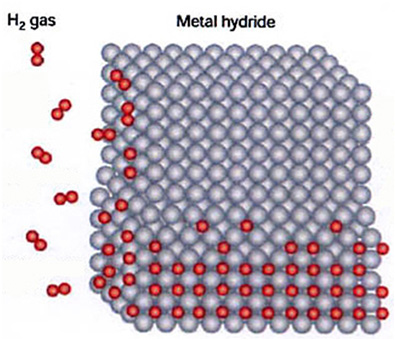
lner-nickel-hydrogen-latticeAnd unlike previous attempts that sought to harness basic fusion, the technology behind the LENR is really quite revolutionary. Rather than rely on strong nuclear forces to meld atoms and produce energy, LENR harnesses the power of weak nuclear force.

This is done by using an oscillating nickel lattice that takes in hydrogen atoms and then exchanges electrons with them. This has the effect of forming slow-moving neutrons which are absorbed, making the nickel unstable. To regain its stability, the nickel strips a neutron of its electron so that it becomes a proton — a reaction that turns the nickel into copper and creates a lot of energy in the process.

The big upside to this process is the fact that it produces zero ionizing radiation and zero radioactive waste, making it the safest and cleanest nuclear process to date. In addition, NASA claims that relying on reactors like these, it would only take 1% of the world’s nickle production to meet the world’s current energy needs, and at a quarter of the cost of dirtier fuels like coal. On top of that, they’ve also indicated that the same process can be done using a carbon lattice instead of nickel, making it even more versatile.

???????????????????????????????So the question remains, why isn’t every household running on a LENR reactor already? Well, two problems. For one, the amount of energy needed to get the ball rolling is quite high. Initially, the LENR requires a 5-30THz frequency burst of energy to make the nickel lattice begin oscillating, which is difficult to efficiently produce.

Second, other labs have experienced a few… uh, accidents… trying to reproduce the process, which included a few explosions and some melted windows. No deaths were reported, mind you, but it does demonstrate that the process can generate a LOT of power if not properly controlled.

Still, other means of generating electricity, such as nuclear fission, have experienced some bumps along the way (i.e. Chernobyl and Three Mile Island) and we still rely on them. And oil and coal are what we’ve come to think of as “dirty means” of generating power, meaning they cause tremendous amounts of pollution or can lead to environmental debacles, such as oil spills. And natural gas can only last so long. So realistically, there may be hope for LENR and cold fusion yet.

Fingers so very crossed! And be sure to check out NASA’s video explaining the process:


Source:
Extremetech.com

The Singularity: The End of Sci-Fi?

singularity.specrepThe coming Singularity… the threshold where we will essentially surpass all our current restrictions and embark on an uncertain future. For many, its something to be feared, while for others, its something regularly fantasized about. On the one hand, it could mean a future where things like shortages, scarcity, disease, hunger and even death are obsolete. But on the other, it could also mean the end of humanity as we know it.

As a friend of mine recently said, in reference to some of the recent technological breakthroughs: “Cell phones, prosthetics, artificial tissue…you sci-fi writers are going to run out of things to write about soon.” I had to admit he had a point. If and when he reach an age where all scientific breakthroughs that were once the province of speculative writing exist, what will be left to speculate about?
Singularity4To break it down, simply because I love to do so whenever possible, the concept borrows from the field of quantum physics, where the edge of black hole is described as a “quantum singularity”. It is at this point that all known physical laws, including time and space themselves, coalesce and become a state of oneness, turning all matter and energy into some kind of quantum soup. Nothing beyond this veil (also known as an Event Horizon) can be seen, for no means exist to detect anything.

The same principle holds true in this case, at least that’s the theory. Originally coined by mathematician John von Neumann in the mid-1950’s, the term served as a description for a phenomenon of technological acceleration causing an eventual unpredictable outcome in society. In describing it, he spoke of the “ever accelerating progress of technology and changes in the mode of human life, which gives the appearance of approaching some essential singularity in the history of the race beyond which human affairs, as we know them, could not continue.”

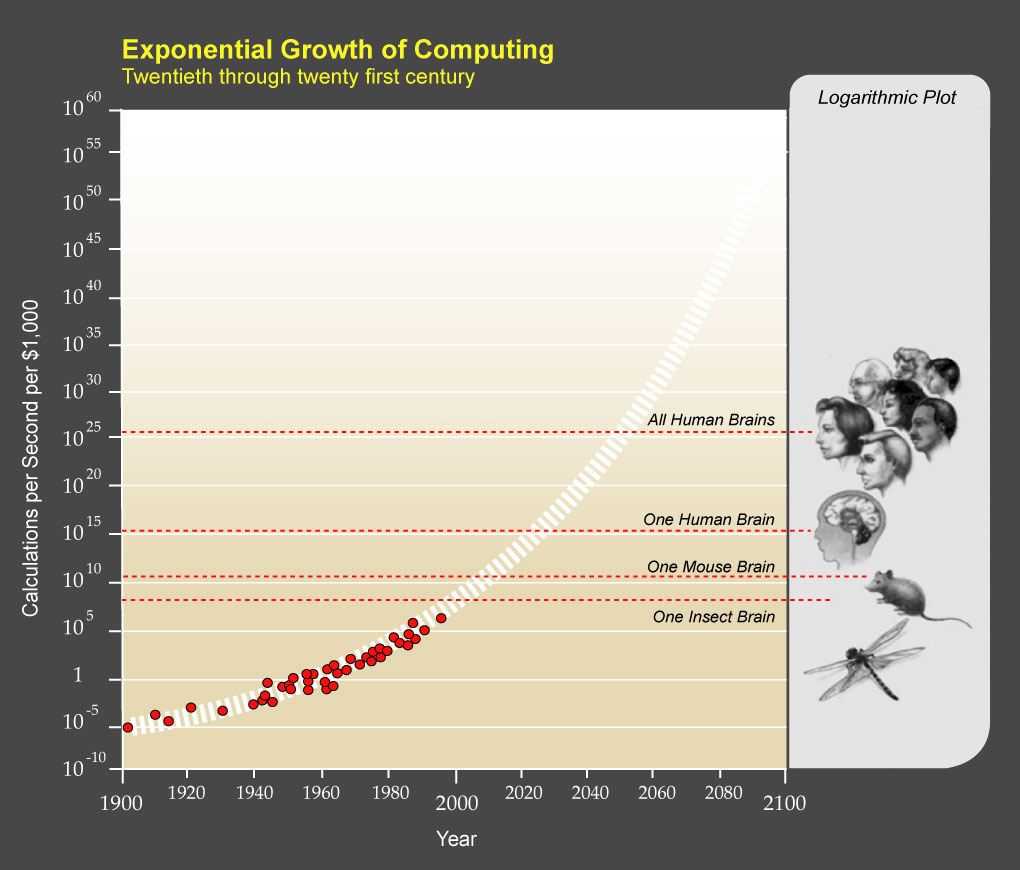
exponential_growth_largeThe term was then popularized by science fiction writer Vernor Vinge (A Fire Upon the Deep, A Deepness in the Sky, Rainbows End) who argued that artificial intelligence, human biological enhancement, or brain-computer interfaces could be possible causes of the singularity. In more recent times, the same theme has been picked up by futurist Ray Kurzweil, the man who points to the accelerating rate of change throughout history, with special emphasis on the latter half of the 20th century.

In what Kurzweil described as the “Law of Accelerating Returns”, every major technological breakthrough was preceded by a period of exponential growth. In his writings, he claimed that whenever technology approaches a barrier, new technologies come along to surmount it. He also predicted paradigm shifts will become increasingly common, leading to “technological change so rapid and profound it represents a rupture in the fabric of human history”.
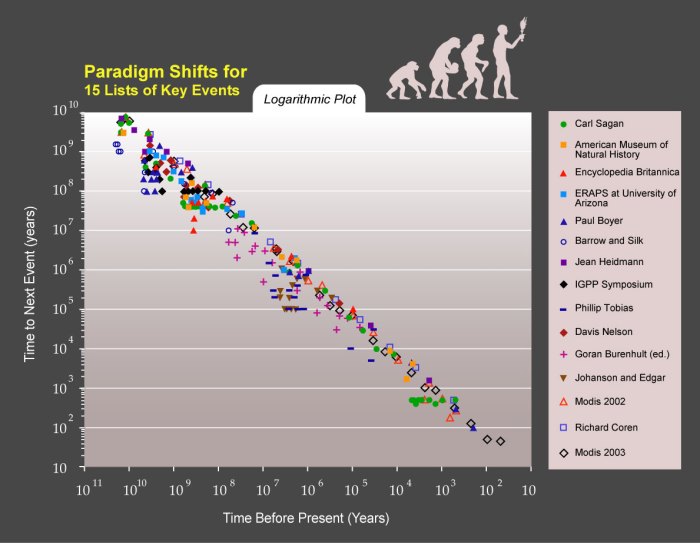
kurzweil-loglog-bigLooking into the deep past, one can see indications of what Kurzweil and others mean. Beginning in the Paleolithic Era, some 70,000 years ago, humanity began to spread out a small pocket in Africa and adopt the conventions we now associate with modern Homo sapiens – including language, music, tools, myths and rituals.

By the time of the “Paleolithic Revolution” – circa 50,000 – 40,000 years ago – we had spread to all corners of the Old World world and left evidence of continuous habitation through tools, cave paintings and burials. In addition, all other existing forms of hominids – such as Homo neanderthalensis and Denisovans – became extinct around the same time, leading many anthropologists to wonder if the presence of homo sapiens wasn’t the deciding factor in their disappearance.

Map-of-human-migrationsAnd then came another revolution, this one known as the “Neolithic” which occurred roughly 12,000 years ago. By this time, humanity had hunted countless species to extinction, had spread to the New World, and began turning to agriculture to maintain their current population levels. Thanks to the cultivation of grains and the domestication of animals, civilization emerged in three parts of the world – the Fertile Crescent, China and the Andes – independently and simultaneously.

All of this gave rise to more habits we take for granted in our modern world, namely written language, metal working, philosophy, astronomy, fine art, architecture, science, mining, slavery, conquest and warfare. Empires that spanned entire continents rose, epics were written, inventions and ideas forged that have stood the test of time. Henceforth, humanity would continue to grow, albeit with some minor setbacks along the way.

The_Meeting_of_Cortés_and_MontezumaAnd then by the 1500s, something truly immense happened. The hemispheres collided as Europeans, first in small droves, but then en masse, began to cross the ocean and made it home to tell others what they found. What followed was an unprecedented period of expansion, conquest, genocide and slavery. But out of that, a global age was also born, with empires and trade networks spanning the entire planet.

Hold onto your hats, because this is where things really start to pick up. Thanks to the collision of hemispheres, all the corn, tomatoes, avocados, beans, potatoes, gold, silver, chocolate, and vanilla led to a period of unprecedented growth in Europe, leading to the Renaissance, Scientific Revolution, and the Enlightenment. And of course, these revolutions in thought and culture were followed by political revolutions shortly thereafter.

IndustrialRevolutionBy the 1700’s, another revolution began, this one involving industry and creation of a capitalist economy. Much like the two that preceded it, it was to have a profound and permanent effect on human history. Coal and steam technology gave rise to modern transportation, cities grew, international travel became as extensive as international trade, and every aspect of society became “rationalized”.

By the 20th century, the size and shape of the future really began to take shape, and many were scared. Humanity, that once tiny speck of organic matter in Africa, now covered the entire Earth and numbered over one and a half billion. And as the century rolled on, the unprecedented growth continued to accelerate. Within 100 years, humanity went from coal and diesel fuel to electrical power and nuclear reactors. We went from crossing the sea in steam ships to going to the moon in rockets.

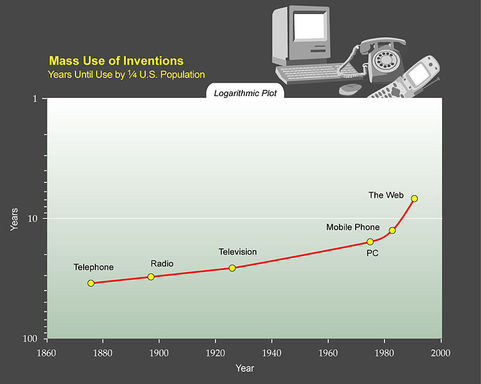
massuseofinventionsAnd then, by the end of the 20th century, humanity once again experienced a revolution in the form of digital technology. By the time the “Information Revolution” had arrived, humanity had reached 6 billion people, was building hand held devices that were faster than computers that once occupied entire rooms, and exchanging more information in a single day than most peoples did in an entire century.

And now, we’ve reached an age where all the things we once fantasized about – colonizing the Solar System and beyond, telepathy, implants, nanomachines, quantum computing, cybernetics, artificial intelligence, and bionics – seem to be becoming more true every day. As such, futurists predictions, like how humans will one day merge their intelligence with machines or live forever in bionic bodies, don’t seem so farfetched. If anything, they seem kind of scary!
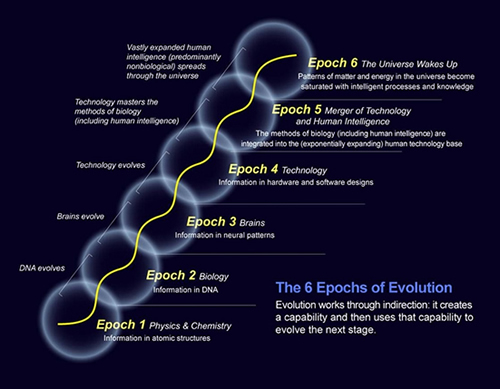
singularity-epocksThere’s no telling where it will go, and it seems like even the near future has become completely unpredictable. The Singularity looms! So really, if the future has become so opaque that accurate predictions are pretty much impossible to make, why bother? What’s more, will predictions become true as the writer is writing about them? Won’t that remove all incentive to write about it?

And really, if the future is to become so unbelievably weird and/or awesome that fact will take the place of fiction, will fantasy become effectively obsolete? Perhaps. So again, why bother? Well, I can think one reason. Because its fun! And because as long as I can, I will continue to! I can’t predict what course the future will take, but knowing that its uncertain and impending makes it extremely cool to think about. And since I’m never happy keeping my thoughts to myself, I shall try to write about it!

So here’s to the future! It’s always there, like the horizon. No one can tell what it will bring, but we do know that it will always be there. So let’s embrace it and enter into it together! We knew what we in for the moment we first woke up and embraced this thing known as humanity.

And for a lovely and detailed breakdown of the Singularity, as well as when and how it will come in the future, go to futuretimeline.net. And be prepared for a little light reading 😉

Pluto’s New Moon to be Named Vulcan

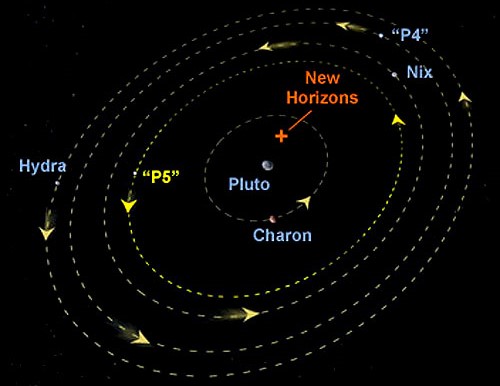
pluto1For roughly a month now, the SETI Institute (Search for Extra-Terrestrial Intelligence) has been holding an online poll – appropriately named Pluto Rocks! – to help them name Pluto’s smallest moons, officially designated P4 and P5. Discovered in 2011 and 2012 respectively, an online poll ran up until the end of February, at which point researcher and co-discoverer Mark Showalter took the names before the International Astronomical Union (IAU) to finalization.

Although there were several choices for for Pluto’s fourth and fifth moon, it was P4 that became the focus of a great deal of attention. Of all the names for this space rock, two top contenders came out on top: Vulcan and Cerberus. Out of a whopping 450,324 people who took part in the poll overall, 174,062 voted for Vulcan, effectively putting it in the top spot. This was perhaps due to a little Twitter intervention by Mr. William Shatner.

Pluto_moon_orbitsWhen the contest began back, it seemed that two camps emerged as the forerunners for naming the rock. On the one hand, there were the Trekkies who seemed determined to name P4 after famed-character Spock’s homeworld. On the other, there those who belong to IAU camp, who favored the classical Greek name of the beast that guarded the entrance to the underworld.

After just a few days in, William Shatner, Mr. James T. Kirk himself, proposed the name Vulcan, and not just because of the connection to his show. In Roman mythology, Pluto (aka Hades in the Greek pantheon) was the God of the underworld and Vulcan was one of his sons. Cerberus might have been more appropriate since this beast was Pluto’s/Hades companion, but the connection still works, and provides a nice little tie-in to one of the most popular science fiction shows of all time.

Pluto-and-VulcanFans and Trekkies worldwide rallied, and as of Feb. 25th, Vulcan had a comfortable lead over Cerberus and Styx, which were vying for the 2nd place position. SETI has now advised that people be patient, as it will take another months or two for the names of the two moons to be finalized and selected. However, barring any major objections or upheavals, I think it’s fair to say that P4 and P5 will henceforth be named Vulcan and Kerberos.

And I have to say, this is fascinating news in more ways than just one. Not only does it demonstrate that our collective knowledge of the outer Solar System is growing. It also demonstrates how henceforth, astronomical studies and cataloging may become a much more democratic affair. Once considered the province of academics and scholars, space exploration may truly be an open field in the future, subject to mass participation.

Oh, and congrats to Mr. Shatner for his enduring influence, to Mr. Nimoy for the shout-out, and to Trekkies the world over for showing what a committed fandom made up of millions of geeks can do! And may all the people who bullied you for your interests and keen intellectual skills consider what a force you’ve become and cower in fear!

The Future is Here: The Sensory Prosthetic Hand

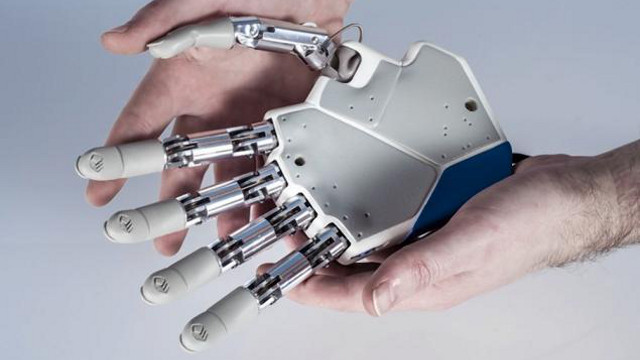
prosthetic_originalMuch has been made of the advancements made in mind-controlled prosthetics lately. For many, the advancements made in this field have led to comparisons with the prosthetic hand that Luke Skywalker received at the end of the Empire Strikes Back. Remember that, how he got a robotic hand that not only looked real but also allowed him to feel pain? Well as it stands, we may be closer to that than previously thought.

Witness the new era of robo-prosthetic devices, ones that will not only restore motion to a amputees and people born without limbs, but also sensory perception! Developed by Silvestro Micera of the Ecole Polytechnique Federale de Lausanne in Switzerland, it’s the first prosthetic that will provide real-time sensory feedback to its owners. Later this year, a man by the name of Pierpaolo Petruzziello, who lost half his arm in a car accident, will receive the first of its kind, once all the tests are concluded.

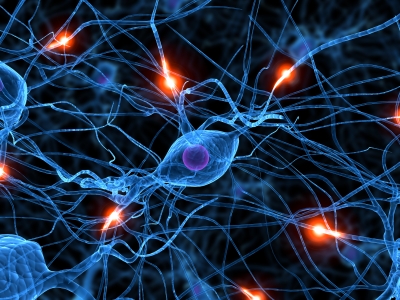
prostheticMuch like the mind-controlled prosthetics that have been making the rounds in recent years, this new device is wired directly to the user’s nervous system with electrodes, allowing them to control its movement. However, in this updated model, the process works both ways. Once the hand’s electrodes are clipped onto two of the arm’s main nerves, the median and the ulnar nerves, it will form a cybernetic connection allowing for the fast and bidirectional flow of information between the patient’s nervous system and the artificial hand.

In this respect, the arm works much as a real one does, using electrical stimuli to both send commands and receive sensory information. Announcing the development of the hand at the recently concluded AAAS conference in Boston, Micera was sure to highlight this aspect of the prosthetic, claiming that increased sensory feelings will improve acceptance of artificial limbs among patients.

prosthetic2Interestingly enough, this model is an updated version of one Micera and his team produced back in 2009, again for use by Petruzziello. He was able to move the bionic hand’s fingers, clench them into a fist and hold objects, and also reported feeling the sensation of needles pricked into the hand’s palm. However, this earlier version of the hand had only two sensory zones whereas the latest prototype will send sensory signals back from all the fingertips, as well as the palm and the wrists to give a near life-like feeling in the limb.

Once the hand and patient are united, he will wear it for a month in order to get a proper feel for the prosthetic and test out its many functions. Based on that test-drive, Micera hopes to develop a fully-functional and commercially viable model within the next two years.

Just think of it: prosthetics for amputees that will not only allow them to interact with their world again, but will provide them with the sensory information they need to actually feel like a part of it. One step closer to truly providing accident victims and people born without limbs a new and fully-functional lease on life. And perhaps to posthumanism as well!

transhuman3

Source: independent.co.uk, neurogadget.com

The Future is Here: Brain to Brain Interfaces!

?????????????????And I thought the month of February was an already exciting time for technological breakthroughs! But if a recent report from Nature.com is any indication, February will go down in history as the biggest month for breakthroughs ever! Why just last week, researchers in Natal, Brazil created the first ever electronic link between the brains of two living creatures.

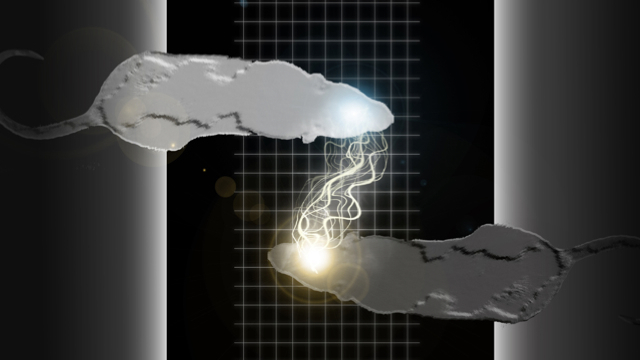
The creatures in question were rats, and the link between their brains enabled one to help the other solve basic puzzles in real time — even though the animals were separated by thousands of kilometers of distance. The experiment was led by Miguel Nicolelis of Duke University, a pioneer in the field of brain-machine interfaces (BMIs), and a team of neurobiologists who’ve been working in the field for some time.

BMIHere’s how it works: An “encoder” rat in Natal, Brazil, trained in a specific behavioral task, presses a lever in its cage which it knows will result in a reward. A brain implant records activity from the rat’s motor cortex and converts it into an electrical signal that is delivered via neural link to the brain implant of a second “decoder” rat. The second rat’s motor cortex processes the signal from rat number one and – despite being thousands of km away and unfamiliar with what rat one is up to — uses that information to press the same lever.

MMIBack in 2011, Nicolelis and his colleagues unveiled the first such interface capable of a bi-directional link between a brain and a virtual body, allowing a monkey to not only mentally control a simulated arm, but receive and process sensory feedback about tactile properties like texture. And earlier this month, his team unveiled a BMI that enables rats to detect normally invisible infrared light via their sense of touch.

However, this latest experiment really takes the cake. Whereas brain-machine interfaces have long been the subject of research, generally for the sake of prostheses, a brain-to-brain interface between two living creatures in something entirely new, especially one that enables realtime sharing of sensorimotor information. And while it’s not telepathy, per se, it’s certainly something close, what Nicolelis calls “a new central nervous system made of two brains.”

Obviously, this kind of breakthrough is impressive in its own right, but according to Nicolelis, the most groundbreaking application of this brain-net (or n-mind) is yet to come:

These experiments demonstrated the ability to establish a sophisticated, direct communication linkage between rat brains, so basically, we are creating an organic computer that solves a puzzle. We cannot predict what kinds of emergent properties would appear when animals begin interacting as part of a brain-net. In theory, you could imagine that a combination of brains could provide solutions that individual brains cannot achieve by themselves.

neural-networksNaturally, there are some flaws in the process, which were made evident by the less-than-perfect results. For starters, the untrained decoder rats receiving input from a trained encoder only chose the correct lever around two-thirds of the time. Those results could not be the result of random odds, but they are also a far cry from the 95% accuracy where the signals were reversed, going from the untrained decoder to the trained encoder. As any student of science knows, one-way results are not the basis of a sound process.

And I imagine the people who are lobbying to make biosoldiers illegal and limit the use of autonomous drones will be on this like white on rice! Hence why we can probably look forward to many years of research and development before anything akin to human trials or commercial applications of this technology seem realizable.

And of course, there is a video demonstrated the mind link at work. a word of warning first though. If you’re an animal lover, like me, the video might be a little difficult to take. You be the judge:


Source:
IO9, nature.com

The Future is Here: Peel and Stick Solar Panels!

solar_arrayEver since Albert Einstein first proposed the concept in 1921, photovoltaic cells – solar cells – have been at the forefront of alternative fuel and energy research. And while progress has been made, two key factors have remained as stumbling blocks to their widespread adoption: One, the cost of making solar cells; and two, the cost of installing them.

In order for this to change, analysts have predicted for some time that solar panels would need to be printed on cheap, durable materials that could be installed anywhere. Until such time, they would continue to lose out against the gas and coal equivalents, which would continue to generate as much energy as a single solar cell while remaining comparatively cheaper.

solar_powerAnd as it turns out, the wait may be coming to an end. According to Silvija Gradecak, a materials science and engineering professor at MIT, new research from around the world is driving us ever closer to that goal. And it is her lab, among others, that is making a major contribution, through the release of a new breed of bendy, peel-and-stick solar panels.

The focus of Gradecak’s team has been on the production of a organic, thin-film cells that are made from abundant materials which could be manufactured on the cheap. And in December of last year, they made a breakthrough with the production of a transparent photovoltaic cell by using flexible graphene and a nanowire coating. This thin, flexible and transparent photo cell, they claimed, could be mounted anywhere and is comparatively cheaper than current silicon based varieties.

solar_cellNaturally, Gradecak was sure to point out that this development did not take place in a vacuum. Nor was it the only one of its kind:

“”There was a significant effort to develop these type of devices and the slope of this improvement is very high… I personally believe this is not just theoretical. In a couple of years you will see these types of devices commercially.”

And in that respect, she is right. At Stanford, researchers presented their own concept for a next generation solar cell this past December: a flexible, peel-off panel that can stick to almost any surface. Composed of nickel, silicon and silicon dioxide and a protective polymer layer, the cell consists of multiple layers that can be peeled away and applied as needed.

Exciting times, these are, especially when long-awaited environmental solutions are finally becoming feasible. It also inspires hope that we might be able to tackle a little problem known as emissions before it is too late. Of course, that would require making this technology available worldwide, especially in developing economies where coal and gas power are especially lucrative. But anything is doable, especially if the price is right!

Source: Co.Exist.com

Envisioning The Future of Finance

BrightFutureA few times now, the website known as Envisioning Technology has snared me with their predictive posters. First there was their “Emerging Technologies” infographic for the year of 2012. That was followed shortly thereafter by “The future of health” and “The future of education“. They even took a look at popular dystopian and apocalyptic scenarios and asked the question “Should I be afraid“?

And now, in their latest infographic, they’ve tackled the future of finance. Looking at the financial industry as a whole, they attempt to gauge its readiness to technological change. While looking at trends that are likely to influence the very notion of value in the coming decades, they ask the question “are [organizations] paying enough attention to the imminent changes that will define the future of society or if they are running the risk of letting accelerating change vanquish existing business models?”

And as usual, the information is presented in an interconnected, multi-layered fashion. Dividing all aspects of the financial sector into the categories of Data, Automation, Security, Disintermediation (i.e. removing the “middle men”), Crowds (crowd-sourcing, crowd-funding), Mobile technology, Currencies, and Reputation, potential technologies are then listed based on whether or not they are under development, likely to be in development in the near future, or are currently being overlooked.
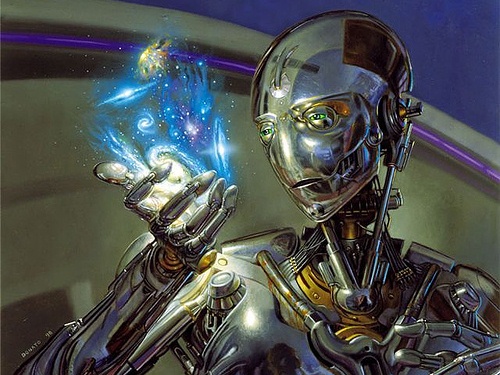
Take a gander and see what you think. As usual, its packed full of interesting concepts, speculative reasoning, and a ton of statistical data. And be sure to check out the website in case you have yet to see their other infographics.

Source: Envisioning Technology

Happy Birthday Copernicus!

heliocentricAs I learned not long ago, today is the 540th birthday of the late great man who definitely proved that the Earth revolved around the sun. And so I thought I’d take some time out of my busy (not so much today!) schedule to honor this great man and the massive contribution he made to astronomy, science and our understanding of the universe.

Given the importance of these contributions, I shall do my best to be pay homage to him while at the same time being as brief and succinct as I possibly can. Ready? Here goes…

Background:
copernicusBorn in Toruń (Thorn), Poland on 19 February 1473, Mikolaj Kopernik was the youngest of four children to be born into his wealthy merchant family. Given his background, Copernicus’ family was able to provide an extensive education for their son, which took him from Thorn to Włocławek to Krakow, where he attended university. In this time, he learned to speak many languages – including Polish, Greek, Italian, German and Latin (the language of academia in his day) – and also showed himself to be adept at mathematics and science.

During this time, he also received a great deal of exposure to astronomy, since it was during his years in Krakow (1491-1495) that the Krakow astronomical-mathematical school was experiencing its heyday. He was also exposed to the writings of Aristotle and Averroes, and became very self-guided in his learning, collecting numerous books on the subject of astronomy for his personal library.

Leaving Krakow without taking a degree, Copernicus moved to Warmia (northern Poland) where he turned to the study of canon law, perhaps in part because of his family’s strong Roman Catholic background. However, his love for the humanities and astronomy never left him, and he seemed to devote himself to these subjects even as he worked to obtain his doctorate in law. It was also during his time in Warmia that he met the famous astronomer Domenico Maria Novara da Ferrara and became his disciple and assistant.

geocentricUnder Ferrara, Copernicus traveled to Bologna, Italy and began critiquing the logical contradictions in the two most popular systems of astronomy – Aristotle’s theory of homocentric spheres, and Ptolemy’s mechanism of eccentrics and epicycles – that would eventually lead him to doubt both models. In the early 1500’s, while studying medicine at the University of Padua in Italy, he used the opportunity to pour over the libraries many ancient Greek and Latin texts to find historic information about ancient astronomical, cosmological and calendar systems.

In 1503, having finally earned his doctorate in canon law, Copernicus returned to Warmia where he would spend the remaining 40 years of his life. It was here that all of his observations about the movement of the planets, and the contradictions in the current astronomic models, would crystallize into his model for the heliocentric universe. However, due to fears that the publication of his theories would lead to official sanction from the church, he withheld his research until a year before he died.

It was only in 1542, after he had been seized with apoplexy and paralysis, that he sent his treaties, De revolutionibus orbium coelestium (On the Revolutions of the Heavenly Spheres) to Nuremberg to be published. It is said that on the day of his death, May 24th 1543 at the age of 70, he was presented with an advance copy of his book.

Impact and Legacy:
The immediate reaction of the church to the publication of Copernicus’ theories was quite limited. In time, Dominican scholars would seek to refute based on logical arguments and Aquinism, ranging from the positions of planets in the sky to very idea that Earth could be in motion. However, in attempting to disprove Copernicus’ theory, his detractors merely fostered a debate which would provide the impetus for reevaluating the field of physics and proving the heliocentric model correct.

galileo_telescopeAnd in time, with the help of such astronomers and mathematicians as Galileo, the debate would come to a head. Using the telescope, a technology he helped pioneer, he was able to demonstrate that the size of the planets during various times in the year did indeed conform to the heliocentric model, and that it was only through distortions caused by observing with the naked eye that made them seem larger (hence, closer to Earth) than they really were.

And although Galileo would eventually be forced to recant and placed under house arrest for his last few years on this Earth, the Copernican system became the defacto model of astronomy henceforth, and would help to launch the Scientific Revolution whereby several long-established theories would come to be challenged. These included the age of the Earth, the existence of other moons in our Solar System, Universal Gravitation, and the belief in the universe as a giant, rationalized clockwork mechanism.

Final Thoughts:
Naturally, there are those purists who would point out that he was not the first to propose a heliocentric planet system. In fact, the concept of a universe with the sun at the epicenter dates back Ancient Greece. However, Copernicus would be the first astronomer to propose a comprehensive model, which would later be refined by Galileo Galilee.

HeliocentricOther purists would point out that his system, when he developed it, had numerous observation and/or mathematical flaws, and that it was only after Galileo’s observations of the heavens with his telescope that his theories were made to work. But it is precisely because he was able to realize the truth of our corner of the universe, sans a reliable telescope, that makes this accomplishment so meaningful.

In Copernicus’ time, the rigors of the Aristotelian and Ptolemaic models were still seem by the majority of astronomers to be the correct one, regardless of church doctrine or religious bias. In purely mathematical terms, there was little reason to make an intuitive leap and suppose that the great minds on which Scholastic science was based had got it all wrong.

So when it comes right down to it, Copernicus was an intuitive genius the likes of which is seen only once in a lifetime. What’s more, his discoveries and the publication thereof helped bring humanity out of the Dark Ages – a time where learning and the hearts and minds of men were still under the iron grip of the Church – and helped usher in the modern age of science.

Copernicus_conversation_with_GodAnd if I could get a bit polemic for a second, I would like to say that it is unfortunate then that much of what Copernicus helped to overcome is once prevalent in society today. In recent years, long-established scientific truths like Evolution, Global Warming, and Homosexuality have being challenged by individuals who claim they are lies or merely “theories” that have yet to be proven. In all cases, it is clear what the agenda is, and once again faith and God are being used as a justification.

In fact, despite the monumental growth in learning and the explosion in information sharing that has come with the digital age, it seems that misinformation is being spread like never before. Whereas previous generations could always blame ignorance or lack of education, we few who are privileged enough to live in a modern, secular, democratic and industrialized nation have no such excuses.

And yet, it seems that some decidedly medieval trends are determined to persist. Despite living in a time when the vast and infinite nature of the universe is plain to see, there are still those who would insist on making it smaller just so they can sleep soundly in their beds. As if that’s not enough, they feel the need to villify that which they don’t understand, or openly threaten to kill those who preach it.

Sorry, like I said, polemic! And on this day of days, we can’t help but remember the lessons of history and how so often they are ignored. So if I might offer a suggestion to all people on this day, it would be to choose a subject they feel uninformed about and learn what they can about it. And do not trust just any source, consider the built-in biases and political slants of whatever it is you are reading. And if possible, go out and hug a scientist! Tell them you accept them, do not fear what they have to say, and will not be sending them death threats for doing what they do.

Happy 540th birthday Mikolaj Kopernik!

AR Glasses Restore Sight to the Blind

projectglass01As I’m sure most readers are aware, blindness comes in many forms. It’s not simply a matter of the afflicted not being able to see. In fact, there are many degrees of blindness and in most cases, depth perception is limited. But as it turns out, researchers at the University of Yamanashi in Japan have found a way to improve depth perception for the visually challenged using simple augmented reality glasses.

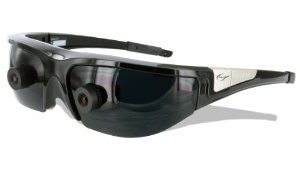
The process involved a pair of Wrap 920 ARs, an off-the-shelf brand of glasses that allow their wearer to interface with their PC, watch video or surf the internet, all the while staying mobile and carrying out their daily chores. The team then recorded images as seen by the wearer from the angle of both eyes, processed it with a quad-core Windows 7 machine, and then merged the images as they would appear to the healthy eye.

AR_glassesEssentially, the glasses perform the task of rendering a scene as it would be seen through “binocular vision” – i.e. in 3D. By taking two images, merging them together and defining what is near and what is far by their relative resolution, they were able to free the wearer’s brain from having to it for them. This in turn allowed them to interact more freely and effectively with their test environment: a dinner table with chop sticks and food in small bowls, arguably a tricky meal to navigate!

Naturally, the technology is still in its infancy. For one, the processed imagery has a fairly low resolution and frame rate, and it requires the glasses to be connected to a laptop. Newer tech will provide better resolution, faster frames per second, and a larger viewport. In addiiton, mobile computing with smartphones and tablets ought to provide for a greater degree of portability, to the point where all the required technology is in the glasses themselves.

posthumanLooking ahead, it is possible that there could be a f0rm of AR glasses specially programmed to deliver this kind of vision correction. The glasses would then act as a prosthesis, giving people with visual impairment an increased level of visual acuity, bringing them one step closer to vision recovery. And since this is also a development which will blurring the lines between humans and computers even more, it’s arguably another step closer to transhumanism!

Source: Extremetech.com