
 Denmark made a recent and very positive announcement. According to Denmark’s Energy Association, wind power is now the cheapest source of energy, beating coal, fossil fuels, and natural gas. What’s more, the government agency claims that by 2016, the electricity whipped up by its newest turbines will be half the price of conventional means. The announcement came in the last week of July, and is raising hopes for clean energy around the world.
For years, wind and solar have been achieving grid parity with fossil fuels in many places around the world, meaning they are just as cheap. But even without the tax breaks, declining manufacturing costs and growing scale have rendered wind power just as cheap as natural gas in many states in the gas-rich US. And as Deutsche Bank analyst Vishal Shah claims, this is the “beginning of the grid parity era” for solar, worldwide.
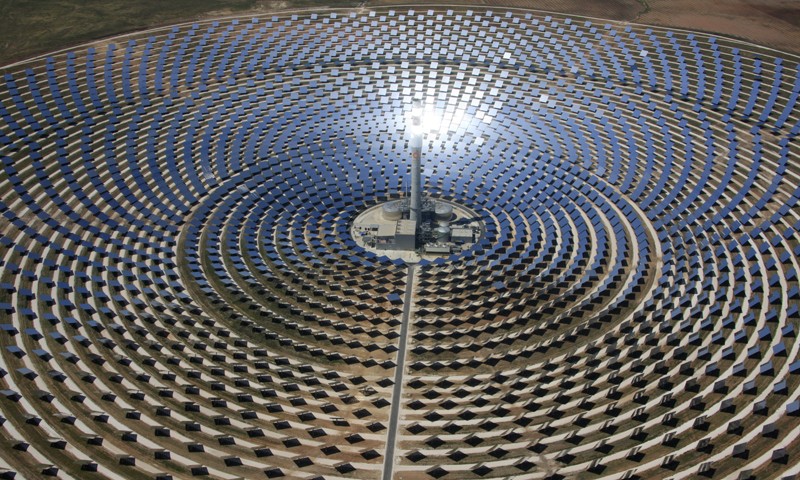 As he explains it, demand is being driven by “sustainable” markets – meaning the US, China, and regions outside of Europe – with Japan leading the way with an estimated 7 GW annual demand:
Solar is currently competitive without subsidies in 10+ major markets globally, and has the potential to achieve competitiveness in 10-20 additional markets over the next 3 years.
China, which plans to add 10 GW of solar capacity this year alone, only added “in the 2-3 GW range” during the first half of 2013, which would suggest a vast expansion is coming in the second half of the year. Emerging markets are likely to adopt unsubsidized policy models to promote solar growth, especially if new low-cost capital becomes available in concert with policy support to reduce costs.
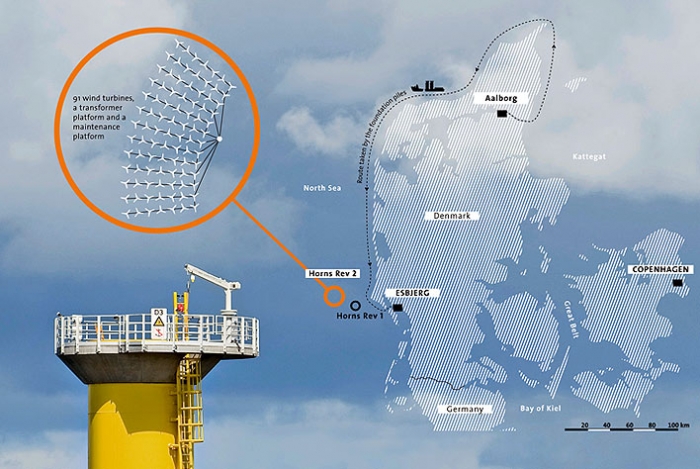 But Denmark is blowing past grid parity and towards a scenario in which clean energy is actually much, much cheaper. According to analysts, when its two massive offshore wind farms come online, they’ll be the nation’s most inexpensive energy source by a wide margin. As Yale 360, an environmental policy group centered at the Yale School of Forestry & Environmental Studies, explains:
Electricity from two new onshore wind power facilities set to begin operating in 2016 will cost around 5 euro cents per kilowatt-hour. Wind power would remain the cheapest energy option even if interest rates on wind power projects were to increase by 10 percent, the report found.
This is good news for a nation that’s hoping to get 50 percent of its power from wind turbines by 2050. Right now, the nation already boasts an impressive clean energy mix of 43 percent. And Rasmus Peterson, Denmark’s energy minister, said at a press conference:
Wind power today is cheaper than other forms of energy, not least because of a big commitment and professionalism in the field. This is true for researchers, companies and politicians. We need a long-term and stable energy policy to ensure that renewable energy, both today and in the future, is the obvious choice.
 Importantly, the DEA’s analysis did not factor in the health and environmental costs of burning fossil fuels—which are considerable—and instead looked directly at the market forces in the country. Natural gas and coal are much more expensive in Denmark than it is in the US, which helps make wind such an economic bargain, and the nation has explicitly pursued wind power for decades.
But improving technology, falling costs, and the strong, consistently blowing offshore winds that will turn the new turbines are making the case for wind power rock solid. At the end of July, it was revealed that Germany gets a full 28.5 percent of its energy needs with clean sources. Now Denmark is proving that running your nation on clean energy can be cheaper anyone thought possible, even ten years ago.
Sources: motherboard.vice.com, renewableenergyworld.com, e360.yale.edu

 Inspired by the arctic eider duck, Energy Duck not only hopes to offer a unique renewable energy source, but also highlight the impact that climate change has had on the local population and breeding habitats of the eider duck in recent years. As its creators – Hareth Pochee, Adam Khan, Louis Leger and Patrick Fryer – explained:
 All of this helps the Energy Duck overcome the all-important issue of intermittency. By being able to generate energy around the clock, the Duck is not dependent on the sun shining in order to continue operating and providing power. As the team explained:
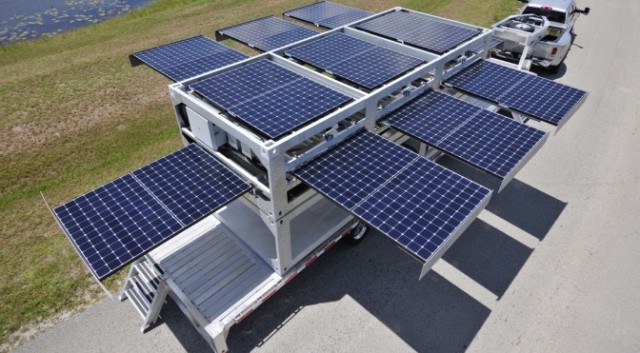
 The Ecos PowerCube will be available in three sizes that are designed to fit into 10-foot, 20-foot, and 40-foot shipping containers.
 In the meantime, it is still a crafty idea, and one which has serious potential. Not only do disaster areas need on-site water distribution – shipping it in can be difficult and time consuming – but internet access is also very useful to rescue crews that need up-to-date information, updates, and the ability to coordinate their rescue efforts. And military installations could certainly use the inventions, as they would cut down on fuel consumption.
 The acquisition makes sense given that Silevo’s technology has the potential to reduce the cost of installing solar panels, Solar City’s main business. But the decision to build a huge factory in the U.S. seems daring – especially given the recent failures of other U.S.-based solar manufacturers in the face of competition from Asia. Ultimately, however, Solar City may have little choice, since it needs to find ways to reduce costs to keep growing.
 Silevo isn’t the only company to produce high-efficiency solar cells. A version made by Panasonic is just as efficient, and SunPower makes ones that are significantly more so. But Silevo claims that its panels could be made as cheaply as conventional ones if they could scale their production capacity up from their current 32 megawatts to the factory Musk has planned, which is expected to produce 1,000 megawatts or more.


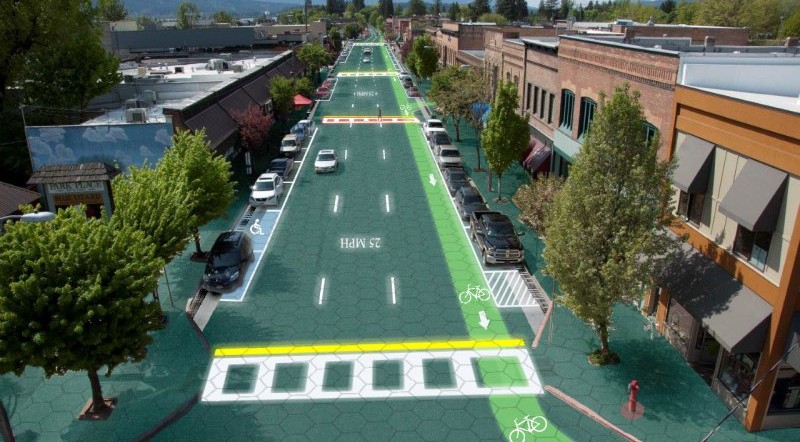
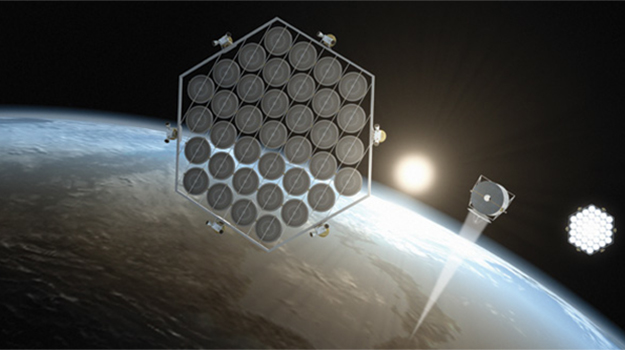
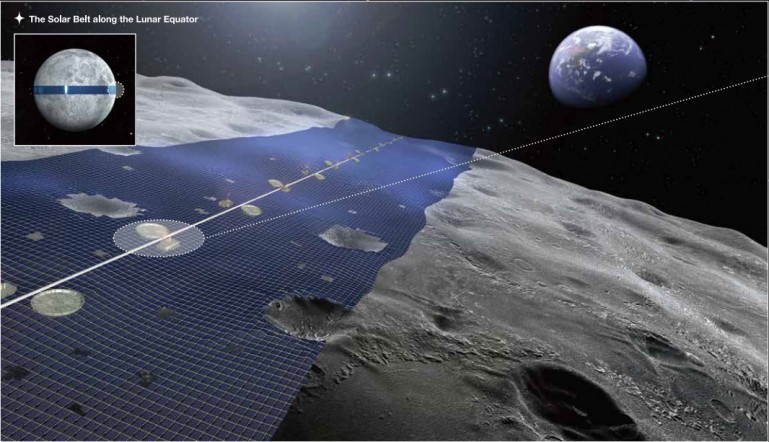
 Beyond Japan, solar power is considered the of front runner of alternative energy, at least until s fusion power comes of age. But Until such time as a fusion reaction can be triggered that produces substantially more energy than is required to initiate it, solar will remain the only
  Luckily, putting arrays into orbit solves both of these issues. Above the
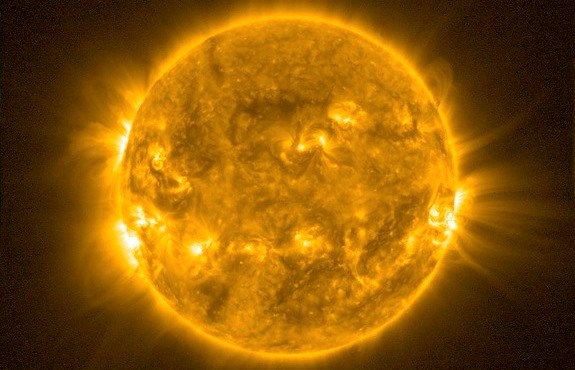
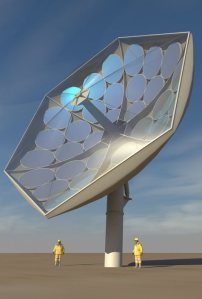 This not only ensures a much larger yield, but also makes the energy it harvests cheap. Bruno Michel, the manager for advanced thermal packaging at IBM Research, believes the design could be three-times cheaper than “comparable” systems. Officially, the estimate he provides claim that the cost per kilowatt hour will work out to less than 10 cents, which works out to 0.01 cents per watt (significantly cheaper than the $0.74 per watt of standard solar).
 A combined system of this kind could be an incredible boon to economies in parts of the world that are surrounded by deserts, such as North Africa or Mongolia. But given the increasing risk of worldwide droughts caused by Climate Change, it may also become a necessity in the developed world. Here, such dishes could not only provide clean energy that would reduce our carbon footprint, but also process water for agricultural use, thus combating the problem on two fronts.
 Stories by Williams