News From Space… ShipTwo!

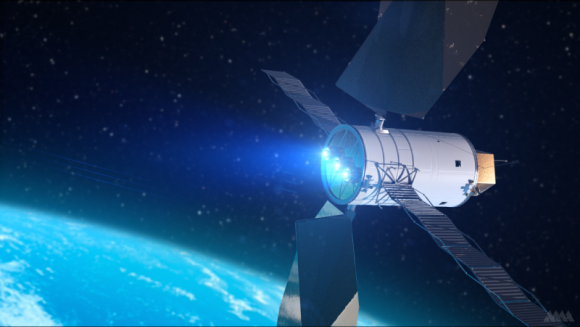
spaceshiptwo-2nd-flightVirgin Galactic’s founder Sir Richard Branson has been working tirelessly for over a decade now in the hopes of realizing the dream of privatized space travel. And earlier this month, his company once again made history with the second rocket-powered supersonic test flight of its SpaceShipTwo craft. And in the process, it broke its previous records for speed and altitude, bringing it that much closer to its first commercial flight.

The flight test took place last Thursday at 8:00 am PDT, when the SS2 took off slung beneath the WhiteKnightTwo (WK2) carrier aircraft from Virgin Galactic’s Mojave Air and Space Port in California. The SS2 was then released from the carrier at 14,000 meters (46,000 ft) and the rocket motor burned for 20 seconds, pushing the spacecraft to an altitude of 21,000 meters (69,000 ft) and a maximum speed of Mach 1.43 (1,752 km/h, 1,088 mph).

spaceshiptwo-2nd-flight-6According to the company, the tourism spacecraft went through its full technical mission profile in a single flight for the first time, including the deployment of its “feathering” re-entry mechanism at high altitude. This took place after engine shutdown and involved rotating the tail section to vertical, which slows the ship down and allows the shuttle to glide back home. The craft then landed in a controlled, unpowered glide at Mojave at 9:25 AM.

This flight builds on the success of the first rocket-powered supersonic flight that took place on April 29. Designed out of carbon composite, the space craft is powered by a hybrid rocket motor that uses solid rocket fuel and nitrous oxide as an oxidizer. Once test flights are complete, it will begin carrying six passengers on suborbital flights and will also have the option of deploying research equipment such as micro-satellites into Low-Earth Orbit (LEO).

spaceshiptwo-2nd-flight-1Naturally, the CEO and founder, Sir Richard Branson, chose to mark the occasion with some choice words:

We couldn’t be more delighted to have another major supersonic milestone under our belts as we move toward a 2014 start of commercial service. It was particularly thrilling to see for the first time today the whole elegant system in action during a single flight, including the remarkable feathering re-entry system. It was this safety feature more than anything else that originally persuaded us that the overall design of the system was uniquely fit for purpose. Everything we have seen today just confirms that view.

Next year, if all goes well, Virgin Galactic will be conducting its first commercial flights, ferrying passengers into low orbit where they will experience several minutes of weightlessness before gliding back to Earth. In this, they are joined by such groups as KLM, Golden Spike and SpaceX in attempting to create the first set of commercial space flights which will one day bring people to and from orbit, and possible even the Moon.

spaceshiptwo-2nd-flight-2And of course, Virgin Galactic was sure to capture the test flight on tape using a tail camera. It captures the engine burn, and then the near-vertical acceleration, as the craft puts planet Earth in its rear view and heads for atmo! Quite cool! Check it out:


Source: gizmag.com

News From Space: Asteroids in the Bag!

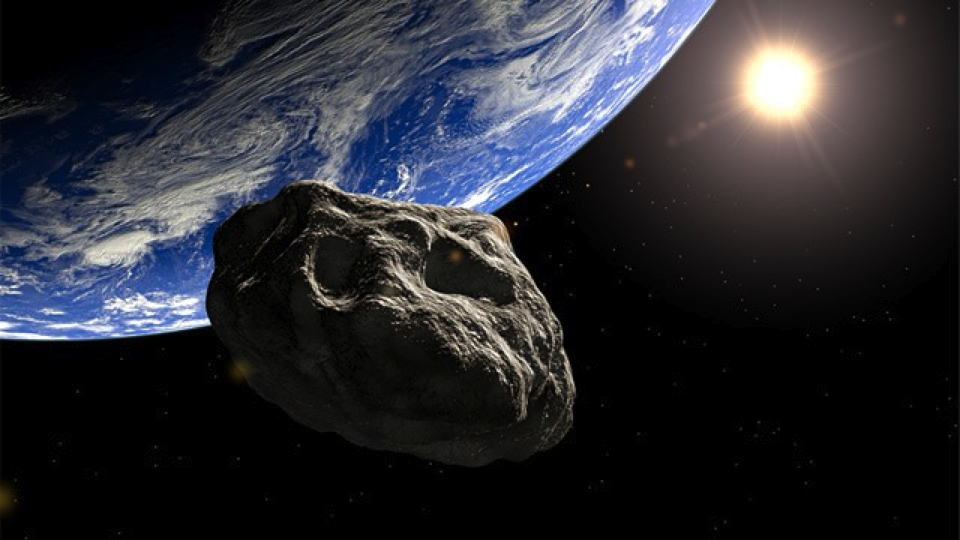
asteroid_earthFor some time, NASA has been forthright about its plans to tow an asteroid closer to Earth for the sake of study. As part of their long-term goals, this plan calls for the capture of a Near Earth Object (NEO) and positioning it at one of two Lagrange Points before conducting research on it. And late last month, they released plans on how they intend to go about doing this.

The first step, picking and choosing a potential target, would be handled by the telescope known as the Wide Field Infrared Survey Explorer (WISE). Launched in 2009, this telescope was charged with a two-year mission to image 99% of the visible sky in infrared wavelengths. Once this mission was successfully completed, NASA reassigned the craft a second four-month mission to track and discover near-Earth objects (NEOs).

orion_asteroidOnce that’s done, the next phase of the mission will involve launching an unmanned probe to intercept the NEO and drag it back into a retrievable position, probably by wrapping a bag around it. While this might sound improbable, keep in mind NEOs are rather small, and a bag of high-tensile material would do the trick. A crew would then be dispatched on an Orion capsule mated to the upcoming heavy rocket known as the Space Launch System to retrieve samples of the asteroid and return them to Earth.

Despite troubles getting the US Congress to approve a budget necessary to mount a capture mission, NASA remains committed to the plan, mainly because of the benefits it would entail. Many of these small asteroids are thought to contain minerals from the very early stages of the solar system’s formation, which means they’d be a useful means of investigating theories on how planets and planetoids form.

orion_captureIn addition, studying NEOs is also essential in creating safeguards against them striking Earth. The Russian meteorite explosion earlier this year put a new emphasis on the importance of tracking small asteroids, as the object that detonated in the skies above Chelyabinsk was too small to have been detected by other means. Much like many small asteroids, NEOs are too small to reflect visible light and must be tracked by infrared imaging.

Ultimately, bagging and dragging one of the smaller ones may be the only way to successfully study them and find ways to divert the larger ones. And a mission of this nature would stretch NASA’s unmanned capabilities for probes and satellites — a useful factor when discussing exploration of targets like Europa or Titan. It would also serve as a test of the Orion capsule and SLS, which are the intended means of getting astronauts to Mars by 2030.

asteroid_neo_studyNASA’s news release included a series of photos and a video animation of how the capture operation would take place, which included crew operations, the Orion spacecraft’s trip to and rendezvous with the relocated asteroid, as well as astronauts maneuvering through a spacewalk to collect samples from the asteroid.

NASA will also be hosting a technical workshop at the Lunar and Planetary Institute in Houston from Sept. 20th to Oct. 2nd to discuss potential ideas, and is looking for public input. Virtual participation will also be available to the public, and details on how to participate will become available soon. Stay tuned for updates, or check in with Universe Today, who is following the story.

And be sure to check out NASA’s video on what the NEO capture would look like. And check out more of pictures at NASA’s Asteroid Initiative website.


Sources:
extremetech.com
, universetoday.com, nasa.gov

News From Space: Walk on Mars with VR

oculus-rift-omni-treadmill-mars-nasa-640x353Virtual Reality, which was once the stuff of a cyberpunk wet dream, has grown somewhat stagnant in recent years. Large, bulky headsets, heavy cables, and graphics which were low definition and two-dimensional just didn’t seem to capture the essence of the concept. However, thanks to the Oculus Rift, the technology known as Virtual Reality has been getting a new lease on life.

Though it is still in the development phase, the makers of the Oculus Rift has mounted some impressive demos. Though still somewhat limited – using it with a mouse is counter-intuitive, and using it with a keyboard prevents using your body to scan virtual environments –  the potential is certainly there and the only question at this point is how to expand on it and give users the ability to do more.

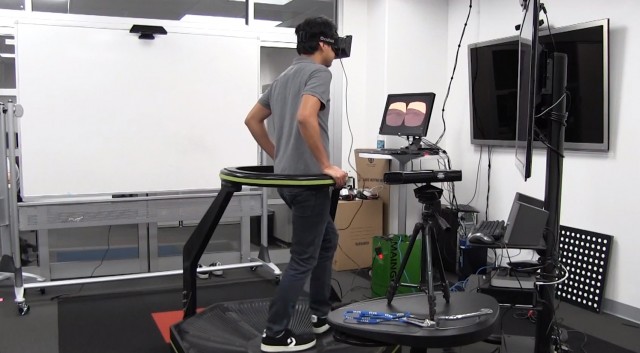
Oculus-RiftOne group that is determined to explore its uses is NASA, who used it in combination  with an Omni treadmill to simulate walking on Mars. Already, the combination of these two technologies has allowed gamers to do some pretty impressive things, like pretend they are in an immersive environment, move, and interact with it (mainly shooting and blowing things up), which is what VR is meant to allow.

NASA’s Jet Propulsion Laboratory, however, went a step beyond this by combining the Omni and a stereoscopic 360-degree panorama of Mars to create a walking-on-Mars simulator. The NASA JPL team was able to give depth to the image so users could walk around an image of the Martian landscape. This is perhaps the closest normal folks will ever get to walking around on a “real” alien planet.

omni_treadmillAlong with the Martian terrain, JPL created a demo wherein the user could wander around the International Space Station. The JPL team also found that for all the sophisticated imagery beamed back to Earth, it is no substitute for being immersed in an environment. Using a rig similar to the Rift and Omni could help researchers better orient themselves with alien terrain, thus being able to better plan missions and experiments.

Looking to the long run, this kind of technology could be a means for creating “telexploration” (or Immersive Space Exploration) – a process where astronauts would be able to explore alien environments by connecting to rover’s or satellites camera feed and controlling their movements. In a way that is similar to teleconferencing, people would be able to conduct true research on an alien environment while feeling like they were actually in there.

mars-180-degrees-panorama_croppedAlready, scientists at the Mars Science Laboratory have been doing just that with Curiosity and Opportunity, but the potential to bring this immersive experience to others is something many NASA and other space scientists want to see in the near future. What’s more, it is a cheap alternative to actually sending manned mission to other planets and star systems.

By simply beaming images back and allowing users to remotely control the robotic platform that is sending them, the best of both worlds can be had at a fraction of the cost. Whats more, it will allow people other than astronauts to witness and feel involved in the process of exploration, something that social media and live broadcasts from space is already allowing.

As usual, it seems that the age of open and democratic space travel is on its way, my friends. And as usual, there’s a video clip of the Oculus Rift and the Omni treadmill bringing a walk on Mars to life. Check it out:


Sources:
extremetech.com, engadget.com

News From Space: 12 Asteroids to Mine

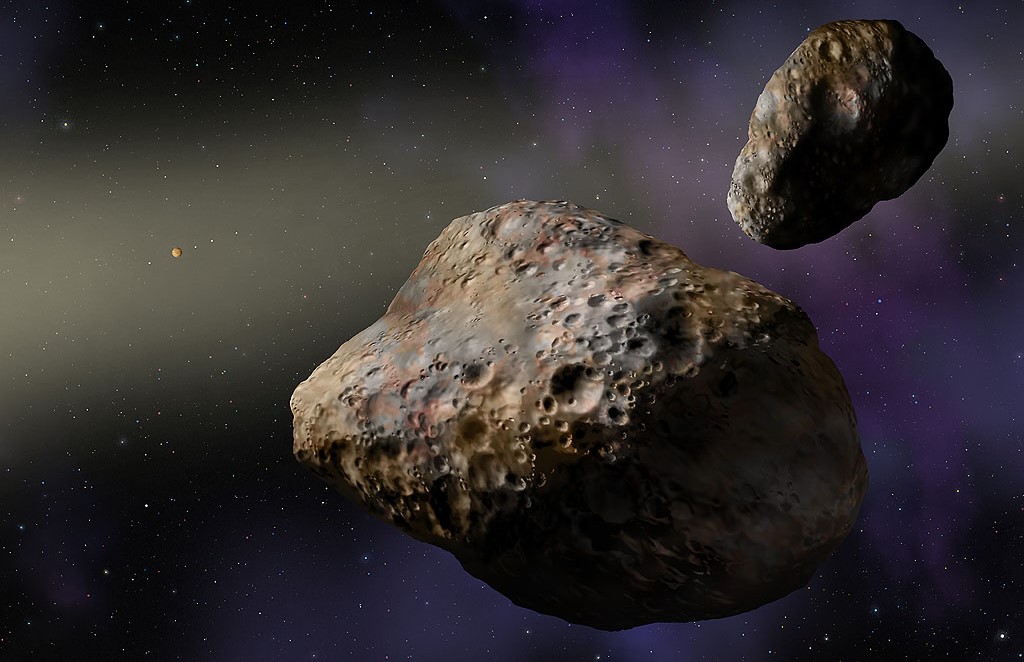
asteroidsLast year, the private space exploration company Planetary Resources announced that they intended to being prospecting and mining asteroids in the near future. And while they are certainly not alone in their intention to make this happen (Deep Space Industries has the same intention), many have asked if humanity is ready to begin extracting resources from the Asteroid Belt, at least as far as our level of technology is concerned.

In response, a group of astronomers at the University of Strathclyde in the UK did their own study and concluded that it is indeed possible with current rocket technology. What’s more, they conducted a survey of the Asteroid Belt and identified 12 near-Earth asteroids that could be easily retrieved and mined, and which are believed to contain high concentrations of precious and industrial metals.

asteroid_mining_robotAlready, it has been estimated that an asteroid as small as one-kilometer in diameter could contain upwards of two billion tons of iron-nickel ore, which is three times the global yield on Earth. Then there is the likely presence of gold, platinum, and other rare substances. Planetary Resources claims a 30-meter object of the right composition could contain $25 to $50 billion in platinum.

These numbers spurred the University of Strathclyde team, led by Garcia Yarnoz, to pour over the astronomical data on near-Earth objects to see if any of them could actually be snared. To their surprise, they found 12 small asteroids that pass close enough to Earth that they could be corralled into the L1 or L2 Lagrangian points for mining operations. The researchers dubbed these asteroids Easily Retrievable Objects (EROs).

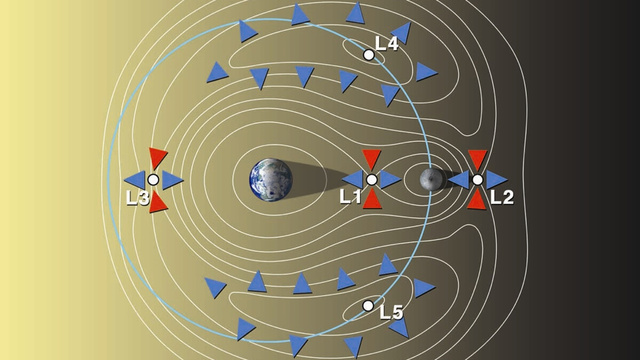
NASA_moonLagrange points refer to points where the gravity of Earth an another celestial object balance out. If anything enters one of these areas, it stays put, which is precisely what you want to do if you are looking to study it, mine it, or just keep it where its accessible. The L1 and L2 Lagrangian points are where the gravity of Earth and the sun are at a draw, roughly 1.6 million km (1 million miles) from Earth and about four times the distance to the moon.

The 12 candidate asteroids all have orbits that take them near the L1 or L2 Lagrangian points, so they would need only a small push to get them to the right spot. Yarnoz and his team estimate that changing the velocity of these objects by less than 500 meters per second would be sufficient, and this could be completed as early as 2026.

asteroid_DA14One of the important criteria in selected 12 mineable asteroids from the database of 9,000 near-Earth objects was size. Nudging a larger asteroid safely to a Lagrange point is simply not feasible with the current state of technology. In fact, most of the EROs that were identified in the study range between two to 20 meters, but that’s still large enough to contain substantial resources.

These 12 objects are probably a small fraction of EROs floating around near Earth. We know where many more of the big space rocks are because they’re much easier to see, but there might be a wealth of resource-rich small asteroids near the Lagrangian points ripe for the picking. And with time, and more orbital telescopes to spot them with, we can expect the list of mineable asteroids to grow.

Source: extremetech.com

New Space: “Sail Rover” to Explore Mercury

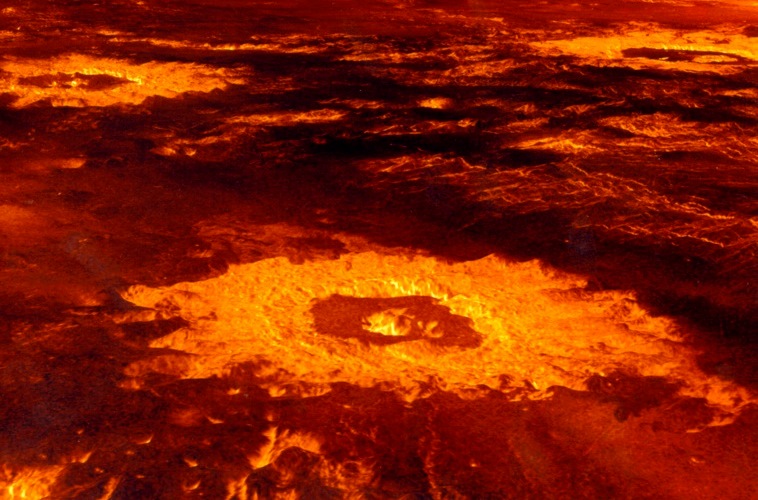
zephyr-580x435In addition to their ongoing plans to explore Mars for signs of life, the Jovian moon of Europa, and tow an asteroid closer to Earth, NASA also has plans to explore the surface of Venus. For decades, scientists have been yearning to get a closer look at this world’s pockmarked surface, but the volcanic activity, clouds of sulfuric acid and extreme heat are not exactly favorable to robotic rovers.

But according to NASA’s Innovative Advanced Concepts program, a windsailing rover could be just the means through which the hellish surface environment could be surveyed. This rover, nicknamed Zephyr, would use the high speeds and hot temperatures of Venus to its advantage, deploying a sail after entering the atmosphere and sailing to the ground.

mercury_surfaceThe rover would not be able to move around the surface, but would have electronics inside that are able to withstand the temperatures of 450 degrees Celsius (840 degrees Fahrenheit). Whenever the science team wanted to move some distance, however, they would deploy another sail that could use the wind to transport it across the surface. But mainly, the rover would remain on the ground conducting surface analysis.

Geoffrey Landis, who is with NASA’s Glenn Research Center and a part of the project to develop Zephyr, has long been an advocate of exploring Venus. This has included using solar powered airplane to explore the atmosphere, and colonizing the planet with floating cities. On the subject of Zephyr, he stated that:

A sail rover would be extraordinary for Venus. The sail has only two moving parts-just to set the sail and set the steering position-and that doesn’t require a lot of power. There’s no power required to actually drive. The fundamental elements of a rover for Venus are not beyond the bounds of physics. We could survive the furnace of Venus if we can come up with an innovative concept for a rover that can move on extremely low power levels.

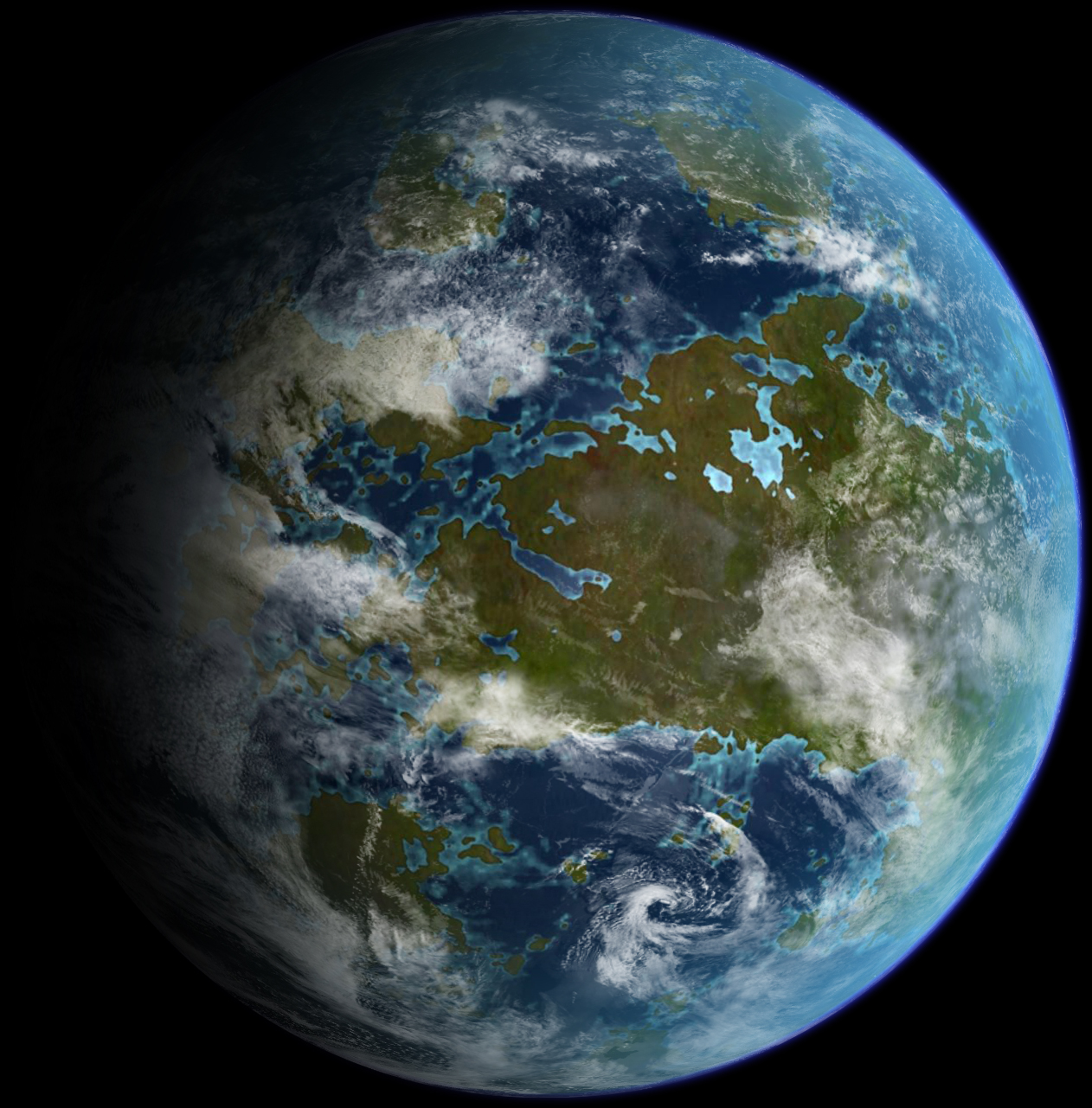
venus_terraformedIn addition to providing volumes of information on the planet’s, exploring the surface of Venus could yield some interesting clues as to how it came to look like something out of Dante’s Inferno. It has been suggested that at one time, Venus may have boasted an atmosphere and surface water similar to Earth’s, but was transformed into a toxic nightmare thanks to a runaway Greenhouse Effect.

Studying how this came to happen would go a long way to helping scientists understand Climate Change here on Earth, and as well as give them the chance to test out possible solutions. And of course, any working solutions might go a long way towards terraforming Venus itself, which is something many scientists are currently advocating since it might be cheaper and less time consuming than transforming Mars.

Then again, if the resources and budget are there, there’s no reason why we can’t try to retool both for human settlement. After all, we might not have much a choice in the coming centuries. Human beings aren’t exactly known for their slow population growth or conservation skills!

Source: universetoday.com

News From Space: We Come From Mars!

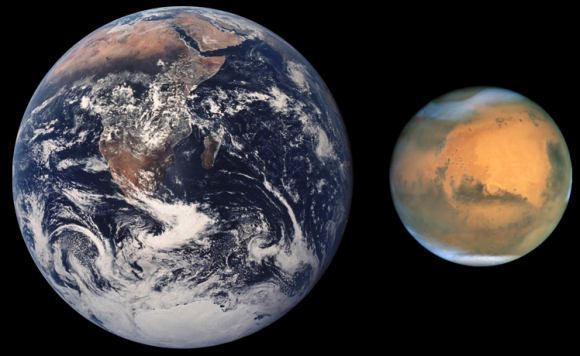
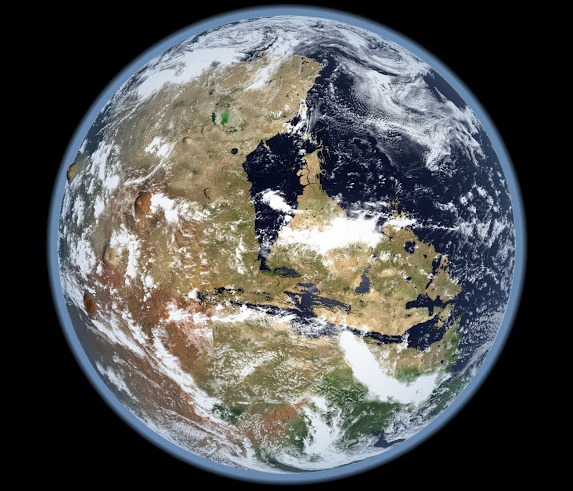
Mars_Earth_Comparison-580x356Men are from Mars, women are… also from Mars? That is the controversial theory that was proposed yesterday at the annual Goldschmidt Conference of geochemists being held in Florence, Italy. The proposal was made by Professor Steven Benner of the Westheimer Institute of Science and Technology in Florida and is the result of new evidence uncovered by his research team.

The theory that life on Earth originated on Mars has been argued before, but has remained contentious amongst the scientific community. However, Benner claims that new evidence supports the conclusion that the Red Planet really is our ancestral home by demonstrating that the elements for life here could only form on Mars, and came here via a Martian meteorite.

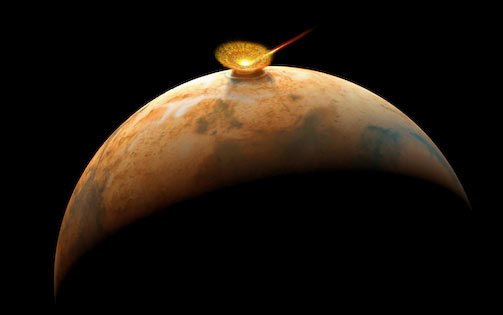
Asteroid-Impacts-MarsAccording to the theory, rocks violently flung up from the Red Planet’s surface during mammoth collisions with asteroids or comets then traveled millions of kilometers across interplanetary space to Earth. Once they reached Earth’s atmosphere. they melted, heated and exploded violently before the remnants crashed into the solid or liquid surface.

All that would be needed is for a few of those space born rocks to contain microbes from Mars surface. These building blocks of life would have to survive the journey through space and the impact on Earth to make this happen. But research into Exogenesis – the possibility that life was transplanted on Earth by meteorites – has already shown that this is possible.

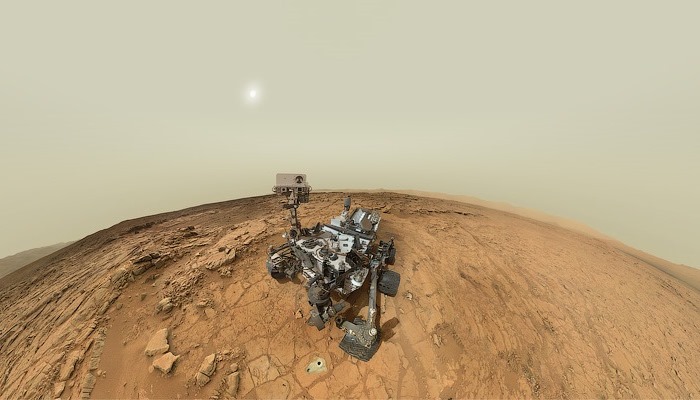
curiosity_sol-177-1What’s more, NASA’s Curiosity Rover was expressly created to search for the the environmental conditions that would support life. Less than half a year into its mission it accomplished just that, locating proof of the existence of water and a habitable zone. Between it and the Opportunity Rover, the search to determine if life still exists – in the form of organic molecules – continues and is expected to yield results very soon.

But of course, Benner was quick to point out that there is a difference between habitability (i.e. where can life live) and origins (where might life have originated). The presence organic molecules alone is not enough when it comes to the mystery of life’s creation, and when it comes to making the great leap between having the necessarily elements and the existence of living organisms, scientists remain hung up on two paradoxes.

These are known as the tar paradox and the water paradox, respectively. The former paradox addresses how life as we know it comes down to the presence of organic molecules, which are produced by the chemistry of carbon and its compounds. However, the presence of these compounds does not ensure the creation of life, and laboratory experiments to combine and heat them has only ever produced tar.

mars_lifeAs he puts it, the origin of life involves “deserts” and oxidized forms of the elements Boron (B) and Molybdenum (Mo) – namely borate and molybdate. Essentially, these elements are the difference between the formation of tar and RNA, the very building block of life:

Certain elements seem able to control the propensity of organic materials to turn into tar, particularly boron and molybdenum, so we believe that minerals containing both were fundamental to life first starting. Analysis of a Martian meteorite recently showed that there was boron on Mars; we now believe that the oxidized form of molybdenum was there too.

The second paradox relates to water, which is believed to be intrinsic for life to flourish, but can be also hazardous to its formation. According to modern research, RNA forms prebiotically, requiring mineral species like borate to capture organic elements before they devolve into tar and molybdate to arrange the material to give it ribose – organic sugars, also intrinsic to life.

Mars-snow-header-640x353This can only occur in deserts, he claims, because water is detrimental to RNA and inhibits the formation of borates and molybdates. And from a geological standpoint, there was simply too much water covering the early Earth’s surface to allow for this creation process to take place:

[W]ater is corrosive to RNA, which scientists believe was the first genetic molecule to appear. Although there was water on Mars, it covered much smaller areas than on early Earth. Various geologists will not let us have these [borates and molybdates] on early Earth, but they will let us have them on Mars. So IF you believe what the geologists are telling you about the structure of early Earth, AND you think that you need our chemistry to get RNA, AND IF you think that life began with RNA, THEN you place life’s origins on Mars,

All of this has served to throw the previously-held theory – that life came to Earth through water, minerals and organics being transported by comets – into disarray. Based on this new theory, comets are a bad candidate for organic life since they lack the hot, dry conditions for borate and molybdate formation.

Living-Mars.2If the new theory is to be believed, Mars boasted the proper conditions to create the elements for life, while Earth possessed the water to help it flourish. If such a partnership is needed for the creation of organic life, then scientists will need to reevaluate the likelihood of finding it elsewhere in the universe. Between the existence of water and hot dry environments, life would seem to require more specialized conditions than previously though.

But of course, the debate on whether Earthlings are really Martians will continue as scientific research progresses and definitive proof is discovered and accepted by the majority of the scientific community. In the meantime, Curiosity is expected to rendezvous with Mount Sharp sometime next spring or summer, where it will determine if organic molecules and elements like Boron and Molybdenum exist there.

And on Nov. 18th, NASA will launch its next mission to Mars – the MAVEN orbiter – which will begin studying the upper Martian atmosphere for the first time, determining its previous composition, and where all the water went and when was it lost. So we can expect plenty more news to come to us from our neighboring Red Planet. Wait and see!

Source: universetoday.com

News from Mars: Another (Planned) Mission!

mars-mission1When it comes to generational milestones, those of born since the late 70’s often feel like we’re lagging behind previous generations. Unlike the “Greatest Generation” or the “Baby Boomers”, we weren’t around to witness Two World Wars, the Great Depression, the Cuban Missile Crisis, the death of JFK, Neil Armstrong, or the FLQ Crisis. For us, the highlights were things like the development of the PC, the birth of the internet, Kurt Cobain, and of course, 9/11.

But looking ahead, those us of belonging to Generation X, Y, and Millennials might just be around to witness the greatest event in human history to date – a manned mission to Mars! And while NASA is busy planning a mission for 2030, a number of private sources are looking to make a mission happen sooner. One such group is a team of UK scientists working from Imperial College London that are working to mount a a three person mission to Mars.

mission-to-marsThe planned mission consists of two spacecraft, the first of which is a Martian lander equipped with a heat shield that will send the crew off into Earth’s orbit. The second craft would be a habitat vehicle, which is the craft that the crew would live in during the voyage. The habitat vehicle would consist of three floors, and measure in at around 30 feet (10m) tall and 13 feet (4m) in diameter.

The astronauts would be situated in the lander during takeoff, and would move to the habitat when the dual-craft reaches Earth orbit. Once the astronauts are safely within the habitat, a rocket would shoot the dual-craft off on its journey to Mars, which would take nine months to arrive, less than the approximately 300 days that most projections say it will take.

Mars_landerOnce In space, the dual-craft would then split apart but remain connected by a 60 meter (200 foot) tether. Thrusters from both vehicles would then spin them around a central point, creating artificial gravity similar to Earth’s in the habitat. Not only would this help the astronauts feel at home for the better part of a lonely year, but it would also reduce the bone and muscle atrophy that are associated with weightlessness.

The craft would be well-stocked with medicine to ensure that the crew remained in fine health for the nine month transit. Superconducting magnets, as well as water flowing through the shell of the craft, would be employed to help reduce both cosmic and solar radiation. And once the dual-craft reaches Mars, it would tether back together, the crew would move back into the lander, and then detach from the habitat descend to the Martian surface.

Mars-mission-2This mission would also involve sending a habitat and return vehicle to Mars before the astronauts arrived, so the crew would have shelter upon landing as well as a way to get home. The crew would spend anywhere from two months to two years on Mars, depending on the goals of the mission and the distance between Mars and Earth. On the way back home, the mission would dock with the ISS, then take a craft back to Earth from there.

What’s especially interesting about this proposed mission is that each stage of it has been proven to work in an individual capacity. What’s more, the concept of using water as a form radiation shielding is far more attractive than Inspiration Mars’, which calls for using the astronauts own fecal matter!

Unfortunately, no real timetable or price tags have been proposed for this mission yet. However, considering that every individual step of the mission has been proven to work on its own, the proposed overall journey could work. In the meantime, all us post-Baby Boomers can do is wait and hope we live to see it! I for one am going sick of hearing Boomers talk about where they were when Apollo 11 happened and having nothing comparable to say!

And be sure to enjoy this video of the University College London team discussing the possibilities of a Mars mission in our lifetime:


Sources:
bbc.co.uk, extremetech.com

A Menu for the Mars Mission

hi-seas1Throughout the summer, six people participated in an experiment designed to test how people will deal with the physical and psychological strangeness of a manned space journey. Known as the “Hawaii Space Exploration Analog and Simulation” (HI-SEAS) study, the research took place on a desolate slope of an abandoned quarry in Hawaii, 8,000 feet above sea level.

Here, the volunteers lived in a two-story geodesic dome and put on a full space suit to venture outside. Their communications were limited, their shower time rationed, and each spent much of their time conducting individual “space” experiments. But most importantly, they were eating food fit for a Mars astronaut. This was the main purpose of the experiment, testing the menu that manned missions to Mars will have to offer.

hi-seas2For years now, scientists have been trying to find ways to make astronaut food more palatable. In space, the food is either dehydrated and requires water and heat to process, or is rendered in liquid form that has to be drunk right out of the package. But on Mars, where there would be gravity, astronauts could actually cook their own food from “shelf-stable” ingredients.

The goal of the HI-SEAS study, run by investigators at the University of Hawaii at Manoa and Cornell University, has been to figure out the best strategies for nourishing Mars astronauts. On any long and isolated mission, especially on one as long as a hypothetical Mars mission. “menu fatigue” is a real danger. Astronauts need to consume a set amount of calories a day, otherwise they might lose body mass and bone density.

Lemon Dill Pasta Salad

For the sake of testing the menu, the mission relied on a six-member crew of scientific-minded professionals who kept detailed logs of their food adventures. They filled out smell, taste, and appearance questionnaires for each meal; weighed each food item; tracked water consumption, cooking and cleanup time; and even monitored their sense of smell to see if food boredom had any physiological effects.

Another fun aspect was that they also tested crowdsourced recipes submitted by the public. Each recipe was limited to using the list of ingredients available. There was “Cajun Style Spam Jambalaya” and “Oatmeal Thickened Beef Stew” for dinner, “Blueberry Lemon Cornmeal Pancakes” for breakfast, and even a spicy veggie sushi as an appetizer.

"Dark Matter" cake
“Dark Matter” cake

Kate Greene, a science and technology journalist on the mission, had this to say about the menu:

I’ve enjoyed so many meals here, actually. A quinoa salad, breakfast tacos, borscht, beef tagine, and all the breads we make with our bread maker… We’ve also had cakes and puddings and pies, grilled cheese sandwiches and soups like seafood chowder.

With today’s technology, it could take as long as 300 days to even get there. But even with fully-stocked shelves, life on a Mars mission would still be a major challenge. In addition to fighting menu boredom, there was also the issue of regular boredom. Confined to their shelters and forced to wear space suits to go outside, the “astronauts” began to miss the everyday activities they used to take for granted.

hi-seas5As Greene indicated, she came to miss such things as walking about outside, biking, and swimming, and gained a new appreciation for her old life:

Something I realized about my day-to-day life on Earth is that it’s full of novelty. I see new people all the time and I go to different places. In the habitat, novelty has been a lot harder to come by, and it was subtle when I found it–a new recipe, a different way to arrange the furniture, or someone saying something completely out of character. When I noticed these slight changes, my joy and excitement was embarrassingly disproportionate.

On August 13th, Greene and her five colleagues emerged into the daylight without a spacesuit for the first time in months. After a media event and a debrief with the principal researchers on the NASA-funded project, they continued to sift through all of their research data, which ranged from scientific research, their food study, and even a record of their sleep cycles.

hi-seasmapAll of this information is likely to be very useful in coming years and decades. Back in August, on the one-year anniversary of the Curiosity Rover’s landing on Mars, NASA chief Charles Bolden said he believed that human footprints would follow in its path, and 2030 remains the projected date for putting those boots on the Red Planet.

Sources: fastcoexist.com, hi-seas.org

News From Space: Volcanic Eruption on Io!

Io.1Io, the innermost of Jupiter’s four largest moons, has always been a source of wonder for astronomers and scientists. In addition to its pockmarked and ashen surface, it is the most volcanically active object in the Solar System, with about 240 active regions. This is due to the immense tidal forces that Jupiter provides, which create oceans of lava beneath the surface and huge volcanoes blasting it hundreds of kilometers into space.

Naturally, these eruptions are not visible directly from Earth unless one is using infrared cameras. But recently, a new series of eruptions were observed by Dr. Imke de Pater, Professor of Astronomy and of Earth and Planetary Science at the University of California in Berkeley. She was using the Keck II telescope on Mauna Kea in Hawaii on August 15, 2013 when it immediately became apparent something big was happening at Io.

Io_eruptionIn a telephone interview with Universe Today, de Pater claims this eruption is one of the top 10 most powerful eruptions that have been seen on Io, and she just happened to have the best seat in the house to observe it.

When you are right at the telescope and see the data, this is something you can see immediately, especially with a big eruption like that. It is a very energetic eruption that covers over a 30 square kilometer area. For Earth, that is big, and for Io it is very big too. It really is one of the biggest eruptions we have seen.

However, the fact that it occurred in the Rarog Patera region of Io, aptly named for a Czech fire deity, is somewhat unusual. While many regions of Io are volcanically active, de Pater said she’s not been able to find any other previous activity that has been reported in the Rarog Patera area, which the team finds very interesting.

Galileo_IoAccording to Ashley Davies of NASA’s Jet Propulsion Laboratory in Pasedena, California, Rarog Patera was identified as a small, relatively innocuous hot spot by the Galileo spacecraft during its encounter with the Jovian moon during the late 90’s. However, the observations made indicated that the volcanic activity was at a level way, way below what was seen on Aug 15.

Though we cannot see the eruptions directly, observation using the Keck telescope in the past have ascertained there are likely fountains of lava gushing from volcanically active fissures. But unlike volcanic eruptions here on Earth, which are already awesome and frightening to behold, eruptions on Io would be roughly 1000 times as powerful.

And since Io has no atmosphere to speak of, and the planet’s mass is significantly less than that of Earth’s (0.015 that of Earth’s to exact), the lava shoots off into space. Thus, for anyone standing on the moon’s surface, the result would look very much like a space launch at night, with plumes of flames reaching from the ground and extending indefinitely into the sky.

Io_Earth_Moon_ComparisonAs de Pater further indicated in the course of her interview, volcanic activity remains quite unpredictable on the Jovian moon:

We never know about eruptions – they can last hours, days months or years, so we have no idea how long it will stay active. but we are very excited about it.

No data or imagery has been released on the new eruption yet since the team is still making their observations and will be writing a paper on this topic. One thing is clear at this point, though. Despite its mysterious nature, Io still has a few surprises left for Earth scientists.

And for more information on the mysterious planet of Io, check out this Astronomycast podcast, featuring an interview with Dr. Pamela Gay of Southern Illinois University:

http://www.astronomycast.com/2011/12/ep-244-io/

Source: universetoday.com, astronomycast.com

Space Elevators!

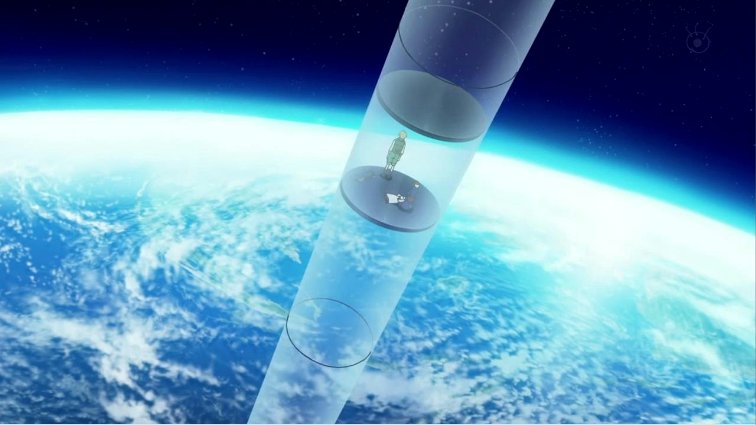
space_elevatorWhen it comes to classic and hard science fiction, there are few concepts more inspired, more audacious, and more cool than the Space Elevator. Consisting of a cable (or tether) attached the Earth near the equator and a station in geosynchronous orbit, a structure of this kind would allow us to put objects, supplies and even people into orbit without the need for rockets and space ships.

And perhaps I am a bit biased, seeing as how one of the writer’s featured in the Yuva anthology happens to have written a story that features one – Goran Zidar, whose story “Terraformers” includes an orbital colony that is tethered to the planet by a “Needle”. But I’ve found the concept fascinating for as long as I have known about it, and feel like its time for a conceptual post that deals with this most awesome of concepts!

Here goes…

History:
The first recorded example of the space elevator concept appeared in 1895 when Russian scientist Konstantin Tsiolkovsky was inspired by the Eiffel Tower in Paris. He considered a similar tower that extended from the ground into geostationary orbit (GSO) in space. Objects traveling into orbit would attain orbital velocity as they rode up the tower, and an object released at the tower’s top would also have the velocity necessary to remain in orbit.
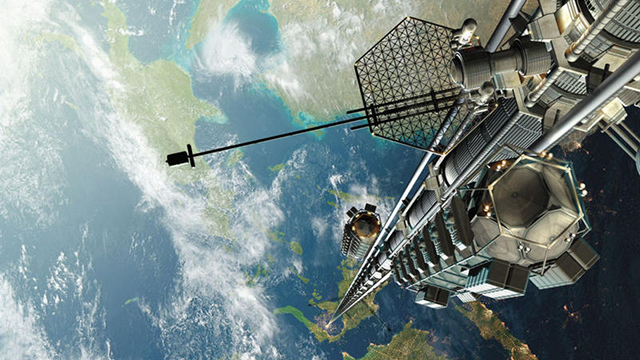
space_elevator1However, his concept called for a compression structure, which was unfeasible given that no material existed that had enough compressive strength to support its own weight under such conditions. In 1959, another Russian scientist named Yuri N. Artsutanov suggested a more feasible proposal, a tensile structure which used a geostationary satellite as the base from which to deploy the structure downward.

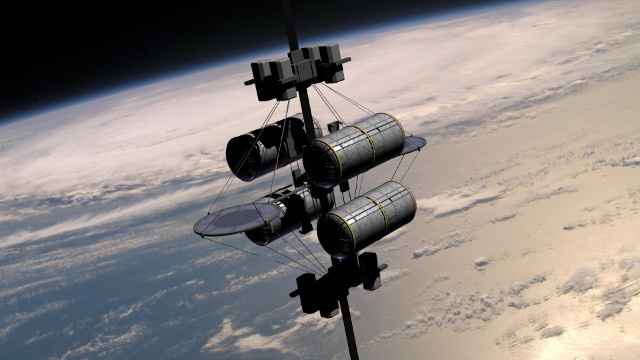
By using a counterweight, a cable would be lowered from geostationary orbit to the surface of Earth, while the counterweight was extended from the satellite away from Earth, keeping the cable constantly over the same spot on the surface of the Earth. He also proposed tapering the cable thickness so that the stress in the cable was constant. This gives a thinner cable at ground level that becomes thicker up towards the GSO.

space_elevator_liftIn 1966, Isaacs, Vine, Bradner and Bachus, four American engineers, reinvented the concept under the name “Sky-Hook”. In 1975, the concept was reinvented again by Jerome Pearson, whose model extended the distance of the counterweight to 144,000 km (90,000 miles) out, roughly half the distance to the Moon. However, these studies were also marred by the fact that no known material possessed the tensile strength required.

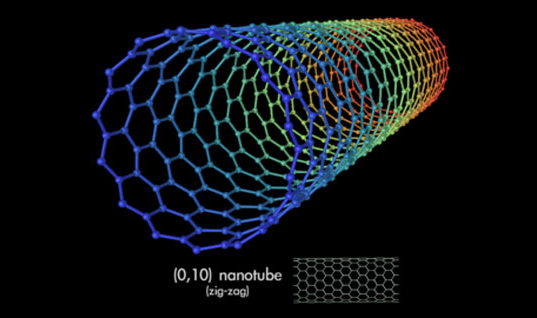
By the turn of the century, however, the concept was revitalized thanks to the development of carbon nanotubes. Believing that the high strength of these materials might make an orbital skyhook feasible, engineer David Smitherman of NASA put together a workshop at the Marshall Space Flight Center and invited many scientists and engineers to participate. Their findings were published in an article titled “Space Elevators: An Advanced Earth-Space Infrastructure for the New Millennium”.

carbon-nanotubeAnother American scientist, Bradley C. Edwards, also suggested using nanotubes to create a 100,000 km (62,000 mile) paper-thin cable that would be shaped like a ribbon instead of circular. This, he claimed, would make the tether more resistant to impacts from meteoroids.  The NASA Institute for Advanced Concepts began supporting Edwards’ work, allowing him to expand on it and plan how it would work in detail.

In Fiction:
arthurcclarke_fountains-of-paradiseIn 1979, the concept of the Space Elevator was introduced to the reading public thanks to the simultaneous publications of Arthur C. Clarke’s The Fountains of Paradise (1979) and Charles Sheffield’s The Web Between the Worlds. In the former, engineers construct a space elevator on top of a mountain peak in the fictional island country of Taprobane, which was loosely based on Clarke’s new home in Sri Lanka, albeit moved south to the Equator.

In an interesting and fact-based twist, the purpose for building the elevator on Earth is to demonstrate that it can be done on Mars. Ultimately, the protagonist of the story (Dr Vannevar Morgan) is motivated by his desire to help a Mars-based consortium to develop the elevator on Mars as part of a massive terraforming project, something which has been proposed in real life.

Sheffield- The Web Between the WorldsSimiliarly, in Sheffield’s Web, which was his first novel, we see a world famous engineer who has created extensive bridge networks all over the world using graphite cable. In hoping to achieve the unachievable dream, he begins work on a space elevator code named the “Beanstalk”. This brings him into an alliance with a corrupt tycoon who wants to make rockets obsolete, and intrigue ensues…

Three years later, Robert A. Heinlein’s novel Friday features a space elevator known as the “Nairobi Beanstalk”. In Heinlein’s vision, the world of the future is heavily Balkanized, and people exist in thousands of tiny nation states and orbital colonies which are connected to Earth via the Beanstalk, which as the name suggests, is located in equatorial Africa.

ksr_redmarsIn 1993, Kim Stanley Robinson released Red Mars, a sci-fi classic that remains a quintessential novel on the subject of Mars colonization. In the novel, the Martian colonists build a space elevator that allows them to bring additional colonists to the surface, as well as transport natural resources that were mined planetside into orbit where they can be ferried back to Earth.

In 1999, Sid Meier’s, creator of the famed Civilization gaming series, released the sci-fi based Sid Meier’s Alpha Centauri that deals with the colonization of the planet “Chiron” in the Alpha Centauri system. In the course of the turn-based strategy game, players are encouraged to construct special projects as a way of gaining bonuses and building up their faction’s power.

One such project is the Space Elevator, which requires that the faction building first research the technology “super tensile solids” so they have the means of building a super-tensile tether. Once built, it confers bonuses for space-based unit production, allows orbital drop units to be deployed over the entire planet, increases production rates for satellites, and removes the need for aerospace facilities. spaceelevator_alpha_centauriIn David Gerrold’s 2000 novel, Jumping Off The Planet, we are again confronted with an equatorial space elevator, this time in Ecuador where the device is once again known as the “beanstalk”. The story focuses on a family excursion which is eventually revealed to be a child-custody kidnapping. In addition to this futuristic take on domestic issues, Gerrold also examined some of the industrial applications of a mature elevator technology.
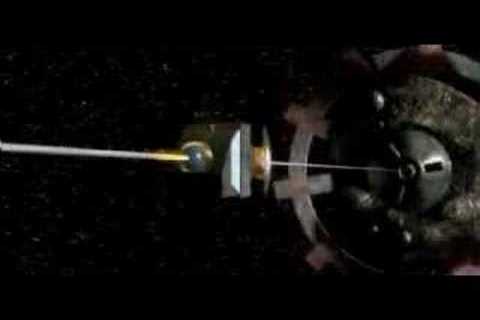

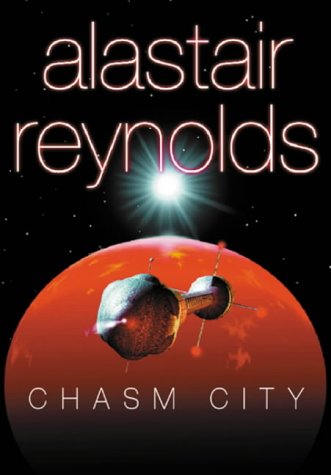
Chasm_City_coverIn 2001, Alastair Reynolds, a hard sci-fi author and creator of the Revelation Space series, released Chasm City, which acted as a sort of interquel between the first and second books in the main trilogy. At the opening of the novel, the story takes place on Sky’s Edge, a distant world where settlers travel to and from ships in orbit using a space elevator that connects to the planetary capitol on the surface.

And in 2011, author Joan Slonczewski presented a biological twist on the concept with her novel The Highest Frontier. Here, she depicts a college student who ascends a space elevator that uses a tether constructed from self-healing cables of anthrax bacilli. The engineered bacteria can regrow the cables when severed by space debris, thus turning the whole concept of tensile solids on its head.

Attempts to Build a Space Elevator:
Since the onset of the 21st century, several attempts have been made to design, fund, and create a space elevator before the end of this century. To speed the development process, proponents of the concept have created several competitions to develop the relevant technologies. These include the Elevator: 2010 and Robogames Space Elevator Ribbon Climbing, annual competitions seeking to design climbers, tethers and power-beaming systems.

space_elevator_nasaIn March of 2005, NASA announced its own incentive program, known as the Centennial Challenges program, which has since merged the Spaceward Foundation and upped the total value of their cash prizes to US$400,000. In that same year, the LiftPort Group began producing carbon nanotubes for industrial use, with the goal of using their profits as capital for the construction of a 100,000 km (62,000 mi) space elevator.

In 2008, the Japanese firm known as the Space Elevator Association, chaired by Shuichi Ono, announced plans to build a Space Elevator for the projected price tag of a trillion yen ($8 billion). Though the cost is substantially low, Ono and his peers claimed that Japan’s role as a leader in the field engineering could resolve the technical issues at the price they quoted.
obayashi-2In 2011, Google was reported to be working on plans for a space elevator at its secretive Google X Lab location. Since then, Google has stated that it is not working on a space elevator. But in that same year, the first European Space Elevator Challenge (EuSEC) to establish a climber structure took place in August.

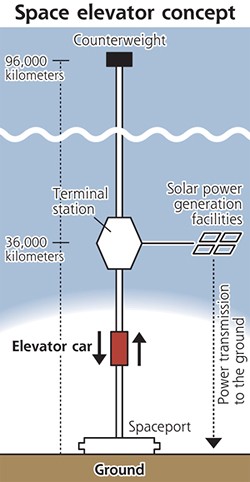
And in 2012, the Obayashi Corporation of Japan announced that in 38 years it could build a space elevator using carbon nanotube technology. Their detailed plan called for a 96,000 long tether, supported by a counterweight, that could hold a 30-passenger climber that would travel 200 km/h, reaching the GSO after a 7.5 day trip. However, no cost estimates, finance plans, or other specifics were made at this point.

space-elevator-schematics-largeDespite these efforts, the problems of building are still marred by several technical issues that have yet to be resolved. These include the problems of tensile strength, dangerous vibrations along the tether line, climbers creating wobble, dangers posed by satellites and meteoroids, and the fact that such a structure would be vulnerable to a terrorist or military attack.

Other Possibilities:
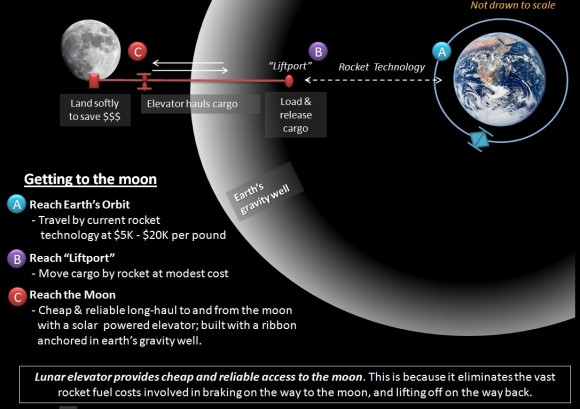
Though we may never be able to resolve the problems of building a space elevator on Earth, scientists are agreed that one could be made on other planets, particularly the Moon. This idea was first devised by Jerome Pearson, one of the concepts many original proponents, who proposed a smaller elevator that would be anchored by Earth’s gravity field.
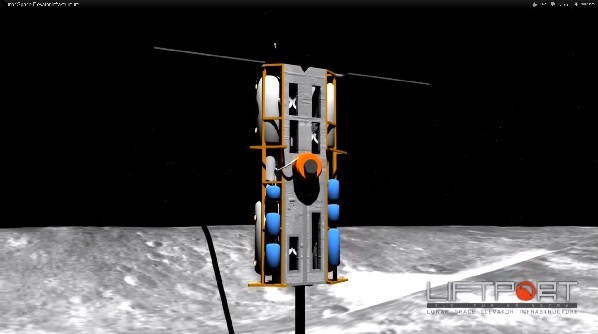
LiftPort1This is a necessity since the Moon does not rotate and could therefore not maintain tension along a tether. But in this scenario, the cable would be run from the moon and out through the L1 Lagrangian point. Once there, it would be dangled down into Earth’s gravity field where it would be held taught by Earth gravity and a large counterweight attached to its end.

Since the Moon is a far different environment than planet Earth, it presents numerous advantages when building a space elevator. For starters, there’s the strength of the materials needed, which would be significantly less, thus resolving a major technical issue. In addition, the Moon’s lower gravity would mean a diminished weight of the materials being shipped and of the structure itself.
space_elevator_lunarAs Pearson explained:

[T]o lift a thousand tons per day off the lunar surface, it would take less than 100,000 tons of elevator to do it — which means it pays back its own mass in just 100 days, or somewhere between three and four times its own mass per year — which is not a bad rate of return… You don’t need nanotubes and very, very high strength materials. But the higher the strength, the more of the ratio you can get for hauling stuff on the moon.

In fact, LiftPort is already deep into developing a “Lunar Elevator”. Plans to build one by 2020 were announced back in 2010, and since that time, the company launched a Kickstarter campaign to get the funding necessary to conduct tests that will get them closer to this goal. These consisting of sending a tethered robot 2km from the surface to conduct stress and telemetry tests.

Ultimately, the company estimates that a Lunar Elevator could be made at the cost of $800 million, which is substantially less than a “Terran Elevator” would cost. Similarly, it is likely that any manned missions to Mars, which will include eventual settlement and plans to terraform, will involve a Martian elevator, possibly named the “Ares Elevator”.

Much like SpaceX’s attempts to resolve the costs of sending rockets into space, the concept of a space elevator is another means of reducing the cost of sending things into orbit. As time goes on and technology improves, and humanity finds itself in other terrestrial environments where resources need to be exported into space, we can expect that elevators that pierce the sky will become possible.

In the meantime, we can always dream…

space_elevator_conceptSources: en.wikepedia.org, gizmag.com, io9.com, forbes.com, universetoday.com, futuretimeline.com