The Future is… Worms: Life Extension and Computer-Simulations

genetic_circuitPost-mortality is considered by most to be an intrinsic part of the so-called Technological Singularity. For centuries, improvements in medicine, nutrition and health have led to improved life expectancy. And in an age where so much more is possible – thanks to cybernetics, bio, nano, and medical advances – it stands to reason that people will alter their physique in order slow the onset of age and extend their lives even more.

And as research continues, new and exciting finds are being made that would seem to indicate that this future may be just around the corner. And at the heart of it may be a series of experiments involving worms. At the Buck Institute for Research and Aging in California, researchers have been tweaking longevity-related genes in nematode worms in order to amplify their lifespans.

immortal_wormsAnd the latest results caught even the researchers by surprise. By triggering mutations in two pathways known for lifespan extension – mutations that inhibit key molecules involved in insulin signaling (IIS) and the nutrient signaling pathway Target of Rapamycin (TOR) – they created an unexpected feedback effect that amplified the lifespan of the worms by a factor of five.

Ordinarily, a tweak to the TOR pathway results in a 30% lifespan extension in C. Elegans worms, while mutations in IIS (Daf-2) results in a doubling of lifespan. By combining the mutations, the researchers were expecting something around a 130% extension to lifespan. Instead, the worms lived the equivalent of about 400 to 500 human years.

antiagingAs Doctor Pankaj Kapahi said in an official statement:

Instead, what we have here is a synergistic five-fold increase in lifespan. The two mutations set off a positive feedback loop in specific tissues that amplified lifespan. These results now show that combining mutants can lead to radical lifespan extension — at least in simple organisms like the nematode worm.

The positive feedback loop, say the researchers, originates in the germline tissue of worms – a sequence of reproductive cells that may be passed onto successive generations. This may be where the interactions between the two mutations are integrated; and if correct, might apply to the pathways of more complex organisms. Towards that end, Kapahi and his team are looking to perform similar experiments in mice.

DNA_antiagingBut long-term, Kapahi says that a similar technique could be used to produce therapies for aging in humans. It’s unlikely that it would result in the dramatic increase to lifespan seen in worms, but it could be significant nonetheless. For example, the research could help explain why scientists are having a difficult time identifying single genes responsible for the long lives experienced by human centenarians:

In the early years, cancer researchers focused on mutations in single genes, but then it became apparent that different mutations in a class of genes were driving the disease process. The same thing is likely happening in aging. It’s quite probable that interactions between genes are critical in those fortunate enough to live very long, healthy lives.

A second worm-related story comes from the OpenWorm project, an international open source project dedicated to the creation of a bottom-up computer model of a millimeter-sized nemotode. As one of the simplest known multicellular life forms on Earth, it is considered a natural starting point for creating computer-simulated models of organic beings.
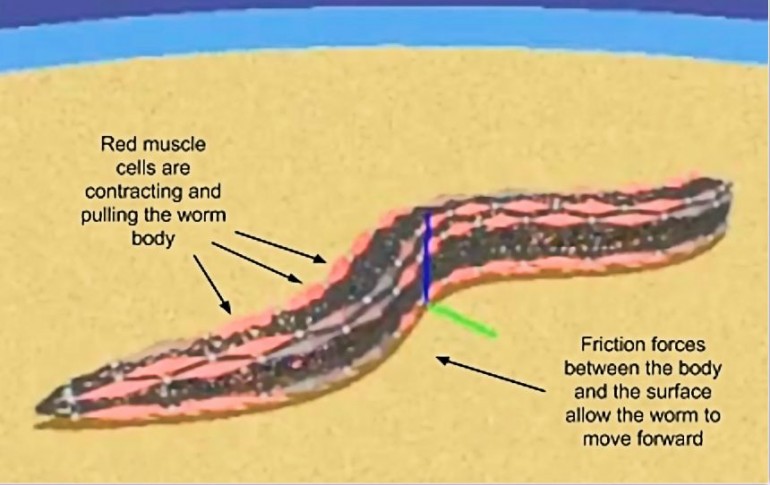
openworm-nematode-roundworm-simulation-artificial-lifeIn an important step forward, OpenWorm researchers have completed the simulation of the nematode’s 959 cells, 302 neurons, and 95 muscle cells and their worm is wriggling around in fine form. However, despite this basic simplicity, the nematode is not without without its share of complex behaviors, such as feeding, reproducing, and avoiding being eaten.

To model the complex behavior of this organism, the OpenWorm collaboration (which began in May 2013) is developing a bottom-up description. This involves making models of the individual worm cells and their interactions, based on their observed functionality in the real-world nematodes. Their hope is that realistic behavior will emerge if the individual cells act on each other as they do in the real organism.
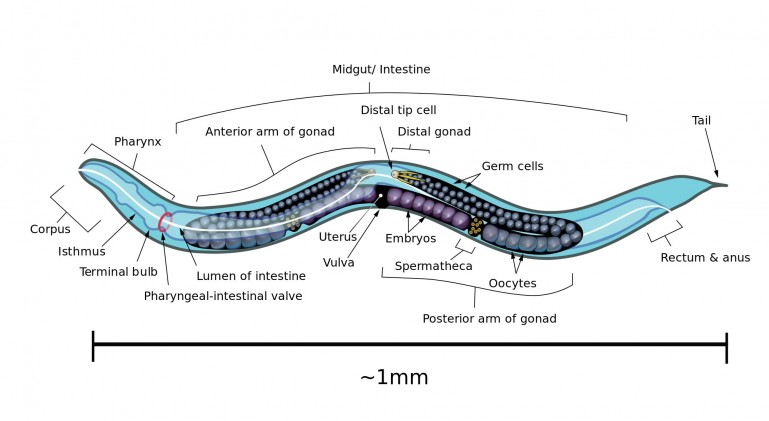
openworm-nematode-roundworm-simulation-artificial-life-0Fortunately, we know a lot about these nematodes. The complete cellular structure is known, as well as rather comprehensive information concerning the behavior of the thing in reaction to its environment. Included in our knowledge is the complete connectome, a comprehensive map of neural connections (synapses) in the worm’s nervous system.

The big question is, assuming that the behavior of the simulated worms continues to agree with the real thing, at what stage might it be reasonable to call it a living organism? The usual definition of living organisms is behavioral, that they extract usable energy from their environment, maintain homeostasis, possess a capacity to grow, respond to stimuli, reproduce, and adapt to their environment in successive generations.

openworm-nematode1If the simulation exhibits these behaviors, combined with realistic responses to its external environment, should we consider it to be alive? And just as importantly, what tests would be considered to test such a hypothesis? One possibility is an altered version of the Turing test – Alan Turing’s proposed idea for testing whether or not a computer could be called sentient.

In the Turing test, a computer is considered sentient and sapient if it can simulate the responses of a conscious sentient being so that an auditor can’t tell the difference. A modified Turing test might say that a simulated organism is alive if a skeptical biologist cannot, after thorough study of the simulation, identify a behavior that argues against the organism being alive.

openworm-nematode2And of course, this raises an even larger questions. For one, is humanity on the verge of creating “artificial life”? And what, if anything, does that really look like? Could it just as easily be in the form of computer simulations as anthropomorphic robots and biomachinery? And if the answer to any of these questions is yes, then what exactly does that say about our preconceived notions about what life is?

If humanity is indeed moving into an age of “artificial life”, and from several different directions, it is probably time that we figure out what differentiates the living from the nonliving. Structure? Behavior? DNA? Local reduction of entropy? The good news is that we don’t have to answer that question right away. Chances are, we wouldn’t be able to at any rate.

Brain-ScanAnd though it might not seem apparent, there is a connection between the former and latter story here. In addition to being able to prolong life through genetic engineering, the ability to simulate consciousness through computer-generated constructs might just prove a way to cheat death in the future. If complex life forms and connectomes (like that involved in the human brain) can be simulated, then people may be able to transfer their neural patterns before death and live on in simulated form indefinitely.

So… anti-aging, artificial life forms, and the potential for living indefinitely. And to think that it all begins with the simplest multicellular life form on Earth – the nemotode worm. But then again, all life – nay, all of existence – depends upon the most simple of interactions, which in turn give rise to more complex behaviors and organisms. Where else would we expect the next leap in biotechnological evolution to come from?

And in the meantime, be sure to enjoy this video of the OpenWorm’s simulated nemotode in action


Sources:
IO9, cell.com, gizmag, openworm

The Future of Smart Living: Smart Homes

Future-Home-Design-Dupli-CasaAt this year’s Consumer Electronics Show, one of the tech trends to watch was the concept of the Smart Home. Yes, in addition to 4K televisions, curved OLEDs, smart car technology and wearables, a new breed of in-home technology that extends far beyond the living room made some serious waves. And after numerous displays and presentations, it seems that future homes will involve connectivity and seamless automation.

To be fair, some smart home devices – such as connected light bulbs and thinking thermostats – have made their way into homes already. But by the end of 2014, a dizzying array of home devices are expected to appear, communicating across the Internet and your home network from every room in the house. It’s like the internet of things meets modern living, creating solutions that are right at your fingertips (via your smartphone)

smarthomeBut in many ways, the companies on the vanguard of this movement are still working on drawing the map and several questions still loom. For example, how will your connected refrigerator and your connected light bulbs talk to each other? Should the interface for the connected home always be the cell phone, or some other wirelessly connect device.

Such was the topic of debate at this year’s CES Smart Home Panel. The panel featured GE Home & Business Solutions Manager John Ouseph; Nest co-founder and VP of Engineering Matt Rogers; Revolv co-founder and Head of Marketing Mike Soucie; Philips’ Head of Technology, Connected Lighting George Yianni; Belkin Director of Product Management Ohad Zeira, and CNET Executive Editor Rich Brown.

samsunglumenSpecific technologies that were showcased this year that combined connectivity and smart living included the Samsung Lumen Smart Home Control Panel. This device is basically a way to control all the devices in your home, including the lighting, climate control, and sound and entertainment systems. It also networks with all your wireless devices (especially if their made by Samsung!) to run your home even when your not inside it.

Ultimately, Samsung hopes to release a souped-up version of this technology that can be integrated to any device in the home. Basically, it would be connected to everything from the washer and dryer to the refrigerator and even household robots, letting you know when the dishes are done, the clothes need to be flipped, the best before dates are about to expire, and the last time you house was vacuumed.


As already noted, intrinsic to the Smart Home concept is the idea of integration to smartphones and other devices. Hence, Samsung was sure to develop a Smart Home app that would allow people to connect to all the smart devices via WiFi, even when out of the home. For example, people who forget to turn off the lights and the appliances can do so even from the road or the office.

These features can be activated by voice, and several systems can be controlled at once through specific commands (i.e. “going to bed” turns the lights off and the temperature down). Cameras also monitor the home and give the user the ability to survey other rooms in the house, keeping a remote eye on things while away or in another room. And users can even answer the phone when in another room.

Check out the video of the Smart Home demonstration below:


Other companies made presentations as well. For instance, LG previewed their own software that would allow people to connect and communicate with their home. It’s known as HomeChat, an app based on Natural Language Processing (NLP) that lets users send texts to their compatible LG appliances. It works on Android, BlackBerry, iOS, Nokia Asha, and Windows Phone devices as well as OS X and Windows computers.

This represents a big improvement over last year’s Smart ThinQ, a set of similar application that were debuted at CES 2013. According to many tech reviewers, the biggest problem with these particular apps was the fact that each one was developed for a specific appliance. Not so with the HomeChat, which allows for wireless control over every integrated device in the home.

LGHomeChatAura, a re-imagined alarm clock that monitors your sleep patterns to promote rest and well-being. Unlike previous sleep monitoring devices, which monitor sleep but do not intervene to improve it, the Aura is fitted a mattress sensor that monitors your movements in the night, as well as a series of multi-colored LED light that “hack” your circadian rhythms.

In the morning, its light glows blue like daytime light, signaling you to wake up when it’s optimal, based upon your stirrings. At night, the LED glows orange and red like a sunset and turn itself off when you fall asleep. The designers hopes that this mix of cool and warm light can fill in where the seasons fall short, and coax your body into restful homeostasis.

aura_nightlightMeanwhile, the Aura will send your nightly sleep report to the cloud via Wi-Fi, and you can check in on your own rest via the accompanying smartphone app. The entire body is also touch-sensitive, its core LED – which are generally bright and piercing – is cleverly projected into an open air orb, diffusing the light while evoking the shape of the sun. And to deactivate the alarm, people need only trigger the sensor by getting out of bed.

Then there was Mother, a robotic wellness monitor produced by French inventor Rafi Haladjian. This small, Russian-doll shaped device is basically an internet base station with four sensors packs that track 15 different parts of your life. It is small enough to fit in your pocket to track your steps, affix to your door to act as a security alarm, and stick to your coffee maker to track how much you’re drinking and when you need more beans.

mother_robotAnd though the name may sound silly or tongue-in-cheek, it is central to Haladjian’s vision of what the “Internet of things” holds for us. More and more, smart and sensor-laden devices are manifesting as wellness accessories, ranging from fitness bands to wireless BP and heart rate monitors. But the problem is, all of these devices require their own app to operate. And the proliferation of devices is leading to a whole lot of digital clutter.

As Haladjian said in a recent interview with Co.Design:

Lots of things that were manageable when the number of smart devices was scarce, become unbearable when you push the limit past 10. You won’t be willing to change 50 batteries every couple of weeks. You won’t be willing to push the sync button every day. And you can’t bear to have 50 devices sending you notifications when something happens to them!

keekerAnd last, but not least, there was the Keecker – a robotic video projector that may just be the future of video entertainment. Not only is this robot able to wheel around the house like a Roomba, it can also sync with smartphones and display anything on your smart devices – from email, to photos, to videos. And it got a battery charge that lasts a week, so no cords are needed.

Designed by Pierre Lebeau, a former product manager at Google, the robot is programmed to follow its human owner from room to room like a little butler (via the smartphone app). It’s purpose is to create an immersive media environment by freeing the screen from its fixed spots and projecting them wherever their is enough surface space.


In this respect, its not unlike the Omnitouch or other projection smartscreens, which utilizes projectors and motion capture technology to allow people to turn any surface into a screen. The design even includes features found in other smart home devices – like the Nest smoke detector or the Spotter – which allow for the measuring of a home’s CO2 levels and temperature, or alerting users to unusual activity when they aren’t home.

Lebeau and his company will soon launching a Kickstarter campaign in order to finance bringing the technology to the open market. And though it has yet to launch, the cost of the robot is expected to be between $4000 and $5000.

Sources: cnet.com, (2), (3), (4), fastcodesign, (2), (3), (4)

How the Internet Works

undersea_internet1This video was passed onto me by my darling wife, who is a whiz at picking out videos and articles that I would find interesting! Entitled “There and Back Again: A Packet’s Tale, this educational video clip was produced by the World Science Festival – a New York City-based non-profit organization committed to scientific education and public awareness. And in it, they explain how this complex organism known as the internet actually works.

Using a single search item as an example, the clip lets the viewer see how a packet of data – one of trillions of internet interactions – goes from one side of the planet to the other and then back again, all in the space of a second. In addition to explaining how such volumes of data are handled, they also draw attention to the fact that the internet depends upon real physical connections.

This second aspect of the video is very important, in that it reminds us that despite what could computing and wireless teach us – that data is free-floating mass moving through the air – that the world-wide web is still grounded in solid objects, such as copper and optic cables, before it gets to your wireless router. And even though it is only three and a half minutes in length, the clip is quite informative. Enjoy!


Source:
worldsciencefestival.com

The Future is Here: 3-D Printed Brain Scanner

openbciWhen it comes to cutting-edge technology in recent years, two areas of development have been taking the world by storm. On the one hand, there’s 3-D printing (aka. Additive Manufacturing) that is revolutionizing the way we fabricate things. On the other, there’s brain-computer interfaces (BCI), which are giving people the power to control machines with their minds and even transfer their thoughts.

And now, two inventors – Conor Russomanno and Joel Murphy – are looking to marry the two worlds in order to create the first, open-source brain scanner that people can print off at home. Thanks to funding from DARPA, the two men printed off their first prototype headset this past week. It’s known as the OpenBCI, and it’s likely to make brain scanning a hell of a lot more affordable in the near future.

openbci1It includes a mini-computer that plugs into sensors on a black, skull-grabbing piece of plastic called the “Spider Claw 3000,” which can be created with a 3-D printer. Assembled, it operates as a low-cost electroencephalography (EEG) brainwave scanner that connects to a PC, compared to  high-grade EEG machines used by laboratories and researchers that cost thousands of dollars.

But over the past few years, cheaper models have been made by companies like Emotiv, which have in turn allowed a new era of DIY brain hackers to conduct brainwaves experiments. Since that time, everything from games, computer interfaces, personal tracking tools, and self-directed mind enhancement have been available to regular people.

openbci2But Russomanno and Murphy felt the community needed a completely open-source platform if it was truly going to take off – hence the OpenBCI. The hardware to build the headset can be ordered from the company, while the software to run it is available through GitHub, a popular code sharing site. Once procured, people will have the ability to print off, program, and adjust their own personal brain scanning device.

According to Russomanno, the greatest asset of the headset (aside from the price) is the freedom it gives to brain hackers to put their EEG probes anywhere they like:

You don’t want to limit yourself to looking to just a few places on the scalp. You can target up to 64 locations on the scalp with a maximum of 16 electrodes at a time.

As it stands, Russomanno and Murphy have built the prototype headset, but still need to raise money to build the mini-computer that it plugs into. To accomplish this, the two inventors launched a Kickstarter project to fund the development of the Arduino-compatible hardware. Last week, they reached their goal of $100,000, and expect to ship their first systems in March.

openbci3The current design of the hardware, which looks more like a hexagonly-shaped circuit board than a computer, is their third incarnation. In addition to being smaller and Adruino-compatible, the third version is also programmable via Bluetooth and has a port for an SD card. When the hardware starts shipping, Russomanno expects it to kick off a new round of experimentation:

We’ve got about 300 people that have already donated to receive the board. If you’re willing to spend $300 for a piece of technology, you’re definitely going to build something with it.

One of the hallmarks of technological revolutions is the ability to make the technology scalable and more affordable. In this way, its benefits (aka. returns) are able to multiply and expand. And with the help of open-source devices like these that people can create on 3-D printers (which are also dropping in prices) the returns on mind-controlled devices are likely to grow exponentially in the coming years.

In short, the age of mind-controlled machinery may be just around the corner. Good to know they will be obeying us and not the other way around!


Sources:
wired.com, kickstarter.com

Looking Forward: Science Stories to Watch for in 2014

BrightFutureThe year of 2013 was a rather big one in terms of technological developments, be they in the field of biomedicine, space exploration, computing, particle physics, or robotics technology. Now that the New Year is in full swing, there are plenty of predictions as to what the next twelve months will bring. As they say, nothing ever occurs in a vacuum, and each new step in the long chain known as “progress” is built upon those that came before.

And with so many innovations and breakthroughs behind us, it will be exciting to see what lies ahead of us for the year of 2014. The following is a list containing many such predictions, listed in alphabetical order:

Beginning of Human Trials for Cancer Drug:
A big story that went largely unreported in 2013 came out of the Stanford School of Medicine, where researchers announced a promising strategy in developing a vaccine to combat cancer. Such a goal has been dreamed about for years, using the immune system’s killer T-cells to attack cancerous cells. The only roadblock to this strategy has been that cancer cells use a molecule known as CD47 to send a signal that fools T-cells, making them think that the cancer cells are benign.

pink-ribbonHowever, researchers at Stanford have demonstrated that the introduction of an “Anti-CD47 antibody” can intercept this signal, allowing T-cells and macrophages to identify and kill cancer cells. Stanford researchers plan to start human trials of this potential new cancer therapy in 2014, with the hope that it would be commercially available in a few years time. A great hope with this new macrophage therapy is that it will, in a sense, create a personalized vaccination against a patient’s particular form of cancer.

Combined with HIV vaccinations that have been shown not only to block the acquisition of the virus, but even kill it, 2014 may prove to be the year that the ongoing war against two of the deadliest diseases in the world finally began to be won.

Close Call for Mars:
A comet discovery back in 2013 created a brief stir when researchers noted that the comet in question – C/2013 A1 Siding Springs – would make a very close passage of the planet Mars on October 19th, 2014. Some even suspected it might impact the surface, creating all kinds of havoc for the world’s small fleet or orbiting satellites and ground-based rovers.

Mars_A1_Latest_2014Though refinements from subsequent observations have effectively ruled that out, the comet will still pass by Mars at a close 41,300 kilometers, just outside the orbit of its outer moon of Deimos. Ground-based observers will get to watch the magnitude comet close in on Mars through October, as will the orbiters and rovers on and above the Martian surface.

Deployment of the First Solid-State Laser:
The US Navy has been working diligently to create the next-generation of weapons and deploy them to the front lines. In addition to sub-hunting robots and autonomous aerial drones, they have also been working towards the creation of some serious ship-based firepower. This has included electrically-powered artillery guns (aka. rail guns); and just as impressively, laser guns!

Navy_LAWS_laser_demonstrator_610x406Sometime in 2014, the US Navy expects to see the USS Ponce, with its single solid-state laser weapon, to be deployed to the Persian Gulf as part of an “at-sea demonstration”. Although they have been tight-lipped on the capabilities of this particular directed-energy weapon,they have indicated that its intended purpose is as a countermeasure against threats – including aerial drones and fast-moving small boats.

Discovery of Dark Matter:
For years, scientists have suspected that they are closing in on the discovery of Dark Matter. Since it was proposed in the 1930s, finding this strange mass – that makes up the bulk of the universe alongside “Dark Energy” – has been a top priority for astrophysicists. And 2014 may just be the year that the Large Underground Xenon experiment (LUX), located near the town of Lead in South Dakota, finally detects it.

LUXLocated deep underground to prevent interference from cosmic rays, the LUX experiment monitors Weakly Interacting Massive Particles (WIMPs) as they interact with 370 kilograms of super-cooled liquid Xenon. LUX is due to start another 300 day test run in 2014, and the experiment will add another piece to the puzzle posed by dark matter to modern cosmology. If all goes well, conclusive proof as to the existence of this invisible, mysterious mass may finally be found!

ESA’s Rosetta Makes First Comet Landing:
This year, after over a decade of planning, the European Space Agency’s Rosetta robotic spacecraft will rendezvous with Comet 67P/Churyumov-Gerasimenko. This will begin on January 20th, when the ESA will hail the R0setta and “awaken” its systems from their slumber. By August, the two will meet, in what promises to be the cosmic encounter of the year. After examining the comet in detail, Rosetta will then dispatch its Philae lander, equipped complete with harpoons and ice screws to make the first ever landing on a comet.

Rosetta_and_Philae_at_comet_node_full_imageFirst Flight of Falcon Heavy:
2014 will be a busy year for SpaceX, and is expected to be conducting more satellite deployments for customers and resupply missions to the International Space Station in the coming year. They’ll also be moving ahead with tests of their crew-rated version of the Dragon capsule in 2014. But one of the most interesting missions to watch for is the demo flight of the Falcon 9 Heavy, which is slated to launch out of Vandenberg Air Force Base by the end of 2014.

This historic flight will mark the beginning in a new era of commercial space exploration and private space travel. It will also see Elon Musk’s (founder and CEO of Space X, Tesla Motors and PayPal) dream of affordable space missions coming one step closer to fruition. As for what this will make possible, well… the list is endless.

spaceX-falcon9Everything from Space Elevators and O’Neil space habitats to asteroid mining, missions to the Moon, Mars and beyond. And 2014 may prove to be the year that it all begins in earnest!

First Flight of the Orion:
In September of this coming year, NASA is planning on making the first launch of its new Orion Multi-Purpose Crew Vehicle. This will be a momentous event since it constitutes the first step in replacing NASA’s capability to launch crews into space. Ever since the cancellation of their Space Shuttle Program in 2011, NASA has been dependent on other space agencies (most notably the Russian Federal Space Agency) to launch its personnel, satellites and supplies into space.

orion_arrays1The test flight, which will be known as Exploration Flight Test 1 (EFT-1), will be a  short uncrewed flight that tests the capsule during reentry after two orbits. In the long run, this test will determine if the first lunar orbital mission using an Orion MPCV can occur by the end of the decade. For as we all know, NASA has some BIG PLANS for the Moon, most of which revolve around creating a settlement there.

Gaia Begins Mapping the Milky Way:
Launched on from the Kourou Space Center in French Guiana on December 19thof last year, the European Space Agency’s Gaia space observatory will begin its historic astrometry mission this year. Relying on an advanced array of instruments to conduct spectrophotometric measurements, Gaia will provide detailed physical properties of each star observed, characterising their luminosity, effective temperature, gravity and elemental composition.

Gaia_galaxyThis will effectively create the most accurate map yet constructed of our Milky Way Galaxy, but it is also anticipated that many exciting new discoveries will occur due to spin-offs from this mission. This will include the discovery of new exoplanets, asteroids, comets and much more. Soon, the mysteries of deep space won’t seem so mysterious any more. But don’t expect it to get any less tantalizing!

International Climate Summit in New York:
While it still remains a hotly contested partisan issue, the scientific consensus is clear: Climate Change is real and is getting worse. In addition to environmental organizations and agencies, non-partisan entities, from insurance companies to the U.S. Navy, are busy preparing for rising sea levels and other changes. In September 2014, the United Nations will hold another a Climate Summit to discuss what can be one.

United-Nations_HQThis time around, the delegates from hundreds of nations will converge on the UN Headquarters in New York City. This comes one year before the UN is looking to conclude its Framework Convention on Climate Change, and the New York summit will likely herald more calls to action. Though it’ll be worth watching and generate plenty of news stories, expect many of the biggest climate offenders worldwide to ignore calls for action.

MAVEN and MOM reach Mars:
2014 will be a red-letter year for those studying the Red Planet, mainly because it will be during this year that two operations are slated to begin. These included the Indian Space Agency’s Mars Orbiter Mission (MOM, aka. Mangalyaan-1) and NASA’ Mars Atmosphere and Volatile EvolutioN (MAVEN) mission, which are due to arrive just two days apart – on September 24th and 22nd respectively.

mars_lifeBoth orbiters will be tasked with studying Mars’ atmosphere and determining what atmospheric conditions looked like billions of years ago, and what happened to turn the atmosphere into the thin, depleted layer it is today. Combined with the Curiosity and Opportunity rovers, ESA’s Mars Express,  NASA’s Odyssey spacecraft and the Mars Reconnaissance Orbiter, they will help to unlock the secrets of the Red Planet.

Unmanned Aircraft Testing:
A lot of the action for the year ahead is in the area of unmanned aircraft, building on the accomplishments in recent years on the drone front. For instance, the US Navy is expected to continue running trials with the X-47B, the unmanned technology demonstrator aircraft that is expected to become the template for autonomous aerial vehicles down the road.

X-47BThroughout 2013, the Navy conducted several tests with the X-47B, as part of its ongoing UCLASS (Unmanned Carrier Launched Airborne Surveillance and Strike) aircraft program. Specifically, they demonstrated that the X-47B was capable of making carrier-based take offs and landings. By mid 2014, it is expected that they will have made more key advances, even though the program is likely to take another decade before it is fully realizable.

Virgin Galactic Takes Off:
And last, but not least, 2014 is the year that space tourism is expected to take off (no pun intended!). After many years of research, development and testing, Virgin Galactic’s SpaceShipTwo may finally make its inaugural flights, flying out of the Mohave Spaceport and bringing tourists on an exciting (and expensive) ride into the upper atmosphere.

spaceshiptwo-2nd-flight-2In late 2013, SpaceShipTwo and passed a key milestone test flight when its powered rocket engine was test fired for an extended period of time and it achieved speeds and altitudes in excess of anything it had achieved before. Having conducted several successful glide and feathered-wing test flights already, Virgin Galactic is confident that the craft has what it takes to ferry passengers into low-orbit and bring them home safely.

On its inaugural flights, SpaceShipTwo will carry two pilots and six passengers, with seats going for $250,000 a pop. If all goes well, 2014 will be remembered as the year that low-orbit space tourism officially began!

Yes, 2014 promises to be an exciting year. And I look forward to chronicling and documenting it as much as possible from this humble little blog. I hope you will all join me on the journey!

Sources: Universetoday, (2), med.standford.edu, news.cnet, listosaur, sci.esa.int

Top Stories from CES 2014

CES2014_GooglePlus_BoxThe Consumer Electronics Show has been in full swing for two days now, and already the top spots for most impressive technology of the year has been selected. Granted, opinion is divided, and there are many top contenders, but between displays, gaming, smartphones, and personal devices, there’s been no shortage of technologies to choose from.

And having sifted through some news stories from the front lines, I have decided to compile a list of what I think the most impressive gadgets, displays and devices of this year’s show were. And as usual, they range from the innovative and creative, to the cool and futuristic, with some quirky and fun things holding up the middle. And here they are, in alphabetical order:

celestron_cosmosAs an astronomy enthusiast, and someone who enjoys hearing about new and innovative technologies, Celestron’s Cosmos 90GT WiFi Telescope was quite the story. Hoping to make astronomy more accessible to the masses, this new telescope is the first that can be controlled by an app over WiFi. Once paired, the system guides stargazers through the cosmos as directions flow from the app to the motorized scope base.

In terms of comuting, Lenovo chose to breathe some new life into the oft-declared dying industry of desktop PCs this year, thanks to the unveiling of their Horizon 2. Its 27-inch touchscreen can go fully horizontal, becoming both a gaming and media table. The large touch display has a novel pairing technique that lets you drop multiple smartphones directly onto the screen, as well as group, share, and edit photos from them.

Lenovo Horizon 2 Aura scanNext up is the latest set of display glasses to the world by storm, courtesy of the Epson Smart Glass project. Ever since Google Glass was unveiled in 2012, other electronics and IT companies have been racing to produce a similar product, one that can make heads-up display tech, WiFi connectivity, internet browsing, and augmented reality portable and wearable.

Epson was already moving in that direction back in 2011 when they released their BT100 augmented reality glasses. And now, with their Moverio BT200, they’ve clearly stepped up their game. In addition to being 60 percent lighter than the previous generation, the system has two parts – consisting of a pair of glasses and a control unit.

moverio-bt200-1The glasses feature a tiny LCD-based projection lens system and optical light guide which project digital content onto a transparent virtual display (960 x 540 resolution) and has a camera for video and stills capture, or AR marker detection. With the incorporation of third-party software, and taking advantage of the internal gyroscope and compass, a user can even create 360 degree panoramic environments.

At the other end, the handheld controller runs on Android 4.0, has a textured touchpad control surface, built-in Wi-Fi connectivity for video content streaming, and up to six hours of battery life.


The BT-200 smart glasses are currently being demonstrated at Epson’s CES booth, where visitors can experience a table-top virtual fighting game with AR characters, a medical imaging system that allows wearers to see through a person’s skin, and an AR assistance app to help perform unfamiliar tasks .

This year’s CES also featured a ridiculous amount of curved screens. Samsung seemed particularly proud of its garish, curved LCD TV’s, and even booked headliners like Mark Cuban and Michael Bay to promote them. In the latter case, this didn’t go so well. However, one curved screen device actually seemed appropriate – the LG G Flex 6-inch smartphone.

LG_G_GlexWhen it comes to massive curved screens, only one person can benefit from the sweet spot of the display – that focal point in the center where they feel enveloped. But in the case of the LG G Flex-6, the subtle bend in the screen allows for less light intrusion from the sides, and it distorts your own reflection just enough to obscure any distracting glare. Granted, its not exactly the flexible tech I was hoping to see, but its something!

In the world of gaming, two contributions made a rather big splash this year. These included the Playstation Now, a game streaming service just unveiled by Sony that lets gamers instantly play their games from a PS3, PS4, or PS Vita without downloading and always in the most updated version. Plus, it gives users the ability to rent titles they’re interested in, rather than buying the full copy.

maingear_sparkThen there was the Maingear Spark, a gaming desktop designed to run Valve’s gaming-centric SteamOS (and Windows) that measures just five inches square and weighs less than a pound. This is a big boon for gamers who usually have to deal gaming desktops that are bulky, heavy, and don’t fit well on an entertainment stand next to other gaming devices, an HD box, and anything else you might have there.

Next up, there is a device that helps consumers navigate the complex world of iris identification that is becoming all the rage. It’s known as the Myris Eyelock, a simple, straightforward gadget that takes a quick video of your eyeball, has you log in to your various accounts, and then automatically signs you in, without you ever having to type in your password.

myris_eyelockSo basically, you can utilize this new biometric ID system by having your retinal scan on your person wherever you go. And then, rather than go through the process of remembering multiple (and no doubt, complicated passwords, as identity theft is becoming increasingly problematic), you can upload a marker that leaves no doubt as to your identity. And at less than $300, it’s an affordable option, too.

And what would an electronics show be without showcasing a little drone technology? And the Parrot MiniDrone was this year’s crowd pleaser: a palm-sized, camera-equipped, remotely-piloted quad-rotor. However, this model has the added feature of two six-inch wheels, which affords it the ability to zip across floors, climb walls, and even move across ceilings! A truly versatile personal drone.


scanaduAnother very interesting display this year was the Scanadu Scout, the world’s first real-life tricorder. First unveiled back in May of 2013, the Scout represents the culmination of years of work by the NASA Ames Research Center to produce the world’s first, non-invasive medical scanner. And this year, they chose to showcase it at CES and let people test it out on themselves and each other.

All told, the Scanadu Scout can measure a person’s vital signs – including their heart rate, blood pressure, temperature – without ever touching them. All that’s needed is to place the scanner above your skin, wait a moment, and voila! Instant vitals. The sensor will begin a pilot program with 10,000 users this spring, the first key step toward FDA approval.

wowwee_mip_sg_4And of course, no CES would be complete without a toy robot or two. This year, it was the WowWee MiP (Mobile Inverted Pendulum) that put on a big show. Basically, it is an eight-inch bot that balances itself on dual wheels (like a Segway), is controllable by hand gestures, a Bluetooth-conncted phone, or can autonomously roll around.

Its sensitivity to commands and its ability to balance while zooming across the floor are super impressive. While on display, many were shown carrying a tray around (sometimes with another MiP on a tray). And, a real crowd pleaser, the MiP can even dance. Always got to throw in something for the retro 80’s crowd, the people who grew up with the SICO robot, Jinx, and other friendly automatons!

iOptikBut perhaps most impressive of all, at least in my humble opinion, is the display of the prototype for the iOptik AR Contact Lens. While most of the focus on high-tech eyewear has been focused on wearables like Google Glass of late, other developers have been steadily working towards display devices that are small enough to worse over your pupil.

Developed by the Washington-based company Innovega with support from DARPA, the iOptik is a heads-up display built into a set of contact lenses. And this year, the first fully-functioning prototypes are being showcased at CES. Acting as a micro-display, the glasses project a picture onto the contact lens, which works as a filter to separate the real-world from the digital environment and then interlaces them into the one image.

ioptik_contact_lenses-7Embedded in the contact lenses are micro-components that enable the user to focus on near-eye images. Light projected by the display (built into a set of glasses) passes through the center of the pupil and then works with the eye’s regular optics to focus the display on the retina, while light from the real-life environment reaches the retina via an outer filter.

This creates two separate images on the retina which are then superimposed to create one integrated image, or augmented reality. It also offers an alternative solution to traditional near-eye displays which create the illusion of an object in the distance so as not to hinder regular vision. At present, still requires clearance from the FDA before it becomes commercially available, which may come in late 2014 or early 2015.


Well, its certainly been an interesting year, once again, in the world of electronics, robotics, personal devices, and wearable technology. And it manages to capture the pace of change that is increasingly coming to characterize our lives. And according to the tech site Mashable, this year’s show was characterized by televisions with 4K pixel resolution, wearables, biometrics, the internet of personalized and data-driven things, and of course, 3-D printing and imaging.

And as always, there were plenty of videos showcasing tons of interesting concepts and devices that were featured this year. Here are a few that I managed to find and thought were worthy of passing on:

Internet of Things Highlights:


Motion Tech Highlights:


Wearable Tech Highlights:


Sources: popsci.com, (2), cesweb, mashable, (2), gizmag, (2), news.cnet

News From Space: Space Planes and Space Colonies

skylon-orbit-reaction-enginesThe year of 2013 closed with many interesting stories about the coming age of space exploration. And they came from many fronts, including the frontiers of exploration (Mars and the outer Solar System) as well as right here at home, on the conceptual front. In the case of the latter, it seems that strides made in the field are leading to big plans for sending humans into orbit, and into deep space.

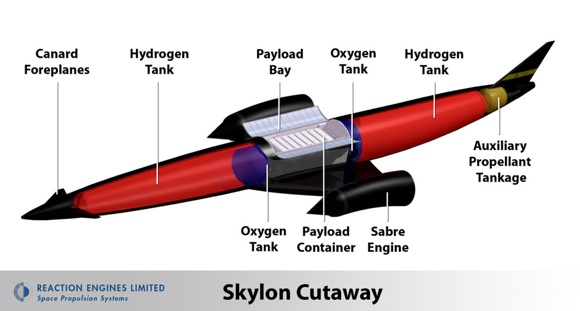
The first bit of news comes from Reaction Engines Limited, where it seems that the Skylon space plane is beginning to move from the conceptual stage to a reality. For some time now, the British company has been talked about, thanks to their plans to create a reusable aerospace jet that would be powered by a series of hypersonic engines.

Skylon_diagramAnd after years of research and development, the hypersonic Sabre Engine passed a critical heat tolerance and cooling test. Because of this, Reaction Engines Limited won an important endorsement from the European Space Agency. Far from being a simple milestone, this test may prove to be historic. Or as Skymania‘s Paul Sutherland noted, it’s “the biggest breakthrough in flight technology since the invention of the jet engine.”

Now that Reaction Engines has proven that they can do this, the company will be looking for £250 million (approx $410 million) of investment for the next step in development. This will include the development of the LapCat, a hypersonic jet that will carry 300 passengers around the world in less than four hours; and the Skylon, which will carry astronauts, tourists, satellites and space station components into orbit.
sabre-engine-17Speaking at the press conference after the test in late November, ESA’s Mark Ford had this to say:

ESA are satisfied that the tests demonstrate the technology required for the Sabre engine development. One of the major obstacles to a reusable vehicle has been removed. The gateway is now open to move beyond the jet age.

The Sabre engine is the crucial piece in the reusable space plane puzzle, hence why this test was so crucial. Once built and operational, Skylon will take off and land like a conventional plane, but still achieve orbit by mixing air-breathing jets for takeoff, and landing with rockets fueled by onboard oxygen once it gets past a certain speed.

Skylon-space-plane-obtains-breakthrough-new-engines-2The recent breakthrough had to do to the development of a heat exchanger that’s able to cool air sucked into the engine at high speed from 1,000 degrees Celsius to minus 150 degrees in one hundredth of a second. It’s this critical technology that will allow the Sabre engine to surpass the bounds of a traditional jet engine, by as much as twofold.

Alan Bond, the engineering genius behind the invention, had this to say about his brainchild:

These successful tests represent a fundamental breakthrough in propulsion technology. The Sabre engine has the potential to revolutionise our lives in the 21st century in the way the jet engine did in the 20th Century. This is the proudest moment of my life.

And of course, there’s a video of the engine in action. Check it out:


Second, and perhaps in response to these and other developments, the British Interplanetary Society is resurrecting a forty year old idea. This society, which came up with the idea to send a multi-stage rocket and a manned lander to the moon in the 1930’s (eerily reminiscent of the Apollo 11 mission some 30 years later) is now reconsidering plans for giant habitats in space.

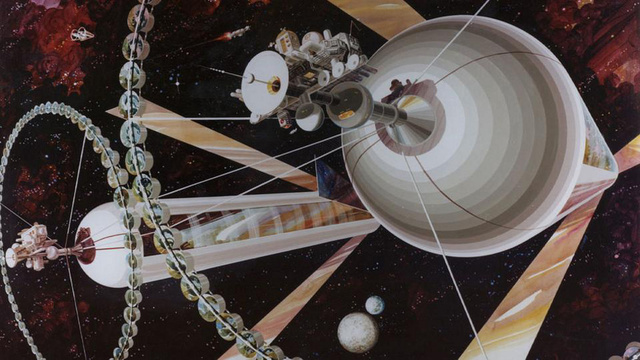
o'neil_cylinderTo make the plan affordable and feasible, they are turning to a plan devised by Gerard O’Neill back in the 1970s. Commonly known as the O’Neill Cylinder, the plan calls for space-based human habitats consisting of giant rotating spaceships containing landscaped biospheres that can house up to 10 million people. The cylinder would rotate to provide gravity and – combined with the interior ecology – would simulate a real-world environment.

Jerry Stone of BIS’s SPACE (Study Project Advancing Colony Engineering) is trying to show that building a very large space colony is technically feasible. Part of what makes the plan work is the fact that O’Neill deliberately designed the structure using existing 1970s technology, materials and construction techniques, rather than adopting futuristic inventions.

Rama16wikiStone is bringing these plans up to date using today’s technologies. Rather than building the shell from aluminium, for example, Stone argues tougher and lighter carbon composites could be used instead. Advances in solar cell and climate control technologies could also be used to make life easier and more comfortable in human space colonies.

One of the biggest theoretical challenges O’Neill faced in his own time was the effort and cost of construction. That, says Stone, will be solved when a new generation of much cheaper rocket launchers and spaceplanes has been developed (such as the UK-built Skylon). Using robot builders could also help, and other futuristic construction techniques like 3-D printing robots and even nanomachines and bacteria could be used.

RAMAAnd as Stone said, much of the materials could be outsourced, taking advantage of the fact that this would be a truly space-aged construction project:

Ninety per cent of the material to build the colonies would come from the Moon. We know from Apollo there’s silicon for the windows, and aluminium, iron and magnesium for the main structure. There’s even oxygen in the lunar soil.

Fans of Arthur C. Clarke’s Rendezvous with Rama, the series Babylon 5 or the movie Elysium out to instantly recognize this concept. In addition to being a very real scientific concept, it has also informed a great deal of science fiction and speculation. For some time, writers and futurists have been dreaming of a day when humanity might live in space habitats that can simulate terrestrial life.

Elysium_conceptWell, that day might be coming sooner than expected. And, as O’Neill and his contemporaries theorized at the time, it may be a viable solution to the possibility of humanity’s extinction. Granted, we aren’t exactly living in fear of nuclear holocaust anymore, but ecological collapse is still a threat! And with the Earth’s population set to reach 12 billion by the 22nd century, it might be an elegant solution to getting some of those people offworld.

It’s always an exciting thing when hopes and aspirations begin to become feasible. And though aerospace transit is likely to be coming a lot sooner than O’Neill habitats in orbit, the two are likely to compliment each other. After all, jet planes that can reach orbit, affordably and efficiently, is the first step in making offworld living a reality!

Until next time, keep your eyes to the skies. Chances are, people will be looking back someday soon…

Sources: IO9, skymania, (2)bbc.com

The Future is Here: Wind Drones and Clean Buildings

wind_powerIt’s no secret that wind power is one of main clean forms of energy that is being considered as a viable alternative to coal, oil and gas. But much like solar, tidal and geothermal, the method has some flaws that is preventing it from being adopted in a more widespread fashion. However, as an infinitely renewable source of energy, it likely just a matter of time before technical developments lead to its wholesale use.

The first challenge has to do with size. Currently, wind farms are massive operations, and many designers think they need to continue to get bigger in order to generate the kinds of electricity we currently need. However, a Netherlands-based startup named Ampyx Power is looking in another direction: an airborne wind turbine that they think could capture the same amount of energy as a large operation.

ampyx-power-powerplane-6-topview-1Basically, their design is a small glider plane attached by cable to a generator, which is then deployed into the air and flies in figure eights. As it moves, the glider pulls on the capable, and the generator converts the movement to electricity. Since it isn’t attached to a tower, it can soar nearly 2,000 feet in the air, catching stronger winds that produce about eight times more energy than the lower-altitude breezes that reach a normal wind turbine.

So in addition to being able to produce more power than a typical wind farm, it costs significantly less than its competitor. The average wind farm weighs about 120 metric tons, while the glider system weighs in at a mere 363 kilograms (800 pounds). And in addition to being cheaper than other renewables, the process may even be cheaper than coal.

wind-power-660As Wolbert Allaart, the startup’s managing director, put it:

We’re replacing tons of steel and concrete. It’s a huge materials reduction, and we can produce the same amount of power. That obviously has an effect on cost as well… The whole reason why we’re doing this is because we think we can get the cost of a kilowatt-hour well below the price of coal.

And Ampyx is hardly alone in developing the technology. In fact, their design is similar to California-based Makani Power’s glider. This company was acquired by Google earlier this year, while Ampyx raised the necessary capital via a crowdfunding campaign. And though there are some differences in the design and methods employed, both companies dream of a day when wind will replace coal and other dirty means.

ampyx-power1Because the planes are so efficient, places that might not have worked for wind power in the past – like forests, where trees catch and redirect the wind – could be a fit for the system, so the market is wide open. And given his country’s growing interest in wind power, Allaart hopes to introduce it to the domestic market very soon:

In Holland, where we’re based, we now have a 4.3 billion Euro subsidy scheme for offshore wind. People are starting to wonder already, if we have a technology being developed in our own country that could provide offshore wind at more or less competitive price with coal, why on Earth are we still subsidizing this so heavily? How fast this grows will depend on political will.

pertamina-energy-tower4site-aerialsomAnother very cool wind-related story comes from Jakarta, where a massive tower is being planned that will be capable of generating all its own power. It’s known as the Pertamina Energy Tower, the proposed headquarters of the Pertamina power company. And while the proposed building will be 99 stories in height, it will also gather all its power from wind, solar, and geothermal energy.

When it comes to its wind operations, the building’s height plays to its advantage. At the top of the building, a funnel captures wind, sucks it inside, and speeds it up to run a series of vertical wind turbines. In this respect, the building operates like a giant, vertical wind tunnel. Solar energy will also be incorporated through panels that will cover the roofs of other buildings on the new campus.

pertamina-energy-tower2energy-ribbonsomBut perhaps the most impressive feat comes in the form of geothermal, a type of energy that’s uniquely suited for Indonesia because it’s a volcanic island chain. Geothermal systems in Indonesia can tap directly into superheated sources of subterranean steam with a single pipe, unlike typical systems that are more complicated and expensive to engineer.

Scott Duncan, the director of Pertamina’s architecture firm – Skidmore, Owings & Merrill LLP (SOM) – who led the project, describes it this way:

It would essentially provide an unlimited energy source for the tower and campus and could make the tower the world’s first energy-positive supertall building.

pertamina-energy-tower6In addition to meeting this clean-energy trifecta, the design of the tower is focused on saving energy as much generating it. Sun-shading “leaves” on two sides of the building cut glare and shade the brightest sunlight while still keeping the inside of the offices bright enough to avoid most artificial lighting. Instead of power-sucking air conditioners, the building uses water-based radiant cooling systems to keep the temperatures even.

Along with other strategies, the energy-saving design elements mean that the campus – which will include a mosque, a performing arts and exhibition center, and sports facilities along with the office space – can keep energy use low enough that renewable power may be able to cover its entire energy needs. In short, the building could prove to be a model of energy-independence.

pertamina-energy-tower5However, the motivation for this project go beyond the altruistic, and involve a good many practical considerations. For starters, Jakarta still has an unreliable power grid, and if the campus generates its own power, work and play won’t get interrupted. The buildings also won’t have to rely on diesel fuel generators if the city’s power goes down.

The technology is expected to be adopted elsewhere, particularly China where wind power is expanding all the time. Indonesia, despite its easy access to geothermal energy, is not the windiest place in the world. Cities that are strategically located along coastlines or in elevated regions would find the wind tunnel feature that much more useful, reducing their dependence on the other two forms of energy.

shanghai_towerWhat’s more, this building is in many respects what one would call an Arcology, and just happens to be the second one being planned for construction in the world today. The other, un-coincidentally enough, is China’s Shanghai Tower, a building that is one-third green space and a transparent second skin that surrounds the city in a protective air envelope that controls its internal temperature.

And with global energy prices increasing, the sources of easily-accessible oil disappearing, and atmospheric CO2 levels steadily rising, we can expect to see more buildings like these ones going up all around the world. We’re also likely to see more creative and innovative forms of power generation popping up in our backyards. Much like peak oil, centralized grids and dependence on unclean energy is disappearing…

And in the meantime, enjoy this video of the Ampyx Power glider in action:


Sources:
fastcoexist, (2)

Michael Bay’s Meltdown at CES 2014

CES2014_bayThe annual Consumer Electronics Show has once again kicked off in Las Vegas. And Samsung Galaxy thought they had scored a coup when they managed to land director Michael Bay to come on and extoll the virtues of their new Curved 105-inch UHD TV. Unfortunately, a problem with the teleprompter caused Bay to lose his place, and things went a little awry from there.

Naturally, Bay tried to wing it, and even acknowledged his mistake. But after several seconds of tense silence, he gave up, apologized and left the stage. Immediately thereafter, every social media and video-sharing site around the globe began broadcasting the one-and-a-half minute gaff, referring to it as Michael Bay’s CES “meltdown”. And thanks to a friend of mine, who’s there as we speak, I learned about it a bit early.

samsung-curved-tvs12_2040_verge_super_wide_large_verge_medium_landscapeAnd almost as quickly, Bay responded. Returning home to blog about the experience, he described the gaff humbly, and declared his endorsement for the technology:

Wow! I just embarrassed myself at CES. I was about to speak for Samsung for this awesome Curved 105-inch UHD TV. I rarely lend my name to any products, but this one is just stellar. I got so excited to talk, that I skipped over the Exec VP’s intro line and then the teleprompter got lost. Then the prompter went up and down – then I walked off. I guess live shows aren’t my thing.

But I’m doing a special curved screen experience with Samsung and Transformers 4 footage that will be traveling around the world.

It made for an extremely awkward moment, and an embarrassing one for Samsung, which loaded the conference with its usual bevy of product announcements in a number of different areas. And it managed to show just what kind of waves an event at CES makes – particularly from a high-profile company such as Samsung. Unfortunately for Bay, these weren’t the kind of waves anyone wanted to make.

EurekaCloseUpSUPA9895But of course, Bay’s come back from worse. Remember Transformers II, his little online tiff with Megan Fox, or the news of his abortive attempt at remaking Teenage Mutant Ninja Turtles? Yeah, he’ll be fine. And there will be plenty more news coming out of Vegas in the coming days, and I intend to be writing about it aplenty!

And in the meantime, check out the video of this embarrassing, but entirely forgivable, blunder:


Sources:
ces.cnet.com, ca.ign.com

News from Mars: Spirit Rover’s Tenth Anniversary

opportunityTwo days ago, another major milestone passed for one of NASA’s famed rovers. But this time around, it wasn’t the spotlight-hogging Curiosity or the die-hard Opportunity rover that was the subject of interest. It was the Spirit rover, the other half of NASA’s now legendary Mars Exploration Rovers (MER) that landed on the Red Planet over a decade ago.

Yes, January 3rd of this year marks the 10th anniversary since the safe landing of NASA’s renowned Spirit rover on the plains of Mars, making her the oldest rover in operation on the planet’s service. Opportunity, her twin sister, landed on the opposite side of the Mars three weeks later – on Jan. 24, 2004. The goal was to “follow the water” as a potential enabler for past Martian microbes if they ever existed.

mars_roverTogether, the long-lived, golf cart sized robots proved that early Mars was warm and wet, billions of years ago – a key finding in the search for habitats conducive to life beyond Earth. It was these findings that have since been followed up on by Curiosity rover in its ongoing search for water and organic particles in the soil, and MAVEN’s planned surveys of the Martian atmosphere.

And it was a decade ago that the famous robot survived the 6 minute plunge through the thin Martian atmosphere, which involved scorching atmospheric heating, and then bounced some two dozen times inside cushioning airbags before coming to a stop. It then gradually rolled to a stop inside 161 km (100 mile) wide Gusev Crater. This landing was known as the “6 minutes of Terror”.

spiritrover_landerThe three petaled landing pad then opened and Spirit was deployed in what was a milestone event. This deployment will be forever remembered in the annuls of history, mainly because of the groundbreaking scientific discoveries that ensued, not to mention the unbelievable longevity of the twins. And while Spirit did not make it past 2010 – effectively remaining in service for six years – she accomplished quite a bit in that time.

Before they were launched atop a series of Delta II rockets in the summer of 2003 from Cape Canaveral, the dynamic, solar powered robo duo were expected to last for only 90 Martian days (Sols). NASA engineers firmly believed that dust accumulation on the life-giving solar panels, an engineering issue or the extremely harsh Martian environment would terminate them before long.

SpiritAndOpportunity_ByTheNumbers1-580x423But in reality, both robots enormously exceeded expectations and accumulated a vast bonus time of exploration and discovery in numerous extended mission phases. In part, the harsh Martian winds occasionally cleaned their solar panels to give them both a new lease on life. And more importantly, the rovers’ components just kept working miraculously.

And she kept working faithfully for six years until communications officially ceased in 2010. Altogether, Spirit drove 7.73 kilometers (4.8 miles) across the Martian surface – about 12 times more than the original goal set for the mission – and transmitted over 128,000 images. And shortly after landing, Spirit scaled Husband Hill and found evidence for the flow of liquid water at the Hillary outcrop.

Columbia_Hills_from_MER-A_landing_site_PIA05200_br2This was especially impressive, seeing as how the rovers were not designed to climb hills. But eventually, she managed to scale the 30 degree inclines and collect a series of rock samples using her Rock Abrasion Tool (RAT). The samples were then inspected using her on-board spectrometers and a microscopic imager. Eventually she drove back down the hill and made even greater scientific discoveries.

These occurred in 2007 in an area known as “Home Plate”, where she unexpectedly got mired thanks to an ancient volcanic feature named ‘Home Plate’ that prevented the solar arrays from generating. In the process, her right front wheel churned up a trench of bright Martian soil that exposed a patch of nearly pure silica, which was formed in a watery hot spring or volcanic environment.

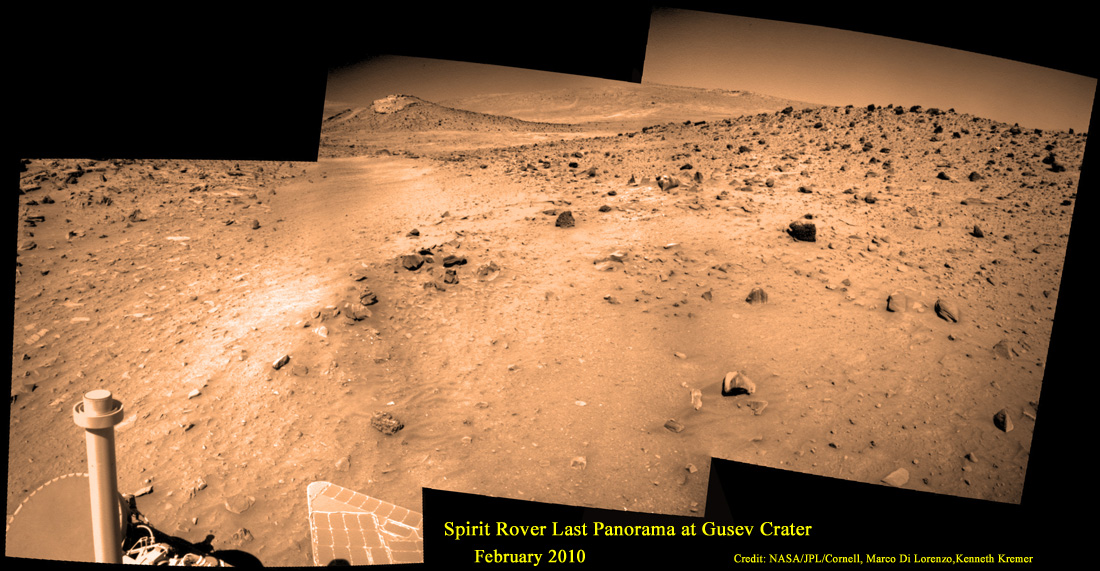
Spirit-Sol-2175c-_Ken-KremerThree years later, in February of 2010, Spirit once again got mired and took her last panorama (pictured above), which was stitched together from raw images by Marco Di Lorenzo and Ken Kremer. After several attempts to save her, NASA eventually declared Spirit dead in the water, her last resting place being the same as where she made her landing – the Gustev Crater in the Aeolis quadrangle.

At one time, many billions of years ago, the Ma’adim Vallis channel – a natural river-like depression running from the crater – probably carried liquid water and/or ice into Gutev. NASA scientists believe this has left sediments in the crater that could be up to 915 meters (3000 feet) thick. Spirit all but confirmed this when her tire turned up a patch of silica in 07, thus providing the first conclusive evidence of this theory.

Mosaic image taken on Jan. 4, 2004 after deployment

The rovers’ principal investigator, Steve Squyres of Cornell University, Ithaca, N.Y., described some of the key findings in a NASA statement, starting with what Spirit found after driving from the crater floor where it landed into the Columbia hills to the east:

In the Columbia Hills, we discovered compelling evidence of an ancient Mars that was a hot, wet, violent place, with volcanic explosions, hydrothermal activity, steam vents — nothing like Mars today.

At Opportunity’s landing site, we found evidence of an early Mars that had acidic groundwater that sometimes reached the surface and evaporated away, leaving salts behind. It was an environment with liquid water, but very different from the environment that Spirit told us about.

When Opportunity got to the rim of Endeavour Crater, we began a whole new mission. We found gypsum veins and a rich concentration of clay minerals. The clay minerals tell us about water chemistry that was neutral, instead of acidic — more favorable for microbial life, if any ever began on Mars.

Because of the rovers’ longevity, we essentially got four different landing sites for the price of two.

maven_orbitMeanwhile, NASA’s new Curiosity rover just celebrated 500 Sols on Mars and is speeding towards Mount Sharp from inside Gale Crater – which is about the same size as Gusev crater. And a pair of newly launched orbiters are streaking towards the Red Planet as we speak – NASA’s Mars Atmosphere and Volatile EvolutioN (MAVEN) and India’s Mars Orbiter Mission (MOM).

In short, we are not finished with Mars yet. And the past, ongoing and future efforts of our many rovers, orbiters and (someday) astronauts are likely to keep providing us with a slew of new discoveries and revelations about our celestial neighbor.

Source: universetoday.com