The Future is Here: Brain to Brain Interfaces (Cont’d)

telepathyThis year is shaping up to be an exciting time for technology that enables people to communicate their thoughts via an electronic link. For the most part, this has involved the use of machinery to communicate a person’s thoughts to a machine – such as a prosthetic device. However, some researchers have gone beyond the field of brain-computer interfaces (BCIs) and have been making strides with brain-to-brain interfacing (BBI) instead.

Back in February, a research team in Natal Brazil, led by Miguel Nicolelis of Duke University, managed to create a link between the brains of two laboratory rats. In the experiment, an “encoder” rat in Natal was placed inside a “Skinner Box” where it would press a lever with an expectation of getting a treat in return.

BMIThe brain activity was then recorded and sent via electrical signal which was delivered to a second “decoder” rat which, though it was thousands of kilometers away, interpreted the signal and pressed a similar lever with a similar a expectation of reward. This developmental milestone was certainly big news, and has led to some even more impressive experiments since.

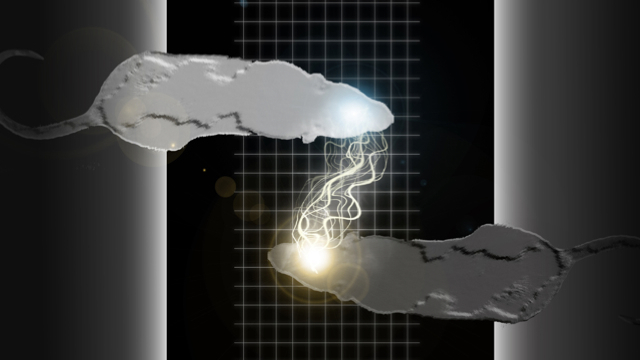
One of these comes from Harvard University, where scientists have developed a new, non-invasive interface that allowed a similar thought transfer to take place. Led by Seung-Schik Yoo, an assistant professor of radiology, the research team created a brain-to-brain interface (BBI) that allows a human controller to move a portion of a rat’s body just by thinking about it, all without invasive surgical implants.

BBIThe new technique takes advantage of a few advances being made in the field. These include focused ultrasound (FUS) technology, which delivers focused acoustic energy to a specific point. Ordinarily, this technology has used heat to destroy tumors and other diseased tissue in the deeper reaches of the brain.  Yoo’s team, however, has found that a lower-intensity blast can be used to stimulate brain tissue without damaging it.

In terms of the interface, a human controller was hooked up to an EEG-based BCI while the rat is hooked up to an FUS-based computer-to-brain interface (CBI). The human subject then viewed an image of a circle flashing in a specific pattern which generated electrical brain activity in the same frequency. When the BCI detected this activity, it sent a command to the CBI, which in turn sends FUS into the region of the rat’s brain that controls its tail, causing it to move.

MMIUsing six different human subjects and six different rat subjects, the team achieved a success rate of 94 percent, with a time delay of 1.59 ± 1.07 seconds between user intention and the rat’s response. Granted, it might not be quite the pinnacle of machine-powered telepathy, and the range of control over the animal test subject was quite limited. Still, the fact that two brains could be interfaced, and without the need for electrodes, is still a very impressive feat.

And of course, it raises quite a few possibilities. If brain-to-brain interfaces between humans and animals are possible, just what could it mean for the helper animal industry? Could seeing eye dogs be telepathically linked to their animals, thus able to send and receive signals from them instantaneously? What about butler monkeys? Could a single thought send them scurrying to the kitchen to fetch a fresh drink?

Who knows? But the fact that it could one day be possible is both inspiring and frightening!

Source: news.cnet.com

News from Mars: Another (Planned) Mission!

mars-mission1When it comes to generational milestones, those of born since the late 70’s often feel like we’re lagging behind previous generations. Unlike the “Greatest Generation” or the “Baby Boomers”, we weren’t around to witness Two World Wars, the Great Depression, the Cuban Missile Crisis, the death of JFK, Neil Armstrong, or the FLQ Crisis. For us, the highlights were things like the development of the PC, the birth of the internet, Kurt Cobain, and of course, 9/11.

But looking ahead, those us of belonging to Generation X, Y, and Millennials might just be around to witness the greatest event in human history to date – a manned mission to Mars! And while NASA is busy planning a mission for 2030, a number of private sources are looking to make a mission happen sooner. One such group is a team of UK scientists working from Imperial College London that are working to mount a a three person mission to Mars.

mission-to-marsThe planned mission consists of two spacecraft, the first of which is a Martian lander equipped with a heat shield that will send the crew off into Earth’s orbit. The second craft would be a habitat vehicle, which is the craft that the crew would live in during the voyage. The habitat vehicle would consist of three floors, and measure in at around 30 feet (10m) tall and 13 feet (4m) in diameter.

The astronauts would be situated in the lander during takeoff, and would move to the habitat when the dual-craft reaches Earth orbit. Once the astronauts are safely within the habitat, a rocket would shoot the dual-craft off on its journey to Mars, which would take nine months to arrive, less than the approximately 300 days that most projections say it will take.

Mars_landerOnce In space, the dual-craft would then split apart but remain connected by a 60 meter (200 foot) tether. Thrusters from both vehicles would then spin them around a central point, creating artificial gravity similar to Earth’s in the habitat. Not only would this help the astronauts feel at home for the better part of a lonely year, but it would also reduce the bone and muscle atrophy that are associated with weightlessness.

The craft would be well-stocked with medicine to ensure that the crew remained in fine health for the nine month transit. Superconducting magnets, as well as water flowing through the shell of the craft, would be employed to help reduce both cosmic and solar radiation. And once the dual-craft reaches Mars, it would tether back together, the crew would move back into the lander, and then detach from the habitat descend to the Martian surface.

Mars-mission-2This mission would also involve sending a habitat and return vehicle to Mars before the astronauts arrived, so the crew would have shelter upon landing as well as a way to get home. The crew would spend anywhere from two months to two years on Mars, depending on the goals of the mission and the distance between Mars and Earth. On the way back home, the mission would dock with the ISS, then take a craft back to Earth from there.

What’s especially interesting about this proposed mission is that each stage of it has been proven to work in an individual capacity. What’s more, the concept of using water as a form radiation shielding is far more attractive than Inspiration Mars’, which calls for using the astronauts own fecal matter!

Unfortunately, no real timetable or price tags have been proposed for this mission yet. However, considering that every individual step of the mission has been proven to work on its own, the proposed overall journey could work. In the meantime, all us post-Baby Boomers can do is wait and hope we live to see it! I for one am going sick of hearing Boomers talk about where they were when Apollo 11 happened and having nothing comparable to say!

And be sure to enjoy this video of the University College London team discussing the possibilities of a Mars mission in our lifetime:


Sources:
bbc.co.uk, extremetech.com

Towards a Safer Future: The Roofie-Detecting Glass

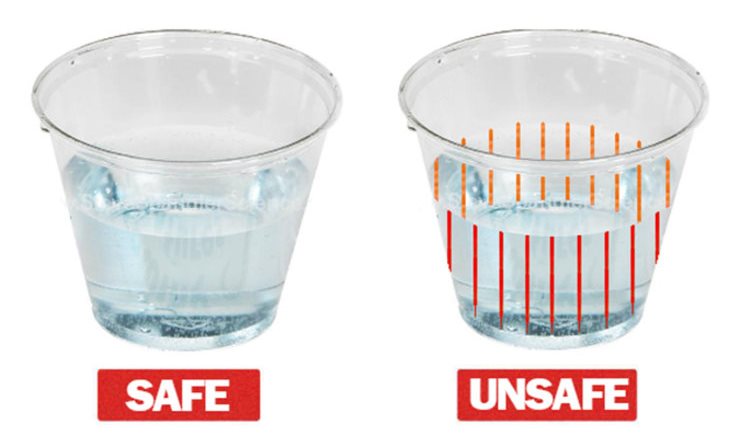
drinksavvy_glassAttention date rapers and sex offenders: you’re free ride is over! Thanks to a product known as DrinkSavvy, a new line of glassware, plastic cups, straws, and stirrers, the previously undetectable drug known as flunitrazepam (aka. rufies), has finally met its match! Basically, when a drink is spiked, a series of stop sign-red stripes show up on the cup’s sides, and the clear straw or stirrer turn red too, and the user knows not to drink.

That such a product is necessary is truly a sign of the times. Every year, over a million people find themselves becoming the victim of date rape drugs. And in 2010, DrinkSavvy founder Mike Abramson was one of them. As he recounted the incident:

I ordered my first drink of the night at a birthday party at a Boston club. But halfway through that first drink, it started to feel more like my 15th. One of the few things I remember after that is waking up with a massive headache and substantial nausea, feeling confused, and wondering, ‘What happened to me that I don’t remember?’”

drinksavvy_strawLuckily for Abramson, he was not injured or assaulted after consuming the drink. Without any explanations, he could only assume that he was either the intended victim or a robbery and the perpetrator backed out as the last minute. Or worse, that the drink was intended for someone else (a intended rape victim) and he just happened to consume it.

Because of this experience, Abramson made it his mission to avoid another hellish blackout and make sure similar experiences stopped happening to others. At first, this consisted of buying drug-testing strips and periodically pouring some of his drinks on one for analysis. However, he quickly realized that this was impractical and there needed to be a better way.

drinksavvySo he took his idea of merging the software with the hardware to Dr. John MacDonald, a chemistry professor at Worcester Polytechnic Institute, who integrated a color-changing, drug-testing material into plastic and glassware. This was followed by a crowdfunding campaign on IndieGoGo, where Abramson was able to raise $52,089 as seed capital to begin mass production.

Thanks to all this, the first batch of straws and 16-oz. plastic cups will be shipping out next month. By 2014, the company expects products to be widely commercially available. Abramson hopes the products will someday become the new norm in bars, clubs, and on college campuses, and bottles and cans with similar detection functions are in the works.

drinksavvy_cupIt is a sad time indeed when people need to get this creative in order to prevent sexually-based crimes. But inventions such as these remind us of the existence of socially-conscious individuals, and how much more powerful we are than cowardly predators who sulk in dark corners, slipping their dangerous wares to us when they think we’re not paying attention.

One can only hope that future versions of the Drinksavvy or similar products will also have some kind of detection system. Perhaps a finger printer or DNA sampler than can tell us who touched the glass, thus giving police and security an immediate list of suspects. Wouldn’t that be both cool and immensely affirming?!

And be sure to check out Abramson’s IndiGoGo promotional video, which includes some nauseating footage about drug-related sexual assaults:

Source: fastcodesign.com

Space Elevators!

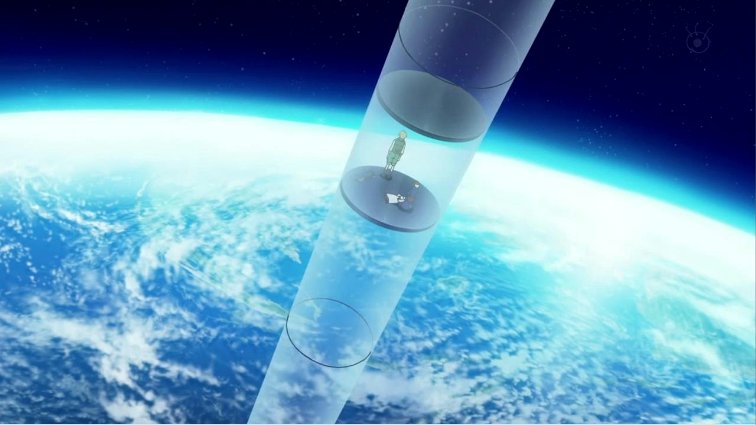
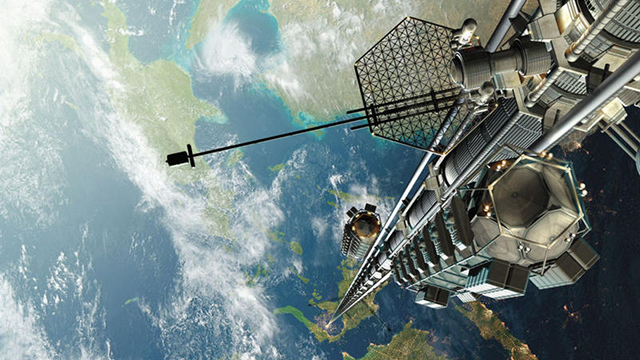
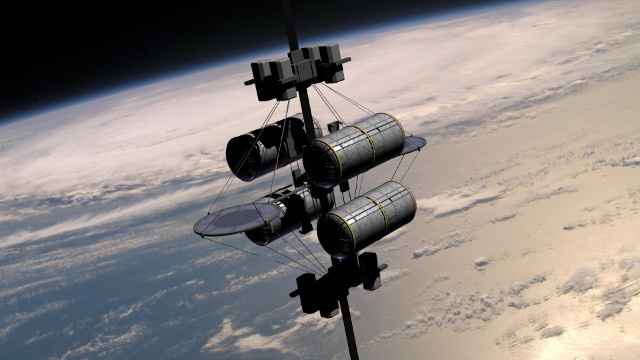
space_elevatorWhen it comes to classic and hard science fiction, there are few concepts more inspired, more audacious, and more cool than the Space Elevator. Consisting of a cable (or tether) attached the Earth near the equator and a station in geosynchronous orbit, a structure of this kind would allow us to put objects, supplies and even people into orbit without the need for rockets and space ships.

And perhaps I am a bit biased, seeing as how one of the writer’s featured in the Yuva anthology happens to have written a story that features one – Goran Zidar, whose story “Terraformers” includes an orbital colony that is tethered to the planet by a “Needle”. But I’ve found the concept fascinating for as long as I have known about it, and feel like its time for a conceptual post that deals with this most awesome of concepts!

Here goes…

History:
The first recorded example of the space elevator concept appeared in 1895 when Russian scientist Konstantin Tsiolkovsky was inspired by the Eiffel Tower in Paris. He considered a similar tower that extended from the ground into geostationary orbit (GSO) in space. Objects traveling into orbit would attain orbital velocity as they rode up the tower, and an object released at the tower’s top would also have the velocity necessary to remain in orbit.
space_elevator1However, his concept called for a compression structure, which was unfeasible given that no material existed that had enough compressive strength to support its own weight under such conditions. In 1959, another Russian scientist named Yuri N. Artsutanov suggested a more feasible proposal, a tensile structure which used a geostationary satellite as the base from which to deploy the structure downward.

By using a counterweight, a cable would be lowered from geostationary orbit to the surface of Earth, while the counterweight was extended from the satellite away from Earth, keeping the cable constantly over the same spot on the surface of the Earth. He also proposed tapering the cable thickness so that the stress in the cable was constant. This gives a thinner cable at ground level that becomes thicker up towards the GSO.

space_elevator_liftIn 1966, Isaacs, Vine, Bradner and Bachus, four American engineers, reinvented the concept under the name “Sky-Hook”. In 1975, the concept was reinvented again by Jerome Pearson, whose model extended the distance of the counterweight to 144,000 km (90,000 miles) out, roughly half the distance to the Moon. However, these studies were also marred by the fact that no known material possessed the tensile strength required.

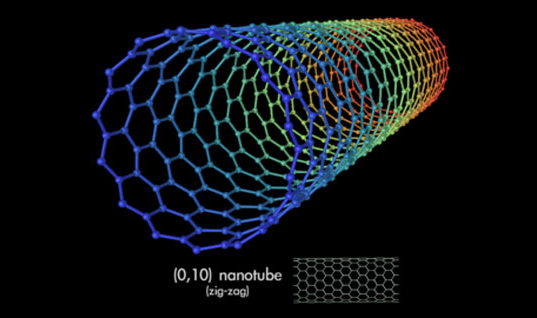
By the turn of the century, however, the concept was revitalized thanks to the development of carbon nanotubes. Believing that the high strength of these materials might make an orbital skyhook feasible, engineer David Smitherman of NASA put together a workshop at the Marshall Space Flight Center and invited many scientists and engineers to participate. Their findings were published in an article titled “Space Elevators: An Advanced Earth-Space Infrastructure for the New Millennium”.

carbon-nanotubeAnother American scientist, Bradley C. Edwards, also suggested using nanotubes to create a 100,000 km (62,000 mile) paper-thin cable that would be shaped like a ribbon instead of circular. This, he claimed, would make the tether more resistant to impacts from meteoroids.  The NASA Institute for Advanced Concepts began supporting Edwards’ work, allowing him to expand on it and plan how it would work in detail.

In Fiction:
arthurcclarke_fountains-of-paradiseIn 1979, the concept of the Space Elevator was introduced to the reading public thanks to the simultaneous publications of Arthur C. Clarke’s The Fountains of Paradise (1979) and Charles Sheffield’s The Web Between the Worlds. In the former, engineers construct a space elevator on top of a mountain peak in the fictional island country of Taprobane, which was loosely based on Clarke’s new home in Sri Lanka, albeit moved south to the Equator.

In an interesting and fact-based twist, the purpose for building the elevator on Earth is to demonstrate that it can be done on Mars. Ultimately, the protagonist of the story (Dr Vannevar Morgan) is motivated by his desire to help a Mars-based consortium to develop the elevator on Mars as part of a massive terraforming project, something which has been proposed in real life.

Sheffield- The Web Between the WorldsSimiliarly, in Sheffield’s Web, which was his first novel, we see a world famous engineer who has created extensive bridge networks all over the world using graphite cable. In hoping to achieve the unachievable dream, he begins work on a space elevator code named the “Beanstalk”. This brings him into an alliance with a corrupt tycoon who wants to make rockets obsolete, and intrigue ensues…

Three years later, Robert A. Heinlein’s novel Friday features a space elevator known as the “Nairobi Beanstalk”. In Heinlein’s vision, the world of the future is heavily Balkanized, and people exist in thousands of tiny nation states and orbital colonies which are connected to Earth via the Beanstalk, which as the name suggests, is located in equatorial Africa.

ksr_redmarsIn 1993, Kim Stanley Robinson released Red Mars, a sci-fi classic that remains a quintessential novel on the subject of Mars colonization. In the novel, the Martian colonists build a space elevator that allows them to bring additional colonists to the surface, as well as transport natural resources that were mined planetside into orbit where they can be ferried back to Earth.

In 1999, Sid Meier’s, creator of the famed Civilization gaming series, released the sci-fi based Sid Meier’s Alpha Centauri that deals with the colonization of the planet “Chiron” in the Alpha Centauri system. In the course of the turn-based strategy game, players are encouraged to construct special projects as a way of gaining bonuses and building up their faction’s power.

One such project is the Space Elevator, which requires that the faction building first research the technology “super tensile solids” so they have the means of building a super-tensile tether. Once built, it confers bonuses for space-based unit production, allows orbital drop units to be deployed over the entire planet, increases production rates for satellites, and removes the need for aerospace facilities. spaceelevator_alpha_centauriIn David Gerrold’s 2000 novel, Jumping Off The Planet, we are again confronted with an equatorial space elevator, this time in Ecuador where the device is once again known as the “beanstalk”. The story focuses on a family excursion which is eventually revealed to be a child-custody kidnapping. In addition to this futuristic take on domestic issues, Gerrold also examined some of the industrial applications of a mature elevator technology.

Chasm_City_coverIn 2001, Alastair Reynolds, a hard sci-fi author and creator of the Revelation Space series, released Chasm City, which acted as a sort of interquel between the first and second books in the main trilogy. At the opening of the novel, the story takes place on Sky’s Edge, a distant world where settlers travel to and from ships in orbit using a space elevator that connects to the planetary capitol on the surface.

And in 2011, author Joan Slonczewski presented a biological twist on the concept with her novel The Highest Frontier. Here, she depicts a college student who ascends a space elevator that uses a tether constructed from self-healing cables of anthrax bacilli. The engineered bacteria can regrow the cables when severed by space debris, thus turning the whole concept of tensile solids on its head.

Attempts to Build a Space Elevator:
Since the onset of the 21st century, several attempts have been made to design, fund, and create a space elevator before the end of this century. To speed the development process, proponents of the concept have created several competitions to develop the relevant technologies. These include the Elevator: 2010 and Robogames Space Elevator Ribbon Climbing, annual competitions seeking to design climbers, tethers and power-beaming systems.

space_elevator_nasaIn March of 2005, NASA announced its own incentive program, known as the Centennial Challenges program, which has since merged the Spaceward Foundation and upped the total value of their cash prizes to US$400,000. In that same year, the LiftPort Group began producing carbon nanotubes for industrial use, with the goal of using their profits as capital for the construction of a 100,000 km (62,000 mi) space elevator.

In 2008, the Japanese firm known as the Space Elevator Association, chaired by Shuichi Ono, announced plans to build a Space Elevator for the projected price tag of a trillion yen ($8 billion). Though the cost is substantially low, Ono and his peers claimed that Japan’s role as a leader in the field engineering could resolve the technical issues at the price they quoted.
obayashi-2In 2011, Google was reported to be working on plans for a space elevator at its secretive Google X Lab location. Since then, Google has stated that it is not working on a space elevator. But in that same year, the first European Space Elevator Challenge (EuSEC) to establish a climber structure took place in August.

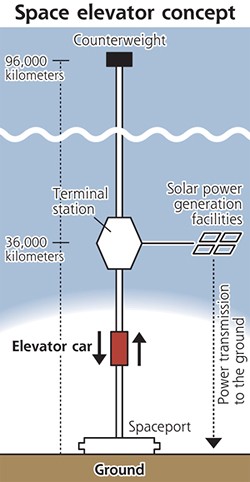
And in 2012, the Obayashi Corporation of Japan announced that in 38 years it could build a space elevator using carbon nanotube technology. Their detailed plan called for a 96,000 long tether, supported by a counterweight, that could hold a 30-passenger climber that would travel 200 km/h, reaching the GSO after a 7.5 day trip. However, no cost estimates, finance plans, or other specifics were made at this point.

space-elevator-schematics-largeDespite these efforts, the problems of building are still marred by several technical issues that have yet to be resolved. These include the problems of tensile strength, dangerous vibrations along the tether line, climbers creating wobble, dangers posed by satellites and meteoroids, and the fact that such a structure would be vulnerable to a terrorist or military attack.

Other Possibilities:
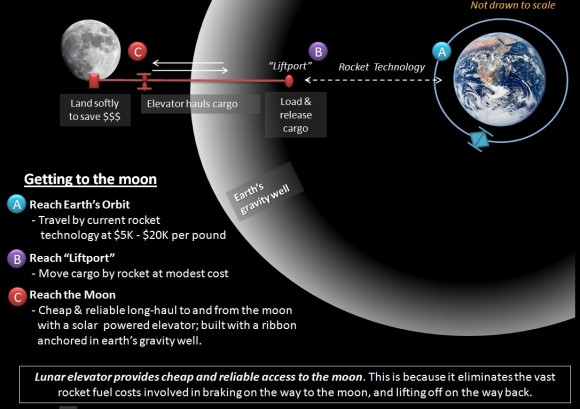
Though we may never be able to resolve the problems of building a space elevator on Earth, scientists are agreed that one could be made on other planets, particularly the Moon. This idea was first devised by Jerome Pearson, one of the concepts many original proponents, who proposed a smaller elevator that would be anchored by Earth’s gravity field.
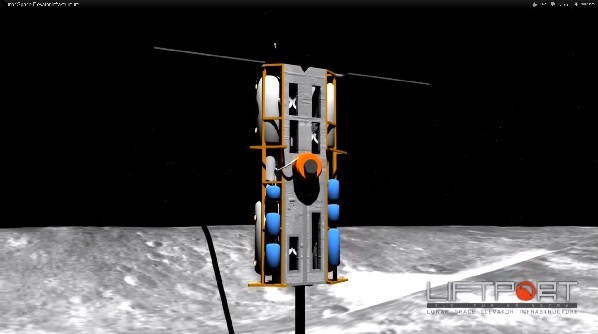
LiftPort1This is a necessity since the Moon does not rotate and could therefore not maintain tension along a tether. But in this scenario, the cable would be run from the moon and out through the L1 Lagrangian point. Once there, it would be dangled down into Earth’s gravity field where it would be held taught by Earth gravity and a large counterweight attached to its end.

Since the Moon is a far different environment than planet Earth, it presents numerous advantages when building a space elevator. For starters, there’s the strength of the materials needed, which would be significantly less, thus resolving a major technical issue. In addition, the Moon’s lower gravity would mean a diminished weight of the materials being shipped and of the structure itself.
space_elevator_lunarAs Pearson explained:

[T]o lift a thousand tons per day off the lunar surface, it would take less than 100,000 tons of elevator to do it — which means it pays back its own mass in just 100 days, or somewhere between three and four times its own mass per year — which is not a bad rate of return… You don’t need nanotubes and very, very high strength materials. But the higher the strength, the more of the ratio you can get for hauling stuff on the moon.

In fact, LiftPort is already deep into developing a “Lunar Elevator”. Plans to build one by 2020 were announced back in 2010, and since that time, the company launched a Kickstarter campaign to get the funding necessary to conduct tests that will get them closer to this goal. These consisting of sending a tethered robot 2km from the surface to conduct stress and telemetry tests.

Ultimately, the company estimates that a Lunar Elevator could be made at the cost of $800 million, which is substantially less than a “Terran Elevator” would cost. Similarly, it is likely that any manned missions to Mars, which will include eventual settlement and plans to terraform, will involve a Martian elevator, possibly named the “Ares Elevator”.

Much like SpaceX’s attempts to resolve the costs of sending rockets into space, the concept of a space elevator is another means of reducing the cost of sending things into orbit. As time goes on and technology improves, and humanity finds itself in other terrestrial environments where resources need to be exported into space, we can expect that elevators that pierce the sky will become possible.

In the meantime, we can always dream…

space_elevator_conceptSources: en.wikepedia.org, gizmag.com, io9.com, forbes.com, universetoday.com, futuretimeline.com

The Future is Here: Holovision and PointGrab!

holovisionNothing spells future quite like a life-size hologram in your living room, does it? And much like flying cars and personal jetpacks (though these too are in development), holographics has been one promise that appears to be slow in materializing. However, thanks to the work of California-based company known as Provision, this promise is approaching reality.

Their invention is known as the  Holovision, a life-size holographic projector that uses what is called aerial or volumetric imaging – a way of producing 3D images without special glasses, lenses or slits. It uses a digital LCD screen and a concave mirror to produce the illusion of a 3D image floating outside the projector, and can produce clearer images without generating multiple views or causing dizziness or nausea.

holovision-0For some time now, Provision has been making 3D projectors as marketing tools, but is now running a Kickstarter campaign aimed at raising US$950,000 to fund the development of new technology for the projector, with hopes of unveiling it next year. Currently, the company’s largest projector can only produce an 18-in (45.7-cm) image, but the goal is to create one 6 feet (1.8 m) tall that projects 7 ft (2.1 m) from the screen and is visible within a 100-degree arc.

This will require developing new optics and a new light source. But once this is achieved, Provision plans to miniaturize the system to the size of a toaster for the game console market before expanding to applications in education, medicine, video conferencing and other fields. Just imagine, phone conversations or Skyping where you get to talk to a life-size representation of the person! I know one person who would be thrilled about this, though I imagine he’d want a bigger projector for himself…

ESB_emperorThe Kickstarter campaign runs through August 14 and the public debut of the system is scheduled for March, 2014. So far, the project has collected $13,112, a mere 1% of its total goal. However, they are just getting started, and have seven months to go. So if you’ve got money and want holographics to become a permanent part of gaming, teleconferencing and social media, invest now!

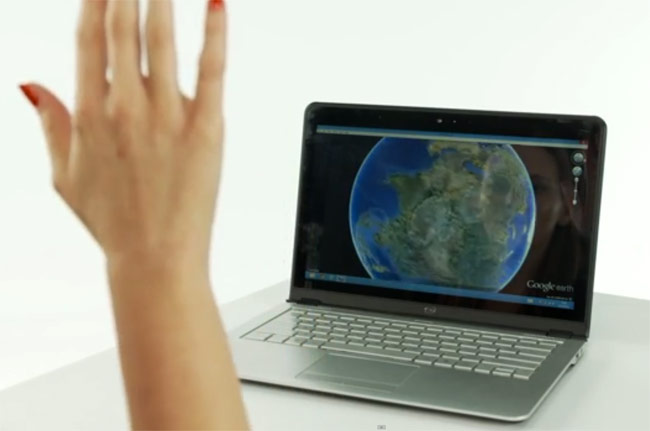
In a similar vein, gesture control, something that has also been explored heavily in science fiction, appears to be getting a boost as well. For those who do not own an Xbox Kinect or are unfamiliar with the technology (or just haven’t seen Minority Report), gesture control is essentially a motion capture technology that monitors a person’s movements and gestures as an interface.

minority-reportAnd it is companies like PointGrab that are looking to make this type of interface the norm for computing, relying on a technology known as Hybrid Action Recognition (HAR). Unlike previous gesture recognitions software, the company claims that the updated version that they recently launched is 98% accurate and takes advantage of numerous advances that will make the technology mainstream.

The biggest advance comes in the form of being able to tell the difference between intentional movement, such as putting your fingers to your lips to mute a TV or computer, and unintentional gestures, such as scratching your lip. In addition, PointGrab has updated its machine learning algorithms to accommodate more environmental factors, such as different lighting conditions and hand sizes, to improve accuracy.

gesture-controlAccording to Assaf Gad, vice president of marketing and product for PointGrab, its all about accommodation. And this is really just the beginning:

We don’t want to teach people how to interact with devices. The devices have to be smart enough to analyze the body language of user and act accordingly.

Based in Israel, PointGrab has been working on gesture recognition interfaces since 2008. Two other Israeli companies, Eyesight and Extreme Reality, are also developing gesture and body movement recognition software platforms that work with a variety of devices equipped with standard 2D cameras. In addition, Leap Motion just introduced a hardware controller for enabling gesture control, and Microsoft’s Xbox One will enable control of more than games with its updated Kinect technology.

eyeSight-3D-Gesture-ControlAnd according to Gad, this is really just the beginning. Soon gesture control will be integrated with other emerging technologies to create much more intelligent interfaces:

I see it as good sign that we are in the right place to change way people interact. In the near future, we’ll see more solutions that combine voice and gesture, as well as 3D.

An exciting prospect, and very futuristic! Now if only someone would get on those damn flying cars already. It’s the 21st century, we were promised flying cars! And be sure to enjoy this video of the PointGrab software in action:


Sources: dvice.com, news.cnet, kickstarter.com

Judgement Day Update: Robot Versatility

AI_robotWhat is it about robots that manages to inspire us even as they creep us out? Somehow, we just can’t stop pushing the envelope to make them smarter, faster, and more versatile; even as we entertain fears that they might someday replace us. And at the forefront of this expanding research is the desire to create robots that can not only think for themselves, but also maintain and/or repair themselves.

Case in point, the new hexapod robot that was developed by researchers from Pierre-and-Marie-Curie University, in Paris. Built with survivability in mind, this robot is the first of its kind to be able to address structural damage, adapt, and carry on. In a world where robots can be very expensive, the ability to keep working despite the loss of a component is invaluable.

clever-hexapodTo do this, the hexapod uses what the team refers to as a T-resilience (the T standing for Transferability-based) algorithm. With six legs, the hexapod moves along quite at a steady 26 cm/s. But once it loses one its front legs, it manages only 8 cm/s. But after running 20 minutes’ worth of simulations and tests, the robot works out a new way of walking, and is able to more than double its speed and cover 18 cm/s.

Essential to this approach is that the robot is programmed with what amounts to an understanding of its ideal undamaged anatomy. Previously, roboticists believed that it was necessary for a robot to analyze its new gait to diagnose the damage and compensate accordingly. But the team argues that a robot can arrive at an answer more quickly by generating a number of possible alternatives based on an undamaged state, and then testing them.

clever-hexapod-4The robot spends 20 minutes testing 25 alternatives, during which a ranging camera feeds data to a separate algorithm which works out the distance traveled. In this way the robot is able to compare its actual performance with its theoretical performance, finally settling for the closest match: a gait which recovers much of the lost speed.

This resilience could one day be a godsend for crew that rely on robots to survey disaster zones, conduct rescue operations, or deal with explosive devices. The ability to carry on without the need for repair not only ensures a better history of service, but makes sure that a task can be completed with subjecting repair crews to danger.

The team’s findings were released in a self-published paper entitled “Fast Damage Recovery in Robotics with the T-Resilience Algorithm”. And of course, the hexapod’s test run was caught on video:


And then there’s the RHex robot, a machine designed with versatility and performance in mind. Much like many robots in production today, it utilizes a six-foot (hexapod) configuration. But it is in how the RHex uses its appendages that set it apart, allowing for such athletic feats as long jumps, pull-ups, climbing stairs and even scaling walls.

This is all made possible by RHex’s six spinning appendages, which act as a sort of wheel-leg combination rather than traditional feet. These legs provide for a form of motion that exceeds standard locomotion, and allow the robot to go places others could not. The robot was created through the collaborative efforts of Aaron Johnson, an engineering graduate student at the University of Pennsylvania, and professor Daniel Koditschek at Penn State’s Kod*Lab.

RhexSaid Johnson of their robotic creation:

What we want is a robot that can go anywhere, even over terrain that might be broken and uneven. These latest jumps greatly expand the range of what this machine is capable of, as it can now jump onto or across obstacles that are bigger than it is.

Here too, the potential comes in the form of being able to mount rescue missions in rugged and hostile terrain. Thanks to its versatile range of motions, the RHex could easily be scaled into a larger robot that would be able to navigate rocky areas, collapsed buildings, and disaster zones with relative ease, and would have no trouble getting up inclined surfaces of hopping over gaps and holes.

And be sure to check out the video of the RHex in action. It’s like watching robot Parkour! Check it out:


Granted, we’re still a long way from the Nexus 6 or NS-5, but real advances are far more impressive than fictional representations. And with parallel developments taking place in the field of AI, it is clear that robots are going to be an integral part of our future. One can only hope its a happy, docile part. When it comes time for science fiction to give way to science fact, we could all do without certain cliches!

bender_killallhumans

Sources: gizmag.com, fastcoexist.com

News from SpaceX: More Tests and the Coming Launch

spaceX_elonmuskElon Musk just can’t get enough of the spotlight lately! But that’s the price you pay for being a billionaire, innovator, genius-type person! And barely a week after announcing his idea for the Hyperloop high-speed train, it now seems that SpaceX is once again making the news, thanks to its latest test of the Grasshopper reusable rocket system as well as their planned launch of the Falcon Heavy rocket.

For those unfamiliar with the Grasshopper, this is a proposed reusable rocket system that Musk and SpaceX created with the hopes of bringing the costs associated with space launches down considerably. Since September 2012, the rocket has been put through successive tests, reaching higher and higher altitudes and safely making it back to the ground.

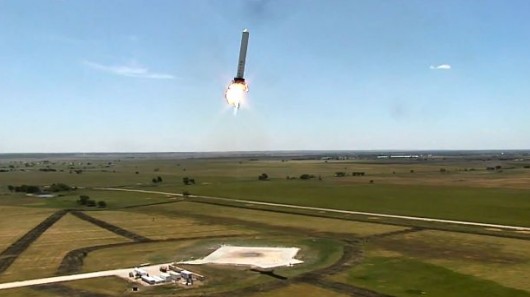
grasshopper_lateraldivertIn this latest test, the rocket successfully performed a “lateral divert test”. In all previous tests, the rocket lifted off vertically from a launch pad and then used its Merlin-1D engine to ease itself back down to the pad. However, in actual launch situations, the rocket wont simply be traveling up and down. When it comes time to land, a considerable amount of lateral steering will be necessary to line it back up with the launch site.

This is what the test, which took place on Tuesday, August 13th, amounted to. It began with the Grasshopper reaching its previously-achieved altitude of 250 meters, but then continued with the rocket moving an additional 100 m (328 ft) to one side. It was subsequently still able to land safely back at the center of the launch pad, compensating for its lateral diversion.

According to SpaceX: “The test demonstrated the vehicle’s ability to perform more aggressive steering maneuvers than have been attempted in previous flights.” What’s more, it places the company that much closer to the realization of a truly reusable rocket system, something which will drastically cut costs for future space missions.

And of course, they were sure to catch the entire test on video:


But equally important for this rising company that seeks to privatize space travel was the announcement that they have are moving ahead with plans to launch their Falcon Heavy rocket system by late 2013 or early 2014. At present, the Falcon is the most power rocket system in the world, overshadowed only by the now retired – but soon to be reserviced – Saturn V booster that put the Apollo astronauts into space and on the Moon.

spaceX-falcon9As Musk himself said of the rocket:

Falcon Heavy will carry more payload to orbit or escape velocity than any vehicle in history, apart from the Saturn V moon rocket, which was decommissioned after the Apollo program. This opens a new world of capability for both government and commercial space missions.

Fully loaded, the Falcon Heavy will be able to carry payloads of 53 metric tons (117,000 pounds or 53,070 kg) into orbit, and is made up of two engine stages. The first stage consists of a Falcon 9 rocket, with a nine-engine cores, followed by two additional nine-engine cores attached to either side. In addition, the Merlin engines have been upgraded to handle the additional weight, and are being tested at SpaceX’s facility in McGregor, Texas.

flacon-heavy-3At liftoff the 69.2m (227 ft) long Falcon Heavy will generate 3.8 million pounds of thrust, which is equivalent to the thrust of fifteen Boeing 747’s taking off at the same time. SpaceX claims that this gives the Falcon Heavy more than twice the performance of the next most powerful vehicle – the Delta IV Heavy operated by the Boeing-Lockheed Martin joint venture United Launch Alliance.

SpaceX also says that with more than twice the payload of the Delta IV but at one third the cost, the Falcon Heavy sets a new world record in terms of economy at approximately US$1,000 per pound to orbit. This is in keeping with Musk’s promise to bring the associated costs of space travel and exploration down, hopefully one day to his goal of $500 per pound.


spaceX_solararrayWith the ability to carry satellites or interplanetary spacecraft to orbit, SpaceX is offering the Falcon Heavy on the commercial market for US$80–$125 million, which compares to the $435 million per launch the U.S. Air Force has budgeted for four launches in 2012. So in effect, Musk’s company is offering a money-saving alternative to both the public and private sector.

For those fascinated by the long-term potential of space travel, this is certainly exciting news. By cutting the costs of placing satellites, supplies and people in orbit, many things are being made feasible that were previously impossible. This includes conducting more research in orbit, the ability to create space-based solar arrays (a very cool solution to our current power problems and the limitations of Earth-based solar power) and perhaps even begin work on a Moon settlement.

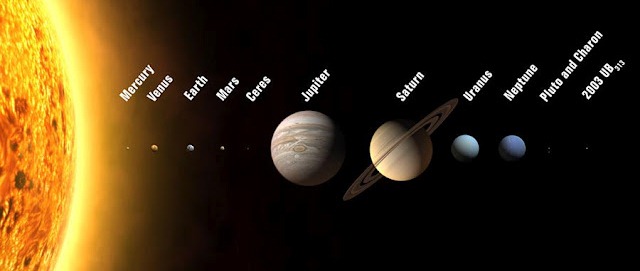
solar_system1Beyond that, there are the growing possibilities of commercial space travel, space tourism, and even setting our sights father afield with manned missions to the Moon, prospecting missions to the asteroid belt, and surveying probes to Jupiter’s Moons and to the very edge of the Solar System. Possibly even beyond…

Exciting times we live in, when the impossible is slowly becoming possible!

Sources: gizmag.com, (2), spacex.com


News from Space: The Slingatron

slingatronPlacing things into orbit is something humanity has been doing since the 1940’s, beginning with Germany’s V2 Rockets, then giving way to artificial satellites like Sputnik in the 1950’s. These efforts really came into their own during the 1960’s and since, when manned missions reached high orbit and even the Moon. But despite all these  milestones, little has been done to address the problems of cost.

Ever since space travel began in earnest, the only way to send satellites, supplies and shuttle craft into orbit has been with rockets. Even at its cheapest, a space launch can still cost an estimated $2000 per pound per mission, due to the fact that the rockets employed are either destroyed or rendered unusable once they’ve completed their mission.

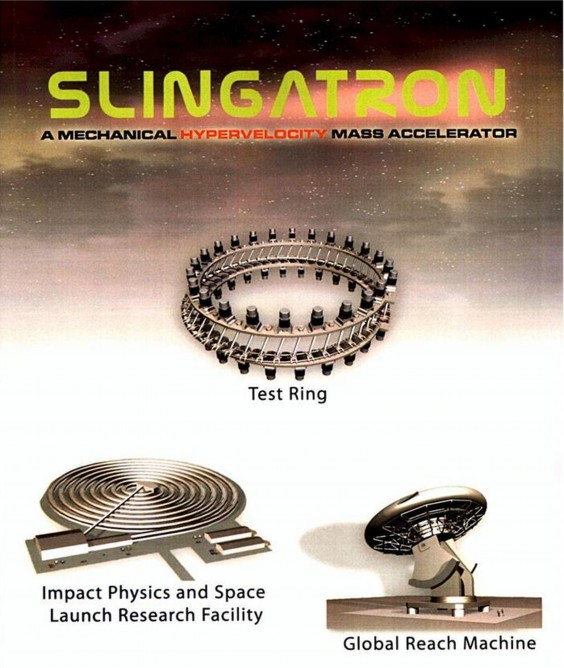
slingatron-20Attempts to create reusable launch systems, like the SpaceX Grasshopper, is one solution. But another involves “slinging” payloads into orbit, rather than launching them. That’s what HyperV Technologies Corp. of Chantilly, Virginia is hoping to achieve with their design for a “mechanical hypervelocity mass accelerator”, otherwise known as a “slingatron”.

Invented by Derek Tidman in the 1990s, the slingatron replaces rockets with a more sophisticated version of the sling. However, the principle differs somewhat in that the device uses something far more sophisticated than circumferential force. In the end, the name cyclotron might be more apt, which is a very simple particle accelerator.


slingatron-11Utilizing a vacuum tube and a series of magnetic/electostatic plates of opposing charges, an atomic particle (such as a proton) is introduced and sent back and forth as the polarity of the plates are flipped. As the frequency of the flipping is increased, the proton moved faster and faster in a series of spirals until it reaches the rim and shoots out a window at extremely high velocity.

The slingatron achieves the same result, but instead uses a spiral tube which gyrate on a series of flywheels along its length. As the slingatron gyrates, a projectile is introduced and the centripetal force pulls the projectile along. As the projectile slides through larger and larger turns of the spiral, the centripetal forces increase until the projectile shoots out the muzzle, traveling at several kilometers per second.

slingatron-13Ultimately, the goal here is to build a slingatron big enough to fire a projectile at velocities exceeding 7 km/s (25,000 km/h, 15,600 mph) to put it into orbit. With rapid turnarounds and thousands of launches per year while all of the launch system remains on Earth, the developers claim that the slingatron will offer lower costs for getting payloads into orbit.

However, there are weaknesses to this idea as well. For starters, any projectile going into space will also need to be fitted a small set of rockets for final orbit insertion and corrections. In addition, the G-forces involved in such launches would be tremendous – up to 60,000 times the force of gravity – which means it would be useless for sending up manned missions.

slingatron-15In the end, only the most solid state and hardened of satellites would have a chance of survival. The developers say that a larger slingatron would reduce the forces, but even with a reduction by a factor of 10,000, it would still be restricted to very robust cargoes. This makes it an attractive options for sending supplies into space, but not much else.

Still, given the costs associated with keeping the ISS supplied, and ensuring that future settlements in space have all the goods and equipment they need, a series of slingatrons may be a very viable solution in the not-to-distant future. Combined with concepts like the space penetrator, which fired bullet-like spaceships into space, the cost associated with space travel may be dropping substantially in coming decades.

All of this could add up to a great deal more space traffic coming to and from Earth in the not-too-distant future as well. I hope we have the foresight to construct some “space lanes” and keep them open! And in the meantime, enjoy this video interview of Dr. F. Douglas Witherspoon explaining the concept of the slingatron:

Source: gizmag.com

Five Technologies for the Developing World

Developed-and-developing-countriesWhen it comes to providing energy in the “developed world”, the challenge is in finding ways to generate electricity, heat, and cooling in a way that will not burden our environment. Whereas providing these things in the past has never been much of a challenge, finding ways to meet future demand in a way that is sustainable and renewable often is. Lucky for us, we have the means to meet this challenge head on.

But in the “developing world”, where the infrastructure does not readily exist, populations continue to grow exponentially, and the concerns about the natural environment are quite grave already, the challenge of providing for people’s basic needs presents a significant challenge. At the same time however, it presents an opportunity for creative solutions.

What follows is just a few examples of what engineers and designers have come up with in recent years. These devices are especially innovative because they are capable of increasing the supply of safe, cheap energy on a user-by-user basis, bypassing the years it takes to extend a power grid to remote places, the resources needed to increase a country’s energy production capacity, or the environmental damage involved.

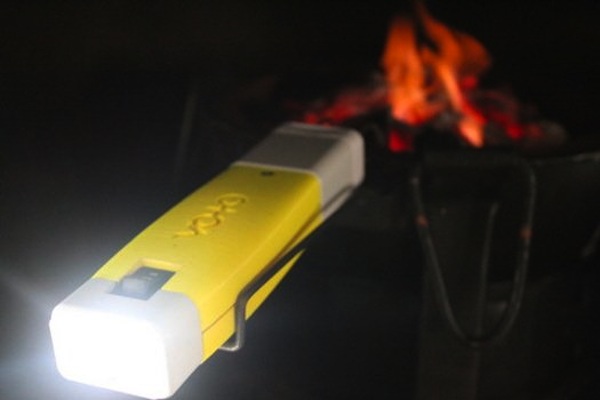
Voto-Stove1. The Voto: Millions of people around the world use coal or wood-fired stoves to provide for their cooking and heating needs. Developed by the company Point Source Power, the VOTO converts the energy these fires release as heat into electricity, which can power a handheld light, charge a phone or even charge a spare battery. Initially designed for backpackers and campers, the company is also trying to find a way to make it accessible to residents of the developing world, where it will be much more useful.

2. Window Socket: Here we have what is perhaps the simplest solar charger in existence. Simply attach the suction cup to a window or any sun-exposed surface, let sit for 5 to 8 hours, and the solar panels will store enough electricity to power a device for up to ten hours. Created by Kyuho Song and Boa Oh of Yanko Design to resemble a normal wall outlet as closely as possible, the charger can be taken and used anywhere, making it truly versatile.

window_socket33. The Berkeley-Darfur Stove: In recent years, health researchers have come to the conclusion that open-fire stoves lead to millions of deaths in the developing world. Hence this design by Potential Energy, a nonprofit dedicated to adapting and scaling technologies to help improve lives in the developing world. Featuring a tapered wind collar, a small fire box opening, nonaligned air vents that reduce the amount of wind allowed to stoke or snuff the fire, and ridges that ensure the optimal distance between the fire and pot, this stove is safe, fuel-efficient, and requires less wood to power. Over 25,000 units have been distributed to the Darfur region and Ethiopia so far.

gravitylight4. Gravity Light: Along with wood-burning stoves, kerosene-burning lamps are also a major health concern because of the fumes they create. Hence the simple and elegant solution known as the Gravity Light. Developed by the research initiative deciwatt.org, the device is powered by attaching a 20 lbs bag or rocks or dirt to a cord and then lifting it into place. The potential energy stored in that lifting motion is then gradually converted to electricity as the the bag descends over the course of about 30 minutes, powering a light or other electrical device in that time.

5. SOCCKET: Soccer is easily the most popular sport in the world, with millions of people playing daily. And in an attempt to turn this daily activity into an efficient form of energy that would replace kerosene lamps, Uncharted Play, a for-profit social enterprise, has created a ball that uses a kinetically-powered pendulum to generate and store electricity. After about 30 minutes of play, the ball stores enough energy to power an attachable LED lamp for 3 hours. Development of the product was funded via Kickstarter, and the first ones will ship in the next few weeks. A percentage of all retail sales will go to providing SOCCKETs to schools in the developing world.

two_SOCCKETsWhen it comes right down to it, these devices are especially innovative because of the way they marry  new technology to basic utility. In the end, what people get are things that are simple to use, effective, clean, and safe. And if history and sociological research have taught us anything, it’s that little things that make life healthier and easier have a profound impact on the lives of people.

Combined with large-scale concept (like 3D-printed structures) simple solutions like these are likely to make a big difference in the lives of millions of people. By ensuring that people have access to lighting and heating that does not compromise their health, is better for their environment, and less-labor intensive and expensive, the daily grind that characterizes far too many people’s existence is sure to get easier and allow for new opportunities.

Though they might seem like minor improvements, incremental changes have a way of adding up and can lead to serious and positive social change. And I for one am eager to see it happen!

Source: blogs.smithsonianmag.com

The Future is Here: Jetpack Rentals!

jetlevIt’s official, commercial jetpacks are here! And while they might not use rockets, or be available for general purchase, they are still a pretty amazing joyride from the looks of it. Basically, the packs use pumped water from a backpack through a hose connected to a small, unmanned boat. Users are then hurled into the air, and with the adjustment of attitude controls, are able to fly around in circles.
So far, there are two models that are showing up in major vacation destinations like San Diego, Key West, Florida, Myrtle Beach, and Cancun, Mexico. There’s the Jetlev, which can lift a person 9 metres in the air, and the Flyboard, which looks like a small snowboard attached to a hose and can propel riders 14 metres in the air. To give you some perspective, that’s about the height of a three and four storey building, respectively.

jetlev2Promotional videos have been turning up by the hundreds on Youtube, Hulu, Dailymotion, and other video-sharing websites, and the hits are reaching into the millions. Clearly, these jetpacks are the newest thing when it comes to water sports and adventure reaction, but they are raising their fair share of environmental concerns as well.

In Hawaii for example, where the jetpacks are expected to make an appearance very soon, the concerns of fishermen and ocean enthusiasts prompted the state Department of Land and Natural Resources to call a public meeting about the devices last month. The department’s top enforcement officer, Randy Awo, expressed alarm about unsafe maneuvers, such as riders diving into the water next to moving boats.

????????In addition, fishermen are concerned that the noise will disrupt their livelihood. In this, they are joined by University of Hawaii coral scientist Bob Richmond, who told officials that the noise the devices make could cause fish to avoid areas that are too loud. He’s also worried that fish and coral larvae could get pumped through some of the equipment and die.

But of course, solutions and regulations are being proposed, such as setting aside areas for recreational use that are far removed from fishing waters and coral habitats. The same is likely to be the case in other parts of the world where conservation and fishing are major concerns, but tourist dollars are heavily sought after.

hawaii-coral-reef-600x404In the meantime though, adventure enthusiasts and futurists can draw some encouragement from this, since it demonstrates that we are clearly living in a time when devices that seem like they are right out of the annals of science fiction are becoming a reality!

And be sure to check out the video of Myrtle Beach jetpack adventures, showing a Jetlev R200 in action:


Sources:
cbc.ca, myrtlebeachjetpackadventures.com