
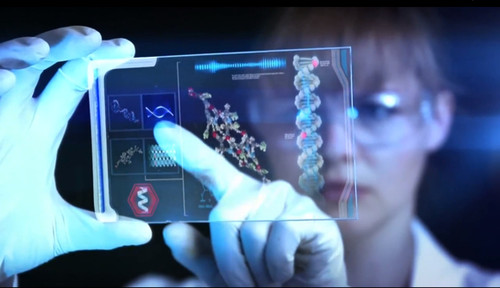
 First announced in 2012, the Qualcomm Tricorder XPRIZE has sought to bring together the best and brightest minds in the field together to make science fiction science fact. In short, they sought to create a handheld device that could would mimic some of the key functions of the iconic Star Trek tricorder, allowing consumers access to reliable, easy to use diagnostic equipment any time, anywhere, with near instantaneous results.
And now, the list of potential candidates has been whittled down to ten finalists. And while they might be able to live up to the fictitious original, the devices being developed are quite innovative and could represent a significant technological advancement in the diagnostic domain. Qualcomm is offering a US$10 million prize purse in the hope of stimulating the research and development of precision diagnostic equipment.
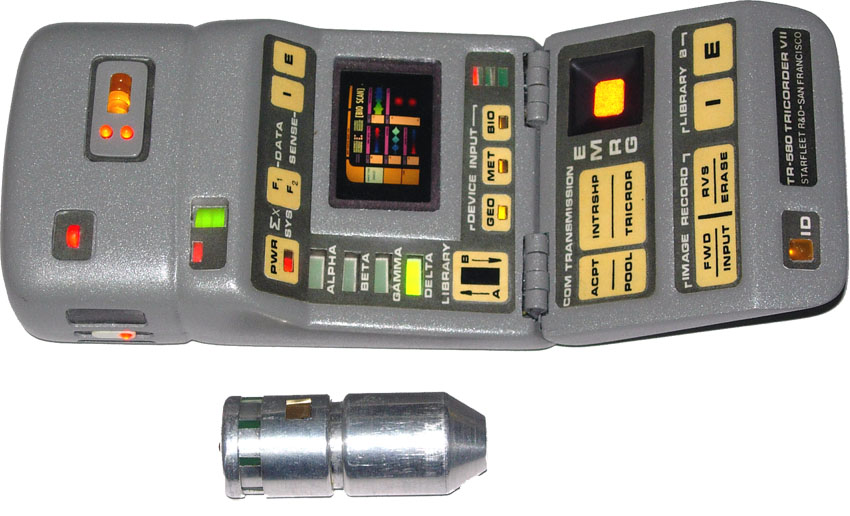 In order to qualify for the prize, the successful scanner must comply with an ambitious set of parameters. First, the device must be able to reliably capture an individual’s heart rate, respiratory rate, blood pressure, and oxygen saturation in an easy to use and completely non-invasive fashion. It must also diagnose 13 core diseases – including pneumonia, tuberculosis and diabetes – along with three additional health conditions to be chosen by each team.
Each device varies widely in terms of appearance and composition, but that’s hardly surprising. The only limitations placed on the teams in terms of construction is that the entire apparatus must have a mass of less than 2.3kg (5 lb). Due to the wide range of tests needed to be carried out by the tricorder in order to capture the necessary health metrics, it is highly unlikely that any of the scanners will take the form of a single device.
 The shortlisted entries include Scanadu (pictured above), a company which is currently developing an entire portfolio of handheld medical devices. The circular sensor is programmed to measure blood pressure, temperature, ECG, oximetry, heart rate, and the breathing rate of a patient or subject – all from a simple, ten second scan. Then there’s Aezon, an American-based team comprised of student engineers from Johns Hopkins University, Maryland.
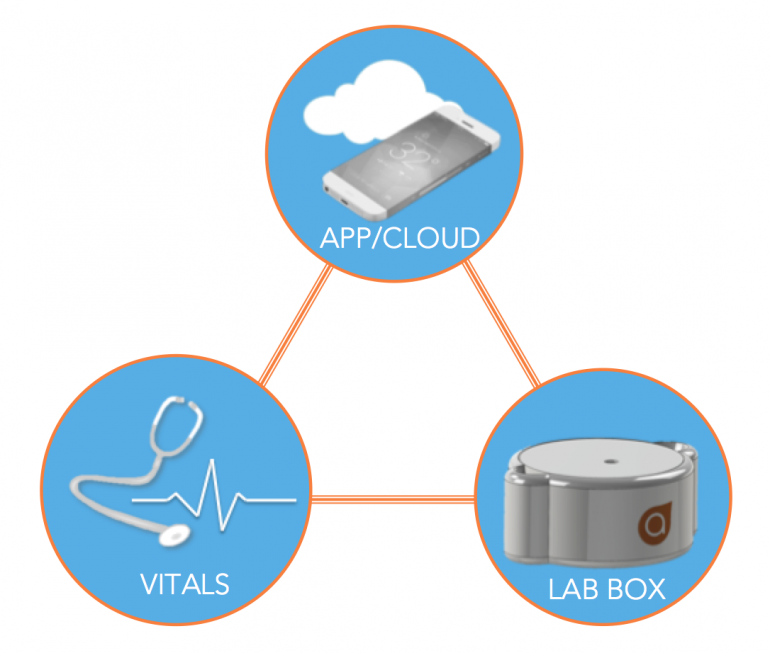
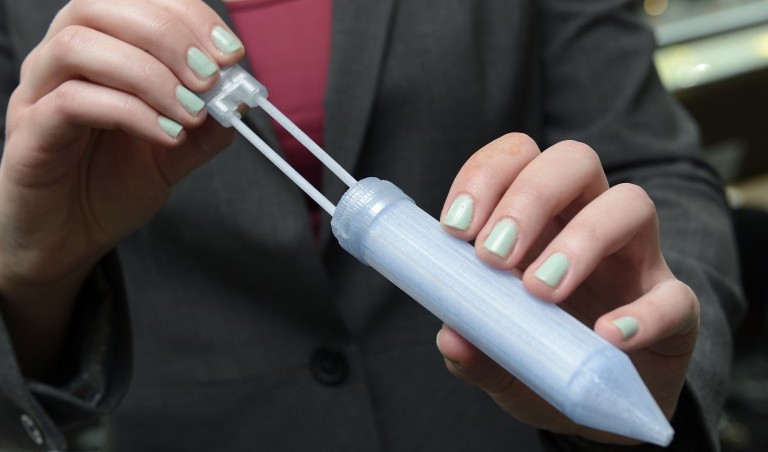
The Aezon device is made up of a wearable Vitals Monitoring Unit – designed to capture oxygen saturation, blood pressure, respiration rate and ECG metrics – and The Lab Box, a small portable device that makes use of microfluidic chip technology in order to diagnose diseases ranging from streptococcal pharyngitis to a urinary tract infection by analyzing biological samples.
 The other finalists include CloudDX, a Canadian company from Mississauga, Ontario; Danvantri, from Chennai, India; DMI from Cambridge, Mass; the Dynamical Biomarkers Group from Zhongli City, Taiwan; Final Frontier Medical Devices from Paoli, PA; MESI Simplifying Diagnostics from Ljubljana, Slovenia; SCANurse from London, England; and the Zensor from Belfast, Ireland.
In all cases, the entrants are compact, lightweight and efficient devices that push the information obtained through their multiple sensors to a smartphone or tablet interface. This appears to be done with a proprietary smartphone app via the cloud, where it can also be analyzed by a web application. Users will also be able to access their test results, discover information regarding possible symptoms and use big data to form a possible diagnosis.
The next and final round of tests for the teams will take place next year between November and December. The scanners will be put through a diagnostic competition involving 15-30 patients whilst judges evaluate the consumers user experience. The final test will also assess the scanners’ adequacy in high-frequency data logging, and the overall winners will be announced in early 2016, and awarded the lucrative $10 million prize to develop their product and bring it to market.
If such a device could be simple enough to allow for self-diagnosis by the general public, it could play a key part in alleviating the pressure on overburdened healthcare systems by cutting down on unnecessary hospital visits. It will also be a boon for personalized medicine, making regular hospital visits quicker, easier, and much less expensive. And let’s not forget, it’s science fiction and Trekky-nerd gold!
Be sure to check out the video below that outlines the aims and potential benefits of the Qualcomm Tricorder XPRIZE challenge. And for more information on the finalists, and to see their promotional videos, check out the Qualcomm website here.
Source: gizmag.com, tricorder.xprize.org



 In a first amongst firsts, a team of international researchers have
 This is a phenomenon whereby a person sees flashes of light, without light actually hitting the retina. The recipient “sees” these phosphenes at the bottom of their visual field, and by decoding the flashes — phosphene flash = 1, no phosphene = 0 — the recipient can “read” the word being sent. While this is certainly a rather complex way of sending messages from one brain to another, for now, it is truly state of the art.

 Desertification is one of the biggest threats associated with Climate Change. In places like North Africa and the Middle East, where countries already import up to 90% of their food, the spread of the desert due to increasing temperatures and diminished rainfall is made worse by the fact that cities in the region continue to grow. It’s a situation that is getting more expensive and energy-intensive at a time when things need to be getting more cost-effective and sustainable.
 Conceived by Forward Thinking Architecture, a Barcelona-based firm, the concept seeks to combine flexibility with a minimal carbon footprint. Towards this end, they chose to forgo usual transportation and create a unique conveyor system that would deliver produce without the use of any fossil fuels. The conveyor belt would be underground so it could keep running in a straight line even if buildings were in the way.
 Ideally, desert populations would be small enough that the region’s sparse rainfall could support local crops. But that’s not the reality. In addition, a small part of the recycled water would also be used to create an outdoor garden for education. As architect Javier Ponce, principal and founder of Forward Thinking Architecture, explained:
 These regions in particular have felt the pressure brought on by the escalating price of importing food. This pressure is exacerbated due to the disappearance of peak oil, which accounted for the vast majority of this region’s wealth. However, the project has farther-reaching implications, as Climate Change threatens to turn much of the world’s arable land into dry, drought-ridden plains.


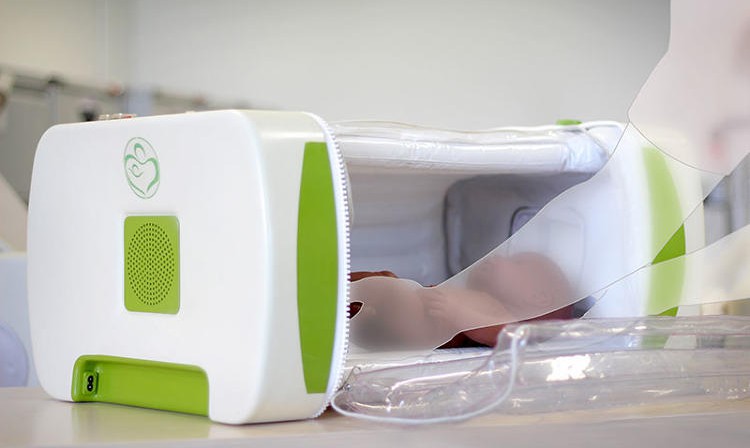
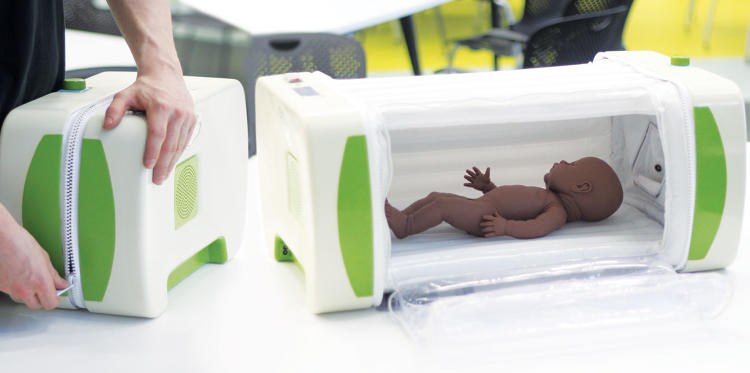
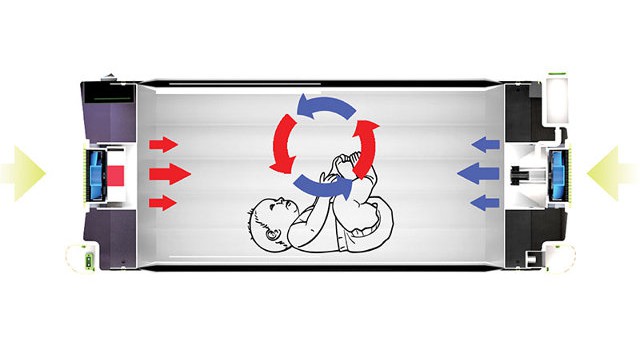



 As Sydney Rooney, the student team leader of the John Hopkins research team, said in an interview with Gizmag:



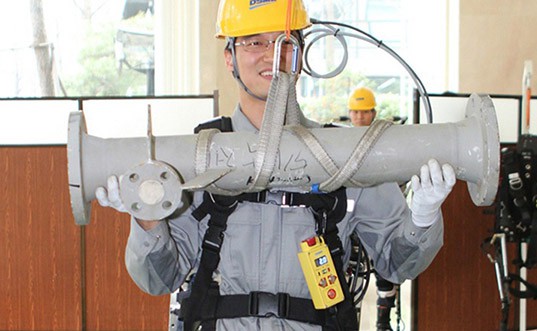
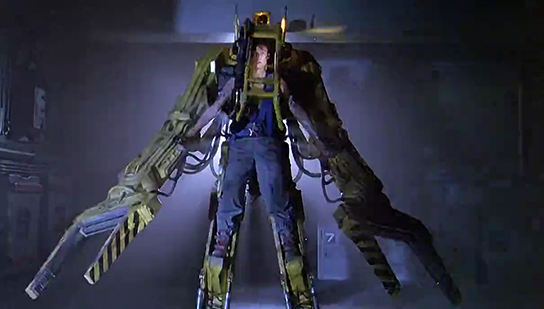
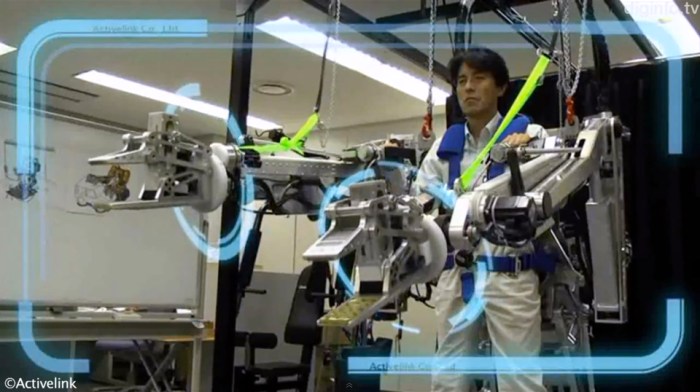 The prototypes still have several important kinks to be worked out as well. In tests, workers had a hard time negotiating sloping or slippery surfaces. And the prototypes cannot yet cope with twisting motions, so workers making turns while carrying heavy objects could tire out easily. But South Korea’s vast shipbuilding market is committed to merging human oversight with automation, and Daewoo is hardly alone in working towards this goal.
 Stories by Williams