Space Junk: The of Bane of the Space Age

janitorOneSpace, or at least the portion which sits in low orbit around our planet, is quite literally a junkyard. Currently, it is estimated that there over 500,000 bits of debris floating above our world, which takes the form of satellite and rocket components, as well as broken down satellites that ceased functioning long ago. Naturally, these objects pose hazards for space flight, and collisions between objects have been known to occur.

In fact, just three years ago, a U.S. and Russian satellite collided over Siberia, generating an estimated 1,000 pieces of new debris at least 4 inches across. In addition, the International Space Station has to periodically adjust its orbit just to get out of the way of traffic. And since exploration and commercial travel to and from the Moon is expected within the near future, something needs to be done to take the garbage out.
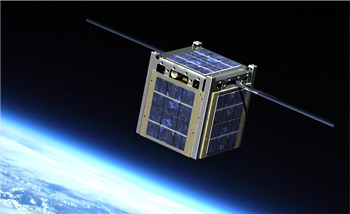
cubesatAnd that’s where CleanSpace One comes into play, a janitor satellite that the Swiss Space Center in the Swiss Federal Institute for Technology (EPFL) began developing last year. Specifically designed to target derelict satellites that threaten our communications and information networks. The satellite has a price tag of 11 million dollars, and is expected to be deployed in three to five years.

Naturally, the task before it is a tricky one. In order to do a “launch and seize” operation, the satellite would have to get onto the same orbital plane as its target, latch onto it at high speed, and then de-orbit it. To do this, EPFL is working on an “ultra-compact motor” to get the janitor onto the right track, as well as a grasping mechanism to grab hold of the space junk once its aligned and within distance of it.


And then there’s the efficiency factor. As it stands, a vessel like the CleanSpace One is a one-shot deal design. Once it’s latched onto space junk, it essentially re-enters the atmosphere with it and drops it below, meaning it is unable to gather up multiple pieces of debris and dispose of them discreetly. As such, it would take even a large fleet of janitor satellites quite a long time before they made a dent in all the space junk.

Luckily, there’s another option that has been on the table even longer than the janitor satellite. The reasoning behind this concept is, if you don’t the means to de-orbit all that space junk, just hit it with some photons! When you consider all the debris in orbit and the havoc it plays with the space lanes, not to mention how its only getting worse, a “targeted” approach may just be what the doctor ordered.

space_laserBack in 2011, James Mason, a NASA contractor at the Universities Space Research Association in Moffett Field, Calif., and his colleagues presented a paper claiming that an anti-collision laser system which would target space debris was feasible. Although they acknowledged that more study was required before it could be implemented, they also claimed that lab simulations suggested that the idea would work in practice.

The idea would center around the deployment of a medium-powered laser of 5 to 10 kilowatts to essentially nudge debris off a potential collision course. Rather than eradicate the junk that clutters up the space lanes, this system would be responsible for anticipated crashes and preventing them by ensuring space junk didn’t cross paths with the ISS, satellites, or orbiting shuttles.

space_debrisAnd even that doesn’t represent the entirety of proposed solutions. In addition to janitor satellites and laser, the Russian Space Agency has also been batting around an idea for an orbital pod that would sweep away satellite debris. Details remain sketchy and little information has been released to the public, but the RSA has claimed that they hope to have such a craft ready to go no later than 2023.

Yes, it seems we as a species are entering into phase two of the Space Age. And in this segment of things, orbital pods, offworld habitations, and exploration into the outer Solar System may very well be the shape of things to come. As such, we’re going to need clearer skies above our heads if anything hopes to make it off of Earth without a series fender bender!

space_debris_wide

Sources: news.cnet, cbsnews.com

Wanted: Married Couple to go to Mars

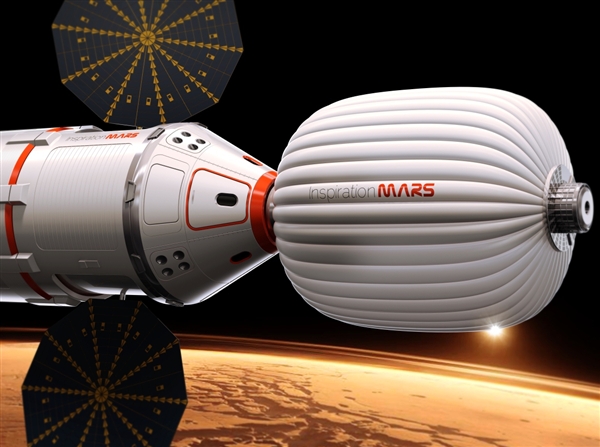
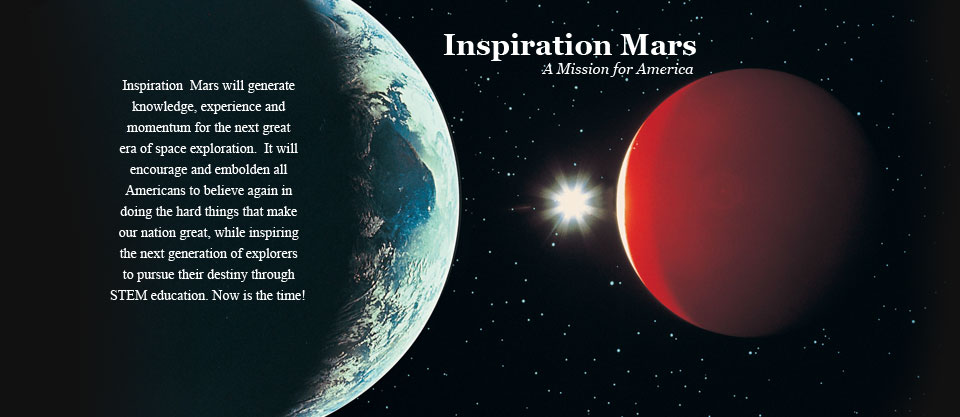
tito-mars-mission-conceptSounds like the setup for a sci-fi romantic comedy doesn’t it? But in fact, it’s the basis for a planned Mars mission which is being hosted by space adventurist Dennis Tito. As the head of the non-profit organization known as Inspiration Mars, Tito has long believed that humanity must seize on the opportunity being provided by a new generation of space exploration, with the intention of becoming a truly “multi-planet species”.

The mission will consist of sending two professional crew members –  who will likely be a married couple – on a “fast, free-return” mission, passing within 160 kilometers of Mars before swinging back and safely returning to Earth. The spacecraft will likely be tinier than a small Winnebago recreational vehicle, and will be launched on Jan. 5, 2018 when planet Earth and Mars will be in alignment.

inspiration_marsTo make it happen, Inspiration Mars has signed a Space Act Agreement with NASA – specifically the Ames Research Center (Ames) – to conduct thermal protection system and technology testing and evaluation, as well as tapping into NASA’s knowledge, experience and technologies. Tito emphasized during their initial meeting that his organization was not looking for money, but a partner to help them develop the required technologies.

The mission system will consist of a modified capsule launched out of Earth orbit using a single propulsive maneuver to achieve the Mars trajectory. An inflatable habitat module will be deployed after launch and detached prior to re-entry. Closed-loop life support and operational components will be located inside the vehicle, designed for simplicity and “hands-on” maintenance and repair.

Mars_A1_Latest_2014As already stated, the mission is a non-profit venture that is designed to inspire. As Tito himself put it:

“[the mission will engage] the best minds in industry, government and academia to develop and integrate the space flight systems and to design innovative research, education and outreach programs for the mission. This low-cost, collaborative, philanthropic approach to tackling this dynamic challenge will showcase U.S. innovation at its best and benefit all Americans in a variety of ways.”

What’s more, Tito believes that the time is right for this mission, and not only because of the orbital window of opportunity. “Investments in human space exploration technologies and operations by NASA and the space industry are converging at the right time to make this mission achievable,” he said.

The mission will last 501 days, and Tito has emphasized that it will be an American adventure, not an international one. Tito himself plans to fund the next two years of the mission, beyond that it will be funded primarily through private, charitable donations, as well as government partners that can provide expertise, access to infrastructure and other technical assistance. He also believes media rights will be a major part of things, since the mission will be an historic first and ought to be caught on tape!

mars_lifeAnd the reason they wanted a married couple to do the deed is quite simple. Jane Poyter, a member of Inspiration Mars explains:

“Imagine, it’s a really long road trip and you’re jammed into an RV and you can’t get out,” Poynter said. “There’s no microgravity … all you have to eat for over 500 days are 3,000 lbs of dehydrated food that they rehydrate with the same water over and over that will be recycled,” adding that the two crew will need the proven ability to be with each other for the long term.

Makes sense. After all, who but a couple already intimately familiar with each others foibles and used to spending an inordinate amount of time together could make it 501 days without killing each other? And as we all know, taking a trip together is the true test of a relationship’s mettle, especially when its a capsule smaller than an RV with no chance of escape!

And for Tito’s sake, I hope things work out. One thing is for sure, his dream of a public-private relationship to make space travel happen is already taking shape.

In the meantime, be sure to check out the promotional animation, showing the mission and the mechanics of the free return trajectory:

Source: www.universetoday.com, inspirationmars.com
Bee Venom: A Cure for HIV?

HIV_beevenomSince it was first clinically observed in 1981, HIV/AIDS has been responsible for an estimated 25 million people worldwide. Since 2010, an estimated 34 million people were diagnosed with HIV, most of whom live within the developing world. In spite of anti-viral medicines which makes HIV manageable, countless people still die as a result of improper treatment or a lack of access.

As such, its little wonder then why medical researchers have been working for decades to find a cure. If it were possible to inoculate against the spread of HIV, the disease would all but disappear within a few generations. In addition, if it were possible to cure those already infected, and worldwide access were assured, HIV and AIDS could very well be eliminated in a decade or less.

HIV-budding-ColorNot too long ago, researchers at Caltech experimented with HIV antibodies which could very well lead to a vaccine in the near future. But even more exciting than this was the announcement from the Washington University School of Medicine in St. Louis earlier this month, where a research team demonstrated that nanoparticles infused with a toxic bee venom were capable of killing HIV. With this latest breakthrough, it seems that the days of one of the greatest plagues in history may truly be numbered.

The key to this discovery, which was made by Samuel A. Wickline and his team at the Washington University, involves what is known as cytolyic melittin peptides. Melittin is found in bee venom, and it has the fortuitous trait of being able to degrade the protective envelope that surrounds HIV. When delivered in both large and free concentrations, they observed that HIV was unable to withstand the assault and died.

HIVnano_primaryMoreover, these melittin-loaded nanoparticles left the surrounding cells unharmed, which incidentally was no accident. The nanoparticles Wickline and his team developed were endowed with a kind of filter that prevents healthy cells from coming into contact with the toxin. But HIV, since its a viral strain, is small enough to sift right through these filters, thus exposing it to the toxin.

Currently, all known forms of HIV treatment involve preventing the virus from replicating to the point that it will morph into AIDS. By contrast, this new process targets the virus where it lives, focusing on killing on it rather than limiting its ability to reproduce. Adding to the general sense of excitement is speculation that this same concept could be used to combat other infectious STDs, including hepatitis B and C.

As a topical gel, suggestions are already circling that melittin-loaded nanoparticles could be combined with spermicidal cream to create the ultimate contraceptive that can also protect against STDs. Not only would this ensure truly safe sex, combined with melittin-treatment treatments for the infected and preventative vaccinations, it would also open up another front on the “war on HIV”.

My thanks to Rami for bringing this article to my attention. Since he pointed it out, its been making quite a few waves in the medical community and general public! Stories like these give me hope for the future…

Source: hivplusmag.com, IO9

Asteriod Prospecting by 2015

asteroid_beltDeep Space Industries, a private aerospace company, has been making a big splash in the news lately. Alongside SpaceX, they have been pioneering a new age in space exploration, where costs are reduced and private companies are picking up the slack. And in their latest bid to claim a share of space, the company announced plans late in January to begin asteroid prospecting operations by 2015.

For some time, the concept of sending spaceships to mine asteroids and haul ore has been explored as a serious option. Within the asteroid belt that lies between Mars and Jupiter, countless tons of precious metals, carbon, silicates, and basaltic minerals. If humanity could tap a fraction of a fraction of that mineral wealth, it would be able to supply Earth’s manufacturing needs indefinitely, without all the harmful pollutants or run off caused by mining.

asteroid_miningSo to tap this potential goldmine (literally!) known as the Asteroid Belt, DSI plans to launch a fleet of mini spacecraft into solar orbit to identify potential targets near to Earth that would be suitable to mine. Lacking the resources of some of the bigger players in the space rush, DSI’s probes will ride-share on the launch of larger communications satellites and get a discounted delivery to space.

Initially, a group of 25kg (55 pounds) cubesats with the awesome designation “Firefly” will be launched on a journey lasting from two to six months in 2015. Then, in 2016, the 32 kilograms (70 pound) DragonFly spacecraft will begin their two-to-four-year expeditions and return with up to 68 kilograms (150 pounds) of bounty each. Beyond this, DSI has some truly ambitious plans to establish a foundry amongst the asteroids.

asteroid_foundryThat’s another thing about the Belt. Not only is it an incredibly rich source of minerals, its asteroids would make an ideal place for relocating much of Earth’s heavy industry. Automated facilities, anchored to the surface and processing metals and other materials on site would also reduce the burden on Earth’s environment. Not only would there be no air to befoul with emissions, but the processes used would generate no harmful pollutants.

In DSI’s plan, the foundry would use a patent-pending nickel gas process developed by one of DSI’s co-founders, Stephen Covey, known as “sintering”. This is the same process that is being considered by NASA to build a Moon Base in the Shackleton Crater near the Moon’s south pole. Relying on this same technology, automated foundries could turn ore into finished products with little more than microwave radiation and a 3D printer, which could then be shipped back to Earth.

deepspaceindustries-640x353Naturally, DSI will have plenty of competition down the road. The biggest comes from Google-backed Planetary Resources which staked it claim to an asteroid last April. Much like DSI, they hope to be able to mine everything from water to fuel as well as minerals and rare earths. And of course, SpaceX, which has the most impressive track record thus far, is likely to be looking to the Asteroid Belt before long.

And Golden Spike, the company that is promising commercial flight to the Moon by 2020 is sure to not be left behind. And as for Virgin Galactic, well… Richard Branson didn’t get crazy, stinking rich by letting opportunities pass him by. And given the size and scope of the Belt itself, there’s likely to be no shortage of companies trying to stake a claim, and more than enough for everyone.

So get on board ye capitalist prospectors! A new frontier awaits beyond the rim of Mars…

Source: Extremetech.com

Powered by the Sun: Solar-Powered Reactors

solar2Welcome back to another installment in PBTS! Today’s news item is a rather interesting one, and it comes to us from the University of Delaware where researcher Erik Koepf has come up with an interest twist on solar power. In most cases, scientists think to use cells that can absorb photons and use them to generate a flow of electrons. But in Koepf’s case, sunlight is used in a different way; namely, as a means of creating alternative fuels.

Basically, the concept for Koepft’s new solar-powered reactor revolves around the idea of getting directly to the hydrogen that is found in conventional fuels, i.e. coal and fossil fuels. While they are decent enough energy sources, they do not burn clean, due to the extensive impurities they carry and by-products they create. If it were possible to remove the essential hydrogen from them, we would have a clean burning and efficient energy supply without the hassle of pollution.

Nuclear MOX plant : recycling nuclear waste : Submerged Spent Fuel Elements with Blue GlowAnd that’s where the solar reactor comes in. As the name suggests, the reactor relies on the Sun’s energy, which it then uses to split water molecules to get at their hydrogen atoms. This is done by exposing a zinc oxide powder on a ceramic surface to massive amounts of focused sunlight. From there, a thermochemical reaction happens that splits water apart into oxygen and hydrogen.

Though it may sound complicated, the sheer beauty of this concept lies in that fact that it uses the Sun’s infinite energy to do the heavy lifting and accomplish atom smashing. No particle accelerators, no nuclear fusion or fission; and best of all, no pollution! Since the process creates no emissions or Greenhouse gases, this is perhaps one of the most environmentally friendly energy concepts to date.

But of course, the project has some additional requirement which fall under the heading, “additional parts sold separately”. For one, the reactor needs to get seriously hot – between 1750° to 1950° Celsius (3182° to 3542° Fahrenheit) – before it can get to the work of splitting water molecules. For this, a focusing mirror that is roughly 13 square meters, flawlessly flat and 98% reflective is needed.

solarpowergeNo much mirror existed when Koepf and Michael Giuliano (his research associate) got started, so they had to develop their own. In addition, that mirror needs to focus the solar energy it collects onto a tiny six centimeter circle that has to be precisely aimed. If the light is just a millimeter or two off to one side, the entire reactor could be damaged. In essence, the system is simple and ingenious, but also temperamental and very fragile.

What’s more, just how efficient it is remains to be seen. While the first tests were successful in creating small amounts of hydrogen, the  the real test will take place next month when the duo present their reactor in Zurich, Switzerland, where it will be running at full power for the very first time. Naturally, expectations are high, but it is too soon to tell if this represents the future or a failed attempt at viable alternative power.

Source: Extremetech.com

Powered by the Sun: Solar Powered Clothing

solar1Imagine threads that would turn the wearer into a walking power source. That’s the concept behind a new type of fiber-optic solar cell developed by John Badding of Penn State University. Announced back in December of 2012, this development could very well lead to the creation of full-body solar cells that you wear, providing you with an ample amount of renewable electricity that you could could carry with you everywhere you go.

Similar in appearance to most fiber-optic cables made from flexible glass fibers, these new solar cells are thinner than the average human hair and could conceivably be woven into clothing. Whereas you conventional solar cell exists only in two-dimensions and can only absorb energy when facing the sun, this 3D cross-section of silicon infused fiber are capable of absorbing light from any direction.

flexible-solar-cell-625x418Already, John Badding and his research team have received interest from the United States military about creating clothing that can act as a wearable power source for soldiers while they’re in the field. In addition, like peel and stick solar panels, we can expect commercial applications for satchels, like the kind used to house laptops. Forget the power cable, now you can charge your battery pack just by setting it in the sun.

And given the upsurge in wearable tattoos and implantable medical devices, these fibers could also prove useful in clothing to ensure a steady supply of power that they could draw from. Hell, I can picture “solar shirts” that have a special recharging pocket where you can place your MP3 player, smartphone, tablet, or any other electronic device once the battery runs down.

Solar-Panels-625x418Naturally, all of this is still in the research and development stage of things. John Badding and his team have yet to aggregate the single strands into a piece of woven material, meaning it is still speculative as to whether or not they will be able to withstand the stress faced by regular clothing without breaking down. Nevertheless, the material is still a significant advancement for solar energy, with the new cells presenting many possibilities for remote energy use and accessibility.

And I for one am still excited about the emergence of fabric that generates electricity. Not only is it a surefire and sophisticated way of reducing our carbon footprint, it’s science fiction gold!

Source: psfk.com

NASA’s 3D Printed Moon Base

ESA_moonbaseSounds like the title of a funky children’s story, doesn’t it? But in fact, it’s actually part of NASA’s plan for building a Lunar base that could one day support inhabitants and make humanity a truly interplanetary species. My thanks to Raven Lunatick for once again beating me to the punch! While I don’t consider myself the jealous type, knowing that my friends and colleagues are in the know before I am on stuff like this always gets me!

In any case, people may recall that back in January of 2013, the European Space Agency announced that it could be possible to build a Lunar Base using 3D printing technology and moon dust. Teaming up with the architecture firm Foster + Partners, they were able to demonstrate that one could fashion entire structures cheaply and quite easily using only regolith, inflatable frames, and 3D printing technology.

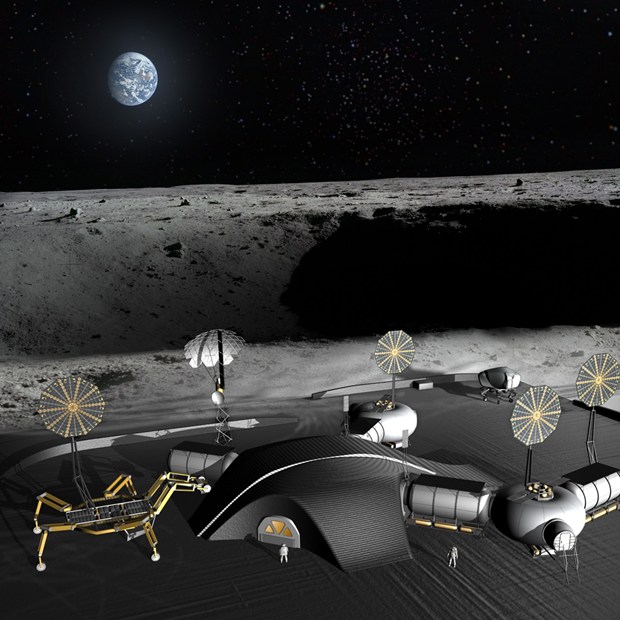
sinterhab2_1And now, it seems that NASA is on board with the idea and is coming up with its own plans for a Lunar base. Much like the ESA’s planned habitat, NASA’s would be located in the Shackleton Crater near the Moon’s south pole, where sunlight (and thus solar energy) is nearly constant due to the Moon’s inclination on the crater’s rim. What’s more, NASA”s plan would also rely on the combination of lunar dust and 3D printing for the sake of construction.

However, the two plans differ in some key respects. For one, NASA’s plan – which goes by the name of SisterHab – is far more ambitious. As a joint research project between space architects Tomas Rousek, Katarina Eriksson and Ondrej Doule and scientists from Nasa’s Jet Propulsion Laboratory (JPL), SinterHab is so-named because it involves sintering lunar dust: heating it up with microwaves to the point where the dust fuses to become a solid, ceramic-like block.

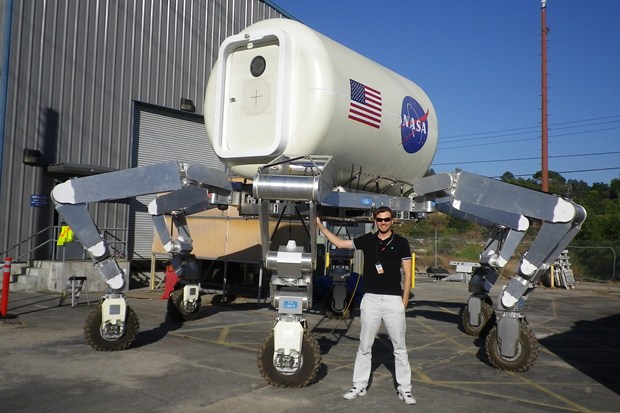
This would mean that bonding agents would not have to be flown to the Moon, which is called for in the ESA’s plan. What’s more, the NASA base would be constructed by a series of giant spider robots designed by JPL Robotics. The prototype version of this mechanical spider is known as the Athlete rover, which despite being a half-size variant of the real thing has already been successfully tested on Earth.

athlete_robotEach one of these robots is human-controlled, has six 8.2m legs with wheels at the end, and comes with a detachable habitable capsule mounted at the top. Each limb has a different function, depending on what the controller is looking to do. For example, it has tools for digging and scooping up soil samples, manipulators for poking around in the soil, and will have a microwave 3D printer mounted on one of the legs for the sake of building the base. It also has 48 3D cameras that stream video to its operator or a remote controlling station.

The immediate advantages to NASA’s plan are pretty clear. Sintering is quite cheap, in terms of power as well as materials, and current estimates claim that an Athlete rover should be able to construct a habitation “bubble” in only two weeks. Another benefit of the process is that astronauts could use it on the surface of the Moon surrounding their base, binding dust and stopping it from clogging their equipment. Moon dust is extremely abrasive, made up of tiny, jagged morcels rather than finely eroded spheres.

sinterhab3Since it was first proposed in 2010 at the International Aeronautical Congress, the concept of SinterHab has been continually refined and updated. In the end, a base built on its specifications will look like a rocky mass of bubbles connected together, with cladding added later. The equilibrium and symmetry afforded in this design not only ensures that grouping will be easy, but will also guarantee the structural integrity and longevity of the structures.

As engineers have known for quite some time, there’s just something about domes and bubble-like structures that were made to last. Ever been to St. Peter’s Basilica in Rome, or the Blue Mosque in Istanbul? Ever looked at a centuries old building with Onion Dome and felt awed by their natural beauty? Well, there’s a  reason they’re still standing! Knowing that we can expect similar beauty and engineering brilliance down the road gives me comfort.

In the meantime, have a gander at the gallery for the proposed SinterHab base, and be sure to check out this video of the Athlete rover in action:

Source: Wired.co.uk, robotics.jpl.nasa.gov

Fears of a Police-Drone State

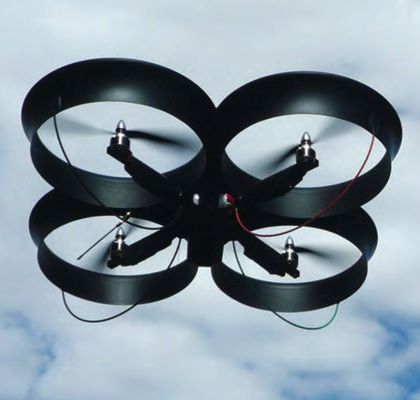
UAVsIn a decision which has been decried by countless community activists and civil rights leaders, the Alameda  County Sheriff’s Department announced plans last month to deploy up to two small, lightweight drones to assist in police surveillance. Despite resistance from the community, the town seems poised to join many other cities in using UAV’s for domestic security, effectively steam-rolling over concerns over privacy and “Big Brother” government.

As it stands, several police agencies across the US are currently using drones, including the Miami-Dade Police Department and the Texas Department of Public Safety. Until recently, the Seattle Police Department also employed a two-drone fleet, but grounded them amidst growing concerns over privacy and a recent government report, which warned that drone use could become even more commonplace.

california_dronesBefore anyone gets too worried, rest assured that the drones in question are a far cry from the UAV’s currently conducting armed missions overseas. Unlike the Predator and Reaper drones that carry multiple Hellfire missiles and can level entire villages, these drones are relatively benign, weighing only a few pounds and relying on a series of propellers to keep them aloft. But of course, the potential for harm resides in their ability to monitor, not to kill…

UAV_scoutConcerns over domestic drone surveillance reached a sort of climax  last February after federal lawmakers signed the Modernization and Reform Act of 2012 into law. Among other things, the act required the Federal Aviation Administration (FAA) to accelerate drone flights in U.S. airspace. In response, the Government Accountability Office (GAO) warned that the act would allow drone use to become commonplace in the US.

In accordance with that law, drones, known in the report as “unmanned aerial systems,” are currently limited in the United States to law enforcement activities, search and rescue, forensic photography, monitoring or fighting forest fires, border security, weather research, scientific data collection and even hobbies. However, the law calls for expansion so drones can be used for commercial, utility and public  uses.

UAV_dom1Naturally, the FAA feels that the new law doesn’t take into account several key problems – notably concerns surrounding privacy, security and even GPS jamming and spoofing. In short, they pointed out that despite drone’s on-board navigation and detection system that allow them to avoid crashes, said systems could cause complications if and when drones share airspace with private aircraft.

Among other things, the FAA recommended that drone GPS systems undergo encryption so they would be resistant to jamming and hacking, which is apparently a danger in non-military unencrypted drones. They also advised that the government set up secure operation centers for unmanned drones, and recommended that the government formulate privacy protections to head off potential “abuses”.

UAV_domObviously, the FAA’s report and public concern struck a note. Just last month, federal lawmakers introduced legislation regulating state and federal government use of unmanned drones in the United States. This legislation prohibits drones from being armed, and would demand that agencies register drones and adopt privacy polices. What’s more, the proposal would allow drones to be used only in criminal matters, in which warrants would be required.

Once again, it appears that the Obama administration is willing to step in where public concerns over developing technology are concerned. Recall the instruction signed by Defense Secretary Ashton Carter back in December of last year designed to limit the development of autonomous aerial drones? Well here too, instructions have been given, but the general sense of worry is far from alleviated.

X-47BIt puts me in mind of a prediction Arthur C. Clarke made shortly before he died in 2008. He predicted that despite concerns over “Big Brother”-type monitoring, that digital surveillance would be adopted by every city within the civilized world, until such time that crime was virtually eliminated. Much like many predictions he made, this one proved a little optimistic and futurist for some of his fans (including this one!).

As it stands, the use of remote machines to monitor our world is an ongoing and growing concern, and the debate will hardly be decided so easily. In the end, we all just have to ask if we really want to live in a post-privacy state, what the costs of living in that kind of world will be, and whether or not it will truly mean the emergence of dystopian scenarios, as envisioned by George Orwell and others.

Source: Wired.com, (2)

The Future is Here: MMI Electronic Tattoos!

patchIt’s known as Mind-Machine-Interface, the ability to interface and control machines using only your mind. And thanks to a number of dedicated researchers in various fields, it’s no longer the stuff of science fiction. With mind-controlled prosthetics, bionic limbs, and the growing field of machine-enabled telepathy, the day may soon come when people can interface, access and control machinery with just a few thoughts.

But of course, that raises all kinds of concerns about invasive procedures, whether surgery will be needed in order to implant devices into the human brain that can translate brainwaves into commands. Alternately, where non-invasive means are involved, it can take some time to calibrate the machinery to respond to the user’s nerve impulses. As those awful infomercials say, “there has be a better way!”

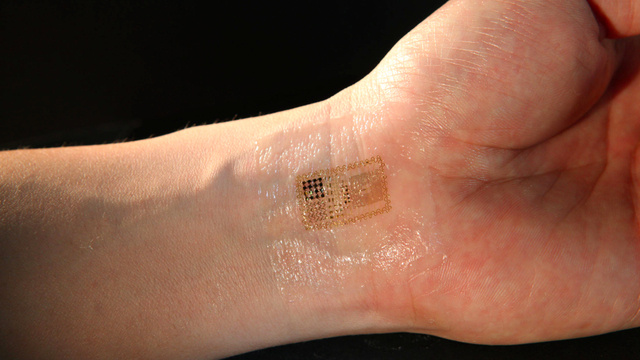
patch_headAs it turns out, electrical engineer Todd Coleman and his team at the University of California at San Diego has been working on a way to use wireless flexible electronics that one can apply on the forehead just like temporary tattoos. Building on the emerging field of biomedical electronics, these tattoos will be able to read brainwaves and allow a person to control electronic devices without the need for surgery or permanent implants.

The devices are less than 100 microns thick, the average diameter of a human hair, and consist of circuitry embedded in a layer or rubbery polyester that allow them to stretch, bend and wrinkle. The devices can detect electrical signals linked with brain waves and incorporate solar cells for power and antennas that allow them to communicate wirelessly or receive energy.

patch_breakdownOf course, other elements can be added as well, like thermal sensors to monitor skin temperature and light detectors to analyze blood oxygen levels, making it both a health monitoring patch and a fully-integrated control device. Combined with health patches that are being developed for use internally, an entire health network can be created that allows for every aspect of a patients health to monitored in real-time, anticipating and predicting health problems before they flare up.

Currently, Coleman and his colleagues are pursuing the application of using these patches to monitor premature babies to detect the onset of seizures that can lead to epilepsy or brain development problems. The devices are also being commercialized for use as consumer, digital health, and medical device. But the potential for their use is staggering, even alarming.

droneFor example, these devices can also be put on other parts of the body, such as the throat. When people think about talking, their throat muscles move even if they do not speak, a phenomenon known as subvocalization. Electronic tattoos placed on the throat could therefore behave as subvocal microphones through which people could communicate silently and wirelessly to each other.

However, a more alarming application is in the industrial and defense field, which is being pursued by the startup MC10 in Cambridge, Mass. In the course of their research, Coleman and his colleagues found that individuals who were hooked up to a computer through large caps studded with electrodes were able to remotely control airplanes and a UAV over cornfields in Illinois. Such is not possible with these tattoos at present, but Coleman admits that he and his colleagues are “working on it”.

telepathyBut even more alarming than this is the long term implications of what this could mean for us as a species, which is that electronics could one-day enable wireless peer-to-peer brain communication – aka. machine-enabled telepathy. With devices that can read and transmit brainwaves and vocal information, it would no longer be necessary for people to use radios, phones, email, or any other means of communication to talk to one another.

Simply tune in, subvocalize or think what you want to convey – and boom! instant messaging and perfected! Lord knows the art of diplomacy might suffer, and we can forget about sarcasm, tact, or shades of meaning. Society may very well breakdown or people will just have to grow thicker skin as everyone is forced to communicate what they really think to each other!

Source: txchnologist.com

NASA’s Cold Fusion Technology

cold_fusionIn 1989, two scientific researchers – Martin Fleischmann and Stanley Pons – announced the achievement of cold fusion. In a press release that garnered massive amounts of publicity, they stating that their experiment, involving a electrified palladium rod placed in a solution of heavy water, had succeeded in absorbing hydrogen and compressing it within the rod to the point that individual atoms began to fuse and helium was formed.

Naturally, other labs began to test their method and found that the same did not happen for them. With time, the experiment was revealed to be the result of a false positive as more and more labs claimed they unable to replicate the results. In the end, their announcement appeared premature and their claims unscientific. Still, the men never retracted their claim and moved their labs overseas.

NASA_coldfusionAnd interestingly enough, the declaration that they had achieved the dream of clean, abundant, cheap energy fueled the public’s imagination. Henceforth, the concept of cold fusion, as they had preached it, was featured in numerous movies and stories, even though it was now believed to be something of a pipe dream. And for some, the idea of the technology never died. Cold fusion remained a scientific dream similar to a Grand Unifying Theory or the elusive Higgs Boson.

One such organization is NASA, who continues work on this science through the development of their low-energy nuclear reaction (LENR) technology. It is their hope that one day the technology will be sophisticated enough to become commercially viable, making cold fusion reactors that could power everything  – from homes, to cars, to planes – a reality.

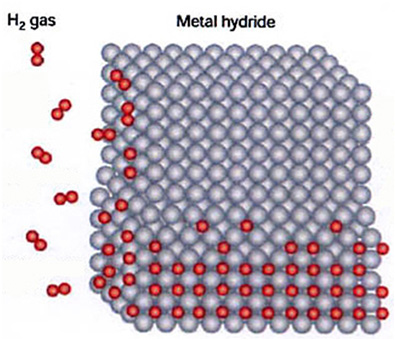
lner-nickel-hydrogen-latticeAnd unlike previous attempts that sought to harness basic fusion, the technology behind the LENR is really quite revolutionary. Rather than rely on strong nuclear forces to meld atoms and produce energy, LENR harnesses the power of weak nuclear force.

This is done by using an oscillating nickel lattice that takes in hydrogen atoms and then exchanges electrons with them. This has the effect of forming slow-moving neutrons which are absorbed, making the nickel unstable. To regain its stability, the nickel strips a neutron of its electron so that it becomes a proton — a reaction that turns the nickel into copper and creates a lot of energy in the process.

The big upside to this process is the fact that it produces zero ionizing radiation and zero radioactive waste, making it the safest and cleanest nuclear process to date. In addition, NASA claims that relying on reactors like these, it would only take 1% of the world’s nickle production to meet the world’s current energy needs, and at a quarter of the cost of dirtier fuels like coal. On top of that, they’ve also indicated that the same process can be done using a carbon lattice instead of nickel, making it even more versatile.

???????????????????????????????So the question remains, why isn’t every household running on a LENR reactor already? Well, two problems. For one, the amount of energy needed to get the ball rolling is quite high. Initially, the LENR requires a 5-30THz frequency burst of energy to make the nickel lattice begin oscillating, which is difficult to efficiently produce.

Second, other labs have experienced a few… uh, accidents… trying to reproduce the process, which included a few explosions and some melted windows. No deaths were reported, mind you, but it does demonstrate that the process can generate a LOT of power if not properly controlled.

Still, other means of generating electricity, such as nuclear fission, have experienced some bumps along the way (i.e. Chernobyl and Three Mile Island) and we still rely on them. And oil and coal are what we’ve come to think of as “dirty means” of generating power, meaning they cause tremendous amounts of pollution or can lead to environmental debacles, such as oil spills. And natural gas can only last so long. So realistically, there may be hope for LENR and cold fusion yet.

Fingers so very crossed! And be sure to check out NASA’s video explaining the process:


Source:
Extremetech.com