Microsoft Concept Video: The Future of Smartphones and Computers

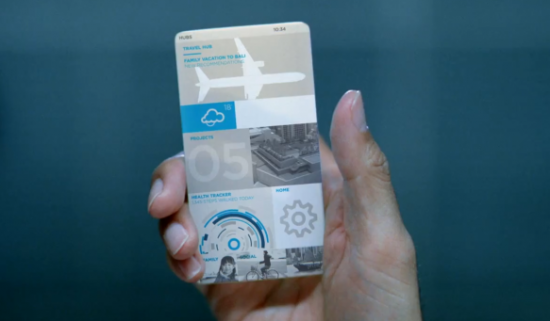
futurvision5-550x321Ah, I imagine people are getting tired of these. But permit just one more! In the midst of so many new products and developments in the fields of smartphones, tablets, augmented reality, and wireless technology, Microsoft was sure to add its two cents. Releasing this concept video back in 2011, shortly after the Consumer Electronics Show, amidst all the buzz over flexible screens and paper-thin displays, Microsoft produced this short entitled “Productivity Future Vision”.

In addition to showcasing their Window Phone (shameless!), the video also features display glasses, “smart” windows, self-driving cars, 3D display technology, virtual interfacing, paper-thin and flexible display tablets, touchscreens, teleconferencing, and a ton of internet browsing and wireless connectivity. All of the technologies featured are those that are currently under development, so the video is apt in addition to being visually appealing.

But of course, the real purpose of this video is to demonstrating to the world that Microsoft can bring these technologies and build the future of business, travel, education and play. Or at the very least, they seeks to lay their claim to a good portion of it. It’s Microsoft, people, they didn’t get to being a mega-corporation by writing checks or playing nice.

And based on this video, what can be said about the future? All in all, it looks a lot like today, only with a lot more bells and whistles!

New Facial Recognition System for Airports

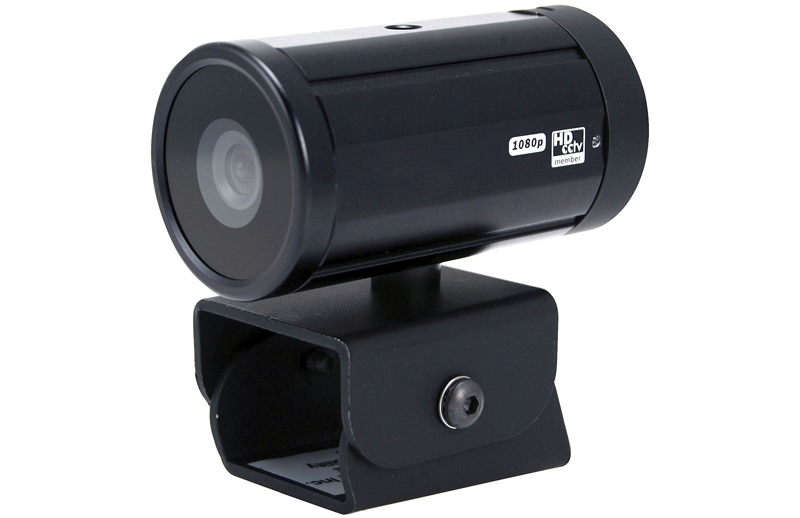
flight-display-systems_webIt’s called the See3, a new computer facial-recognition system that is likely to be making the rounds at airports in the next few years. Developed by Flight Display Systems, it is believed this technology will add a new level of protection to owners and operators concerned with aircraft security, as well as create more complete cabin services.

Based on the Linus Fast Access facial-recognition software, See3 also makes use of a of a proprietary and expanding set of algorithms. Mounted at the entrance of the aircraft, the system compares the faces of those entering the airplane with a known database and alerts the crew of the entry of one or more unauthorized people.

See3 uses nearly 100,000 values to code a face image, such as the less complex methods of inter-ocular distance, distance between nose tip and eyes, and the ratio of dimensions of the bounding box of the face. And, according to Flight Display founder and president David Gray, changes in hair style or the addition of a mustache or beard, glasses or makeup will not affect the accuracy of the system. At this point, the system’s accuracy is between 75 and 90 percent, but the company continues to add algorithms to improve on this.

However, the camera also presents opportunities to improve on a person’s overall flight experience. As Gray went on to explain, the camera is integrated into the aircraft cabin management system, and can therefore “recognize” a person via the seat camera. It then greets them by name and automatically loads their entertainment preferences, set preferred lighting and even alert the crew to the person’s meal preferences and any allergies.

Score one for personalized high-tech displays on the one hand, or Big Brother-type monitoring and HAL-like computer systems, depending on your point of view. According to Gray, the system could be available within a year’s time on certain major air carriers. No telling when the movie about a creepy AI that takes over an airplane, Space Odyssey-style, will be released. But since I called it first, I’ll be expecting royalties!

Source: AINonline.com

3D Printer Uses Drag and Drop DNA for Cancer Drugs

brain-scan_530It seems that Parabon NanoLabs may have opened up a new front in the ongoing war against the terrible disease known as glioblastoma multiforme – aka. Brain Cancer. And the culprit in this new offensive is 3D printing technology, which is being used to print a new brand of medication, molecule for molecule, using a DNA self-assembly technique. But what is even more impressive is the fact that the DNA itself was custom designed with a drag-and-drop computer program.

The new technology, which was in part funded by the National Science Foundation, is called the Parabon Essemblix Drug Development Platform, and it combines computer-aided design (CAD) software with nanoscale fabrication technology. In an official release made by the National Science Foundation, lead investigator Steven Armentrout stated: “What differentiates our nanotechnology from others is our ability to rapidly, and precisely, specify the placement of every atom in a compound that we design.”

dna_selfassemblyIn essence, this breakthrough will not only drastically reduce the time it takes to both create and test medications, it will also open the door to completely new drug designs. The computer software used allowed the scientists to design molecular pieces with specific, functional components, and to optimize their designs using a cloud supercomputing platform called the Parabon Computation Grid that searches for sets of DNA sequences.

And to hasten the drug production process, the researches took their new sequences and chemically synthesized trillions of identical copies of the designed molecules. So, in a matter of weeks — and in some cases, days — the developers were able to produce their drugs. The technique is considerably faster than traditional drug discovery techniques, many of which simply utilize trial-and-error screening.

As for what lies ahead, Parabon is hoping to use the same technique to develop synthetic vaccines and gene therapies that can target a person’s genetic diseases. In addition, the technology could be used beyond the field of medicine, embracing nanotechnology, biotechnology and even computing. As always, exciting developments in one field are likely to trigger movements in others.

Source: NSF.com

The Milli-Motein: A “Real-Life Transfomer”?

DNA-molecule2It seems that the line which separates the biological world from the synthetic is growing fainter all the time. Just consider advancements made in the past year alone: In January, researchers at MIT created the world’s first medimachine. Then in September, researchers announced the development of an electronic implant that can dissolve completely inside your body, followed shortly thereafter by the creation of the first bionic hand. And then in November, amputee Zak Vawter climbed America’s tallest skyscraper with the world’s first neurally controlled prosthetic leg.

Now, researchers inspired by structural biochemistry are working to design shapeshifting robots that could, in theory, assume almost any form imaginable. That’s the idea behind MIT’s latest invention, the Milli-Motein: a highly adaptable, infinitely scalable machine that can assume almost any shape imaginable. MIT media labs describes the device as both the robotic equivalent of a Swiss Army Knife, and a “real-life transformer”.

milli-moteinBut, like many inventions these days, the inspiration comes from organic biology, specifically the protein structure. The building block of all life, proteins can assume an untold number of shapes to fulfill an organism’s various functions, and are the universal workforce to all of life. By combining that concept with the world of robotics, the MIT research team hopes to create a new breed of robot that can assume any shape to perform multiple functions, and the Milli-Motein is just the beginning.

According to research lead Neil Gershenfeld, this device represents the latest advance in what he describes as the “Digital Fabrication Revolution”. As he put it: “Digital fabrication will allow individuals to design and produce tangible objects on demand, wherever and whenever they need them.” Also known as “programmable matter” – or “smartmatter” – products made from this kind of material could not only change their shapes, but become new things altogether.

Naturally, this is a small step in that direction, but the eventual goal is nothing short of revolutionary. I can envision a future where people will actually line up to buy the new Acme “handy-dandy micro-helper”, a device which can convert from a screwdriver to a HDMI cord, a tablet, a fannypack, or a pair of shoes. Whatever you need, the micro-helper has you covered! Hey, that’d be a good slogan. I should start investigating patents now, don’t want Kurzweil and all those futurists making money off of this instead of me!

Check out the video below for footage of the Milli-Motein in action, and a brief description of the principles involved:


Source: IO9.com, MIT.edu

Moon Probes End Mission With A Crash/Bang

moonAs part of NASA’s ongoing Lunar studies, and perhaps to assist in the eventual creation of a lunar outpost, NASA’s latest Lunar satellites – known as Ebb and Flow – ended their mission with a crash and a bang on Dec. 16th, at precisely 5:28 p.m. EST, which was confirmed by the sudden loss of radio contact.

After launching back in September with the intention of mapping the gravitational field of the Moon, the satellites ended their mission by intentionally crashing down rather than waiting for the inevitable orbital decay. The purpose of this mission, which cost taxpayers a hefty $500 million, was to gain insight into the moon’s internal structure.

In what is known as a “targeted impact”, the flight controllers at the Jet Propulsion Laboratory guided the satellites into the side of a mountain-like section of a partially buried crater rim near the moon’s north pole. After conducting their mission close to the Lunar surface, it was known that the satellites orbits would decay and they would eventually crash on their own.

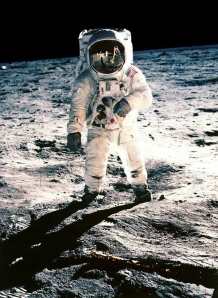
Neil_armstrong_moonWith their fuel nearly exhausted and the mission’s scientific observations complete, mission managers opted to burn the last of their propellant and crash the satellites, rather than risk that they might one day fall to the surface at or near a so-called “lunar heritage site,” including six where manned Apollo missions landed and more than a dozen where unmanned U.S. and Russian probes touched down.

In addition to their compliment of scientific instrumentation, each spacecraft also carried cameras used by middle school students to photograph the lunar surface. This was all part of a project sponsored by Sally Ride Science, a science education company founded by the late shuttle astronaut.

The spacecraft hit the moon in darkness and even though they were moving at some 6116 km/h (3,800 mph), mission managers did not expect any observers on Earth to see a flash or any other telltale signs of the impact. But NASA’s Lunar Reconnaissance Orbiter will be on the lookout for any signs of fresh craters during subsequent passes over the region.

Source: news.cnet.com

More Future Phones

Paper-Thin-Pamphlet-Smartphone-Concept-2The last decade has seen some real interesting developments in the field of digital technology and telecommunications. Perhaps too interesting! When one considers the kind of over-saturation  that has taken place with smartphones in recent years, not to mention the cavalcade of proposed concepts that are expected to take the field in the next few, one could get the impression that were moving too fast.

But that’s the nature of technological progress, it’s an iterative process that’s subject to acceleration. And of course, just because we’re being bombarded with countless proposals doesn’t mean they are all going to come true.  But what is clear is that the smartphones of the next generation are going to have a few things in common.

For example, flexible concepts are likely to be all the rage, as are touchscreens which have become the current mainstay. In addition, the phones are likely to be miniaturized even farther, some to the point of being paper thin and even collapsible. Transparencies are also a common concept, as are holographics and the ability to morph into other shapes.

In the end, its an open sea, and people will be free to pitch any and all combinations of these basic ideas. And there’s no telling which one’s will catch on and which one’s won’t. But one thing is clear. The end results are likely to be mighty cool and are sure to complicate our lives much, much more! And here are just some of the proposed concepts that are we likely to be seeing in the next few years…

Cobalto:
cobalto_phoneMac Funamizu’s “Cobalto” has taken the cell phone concept way into the future, with an almost all-glass design. The phone would feature 3D imaging that could make Google Maps even more useful, as demonstrated here.

Dial:
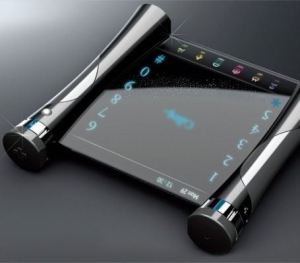
dial_phoneJung Dae Hoon’s “Dial” concept takes the rotary phone of the ‘good ol’ days’ and combines it with mobile technology and modern jewelry sensibilities.


Kambala:

kambalaA pop-up phone! Ilshat Garipov’s “Kambala” is a fascinating concept that features a center piece that can pop out to fit into your ear, making it an earphone. In theory, it will also have the ability to match your skin tone, rendering it almost invisible.

The Leaf:
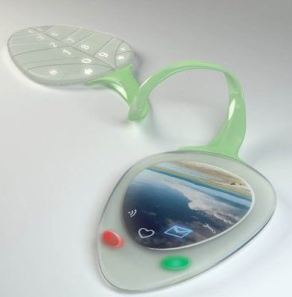
leaf_phoneAnastasia Zharkova’s organic “Leaf Phone” melds aesthetic creativity with functionality. The winding stem of the leaves could be wrapped around a user’s arm, wrist, neck, or other body part.

Mobile Script:
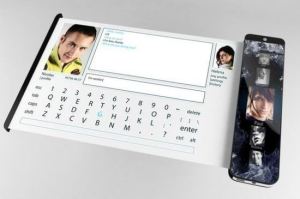
mobile_scriptAleksander Mukomelov’s “Mobile Script” phone starts with a stylish and sleek small screen, then reveals a larger touchscreen hidden within the phone’s body to meet all of your media device needs.

Morph:
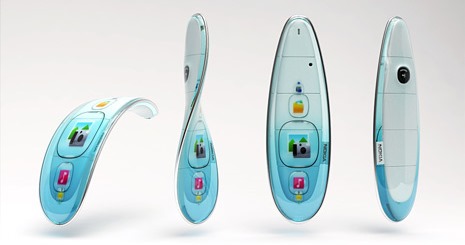
morph_phoneNokia’s “Morph” phone uses nanotechnology to create a flexible body and transparent screen that can be molded to whatever shape is the most convenient for its user. The nanotech could even clean itself.

Packet:
packet_phoneEmir Rifat’s “Packet” phone won first place at the Istanbul Design Week 2007. The tiny phone starts off at 5 cm square, then folds out as needed for different functions.

Pebble:
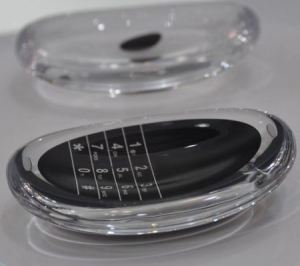
pebble_phoneAt first glance, this entrant into Fujitsu’s cell phone design contest looks like an ordinary paperweight. Actually, it’s a cleverly disguised phone. As the picture shows, the small black dot can be transformed into a keypad, media panel or web browser depending on what corner of the plastic handset you drag it to.

Sticker Phone:
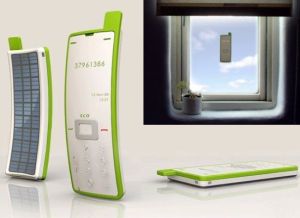
sticker_phoneLiu Hsiang-Ling’s “Sticker Phone” has a solar panel on the back of the phone and a curved surface that will allow it to stick to a window via suction to charge. Plus, you won’t lose your phone somewhere on your desk.

Visual Sound:
visual_soundSuhyun Kim’s stylish “Visual Sound” voice-to-text concept phone for deaf people is a huge step from current systems like teletypewriters.

Window Phone:
window_phoneDesigned by Seunghan Song, this “window phone” concept will reflect current weather conditions on the screen. To input text, you just blow on the screen to switch modes, then write with your finger as a stylus.

Source: Huffington Post.com

X-47B Stealth Drone Completes Sea Trial

X-47BFor some time, the US Navy has been conducting tests on a new stealth drone known as the X-47B Unmanned Aerial Combat System. A vast improvement over earlier generations of drones like the Predator and the Reaper, this new vehicle combines jet propulsion, autonomous control, and a stealthy fuselage in one package, making it the most advanced unmanned aerial vehicle in the world to date.

In its latest trials, the drone completed a series of test trials which were in preparation for its first take off and landing from an aircraft carrier. This consisted of seeing whether or not the drone had any “sea legs” – basically, if it is capable of fitting on a carrier deck and remaining in place while the ship is performing maneuvers at sea.

??????????????????All of this took place over the course of the past few weeks aboard the USS Harry S. Truman, where a prototype of the X-47B was towed by flight deck tractors, taxied on the flight deck, and had its digital engine controls tried out amidst the rampant electromagnetic fields that are common on a carrier. This last aspect was of particular concern, as developers and naval personnel weren’t sure if the carrier’s radars would interfere with the drone’s remote controls.

TrumanX47BflightdeckAccording to Mike Mackey, the program director for Northrop Grumman Aerospace Systems, the most hostile electromagnetic environment on Earth happens to be “on the deck of a Nimitz class Navy aircraft carrier”. By proving that it can fit and function aboard, the navy now knows with some certainty that they will be able to deploy these drones to all corners of the world to take part in military actions, reconnaissance, and ongoing anti-terrorism efforts.

Naturally, this and other developments relating to the X-47B have got many people feeling nervous. Unlike the Predator and Reaper, this new class of UAV is autonomous and not controlled by a remote operator. No telling how this might fit in with Deputy Defense Secretary Ashton Carter recent promise that measures will be taken to ensure that all killer robots will have a human at the helm. Could it be that all that was merely a political promise? For shame!

Plans to conduct the first take off and carrier landing are scheduled for some time in 2013. By 2014, they also hope to have successfully conducted an autonomous aerial refueling of the craft as well. Anyone feel scared? I kind of feel scared…

Source: news.cnet.com

Top Stories of 2012

biotech_alienAs Dec. 31st fast approaches, I find myself thinking about New Years resolutions. And part of that is taking stock on what’s been accomplished in the past year. For me, one of those resolutions was to stay current and share all the new and exciting news from the field of science and tech all my followers people; to the best of my abilities, that is.

In keeping with this, I wanted to create a list of the most important developments of the last year. Many sites have produced a top 10, top 12, even a top 7, list of what they thought the most significant accomplishments were. Well, I wanted to do one of my own! Opinion varies as to what the biggest leaps and bounds were over the course of the last year, and I’ll be damned if I don’t get my say in. Lord knows I’ve spent enough time reading about them, so here’s my comprehensive list of the greatest inventions, developments and advances made during 2012.

I think you’ll all agree, the list packed with stories that are intriguing, awe-inspiring, and even a little scary! Here are the top 12, as selected by me, in alphabetical order:

3D Printing:
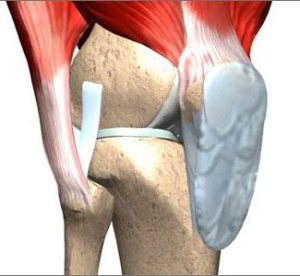
cartilage1As far as tech trends go, this one has been in the works for some time. However, 2012 will be remembered as the year that 3D printing truly became a reality. From tree-dimensional models to consumer products to even guns, 3D printers have been featured in the news many times over for their potential and frightening abilities.

However, one of the greatest potential uses will be in the field of artificial cartilage, organs, and even food. As the technology is refined and expands to the field of organic molecules, just about anything can and will be synthesized, leading to an era where scarcity is… well, scarce!

Bionic Implants:
mindcontrolledprostheticPerhaps the years biggest achievement came in the form of bionic prosthetics, artificial limbs which are calibrated to respond to the nerve impulses of the user. As a result, amputees, veterans and accident victims are able to receive artificial limbs that act like the real thing.

The most notable case was Zak Vawter who scaled the 103 flights of Chicago’s Willis Tower using an artificial leg. In addition, two men in Britain had their sight restored after undergoing the first ever case of retinal surgery where bionic implants were placed in their eyes.

Brain Implants:

digital-mind1In September of 2012, scientists grafted an implant onto the brain of Chimpanzee, enhancing its brain power by ten percent. This consisted of an electrode array that was attached to the cerebral cortex of several monkey subjects, researchers were able to restore and even improve their decision-making abilities.

The implications for possible therapies is far-reaching, such as with brain injuries and cognitive disorders. But additionally, it also heralds the beginning of an era where human beings will be able to enhance their intelligence, recall, and memory retention.

Commercial Space Flight:
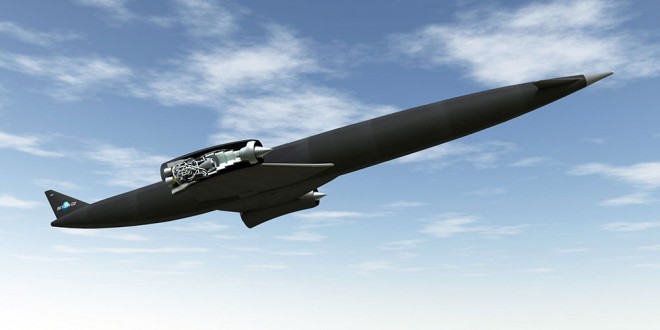
skylonThough not yet fully realized, 2012 was a big year in terms of commercial space flight. For example, Richard Branson and Virgin Galactic announced the first successful fully-loaded “glide test” of SpaceShipTwo, the rocket craft that will be taking passengers into low orbit as soon as all the kinks are worked out of the design.

In addition, Reaction Engines announced a breakthrough with the design of their hypersonic engine, which they claim will be fitted to their proposed spaceship – the Skylon. Capable of achieving speeds of up to Mach 5, this new craft is expected to be able to take off from conventional airfields, propel itself into low orbit, and deliver supplies to the ISS and make commercial trips around the world. No telling when either company will be conducting its first real suborbital flights, but the clock is ticking down!

Curiosity Rover:
Curiosity_selfportrait
One of the years biggest announcement was the deployment of the Curiosity Rover on the Martian surface. Since it landed, the rover has provided a constant stream of scientific updates and news on the Red Planet. Though the Mars Science Team did not find the “earthshaking” proof organic molecules, it did make a number of important discoveries.

Amongst them was solid evidence that Mars was once home to large rivers and bodies of water. Furthermore, the x-ray lab on board the rover conducted studies on several rock and soil samples, determining what the chemical and mineral composition of Mars surface is.

Faster-Than-Light Travel:
alcubierre-warp-drive-overviewIn the course of speaking at the 100 Year Starship, scientists at NASA began working on the first FTL travel system ever. Long considered to be the stuff of science fiction, physicist Harold White announced that not only is the math sound, but that his team at NASA had actually started working on it.

Relying on the concept of the Alcubierre Drive, the system involves expanding and contracting space time around the ship, allowing it to move faster than the speed of light without violating the Law of Relativity.

Geo-engineering:
converted PNM file
In October, the world’s first – and illegal – act of geo-engineering took place off Canada’s West Coast. The product of a “rogue geohacker” named Russ George, who was backed by a private company, the project involved the dumping of around 100 tonnes of oron sulphate into the Pacific Ocean. This technique, known as ocean fertilization, was meant to stimulate the growth of algae which metabolize carbon and produce oxygen.

The experiment, which is in violation of two United Nations moratoria, outraged many environmental, legal, and civic groups, many of whom hail from Haida Gwaii, the traditional territory of the Haida nation, who had enlisted by George as part of a proposed “salmon enhancement project”. Though illegal and abortive, the act was the first in what may very well become a series of geoengineering efforts which will be performed the world over in order to stay the progress of Climate Change.

Google’s Project Glass:
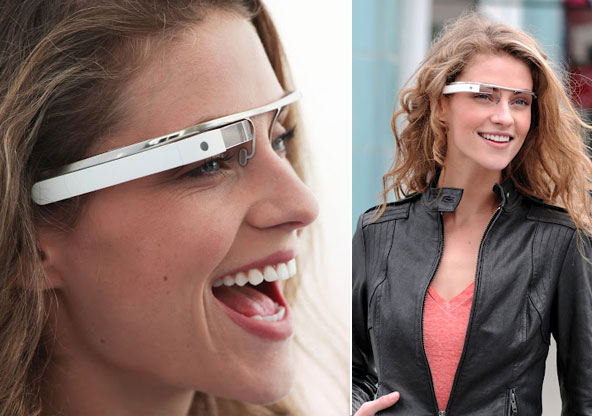
google_glasses2012 was also the year that augmented reality became… well, a reality (oh dear, another bad pun). Back in April, Google unveiled its latest concept device for wireless and portable computing, known as Project Glass. Combining an active display matrix, a wireless internet connection and a pair of shades, Google managed to create a device that looks like something straight out of cyberpunk novel.

HIV and Flu Vaccines:
HIV-budding-ColorWhen it comes to diseases, HIV and the Flu have two things in common. Until 2012, both were considered incurable, but sometime in the near future, both could be entirely preventable. In what could be the greatest medical breakthroughs in history, 2012 saw scientists and researchers experiment with antibodies that have been known to fight off HIV and the flu, and to good effect.

In the former case, this involved using a new process known as Vectored ImmunoProphylaxis (VIP), an inversion of the traditional vaccination method, where antibodies were introduced to mice. After allowing the antibodies to reproduce, researchers at Caltec found that the mice were able to fight off large quantities of the virus. In the latter, researchers at the Friedrich-Loeffler Institute in Riems Island, Germany used a new RNA-based vaccine that appeared to be able to fight off multiple strains of flu, not just the latest mutation.

Taken together, these vaccines could bring an end to a common, but potentially deadly ailment, and signal the end of the plague of the 20th century. In addition, this could be the first in a long series of developments which effectively brings all known diseases under our control.

Medical Implants:
enhancement2012 also saw the culmination of several breakthroughs in terms of biomedical research. In addition to the world’s first medimachine, there were also breakthroughs in terms of dissolving electronics, subdermal implants that dispense drugs, and health monitoring patches.

Little wonder then that Cambridge University announced the creation of the Center for the Study of Existential Risk to evaluate future technologies, or that Human Rights Watch and Harvard University teamed up to release a report calling for the ban of “killer robots”. With all the potential for enhancement, it could be just a matter of time before non-medical enhancements are a reality.

Mind-controlled prostheses:
woman-robotic-arm_650x366Researchers at BrainGate created a brain-machine interface that allows users to control an external device with their minds. The first person to use this revolutionary new system was Cathy Hutchinson, a stroke victim who has been paralyzed from the neck down for 15 years, who used the robotic arm to drink a cup of coffee.

This news, combined with other advances in terms of bionic prostheses, could signal the end of disability as we know it. Henceforth, people with severe injuries, amputations and strokes could find themselves able to make full recoveries, albeit through the use of robotic limbs.

Self-driving cars:
googlecar2012 marked an important year as three states (California, Nevada, and Florida) made autonomous vehicles legal. Self-driving cars, once perfected and produced en masse, will help with traffic congestion and significantly reduce the chance of auto accidents through the use of GPS, radar, and other technologies.

*               *               *

All in all, it’s been an exciting year. And with all that’s been accomplished, the future is certainly looking a lot more interesting and even frightening. What is clear is that predictions made for some time now are becoming realizable, including replication, a cure for all known diseases, advanced robotics, implants, cybernetics, and even post-humanism. Regardless of where one sits on these developments, be you pro, con, or neutral, I think we can all agree that it is an exciting time to be alive!

Happy New Year to all, and here’s hoping 2013 proves just as interesting, and hopefully a lot more peaceful and sound. And may we ALL find ourselves able to keep our New Years resolutions and build upon all we’ve accomplished so far. And of course, with all the potential for medical and technological enhancements that are coming, I sincerely hope we can find ways to improve ourselves on a personal level too!

The Future is Here: The Microsoft 3D “Holodesk”!

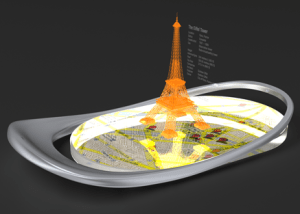
holodeskHang onto your hats! Of all the future concept videos to be produced by high tech firms of late, this one has the potential of being the most badass! It is known as the Holodesk, a prototype system that allows users to interface with a computer by seemingly manipulating 3D objects with their hands. The result of ongoing research over at the Sensors and Devices group at Microsoft Research Cambridge, the Holodesk is one of several 3-D based concepts that are expected to take to the field in coming years.

According to Microsoft website, the group has “the goal of understanding how advances in technology will impact traditional computing and the ways in which people use and interact with computing devices.” Using technology adapted from their popular and award-winning Kinect gaming system, Microsoft has developed this new device which it believes will fill a niche market in computing.

holodesk1Amongs them are physics students, who will use this system as a possible “playground” to test hypothesis involving subatomic particles and atomic models. It is also believed it will be useful for people who conduct remote collaborative studies from long distances, and to test out 3-D models of various kinds. TechNet blog even had one suggestion on one of its comment boards where a user claimed it could be slowed down so that he or she could learn how to juggle.

Per the MicrosoftResearch Youtube channel, the Holodesk is described as follows:

HoloDesk is a novel interactive system combining an optical see through display and Kinect camera to create the illusion that users are directly interacting with 3D graphics. A virtual image of a 3D scene is rendered through a half silvered mirror and spatially aligned with the real-world for the viewer. Users easily reach into an interaction volume displaying the virtual image. This allows the user to literally get their hands into the virtual display. A novel real-time algorithm for representing hands and other physical objects, which are sensed by the Kinect inside this volume, allows physically realistic interaction between real and virtual 3D objects.”

Check out the video of the Holodesk in action:

The Nokia Human Form

Nokia-HumanForm Hello all! As you may recall, Nokia made a rather interesting announcement back at the Consumer Electronics Show in 2011 with the promotional video for the Kinetic Device – a flexible smartphone which responds to user commands through twists and bends in the device’s frame. However, it seems that the telecommunications giant wasn’t satisfied with displaying their upcoming line of smartphones.

In addition, they saw fit to produce a future concept video for what they have named the Human Form. This is a futuristic smartphone which also boasts the new “bend and flex” method of use, touchscreen technology, and has a frame that is (in the words of the company) “humanized”. In essence, this means that the phone is extremely user friendly and intuitive, responding to the user’s own manipulations, touch and gestures, while the frame itself acts as a single display device.

Nokia-Human-FormBut the biggest surprise, for my money, is the tactile feature which allows users to “feel” images. What this means exactly is a bit unclear, but the promotional video seems to be suggesting that the phone will be able to simulate sensations, allowing a person to literally feel features of the image. This sort of technology not only requires a surface which is capable of adjusting its own properties down to the micro level, but an internal processor which is incredibly smart, perhaps even on the order of an AI.

No telling when Nokia plans to begin developing this phone for commercial use. Obviously, the promo video was designed to build upon their current project of building flexible smartphones and touchscreens. But given the current pace at which digital devices are developing, we could be seeing smartphones very much like this one before the decade is out. So save your pennies, because they aren’t going to come cheap!

Check out the promotional video in its entirety below: