3-D Printed Guns. The Future is Frightening!

AR-15In what has proven to be a frightening development to many, it now seems that it may be even easier for people to get their hands on guns without background checks, identification, or licenses. All you need is a computer, an internet hookup, and access to a 3D printer. It might sound like the stuff of science fiction, but thanks to at least one group of people who have all three, it appears to be entirely doable.

One such group is Defense Distributed, an online, open-source, non-profit organization that seeks to create a “Wiki weapon” – i.e. a weapon downloaded and printed with 3D technology. The group recently claimed to have downloaded the specs for a weapon from the internet, inputted them into a 3D printer, assembled the resulting plastic pieces, and then used it as one would a regular gun.

According to Cody Wilson, a University of Texas law student and the  “Wiki Weapons” project leader, the group last month test fired a semiautomatic AR-15 rifle which was built with parts created on a 3-D printer. The gun was fired six times before it broke. Though no independent observers were on hand to verify the test, but a short video was posted to Youtube to back up the claim.

Naturally, the news has a number of people nervous, not the least of which are gun control advocates. Not only is an AR-15 an automatic weapon that was used in last week’s Connecticut School Massacre, the technology could also give countless people the ability to generate deadly guns in a way that remains unregulated and unmonitored. With gun control already at the top of the US government’s agenda, this news is expected to influence the debate.

What’s more, the fact that the issue of gun control has been gaining so much momentum in the last week  could be seen as a likely influence for the group’s efforts. Wilson, who apparently expressed concern over the recent shootings, is motivated by his belief in the Second Amendment. In the end, he claims, free access to firearms is far more important than a single terrible tragedy, which he also characterized as an inevitable result of having the right to bear arms.What’s more, his group made it clear that though they discussed stopping in the light of the recent tragedy, they have no intention of stopping, believing their work to be “too important to stop.”

I imagine they would feel differently if they had children that were amongst the victims.

So I put the question to others, is this a development which holds frighten the general citizenry? Are tougher gun control laws, should Congress approve them, coming at a time when they are in danger of becoming obsolete? And if so, what’s to be done about it?

Personally, I am quite worried. For some time I have been extolling the virtues of new media, the internet, and the freedom it engenders, specifically in terms of information. When it came to 3D printing and other revolutionary fabrication processes, I figured the potential for good outweighed the potential for harm. But at Wilson and his compatriots at Defense Distributed may have demonstrated, bad people, or simply misguided people, can use it for entirely harmful purposes!

Source: CBC.ca

Omnitouch Projection Touch Screens

OmnitouchOne of the most interesting areas in which computing has been improving lately has been in the realm of interfacing. Concepts like the XBOX Kinect gaming console have not occurred in a vacuum; in fact, they are part of a larger research trend that wants to make projection and scanning the way of the future. After all, why rely on a monitor or a console when you can project images onto any surface and use them like a touchscreen?

That’s the idea behind the OmniTouch technology. Using the same technology from the Kinect gaming system, a research team made of developers from Microsoft and Carnegie-Mellon University revealed back in October that they’ve come up with a system that can turn virtually any surface into a touchscreen. By combining a miniature camera and a portable computer, the user can write documents, check email and carry out their daily computational tasks simply by finding a surface.

Chris Harrison, a postgraduate researcher at Carnegie Mellon’s Human-Computer Interaction Institute in Pittsburgh and a former intern at Microsoft Research and co-inventor of the device, describes the process as follows:

“OmniTouch works by bringing together a miniature projector and an infrared depth camera, similar to the kind used in Microsoft’s Kinect game console, to create a shoulder-worn system designed to interface with mobile devices such as smart phones. Instead of relying on screens, buttons, or keys, the system monitors the user’s environment for any available surfaces and projects an interactive display onto one or more of them.

“OmniTouch does this automatically, using the depth information provided by the camera to build a 3-D model of the environment. The camera acquires depth information about the scene by emitting a patterned beam of infrared light and using the reflections to calculate where surfaces are in the room. This eliminates the need for external calibration markers. The system rebuilds the model dynamically as the user or the surface moves—for example, the position of a hand or the angle or orientation of a book—so the size, shape, and position of these projections match those of the improvised display surfaces.”

Hrvoje Benko, another researcher who developed the device, admits that the current shoulder-mounted model is impractical. However, all the components involved in its creation are off-the-shelf electronics which are being miniaturized all the time. “But it’s not where you mount it that counts,” he says. “The core motivation was to push this idea of turning any available surface into an interactive surface… So I don’t think we’re so far from it being made into a pendant or attached to glasses.”

All of this calls to mind the SixthSense concept invented by Pranav Mistry many years ago. Presenting at TedTalks, he demonstrated how a wearable camera, finger mounted devices, and a portable computer, a person could use just about any surface to interface with their computer and even be able to transfer documents and programs to stationary computers.

While he may have beaten the IBM research team to the punch, this represents a step forward for portable computing and touch-technology since it shows that the results can be duplicated and made commercially viable.

Click on the video below to watch the OmniTouch device in action, and check out Pranav Mistry’s presentation to TedTalks at the bottom. Both enlightening and worthwhile video segments, trust me on that!

Transhumans by 2030?

transhumanismThe issue of transhumanism, the rise of a new type of humanity characterized by man-machine interface and augmented intelligence, is being debated quite fervently in some circles right now. But it seems that groups other than Futurists and speculative fiction writers are joining the discussion. Recently, the National Intelligence Council, a US policy think-tank, released a 140 page report that outlined major trends and technological developments we should expect in the next 20 years.

The report, entitled “Global Trends 2030: Alternative Worlds”, predicted several trends which are likely to come true in the near future. Amongst them is the end of U.S. global dominance, the rising power of individuals against states, a growing middle class that will increasingly challenge governments, and ongoing shortages in water, food and energy. However, predictions were also made concerning a future where humans have been significantly modified by various technologies, what is often referred to as the dawn of the Transhuman Era.

how-nanotechnology-could-reengineer-usIntrinsic to this new era is the invention of implants, prosthetics, and powered exoskeletons which will become regular fixtures of human life. These will go beyond merely correcting for physical disabilities or injury, to the point where average humans are enhanced and become more productive. 2030 is key year here, because it is by this point that the authors predict that prosthetics will exceed organics, and people will begin getting them installed in order to augment themselves.

In addition, life extension therapies and medical advances which will be used predominantly by the elderly will become a means for otherwise healthy people to prolong their lives and maintain health and vitality for longer periods of time. Brain implants are expected to become a reality as well, ostensibly to allow people to have brain-controlled prosthetics, but also for the sake of enhanced memory and augmented thinking.

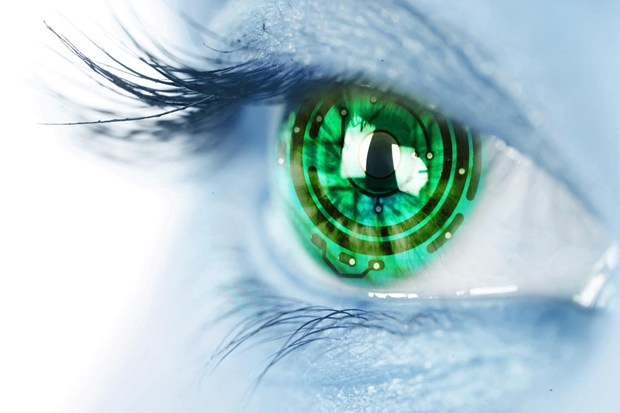
bionic_handAnd of course, bionics are an important factor in all this. Already, researchers have achieved breakthroughs with bionic limbs, but retinal attachments, artificial eyes, and even fully-functioning organs are expected before 2030. On top of that, improvements in drugs, such as neuropharmaceuticals – drugs that enhance memory, attention, speed of thought – and implants which assist in their delivery are expected to be making the rounds.

google_glassesFinally, there is the matter of virtual and augmented reality systems, which are already becoming a reality thanks to things like Project Glass and recent innovations in PDAs. As the report notes: “Augmented reality systems can provide enhanced experiences of real-world situations. Combined with advances in robotics, avatars could provide feedback in the form of sensors providing touch and smell as well as aural and visual information to the operator.”

However, the big issue, according to the report, is cost and security. Most of these technologies will be not affordable to all people, especially for the first few years of their existence. This could result in a two-tiered society where the well-to-do live longer, healthier and have a competitive advantage over “organics”, people of lesser means who are identifiable by their lack of enhancements. Also, developers will need to be on their guard against hackers who might attempt to subvert or infect these devices with tailor-made viruses.

Naturally, the importance of maintaining uniform scientific progress was stressed, and the need for a regulatory framework is certainly needed. What the CSER recently recommended is certainly worth keeping in mind here, which was to ensure that some kind of regulatory framework be put in place before all of this becomes a reality. What’s more, public education is certainly necessary, so that the current and next generation of human beings knows what to expect and how to go about making informed choices therein.

To see the full report and learn more about the NIC, follow the link below:

National Intelligence Council: Who We Are

Source: IO9.com

The Future is Here: The Prescient Surveillance Camera!

smart_cameraConsider the possibility that surveillance cameras might someday be automated, that there would be no need for security clerks to sit and wade through endless hours of footage to find indices of criminal behavior. That’s the reasoning behind the Pentagon and DARPA’s new project, which is named Mind’s Eye. Far from just being automated, the camera will be the first “smart” camera ever built, capable of predicting human behavior as well as monitoring it.

Using a concept known as “visual intelligence”, the project draws on a research proposal made by researchers working for the Carnegie Mellon School of Computer Science. The proposal calls for the creation of a “high-level artificial visual intelligence system” which, once operational, will be able to recognize human activities and predict what might happen next. Should it encounter a potentially threatening scene or dangerous behavior, it could sound the alarm and notify a human agent.

In essence, the camera system will rely on a series of computer visual algorithms that will allow it to classify behavior as well discriminate between different actions in a scene and predict their outcomes. Might sound like a case of coldly rational machine intelligence evaluating human actions; but in fact, the algorithm was designed to approximate human-level visual intelligence.

According to Alessandro Oltramari and Christian Lebiere, the researchers responsible for the proposal, humans evolved the ability to scan and process their environment for risks, at times relying on experience and guessing correctly what a person might do next. By using a linguistic infrastructure that operates in conjunction with a set of “action verbs”, along with a “cognitive engine,” the researchers are trying to get their camera to do the same thing.

Sound scary? Well that’s natural considering the implications. Any such technology is sure to bolster private and public security efforts by relieving human beings of the humdrum activity of watching security cameras while at the same time keeping them notified about potential risks. On the other hand, a machine intelligence would be responsible for monitoring human beings and judging their actions, which raises many issues. Sure, it’s not exactly PreCrime, but it does raise some ethical and legal concerns, not to mention worries over accountability.

Luckily, the AI that would run such a system is still several years away, which leaves us time to debate and regulate any system that uses “smart surveillance”.

Source: IO9.com

The Future is Here: The Mind-Controlled Robot Suit

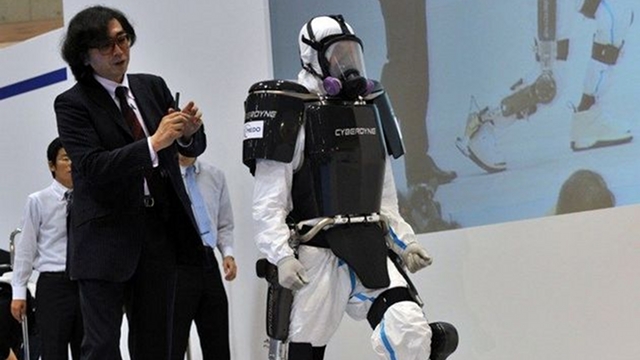
cyberdyneBack in October, some rather interesting news came out of Japan. It appears that a research company known as Cyberdyne produced a robot suit named HAL. No joke, the company is seriously named after the company from Terminator franchise that developed Skynet and the robot suit – who’s name stands for Hybrid Assisted Limb – is named after the HAL 9000 from 2001: A Space Odyssey.

Still, the company is the legit and the new robotic suit is quite impressive. Like many before it, it is a powered suit that gives the wearer enhanced strength and protection. But unlike previous models, this one comes equipped with a network of sensors that monitor the electric signals coming from the wearer’s brain, allowing them to seamlessly control the suit’s movements.

This is expected to remedy a problem which has plagued exoskeletons since their inception, which is the problem of speed. While all exos allow for greater strength and load-bearing capacity, the motors that power the limbs tend to respond slowly to the users commands. By anticipating the wearer’s movements by reading them directly from the brain, this new suit will be able to move in synchronicity with the wearer’s limbs.

The suit is also expected to be helpful with Japan’s ongoing cleanup efforts with the crippled Fukushima nuclear power plant. In addition to the new mind-control interface, the suit’s load-bearing capacities are expected to come in handy for workers who are forced to wear a 60 kg (132 lbs) tungsten vest while working in radiation zones. Even for a husky man, that’s quite the load to bear on top of all the additional weight they’ll need to be carrying.

Naturally, there are anticipated hazards as well, like what will happen if the power supply were to suddenly run out. Essentially, the wearer would be trapped inside. However, these and other bugs are expected to be addressed before any units are pressed into service. And with luck, suits like these could available for HazMat workers, construction crews, and people who work in dangerous conditions in just a few years time.

Source: japandailypress.com

The Future is Here: The Roll Out Laptop!

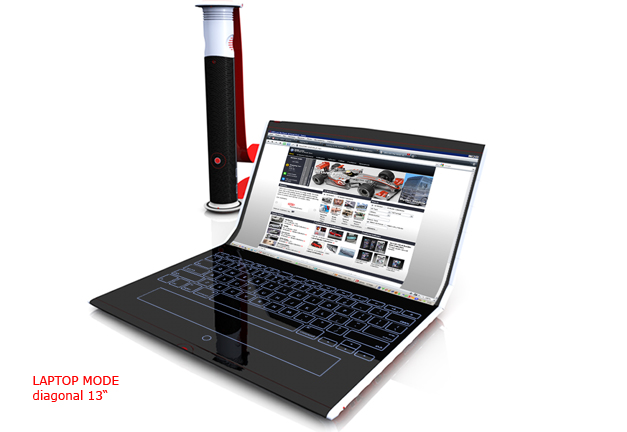
rolltop1 Presenting the Rolltop laptop, a proposed next-generation portable computer that is made to look and act like a scroll. As a concept, this idea was first started in 2009 by the people of Rolltop, a team of researchers, IT developers and business administrators. By combining recent advancements in the field of OLED-Display and multi-touchscreen technology, the plan was to create a flexible computer that would combine the utility of a laptop computer with the weight of a mini notebook.

In addition, it can be switched from a laptop with 13 inch diagonal screen to a 17 inch graphics tablet. Or, stand it up against its rear-mounted support arm and use it as a primary monitor. When rolled up, it measures a mere 8.3 in width and 28 centimeters in length, and has a carrying strap which allows it to be carried around like a small case. When unrolled, the laptop is separated from a central core which contains the battery, power plug-in, and loudspeaker.

rolltopInitially, the project was merely a proposal by the Rolltop team to demonstrate their vision and ideas. However, due to the overwhelming response from the technical and consumer community, they set to work on making it happen. As it stands, the device is still in the planning and development phase, but Rolltop has everything it needs to make it a reality. Well almost… The technology exists, the concept is feasible; all that’s needed is a little more time and investment capital.

In the meantime, check out this promotional video of the Rolltop at work. And if you’re really keen, click on this link to get to the company website to pledge a donation.

The Future Is Here: The Braille-Streaming Implant

secondsightImagine, if you will, a revolutionary new technology that sidesteps visual impairment and allows a blind person to process visual information by transmitting braille patterns directly into their retina. Might sound like the stuff of science fiction (a la Geordi LaForge), but thanks to a recent development by the company Second Sight, it is scientific fact. In what was a medical first, researchers tested the device by streaming Braille patterns directly into a patient’s retina, allowing them to read visually with almost 90% accuracy.

“It’s basically a cochlear implant, but for the eyes,” says Thomas Lauritzen, Senior Research Scientist at SMP and lead author of the study. But whereas the cochlear implant circumvents dead hair cells on the inner ear that respond to acoustic signals, the Argus II device circumvents photoreceptors, the cells in the human eye that measure light. By combining a retinal implant with the headset which work together to read the environment and transmit the information to the optical nerve, the device will allow the visually impaired to see color, movement, and objects.

Unfortunately, according to Lauritzen, the new eye device is about 30 years behind the technology of the cochlear implant. Whereas the device is capable of translating larger objects reliably, it has some troubles conveying smaller visual cues, such as letters and short sentences. It was for this reason that Lauritzen and his research team turned to streaming braille instead of normal text. This test bypassed the usual configuration of a camera and the neuroprosthetic implant and sent the electrical information directly into the implant itself. So instead of feeling Braille with their finger tips, the patient was actually able to see the succession of Braille symbols streaming onto their retina.

And the results were incredibly encouraging, with tests being conducted with 50 patients. According to the team’s report: “For this specific visual Braille project, we were able to increase reading speeds by more than 20-fold.” What’s next for the Argus II? Hopefully, FDA approval to begin large-scale production and distribution in the United States and elsewhere. And with time and improvements, it just might result in vision loss being restored for countless people!

Check out a video of the Argus II in action below:

Source: IO9

More Judgement Day Announcements…

terminator_judgement_dayNovember saw some rather interesting developments in the field of robotics. First, there was the unveiling of Disney’s charming juggling robot, an automaton capable of playing catch with a human being. This robot is intended for use in Disneyland parks as a form of entertainment for guests, but many people wonder if this is an eerie precursor to a machine that is capable of throwing other things as well…

While Disney was scant with the details of how the robot works, they did explain that a camera tracks the balls being thrown, while an algorithm works out exactly where the ball is going to land and positions the robot arm accordingly. Combining video tracking and software, the robot is able to anticipate where its catching hand needs to be, much like the human brain does. Check out the video of it playing catch with a human stand-in below:


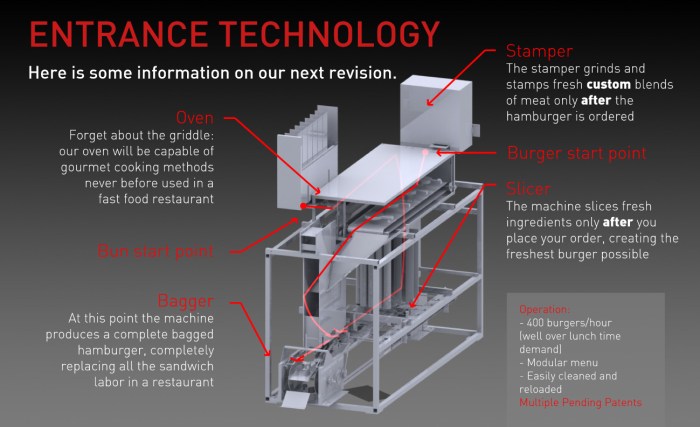
Also in the news, Momentum Machines unveiled a new automated burger robot chef last month. After being successfully tested on the line, the company announced its plans to introduce this robot to fast food chains everywhere, saving companies millions of dollars in staffing costs. According to projections, Momentum Machines says that its automated burger robot — which does everything from flipping burgers, to slicing tomatoes, to toasting the bun — could save the fast food industry $9 billion in wages.

Of as yet, no video is available of the burger robot doing a demonstration, but this helpful infographic does give a breakdown of the robots structure and basic functions (below). Granted, this might seem like a callous and insensitive move, especially to the over 2 million workers currently employed in fast food in the US alone. But with just about every other production line having been automated already, this seems to many like the next logical step. Good luck Momentum Machines; hope the angry mob outside your offices doesn’t scare you!

robot-burger-flipper-momentum-machinesGranted, this may all still seem like a far cry from Skynet and Cylons, but under the circumstances, is it any wonder that Cambridge University founded the Center for the Study of Existential Risk (CSER) to evaluate new technologies? Clearly, some people are worried robots are going to be doing more than just chucking balls and flipping our burgers.

The Future is Here: The HIV-Preventing, Contraceptive-Delivering, Dissolving Condom

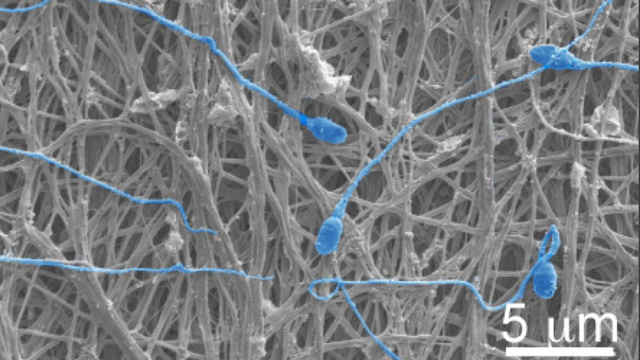
condomDoesn’t that sound like a tall order? A nanofabricated condom that delivers an anti-HIV drug, prevents pregnancy, then disappears so as not to create waste. Did I say tall order, or something out of a dream? Hard to say. The point is, its could soon be reality thanks to researchers at the University of Washington who just published a paper in describing how they’ll use “electrospinning” to create next-generation female condoms made from specially customized nano-fibers.

For those unfamiliar with the terminology, electrospinning is a process where an electrical charge is used to draw very fine fibers (typically on the micro or nano scale) from a liquid. Using this method, the UofW researchers hope to weave an ultra-thin series of cloth-like fibers and medicine together to create female condoms that will boast all the necessary protection and contraceptives to make recreational sex perfectly safe. And the rate of disolution, which can be engineered to take place in a matter of minutes, hours or days, ensures that women don’t need to remove it after sex is had.

According to their abstract, the new condom is based in the field of “Multipurpose prevention technologies (MPTs)”, a relatively new concept that seeks to “simultaneously prevent sexually transmitted infections (STIs) and unintended pregnancy”. Given the current rate of population growth and the ongoing epidemic of HIV/AIDS and other STI’s, this new field is considered to be a possible answer to a growing global health concern. What’s more, they claim that “combining chemical and physical barriers offers the greatest potential to design effective MPTs, but integrating both functional modalities into a single device has been challenging.”

The abstract also goes on to describe the process that they will be relying on and the results:

“Using FDA-approved polymers, we fabricated nanofiber meshes with tunable fiber size and controlled degradation kinetics that facilitate simultaneous release of multiple agents against HIV-1, HSV-2, and sperm. We observed that drug-loaded meshes inhibited HIV-1 infection in vitro and physically obstructed sperm penetration. Furthermore, we report on a previously unknown activity of glycerol monolaurate (GML) to potently inhibit sperm motility and viability.”

Despite the challenges in the process, the results thus far have been encouraging, and even garnered the attention of Bill and Melinda Gates. Apparently, their Foundation has pledged a research grant of one million dollars to develop the technology which will make these condoms possible. I don’t know about you, but I feel safer!

Source: IO9.com

Of DIY Cybernetics and Biohacking

transhuman3It seems that biohackers and enthusiasts of body augmentation could be setting a new trend, and doing it all from the comfort of their basements. That’s the essence of an article filed by Neal Ungerleider this past September, in which he stated that biohackers have not only cloned the innovation strategies of Silicon Valley, but could also be reshaping how technology is being created.

Amongst their efforts are such things as brain interfaces that can control video games with human thoughts, Bluetooth sensors that are meant to go under the skin and send vital signs to mobile phones, tissue engineering that can create in vitro “steaks” and leather, and devices that convert brainwaves into actual speech. These efforts are collaborative in nature and connect numerous basements, labs and research facilities together to share research, resources, and breakthroughs.

Those who take an active part in this trend are often known as grinders or biohackers, people who have chosen not to wait for cybenetic enhancements and body augmentation to become commercially available and seek to create them on their own.

According to Ungerleider:

“West Coast biohackers and grinders were the pioneers of this tech-driven, California brand of utopianism… For biohackers everywhere, augmentation of humanity itself—whether through technology or more traditional methods—is the primary goal. Common conversation points include DIY cyborgs, the quantified self, and diet…

“But a growing community on the East Coast—in greater New York, Boston, and Pittsburgh—is synthesizing Silicon Valley’s entrepreneurial DNA for its unique innovation model. Experimentation and science here is not only an exercise in advancing humanity through tech but is often applied toward creating viable cybernetic products for the market.”

One such group is Biohackers NYC, a group that was formed in 2012 largely in response to all the innovation that was taking place on the opposite coast. In additi0n to the initial startup group, it was joined by numerous startups, incubators, and workspaces scattered across the outer boroughs. As group founder and psychiatrist Lydia Fazzio claimed in an interview back in September:

“Our intent was to cover the spectrum of biohacking from manipulating non-human genomes to also the body and the mind. It’s a holistic approach to the meaning of biohacking, whether technology or nutrition. However you get there, we all have the innate potential to be an optimal functioning human in society. Our question is: How do we get there?”

davinci_transhumanOne of the attractions of this new movement is that it allows the merger of skilled professionals and dedicated hobbyists a chance to collaborate on projects of mutual interest. It also takes advantage of new business and development models – i.e. crowdsourcing – which is made possible thanks to the digital revolution.

Already, message boards have sprung up that allow disparate “labs” to post information on their work and share with others who have similar interests and projects on the go. These include DIYbio, which deals with the larger field of DIY biotechnology labs; and biohack.me, where the possibilities of subdermal bone conduction headphones and echolocation implants are being contemplated.

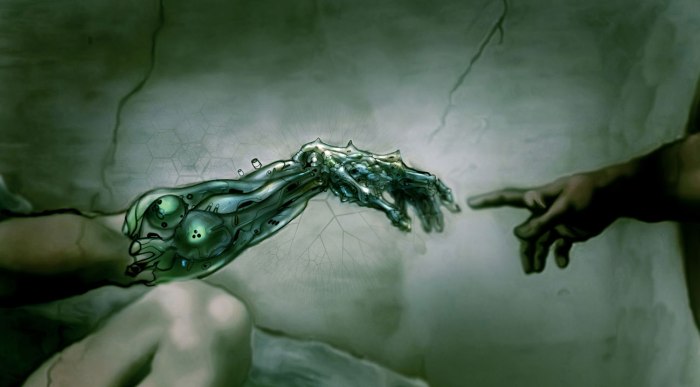
TranshumanIn the end, this is really just a small part of a much larger movement, which takes on various names. On is transhumanism, a movement which believes that human limitations can and must be transcended with the help of technological innovation. Another is Singularitarianism, a movement popularized by such Futurists as Ray Kurzweil. These individuals believe that technology will (or has) reached the point where human beings can take control of their own mortality, abilities and evolution. While some are willing to wait, others are intent on making it happen sooner other than later.

Naturally, there is a great deal of skepticism towards this new trend. For one, there are countless people who believe it to be the stuff of “science fiction”, and not real science. But, as Ungerleider claims, this represents the culmination of trends that have been in the works for some time. What’s more, it represents the monetization and mass marketing of technologies which have been under development for many years. And in truth, the line between science fiction and science fact has always been a fine one. All that’s ever been needed for us to transcend it is for people to make it happen.

Sources: fastcompany.com, Wired.com, IO9.com