Scientists Raise the Alarm on Human Enhancements

enhancementThe concept of technological progress and its potential consequences has been the subject of quite a bit of attention lately. First, there was the announcement  from Harvard University and Human Rights Watch that a ban on killer robots was needed before the current pace of innovation led to the machines that could so without human oversight.

Then came the University of Cambridge’s announcement about the creation of the Center for the Study of Existential Risk (CSER) to evaluate new technologies. And last, there was the news the news that the DOD had signing a series of instructions to “minimize the probability and consequences of failures that could lead to unintended engagements,” starting at the design stage.

bionic_handConcordantly, back in early November, the Royal Society along with the Academy of Medical Sciences, British Academy, and Royal Academy of Engineering concluded a workshop called “Human Enhancement and the Future of Work” in which they considered the growing impact and potential risks of augmentation technologies. In their final report, they raised serious concerns about the burgeoning trend and how humanity is moving from a model of therapy to one in which human capacities are greatly improved. The implications, they concluded, should be part of a much wider public discussion.

Specifically, the report raised concerns on drugs and digital enhancements that will allow people to work longer, hard and faster. Such technologies could easily give rise to a culture of enhanced competitiveness, more than we currently know, where the latest in cybernetics, bionics and biomedical devices are used to gain and edge, not to remedy medical problems. Currently, things like bionic prosthesis are being created to aid amputees and injury victims; but as the technology improves and such devices become more effective than organic limbs, the purpose could change.

cyberpunk-eyeWhat’s more, there are the ethical implications of having such technology available to human beings. If people can upgrade their bodies to enhance their natural abilities, what will it means for those who get “left behind”? Will the already enormous gulf between the rich and poor expand even further and take on a new dimension? Will those who want to succeed in the business world be forced to scrounge so they can get the latest upgrades.

Or, as the panel’s final report put it:

“Work will evolve over the next decade, with enhancement technologies potentially making a significant contribution. Widespread use of enhancements might influence an individual’s ability to learn or perform tasks and perhaps even to enter a profession; influence motivation; enable people to work in more extreme conditions or into old age, reduce work-related illness; or facilitate earlier return to work after illness.”

At the same time however, they acknowledge the potential efficacy and demand for such technologies, prompting the call for open discourse. Again, from the report:

“Although enhancement technologies might bring opportunities, they also raise several health, safety, ethical, social and political challenges, which warrant proactive discussion. Very different regulatory regimes are currently applied: for example, digital services and devices (with significant cognitive enhancing effects) attract less, if any, regulatory oversight than pharmacological interventions. This raises significant questions, such as whether any form of self-regulation would be appropriate and whether there are circumstances where enhancements should be encouraged or even mandatory, particularly where work involves responsibility for the safety of others (e.g. bus drivers or airline pilots).”

In many ways, this report is overdue, as it is offering some rather obvious commentary on a subject which has been the subject of speculation and fiction for some time. For example, in the Sprawl Trilogy, William Gibson explored the idea of human enhancement and the disparity between rich and poor at length. In his world, the rich were ensured clinical immortality through AI and biotech while everyone else was forced to spend their savings just to afford the latest tech, merely so they could stay in the running.

However, just about all of the panel’s recommendations were most appropriate. They included further investigations into ensuring safety, affordability, and accessibility, not to mention that some of these enhancement technologies —  be they pharmaceutical, regenerative medicines, or cybernetics — should be regulated by the government. This last article is especially appropriate given the potential for personal misuse, not to mention the potential exploitation by employers.

With all the harm that could result from having technologies that could render human beings “postmortal” or “posthuman”, some degree of oversight is certainly necessary. But of course, the real key is a public educated and informed on the issue of cybernetics, bionics, and human enhancement, and what they could mean for us. As with so much else, the issue is one of choice, and awareness of what the consequences could be. Choose wisely, that’s the only guarantee! Hey, that rhymed… I smell a quote!

Source: IO9.com

The Future is Here: Paper-Thin Smartphones!

paperthin_smartphoneAt last years Consumer Electronics show, the AMOLED flexible display concept was a huge hit. AMOLED – which stands for active-matrix organic light-emitting diode – is new a display technology that utilizes both organic compounds and an active matrix to form electroluminescent material and address pixels. But what is truly awesome about it is how it allows for displays that are both and flexible.

In the wake of that show, many developers have been presenting some cutting edge technologies and concepts that are still in development, but which build on the technology and are expected to be available within a few years time. One such concept comes from a collaborative group composed of researchers from Queens University’s Human Media Lab and the Motivational Environments Research Group from Arizona State. Their concept: the PaperPhone!

Like the Nokia Kinetic concept, a user is able to control through a series of bending and flexing gestures. The device’s internal circuit memorizes these gestures and responds accordingly whenever they are repeated. Ergo, if you register that earmarking is the command for making a call, the paper-thin phone will bring up a call prompt whenever you bend the corner. In addition, mp3’s will be available on the device, and presumably, internet access.

Paper-Thin-Pamphlet-Smartphone-Concept-2In addition to its ultra-thin profile, flexible nature and smartphone functions, this proposed design represents a growing trend in personal digital devices, which is towards the organic. In terms of design, interface and assembly, the eventual goal is devices that will be indistinguishable from organics. This could take the form of machinery composed of entirely out of “smart” DNA – aka. programmable biological cells –  hybrid devices that utilize organic compounds, and even machinery assembled by DNA structures.

Sure, this may seem like a long way from that eventual, lofty goal, but its certainly a step in that direction. And if technology can and will be manufactured with organic materials, there’s even a chance it could be used as biowaste when we’re done with them. Maybe even compost, assuming they can break down into soil-enriching organic compounds.

Keep your eyes open for more breakthroughs, they are sure to be coming soon. And while you’re at it, check out of the video of the PaperPhone in action!

3-D Printing Now Offering Cartiledge!

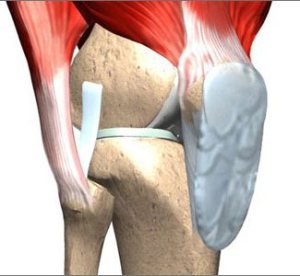
3-D cartilageSince it’s development as a viable technology, 3-D printing has presented us with some very interesting possibilities. In addition to objects made of plastic, metal, and possibly meat (a proposed idea still in development), printers may be used to create something else entirely: cartilage! Yes, in a recent announcement, scientists at the Wake Forest Institute of Regenerative Medicine claimed to have pioneered an approach to replace damaged cartilage.

The process combines two low-cost techniques – electronspinning and inkjet/bioprinting – to create the world’s first class of synthetic implantable biomaterial. The first is a method that that is used to create synthetic, polymer-based nanoscale-fibrous materials for implants and wound dressing, while the second is currently used to create tissue and organ material.

cartilage1Each process is viable, but comes with its own share of shortcomings. Electrospun materials typically don’t have the ability to promote cellular growth, nor do they have the flexibility needed for cartilage replacement. And inkjet printed materials lack the structure and strength needed to support the loads that cartilage carries. But by merging to two systems together, the researchers at Wake Forest to overcome these limitations and create something viable.

Their hybrid approach alternates microscopic layers of electrospun fiber and printed, living cartilage cells cultivated from rabbit ears, thus generating an artificial cartilage pad that is suitable for implanting. An eight-week study in mice showed that the implanted pads developed cellular structure similar to natural cartilage, while separate mechanical strength tests demonstrated that it was equivalent to the real thing.

For medical practitioners, the benefits of this breakthrough are obvious. Natural cartilage not only takes a long time to heal, it has almost no ability to regrow itself. At present, doctors rely on approach that combines removing small sections of damaged cartilage with microscopic grafts. However, neither of these methods are effective at restoring the cushioning, lubricating tissue that allows for full range of motion or impact on the limbs. What’s more, the long term effects of bone on bone contact can require eventual joint replacement.

Though the research is still in the early stages, the initial results have been quite positive. With time, and assuming the results continue to be as positive, we could be looking at a cheap and effective way to rehabilitate damaged limbs.

Source: Wired.com

News From The Red Planet!

mars_lifeIt’s been quite the busy month for NASA and the Curiosity Rover Team. In addition to the hectic research schedule and the excitement over all the potential finds, there’s also been a lot of planning as to what future mission will be like. Already, NASA announced that they plan to send another rover (InSight) to Mars in 2016, this one for the purpose of conducting interior planet studies. But given the success of Curiosity thus far, NASA announced recently that the multi-year, robotic rover program will continue, and will include an additional launch in 2020.

Apparently, this has much to do with the reelection of Barack Obama, whose commitment to space exploration also means that NASA can go ahead with its plans to create an outpost on the Moon. According to NASA Administrator Charles Bolden, this and the planned 2020 launch will ensure that “America remains the world leader in the exploration of the Red Planet, while taking another significant step toward sending humans there in the 2030s.”

The planned mission portfolio includes the Curiosity and Opportunity rovers, two NASA spacecraft and contributions to one European spacecraft currently orbiting Mars, the 2013 launch of the Mars Atmosphere and Volatile EvolutioN (MAVEN) orbiter to study the Martian upper atmosphere, the Interior Exploration using Seismic Investigations, Geodesy and Heat Transport (InSight) mission, and participation in the European Space Agency’s 2016 and 2018 ExoMars missions.

That alone is pretty exciting  news. But in and around these grand announcements, the Mars Science Labs also released some information a week ago concerning the Martian soil samples which were thought to contain organics. Though the samples did prove to be “earthshaking” as was hoped, they did present some rather interesting findings which are now being released.

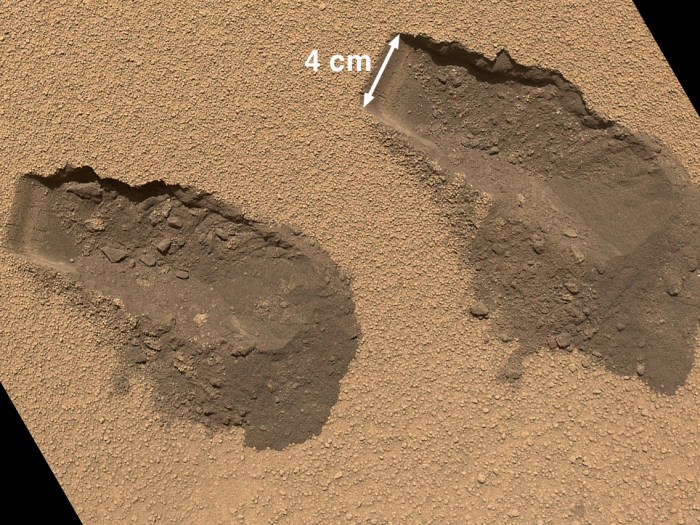
curiosity_samplesApparently, the samples taken with the “Rocknest” inside the Gale Crater showed signs of water, sulfur and chlorine-containing substances, among other ingredients, that were delivered by Curiosity’s arm to the analytical laboratory inside the rover. Lamentably, this does not confirm the existence of organic compounds, as the team hoped. But the find does confirm what Curiosity team and NASA scientists have been postulating for some time – which includes the existence of water on Mars and the existence of complex chemical compounds.

Also, it’s important to note that this kind of soil surveying was not possible with any previous rovers or exploratory missions in space. Curiosity is the first Mars rover that is able to scoop soil into analytical instruments and conducts tests in the way it has, so really, any findings should be considered a windfall. Detection of the substances during this early phase of the mission also demonstrated the ability of the rover laboratory to analyze diverse soil and rock samples, which will continue over the course of the next two years.

And as the team was sure to mention in a Tweet made shortly after the “earthshaking” discovery did not materialize, there’s still plenty of time to find all that they are looking for. Curiosity’s mission is far from over, and she will hardly be the last surveyor – man-made or manned – that will be roving the landscape of the Red Planet.

Source: NASA Jet Propulsion Laboratory

NASA’s Next Mission to the Moon

moonThe buzz about NASA is that the human race is once again going to the moon, and planning to stay there! According to space policy expert John Logsdon, there are plans to establish a manned base on the dark side of the moon under the Obama administration. He further indicated that with the election pending, this news has been kept under wraps. But with Obama now secure in a second term, it is expected that there will be an announcement soon.

“NASA has been evolving its thinking, and its latest charts have inserted a new element of cislunar/lunar gateway/Earth-moon L2 sort of stuff into the plan,” said Logsdon in a recent interview with SPACE.com. “They’ve been holding off announcing that until after the election, noting that NASA’s mission, direction, and budget could have been revised under a Romney administration.”

For those who have been following the Obama administration’s plans for space, this should not come as a surprise. In 2010, the president signed the NASA 2010 Authorization Act into law, a bill which freed up $60 billion for NASA through 2013. This move was intended to reignite space exploration at a time when the US found itself lagging behind Russia, China, the European Union and India in terms of bold new space projects.

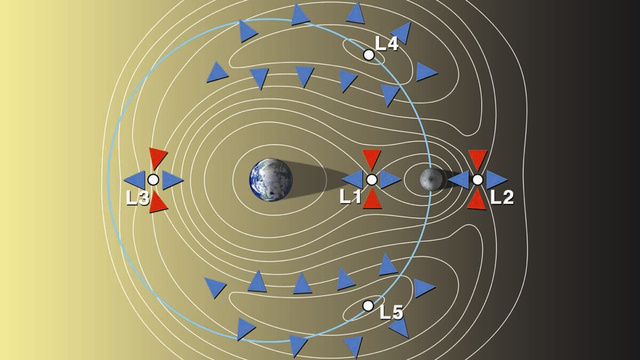
These project include a planned asteroid visit by 2025 and a manned mission to Mars in 2030. A manned outpost at the Earth-moon L2 “gateway” (shown in the diagram below) could serve as an important stepping stone to the outer solar system. But right now, NASA’s eyes are firmly fixed on Mars itself, since a manned mission is the next logical step in their research of the Red Planet.

NASA_moon“There are many options – and many routes – being discussed on our way to the Red Planet. In addition to the moon and an asteroid, other options may be considered as we look for ways to buy down risk – and make it easier – to get to Mars.” At a conference held this past September, NASA deputy chief Lori Garver went even further to outline NASA’s goals for the coming years:

“We just recently delivered a comprehensive report to Congress outlining our destinations which makes clear that SLS  – NASA’s new heavy-lift “Space Launch System” – will go way beyond low-Earth orbit to explore the expansive space around the Earth-moon system, near-Earth asteroids, the moon, and ultimately, Mars. Let me say that again, we’re going back to the moon, attempting a first-ever mission to send humans to an asteroid and actively developing a plan to take Americans to Mars.”

Suffice it to say, NASA is happy the election turned out the way it did. With their budget secure, the course of future space exploration has been set and remains in effect. Who’s to say where it will take us beyond Mars? To the Jovian satellites of Europa, Ganymede and Io? The Saturnalian moons of Titan, Rhea, Dione and Enceladus? I call Gliese 581 after that. I want to know for sure if the fourth planet (the setting of our story Yuva) is inhabitable or not already!

These are exciting times we live in, aren’t they?

Source: IO9, Space.com

Planning For Judgement Day…

TerminatorSome very interesting things have been taking place in the last month, all of concerning the possibility that humanity may someday face the extinction at the hands of killer AIs. The first took place on November 19th, when Human Rights Watch and Harvard University teamed up to release a report calling for the ban of “killer robots”, a preemptive move to ensure that we as a species never develop machines that could one day turn against us.

The second came roughly a week later when the Pentagon announced that measures were being taken to ensure that wherever robots do kill – as with drones, remote killer bots, and cruise missiles – the controller will always be a human being. Yes, while Americans were preparing for Thanksgiving, Deputy Defense Secretary Ashton Carter signed a series of instructions to “minimize the probability and consequences of failures that could lead to unintended engagements,” starting at the design stage.

X-47A Drone
X-47A Drone, the latest “hunter-killer”

And then most recently, and perhaps in response to Harvard’s and HRW’s declaration, the University of Cambridge announced the creation of the Centre for the Study of Existential Risk (CSER). This new body, which is headed up by such luminaries as Huw Price, Martin Rees, and Skype co-founder Jaan Tallinn, will investigate whether recent advances in AI, biotechnology, and nanotechnology might eventually trigger some kind of extinction-level event. The Centre will also look at anthropomorphic (human-caused) climate change, as it might not be robots that eventually kill us, but a swelteringly hot climate instead.

All of these developments stem from the same thing: ongoing developments in the field of computer science, remotes, and AIs. Thanks in part to the creation of the Google Neural Net, increasingly sophisticated killing machines, and predictions that it is only a matter of time before they are capable of making decisions on their own, there is some worry that machines programs to kill will be able to do so without human oversight. By creating bodies that can make recommendations on the application of technologies, it is hopes that ethical conundrums and threats can be nipped in the bud. And by legislating that human agency be the deciding factor, it is further hoped that such will never be the case.

The question is, is all this overkill, or is it make perfect sense given the direction military technology and the development of AI is taking? Or, as a third possibility, might it not go far enough? Given the possibility of a “Judgement Day”-type scenario, might it be best to ban all AI’s and autonomous robots altogether? Hard to say. All I know is, its exciting to live in a time when such things are being seriously contemplated, and are not merely restricted to the realm of science fiction.Blade_runner

The Future is… Foggy!

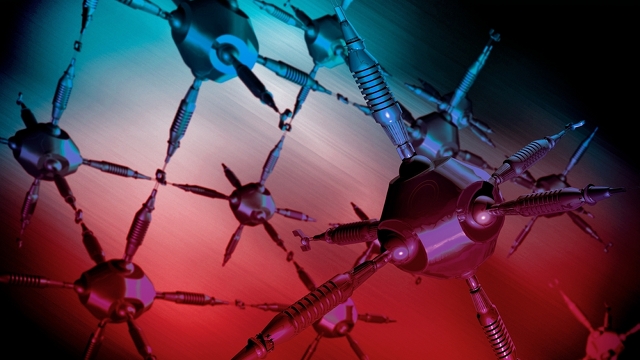
utility_fogIt’s called a Utility Fog, swarms of networked microscopic robots that can assume the shape and texture of virtually anything. Originally proposed by J. Storrs Hall, a speculative science writer back in 1993, the concept has gone on to inspired futurists and science fiction writers for years. These include Warren Ellis’s foglets in Transmetropolitan and Neal Stephenson’s personal nanodefense systems in The Diamond Age, among others.

As an extension of the nanotechnological principle – where microscopic machines are able to self-replicate and construct just about anything – the Utility Fog idea goes a step further by proposing that we have a series of robots linked, arm and arm, to form a solid mass that can assume the shape of anything we need. Another term that is often used is “Smart Matter”, because it entails the creation of materials that are capable of responding to input, storing info, and thereby predicting what a users desires.

And since they are composed by tiny robots that could be capable of computing and networking with larger machines, they could even form interfaces that allow us to store information, send emails, or take pictures. Each “foglet” would function as its own discreet computer network, in this model, making sure that separate clouds are discernible and perform different tasks. The possibilities are truly limitless, and though it may be a few decades away at this point (by liberal estimates), we can only imagine how it will alter our daily lives.

During a recent interview with IO9, Hall reminisced about how he first came up with the idea:

“I came up with this vision of form fitting foam — one that could take on the shape of anything inside it and on the fly, which got me to wondering if we could ever possibly build something like that.”

The answer, according to Hall, came to him by considering the nascent field of molecular nanotechnology. By designing and creating objects at the molecular scale, Hall envisioned a fog that could quickly morph along with the movements of anything around it — including the passengers of cars. However, the greatest potential, to Hall lies in the creation of virtual environments. In truth, there could come a day when utility fogs will blend seamlessly with the real and virtual worlds, creating a kind of hybrid reality in between.

“You could actually push this technology to the point of creating a virtual world around you. You’d essentially get Star Trek’s holodeck — one that could actually cut you and make you bleed. You could put yourself in a virtual environment where you’re interacting with something that leads to a real environment, and it’s this interface between what’s real and virtual that will prove to be the most important thing about it.”

However, the most radical possibility could be in the field of clinical immortality. Amongst science fiction writers such as William Gibson, the idea that human beings could upload their minds into constructs and interfaces has been toyed with for some time. However, why upload your mind into a box or some kind of portable hard drive when you could render it seamlessly into the form of a fog?

“You could very realistically imagine uploading into it, and then you’d be this sort of formless data amoeba controlling this formless physical amoeba and take any size or form you wanted.”

Of course, there are limitation to the whole concept, not the least of which is the fact that the constituent components of the technology are still any decades away. For starters, there’s the ability to construct robots on the scale required, then the need to fashion computers that are small enough to fit. Then there’s the software required to program such machines. Hall figures that it could take a team of experts as much as a half decade to come up with the first set of algorithms required for the most basic functions.

“To navigate that hairy interface between the continuous and the discreet — that’s more difficult, the foglets will have to link up hands, let go, walk, crawl, and so forth — it’ll be like a three dimensional square dance.”

But above all, the main issue is one of cost:

“The system will have to be capable of keeping track of any changes to the environment and to keep track of you — and this will require incredibly sophisticated simulation, sensing, and interfacing software and that’s going to be tremendously expensive.”

Not surprising really. At this juncture in time, the greatest leaps in technology that will forever alter the future and make it impossible to predict – to a point anyway – are still highly speculative. But then again, major breakthroughs are being made all the time, and are occurring at a greater and greater pace. Who’s to say when the future will arrive. It never seems to show up on schedule!

Skylon: The Future of Commercial Aerospace Flight?

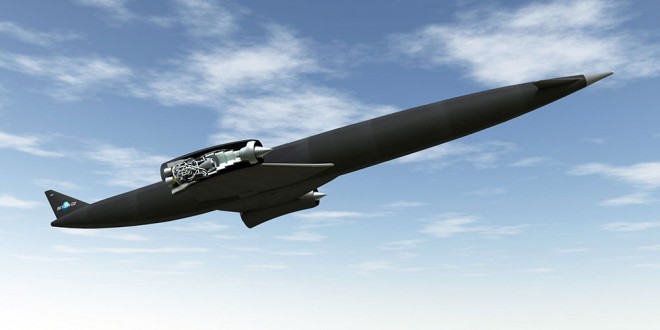
skylonBehold the Skylon! The Mach 5 hypersonic aerospace ship that is the future of commercial flight. Well, that’s the hope anyway, and if a British company known as Reaction Engines Limited get’s its way, it very well could be…

For some time now, hypersonic commercial flight has been batted around as an idea. And with billionaire Richard Branson promising commercial space flight to the world, it seemed like only a matter of time before aerospace flights became the norm. As it turns out, we may be closer than anyone previously thought, thanks to a heralded breakthrough by Reaction Engines.

In a recent statement, the British company claimed they have made “the biggest breakthrough in aerospace propulsion technology since the invention of the jet engine.” In the past, hypersonic flight has been hampered by the problem of propulsion, since at speeds beyond Mach 2, a jet engine has trouble getting the oxygen needed for combustion. Attempts to remedy this have already been made, such as with the SR-71 Blackbird which managed to reach speeds in excess of Mach 3. But for high-altitude and aerospace craft, where Mach 5 and above are essential, the problem remains, as does the issue of the amount of heat generated.

Reaction Engines claims it has solved the problem with a design that could allow a vehicle to take off, reach orbit using a combination of an air-breathing engine and rocket, then return to Earth. The secret is cooling the air as it enters the hypersonic SABRE engine. The air-breathing engine will accelerate a vehicle to about Mach 5.5, according to the company, after which a liquid oxygen tank will supply a rocket engine for the portion of the flight in space. But unlike current space vehicles, there will only be one stage involved for the entire flight thanks to the boost from the SABRE design.

In the same press release, RE claims the “pre-cooler technology is designed to cool the incoming airstream from over 1,000 Celsius to minus 150 Celsius in less than 1/100th of a second, without blocking with frost.” The company further claims to have conducting 100 test runs of the new engine’s cooling system and believes they can begin production of a prototype by 2015. The European Space Agency also says it has evaluated the design and is in negotiations to support further development.

To put it in terms every jetsetter and international traveler can understand, their proposed aerospace craft – known as the Skylon – will allow a passenger to enjoy breakfast in New York City and then lunch in Tokyo. And with a few years and plenty of investment, not just from the ESA, but NASA and the RSA as well, Skylons could be ferrying people all over the world in a matter of hours.

Source: Wired.com

Curiosity Rover’s First X-Ray Analysis of Martian Soil

Curiosity_cheminanalysisA bit of retro news from the Curiosity front here. Roughly one month ago, before the big announcement about “earthshaking news” was made, there was some other news regarding Curiosity’s ongoing soil analyses. And given all the attention that was dedicated to the possibility of organic molecules, this is one news story that might have been overlooked.

Put simply, Curiosity performed tests that were previously impossible on Mars, using an x-ray scanner that was roughly the size of shoebox in order to conduct detailed analyses of Martian soil. The purpose, of course, was to determine what kinds of minerals it contains and how its soils first came into being.

The device in question, called CheMin, takes a sample of sand – just a thimbleful – and shakes it 2,000 times a second, all the while bombarding it with x-rays. The rays then penetrate the grains, and the way in which they diffract can tell scientists about their constituent atoms. The results are then scanned to see just what kind of mineral composition it has (take a look up top to see the results rendered in stunning technicolor!)

Up until now, this technique has been impossible simply because the equipment needed to carry out such operations were far too large and clunky to fit on a rover. But thanks to NASA engineers, the device in question was shrunk down exponentially in size and even boasts improved electronics, ensuring it is both portable and energy-efficient.

As a result, the Curiosity rover has made some very interesting discoveries. For starters, Curiosity has determined that the soils in the area are extremely similar to those found around the Mauna Kea shield volcano in Hawaii. In fact, it’s identified crystalline feldspar, pyroxenes, and olivine – all of which are common to the soil here on Earth.

Yes, not exactly earthshaking news is it? But it’s interesting nonetheless, and let’s us know once again that Mars and Earth have plenty in common.

Source: Wired.com

The Future is Here: The Health Monitoring Patch

In recent years, there have been quite a few exciting developments in the field of medicine, which have included such things as medical implants which can deliver drugs, and even tiny medimachines which can navigate the human bloodstream. But as it turns out, flexible skin-mounted electronic patches might also be the way of the future.

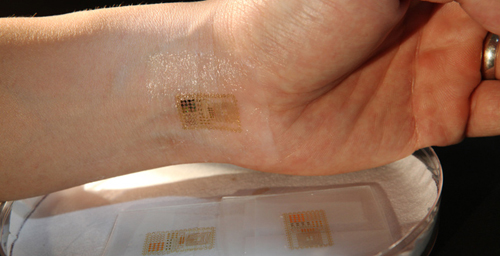
Much like a temporary tattoo, these devices will be slapped on a patient’s skin and be able to monitor their vitals and attend to their medical needs remotely, sending information to either a portable computer, server, or even their doctor’s office. Combined with a specialized implant that delivers drugs, we could be looking at a future where truly hands-free medical technology is available.

Such a concept was unveiled a little over a year ago at the University of Illinois, where researchers were working to develop what they called the “smart skin” patch. Paper thin, flexible, and virtually transparent, the device platform includes electronic components, medical diagnostics, communications, and human-machine interfacing on a patch so thin and durable it can be mounted to skin much like a temporary tattoo.

According to John A. Rogers, an engineering professor at Illinois University, his team “threw everything in our bag of tricks onto that platform”, including LEDs, transistors, wireless antennas, sensors, and conductive coils and solar cells, just to demonstrate that it could work. The current design features such as EEG and EMG sensors that track nerves and muscles, something that tends to be limited to a lab given the number of electrodes and wires involved. And the patch itself, mounted on a thin sheet of water-soluble plastic before being laminated to skin with water, can be applied not only like a temporary tattoo, but even on top of a temporary tattoo to help conceal it.

But the real accomplishment here, according to engineering professor Yonghang Huang, whose group was charged with mechanics and materials questions, is the blurring of electronics and biology. “All established forms of electronics are hard, rigid,” he said. “Biology is soft, elastic. It’s two different worlds. This is a way to truly integrate them.” The next step for Rogers and his team is commercialization, which they are already trying to do through his own device company, mc10. The researchers hope to soon add Wi-Fi capability in subsequent models, giving it the ability to communicate with remote servers and computers.

Naturally, the issue of privacy is a concern. If a patient’s medical information is being broadcast by a remote device, will it therefore be obtainable by hackers or third parties who might be interested? And if your medical information is being broadcast directly to a doctor’s office, might this be a potential basis for “Big Brother” bio-monitoring. But like with all medical technology, these devices won’t be available to patients without prior consent, in an attempt to ensure patient rights.

And for people who are suffering from life-threatening or degenerative conditions, it could mean the difference between life and death. Just think of it, terminally-ill patients, seniors or individuals with severe allergies are given this patch. The moment they begin to have a reaction, heart attack, or some other brush with death, EMT’s are notified without the need for calling 911.

But of course, the technology is still in it’s infancy and we can expect any such issues to be debated as it nears completion. In the meantime, it is exciting news just to see how far and fast the field of biotechnology has come in recent years!

Source: news.cnet.com