The Future is Here: Mind-Controlled Prosthetics

This past weekend, amputee Zak Vawter stood at the foot of Chicago’s Willis Tower with the intention of scaling its 103 flights. The purpose of this historic climb was simple, to test out a new bionic leg which may very be the way of the future. Unlike previous prosthetics, this limb is actually controlled by the user’s mind. Thanks to Vawter’s determination, and a little help from the bionic limb, the climb went off without a hitch!

Vawter, who lost his leg in a motorcycle accident in 2009, performed this climb as part of SkyRise Chicago, an indoor stair-climbing fund-raising event for the Rehabilitation Institute of Chicago (RIC), along with roughly 2700 other climbers. For years now, he has been commuting from Seattle – where he lives with his wife and two children – to Chicago to assist the RIC with the development of the leg.

This consisted of a surgical procedure called “targeted muscle reinnervation”, originally pioneered by the RIC’s Center for Bionic Medicine for upper-arm amputees. The operation reassigns nerves that once controlled a lost limb, allowing amputees to have more natural control of prosthetic devices. In Vawter’s case, this meant rerouting the residual nerves that normally would carry signals to his lower leg by attaching them to his hamstring.

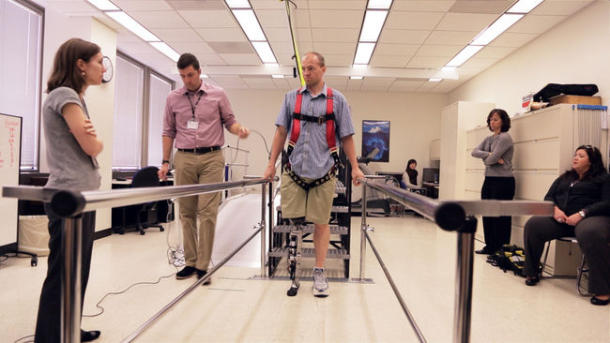
Once that was complete, Vawter was assigned the leg that would turn these nerve impulses into full-range movement. Consisting of a powered knee and ankle that work in unison, the device reads the wearer’s intent. When they push on the device to stand up, for example, it pushes back, propelling them up. When they pull on the device, it retracts, allowing them to take a step forward or vertically, depending on the signals it receives.

“Everything went great,” said Vawter at the event’s end. “The prosthetic leg did its part, and I did my part.” Kudos to you Zak Vawter! Who knows? This could be the end of problems involving accessibility as we know it!

Source: newscnet.com, huffingtonpost.com

Mercury Robot Survives Hurricane Sandy

Amidst the news of Hurricane Sandy, of the devastation and ongoing efforts at rescuing those in harm’s way, there was a story that might have been overlooked. It seems that a small robot named Mercury, one of Liquid Robotics wave gliders, survived the storm and managed to keep transmitting information the whole time.

When the storm hit, Mercury was located just 161 km east of Toms River, New Jersey, where winds got up to about 115 km/hour. Nevertheless, the robot continued to function though the worst of it, transmitting real-time weather data and helping scientists to get a better understanding of what made the storm tick.

Naturally, everyone at the parent company was quite pleased with their little automaton, even though it was only doing its job. Technically speaking, Wave Gliders are autonomous monitoring devices that use the ocean’s waves for propulsion. They are composed of two sections; a float for the surface and a submarine compartment that resides under the water. The lower section also comes equipped with moving wings that ensure that the Glider can convert wave energy into forward momentum.

Each Glider comes with a GPS, a series of internal pocessors, navigation software, and an assortment of environmental sensors. Designed for oceanic data-gathering missions, their primary purpose is to help scientists and meteorologists understand and come up with solutions for climate change, resource management, and weather alerts. Given this mission profile, Mercury’s ability to keep on working through a Class One hurricane was quite encouraging. According to Joanne Masters of Liquid Robotics’: “Being able to provide real-time weather data from the surface and the first layer of the water column of the ocean will help scientists better measure and predict hurricane intensity. This can help save lives and prevent property devastation.”

Source: news.cnet.com

“Hurricane Hackers” Helping in Hurricane Sandy Recovery

It seems hackers are making the news once again as a force for good. In the wake of Hurricane Sandy, which has caused untold devastation along the Eastern Seaboard, hackers across the world are taking part in a series of events that are designed to help local communities prepare and cope with the devastation of this crisis. In what promises to be an ongoing series of information and development camps, the first “Sandy CrisisCamp” took place in Boston, the West Coast, and even as far away as New Zealand.

The goal here is simple: to design internet tools and applications that will assist in disaster preparedness and recovery, both now and in the future. The first step in that, which was covered this past weekend, was the work on various “crowdsourcing” tools that will allow people to categorize images for building damage and a simple Google doc that attempts to keep track of all the sources of Sandy recovery data in a single place. These will not only give people the ability to access vital information and updates on the path of hurricanes quickly, but will also help organizations such as FEMA prioritize their efforts based on up-to-the-minute damage assessments.

These efforts are all related to the work of a group known as the Hurricane Hackers, students at MIT’s Media Lab who have been helping coordinate relief efforts via Twitter. The fruits of their initial labor was the site known as Sandyslist, a simple hub for linking people with the resources they need to stay safe and ride the storm out. And in truth, they are but one group of people who have been using social utilities and the internet in order to provide info for those in need and to help others coordinate their efforts. There are even online sites where people are able to pledge donations, a process known as crowdfunding, and which are currently waiving their fees in order to ensure that more money is raised.

In addition to being reassuring and heartwarming, all of these coordinated efforts are also a good demonstration of what is possible in the information age. After all, in times of crisis, the most important tool in prevention and response is information. By ensuring that it is coordinated, easily accessible, and available all in one place, the hackers responsible for this are also helping to ensure that lives are saved and the crisis passes with far less in the way of human devastation.

Source: news.cnet.com

Stompy: The Giant Walking Robot!

Is this likely to be the next wave in robotics? Six-legged walking machines that are capable of carrying heavy freight, towing large payloads, or erecting tall buildings? And let’s not discount the militarized version! Six-legged mechanized warriors stacked with missiles, rail guns, and giant foot pads capable of crushing entire columns of enemy infantry! Seriously, is this the future? Because I’m starting to get a tad nervous…

The people responsible are what is known as Project Hexapod, a teacher-student cooperative working out of Massachusetts’ Artisan Asylum. For almost a year now, they’ve been working towards their goal of creating a walking, rideable robot. Beginning in April of 2012, the group began work on the design, and after four months, they launched a website and began soliciting donations. And of course, they promised plenty of returns for those pledging money.

For those making modest donations, stickers, photos and T-shirts were the common prize. But for those pledging more substantial donations – on the scale of say $200 – they promise to take an object of the donor’s choice and crush it for them. They even promise to post a video of the destruction on YouTube for the world to enjoy. And for those pledging $300 or more, they will get to ride the 18-foot wide steel beast while those giving $1000 will even get to man the controls.  Look out world! The only thing more cool than that would be if you could float a cool $300,000, in which case they will construct one for you!

Much like the Hoverbike, this Project represents a new wave in the field of technological development. Rather than being in the hands of private industry, or dependent on their investment capitol, here we see enterprising individuals going directly to the public to make their inventions a reality. Much like alternative media and indie publishing, we once again see the internet cutting out the middle man and the traditional gatekeepers, and opening up opportunities for those with dreams (and an extensive technical background!).

Check out the video of Stompy’s development below. And if you are one of those rare individuals who can score a ride on this behemoth, let me wish you good luck, and good stomping!

Source: kickstarter.com

NASA’s X1 Robotic Exoskeleton

It may not be Iron Man, but it’s certainly a step in that direction. It’s known as the X1 Robotic Skeleton, a spinoff of their earlier Robonaut 2 project. Designed specifically to assists astronauts with either exercising in space, performing difficult tasks, or restoring movement to astronauts who have suffered from paralysis, the X1 is a big leap forward in terms of ergonomics and man-machine interface.

The exoskeleton is powered by four motorized joints and six passive joints, all of which give the 57 pound suit a good range of motion. When set to exercise mode, it provides resistance to the astronauts movement, ensuring that their muscles get the exercise they need while in zero-g environments. The rest of the time, the motors provide enough force to allow an astronaut to get a full range of motion and maintain full ambulatory capabilities.

A joint effort between NASA, The Florida Institute for Human and Machine Cognition, and the awesomely named Oceaneering Space Systems, the X1 is still deep in the research and development phase. Still, the suit could some day be used both in space and on Earth. In that respect, it is not unlike ReWalk and other robotic systems that are currently employed by the military which are used to help restore motion to the paralyzed and assist people in power lifting. Soon, the word “disability” will be entirely without meaning and “power lifters” will have to be redefined!

Check out this video of the X1 in action and/or click on the link below for more on this story.


Source: news.cnet.com

The Future is Here: The Mind-Reading Headband!

Okay, it might not exactly represent mind control, or the pinnacle of mind-machine interface, but it’s certainly a step in that direction. Known as the Muse Headband, this device is capable of reading a wearer’s brainwaves through a series of sensors implanted in the band. It then transmits the information in real-time to a computer or mobile device and lets the user know what kind of state they are in.

In short, the device will be capable of letting a wearer know if they are stressed, losing focus, relaxed, or in a state of deep concentration. According to Interaxon, the developer, people will be able to use this device to develop their concentration skills, learn to keep their cools better, and practice relaxation techniques. The company is currently raising funds for development and intends to include a brain fitness app that will be stocked with guided lessons to exercise your memory, attention span, and relaxation skills.

However, the real potential comes in the form of developing devices that can read brainwaves and use them for the sake of remote control and communications. Just think of it – being able to play your video games, conduct IM chats, and type out those troublesome spreadsheets and essays without ever having to push a button or stroke a key. A new era of laziness will dawn! But perhaps future generations will also be more honed mentally, able to hold their concentration long enough to compose a simple sentence without any errs or ahs. Who knows? Even true telepathy could result!

Hey, we’re venturing into science fiction territory here, nothing is too farfetched! And in the meantime, check out the video below of the Muse Headband in action.

Source: news.cnet.com, indigogo

Artificial Trees to Fight Climate Change?

The indices of Climate Change have been growing in the past few decades, culminating in some serious trends that have left the scientific community worried and the general public far from calm. In addition to Arctic sea ice levels reaching a record low and record high temperatures being set during the summer, North Americans also experienced the worst wildfire season in recorded history. Over a million acres of forest burned up in the US alone, but the extended range of the fires reached from as far south as Texas to as far north as Nunavut.

For many years now, those on the forefront of climate science have been arguing that things will get a lot worse before they get better, and argue that some drastic geoengineering projects might be the only way to avert disaster. Many of these involve advanced climate science, such as evaporating more water around the mid-latitudes or “capturing” carbon in the upper atmosphere and converting it to harmless compounds. But as Gaia Vince, a science writer from BBC’s Future pointed out, the solution may be as a simple as improving upon an existing “carbon capture” technology, otherwise known as the Tree.

For some time now, climatologists and naturalists have understood the role that trees, plants, algae and plankton play in the carbon cycle. Unfortunately, the long life-cycle of trees, and the various ecological issues surrounding the artificial stimulation of algae and plants, make this aspect of ecoengineering somewhat impractical. What’s more, the growing demand for agricultural space is also putting pressure on existing green spaces. As our population continues to grow and more farmland is needed to provided for them, simply planting plants and trees more may not even be an option.

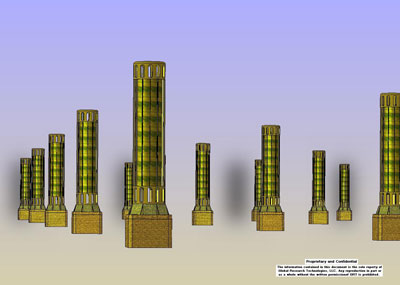
Luckily, there is an invention that takes all this into account and provides a possible solution: the artificial trees. Designed by Klaus Lackner, director of the Lenfest Center for Sustainable Energy at Columbia University, this “tree” is capable of absorbing CO2 from the air using “leaves” that are 1,000 times more efficient than the real thing, but at the same time does not require exposure to sunlight in order to carry out the process.

As Vince himself describes them: “The leaves look like sheets of papery plastic and are coated in a resin that contains sodium carbonate, which pulls carbon dioxide out of the air and stores it as a bicarbonate (baking soda) on the leaf. To remove the carbon dioxide, the leaves are rinsed in water vapour and can dry naturally in the wind, soaking up more carbon dioxide.”

Based on Lackner calculations, a single tree would be capable of removing one tonne of carbon dioxide from our atmosphere in a single day. By that reckoning, a forest of ten million would be able to remove 3.6 billion tonnes of carbon dioxide in a single year, the equivalent of about 10% of our global annual carbon dioxide emissions. One hundred million would solve our emission crisis altogether!

As for the resulting mass that the process creates, Lackner claims that could be turned into liquid fuels to power vehicles. In fact, when CO2 and water are combined, the end result is what is known as syngas, a fuel that is easily converted into methanol and diesel. So basically, while the artificial trees are scrubbing the air of fossil fuel emissions, they are also actively creating the means to generate more fossil fuel. Might seem ironic, but this in turn will allow humanity to keep using their carbon engines, all the while knowing that they are producing less than the trees are extracting. This will give the scientists of the world more time to invent a clean alternative to the fossil fuel engine, and that by the time they do it won’t already be too late.

Although some question the viability of this entire process, mainly where the issue of total cost is concerned, Lackney stresses that as global fuel supplies dwindle, fuel companies will see the wisdom in buying into this process, mainly because it offers them the possibility of fuel retention. Yes, by investing in artificial trees, oil and gas companies will be able to turn their own carbon emissions back into hydrocarbon fuel. Which will come in handy if the oil runs out as quickly as some analysts say it will. In addition, us consumers can expect a break the pump if it all goes well!

Does this strike you as ironic, or just a weird and interesting take on recycling? Who knows? All that is certain is that the technology is making some pretty bold forecasts, and if it should prove successful, we are likely to see a great deal of investment towards this new method. I can see it now, countless roofs and skyscrapers with fields of artificial trees lining their roofs. Water circulation systems that capture the CO2 once its sucked off the leaves and then channeled down to the fuel cells in the basement. And the rest trucked off by trucks that bear the logo of Haliburton, Shell, and Petro Canada. And for once, the drivers won’t feel a lick of shame!

The Future is Here: The Robotic Wheelchair!

For years, people with wheelchairs have been forced to endure limitations imposed by the environment and their fellow human beings. In addition to such natural obstacles as uneven terrain and rocky grounds, there is also the matter of stairs and inaccessible areas. As it turns out, that may be coming to an end! Recently, the Chiba Institute of Technology unveiled a new wheelchair concept that incorporates leg-like motion. It’s known as the wheelchairbot, a robotic chair that can tackle obstacles ordinary wheelchairs cannot.

The key is the five axes its base rotates on, allowing individual wheels to be lifted off the ground and moved in a walking style. It can tackle steps and various other obstacles whilst remaining stable, and can even line its wheels up and extend stabilizers to the left and right, enabling it to turn a circle. This makes it easy to reverse, even in a narrow space. In addition, the chair has a series of sensors that can detect incoming obstructions and deal with them automatically.

Check out the video below for a demonstration of the wheelchairbot in action. I think you’ll agree, the concept shows some serious promise, and may even be a big step towards making all areas accessible to all people!

The Future is Here: Animals Created from Stem Cells!

dna-computingThe field of biotech has been making some very interesting strides of late. First there was the medusoid, a cybernetic jellyfish that used electric current and real muscle tissue over a synthetic to generate movement. Then there was the creation of world’s first true cyborg flesh, where Harvard University researchers merged rat flesh and nanowires to create augmented” tissue. This was followed shortly thereafter by the creation of a remote controlled cyborg cockroach.

These are just the tip of the iceberg however, with the most impressive research and development in the field of biotech still yet to be unveiled. However, this most recent breakthrough is a real game-changer which is sure to lead in some new and interesting directions. This would be the creation, by scientists working at Kyoto University, of the world’s first animal crated entirely from stem cells.

Apparently, the research team produced mouse eggs using stem cells alone, and this comes on the heals of a previous accomplishment where the same team produced mouse sperm using the same methods. This allowed them to fertilize and create mice entirely by artificial means. While this presents a great deal of potential for stem cells research and its regenerative potential, there are those who worry that this might signal new and frightening possibilities for human procreation. If it’s possible to create human ova and sperm in the same way, could we be entering an age when human parents are no longer needed to create a child?

This represents the next step for Mitinori Saitou, the leader of the Kyoto research team, and his crew. It is there hope that these recent advancements will allow them to create primordial cells from human tissue. The primary purpose for this will be to help couples who are experiencing fertility problems by offering them the option of having biological children that are derived from their own stem cells. It could also allow women to have babies later in life, or for women who cannot get pregnant due to cancer treatments.

More conceptually, however, the breakthrough suggests that human babies might someday be born from tissue samples and cell lines alone. If all that is needed is for stem cells to be harvested from living tissue, then no parents need be directly involved. There are clearly a host of ethical implications that need to be addressed from this, not the least of which is the issue of who has the right to spawn human beings? And moreover, what purpose would they be spawned for? Human replacements? Breeding stock? Super soldiers? Oh, the mind reals at the possible sci-fi cliches!

Source: news.sciencemag.org

The Future is Here: Insect Biobots!

One small step for man, one giant leap for man-machine interface! Or man-roach interface, I guess! It seems that researchers at the iBionicS lab at North Carolina State University have created a remote-control system to stimulate and steer cockroaches. This report came at the 34th Annual International Conference of the IEEE Engineering in Medicine & Biology Society last month, and represents quite the step forward for cybernetics.

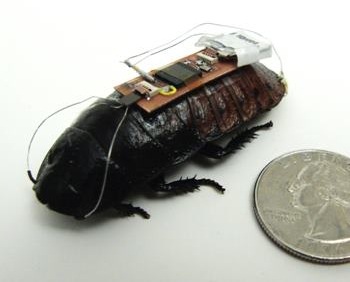
In short, the research team equipped a Madagascar hissing cockroach with a circuit board that connects directly to its antennae. It’s a well known fact that cockroaches, in addition to being nuclear war-resistant, use their two antennas to find their way around. By sending electrical signals to one or the other, they were able to steer the cockroach as it made its way around.

To be fair, this is not the first case of insect cyborgs being developed. In 2009, the researchers at iBionicS unveiled a similar program using remote-controlled hawk moths. In that same year, the University of California, Berkeley, and the University of Michigan presented their collaborate project: remote-controlled beetles! Here, the beetles had electrodes wired into their brains and flight muscles which were used to command them to take off and steer them while in the air.

Interestingly enough, research in both of these latter cases was being funded by the Defense Advanced Research Projects Agency (DARPA) with the goal of creating remote-controlled insects could go where humans cannot and aid in search-and-rescue or even spy missions. You’ve heard of UAV’s, aka. spy drones, doing reconnaissance, right? Well look out! The next time you see a flying beetle or a hawk moth, you could be on someone’s camera. Smile before you step on it!

And be sure to check out the video below of iBionicS lad testing their remote-control roach steering system.

Source: Discover Magazine