
 In July 2012, the CERN laboratory in Geneva, Switzerland made history when it discovered an elementary particle that behaved in a way that was consistent with the proposed Higgs boson – otherwise known as the “God Particle”. Now, some two years later, the people working the Large Hadron Collider have confirmed that what they observed was definitely the Higgs boson, the one predicted by the Standard Model of particle physics.
In the new study, published in Nature Physics, the CERN researchers indicated that the particle observed in 2012 researchers indeed decays into fermions – as predicted by the standard model of particle physics. It sits in the mass-energy region of 125 GeV, has no spin, and it can decay into a variety of lighter particles. This means that we can say with some certainty that the Higgs boson is the particle that gives other particles their mass – which is also predicted by the standard model.
 This model, which is explained through quantum field theory – itself an amalgam of quantum mechanics and Einstein’s special theory of relativity – claims that deep mathematical symmetries rule the interactions among all elementary particles. Until now, the decay modes discovered at CERN have been of a Higgs particle giving rise to two high-energy photons, or a Higgs going into two Z bosons or two W bosons.
But with the discovery of fermions, the researchers are now sure they have found the last holdout to the full and complete confirmation that the Standard Model is the correct one. As Marcus Klute of the CMS Collaboration said in a statement:
Our findings confirm the presence of the Standard Model Boson. Establishing a property of the Standard Model is big news itself.
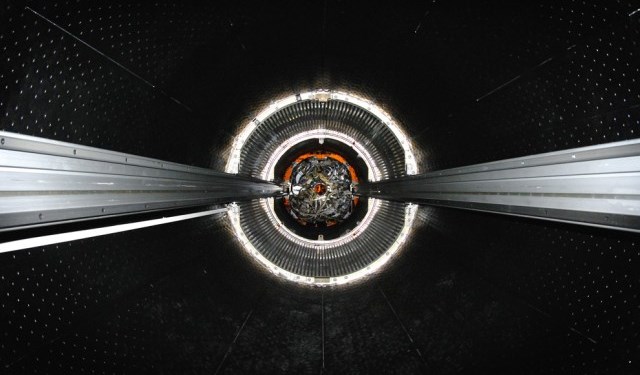 It is certainly is big news for scientists, who can say with absolute certainty that our current conception for how particles interact and behave is not theoretical. But on the flip side, it also means we’re no closer to pushing beyond the Standard Model and into the realm of the unknown. One of the big shortfalls of the Standard Model is that it doesn’t account for gravity, dark energy and dark matter, and some other quirks that are essential to our understanding of the universe.
At present, one of the most popular theories for how these forces interact with the known aspects of our universe – i.e. electromagnetism, strong and nuclear forces – is supersymmetry. This theory postulates that every Standard Model particle also has a superpartner that is incredibly heavy – thus accounting for the 23% of the universe that is apparently made up of dark matter. It is hoped that when the LHC turns back on in 2015 (pending upgrades) it will be able to discover these partners.
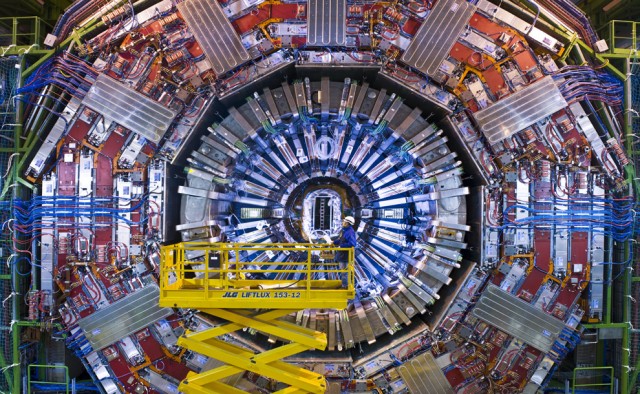 If that doesn’t work, supersymmetry will probably have to wait for LHC’s planned successor. Known as the “Very Large Hadron Collider” (VHLC), this particle accelerator will measure some 96 km (60 mile) in length – four times as long as its predecessor. And with its proposed ability to smash protons together with a collision energy of 100 teraelectronvolts – 14 times the LHC’s current energy – it will hopefully have the power needed to answer the questions the discovery of the Higgs Boson has raised.
These will hopefully include whether or not supersymmetry holds up and how gravity interacts with the three other fundamental forces of the universe – a discovery which will finally resolve the seemingly irreconcilable theories of general relativity and quantum mechanics. At which point (and speaking entirely in metaphors) we will have gone from discovering the “God Particle” to potentially understanding the mind of God Himself.
I don’t think I’ve being melodramatic!



 In its ruling, the court also rejected prosecutors’ notion that the ability to remotely wipe or lock a phone required police to search the devices immediately upon arrest before evidence could be destroyed. The court responded that police can easily prevent evidence from being remotely destroyed by turning the phone off or removing its battery, or putting it into a Faraday cage that blocks radio waves until a search warrant can be obtained.
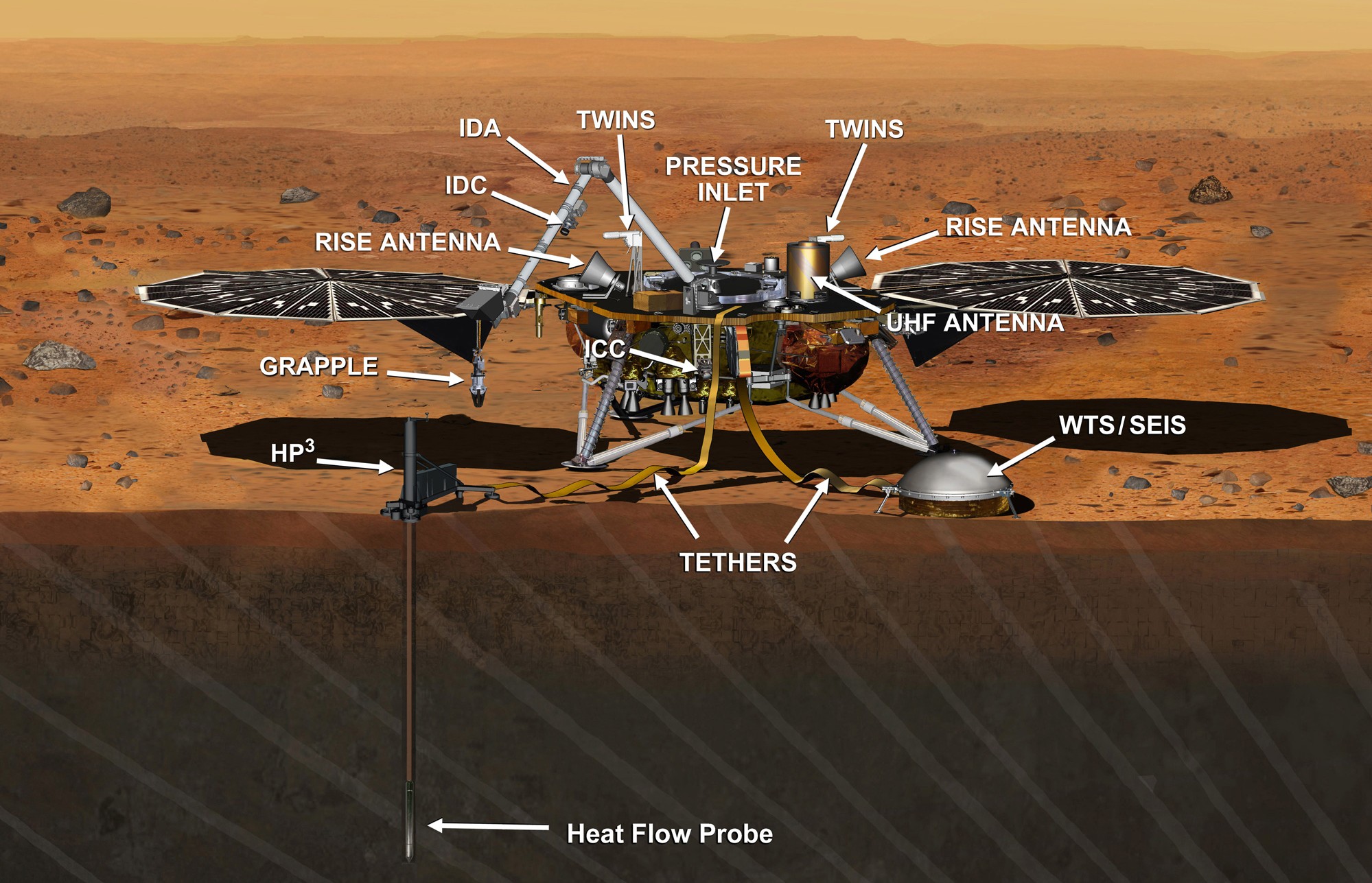
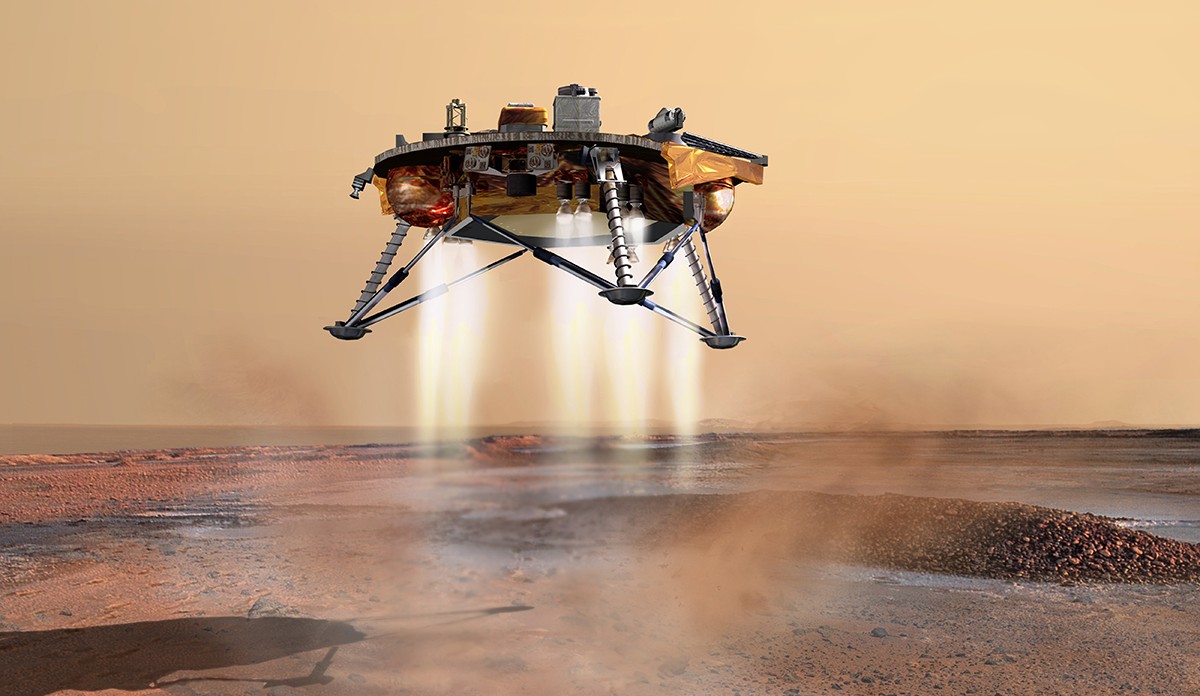

 After the daring new type of landing that was performed with the Curiosity rover, NASA went back to the drawing table to come up with something even better. Their solution: the “Low-Density Supersonic Decelerator”, a saucer-shaped vehicle consisting of an inflating buffer that goes around the ship’s heat shield. It is hopes that this will help future spacecrafts to put on the brakes as they enter Mar’s atmosphere so they can make a soft, controlled landing.




 Earlier this month, Computex 2014 wrapped up in Taipei. And while this trade show may not have all the glitz and glamor of its counterpart in Vegas (aka. the Consumer Electronics Show), it is still an important launch pad for new IT products slated for release during the second half of the year. Compared to other venues, the Taiwanese event is more formal, more business-oriented, and for those people who love to tinker with their PCs.
 For example, big name brands like Asus typically use the event to launch a wide range of products. This year, this included such items as the super-slim Asus Book Chi and the multi-mode Book V, which like their other products, have demonstrated that the company has a flair for innovation that easily rivals the big western and Korean names. In addition, Intel has been a long stalwart at Computex, premiered its fanless reference design tablet that runs on the Llama Mountain chipset.
 And then there was the Asus wireless storage, a gadget that looks like an air freshener, but is actually a wireless storage device that can be paired with a smartphone using near-field communication (NFC) technology – essentially being able to transfer info simply by bringing a device into near-proximity with it. And as always, there were plenty of cameras, display headsets, mobile devices, and wearables. This last aspect was particularly ever-present, in the form of look-alike big-name wearables.
 In his keynote speech, Microsoft’s Nick Parker talked about the age of ubiquitous computing, and the “devices we carry on us, as opposed to with us.” What this means is, we may very well be entering a PC-less age, where computing is embedded in devices of increasingly diminished size. Eventually, it could even be miniaturized to the point where it is stitched into our clothing as accessed through contacts, never mind glasses or headsets!
 When it comes to the future, it is clear that the concept of the “Internet of Things” holds sway. This idea – which states that all objects will someday be identifiable thanks to a virtual representations on the internet – is at the center of a great deal of innovation that drives our modern economy. Be it wearables, wireless, augmented reality, voice or image recognition, that which helps us combine the real with the virtual are on the grow.
 As Ambarish Mitra, the head of Blippar stated, AR is already gaining traction among consumers thanks to some of the world’s biggest industrial players recognizing the shift to visually mediated lifestyles. Examples include IKEA’s interactive catalog, Heinz’s AR recipe booklet or Amazon’s recent integration of the Flow AR technology into its primary shopping app. As this trend continues, we will need a Wikipedia-like database for 3-D objects that will be available to us anytime, anywhere.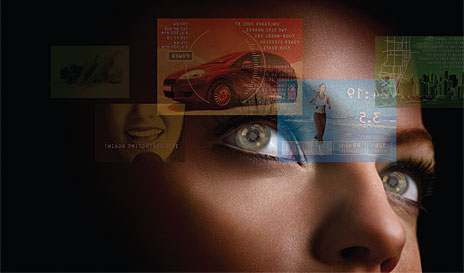
 For better or for worse, wearable designs of consumer electronics have come to reflect a new understanding in the past few years. Basically, they have come to be extensions of our senses, much as Marshall McCluhan wrote in his 1964 book Understanding Media: The Extensions of Man. Google Glass is representative of this revolutionary change, a step in the direction of users interacting with the environment around them through technology.
 Augmented reality has already proven itself to be a multi-million dollar industry – with 60 million users and around half a billion dollars in global revenues in 2013 alone. It’s expected to exceed $1 billion annually by 2015, and combined with a Google-Glass type device, this AR could eventually allow individuals to build vast libraries of data that will be the foundation for finding any 3-D object in the physical world.
 The acquisition makes sense given that Silevo’s technology has the potential to reduce the cost of installing solar panels, Solar City’s main business. But the decision to build a huge factory in the U.S. seems daring – especially given the recent failures of other U.S.-based solar manufacturers in the face of competition from Asia. Ultimately, however, Solar City may have little choice, since it needs to find ways to reduce costs to keep growing.
 Silevo isn’t the only company to produce high-efficiency solar cells. A version made by Panasonic is just as efficient, and SunPower makes ones that are significantly more so. But Silevo claims that its panels could be made as cheaply as conventional ones if they could scale their production capacity up from their current 32 megawatts to the factory Musk has planned, which is expected to produce 1,000 megawatts or more.
 In a hilarious appearance on “Last Week Tonight” – John Oliver’s HBO show – guest Stephen Hawking spoke about some rather interesting concepts. Among these were the concepts of “imaginary time” and, more interestingly, artificial intelligence. And much to the surprise of Oliver, and perhaps more than a few viewers, Hawking’s was not too keen on the idea of the latter. In fact, his predictions were just a tad bit dire.
 At worst, this could lead to the machines concluding that humanity is no longer necessary. At best, it would lead to an earthly utopia where machines address all our worries. But in all likelihood, it will lead to a future where the pace of technological change will impossible to predict. As history has repeatedly shown, technological change brings with it all kinds of social and political upheaval. If it becomes a runaway effect, humanity will find it impossible to keep up.
 Brainwaves can now be used to control an impressive number of things these days: prosthetics, computers, quadroptors, and even cars. But recent research released by the Technische Universität München (TUM) in Germany indicates that they might also be used to flying an aircraft. Using a simple EEG cap that read their brainwaves, a team of researchers demonstrated that thoughts alone could navigate a plane.
 According to the researchers, the accuracy with which the test subjects stayed on course was what was truly impressive. Not to mention the fact that the study participants weren’t all pilots and had varying levels of flight experience, with one having no experience at all. And yet, of the seven participants, all performed well enough to satisfy some of the criteria for getting a pilot’s license. Several of the subjects also managed to land their planes under poor visibility.
 Stories by Williams