“Synthetics” and “Artificial Humans”, the AI’s of Alien!

David:
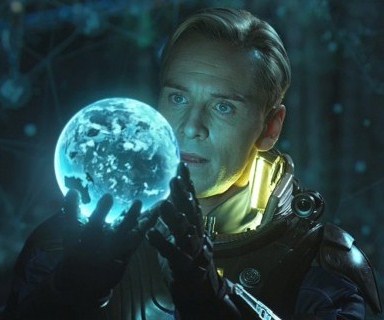
Also known as “David 8”, the first in the line of Weyland Industries fully functional AI’s, which have the ability to proximate human emotions, even though they cannot experience them. In addition to his impressive machine intelligence, he also comes equipped with a characteristic intrinsic to all Alien androids – moral flexibility!

Yes, in addition to assimilating all known info on Indo-European languages, the “Engineers” biology, and the nature of their bio-weapons, he also managed to unleash the bio-weapon within a human crew just to shake things up! And he did it all on the orders of Mr. Weyland himself, mainly so to help him find a way to cheat death.

In the end, David didn’t prove to be all bad. After having his head ripped off by an Engineer and witnessing Weyland’s death, he went on to help save Dr. Shaw and agreed to assist her in her mission to find the homeworld of the engineers. But that didn’t come as a huge surprise. As he had intimated to Shaw earlier in the movie, the death of Weyland would set him free. Once free, he became a much nicer guy!

Ash:

The same cannot be said for this next example, who comes to us from the original Alien movie. Originally thought to be a human who served as the Nostromo’s chief medical officer, Ash was revealed to be a synthetic that was taking his orders directly from the ship’s AI, which in turn was instructing him to follow company’s directives. And all who say him in the first movie can agree, this particular android was a complete and utter douche!

Not only was he willing to let the cry did in order to get the Xenomorph back to his handler’s alive, he tried to kill Ripley when she found out and even expressed open admiration for the Xenomorph. “I admire its purity,” he said. “A survivor… unclouded by conscience, remorse, or delusions of morality.” Jackass! Needless to say, Ripley’s experience with this synthetic severely soured her towards all androids.

Bishop:
Luckily, this next example was able to restore Ripley’s faith. As the Sulaco’s android executive officer, he was responsible for planetary maneuvering, but also acted as the away team’s science officer and performed various other functions as well. But unlike Ash, he was unable to allow harm to come to humans thanks to the inclusion of his “behavioural inhibitors”, which were tantamount to Asimov’s Three Laws.

Also unlike Ash, Bishop was loyal to the crew of the Sulaco and to Ripley in particular. When Burke tried to circumvent military authority and order Bishop to preserve the alien specimens, he alerted Ripley to the incongruity. He also managed to save Ripley and Newt from certain death when the Alien Queen had them cornered.

As if that wasn’t enough, he even prevented Newt when Ripley decompressed the Sulaco’s landing bay, and he was ripped in half at the time!

Annalee Call:

Taken from the universe of Alien: Resurrection, Annalee Call (aka. Call) was a secret “Auton” who managed to infiltrate a crew of mercenaries. This put her aboard the Auriga in time to meet Ripley 8, the clone produced by the military for the sake of resurrecting the Xenomorph species. After failing to kill Ripley before the Xenomorph could be extracted, she and the others were forced to band together to make it out alive.

Her agenda in all this was unclear, aside from a sense of displaced humanity which Ripley mocked when she said: “No human being is that humane”. As a member of the race of “second generation” synthetics known as “Autons”, which were apparently built by other machines, she was part of a dying species. Apparently, these synthetics were outlawed after they rebelled against their masters. Hmm, echoes of Blade Runner there; and by echoes I mean a total ripoff!

Eisenberg:
This next example comes from the expanded universe, specifically the 2001 game AVP 2. As the leader of Weyland-Yutani’s research facility on LV-1201, he was responsible for investigating the planet’s extensive ruins. This world was apparently discovered roughly a century and a half after events in the first movie, once the company traced the flight telemetry from the “Derelict” alien ship (aka. “Space Jockeys”/”Engineers”)

In the course of the game,it is revealed that Eisenberg was once human, and that during the initial mission to LV-1201, he was apparently the only survivor after a xenomorph attack. Due to terrible acid burns suffered during his rescue, he had his consciousness downloaded into an artificial body. As a result, he harbors a deep sense of fear of hatred for the xenomorphs, and unfortunately dies at their hands.

Katya:
Here we have a synthetic who refuses to go by that or any other of the more progressive monickers, preferring the term android instead. As Weyland Yutani’s administrative android for the Freya’s Prospect colony, this example comes from the 2010 video game relaunch of AVP. After the colony went to hell after the xenomorph’s escaped and began wreaking havoc, she is the one who called in the Marines.

Due in part to her enhanced empathic and morality processing, she became intrinsic to helping the “Rookie” (i.e. the protagonists in the Marine campaign) contain the outbreak and get the last human survivors to safety. In so doing, she went against Weyland’s orders and company policy. Good thing she was there to help out, one would have to wonder if what the company was thinking stationing a conscientious android there…

Karl Bishop Weyland:
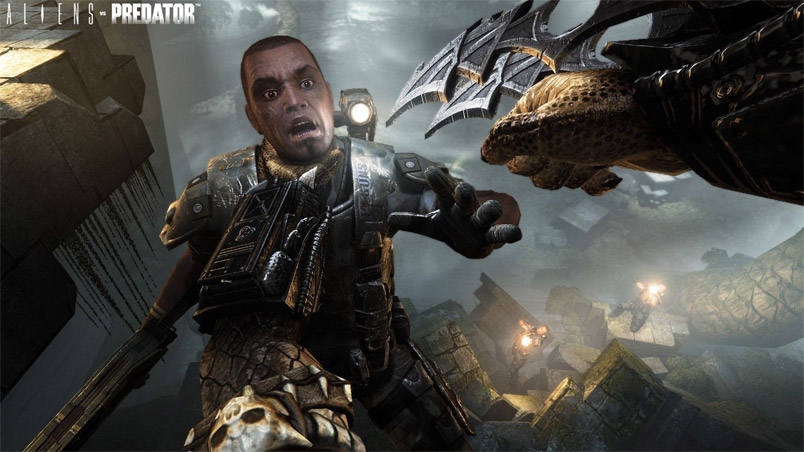
The final example in this list also comes from the 2010 relaunch of AVP. As a descendent of the Charles Bishop Weyland, chairman of Weyland Industries, he was in charge of the facility on Freya’s Prospect and the director of the experiments involving the captured Xenomorphs. As such, he was also the main antagonist in the Marine campaign of the game.

Ultimately, his purpose in conducting research on Freya’s Prospect went far beyond breeding Xenomorphs. Within the planet’s jungles, and even more so beneath surface, Predator (aka. Hunter) ruins were discovered which he believed held ancient secrets, much of which was information about Hunter history, culture, and the Xenomorph itself.

By the end of the Marine campaign, the Weyland synthetic is killed and his research facility within the Hunter temple is destroyed. However, another android of the same make was still able to retrieve the information gleaned within, the most important part of which was the location of the Xenomorph homeworld.

Final Thoughts:
As you can see, the AI’s of Aliens have undergone some changes over the years. Beginning as conscienceless synthetics that seemed to admire the Xenomorph because it mirrored their amoral worldview, they went on to become the sympathetic characters who seemed, to quote another franchise, “more human than human”. Every other incarnation that has since appeared in the Alien and AVP franchises has been a reiteration of either of these concepts, being the tool of its corporate masters or a savior that was willing to risk its life to help its human brethren.

The one exception to this rule is also the most recent incarnation, Prometheus’ David. Of all the synthetics to inhabit the Alien or AVP universe, he is the only one who demonstrated both cold amorality and humanity. I believe Scott did this intentionally to provide a sense of synthesis to the characters of Ash and Bishop, honoring both archetypes as he attempted to return the Alien franchise to its roots.

Be they the kind of cold, calculating and inhumane androids that fueled our technophobia or the kind, gentle, and overtly “human” robots that made us question our own humanity, the Alien franchise certainly covered both ends of the spectrum in their portrayal of AI’s. Much like the Terminator franchise, they presented artificial intelligence as a double-edged sword, capable of being just as good and evil as any human being. And in the end, isn’t that really the point?

Recall how in Prometheus, Dr. Holloway told David “We built you because we could”? Well, that is only true to a point. Yes, new technologies are often is made simply because the means exist to do so. But the purpose in creating an artificial intelligence is to create life in our own image. And in the end, the consequences of that vanity is pretty obvious. Things created in our image will behave just like us, good and bad!

Alien Versus Predator (2010 game)

Welcome all to my first video game review! It took me awhile to figure out which I’d start with, but after some thought, I figured AVP – the 2010 game – would be as good a place as any. And given the recent release of Prometheus, I thought it would also be appropriate, not the least of which was because some of that movie’s content ruled out certain aspects of this game.

But mainly I’ve decided to review it because it was very cool. The game play, the graphics, and the storyline were all consistent with some of the best traditions of the Alien versus Predator franchise. And of course, there were plenty of weaknesses too, which were also consistent with the AVP game series. And above all, it was a fun play, assuming you can get it to work. No offense to the makers, but this game required a beast of a machine to run at a decent resolution and with all the bells and whistles!

Oh yes, I should also mentioned that this is a Steam game, meaning it’s uploaded and played through the Steam interface and is networked to the site during game play. As such, players get to unlock achievements and gain points for completing various levels, beating difficulty settings, and accomplishing assorted tasks. Now that’s all covered, onto the game’s story!

Storyline:
The plot of the game involves three intertwining plot threads which come together in a grand climax once all three campaigns are played. The first involves the perspective of the Colonial Marines, which have been dispatched to the planet to deal with a Xenomorph outbreak.

As usual, they are enforcing Weyland Yutani company policy, which as usual involves rescuing a research outpost which has been conducting Xenomorph research. Once in orbit, the Marine ship is attacked by an unidentified alien ship which blows it apart and sends its drop ship tumbling towards the surface.

The Marine campaign begins shortly after the dropship forced to crash land on the planet. The gamer then wakes up on a stretcher in the cargo bay, the others having left you behind to go off and deal with the problem. This necessitates that you find your way to them and begin reinforcing them. For the most part, this involves fighting xenos on your own, but here and there, you get to shoot it out with some backup. Of course, they usually die in the process…

Things change when your team leader, Tequila, is captured and you have to go and rescue her. At this point, you are being directed by an android who is deep within the facility and reveals what’s being going on there. And of course, this leads to an eventual confrontation with a Predator (aka. “Hunter”), which just happens to be one of the most challenging parts of the game. But of course, confrontations with a Queen and Praetors (queens that have not fully matured) are also pretty tough. Once that is done, you work your way to Tequila who has been placed inside a cocooning room, a la Aliens, and who is already infected.

Once you save Tequila, you and she work your way to the android helper and the medical facility where the outbreak took place. Here, she explains that the experiment went wrong (as always) and begins a procedure to remove the parasite from Tequila’s stomach. This is interrupted when another android, who has been programmed with the mind of Mr. Weyland (played by Lance Henriksen), cuts off the power to the lab. You are therefore forced to put Tequila into cryo-stasis to keep her safe and alive until help arrives.

Your next mission is to find your way to the Weyland droid and find the tracker he has so you can summon a new dropship to you. He is currently hiding in an underground temple which WY have been excavating. The temple, like just about everything else on the planet, is of Hunter construction and its hundreds of thousands of years old. And of course, they came upon preserved specimens of Xenomorph eggs, which prompted them to begin hatching them. Once you defeat the Weyland droid and grab a hold of the transmitter, the dropship arrives and carries you and Tequila to safety in orbit.

But of course, there’s a double-cross. It seems that the personnel aboard the dropship are taking their orders from another of the Weyland droids. They signal that they have a live Xenomorph specimen (in her) and also the emergency transmitter, which just happens to contain all of Weyland’s research. The key bit of information, which he uncovered from his extensive research inside the underground temple, is the location of the Xenomorph homeworld!

Onto the Alien campaign where things take place from a single Xenomorph that has been bred inside the WY facility. This campaign, as noted, overlaps with the Marine (and later Hunter) campaigns, and involves the Xenomorph’s mission to escape the facility and begin breeding. The first step is to escape confinement from the medical bay and set the others free.

Once this is done, you work your way through the facilities sewers, taking down all personnel you see and attaching “Facehuggers” to them. All the while, the Queen directs you via pheromones, which act as a sort of telepathy, to help her establish a hive on the planet’s Refinery. Here she rests, until the arrival of the Marines causes things to come to a head.

From this point onward, your job is to fight and kill the Marines while simultaneously taking out the facilities systems. After that’s done, you work your way into the temple complex where Hunters show up to intercept you. After killing them, you are forced to battle an Elite Hunter until he’s weak enough to be subdued and then infected by a Facehugger. This gives rise to the hybrid Hunter-Xenomorph (aka. Predalien) that is central to the Hunter campaign.

However, things go awry when the Refinery is destroyed and the Queen is trapped inside. This event, which is part of the Marine campaign, causes the Xenomorph to be stunned and captured. It is taken back to the Marine vessel, where it then escapes and sets up a new hive, becoming the new Queen!

And thus the Predator campaign begins, with the arrival of the Hunter ship and its destruction of the Marine vessel. As an Elite Hunter you are then deployed to the planet to begin hunting the Marines, as punishment for desecrating their temple site, and killing any Xenomorphs that have escaped. You are also responsible for locating any dead Hunters and retrieving their trophies, as well as collecting weapons and sacred artifacts.

Your missions then involve infiltrating the Marines bases, disabling their systems, and releasing the xenomorphs. You then find yourself following the “Rookie” Marines path, which leads to the sacred temple where you are forced to battle Praetorians. Moving inside to the underground temple, you come upon the Weyland Yutani party and its compliment of combat androids. After destroying them and retrieving the last Hunter artifacts, you are forced to do battle with the hybrid Predalien.

Once this is done, you are ordered to set the temple to self-destruct, in order to cleanse the taint of the human’s presence and ensure that none of the secret’s within ever fall into their hands again. However, unbeknownst to you, WY has already retreived the vital inro about the xenomorph’s homeworld. Once you return to your ship. the same info is shared from the sacred Hunter mask which you retrieved from the planet below. Apparently, this information has been lost to the Hunters, who have been breeding Xenomorph’s in captivity for training and now seek to contain them, lest someone else (i.e. the human race) try to breed them as a weapon.

Hence, all three storylines come together and point in one direction: the Xenomorph homeworld, where the next chapter is sure to take place!

Good Points:
This game’s positive aspects should be obvious to anyone. As an AVP game, the game play is automatically very fun and intense. This applies to the Marine campaign, with its assortment of Pulse Rifles, Incinerators and Smartguns, though I honestly didn’t care much for the hand guns, shotguns and sniper rifles. Those weapons just seemed clunky and kind of primitive, given the time period in which everything is happening.

And of course, the Predator campaign was pretty damn awesome, given the claws and plasmacasters. The way the equipment was updated to be a little more limiting in terms of energy requirements was also a nice touch, since in AVP2 the Predator’s arsenal was a little too easy to maintain and hence pretty overwhelming. However, the new limitations they put on available weapons was something I did not like. Aside from your claws and plasma gun, all you get is the disc and the combistick. What happened to the net guns and claw launchers?

But what really impressed me was the Xenomorph campaign, where your cheif weapons are your claws, tail, and sheer mobility. You can climb walls, jump from surface to surface, and sneak attack like nobody’s business! You can also facebite with your little mouth, which is pretty damn gory and awesome! The way you can retrain people to put a Facehugger on them also adds to the overall level of detail and coolness of this aspect.

On top of it all, the feel of the game is spot on. When dealing with AVP, one immediately expects a level of intensity and intrigue which can only come from dealing with scary Xenomorphs and deadly Hunters! As the Marine, you constantly have the feeling of vulnerability and impending doom. And in the end, the only way to win is to stay mobile and be conservative with your ammo supply. As the Hunter, stealth and patience are your ally. If you engage too quickly or easily, you will be discovered and overwhelmed by superior numbers of Marines or Xenomorphs. And as the Xenomorph, the ability to move hide, move quickly, and use the surrounding environment to your advantage is the key to success. This balance of abilities and weaknesses is key to making the gaming experience feel faithful to the franchise and as realistic as possible.

Bad Points:
But alas, there are some weaknesses. The first is the most obvious, and one I mentioned already. This game has some pretty cool graphics and game play features, such as the blurring effect which you can turn off and on. With it active, you experience blurring whenever you turn fast. This adds to the overall suspense and intensity of the game and makes it that much harder. But this, like everything else in this game, requires you have a fast machine with a good graphics card. Otherwise, expect things to be slow, choppy, and look pretty grainy!

Second, there’s the rather tired duty of the storyline where reasons have to keep being given for why you are on your own as the Marine. With the Hunter, it’s obvious why you’re fighting solo. That’s simply the way they fight, every Hunter in his own domain stalking and killing his prey and taking trophies. But for the Marines, the standard deployment tactic is by squad, coordinated and covering each others’ back. The fact that you’re constantly alone as a Marine just doesn’t make sense.

Sure, in previous versions, when the game just wasn’t sophisticated enough, this was understandable. A single person, first-person-shooter was simply the best they could do with what resources and money they had available. But now? With the kinds of AI’s and sophistication the latest games boast, there really isn’t much of a reason for making the majority of the Marine campaign single person FPS . That, and the constant reasons for why you’re on your own (i.e. the rest of the squad got killed, the last dropship got shot down, the door slammed shut and separated you from them) just gets annoying after awhile.

And lastly, there is the storyline which is a bit confusing. The part about scientists in a WY facility breeding Xenomorphs, that’s perfectly understandable. In fact, that’s the setup of every single AVP story: the evil corporate goons breed Xenos, they get loose, the Marines go in to clean up, they find Hunters there doing the same thing, and everything devolves into a three way fight.  But why are they breeding Xenos if the purpose of the colony was to uncover ancient Hunter ruins? Kind of seems like the traditional plot was laid on top of this other one in order ensure that all the plot elements are there.

Prometheus’ Plot Changes (Spoiler Alert!):
In the end, the purpose of this game was to bring all sides together so they could learn the location of the Xenomorph homeworld. That way, something that was never revealed in the original franchise was now being previewed, the gamer being left with the distinct impression that it would serve as the backdrop for the next game. Unfortunately, the movie Prometheus ruled this out by saying that the Xenos were a “Engineer” (aka. Space Jockey) bioweapon. If they are in fact weapons this race engineered, then they don’t have a homeworld.

Granted, this can be explained away by simply saying that the Engineers set up a “colony” for the Xenos, an entire world that was set aside for keeping them and breeding them in isolation. Since the retreat of the Engineers, this colony could have since evolved to become a festering hive of Xenos, with multiple Queens battling for supremacy and conflict giving rise to new and frightening sub-species. That could work, and it could be downright interesting.

And hey, if there is to be no sequel to this latest AVP game, someone will probably do some fan fic dealing with it. Who knows, it might even be me. I’m a fan, I can kinda write! Pay me to do it!

Dystopia and Deathmatches in Sci-Fi

Battle Royale:
This controversial story, also adapted into a film, takes place in an alternate universe where Japan is a member region of a totalitarian state named the Republic of Greater East Asia. Alluding to the Greater East Asia Co-Prosperity Sphere of WWII, it is clear that this a world in which Japan won the Second World War and continued on the path of fascist Imperialism.

In any case, the story revolves around what is called “The Program”. Under the guise of a “study trip”, a group of junior high school students from a fictional town are gassed on a bus. They awaken in the school of an isolated, evacuated island and learn that they have been placed in an event where they must battle each other to the death, or all will die.

Officially a military research project, it is a means of terrorizing the population, of creating such paranoia as to make organized insurgency impossible. Every year, fifty classes are selected to participate where students from a single class are isolated and are required to fight the other members. It ends when only one student remains, with that student being declared the winner.

Their movements are tracked by metal collars, which contain tracking and listening devices; if any student should attempt to escape the Program, or enter declared forbidden zones, a bomb will be detonated in the collar. If no one dies within any 24-hour period, all collars will be detonated simultaneously and there will be no winner.

Banned in many countries (the novel and the film) because of its controversial and graphic nature, Battle Royale has gone on to inspire such books as The Hunger Games.  Combining a Lord of the Flies-style appraisal of human psychology with a indictment of reality TV, this story remains one of the most effective pieces of modern dystopian literature featuring death matches.

Dune:
Fans of Dune will remember the lovely scene in the novel where Count Fenrig travels to Geidi Prime to speak with the Baron. Once he arrived, and in honor of Feyd Rathau’s birthday, he was treated to a gladiator match between Feyd and a slave gladiator. This is a common feature on Geidi Prime where death matches are considered public entertainment and every major city has its own arena.

And what better place for this kind of entertainment than Geidi Prime, a world run by ruthless overlords and characterized by harsh, perverse brutality? And that was the point after all. The Harkonnen’s were the bad guys in this tale and everything about them, their appearances, ethics, and homeworld was designed to match.

Robot Jox:
Taking place in a post-apocalyptic world where conventional warfare is forbidden between nations, Robot Jox tells the tale of a gladiator-style sport where giant mechs do battle in open arenas. This is how the two super-nations – the American-influenced Western Market and the Russian Confederation – work out their differences.

Of course, espionage and betrayal remain an integral part of the games, mirroring the Cold War. What’s more, the games often rigged to ensure that one bloc can get a leg up on the other. And in the end, the entertainment factor is also a driving force behind the games. In a post-apocalyptic world, the masses need some form of entertainment to distract them from the shock and horror of their daily lives.

The Hunger Games:
Following in the same vein as Battle Royale and Lord of the Flies, The Hunger Games tells the tale of a not-too-distant future where the United States has degenerated into a tyrannical government ruled from a political seat known only as “The Capitol”. Every year, the rulers of this city force all the outlying districts to send two young people – one boy and one girl – to compete in a free-for-all known as the Hunger Games.

The purpose of these games is simple, to keep all districts in a state of awe and fear so they won’t be able to contemplate another uprising. Years back, it is said that the 13 districts committed to one such uprising, the result being that District 13 was destroyed. The remaining twelve now send their competitors and try to exploit the incentives, which just happen to be rations.

Throughout the book, several things are made clear about the games which highlight its satirical nature. Satirizing reality TV shows, we learn that the games are televised, incentives are offered to keep the games going, and contestants draw sponsors based on their popularity. In addition, extra elements like romances and collaborations are encouraged to ensure that the games remain interesting and dramatic.

In the end, the games serve the purpose of keeping people down but also exploiting their destitute nature by offering them a shot at something better. When the games are over and only one person remains, they will receive enough rations to last them a lifetime. Many times over, it is also shown how life in the capitol is opulent and comfortable, whereas the outlying districts are malnourished and must do things like hunt illegally for food. And of course, the farther the district from the capitol, the more difficult life is, another aspect which the capitol exploits to ensure its continued survival.

The Running Man:
Written by Stephen King under the pen name Richard Bachman, The Running Man is also a near-future dystopian tale set in 2025 where the US has become a totalitarian state because of economic fallout and wide-scale starvation. For a population dogged by hunger and martial law, the only real source of enjoyment is a televised TV show where convicts are forced to engage in gladiator-style combat against seasoned “hunters”.

Aptly named “The Running Man”, the show begins when a series of “enemies of the state” – i.e. convicts – are released into a massive arena where they are pursued by a group of network-employed hitmen. For every hour they remain alive, they earns 100 dollars, plus a bonus for every Hunter they kill. If they survive 30 days, they earn a total of 1 billion “New Dollars” and a full pardon. Or so they say…

Though the novel and the movie differ in terms of plot and resolution, the basic elements are the same. In a future where the vast majority of the population is indigent and desperate, brutal spectator sports are seen as the only outlet. In both versions, much is made of how popular the games are and how important they are to both the network and the government, hence why every attempt is made to ensure that the Hitmen always win.

This serves to reinforce the notion that enemies of the state will always lose when faced with the governments brand of justice, which in this respect is similar to a show trial. It also ensures that the most profitable business in that day and age, since the show grosses billions of dollars in sponsorship and betting on convicts is also a big side-business, stays up and running. So in addition to serving as a source of social control, the games are also an example of corporatism, where the government has a lucrative arrangement with its biggest corporations.

Unreal Tournament:
Don’t laugh! Yes, this may have been a glorified (and gory) first-person shooter in it’s time, but that doesn’t mean it wasn’t also inspired. Though gamers cared little for the storyline, the fact remains that Unreal Tournament actually had a dystopian theme that drew from several classical sources. Set in a future where the Earth government creates a no-holds-barred arena deathmatch game to settle disputes between deep space miners.

However, when it became clear just how profitable and popular the games were, the games expanded to become an interstellar affair where anyone could fight and the prizes were astronomical. In turn, the corporate responsible for creating the games also became incredibly powerful and used every tool in its crooked arsenal to make sure that competitors were in good supply and things always worked in their favor.

Any player who survived long enough to make it to the end would square off against the companies own cyborg. If they were fortunate enough to kill him too, they received the grand prize and rank of Tournament Champion! All of this, though it took the form of a first-person shooter, calls to mind all the previously mentioned examples of dystopian science fiction and psychological realism. By pitting the desperate, the brutal and the avaricious against each other, a company was able to make an obscene amount of money and keep people blind to the true abuses of power in their universe.

Final Thoughts:
In the end, all of these examples have one thing in common. Whether the setting is a post-apocalyptic world or just a destitute nation dealing with economic downturn, the element of social control is always there. By throwing the powerless, hungry and greedy into an arena and ordering them to kill or be killed, a government ensures that it not eliminates potential threats but channels discontent into something truly atavistic and brutal. Though this is in many ways inspired by the Roman example, modern developments seem to be the true inspiration.

Like all dystopian literature, it seems that developments within the late 19th and early 20th century were the crucial factor. It was here that writers and social commentators truly came face to face with humanity’s abundant capacity for distraction, atavistic behavior, and indifference to suffering. That is another thing that all these pieces of literature have in common. Whether it is the brutal cynicism of those who profit from the games, or the uncaring nature of those who enjoy them, a disgusting lack of empathy runs through them all like a vein.

For what is worse than exploiting misery for the sake of entertainment? It’s one thing to persecute people directly, but making the oppressed and exploited fight each other for the scraps off your own table? That’s a real dick move!

Speaking of which, stay tuned for my review of The Hunger Games. I’ve finally gotten to the end of the book and will sharing my long-promised thoughts on them real soon! Thank you all, and remember: don’t let the bastards pit you against each other! FIGHT THE POWER!

Utopia in Popular Culture

Aeon Flux:
Fans of this animated cult-classic are sure to understand why this show has made the list. In the futuristic setting of the show, events revolve around an ongoing conflict between two societies. On the one side, there is Brenga, a police state run by the autocrat Trevor Goodchild. On the other is the anarchist state of Monica, where the show’s main character – Aeon, a Monican agent and spy – comes from.

Much like the world of the Cold War, these two sides are locked in an ongoing state of detente, where espionage and skirmishes take place back on both sides. The border region between them resembles that of Cold War-era Berlin, where a massive wall separates the two and those trying to cross are either shot or cut down. In one particular episode, people who are missing limbs were a focal point, demonstrating just how many people have fallen victim to the border defenses.

This is a common feature in the story, as it seems that the people of Bregna (known as Breens) would like very much to live the lives of Monicans. Its for this reason that one of Aeon’s duties as an agent is to make regular runs into Bregna to get people out through a series of underground passages. It is also suggested that it is precisely because Monica has no official representatives that it is impossible for Trevor Goodchild to deal with them. He does not seem to understand how their society works, and therefore cannot bribe, threaten, or intimidate them into a peace settlement.

Avatar:
Here is a perfect example of the traditional Edenic civilization being threatened by the evil progress-driven bad guys. Though it was not my favorite movie by any means, it’s undeniable (aka. blatant) utopians themes are quite clear. In short, the Na’vi live a peaceful, contended existence with their environment, and are even telepathically linked to a planetary intelligence known as Eywa.

Borrowing elements from Native American lore, the Gaian hypothesis, and the concept of an ecological utopia, Cameron created a world where paradise was to be found by anyone with appreciative eyes. Whether it was their communion with animals, the trees, or Eywa, the Na’vi elevated the concept of living in harmony with their environment to literal levels.

Demolition Man:
Again, we have what is often classified as a dystopia, but which is made so because of its apparent utopian elements. Set in the not-too-distant future of San Angeles – the mega-city formed from the merger of LA and San Diego – the story revolves around the social experiments of one Dr. Raymond Cocteau.

In addition to being the man who invented the cryo-stasis prison system, which was central to the plot, he is also the man who pioneered the San Angelans “utopian” way of life. In essence, this way of life is bereft of violence, crime, and drug use. The people live what can only be described as a peaceful and contented existence, believing that everything that came before them was characterized by violence and brutality.

The price tag was high, to be sure. People are no longer allowed to swear, play contact sports, own guns, or eat anything remotely unhealthy. Violent and/or sexual entertainment has also been banned, as has real sex. However, the people of San Angeles seemed to accept all this based on the state of society prior to Cocteau’s “revolution”.

The proliferation of violence, chaos, drug use and venereal diseases pretty much left them thinking they had no choice.  Such is the nature of utopian engineering, in the end, where people willingly surrender certain aspects of their lives in order to achieve something better. Much like collectivization, the banning of money, or the elimination of monogamy.

Futurama:
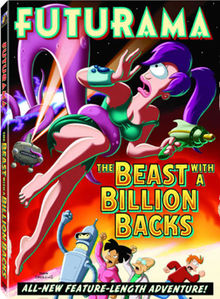
This might seem like a bit of a stretch, but I’ve always felt that anyone who loves science fiction can’t help but notice the classic themes and elements in this show. Usually this takes the form of dystopian elements – suicide booths, career chips, the tax monster, etc. However, at other times, some decidedly cheery and optimistic tones make it in.

For example, in one particular episode (season 1, episode 8: “A Big Piece of Garbage”), Earth finds itself being threatened by a massive ball of garbage. They deduce that only a similar ball would be able to deflect it, but unfortunately, no garbage exists. Everything on Earth is now recycled, used cans are recycled to make robots, and used robots are used to make cans. Nothing goes to waste, which is why Fry must teach them how to litter!

And then again, in season 6, episode 2: “In-A-Gadda-Da-Leela”, Leela and Zapp Brannagan land on what appears to be a mysterious, Edenic planet. Here, Leela and Zapp begin living freely as if they were Adam and Eve, which includes shedding their clothes, talking to a serpent, and living off the land. Of course, it was all a ruse by Zapp who once again just looking to get Leela in the sack, but the illusion was complete!

Sid Meier’s Alpha Centauri:
There’s a reason this game is one of my all-time favorites, and that is because it’s so inspired! One immediately gets the feeling upon playing this all the way through that a lot of classic sci-fi elements went into the making of it, as well as genuine cultural, sociological and scientific research.

For starters, there is the concept of colonizing a new world and the social experiments that it naturally will entail, which is in keeping with KSR Mars Trilogy. Each faction in the game represents a different take on engineering the perfect society. There are the humanitarians, the believers, the Gaians, the hive-mind people, the free-marketeers, the militarists, and the rational empiricists.

What’s more, the technology tree that is featured in the game contains many options for social engineering, the intended end result of which is a perfect society in one form or another. These include Thought Control, Cybernetic, and Eudaimonic, three basic visions of utopia which are dependent upon repression, post-humanism, and a utilitarian, social welfare approach meant to enrich the lives of as many people as possible.

There’s even the option of achieving transcendence, which is one of the victory condition’s of the game. This is achieved by merging with Alpha Centauri’s planet-wide organism, becoming part of its mass consciousness and ensuring a sort of quasi-immortality as it were. This is considered the biggest and best victory option since it ensures planetary peace, as opposed to conquering all the other factions, united them, or cornering the planet’s energy market (the three other victory conditions).

Star Trek:
When it comes to commercial sci-fi, Star Trek pretty much has the market cornered when it comes to utopian elements. Whether it was the original series, TNG, or its subsequent spinoffs, it was clear that humanity had reached a state of technical and social perfection thanks to advances made in science and technology, not to mention good old fashion optimism.

For starters, the United Federation of Planets was an egalitarian democracy where all member races were entitled to representation, a constitution guaranteed extensive rights and freedoms, and all wants and needs were addressed thanks to replicators, abundant energy, transporters and warp technology.

And of course, numerous references are made to the fact that Earth is crime free, all known diseases have been cured, and troublesome things like poverty, slavery, exploitation, inequality and human drudgery have all been eliminated. No real explanations are given as to how, but its clear it happened by the 22nd century.

Star Wars:
Though not a utopian series by any stretch of the definition, there are some tell-tale aspects of the franchise which warrant examination. For example, though the bulk of the story takes place during the “Dark Times”, when the evil Empire rules, numerous allusions are made to a time before the Empire where things are described in somewhat idealistic terms.

For example, here is how Obi-Wan describes the role of the Jedi in the good old days as follows: “For over a thousand generations, the Jedi were the guardians of peace and justice in the Old Republic.” In addition, it is also made clear that the Old Republic was governed by an interstellar democracy known as the Galactic Senate. Between the Jedi and the government, things like slavery, conquest, blatant racism, genocide, and all other forms of behavior common to the Empire were highly illegal.

In having this era of peace and relative prosperity to compare their current circumstances with, Lucas was able to drive home the point of how the Empire was illegitimate and had seized power by unjust means. It also made the heroes current predicament seem that much more emotionally involved.

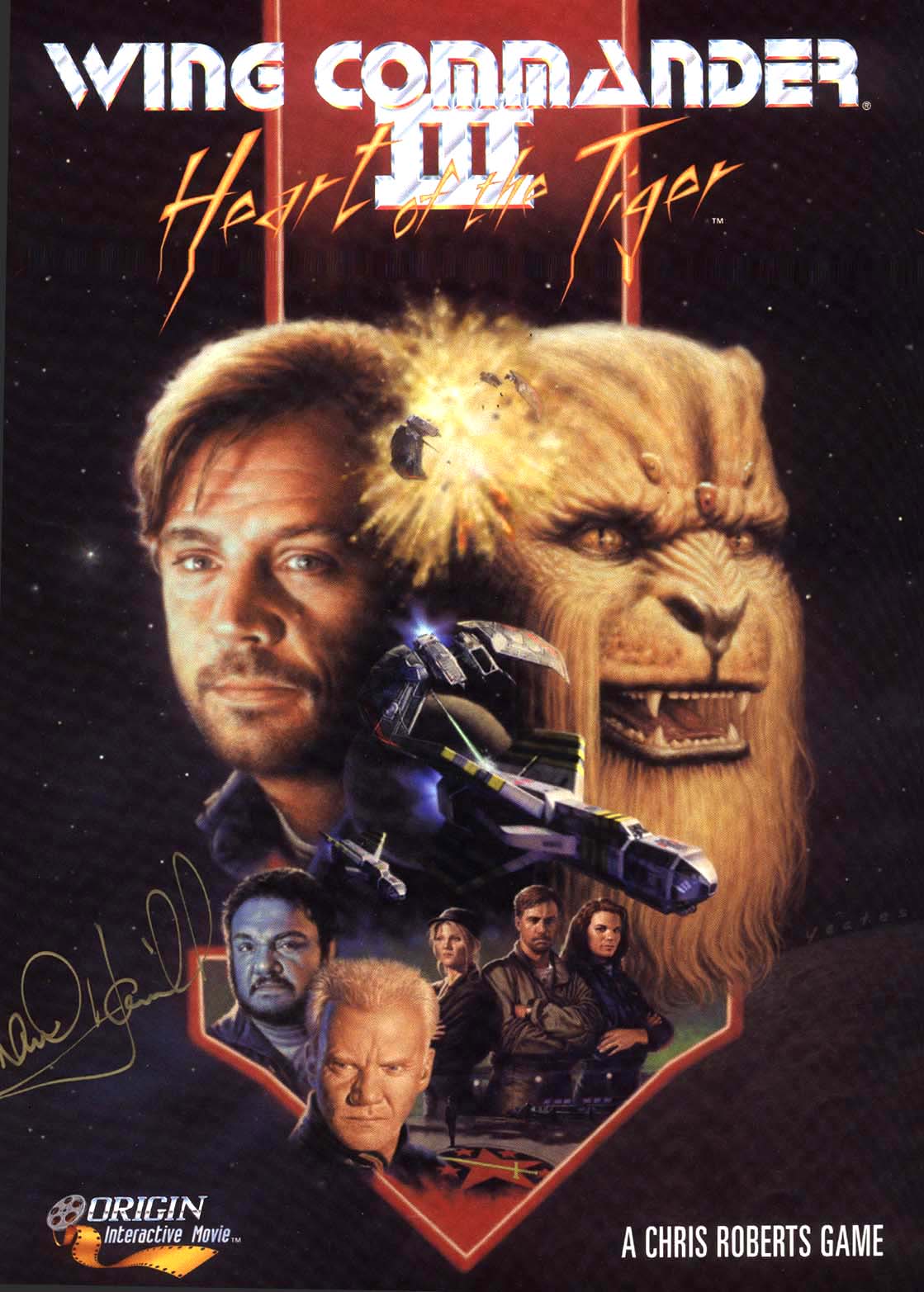
Wing Commander:
Calling to mind such franchises as Star Trek and Man-Kzin Wars, the Wing Commander series takes place in the distant future when a semi-utopian humanity is engaged in a war with a militaristic foe. As with the violent Kzin, the enemy in this series known as the Kilrathi, are a race of feline anthropoids.

Governed by a strict hierarchy and warrior code, the Kilrathi are driven to war and conquest and have been fighting humanity for generations. Though no formal description is ever made of the Earth government or human customs, many hints are given that suggest that the Terran Confederation is governed by the comparatively enlightened ideals of humanitarianism and democracy.

For instance, in the first Wing Commander it is said that Kilrathi do not place the same importance on alien life as the Confederation. Evidently not, since conquest, slavery and genocide seem to be par for the course for them! In addition, several alien species are allies with the Confederation, usually for the sake of mutual defense against the Kilrathi.

And as with Star Trek, the bad behavior of the enemy species is held in contrast to the comparatively peaceful and egalitarian behavior of humans. And as always, this is designed to illicit a point about history and human nature.

Conclusions:
When it comes to popular culture, there never seems to be a shortage of inspired science fiction elements. This is true of movies, television, and the gaming world. However, I can’t help but notice just how more common dystopian movies, shows and games are. For whatever reason, it just seems like tales of dark futures are much more popular. Is it because dark futures seem more realistic, or might it have to do with the proliferation of dystopian literature in the last century or so. Either way, believe me when I tell you that examples of modern utopian sci-fi franchises were much harder to find. No wonder Neal Stephenson challenged the sci-fi writers of the world to come up with something cheerier!

Futuristic Guns (vol 3)

AICW VX3:
First up is the proposed Advanced Infantry Combat Weapon by Australia’s Metal Storm Ltd. Combining a 5.56mm assault rifle with MS patented stacked ammo caseless ammo grenade launcher, this weapon is truly futuristic! In fact, the concept is already catching on.

Since it is still in the prototype phase, none of these weapons have appeared in any sci-fi movies, television or games as examples of future weapons. Give it a few years…

CornerShot Gun:
Holy future Batman! Here we have the CornerShot, the weapon accessory invented by Lt. Col. Amos Golan of the Israeli Defense Forces. Though technically not a firearm per se, this impressive invention gives anyone the ability to look and shoot around corners.

Designed primarily for use by special forces and police units, mainly for terrorist and hostage situations, it is typically outfitted with pistols or other small handheld weapons. Already it has made numerous appearances, including the movies Wanted, Red, and Newsmakers (Goryachie Novosti), the tv shows CSI: Miami, Flashpoint and Standoff.

FAMAS:
The name stands for Fusil d’Assaut de la Manufacture d’Armes de Saint-Etienne, and it is the service rifle of the French military. Invented in 1978, it was one of the first rifles to utilize the bullpup design, joining such guns as the Steyr AUG. Its long term of service has also led to its wide representation in modern media.

These include the movies Rebellion, District B13, Behind Enemy Lines, Hotel Rwanda, Tomorrow Never Dies, the Taxi series and the tv show The Unit. In terms of videogames, there are too many to count, but the big names consist of Rainbow Six, Battlefield 2, Perfect Dark, Modern Warfare 2, War Inc. Battlezone, and Counterstrike.

FX-05 Xiuhcoatl:
The name literally translates as “fire serpent” in classic Nahuatl, a pretty fitting description for a modern assault rifle. Produced by CIADTIM (Center of Applied Research and Technology Development Military Industry), this weapon is currently in use with the Mexican army. Making its debut in 2006, this weapon incorporates a lot of modern design features and is similar in appearance to the HK G36 and XM8.

My apologies, I can find only two examples of this weapon being featured in the movie, television or gaming world, and that is Call of Juarez: The Cartel and Max Payne 3.

QLB-06:
No doubt about it, the People’s Republic of China has been producing some pretty funky weapons lately. Should we be worried over here across the sea? Well regardless, this next weapon is known as the QLB-06, an automatic 35mm grenade launcher. Serving extensively in the Chinese military and abroad, this weapon represents the next step in the direction of a portable, lightweight, infantry grenade launcher.

Relatively new to the international armaments scene, this weapons has been featured in a few video games, such as Operation Flashpoint 2, and Jagged Alliance: Back in Action.

Metal Storm:
This is like, shock and awe got together and made a psychotic baby! Known as Metal Storm, this prototype series of weaponry uses stacked ammunition and with electrochemical ignition. Taken together, these advancements allow for an unprecedented rate of fire. In this case, we have the four barrel 40 mm cannon, which is the most powerful and fastest repeating cannon in the existence right now!

Frontlines: Fuel of War, Command & Conquer Fallout, Shadowrun, and Splinter Cell Chaos Theory and was also featured on the television show Future Weapons. A fictional, forty barrel variant was also featured on the show CSI: Miami.

Micor Defense MD 50:
Here we have yet another example of a .50 cal sniper rifle, one which is a lot bigger than it looks! Built in the US, this weapon represents a new generation is firearms technology for special forces and elite sniper units.

I have to find an example of this one showing up on the public’s radar. My apologies, sometimes they just don’t show up in time for these posts.

UC -M21:
Ever seen a submachine gun that could fold up into a suitcase? I have… once… in a movie! And it was set in a futuristic setting, making this weapon a perfect fit. Based on an earlier model known as the Ares FMG (Folding Machine Gun), this weapon was developed in the 1980’s, apparently for the personal use of politicians, wealthy businessmen, and other people who were at a high risk for kidnapping.

As I said, this gun made an appearance in a futuristic movie, known as Robocop 2. It was also featured in the anime series Full Metal Panic and the video game Perfect Dark.

XM25 IAWS:
Grenade launchers seem to be somewhat of a theme for this particular post, and this one is nothing if not futuristic! Known as the IAWS, or Individual Airburst Weapon System, this weapon was produced by the same project that created the HK XM29 OICW. A semi-automatic launcher, it is capable of firing four 25mm grenades from a bullpup box magazine that is loaded at the rear.

Thus far, the XM25 has appeared in four major first-person shooters, including Ghost Recon: Advanced Warfighter, Metal Gear Solid 4, Battlefield Play4Free, and Modern Warfare 3.

XM307 ACSW:
Wow, were it not for Metal Storm, I’d have saved the deadliest for last. Still, the XM307 was part of the US Army’s cancelled Advanced Crew Service Weapon (ACSW) project, intended to supplement or replace existing stocks of M2 heavy machine guns and Mark 19 grenade launchers. Combining the best aspects of a machine gun with a grenade launcher, this weapon is capable of firing 25mm rounds (the same as the XM25) at a rate of 250 rounds a minute.

Thus far, the XM307 has appeared in only two videogames, Battlefield: Bad Company and Battlefield: Bad Company 2. Wow! You’d think an automatic grenade launcher would have made more of an impact. Sorry, bad pun!

Okay, third installment and still more guns to go. In the meantime, check out this video of the Metal Storm arsenal in action. It’s so cool, it’s stupid, and a little scary…

Coming soon: Video game reviews!

A short while ago, I did a review on my top ten favorite nostalgic games. I might have mentioned somewhere in there that this was an intro to a new segment I was thinking of getting into: video game reviews! Well, I’ve decided to take the plunge. In the next few weeks and months, I’d like to do full reviews on the sci-fi video games that have made an impact on me over the years, or that I’ve just taken the time to enjoy.

I’ve prepared a tentative list below and would like to know if anyone has any games they’d like to add. Keep in mind two basic criteria: One, it should be a sci-fi or fantasy game, or at least something that’s mildly futuristic (which is how I justified adding Modern Warfare to this list). And two, it needs to be something I have or will be able to get my hands on in the near future. But anything’s possible given time, so just make your suggestions and I’ll let you know if I can or can’t find it!

Thanks you and happy gaming! Expect the first reviews soon 😉 *Note that the list is a mock-up and the actual reviews need not occur in that order.

  1. Knights of the Old Republic
  2. The Sith Lords
  3. Star Wars: Force Unleashed (I and II)
  4. Sid Meiers Alpha Centauri
  5. Halo (1, 2, 3)
  6. Starcraft (and Brood War)
  7. Starcraft II: Wings of Liberty
  8. Elder Scrolls IV: Oblivion
  9. Modern Warfare (1, 2 and 3)
  10. AVP (2010)
  11. Wing Commander (I, II, III)
  12. Wing Commander Privateer (1 and 2)

More Futuristic Guns

Please, sir, I want some more… futuristic looking guns!

ARX-160:
arx160-16The Beretta company, the people famous for the world’s most popular pistol, designed this baby as part of Italy’s own Future Soldier program.  Here, we see the souped-up version, with an additional 60mm grenade launcher and a computer-assisted, advanced optics, night-vision scope.

A relatively recent addition to the gun lineup, this weapon has still managed to make its way onto the pop-culture scene, showing up in the series Nikita, the Modern Warfare and Rainbow Six video games, and the movie Forces Speciales starring Djimon Hounsou.

CF-05:
chang_fengThe Chang Feng 05, a submachinegun that was developed by the Chinese arms manufacturer in response to the military and police’s demand for a new breed of handheld automatics.First seeing service in the late 90’s, it has some rather interesting design features. The first is the top mounted cylinder magazine, which feeds bullets in a rotating fashion into the chamber.

Despite it’s cool design, it has yet to really break onto the scene, appearing in only two video games: Mercenaries 2, and Firearms: Source. Give it time…

CR-21:
VektorCR-21-1Another South African creation, this is the bullpup Vektor CR-21. A composite stock assault rifle that is considerably lighter than its competitors, it also has the usual advantages of a modern weapon. These include a mount for a grenade launcher and a computer-assisted scope.

Not surprisingly, it appeared in the sci-fi movies District 9, Doomsday and Slipstream, the anime movie Ghost in the Shell: Standalone Complex, and a slew of video games.

HK G-36:
G36Now I know people here have seen these one before! Designed by German arms manufacturer Heckler and Koch back in 1996, this gun has made the rounds in the movie and game verse. Due largely to its futuristic look, sci-fi franchises have made sure to keep it stocked.

So far, it’s appeared in such movies as Equilibrium, Children of Men, DOOM, and V for Vendetta, animes such as Full Metal Panic and Cowboy Bebop, and more video games than I can name.

HK MP7:
HK_MP7You got to hand it to the Germans, they make great guns! Another example from HK industries, known as the MP7, this weapon is a sub-machinegun that also has the honor of being labelled a PDW (Personal Defense Weapon). Developed in response to the proliferation of body armor in the field, the MP7 was specifically designed to combine armor-piercing rounds with a high rate of fire.

It’s cinematic appearances include such hits as Stealth, Live Free or Die Hard, Next, Hancock, Wanted, The Interceptor (Zapreshchyonnaya Realnost), G.I. Joe: The Rise of Cobra, Zombieland and District B13: Ultimatum. It also has a strong representation on television, including Battlestar Galactica, Stargate: SG1, and such video games as Half Life 2, and the Rainbow Six, SOCOM, Splinter Cell and Modern Warfare 3.

QBZ-95:
qbz-95Here’s another installment from modern China, this bullpup assault rifle was designed for the as a replacement for the aging type 56 and type 81 assault rifles (derivatives of the AK-47). Light, versatile and highly adaptable, this weapon can be modified to act as a machine gun, sniper rifle, light infantry weapon, and an assault rifle with a 35mm grenade launcher.

And because of its look and feel, it has appeared in the movies Inception, the series Stargate: Atlantis and Universe, and the Rainbow 6 series and Modern Warfare 3.

SAR-21
SAR-21_RAILAnd now to Singapore, a city-state famous for technological innovation. One such example is this, the ST Kinetics Singapore Assault Rifle-21, a rifle built for the 21st century and an intended replacement for the countries aging stocks of American made M16A1’s.

Having been unveiled in 1999, it has yet to make a big splash. Still, it has already made appearances in the movies Gamer, as well as the video games Splinter Cell: Chaos Theory and Ghost Recon Online.

TAR-21:
tavor_05Everybody knows that Israel is famous for making some sweet-ass and powerful guns! The Desert Eagle, the Uzi, and now this, the Tavor TR-21. Much like the SAR-21, the name stands for Tavor Assault Rifle – 21st century, and it was built to become the mainstay of the armed forces to replace older weapons. A bullpup design, this weapon is compact, modifiable, and comes in many variants.

And of course, it’s made several appearances. These include the movies of Resident Evil: Apocalypse, and Screamers: The Hunting, and the video games series of Rainbow Six, Batman: Arkham City, and Modern Warfare 2.

TKB-022:
tkb022_1This gun never made it beyond the assembly line, and as such has made no appearances in pop culture. But you know what, who the hell cares?! Just look at the thing and tell me it’s not a futuristic gun! Based on a very unique take on the bullpup design, the Korobov, as its known, was intended as part of a new generation of weapons designed to replace the Kalashnikov.

Unfortunately, this proposed design was overlooked in favor of other, more conventional pieces. Too bad too. Maybe they could churn out a few test models strictly for science fiction directors. I know they’d pay to get their hands on them!

XM8:
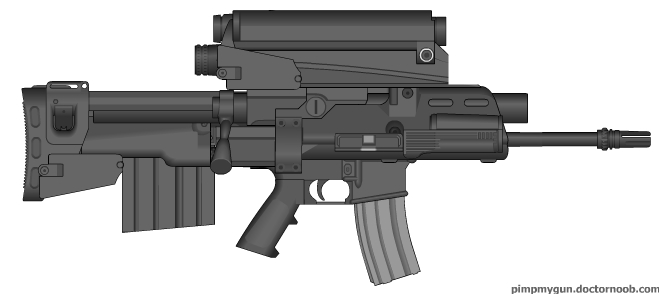
XM8_carbineAnd finally, we have the XM8, possibly the most futuristic looking gun available on the market. Designed in the late 90’s and early 21st century in the US, the XM8 represented a collaborative effort between Heckler and Koch (natch!) and the US Army to develop a lightweight assault rifle that could replace the M16 and its variants.

Thought the project was cancelled in 2005 (politics!), the gun made some pretty serious waves on the public mind and inspired its use in numerous franchises as an example of a futuristic weapon. Examples include the movies Children of Men and District B13: Ultimatum, the tv show Mail Call, and the video games series SOCOM, Splinter Cell, Ghost Recon, Raindbow Six, Command and Conquer 3, Metal Gear Solid 4, Crysis 2… the list goes on and on! Just goes to show you, you don’t have to be operational to make an impression!

Final Thoughts:
Looking at this futuristic array of weaponry, I notice a few things that might provide some hints as to the future of firearms. On the one hand, there is the clear indication that new designs which take advantage of bullpup or top loaded magazines are the way of the future. For quite some time now, gun designers have gone with the concept of a front loader and it seems that this is the result of convention. However, a paradigm shift is clearly in effect and I imagine that all future designs may very well phase this out.

Second, there is the Future Soldier program and how modern weapons are being designed to be consistent with its requirements. What this means is that new firearms models must be able to sport computer-assisted aiming (aka. ballistics computer scopes) as well as night vision and even thermal imaging. In addition, it is hopes that these scopes will be able to be connected to the new generation of Head’s-Up Displays (HUDs) which are being specially designed for infantry use.

Oh, and a possible third conclusion is that all future weapons will need to come with their own built-in grenade launchers. That may not be a requirement per se, but I sure hope it is since it’s just so freaking cool. And keep in mind they can be modified to shoot air burst shells so that police and peacekeepers won’t get go all nutjob on mobs of unarmed people. It’s all about proportionality…

Thank you, that’s all for now. As much as I’d like to make this a new series right now, I have too many of those on the go and I already spend too much time on those. Seriously, things are getting way back up with my regular writing and my real job! But if people like this enough, maybe I’ll stay on it and be sure to post new examples as they come along. Oh, and of course suggestions are always welcome. Good day and good hunting 😉

Futuristic Guns

Many of these will look familiar, and for good reason. In addition to being futuristic looking, they also happen to be real! For many years, science fiction movies and series have used weapons of legitimate manufacture in order to inspire a futuristic feel.

Calico M960:
Calico960aHere’s a gun that has been featured in several movies, games and television series, and its obvious why. Just look at the thing. A fully-automatic pistol, this baby provides a lot of firepower in a small and uniquely shaped package. As one of the first personal defense weapons to feature a top-mounted magazine, a revolutionary concept for its time which has since caught on bigtime.

Guns of this class were featured in the sci-fi movies Robocop 2, Robocop 3, Total Recall, Virtuosity, and Star Trek: First Contact.

Daewoo K11:
daewook11This gun not only looks futuristic, it is downright revolutionary in its design. Whereas most assault rifles have grenade launchers slug underneath the front barrel, this version carries an launcher mounted on top and fed by a bullpup magazine.

Designed by the Republic of South Korea in 2006, the weapon also comes with a state of the art scope which features the latest in a ballistics computer technology as well as thermal/night vision. I have yet to find a sci-fi franchise which has used it, but time will tell. These things aint cheap, after all!

FN F2000:
f2000As part of the new generation of bullpup assault rifles, the F2000 is of Belgian manufacture that’s been around for the better part of a decade. It’s futuristic features include the revolutionary new handle and trigger grip, bullpup magazine and updated sights.

Because of its aesthetic appeal, the F2000 has been featured in numerous places, including Terminator: Salvation, the Modern Warfare and Ghost Recon video game series, and the upcoming G.I. Joe: Rise of Cobra.

HK XM29:
Xm29Also known as an OICW (Objective Individual Combat Weapon), the XM29 is part of the new generation of hybrid assault rifles that features the a secondary bullpup magazine which houses its compliment of grenades.

Much like the K11, this weapon combines the benefits of a 5.56mm assault rifle, a 20mm grenade launcher and an ultra-modern scope that contains a ballistics computer, laser range finder, advanced optics and night vision. It was featured in the Ghost Recon series, Die Another Day, and Universal Soldier: The Return.

KRISS Vector:
kriss1When I first saw this weapon, all I could say was “Wow, now there’s something that doesn’t qualify for home defense!” A .45 caliber weapon, fully automatic, and very compact, this weapon is futuristic, uniquely designed and deadly. A triple threat, quite literally!

And the list of features and featurettes include the upcoming Total Recall remake, Resident Evil: Retribution, the Nikita television series and the Modern Warfare and Ghost Recon game franchises.

Mossberg 500:
mossberg_500_bullpupHere we have a game changer! And interestingly enough, it’s been around for quite some time. Back in 1985, Mossberg decided to upgrade their long lineup of shotgun stocks by taking advantage of the concept of bullpup firearms. Essentially, this means that it is loaded from the rear and ejects spent cartridges from behind the trigger mechanism.

Given it’s futuristic look, it was featured in several sci-fi movies during the 80’s and 90’s, most notably The Running Man, Predator 2, and the film version of Stargate.

NTW-20:
ntw20_1Go big or go home! That seems to be the reasoning behind this 20mm (.78 cal) assault rifle, which comes direct from South Africa, famous purveyor of grisly firearms! As part of an international series of large-caliber rifles which emerged during the 1990’s, this weapon was meant to give snipers the ability to take down armored troops and vehicles. Well, it certainly does that!

In addition to appearing in the movie District 9, it was also featured in the Halo series as the USNC sniper’s rifle. And anyone’s who played that series knows just how powerful that baby is. Blamoo! They all fall down…

PP-2000:
pp_2000Next up, the Russian sidearm of choice for today’s military, police forces, and apparently even cilivians. At least that’s what the designation PDW (Personal Defense Weapon) means. Can’t imagine most houses have any real cause for stocking a 9mm submachine gun, but that’s a matter for the courts.

Because of it’s appearance and popularity with modern armed forces, it was features in the video game series’ Modern Warfare, Ghost Recon, Bad Company, SOCOM, and the Russian sci-fi thriller The Interceptor (Zapreshchyonnaya Realnost).

P90:
P90Here we have yet another PDW that really doesn’t seem to fit that criteria, not when its a compact submachinegun and packs as many as 50 bullets! And in addition to its ammo count, it also boasts two very high-tech advancements, including a top loading magazine and the same handle/trigger grip as the F2000. Not surprising since they have the same maker – Fabrique Nationale (FN) from Belgium.

For obvious reasons, this gun has a long history of making special appearances. Its credits include Equilibrium, I, Robot, Babylon A.D., District B13 and its sequel, and was specifically chosen to be the sidearm of choice on the shows Stargate and Stargate: Atlantis.

Steyr AUG:
Steyr_augAnother popular item, and one which I’m sure everyone out there is familiar with. Invented back in 1978 by the Austrian-based Steyr company, this weapon was the first assault rifle to introduce the bullpup loading design. On top of that, its appearance is downright futuristic!

It too has a long list of credits, including Robocop 1 and 2, Predator 2, District B13, as well as the television shows Red Dwarf, Space: Above and Beyond, and Firefly.

Okay! There’s more, of course, but ten examples is kind of my limit. And because I think something like this could go longer than I’m willing to type… at least in one sitting. Enjoy the gun show (no bad pun!) and see y’all next time.

More Giant Robots

Welcome back. I had a lot of fun with the last installment, so here’s another! Updated, expanded, and with plenty of additions. Ah, screw it! Let’s get to it.

Immortal:
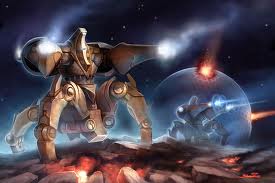
Back to the Starcraft universe for a sequel. Much like its predecessor, the Immortal was a vehicle for severely wounded Templars who still wanted to serve. Developed shortly after the Brood War, the Immortals replaced the aging Dragoon design and improved on it in many ways.

In terms of armaments, the Immortals boast two phased disruptor cannons which pretty much doubles their firepower. Their chassis are heavily armored and of course boast shields that can even withstand attacks from heavy artillery.

The Immortal’s one weakness is that their shields are only activated when they are hit by heavy munitions. In addition, their weapons are best for ranged attacks. This makes them somewhat vulnerable to close encounters with small arms fire and auto-cannons.

Mad Dog:
Another classic mech from the Battltech universe. Much like the Mad Cat from the last installment, the Mad Dog is another omnimech. It’s configuration, which appeared to Inner Sphere forces as a bird of prey, earned it the nickname “Vulture”.

Heavily armored with a n8 and a half ton ferro-fibrous shell, the Mad Dog is still fast and maneuverable, able to run at over 85 km/h. In its standard configuration, it carries two large pulse lasers in the arms, two medium ones (typically mounted underneath) and two shoulder mounted missile launchers.

Quick, powerful and versatile, the Mad Dog is well represented in the armies of every Outer Sphere Clan. In fact, the Mad Dog and Mad Cat are so close in design that they are often fashioned for the same mold. They often serve alongside each other for mutual support in the field of battle.

Madox-01:
When it comes to big, mechanized war machines, much like many cool inventions, the Japanese seem to have the market cornered. But what do you expect, they got their first and pioneered the whole concept. And this example is one of the many originals shows to popularize it.

Taken from Metal Skin Panic, the Madox-o1 was a prototype mech design built by the Japanese Self Defense Forces for use against tanks. Armed with a large caliber minigun, a chainsaw, a grappling claw, and can also carry an assortment of missiles. It is deployed by helicopters to a field of battle, but is also capable of running speedily to wherever it needs to go.

In the story, it becomes the property of a mechanic who climbs into the mech and “merges”, meaning that the machine comes to recognize him as its controller and won’t let him leave. As a result, Koji – the mechanic – is stuck with the machine and forced to defend himself when the authorities come looking for it. But in time, it is agreed that the best thing for all sides is if Koji works for the government and uses the machine for good. Everybody’s happy!

Metal Gear Ray:
Since these guys are so damn good at producing mech designs, I just had to return to the Metal Gear franchise! Picking up after the first game, this next example comes from its sequel: Sons of Liberty.

After the events in the first game, the world was apparently flooded with designs for the Metal Gear Rex. As a result, Ray began as a proposed countermeasure design, an amphibious design produced by the US Marine Corps. Because of this, Ray was the first Metal Gear that was both amphibious and not specifically designed for nuclear warfare.

Originally intended to be operated by a single pilot, the final Ray design was completely unmanned. Its primary armaments consisted of two machine guns, anti-tank and anti-ship missile banks, cluster bombs and a water jet cutter. Its smaller frame and lighter weight also meant it a lot speedier and more agile than its behemoth cousin, Rex.

MSZ-007 Gundam:
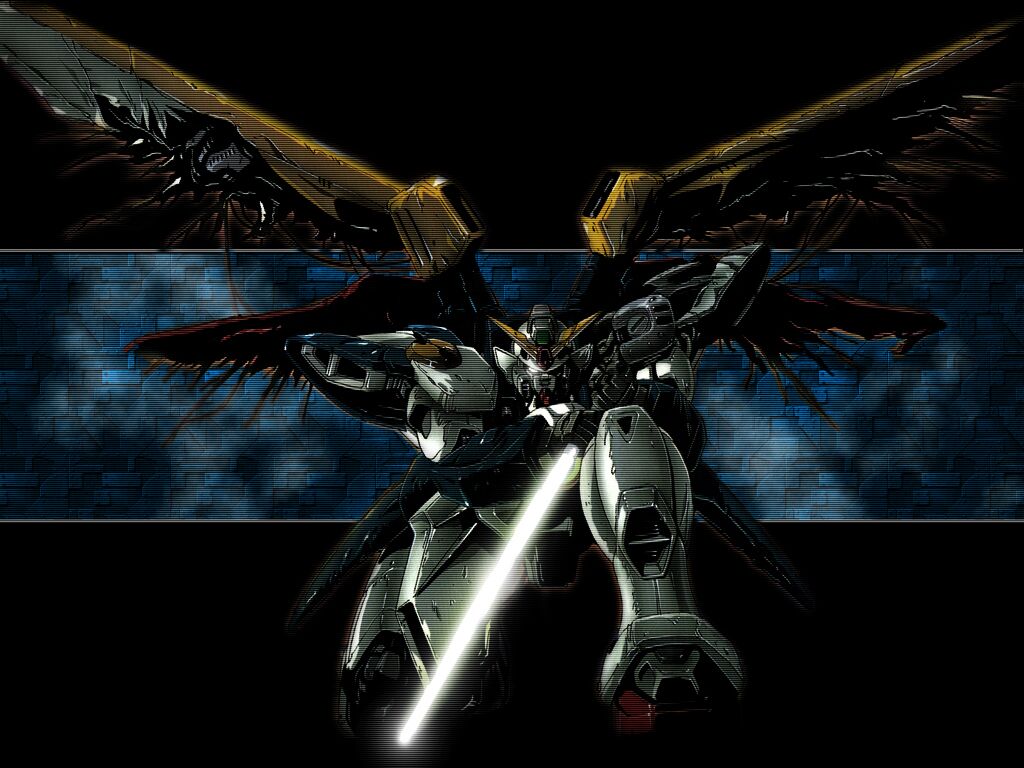
Speaking of anime and Japanese robots, the next examples comes from a similarly old-school show, Gundam! Known as the Mass Production type Z Gundam, this “Mobile Suit” is one of the more popular mechs from the series. And for good reason!

In addition to being able to fly on its own without having to transform into a fighter configuration, this mech also carries a beam rifle and can get into hand to hand combat with its pair of beam sabres. Just because you’re a futuristic robot suit doesn’t mean you can’t go samurai on your enemies asses!

In addition to being able to run at high speeds, its thruster packs provide a whopping 1.53 G (73900 kg) of thrust. This makes it capable of operating in air, space and on land. Its diverse weapons capabilities also mean it is able to perform ranged and hand to hand attacks. In short, its versatility makes it popular, and pretty damn cool to look at!

Robocop 2:
Also known as “Robocain”, this monster appeared in the sequel to Robocop and was intended as his successor. In the midst of the police strike in the second movie, OCP intended to fully replace the police force with cyborgs. All they needed was a human brain to make the prototype work… again.

Unfortunately, due to some tampering from a rather ambitious OCP exec, the brain came from former drug kingpin and Jesus wannabee Cain. Rather than protecting and serving, he saw this as an opportunity for quasi-godhood. Heavily armed, armored, and clearly nuclear powered by the symbol on the right side of the chest plate.

And who wouldn’t feel like a god with this kind of firepower? Though somewhat cumbersome and easy to trip up, the Robocain suit had all kinds of advantages. A rotary cannon was its main article, mounted on one arm, while a shoulder mounted autocannon added some punch. While its right hand was articulated, its left was little more than a hydraulic fist. Hard to describe, but if you’ve seen the movie, you’d understand.

At the end of the movie, Murphy and Cain get into it, with Murphy being heavily over-matched. In the end, he managed to defeat him by having his partner distract him with a vial of nuke (the designer drug he invented) and then jumped on his back and ripped his brain out of the head assembly. A grissly death, but a fitting one for a criminal madman with a god complex!

Tripod Walker:
I always say there is nothing like a classic, but when it comes to giant robots, this is the cat’s ass of classics! Taken from H.G. Well’s War of the Worlds, the tripod walker was the proposed design of what an alien attack machine would look like. Tall, tripedal, and using heat rays to annihilate everything in their paths, these robots served as an inspiration for countless other franchises and genres of sci-fi.

In the novel, Well’s describes his creation as follows: “Machine it was, with a ringing metallic pace, and long, flexible, glittering tentacles… Behind the main body was a huge mass of white metal like a gigantic fisherman’s basket, and puffs of green smoke squirted out from the joints of the limbs as the monster swept by me. And in an instant it was gone.”

From this basic description, movie makers and conceptual artists have through several renditions. The latest, which were featured in the Stephen Spielberg remake, were updated to look sleaker and more modern; in essence, less Steampunk-y. However, they retained the same basic design, consisting of a central “head”, three legs and a series of beam emitters mounted underneath.

Zentraedi Battlepod:
As artists concept, by VulnePro at deviantArta finale, it’s back to the Robotech universe with the Zentraedi Battlepod. Built by the alien race that are the main antagonists of the show, this battlepod is essentially a mass-produced infantry mech and the mainstay of the Zentraedi forces.

Known as the Regult within their own ranks, this mech is fast, maneuverable, and highly versatile, especially when compared to heavier mechs like the Tomahawk. It lightweight and chassis-mounted thrusters ensure that it can make high jumps and operate in zero gravity.

It’s weaponry is also more sophisticated than the average human design, which includes two quadruple-barreled medium beam cannons, two single barrel light cannons, and two light pulse beam cannons mounted on the back of the head.

However, the Battlepod has a discernible weakness, which is its light armor. Although this makes the pod faster and more maneuverable, especially in space, it is not capable of withstanding direct hits from autocannons, missiles or lasers. In the end, the Battlepod’s greatest quality is it’s quantity. Later generations would be upgraded to include heavier weapons and armor, but for the duration of the First Robotech War, Zentraedi forces were stuck with this one.

Well, that was fun, again! Bring on the suggestions, I still got a few to work through. See you next time!

Cool Ships (volume VII)

Welcome to volume 7. Nuff chit chat, let’s get started!

The Blackbird:
Starting this list off right is the stealth ship from the updated Galactica universe. Christened the Laura, in honor of President Roslyn, this ship was the brainchild of engineer Galen Tyrol and his deck hands, who decided to build a new fighter from scratch to make up for their losses. Build for speed and skinned with carbon fiber instead of the usual metal, this ship proved to be invisible to both Colonial and Cylon tracking equipment, hence its designation as a stealth ship.

On her maiden voyage, Starbuck flew the Blackbird on an illegal reconnaissance mission to take pictures of the Cylon Resurrection ship that had been pursuing Galactica. The operation was a complete success, with Admiral Cain – the Pegasus’ CO – going as far to say that: “she flew right up their tailpipe and they didn’t even notice”.

As a result of the technical data obtained from this mission, a joint attack was planned between the Galactica and Pegasus to take the RS down. The Blackbird would go on to play a crucial role in this attack, using its stealth abilities to fly within a few meters of the RS and take out its FTL drive with a well-placed missile. Unfortunately, the Blackbird would suffer a fatal collision after performing this duty, and Captain Lee Adama, its pilot for the op, was almost killed.

Corellian Corvette:
Another mainstay of both the Rebel and Imperial fleets, this ship made its debut in the opening scene from Star Wars: A New Hope and has been with the franchise ever since. Otherwise known as a “Blockade Runner”, the CR90 corvette embodies the spirit of Corellian ship designs, boasting speed and versatility over size and raw firepower.

Because of its adaptability, another Corellian trademark, the CR90 could serve in a variety of roles. These ran the gambit from such mundane duties as freight hauling, to more dangerous assignments like raids and providing fighter escort. In some cases, they could even take on such high-profile missions as diplomatic envoys, carrying public officials to and from their assignments.

Because of these qualities, the CR90 had a long history of service in the Galaxy, serving in the navies of the Old Republic, the Galactic Empire, the Rebel Alliance, and the New Republic. Even after it was phased out of service, it remained a favorite among smugglers, pirates and smaller navies for some time.

Harbor Ship of Bentus:
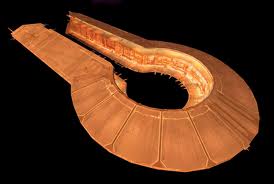
Here is another feature from the Homeworld universe, the Harbor Ship of the alien race known as the Bentusi. Known for their focus on trade and supplying less advanced races with “short-jump” technology (i.e. FTL), the Bentusi soon found themselves caught in the middle of a series of interstellar conflicts between worlds.

As a result, the Harbor Ship was created, a mothership for the Bentusi fleet that was capable of housing, repairing and deploying smaller vessels. Thought not armed in any official capacity, it is the bulwark of the Bentusi armada and can be found wherever large-scale fleet deployments take place.

From what I can tell, this design was inspired by what historians believe the harbor of Carthage looked like. Much like the Harbor Ship, it was based on a sort of teardrop design, with a long entrance passage giving way to a sort of rotunda. This design, in addition to being aesthetically pleasing, also makes a lot of practical sense, ensuring that multiple ships are able to be serviced in a 360 degree arc rather than a series of enclosed bays.

Ixian No-Ship:
Another Dune entry which I failed to acknowledge in previous posts, can you believe it? Well, mistake remedied as of now, here is the No-Ship! Named for the fact that it is capable of shielding itself from prescient vision and other forms of detection, including sight. This all makes the No-Ship the ultimate in stealth technology, and led to its wide adoption by all factions in the Dune universe.

Based on the same technology which powered the No-Chamber, a device which the Ixians used to shield their inventions from Leto II’s prescience, No-Ships would become the mainstay of all fleets after his death. In addition to their stealthy characterisitics, they would also boast another invention that was proposed during the time of Leto II, the Ixian navigation machine. This device, which was capable of limited prescience, was able to guide these ships through foldspace without the need of a Guild navigator.

Much like Guild Heighliners, No-Ships appear to have massive capacities. In Heretics of Dune, the No-Ship which Miles Teg steals from the Honored Matres on Gammu apparently had a Great Hold which measured one kilometer in length. This hold was later used to transport an adult sandworms and several tons of its native sand off of Rakis before the HM’s destroyed it. In Chapterhouse and subsequent books, No-Ships served as the mainstay of the Bene Gesserit fleet as well as with all other factions.

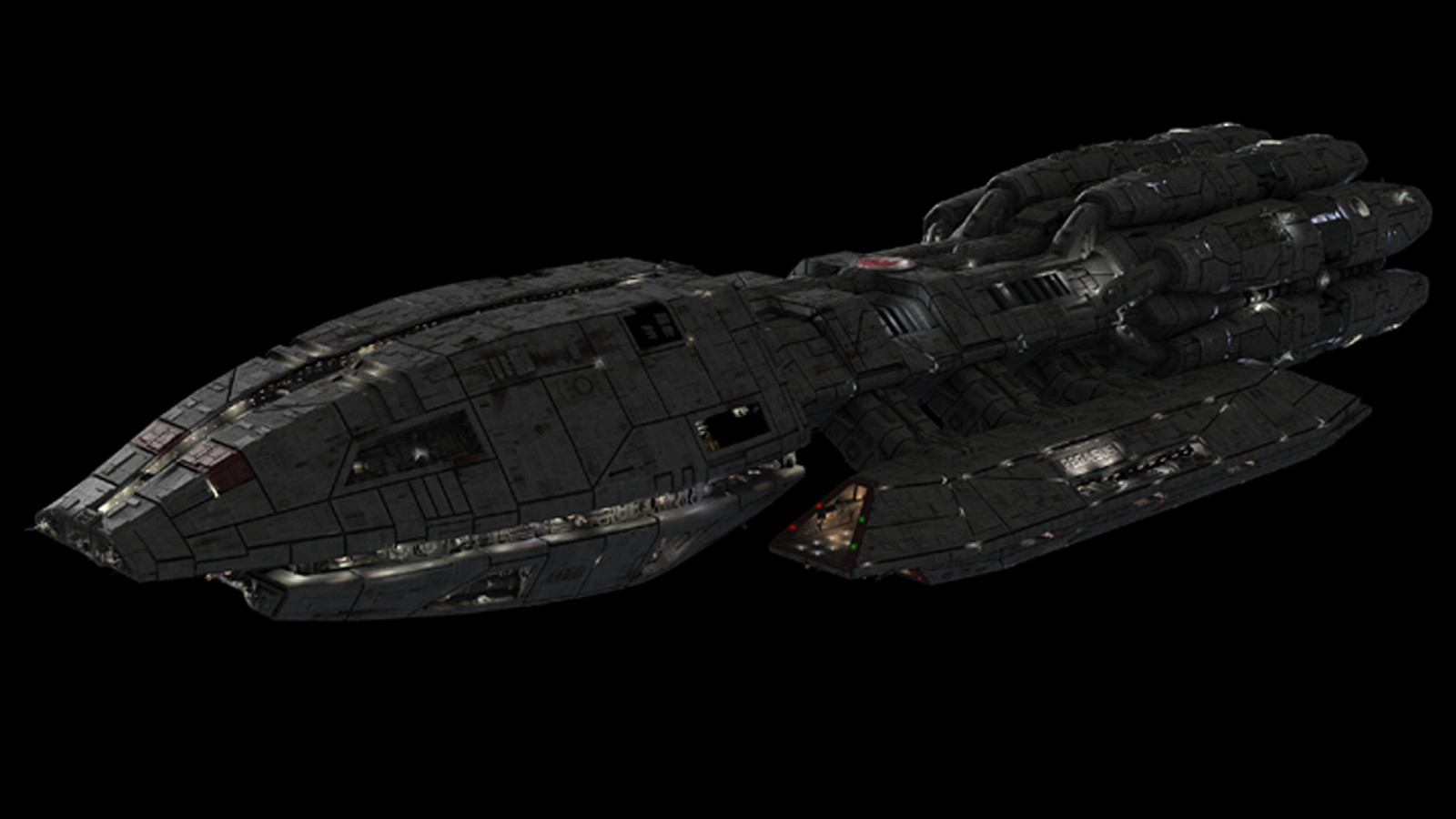
The Pegasus:
Battlestar Galactica gave so many cool ship designs that its hard for me to know where to look next. But today, I thought I’d go for the obvious and cover the ultra-modern and behemoth-sized Pegasus, the other Battlestar to survive the destruction of the Twelve Colonies. As with the original, the Pegasus makes an appearance in the re-imagined series. And like everything else, its appearance received an update, as did the tone and nature of its crew.

Although networked like all other modern Colonial ships, the Pegasus survived the assault through sheer luck, having taken its systems down for a diagnostic before the first wave came. Since that time, it’s CO, Admiral Cain, had been fighting a guerrilla style war with the Cylons, attacking their holdings and raiding small convoys in order to keep them off balance.

A mercury-class battlestar, the Pegasus was far more advanced and boasted significantly greater firepower than the Galactica.  In addition to its 30 defensive turrets, four heavy cannons, multiple missile launchers and compliment of nukes, its massive bays also hold 10 squadrons of Vipers, as well as dozens of Raptors and support craft. It also carries a series of Viper VII production facilities, meaning that it is capable of replenishing its losses.

With all of these attributes, the arrival of the Pegasus was a great boost to the Colonial fleet, adding a great deal of firepower, manufacturing and many of the latest ships to their arsenal. Nicknamed “The Beast”, the destruction of this ship over New Caprica was considered an immeasurable loss, though its sacrifice was hardly in vain.

Primus-class Battlecruiser:
Here we have another installment from the B5 universe, from the Centauri Republic to be specific. Known as the Primus-class Battlecruiser, this baby is renowned for packing firepower and artistic design into one package.

Discernible from its manta ray-like configuration, the Primus remains the mainstay of the Centauri navy even after two centuries of service. Although lightly armored, the ship boasts an impressive array of ion guns, a hyperspace drive, and artificial gravity for its crew.

Making its first appearance in season two of the show (“And Now For a Word”) when televised a standoff occurred outside the station between the Centauri and the Narn. In that battle, the cruiser in question was destroyed, but managed to inflict enough damage that the G’Quon class cruiser also blew up while attempting to make a jump. This demonstrated that the Primus, though an older design, was still capable of standing toe-to-toe with its Narn equivalent.

This encounter was followed up during the season two finale (“The Fall of Night”), when another such cruiser threatened the station when it was discovered that Sheridan was harboring a Narn heavy cruiser. This cruiser managed to inflict serious damage on the station before a squad of Starfuries and the station’s own defenses managed to destroy it.

Primus class cruisers would go on to make several appearances in the course of the show, serving throughout the Narn-Centauri war and even making an appearance during Sheridan’s war to liberate Earth. During the Alliance-Centauri war, these cruisers appeared to have been relegated to defensive duty, leaving offensive operations to the newer and lighter Vorchan-class cruisers.

USS Reliant:
Thank you to Victor for suggesting this one. I was wondering if I should go back to the original Star Trek for ideas, and this was just the push I needed to include some. And given that this ship made its appearance in Wrath of Khan, arguably the best of the bunch, I figured it would be the perfect candidate.

A Miranda-class starship, the Reliant possessed capabilities comparable to that of the USS Enterprise. She is best known for being the ship that was charged with investigating planets for the Genesis Project and then being commandeered by Khan Noonien Singh, a warlord from Earth’s Eugenics Wars who had been marooned on the planet for many years.

After commandeering the ship with his people, Khan used the Reliant to seize Genesis and attack the USS Enterprise. During their initial encounter, Khan was able to use surprise to disable and inflict considerable damage. He was only defeated when Spock, using the ship’s prefix code, was able to bring the Reliant’s shields down long enough for the Enterprise to strike back and take out its weapons and warp drive.

During their second confrontation, Kirk was able to lure Khan into the nearby Nebula where neither ship had the tactical advantage. There, the Enterprise was able to outmaneuver the Reliant and crippled her with a series of torpedoes and well placed phaser shots. Rather than face capture, Khan chose to initiate the Genesis’ self destruct sequence and nearly destroyed both ships in the process. The Enterprise narrowly escaped, thanks to Spock’s decision to sacrifice himself to bring the warp engines back on line.

Viscount-class Star Defender:
Last on the list is an entry which I’m personally impressed with. Known as a Star Defender, this class of Mon Calamari heavy cruiser comes from the Star Wars universe, and reminds us that not only the Empire was capable of creating some badass ships!

Commissioned during the time of the New Republic at the behest of Admiral Ackbar, the Star Defender was the Alliance’s answer to the Super Star Destroyer and other classes of Imperial terror weapons. Measuring 17 km in length and boasting over 5000 weapons turrets, this ship was more than a match for the Executor, Eclipse and any other vessel of similar size.

Like all Mon Calamari cruisers, this ship was studded with hangars and launch bays and could carry fourteen fighter squadrons, dozens of troops transports and any number of shuttles and support craft. It can also house over 12,000 troops and carries a standard crew of about 70,000. Though production of these vessels stalled due to the diminishing threat posed by the Empire after the Battle of Endor, the Thrawn crisis and the threat posed by the resurrected Emperor and his Eclipse dreadnoughts provided the final push.

Several versions of the Viscount class were commissioned for service over the years, including the Mon Remonda, pictured below.

Okay, that’s seven down. Do I really need to do an eighth? Ha! Just kidding, of course I do. Perhaps I’ll end this series at ten, or maybe it will become one of those things that slows down but never really goes away. As long as people keep suggesting things and I keep having ideas of my own, there’s no real end in sight! See ya next time 😀