The Future of Smart Living: Smart Homes

Future-Home-Design-Dupli-CasaAt this year’s Consumer Electronics Show, one of the tech trends to watch was the concept of the Smart Home. Yes, in addition to 4K televisions, curved OLEDs, smart car technology and wearables, a new breed of in-home technology that extends far beyond the living room made some serious waves. And after numerous displays and presentations, it seems that future homes will involve connectivity and seamless automation.

To be fair, some smart home devices – such as connected light bulbs and thinking thermostats – have made their way into homes already. But by the end of 2014, a dizzying array of home devices are expected to appear, communicating across the Internet and your home network from every room in the house. It’s like the internet of things meets modern living, creating solutions that are right at your fingertips (via your smartphone)

smarthomeBut in many ways, the companies on the vanguard of this movement are still working on drawing the map and several questions still loom. For example, how will your connected refrigerator and your connected light bulbs talk to each other? Should the interface for the connected home always be the cell phone, or some other wirelessly connect device.

Such was the topic of debate at this year’s CES Smart Home Panel. The panel featured GE Home & Business Solutions Manager John Ouseph; Nest co-founder and VP of Engineering Matt Rogers; Revolv co-founder and Head of Marketing Mike Soucie; Philips’ Head of Technology, Connected Lighting George Yianni; Belkin Director of Product Management Ohad Zeira, and CNET Executive Editor Rich Brown.

samsunglumenSpecific technologies that were showcased this year that combined connectivity and smart living included the Samsung Lumen Smart Home Control Panel. This device is basically a way to control all the devices in your home, including the lighting, climate control, and sound and entertainment systems. It also networks with all your wireless devices (especially if their made by Samsung!) to run your home even when your not inside it.

Ultimately, Samsung hopes to release a souped-up version of this technology that can be integrated to any device in the home. Basically, it would be connected to everything from the washer and dryer to the refrigerator and even household robots, letting you know when the dishes are done, the clothes need to be flipped, the best before dates are about to expire, and the last time you house was vacuumed.


As already noted, intrinsic to the Smart Home concept is the idea of integration to smartphones and other devices. Hence, Samsung was sure to develop a Smart Home app that would allow people to connect to all the smart devices via WiFi, even when out of the home. For example, people who forget to turn off the lights and the appliances can do so even from the road or the office.

These features can be activated by voice, and several systems can be controlled at once through specific commands (i.e. “going to bed” turns the lights off and the temperature down). Cameras also monitor the home and give the user the ability to survey other rooms in the house, keeping a remote eye on things while away or in another room. And users can even answer the phone when in another room.

Check out the video of the Smart Home demonstration below:


Other companies made presentations as well. For instance, LG previewed their own software that would allow people to connect and communicate with their home. It’s known as HomeChat, an app based on Natural Language Processing (NLP) that lets users send texts to their compatible LG appliances. It works on Android, BlackBerry, iOS, Nokia Asha, and Windows Phone devices as well as OS X and Windows computers.

This represents a big improvement over last year’s Smart ThinQ, a set of similar application that were debuted at CES 2013. According to many tech reviewers, the biggest problem with these particular apps was the fact that each one was developed for a specific appliance. Not so with the HomeChat, which allows for wireless control over every integrated device in the home.

LGHomeChatAura, a re-imagined alarm clock that monitors your sleep patterns to promote rest and well-being. Unlike previous sleep monitoring devices, which monitor sleep but do not intervene to improve it, the Aura is fitted a mattress sensor that monitors your movements in the night, as well as a series of multi-colored LED light that “hack” your circadian rhythms.

In the morning, its light glows blue like daytime light, signaling you to wake up when it’s optimal, based upon your stirrings. At night, the LED glows orange and red like a sunset and turn itself off when you fall asleep. The designers hopes that this mix of cool and warm light can fill in where the seasons fall short, and coax your body into restful homeostasis.

aura_nightlightMeanwhile, the Aura will send your nightly sleep report to the cloud via Wi-Fi, and you can check in on your own rest via the accompanying smartphone app. The entire body is also touch-sensitive, its core LED – which are generally bright and piercing – is cleverly projected into an open air orb, diffusing the light while evoking the shape of the sun. And to deactivate the alarm, people need only trigger the sensor by getting out of bed.

Then there was Mother, a robotic wellness monitor produced by French inventor Rafi Haladjian. This small, Russian-doll shaped device is basically an internet base station with four sensors packs that track 15 different parts of your life. It is small enough to fit in your pocket to track your steps, affix to your door to act as a security alarm, and stick to your coffee maker to track how much you’re drinking and when you need more beans.

mother_robotAnd though the name may sound silly or tongue-in-cheek, it is central to Haladjian’s vision of what the “Internet of things” holds for us. More and more, smart and sensor-laden devices are manifesting as wellness accessories, ranging from fitness bands to wireless BP and heart rate monitors. But the problem is, all of these devices require their own app to operate. And the proliferation of devices is leading to a whole lot of digital clutter.

As Haladjian said in a recent interview with Co.Design:

Lots of things that were manageable when the number of smart devices was scarce, become unbearable when you push the limit past 10. You won’t be willing to change 50 batteries every couple of weeks. You won’t be willing to push the sync button every day. And you can’t bear to have 50 devices sending you notifications when something happens to them!

keekerAnd last, but not least, there was the Keecker – a robotic video projector that may just be the future of video entertainment. Not only is this robot able to wheel around the house like a Roomba, it can also sync with smartphones and display anything on your smart devices – from email, to photos, to videos. And it got a battery charge that lasts a week, so no cords are needed.

Designed by Pierre Lebeau, a former product manager at Google, the robot is programmed to follow its human owner from room to room like a little butler (via the smartphone app). It’s purpose is to create an immersive media environment by freeing the screen from its fixed spots and projecting them wherever their is enough surface space.


In this respect, its not unlike the Omnitouch or other projection smartscreens, which utilizes projectors and motion capture technology to allow people to turn any surface into a screen. The design even includes features found in other smart home devices – like the Nest smoke detector or the Spotter – which allow for the measuring of a home’s CO2 levels and temperature, or alerting users to unusual activity when they aren’t home.

Lebeau and his company will soon launching a Kickstarter campaign in order to finance bringing the technology to the open market. And though it has yet to launch, the cost of the robot is expected to be between $4000 and $5000.

Sources: cnet.com, (2), (3), (4), fastcodesign, (2), (3), (4)

How the Internet Works

undersea_internet1This video was passed onto me by my darling wife, who is a whiz at picking out videos and articles that I would find interesting! Entitled “There and Back Again: A Packet’s Tale, this educational video clip was produced by the World Science Festival – a New York City-based non-profit organization committed to scientific education and public awareness. And in it, they explain how this complex organism known as the internet actually works.

Using a single search item as an example, the clip lets the viewer see how a packet of data – one of trillions of internet interactions – goes from one side of the planet to the other and then back again, all in the space of a second. In addition to explaining how such volumes of data are handled, they also draw attention to the fact that the internet depends upon real physical connections.

This second aspect of the video is very important, in that it reminds us that despite what could computing and wireless teach us – that data is free-floating mass moving through the air – that the world-wide web is still grounded in solid objects, such as copper and optic cables, before it gets to your wireless router. And even though it is only three and a half minutes in length, the clip is quite informative. Enjoy!


Source:
worldsciencefestival.com

New GOT Trailer – Season Four, Part II

GOT_4posterAt long last, after many months of waiting, fans of HBO’s Game of Thrones have finally been treated to the first teaser trailer for the second half of season four! And as you can see, the series producers decided to give the fans just enough to whet their appetites, while not giving too much away. But of course, us A Song of Ice and Fire geeks could tell what’s in store, not that it helps much!

As the preview opens, we see King’s Landing with a dragon’s shadow passing over it (purely symbolic, don’t worry!). We also get Joffrey speaking to the newly returned Jaime about the progress of the war, which – after the events of last season’s Red Wedding – he is claiming victory in. And of course, we hear from Daenerys, who continues in her campaign to overthrow the slave cities of Essos and build an army to retake the Iron Throne.

And between all that, we get hints and previews of other threads and plots, all punctuated with plenty of voiceovers. These include the trial of Tyrion (won’t say for what); the arrival of Prince Oberyn (Pedro Pascal) and his duel with Ser Gregor Clegane (now played by Hafþór Júlíus Björnsson); and of course, Jon Snow rallying the Night’s Watch for the Wildlings’ much anticipated attack on the Wall.
The show premiers on April 6th, and if their previous records are any indication, this one is sure to be one of the highest rated premiers of all time! Enjoy the trailer…

New Movie Trailer: Interstellar

interstellar-teaserposterI came across this trailer recently, thanks again to my bud over at Ellipsis Media. And although the clip is short, it does manage to intrigue and fascinate. And as the name would suggest, the movie is all about space exploration in the not-too-distant future, where humanity suddenly finds itself able to bridge the vast distance between the stars for the first time ever.

Here is the commercial description, courtesy of MOVIECLIPS:

Interstellar chronicles the adventures of a group of explorers who make use of a newly discovered wormhole to surpass the limitations on human space travel and conquer the vast distances involved in an interstellar voyage.

The movie is set for release in November 7th, 2014. Christopher Nolan is the director (Inception, Dark Knight trilogy), and the film has an all-star cast that includes Matthew McConaughey, Anne Hathaway, Casey Affleck, Topher Grace and Michael Caine. Enjoy!

Top Stories from CES 2014

CES2014_GooglePlus_BoxThe Consumer Electronics Show has been in full swing for two days now, and already the top spots for most impressive technology of the year has been selected. Granted, opinion is divided, and there are many top contenders, but between displays, gaming, smartphones, and personal devices, there’s been no shortage of technologies to choose from.

And having sifted through some news stories from the front lines, I have decided to compile a list of what I think the most impressive gadgets, displays and devices of this year’s show were. And as usual, they range from the innovative and creative, to the cool and futuristic, with some quirky and fun things holding up the middle. And here they are, in alphabetical order:

celestron_cosmosAs an astronomy enthusiast, and someone who enjoys hearing about new and innovative technologies, Celestron’s Cosmos 90GT WiFi Telescope was quite the story. Hoping to make astronomy more accessible to the masses, this new telescope is the first that can be controlled by an app over WiFi. Once paired, the system guides stargazers through the cosmos as directions flow from the app to the motorized scope base.

In terms of comuting, Lenovo chose to breathe some new life into the oft-declared dying industry of desktop PCs this year, thanks to the unveiling of their Horizon 2. Its 27-inch touchscreen can go fully horizontal, becoming both a gaming and media table. The large touch display has a novel pairing technique that lets you drop multiple smartphones directly onto the screen, as well as group, share, and edit photos from them.

Lenovo Horizon 2 Aura scanNext up is the latest set of display glasses to the world by storm, courtesy of the Epson Smart Glass project. Ever since Google Glass was unveiled in 2012, other electronics and IT companies have been racing to produce a similar product, one that can make heads-up display tech, WiFi connectivity, internet browsing, and augmented reality portable and wearable.

Epson was already moving in that direction back in 2011 when they released their BT100 augmented reality glasses. And now, with their Moverio BT200, they’ve clearly stepped up their game. In addition to being 60 percent lighter than the previous generation, the system has two parts – consisting of a pair of glasses and a control unit.

moverio-bt200-1The glasses feature a tiny LCD-based projection lens system and optical light guide which project digital content onto a transparent virtual display (960 x 540 resolution) and has a camera for video and stills capture, or AR marker detection. With the incorporation of third-party software, and taking advantage of the internal gyroscope and compass, a user can even create 360 degree panoramic environments.

At the other end, the handheld controller runs on Android 4.0, has a textured touchpad control surface, built-in Wi-Fi connectivity for video content streaming, and up to six hours of battery life.


The BT-200 smart glasses are currently being demonstrated at Epson’s CES booth, where visitors can experience a table-top virtual fighting game with AR characters, a medical imaging system that allows wearers to see through a person’s skin, and an AR assistance app to help perform unfamiliar tasks .

This year’s CES also featured a ridiculous amount of curved screens. Samsung seemed particularly proud of its garish, curved LCD TV’s, and even booked headliners like Mark Cuban and Michael Bay to promote them. In the latter case, this didn’t go so well. However, one curved screen device actually seemed appropriate – the LG G Flex 6-inch smartphone.

LG_G_GlexWhen it comes to massive curved screens, only one person can benefit from the sweet spot of the display – that focal point in the center where they feel enveloped. But in the case of the LG G Flex-6, the subtle bend in the screen allows for less light intrusion from the sides, and it distorts your own reflection just enough to obscure any distracting glare. Granted, its not exactly the flexible tech I was hoping to see, but its something!

In the world of gaming, two contributions made a rather big splash this year. These included the Playstation Now, a game streaming service just unveiled by Sony that lets gamers instantly play their games from a PS3, PS4, or PS Vita without downloading and always in the most updated version. Plus, it gives users the ability to rent titles they’re interested in, rather than buying the full copy.

maingear_sparkThen there was the Maingear Spark, a gaming desktop designed to run Valve’s gaming-centric SteamOS (and Windows) that measures just five inches square and weighs less than a pound. This is a big boon for gamers who usually have to deal gaming desktops that are bulky, heavy, and don’t fit well on an entertainment stand next to other gaming devices, an HD box, and anything else you might have there.

Next up, there is a device that helps consumers navigate the complex world of iris identification that is becoming all the rage. It’s known as the Myris Eyelock, a simple, straightforward gadget that takes a quick video of your eyeball, has you log in to your various accounts, and then automatically signs you in, without you ever having to type in your password.

myris_eyelockSo basically, you can utilize this new biometric ID system by having your retinal scan on your person wherever you go. And then, rather than go through the process of remembering multiple (and no doubt, complicated passwords, as identity theft is becoming increasingly problematic), you can upload a marker that leaves no doubt as to your identity. And at less than $300, it’s an affordable option, too.

And what would an electronics show be without showcasing a little drone technology? And the Parrot MiniDrone was this year’s crowd pleaser: a palm-sized, camera-equipped, remotely-piloted quad-rotor. However, this model has the added feature of two six-inch wheels, which affords it the ability to zip across floors, climb walls, and even move across ceilings! A truly versatile personal drone.


scanaduAnother very interesting display this year was the Scanadu Scout, the world’s first real-life tricorder. First unveiled back in May of 2013, the Scout represents the culmination of years of work by the NASA Ames Research Center to produce the world’s first, non-invasive medical scanner. And this year, they chose to showcase it at CES and let people test it out on themselves and each other.

All told, the Scanadu Scout can measure a person’s vital signs – including their heart rate, blood pressure, temperature – without ever touching them. All that’s needed is to place the scanner above your skin, wait a moment, and voila! Instant vitals. The sensor will begin a pilot program with 10,000 users this spring, the first key step toward FDA approval.

wowwee_mip_sg_4And of course, no CES would be complete without a toy robot or two. This year, it was the WowWee MiP (Mobile Inverted Pendulum) that put on a big show. Basically, it is an eight-inch bot that balances itself on dual wheels (like a Segway), is controllable by hand gestures, a Bluetooth-conncted phone, or can autonomously roll around.

Its sensitivity to commands and its ability to balance while zooming across the floor are super impressive. While on display, many were shown carrying a tray around (sometimes with another MiP on a tray). And, a real crowd pleaser, the MiP can even dance. Always got to throw in something for the retro 80’s crowd, the people who grew up with the SICO robot, Jinx, and other friendly automatons!

iOptikBut perhaps most impressive of all, at least in my humble opinion, is the display of the prototype for the iOptik AR Contact Lens. While most of the focus on high-tech eyewear has been focused on wearables like Google Glass of late, other developers have been steadily working towards display devices that are small enough to worse over your pupil.

Developed by the Washington-based company Innovega with support from DARPA, the iOptik is a heads-up display built into a set of contact lenses. And this year, the first fully-functioning prototypes are being showcased at CES. Acting as a micro-display, the glasses project a picture onto the contact lens, which works as a filter to separate the real-world from the digital environment and then interlaces them into the one image.

ioptik_contact_lenses-7Embedded in the contact lenses are micro-components that enable the user to focus on near-eye images. Light projected by the display (built into a set of glasses) passes through the center of the pupil and then works with the eye’s regular optics to focus the display on the retina, while light from the real-life environment reaches the retina via an outer filter.

This creates two separate images on the retina which are then superimposed to create one integrated image, or augmented reality. It also offers an alternative solution to traditional near-eye displays which create the illusion of an object in the distance so as not to hinder regular vision. At present, still requires clearance from the FDA before it becomes commercially available, which may come in late 2014 or early 2015.


Well, its certainly been an interesting year, once again, in the world of electronics, robotics, personal devices, and wearable technology. And it manages to capture the pace of change that is increasingly coming to characterize our lives. And according to the tech site Mashable, this year’s show was characterized by televisions with 4K pixel resolution, wearables, biometrics, the internet of personalized and data-driven things, and of course, 3-D printing and imaging.

And as always, there were plenty of videos showcasing tons of interesting concepts and devices that were featured this year. Here are a few that I managed to find and thought were worthy of passing on:

Internet of Things Highlights:


Motion Tech Highlights:


Wearable Tech Highlights:


Sources: popsci.com, (2), cesweb, mashable, (2), gizmag, (2), news.cnet

News From Space: Space Planes and Space Colonies

skylon-orbit-reaction-enginesThe year of 2013 closed with many interesting stories about the coming age of space exploration. And they came from many fronts, including the frontiers of exploration (Mars and the outer Solar System) as well as right here at home, on the conceptual front. In the case of the latter, it seems that strides made in the field are leading to big plans for sending humans into orbit, and into deep space.

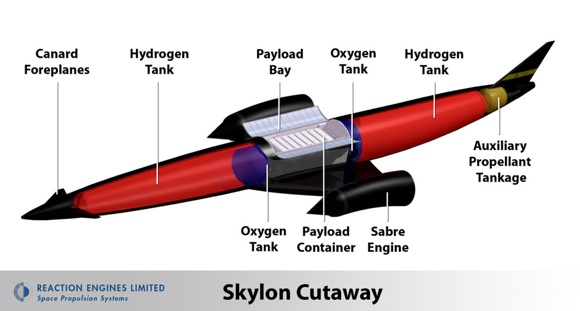
The first bit of news comes from Reaction Engines Limited, where it seems that the Skylon space plane is beginning to move from the conceptual stage to a reality. For some time now, the British company has been talked about, thanks to their plans to create a reusable aerospace jet that would be powered by a series of hypersonic engines.

Skylon_diagramAnd after years of research and development, the hypersonic Sabre Engine passed a critical heat tolerance and cooling test. Because of this, Reaction Engines Limited won an important endorsement from the European Space Agency. Far from being a simple milestone, this test may prove to be historic. Or as Skymania‘s Paul Sutherland noted, it’s “the biggest breakthrough in flight technology since the invention of the jet engine.”

Now that Reaction Engines has proven that they can do this, the company will be looking for £250 million (approx $410 million) of investment for the next step in development. This will include the development of the LapCat, a hypersonic jet that will carry 300 passengers around the world in less than four hours; and the Skylon, which will carry astronauts, tourists, satellites and space station components into orbit.

sabre-engine-17Speaking at the press conference after the test in late November, ESA’s Mark Ford had this to say:

ESA are satisfied that the tests demonstrate the technology required for the Sabre engine development. One of the major obstacles to a reusable vehicle has been removed. The gateway is now open to move beyond the jet age.

The Sabre engine is the crucial piece in the reusable space plane puzzle, hence why this test was so crucial. Once built and operational, Skylon will take off and land like a conventional plane, but still achieve orbit by mixing air-breathing jets for takeoff, and landing with rockets fueled by onboard oxygen once it gets past a certain speed.

Skylon-space-plane-obtains-breakthrough-new-engines-2The recent breakthrough had to do to the development of a heat exchanger that’s able to cool air sucked into the engine at high speed from 1,000 degrees Celsius to minus 150 degrees in one hundredth of a second. It’s this critical technology that will allow the Sabre engine to surpass the bounds of a traditional jet engine, by as much as twofold.

Alan Bond, the engineering genius behind the invention, had this to say about his brainchild:

These successful tests represent a fundamental breakthrough in propulsion technology. The Sabre engine has the potential to revolutionise our lives in the 21st century in the way the jet engine did in the 20th Century. This is the proudest moment of my life.

And of course, there’s a video of the engine in action. Check it out:


Second, and perhaps in response to these and other developments, the British Interplanetary Society is resurrecting a forty year old idea. This society, which came up with the idea to send a multi-stage rocket and a manned lander to the moon in the 1930’s (eerily reminiscent of the Apollo 11 mission some 30 years later) is now reconsidering plans for giant habitats in space.

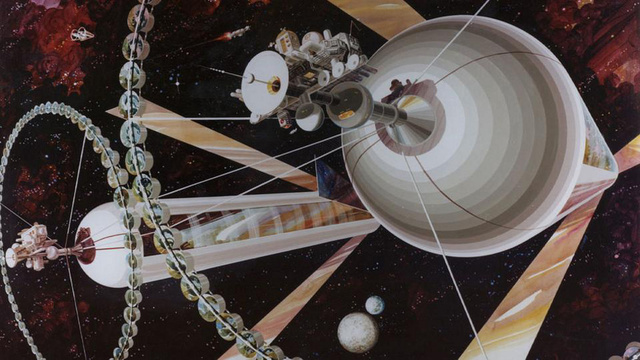
o'neil_cylinderTo make the plan affordable and feasible, they are turning to a plan devised by Gerard O’Neill back in the 1970s. Commonly known as the O’Neill Cylinder, the plan calls for space-based human habitats consisting of giant rotating spaceships containing landscaped biospheres that can house up to 10 million people. The cylinder would rotate to provide gravity and – combined with the interior ecology – would simulate a real-world environment.

Jerry Stone of BIS’s SPACE (Study Project Advancing Colony Engineering) is trying to show that building a very large space colony is technically feasible. Part of what makes the plan work is the fact that O’Neill deliberately designed the structure using existing 1970s technology, materials and construction techniques, rather than adopting futuristic inventions.

Rama16wikiStone is bringing these plans up to date using today’s technologies. Rather than building the shell from aluminium, for example, Stone argues tougher and lighter carbon composites could be used instead. Advances in solar cell and climate control technologies could also be used to make life easier and more comfortable in human space colonies.

One of the biggest theoretical challenges O’Neill faced in his own time was the effort and cost of construction. That, says Stone, will be solved when a new generation of much cheaper rocket launchers and spaceplanes has been developed (such as the UK-built Skylon). Using robot builders could also help, and other futuristic construction techniques like 3-D printing robots and even nanomachines and bacteria could be used.

RAMAAnd as Stone said, much of the materials could be outsourced, taking advantage of the fact that this would be a truly space-aged construction project:

Ninety per cent of the material to build the colonies would come from the Moon. We know from Apollo there’s silicon for the windows, and aluminium, iron and magnesium for the main structure. There’s even oxygen in the lunar soil.

Fans of Arthur C. Clarke’s Rendezvous with Rama, the series Babylon 5 or the movie Elysium out to instantly recognize this concept. In addition to being a very real scientific concept, it has also informed a great deal of science fiction and speculation. For some time, writers and futurists have been dreaming of a day when humanity might live in space habitats that can simulate terrestrial life.

Elysium_conceptWell, that day might be coming sooner than expected. And, as O’Neill and his contemporaries theorized at the time, it may be a viable solution to the possibility of humanity’s extinction. Granted, we aren’t exactly living in fear of nuclear holocaust anymore, but ecological collapse is still a threat! And with the Earth’s population set to reach 12 billion by the 22nd century, it might be an elegant solution to getting some of those people offworld.

It’s always an exciting thing when hopes and aspirations begin to become feasible. And though aerospace transit is likely to be coming a lot sooner than O’Neill habitats in orbit, the two are likely to compliment each other. After all, jet planes that can reach orbit, affordably and efficiently, is the first step in making offworld living a reality!

Until next time, keep your eyes to the skies. Chances are, people will be looking back someday soon…

Sources: IO9, skymania, (2)bbc.com

Michael Bay’s Meltdown at CES 2014

CES2014_bayThe annual Consumer Electronics Show has once again kicked off in Las Vegas. And Samsung Galaxy thought they had scored a coup when they managed to land director Michael Bay to come on and extoll the virtues of their new Curved 105-inch UHD TV. Unfortunately, a problem with the teleprompter caused Bay to lose his place, and things went a little awry from there.

Naturally, Bay tried to wing it, and even acknowledged his mistake. But after several seconds of tense silence, he gave up, apologized and left the stage. Immediately thereafter, every social media and video-sharing site around the globe began broadcasting the one-and-a-half minute gaff, referring to it as Michael Bay’s CES “meltdown”. And thanks to a friend of mine, who’s there as we speak, I learned about it a bit early.

samsung-curved-tvs12_2040_verge_super_wide_large_verge_medium_landscapeAnd almost as quickly, Bay responded. Returning home to blog about the experience, he described the gaff humbly, and declared his endorsement for the technology:

Wow! I just embarrassed myself at CES. I was about to speak for Samsung for this awesome Curved 105-inch UHD TV. I rarely lend my name to any products, but this one is just stellar. I got so excited to talk, that I skipped over the Exec VP’s intro line and then the teleprompter got lost. Then the prompter went up and down – then I walked off. I guess live shows aren’t my thing.

But I’m doing a special curved screen experience with Samsung and Transformers 4 footage that will be traveling around the world.

It made for an extremely awkward moment, and an embarrassing one for Samsung, which loaded the conference with its usual bevy of product announcements in a number of different areas. And it managed to show just what kind of waves an event at CES makes – particularly from a high-profile company such as Samsung. Unfortunately for Bay, these weren’t the kind of waves anyone wanted to make.

EurekaCloseUpSUPA9895But of course, Bay’s come back from worse. Remember Transformers II, his little online tiff with Megan Fox, or the news of his abortive attempt at remaking Teenage Mutant Ninja Turtles? Yeah, he’ll be fine. And there will be plenty more news coming out of Vegas in the coming days, and I intend to be writing about it aplenty!

And in the meantime, check out the video of this embarrassing, but entirely forgivable, blunder:


Sources:
ces.cnet.com, ca.ign.com

Biggest Scientific Breakthroughs of 2013

center_universe2The new year is literally right around the corner, folks. And I thought what better way to celebrate 2013 than by acknowledging its many scientific breakthroughs. And there were so many to be had – ranging in fields from bioresearch and medicine, space and extra-terrestrial exploration, computing and robotics, and biology and anthropology – that I couldn’t possibly do them all justice.

Luckily, I have found a lovely, condensed list which managed to capture what are arguably the biggest hits of the year. Many of these were ones I managed to write about as they were happening, and many were not. But that’s what’s good about retrospectives, they make us take account of things we missed and what we might like to catch up on. And of course, I threw in a few stories that weren’t included, but which I felt belonged.

So without further ado, here are the top 12 biggest breakthroughs of 2013:

1. Voyager 1 Leaves the Solar System:

For 36 years, NASA’s Voyager 1 spacecraft has travelling father and farther away from Earth, often at speeds approaching 18 km (11 miles) per second. At a pace like that, scientists knew Voyager would sooner or later breach the fringe of the heliosphere that surrounds and defines our solar neighborhood and enter the bosom of our Milky Way Galaxy. But when it would finally break that threshold was a question no one could answer. And after months of uncertainty, NASA finally announced in September that the space probe had done it. As Don Gurnett, lead author of the paper announcing Voyager’s departure put it: “Voyager 1 is the first human-made object to make it into interstellar space… we’re actually out there.”

voyager12. The Milky Way is Filled with Habitable Exoplanets:

After years of planet hunting, scientists were able to determine from all the data gathered by the Kepler space probe that there could be as many as 2 billion potentially habitable exoplanets in our galaxy. This is the equivalent of roughly 22% of the Milky Way Galaxy, with the nearest being just 12 light years away (Tau Ceti). The astronomers’ results, which were published in October of 2013, showed that roughly one in five sunlike stars harbor Earth-size planets orbiting in their habitable zones, much higher than previously thought.

exoplanets23. First Brain to Brain Interface:

In February of 2013, scientists announced that they had successfully established an electronic link between the brains of two rats. Even when the animals were separated by thousands of kms distance, signals from the mind of one could help the second solve basic puzzles in real time. By July, a connection was made between the minds of a human and a rat. And by August, two researchers at the Washington University in St. Louis were able to demonstrate that signals could be transmitted between two human brains, effectively making brain-to-brain interfacing (BBI), and not just brain computer interfacing (BCI) truly possible.

brain-to-brain-interfacing4. Long-Lost Continent Discovered:

In February of this year, geologists from the University of Oslo reported that a small precambrian continent known as Mauritia had been found. At one time, this continent resided between Madagascar and India, but was then pushed beneath the ocean by a multi-million-year breakup spurred by tectonic rifts and a yawning sea-floor. But now, volcanic activity has driven the remnants of the long-lost continent right through to the Earth’s surface.

Not only is this an incredibly rare find, the arrival of this continent to the surface has given geologists a chance to study lava sands and minerals which are millions and even billions of years old. In addition to the volcanic lava sands, the majority of which are around 9 million years old, the Oslo team also found deposits of zircon xenocryst that were anywhere from 660 million to 1.97 billion years old. Studies of these and the land mass will help us learn more about Earth’s deep past.

mauritia5. Cure for HIV Found!:

For decades, medical researchers and scientists have been looking to create a vaccine that could prevent one from being infected with HIV. But in 2013, they not developed several vaccines that demonstrated this ability, but went a step further and found several potential cures. The first bit of news came in March, when researchers at Caltech demonstrated using HIV antibodies and an approach known as Vectored ImmunoProphylaxis (VIP) that it was possible to block the virus.

Then came the SAV001 vaccine from the Schulich School of Medicine & Dentistry at Western University in London, Ontario, which aced clinical trials. This was punctuated by researchers at the University of Illinois’, who in May used the “Blue Waters” supercomputer to developed a new series of computer models to get at the heart of the virus.

HIV-budding-ColorBut even more impressive was the range of potential cures that were developed. The first came in March, where researchers at the Washington University School of Medicine in St. Louis that a solution of bee venom and nanoparticles was capable of killing off the virus, but leaving surrounding tissue unharmed. The second came in the same month, when doctors from Johns Hopkins University Medical School were able to cure a child of HIV thanks to the very early use of antiretroviral therapy (ART).

And in September, two major developments occurred. The first came from Rutgers New Jersey Medical School, where researchers showed that an antiviral foot cream called Ciclopirox was capable of eradicating infectious HIV when applied to cell cultures of the virus. The second came from the Vaccine and Gene Therapy Institute at the Oregon Health and Science University (OHSU), where researchers developed a vaccine that was also able to cure HIV in about 50% of test subjects. Taken together, these developments may signal the beginning of the end of the HIV pandemic.

hiv-aids-vaccine6. Newly Discovered Skulls Alter Thoughts on Human Evolution:

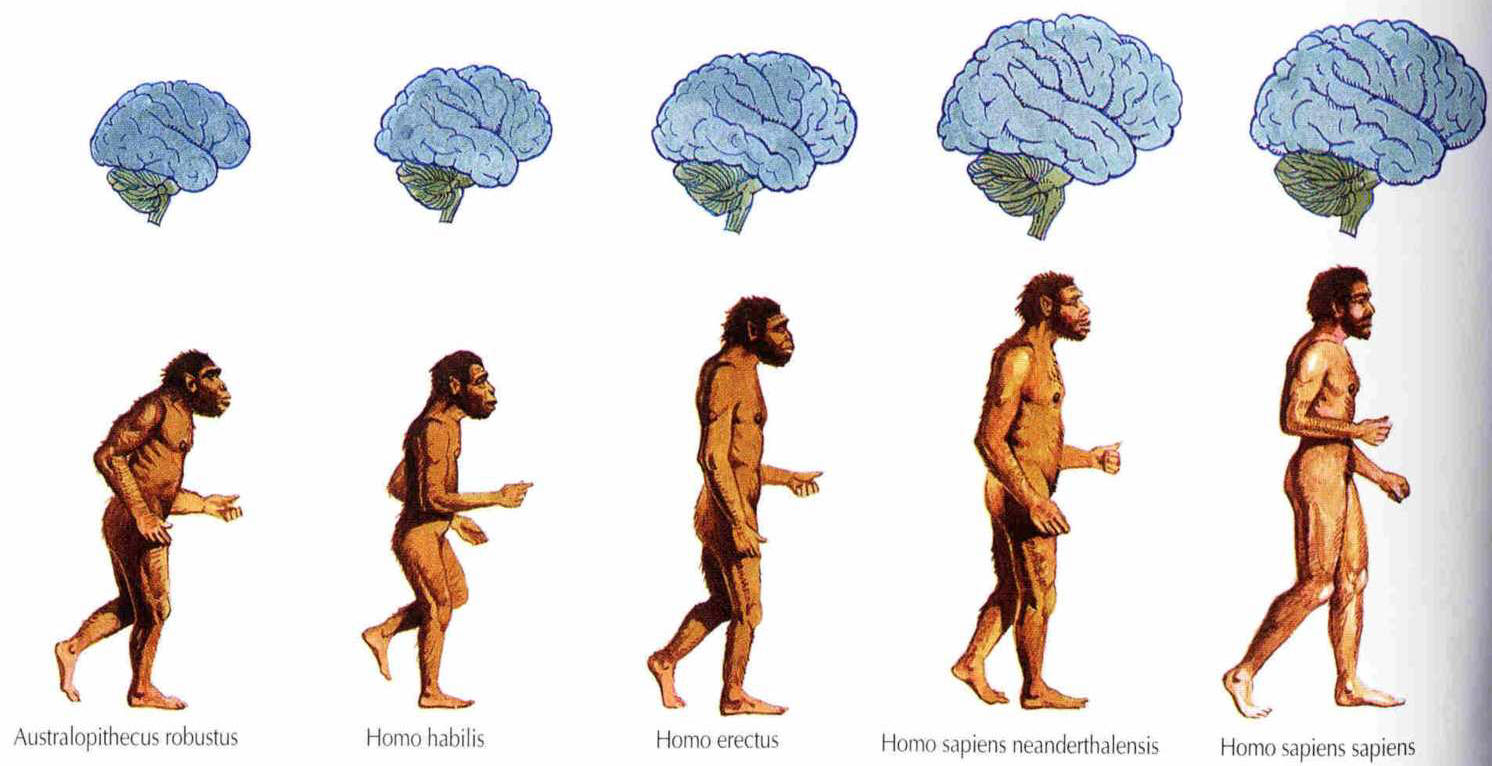
The discovery of an incredibly well-preserved skull from Dmanisi, Georgia has made anthropologists rethink human evolution. This 1.8 million-year old skull has basically suggested that our evolutionary tree may have fewer branches than previously thought. Compared with other skulls discovered nearby, it suggests that the earliest known members of the Homo genus (H. habilis, H.rudolfensis and H. erectus) may not have been distinct, coexisting species, but instead were part of a single, evolving lineage that eventually gave rise to modern humans.

humanEvolution7. Curiosity Confirms Signs of Life on Mars:

Over the past two years, the Curiosity and Opportunity rovers have provided a seemingly endless stream of scientific revelations. But in March of 2013, NASA scientists released perhaps the most compelling evidence to date that the Red Planet was once capable of harboring life. This consisted of drilling samples out of the sedimentary rock in a river bed in the area known as Yellowknife Bay.

Using its battery of onboard instruments, NASA scientists were able to detect some of the critical elements required for life – including sulfur, nitrogen, hydrogen, oxygen, phosphorus, and carbon. The rover is currently on a trek to its primary scientific target – a three-mile-high peak at the center of Gale Crater named Mount Sharp – where it will attempt to further reinforce its findings.

mt_sharp_space8. Scientists Turn Brain Matter Invisible:

Since its inception as a science, neuroanatomy – the study of the brain’s functions and makeup – has been hampered by the fact that the brain is composed of “grey matter”. For one, microscopes cannot look beyond a millimeter into biological matter before images in the viewfinder get blurry. And the common technique of “sectioning” – where a brain is frozen in liquid nitrogen and then sliced into thin sheets for analysis – results in  tissue being deformed, connections being severed, and information being lost.

But a new technique, known as CLARITY, works by stripping away all of a tissue’s light-scattering lipids, while leaving all of its significant structures – i.e. neurons, synapses, proteins and DNA – intact and in place. Given that this solution will allow researchers to study samples of the brains without having to cut them up, it is already being hailed as one of the most important advances for neuroanatomy in decades.


9. Scientists Detect Neutrinos from Another Galaxy:

In April of this year, physicists working at the IceCube South Pole Observatory took part in an expedition which drilled a hole some 2.4 km (1.5 mile) hole deep into an Antarctic glacier. At the bottom of this hole, they managed to capture 28 neutrinos, a mysterious and extremely powerful subatomic particle that can pass straight through solid matter. But the real kicker was the fact that these particles likely originated from beyond our solar system – and possibly even our galaxy.

That was impressive in and off itself, but was made even more so when it was learned that these particular neutrinos are over a billion times more powerful than the ones originating from our sun. So whatever created them would have had to have been cataclysmicly powerful – such as a supernova explosion. This find, combined with the detection technique used to find them, has ushered in a new age of astronomy.

antarctic_expedition

10. Human Cloning Becomes a Reality:

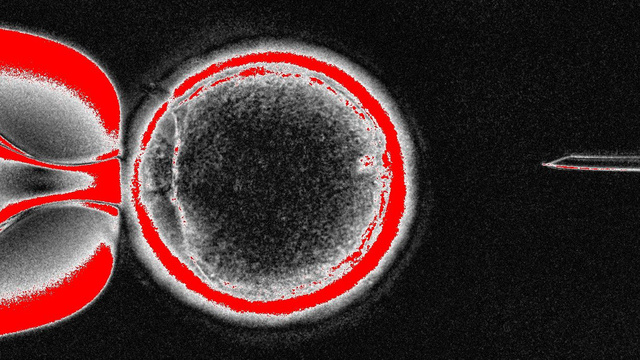
Ever since Dolly the sheep was cloned via somatic cell nuclear transfer, scientists have wondered if a similar technique could be used to produce human embryonic stem cells. And as of May, researchers at Oregon Health and Science University managed to do just that. This development is not only a step toward developing replacement tissue to treat diseases, but one that might also hasten the day when it will be possible to create cloned, human babies.

cloning

11. World’s First Lab Grown Meat:

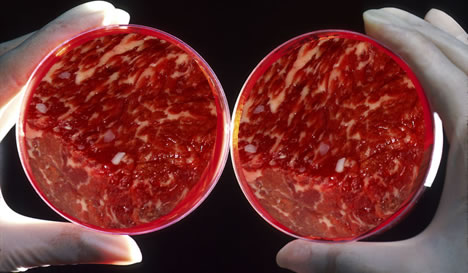
In May of this year, after years of research and hundred of thousands of dollars invested, researchers at the University of Maastricht in the Netherlands created the world’s first in vitro burgers. The burgers were fashioned from stem cells taken from a cow’s neck which were placed in growth medium, grown into strips of muscle tissue, and then assembled into a burger. This development may prove to be a viable solution to world hunger, especially in the coming decades as the world’s population increases by several billion.

labmeat112. The Amplituhedron Discovered:

If 2012 will be remembered as the year that the Higgs Boson was finally discovered, 2013 will forever be remembered as the year of the Amplituhedron. After many decades of trying to reformulate quantum field theory to account for gravity, scientists at Harvard University discovered of a jewel-like geometric object that they believe will not only simplify quantum science, but forever alters our understanding of the universe.

This geometric shape, which is a representation of the coherent mathematical structure behind quantum field theory, has simplified scientists’ notions of the universe by postulating that space and time are not fundamental components of reality, but merely consequences of the”jewel’s” geometry. By removing locality and unitarity, this discovery may finally lead to an explanation as to how all the fundamental forces of the universe coexist.

amplutihedron_spanThese forces are weak nuclear forces, strong nuclear forces, electromagnetism and gravity. For decades, scientists have been forced to treat them according to separate principles – using Quantum Field Theory to explain the first three, and General Relativity to explain gravity. But now, a Grand Unifying Theory or Theory of Everything may actually be possible.

13. Bioprinting Explodes:

The year of 2013 was also a boon year for bioprinting – namely, using the technology of additive manufacturing to create samples of living tissue. This began in earnest in February, where a team of researchers at Heriot-Watt University in Scotland used a new printing technique to deposit live embryonic stem cells onto a surface in a specific pattern. Using this process, they were able to create entire cultures of tissue which could be morphed into specific types of tissue.

Later that month, researchers at Cornell University used a technique known as “high-fidelity tissue engineering” – which involved using artificial living cells deposited by a 3-D printer over shaped cow cartilage – to create a replacement human ear. This was followed some months later in April when a San Diego-based firm named Organova announced that they were able to create samples of liver cells using 3D printing technology.


And then in August, researchers at Huazhong University of Science and Technology were able to use the same technique create the world first, living kidneys. All of this is pointing the way towards a future where human body parts can be created simply by culturing cells from a donor’s DNA, and replacement organs can be synthetically created, revolutionizing medicine forever.

14. Bionic Machinery Expands:

If you’re a science buff, or someone who has had to go through life with a physical disability, 2013 was also a very big year for the field of bionic machinery. This consisted not only of machinery that could meld with the human body in order to perform fully-human tasks – thus restoring ambulatory ability to people dealing with disabling injuries or diseases – but also biomimetic machinery.

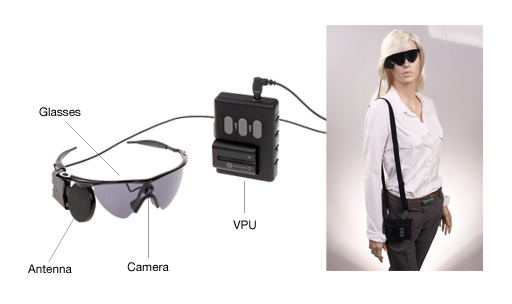
ArgusIIThe first took place in February, where researchers from the University of of Tübingen unveiled the world’s first high-resolution, user-configurable bionic eye. Known officially as the “Alpha IMS retinal prosthesis”, the device helps to restore vision by converted light into electrical signals your retina and then transmitted to the brain via the optic nerve. This was followed in August by the Argus II “retinal prosthetic system” being approved by the FDA, after 20 years of research, for distribution in the US.

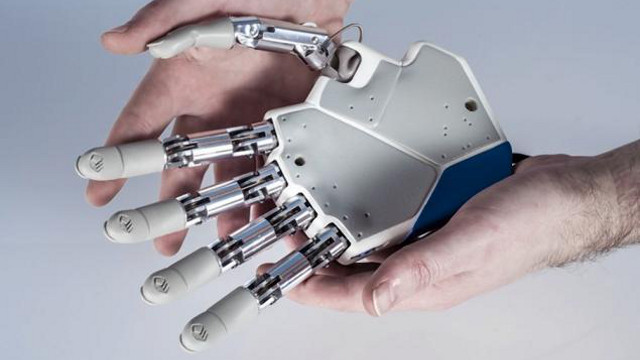
Later that same month, the Ecole Polytechnique Federale de Lausanne in Switzerland unveiled the world’s first sensory prosthetic hand. Whereas existing mind-controlled prosthetic devices used nerve signals from the user to control the movements of the limb, this new device sends electrostimulus to the user’s nerves to simulate the sensation of touch.

prosthetic_originalThen in April, the University of Georgia announced that it had created a brand of “smart skin” – a transparent, flexible film that uses 8000 touch-sensitive transistors – that is just as sensitive as the real thing. In July, researchers in Israel took this a step further, showing how a gold-polyester nanomaterial would be ideal as a material for artificial skin, since it experiences changes in conductivity as it is bent.

15. 400,000 Year-Old DNA Confuses Humanity’s Origin Story:

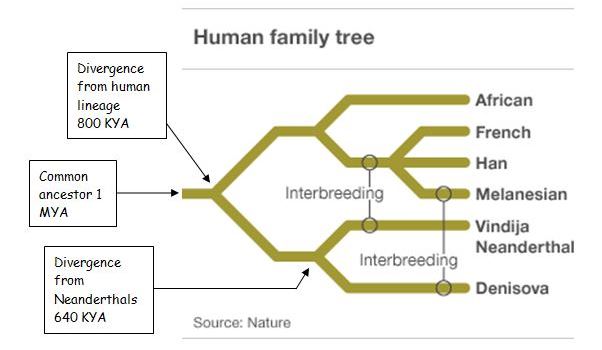
Another discovery made this year has forced anthropologist to rethink human evolution. This occurred in Spain early in December, where a team from the Max Planck Institute for Evolutionary Anthropology in Leipzig, Germany recovered a 400,000 year-old thigh bone. Initially thought to be a forerunner of the Neanderthal branch of hominids, it was later learned that it belonged to the little-understood branch of hominins known as Denisovans.

Human-evoThe discordant findings are leading anthropologists to reconsider the last several hundred thousand years of human evolution. In short, it indicates that there may yet be many extinct human populations that scientists have yet to discover. What’s more, there DNA may prove to be part of modern humans genetic makeup, as interbreeding is a possibility.

Judgement Day Update: DARPA Robotics Challenge!

darpa-robotics-challenge-conceptFor the past two years, the Defense Advanced Research Projects Agency has been holding a series of trials where robots are tasked with navigating disaster areas and performing tasks with tools and materials provided. This is known as the Robotics Challenge, which took place from Dec.20th to 21st and was streamed live from Florida’s Homestead Miami Speedway.

And this year, Google’s Schaft humanoid robot took home the top prize after scoring 27 points out of a total of 32 points. IHMC Robotics, based in Florida, grabbed second place, while Carnegie Mellon University’s Team Tartan Rescue placed third. Eight of the top teams that participated in the challenge may receive as much as $1 million in funding from DARPA, ahead of further trials next year with a $2 million prize.

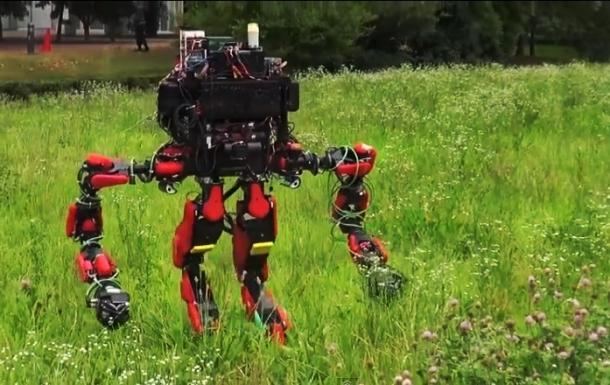
schaft_robotBuilt by a Japanese start-up – one of Google’s many recent acquisitions – the Schaft is an updated version of the Humanoid Robot Project robot (HRP-2), with hardware and software modifications that include more powerful actuators, a walking/stabilization system, and a capacitor instead of a battery. The robot stands 1.48 m (4.8 ft) tall, weighs in at 95 kg (209 lb), and is generally unappealing to the eye.

However, what it lacks in photogenic quality, it makes up for in performance. Over the course of the trials, the bipedal robot was able to bring stable walking and significant torque power to fore as it opened doors, wielded hoses, and cut away part of a wall. However, team Schaft lost points when a gust of wind blew a door out of the robot’s hand and the robot was unable to exit a vehicle after navigated a driving course successfully.

Check out the video of the Schaft in action:


Initially, over 100 teams applied to compete when the challenged was announced in April of last year. After a series of reviews and virtual challenges, the field was narrowed down to 16 competing in four “tracks. On Track A, Schaft was joined by the RoboSimian, the robot recently built by NASA’s Jet Propulsion Laboratory (JPL). Another primate-like robot was the Tartan Rescue CHIMP, a red headless robot with rollers on its feet.

At the other end of the spectrum was the Johnson Space Center’s Valkyrie, a biped, anthropomorphic robot that honestly looks like something out of anime or Tony Stark’s closet. This latter aspect is due largely to the fact that it has a glowing chest light, though the builders claim that it’s just a bulge to make room in the torso for linear actuators to move the waist.

Valkyrie_robotOfficially designated “R5” by NASA, Val was designed to be a high-powered rescue robot, capable of traversing uneven terrain, climbing ladders, using tools, and even driving. According to the designers, the Valkyrie was designed to be human in form because:

a human form makes sense because we’re humans, and these robots will be doing the jobs that we don’t want to be doing because they’re too dangerous. To that end, Valkyrie has seven degree of freedom arms with actuated wrists and hands, each with three fingers and a thumb. It has a head that can tilt and swivel, a waist that can rotate, and six degree of freedom legs complete with feet equipped with six-axis force-torque sensors.

Unfortunately, the robot failed in its tasks this year, scoring 0 points and placing amongst the last three competitors. I guess NASA has some bugs to work out before this patently badass design can go toe-to-toe with other disaster robots. Or perhaps the anthropomorphic concept is just not up to the task. Only time and further trials will tell. And of course, there’s a video of Val in action too:


The B and C track teams are often difficult to tell apart because they all used Atlas robots. Meanwhile, the D track teams brought several of their own robots to the fore. These included Chiron, a robot that resembles a a metallic sea louse; Mojovation, a distinctly minimalist robot; South Korea’s Kaist, and China’s Intelligent Pioneer.

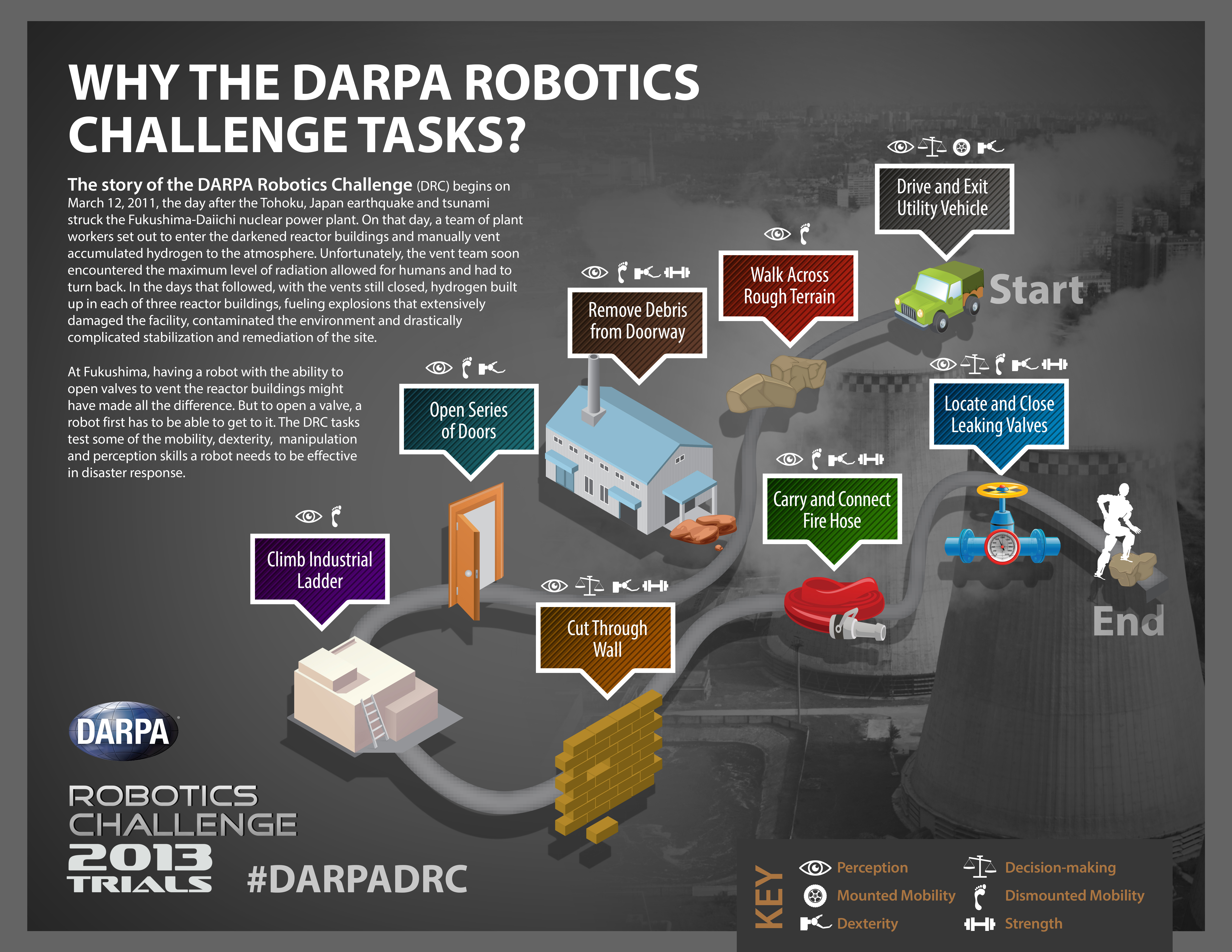
DARPA says that the point of the competition is to provide a baseline from which to develop robotics for disaster response. Events such as the 2011 Fukushima nuclear disaster, which not only damaged the reactors but made it impossible for crews to respond in time, demonstrate that robots have a potential role. DARPA believes that robots that could navigate the ruins and work in radioactive environments would have been of great help.

DARPA Robotics Challenge The problem is that current robots simply aren’t up to task. Specialized robots can’t be built to deal with the unpredictable, full telepresence control is neither practical nor desirable, and most robots tend to be a bit on the delicate side. What’s needed is a robot that can work on its own, use tools and vehicles at hand, deal with the unpredictable, and is durable and agile enough to operate in the ruins of a building.

That’s where DARPA Robotics Challenge comes in. Over the next few years, DARPA will use the results of the competition to draw a baseline that will benefit engineers working on the next generation of robots. For now, the top eight of the teams go on with DARPA funding to compete in the Robotics Finals event late next year, for a US $2 million prize.

DARPACourseIf there’s one thing the current challenge demonstrated, its that anthropomorphic designs are not well-suited to the tasks they were given. And ironic outcome, considering that one of the aims of the challenge is to develop robots capable of performing human tasks, but under conditions considered unsafe for humans. As always, the top prize goes to those who can think outside the box!

And in the meantime, enjoy this video of the Robot Challenge, taken on the second day of the trials.


Sources: gizmag.com, news.cnet.com, wired.com, IO9.com, theroboticchallenge.org

New Movie Trailer: Divergent

DivergentCame across this trailer recently, for the upcoming movie adaptation of the 2011 novel Divergent. And while the trailer does look like impressive, this does seem like a really predictable move on Hollywood’s part. With the recent adaptation of the Hunger Games and Ender’s Game, it was only a matter of time before producers began looking farther afield to find more examples of YA dystopian literature.

In fact, that’s been a subject which I’ve been thinking about quite a lot lately. In terms of sci-fi trends, the past decade has seen a revival of dystopian literature, and the majority of it seems to be aimed at young readers. Not surprising really, seeing as how issues like the “war on terror”, domestic surveillance and NSA data mining have led to a resurgence of fears that humanity could still be living in Big Brother state in the near future.

divergent-iron-on-patches-summit-boothAnd with the rise in publications that appeal to young adult readers – with everything from Twilight to Harry Potter – writer’s began to see just how accessible dystopian tales would be to young readers. And Divergent is certainly no exception to this rule. And just like the Hunger Games, a dystopian society is used as a metaphor to address the issues of teen angst and the struggle to belong.

Basically, the story takes place in a Chicago of the future, where live in a society that is divided into castes and membership is determined when people turn 16. Enter into this Beatrice “Pris” Prior, a young woman with a special mind who undergoes the test designed to determine what caste she belongs to, only to find out that the test failed and she has been declared “Divergent”.

divergent-movie-set-reportThe rest of the movie, as is made clear from the trailer, consists of her joining the resistance – a group composed of “casteless” people (aka. other Divergents) – and waging war against the state. So, a society where people are forced into specialized roles, where those who are different must live in secret or face persecution, and a heroine who rises up to bring down the system… sound like the teenage experience to you?

Yeah, me too. And while some criticize Divergent for being a Hunger Games ripoff, people who actually know their dystopian lit are quick to point out that that book was probably a ripoff of Battle Royale. And in reality, all these books are eating crumbs off the table of Zamyatin, Huxley and Orwell, and the YA angle with all its wish fulfillment is nothing that hasn’t been seen a hundred times before.

Anyhoo, the movie is set for release on March 21st, 2014. Enjoy the trailer!