My favorite rap/history crossover spoofers are at it again, this time with a rap battle that perfectly captures the spirit of the holidays. Well, sort of. In any case, we have Donald Trump rapping against Ebeneezer Scrooge, a confrontation of curmudgeony capitalists, which then turns into a bit of a tribute to Dicken’s A Christmas Carol.
Hope everyone is having a happy, safe and enjoyable holiday season, with plenty of fun, family, and some decent swag! Enjoy!
Okay, its not exactly here yet, but the implications of this idea could be a game changer. It’s known as the Smarty Ring, a crowdfunded idea being advertised on Indiegogo by a group of inventors in Chennai, India. And at its core is a waterproof, stainless steel band that will feature an LED screen and connect to your phone via Bluetooth 4.0 wireless technology.
For some time now, the Chennai-based group has been the source of some controversy, due mainly to the fact that they have no working prototypes of the ring, but also because they have not identified themselves beyond giving their location. They also freely admit that the photos of the Smarty Ring on Indiegogo and on their website are photoshopped.
Surprisingly, this has not prevented them from being able to mount their campaign to raise money for its development. While the crowdfunding site Kickstarter has rules requiring creators to be clear about the state of a project’s development and show a prototype “demonstrating the product’s current functionality,” Indiegogo has no such rules.
However, this has not stopped their campaign – which officially closed at 11:00 am ET on Dec.11th, 2013 – from raising a total of $299,349 from their original goal of $40,000. Numerous blueprints of what the watch would look like, including detailed images of its electronics, are also available on their campaign page. What’s more, the group is still taking advanced orders and offering discount pricing to anyone who orders one before Dec.30th.
Also, the group has become much less clandestine since the campaign closed. In response to questions, group spokesperson Karthik said the project was founded by Chennai-based mechatronics engineer Ashok Kumar, and that their team of inventors includes electronic and computer engineers with experience in robotics and nanotechnology.
Ultimately, the goal of the project was to create a high-tech gadget that would also double as “high-end fashion jewelry,” according to an email to CBC News from the team’s marketing director, Karthik, who did not give his last name. The group also claims on their website that the average smartphone user checks their phone every six minutes, and promises to make that unnecessary, saving time and the battery life of the smartphone.
According to the The Smarty Ring’s site, the features are to include:
A clock with stop watch, timer and alarm
Notifications of calls, text and email messages, and social networking updates from services such as Facebook, Twitter, and Skype
Phone controls that let users accept or reject incoming calls, make outgoing calls to preset numbers, and control music or the phone’s camera
A phone tracking feature that beeps when your phone gets more than nine meters away from you
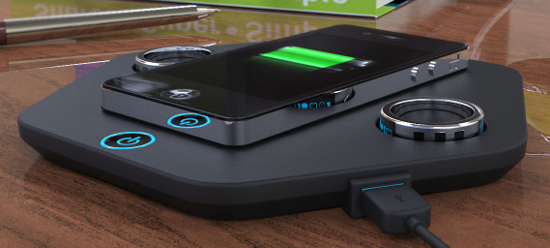
The ring charges wirelessly and its creators guarantee 24 hours of battery life
The Smarty Ring team says the retail price for the device will be $275, but backers and people who preorder before Dec.30th will be able to get one at the reduced price of $175. They estimate that delivery will begin sometime in April of 2014. They are also offering cheaper versions that include only the tracking feature or the clock and tracking features.
Needless to say, if this is a scam, it is clearly a well-thought out and elaborate one. Not only is the idea of a smart ring that can connect wirelessly to other devices and do the job of a smartphone entirely within the bounds of current and developing technology, its a very cool idea. But if it is in fact real, its realization could mean a new wave of innovation and design for the smart devices market.
Currently, designers and developers are working towards the creation of smartwatches, smartphones, tablets and phablets that are not only smaller and much thinner, but also flexible and transparent. An even smaller device, such as a ring or bracelet, that can do the same job but be far more ergonomic, may be just what the market ordered!
And in the meantime, be sure to enjoy this promotional video from the Smarty Ring website. And be sure to check out their website and determine for yourself if they are liars, inventors, or just plain dreamers:
Imagine a world where all known diseases were curable, where health problems could be treated in a non-invasive manner, and life could be extended significantly? Thanks to ongoing research into the human genome, and treatments arising out of it, that day may be coming soon. That’s the idea behind gene therapy and pharmacoperones – two treatment procedures that may make disease obsolete in the near future.
The first comes to us from the Utah School of Medicine, where researcher Amit Patel recently developed a non-invasive, naked DNA approach to deal with treating heart problems. His process was recently tested o Ernie Lively, an actor suffering from heart damage, who made a full recovered afterwards without ever having to go under the knife.
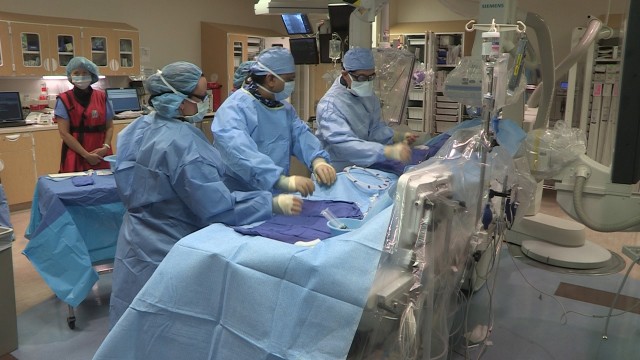
In short, Patel’s method relies on a catheter, which he used to access the main cardiac vein (or coronary sinus), where a balloon is inflated to halt the flow of blood and isolate the area. A high dose of naked DNA, which codes for a protein called SDF-1, is then delivered. SDF-1, which stands for stromal cell-derived factor, is a potent attractant both for stem cells circulating in the bloodstream, and for those developing in the bone marrow.
Stromal cells, which manufacture SDF-1, are the creative force which knit together our fibrous connective tissues. The problem is they do not make enough of this SDF-1 under normal conditions, nor do specifically deliver it in just the right places for repair of a mature heart. By introducing a dose of these cells directly into the heart, Patel was able to give Lively what his heart needed, where it needed it.
Compared to other gene therapies, the introduction of SDF-1 into cells was done without the assistance of a virus. These “viral vector” method have had trouble in the past due to the fact that after the virus helps target specific cells for treatment, the remnant viral components can draw unwanted attention from the immune system, leading to complications.
But of course, there is still much to be learned about the SDF-1 treatment and others like it before it can be considered a viable replacement for things like open-heart surgery. For one, the yield – the number or percentage of cells that take up the DNA – remains unknown. Neither are the precise mechanisms of uptake and integration within the cell known here.
Fortunately, a great deal of research is being done, particularly by neuroscientists who are looking to control brain cells through the use of raw DNA as well. Given time, additional research, and several clinical trials, a refined version of this process could be the cure for heart-related diseases, Alzheimer’s, and other disorders that are currently thought to be incurable, or require surgery.
Another breakthrough treatment that is expected to revolutionize medicine comes in the form of pharmacoperones (aka. “protein chaperones”). a new field of drugs that have the ability to enter cells and fix misfolded proteins. These kind of mutations usually result in proteins becoming inactive; but in some cases, can lead to toxic functionality or even diseases.
Basically, proteins adopt their functional 3-D structure by folding linear chains of amino acids, and gene mutation can cause this folding process to go awry, resulting in “misfolding”. Up until recently, scientists believed these proteins were simply non-functional. But thanks to ongoing research, it is now known their inactivity is due to the cell’s quality control system misrouting them within the cell.
Although this process has been observed under a microscope in recent years, a team led by Doctor P. Michael Conn while at Oregon Health & Science University (OHSU) was the first to demonstrate it in a living laboratory animal. The team was able to cure mice of a disease that makes the males unable to father offspring, and believe the technique will also work on human beings.
The team says neurodegenerative diseases, such as Alzheimer’s, Parkinson’s and Huntington’s, as well as certain types of diabetes, inherited cataracts and cystic fibrosis are just a few of the diseases that could potentially be cured using the new approach. Now working at the Texas Tech University Health Sciences Center (TTUHSC), Conn and his team are looking to conduct human trials.
One of the hallmarks of the coming age of science, technology and medicine is the idea that people will be living in post-mortality age, where all diseases and conditions are curable and life can be extended almost indefinitely. Might still sound like science fiction, but all of this research is indicative of the burgeoning trend where things that were once thought to be “treatable but not curable” is a thing of the past.
It’s an exciting time to be living in, almost as exciting as the world our children will be inhabiting – assuming things go according to plan. And in the meantime, check out this video of the SDF-1 gene therapy in action, courtesy of the University of Utah School of Medicine:
Not too long ago, I did something I haven’t done in a long time and wrote a conceptual post, one which dealt with the concept of the “Internet of Things” and where its leading us. In that spirit, and in the hopes of tackling another concept which has been intriguing me of late, I wanted to delve into this thing known as Reputation Marketing, also known as the Trust Economy.
Here too, the concept has been batted around of late, and even addressed in a Ted Talks lecture (see below). And much like the Internet of Things, it addresses a growing trend that is the result of the digital revolution and everything we do online. To break it down succinctly, Reputation Marketing states that as more and more of our activities are quantified online, our behavior will become commodified, and our actions will become the new currency.
At the heart of this trend is such things as social media, online shopping, and online reviews. With everything from used goods, furniture, clothing and cars to accommodations up for review, people are turning to web-based recommendations like never before. In fact, a 2012 study done by Neilsen Media Research suggested that 70% of all consumers trust online reviews, which are now second only to personal recommendations.
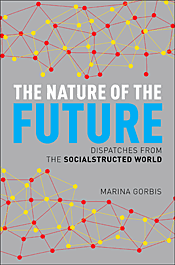
For some, this represents a positive development, since it means we are moving away from the depersonalized world of institutional production toward a new economy built on social connections and rewards. One such person is Marina Gorbis, who explores the development of what she calls socialstructing in her book The Nature Of The Future: Dispatches From The Socialstructed World.
In Gorbis’ view, in addition to new opportunities, socialstructing will present new challenges as well. For one, there will be exciting opportunities to create new kinds of social organizations – systems for producing not merely goods but also meaning, purpose, and greater good. But at the same time, there is a possibility that this form of creation will bring new inequities, and new opportunities for abuse.
But at the same time, Gorbis was sure to point out the potential negative consequences. In the same way that one acquires friends on Facebook, or followers on Twitter, people in the near future could be able to hoard social connections for the sake of money, fame, or social standing. Basically, we need to understand the potential disadvantages of socialstructing if we are to minimize the potential pitfalls.
One such development she points to as an example is the rise of social currencies, such as Paypal, Bitcoin, and others. These operate much differently than regular currencies, as they are intended to facilitate social flows that often operate not on market principles but on intrinsic motivations to belong, to be respected, or to gain emotional support. But once these connections and flows begin to be measured, they may acquire a value of their own.
Basically, if we begin to value these currencies, motivations will arise (not necessarily altruistic ones) to acquire them. So instead of turning market transactions into social flows, we might be turning social interactions into market commodities. In the words of sociologist Chase, we would be applying ontic measurements to ontological phenomena. Or as she puts it in her book:
We created social technologies. Our next task is to create social organizations: systems for creating not merely goods but also meaning, purpose, and greater good. Can we imagine a society of “private wealth holders whose main objective is to lead good lives, not to turn their wealth into capital?” asks political economist Robert Skidelsky. Or better yet, might they turn their wealth into a different kind of capital—social, emotional, or spiritual? Our technologies are giving us an unprecedented opportunity to do so.
Another person who sees this as a positive development is Rachel Botsman – consultant, author, former director at the William J. Clinton Foundation, and founder of the Collaborative Lab. In her ongoing series of lectures, consultations, and her book What’s Mine Is Yours: The Rise of Collaborative Consumption, she addresses the transformative power collaboration will have, giving rise to such things as “reputation capital” and the “reputation economy”.
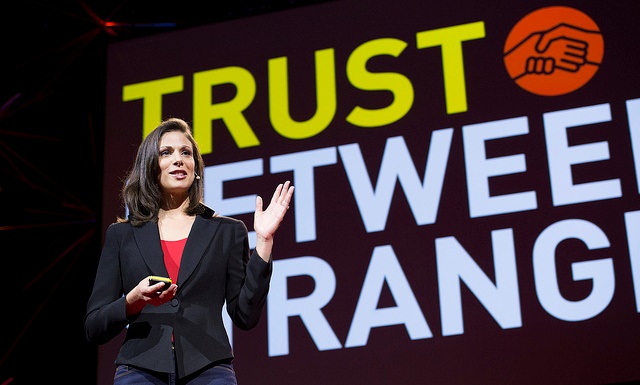
In her 2012 Ted Talks lecture she explained how there’s been an explosion of collaborative consumption in recent years. This has embraced everything from the web-powered sharing of cars, to apartments, and even skills. In short, people are realizing the power of technology to enable the sharing and exchange of assets, skills and spaces in ways and on a scale that was never before possible.
But the real magic behind collaborative consumption, she explained, isn’t in the inventory or the money. It’s in using technology to build trust between strangers, something which is rarely available in the current industrialized, commodities market. Whereas this top-down economic model relies on depersonalized methods like brand name recognition and advertising to encourage consumption, this new model is far more open and democratic.
It is for this reason, and because of the potential it has for empowerment, that Botsman is such an advocate of this emerging trend. In addition to offering opportunities for micro-entrepreneurs , it also provides people with the chance to make human connections and rediscover a “humanness” that has been lost along the way. By engaging in marketplaces that are built on personal relationships, as opposed to “empty transactions”, people are able to reconnect.
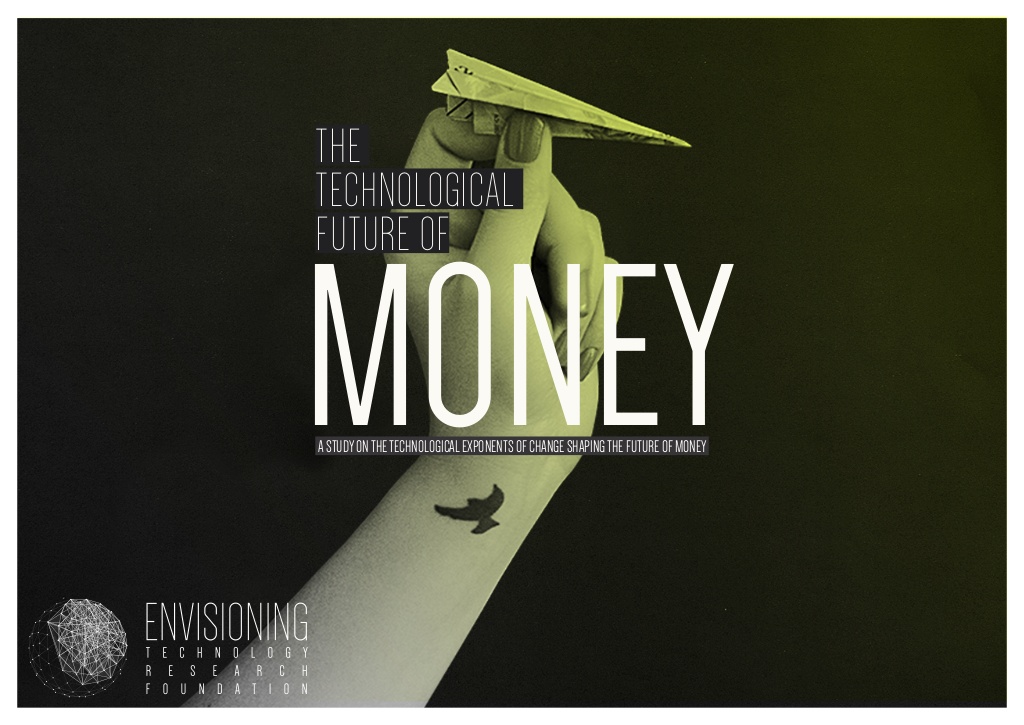
The irony in this, as she states, is that this emerging trend is actually taking us back to old market principles which were thought to have been abandoned with modern industrial economy. Much like how Envisioning Technology predicted with their recent infographic, The Future of Money, this decentralizing, distributed trend has more in common with bartering and shopping at the local agora.
Basically, these behaviors – which predate all the rationalization and vertical/horizontal integration that’s been taking place the industrial revolution – are hardwired into us, but are being updated to take place in the “Facebook age”. Through connections enables by internet access and a worldwide network of optic cables, we are able to circumvent the impersonal economic structures of the 20th century and build something that is more akin to our needs.
Or, as Botsman summarized it in her article with Wired UK:
Imagine a world where banks take into account your online reputation alongside traditional credit ratings to determine your loan; where headhunters hire you based on the expertise you’ve demonstrated on online forums such as Quora… where traditional business cards are replaced by profiles of your digital trustworthiness, updated in real-time. Where reputation data becomes the window into how we behave, what motivates us, how our peers view us and ultimately whether we can or can’t be trusted…
Another potential irony is the fact that although online shopping does allow people to avoid face-to-face interactions at their local store, it also draws customers to businesses that they may not have otherwise heard about. What’s more, online reviews of local businesses are becoming a boon to entrepreneurs, expanding on the traditional power of written reviews and word of mouth.
And at the risk of making a shameless plug, this all puts me in mind of a short story I wrote back in April, as part of the April 2013 A to Z Challenge. It was called Repute, and deals with a young executive in charge of hiring new talent, in part based on what I referred to as their Reputation Index Placement (RIP), which was basically a tabulation of their digital presence. Like I said, the concept has been on mind for some time!
And of course, be sure to check out Botsman full lecture below:
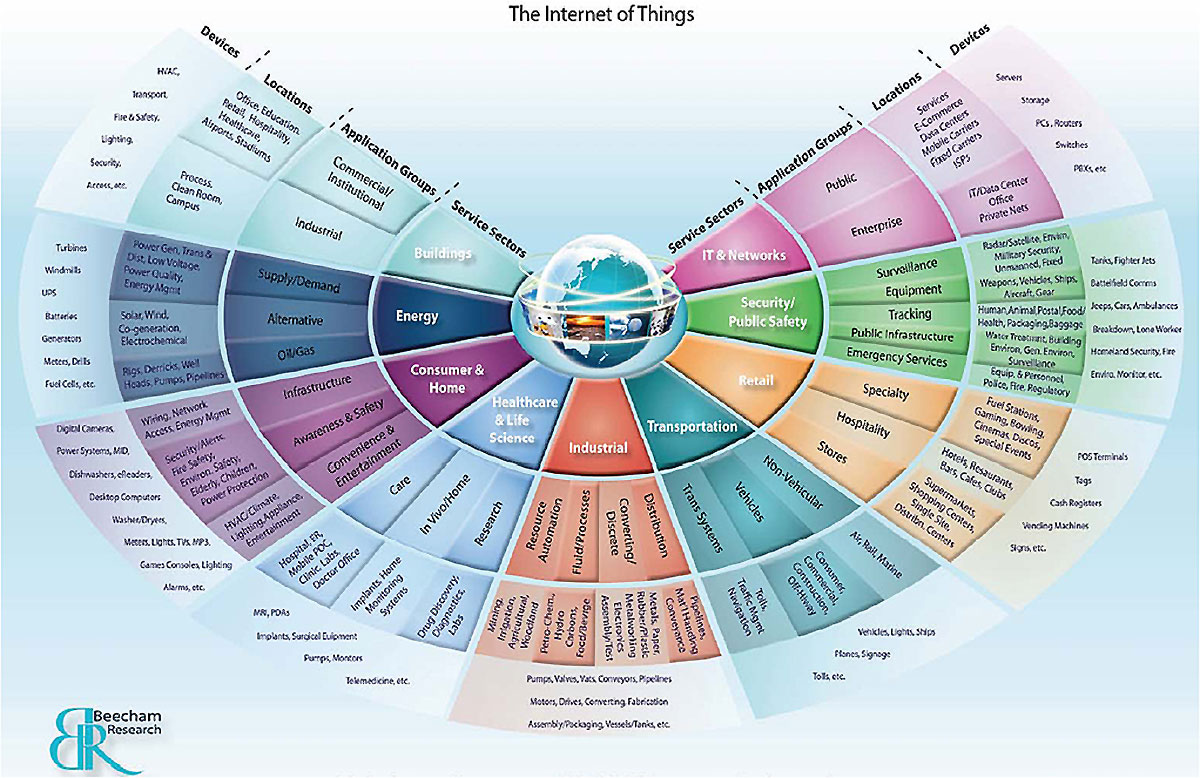
I came across another interesting and fascinating TED Talk recently. In this lecture, famed economist Marco Annunziata spoke about a rather popular subject – “The Internet of Things”, and how it is shaping our society. This term is thrown around a lot lately, and it refers to a growing phenomenon in our world where uniquely identifiable objects are connected to virtual representations in an Internet-like structure.
Basically, the concept postulates that if all objects and people in daily life were equipped with identifiers, they could be managed and inventoried by computers. By equipping all objects in the world with minuscule machine-readable identifiers, daily life could be transformed. How this is likely to look is the subject of Annunziata’s talk, beginning with the past two hundred years and the two major waves of innovation humanity went through.
The first came with the Industrial Revolution (ca. 1760-1903), which permanently altered our lives with factories, machinery, railways, electricity, air travel, etc. The second wave came with the Internet Revolution (ca. 1980 – 2000), which has once again changed our lives permanently with computing power, data networks, and unprecedented access to information and communication.
Now, in the modern era, we are entering into a new phase of innovation, one which he refers to as the “Industrial Internet”. Judging by current research and marketing trends, this wave is characterized by intelligent machines, advanced analytics, and the creativity of people at work. It is a marriage of minds and machines, and once again, our lives will be permanently altered by it.
In the course of the twelve minute lecture, Annunziata explains how the emergence of machines that can see, feel, sense and react will lead to an age where the technology we depend upon will operate with far greater efficiently. Naturally, there are many who would suspect that this all boils down to AIs doing the thinking for us, but in fact, it’s much more complicated than that.
Think of a world where we would be able to network and communicate with all of our devices – not just our smartphones or computers, but everything from our car keys to our cars and home appliances. By all things being marked and represented in a virtual internet-like environment, we could communicate with or remotely check on things that are halfway across the world.
Think of the implications! As someone who is currently very fascinated with how the world will look in the not-too-distant future, and how people will interact with it, I can tell you this stuff is science fiction gold! Check it out and be sure to follow the link at the bottom of the page to comment.
Earlier this month, AMC released a teaser trailer for the second half of season four of The Walking Dead. And as you can see, they kept it simple, focusing on action, crisis, and all the other stuff that the show is famous for. And despite the brevity of it, a few things were made clear from this half-minute clip. For instance, we see who survives the prison debacle to fight another day and what they will be up to.
This includes Rick, Carl, Daryl, Michonne, Tyreese, Sasha, Glenn, Maggie, Beth, and Bob, all of whom find themselves in the wilderness and looking for a place to hunker down. I know, no big revelations there, they did all make it out of the prison last time I checked. But they are also traveling separately at this point, with some fighting Walkers while Rick is forced to fight with his injuries and his demons.
This last aspect is something very much on point with the plot of the original comic. You see, in that version, Rick not only lost his baby Judith during the Governor’s assault on the prison, but Lori as well. With his wife and daughter dead, but son still alive, he had to cling to what little sanity he had for both their sakes. And having been seriously injured, Carl was also terrified he would die and come back…
Lot’s of potential there! First episode of the latter half of the season airs on February 9th. Enjoy the clip!
Just came across this trailer for the upcoming sequel of 2011’s Rise of the Planet of the Apes, the prequel to the venerated Planet of the Apes franchise where humans are supplanted by highly-evolved primates in the distant future. And in keeping with this origin story, the second installment – titled Dawn of the Planet of the Apes – takes place ten years after the events in the first film, where the enhanced apes unleashed a virus that devastated the planet.
Now, the human survivors of this virus have united and struck a tentative peace with the genetically-evolved apes lead by Caesar (Andy Serkis). But the peace proves to be short-lived, as both sides are brought to the brink of a war that will determine once and for all who the dominant primate on Earth is. That’s about the gist of what is shown in this first-look trailer and I’m sure fans can expect more as the release date (July 11th) approaches.
Personally, I think I’m going to skip this one, as I didn’t bother to see the first one and don’t really do prequels much. Which could be my loss, since I did hear some good things about it. But that’s the way it is. Some people love an origins story while others, like me, think they are pointless and little more than a chance to cash in again. I mean, we already know who wins right? The “damn, dirty apes!”
This was not only inspirational from a purely human standpoint, it was also really impressive in terms of the technology used. Basically, customers talked to a Santa impersonator using a real-time telepresence link, told him what they wanted, and then boarded their flights. Then, while they were flying, the Westjet staff went out and bought them what they asked for, everything from socks to LCD TVs.
When the customers arrived, they received their presents on the luggage conveyor. And of course, the entire thing was caught on video and distributed for promotional purposes. Quite the Christmas miracle, isn’t it? Check it out! And curses to Coach Muller for beating me to it 😉
Just in time for the holidays, the ACLU have produced this lovely video entitled “The NSA is coming to town”. In it, Santa Claus is portrayed as a government snoop who spies on people as they text, email, and just generally do their electronic business. And it all happens to a lovely reworded version of “Santa Claus is coming to town”. Check it out, and try not to feel too paranoid this holiday season!
Yes, after years of expectations and failed promises, flying cars have finally arrived! Okay, arrived may be a bit of a strong word. But the prototype has been built, and all that’s needed now is some final safety testing to get FAA approval. Then, aerospace inventor Paul Moller will have realized his thirty-year dream of bringing a viable flying car to the market. And to raise money for these tests, he’s mounted a crowdfunding campaign.
Known as the M400X (aka. Skycar), this car is the a vertical take-off and landing vehicle that is also capable of horizontal flight. Powered by eight ethanol-fueled engines, it is designed to cruise at a speed of 500 km/h (315 mph) at a of height of 7600 meters (25,000 feet), or 320 km/h (200 mph) at sea level. A four-seat model that is about the size of a large SUV, this car weighs only 545 kilograms (1,200 lbs), thanks to a carbon fiber and Kevlar composite shell.
In total, it is expected to be able to fly for roughly 1200 (750 miles) without refueling, giving it a fuel economy of roughly 10 km/liter (25 mpg). In addition, a top land speed of 50 km/h (30 mph) makes short-distance street travel feasible. In these respects, it is far more sophisticated than other flying car designs – such as the Airbike and Terrafugia – in that it does not require an airport runway to take off and land, but can taxi when it needs to cover only a small stretch of ground.
The campaign began last month over at Indiegogo and will run to January 4th 2014, by which time, Moller and his company (Moller Int) hope to raise $958,000 of the $1.89 million needed to install the motors and FAA-required safety elements in the vehicle. Naturally, every donation comes with a prize, depending on the amount of money donated. And the grand prize, for a cool $15,000 dollars, is a chance to ride shotgun on the maiden voyage of the Skycar.
Of that total, $932,000 has already been pledged by Nitroturbodyne – an FAA-designated engineering firm handling flight testing – and a former Moller subsidiary named Freedom Motors, which built the rotary engines, and the CliC protective goggles. By going the crowdfunding route, as opposed to corporate sponsorships, stock shares, or venture capital, Moller Int. hopes to raise the money faster while retaining more company control.
Moller, an inventor and TED talker, was also a professor of aeronautics at the University of California before starting the company in 1983. According to him, the decision to crowdfunds was a way of ensuring that public participation in the project, without the need for centralized measures like stocks:
We didn’t want to dilute the stock value by issuing more shares. Crowdfunding is a way for the average person to make a direct contribution towards a specific project without having to buy stock. This way, we can give really nice gifts and make people part of a team that can help make this happen.
All proceeds from the Indiegogo campaign will be used to prepare the Skycar for a June public unveiling where it will conduct an official test flight at an altitude of 600 meters (2,000 feet). Another six months of testing to meet FAA requirements will follow, before donors get their guest flights. After that, Moller will donate the M400 to the Smithsonian National Air and Space Museum in Washington, D.C.
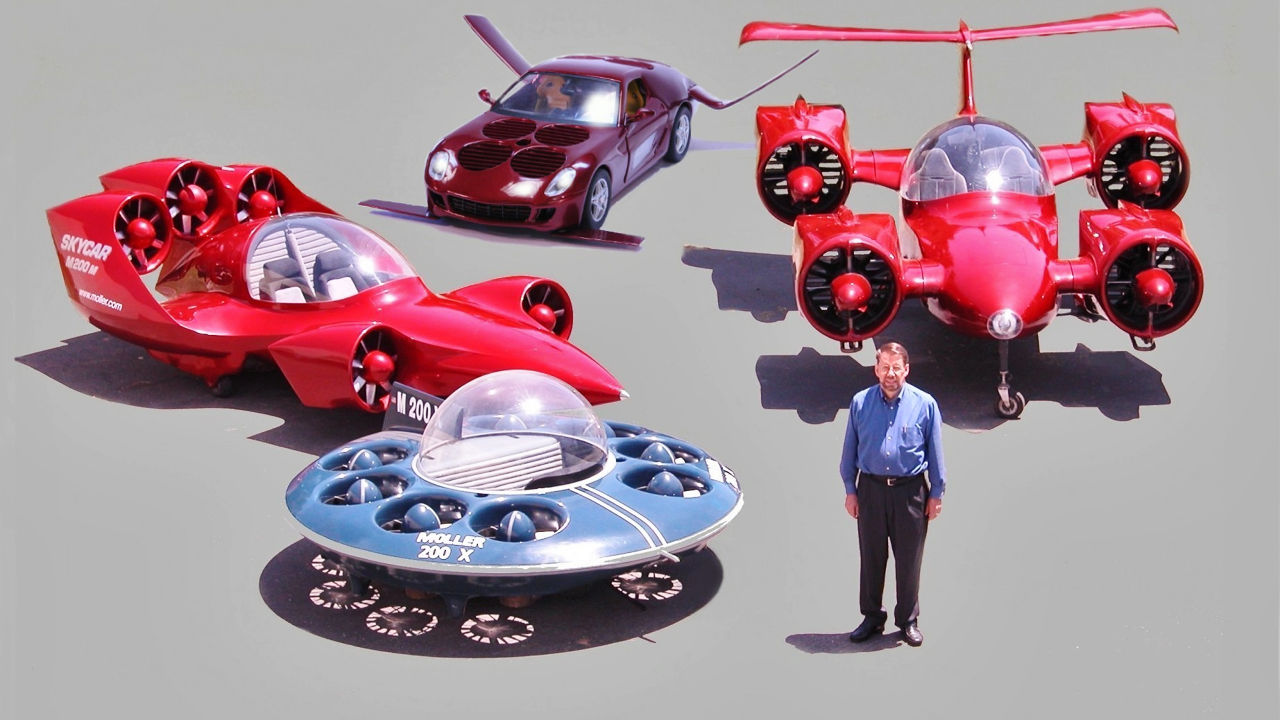
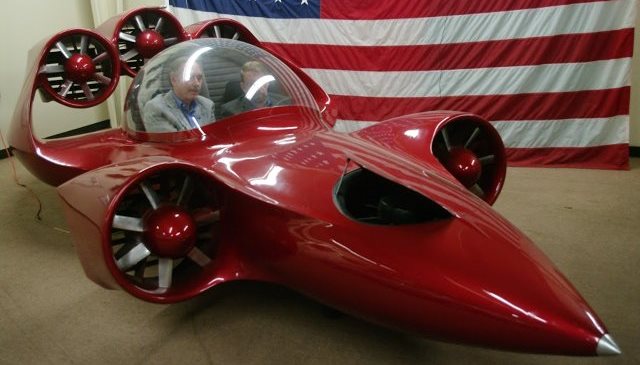
From there, he’ll focus on a smaller, two-person Skycar M200 (seen above), which will be made available to the public in about five years time – assuming all goes according to plan. If you have any interest in donating to this cause, which will see a millennial dream become a reality at long last, just go to the Indiegogo page and pledge what you like. Then start saving your pennies for the when the 200 model hits the market. It’s likely to be pricey!
And in the meantime, be sure to check out this promotional video from Moller International:

 My favorite rap/history crossover spoofers are at it again, this time with a rap battle that perfectly captures the spirit of the holidays. Well, sort of. In any case, we have Donald Trump rapping against Ebeneezer Scrooge, a confrontation of curmudgeony capitalists, which then turns into a bit of a tribute to Dicken’s A Christmas Carol.

















 Stories by Williams