Evidence for the Big Bang

planck-attnotated-580x372The Big Bang Theory has been the dominant cosmological model for over half a century. According to the theory, the universe was created approximately 14 billion years ago from an extremely hot, dense state and then began expanding rapidly. After the initial expansion, the Universe cooled and began to form various subatomic particles and basic elements. Giant clouds of these primordial elements later coalesced through gravity to form stars, galaxies, and eventually planets.

And while it has its detractors, most of whom subscribe to the alternate Steady State Theory – which claims that new matter is continuously created as the universe expands – it has come to represent the scientific consensus as to how the universe came to be. And as usual, my ol’ pal and mentor in all things digital, Fraser Cain, recently released a video with the help of Universe Today discussing the particulars of it.

big_bangAddressing the particulars of the Big Bang Theory, Cain lists the many contributions made over the past century that has led this so-called theory to become the scientific consensus has come to exist. They are, in a nutshell:

  1. Cosmic Expanion: In 1912, astronomer Vesto Slipher calculated the speed and distance of “spiral nebulae” (galaxies) by measuring the light coming from them. He determined most were moving away. In 1924, Edwin Hubble determined that these galaxies were outside the Milky Way. He postulates that the motion of galaxies away from our own indicates a common point of origin.
  2. Abundance of Elements: Immediately after the big bang, only hydrogen existed and compressed into a tiny area of space under incredible heat and pressure. Like a star, this turned hydrogen into helium and other basic elements. Looking out into the universe (and hence back in time) scientists have found that great distances, the ratios of hydrogen to basic elements is consistent with what is found in star’s interiors.
  3. Cosmic Microwave Background (CMB) Radiation: In the 1960’s, using a radiotelescope, Arno Penzias and Robert Wilson discovered a background radio emission coming from every direction in the sky, day or night. This was consistent with the Big Bang Theory, which predicted that after the Big Bang, there would have been a release of radiation which then expanded billions of light years in all directions and cooled to the point that it shifted to invisible, microwave radiation.
  4. Large Scale Structure: The formation of galaxies and the large-scale structure of the cosmos are very similar. This is consistent with belief that after the initial Big Bang, the matter created would have cooled and began to coalesce into large collections, which is what galaxies, local galactic groups, and super-clusters are.

These are the four pillars of the Big Bang Theory, but they are no means the only points in its favor. In addition, there are numerous observational clues, such as how we have yet to observe a stars in the universe older than 13 billion years old, and fluctuations in the CMB that indicate a lack of uniformity. On top of that, there is the ongoing research into the existence of Dark Matter and Dark Energy, which are sure to bear fruit in the near future if all goes well.

big_bang1In short, scientists have a pretty good idea of how the universe came to be and the evidence all seems to confirm it. And some mysteries remain, we can be relatively confident that ongoing experimentation and research will come up with new and creative ways to shed light on the final unknowns. Little reason then why the Big Bang Theory enjoys such widespread support, much like Evolution, Gravity, and General Relativity.

Be sure to check out the full video, and subscribe to Universe Today for additional informative videos, podcasts, and articles. As someone who used to write for them, I can tell you that it’s a pretty good time, and very enlightening!

Climate Crisis: Illustrative Video of Impending Disaster

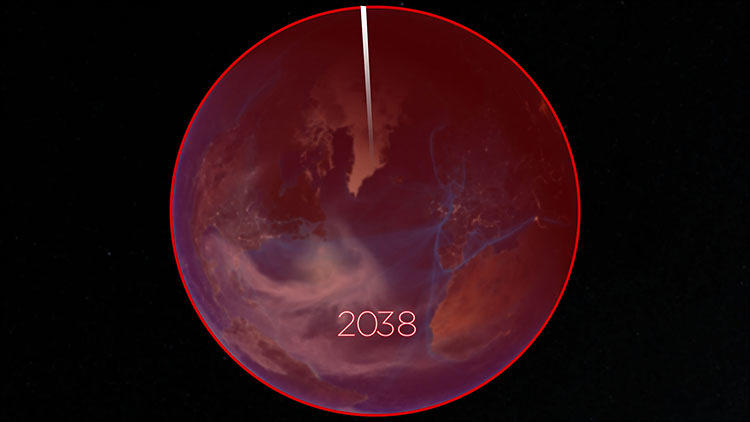
IPCC2012_vid3Recently, the United Nation’s Intergovernmental Panel on Climate Change released its 2012 report, which contained some rather stark observations and conclusions. In addition to reconfirming what the 2007 report said about the anthropogenic effects of CO2 emissions, the report also tackled speculation about the role of Solar Forcing and Cosmic Rays in Global Warming, as well as why warming has been proceeding slower than previously expected.

In the end, the report concluded that certain natural factors, such as the influence of the Sun and Cosmic Rays in “seeding clouds”, were diminishing, and thus have a negative effect on the overall warming situation. In spite of that, global temperatures continue to increase, due to the fact that humanity’s output of greenhouse gases (particularly CO2) has not slowed down one bit in recent years.

IPCC2012_vidThe report also goes on to explain detailed scenarios of what we can expect in the coming decades, in extreme and extensive detail. However, for those who have neither the time, patience, or technical knowledge that wade through the report, a helpful video has been provided. Courtesy of Globaia,this four minute video sums up the facts about Climate Change and how it is likely to impact Earth’s many inhabitants, human and otherwise.

Needless to say, the facts are grim. By 2050, if humans remain on their current path, global temperatures will rise more than two degrees Celsius above what it’s been for most of human history. By 2100, it might even climb four degrees. The IPCC report, and this video, confirm what we’ve been hearing everywhere. Arctic sea ice is disappearing, sea levels are rising, storms are getting more destructive, and the full extent of change is not even fully known.

IPCC2012_vid6As the organization that put together this data visualization along with other scientists, Globaia says that it created this video as a call to action for policymakers. Felix Pharand-Deschenes, who founded the Canadian nonprofit company and animated the video, claims that:

If we are convinced of the seriousness of the situation, then political actions and technological fixes will result,” says  “But we have to change our minds first. This is the reason why we try to translate our terrestrial presence and impacts into images–along with the physical limits of our collective actions.

But of course, there’s still hope. As Pharand-Deschenes went on to say, if we can summon up a “war effort,” and work together the way World War II-era citizens did, we could still manage to the social systems that are largely responsible for the problem. This includes everything from transportation and energy to how we grow our food, enough to stay below a two degree rise.

IPCC2012_vid5Of course, this is no small task. But as I love to remind all my readers, research and efforts are happening every day that is making this a reality. Not only is solar, wind and tidal power moving along by leaps and bounds, becoming profitable as well as affordable, we are making great strides in terms of Carbon Capture technology, alternative fuels, and eco-friendly living that are expected to play a huge role in the coming decades.

And though it is often not considered, the progress being made in space flight and exploration also play a role in saving the planet. By looking to make the process of sending ships and satellites into space cheaper, concepts like Space-Based Solar Power (SBSP) can become a reality, one which will meet humanity’s immense power demands in a way that is never marred by weather or locality.

IPCC2012_vid4Combined with sintering and 3-D printing, asteroid prospecting and mining could become a reality too in a few decades time. Currently, it is estimated that just a few of the larger rocks beyond the orbit of Mars would be enough to meet Earth’s mineral needs indefinitely. By shifting our manufacturing and mining efforts offworld with the help of automated robot spacecraft and factories, we would be generating far less in the way of a carbon footprint here on Earth.

But of course, the question of “will it be enough” is a burning one. Some scientists say that an increase of even two degrees Celsius is more than Earth’s creatures can actually handle. But most agree that we need to act immediately to prepare for the future, and that one of the things standing in the way of action is the fact that the problem seems so abstract. Luckily, informational videos like this one present the problem is clear and concise terms.

ipcc2012_vid1The IPCC reports that we only have 125 billion tons of CO2 left to burn before reaching the tipping point, and at current rates, that could happen in just over two decades. Will we have a fully renewable-powered, zero-carbon world by then? Who knows? The point is, if we can get such a task underway by then, things may get worse before they get better, but they will improve in the end. Compared to the prospect of extinction, that seems like a bargain!

In the meantime, check out the video – courtesy of Globaia and the International Geosphere-Biosphere Programme (IGBP) – and try to enjoy it despite its gloomy predictions. I assure you, it is well worth it!


Source:
fastcoexist.com


News From Space: China’s Jade Rabbit Moon Rover

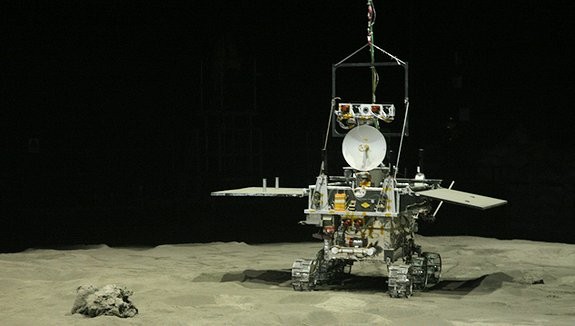
change'e3Earlier this week, China took another step towards becoming a major power in space with the launch of the Chang’e-3 lunar probe. On board this vehicle is the Yu Tu (Jade Rabbit) lunar rover, a vehicle that is designed to deploy from the vehicle once it reaches lunar orbit and explore the surface independently. If all continues to go to plan, the Chang’e-3 will reach the Moon by December 14th, and its arrival will certainly be historic.

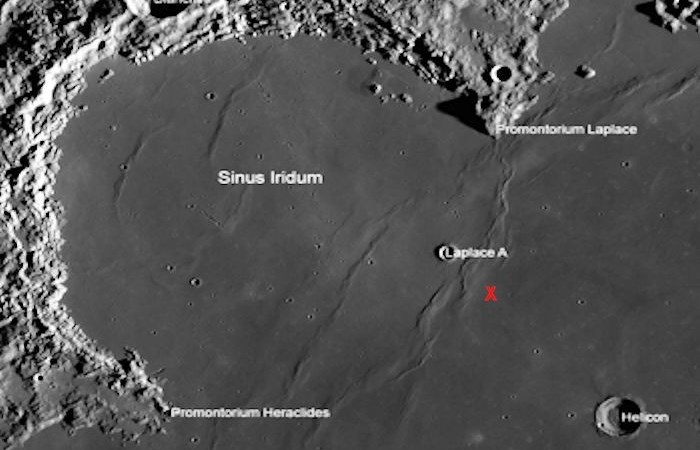
For starters, the probe’s landing in Sinus Iridum, a basaltic lava plane in the Moon’s northern hemisphere, will be the first spacecraft to make a soft landing on the Moon in 37 years. In addition, it will the be the first time China has landed a spacecraft and a rover on the Moon. This is the latest in the Chang’e program, a series of robotic and human missions that ultimately seeks to put Chinese cosmonauts on the Moon.

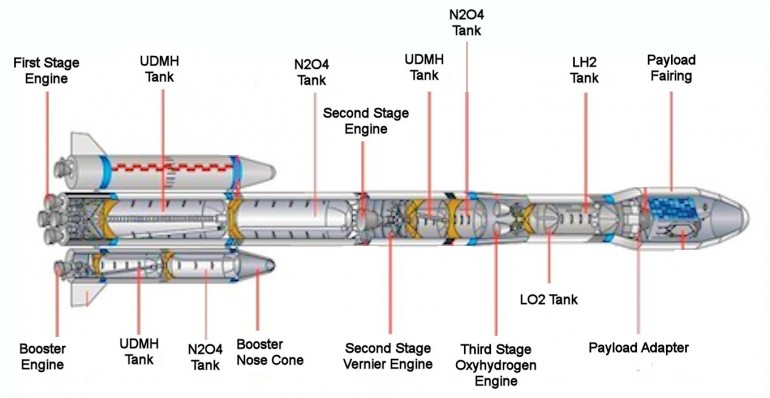
change'e3_2The Chang’e-3 mission incorporates two major components – the Lander and the Jade Rabbit rover, which is named after the companion of the Moon goddess Chang’e in Chinese mythology. The three-stage Chang Zheng 3B (Long March 3B) launch vehicle that is being used to send the Chang’e-3 probe to the Moon is roughly a functional equivalent of SpaceX’s Falcon 9 rocket, the heaviest rocket in their fleet.

After launching on Monday from the Xichang Satellite Launch Centre, the rocket was placed into an Earth-Moon transfer orbit and conducted its first separation. Shortly thereafter, its second stage engines were engaged to effect course corrections and bring the lander and rover into lunar orbit. Then came two crucial burns from the third stage engines, which put the Chang’e-3 probe into a parking and then highly elliptical translunar orbit.

change'e3_3Throughout all this, the probe slept, and will continue to do so until it burns its own engines to enter lunar orbit tomorrow.Then will come the tricky bit, landing safely without any input from controllers on Earth. This requires a combination of inertial guidance, extremely precise range and velocity measurements, image recognition, and a pretty fast computer – not to mention a certain amount of luck.

Once landed, the six-wheeled rover will begin exploring the surface and collecting soil samples for analysis. As with other rovers, energy will be provided by a series of solar panels and information obtained during its mission will be sent back to Earth for further analysis. In addition, real-time video and pictures will be captured by the rover’s arsenal of cameras, all of which will be sent back to Earth and shared via Chinese media outlets.

change'e3_1In addition to being a first for China’s space program, the Jade Rabbit also has the added distinction of being outfitted with what is arguably the most sophisticated scientific equipment of any previous rover. Most notable is a powerful ground-penetrating radar capable of penetrating up to 30 meters (100 ft) of lunar soil or about 100 m (330 ft) of lunar crustal material, and analyzing the underlying structure.

The rover is also equipped with an Alpha Particle X-ray Spectrometer (APXS) that uses particle-induced X-ray emission and X-ray fluorescence to determine the abundance of elements within rock and soil samples. The instrument can also find hidden materials, such as water of crystallization, which is otherwise difficult to detect remotely. Finding water on the Moon is an ongoing objective for space agencies, and crucial to plans for future settlement.

change'e3_4Then there is the Lunar Ultraviolet Telescope (LUT), which is designed to act as the first long-term astronomical observatory to ever be placed on the Moon’s surface. The vacuum environment and slow rotation of the lunar environment make an ideal location for near-UV observations that cannot be carried out from beneath the Earth’s obscuring atmosphere.

Another optical instrument is the Extreme Ultraviolet Camera intended to monitor the Earth’s plasmasphere, which is a magnetically active region within the magnetosphere but above the ionosphere. It works by viewing light with a wavelength of 30.5 nm which is scattered from helium ions in the plasmasphere. The lander is also hosting several other cameras and a lunar soil probe.

china-lunar-lander-rover-launch-jade-rabbit-13As already stated, the landing site for Chang’e-3 is in the general area of Sinus Iridum, a northwestern extension to the Mare Imbrium basaltic plane which is surrounded from the northeast to the southwest by the Montes Jura mountain range. A precise location has not yet been announced by Chinese authorities, but it has been widely speculated that it will take place within the vicinity of crater Laplace A – a crater that is about 9 km in diameter.

This is certainly an exciting time, as we are likely to learn plenty of new things about the Moon in the next few weeks! And in the meantime, be sure to check out this animation of the Change’e-3 entire mission- from launch to touchdown and deployment on the Moon, courtesy of RyukyuSARs:


Sources: gizmag.com, nasaspaceflight.com

The Future of Transit: (More) Robotaxis and Podcars!

Robotaxi_2getthereIn the course of the past century, science fiction has provided us with many interesting visions of what the future of transportation will look like. And whereas not long ago, many of these seemed like hopeless fantasy – such as the failure of flying cars or robotic automated vehicles to become a reality by 2000  – recent years and developments have seen reality slowly catching up.

Case in point, last year, the European company named “2GetThere” installed a small fleet of automated podcars (aka. robotaxis) in the eco-friendly community of Masdar City. Similarly, the town of San Jose began work on the Personal Rapid Transit System – a series of on-call, point to point transit cars designed to replace the town’s system of taxis and buses, providing an environmentally friendly alternative to traditional mass transit.

London_podcarAnd most recently, the town of Milton Keynes – a sleepy city north of London – that is planning on conducting a podcar system trial run by 2015. Similar to the system at Heathrow Airport, which uses 21 on-call podcars on a  4 km (2.5 mile) stretch of track, the system will consist of a series of pods that will be able to carry two passengers, plus baggage, from the town’s train station to its downtown offices and the shopping district.

Milton Keynes’ plans is much more ambitious, calling for a fleet of 100 vehicles that will travel with far ore independently, albeit in a designated lane with curbs. The trial will assess safety and how people (and animals) react to them. The pods travel at up to 19 km/h (12 mph) and will contain GPS, cameras, and sensors to ensure they don’t crash into anything.

robotaxiAnd if all goes well, the system will be adopted by 2017 and residents will pay little more than a bus fare ($3.20) to travel in automated luxury. Purpose-built in the 1960s, Milton Keynes has an unusual grid layout that makes it an ideal testing ground for a plan that other British cities are seriously considering. Given the dual issues of congestion and pollution in British cities, a system of robotaxis seems like the perfect solution.

In fact, such a solution is ideal when it comes to all major cities around the world. The state of robotics, automation, centralized grids, and the reduced impact electrical transit has compared to gasoline-powered cars and buses, we could be looking at a world where every major city has its own system of robotaxis in the near future.

And I imagine a massive grid of Hyperoops lines will be connecting every major city… The future is likely to be mighty cool! In the meantime, enjoy this video of Heathrow’s podcar system in action:


Sources:
fastcoexist.com, heathrowairport.com

3-D Printing Martian and Lunar Housing

3dprinted_moon_base1For enthusiasts of 3-D printing and its many possibilities, a man like Berokh Khoshnevis needs no introduction. As for the rest of us, he is the USC’s Director of Manufacturing Engineering, and has spent the last decade working on a new direction for this emerging technology. Back in 2012, he gave a lecture at TEDxTalks where he proposed that automated printing and custom software could revolutionize construction as we know it.

Intrinsic to this vision are a number of technologies that have emerged in recent years. These include Computer-Assisted Design/Computer-Assisted Manufacturing (CAD/CAM), robotics, and “contour crafting” (i.e. automated construction). By combining design software with a large, crane-sized 3-D printing machine, Khoshnevis proposes a process where homes can be built in just 20 hours.

contour-craftingKhoshnevis started working on the idea when he realized the gigantic opportunity in introducing more speed and affordability into construction. All of the technology was already in place, all that was required was to custom make the hardware and software to carry it all out. Since that time, he and his staff have worked tirelessly to perfect the process and vary up the materials used.

Working through USC’s Center for Rapid Automated Fabrication Technologies, Khoshnevis and his students have made major progress with their designs and prototypes. His robotic construction system has now printed entire six-foot tall sections of homes in his lab, using concrete, gypsum, wood chips, and epoxy, to create layered walls sections of floor.

3dprinted_moon_base3The system uses robotic arms and extrusion nozzles that are controlled by a computerized gantry system which moves a nozzle back and forth. Cement, or other desired materials, are placed down layer by layer to form different sections of the structure. Though the range of applications are currently limited to things like emergency and temporary shelters, Khoshnevis thinks it will someday be able to build a 2,500-square-foot home in 20 hours.

As he describes the process:

It’s the last frontier of automation. Everything else is made by machines except buildings. Your shoes, your car, your appliances. You don’t have to buy anything that is made by hand.

contour-crafting2As Khoshnevis explained during his 2012 lecture at TEDx, the greatest intended market for this technology is housing construction in the developing world. In such places of the world, this low-cost method of creating housing could lead to the elimination of slums as well as all the unhealthy conditions and socioeconomic baggage that comes with them.

But in the developed world, he also envisions how contour crafting machines could allow homes to be built more cheaply by reducing labor and material costs. As he pointed out in his lecture, construction is one of the most inefficient, dirty and dangerous industries there is, more so than even mining and oil drilling. Given a method that wastes far less material and uses less energy, this would reduce our impact on the natural environment.

3dprinted_moon_base2But of course, what would this all be without some serious, science fiction-like applications? For some time now, NASA and the ESA has been looking at additive manufacturing and robotics to create extra-terrestrial settlement. Looking farther afield, NASA has given Khoshnevis a grant to work on building lunar structures on the moon or other planets that humans could one day colonize.

According to NASA’s website, the construction project would involve:

Elements suggested to be built and tested include landing pads and aprons, roads, blast walls and shade walls, thermal and micrometeorite protection shields and dust-free platforms as well as other structures and objects utilizing the well known in-situ-resource utilization (ISRU) strategy.

3dprinted_moon_baseMany existing technologies would also be employed, such as the Lunar Electric Rover, the unpressurized Chariot rover, the versatile light-weight crane and Tri-Athlete cargo transporter as well some new concepts that are currently in testing. These include some habitat mockups and new generations of spacesuits that are currently undergoing tests at NASA’s Desert Research And Technological Studies (D-RATS).

Many of the details of this arrangement are shrouded in secrecy, but I think I can imagine what would be involved. Basically, the current research and development paradigm is focusing on combining additive manufacturing and sintering technology, using microwaves to turn powder into molten material, which then hardens as it is printed out.

sinterhab3To give you an idea of what they would look like, picture a crane-like robot taking in Moon regolith or Martian dust, bombarding it with microwaves to create a hot glue-like material, and then printing it out, layer by layer, to create contoured modules as hard as ceramic. These modules, once complete, would be pressurized and have multiple sections – for research, storage, recreation, and whatever else the colonists plan on getting up to.

Pretty cool huh? Extra-terrestrial colonies, and a cheaper, safer, and more environmentally friendly construction industry here on Earth. Not a bad way to step into the future! And in the meantime, be sure to enjoy this video of contour crafting at work, courtesy of USC’s Center for Rapid Automated Fabrication Technologies:


Sources:
fastcoexist.com, nasa.gov

The Future is Here: inFORM Tangible Media Interface

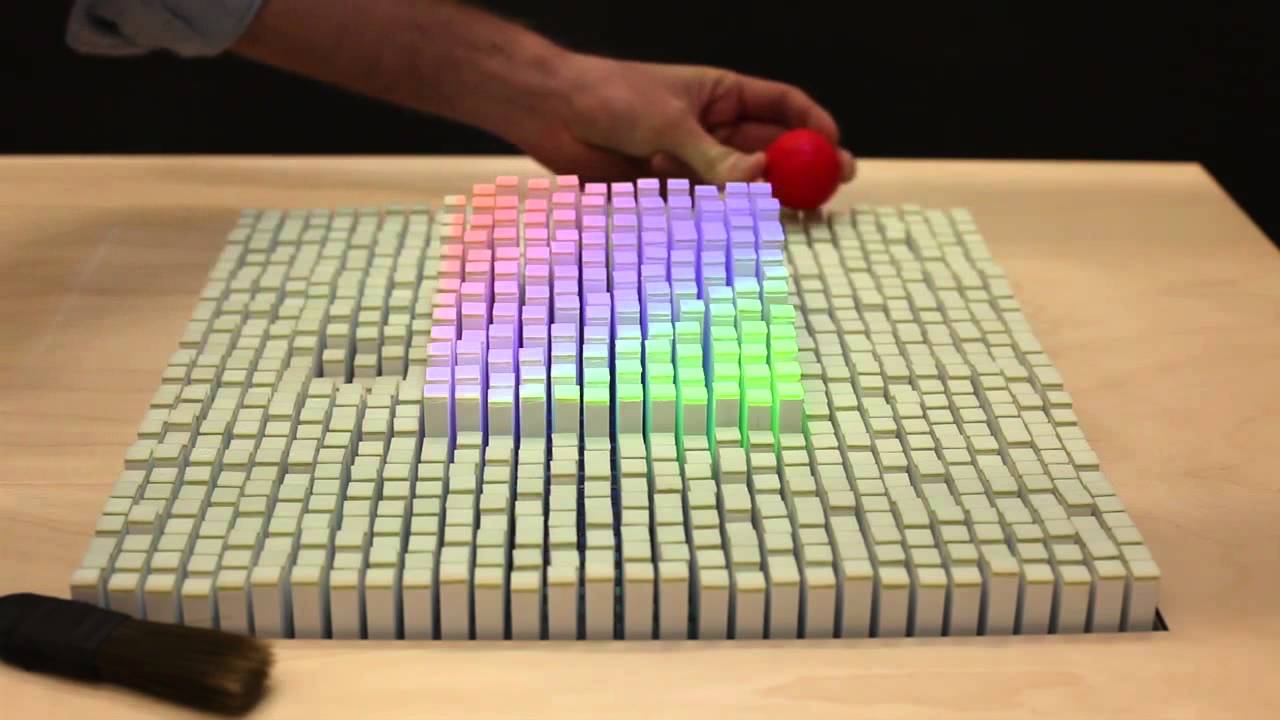
tangible_mediaThe future of computing is tactile. That’s the reasoning behind the inFORM interface, a revolutionary new interface produced by the MIT Media Lab and the Tangible Media Group. Unveiled earlier this month, the inFORM is basically a surface that changes shapes in three-dimensions, allowing users to not only interact with digital content, but even make simulated physical contact with other people.

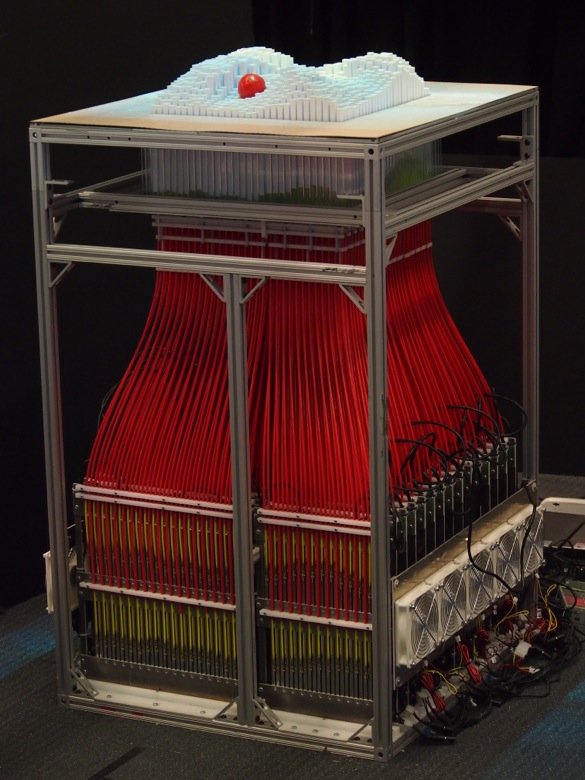
Created by Daniel Leithinger and Sean Follmer and overseen by Professor Hiroshi Ishii, the technology behind the inFORM isn’t actually quite simple. Basically, it functions like a fancy Pinscreen, one of those executive desk toys that allows you to create a rough 3-D model of an object by simply pressing it into a bed of flattened pins.

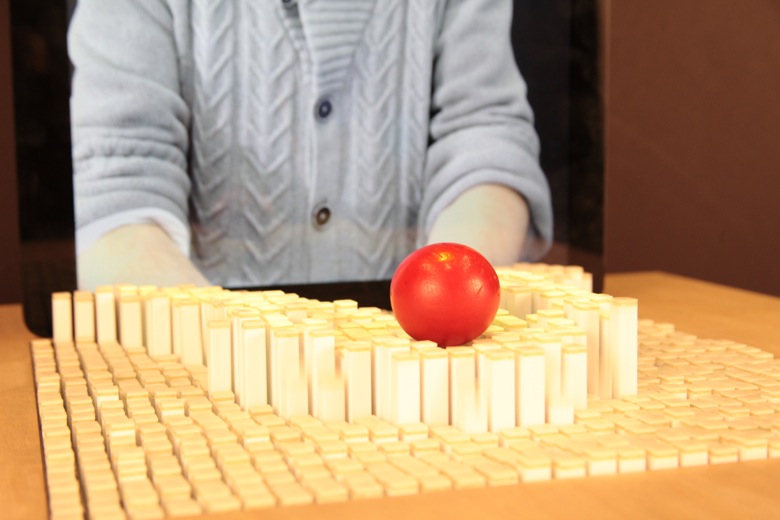
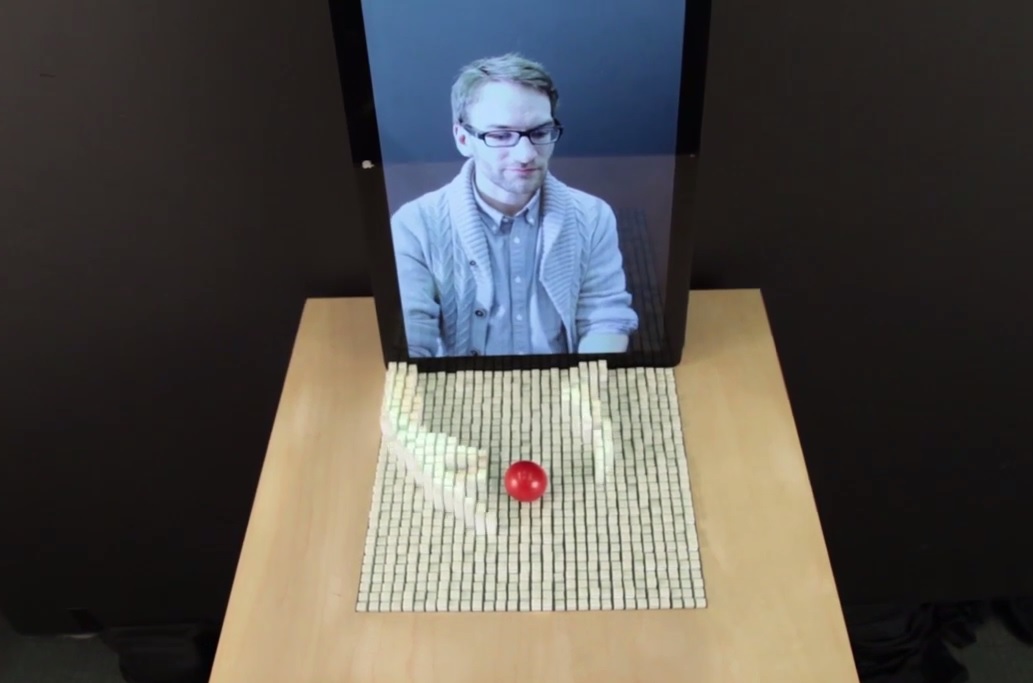
tangible_media3However, with the inFORM, each of those “pins” is connected to a motor controlled by a nearby laptop. This not only moves the pins to render digital content physically, but can also register real-life objects interacting with its surface thanks to the sensors of a hacked Microsoft Kinect. In short, you can touch hands with someone via Skype, or feel a stretch of terrain through Google Maps.

Another possible application comes in the form of video conferencing, where remote participants can be displayed physically, allowing for a strong sense of presence and the ability to interact physically at a distance. However, Tangible Media Group sees the inFORM as merely a step along the long road towards what they refer to “Tangible Bits”, or a Tangible User Interface (TUI).

tangible_media4This concept is what the group sees as the physical embodiment of digital information & computation. This constitutes a move away from the current paradigm of “Painted Bits”, or Graphical User Interfaces (GUI), something that is based on intangible pixels that do not engage users fully. As TMG states on their website:

Humans have evolved a heightened ability to sense and manipulate the physical world, yet the GUI based on intangible pixels takes little advantage of this capacity. The TUI builds upon our dexterity by embodying digital information in physical space. TUIs expand the affordances of physical objects, surfaces, and spaces so they can support direct engagement with the digital world.

It also represents a step on the long road towards what TMG refers to as “Radical Atoms”. One of the main constraints with TUI’s, according to Professor Ishii and his associates, is their limited ability to change the form or properties of physical objects in real time. This constraint can make the physical state of TUIs inconsistent with the underlying digital models.

tangible_media1Radical Atoms, a vision which the group unveiled last year, looks to the far future where materials can change form and appearance dynamically, becoming as reconfigurable as pixels on a screen. By bidirectionally coupling this material with an underlying digital model, dynamic changes in digital states would be reflected in tangible matter in real time, and vice versa.

inFORM45This futuristic paradigm is something that could be referred to as a “Material User Interface (MUI).” In all likelihood, it would involve polymers or biomaterials that are embedded with nanoscopic wires, that are able to change shape with the application of tiny amounts of current. Or, more boldy, materials that are composed of utility fogs or swarms of coordinated nanorobots that can alter their shape at will.

Certainly the ambitious concept, but as the inFORM demonstrates, its something that is getting closer. And the rate at which it is getting here is growing faster every day. And you have to admit, though the full-scale model does look a little bit like a loom, it does make for a pretty impressive show. And in the meantime, be sure to enjoy this video of the inFORM in action.


Source:
tangible.media.mit.edu

Happy Movember!

ron_swansonThough it is a bit outside of my usual routine on this here site, I just couldn’t resist sending this on. Here we have Nick Offerman who plays Ron Swanson on NBC’s Parks and Recreation talking about “Great Moments in Mustache History”. For those not familiar with Offerman or the persona of Swanson, how to best explain what it is this man represents?

Well, it would not be unfair to say that he is a legend in the community of manly men, and the greatest enemy manscaping and tofu bacon ever had! He’s also no fan of government, though he is the director of the town of Pawnee’s Parks and Recreation department. Ironic, yes, but it works! He also loves log cabins, guns, meat, and women who share his mother’s name.

Yeah, he’s pretty damn awesome. So happy Movember, and here’s hoping we can find a month similarly dedicated to beards. This is another area of the masculine identity that has been sadly neglected in this age of metrosexualism, feelings and free hugs. Long live the furry face!

Honest Trailers – The Walking Dead

honest-trailers-the-walking-dead-2528176Here is another internet video series that I’ve come to know and love: Honest Trailers! As one of several hilarious series’ by ScreenJunkies and Break Media, it is all about doing mock trailers that are unabashedly honest about the movie or show in question. I’m sure most people are familiar with them by now and have seen at least one of their spoofs.

In this recent trailer, they tackle AMC’s The Walking Dead. As usual, they manage to weave what fans already know and complain about into the 5 minute segment, touching on everything from problems with the adaptation, inconsistencies in the plot, the way extras routinely die, how boring Season 2 was, how the Governor was the most evil/benevolent dictator since Toy Story 3’s Lotso (echoes of Zombie Story), and just how awful the character of Lori is.

They even tackle such repetitive things as Rick losing his hat, Dale making his stunned face, Shane rubbing his head, characters pulling that crying-frowny face, and that obscure scene where a zombie extra was drinking a bottle of water during a shot. Check it out:

South Park: Winter is Coming!

south_park_60532South Park once again spoofed Game of Thrones this past week. Using Black Friday as a plot line, the episode had the children dressing up as characters from the GOT universe and plotting to get their hands on the new Xbox One’s and PS4’s. In true GOT fashion, this involved plotting, making and breaking alliances, and the use of the slogan “Winter is Coming” to portend the need for swift action.

And of course, the show itself was reference, much in the same way that Lord of the Rings or World of Warcraft was worked into the plot in previous episodes. As usual, Butters is the only one who doesn’t know about it yet and is promptly told to get on it by Cartman. Plotting ensues, and a war of GOT proportions is declared.


And just like with the Lord of the Rings and World of Warcraft episode, Butters is confused by (and has some hilarious observations about) the pop culture phenomena once he actually starts experiencing it. I’m sure fans of the GOT series know exactly what he’s talking about.


And there’s even a thread where Randy Marsh (Stan’s dad) joins the mall cops, ostensibly to earn more money for the holidays, but really so he can get a better shot at scoring some Black Friday deals. After the head cop, an old man with a scarred face, is stabbed and passes leadership onto Randy it’s clear they are alluding to John Snow and Jeor Mormont of the Night’s Watch. While I could not find a clip of that part, trust me when I tell you its quite accurate.

This is the second time that South Park has referenced this show, and about the millionth time that GOT was spoofed, referenced, or satirized in some way. Man, that show has made some serious inroads into popular culture, and dammit if they aren’t taking their precious time getting Season 4 out!

“Zombie Story”

Zombie_StoryCame across this video crossover not too long ago, and I have to say I was impressed. Drawing parallels between AMC’s The Walking Dead and the Toy Story franchise, creator John Wray uses video clips to illustrate how these two franchises – which could not be more different in terms of target audiences – really aren’t that different.

Rzombie_story1anging from the main characters (Sheriff Woody vs. Sheriff Rick), to the boy’s they love (Andy vs. Carl), to the conflict over who’s their primary caregiver (Woody or Buzz vs. Rick or Shane), to the dangerous hordes they routinely face (little kids vs. Walkers), the benevolent leader who turns out to be a psycho (Lotso vs. The Governor), there really are a lot of similarities to be found.

Granted, none of this is to be taken seriously, but it is very well made, right down to similar events in the story and bits of footage. Who knew Disney and Robert Kirkman could be of similar minds? Then again, ol’ Walt is rumored to be frozen somewhere, a living dead entity awaiting the day when he can be thawed and begin walking the Earth again.

Enjoy the clip!