For those looking forward to the upcoming Riddick movie, there’s a little prequel you should probably watch first. It’s what’s known as a Motion Comic, which is basically video short made up of animated cells. Picking things up where Chronicles of Riddick left off, it tells of what happened that sent Riddick from the seat of Lord Marshall to a remote corner of the universe, once again reprising his role as a wanted man.
Let me be clear, this is not a fan made video. This is a studio-approved short and stars Vin Diesel and Karl Urban, providing the vocals for Riddick and Lord Vaako. And I can honestly say, its not bad. Like many people, I was wondering how the movie makers would tackle the issue of Riddick’s ascension to the Necromonger throne and how he went from that to basically reliving the plot from Pitch Black.
I mean, it’s not every day you become leader of an apocalyptic army. And you don’t just go from that to being a fugitive again, right? So with this short filling the narrative gap, fans will pretty much be set for the upcoming movie. Though I’m not sure I’m going to be seeing the movie when it comes out, I do feel prepared for it now!
It’s been a boon week for movie news and previews, and I’ve found myself quite behind on a few things. Good thing it’s not my job to stay current, otherwise I would have been fired a long time ago! But as a genre fan, I feel the need to keep up with sci-fi news and pass it on whenever possible. And lately, the big news items have had to do with upcoming adaptations, sequels, relaunches, or all of the above.
So to save some time I thought I’d do a two-fer trailer post today and feature the newest trailers for Catching Fire and Riddick. Though I’m sure the former needs no explanation, for those who haven’t read or seen The Hunger Games, this would be the much-anticipated sequel. Still trying to finish this book myself, mainly because I promised I’d review the whole trilogy. Still, the plot for this one is really quite clear.
After winning the 74th annual Hunger Games, Katniss Everdeen and Peeta are called upon to do the Victory Tour, an event which occurs between games and showcases the winners. During the tour, Katniss is made aware of how their victory has inspired dissent, which puts her in a compromising position. Between fulfilling her role as a symbol of resistance and keeping up appearances, there’s plenty of high drama to be had!
As for the latter, this would the latest installment in that particular Vin Diesel antihero engine known as the Riddick franchise. It began with Pitch Black, a movie who’s script was originally proposed for Alien 3 but rejected in favor of the whole prison planet plot. It went on to become a cult classic, spawning the much higher-budget Chronicles of Riddick.
In this third installment, its clear the movie makers have decided to recycle the plot from the first movie and have once again put Riddick on some remote planet where he is being pursued by Bounty Hunters and Necromongers. No sooner is he captured that hostile aliens show up and they all have to work together to survive. As he said in first movie, “It ain’t me you gotta worry about now.” At least Karl Urban is back, and Katee Sackhoff (Starbuck from BSG) is part of the cast!
Catching Fire is set to be released on November 22, 2013, while Riddick will be premiering on September 6th. Enjoy!
Everyone familiar with “A Bad Lip Reading”? Yeah, they do pretty good work. And this montage of Walking Dead scenes, dubbed awesomely bad, is golden! I swear that sometimes these people seem like the most talented video spoofers on the internet today.
Oh, and be sure to stick with it right until the end. No spoilers, but the “La-Bibbida-Bibba-Dum” song alone is worth the price of admission!
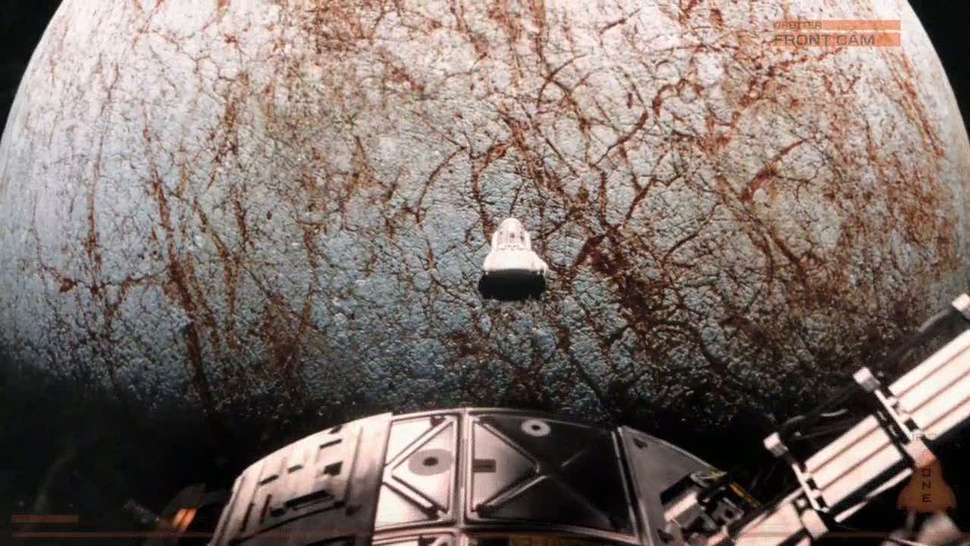
Ordinarily, I like to show movie previews before the movie has been released. This time around, I’m a little behind the curve. But my thanks to Rami for bringing this movie to my attention, since it seems like just the thing for us sci-fi geeks and buffs. It’s called the Europa Report, a near-future speculative science fiction film that follows in the vein of the 2001: A Space Odyssey and the Blair Witch Project.
Taking place in 2061, the story follows a group of astronauts who are sent on a private venture to Jupiter’s moon of Europa to investigate it for signs of life. Naturally, things go wrong, lives are lost, and the footage of their mission becomes the basis of a “report” that people back at Earth pour over, hoping to find some answers to the mystery of what happened.
The film was officially released just under two weeks ago, on August 2nd, and has received some pretty kick-ass reviews. Over at space.com, they claimed the movie was “One of the most thrilling and realistic depictions of space exploration since Moon or 2001: A Space Odyssey”, while IO9’s Annalee Newitz wrote of the film:
The representations of Jupiter and Europa in this film come directly from real satellite imagery gathered by NASA, and the journey to Europa itself is both realistic and gorgeous. There’s a lesson here about how dramatic tension and brilliant concept design, even on an indie budget, can create a sense of wonder rivaling that of a VFX blockbuster. And the payoff at the end is electrifying.
Hot damn, that’s a good endorsement! As for me, and I imagine Rami, I plan to see it and offer a review of my own! A movie like this couldn’t be more timely. Already, long-term plans are being made to send a lander or a space penetrator to Europa to have a gander at what lies beneath its icy veil. And I look forward to the day when the reality of that planet and all the speculative fiction can get together and compare notes!
What is it about robots that manages to inspire us even as they creep us out? Somehow, we just can’t stop pushing the envelope to make them smarter, faster, and more versatile; even as we entertain fears that they might someday replace us. And at the forefront of this expanding research is the desire to create robots that can not only think for themselves, but also maintain and/or repair themselves.
Case in point, the new hexapod robot that was developed by researchers from Pierre-and-Marie-Curie University, in Paris. Built with survivability in mind, this robot is the first of its kind to be able to address structural damage, adapt, and carry on. In a world where robots can be very expensive, the ability to keep working despite the loss of a component is invaluable.
To do this, the hexapod uses what the team refers to as a T-resilience (the T standing for Transferability-based) algorithm. With six legs, the hexapod moves along quite at a steady 26 cm/s. But once it loses one its front legs, it manages only 8 cm/s. But after running 20 minutes’ worth of simulations and tests, the robot works out a new way of walking, and is able to more than double its speed and cover 18 cm/s.
Essential to this approach is that the robot is programmed with what amounts to an understanding of its ideal undamaged anatomy. Previously, roboticists believed that it was necessary for a robot to analyze its new gait to diagnose the damage and compensate accordingly. But the team argues that a robot can arrive at an answer more quickly by generating a number of possible alternatives based on an undamaged state, and then testing them.
The robot spends 20 minutes testing 25 alternatives, during which a ranging camera feeds data to a separate algorithm which works out the distance traveled. In this way the robot is able to compare its actual performance with its theoretical performance, finally settling for the closest match: a gait which recovers much of the lost speed.
This resilience could one day be a godsend for crew that rely on robots to survey disaster zones, conduct rescue operations, or deal with explosive devices. The ability to carry on without the need for repair not only ensures a better history of service, but makes sure that a task can be completed with subjecting repair crews to danger.
The team’s findings were released in a self-published paper entitled “Fast Damage Recovery in Robotics with the T-Resilience Algorithm”. And of course, the hexapod’s test run was caught on video:
And then there’s the RHex robot, a machine designed with versatility and performance in mind. Much like many robots in production today, it utilizes a six-foot (hexapod) configuration. But it is in how the RHex uses its appendages that set it apart, allowing for such athletic feats as long jumps, pull-ups, climbing stairs and even scaling walls.
This is all made possible by RHex’s six spinning appendages, which act as a sort of wheel-leg combination rather than traditional feet. These legs provide for a form of motion that exceeds standard locomotion, and allow the robot to go places others could not. The robot was created through the collaborative efforts of Aaron Johnson, an engineering graduate student at the University of Pennsylvania, and professor Daniel Koditschek at Penn State’s Kod*Lab.
Said Johnson of their robotic creation:
What we want is a robot that can go anywhere, even over terrain that might be broken and uneven. These latest jumps greatly expand the range of what this machine is capable of, as it can now jump onto or across obstacles that are bigger than it is.
Here too, the potential comes in the form of being able to mount rescue missions in rugged and hostile terrain. Thanks to its versatile range of motions, the RHex could easily be scaled into a larger robot that would be able to navigate rocky areas, collapsed buildings, and disaster zones with relative ease, and would have no trouble getting up inclined surfaces of hopping over gaps and holes.
And be sure to check out the video of the RHex in action. It’s like watching robot Parkour! Check it out:
Granted, we’re still a long way from the Nexus 6 or NS-5, but real advances are far more impressive than fictional representations. And with parallel developments taking place in the field of AI, it is clear that robots are going to be an integral part of our future. One can only hope its a happy, docile part. When it comes time for science fiction to give way to science fact, we could all do without certain cliches!
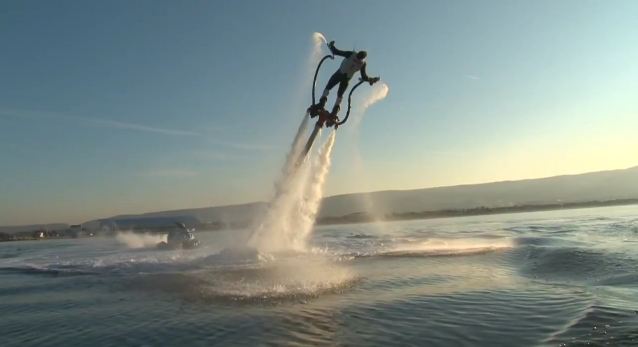
It’s official, commercial jetpacks are here! And while they might not use rockets, or be available for general purchase, they are still a pretty amazing joyride from the looks of it. Basically, the packs use pumped water from a backpack through a hose connected to a small, unmanned boat. Users are then hurled into the air, and with the adjustment of attitude controls, are able to fly around in circles.
So far, there are two models that are showing up in major vacation destinations like San Diego, Key West, Florida, Myrtle Beach, and Cancun, Mexico. There’s the Jetlev, which can lift a person 9 metres in the air, and the Flyboard, which looks like a small snowboard attached to a hose and can propel riders 14 metres in the air. To give you some perspective, that’s about the height of a three and four storey building, respectively.
Promotional videos have been turning up by the hundreds on Youtube, Hulu, Dailymotion, and other video-sharing websites, and the hits are reaching into the millions. Clearly, these jetpacks are the newest thing when it comes to water sports and adventure reaction, but they are raising their fair share of environmental concerns as well.
In Hawaii for example, where the jetpacks are expected to make an appearance very soon, the concerns of fishermen and ocean enthusiasts prompted the state Department of Land and Natural Resources to call a public meeting about the devices last month. The department’s top enforcement officer, Randy Awo, expressed alarm about unsafe maneuvers, such as riders diving into the water next to moving boats.
In addition, fishermen are concerned that the noise will disrupt their livelihood. In this, they are joined by University of Hawaii coral scientist Bob Richmond, who told officials that the noise the devices make could cause fish to avoid areas that are too loud. He’s also worried that fish and coral larvae could get pumped through some of the equipment and die.
But of course, solutions and regulations are being proposed, such as setting aside areas for recreational use that are far removed from fishing waters and coral habitats. The same is likely to be the case in other parts of the world where conservation and fishing are major concerns, but tourist dollars are heavily sought after.
In the meantime though, adventure enthusiasts and futurists can draw some encouragement from this, since it demonstrates that we are clearly living in a time when devices that seem like they are right out of the annals of science fiction are becoming a reality!
And be sure to check out the video of Myrtle Beach jetpack adventures, showing a Jetlev R200 in action:
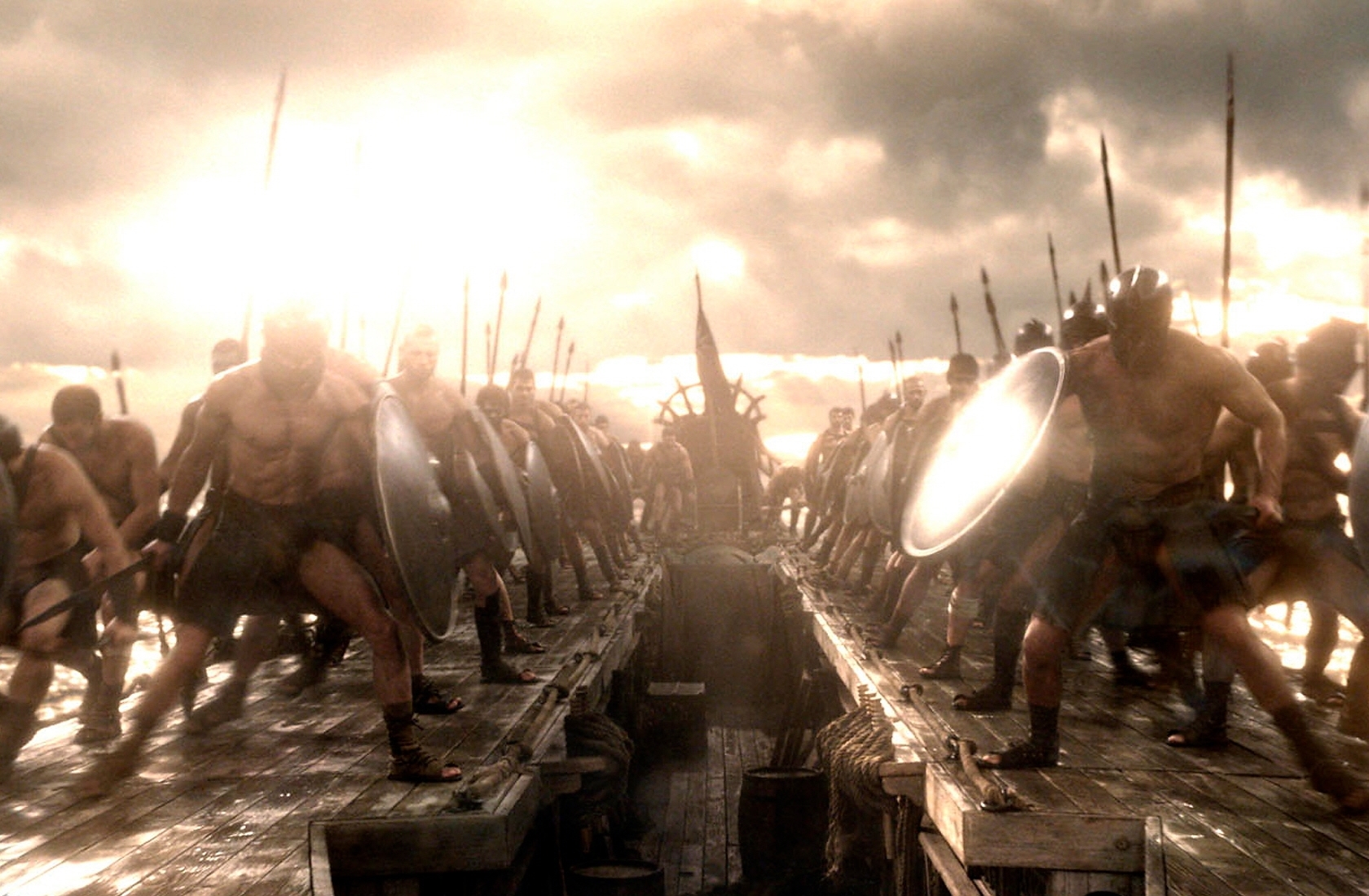
It seems that Zack Snider and Frank Miller are back for another round of comic book adaptations! After bringing us 300, Watchmen, Sucker Punch, and Man of Steel, Snider has signed on for a sequel named 300: Rise of an Empire. This time around, the movie will adapting material from Frank Miller’s own comic sequel to 300, which was entitled “Xerxes”.
As you can see from the trailer, Lena Headey is back to reprise her role as Queen Gorgo of Sparta, while Roderigo Santoro is back as well, reprising the role of the ridiculously tall and pierced man-god Xerxes. David Wehnam is reprising the role of the narrating Dilios. Meanwhile, the beautiful Eva Green plays Artemisia, Xerxes’ ally and naval commander, and Sullivan Stapleton plays General Themosticles – commander of the Greek navy.
As you can also see, the movie picks up where events in the first movie left off, after the Battle of Thermopylae where King Leonidas and his 300 were eventually wiped out. In adapting real history to an over-the-top format yet again, Snider and Miller give us a souped-up version of the Battle of Salamis, the war at sea that followed shortly thereafter.
This confrontation between the Greek and Persian navies occurred off the tip of the Greek mainland, just 20 km away from Athens which had been abandoned to the Persians. It was a desperate fight, but in the end, the Greeks proved victorious, using the home field advantage to trap and defeat the larger Persian forces.
In many ways, this battle would prove to be the beginning of the end for the Persian army, since defeat at sea now meant they could no longer launch offensives into the Peloponnese (home of Sparta and where the Greek Allies were now based) by both land and sea. Marching across the thin and fortified isthmus of Corinth would prove slow and difficult, and Thermopylae had demonstrated that frontal assaults against fortified phalanxes were not effective.
In addition, Xerxes now feared the Greeks could mount a naval offensive on the Hellespont (the land bridge between modern day Turkey and Greece) and cut off his forces from their overland supply routes. On top of that, he was dealing with rebellions within the conquered territories and had to tend to those as well.
As a result, the war would consist of sieges against rebelling states until the decisive land battle of Plataea, north of Athens, (shown at the end of 300) and the naval battle at Mycale off the coast of Turkey would take place a year later and drive the Persians out of Greece and the Aegean for good.
Honestly, not sure if I’ll catch this one. Sure, the last one was cinematic action porn, and fun if you ignored the historical inaccuracies and alleged attempts to draw a connection between the past and the “war on terror”. But I think its fair to say this is Snider and Miller’s attempt to cash in again and really doesn’t have much magic to it. And without Gerard Butler screaming martial slogans, it just seems flat.
“THIS IS SPARTAAAA!” No, this is a sequel. And oftentimes, they suck! But then again, I do love the history and there have been cases where the sequel was even better than the original… we shall see! And of course, we can all enjoy the trailers in the meantime!
Welcome to the third and final compilation for Epic Rap Battles of History. After covering science and science fiction, I thought it was high time I wrap things up by honoring the historical aspect of the comedy troupe. After all, one of the things that makes these set ups funny is the way they weave fact with unadulterated silliness to make people laugh.
And so, here are the top picks for their rap battles that were truly historical and satirical. Granted, not all of the characters featured here are real, some are historical and/or cultural constructs, and some are just the product of a famous sci-fi geek’s imagination. But I think you’ll agree that it still counts!
Skits of note include Adam vs. Eve (the timeless battle of the sexes), Barack Obama vs. Romney (a 2012 election special), Columbus vs. Capt. Kirk, Dr. Seuss vs. Shakespeare, Gandhi vs. Martin Luther King Jr (featuring comedy duo Key and Peele), and Moses vs. Santa Claus (featuring Snoop Dogg, aka. Snoop Lion). Enjoy!
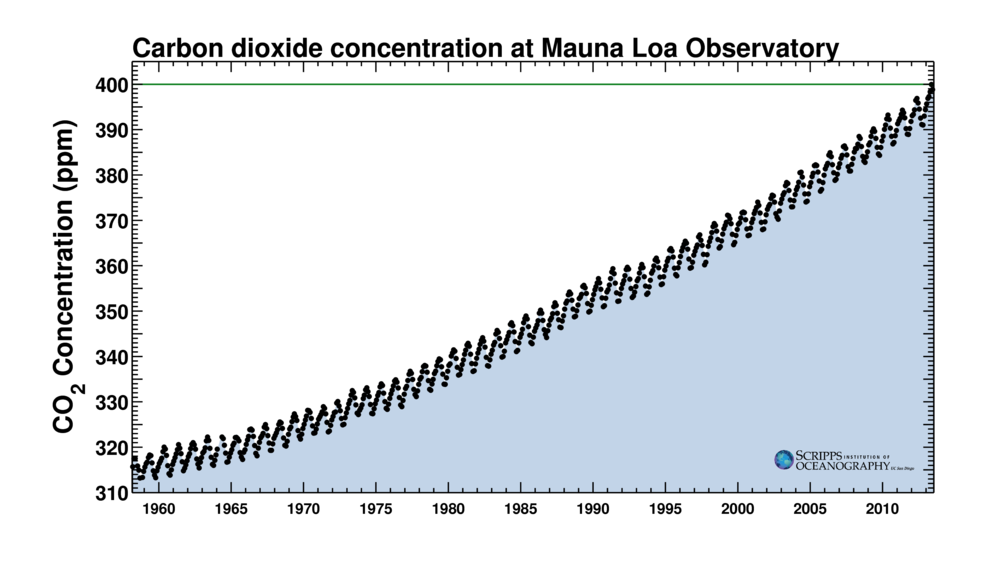
Climate Change is a daunting phenomena, a severe problem that is threatening our planet but which remains inaccessible and invisible for many people. Part of the problem is condensing all the facts, figures and studies into a coherent, easy-to-understand form that people can see and understand. Not the easiest thing to do, and even the famous hockey-stick shaped graphs appear to be falling short.
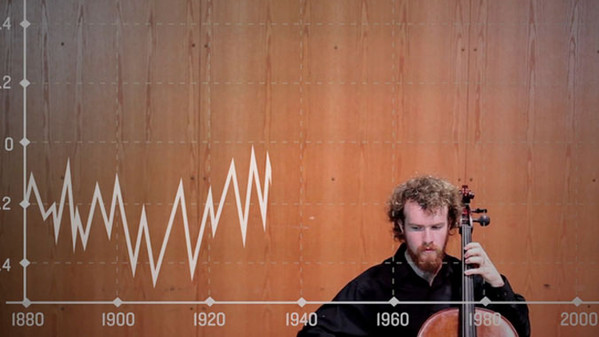
Luckily, artists like cellist Daniel Crawford are stepping in to fill the role of scientific interpreter. Committing the most alarming portion of that hockey stick to music, he shows just how alarming this trend is. He calls it “A Song of Our Warming Planet”, where notes are matched to temperatures, one for each year since 1880.
As the average global temperature increases by 0.8 Celsius (1.4 Fahrenheit) and atmospheric carbon dioxide levels increase by more than 40%, the song climbs from the low, open C to the high end of its register, sounding, in one commenter’s estimation, “like a woman screaming.” And the video ends with the chilling text:
Scientists predict the planet will warm by another 1.8 degrees Celsius (3.2 degrees Fahrenheit) by the end of this century. This additional warming would produce a series of notes beyond the range of human hearing.
Scary stuff. Check out the video below, and then be sure to look around this site for some of the more positive news on the issue. I don’t like sending people away gloomy!
As the world’s foremost space agency, NASA has been at the forefront of climate research for many decades. Their contributions to this field of science has helped to shape our understanding of the planet’s past and has led to our current understanding of the Greenhouse Effect, Global Warming, and Climate Change. As a result, they are committed to educating the public about what’s in store for our blue planet in the near future.
Below are two videos that were recently released by NASA’s Goddard Space Flight Center. Both briefly, but succinctly, provide visualizations of what an average temperature increase of up to 5.5 Celsius (8 degrees Fahrenheit) and the resulting effect on weather patterns would look like, which is expected to happen by the end of the 21st century.
These visualizations – which highlight computer model projections from the draft National Climate Assessment – show how average temperatures and precipitation patterns could change across the U.S. in the coming decades under two different scenarios. As you can see, both predict significant warming and drying as a result of increased concentrations of CO2 in the upper atmosphere.
Projected Temperature Change by 2100:
Projected Precipitation Change by 2100:
The visualizations, which combine the results from 15 global climate models, present projections of temperature and precipitation changes from 2000 to 2100 compared to the historical average from 1970 -1999. They were produced by the Scientific Visualization Studio at NASA’s Goddard Space Flight Center, Greenbelt, Md., in collaboration with NOAA’s National Climatic Data Center and the Cooperative Institute for Climate and Satellites, both in Asheville, N.C.
Speaking on the subject of these videos, Allison Leidner, Ph.D. – a scientist who coordinates NASA’s involvement in the National Climate Assessment – said:
These visualizations communicate a picture of the impacts of climate change in a way that words do not. When I look at the scenarios for future temperature and precipitation, I really see how dramatically our nation’s climate could change.
But of course, these visualizations only tell part of the story. Far from this being a geographically restricted phenomena, residents inside the US are likely to be less severely hit than those people living in Sub-Saharan Africa, the Mediterranean, the Middle East, Central Asia, India and East Asia, where the problems of flooding, water loss, famine and drought area already common.
Add to this flooding coastlines, invasive parasites and diseases, militarized borders, potential skirmishes over dwindling resources, and a refugee crisis the likes of which the world has never seen, and you get a pretty good idea of why this issue matters as much as it does. The next century is going to be an interesting time. Here’s hoping we survive it!

 For those looking forward to the upcoming Riddick movie, there’s a little prequel you should probably watch first. It’s what’s known as a Motion Comic, which is basically video short made up of animated cells. Picking things up where Chronicles of Riddick left off, it tells of what happened that sent Riddick from the seat of Lord Marshall to a remote corner of the universe, once again reprising his role as a wanted man.









 Stories by Williams