As usual, HISHE has graced us with a silly, scathing and common-sense analysis of how a movie franchise was so full of plot holes so big, you could drive a truck through them! And in this installment, they tackle the ongoing (and worsening) Terminator series. Lucky for all of us this franchise is getting a reboot, because the last two movies really did a number on its credibility!
And doing a little crossover with Back to the Future, they pretty much tackled the central premise which emerged with the ongoing Terminator movies. Why send killing machines back in time to epochs that are closer and closer to the future in question? Why not go back in time to when they were a toddler and still toilet training? You could catch them while they’re on the potty instead of all grown up and qualified to use firearms!
God, I’ve been wanting to post this for a long time. Thought the episode is at least two years old, it still brings a smile to my face when I think about it. Not only is it a hilarious spoof on a cartoon that I watched as kid, it also manages to do a hilarious crossover with one of the best post-apocalyptic movies of all time! And when it comes right down to it, what is Inspector Gadget if not a clumsy, oafish version of a Terminator?
There have been several moments in this show’s history that I’ve found pretty damn hilarious. Between spoofing superheroes, comic books, Star Wars, Star Trek, and just about anything having to do with the 80’s, how could I not love this show? Relying on Seth Green’s usual combination of outlandish wit and a load of pop culture references, this clip is sure to please! If you haven’t seen it, do so now. I guarantee if you grew up in the 80’s, it’ll make your day!
I’ve been thinking… which is not something novel for me, it just so happens that my thoughts have been a bit more focused lately. Specifically, I have an idea for an invention: something futuristic, practical, that could very well be part of our collective, computing future. With all the developments in the field of personal computing lately, and I my ongoing efforts to keep track of them, I hoped I might eventually come up with an idea of my own.
Consider, the growth in smartphones and personal digital assistants. In the last few years, we’ve seen companies produce working prototypes for paper-thin, flexible, and durable electronics. Then consider the growth in projection touchscreens, portable computing, and augmented reality. Could it be that there’s some middle ground here for something that incorporates all of the above?
Ever since I saw Pranav Mistry’s demonstration of a wearable computer that could interface with others, project its screen onto any surface, and be operated through simple gestures from the user, I’ve been looking for a way to work this into fiction. But in the years since Mistry talked to TED.com and showed off his “Sixth Sense Technology”, the possibilities have grown and been refined.
And then something happened. While at school, I noticed one of the kids wearing a jacket that had a hole near the lapel with a headphones icon above it. The little tunnel worked into the coat was designed to keep the chord to your iPod or phone safe and tucked away, and it got me thinking! Wires running through a coat, inset electrical gear, all the advancements made in the last few years. Who thinks about this kind of stuff, anyway? Who cares, it was the birth of an idea!
For example, its no longer necessary to carry computer components that are big and bulky on your person. With thin, flexible electronics, much like the new Papertab, all the components one would need could be thin enough and flexible enough to be worked into the inlay of a coat. These could include the CPU, a wireless router, and a hard drive.
Paper-thin zinc batteries, also under development, could be worked into the coast as well, with a power cord connected to them so they could be jacked into a socket and recharged. And since they too are paper-thin, they could be expected to move and shift with the coat, along with all the other electronics, without fear of breakage or malfunction.
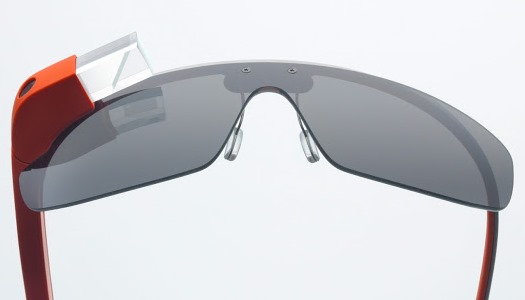
And of course, there would be the screen itself, via a small camera and projector in the collar, which could be placed and interfaced with on any flat surface. Or, forget the projector entirely and just connect the whole thing to a set of glasses. Google’s doing a good job on those, as is DARPA with their development of AR contact lenses. Either one will do in a pinch, and could be wirelessly or wired to the coat itself.
Addendum: Shortly after publishing this, I realized that a power cord is totally unnecessary! Thanks to two key technologies, it could be possible to recharge the batteries using a combination of flexible graphene solar panels and some M13 peizoelectric virus packs. The former could be attached to the back, where they would be wired to the coats power system, and the M13 packs could be placed in the arms, where the user’s movement would be harnessed to generate electricity. Total self-sufficiency, baby!
And then how about a wrist segment where some basic controls, such as the power switch and a little screen are? This little screen could act as a prompt, telling you you have emails, texts, tweets, and updates available for download. Oh, and lets not forget a USB port, where you can plug in an external hard drive, flash drive, or just hook up to another computer.
So that’s my idea, in a nutshell. I plan to work it into my fiction at the first available opportunity, as I consider it an idea that hasn’t been proposed yet, not without freaky nanotech being involved! Look for it, and in the meantime, check out the video of Pranav Mistry on TED talks back in 2010 when he first proposed 6th Sense Tech. Oh, and just in case, you heard about the Computer Coat here first, patent pending!
In a recently released teaser video, designed to expand Google Glass’ potential consumer base from the tech-savvy to what it refers to as “bold, creative individuals”. While the first video of their futuristic AR specs followed a New Yorker as they conducted mundane tasks through the city, this new clip hosts a dizzying array of activities designed to show just how versatile the product can be.
This includes people engaged in skydiving, horseback riding, catwalking at a fashion show, and performing ballet. Quite the mixed bag! All the while, we are shown what it would look like to do these activities while wearing a set of Google glasses. The purpose here is not only to show their functionality, but to give people a taste of what it an augmented world looks like.
And based on product information, videos and stillpics from the Google Glass homepage, it also appears that these new AR glasses will take advantage of the latest in flexible technology. Much like the new breeds of smartphones and PDAs which will be making the rounds later this year, these glasses are bendable, flexible, and therefore much more survivable than conventional glasses, which probably cost just as much!
Apparently, this is all in keeping with CEO and co-founder Larry Page’s vision of a world where Google products make their users smarter. In a 2004 interview, Page shared that vision with people, saying: “Imagine your brain is being augmented by Google.” These futurist sentiments may be a step closer now, thanks to a device that can provide on-the-spot information about whatever situation or environment we find ourselves in.
One thing is for sure though. With the help of some AR specs, the middle man is effectively cut out. No longer are we required to aim our smartphones, perform image searches, or type things into a search engine (like Google!). Now we can just point, look, and wait for the glasses to identify what we are looking at and provide the requisite information.
That’s right. A pair of harpists, known as the Harp Twins (Camille and Kennerly), recently performed a cover of the Walking Dead theme on their instruments, and then made the video available for all to see. Watch the beautiful duo play this tune in such a way that it comes out as both beautiful and haunting.
And note the backdrop for the video. Looks like something out of the series doesn’t it, what with the cracked paint, broken shutters and stark landscape? And don’t they look like they’re fleeing in all those scenes that come between the ones where they are playing together?
And while you’re at it, check out there cover for the Game of Thrones theme. Given the nature of the show, I had a feeling they already performed this one. I mean harps, medieval fantasy – its like PB and J. And much like in their previous cover, they picked some appropriate costumes and setting for the video shoot as well. Enjoy!
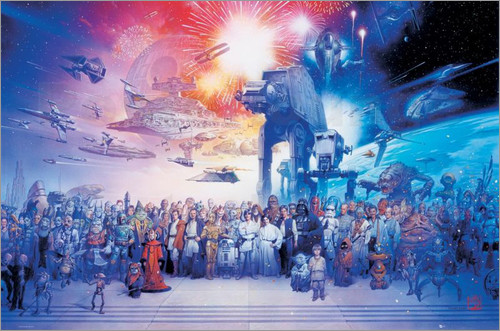
Here we have a video game concept that was proposed by Studio Gigante for the Xbox gaming system. Merging Mortal Kombat/Street Fighter style fights with Star Wars characters and lightsaber moves, the idea never made it to the production line. In fact, until the other day, no one outside of those who worked on it knew this proposed Star Wars combat game even existed.
But thanks to a recent tweet by Josh Tsui, currently of Robomodo and co-founder of the studio that made it, the demonstration video is now making the rounds. As the demo shows, it was a game that was meant to incorporate lightsaber duels, Force moves and some limited hand to hand fighting. You played as your favorite character within various Star Wars settings and, presumably, made you way up to the boss (smart money said it was either the Emperor or Yoda, depending on whether your character was good or evil).
Why he chose to do it on Valentines Day is anybody’s guess, but I’m thinking that might just be coincidental. Nothing says love like a simulated lightsaber in your gut!
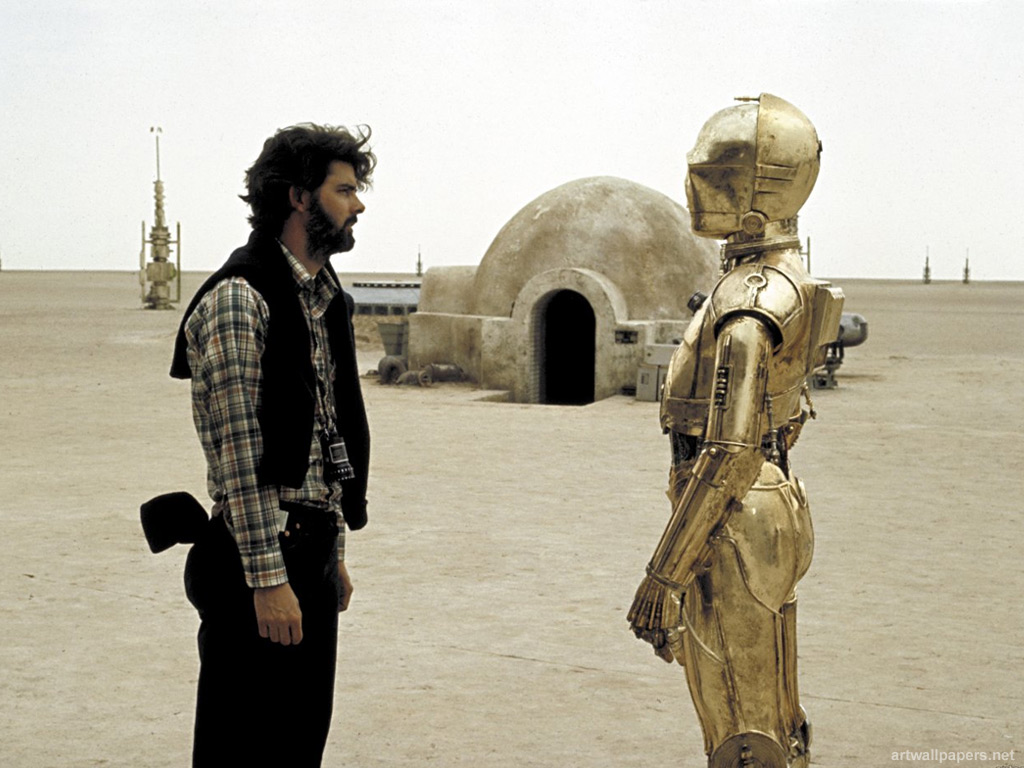
If you were to get into a discussion with a true Star Wars fan, it would only be a matter of time before the subject of the Kessel run came up. Long considered one of the biggest enigmas to come out of the franchise, Han’s boast in A New Hope about his ship’s capabilities – with the Kessel Run as a reference – still has some people scratching their noggins and scrambling for explanations today.
To refresh people’s memory, this is how the boast went down in the course of Han’s introduction to Luke and Obi-Wan at the Mos Eisley Cantina:
Han: “Fast ship? You’ve never heard of the Millennium Falcon?” Obi-Wan: “Should I have?” Han: “It’s the ship that made the Kessel Run in less than twelve parsecs!”
See what I mean? A parsec is a unit of distance, not time, so from an astronomical perspective, it made no sense. How could Han have used it to explain how quickly his ship could travel? Well, as it happens, there are some possible and even oddball explanations that have been drafted as the franchise has expanded over the years.
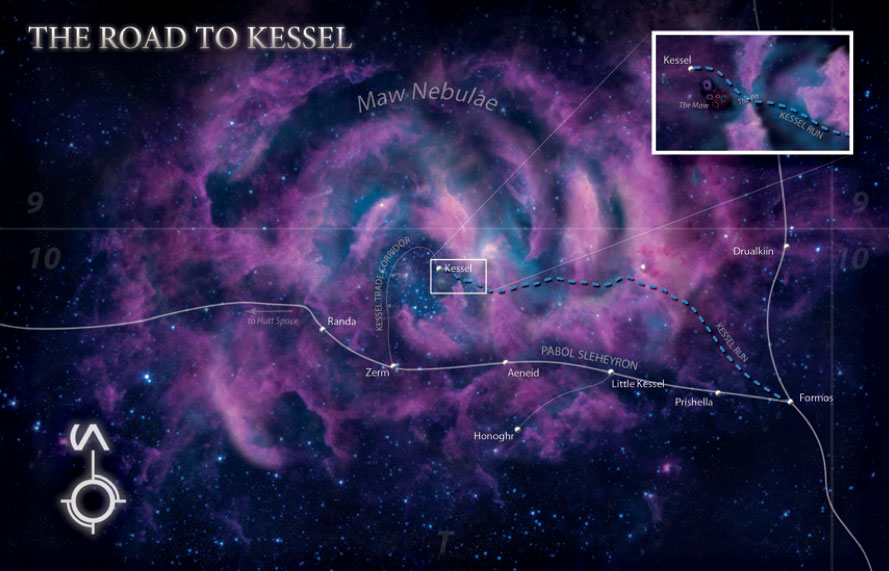
Another important point to make here is about the Kessel Run itself. As a smuggler, Han was deeply involved in running “glimmerstim spice” during his pre-Rebel days (a clear rip off from Dune, but whatever). This took him to and from Kessel, a remote planet located in the Outer Rim that is surrounded by a black hole cluster known as the Maw. As an unnavigable mess, it provided a measure of protection for smugglers running the Imperial blockade that guarded the space lanes near the planet.
All of this comes up in the Jedi Academy Trilogy, a series of novels written by Kevin J. Anderson that are part of the expanded Star Wars universe, and is the first case of the Run being detailed. From these an other sources, we are told that the Run is an 18-parsec route that led away from Kessel, around the Maw, and into the far more navigable area of space known as The Pit. Here, smugglers had to contend with asteroids, but any smuggler worth his salt could find their way through without too much difficulty, and didn’t have to worry about Imperial patrols from this point onward.
To cut down on the distance traveled, pilots could dangerously skirt the edges of the black holes, a maneuver dangerous because it involves getting pulled in by their gravitational forces. If a ship were fast enough, it could risk cutting it closer than most, thus shaving more distance of the route while still being able to break free after it all to complete the run.
Hence we have the first possible explanation to Han’s ambiguous statement. Han’s boast was not about the time taken for him to complete the Run, but the fact that Millennium Falcon was so fast that he was able to cut a full third of the Run off and still make it out. The Falcon would have to be a pretty sweet ship to do that! And it would also fit in with all his other boasts, about how the ship could “make 0.5 past light speed”, and was the “fastest ship in the fleet”.
However, there are other explanations as well. For starters, this expanded universe explanation does not jive with what Lucas himself said, what was presented in the novelization of the original movie, and of course what astronomers and megafans have to say. In the first instance, Lucas claimed in the commentary of the Star Wars: Episode IV A New Hope DVD that the “parsecs” are due to the Millennium Falcon’s advanced navigational computer rather than its engines, so the navicomputer would calculate much faster routes than other ships could.
In the A New Hope novelization, Han says “standard time units” in the course of his conversation with Luke and Ben, rather than “parsecs.” And in the revised fourth draft of A New Hope that was released in 1976, the description for “Kessel Run” is described as a bit of hapless misinformation that Obi-Wan doesn’t believe for a second. In short, Han erred when he said it and didn’t realize it.
And then there is the far more farfetched and mind-bending explanation as made by Kyle Hill in a recent article by Wired magazine. Here, he argues that the true intent of Han’s statement was that he was, in fact, a time traveler. By combining some basic laws of physics – namely that the speed of light (c) is unbreakable and 0.99 ad infinitum is as fast as anything can go – and the details of Han’s boast, a more clear picture of how this works emerges.
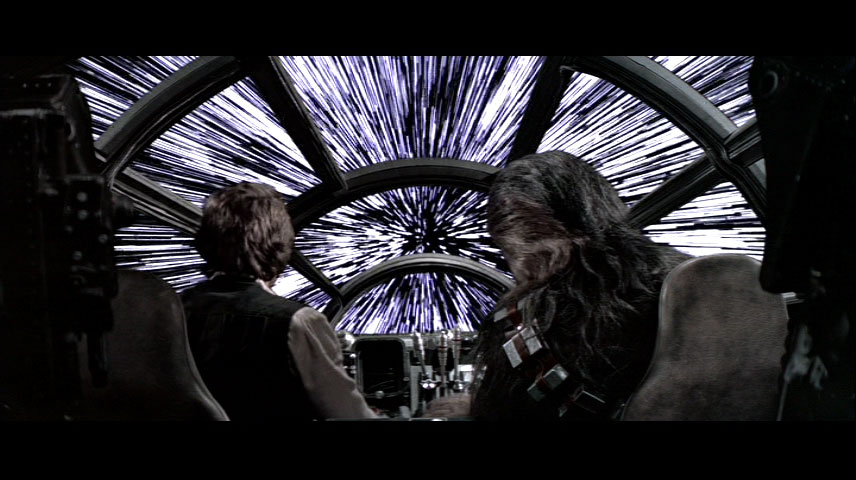
First, because the shortened Kessel Run spans 12 parsecs (39.6 light-years), a ship traveling nearly light-speed would take a little more than 39.6 years to get there. Factoring in time dilation, anyone watching the Kessel Run would see Solo speeding along for almost 40 years, but Solo himself would experience only a little more than half a day. So basically, in the time it takes Han to complete just one Kessel Run, the rest of the galaxy continues on its usual path for 40 years, which pushed the date of Han’s birth 40 years into the past.
Confused yet? Well, the idea is that Han would have been born long before events in A New Hope, and even The Phantom Menace took place. After completing his run, no doubt trying to avoid Republic authorities or some such equivalent, he came upon a universe that had gone through the ringer with a Sith coup d’etat, Imperial oppression, and a looming Civil War. What could he do but stick to smuggling and hope to make a living?
REALLY doesn’t make sense in terms of the storyline, does it? Ah, but what can you do? People like to find quirky explanations for things that don’t make sense. It can be fun! But of course, there’s a final and much, much simpler explanation that I haven’t even mentioned yet, and it’s one that’s far more believable given the so-called evidence.
Put simply, Lucas made a mistake. The parsecs line was a misfire, an oversight, and/or brain fart on his part. Nothing more, and all these attempts at explanation are just an obvious attempt to make something that doesn’t fit fit. It makes perfect sense when you think about it: since A New Hope was the first Star Wars movie, that meant Lucas was directing it all by himself. The assistance he sorely needed in terms of directing, writing, editing, etc. didn’t come until the movie was almost complete and he was looking bankruptcy and a nervous breakdown in the eye.
And remember, this is the same movie where a Storm Trooper walked head first into a door aboard the Death Star, Luke yells “Carrie” to Carrie Fisher while they are shooting, the cast and camera can be seen in numerous widescreen shots, and just about every technical problem that could go wrong did go wrong, some of which even made it into the final cut. As far as bloopers, outtakes and errors are concerned, the first Star Wars movie was a mess!
See? So really, is it hard to imagine a simple oversight like a typo could have made it on screen and no one caught it? Hell no! And frankly, I think fandom would be a lot happier if Lucas had remembered these early days of his career and not decided to make the prequels all by himself. Sure, there were plenty of people to catch these kinds of simple errors the second time around, but his many flaws as a movie maker found other ways to shine through – i.e. Jar Jar, lazy directing, too much special effects, wooden dialogue, confused storyline, continuity errors and plot holes galore!
Ah, but that’s another topic entirely. Point is, Star Wars had simple beginnings and plenty of mistakes were made along the way. One can’t expect something so grand and significant in terms of popular culture to be consistent or error free. And Lucas was never really good at producing a seamless product. In the end, it was a fun ride until the new ones came out, and even then he was still making money hand over fist.
And with Disney at the helm now, chances are we’re in for a real treat with some high-budgets and high-production values. And I’m sure there will be plenty of things for the meganerds and uberfans to poke fun at and make compilation videos of. And I of course will be writing about all of it 😉
When it comes to planning for the next possible conflict, military planners are often forced to take into account emerging trends in technology, and find both uses and countermeasures for them. And when it comes to future wars at sea, possibly fought in the Straight of Hormuz or the Sea of Japan, a number of startling developments are being taken into account, and solutions drawn up!
One such “solution” is the new robot sub-hunter being jointly created by the Science Applications International Corporation and DARPA – the Defense Advanced Research Projects Agency. That unmanned maritime robot, called the Anti-Submarine Warfare Continuous Trail Unmanned Vehicle, or ACTUV, doesn’t exist yet and won’t for years. But the SAIC’s plan does have the backing it needs, and presents an idea that is likely to inspire fear in submariners everywhere!
For one, the unmanned vehicle will be capable of operating for periods ranging between 60 and 90 days, significantly longer than any aerial drone is capable of staying airborne. What’s more, SAIC is designing the ACTUV to be way more autonomous than contemporary drone aircraft. Once powered up, all a ship need do is release the drone and allow it to rely on its long-range acquisition sonar and other advanced sensors to scan for submarines, while at the same time steering clear of any nearby surface ships.
And then there is the advanced technology powering the drone’s sonar arrays. Unlike other ships, the ACTUV’s sensors create an acoustic image of its target to know it has the right one. Once the ACTUV thinks it’s got something, it pings nearby Navy ships through a satellite link, which they can either confirm or deny, either giving the ship the green light to hunt or instructions to search elsewhere.
And last, but not least, the ACTUV can operate alongside its surface fleet, remain in constant communication with a mothership as well as naval aircraft as they deploy sonar charges to help it hunt subs. This is a level of coordination that is rarely seen in aerial drones, which are either sent into action far from the front lines or controlled remotely by infantry in the field to offer fire support.
Ah, but there’s one thing: the drone isn’t armed. Primarilyy developed to help Naval ships with hunting silent subs and/or cheap diesel-electric models, the ship may be capable of operating autonomously, but cannot take action to end lives. This feature may be the result of the Pentagon’s recent decision to limit the killing powers of UAV and autonomous drones, which amounted to ensuring that a human being will always be at the helm wherever the death of human beings is involved.
What’s more, the drone is designed with all kinds of futuristic and present-day scenarios in mind. While silent subs – ones that use advanced drive systems to generate little to no noise (a la The Hunt for Red October) – are one likely scenario, there is also the possibility of the US Navy running into the cheap diesel models which are technologically inferior, but can be much quieter and harder to track than anything nuclear. Russia is known to sell them and Iran claims to have them, so any military analyst worth his salt would advise being prepared to meet them wherever they present themselves.
And of course, the SAIC was sure to create a video showing the ACTUV in action:
This story is a bit of an expansion on a preview post, and one which I’ve put off since I spent so much time talking about phones a few weeks ago. And the concept is a little dated at this point, but since it’s still in the works and just as revolutionary. And trust me, its quite cool and to read about!
It seems that there is no shortage of new and radical ideas when it comes to the field of personal communications these days! And when it comes to personal phones, it seems the sky’s the limit. In keeping with the trend to build smaller, ergonomic, flexible and thinner smartphones and PDA’s, Nokia has another concept which is making waves.
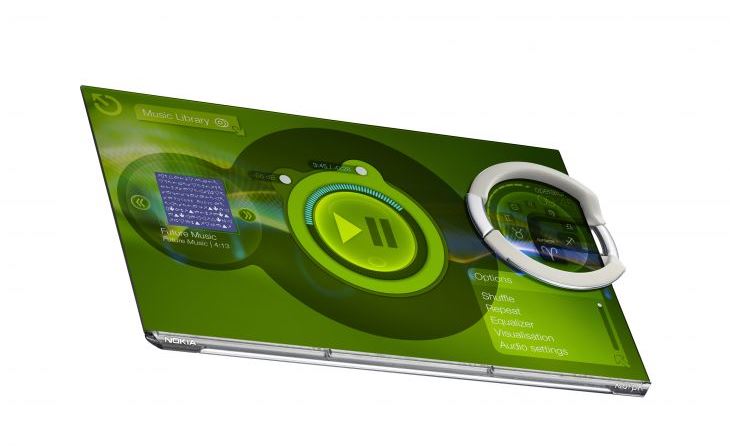
It’s known as the Morph, a new concept that showcases some revolutionary leaps being made in numerous fields. Thanks to ongoing collaboration between the Nokia Research Center (NRC) and the Cambridge Nanoscience Centre in the UK, this device incorporates numerous advances being made in terms of thin displays, flexible housings and nanotechnological processes. Once feasible, this phone will literary be assembled at the microscopic levels, leading to a phone made of “smart matter”.
In addition to the revolutionary nanoscale manufacturing process, the phone will present a number of radical new possibilities for users and device manufacturers everywhere. They include:
Newly-enabled flexible and transparent materials that blend more seamlessly with the way we live
Devices that are self-cleaning and self-preserving
Transparent electronics that offer an entirely new aesthetic dimension
Built-in solar absorption that charge a device and batteries that are smaller, longer lasting and faster to charge
Integrated sensors that allow people to learn more about the environment, empowering them to make better choices
In addition to the advances above, the integrated electronics shown in the Morph concept could cost less and include more functionality in a much smaller space, even as interfaces are simplified and usability is enhanced. What’s more, the development and combination of these technologies will have far-reaching benefits for the fields of communication and personal computing, revolutionizing how people do these in their daily lives.
And of course, Nokia was sure to create an animated video displaying the Morph concept in action. Take a gander:
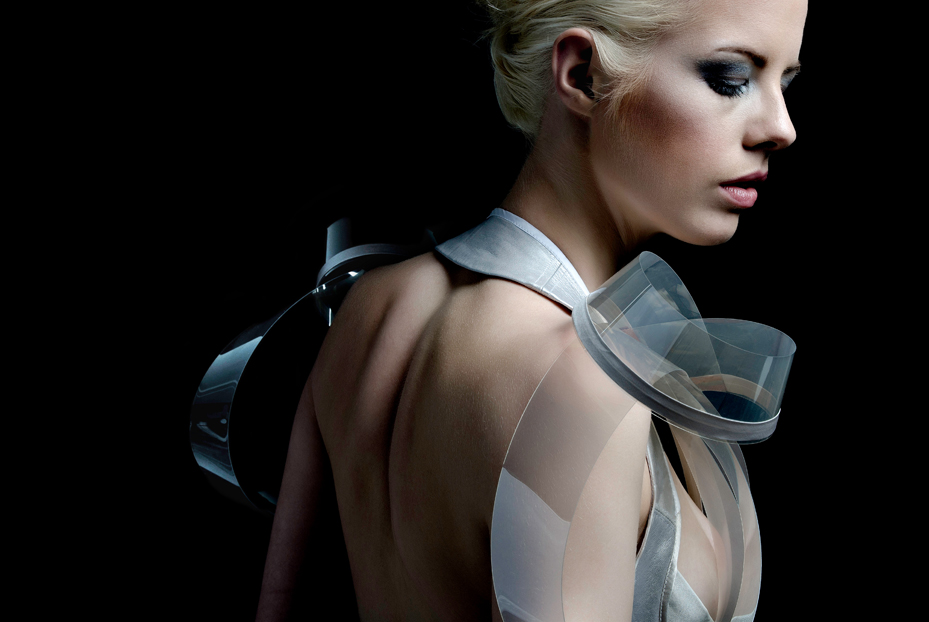
Leave it to engineers to make our world a little more transparent! In what is sure to be a novelty amongst clothiers, perfect for one-on-one social occasions and soirees – but definitely not dress parties! – designer Daan Roosegaarde has unveiled a design he calls the “Intimacy Dress”. A first amongst fashion designers, this article of clothing responds to the wearers level of arousal, and responds by turning see-through, at least in some sections.
In short, the dress works thanks to a series of “e-foils,” which are opaque coils made of “electronics, LEDs, copper and other media” that are embedded in the fabric. In response to your heartbeat, the coils become highly transparent, enhancing a romantic “close and personal encounters with people.” The only possible drawback is that the dress could just as easily turn transparent due to elevated stress levels or anger, so avoid wearing it at family occasions!
Though it has been in development for many years, the 2.0 model will be hitting the market just in time for Valentine’s Day. Good news for anyone into high-fashion, high-tech, or both! Happy Valentines to all, and in the meantime, check out this (tasteful) video of the Intimacy Dress in action!

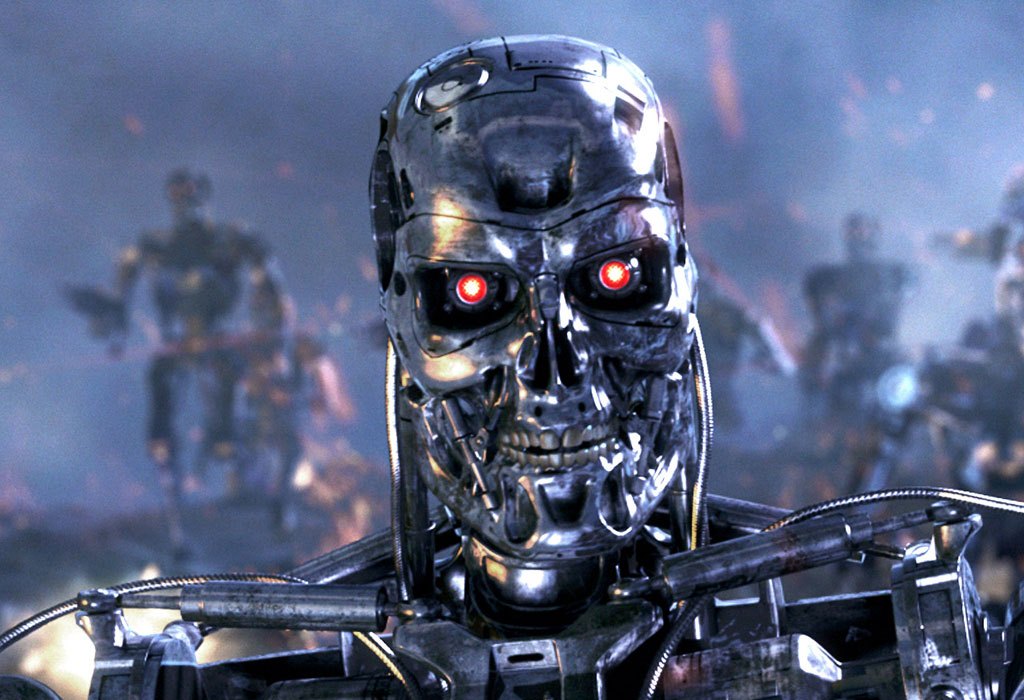 As usual, HISHE has graced us with a silly, scathing and common-sense analysis of how a movie franchise was so full of plot holes so big, you could drive a truck through them! And in this installment, they tackle the ongoing (and worsening) Terminator series. Lucky for all of us this franchise is getting a reboot, because the last two movies really did a number on its credibility!











 Stories by Williams