What is the scariest thing you’ve ever done? This is the question Chris Hadfield, retired astronaut and inspirational figure, asks in this latest speech from TED Talks. As he relates his rather unique experiences of going into space, commanding a mission aboard the International Space Station, and going blind while on a spacewalk, he addressed the key issue of how to distinguish between fear and danger while doing both great things, or just living our daily lives.
In relating the dangers of going into space, he encapsulates it all with an old astronaut saying: “there is no problem so bad that you can’t make it worse.” That is what fear is, according to Hadfield: an irrational reaction that makes a bad situation worse rather than better. In any situation, knowing the difference between fear of danger and actual danger is key, and can lead to a fundamental shift in one’s thinking that will also have life-changing implications and make some amazing things possible.
Using his characteristic combination of wit, showmanship, and a multimedia presentation, Hadfield demonstrates some of those amazing things. As a fundamentally dangerous profession, many wonder why anyone would risk going into space. According to Chris, the answer is that fear should not prevent us from doing amazing things, witnessing amazing things, and taking part in something that has immense importance and life-changing implications.
And of course, he finishes things off by performing part of his own rousing version of David Bowie’s “Space Oddity” and some sage advice:”Fear not!” Enjoy the video!
It’s a rare thing when a humble blogger like yours truly gets the chance to speak to someone who has truly made a difference in the world. And this time around, that person is Ann Makosinki, inventor of the body heat-powered flashlight and winner of last year’s Google Science Fair. In addition to being a young inventor, she also happens to hail from my neck of the woods here in Victoria, British Columbia. So you can imagine the enthusiasm I felt when she agreed to this interview!
As many of you may already know – since you all faithfully read this blog 😉 – Ann Makosinki is winner of the 2013 Google Science Fair Award for her invention that uses the warmth of a person’s own hand to power an LED flashlight. Using Peltier tiles, which produce electricity when heated on one side and cooled on the other, she developed a flashlight which she believes will be of use in the developing world where electrical outlets and batteries are not always available.
Ann’s inspiration comes from her commitment to science, renewable energy, the environment, and her roots in the Philippines. Ultimately, her goal is to bring light and energy to those who live without it all over the world. After winning the gold medal at the 2013 Canada-Wide Science Fair Gold Medal, her flashlight won at the Google Science Fair’s top prize of a $25,000 scholarship and the choice of a “once-in-a-lifetime experience” from CERN, LEGO or Google.
In addition, she has been a keynote speaker at TEDx in three different cities (Vancouver, Redmond and Edmonton), at Techtoria here in Victoria, earned a spot on Jimmy Fallon Live, and will be representing Canada at the 2014 International Science and Engineering Fair this coming May. The following is a transcript of our interview, which occurred via email in spite of her (very) busy schedule:
1. When did you first discover your love for science? What are some of your earliest memories of doing something science-related?
My love for science started when I was very young. My first toy was actually a box of transistors! I was always also interested in insects, and used to collect them and keep them in jars. I would feed them and spray them each morning before I would head out to school. My parents were very supportive of my interests, even if I was looking through the garbage, hot gluing disposed objects together and creating “inventions” (of course nothing ever worked). My dad also always took me to the local island science fair, and I was very shy to ask the other kids questions, but I always thought it was so cool that they had chosen their own topic in science and now were presenting on it.
2. When did you take part in your first science fair? What was your project?
I started participating in the local science fair, the Vancouver Island Regional Science Fair, when I was in grade 6. My science project was one from that I had done in class, comparing two laundry detergents.
3. How did you come to be interested in renewable energy?
I realized early on that energy is a key issue in today’s world, because of our increased reliance on energy and its effect on global warming. It is a challenging problem, and I wished to explore alternative energy sources and find solutions. I focused on the problem of battery elimination, because that’s something I understand and can think around.
4. You’re invention of the body-heat powered flashlight was a big hit at the 2013 Google Science Fair. What was it like competing with people your age who have such a passion for science?
For me, it wasn’t about competing with the other people, but more of getting know them and seeing how we were all alike in some ways. It inspired me to see how passionate they were about science, and while we could have conversations about technical aspects that I usually wouldn’t get to talk about with my friends, they were all still like normal teenagers.
5. This past December you were named one of Time Magazines Top 30 under 30. What other accolades have you earned since winning at the Google Fair?
Hmm, well I have given three TEDx talks since then and many other speeches locally. I have had numerous interviews/film crew from US and Europe making short documentaries. I also appeared on the Tonight Show with Jimmy Fallon’s during the show’s premiere week, and I have a few more things lined up. However, I think what matters most to me is the fact that my project has brought so much awareness to the problem of people without electricity, and to the potential that thermoelectricity has.
6. Since winning at Google Fair, you’ve presented at TEDx RenfrewCollingwood, the Techtoria conference in Victoria, and got a spot on Jimmy Fallon Live. Is it fair to say your life has changed since debuting your invention? Do you feel like a celebrity?
I definitely do not feel like a celebrity. Sure, I get recognized once in a blue moon, or people want to have their picture with me, but I know that will soon end. I think something that has changed is the fact that I really value the time when I can wind down and relax, because with so much going on I’m always on the go and worrying about my next due date.
7. What is the future hold for renewable energy, in your opinion?
I think we are already seeing a huge increase in the interest in renewable energy and alternative energy sources. As global warming and the greenhouse effect closes in on us, we will be obliged to look around to harvest natural energy, whether it be from heat, sun, water, wind etc. It holds a lot of potential, but our technologies for harvesting the energy efficiently are still developing. If my flashlight can eliminate even a fraction of batteries from the city dumps, I will have achieved my aim.
8. What does the future hold for Ann Makosinki?
I hope to commercialize the flashlight and make it available to children in the world who need light the most. Beyond that, I hope to get into college and make my little contribution towards a cleaner and better world to come.
She hopes to commercialize the flashlight? I for one can’t believe that she hasn’t been approached by every company from GE to Applied Solar. But it is great to know that young minds are coming up with breakthroughs that could be making a very real difference in the world of tomorrow. I, for one, consider to be right up there with the Darfur Stove and Quetsol solar-powered lights.
And be sure to check out the video of Ann’s speech at TEDx RenfewCollingwood which took place in October 2013, entitled “Be the Source”:
And here is her guest spot on Jimmy Fallon Live, as part of GE’s “Fallonventions”, from this past February:
It’s known as “Light Fidelity”, a new form of wireless data transmission that does away with radio signals in favor of optics. And much like the concept of an optic computer – which uses photons to transfer and store information rather than electrons – it’s long been considered as the next possible leap in internet technology. Hence why it was being demonstrated at this year’s Mobile World Congress – the world’s largest exhibition for members of the mobile phone, internet and IT industry.
Despite its monumental growth in the last decade, Wi-Fi remains somewhat hindered by the fact that it relies on microwaves in the 2.4 GHz and 5 GHz bands, a radio spectrum which is limited. LiFi, however, relies on the transmission of light and could be deployed in everyday LED bulbs, covering the entire interior of a home or office. These LED bulbs would send information out in what appears to be a constant stream of light, but which is actually made up of millions of micropulses a second.
A system based on this would be capable of transferring far larger bundles of data than one based on microwaves. The system that was on display at MWC this year ran at 150 Mbps. But with a more powerful LED light, it could conceivably reach a rate of transfer equal to 3.5 gigabytes per second. That’s 210 gigabytes a minute, and 12.6 terabytes (that 12 and a half trillion bytes, people!) every hour, far in advance of what current WiFi offers (which maxes out at 450 mbps).
To put that in perspective, as of March 2014, the US Library of Congress estimated that their web had cataloged 525 terabytes of web archive data, with an addition 5 terabytes added every month. This means that a LiFi connection running at full capacity transfers in one hour what the Library of Congress processes in over two months! In short, the widespread use of LiFi would mean an explosion in information the likes of which has not been seen since the internet first went online.
Granted, there are still some limitations, like how any computer running off of LiFi needs a special adapted, and interrupting the light source will cause information transfers to cease. And I can’t help but wonder what micropulsing lights will do for people with epilepsy, not to mention the rest of us. However, such concerns are likely to be addressed long before LiFi sees any adoption on a grand scale, which is likely still a decade away at this point.
This year, the MWC conference took place in Barcelona, a place committed to the concept of the Internet of Everything (IoE) and the building of the world’s first truly “smart city”. In the coming months and years, I anticipate that this Spanish haven for technological innovation and integration will feature plenty of LiFi. So if you’re traveling there, you might want to look into getting an adapter for your laptop.
And in the meantime, enjoy this video – courtest of CNET First Look – that takes a look at this year’s LiFi demonstration at MWC 2014:
It seems like I’ve writing endlessly about bionic prosthetics lately, thanks to the many breakthroughs that have been happening almost back to back. But I would be remiss if I didn’t share these latest two. In addition to showcasing some of the latest technological innovations, these stories are inspiring and show the immense potential bionic prosthetics have to change lives and help people recover from terrible tragedies.
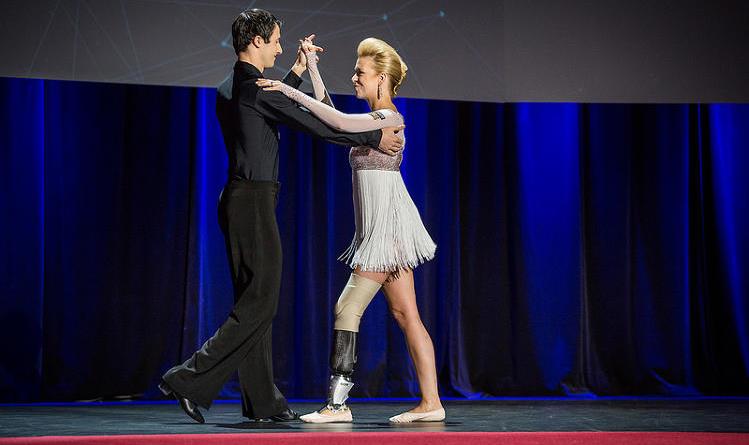
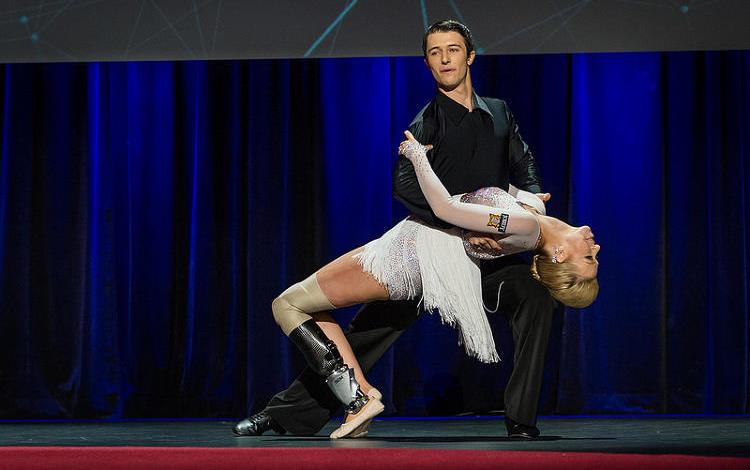
For instance, on the TED stage this week in Vancouver, which included presentations from astronaut Chris Hadfield, NSA whistle blower Edward Snowden, and anti-corruption activist Charmiah Gooch, there was one presentation that really stole the stage. It Adrianne Haslet-Davis, a former dance instructor and a survivor of the Boston Marathon bombing, dancing again for the first time. And it was all thanks to a bionic limb developed by noted bionics researcher Hugh Herr.
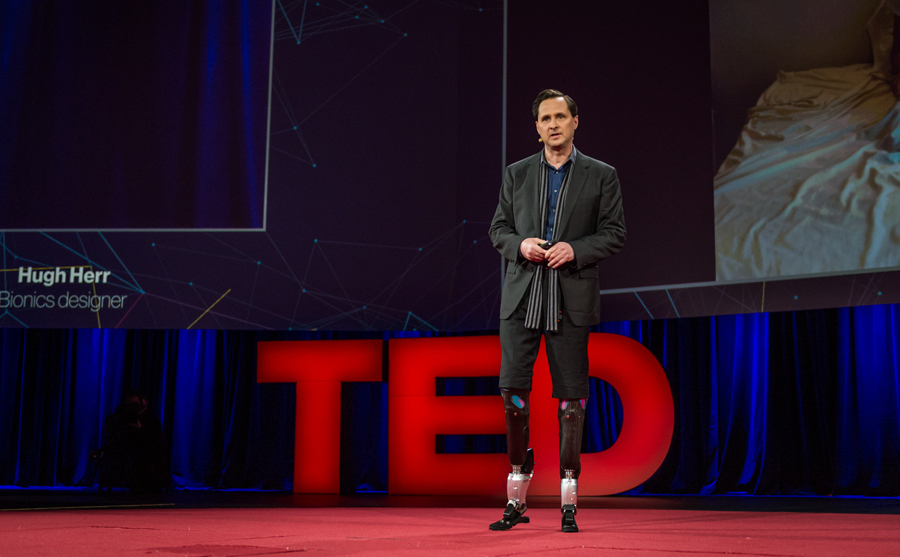
As the director of the Biomechatronics Group at the MIT Media Lab, Herr is known for his work on high-tech bionic limbs and for demonstrating new prosthetic technologies on himself. At 17, he lost both his legs in a climbing accident. After discussing the science of bionic limbs, Herr brought out Adrianne, who for the first time since her leg amputation, performed a short ballroom dancing routine.
This was made possible thanks to the help of a special kind of bionic limb that designed by Herr and his colleagues at MIT specifically for dancing. The design process took over 200 days, where the researchers studied dance, brought in dancers with biological limbs, studied how they moved, and examined the forces they applied on the dance floor. What resulted was a “dance limb” with 12 sensors, a synthetic motor system that can move the joint, and microprocessors that run the limb’s controllers.
The system is programmed so that the motor moves the limb in a way that’s appropriate for dance. As Herr explained in a briefing after his talk:
It was so new. We had never looked at something like dance. I understand her dream and emotionally related to her dream to return to dance. It’s similar to what I went through.” Herr says he’s now able to climb at a more advanced level than when he had biological legs.
Haslet-Davis’s new limb is only intended for dancing; she switches to a different bionic limb for regular walking. And while this might seem like a limitation, it in fact represents a major step in the direction of bionics that can emulate a much wider range of human motion. Eventually, Herr envisions a day when bionic limbs can switch modes for different activities, allowing a person to perform a range of different tasks – walking, running, dancing, athletic activity – without having to change prosthetics.
In the past, Herr’s work has been criticized by advocates who argue that bionic limbs are a waste of time when many people don’t even have access to basic wheelchairs. He argues, however, that bionic limbs–which can cost as much as a nice car–ultimately reduce health care costs. For starters, they allow people to return to their jobs quickly, Herr said, thus avoiding workers’ compensation costs.
They can also prevent injuries resulting from prosthetics that don’t emulate normal function as effectively as high-tech limbs. And given the fact that the technology is becoming more widespread and additive manufacturing is leading to lower production costs, there may yet come a day when a bionic prosthetic is not beyond the means of the average person. Needless to say, both Adrianne and the crowd were moved to tears by the moving and inspiring display!
Next, there’s the inspiring story of Igor Spectic, a man who lost his right arm three years ago in a workplace accident. Like most people forced to live with the loss of a limb, he quickly came to understand the limitations of prosthetics. While they do restore some degree of ability, the fact that they cannot convey sensation means that the wearers are often unaware when they have dropped or crushed something.
Now, Spectic is one of several people taking part in early trials at Cleveland Veterans Affairs Medical Center, where researchers from Case Western Reserve University are working on prosthetics that offer sensation as well as ability. In a basement lab, the trials consist of connecting his limb to a prosthetic hand, one that is rigged with force sensors that are plugged into 20 wires protruding from his upper right arm.
These wires lead to three surgically implanted interfaces, seven millimeters long, with as many as eight electrodes apiece encased in a polymer, that surround three major nerves in Spetic’s forearm. Meanwhile, a nondescript white box of custom electronics does the job of translating information from the sensors on Spetic’s prosthesis into a series of electrical pulses that the interfaces can translate into sensations.
According to the trial’s leader, Dustin Tyler – a professor of biomedical engineering at Case Western Reserve University and an expert in neural interfaces – this technology is “20 years in the making”. As of this past February, the implants had been in place and performing well in tests for more than a year and a half. Tyler’s group, drawing on years of neuroscience research on the signaling mechanisms that underlie sensation, has developed a library of patterns of electrical pulses to send to the arm nerves, varied in strength and timing.
Spetic says that these different stimulus patterns produce distinct and realistic feelings in 20 spots on his prosthetic hand and fingers. The sensations include pressing on a ball bearing, pressing on the tip of a pen, brushing against a cotton ball, and touching sandpaper. During the first day of tests, Spetic noticed a surprising side effect: his phantom fist felt open, and after several months the phantom pain was “95 percent gone”.
To test the hand’s ability to provide sensory feedback, and hence aid the user in performing complex tasks, Spetic and other trial candidates were tasked with picking up small blocks that were attached to a table with magnets, as well as handling and removing the stems from a bowl of cherries. With sensation restored, he was able to pick up cherries and remove stems 93 percent of the time without crushing them, even blindfolded.
While impressive, Tyler estimates that completing the pilot study, refining stimulation methods, and launching full clinical trials is likely to take 10 years. He is also finishing development of an implantable electronic device to deliver stimuli so that the technology can make it beyond the lab and into a household setting. Last, he is working with manufacturers of prostheses to integrate force sensors and force processing technology directly into future versions of the devices.
As for Spetic, he has drawn quite a bit of inspiration from the trials and claims that they have left him thinking wistfully about what the future might bring. As he put it, he feels:
…blessed to know these people and be a part of this. It would be nice to know I can pick up an object without having to look at it, or I can hold my wife’s hand and walk down the street, knowing I have a hold of her. Maybe all of this will help the next person.
This represents merely one of several successful attempts to merge the technology of nerve stimulation in with nerve control, leading to bionic limbs that not only obey user’s commands, but provide sensory feedback at the same time. Given a few more decades of testing and development, we will most certainly be looking at an age where bionic limbs that are virtually indistiguishable from the real thing exist and are readily available.
And in the meantime, enjoy this news story of Adrianne Haslet-Davis performing her ballroom dance routine at TED. I’m sure you’ll find it inspiring!
Despite anxieties associated with drone use – most of which have to do with domestic surveillance and warfare – there are numerous positive uses for the technology. Whether it is keeping an eye on oil rigs, monitoring underground cables, spying on drug or human traffickers, or ecological surveillance, there are plenty of uses for unmanned aerial vehicles beyond warfare and invading privacy.
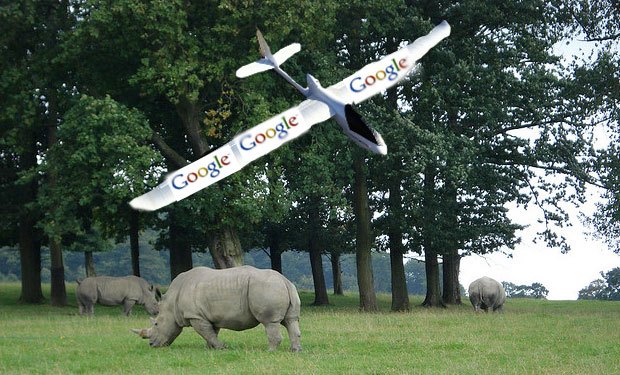
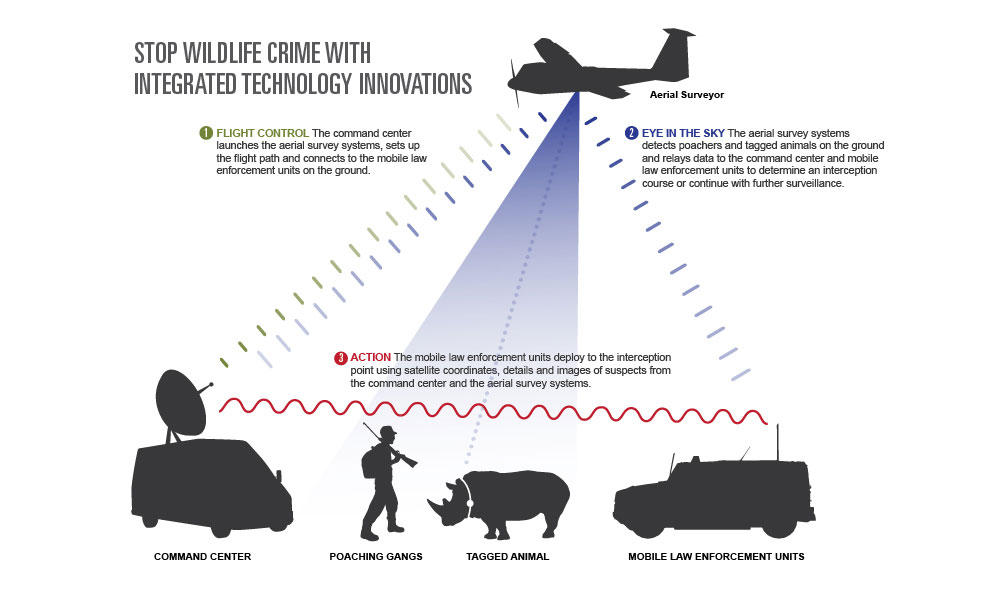
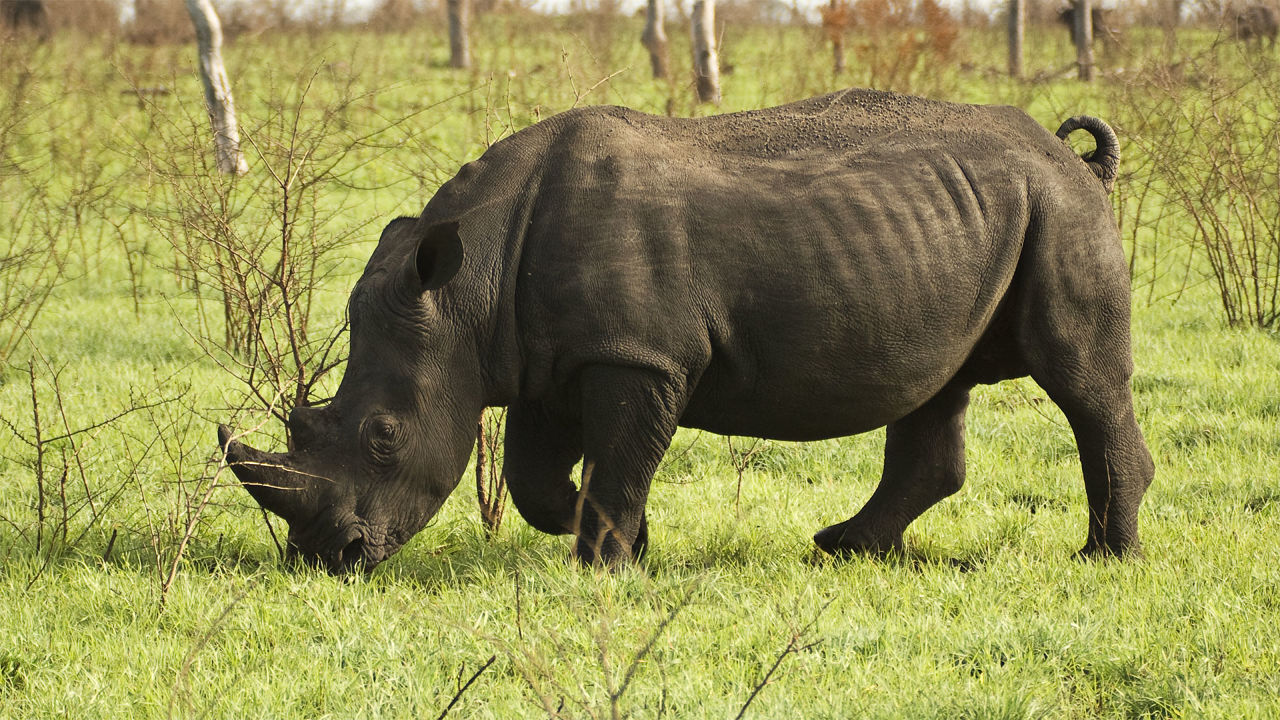
In Namibia, for example, where poaching remains a problem, drones may be the key to protecting the endangered rhino and elephants. Namibia’s Ministry of Environment and Tourism, along with the World Wildlife Fund and funding from Google, have partnered to invest in drones that can track rhino and elephant herds. Through the use of these drones, the researchers were able to follow herds and alert law enforcement in the event the animals were being targeted by poachers.
In field tests conducted in two national parks in November 2013, drones with 2-metre wingspans flew day and night missions to video black rhino herds and send live footage to poacher-tracking rangers on the ground. Smart radio tags attached to rhinos allowed the drones to home in on each herd’s current location. Crawford Allan, leader of the Wildlife Crime Technology Project at WWF, put it as follows:
We broke new ground using technologies that have never been integrated before to provide powerful wildlife protection.
The MET says it will now press ahead and deploy drones in areas of Namibia where rhinos and elephants roam. WWF estimates that illegal poaching in Africa nets criminals $10 billion each year – with some 22,000 elephants killed annually and 1000 rhinos killed last year in South Africa alone. Their efforts are also thinning out elephant and rhino populations and putting the entire ecosystem at risk.
Although the drone program should help prevent poaching in Namibia, the issue is widespread across Africa. It’s not clear whether a similar program will be rolled out elsewhere, but any success incurred in Namibia to stop poaching will set a precedent others are sure to follow. And, it should be noted, this country and the WWF are hardly alone in wanting to adapt UAV technology to the goal or ecological or species conservation.
In many ways, MET’s use of high-tech to protect wildlife echoes that of Technology For Nature (TfN), a joint venture of Microsoft Research in Cambridge, UK, University College London and the Zoological Society of London. Led by Lucas Joppa and Siamak Tavakoli at Microsoft, TfN is getting similar drone and animal-tagging projects off the ground in the Republic of the Congo, the Seychelles and Zambia.
And then there’s Conservation Drones, a non-profit organization co-founded by Serge Wich – a professor in primate biology at John Moores University. Made up of researchers and technologists, the group’s mandate is to spread drone use around the world for the sake of conservation. So far, they have worked with conservation groups and governments in Nepal, Indonesia, Gabon, and Greenland, and Wich hopes to visit more countries later this year.
According to Wich, the challenges to conservation go beyond simply monitoring endangered animals, which may be in too few number to accurately keep track of. There’s also the matter of the rough and vast terrain, which can be very difficult to physically cover. Drones are a big game changer in this game. By covering large areas in surveys, doing it repeatedly, and automating some of the analysis, aerial vehicles can track wildlife in a more comprehensive and efficient way.
Thanks to the growth of commercial aerial drones in recent years and the significant reduction in price, the technology is becoming much more affordable and user-friendly. The kits Conservation Drones uses cost no more than about $3,000, and the latest version has an open-source autopilot platform from California, along with a GPS tracker and altimeter. It’s then fitted with still cameras or video. As Wich himself put it:
The potential is huge to allow people to do very efficient data collection on a variety of issues that are important for conservation. We often struggle determining how many animals there are, where human encroachment is occurring. There are an enormous amount of ecological questions we can address with these systems.
To set a flight path, Wich simply plugs in a few points on a Google Map, then launches the drone by hand. The battery-powered module can fly for up to an hour, and cover a maximum distance of about 40 km (25 miles). The drones offer an aerial view, allowing Wich and his colleagues to get a close-up view unobscured by clouds. The next step is to improve the analysis of the images that come back.
Conservation Drones is now working to automate the counting process, and build up picture-maps by stitching hundreds of images together (like the one above). It also wants to create 3-D model environments, providing a sort of living inventory of what’s been destroyed and what remains. Long-term, it is hoped that governments all over the world with conservation problems will used the detailed software and aerial drones to keep tabs on their endangered animals and habitats to ensure their protection.
Several other groups are also pioneering drones-for-conservation, notably the World Wildlife Fund working with Google, the International Anti-Poaching Foundation, led by Iraq War veteran Damien Mander, and ShadowView, a group out of the Netherlands. Poachers beware. In addition, the Zambian Carnivore Program will be testing a pair of VHF-radio-equipped quadcopter drones in the US soon and he hopes to begin testing the miniature aircraft in Kafue National Park in Zambia in May.
In the meantime, check out this video of the MET/WWF drone survey:
And learn more about Conservation Drones from this TED talk by Wich’s partner Lian Pin Koh:
Behold, the latest bit of Star Wars-related spoofery! Inspired by the Pharrell Williams song “Happy”, this little mash up was produced by the STAR WARS TUNISIA fan club. The aim of this group is to gather and inform Tunisian Star Wars fans, and communicate with others all over the world. And in this case, that involved getting into Star Wars costume and doing a scene for scene reenactment of the original music video.
And they did it all in the actual location used to simulate the Tatooine moisture farm where Luke grew up. Enjoy!
As Napoleon Bonaparte once said, “An army marches on its belly”. And like most tidbits of military wisdom, this is one that has not changed with the ages. Whether it’s leading an army of war elephants and hoplites through the Alps, a Grande Armee across the Steppes, or a mechanized division through Central Asia, the problem of logistics is always there. For an army to remain effective and alive, it needs to be supplied; and those supply trains has to be kept moving and safe.
In the modern world, this consists of ensuring that troop and supply trucks are protected from the hazards of enemy snipers, rockets, and the all-too-prevalent menace of improvised explosive devices (IEDs). Until now, this consisted of having armed convoys escort armored trucks through hostile terrain and contested areas. But in an age of unmanned aerial vehicles and robotic exoskeletons, it seems only natural that driverless trucks would be the next big thing.
That’s the thinking behind the Autonomous Mobility Appliqué System (AMAS), a program being developed by the U.S. Army Tank-Automotive Research, Development and Engineering Center (TARDEC) in collaboration with major defense contractor Lockheed Martin. This program, which was demonstrated earlier this month at Fort Hood, Texas, gives full autonomy to convoys to operate in urban environments.
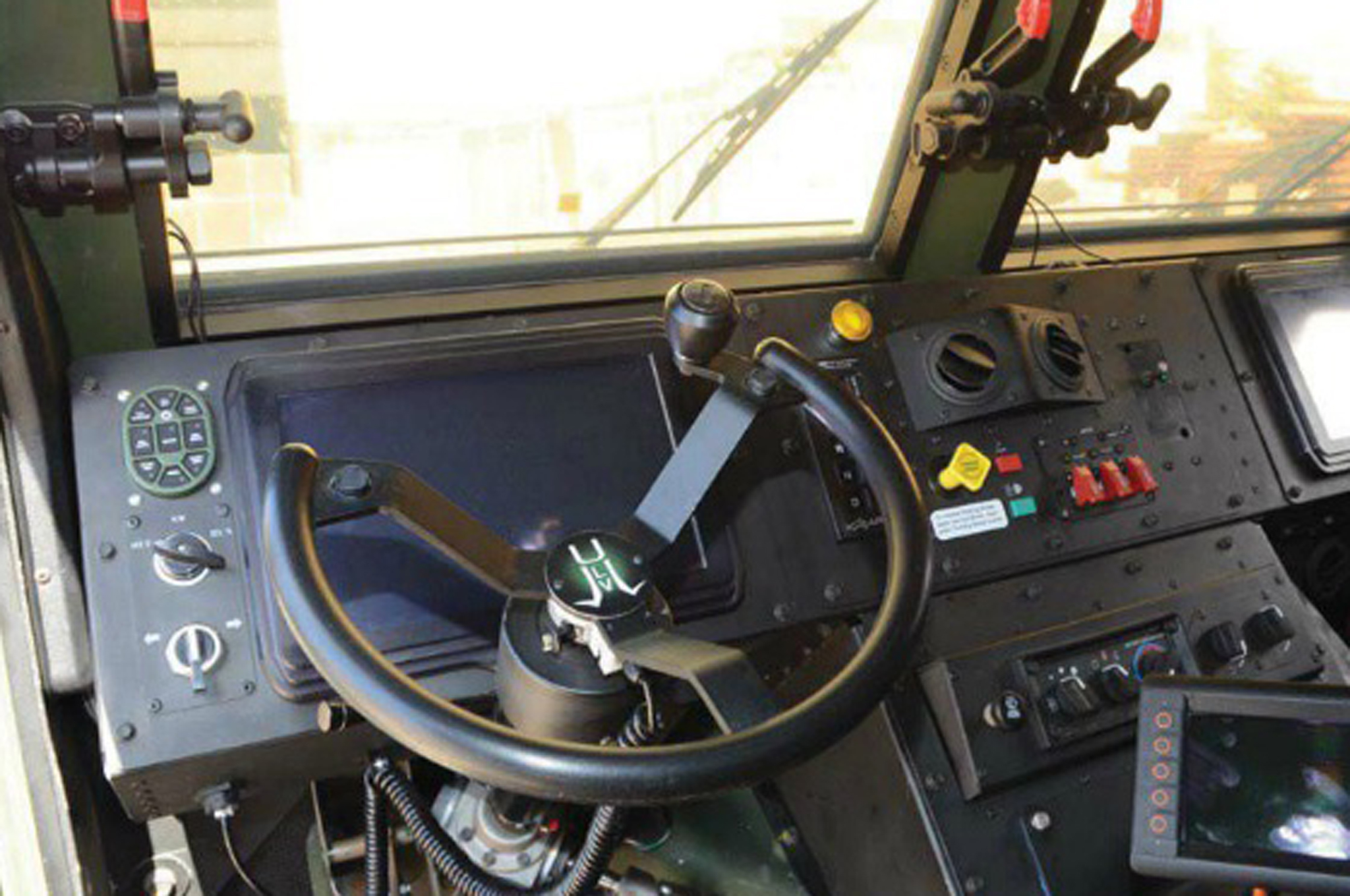
In tests, driverless tactical vehicles were able to navigate hazards and obstacles including pedestrians, oncoming traffic, road intersections, traffic circles and stalled and passing vehicles. Similar to the systems used by the first generation of robotized cars, the AMAS program for the Pentagon’s ground troops uses standard-issue vehicles outfitted with a high-performance LIDAR sensor and a second GPS receiver, locked and loaded with a range of algorithms.
That gear, Lockheed said, could be used on virtually any military vehicle, but in these tests was affixed to the Army’s M915 tractor-trailer trucks and to Palletized Loading System vehicles. According to Lockheed, AMAS also gives drivers an automated option to alert, stop and adjust, or take full control under user supervision. David Simon, AMAS program manager for Lockheed Martin Missiles and Fire Control, described the program in a statement:
The AMAS CAD hardware and software performed exactly as designed, and dealt successfully with all of the real-world obstacles that a real-world convoy would encounter.
Under an initial $11 million contract in 2012, Lockheed Martin developed the multiplatform kit which integrates low-cost sensors and control systems with Army and Marine tactical vehicles to enable autonomous operation in convoys. But not only do driverless convoys add a degree of safety under dangerous conditions, they also move the military closer its apparent goal of nearly total autonomous warfare.
AMAS algorithms also are used to control the company’s Squad Mission Support System (SMSS), a more distinctive and less conventional six-wheeled unmanned ground vehicle that has been used by soldiers in Afghanistan. Combined with robots, like the Legged Squad Support System (LS3) by Boston Dynamics, the development of driverless trucks is not only a good counter to suicide bombers and IEDs, but part of a larger trend of integrated robotics.
In an age where more and more hardware can be controlled by a remote operator, and grunts are able to rely on robotic equipment to assist them whenever and wherever the 3D’s of hostile territory arise (i.e. dirty, difficult, or dangerous), trucks and armored vehicles that can guide themselves is just the latest in a long line of developments aimed at “unmanning the front lines”.
And of course, there’s a video of the concept in action, courtesy of the U.S. Army and TARDEC:
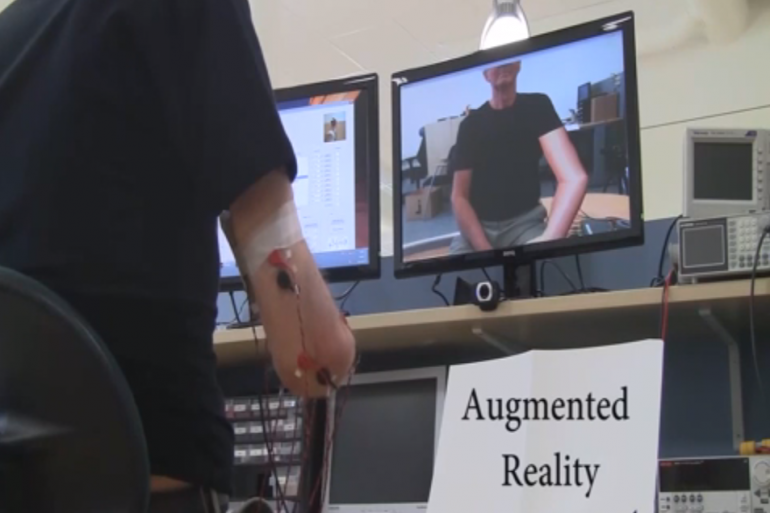
Studies have shown that a good deal of amputees feel pain in their lost limbs, a condition known as Phantom Limb Pain (PLP). The condition is caused when the part of brain responsible for a limb’s movement becomes idle, and thus far has very difficult to treat. But a new study suggests therapy involving augmented reality and gaming could stimulate these unused areas of the brain, resulting in a significant reduction in discomfort.
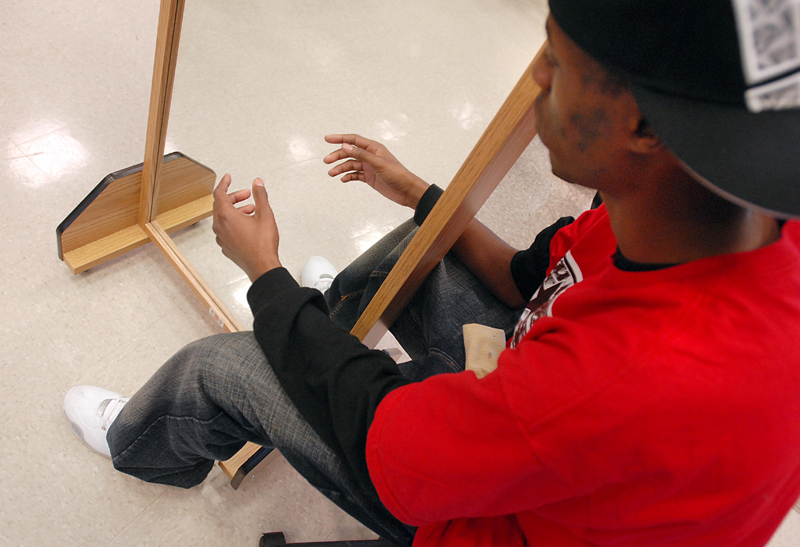
Previous attempts to ease PLP by replicating sensory feedback from an artificial hand have included prosthetics and a treatment known as mirror therapy, where a reflection of the patient’s remaining limb is used to replace the phantom limb. Virtual reality systems have resulted in more sophisticated mirror therapy, but the approach is only useful for the treatment of one-sided amputees.
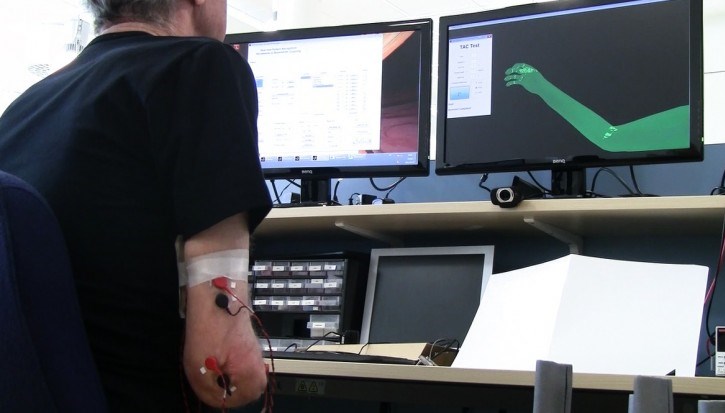
A research team from Sweden’s Chalmers University of Technology sought to overcome this and achieve greater levels of relief by testing a treatment where the virtual limb would be controlled through myoelectric activity. This is a process where the muscle signals which would control the phantom limb at the stump are detected and then used to create a pattern that will predict the limb’s movements and provide the requisite stimulation.
To test the treatment, the researchers connected amputee Ture Johanson – a man who have lived with PLP for 48 years – to a computer. Electrodes running from his stump to the machine provided the input signals, and on the computer screen, he was able to see and move a superimposed virtual arm. The electronic signals from his arm communicated to the computer and his movements were simulated before his very eyes, and then used to control a car in a racing game.
Within weeks of starting this augmented reality treatment in Max Ortiz Catalan’s clinic at Chalmers, his found his pain easing and even disappearing entirely. Mr Johanson says he has noticed other benefits, like how perceives his phantom hand to be in a resting, relaxed position rather than constantly a clenched fist:
The pain is much less now. I still have it often but it is shorter, for only a few seconds where before it was for minutes. And I now feel it only in my little finger and the top of my ring finger. Before it was from my wrist to my little finger… Can you imagine? For 48 years my hand was in a fist but after some weeks with this training I found that it was different. It was relaxed. It had opened.
Mr Johanson has also learned to control the movements of his phantom hand even when he is not wired up to the computer or watching the virtual limb.
Max Ortiz Catalan, the brains behind the new treatment, says giving the muscles a work-out while being able to watch the actions carried out may be key to the therapy. Catalan says it could also be used as a rehabilitation aid for people who have had a stroke or those with spinal cord injuries. As he put it:
The motor areas in the brain needed for movement of the amputated arm are reactivated, and the patient obtains visual feedback that tricks the brain into believing there is an arm executing such motor commands. He experiences himself as a whole, with the amputated arm back in place.
While he and his team points out that its research is based on the study of only one patient, the success in achieving pain relief following a series of unsuccessful treatments is a clear sign of efficacy and should lead to equally successful results in other test cases. Their research appeared in a recent issue of Frontiers in Neuroscience titled “Treatment of phantom limb pain (PLP) based on augmented reality and gaming controlled by myoelectric pattern recognition: a case study of a chronic PLP patient”.
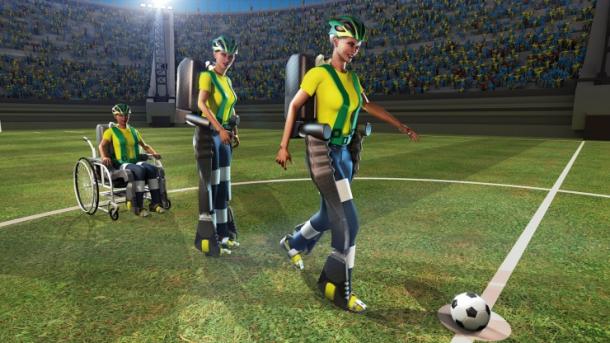
This summer, the World Cup 2014 will be taking place in Sao Paulo, Brazil; an event that is sure to be a media circus. And to kick off this circus (no pun!), FIFA has decided to do something rather special. This will consist of a paralyzed teenager making the ceremonial first kick, courtesy of an exoskeleton provided by The Walk Again Project. In addition to opening the games, this even will be the first time that a mind-controlled prosthetic will ever be used in a sporting event.
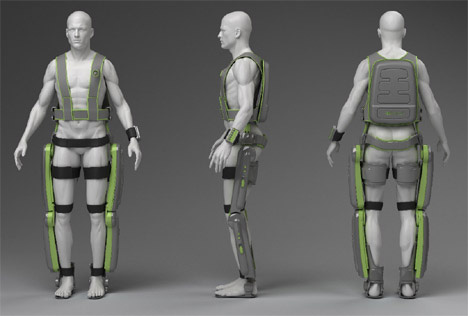
Though the teenager in question remains to be chosen, the event is scheduled and the exoskeleton tested and ready. Using metal braces that were tested on monkeys, the exoskeleton relies on a series of wireless electrodes attached to the head that collect brainwaves, which then signal the suit to move. The braces are also stabilized by gyroscopes and powered by a battery carried by the kicker in a backpack.
The Walk Again Project, a nonprofit collaboration dedicated to producing full-body mind-controlled prosthetics, represents a collaboration between such academic institutions as Duke University, the Technical University of Munich, the Swiss Federal Institute of Technology in Lausanne, the Edmond and Lily Safra International Institute of Neuroscience of Natal in Brazil, the University of California at Davis, the University of Kentucky, the Duke Immersive Virtual Environment facility.
Miguel Nicolelis, the Brazilian neuroscientist at Duke University who is leading the Walk Again Project’s efforts to create the robotic suit, had this to say about the planned event:
We want to galvanize people’s imaginations. With enough political will and investment, we could make wheelchairs obsolete.
Nicolelis is a pioneer in the field of mind-controlled prosthetics. In the 1990s, he helped build the first mind-controlled arm, which rats learned to manipulate so they could get a drink of water, simply by thinking about doing so. In that project, an electronic chip was embedded in the part of each rodent’s brain that controls voluntary muscle movements. Rows of wires that stuck out from the chip picked up electrical impulses generated by brain cells and relayed those signals to a computer.
Researchers studied the signals as the rats pushed a lever to guide the arm that gave them water, and they saw groups of neurons firing at different rates as the rats moved the lever in different directions. An algorithm was developed to decipher the patterns, discern the animal’s intention at any given moment and send commands from the brain directly to the arm instead of to the lever. Eventually, the rats could move the arm without pushing the lever at all.
Using similar brain-machine interfaces, Nicolelis and his colleagues learned to translate the neural signals in primate brains. In 2000, they reported that an owl monkey connected to the Internet had controlled an arm located 600 miles away. Eight years later, the team described a rhesus monkey that was able to dictate the pace of a robot jogging on a treadmill half a world away in Japan.
Small groups of neurons, it seems, are surprisingly capable of communicating with digital devices. Individual cells learn to communicate with computer algorithms more effectively over time by changing their firing patterns, as revealed in a study of a mouse’s brain published last year in Nature. This capacity for extensive plasticity and the ability to learn comes in quite handy when designing a prosthetic.
German-made sensors will relay a feeling of pressure when each foot touches the ground. And months of training on a virtual-reality simulator will have prepared the teenager — selected from a pool of 10 candidates — to do all this using a device that translates thoughts into actions. In an interview with New Scientist, the lead robotic engineer Gordon Cheng of the Technical University of Munich gave some indication of how the suit works
The vibrations can replicate the sensation of touching the ground, rolling off the toe and kicking off again. There’s so much detail in this, it’s phenomenal.
Capitalizing on that adaptability, several human quadriplegics have received implanted brain chips in FDA-approved clinical trials. One of the first was Matt Nagle, who lost the use of his extremities after being stabbed in the spine. With the aid of electrodes placed in his brain at Brown University in 2004, he learned to raise, lower and drop a piece of hard candy using a primitive jointed arm not connected to his body.
In a widely publicized demonstration of that system, now owned by a company called BrainGate, a 58-year-old woman paralyzed by a stroke sipped a cup of coffee last year using a five-fingered robotic arm not attached to her body. Despite the slickness of the presentation, however, the woman actually had little control over the arm. Despite it being aesthetically pleasing, the design was a little rudimentary.
However, things have come a long way since then thanks to ongoing research, development and testing. In Nicolelis’s lab, monkeys showed the ability to feel virtual objects displayed on a computer screen when areas of the brain associated with the sense of touch were stimulated. The blueprints for next summer’s soccer exoskeleton include similar sensors that will provide an artificial skin for its human wearer, thus ensuring that they can both move the device and receive sensory feedback.
With the world watching, Nicolelis hopes not only that his “bionic teenager” will be able to feel the ball but also that disabled people everywhere will feel a sense of hope. And why wouldn’t they? In this single, incredibly high-profile event, millions of people around the world who struggle with disabilities will witness something truly inspirational. A paralyzed teenager will rise from a wheelchair, kicks the World Cup ball, and bring countless millions to their feet.
And you’re waiting until June of 2014 to see this momentous event for yourselves, be sure to check out this promotional video from The Walk Again Project, featuring interviews with the people who made it happen and showcasing the exoskeleton itself:
My buddy and mentor in all things space and internet-related, Fraser Cain, has produced yet another informative video that I wish to share today. The subject in question is, “Could Jupiter Become a Star”? Naturally, this question has a wider context which needs to be understood if it is to make any sense. You see, for decades scientists have wondered whether or not a gas giant could be converted into a smaller version of own sun.
This is mainly due to the fact that gas giants and brown dwarves are very similar; in some cases, it’s even considered acceptable to say that a gas giant represents a failed star. This is not entirely accurate, since a gas giant does not have the necessary mass to trigger a deuterium reaction (aka. fusion) in order to create one. But, as Fraser points out, there are those who have wondered if an explosion – like that created by the Galileo space probe crashing into Jupiter – could cause a sun-birthing explosion.
This question has become relevant once again thanks to Cassini’s ongoing mission around Saturn. Thanks to the prevalence of noble (and flammable) gases that make up this planet as well, some worry that crashing a nuclear powered satellite into it will trigger a massive thermonuclear reaction. But, as Cain points out in a blow-by-blow manner, the answer to this question is a “series of nos”. Put simply, the raw materials and mass simply aren’t there.
Still, it’s a cool idea, and it was the focal point of Arthur C. Clarke’s 2001: A Space Odyssey and all subsequent novels in the series. In this seminal collection of classic sci-fi, we are told that an ancient race (the First Born) tampered with our evolution eons ago, thus giving rise to the hominid we see every time we look in the mirror. By 2001, when the story opens up, we see a space-faring humanity uncovering evidence of this face, in the form of a strange Monolith buried on the Moon.
After learning that this strange object is sending signals towards Jupiter, several missions are mounted which determined that these same extra-terrestrials are one again at work, this time in the outer Solar System. Believing there is life trapped underneath the heavy ice sheets of Europa, the First Born use their superior technology and know-how to convert Jupiter into a sun, which in turn melts Europa’s ice, giving rise to an atmosphere and letting the life out to flourish.
So while it’s sci-fi gold, its not exactly science. But then again, that’s the beauty of science fiction – you can always postulate that the means will exist somewhere down the road. But until such time as we can manipulate matter, download our consciousness into rectangular monoliths with perfect dimensions, and travel through the cosmos in said same objects, we’re going to have to get used to NOT looking up at night and seeing this:
In the meantime, enjoy the video. Like all Universe Today videos, articles and podcasts, it’s really quite informative. And be sure to subscribe if you like having all your questions about space, science and the answers to the big questions addressed:

 What is the scariest thing you’ve ever done? This is the question Chris Hadfield, retired astronaut and inspirational figure, asks in this latest speech from TED Talks. As he relates his rather unique experiences of going into space, commanding a mission aboard the International Space Station, and going blind while on a spacewalk, he addressed the key issue of how to distinguish between fear and danger while doing both great things, or just living our daily lives.


















 After learning that this strange object is sending signals towards Jupiter, several missions are mounted which determined that these same extra-terrestrials are one again at work, this time in the outer Solar System. Believing there is life trapped underneath the heavy ice sheets of Europa, the First Born use their superior technology and know-how to convert Jupiter into a sun, which in turn melts Europa’s ice, giving rise to an atmosphere and letting the life out to flourish.
 In the meantime, enjoy the video. Like all Universe Today videos, articles and podcasts, it’s really quite informative. And be sure to subscribe if you like having all your questions about space, science and the answers to the big questions addressed:
 Stories by Williams