Episode Eleven of Stories from Space is now Live!

Episode Eleven of Stories from Space is now Live!

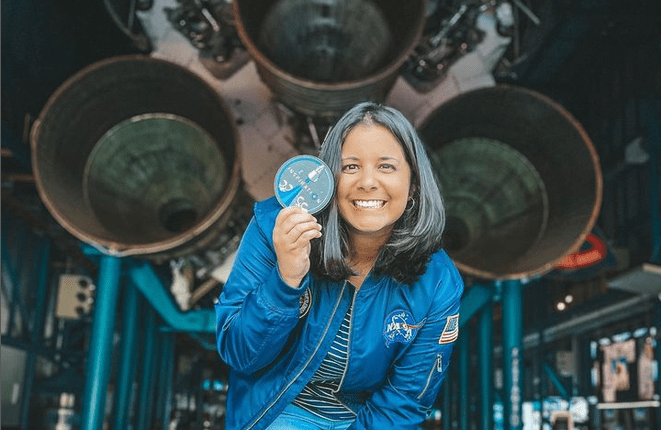
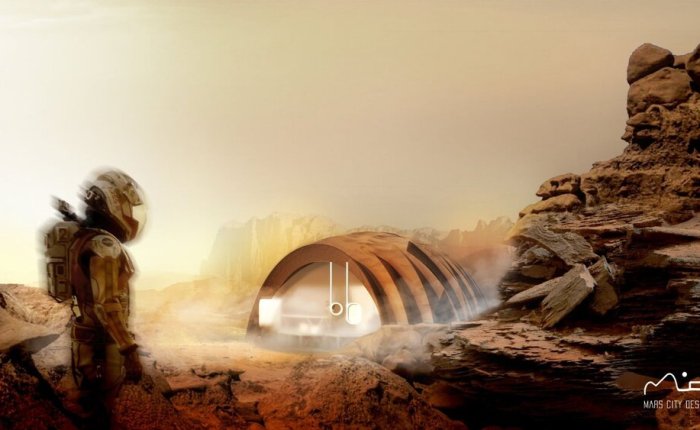
The subject of this podcast was architecture and living for Mars, and my featured guest was none other than the world’s first “Marschitect” herself, Vera Mulyani. Mulyani is an esteemed architect, artist, filmmaker, entrepreneur, and the founder and CEO of Mars City Design – an education, outreach, and entrepreneurial organization dedicated to ensuring that humans can live on Mars someday. Their philosophy is that with the right combination of science, technology, engineering, art, and mathematics (STEAM), humans can not only survive on Mars but thrive.

For years, MCD has hosted design competitions that have produced some of the most intricate, detailed, and awesome designs for Martian habitats and cities. A few years ago, I did a series of articles* about their design competitions and other events. Between 2018 and 2020, I had the honor of working with Mulyani and MCD on a podcast series. Keep an eye out for it. It’s called “The Martian Dispatches,” and it will be premiering in the near future! You can check out this latest episode on any of the channels below:

Where to Listen:

*And be sure to check out the articles I did on MCD:

Episode Ten of Stories from Space is now Live!

Episode Ten of Stories from Space is now Live!

The subject of my latest podcast is the Great Filter Hypothesis, where I discuss the subject with Robin Hanson – the man who proposed it back in 1998. This proposed resolution to the Fermi Paradox (aka. “where are all the aliens?”) basically states that if like is so ubiquitous in our Universe (and we have every reason to think it is), then there must be “a great filter between death and expanding lasting life.”

In other words, the reason we aren’t seeing advanced alien civilizations is that there’s something that prevents life from reaching an advanced, installer phase. What could that be? And as Hanson asks in his original paper, “how far along this filter are we?” We also got into his more recent study that places estimates on when we might actually hear from an advanced civilization.

Where to Listen:

Episode Nine of Stories from Space is Live!

Episode Nine of Stories from Space is Live!

The subject of this episode is Exoplanets! What are they? Where are they? How are we finding them? And, most importantly, will we find life on them someday (perhaps even soon)? It’s no exaggeration to say that the field of exoplanet study has exploded in the past two decades. Between 1992 and 2022, we’ve gone from having a single confirmed exoplanet for astronomers to study to over 5,000*! In the coming years, that number is expected to reach well into the tens of thousands.

What’s more, next-generation telescopes will offer the kind of sensitivity and high-resolution needed to find more rocky planets that orbit closer to their stars (which is where “Earth-like” and habitable exoplanets are most likely to be found). With thousands of worlds in the exoplanet census and so many more waiting to be added, could the first detection of life beyond the Solar System be far behind? It is impossible to say, but many astrobiologists speculate that the first evidence could be found in less than 20 years.

If you’re the kind of person who likes the long odds, you might want to place your bets now!

Where to listen:

*As of the writing of this post, 5,090 exoplanets have been confirmed in 3,816 systems, with another 8,912 candidates awaiting confirmation.

Episode Eight of Stories from Space is now Live!

Episode Eight of Stories from Space is now Live!

In this latest episode, I sat down with Dr. Peter Swan and Adrian Nixon of the International Space Elevator Consortium (ISEC). In a few days, they will be presenting some exciting new research findings at the 2022 International Astronautical Congress (IAC) in Paris.

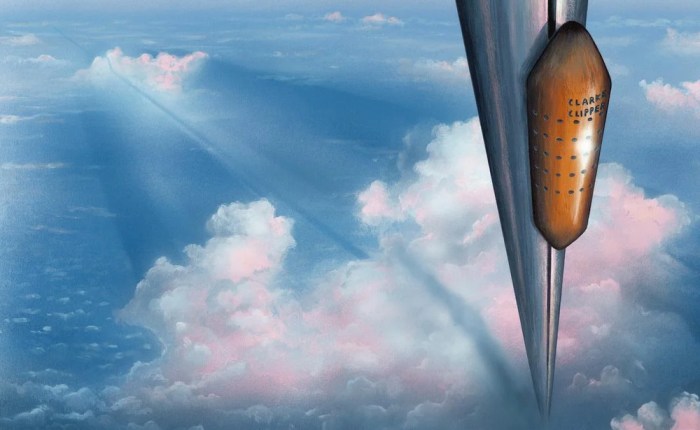
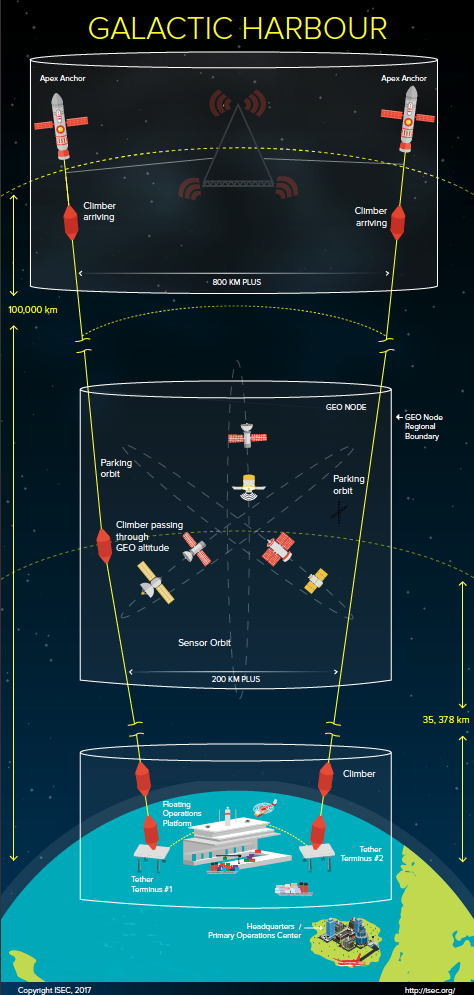
The space elevator is a dream originally proposed over a century ago that would enable regular and cost-effective access to space. In its modern form, it would consist of a tether connecting Earth to a counterweight and space station in orbit. Earth’s rotation keeps the tether taut while climbers deliver payloads and crews to orbit at a fraction of the cost of rocket launches.

ISEC

At least once a generation, the idea is revisited to see if we have the capability to build one. Alas, the stumbling block has always been the tether itself since no known material has ever been strong enough to handle the stresses involved.

A few months ago, I caught up with Dr. Swan and Nixon when I was writing an article on the topic for Interesting Engineering, and they revealed that we are now at a point where such a structure could be realized! The key is graphene ribbons and an industrial manufacturing technique that can mass produce them for a lot less than previously thought!

Given the current rate of progress, humanity could have an elevator to space and all the things it will enable before mid-century. This includes space-based solar power (SBSP), the commercialization of Low Earth Orbit (LEO), near-earth asteroid mining, missions to deep space, and settlements on the Moon and Mars.

Best of all, a space elevator is a “green” alternative to rocket launches that release a tremendous amount of greenhouse gases. So, in addition to ensuring humanity’s future in space, it is also a means of saving the planet from Climate Change! Check out the episode below:

Where to Listen:

The Formist Series is Back!

The Formist Series is Back!

About seven years ago, I was struck by inspiration. During a conversation with a friend about the peculiar characteristics of the planet Mercury, I realized that I had an idea for a story. For years, I had been plying my trade as an aspiring science fiction writer, hoping that I could one day create something that would catch the eye of publishers and readers. At last, I felt like I finally had something I would be proud to put my name on! Within a few months of plotting, planning, and liaising with other aspiring authors, I managed to attract the attention of a publisher (Paul P. Corcoran at Castrum Press).

Another two years passed, wherein I wrote the manuscript for my first novel, The Cronian Incident. This was published in 2017 and was followed a year later by its sequel, The Jovian Manifesto. By 2020, the third and final installment, The Frost Line Fracture, was published. The Formist Series was complete, and I planned to write several more (as per the plan hatched by Paul and me). Alas, the pandemic wasn’t kind to Castrum and other upstart publishing houses. A few months ago, I was told that Castrum would be closing its doors and that my titles (along with its other publications) would be discontinued.

Luckily, I had a backup plan. And after a brief hiatus, my trilogy is back on the shelf! The entire series can be found on Amazon again, along with the original artwork (thanks to the publisher!) They are available in paperback and ebook, with will be available from Audible in the not-too-distant future. The current editions have even been updated and polished to ensure they deliver the best reading experience. Follow the links below to learn more or to buy copies:

Episode Seven of Stories from Space is now Live!

Episode Seven of Stories from Space is now Live!

The topic of this latest episode is, What is the Future of Space Law? My guests were Christopher M. Hearsey and Nathan Johnson, the founders of the Space Court Foundation. Hearsey and Johnson discuss the history of space law, what it will take to ensure that space remains “for all humanity,” and how to avoid a “Wild West 2.0” in space. They also discuss a bold new project they’ll be unveiled at this year’s International Aeronautical Congress (IAC 2022) in Paris (Sept. 18th to 22nd).

Where to listen:

Episode Six of Stories from Space is now Live!

Episode Six of Stories from Space is now Live!

In this episode, the topic is Mars! In the near future, we will be sending crewed missions there for the first time. These missions are based on planning and proposals that go all the way back to the earliest days of the Space Age. But what exactly are we hoping to find there? What mysteries stand to be revealed? And will we be able to live there someday? These are questions I will be addressing in greater depth this fall when I teach a course titled The Exploration and Potential Settlement of Mars through the Kepler Space Institute!

Check out the episode here:

Episode Five of Stories from Space Has Aired!

Episode Five of Stories from Space Has Aired!

In this episode, my guest was none other than famed author, science communicator, and fellow Universe Today writer/editor Nancy Atkinson! We talk about her books Incredible Stories from Space, where she provides a behind-the-scene look at the people who make NASA’s robotic missions happen. And there’s her more recent book, Eight Years to the Moon: The History of the Apollo Missions, where she tells the untold stories and acknowledges the unsung heroes of the Apollo Program!

Where to hear the episode:

https://storiesfromspace.simplecast.com/episodes/

https://open.spotify.com/episode/

https://podcasts.apple.com/us/podcast/

https://music.amazon.ca/podcasts/

Episode Four of Stories from Space has now Aired!

Episode Four of Stories from Space has now Aired!

In this episode, I had the good fortune of speaking to Dr. Harold “Sonny” White, the famed physicist and aerospace engineer who has spent years working to make the Alcubierre Warp Drive a reality! Formerly the head of Advanced Propulsion for NASA Eagleworks, Dr. White is now developing the warp drive and other advanced propulsion concepts through the Limitless Space Institute (LSI).

Where to hear the episode:

https://storiesfromspace.simplecast.com/

https://podcasts.apple.com/us/podcast/

https://music.amazon.ca/podcasts/4de614b2-9288-4980-9b90-e6c1bbb0483c/stories-from-space

Episode three of Stories from Space has Just Aired!

Episode three of Stories from Space has Just Aired!

That’s correct, the third episode of Stories from Space has just aired – the subject, Indigenous Astronomy! Highlights include revitalization and recognition efforts and how Indigenous leaders and advocates are raising awareness of ancient traditions. Hat’s off to Cree astronomer William Buck for lighting the fire in my mind that led to this episode! And a shout out to the Siksika Blackfoot and Ininewuk Cree Nations, their partners at Rothney Astrophysical Observatory, and Native Skywatchers for their ongoing education and outreach efforts!

Where to hear the episode: