Hi folks. My apologies for not talking about this sooner, but it’s been pretty hectic these past few weeks. The good news is, the wife and I returned from Europe about two weeks ago. And we had a wonderful trip. Much like our Eurotrip 2014 edition, this trip was all about visiting the battlefield tours and monuments in Northern France and Belgium, but with some slight modifications.
For one, we got in a few different battlefields and monuments this time around. Second, we cast our net a bit further, getting as far as Utretch in Holland. And third, and most importantly, the main reason for this year’s trip was to take part in the remembrance ceremony put on every year in the small town of Grangues in Normandy.It was here (we learned two years ago) that my mother’s first cousin, once removed, Wilmot Pettit died on D-Day after being shot down over the French countryside.
But it’s a long story, so bear with me…
Grangues, France:
Back in 2014, while we were planning our trip to Europe, my mother learned from her mother that a cousin of hers had died on D-Day and that we might be able to find where he was buried. Doing her research, my mother learned that he had been shot down over the small hamlet of Grangues.
For people familiar with D-Day, this story should sound familiar. Pettit was a pilot with the Royal Canadian Air Force and on D-Day, he was flying in the Eastern Sector of the Normandy landing zone. Flying a Sterling aircraft, he was responsible for towing a glider filled with members of the British 7th Airborne to their landing zone in the countryside.
My mother and the rest of us, meeting with the mayor of Grangues in 2014.
Unfortunately, the German air defenses in this sector proved more tenacious than expected. Much like in the Western sector, where the 101st Airborne was scattered all over the countryside due to German anti-aircraft fire, the British 7th Airborne suffered a lot of losses due to all the flak they experience. After flying near Grangues, my cousin and his crew were hit by German flak and the plane went down. During the crash, he and several of the Airborne soldiers were killed on impact. The rest were taken prisoner by the local SS garrison, and then shot on the next day.
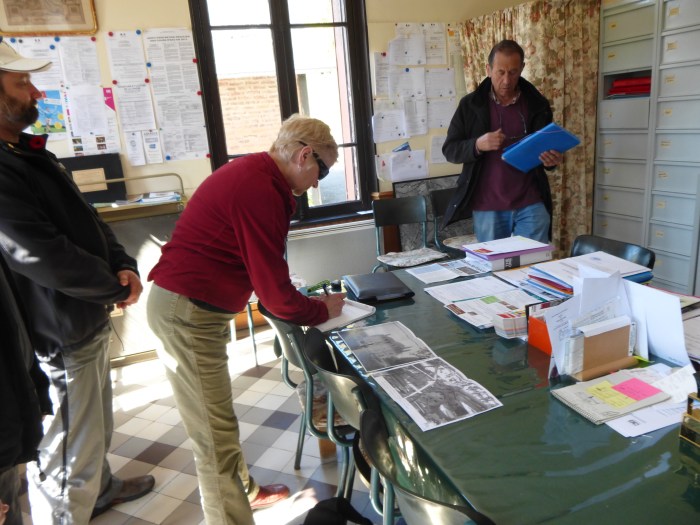
And while we were in France, she looked up the small hamlet and visited the mayor’s office, which is right next door to the town’s church. When we arrived, we were buffaloed. In the mayor’s office, a painting hung of the plane my cousin piloted being shot down. He had a glass case filled with artifacts of the plane crash. The mayor then took the time to share old photos with us of the crash, showed us the site, and even told us where Wilmot was now buried (in the nearby town of Ranville).
We also learned that every year on June 7th (the day the captured soldiers were executed) that the townspeople, veterans from the UK, and people from all over the region, turn up to pay their respects and honor the memory of those who died liberating their country. They also pay their respects to those French soldiers from the region that died during World War I in defense of their country.
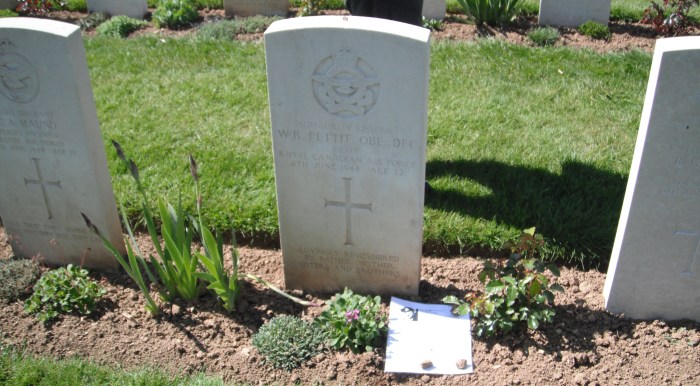
Wilmot Pettit’s headstone, Ranville War Cemetery
While we could not stay for the ceremony back in 2014, we decided to go this year after the mayor emailed us an invite. The rest of our trip, which we’d been planning ever since the last one, was to be scheduled around this ceremony.
When we arrived, a few days after landing in Paris, we got to the town and settled in at the local B and B. On the following day, we went to the small town’s church, where we were greeted by a large crowd of veterans, some men carrying flags, babgpipers, and a whole lot of people turned out in their Sunday best. The mayor came over to greet us, at which point, we began to practice our French.
At first, he heard us speaking English and asked for his translator. But my mother and I jumped in by telling him, in French, that we were the family of Wilmot Pettit. At one point, one of us must have said pilot, because that jogged his memory.
“Le pilote?” The mayor asked. We all said yes. And instantly, he remembered us. From that point onward, we were treated like honored guests. We attended the ceremony in the town’s cemetery, we stood in the front row amongst veterans who were 90 years old, and my mother was invited up to say a few words. She thanked the townspeople, the mayor, and honored her cousin in impeccable French (though she denied it!)
My mother and the mayor of Grangues speaking at the after-ceremony, July 7th, 2016
The national anthems of France, Britain and Canada all played. They flew the flags of all three countries. And of course, the mayor gave a speech which was translated into English. Afterwards, we talked to the people and shared drinks in the town hall! It was really quite amazing.
One of the most profound things about it was the sense of inclusion. Here we were, foreigners and strangers to so many people – many of whom witnessed D-Day and participated in it – and they treated us like honored guests. We all remarked afterwards how surreal and moving it was. And even now, months later, I find its still hard to wrap my head around.
More to follow, as that was just the first few days. Stay tuned!
Hey folks! With every passing week, I am making (meager) progress towards the conclusion of The Cronian Incident. And in addition to designing a cover, formatting the interior, I’ve decided to create a trailer for its upcoming release. Here is the rough-cut, which features images of the planets involved, and a basic description.
I’m thinking of sexing it up with some colored script, some additional images or animations, and any other features I can think of before the book’s release. Let me know what you think in the comments.
The latest trailer for the upcoming Star Wars: Rogue One movie was released just yesterday, which fans had to suffer through endless hours of Olympic coverage to see. Okay, maybe suffered is the wrong word, the Olympics are awesome. But so is this trailer. Bask in it. BASK I SAY!
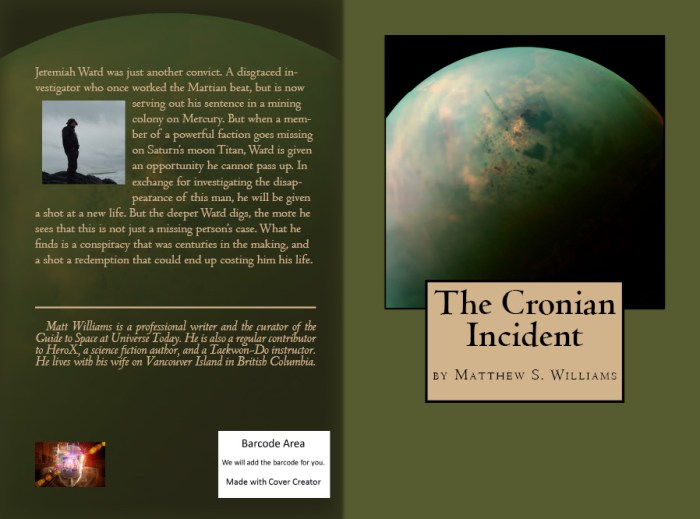
Okay, so I finally finished work on a few possible covers for The Cronian Incident. I recently got my CreateSpace account reactivated and used the lovely cover creator feature to get some visuals going. The problem is, I’ve been having trouble deciding which one I want t use. On the one hand, I can’t choose to between two themes – one that put text boxes over a full cover image, and another that uses a solid background on the front page, a shadow on the back, and puts the main image and title in boxes.
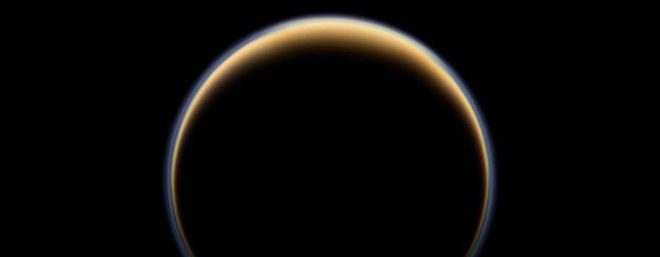
Then, I found that I couldn’t decide which image I wanted to use after all. Initially, I was all set on the green image of Titan that you can see in the first two options. But there’s also the Cassini image of Titan that shows its hazy atmosphere being illuminated from behind, giving it an eerie, yellow glow. I thought this one worked pretty well too in the mockups. So in the end, I made four covers, using both themes and both images, and figured I’d entertain some outside opinions.
Which one do you think works best? Be sure to vote below…
Good day, all! I have some more good news on the whole “novel development” front. First, I must acknowledge that I started this book many many moons ago, and it has been of a slow and tedious process lately. In the past few months, I’ve experienced several mental and inspirational log jams and been hounded by the tyranny of the uncompleted manuscript. But I’ve managed to persevere and keep going.
And a few days ago, I decided to tackle a task which I’ve been putting off until now – which is designing the cover. This is unusual for me, since cover-creation is one of my favorite aspects of story-writing. In fact, sometimes I’ve been known to create a cover even before I’ve written any of the story itself! It’s kind of an inspirational tool, being able to see what the book would look like completed. It doesn’t always pan out, but I do enjoy it!
Anyway, here is the image I thought would adorn the cover. This false-color mosaic was created by NASA using images from the Cassini space probe. It’s colorful, relevant to the story, and should fit onto a dust jacket nicely. And best of all, it’s public domain!
Saturn’s moon Titan, which figures prominently in the story. Credit: NASA/JPL – Caltech/University of Arizona/University of Idaho
Next, there’s the matter of the blurb for the back of the dust-jacket. These are where I usually have trouble. It is pretty demanding, trying to create a clear, concise and gripping description for your story. Getting just the right combination of words without being too wordy – it’s hard! But I eventually came up with the following description, which I think does a pretty good of painting a picture:
Jeremiah Ward was just another convict. A disgraced investigator who once worked the Martian beat, but is now serving out his sentence in a mining colony on Mercury. But when a member of a powerful faction goes missing on Saturn’s moon Titan, Ward is given an opportunity he cannot pass up. In exchange for investigating the disappearance of this man, he will be given a shot at a new life. But the deeper Ward digs, the more he sees that this is not just a missing person’s case. What he finds is a conspiracy that was centuries in the making, and a shot a redemption that could end up costing him his life.
And of course, there’s the bio information that will need accompany the blurb at the bottom of the rear of the dust jacket. That is something that I’ve had at the ready for awhile now, and this is how it will read:
Matt Williams is a professional writer and the curator of the Guide to Space at Universe Today. He is also a regular contributor to HeroX, a science fiction author, and a Taekwon-Do instructor. He lives with his wife on Vancouver Island in British Columbia.
I’ve only tested it a bit so far, but from what I’ve been told, the description made the book seem interesting. One person told me that he’d buy the book based on the blurb alone. However, he’s a friend so his opinion is a bit suspect :). Any thoughts or criticisms are welcome, since this is going to be the first thing people see once it is available.
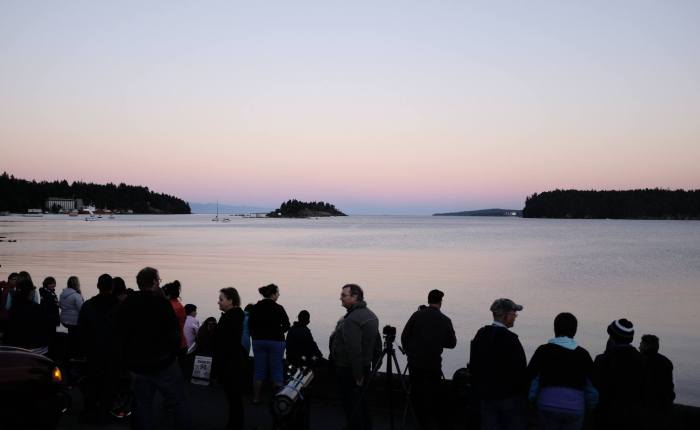
An interesting development happened once I got back from Europe. Apparently, there are people on the island that are very interested in astronomy, people who were surprised to learn that I also lived here. They are the Nanaimo Astronomy Society, a group of amateur astronomers and stargazers located in the town of Nanaimo – which is in the central Vancouver Island area, about a two hours drive from where I live.
As they explained to me, they have been following my writing at Universe Today for awhile, but didn’t realize I lived locally. Once they realized that, they asked if I would be willing to speak at their upcoming meeting. Needless to say I was flattered, especially when you consider that most of the UT team lives on Vancouver Island. I could only assume they didn’t know about the others. I mean, when you’re a chapter of the Beatles Fan Club, and the band lives in the same region, you don’t exactly invite Ringo to come talk, right?
Anyway, the topic will be “Colonizing Mars”, which will address all the current plans by federal space agencies, private corporations, and crowdfunded organizations to explore, settle and transform the Red Planet. Naturally, I want to throw in a bit about terraforming, since that’s kind of my thing these days!
Good news! Not long ago, I took part in a podcast with Liam Ginty – the man who created Voices From L5. This program deals with the subject of space exploration and colonization, and he decided to do a podcast all about terraforming. After coming across my series on the subject over at Universe Today, he contacted me, and we got to talking. By the time we were done, we had created an episode dedicated to the subject.
The episode is about 45 minutes long, and covers such issues as terraforming vs. space habitats, the ethics of terraforming, the challenges and benefits, and whether or not such a thing is likely to happen. If you’ve got some time, and don’t mind hearing my voice (I am still not comfortable hearing it), then check it out.
I’ve been busy over at Universe Today of late. In fact, as part of a promotional thing for my upcoming book – The Cronian Incident – I’ve been doing a series of articles about terraforming. And it’s actually kind of an interesting story, which I already touched on in a previous post. In any case, the series is now complete, with articles that cover everything from terraforming Mercury to terraforming the moons of the gas giants in the outer Solar System:
To give people the Cliff Notes version of this series, it is clear that at this point, humanity could colonize and terraform certain worlds in our Solar System. The only real questions are where could we? How could we? And why should we? To answer the first two, we could terraform Mars and Venus, since both planets are terrestrial (like Earth), both exist in our Sun’s habitable zone (like Earth), and have either abundant atmospheres or abundant sources of water we can work with. In any other case, the matter becomes impractical, except within certain contained environments (paraterraforming).
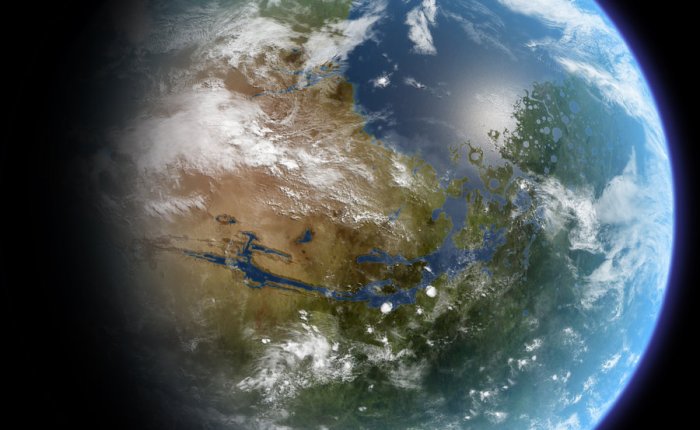
The “greening of Mars”. Credit: nationalgeographic.com
As for the third question – why should we? – that was one of the main reasons I tackled this subject. When it comes to terraforming, the questions concerning ethics and responsibility are unavoidable. And while I did my best to cover this in the course of writing the series, the real debate happened in the comments section. Again and again, people asked the following questions:
How can we live elsewhere when we can’t even take care of Earth?
Shouldn’t we take care of our problems here before we settle other worlds?
Wouldn’t those resources be better spent here?
All good (and predictable) questions. And rather than simply avoiding them or dismissing them as pedestrian, I wanted to seriously have an answer. And so I chose to reply whenever these questions, or some variation, popped up. Here’s the basics of why we should terraform other worlds in this century and the next:
1. Increased Odds of Survival: As Elon Musk is rather fond of sharing, colonizing Mars was one of the main reasons he started SpaceX (which recently made their second successful landing of the reusable Falcon 9 rocket!) His reason for establishing this colony, he claims, is to create a “backup location” for humanity. And in this, he has the support of many policy analysts and space enthusiasts. Faced with the threat of possible extinction from multiple fronts – an asteroid, ecological collapse, nuclear war, etc. – humanity would have better odds of survival if it were a multi-planet species.
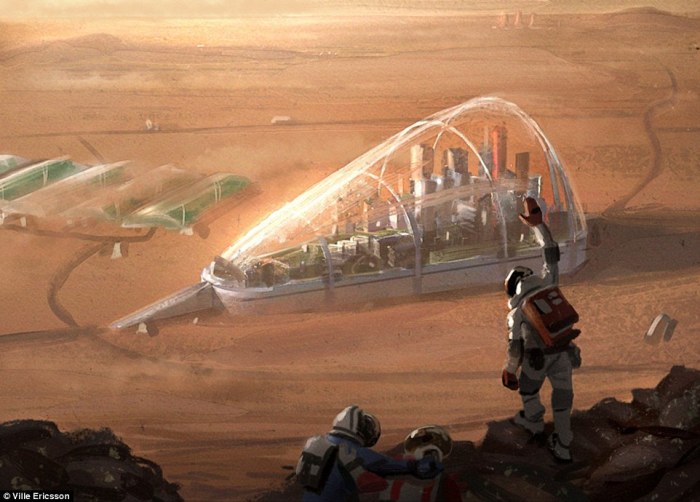
Artist’s concept for a possible colony on Mars. Credit: Ville Ericsson
What’s more, having other locations around the Solar System decreases the odds of us ruining Earth. So much of why Earth’s environment is threatened has to do with the impact human populations have on it. Currently, there are over 7 billion human beings living on planet Earth, with an additional 2 to 3 billion expected by mid-century, and between 10 and12 by the 2100. But it’s not just the number of people that matters. In addition to every human being constituting a mouth to feed, they are also a pair of hands that need to given something productive to do (lest they turn to something destructive).
Every human also requires an education, a place to live, and basic health and sanitation services to make sure they do not die prematurely. And providing for all of this requires space and a great deal of resources. As it stands, it is becoming more and more difficult to provide for those we have, and our ability to do so is dwindling (i.e. thanks to Climate Change). If we intend to survive as a species, we not only need new venues to expand to, we need other resource bases to ensure that our people can be fed, clothed, housed, and employed.
So simply put, creating permanent settlements on the Moon, Mars, and elsewhere in the Solar System could ensure that humanity survives, especially if (or when) our efforts to save Earth from ourselves fail.
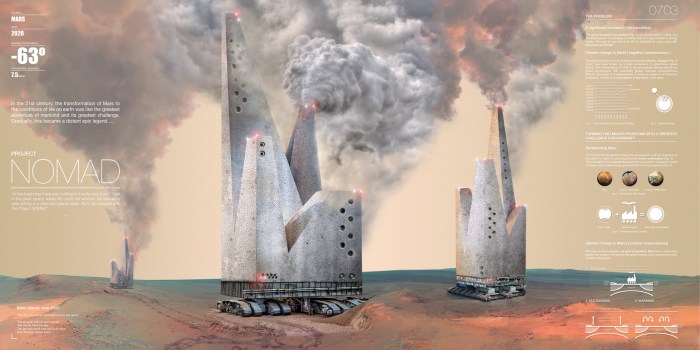
Project Nomad, a concept for the 2013 Skyscraper Competition that involved mobile factory-skyscrapers terraforming Mars. Credit: evolo.com/A.A. Sainz/J.R. Nuñez/K.T. Rial
2. Testing out Ecological and Geological Engineering Techniques:
Basically, there is no way humanity is going to be able to address Climate Change in this century if we do not get creative and start relying on techniques like carbon capture, carbon sequestration, solar shades, and artificially triggered global dimming and fungal blooms. The problem is, any or all of these techniques need to be tested in order to ensure that the results are just right. Altering our environment would not only threaten to disrupt systems human being depend upon for their livelihood, it could also threaten the lives of many people.
Such is the threat Climate Change poses, so we want to make sure the ways in which we address it helps the environment instead of screwing it up further. The best way to do that is to have testing grounds where we can try out these techniques, and where a misstep won’t result in the loss of innocent lives or billions in damages. Ergo, testing our methods on Mars and Venus will give us a chance to measure their effectiveness, while avoiding any of the political barriers and potential hazards using them on Earth would present.
3. Mars and Venus are Perfect Testing Grounds: Astronomers have been aware for some time that Mars and Venus are similar to Earth in many ways. As previously mentioned, they are both terrestrial planets that are located in our Sun’s habitable zone. But of course, they are also different in several key respects. Whereas Mars’ atmosphere is very thin, it has no magnetosphere, and its surface is extremely cold and dry, Venus has an atmosphere that it extremely dense, hot enough to melt lead, and where sulfuric acid rains are common.
Artist’s impression of a atmospheric generator on Mars. Credit: futurism.com
The reasons for this? Mars sits at the outer edge of the Sun’s habitable zone and receives less warmth. Combined with its eccentric orbit – and a lack of a protective magnetosphere that caused it to lose its atmosphere billions of years ago – this is what has led to it becoming the very cold and dry planet we are familiar with. Venus, sitting on the inner edge of the Sun’s habitable zone, suffered a runaway Greenhouse Effect early in its history, which caused it to become the extremely hot and hellish world it is today.
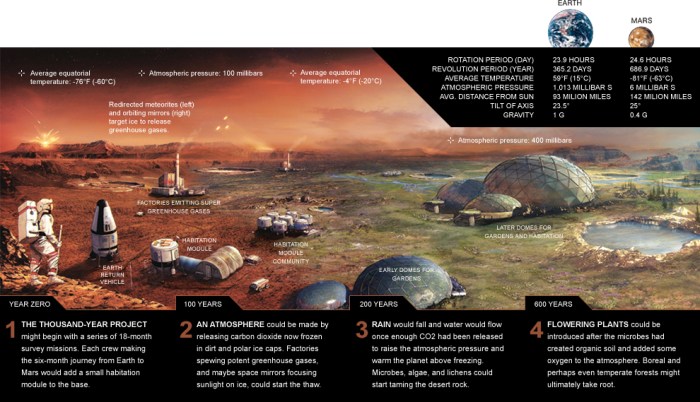
Terraforming Mars would therefore require that we thicken the atmosphere and warm it up. This means triggering a Greenhouse Effect by pumping lots of CO2 and nitrogen (probably in the form of ammonia) into its atmosphere and then converting them using cyanobacteria and other species of bacteria. So basically, to make Mars more Earth-like, we could build heavy industry there to pollute the hell out of the place – something we’ve been doing here on Earth for hundreds of years! – and then test out techniques designed to convert the atmosphere into something breathable. What we learn could then be applied here at home.
The same holds true for Venus. In order to terraform that world into something livable for humanity, the first challenge will be to arrest the runaway Greenhouse Effect there and convert the carbon dioxide/sulfur dioxide-rich atmosphere into one composed of nitrogen and oxygen gas. There are many ways to do this, and testing one or more of them out will yield crucial data for using similar techniques on Earth. In a nutshell, transforming Mars and Venus will help us save Earth.
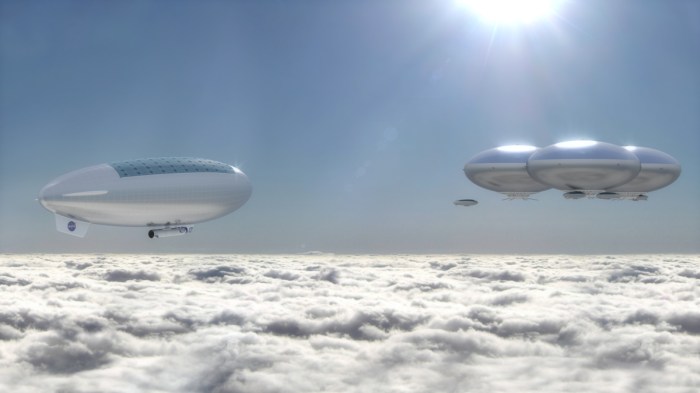
Artist’s concept of a Venus cloud city – part of NASA’s High Altitude Venus Operational Concept (HAVOC) plan. Credit: Advanced Concepts Lab/NASA Langley Research Center
4. Our Solar System has Abundant Resources: Between the Moon, Mars, Venus, Mercury, the Asteroid Belt, and the systems of Jupiter, Saturn and beyond, there are literally enough resources to last humanity indefinitely. And while we can’t hope to possess them all at once, every step in colonizing the Solar System offers us the chance to expand our resource base, conduct scientific research and exploration, add more land which we can develop and use for human settlement, and ultimately grow as a species.
To break this process down piecemeal, we must start with the Moon. By establishing a colony in its southern polar region, we could leverage the local resources to create a permanent settlement and use it as a refueling base for mission deeper into the Solar System (a move which would save billions on all future missions). Solar operations could also be built on the surface to beam energy to Earth, the Moon’s rich minerals could be mined for Earth industries, and the mining of Helium-3 could power fusion reactors all over the world.
Already, NASA is eying the Shakelton Crater as a possible location, where there is an abundance of water ice and a dome could be built over it to create a contained atmosphere. The moon’s stable lava tunnels also present a good site, since they are large enough to fit entire cities within them and would hold an atmosphere nicely. And from there, humanity could mount missions to Venus and Mars, which would in turn add their abundant supplies of minerals to our economy.
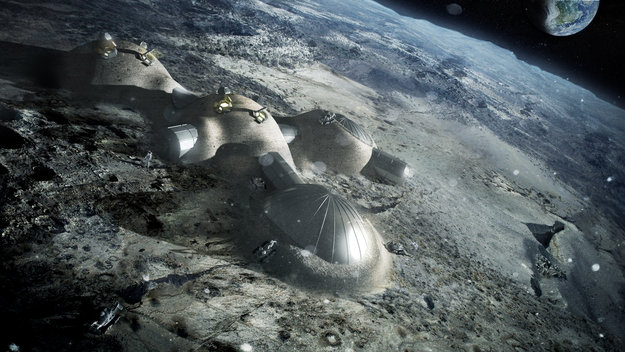
The European Space Agency’s concept for a Moon base. Credit: ESA
Mercury would also present a major opportunity for mining and solar operations. And like the Moon, colonies could be built in the permanently shaded regions around the northern and southern polar regions (where there are abundant supplies of water ice) and in underground stable lava tubes. The Asteroid Belt literally has enough minerals and ices to keep humanity supplied indefinitely (hence the interest in asteroid prospecting of late), and the outer Solar System has enough ice, volatiles, and organic compounds to do the same.
In short, step by step, the colonization and/or terraforming of our Solar System offers humanity the opportunity to become a post-scarcity race. While many decry the idea of our species expanding because of the greed and abuse we have demonstrated in the past (and continue to demonstrate today), much of this greed and abuse comes from the fact that our current economic models are based on scarcity. By removing that from the equation, it would be that much more difficult for human beings to hoard resources for themselves while denying their neighbor.
Faced with all of this, the question no is longer one of “why should we”, but rather “why shouldn’t we?” Why shouldn’t we establish a human presence elsewhere in the Solar System, knowing that it could not only help us to save Earth, but ensure our survival as a species for the indefinite future? This of course does not address all the challenges that remain in doing so, but it does tackle one of the biggest arguments there is against space exploration and colonization.
Still pic from Wanderers, by Erik Wernquist
As for the rest? Well, I’m sure we’ll tackle those questions, and then some, when the time comes. In the meantime, I encourage everyone to keep looking up at the stars and saying the question, “why not?”
Hello, everyone. As usual, I feel obliged to share some good news of the milestone-hitting variety. As the title makes abundantly clear, I’ve completed the third part in my upcoming novel, The Cronian Incident. Yes, thanks to my somewhat less than tireless efforts over the course of the past few months,this story is now three-fourths complete, and officially stands at thirty chapters and 60,000 words in length. And it’s been quite the ride so far.
Since I stopped daydreaming about (and bothering people with) this idea and began putting words to paper, I have managed to bang out the better part of a story that involves our Solar System in the late 23rd century, colonization, terraforming, and the future of humanity. And in the course of this, I’ve had to create and detail settings for Mercury, Mars, and the Jovian moon Callisto, and fill in bits of pieces on culture, history and other assorted aspects of background to boot.
Much of this has to do with setting the tone of the late 23rd century. The way I see it, humanity has passed through two major cataclysms at this point, both of which took place in the 21st century. The first was the Climate Crisis, where all over the world, economies began to collapse as drought, crop failure, and warfare led to the displacement of millions of people.
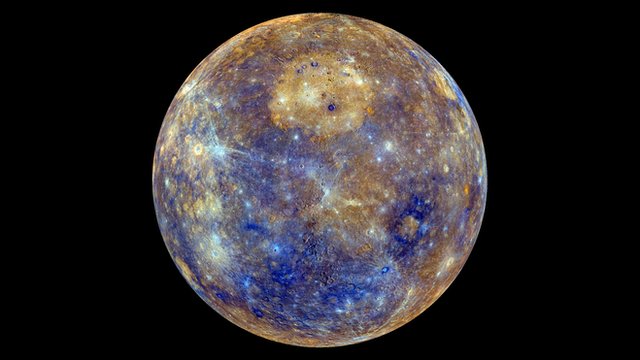
Color-enhanced map of Mercury. Credit: NASA/JPL
The second occurred shortly thereafter, when all around the world, the technological progress that has been building up since the Paleolithic exploded in a quantum leap of learning and accelerated change. Within decades, the Climate Crises began to abate, and a new world characterized by runaway change began to take over. And at about the same time, a renewed Space Age set in as humans began to migrate to the Moon, to Mars, and beyond.
And after about a century and a half of all that, the human race has now colonized the majority of the Solar System. Between Mercury, Venus, the Moon, Mars, the Asteroid Belt, Jupiter’s moons, Saturn’s moons, and of course, Earth and its millions of orbital habitats, the human race now stands at a hefty 15 billion. And across this vast interplanetary dominion, a massive economy has taken root that is beyond scarcity and want.
But there are no shortages of intrigue thanks to the forces that have shaped this new age. While the inner Solar System is populated by people who have embraced the Singularity, transhumanism, posthumanism, and runaway progress, the outer Solar System has become a new home for people looking to escape this pace of life and maintain a simpler existence. And in time, the disappearance of one person will force everyone – be they in the inner or outer worlds – to sit up and take notice.
Jupiter’s larger (Galilean) moons, Callisot, Europa, Io and Ganymede. Credit: NASA
I tell you, it’s been tiring process, getting this far. And at one point, I did declare that I had OD’d on writing about setting and world building. I mean, how can you dedicate 20,000 words to detailing a place, making it as vivid as possible for the reader, and then just switch to another? Screw plot necessity, it’s like abandoning an idea half-way! And I still have the all important one – the Cronian moon Titan – to cover.
But I’d be lying if I said that it hasn’t also been fun and that it wouldn’t be so tiring if I weren’t’ completely emotionally invested in it. And (spoiler alert!) that is where things should be the most interesting. As is usually the case, Part I through III of this four-part story have been all about establishing character, background, a sense of space and place, and introducing the various elements that drive the plot.
But in Part IV, I will not only get to write about a particularly intriguing place – Titan; capital city Huygens; dense nitrogen-methane atmosphere; principle industries, methane and ammonia harvesting; principle activities, sailing on methane lakes and gliding in low-g, cruising for action in its Yellow Light District and political dissent – but I’ll also be getting into the real heart of the plot, the mystery of the disappearing Dr. Lee!
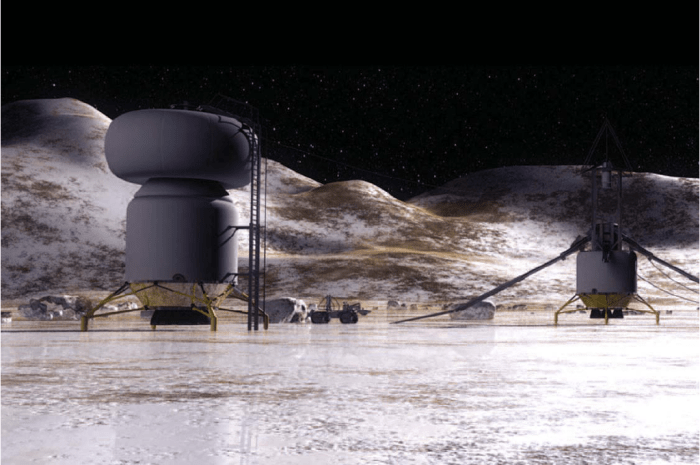
A possible base on the surface of Callisto. Credit: NASA
In the coming months, I hope to have part IV, fully edited, and in a position to be published. While it remains unclear just what form that will take – the old submission to a publishing house route, or via an independent publisher – I know that some really amazing friends and colleagues will be there to cheer it on. Hell, some of them actually read this blog, for some reason. So if you’re reading this now, then I thank you for sticking with me thus far! 🙂
You know how this is going to start, don’t you? Yes, with one of these:
In any case, here is an article that I wrote for UT recently. However, due to a surprising lack of response to the subject on social media, it never got published. So I have decided to publish it in full here. Enjoy!
Since it was deployed in March of 2009, the Kepler space telescope has been responsible for the discovery of thousands of potential extrasolar planets (aka. exoplanets). In fact, as of January 2015, Kepler confirmed the existence of 1,013 exoplanets in about 440 stellar systems, along with a further 3,199 unconfirmed planet candidates. This is certainly an impressive feat, especially when you consider the fact that it accounts for almost half of all the exoplanets discovered so far.
But earlier today, NASA hosted a news conference in which they declared that Kepler has effectively doubled the number of exoplanets it has discovered. In what is the largest single batch of discoveries to be announced at one time, NASA claimed that the Kepler mission has validated the existence of 1284 new planets with 99% percent certainty (along with 428 likely false positives).
Not only is this the largest group of discoveries made by NASA (or any space agency) to date, it doubles the number of planets in the Kepler catalog. As of May 9th, 2016, some 1,041 confirmations had been made. But with this latest addition, that number now stands at a robust 2,325. Quite the accomplishment for a mission that was nearly abandoned due to mechanical failure.
Since its deployment in 2009, Kepler has confirmed the existence of over 2000 extra-solar planets. Credit: NASA
Back in 2012, the Kepler mission suffered a setback when one of the spacecraft four reaction wheels – which are used to point the spacecraft – stopped working. This was followed by a second failure in May of 2013, which disabled the collection of science data and threatened to end the mission three years ahead of schedule.
After much consideration, NASA declared on August 15th, 2013 that they had given up on attempting to repair the reaction wheels and had instead chosen to modify the mission. By November, NASA reported that Kepler would henceforth be dedicated to searching for habitable planets around smaller red dwarf stars – a mission which they named K2 “Second Light”. This mission extension was approved shortly thereafter, and Kepler has been carrying on with this mission ever since.
And with this latest batch of discoveries, Kepler is showing that it is still pulling its weight, and then some! Of those planets confirmed in this latest batch, most fell into the class of “mini-Neptunes” – planets that are the lower limits of a gas giant’s size. The next greatest sample consisted of “super-Earths” – terrestrial planets that are larger than Earth, but significantly less than that of a gas giant.
The remainder of those discovered fell between those that were Earth-sized or Neptune-sized gas giants. And as was made clear at the NASA-hosted conference, the discovery of over 2000 more confirmed exoplanets will also be of major importance for the next-generation of space telescopes, all of which will picking up where Kepler leaves off.
The number of newly discovered exoplanets, by year. Credit: NASA
These include missions like the James Webb Telescope, the Transiting Exoplanet Space Survey (TESS), the Wide Field Infrared Survey Telescope (WFIRST), and the ESA’s Plato mission. Much like Kepler, they will be searching for more than just extra-solar planets. Using similar detection methods as Kepler, as well as coronagraphic measurements, these missions will be hunting for more worlds, and assessing their properties to see if they are capable of supporting life.
And in the meantime, there is still plenty for Kepler to do before its mission is set to expire (in October of 2016). For example, there are more than 3,000 candidate planets in the Kepler database that need to be confirmed or ruled out. And then there are the “Kepler Objects of Interest”, a list of detections that need to assessed to see if they can even be considered as true candidates.
It certainly goes without saying that this latest announcement is also a major step along the road to finding extra-terrestrial life in the Universe. The more planets we find, the greater the odds of finding ET! While it may be naive to assume that they would live under conditions similar to our own, we are looking for the low-hanging fruit first. And finding and studying more exoplanets could also help us to understand what other conditions life might flourish under.













 Stories by Williams