Cyberwars: The Month of Cyberattacks

hackers_securityThe month of August has been a busy time for online security specialists, due to numerous cyberattacks being reported close to each other. First came word that supermarket chain Supervalu had been hacked, followed by news of security breaches at a largest American medical group, the Nuclear Regulatory Commission and then the UPS Store. In all cases, the intrusions led to the theft of millions of users’ personal data.

The worst of the lot appears to have been the massive cyberattack on Community Health Systems, one of the largest hospital chains in the US that oversees 206 hospitals in 29 states. According to the company, the intrusion led to stolen Social Security numbers, patient names, addresses, birth dates and telephone numbers of some 4.5 million patients. And as usual, the attack is believed to have had the backing of a foreign government.

https://i0.wp.com/www.chs.net/wp-content/uploads/2013/12/hma-map.pngThis is the largest known attack to involve hospital patient information since the US government began tracking these types of data breaches in 2009. According to Elysium Digital data security expert Joseph Calandrino:


One possible goal of this attack is to facilitate future targeted attacks. The type of data that was stolen from the hospital system is often used to verify a person’s identify. The exposure of this data creates a risk that the hackers could leverage it to gain access to other accounts and information.

As is so often the case these days, it is believed the cyberattack originated in China. Security firm Mandiant, which investigated the breach in April and June, said the hackers belong to a group that targets crucial infrastructure, such as defense, engineering, financial services, and health care companies. It’s unclear if these hackers are affiliated with the Chinese government.

Unit-61398-Chinese-Army-Hacking-Jobs-With-Great-BenefitsVarious security experts have long accused China of waging a cyberwar on US government and private company websites. For example, a report that was released by Mandiant back in 2013 linked Unit 61398 of the China’s People’s Liberation Army to a large number of cyberattacks on US soil. However, the Chinese government has flatly denied that it is involved in cyber-espionage or hacking.

Community Health Systems has since reported that it stopped the cyberattack by removing the malicious software used by the hackers and is notifying its patients of the breach. It has also been reported that the hack may have been facilitated by the Heartbleed bug, a flaw in OpenSSL that hackers use to exploit to obtain encrypted data. The timing certainly seems apt, as the bug was revealed back in April and the attack took place between April and June.

nsasecurity_primary-100041064-largeHowever, this was were merely one of several breaches that took place over the past few months. In addition to the CHS, UPS, and numerous major outlets, cybersecurity firm Hold Security identified what was arguably the largest known data breach in history earlier this month. In this attack, the Russian cybergang Cybervor allegedly stole 1.2 billion username and password combinations and more than 500 million email addresses.

With these latest attacks, it appears that large-scale security breaches carried out by individual hackers and sponsored by nation-states is becoming the new normal. And as these kinds of attacks become more common, cybersecurity experts are concerned that people may suffer from “alert fatigue”, where they will basically cease caring about and not be aware of breaches that affect them.

RAND_hqIn addition, security experts would like people to keep in mind that there is a difference between a spike in activity and reporting on activity. Much like the problems of violence, teen sex and crime rates, there is likely a gap between an actual increase and the perception of one. As Lillian Ablon, a researcher for the RAND Corporation, explained:

Back during Operation Aurora [in 2009], when Google got hacked, Google coming out [in 2010] was a big step in the industry. Before that, companies didn’t really talk about being breached.

Legally, companies and government agencies are required to report security breaches to the public only when customer data is involved, and only in 47 states. Alabama, New Mexico, and South Dakota lack mandatory reporting laws, and few laws on the books extract penalties when a breach occurs. Still, whatever the magnitude of the number of security breaches, it’s also true that we are living in an increasingly uncertain world when it comes to keeping our data safe.

internetNaturally, public vigilance is a good policy, but its not exactly a solution. When the hacks at the Nuclear Regulatory Commission, the Community Health Systems, the Cybervor attack, and hack of the DHS, the attacks were suspected of coming from abroad. More and more, attacks are being staged from a location that is far removed from the source, and backed by third parties who are likely unknown.

Security experts believe that the eventual solution will require businesses to rethink how they operate, putting a much bigger emphasis on security. But the consequences of that could have global economic implications, if better security hurts competitiveness. In the short term, it means that customers who do business with companies that suffer security breaches will need to be that much more vigilant.

That means not reusing passwords for multiple accounts, using two-factor authentication when available, and keeping a close eye on bank statements and credit card activity. And as for the breaches themselves, there’s not much you can do except be prepared to hear about more of them, more often. For better or for worse, it is the age we live in, where big data means big data intrusion!

Sources: cnet.com, (2), (3)

Universe Today: Are Intelligent Civilizations Doomed?

Gaia_galaxyMy friend over at Universe Today, Fraser Cain, has been busy of late! In his latest podcast, he asks an all-important question that addresses the worrisome questions arising out of the Fermi Paradox. For those unfamiliar with this, the paradox states that given the age of the universe, the sheer number of stars and planets, and the statistical likelihood of some of the supporting life, how has humanity failed to find any indications of intelligent life elsewhere?

It’s a good question, and raised some frightening possibilities. First off, humanity may be alone in the universe, which is frightening enough prospect given its sheer size. Nothing worse than being on a massive playground and knowing you only have but yourself to play with. A second possibility is that extra-terrestrial life does exist, but has taken great pains to avoid being contacting us. An insulting, if understandable, proposition.

alien-worldThird, it could be that humanity alone has achieved the level of technical development necessary to send out and receive radio transmissions or construct satellites. That too is troubling, since it would means that despite the age of the universe, it took this long for an technologically advanced species to emerge, and that there are no species out there that we can learn from or look up to.

The fourth, and arguably most frightening possibility, is the Great Filter theory – that all intelligent life is doomed to destroy itself, and we haven’t heard from any others because they are all dead. This concept has been explored by numerous science fiction authors – such as Stephen Baxter (Manifold: Space), Alastair Reynolds (the Revelation Space universe) and Charles Stross (Accelerand0) – all of whom employ a different variation and answer.

kardashev_scaleAs explored by these and other authors, the biggest suggestions are that either civilizations will eventually create weapons or some kind of programmed matter which will destroy – such as nuclear weapons, planet busters, killer robots, or nanotech that goes haywire (aka. “grey goo”). A second possibility is that all species eventually undergo a technological/existential singularity where they shed their bodies and live out their lives in a simulated existence.

A third is that intelligent civilizations fell into a “success trap”, outgrowing their resources and their capacity to support their numbers, or simply ruined their planetary environment before they could get out into the universe. As usual, Fraser gives a great rundown on all of this, explaining the Fermi Paradox is, the statistical likelihood of life existing elsewhere, and what likely scenarios could explain why humanity has yet to find any proof of other civilizations.

Are Intelligent Civilizations Doomed:


And be sure to check out the podcast that deals strictly with the Fermi Paradox, from roughly a year ago:

The Fermi Paradox Explained:

The Future is Here: Cancer Drug Developed by AI

AI'sThe development of cancer drugs is a costly, expensive, time-consuming process that has a high probability rate of failure. On average, it takes 24 to 48 months to find a suitable candidate and costs upwards of $100 million. And in the end, roughly 95% of all potential drugs fail in clinical trials. Because of this, scientists are understandably looking for a way to speed up the discovery process.

That’s where the anti-cancer drug known as BPM 31510 comes in play. Unlike most pharmaceuticals, it was developed by artificial intelligence instead of a group of researchers toiling away in a lab. Created by biotech company Berg (named after real estate billionaire Carl Berg) the company seeks to use artificial intelligence to design cancer drugs that are cheaper, have fewer side effects, and can be developed in half the time it normally takes.

drugsTowards this end, they are looking to data-driven methods of drug discovery. Instead of generating cancer drugs based on chemical compounds identified in labs, the company compares tissue, urine, and blood samples from cancer patients and healthy patients, generating tens of trillions of data points that are fed into an artificial intelligence system. That system crunches all the data, looking for problems.

BPM 31510, which is the first of Berg’s drugs to get a real-world test, focuses on mitochondria – a framework within cells that’s responsible for programmed cell death. Normally, mitochondria triggers damaged cells to die. When cancer strikes, this process goes haywire, and the damaged cells spread. Berg’s drug, if successful, will be able to restore normal cell death processes by changing the metabolic environment within mitochondria.

MitochondriaSpeaking on the subject of the drug, which is now in human-clinical trials, Berg president and co-founder Niven Narain said:

BPM 31510 works by switching the fuel that cancer likes to operate on. Cancer cells prefer to operate in a less energy-efficient manner. Cancers with a high metabolic function, like triple negative breast cancer, glioblastoma, and colon cancer–that’s the sweet spot for this technology.

IBM is also leveraging artificial intelligence in the race to design better cancer treatments. In their case, this involves their much-heralded supercomputer Watson looking for better treatment options for patients. In a trial conducted with the New York Genome Center, Watson has been scanning mutations found in brain cancer patients, matching them with available treatments.

dna_cancerAll of these efforts are still in early days, and even on its accelerated timeline, BPM 31510 is still years away from winning an FDA approval. But, as Narain points out, the current drug discovery system desperately needs rethinking. With a success rate of 1 out of 20, their is definitely room for improvement. And a process that seeks to address cancer in a way that is more targeted, and more personalized is certainly in keeping with the most modern approaches to medicine.

Source: fastcoexist.com

News From Space: SpaceX Booster Explodes in Flight

spacex-falcon-9-octaweb-640x427Last week, during a test flight in McGregor Texas, a new space SpaceX Falcon 9 Reusable Development Vehicle 1 (F9R Dev 1) exploded in midair. This three-engine variant of the F9 is the latest in SpaceX’s arsenal of vertical takeoff, vertical landing (VTVL) rockets designed to allow for easy recovery and reuse. Previously, Grasshopper had only used a single Merlin rocket engine; but for this test, a three-engine version of the vehicle was being used.

The F9R Dev 1 is a second-generation test vehicle rocket based on the SpaceX Grasshopper. Built as part of SpaceX’s program to develop a fully reusable launcher system and spacecraft with all components capable of a powered landing, the F9R has lighter, retractable landing legs and is 50 percent longer than the Grasshopper. It made its first flight last April and is capable of flight operations up to 3,000 m (10,000 ft).

https://i0.wp.com/www.extremetech.com/wp-content/uploads/2014/08/exploding-spacex-rocket-grasshopper-f9r-640x357.jpgThis marks the first major failure for SpaceX’s commercial space launch program, and in a statement, SpaceX says the initiated its self-destruct sequence automatically after detecting an anomaly. Nearby residents saw the fireball and local television station KXXV caught the incident on video. From the footage (seen below), the new test rocket is seen going up, turning 90 degrees to horizontal, and then detonating with a rather neat fireball.

Mercifully, no one was harmed (including the local livestock). Following the incident, Elon Musk tweeted that the vehicle “auto-terminated,” but there were no injuries or near-injuries, and that “Rockets are tricky …” SpaceX also released the following statement saying:

Earlier today, in McGregor, Texas, SpaceX conducted a test flight of a three engine version of the F9R test vehicle (successor to Grasshopper). During the flight, an anomaly was detected in the vehicle and the flight termination system automatically terminated the mission.

Throughout the test and subsequent flight termination, the vehicle remained in the designated flight area. There were no injuries or near injuries. An FAA representative was present at all times.

With research and development projects, detecting vehicle anomalies during the testing is the purpose of the program. Today’s test was particularly complex, pushing the limits of the vehicle further than any previous test. As is our practice, the company will be reviewing the flight record details to learn more about the performance of the vehicle prior to our next test.

SpaceX will provide another update when the flight data has been fully analyzed.

spacex-falcon-9-rocket-largeIn short, SpaceX was attempting something new and exciting and it didn’t quite go as planned. And although it cost them millions of dollars, rocket scientists know from experience that a controlled detonation in the air is far better than an uncontrolled one on the ground. Should a rocket lose control and crash into the Earth, it will detonate all of its unspent fuel and can cause extensive damage and loss of life.

At this point it’s impossible to say what kind of anomaly was experienced by the rocket, but SpaceX is poring over the gigabytes of flight telemetry data to try and find out what went wrong. In the meantime, space enthusiasts are hoping people will remember that mishaps are part of the development process, and that we’ve come very far since the early days of NASA and Project Mercury, where mistakes and deaths were far more common.

And if SpaceX wants to create the world’s first reusable space launch system, and crack the cheap, commercial space travel market wide open, there are going to be a few fireballs along the way. But as long as it’s just the test launches that explode, we should count our blessings. And in the meantime, be sure to check out the footage obtained by KXXV of the failed test flight:


Sources:
extremetech.com, gizmodo.com

Tech for the Developing World: Inflatable Incubators

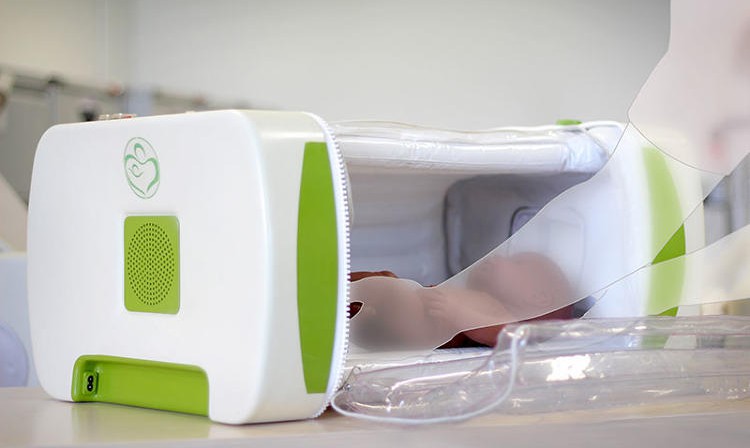
inflatable_incubator_0One of the greatest challenges to combating problems in the developing world – like disease and infant mortality – is the fact that the necessary infrastructure and equipment isn’t always available. This is especially the case in war-torn Syria, where premature babies are dying due to a lack of incubating equipment. Hence why James Roberts came up with his Inflatable Incubator, a cheap and easy-to-transport neonatal device.

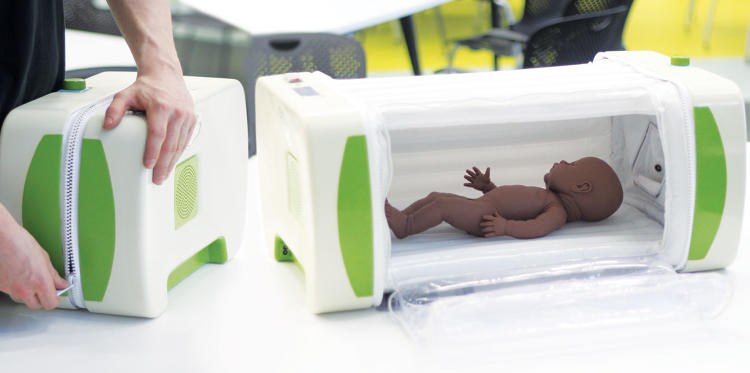
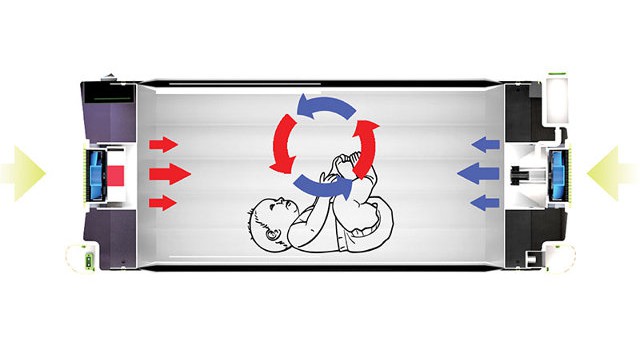
Designed to look like an accordion-like instrument known as a concertina, each end of the inflatable shell case contains electronics, including a ceramic heater, some fans, a humidifier, and an Arduino computer. The collapsible middle section extends out and can be inflated into a bed. As Roberts explained:

This allows the incubator to fit into a very compact space for storage or transportation, but still offer the same volume of a first world incubator when inflated for the child’s comfort.

inflatable_incubatorThe idea came to him after Roberts saw a video about child death in Syrian refugee camps and he decided to develop the idea as part of a final year project at a British university. So far, there are two prototypes: a purely functional clear plastic box that demonstrates the technology, and an “aesthetic” version that shows off what the product will eventually look like. Roberts is now trying to interest charities in adopting the project.

There are already cheap baby-warming products aimed at the developing world, such as the Embrace – a clever sleeping bag that can maintain a 37° C (98° F)temperature for up to four hours. Roberts’s idea has a few extra features, like a humidity sensor, a temperature probe, and LED lights for nighttime use. The design was also entered in this year’s Dyson Awards, an international student design award program that rewards problem-solving ideas.

inflatable_incubator_1To Roberts, his invention is not just about offering a solution to a problem that all-too-common in certain regions of the world. It’s also about addressing a technology gap that has existed for far too long. As he explained it:

Neonatal intensive care units have been around since 1922. So why, almost 100 years later is this still a huge problem in some parts of the world? I believe my design helps solve this problem and could allow for certain children to gain a positive start in life, greatly decreasing the numbers of premature child deaths throughout refugee camps.

As always, its a question of access. And making technologies more accessible in the developing world is one of the greatest challenges facing modern researchers and developers.

Source: fastcoexist.com

News From Space: Earth Organisms Found In Space!

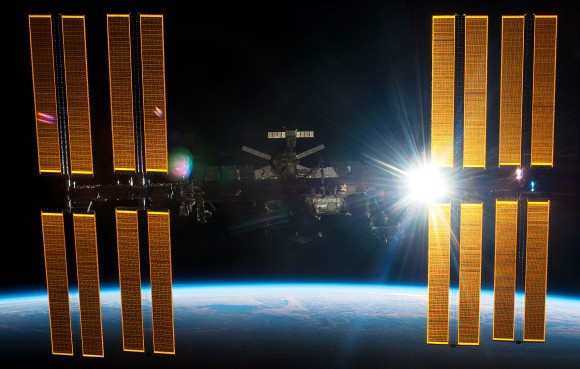
space_organismDuring a routine spacewalk to clean the outside of the space station, a team of Russian astronauts reportedly found organisms clinging to the side of the International Space Station. After analyzing the samples they took, they identified the organisms as sea plankton that likely originated from Earth, but couldn’t find a concrete explanation as to how these organisms made it to the ISS — or how they managed to survive.

Though NASA has so far been unable to confirm whether or not the Russians truly did discover sea plankton clinging to the exterior of the station. But according to the chief of the Russian ISS orbital mission, Vladimir Solovjev, these findings are legitimate and “absolutely unique.” And there is some scientific precedent for certain creatures being able to survive the vacuum of space.


tardigrade-electron-scanning-colorizedConsider tardigrades, for example. These water-dwelling microscopic invertebrates that are known to be able to survive a host of harsh environments. They can survive extreme temperatures (slightly above absolute zero to far above boiling), amounts of radiation hundreds of times higher than the lethal dose for a human, pressure around six times more than found in the deepest parts of the ocean, and the vacuum of space.

The organisms found on the ISS aren’t tardigrades, but the little invertebrates show that some living organisms from Earth can indeed survive the harshness of space. But the real mystery is how they made it all the way up there, 330 km (205 miles) above Earth. The scientists have already dismissed the possibility that the plankton were simply carried there on a spacecraft from Earth, as the plankton aren’t from the region where any ISS module or craft would’ve taken off.

International-Space-Station-ISS-580x441The working theory is that atmospheric currents could be scooping up the organisms then carrying them all the way to the space station, though that would mean the currents could travel to astonishing altitudes. Living organisms have been found far above Earth before, such as microbes and bacterial life discovered at altitudes of 16 to 40 kms (10 and 24.8 miles) respectively into the atmosphere.

Though these numbers are a far cry from 330 km. For now, all that can be done is to wait and see if the Russian team confirms the findings with NASA. Then, maybe the two factions can work together in order to figure out how plankton made it all the way up into space, and perhaps even discover exactly why the plankton can survive. The organisms aren’t exactly the first confirmed discovery of alien life, but they do pose another fascinating mystery.

Sources: extremetech.com, sploid.gizmodo.com, en.itar-tass.com

News from Space: Dream Chaser Airframe Unveiled

dream-chaser-dockedWith the cancellation of the Space Shuttle program, and the termination of NASA’s operations with the Russian Federal Space Agency (Roscosmos), NASA has been pushing ahead with several programs designed to restore their access to low Earth orbit and the International Space Station (ISS). One such program is the Dream Chaser, a joint venture between the Sierra Nevada Corporation and Lockheed Martin that aims to create a winged mini-shuttle.

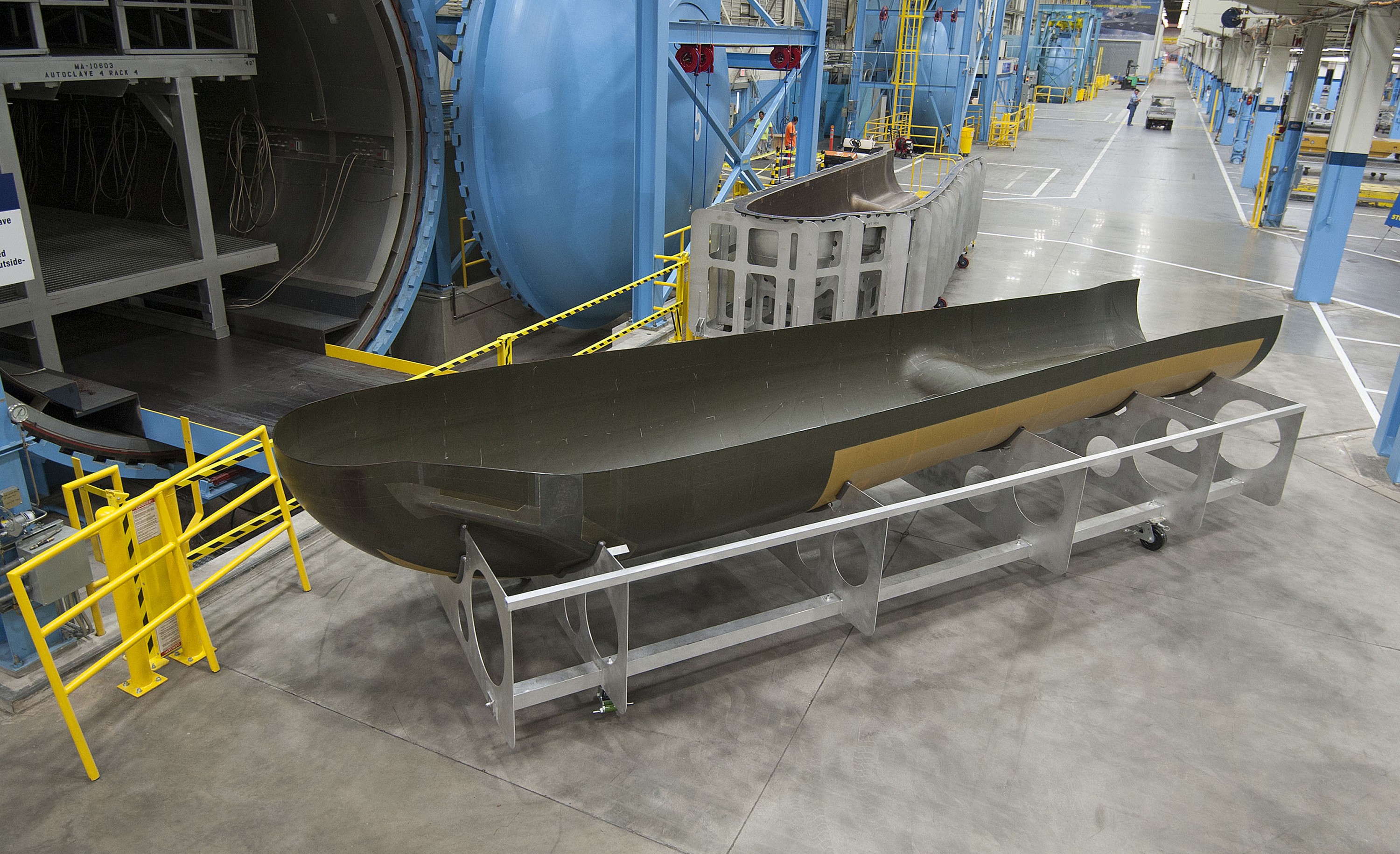
Earlier this month, the program reached an important milestone when the composite airframe structure was unveiled at a joint press conference by Sierra Nevada Corporation and Lockheed Martin at the Fort Worth facility. The assembly of the airframe took place at NASA’s Michoud Assembly Facility (MAF) in New Orleans, where Lockheed Martin is busy fabricating the structural components for the composite structure.

Dream Chaser at autoclave FP141497 07_31_14From here, the completed components are shipped to Lockheed Martin’s Aeronautics facility in Fort Worth, Texas for integration into the airframe and assembly. Designed to be launched into orbit atop a United Launch Alliance (ULA) Atlas V rocket and then fly back and land on its power, the Dream Chaser will carry a mix of cargo and up to a seven crewmembers to the ISS before landing on commercial runways anywhere in the world.

According to Mark N. Sirangelo, corporate vice president of Sierra Nevada’s Space Systems, the company chose to partner with Lockheed Martin because of its long history in the development of commercial aerospace technology:

As a valued strategic partner on SNC’s Dream Chaser Dream Team, Lockheed Martin is under contract to manufacture Dream Chaser orbital structure airframes… We competitively chose Lockheed Martin because they are a world leader in composite manufacturing, have the infrastructure, resources and quality control needed to support the needs of an orbital vehicle and have a proven track record of leading our nation’s top aviation and aerospace programs. Lockheed Martin’s diverse heritage coupled with their current work on the Orion program adds an extra element of depth and expertise to our program. SNC and Lockheed Martin continue to expand and develop a strong multi-faceted relationship.

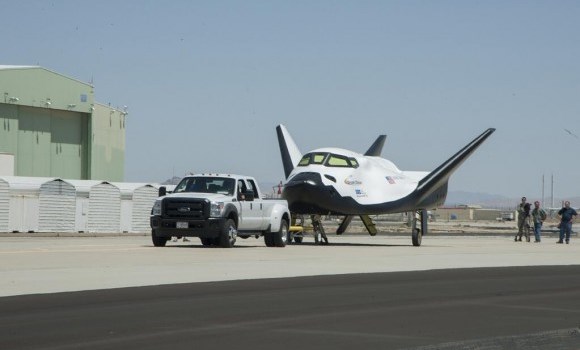
dream-chaser-test1Dream Chaser measures about 9 meters (29 feet) long with a 7 meter (23 foot) wide wing span, and is about one third the size of the Space Shuttle Endeavor and all other NASA orbiters – which were retired beginning in 2011. Upon completion of the airframe manufacturing at Ft Worth, it will be transported to SNC’s Louisville, Colorado, facility for final integration and assembly.

SNC announced in July that they successfully completed and passed a series of risk reduction milestone tests on key flight hardware systems that brought the private reusable spacecraft closer to its critical design review (CDR) and first flight. The Sierra Nevada Corporation is now moving ahead with plans for the Dream Chaser’s first launch and unmanned orbital test flight in November of 2016, which will take place atop an Atlas V rocket from Cape Canaveral, Florida.

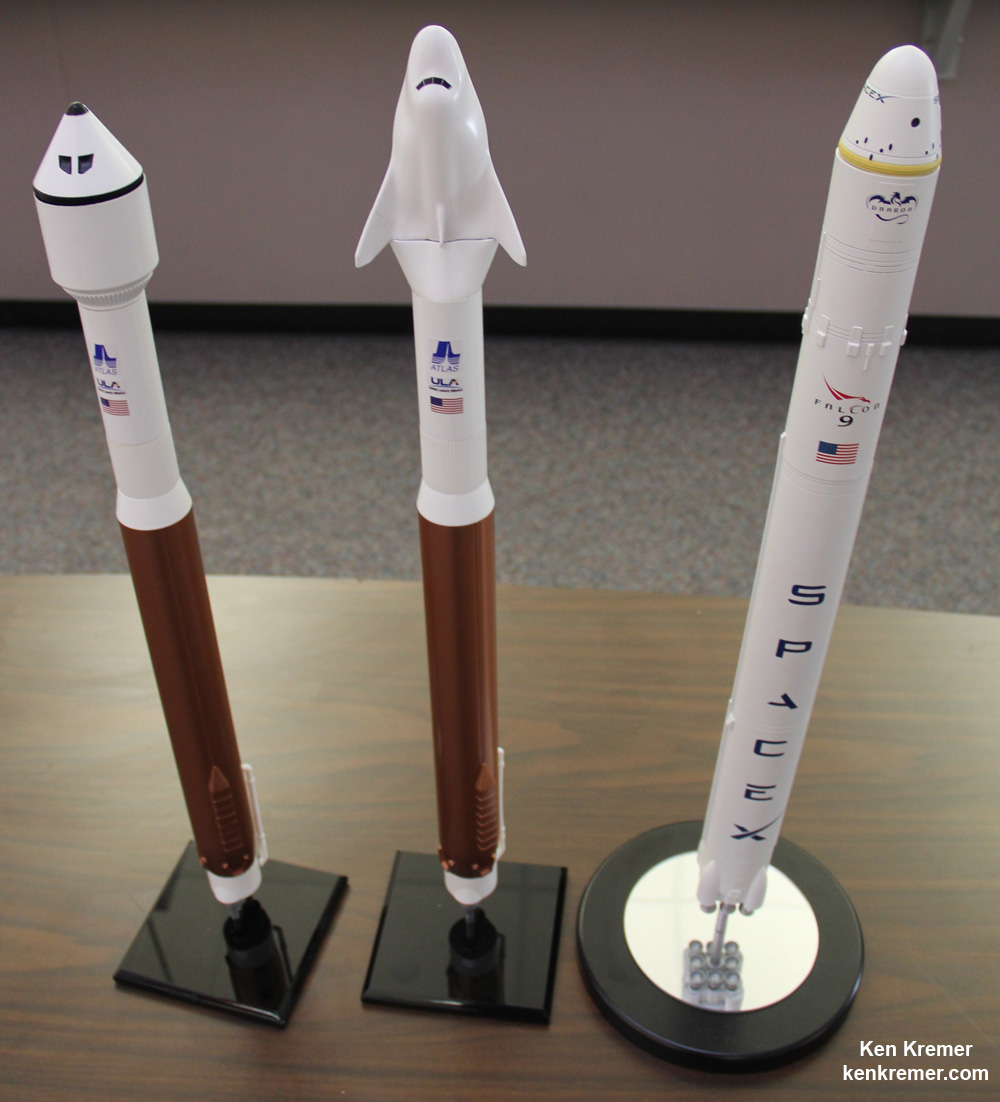
dream_chaserDream Chaser is among a trio of US private sector manned spaceships being developed with seed money from NASA’s Commercial Crew Program in a public/private partnership to develop a next-generation crew transportation vehicle to ferry astronauts to and from the International Space Station by 2017 – a capability totally lost following the space shuttle’s forced retirement in 2011.

These include the SpaceX Dragon and Boeing CST-100 ‘space taxis’, which are also vying for funding in the next round of contracts to be awarded by NASA around September 2014. Between a reusable mini-shuttle, a reusable space capsule, and reusable rockets, NASA not only hopes to restore indigenous space capability, but to drastically cut costs on future space missions.

Commercial-Crew-vehicles_Ken-Kremer-

Source: universetoday.com

The Future of Flight: VR Fighter Pilot Training

f-35sThe latest breeds of military aircraft are naturally smarter, faster, and more stealthy than their predecessors. Known as Fifth Generation craft, they are designed to incorporate numerous technological advances – like Low Probability of Intercept Radar (LPIR), supersonically launched guided missiles, a wealth of sensors, highly-integrated computer systems that provide full situational awareness, and automated targeting.

The problem is, these planes are too powerful to be trusted to the untrained. This creates a paradoxical situation where  recruits have to learn how to fly them before they can be allowed to fly them. This is especially so during Red Flag training, where pilots take part in advanced aerial combat exercises intended to prepare roughly 27,000 pilots and engineers for warfare every year.

Sen. Daniel K. Inouye memorial service in HawaiiThe solution, according to General Mike Hostage, is to train pilots in virtual reality in every facet of fifth generation fighter jet technology. It’s what is known as “Live Virtual Constructive” (LVC) training, which the military is increasingly turning to because it is a major cost saver.  Every branch is feeling the financial squeeze, and simulated training is a popular idea since it cuts down on the time it takes to get a pilot airborne and the cost of launching a jet.

As Hostage explained during an Air Force Association speech back in July:

The fifth generation brought us capabilities and lethalities that are straining my abilities at Red Flag to produce that same realistic combat environment. I can’t turn on every bell and whistle on my new fifth-generation platforms because a) they’re too destructive, and b) I don’t want the bad guys to know what I’m able to do… I will still do Red Flags, I will still do live training in live platform. But the place where I will be able to take the gloves off, the place where I can turn on all the bells and whistles and get full capability is going to be in the virtual constructive arena.

AFAMSIn addition to the cost-saving benefits, the US Air Force has embraces the technology thanks in no small part to the new head of the Air Force Agency for Modeling and Simulation (AFAMS), where much of the research into virtual reality training is being done. Colonel Franz Plescha, who was instituted as the agency’s new commander back in July, is a committed futurist who believes there is great potential in warfighting simulation technology.

A graduate of the United States Air Force Academy in 1987, Plescha’s most recent assignment (from July 2010 to June 2013) was as the Commander of the Warrior Preparation Center of the Einsiedlerhof Air Station in Germany. Here, he became intimately familiar with the kind of software and simulations that are designed to help commanders simulate the conduct of combat operations without ever having to put lives in danger.

F-22A_Raptor_-03-4058As he made clear, upon taking the helm at AFAMS, he refuses to waste any time on making the integration happen:

I personally believe the differences between live and simulation will continue to blur. Live or simulation? What’s the difference? What we call simulation today will become so real, it may actually influence our enemies in the future. Just imagine how that could change combat in the future.

But of course, one has to wonder if this vision is not already here, since digitally-assisted situational awareness, unmanned drones and cyber warfare are already present in militaries the world over. And as all other aspects of combat training become increasingly digitized, the distinction between simulation and warfare are themselves likely to become increasingly blurred.

Sources: motherboard.vice.com, afams.af.mil, teamorlando.org

Climate Crisis: Visualizing the Effects of Climate Change

future-summer-heat-20140709-001Climate Change means more than just on average hotter temperatures year round. There are also numerous consequences for sea levels, glaciers, weather patterns, weather stability, crop growth, fisheries, wildlife, forest fires, disease, parasites, rivers and fresh water tables. Explaining it can be a challenge, which is why visual tools like tables, maps and charts are so very useful.

Unfortunately, these too can seem bland and technocratic, and fail to capture the true extent and critical nature of Climate Change. Luckily, this past summer, a season that has been marked by uncharacteristically cool and hot temperatures, two particularly useful visual aids have been produced that seek to remedy this. By combining data-driven predictions with aids that are both personal and global in outlook, they bring the consequences of Climate Change home.

1001-blistering-summersThe first is known as 1001 Blistering Future Summers, a tool produced by the Princeton-based research and journalist organization Climate Central. This interactive map illustrates much hotter summers will become by the end of the century if nothing is done to stem global warming. Users simply type in the name of their hometown and the map compares current temperatures in their town to how high they will be and finds the geographic equivalent.

On average, according to Climate Central, daytime summer temperatures will be 4 to 6° Celsius (7 to 10° Fahrenheit) warmer across U.S. cities. That translates to most cities in the U.S. feeling like Florida or Texas feel in the summer today. For example, in the future, Boston will feel like North Miami Beach. And Las Vegas, where temperatures are projected to an average of 111 degrees, will feel more like Saudi Arabia.

dynamics_ccAs you can imagine, changes like these will have drastic effects that go far beyond scorching summers and inflated AC bills. Furthermore, when one considers the changes in a global context, and they will be disproportionately felt, they become even more disconcerting. And that is where the series of maps, collectively known as the “human dynamics of climate change”, come into play.

Developed by the U.K. Met Office (the official British weather forecast service) with the U.K. Foreign Office and several universities, they start with a “present-day” picture map – which shows trade in various commodities (wheat, maize, etc), important areas for fishing, routes for shipping and air freight, and regions with high degrees of water stress and political fragility.

dynamics_ccwThen the maps get into specific issues, based on climate forecasts for 2100 that assume that nothing will be done to stop global warming. You can see, for example, how higher temperatures could increase demand for irrigation water; how parts of the world could see increases and decreases in water run-off into rivers; how different areas are set for more flooding; and how the warmest days in Europe, parts of Asia, and North America are projected to be 6°C warmer.

The poster also has summaries for each region of the world. North Africa, for instance, “is projected to see some of the largest increases in the number of drought days and decreases in average annual water run-off.” North America, meanwhile, is forecast to see an increase in the number of drought days, increasing temperatures on its warmest days, and, depending on the region, both increases and decreases in river flooding.

climate-changeThe overall impression is one of flux, with changing temperatures also resulting in vast changes to systems that human beings heavily rely on. This is the most frightening aspect of Climate Change, since it will mean that governments around the world will be forced to cooperate extensively to adapt to changes and make do with less. And in most cases, the odds of this aren’t good.

For instance,the Indu River, a major waterway that provides Pakistan and India with extensive irrigation, originates in Pakistan. Should this country choose to board the river to get more use out of its waters, India would certainly attempt to intervene to prevent the loss of precious water flowing to their farmers down river. This scenario would very easily escalate into full-scale war, with nuclear arsenals coming into play.

climate_changetideThe Yangtze, China’s greatest river, similarly originates in territory that the country considers unstable – i.e. the Tibetan Plateau. Should water from this river prove scarcer in the future, control and repression surrounding its source is likely to increase. And when one considers that the Arab Spring was in large part motivated by food price spikes in 2010 – itself the result of Climate Change – the potential for incendiary action becomes increasingly clear.

And Europe is also likely experience significant changes due to the melting of the Greenland’s glaciers. With runoff from these glaciers bleeding into the North Atlantic, the Gulf Stream will be disrupted, resulting in Europe experiencing a string of very cold winters and dry summers. This in turn is likely to have a drastic effect on Europe’s food production, with predictable social and economic consequences.

Getting people to understand this is difficult, since most crises don’t seem real until they are upon us. However, the more we can drive home the consequences by putting into a personal, relatable format – not to mention a big-picture format – the more we can expect people to make informed choices and changes.

Sources: fastcoexist.com, (2), climatecentral.org, metoffice.gov.uk

News From Mars: Curiosity Celebrates 2 Years!

curiosity_peakEarlier this month, Curiosity marked its second year on the Red Planet, and this anniversary comes amidst plenty of exciting news and developments. Ever since the rover touched down at the Bradbury Landing site inside the Gale Crater on August 5, 2012 at 10:31 pm PDT (August 6, 05:31 GMT), it has been busily searching for signs that life once existed on Earth’s neighbor. And as it enters into its third year of exploration, it is getting closer to accomplishing this lofty goal.

The nuclear-powered explorer is the largest, most advanced rover ever built. And since nothing like it had ever flown before and the maintenance facility was over 160 million kilometers (1oo million miles) away, the first months that Curiosity spent on Mars involved an array of system tests before it took it first tentative rolls across the Martian sands on its roundabout path to Mount Sharp.

curiosity_roadmap1Curiosity’s main mission was to find out if there are any places on Mars where life could have once existed – specifically, areas displaying minerals and geology that could have been produced by water. The Bradbury Landing site, where it touched down, turned out to be very close to an ancient dried lake bed in an area named Yellowknife Bay. According to NASA, this lake bed may have been able to sustain microbial life billions of years ago.

And then, barely six months after landing, the scientists struck gold when they drilled into a rock outcrop named “John Klein” at Yellowknife Bay and unexpectedly discovered the clay bearing minerals on the crater floor. This was the first instance of Curiosity finding clay-bearing minerals. or phyllosilicates, which are a key sign that organic molecules could exist on the planet.

Curiosity_drillingsAs Curiosity Project Scientist John Grotzinger of the Caltech said in a statement to mark the anniversary:

Before landing, we expected that we would need to drive much farther before answering that habitability question. We were able to take advantage of landing very close to an ancient streambed and lake. Now we want to learn more about how environmental conditions on Mars evolved, and we know where to go to do that.

Compared to its first year, which was marked by many firsts – such as the first drilling operation on Mars, the first laser firing, and first UV night scans – Curiosity’s second year on the Red Planet has been more routine. However, it hasn’t been without its share of excitement. In February, the rover cleared a dune that blocked its progress and in July it negotiated a detour around rocky terrain at Zabriskie Plateau.

curiosity-2nd-year-2However, by far, the majority of the rovers second Earth year on the Red Planet has been spent driving as fast as possible towards a safe entry point to the slopes of Mount Sharp. To date, Curiosity’s odometer totals over 9.0 kilometers (5.5 miles) since landing inside Gale Crater on Mars in August 2012, and her on board camera has snapped over 174,000 images – many of which have been transformed into panoramic shots of the surface.

The desired destination for the rover is now about 3 kms (2 miles) southwest of its current location. This consists of a bedrock unit that for the first time is actually part of the humongous mountain known as Mount Sharp. As the primary destination on her ongoing mission, this layered mountain in the Gale Crater towers 5.5 kilometers (3.4 miles) into the Martian sky, and is believed to hold the most compelling evidence of life yet.

mountsharp_galecraterThe sedimentary layers in the lower slopes of Mount Sharp are the principal reason why the science team specifically chose Gale Crater as the primary landing site. Using high resolution spectral observations collected by NASA’s powerful Mars Reconnaissance Orbiter (MRO), they were able to determine the presence of deposits of clay-bearing minerals. or phyllosilicates, a key sign that organic molecules could exist on the planet.

In late July of this year, the rover arrived in an area of sandy terrain called “Hidden Valley” which is on the planned route ahead leading to “Pahrump Hills”. Scientists anticipated that the outcrops here would offer a preview of a geological unit that is part of the base of Mount Sharp for the first time since landing. However, the sharp edged rocks caused significant damage to the rovers six aluminum wheels, forcing it to make a detour.

Mars_rovermapThis detour will take Curiosity to a similar site called “Bonanza King” to carry out its fourth drilling mission. According to NASA, this is no great loss because the two areas are geologically connected and the space agency is keen to look at a formation that is different from the crater floor formations encountered so far. Engineers are studying Bonanza King to see if its is suitable for drilling by assessing whether or not the plates seen on the surface are loose.

When drilling operations resume, NASA will study alternative routes to Mount Sharp and determine how well the rover’s wheels can handle sand ripples. However, as Dr. Jim Green, NASA’s Director of Planetary Sciences, said during an interview during the rover’s second anniversary in Washington, DC : “Getting to Mount Sharp is the next big step for Curiosity and we expect that in the Fall of this year.”

Godspeed, little rover! And I do hope that it finds the long-sought-after organic particles it has been looking for since the mission began. This discovery will not only show that life once existed on Mars (and still does in some capacity) it will also be one of the greatest scientific finds of all time, and maybe even serve as the starting point for ensuring that it can exist again.

terraforming

Sources: universetoday.com, gizmag.com, (2)