Sid Meier’s Civilization: Beyond Earth

sidmeiers_civbeyondearthSid Meier’s Civilization II is one of my favorite games of all time. I can’t tell you how many hours I spent playing this strategy game, even years after its release. The spinoff, Sid Meier’s Alpha Centauri, is another favorite that I still own. And despite them not being my favorites, Civ III, IV, and even V are all in my player chest. As a lifelong fan, I am usually pretty enthused when a new entry comes along.

So when Beyond Earth was announced, I began paying attention. Similar to what Alpha Centauri did, the game follows an off-world expedition as it tries to establish a human settlement on a distant planet. As a victory condition in all the previous games, this sort of spinoff is a natural extension of the Civilization universe. Much like in the regular games, you establish settlements, research technologies, and compete with other factions for dominance.

sid_meiers_civilization-beyond_earth-pyramidsBut what I especially like about these versions is the speculative nature of it all. As a future faction that is far removed from Earth, you have to deal with alien ecology and biology, research technologies that do not yet exist, unlock some of the fundamental mysteries of the universe, and even experience the technological and/or existential singularity. It’s way cool!

As the commercial description reads:

Sid Meier’s Civilization®: Beyond Earth™ is a new science-fiction-themed entry into the award-winning Civilization series. As part of an expedition sent to find a home beyond Earth, lead your people into a new frontier, explore and colonize an alien planet and create a new civilization in space. A New Beginning for Mankind is coming Fall/Autumn 2014.

According to Steam, the official release date is October 24th 2014. Check out the Announce Trailer below:

Remembering The Great War

Tower-of-LondonThis past August 5th marks the centennial of the beginning of one of history’s greatest follies, otherwise known as World War I and the Great War. And all over the world, this anniversary is being marked in a number of ways. But in London, a particularly interesting display has been created by artist Paul Cummins and designer Tom Piper that gives new meaning to the term “swords into plowshares”.

Using Tower of London, an institution that once represented oppression and imprisonment, the artists creatively arranged a series of red ceramic poppies – 888, 246 to precise. Each one represents a British soul who died during the war. Resembling blood pouring forth, the poppies extend from a window and then sweep into the Tower’s the moat, giving a visceral casualty-visualization to the extreme death toll.

Tower-of-London-1The last poppy will be “planted” November 11, the date WWI ended and the poppies will be available for purchase. As dreamed up by artist Paul Cummins and designer Tom Piper, the display – which is known as “Blood Swept Lands and Seas of Red” – was inspired by the words Cummings found in the will of a fallen solider. As he explained in an interview with The Guardian:

I don’t know his name or where he was buried or anything about him. But this line he wrote, when everyone he knew was dead and everywhere around him was covered in blood, jumped out at me: ‘The blood-swept lands and seas of red, where angels fear to tread.’

This latest display which attempts to visualize the costs of war in the same way “The Fallen” commemorated all those who fell at Arromanches Beach on D-Day. Created by British artists Jamie Wardley and Andy Moss, whose medium is most often sand, the artists and an army of 500 volunteers used rakes and stencils to create the silhouettes of the 9000 soldiers who fell on the beaches of Normandy on June 6th, 1944.

Arromanches_The FallenAs you can see from the aerial photograph above, the visualization drives home the terrible loss of human life in a way that cold statistics never can. This artistic display was made in honor of Peace Day last year, which has been held on Sept.21st of ever years since 1982. Having been to Arromanches this past April, I am sorry to say that I missed it. But such displays are short-lived, which only serves to add to their poignancy.

This past June 6th was a time of sober reflection and commemoration as well. This year also marked the 70th anniversary since the Normandy invasion, and the occasion was not only a time to honor those who fell in what was arguably the most ambitious undertaking in history, it was also a time for world leaders to come together and show their commitment to peace.

remembrance_day___poppy_day_by_daliscarIt has been a historic year, of that there is little doubt. And these two anniversaries are well-paired, drawing attention to two World Wars that were the most destructive in human history, but also inextricably linked. In total, some 90 million people died in both conflicts combined (thought estimates vary) and insisting that people remember how it all began is an opportunity to ensure that it never happens again.

As said before, the last poppy will be planted on Nov.11th, 2014 to mark the end of the war. To purchase one of these, simply click here.

Sources: fastcocreate.com, (2), poppies.hrp.org.uk

An End to HIV: HIV Remove from Cultured Cells

https://i0.wp.com/292fc373eb1b8428f75b-7f75e5eb51943043279413a54aaa858a.r38.cf3.rackcdn.com/health-fitness_01_temp-1357384489-50e80b29-620x348.jpgAt the closing ceremony of the AIDS 2014 conference a few weeks ago in Melbourne, Australia, many of the speakers – including longtime AIDS researcher and International AIDS Society Presidential Award winner Eric Goosby – told of how utterly terrifying the disease seemed 30 years ago. And while that fear is not gone, it has since diminished, replaced by and large with a sense of hope that the disease will be eradicated.

According to UNAIDS – the Joint United Nations Programme on HIV/AIDS, which is dedicated to destroying the disease by 2030 – the medical community has learned much in the past few years and stands a good chance at accomplishing this goal. And with new advances being announced every few months, hopes for a world in which this terrible disease no longer exists all seem firmly on track.

UNAIDSConsider this latest development, which comes from the Temple University School of Medicine in Philadelphia. Here, researchers have discovered how to permanently extricate HIV-1 from human cells, effectively curing a patient of the disease. Combined with new vaccines that have shown the ability to block infection (and in some cases, even reverse it), this news may yet be reason for even greater hope.

One of the main issues in the treatment of HIV-1 is not simply that it is expensive, but that antiretroviral therapy have terrible side effects that can speed up diseases more commonly associated with aging or can cause co-infections, such as Hepatitis C, to become worse.  Added to this is that HIV is a tricky and tenacious disease that becomes part of a patient’s DNA, making it virtually impossible to eradicate.

https://i0.wp.com/images.gizmag.com/gallery_lrg/scientistseliminatehivfromhumancells.jpgHowever, researchers from Temple University School of Medicine have found a way to cut the infected genes out, potentially eradicating the virus for good and negating the need for lifelong ARV treatment. The technique uses a DNA-snipping enzyme, a nuclease, and a targeting RNA strand to hunt down the genome and cuts the HIV-1 DNA from it. The cell is able to repair its own genomes, essentially sewing itself together again, only now HIV-free.

This treatment will work in varied cell types such as the T-cells and monocytic cells that harbor HIV. In designing the molecular tools, researchers chose nucleotide sequences that do not appear in any coding sequences of human DNA to avoid what they call off-target effects, where patient’s cells or own DNA might be damaged. The technique may also be applicable against many other viruses.

There are still serious hurdles, like how to get the treatment into each, individual cell. Also, HIV-1 is known for mutations, and every patient has their own viral sequence. This means that there can be no single, prescriptive treatment for it. However, another potential upside is that there is the chance this may be used not simply as a treatment but also a vaccine as cells containing the nuclease-RNA combination do not acquire the HIV infection.

http://www.templehealth.org/AssetMgmt/getImage.aspx?assetid=1152Dr. Kamel Khalili, Professor and Chair of the Department of Neuroscience at Temple, calls it an “important step” towards the eradication of AIDS, though it is still years away from the clinical stage. As he put it:

We want to eradicate every single copy of HIV-1 from the patient. That will cure AIDS. I think this technology is the way we can do it.

Though it is not the one-shot breakthrough many have been hoping for, this enzyme-based treatment is another step along the long road towards the end of HIV and another nail in its coffin. As long as treatments exist that are not only able to treat and block, but also fight the disease, there is much reason for hope.

And be sure to check out this video from Temple University, where Dr. Khalili explains the medical breakthrough:


Sources:
gizmag.com, templehealth.org

News from Space: NASA Showcases New Rover Tools

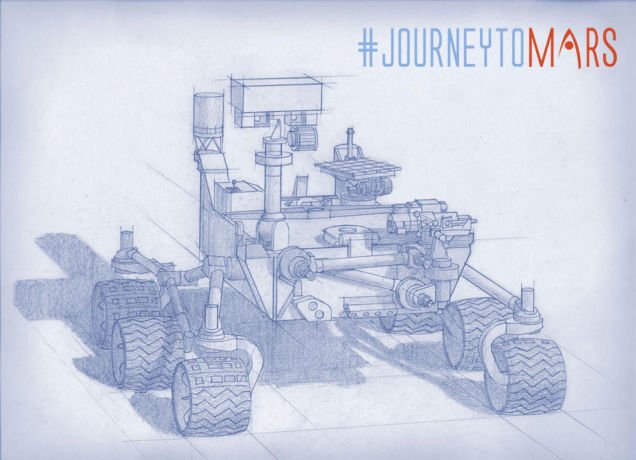
NASA_2020rover1Last Thursday at the agency’s headquarters in Washington, NASA unveiled more information about its Mars 2020 rover, which is scheduled to join Opportunity and Curiosity on the Red Planet by the end of the decade. The subject of this latest press release was the rover’s payload, which will consist of seven carefully-selected instruments that will conduct unprecedented science and exploratory investigations, and cost about $130 million to develop.

These instruments were selected from 58 proposals that were submitted back in January by researchers and engineers from all around the world. This is twice the usual number of proposals that NASA has received during instrument competitions in the recent past, and is a strong indicator of the extraordinary level of interest the scientific community is taking in the exploration of the Mars.

NASA_2020roverThese seven new instruments include:

  • Mars Oxygen ISRU Experiment (MOXIE): this technology package will process the Martian atmosphere into oxygen. ISRU stands for In Situ Resource Utilization.
  • Planetary Instrument for X-ray Lithochemistry (PIXL): this spectrometer will use a high-resolution imager and X-ray fluorescence for detailed elemental analysis to a finer degree than possible with any prior equipment.
  • Scanning Habitable Environments with Raman & Luminescence for Organics and Chemicals (SHERLOC): this sensor suite will use an ultraviolet laser for fine-scale mineralogy, detecting organic compounds, and high-resolution imaging.
  • Mastcam-Z: an advanced camera system that will send home panoramic and stereoscopic images and assist with rover operations and help determine surface mineralogy.
  • SuperCam: an imaging device with super capacities to perform chemical composition analysis and more mineralogy. This tool will allow the rover to peer around hunting for organic compounds within rocks or weathered soils from a distance, helping identify interesting locations to sample in greater detail.
  • Mars Environmental Dynamics Analyzer (MEDA): This sensor suite to measure temperature, wind speed and direction, pressure, and relative humidity. As dust is such a defining characteristic of weather on the red planet, it’s also going to measure dust size and shape, helping characterize how big of a hassle it will make housekeeping.
  • Radar Imager for Mars’ Subsurface Exploration (RIMFAX): a ground-penetrating radar to imagine the subsurface to centimeter-scale resolution.

These instruments will be used to determine how future human explorers could exploit natural resources to live on Mars, pinning down limits to how much we could rely on using local materials. In addition, demonstration technology will test out processing atmospheric carbon dioxide to produce oxygen, a key step towards using local resources for manufacturing oxidizers for rocket fuel and suitable for humans.

NASA_2020rover5This is perhaps the most exciting aspect of the proposed mission, which is looking ahead to the possibility of manned Martian exploration and even settlement. To quote William Gerstenmaier, the associate administrator for the Human Exploration and Operations Mission Directorate at NASA Headquarters in Washington:

Mars has resources needed to help sustain life, which can reduce the amount of supplies that human missions will need to carry. Better understanding the Martian dust and weather will be valuable data for planning human Mars missions. Testing ways to extract these resources and understand the environment will help make the pioneering of Mars feasible.

At the same time, and in keeping with plans for a manned mission, it will carry on in NASA’s long-term goal of unlocking Mars’ past and determining if life ever existed there. As John Grunsfeld, astronaut and associate administrator of NASA’s Science Mission Directorate in Washington, explained:

The Mars 2020 rover, with these new advanced scientific instruments, including those from our international partners, holds the promise to unlock more mysteries of Mars’ past as revealed in the geological record. This mission will further our search for life in the universe and also offer opportunities to advance new capabilities in exploration technology.

Mars_footprintNASA addressed these goals and more two weeks ago with their mission to Mars panel at the 2014 Comic-Con. This event, which featured retired astronaut and living legend Buzz Aldrin, spoke at length to a packed room about how Apollo 11 represented the “the first Giant Leap”. According to Aldrin, the Next Giant Leap could be “Apollo 45 landing humans on Mars.”

The panel discussion also included enthusiastic support of Orion and the Space Launch System which are currently under development and will be used when it finally comes time to send human explorers to join the rovers on Mars. The Mars 2020 mission will be based on the design of the highly successful Mars Science Laboratory rover, Curiosity, which landed almost two years ago.

NASA_2020rover2Not only does it look virtually identical to Curiosity – from its six-wheeled chassis, on-board laboratory, and instrument-studded retractable arms – and will even be partly built using Curiosity’s spare parts.It will also land on Mars using the same lowered-to-the-surface-by-a-giant-sky-crane method. NASA als0 plans to use the rover to identify and select a collection of rock and soil samples that will be stored for potential return to Earth by a future mission.

These rock samples will likely have to wait until the proposed manned mission of 2030 to be picked up, but NASA seems hopeful that such a mission is in the cards. In the meantime, NASA is waiting for their MAVEN orbiter to reach Mars and begin exploring it’s atmosphere (it is expected to arrive by September), while the InSight Lander – which will examine Mars’ interior geology – is slated for launch by March 2016.

terraformingSo we can expect a lot more news and revelations about the Red Planet in the coming months and years. Who knows? Maybe we may finally find evidence of organic molecules or microbial life there soon, a find which will prove once and for all that life exists on other planets within our Solar System. And if we’re really lucky, we might just find that it could feasibly support life once again…

Sources: cbc.ca, fastcompany.com, nasa.gov, space.io9.com, (2), extremetech.com

Writing About Trauma

depression1-650x487Delving back into the world of Whiskey Delta, I’ve found myself coming back to a familiar theme for me that informs much of my writing. It’s the theme of trauma, how one experiences the feelings of being overwhelmed, depressed, anxious, and at a loss for control in their life. For those who follow the Whiskey Delta series, all of these are things that keep coming up for one main character – Sergeant Aaron Dezba.

In the story, Dezba is haunted by the loss of his wife and daughter – two people who became infected by the zombie virus and turned into living horrors. Unable to deal with it at first, he locked them in his basement and kept them alive, hoping that some kind of cure might be found someday. But upon learning that such a thing would never be possible, he killed them both and fell into a deep depression.

zombie-girlAs the story continued, he found a measure of redemption by confessing his crimes and rededicating himself to completing a mission that could possibly result in the creation of a vaccine. Though the virus could not be cured, the researchers in the story were able to fashion something that would immunize the uninfected against it. However, Dezba never forgot the loss of his wife and daughter, and remains haunted by this and similar traumas throughout the story.

In attempting to write about this, I actually drew a lot on my own experiences. Mercifully, I have not lost my wife or a child, but trauma is something I’ve experienced in my own life. It’s something I’ve never talked about in this forum, but thought that I might share it at this time. You see, a few years back, I was diagnosed with an anxiety disorder, and it was pretty obvious to the people I sought help from that it was caused by an extended period of high stress that I found myself in just previous to that.

https://i0.wp.com/blogs.psychcentral.com/nlp/files/2013/11/naturalremediesfordepression.jpgI’ve always been an OCD-type person; but apparently, enduring extreme stress can make the symptoms ten times worse, which pretty much describes my reality ever since! The short version is that during the fall/winter of 2007, I was working for three months in an isolated community, teaching grade 5/6 to a bunch of kids who hated my guts because I replaced their previous teacher.

He, I say at the risk of editorializing, was a selfish prick who ran out on them because he was pissed about trivial disciplinary matters. And he took all the resources with him, leaving me with nothing. The first week, I got virtually no sleep and felt like I was on the verge of a nervous breakdown. I tried to quit, but couldn’t stomach the long-term consequences it would cause to my teaching career. No one else on the island was hiring, which meant I would have to find another career.

https://i0.wp.com/www.smarttop10.com/wp-content/uploads/2013/10/Top-10-Home-Remedies-for-Depression.jpgWhat’s more, my father was absolutely livid when he found out I was hoping to quit, and I didn’t like the idea of being estranged from him. But mostly, I didn’t think I could live with the consequences of such a failure. And so, for the next three months, I stuck it out, committing to stay until someone permanent was found. And finally, at Christmas, they found my replacement, plus several more (more than a few people quit by this point in the year).

I then returned home happy and relieved as all hell, but found that I still couldn’t sleep right and was feeling quite anxious all the time. Eventually, my mother suggested I might be depressed and recommended I go talk to someone. I did, and they diagnosed me with acute depression and anxiety. Things got better, without the need for drugs, but I found over the course of the next year that I could not return to what I considered to be normal.

https://i0.wp.com/www.findingoptimism.com/blog/wp-content/uploads/depressed_7_w.jpgIt was quite hard for me to hold down a regular job, and I absolutely needed regular sleep or I was just not the same. Eventually, I began to take meds and sought counseling until I thought I had a handle on things. Still, I was not too comfortable around my parents, my father and I had several strained conversations over how I felt he had made things worse, and when my wife and I moved in together, I was quite happy.

That too improved, but as soon as we left Comox to move to Victoria, I felt myself having problems again. I had stopped taking meds around this time, and being outside of my comfort zone made a big difference, I found. I once again sought out counseling, took a new kind of medication, and once again came through. I’ve been through many changes these past few years and things have gotten better, but the problem remains.

When serious stressors strike or something comes along that sets off my OCD, I suffer from acute anxiety, panic attacks and depression, and it usually takes a few days before it all finally goes away. I’ve come to learn so much from these episodes, like how one’s own mind can become their greatest enemy, just how much a person can endure, and how wonderful it feels coming out the other side.

https://i0.wp.com/www.personal.psu.edu/afr3/blogs/siowfa12/vetptsd.jpgEvery time, I manage to come through okay. But I always wonder, is this the way it’s going to be for the rest of my life? Will I be subject to severe bouts of OCD forever, or can I expect to be normal again? Well, normal for me, at any rate. These are the kinds of feelings and questions that I tap into whenever I need to write a character who has endured trauma and feels like he or she will never be the same again.

I explore these questions because it is something I now know. It is my private shame, and something I only share if I need to, or I choose to get really up close and personal. But writing is perhaps the most personal thing of all. And when I write, I choose to express my own experience with trauma as accurately and vividly as I can. It’s like a form of therapy, and I do believe it has made me a better writer.

As for the rest… Well, as the sayings go, life goes on. That which does not kill us, makes us stronger. And when life gives you lemons, make lemonade. And if you’re a writer, keep hammering those keys and turning your personal pain into art. Otherwise, what the hell good is it?

Powered by the Sun: The “Energy Duck”

Magnificent CME Erupts on the Sun - August 31Part of the challenge of paving the way towards a future where solar power is able to meet our energy needs is finding ways to integrate it into our daily lives. Basically, until such time as efficiency limits, storage and intermittency problems are truly overcome, one of the best ways to do this is to place photovoltaic arrays where the demand is highest and to get creative with how they collect it.

For example, a group of British artists have conceptualized a giant solar harvesting floating duck as part of the 2014 Land Art Generator Initiative Copenhagen design competition. Dubbed “Energy Duck”, the giant structure has been designed not only to generate clean electricity for the local residents of Copenhagen, but to also provide a unique visitor center. In short, it comes renewable energy with a cautionary message about the effects of Climate Change.

energyduckInspired by the arctic eider duck, Energy Duck not only hopes to offer a unique renewable energy source, but also highlight the impact that climate change has had on the local population and breeding habitats of the eider duck in recent years. As its creators – Hareth Pochee, Adam Khan, Louis Leger and Patrick Fryer – explained:

Energy Duck is an entertaining iconic sculpture, a renewable energy generator, a habitable tourist destination and a celebration of local wildlife.

Covered in photovoltaic panels, the Energy Duck is designed to harvest solar energy from every inch of its exterior shell. Solar cells mounted around the base are also positioned to take advantage of the sun’s rays being reflected off the water’s surface. Additionally, the facility features hydro turbines which use water pressure to provide stored energy to the grid after sunset and during the evening.

https://i0.wp.com/images.gizmag.com/gallery_lrg/energyduck-2.jpgAll of this helps the Energy Duck overcome the all-important issue of intermittency. By being able to generate energy around the clock, the Duck is not dependent on the sun shining in order to continue operating and providing power. As the team explained:

When stored energy needs to be delivered, the duck is flooded through one or more hydro turbines to generate electricity, which is transmitted to the national grid by the same route as the PV panel-generated electricity. Solar energy is later used to pump the water back out of the duck, and buoyancy brings it to the surface. The floating height of the duck indicates the relative cost of electricity as a function of city-wide use: as demand peaks the duck sinks.

Inside the giant Energy Duck, visitors can get a unique look into the working mechanics of the hydro turbines, watching as the water levels rise and fall. Sunlight also filters through small spaces between the exterior solar panels, providing a kaleidoscope-like view of Copenhagen. However, another interesting feature about the Energy Duck is its environmental message.

energyduck-5So while people are visiting the interior and taking note of the impressive technology, they will also be getting a lesson in why it is important. And really, the inherent message of the concept is really very appropriate. A clean, renewable, alternative energy source designed to look like, and inspired by, one of the many creatures that is endangered because of humanity’s dependence on unclean fuels.

Now if we could just design a land-roving solar farm in the shape of a polar bear!

Sources: gizmag.com, inhabitat.com

Oscar Mike – Chapter Three

STEN

“In the long history of humankind (and animal kind, too) those who learned to collaborate and improvise most effectively have prevailed.”

-Charles Darwin

The room was flush with the aroma of metal filings and machine grease. And the acrid smell of burnt metal was also there, the telltale signs of forgers at work. The few open windows in the factory shop had managed to keep the air quality bearable, but it did nothing to remedy the heat situation. Whether it was the result of an unseasonably hot summer, or of melting down steel and nickel to make castings, the entire floor was predestined to feel like the eight ring of hell.

Braun’s obsessive face wiping could attest to that. His wet, clingy shirt and the way his khakis were sticking to his legs were another indication. He couldn’t imagine how anyone on the floor could stand the aprons, gloves and protective goggles they were forced to wear. Were it not for the hot metal components they were required to handle, he was sure they would all have stripped down to their skivvies a long time ago.

As they walked between stations on the assembly line, the foreman – the venerable Art Mitchell – showed him the fruits of their operation. Between wiping his face, Braun made entries in his notebook, noting the numbers and models produced.

“Our total haul for this past week was one-hundred and eighteen SMGs, eighty-nine service pistols, and two-hundred bayonets. Our intakes accounted for roughly two tons of recycled slag, a mix of steel, iron, nickel, tin and copper. And we managed to get just enough zinc from you people to fashion the firing pins.”

Braun nodded, making a note of it. He knew an appeal when he heard one, and would have to run that by the higher ups. Ever since they had set up shop, Mitchell and his workers had become the sole source of weapons and munitions for the town militias. His designs were seen on just about every city block now, the proliferation of weapons models that were well-dated, but ideally suited to modern needs.

But as always, expanded production meant that more resources would need to be obtained. The slag heaps and waste materials generated by the war could expect to keep producing plenty of iron and steel for the time being, but rare minerals and chemicals like zinc and chromium were quickly running out. Which meant resource extraction, in the old fashioned sense, would once again need to resume.

There were departmental rumors that some Smithsonite mines was being contemplated south of the capitol. Apparently, it was part a larger scheme to rebuild Socorro now that it too had been repopulated. But he could not say with any confidence that it was true, or assure Mitchell and his people that these proposed mines would become a ready source of zinc compounds, or even that they had a group of chemical engineers on hand that could extract it for him.

Such was the nature of things in his new role. He had learned to become a cog in an apparatus that was simply trying to get things done and see to a rising tide of production and manufacturing needs. At the center of it all was the rapidly expanding population of the region, people who had been fleeing the undead hordes and looking for a safe place to set down. Beyond simple shelter, food and water, all anyone had wanted back then was to know they could go to sleep at night and not spend their days in constant fear.

But now, with the cities of Santa Fe and Albuquerque resettled and rezoned, and dozens of townships besides, the more intricate matter of how to meet the less basic needs of their inhabitants was always on everyone’s mind. Beyond food, shelter and water, people were once again in need of basic comforts, and had to be organized to produce and distribute them. Braun heard much from each and every group he was tasked with listening to – the Agro Co-Op, Utilities, Weapons, and Materials – and knew much about their problems. But proposing solutions was beyond his pay grade. Gathering relevant information and making recommendations to those who actually had the power to do things, that was what he was he was tasked with. And according to those he reported to, it was a very important task.

Which reminded him – another thing in his job description was to investigate complaints made by other groups and see if he couldn’t find out what the source of the problem was. In this case, it was the people who kept track of weapons distribution that had asked him to inquire.

“I understand you experienced a drop in production back in early April.”

“Ah, yes,” said Mitchell, suddenly sounding grave.

“Okay. Any reason why that would be?”

“It’s simple, really. Our smelters and production lines run on electricity. And when the electrical grid is intermittent, our equipment stops working.”

“Right…”

Mitchell continued, still sounding and looking very much irate. “You may have heard about the brownouts we periodically deal with in town here? I know it’s not as common up north where you were from, but down here, it’s a way of life.”

“I’m sorry, sir. I’ll make a note of – ” he stopped short as his mind backtracked to the one nugget that stuck out in that last complaint. “How’d you know I was from up north?”

“Are you kidding?” Mitchell ran his hand up and down the length of Braun’s profile. “The buzz cut hair, the khaki pants, the way you walk… everything about you screams infantry, son. And people do talk.”

Braun frowned. “People have been talking about me?”

“Yeah. A lot of my workers were happy as hell to know that they were reporting to a former grunt now. They figured having someone who actually understood the nature their work, instead of some pencil-pushing bureaucrat, would make life easier.” The way Mitchell punctuated this with a grunt told him exactly what he thought of the end result.

“Well, as I said, I am new to this.”

“We all are, son. I guess we just do the best we can.”

Braun didn’t reply. Putting his pen to the pad again, he made the note, as promised. If he was going to avoid any such mistakes in the future, he needed to let his superiors know that they needed to do a better job of communicating with other departmental superiors. Otherwise, guys like him were going to wind up looking stupid in front of guys like Mitchell. He was sure to spell it in all uppercase letters and underline it twice.

BETTER INTERDEPARTMENTAL COMMUNICATION.

“Anyway,” Mitchell said, sounding suddenly uncertain. “What happened to get you stuck with us down here?”

“Long story,” Braun said hesitantly.

Mitchell chuckled. “Piss off the wrong person, huh?”

Again, Braun didn’t reply. Eventually, Mitchell nodded and let it drop.

“Shall I show you some of the fruits of our labor?”

Braun shook his head and tapped his pen against the notebook. “No, I think I got all the information I need right here.”

“I meant, would you like to see the firing range. We set one up so we could test fire every weapon that rolled off the line.”
Braun felt suddenly piqued. He hadn’t been expecting a hands-on demonstration. “That would be… lovely.”

A few minutes later, and Braun found himself in a large storage room on the buildings ground floor. The air was much cooler, and the smell immensely improved. Instead of the tangy odor of grease, filings and molten metal, there was the familiar smell of cordite.

They stood together, Mitchell and he, looking down range from a series targets – which in this case consisted of standing two by fours that held up sheets of foam insulation cut into the profile of men. Directly in front of them was a long counter covered with guns and open cases of ammunition. Braun recognized the three models: a short stock semi-auto rifle, a submachine gun that resembled an old STEN, and a Colt automatic.

The sum total of everything Mitchell and his crew had been working on since they first set up shop. Mitchell motioned to the nearest weapon, which happened to be a copy of their standard submachine gun. Braun stepped forward and took hold of the weapon. He noticed an inscription carved on the side.

Freak Killer 2.0

He raised the weapon to his shoulder, tested the sights and the weight.

“You recognize what that is, don’t you?” said Mitchell.

Braun nodded, lowered the weapon to get a better look at the assembly. In essence, the weapon was just a single, long tube of metal, a wiry metal stock, and a magazine sticking at right angles to it. The front end was especially long, thanks to the addition of the built-in suppressor.

“A venerable old design. How did you know how to recreate it so exactly?”

Mitchell crossed his arms. His tone became that of a proud father. “I had a set of the old blueprints at home. Metal working has always been my vocation, and old firearms my passion.”

“No wonder the Council saw fit to put you to work here.”

Mitchell laughed. “Well, the way they saw it, someone needed to be making sure we had a supply or replacement bullets. And no offense to your friends there, but most of our guns didn’t take five-five-six or nine millimeter ammo. Once they formed a militia, it just made more sense to create a standardized set of weapons and ammunition.”

“Hence the Freak Killer?”

Mitchell began speaking in proud tones again. “I was hard-pressed to come up with a model that was both easy enough to produce but reliable in the field, and simple enough to strip down and reassemble that someone could do it with a bare minimum of training. STENs were the perfect concept – designed with simplicity and a minimal number of components in mind.”

“Not to mention minimal expenditure of materials,” said Braun.

“Well observed. Perfectly suited to our purposes, wouldn’t you say?”

Braun raised the weapon again and chambered a round. He aimed at the nearest target, and squeezed. The weapon let off a metallic clack, and a small thunk sounded in the target down range. He took in, and let out, a small breath as he lowered the weapon, an old habit.

“Not bad,” he said. “And quiet too.”

“Stealth is another thing we non-military types take seriously. Loud gunshots have a way of drawing the infected to towards you. Don’t imagine you grunts ever worried about that, huh?”

Braun shrugged. “No. Drawing them in was kind of what we wanted to do. Easier to kill that way.”

Mitchell shook his head. “Well… you’re in our world now. Try to adapt.”

New Trailer: Teenage Mutant Ninja Turtles

https://i0.wp.com/www.designbolts.com/wp-content/uploads/2014/06/TMNT-2014-Desktop-Wallpaper-HD1.jpgYou ever see a trailer and think, “holy crap, that is the worst violation of my childhood that I will ever watch start to finish”? That was my feeling when watching the latest TMNT trailer, which was released late last month. Despite the abundant hints that this movie is going to be another Bay-backed atrocity, complete with racist caricatures, sexist portrayals, eye-candy visuals and stupid dialogue, I still felt kind of nostalgic seeing it.

And there were some additional hints that told me this movie was going to totally suck. For starters, it is strongly implied yet again that the Turtles were created as some sort of covert project. It’s also strongly implied that “The Shredder” – the main antagonist in the TMNT universe – was a similar creation. Hell, they even go as far to say that he’s a damn robot with Wolverine-like retractable claws. What can I say to that except… NOOOOOO!

But like most fans who grew up with the Turtles, I was never looking to this movie to provide any kind of faithful reboot. In fact, when I heard Bay was doing a relaunch of the franchise, I believe I just rolled my eyes and filed it in the “could care less” category. So while I might get around to seeing this, I do not imagine for one second that I am expecting anything from it other than utter amusement.

Low expectations people, that’s the way to survive a Bay movie! Oh yeah, and enjoy the trailer:

Oscar Mike – Chapter Two

M113_command

In such dangerous things as war the errors which proceed from a spirit of benevolence are the worst.

-General Karl von Clausewitz

Haynes gave his spine a quick adjustment, pushing his stomach out and driving his hands into the small of his back. Command vehicles were known for being cramped, but it felt like they had stuffed the entire HQ into the back of the vehicle and brought it with them. In front of him, a small table stacked with papers lay, and beyond that, the crew of the vehicle huddled amidst enough C and C and radio equipment to run a small army.

Appropriate, since that was precisely what they were doing. Sitting just to the rear of the staging area, the rear door down and letting in the morning air, General Haynes found himself surrounded by all the sights and sounds of an army ready to deploy. Though things were relatively calm at the moment, the energy was undeniable. Now was the time before everything hit the fan, when the tanks and troop carriers began to roll out and hit the field full on. It was a time of quiet contemplation, a time to nurse the last-minute thoughts and doubts.

A small clink a few feet away drew his attention away from the maps and assorted papers spread across the table. He looked up to see the eyes of a meek-looking Private setting a cup down before him, the thick brown contents sending steam wafting up towards him.

“Coffee, General?” he said, stepping back from the table.

“Thanks, Private,” Haynes said with a smile, and took a few generous sips. He noted the intense bitterness, but was thankful that it at least had some milk in it. Though they could hardly be accused of growing anything comparable to what had been available in the old days, the local farmers were still to be commended for trying their hand with coffee beans. And it was good to know that some luxuries were still afforded to them these days…

Placing the cup down, he went back to the first of several annotated maps before him. The first was map of the region’s main highway and the various towns that dotted the landscape, with Espanola featured most prominently in the upper right. On the one beneath it and sticking out at the edge, the 200th Infantry Brigade’s staging area was featured, as well as the comparatively small township of Sombrillo, and the first objective of the day. On these and the others that made up the pile, the name Rolling Thunder was scrawled in the lower right hand margin.

Around the map, several aerial photographs lay, all of them rendered in the bright white, black and grey hues of infrared.

The sight of these once again made him sigh, particularly the way the streets showed virtually no traces of heat signatures. None of the bright whites that denoted uninfected, or the mottled greys that usually denoted Whiskeys.

Beyond that, there were pictures taken by the same reconnaissance flight of the hamlets of Cuartelez and La Puebla. These were much the same, appearing dark except for a few patches which appeared to be fires burning themselves out in open areas. In all likelihood, these areas had been overrun, but they were not his main concern right now. Once the main objective had been taken, these areas could be cordoned off, cleared and repopulated with ease.

In the end, the first phase of the operation came down to Sombrillo. As the largest settlement, and the one that straddled the highway and connected several other arteries of traffic to it, it was the gateway. 2nd Battalion was already poised to push back in Espanola by the southern road, but to ensure that they enveloped all the infected inside the town, he needed 1st pushing in from the east. Only then could they expect to deal a permanent and crushing blow on the bastards, and ensure they could not possibly escape.

He looked once more at the image of Sombrillo. From all outward appearances, the walls were still intact, but that didn’t mean the infected couldn’t have found another way in. They were good that way, and it only ever took one…

It was little wonder then why he had organized their advance the way he had. Moving the photos aside, he looked back to the main map, studying the icons and lines of advance that were emblazoned on it. The units that made up the 200th Rattlensakes sat in the lower right corner, their designations printed beneath them. Reaching out, a long series of solid and dotted lines ran, representing the entirety of Rolling Thunder. Its every action and contingency, those that could be foreseen at any rate, planned out in detail.

“Sir?” another voice called to him. He looked up to see the face of Colonel Coombs standing there, his arms crossed behind his back. He knew instantly what he was about to say, but let him say it anyway. At moments like this, one had to respect the procedural details. They made things feel more official. “It’s time, sir.”

“Good,” he replied curtly. “Give the go order to all units. Commander order: Siren.”

“Yes, sir,” replied the Colonel, and turned around and stepped to the vehicles open rear door. Poking his head outside, he began barking orders to the communications crews sitting in their radio huts.

“All stations. Command order: Siren!”

The radio operators obliged and began calling the code word in. Within moments, the sounds of engines firing in the distance would be heard – an entire squadron of A-10s and AC-130s powering up their engines and getting ready to enter the target area to provide overwatch and close air support. Since they were based back in the capitol, the planes had a head start, and would begin deploying in waves to conserve fuel and ordinance for the big fight.

He checked his watch to mark the time. 0500 hours, right on schedule.

Within fifteen minutes, he would issue the second code word, Thunder, at which point, the ground forces would start moving.

Haynes took a deep breath and finished the last of his coffee. The charged liquid quickly entered his bloodstream, contributing to his already escalating heart rate. He had to admit, it felt good. After weeks of planning, preparing, and resupplying, the troops were finally committing to their first offensive under his leadership. The transition had been difficult, and he knew the grunts were nursing their own share of worries. But alas, they were his troops now. And watching them enter into their old stomping grounds and liberating it at last would finally silence any and all lingering doubts about who was in command.

I never asked to replace him¸ he thought, thinking at last of his fallen superior. But I will not shrink from the role that has been thrust upon me.

Perhaps, in time, Thur would recover fully and return to his old command. Until such time, Haynes knew he would do the job, and do it right. In his hands, the Rattlesnakes would emerge from this latest setback victorious. He couldn’t let it be otherwise…

Biomedical Breakthroughs: “Biological” Pacemakers

biologicalpacemakersSince they were first developed some forty years ago, pacemakers have served an invaluable medical function. By stimulating the heart with electrical stimulation, they ensure that the recipients heart continues to beat at a steady rate. However, the implantation process calls for a major medical procedure, and the presence of the machine inside the body can lead to complications – i.e. infections.

Little wonder then why researchers are looking to create a better design to replace it with. However, up until now, proposed upgrades have focused on eliminating batteries (that require additional surgery to be replaced) with perpetual motion or piezeoelectric-powered devices. But this most recent proposal, which comes from the Cedars-Sinai Heart Institute in Los Angeles, looks to use the heart’s own cells to regulate it and keep it in working order.

piezoelectric-pacemakerIn an effort that was apparently the result of “dozens of years” worth of research, Dr. Eduardo Marbán and his research team used genes injected into the defective hearts of pigs to convert unspecialized heart cells into “biological pacemakers”. The pigs, all of which suffered from complete heart blocks, had the gene TBX18 injected into their hearts via what is described as a minimally invasive catheter procedure.

This caused some of the existing unspecialized cardiac cells to transform into sinuatrial node cells, which consist of tissue that initiates the electrical impulses that set the rhythm of the heart. The day after the procedure, the recipient pigs’ hearts were already beating faster than those of a control group and lasted for the duration of the 14-day study – indicating that the treatment could be a longer-term solution than previously thought.

biomedicineInitially, Marbán and his colleagues conceived of it more as a temporary fix for patients who were having problems with their man-made pacemakers. Now, they’re considering the possibility that it could be a long-term biological treatment. It could also be used on infants still in the womb, who can’t currently receive mechanical pacemakers. And while the research has so far been confined to pigs, human clinical studies could begin in as soon as three years.

In keeping with a trends in modern medicine, this gene therapy offers a potential third alternative to medical machiners and biomimetics. The one seeks to enhance the workings of our biological bodies through the addition of machinery while the other seeks to create machinery that mimics the bodies natural functions. But by simply programming the body to perform the role of machinery, we can cut out the middle man.

Sources: gizmag.com, cedars-sinai.edu