 This past weekend, the penultimate episode of Season Four of GOT aired, and an event which was a long time in coming was finally showed. Yes, after two seasons of build-up, the Wildlings under “King” Mance Rayder’s leadership, assaulted the Wall. Strangely, Mance was nowhere to be seen during this assault, but from the way they ended the episode, I’m sure we’ll be hearing from him soon enough. And as usual, I got some bones to pick with the writers, but not the same reasons others have.
After this weekend’s episode aired, a common thing I noticed from the critics was the statement that the attack on the Wall was no “Blackwater Bay”. Much like Season Two’s smash-up where Stannis and his armies lay siege to King’s Landing, the entire episode was dedicated to this one battle and those involved. And while it didn’t exactly have the same epic scope and grandeur as that battle, I think this is an unfair comparison.
One cannot expect a massive siege every season! It’s just not cost effective. No, in the end, I felt this battle fell a bit short because of the way they changed things around in the story, not to mention the way they shot the whole thing. By the time things really got started, I wasn’t sure if I was watching GOT or Lord of the Rings. Somehow, it felt like Peter Jackson was at the helm and not George RR Martin. But first, a recap…
The Watchers on the Wall:
 The episode begins with Jon and Samwell standing atop the Wall and discussing love. Sam asks what it was like being with Ygritte, while once again lamenting the fact that he left Gilly at Moletown, where he suspects she died. Jon sends Sam below to get some rest, but he instead goes to the library to learn what Wildlings are known to do to their captives. Aemon finds him and they spend the time talking of lost love.
Going back outside, Sam comes to the gate in time to see Gilly knocking at Castle Black’s gate and asking to be let in. After convincing the Brother guarding it to let her in, he tells her they will never be apart again. Their reunion is interrupted when they hear a horn sound. From atop the Wall, Jon and the other brothers spot a massive forest fire looming in the distance. Mance’s signal to attack is issued, and thousands of Wildlings, giants and mammoths form up.
 Under the command of Ser Alliser Thorne, the Brothers begin preparing their defenses, and he takes a moment to let Jon know that he will be equal to the task of leading them. The mammoths move forward to the gate while other Wildlings begin scaling the Wall. Sam places Gilly in a chamber below and locks the door, telling her she must hide and he must stand with his Brothers. He kisses her goodbye, and she makes him promise he won’t die.
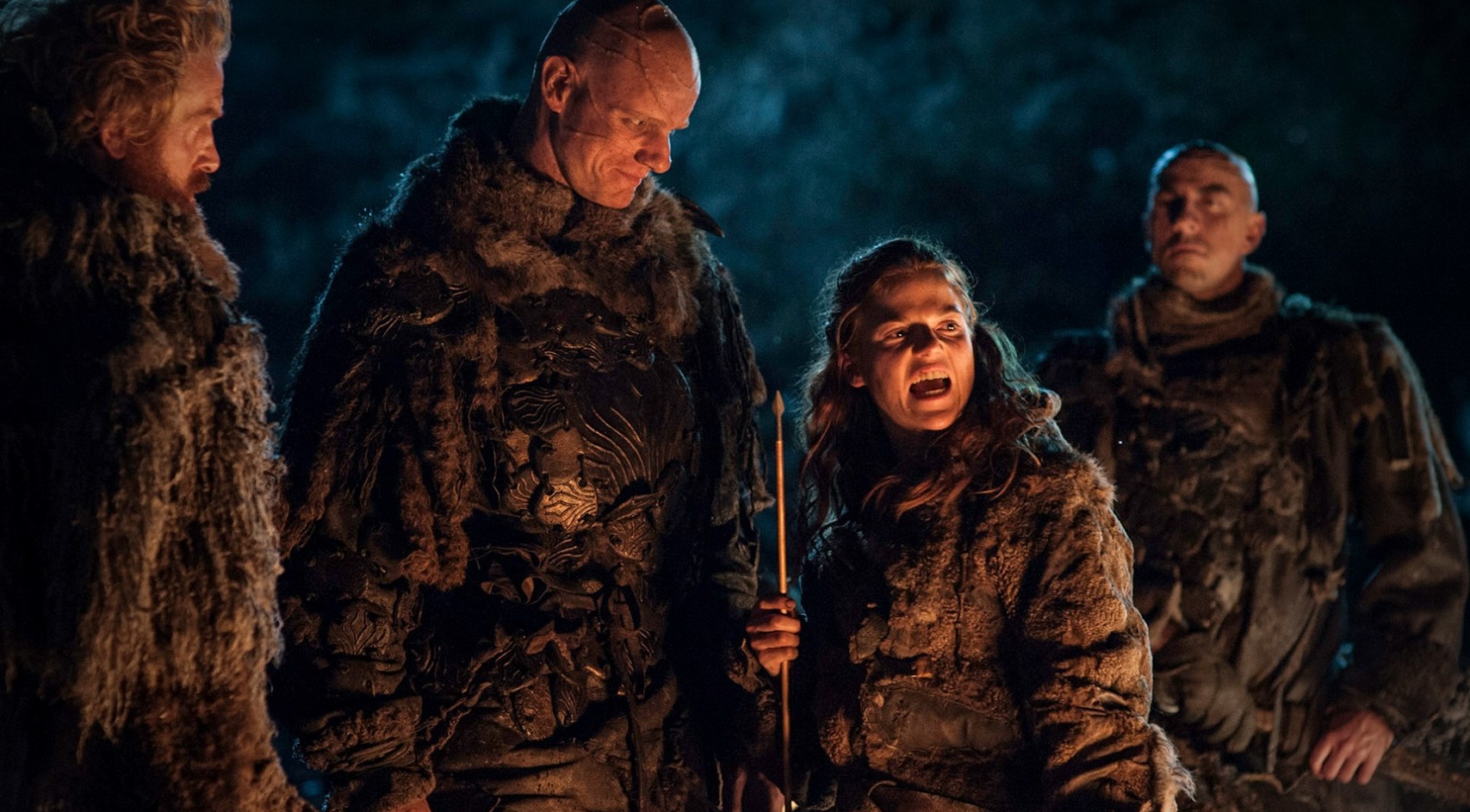
South of the Wall, Ygritte, Tormund, the Thenns and their raiding party are preparing to make their assault. While they wait for Mance to send the signal – “the biggest fire the North has ever seen”. When they spot it, they launch their attack on Castle Black’s gates. Sam and the others let loose on them with arrows, but are quickly overtaken as the Wildling party moves in and scales the short walls that guard the southern approach.
 Hearing of the attack on the Castle, Thorne goes below to organize the defense, leaving Slynt in charge. Below, two giants lead a mammoth to the gate and hitch ropes from its harness the doors, intending to pull it off. Slynt quickly proves unequal to the task of leading the defense and begins muttering about how it was so much easier commanding the Kingsguard. Grenn then tricks Slynt and tells him he’s needed below too, which leaves Jon in charge.
Relying on the lessons he learned during his time among them, Jon has his archers fire arrows onto those scaling the Wall and drops barrels on those at the gate. Below, the battle in Castle Black’s courtyard turns bad. The brothers lose many men, Thorne is injured and incapacitated, and Slynt runs and locks himself in the same room as Gilly. Jon decides to go below with Grenn and some others, and orders Eddison to unleash fire on the mammoths.
 This he does, which kills most of the Wildlings and sends the mammoth running. One of the two giants is then killed by a Scorpion up on the Wall, sending the other into a rage and leading him to begin prying the gate open with his bare hands. Jon arrives below and tells Grenn and the others to get to the gate an hold it at all costs. He then has Sam unlock Ghost from his cage and begins fighting his way through the Wildlings.
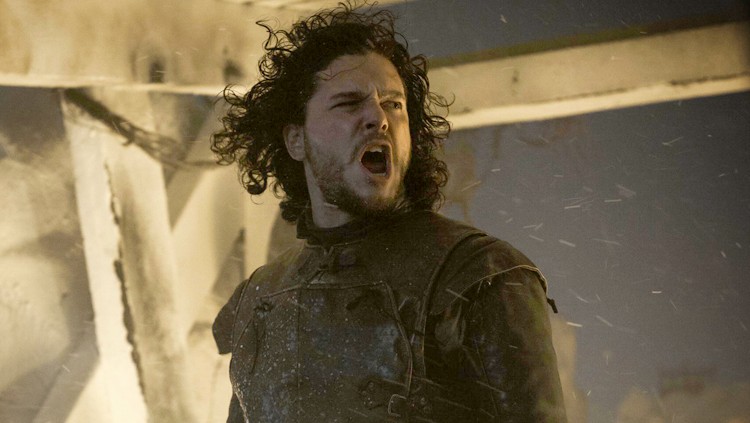
In a pitch fight, Jon kills Styr (the leader of the Thenn party) with a blacksmith’s hammer and comes face to face with Ygritte, who has her bow drawn on him. She hesitates to shoot him, and is then shot with an arrow through the chest by Olly, the young boy who mans the elevator. She dies, repeating the same words she said to him, time and time again: “You know nothing, Jon Snow.” Inside the Wall gate, the giant breaks through and attacks Grenn and his brothers. They die holding the giant off.
 Up top, Eddis sees that they only have the few Wildlings scaling the Wall to deal with, and orders that they drop the “Scythe” – a large metal blade at the end of a chain that combs the wall when released. This kills the remaining attackers, and the rest fall back. In the courtyard, Tormund is wounded and captured, and Jon orders him put in chains. Sam returns below to find Gilly safe, and Slynt cowering in the corner.
Surveying the damage, Jon tells Sam that this was just the first assault, and that Mance will break through before long if they allow him to continue. He then tells Sam that he will meet with Mance, during which time he will attempt to kill him so that the Wildlings once again become divided. They head to for the gate, where they find the bodies of Grenn, the giant, and the others who died holding it. Sam orders the gate opened and says goodbye to Jon.
Summary:
Well, the episode certainly was fun and entertaining. One can’t deny that an incredible amount of time, effort, and good direction went into making it. And it did manage to capture the spirit, if not the letter, of the battle as it was described in the book. But as usual, there were some things that bothered to me that had to do with changes, not to mention how those changes affected the feel and flow of things. Here’s what they were, in chronological order…
First, there was no last-minute reunion between Sam and Gilly. She had been at the castle for some time, and a romance had not quite budded between them. Second, Tormund, Ygritte and the Wildling raider party had already assaulted Castle Black at this point in advance of Mance’s main assault. Having struck at Castle Black days before, they were thwarted by a great deal of ingenuity and booby traps, which were installed thanks to Jon’s help.
Third, there was none of this shuffling around of commanders in the novels. While it is true that Thorne and Slynt did not trust Jon, he was still put in charge of the Wall’s defenses since he had intimate knowledge of Mance’s plan of attack, and because Aemon on his Brothers vouched for him. It was not the case that he had it thrust on him because Thorne had to go below, or because Slynt was a coward. This last aspect they really played up, and it felt like it was just to give us someone to hate.
Fourth, two decidedly cheesy moments happened in this battle. The first was where Sam narrowly managed to get his crossbow loaded in time to take down a Wildling. The second – and by far, the worst – was Ollie going from a frightened little boy who couldn’t stand the sound of fighting to grabbing a bow and killing Ygritte with it. This more than anything was like a scene out of Jackson’s LOTR. It wasn’t nearly as bad as Legolas riding a shield down a set of steps like it was a skateboard, but still!
Fifth, Tormund was not taken prisoner during the battle. After losing his attack force south of the Wall, he fled north again and began rallying Wildlings later. Ever since, even as far as book V, he has not been heard from. And finally, Jon Snow did not decide to venture out and assassinate Mance once the battle was over. In fact, it was Slynt’s idea to send him out in the hopes that he would die while attempting to kill Mance.
You see, after the battle, Slynt and his allies were still nominally in charge since no new Lord Commander had been elected. And he would go on to be a pain in Jon’s ass since he didn’t trust him and saw him as a threat to his possible leadership. However, the way they’ve presented him here, as an incompetent coward, is melodramatic to say the least. It also kind of complicated the plot now, since Slynt disgraced himself for all to see.
In short, it felt like they were trying to sex things up from the original material; but really, I only felt like they dumbed it down. Many things they did get right, like the way the giants penetrated into the gate, or how Ygritte died with Jon standing over her and crying. They also captured the defenders sense of desperation, knowing that they were vastly outnumbered, but still protecting by the Wall’s defenses. And I have to say that this was one episode this season that didn’t bore or disappoint the hell out of me.
Still… where the hell was Mance this whole time? Has anyone else noticed he completely disappeared after his brief appearance last season? He better show up next week, as he’s kind of intrinsic to the plot!

 Brainwaves can now be used to control an impressive number of things these days: prosthetics, computers, quadroptors, and even cars. But recent research released by the Technische Universität München (TUM) in Germany indicates that they might also be used to flying an aircraft. Using a simple EEG cap that read their brainwaves, a team of researchers demonstrated that thoughts alone could navigate a plane.
 According to the researchers, the accuracy with which the test subjects stayed on course was what was truly impressive. Not to mention the fact that the study participants weren’t all pilots and had varying levels of flight experience, with one having no experience at all. And yet, of the seven participants, all performed well enough to satisfy some of the criteria for getting a pilot’s license. Several of the subjects also managed to land their planes under poor visibility.
 With this successful test under their belts, the TU München scientists are focusing in particular on the question of how planes can provide feedback to their “mind pilots”. Ordinarily, pilots feel resistance in steering and must exert significant force when they are pushing their aircraft to its limits, and hence rely upon to gauge the state of their flight. This is missing with mind control, and must be addressed before any such system can be adapted to a real plane.
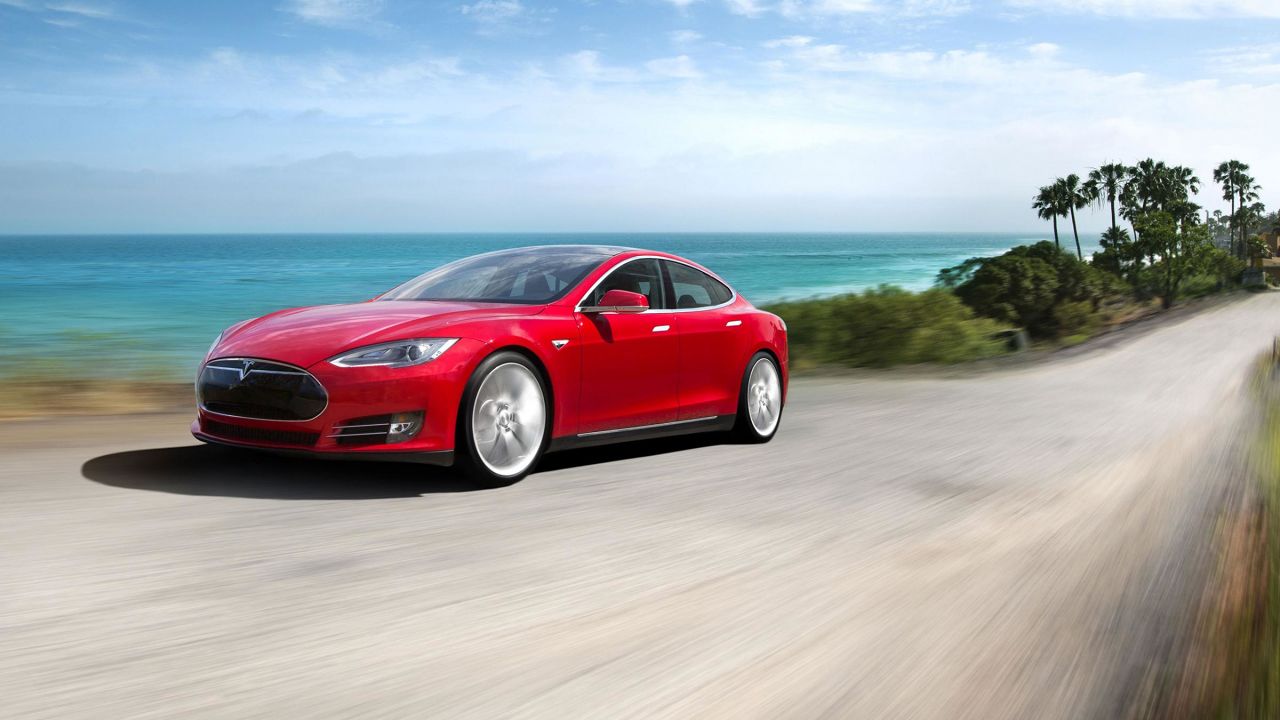 It’s official: all of Tesla’s electric car technology is now available for anyone to use. Yes, after hinting that he might be willing to do so last weekend, Musk announced this week that his companies patents are now open source. In a blog post on the Tesla website, Musk explained his reasoning. Initially, Musk wrote, Tesla created patents because of a concern that large car companies would copy the company’s electric vehicle technology and squash the smaller start-up.
 But that turned out to be an unnecessary worry, as carmakers have by and large decided to downplay the viability and relevance of EV technology while continuing to focus on gasoline-powered vehicles. At this point, he thinks that opening things up to other developers will speed up electric car development. And after all, there’s something to be said about competition driving innovation.
 And the move should come as no surprise. As the Hyperloop demonstrated, Musk is not above making grandiose gestures and allowing others to run with ideas he knows will be profitable. And as Musk himself pointed in a webcast made after the announcement, his sister-company SpaceX – which deals with the development of reusable space transports – has virtually no patents.
 As it stands, auto emissions account for a large and growing share of greenhouse gas emissions. For decades now, the technology has been in development and the principles have all been known. However, whether it has been due to denial, intransigence, complacency, or all of the above, no major moves have been made to effect a transition in the auto industry towards non-fossil fuel-using cars.
 This past week, the Electronic Entertainment Expo (commonly referred to as E3) kicked off. This annual trade fair , which is presented by the Entertainment Software Association (ESA), is used by video game publishers, accessory manufacturers, and members of the computing industry to present their upcoming games and game-related merchandise. The festivities wrapped up this Friday, and was the source of some controversy and much speculation.
 Nowhere was this more clear than with Nintendo, which was the source of quite a bit of buzz when the Expo began. But it was evident that games – particularly for the Wii U – were not going to materialize until 2015. The company got a jump on the next-generation console battle by launching its Wii U in late 2012, a year ahead of Sony and Microsoft, but poor sales have led to big game developers largely abandoning it.
 The companies have some respective big guns in the works, such as Halo 5: Guardians and Uncharted 4: A Thief’s End, but they’re also scheduled for release in 2015. However, with the brisk sales of the Xbox One and PlayStation 4 consoles, both companies have the luxury of taking their time with big games. Nintendo is not so fortunate, since the jump they made with the Wii U leaves them with a big gap that they aren’t apparently filling.
 The software giant bumbled the Xbox One launch last year and alienated many gamers, mainly by focusing on TV and entertainment content instead of gaming and tying several unpopular policies to the console, which included restrictions on used games. The company eventually relented, but the Xbox One still came bundled with the voice- and motion-sensing Kinect peripheral and a price tag that was $100 higher than Sony’s rival PlayStation 4.
 That was certainly the focus for Microsoft at E3. TV features weren’t even mentioned during the company’s one-and-a-half-hour press conference on Monday, with Microsoft instead talking up more than 20 upcoming games. As Mike Nichols, corporate vice-president of Xbox and studios marketing, said in an interview:
 But this new virtual reality headset, which was recently bought by Facebook for $2 billion, was undeniably the hottest thing on the show floor. And the demo booth, where people got to try it on and take it for a run, was booked solid throughout the expo. Sony also wowed attendees with demos of its own VR headset, Project Morpheus. And while the PlayStation maker’s effort isn’t as far along in development as the Oculus Rift, it does work and adds legitimacy to the VR field.
 Legendary Japanese creator Hideo Kojima also had to defend the torture scenes in his upcoming Metal Gear Solid V: The Phantom Pain, starring Canadian actor Kiefer Sutherland (man loves torture!), which upset some viewers. Kojima said he felt the graphic scenes were necessary to explain the main character’s motivations, and that games will never be taken seriously as culture if they can’t deal with sensitive subjects.
 If one were to draw any conclusions from this year’s E3, it would undoubtedly be that times are both changing and staying the same. From console gaming garnering less and less of the gamers market, to the second coming of virtual reality, it seems that there is a shift in technology which may or may not be good for the current captains of industry. At the same time, competition and trying to maintain a large share of the market continues, with Sony, Microsoft and Nintendo at the forefront.
 This past Thursday, the 2014 FIFA World Cup got underway. And all over the world, fans were glued to their television sets to watch the opening kickoff and the opening match between Croatia and Brazil. Unfortunately, astronauts Reid Wiseman, Steve Swanson, and Alexander Gerst – all of whom are serious “futbol” fans – were all stuck on board the ISS several hundred kilometers away.
 And of course, Wiseman, Swanson and Gerst were sure to wish the teams and fans well in the competition before getting on with their own match. Not only is the resulting video fun thing to watch, it is also a fine representation of the age we live in, where social media and high-speed communications allow everyone – even astronauts – the ability to instantly communicate with the world.
 The 2014 FIFA World Cup made history when it opened in Sao Paolo this week when a 29-year-old paraplegic man named Juliano Pinto kicked a soccer ball with the aid of a robotic exoskeleton. It was the first time a mind-controlled prosthetic was used in a sporting event, and represented the culmination of months worth of planning and years worth of technical development.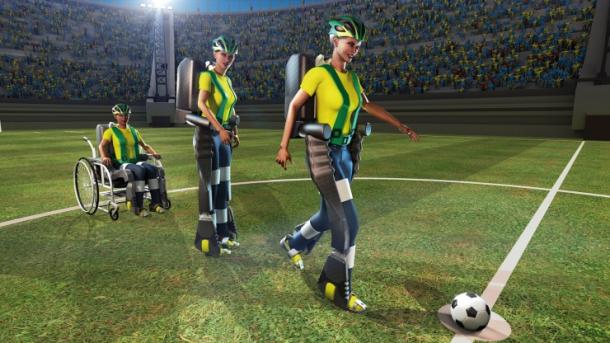
 The result of many years of development, the mind-controlled exoskeleton represents a breakthrough in restoring ambulatory ability to those who have suffered a loss of motion due to injury. Using metal braces that were tested on monkeys, the exoskeleton relies on a series of wireless electrodes attached to the head that collect brainwaves, which then signal the suit to move. The braces are also stabilized by gyroscopes and powered by a battery carried by the kicker in a backpack.
 The amber colors are due to the scattering of longer wavelengths of light by dust and pollution in our atmosphere. As astronomer Raminder Signh Samra of the H.R. MacMillian Space Centre in Vancouver said:
 Scientists are not entirely sure what accounts for this optical illusion of a larger moon near the horizon, but they suspect it has something to do with the human mind trying to make sense of the moon’s proximity to more familiar objects like mountains, trees and houses in the foreground.
 Hence why it may have made it appear unusually large to some keen-eyed sky-watchers. As Samra explained:

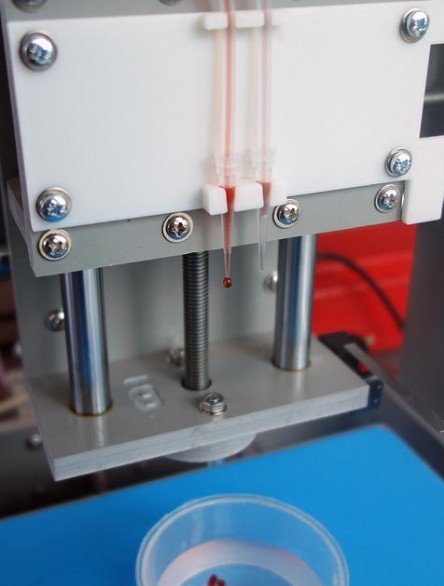
 The study was published online late last month in Lab on a Chip. The study’s senior author, Ali Khademhosseini – PhD, biomedical engineer, and director of the BWH Biomaterials Innovation Research Center – explained the challenge and their goal as follows:
 They were also able to successfully embed these functional and perfusable microchannels inside a wide range of commonly used hydrogels, such as methacrylated gelatin or polyethylene glycol-based hydrogels. In the former case, the cell-laden gelatin was used to show how their fabricated vascular networks functioned to improve mass transport, cellular viability and cellular differentiation. Moreover, successful formation of endothelial monolayers within the fabricated channels was achieved.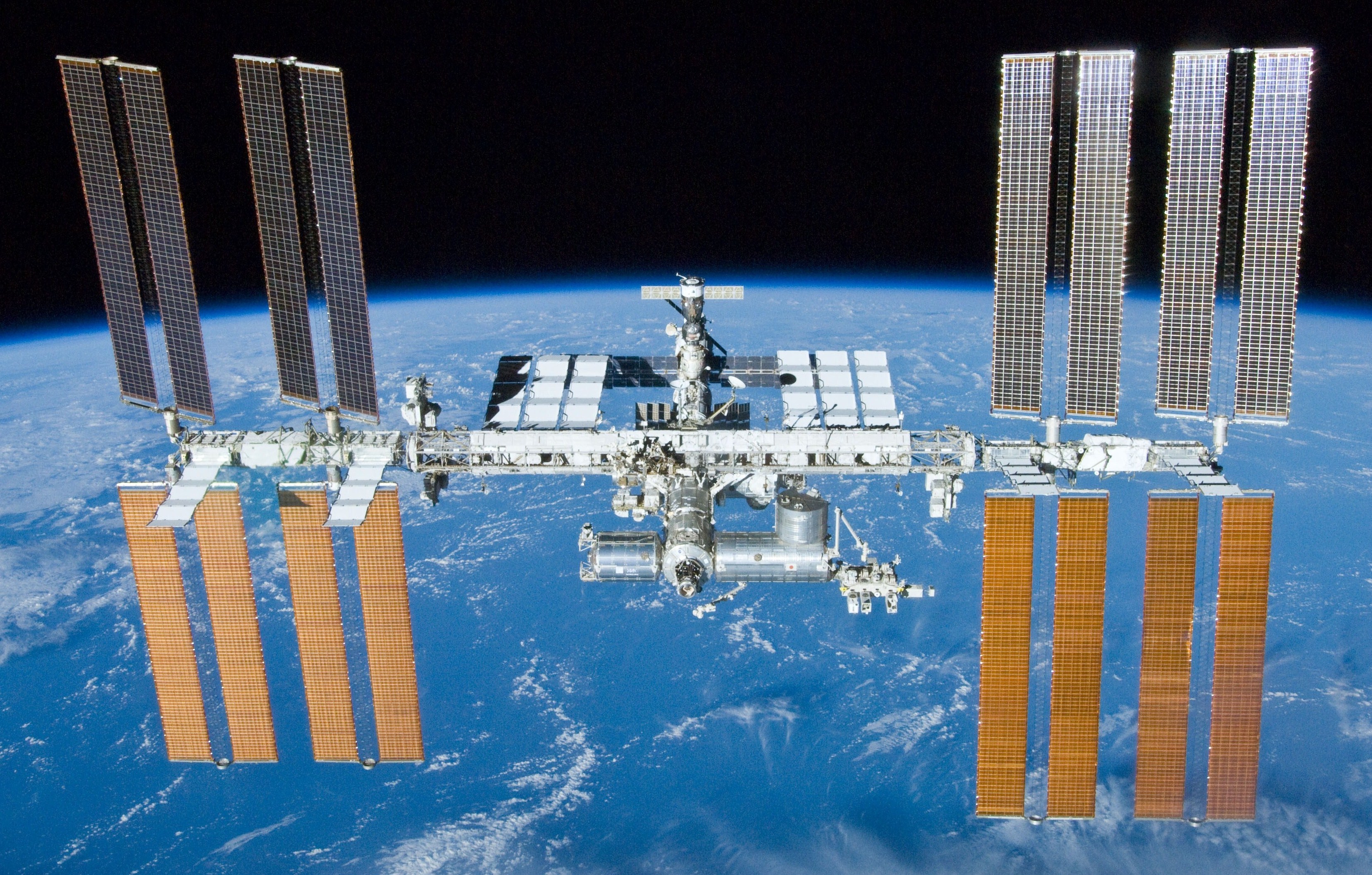
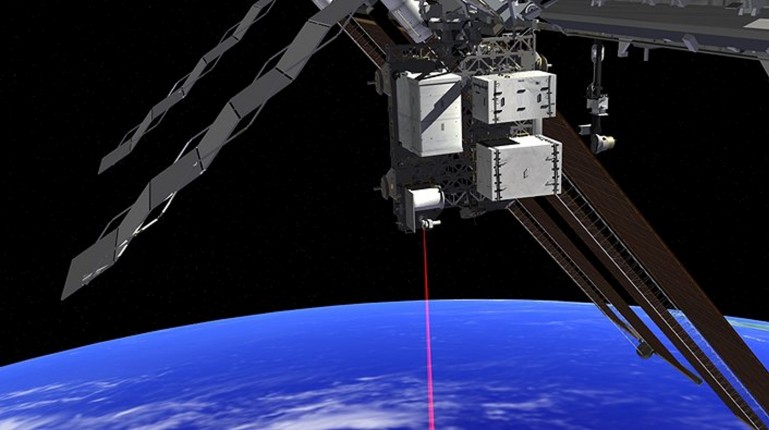
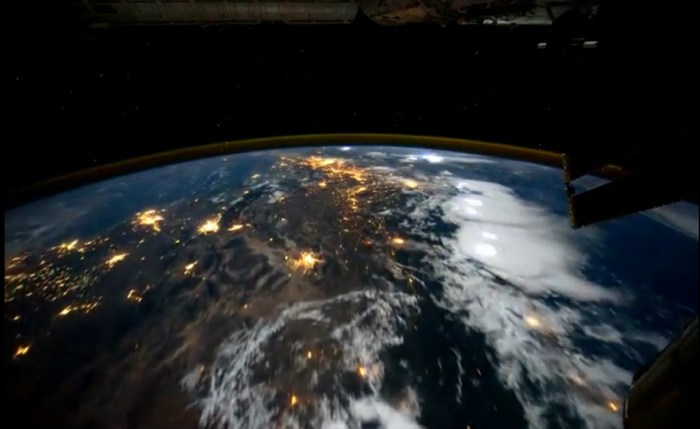 The OPALS system sought out and locked onto a laser beacon from the Optical Communications Telescope Laboratory ground station at the Table Mountain Observatory in Wrightwood, California. It then transmitted its own 2.5-watt, 1,550-nanometer laser and modulated it to send the video at a peak rate of 50 megabits per second. According to NASA, OPALS transmitted the video in 3.5 seconds instead of the 10 minutes that conventional radio would have required.






 Stories by Williams