Back from Europe – Part the Fourth!

remembrance_day_20121109And we’re back with more of the 2014 Williams’ Family Eurotrip. Today’s subject: the three days and two nights we spent in the historic town of Bayeux in the Normandy region. The highlights while staying there involved learning of my grandmother’s cousin, Wilmot Pettit, touring the historic city, visiting several World War II cemeteries, seeing the Bayeux Tapestry, and visiting the D-Day landing sites of Gold and Juno Beach. And of course, our accommodations were once again kick-ass!

Tuesday, April 15h – Thursday, April 17th – Bayeux:
Tuesday morning began as all our mornings did, with breakfast in the hotel followed by us packing up the car and hitting the road for the day! Our next destination was the Normandy town of Bayeux, which is located just 7 km (4.3 miles) from the coast and sits on River Aure. In addition to being very scenic and well-situated for our purposes, Bayeux also had two things going for it in terms of its history. One, it was the first town liberated by the Allies during the Battle of Normandy. And two, it is the home of the Bayeux Tapestry, an historic artifact that is listed as a “Memory of the World” by UNESCO.

But before we could arrive there, there was the matter of retracing some family history. Prior to leaving, my folks had been informed by my grandmother that one her cousins – who lived next door to her growing up in Bramford, Ontario – had been shot down in Normandy and was buried there. After some quick research, they had a name and some clue as to his whereabouts. Wilmot Pettit, who enlisted with the Royal Canadian Air Force in 1940 and was shipped to Britain.

Operation_OverlordFour years later, he was promoted to the rank of Squadron Leader and participated in the greatest undertaking in history – Operation Overlord, the invasion of Normandy. As part of the Eastern Task Force, his air unit was responsible for escorting members of the British 6th Airborne to their landing sights south of Sword Beach to the north-east of Caen. This consisted of his Shorts Stirling Mk IV bomber towing a glider packed with British Airborne troops to their destination. Unfortunately, his plane was shot down by German anti-aircraft artillery, and went down near the town of Grangues.

Armed with that knowledge, as well as what could be gleamed from the town’s website, we programmed the town of Grangues into Betty (our semi-affectionate name for the GPS), we set off for the Normandy countryside. Eventually, we found the hamlet, which consisted of a church and a school located a little farther on, which just happened to have the mayor’s office attached. This we entered, hoping they might have some information on this event that took place outside of his town some 70 years ago.
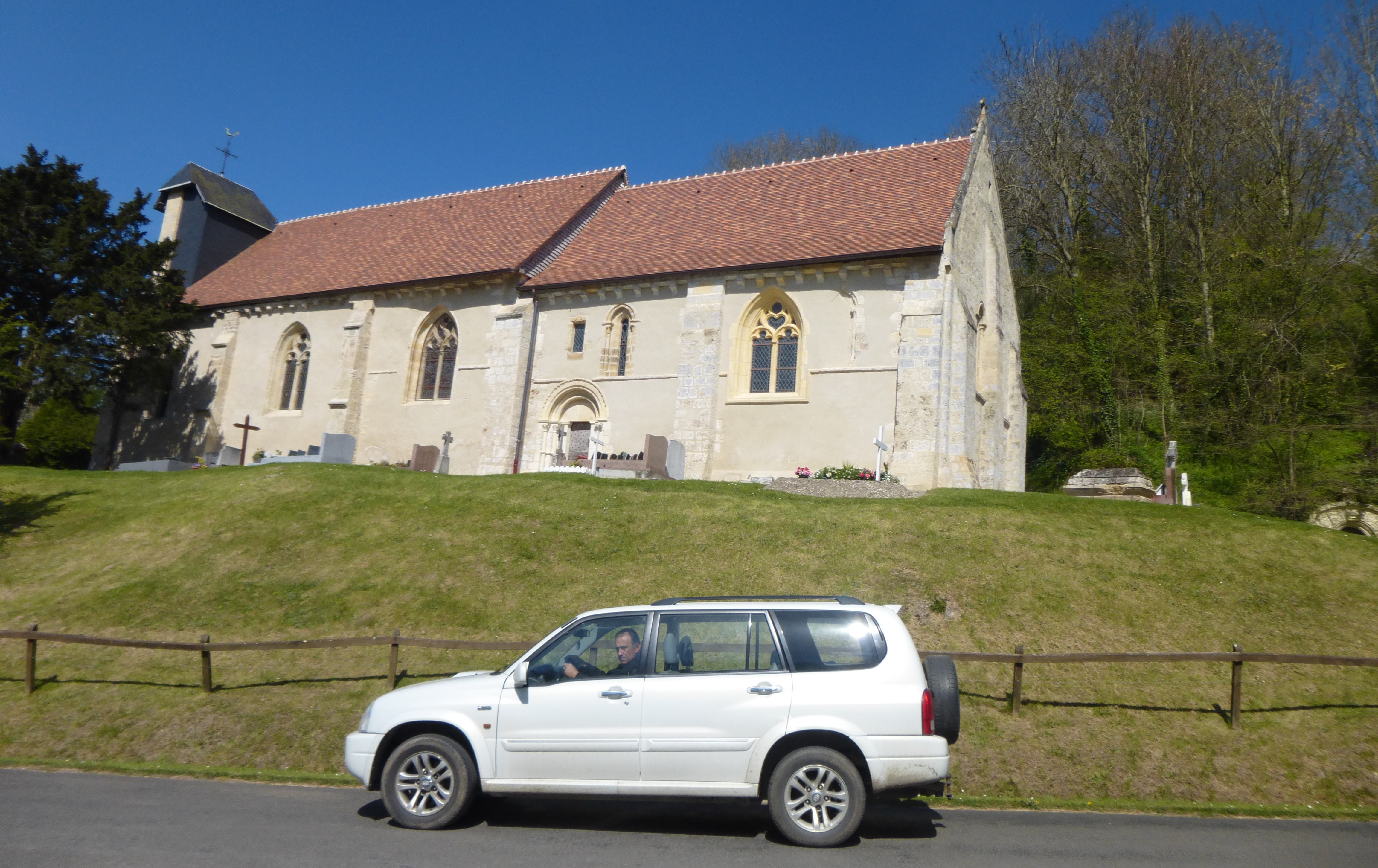
The Church at Grangues

To our surprise, the Mayor had more than a little; in fact, he had volumes! In addition to his office containing a case filled with the remains of a glider, pictures of some of those who survived, and a painting of the Stirling flying above the trees with its wings on fire, he had pictures, documents, and pointed us in all the right directions. He even escorted us to the field where Wilmott’s plane, in addition to several other gliders, crashed – which was at one time the estate known as the Chateau Grangues.

It was a wonderful opportunity for my mother and I to practice our French, and the Mayor extremely helpful and patient with us. We quickly learned that Wilmot’s plane was one of several Allied craft that went down in the region. According to the 591 Antrim Parachute Squadron‘s ongoing inquiry into the matter, Two Stirlings and four Horsa Gliders have been shot down by German anti-aircraft guns, and landed in the fields outside of this small village.

My folks and I listening to the Mayor (far right)

When Wilmot’s plane went down, he and most of the airborne troops died in the crash. The handful that survived were taken prisoner by the German 711 Division that were occupying the region. Several of these men were later shot, in what the German soldiers claimed was “an attempted breakout” (though this has never been confirmed). To the mayor’s knowledge, Wilmot and all the others who perished on that “day of days” were interred in the Commonwealth Cemetery at the nearby town of Ranville.

He also said he had some photos which he would send us home with, but he never was able to find them. He did however promise to mail them as they turned up. We thanked him for his immense help and did a little searching of the fields, hoping to find some remains that we ourselves could take home and show to my grandmother. It was quite an exciting thing, finding a personal connection to the war and being able to walk on the very land where it happened.

The commemorative plague outside of the Grangues church
The commemorative plaque outside of the Grangues church

Unfortunately, the crash site consisted of grown-over fields and a lot that had been set aside from construction, and all we could find after a few hours of looking was a rusted piece of metal that we took for an old bullet fragment. Still, we felt our mission was a grand success, thanks in no small part to the lovely people of Grangues and their infinitely helpful mayor. We also were sure to visit the commemorative plague that sat outside the church, which had the names of all those who perished in the crash and at the hands of the German soldiers, along with the French and British flags flanking it.

I should also note that the church had a lovely spring out in front of it. Water poured down a stone chute from the hill’s underground aquifer and entered into a basin with a statue of the Virgin Mary over top of it. People came from all around while we were there to fill up their jugs and take it home. And this was in spite of the fact that the water basin had a warning sign that said that the town was not responsible for any illness incurred from drinking it. Ah, legalities!

Wilmot Pettit's headstone, Ranville War Cemetery
Wilmot Pettit’s headstone, Ranville War Cemetery

And then, it was off to Ranville, which proved to a small town – though compared to Grangues, it was a minor megapolis. Once there, we grabbed some lunch from a local bakery, which consisted of water and/or Orangina and some sticks of bread with cheese and ham baked in. We downed these at the local park, and entered the Ranville War Cemetery, and found Wilmot Petitt’s grave (pictured above). As it states on his stone, he was awarded the Order of the British Empire and the Distinguished Flying Cross for his actions.

We placed a Canadian flag pin on his headstone and my mother planted a copy of his story that we printed off next to it. We also planted a Canadian quarter in the soil, and my father sprinkled some dirt from Bramford he had been keeping in a small bottle. He then filled said same bottle with some dirt from next the cemetery, with the intention of bringing it back to BC and showing to my grandma. After that, we went around to pay our respects to other Canadians who had died on D-Day and during the Battle of Normandy.
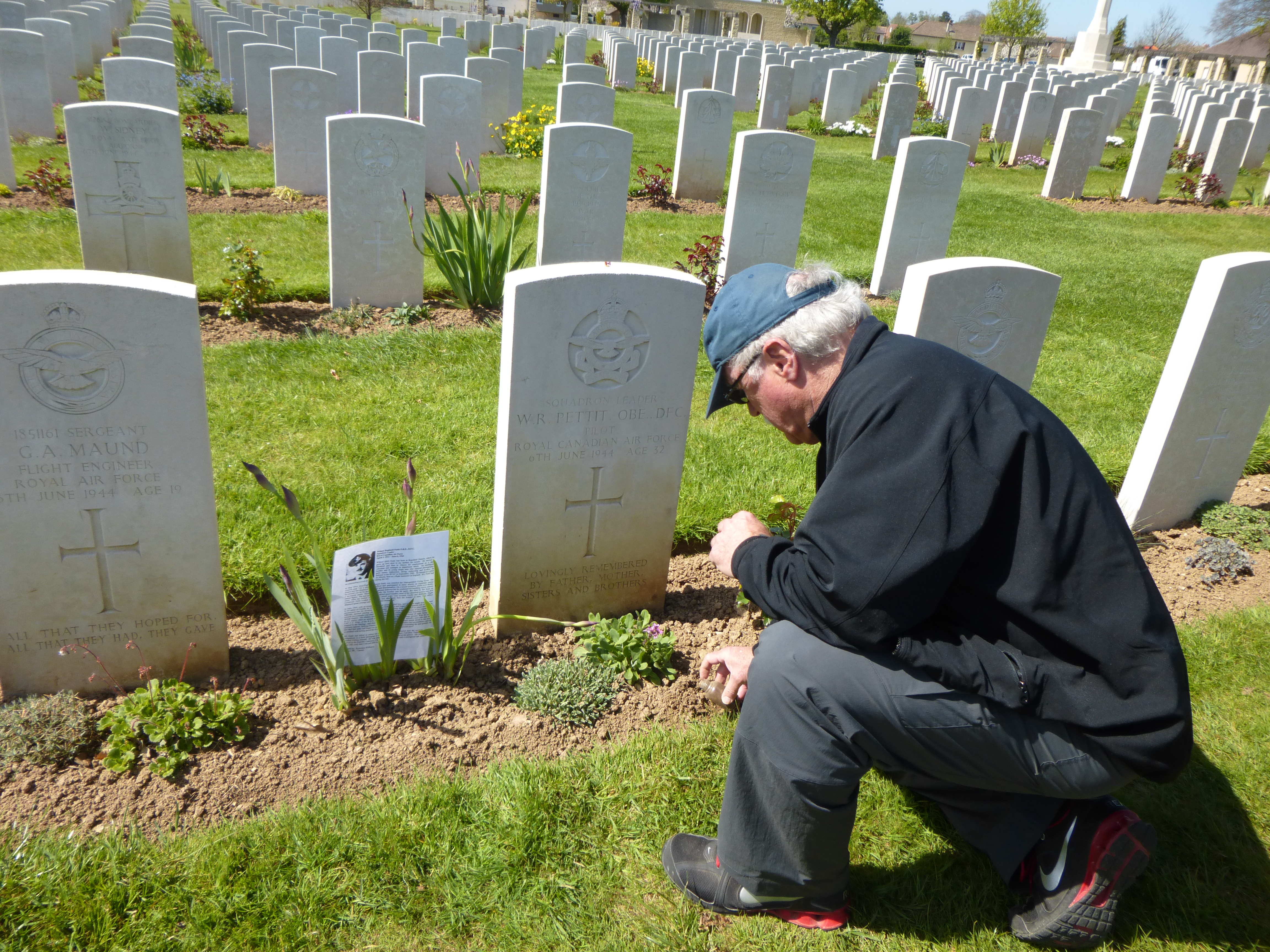
My father placing soil from Bramford by Wilmot's headstone
My father placing soil from Bramford by Wilmot’s headstone

Then it was into Bayeux, where we found our way to the Lion D’Or (Golden Lion) where we would be spending the next few nights. After finding our room, my folks and wife wanted to go for a walk and visit the local Cathedral. Unfortunately for me, I was far too tired and feeling the effects of a long day out in the sun to join them. So I napped and showered while they explored the cobblestone streets and saw the magnificent Cathedral. Luckily, my wife took plenty of snapshots and told me about their time.

As they inspected these piece of Norman-Romanesque architecture – which is the seat of the Bishop of Bayeux and the original home of the Bayeux Tapesty (more on that later) – the organ music came on. This cathedral has two, incidentally, one which is huge and the other which is massive! As they learned, it was practice time for the organ player, and they were playing everything from hymns to the theme from the Phantom of the Opera.
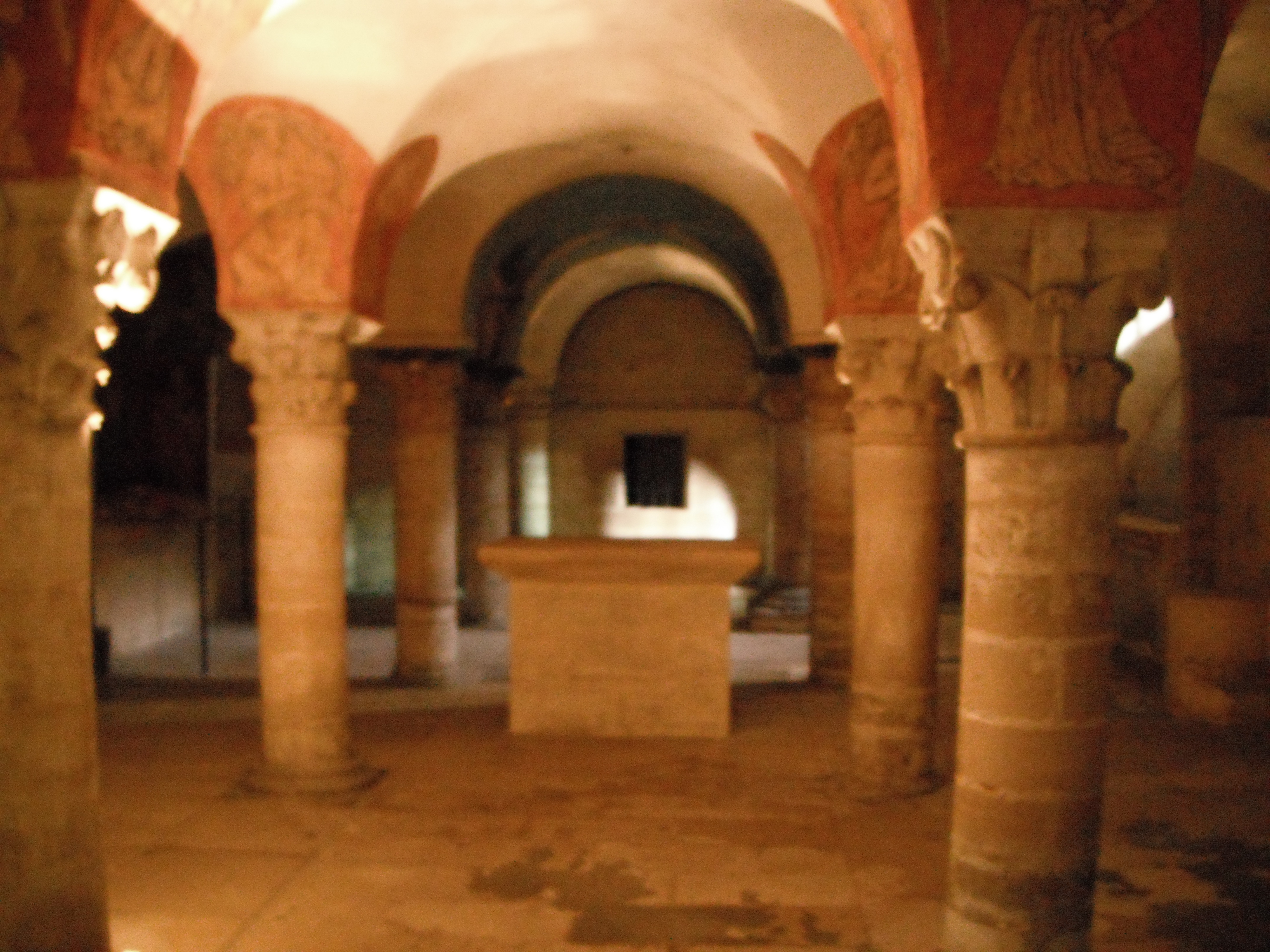
The Bayeux Cathedral crypt

Then they visited the station’s of the Cross chapels – the Cathedral has one for every station – took some pictures of the beautiful stained glass windows, and then visited the crypt. Down there, frescoes, columns and some trace light coming in from the windows are the only company to those who have been entombed over the years. My wife also claimed that the place could admittedly use some conservation work, but heritage conservation is her field, so this is generally her opinion!

We then met up for dinner at a place near the hotel – La Maison de Terroir (House of the Land) – where we delicious eats that were washed down with a few glasses of Affligem Blonde (the local beer of choice). We then retired to our room for some restful sleep and got up the next day to do the next leg of our tour of World War II sites. Up next was Juno Beach, the Normandy beach where the Canadian forces made their amphibious landing on D-Day.

Juno Beach Museum
Juno Beach Centre

It was at this point that we were doing things that I was responsible for researching. World War I had been my father’s project, as he was more than familiar with all the cemeteries, sites and battles that had taken place in the Ypres Salient. But D-Day and the Battle of Normandy were my baby, so allow me to share with all the information I dug up in preparation for this part of our trip. So as always, here is some background. Don’t worry, it’s short this time!

On June 6th, 1944, the Allies unleashed the greatest invasion in history. After several years of chipping away at Nazi Germany’s war machine with successful campaigns in North Africa, Sicily, Italy, and in the Atlantic, it was decided that the time for a “Second Front” in Western Europe had finally come. In the east, the Russians had been steadily dealing defeat after defeat against the Germans forces for two years, beginning with Moscow in 41′, Stalingrad in 42′, and then Kursk in 43′. With a full-scale invasion that would at long last liberate France, Hitler’s ultimate defeat would become an inevitability.

operation-overlordHaving learned the lessons of Dieppe, the Allies understood the importance of both naval and air support. Because of this, the landing on the Normandy coast would be preceded by a massive bombing campaign by the US, British and Canadian air forces. All along the coast and interior, German fortifications, supply depots, supply lines, and even towns were bombed heavily. The US and British navies also positioned themselves off the coast and began bombarding the beaches a few hours in advance of the landings.

While this was taking place, members of the American 101st and 82nd Airborne Divisions would be landing in the Western Sector of Normandy near the towns of St-Mère-Église and Carenten. In the Eastern Sector, the British 6th Airborne dropped in near Ranville and Bénouville using gliders. Landing behind enemy lines, their mission was to secure causeway exits to ensure that the Allied landings would be able to reach inland without opposition, as well as to destroy inland batteries and securing and destroying bridges to prevent a German counter-attack.

NormandySupply_editAs part of these preparations, the Allies also conducted a massive campaign of deception leading up to the invasion of Normandy. Having learned of the value of secrecy and surprise, they had been circulating false information for months that claimed they were preparing for an invasion of the Pas de Calais in July. The Normandy landings, according to the false information that was being fed to the Germans, was merely a diversion to force the occupiers to pull forces away from this region.

In addition to false radio broadcasts and reports fed to German double-agents, a fictitious First U.S. Army Group was created, supposedly located in Kent and Sussex under the command of Lieutenant General George S. Patton. Using dummy tanks, trucks, and landing craft that were  positioned near the coast, the illusion was very much believable, and Hitler became convinced that the Normandy landings genuinely were a feint to lure German forces away from the real invasion.

Canadian_Soldiers_Juno_Beach_TownBut in reality, the Allied assault on the five beaches of Normandy – Omaha and Utah in the American sector; Gold, Juno and Sword in the British sector. And at Juno, the 3rd Canadian Infantry Division and the 2nd Canadian Armored Brigade was responsible for clearing the beachhead. As part of the British 2nd Army’s assault on Gold, Juno and Sword in the Eastern Sector, they were tasked with entering the beach at Courseulles-sur-Mer, Bernières, Saint-Aubin, and reaching inland as far as the town of Caen.

To make all this information more personal and relevant, my father recommended I research a soldier (one who was possibly related to our family) and find out what role they played. After doing some preliminary digging, I learned that two Williams’, both of whom were interred at the Commonwealth Cemetery at Beny-sur-Mer. Since my father had already researched Fred Williams of Cornwall, Ontario (whom we may very well be related to), I chose William Gordon Williams of Moose Jaw, Saskatchewan.

Winnipeg_Rifles_advance_inlandAs a sergeant with the 1st Battalion, Royal Regina Rifles (7th Regiment), in the 3rd Canadian Infantry Division, he landed at Nan Green sector of Juno Beach, just outside of Courseulles-sur-Mer. The assault began at 0630 hours (that’s 6:30 am in civilian speak); and during the first hour, Canadian forces sustained 50% casualties (similar to what occurred at Omaha Beach). Sergeant William G. Williams was one of the fallen, along with 358 other young men. Despite these losses, the Canadians managed to outperform their peers when taking their objectives.

By 1120 hours, the 3rd Division had cleared the beach and entered the town, seizing the bridge over the river Seulles. By 1415 hours, the entire beach was secured and the division moved inland, and were the first forces to secure their objectives. However, they were unable to reach Caen due to the fact that the British at Gold and Sword were unable to link up with them, and due to increased resistance from the 12th SS Panzer Division, a fanatical unit with the Hitlerjugen (“Hitler Youth”). Other objectives, such as the town of Bayeux, also remained in German hands for the time being.
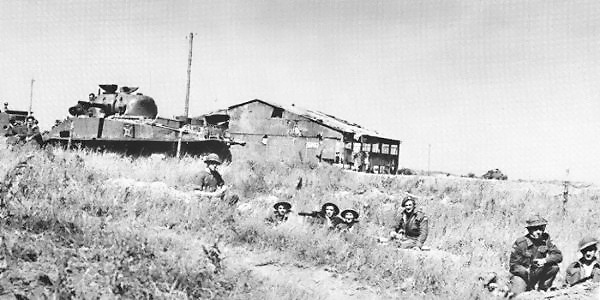
Queen's_Own_Rifles_Dug_In_Near_CarpiquetHowever, over the course of the next week, the Canadians reached farther inland than anyone else, and secured the towns of Autrie and Carpiquet west of Caen. They also managed to hold their ground against the fanatical 12th SS, who lost a third of their armor against the entrenched Canucks. It was also during this time (July 7th) that the SS executed 20 Canadian POWS at the Ardennes Abbey, located northwest of Caen. Lieutenant Fred Williams was one such person. When the Canadians liberated the Abbey on the following day, they found the bodies of their comrades.

Thenceforth, the Canadian forces operated under the “No quarter asked, none given” rule, which in practice amounted to shooting all SS soldiers on sight. For the remainder of June, all operations were aimed at capturing and holding the high ground southwest of Caen and waiting for reinforcements and the 1st and 30th British Corps to arrive north of Caen and south of Bayeux. By July, efforts to secure Caen and its strategic bridges over the Orne River would be altered. Whereas the D-Day plan called it for it be seized in the same day by direct assault, future attempts would involve outflanking it. More on that later…

Juno Beach Centre, front entrance

Anyhoo, we arrived at Juno Beach at the edge of Courseulles-sur-Mer and proceeded to the Juno Beach Centre that sits at the edge of the beach. Inside, we saw an impressive range of displays that spoke of Canada’s involvement in the Second World War, culminating in a video that addressed the Juno Beach landing, the Battle of Normandy, and the importance of remembering their sacrifice. We then popped outside, and walked the beach, taking some pictures and grabbing some more keepsakes.

Naturally, there weren’t pieces of shrapnel or bullet casings lying around, as the tides cleared those away a long time ago. However, we did manage to pick up some scallop shells and a few interesting-looking stones. We also visited the observation bunker that still overlooks the beach, one of several preserved fortifications that is tight by any definition of the word. Farther down, we spotted another that is slowly sinking into the beach, since these heavy concrete structures are just sitting on sand.
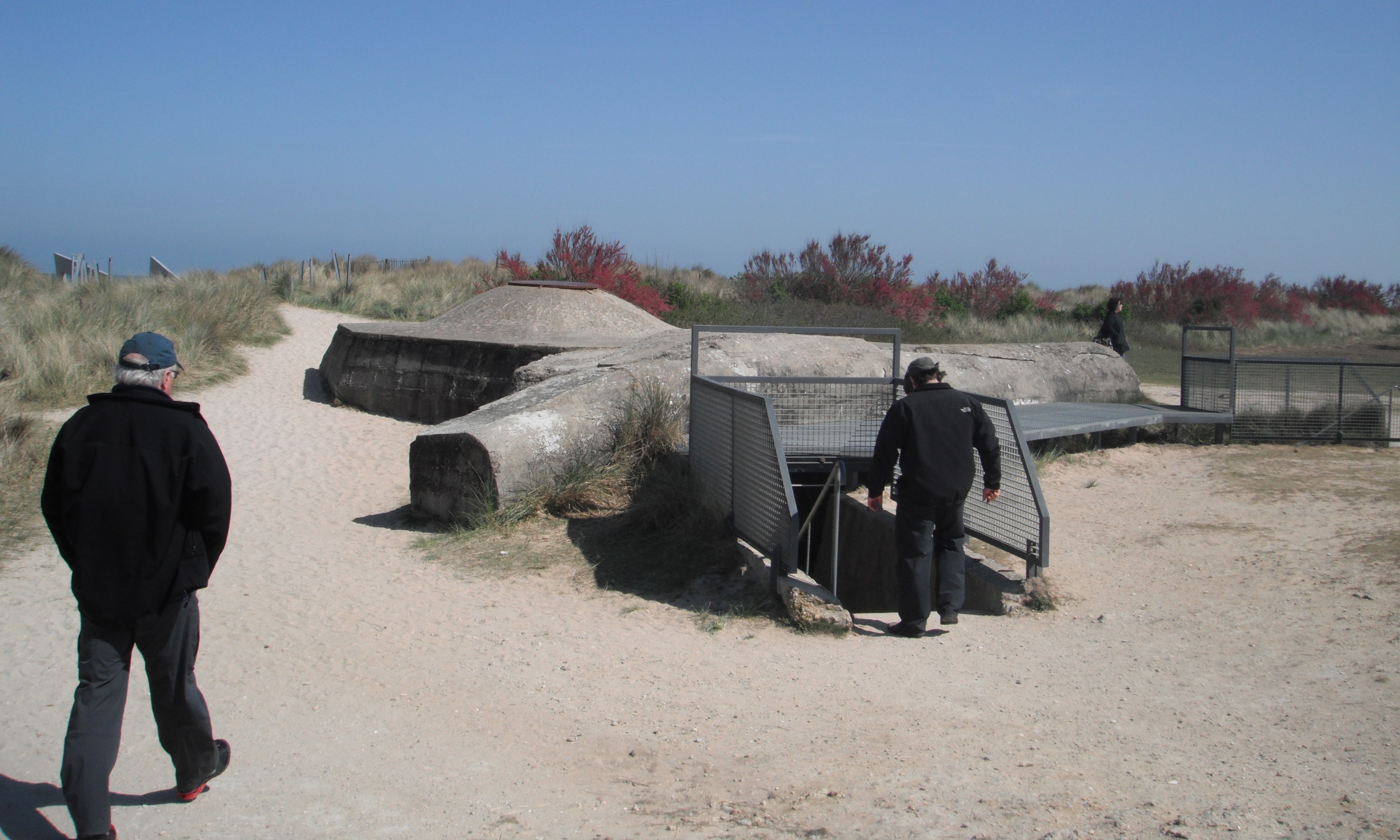
Entering the observation bunker

And then, since it was midday, it was time for lunch, which consisted of burgers, hotdogs or sandwiches (and fries) from a vendor down on the boardwalk. Then it was back into the car, as we had to visit the Beny-sur-Mer War Cemetery, where both William G. Williams and Fred Williams are interred, along with 2047 other members of the 3rd Canadian Infantry Division and airmen who perished in the Battle of Normandy. In addition to these two headstones, we also visited the graves of the other soldiers who died at Beny-Sur-Mer, as well as some that shared my mother and wife’s (well close enough) last name – Wilson and Jack.

After all that, evening consisted of eating at La Maison de Terroir again, followed by an evening walk by my wife and I. While were out, we did a little shopping, and chose to buy a bottle of Calvados. For those unfamiliar, this is a special form of apple brandy named after the region of Lower Normandy where it originated. This was something that was recommended to us by a friend, and my father had said he wanted to try it. We also picked up a bottle of Bayeux Cider, another local specialty, and head back to the hotel.

Beny-sur-Mer War Cemetery

Another sound sleep, and Thursday was upon us! As our last day in town, we hoped to cover all the remaining items on our list. This included visiting Arromanches, the town that overlooks Gold Beach and where the Allies constructed the massive artificial harbor that ensured they were able to get supplies to their forces during the Battle of Normandy. We also hoped to see the Bayeux Tapestry (well some of us anyway), and visit the Bayeux War Cemetery – the largest World War II Commonwealth cemetery in France.

First up, it was the Bayeux Tapestry, which was housed in a museum not far from our hotel. Having seen it already, and feeling unimpressed with it, my father decided to revisit the Cathedral and meet up with us later. And so, after breakfast, we walked on over to the museum to get a look at this UNESCO piece of world heritage. Inside, we were given audio devices that told the story of the Tapestry and explained what each section of it meant.

The gate of the Bayeux Tapestry musuem

I have to admit, this portion of the museum was not as fun as I would have thought. The Tapestry is long and quite interesting, but listening to a half-hour audio description and moving along slowly in line with dozens of other people is not such a great way to see it. Luckily, the museum has multiple floors and plenty of exhibits that help put the lengthy historical account into context. There is also the new theater they added that shows a short film that illustrates it quite well.

To break it down, the Tapestry tells the story of William the Conqueror, the King of Normandy who conquered England in 1066 CE. As part of a war of a succession, the story begins with Edward the Confessor sending William’s rival (Harold) to Normandy to name him Edward’s successor. However, while en route, Harold accidentally detours to a neighboring realm where he is taken hostage by Guy, the Count of Ponthieu. After William pays the ransom for Harold, William invites him on a campaign to conquer Brittany.

A section shoing the Battle of Hastings. To view the full tapestry, click here:
A section showing the Battle of Hastings

Successful in their campaign, William knights Harold and makes him swear on the Bible and a holy relic to swear his allegiance to William as his future king. Harold accepts, though he is humiliated to do so, and is given leave to return to England to let Edward know that he has accepted. However, Edward dies shortly thereafter and Harold proclaims himself King of England. This coincides with the arrival of Halet’s Comet, which is seen as a bad omen.

News of the coronation reaches William, and he declares war and orders a full mobilization of his troops and ships. They sail to England to meet Harold in battle, but Harold must first do battle in the north. This is known as the Battle of Stamford Bridge, where Harold and his army of Saxons prevail against an invading force of Vikings. His army then rides south to meet William at Hastings. And after a pitched battle, Harold is killed and his army routed. William is proclaimed king in 1066.
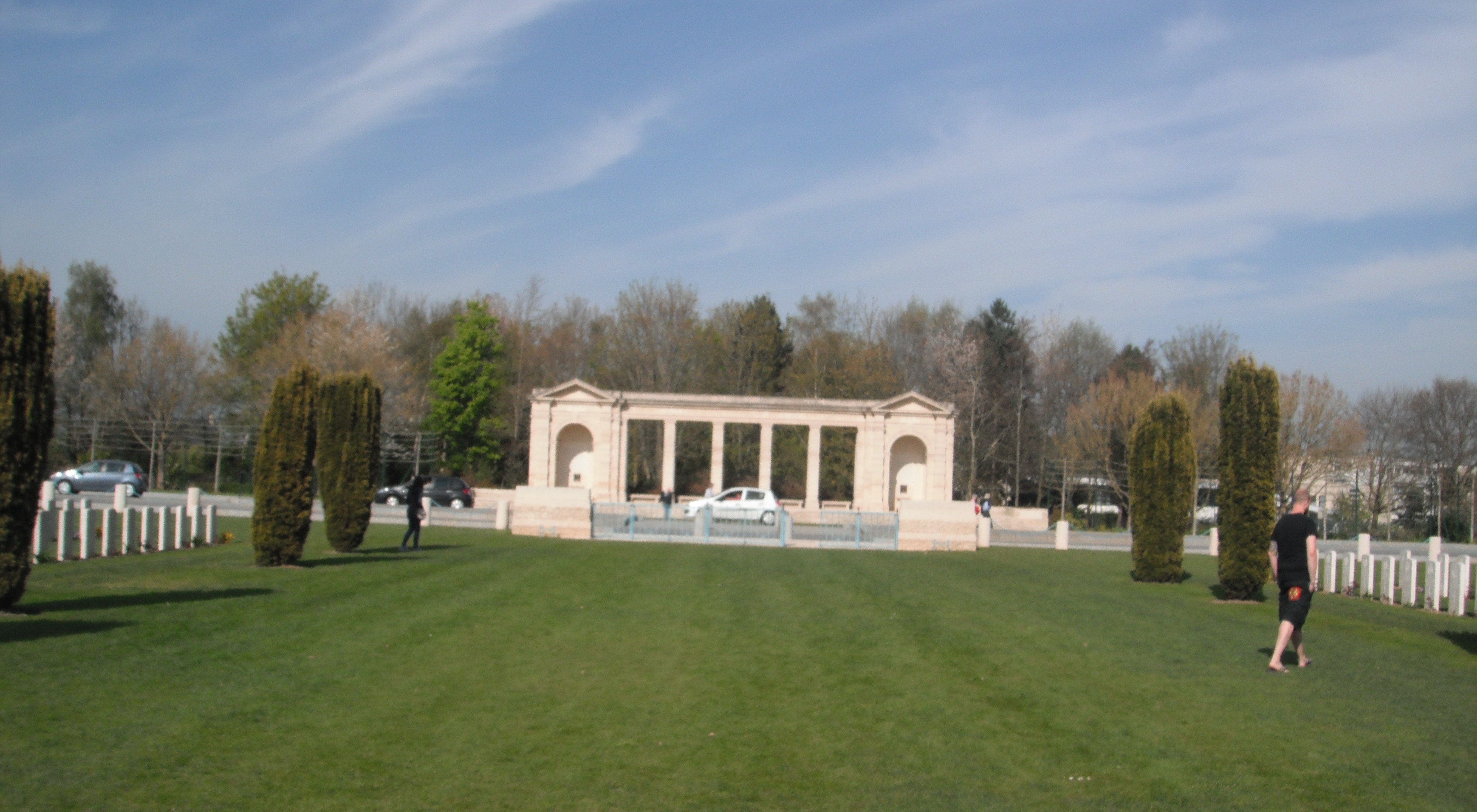
The Bayeux War Cemetery, with the Memorial in the distance

Of particular interest to us was the end of the film where it says that in the Bayeux War Cemetery, a sort of riposte is made to the Bayeux Tapestry. At this Commonwealth Cemetery – which honors British and other soldiers who fell during the Normandy campaign – there is a memorial that states in Latin “We, once conquered by William, have now set free the Conqueror’s native land.” In short, they present the Battle of Normandy as the latest in an ongoing saga between France and England, one which began with conquest and war and ended with friendship and liberation. Kind of heartwarming when you think about it!

Later that same day, we visited this cemetery and paid our respects. Completed in 1952, this cemetery contains 4,144 Commonwealth burials of the Second World War, 338 of them unidentified. And unlike other cemeteries we visited, this one also has over 500 war graves belonging to other nationalities, the majority of which are German. This was an especially sobering sight to see after we visited the many British, Canadian and Commonwealth graves we paid our respects to.

To see the full-length tapestry, click here, then click to zoom in and begin examining it from left to right. Also, be sure to follow the story on the museum’s website.
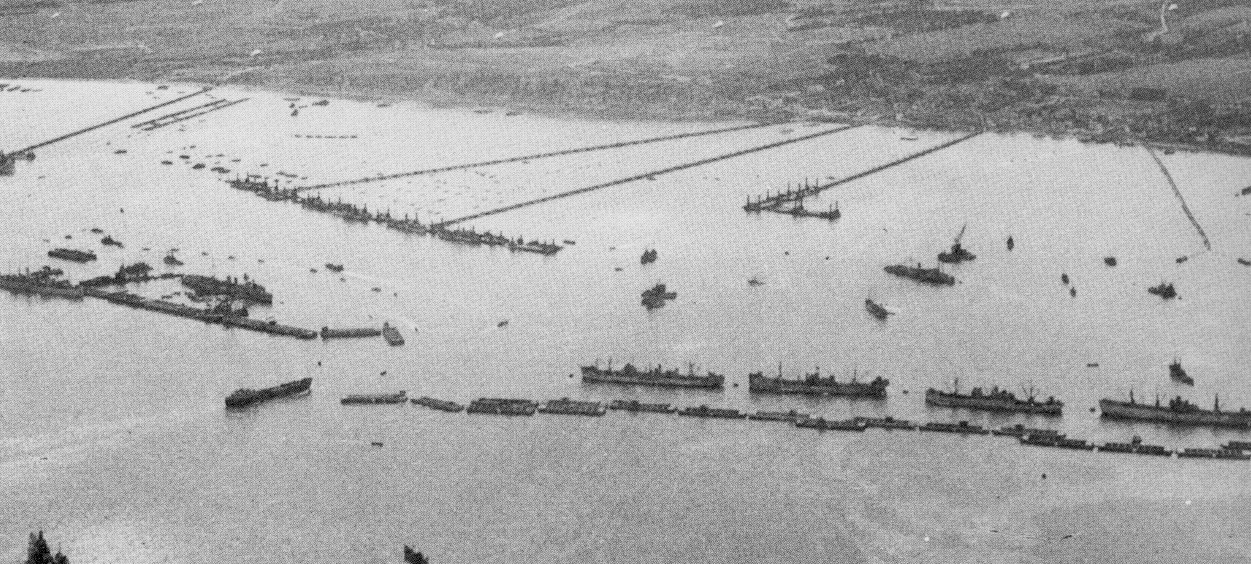
Mulberry Harbor in 1944

Then, we reconvened with my father and headed off to the coast again. Our next stop was Arromanches and the Gold Beach Museum, where we were treated to the site of the artificial harbor that is still visible there today. Here, we grabbed some lunch, took some nice pics in front of the Allied and German vehicles and guns that are displayed there, and entered the museum to learn about the history of the beach and learn more about the massive feat of engineering that took place there 70 years ago.

Known as Mulberry Harbor, this artificial port was constructed by the British from 1942 to 1944 in order to assist the Allies in Operation Overlord. Basically, they understood that no army would be able to survive in Normandy for long without a great deal of supplies, which in turn would require the deep waters and heavy cranes of a port facility to park the freight ships and unload them. They also knew from the Dieppe Raid how difficult it would be to seize a heavily-defender harbor.
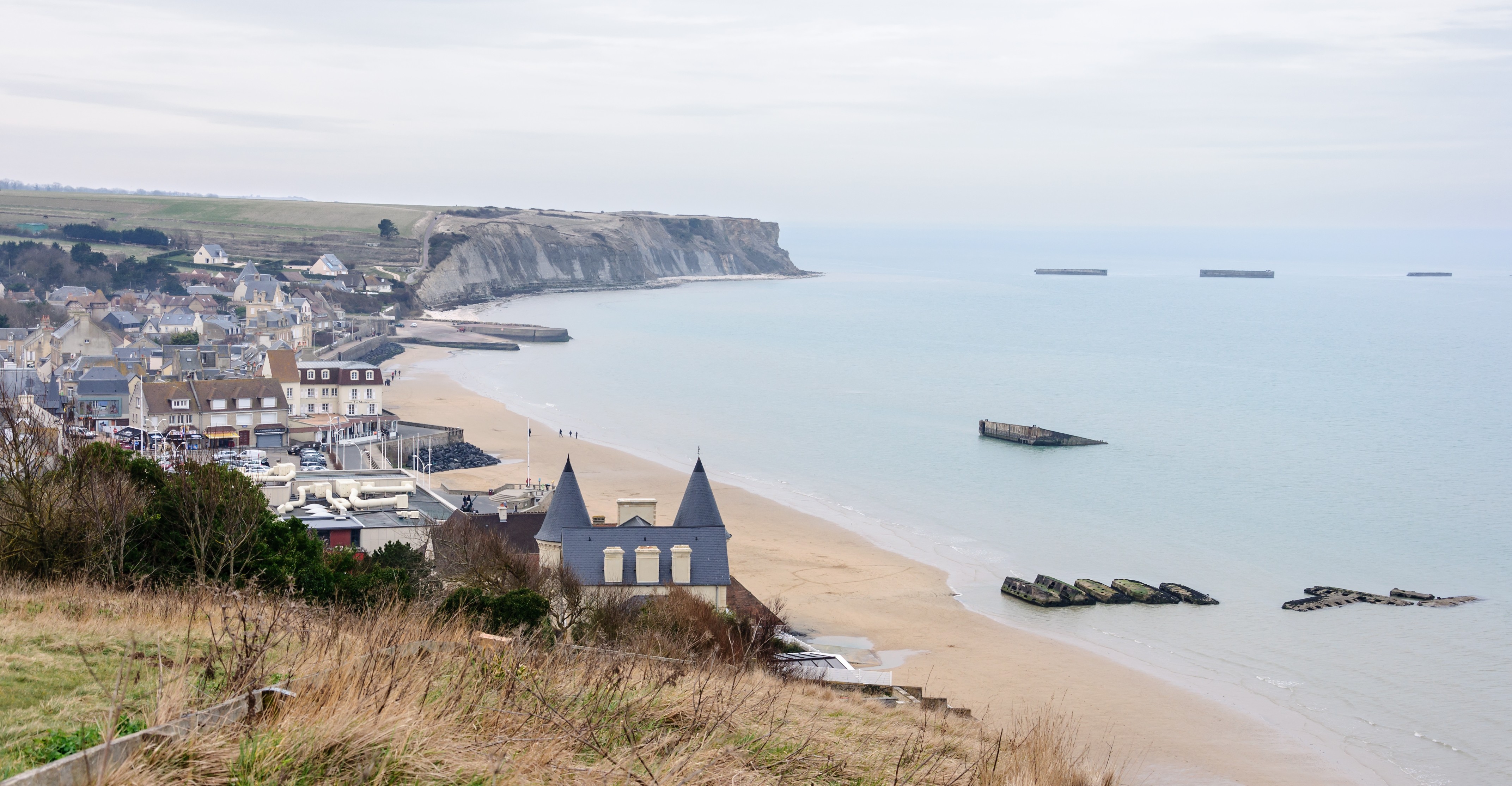
Arromanches and Mulberry Harbor as it appears today

Because of this, they set to work building a series of cement barriers which were then taken in sections across the English Channel and assembled off the coast of Arromanches. A series of tankers were also sunk in strategic positions around these “Mulberries”, forming an artificial breakwater with a series of pontoon causeways built within it. Once completed, Allied supply ships would sail into the protective harbor and unload along the causeways, sending tons of goods into the Normandy coast.

Had it not been for this harbor, the Allied invasion would surely have been doomed. Not only did the invasion require an endless stream of ammunition, food and fuel, it would be some twenty-four days before Allied forces would capture a port facility. This port was Cherbourg, which fell to American forces on the 30th of June, but which had been so thoroughly wrecked by the Germans occupants that it did not enter into even limited use until the middle of August.

Gold Beach Museum
Gold Beach Museum

All of this was explained in detail in the Gold Beach Museum, which contained detailed models of the harbor, amphibious landing craft, and countless bits of wartime artifacts. The multimedia presentation, which consists of viewers standing in a simulated amphibious craft and looking at the coastline on the dawn of June 6th, 1944. On the second floor, a short film also explains the harbor’s construction and the challenges in building and maintaining it.

Afterwards, we retired to the street again and tried desperately to find a public bathroom. My father and mother lamented the fact that during their last visit, one proved difficult to find then too. These and water fountains were both pretty rare in Arromanches, one has to wonder if there’s a connection! But having taken care of all that, we loaded back into the car and discussed our next destination. My father suggested that we check out a coastal battery that was still intact and not that far away, and we agreed.

German Flak 18 88mm cannon
German Flak 18 88mm cannon at Arromanches

Unfortunately for us, Betty was not the best at finding landmarks. And so, we had to drive for some along the coast and through our share of small towns before we found our destination. Luckily, some signs eventually pointed the way, and we made it the German coastal battery at Longues-sur-Mer. When we arrived, we noticed how the one battery, which had been hit during Battle of Normandy by an Allied ship, had a camera crew inside it. A tarp was lain over the collapsed roof, and the crew had a sign up saying “excavation in process”.

We couldn’t be sure exactly what they were doing, but we anticipated it was something for the History Channel or some such documentary stuff. Moving on to the batteries that were still intact, we began to explore inside. Though rusted, the guns were still there and aimed out to sea. They were also filled with gooey green water and algae, the result of seventy-plus years of rainwater collecting in them without interruption.
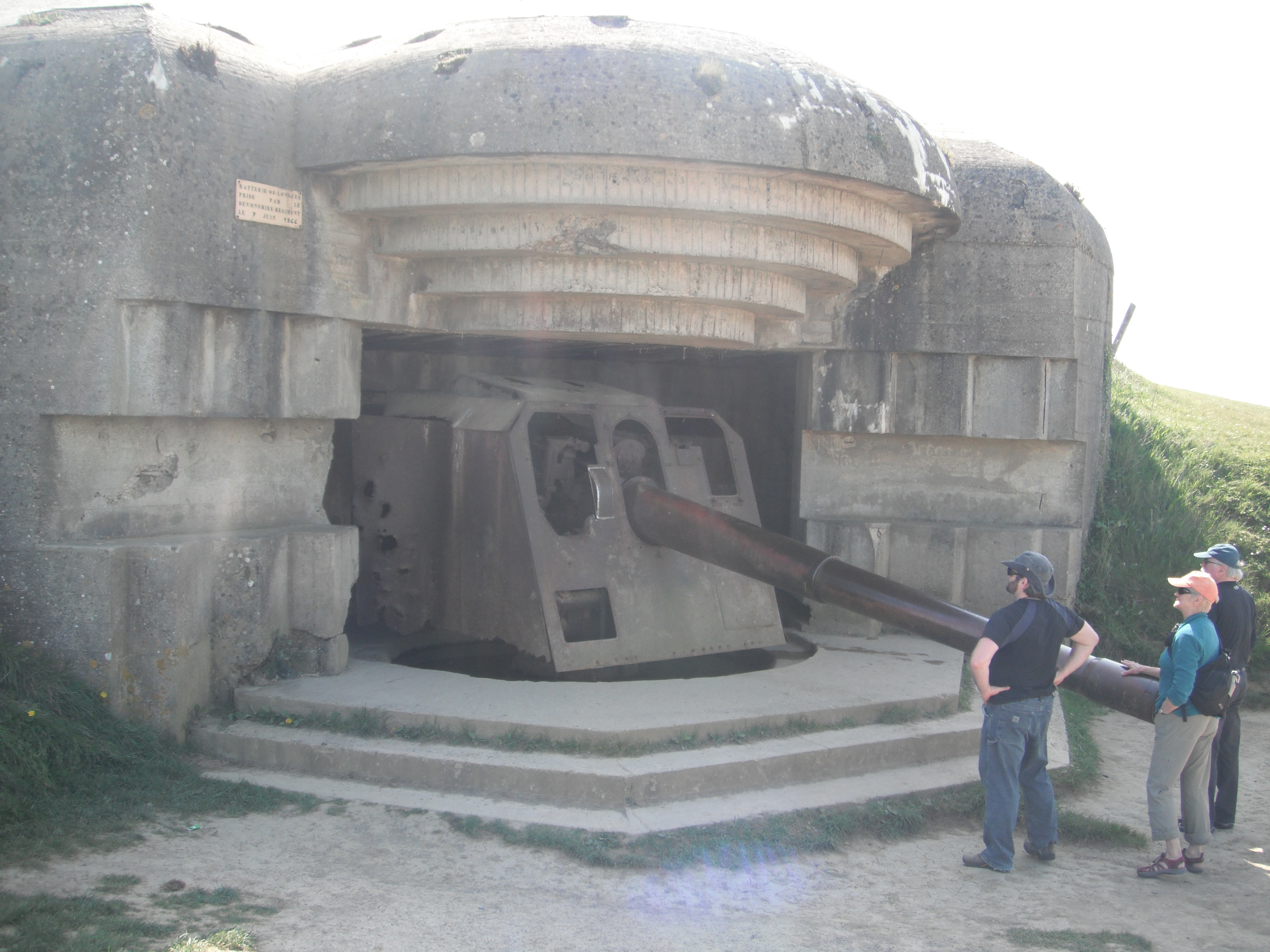
Coastal Battery at Longues-sur-Mer

There were two such batteries, both of which were relatively intact. Carla took some amazing pics of these, and then we proceeded to the very bluffs, where an intact observation bunker still sits. This bunker proved to be larger and less claustrophobic than the one at Juno Beach, and so I decided to do some deep exploration. This consisted of me going inside, despite my wife’s grievances, where I let my imagination loose and began pretending I was a commando raiding a German fortified position.

Unfortunately, when I moved to one side to dodge the imaginary bullets, I stepped in a hole filled with that same green, gooey water. Talk about an ugly soaker. As you can see, my wife was there to get it on camera. Yes, she wouldn’t follow me into the bunker and take some pictures of the preserved history, but she was more than willing to photograph my embarrassment. I love her dearly… After that, I stepped to the front end to look out the slat at the English Channel. I also waved hi to my folks who were standing at the bluff and looking out to sea. It was a mighty inspiring sight…

DSCF2376Then, it was back to the car, and off to the Bayeux War Cemetery for our last cemetery visit. After laying the last of our Canadian flag pins and paying our respects, we retired to the hotel to change (especially my socks!), and out for a dinner. This time around, we went to a restaurant near the Cathedral, where we enjoyed some interesting eats that consisted of gourmet burgers, pizza, and a buckwheat pancake with meat and veggies on it.

Back at the hotel, we also down a large bottle of Leffe Blonde together, and mercifully saved the Calvados for another night. I tell ya, that stuff could clean the grease off engine parts and isn’t too kind to stomach lining either! And when all that was said and done, we slept our final night at the Lion D’Or. The next day, we would be pushing off for Caen to do a little more touring of World War II sites, and then settling in to Chartres for the night.
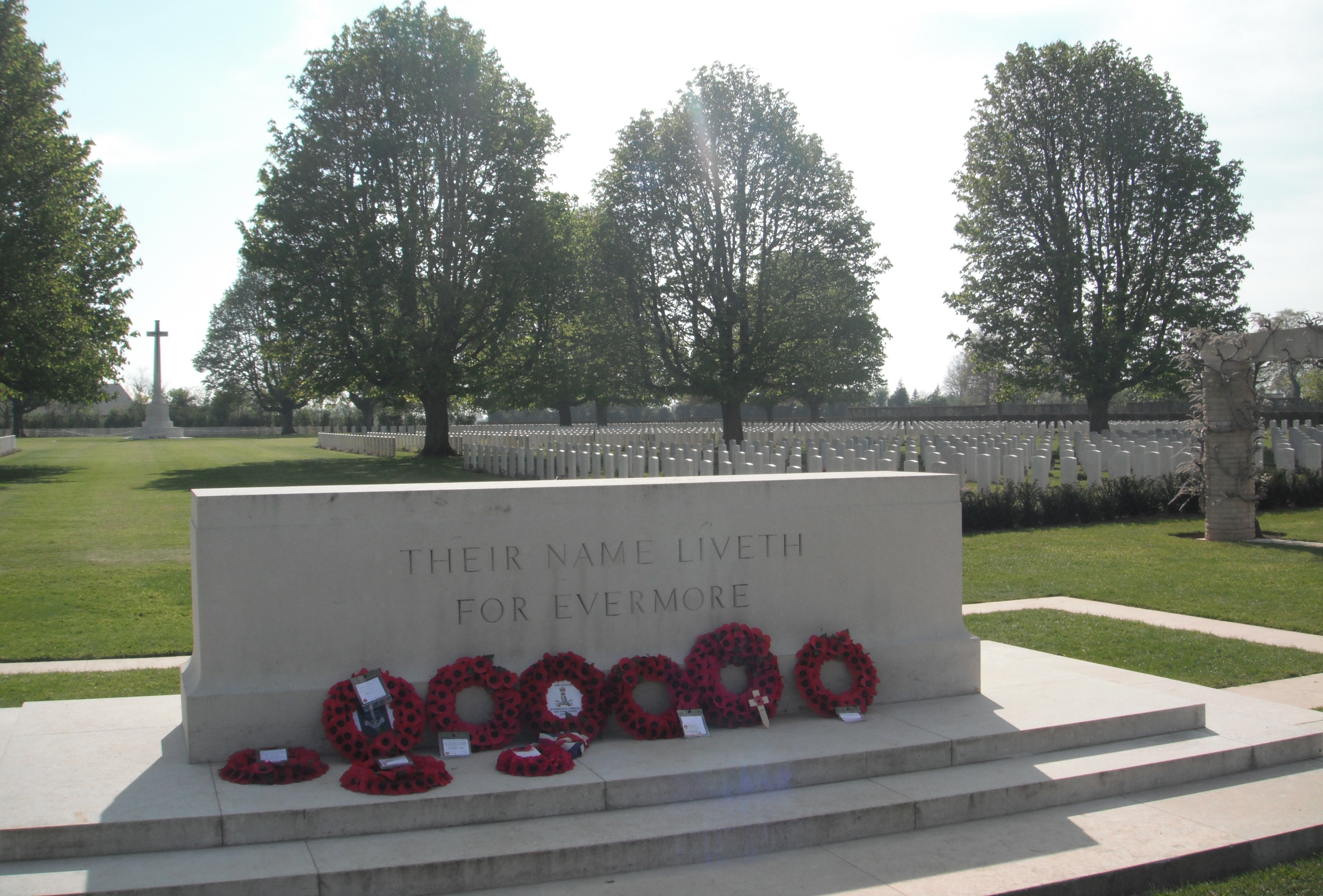
Bayeux War Cemetery
Bayeux War Cemetery

I should also note that we took the opportunity to say goodbye to the cat that was living at the hotel. During our voyages, my folks kept mental list of the places that had animals, as they are avid cat lovers and have nine of them back home! Heck, my wife and I are crazy cat (and dog) people too, and we missed our cat Jasper terribly. So we were all pretty happy whenever and wherever there were household animals to keep us company. Alas, this would be the last time we ever saw another house creature…

Ah well. In any case, that was our time in Bayeux and environs. What came next was also pretty cool and informative, and involved the lion’s share of research that I did for our trip. More on that soon enough! Stay tuned…
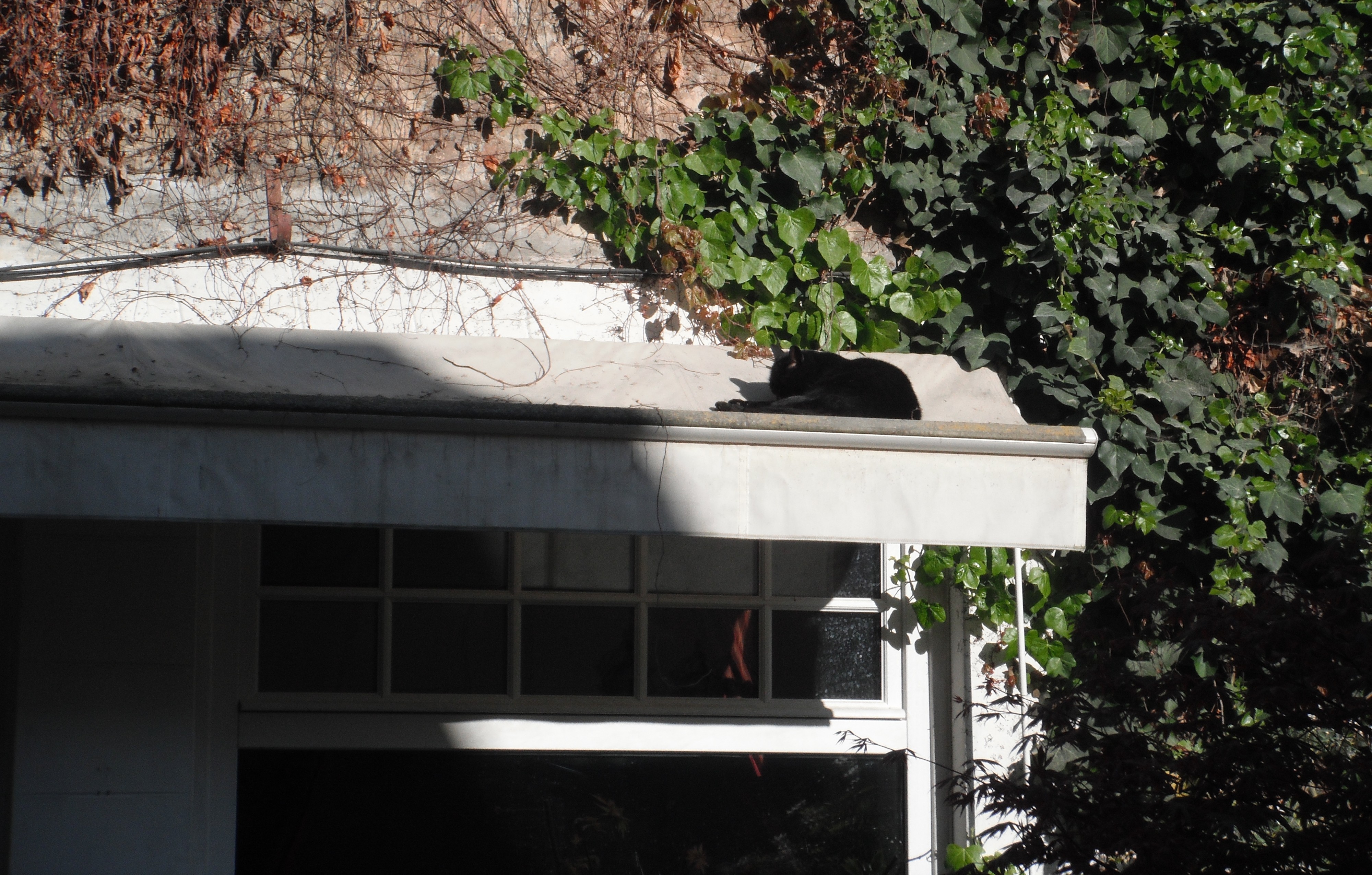
So long, little black kitty! We hardly got to see ya...
So long, little black kitty! We hardly got to see ya…


Game of Thrones – Season Four, Episode Five

game_of_thrones_s3We have reached the midpoint of the season at last. Just five more episodes to go before we are finished with A Storm of Swords and no doubt have to look forward to another year’s worth of waiting! But I’m sure the fans will all find something else to watch while they wait. Cable television is good like that! In the meantime, this week’s episode was largely a pacing one, providing some updates on the course of the season four story arc, and a little resolution of its own.

In the former category, this included Tommen’s coronation as king  the preparations for Tyrion’s trial, Sansa arriving at the Eyrie with Lord Petyr Baelish, Daenerys settling in as Queen of Mereen, Arya and Sandor’s journey through the Riverlands, and Pod and Brienne’ search for Sansa. In the latter case, the resolution came in the form of Jon Snow arriving in the north to deal with the threat of the mutineer’s at Craster’s Keep…

First of his Name:
GOT4_5_1The episode opens in the Throne Room at King’s Landing, where Tommen is being crowned King of the Andals, First Men, and all of Westeros. Cersei and Margaery use the occasion to discuss what comes next, which is the marriage of her to Tommen. Shortly after, she meets with her father to discuss the possible preparations, and it is agreed they will marry within a fortnight, and she will marry Ser Loras a fortnight thereafter. The subject of Tyrion’s trial also comes up, with Cersei trying to sway his judgement.

In Mereen, Daenerys is busy taking stock of her conquest now that Mereen has fallen and is told that Joffrey is now dead. She also learns that her army has taken Mereen’s fleet intact, and that she can now sail to Westeros. However, news has reached her that in her absence, the slave masters have once again seized power in Yunkai and Astapor. She decides that the time is not right to leave and that she must stay behind to rule as Queen, and see to it that Slaver’s Bay is and remains liberated.

GOT4_5_2In the Riverlands, Arya and Sandor continue on their way to the Eyrie, and Sandor learns that Arya intends to kill him along with all the other people on her list. He sees her doing a “water dance” as Syrio taught her, and mocks her efforts. Elsewhere, Brienne and Pod are making their way through the wilderness, and Brienne is frustrated by Pod’s apparent lack of competence as a squire. She chooses to ease up on him when she learns of how he saved Tyrion’s life by killing Ser Mandon Moore of the Kingsguard.

In the Vale itself, Sansa and Petyr arrive and are admitted to the Eyrie and are greeted by her aunt Lysa and Lord Robin. After sending Sansa and Robin away, Lysa demands that Petyr agree to marry her that same night. She speaks of how she was the one who killed Jon Arryn, and how she did at his behest. To quiet her, Petyr then agrees to her request, and discovers that she has the Septon waiting outside to perform the rights. They are married on the spot and begin their wedding night.

GOT4_5_4Later, she meets with Sansa. Over lemoncakes, she talks of her mother and Petyr’s obvious sense of duty towards her. In the course of this, she becomes very jealous and demands to know why he feels obligated to protect her, going so far as to accuse Sansa of being pregnant with his child. Sansa breaks down and cries, professing her innocence, and Lysa relents. She then says that they will all be safe, and that she intends to see Sansa marry Lord Robin.
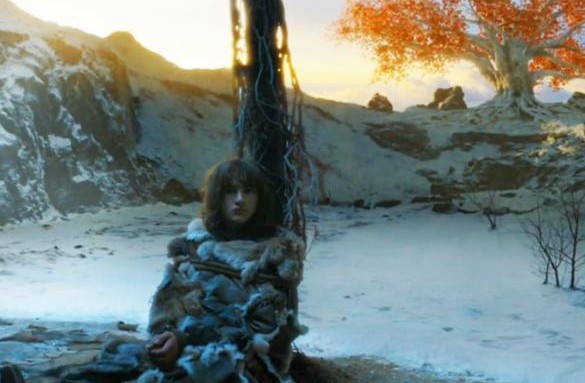
In the north, Jon and his brothers come upon Craster’s Keep, and Locke spots Bran and the Reeds inside one of the shacks. He tells the others to avoid it, and when they attack, he sneaks in and tries to ferry Bran away. Bran takes possession of Hodor, and uses him to snap Locke’s neck and escape. Hodor frees the Reeds, and together, they watch as Jon and his brothers liberate the camp. Bran wants to call out to him, but Jojen warns him he will try to take him to Castle Black and not let him find the “Three-Eyed Crow”.

GOT4_5_5Jon meanwhile engages Karl Tanner in single combat. Karl nearly kills Jon after fighting dirty, but a Wildling woman manages to stab him in the back, giving Jon the time he needs to sink his sword into the back of Karl’s head. Jon is then reunited with Ghost, who freed himself and killed the last of the mutineers as they tried to escape into the forest. He tells the women they are free to come with him, which they are reluctant to do.

However, when faced with the prospect of staying at the Keep, they tell him to burn it to the ground as well as all the bodies of the mutineers. They watch Craster’s Keep catch fire and leave the place to burn…

Summary:
Yeah, again, this episode was little more than pacing and filler, even if it was relatively enjoyable to watch. Aside from Jon’s assault on Craster’s Keep and his execution of the muntineers, not much happened. Mainly, the characters simply talked about that which we already know, and nothing of consequence was really said. Cersei doesn’t trust Margaery and wants Tyrion to die, Arya hates Sandor, Pod isn’t that good a squire, and due to additional complications, Daenerys still can’t return to Westeros.

The only exception to this was Sansa’s arrival at the Eyrie, where we saw just how painfully irrational her aunt is and how jealous she can be. This is something that will come up in later episodes, with scary consequences (no spoilers)! We were also treated to the revelation that it was Petyr and Lysa who were behind Jon Arryn’s death. Up until now, it was attributed to the Lannister’s as part of their scheme to keep their incest a secret. However, we now see that it was part of Petyr’s ongoing scheme to play one house off against another.

As for Jon’s arrival at Craster’s Keep, we did get some action and some much needed justice. But in an entirely predictable twist, Bran and Jon do not meet up, mainly because the plot demands it. Never happened in the book, and of course Jon would try to take his brother back. So the only point of this added thread was to shoehorn some more action into the season, huh? I was also a bit annoyed that they changed Lord Robert’s name to Robin. Was it really necessary to make this change to avoid confusing audiences?

In any case, that plot thread is now closed, and Jon and the Nights Watch can get back to the matter of protecting Castle Black and the Wall from Mance and the Wildlings. And before the season is out, we will be treated to Tyrion’s trial, the consequences therefor, and the inevitable twists that will arise out of Arya, Brienne and Sansa’s misadventures in the Riverlands/Vale. These, I’m looking forward to, if not the additional pacing that is sure to accompany them!

News from Space: Planet Hunting Flower-Shaped Starshade

nasa-starshadeWith over 1800 extra-solar planets discovered in the past 30 years, the search for life beyond our Solar System has begun anew. Astronomers believe that every star in the galaxy has a planet, and that one fifth of these might harbor life. The greatest challenge, though, is in being able to spot these “Earth-like” exoplanets. Due to the fact that they emit very little light compared to their parent stars (usually less than one-millionth the level of radiance), direct imaging is extremely rare and difficult.

As such, astronomers rely predominantly on is what is known as Transit Detection – spotting the planet’s as they cross in front of the star’s disc. This too presents difficulties, because the transit method requires that part of the planet’s orbit intersect a line-of-sight between the host star and Earth. The probability that an exoplanet will be in a randomly oriented orbit that can allow for it be observed in front of its star is therefore somewhat small.

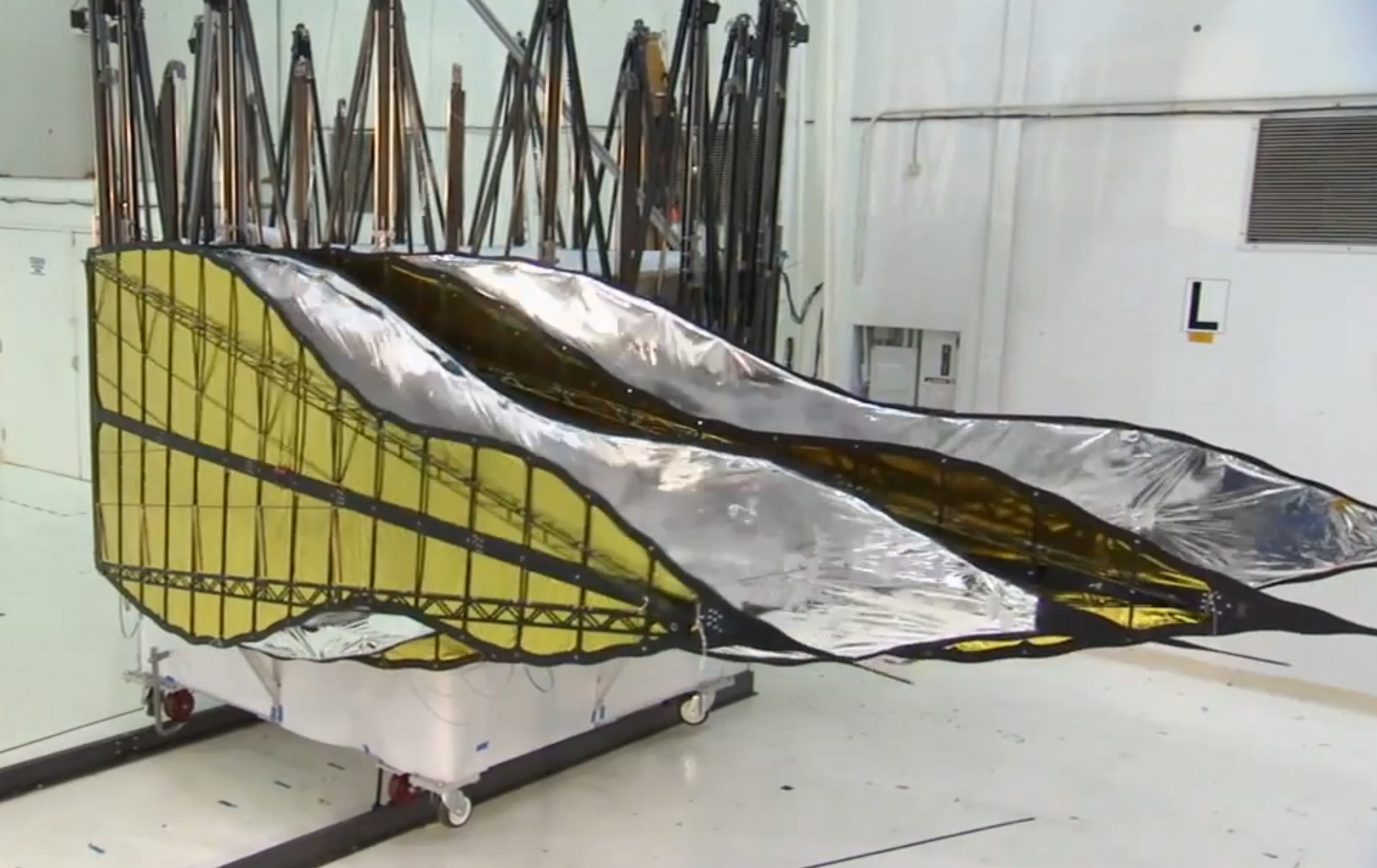
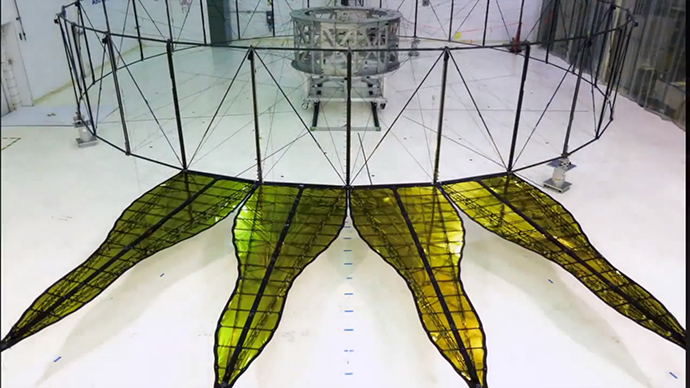
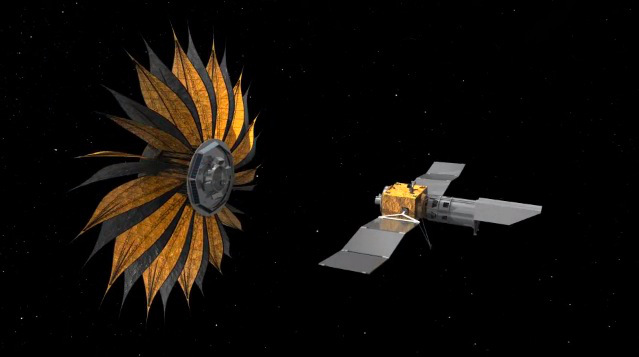
starshade-8Luckily, engineers and astronomers at NASA and other federal space agencies are considering the possibility of evening these odds with new technology and equipment. Once such effort comes from Princeton’s High Contrast Imaging Laboratory, where Jeremy Kasdin and his team are working on a revolutionary space-based observatory known as a “starshade” – a flower petal-shaped device that allows a telescope to photograph planets from 50,000 kilometers away.

Essentially, the starshade blocks light from distant stars that ordinarily outshine their dim planets, making a clear view impossible. When paired with a space telescope, the starshade adds a new and powerful instrument to NASA’s cosmic detection toolkit. The flower-shaped petals are part of what makes the starshade so effective. The starshade is also unique in that, unlike most space-based instruments, it’s one part of a two-spacecraft observation system.

starshade-foldedAs Dr. Stuasrt Shaklan, NASA Jet Propulsion Labratory’s lead engineer on the starshade project, explaned:

The shape of the petals, when seen from far away, creates a softer edge that causes less bending of light waves. Less light bending means that the starshade shadow is very dark, so the telescope can take images of the planets without being overwhelmed by starlight… We can use a pre-existing space telescope to take the pictures. The starshade has thrusters that will allow it to move around in order to block the light from different stars.

This process presents a number of engineering challenges that Shaklan and his team are working hard to unravel, from positioning the starshade precisely in space, to ensuring that it can be deployed accurately. To address these, his research group will create a smaller scale starshade at Princeton to verify that the design blocks the light as predicted by the computer simulations. Concurrently, the JPL team will test the deployment of a near-full scale starshade system in the lab to measure its accuracy.

starshade_petalsDespite these challenges, the starshade approach could offer planet-hunters many advantages, thanks in no small part to its simplicity. Light from the star never reaches the telescope because it’s blocked by the starshade, which allows the telescope system to be simpler. Another advantage of the starshade approach is that it can be used with a multi-purpose space telescope designed to make observations that could be useful to astronomers working in fields other than exoplanets.

As part of NASA’s New World’s Mission, the starshade engineers are optimistic that refining their technology could be the key to major exoplanet discoveries in the near future. And given that over 800 planets have been detected so far in 2014 – that’s almost half of the 1800 that have been detected in total – anything that can assist in their detection process at this point is likely to lead to an explosion in planetary discoveries.

And with one-fifth of these planets being a possible candidate for life… well, you don’t have to do the math to know that the outcome will be might exciting! In the meantime, enjoy this video from TED Talks, where Professor Jeremy Kasdin speaks about the starshade project:


Source:
ted.com, planetquest.jpl.nasa.gov, princeton.edu

Happy Birthday Hubble!

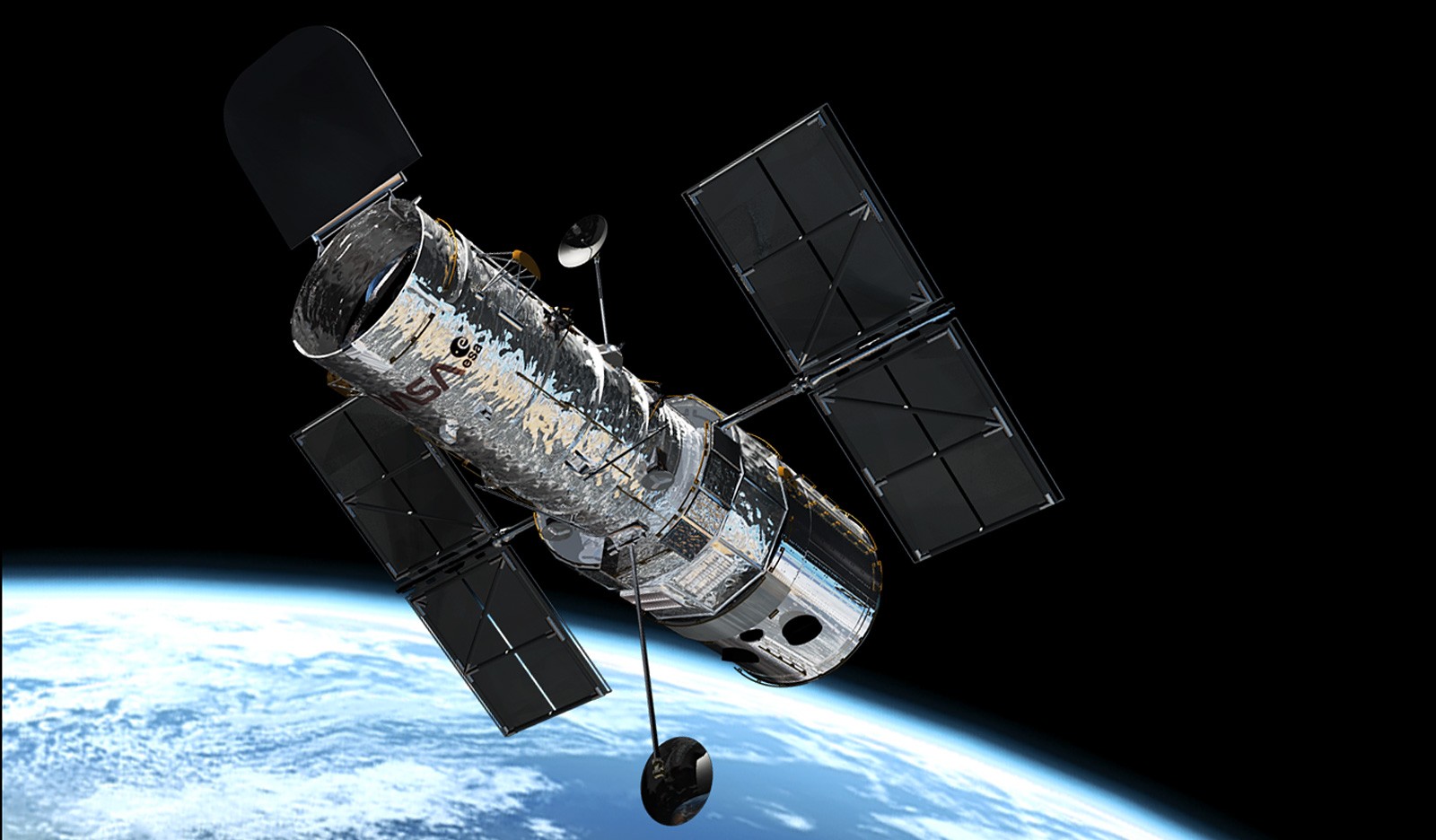
hubble_in_orbit1Last month, the Hubble Space Telescope celebrated its 24th birthday. And in honor of this occasion, NASA has released a video entitled “Evaporating Peaks – Pillars in the Monkey Head Nebula”. This video, which showcases visible and infrared light views of a collection of pillars along one edge of the Monkey Head Nebula (also known as NGC 2174) is just the latest in series of simulations that attempt to recreate what it would be like to step into a major stellar body.

Like all nebulas, NGC 2174 is a star-forming region in which bright, newborn stars near the center of the nebula illuminate the surrounding gas, creating the brilliant images we see in the video. The radiation from these stars, combined with strong stellar winds, also erode areas of lower density gases, which in turn causes pockets of higher density gas to turn into visible formations. This is what leads to the creation of the pillars and peaks of gas that run along the inner edge of this roughly circular cloud.

The sequence begins with a view of the night sky near the constellation of Gemini and Orion and then zooms through observations from the Digitized Sky Survey 2 to reveal a Hubble Space Telescope visible light view of the top of this region of pillars.


Sources:
universetoday.com, hubblesite.org

The Future is Fusion: Surpassing the “Break-Even” Point

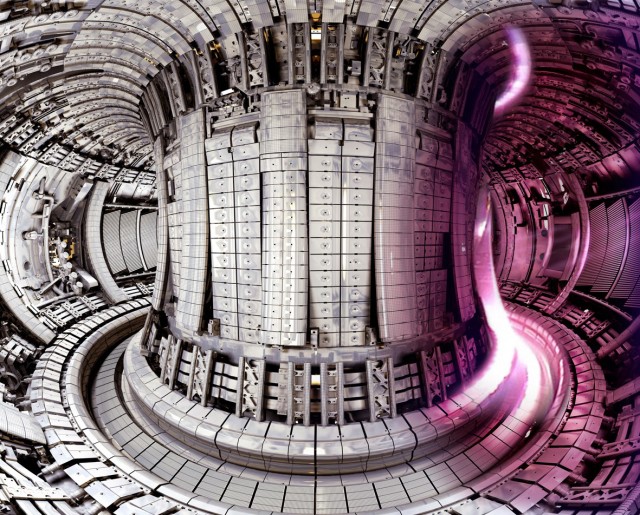
JET_fusionreactorFor decades, scientists have dreamed of the day when cold fusion – and the clean, infinite energy it promises – could be made possible. And in recent years, many positive strides have been taken in that direction, to the point where scientists are now able to “break-even”. What this means is, it has become the norm for research labs to be able to produce as much energy from a cold fusion reaction as it takes in triggering that reaction in the first place.

And now, the world’s best fusion reactor – located in Oxfordshire, Engand – will become the first fusion power experiment to attempt to surpass it. This experiment, known as the Joint European Torus (JET), has held the world record for fusion reactor efficiency since 1997. If JET can reach break-even point, there’s a very good chance that the massive International Thermonuclear Experimental Reactor (ITER) currently being built in France will be able to finally achieve the dream of self-sustaining fusion. 

NASA_fusionchamber

Originally built in 1983, the JET project was conceived by the European Community (precursor to the EU) as a means of making fusion power a reality. After being unveiled the following year at a former Royal Navy airfield near Culham in Oxfordshire, with Queen Elizabeth II herself in attendance, experiments began on triggering a cold fusion reaction. By 1997, 16 megawatts of fusion power were produced from an input power of 24 megawatts, for a fusion energy gain factor of around 0.7.

Since that time, no one else has come close. The National Ignition Facility – the only other “large gain” fusion experiment on the planet, located in California – recently claimed to have broken the break-even point with their  laser-powered process. However, these claims are apparently mitigated by the fact that their 500 terrawat process (that’s 500 trillion watts!) is highly inefficient when compared to what is being used in Europe.

NIF Livermore July 2008Currently, there are two competing approaches for the artificial creation of nuclear fusion. Whereas the NIF uses “inertial confinement” – which uses lasers to create enough heat and pressure to trigger nuclear fusion – the JET project uses a process known as “magnetic confinement”. This process, where deuterium and tritium fuel are fused within a doughnut-shaped device (a tokamak) and the resulting thermal and electrical energy that is released provides power.

Of the two, magnetic confinement is usually considered a better prospect for the limitless production of clean energy, and this is the process the 500-megawatt ITER fusion reactor once its up and running. And while JET itself is a fairly low-power experiment (38 megawatts), it’s still very exciting because it’s essentially a small-scale prototype of the larger ITER. For instance, JET has been upgraded in the past few years with features that are part of the ITER design.

fusion_energyThese include a wall of solid beryllium that can withstand being bombarded by ultra-high-energy neutrons and temperatures in excess of 200 million degrees. This is a key part of achieving a sustained fusion reaction, which requires that a wall is in place to bounce all the hot neutrons created by the fusion of deuterium and tritium back into the reaction, rather than letting them escape. With this new wall in place, the scientists at JET are preparing to pump up the reaction and pray that more energy is created.

Here’s hoping they are successful! As it stands, there are still many who feel that fusion is a pipe-dream, and not just because previous experiments that claimed success turned out to be hoaxes. With so much riding on humanity’s ability to find a clean, alternative energy source, the prospects of a breakthrough do seem like the stuff of dreams. I sincerely hope those dreams become a reality within my own lifetime…

Sources: extremetech.com, (2)

Cast of Star Wars VII Announced!

star-wars-episode-7Happy (early) May the Fourth everyone! This year, I thought I’d get on this fandom anniversary early by passing on some franchise news that was just released from Lucasfilm and Disney regarding the upcoming relaunch of the Star Wars franchise. After months of speculation, the cast for the upcoming Star Wars movie has finally been announced! The news came this past week in a post on StarWars.com, where  companies spelt it out for all the fans who have been eagerly awaiting the news.

In addition to Mark Hamil, Harrison Ford and Carrie Fisher – who will receive top billing as Luke Skywalker, Han Solo and Princess Leia – Peter Mayhew, Anthony Daniels and Kenny Baker will also be reprising their roles as Chewbacca, C-3PO and R2-D2. Also, the movie will star several notable actors in new roles, including acting great Max von Sydow (The Tudors, Minority Report, Snow Falling on Cedars, Judge Dredd, Needful Things).

starwarsAlso, Adam Driver (Girls, Lincoln), Oscar Isaac (Robin Hood, Sucker Punch, Drive), Andy Serkis (who brought Gollum to life in LOTR and the Hobbit franchises), Domhnall Gleeson (who played Bill Weasely in the Harry Potter series), and British television stars John Boyega and Daisy Ridley were announced, though has is not yet been announced what characters they will be playing. But since the upcoming movie will be taking place 30 years after Return of the Jedi, it’s fair to assume that the focus will be on these characters rather than on the original cast.

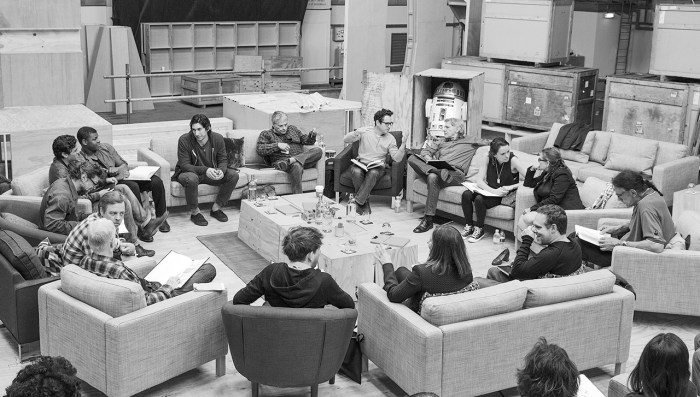
In a photo release this past Tuesday (seen below), director JJ Abrams is seen having a roundtable discussion with the cast at Pinewood Studios in the UK. Note the body of R2-D2 which sits unboxed behind them, having no doubt just been brought out of storage. JJ Abrams, identified by his spiky hair and glasses, can be seen sitting to the left of R2, with Harrison Ford to his right, Carrie Fisher two seats down, and Mark Hamil seated opposite to the far left of the photo.

star-wars-episode-7-cast-announceWhen news of the cast was released, Abrams was quoted as saying:

We are so excited to finally share the cast of Star Wars: Episode VII. It is both thrilling and surreal to watch the beloved original cast and these brilliant new performers come together to bring this world to life, once again. We start shooting in a couple of weeks, and everyone is doing their best to make the fans proud.

This, the seventh film in the Star Wars franchise, and is slated for a December 18th, 2015, release. In addition to Abrams directing, he is also collaborating on the screenplay with Lawrence Kasdan, the man who co-wrote The Empire Strikes Back, Return of the Jedi and Raiders of the Lost Ark. Kathleen Kennedy, J.J. Abrams, and Bryan Burk are producing, and John Williams returns as the composer.

star-wars-prequelsI think I speak for fans and geeks everywhere when I wish them all luck! Lord knows we could all use a really decent Star Wars sequel, especially when so many of us felt so utterly let down by the prequels! However, I think it is fair to say that Abrams and the rest should not be too concerned about what the fans and expect. If this latest installment is to be a success, it must not be overly aware of itself or its legacy. Such was part of what brought the prequels down in my estimation, and like everyone else, I just want to enjoy what comes next!

Good day and May the Fourth be with you all!

Source: starwars.com

Back from Europe – Part the Third…

remembrance-dayAnd we’re back with the third installment in the Williams’ Family Eurotrip 2014! As I’m sure I’ve said a few times now, this trip could hardly be summed up in a single post. Even with two posts – a sum total of 6000 words – I’ve managed to cover only the first five days. I might be able to cover the rest with an additional two, but I can’t promise a thing! Nevertheless, the next segment of our trip, which took us from Ypres to Dieppe, was a very interesting time.

Not only did we learn about some very interesting battles, which included a major victory for a Canada and a national tragedy, this part of our trip also served as a transitional point between the time was dedicated to World War I sites and those dedicated to World War II. In between all that, we also got to enjoy ourselves in the scenic Normandy countryside. Here’s how it all happened…

Monday, April 14th – The Vimy Memorial and Dieppe:

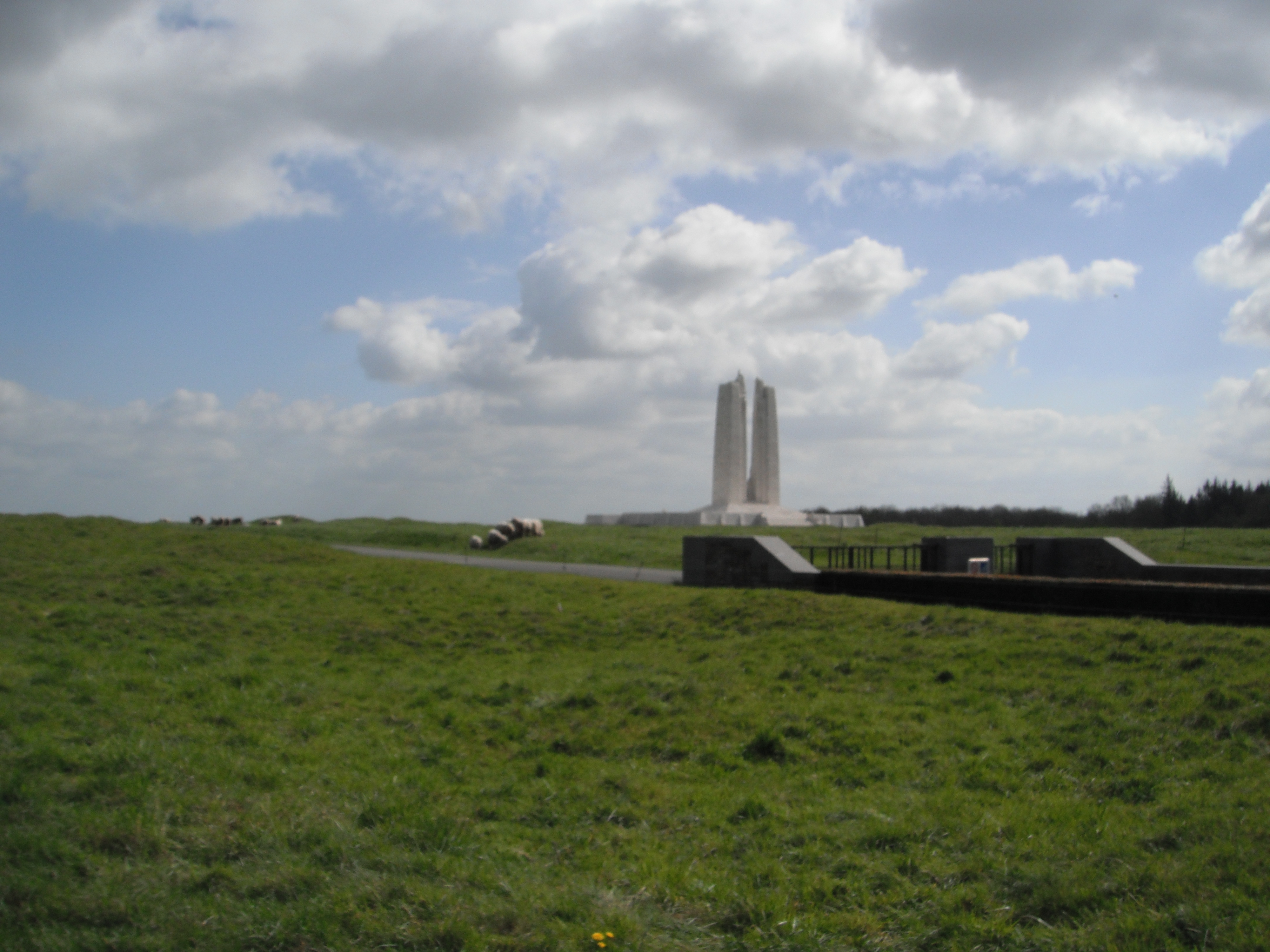
The Canadian National Vimy Memorial in the distance

Monday morning, we packed up, ate our last breakfast at the Albion Hotel, told them how much we enjoyed staying with them (my parents wrote a three page stellar review!), and prepared to head out again. This consisted of stopping by the market to get some sandwiches and bottles of water for the day, a necessity when you’re doing walking tours, and then see the Ypres Market, Cloth Museum and Cathedral one last time.

We then packed up the car and began driving for the French border, got on another toll highway, and drove through the sunny, canola flower-filled countryside. Eventually, we made it to The Vimy Monument, the last World War I site on our trip and the only stop along our way to Dieppe along the northern Normandy Coast. Long before we arrived, we could see the monument cresting the Ridge where it is located, not to mention the many slag heaps that mark the landscape.

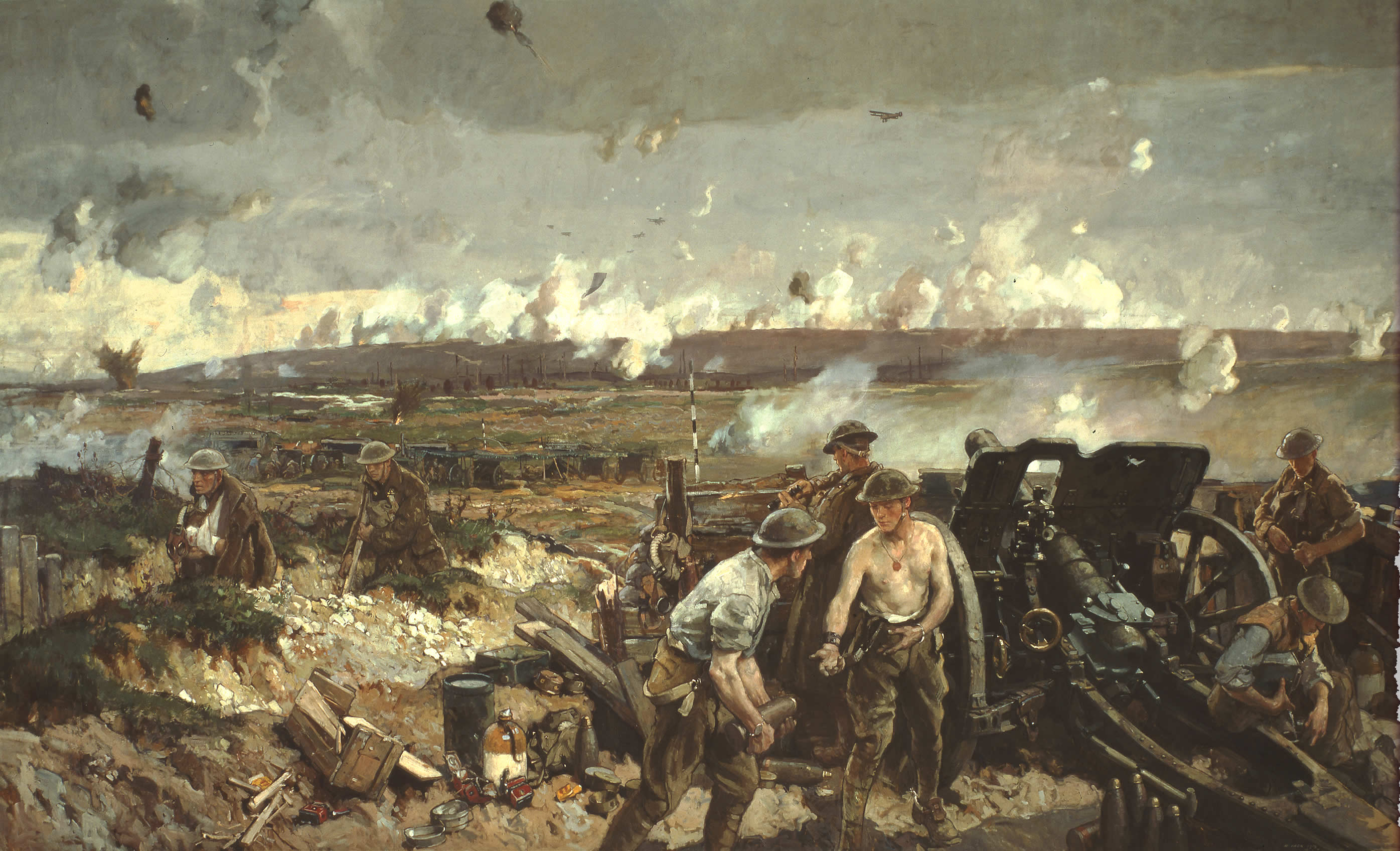
The Battle of Vimy Ridge by Richard Jack

Again, a little background on this historic battle is in order. As part of the Battle of Arras (April 9th to May 16th, 1917), the Canadian assault on Vimy Ridge was part of an allied offensive against German positions around the town of Arras. The objective of the Canadian Corps was the high ground at the northernmost end of the front, an area which had remained in German hands despite previous offensives by both French and British forces.

By taking this position, the Canadians would ensure that the Germans would not be to observe the French and British advance further south, or direct artillery fire along the long axis of their advance. Supported by a creeping barrage, the Canadian attack would begin on April 9th and aimed to the fortified German positions along the ridge, as well as the  strategic town of Thélus and Givenchy-en-Gohelle. Thanks to a combination of factors, the attack went off without a hitch.

Battle_of_Arras_-_Vimy_Ridge_mapUltimately, the success of the assault was due to a combination of technical and tactical innovation, meticulous planning, powerful artillery support and extensive training. For weeks prior to the offensive, Canadian soldiers underwent training using models to represent the battlefield, and General’s Sir Julian Byng and Sir Arthur Currie made sure that every single soldier had a map of the ridge and knew exactly what would be needed of them.

The artillery support would rely on a relatively new tactic known as the creeping barrage, rather than the standard preparatory bombardment. In this latter case, artillery would shell the enemy line for days or weeks in advance of the attack, and then stop as the soldiers went “over the top” to charge the enemy positions. By contrast, a creeping barrage would begin shelling No Man’s Land to take out enemy barbed wire, and then crept forward to keep pace with the advance of the infantry.

battle_of_vimy_ridge_field_gun_firingIn so doing, the Canadian’s artillery support was able to catch the German defenders as they were coming out of their dugouts to set up their machine guns and defenses. New methods and equipment were also used to triangulate the positions of the German artillery guns and take them out in advance of the attack. This way, the Germans had no reprieve from the bombardment, and no way to shell the Canadians as they moved up the ridge.
Within three days, the Canadians had secured the entire ridge and their objectives and forced the Germans to retreat to the Oppy–Méricourt line some five kilometers away. In addition, they took 4000 German prisoners and inflicted an estimated 20,000 killed or wounded, while suffering 3,598 dead and 7,004 wounded of their own. This too was a first, in that all previous offenses of the war involved the attacker sustaining far greater losses than the defender.

The Vimy Monument, as seen from the west end

In addition to being a victory for the Canadian Corps and the first successful Allied offensive of the war, the success of this assault – much their performance at the Second Battle of Ypres – was a defining moment for the fledgling nation of Canada. As Brigadier-General Alexander Ross would famously say of the battle: ” . . . in those few minutes I witnessed the birth of a nation.” The triumph at Vimy also led to Byng’s promotion out of the Corps, and to his replacement by Arthur Currie — the first Canadian commander of the Corps.

Another outcome of this victory was the reputation earned by the Canadian Corps as being the army that could get things done where others could not. This reputation would further be tested in ensuing battles – the foremost of which was the Battle of Passchendaele – and The Hundred Days Offensive, the last one hundred days of the war when the Canadian Corps led the advance against the crumbling German lines through France and Belgium.

Us posing together at the top of the monument
The four of us together at the top of the monument

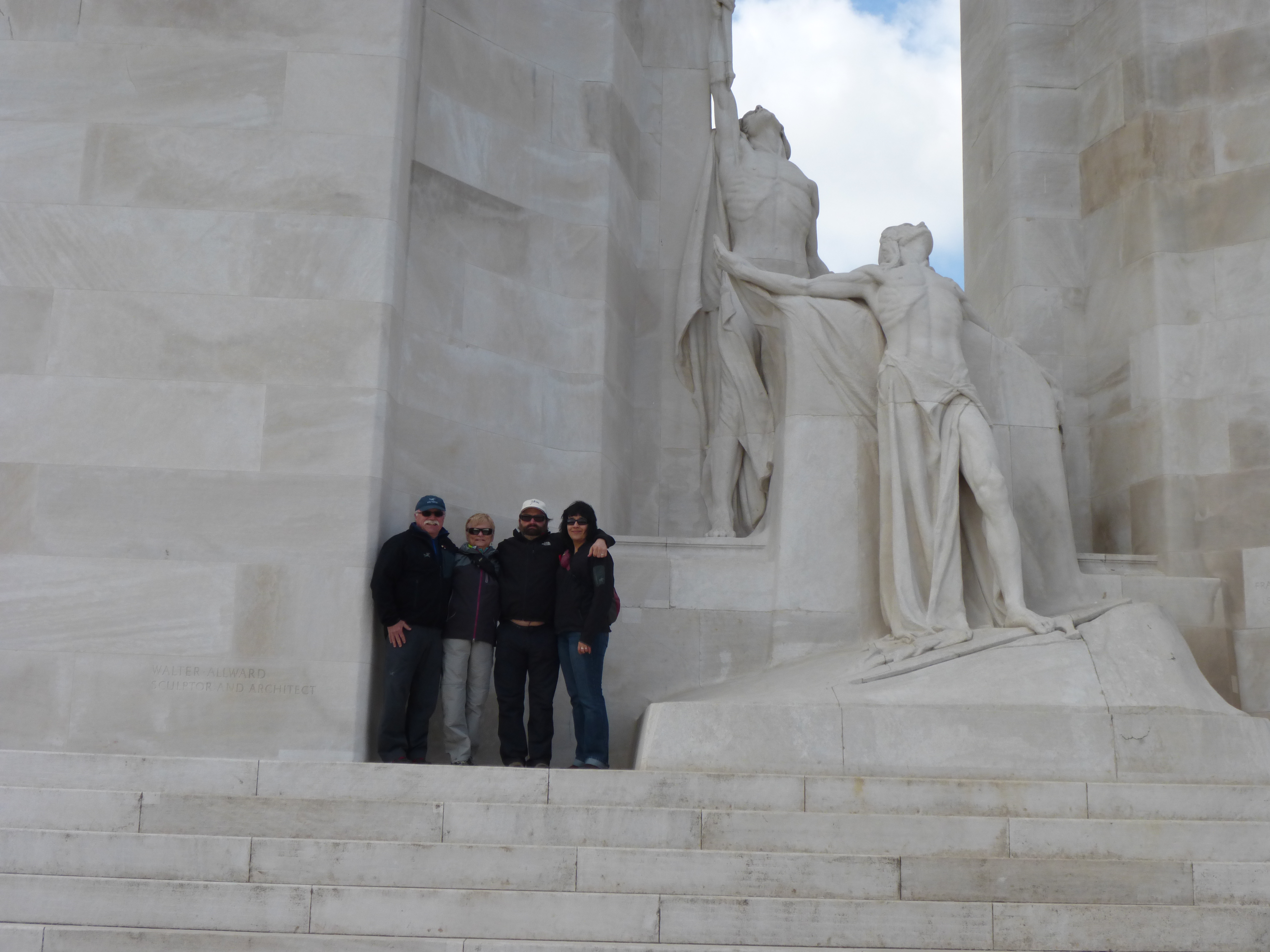
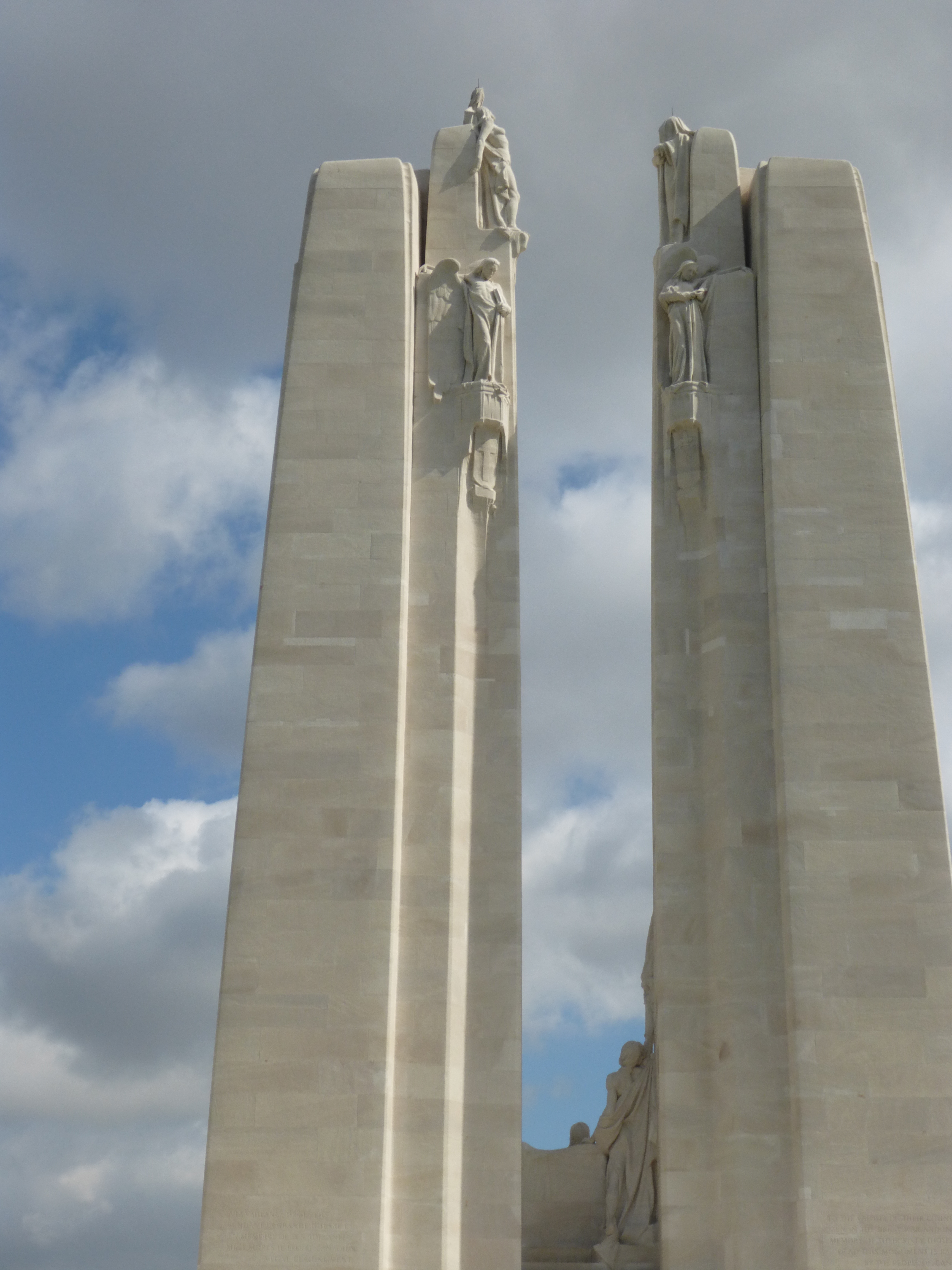
Anyhoo, we arrived National Memorial in the late morning and were immediately struck by its sheer size. It’s two pylons, shown above, reach 30 meters into the sky, one bearing the maple leaf of Canada and the other the fleur-de-lis of France, symbolizing the unity and sacrifice of both countries. At the top of the two pylons is a grouping of figures known collectively as the Chorus, the senior of which represent the figures of Justice and Peace. The figures of Hope, Charity, Honour and Faith, Truth and Knowledge are located beneath (as seen in the image below).

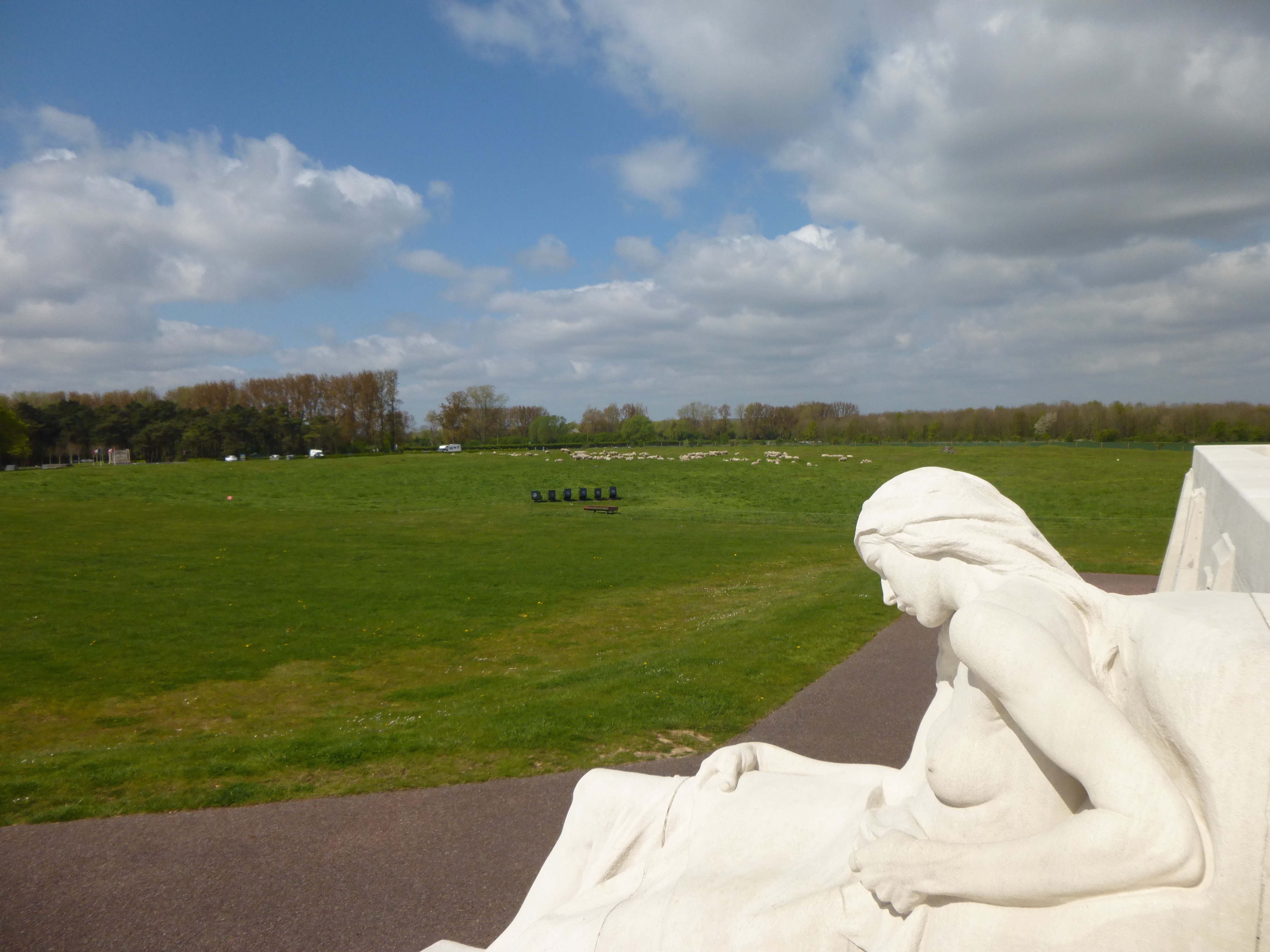
Between the two pylons is the Spirit of Sacrifice,  a young dying soldier is gazing upward in a crucifixion-like pose, having thrown his torch to a comrade who holds it aloft behind him. A lightly veiled reference to the poem In Flanders Fields by John McCrae,  the torch is passed from one comrade to another in an effort to keep alive the memory of the war dead. Other figures around the monument include Sympathy of the Canadians for the Helpless, as represented by a standing man surrounded by kneeling people stricken by hunger and disease.

The Two Pylons of the Monument

Two more representations, named the Breaking of the Swords and cannons covered in laurel, further symbolize the monument’s commitment to peace. Facing east from the monument is the saddened figure of Canada Bereft, also known as Mother Canada, which personifies the young nation of Canada mourning her dead. The Mourning Parents, one male and one female, are reclining on either side of the western steps on the reverse side of the monument.

Inscribed around the outside wall of the monument are the names of the 11,285 Canadians killed in France, and whose final resting place is unknown. Some 60,000 Canadians died in the First World War, but even after all these years, 11,169 still remain unfound. To see these names listed in a continuous band, and knowing that they represent only a fraction of all those who died, really serves to drive home the terrible reality of the Great War and its brutality.

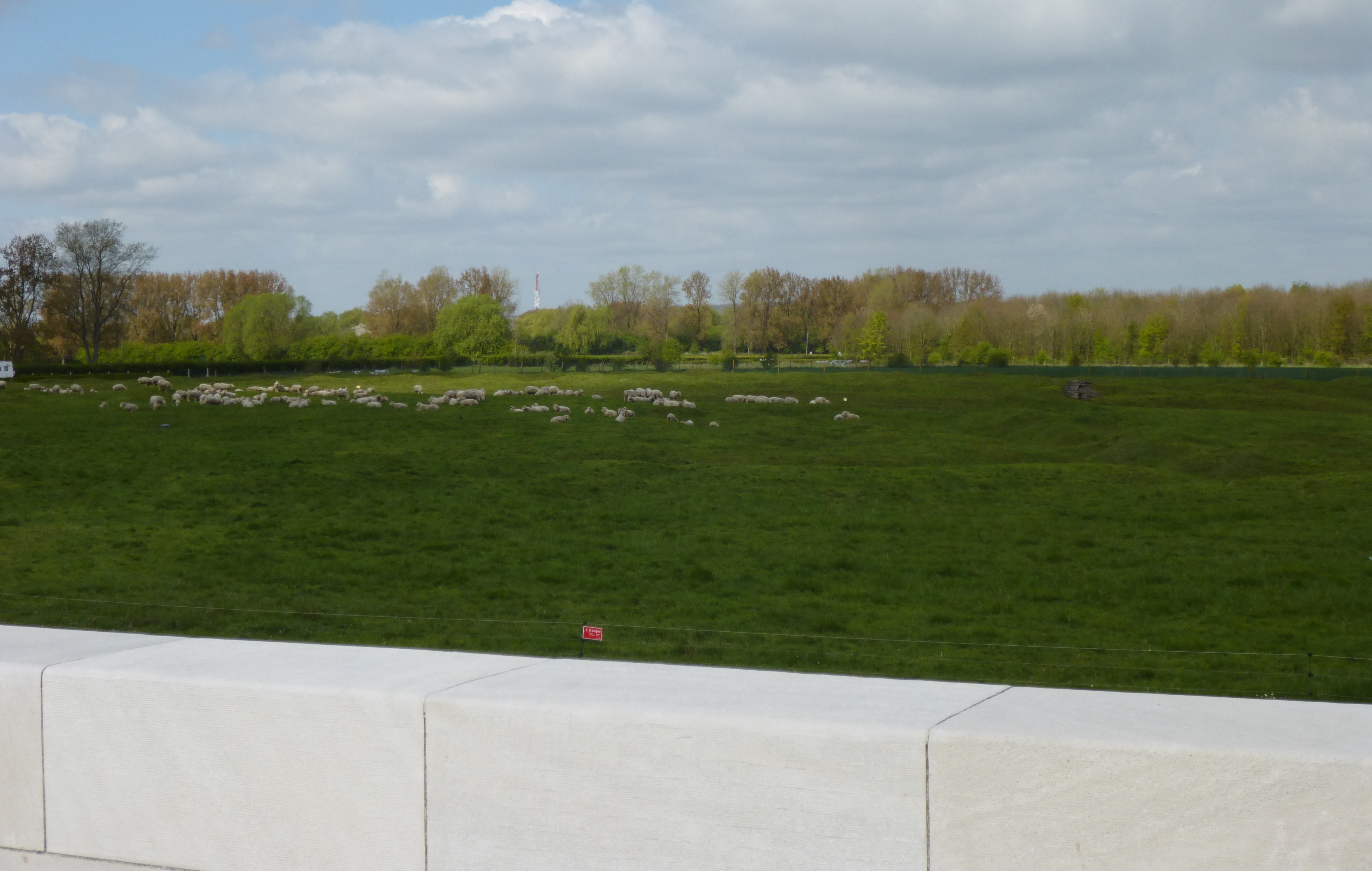
View from the monument, with sheep grazing in the distance

Looking upon the field that surrounded the monment, we were also quick to notice how the land was gnarled and lumpy, similar to what we had seen at the Beaumont-Hamel Newfoundland Memorial. Also like the Newfoundland Memorial, the land is surrounded by an electrified wire fence and warning signs that caution against venturing into it, and the only things allowed to walk freely there are grazing sheep. As someone who raised sheep as a child, my wife was naturally concerned about their safety.

However, the guides were quick to confirm that not a single sheep had died in the twenty years that they had been conducting tours. This was certainly a relief to hear, but it didn’t really detract from the reality of the war that this display drove home. As soon as the war ended, the farmers and their flocks returned; and over the course of the years, unexploded mines and munitions accounted for more than a few lives – human, bovine and ovine!

The Mourning Mother, and sheeps grazing in the distance
The Mourning Mother, and more sheep grazing in the distance

After scaling the steps of the monument, we began placing Canadian flag pins here and there to pay our respects. We also snapped some photos of the monument, the surrounding landscape, and of ourselves as a family standing on it. After this, we ventured to the far end of the site to see the Grange Subway – a preserved underground tunnel and stretch of trenches – and the site’s museum. On the way, we saw plenty more trenches, shell holes, and one massive crater that had clearly been left by a mine.

We reached the Grange Subway and booked a tour, and a kindly guide gathered us and about ten others and brought us inside. I can tell with you with no trace of shame that the place was pretty claustrophobic and I might have had some trouble if we hadn’t kept moving. Still, it was extremely impressive to see this tunnel that the Allies had dug during the course of the war. In addition to the walls carved from the chalk and flint that make up the ridge, the tunnel was replete with dugouts, side tunnels, officers messes, and message stations.

The German trenches
The preserved German trenches and mortar position

And of course, the whole place stunk of mold, wet stone and chalky residue. Our guide then took us back outside, to where the tunnel ended in a recreated section of Canadian trench that overlooked another massive crater. Here too, a mine had been exploded just short of the German front lines, which also had a section of preserved trench that showed us how well dug in and fortified their positions were. Unlike the Allied lines, the Germans had had time to pour concrete and build outposts and “pillboxes” to both observe and shoot from.

After the tour finished, we headed back to the museum to take one last look around and then eat our lunch. On the way, we found some additional artifacts, which included a piece of chalk and flint (pieces of the Ridge) and a piece of what appeared to be ceramic with a letter B stamped on it. From its size, contoured shape, and the way it was marked, we could only guess what it was. But the prevalent theory was that it might have been an officers china cup.

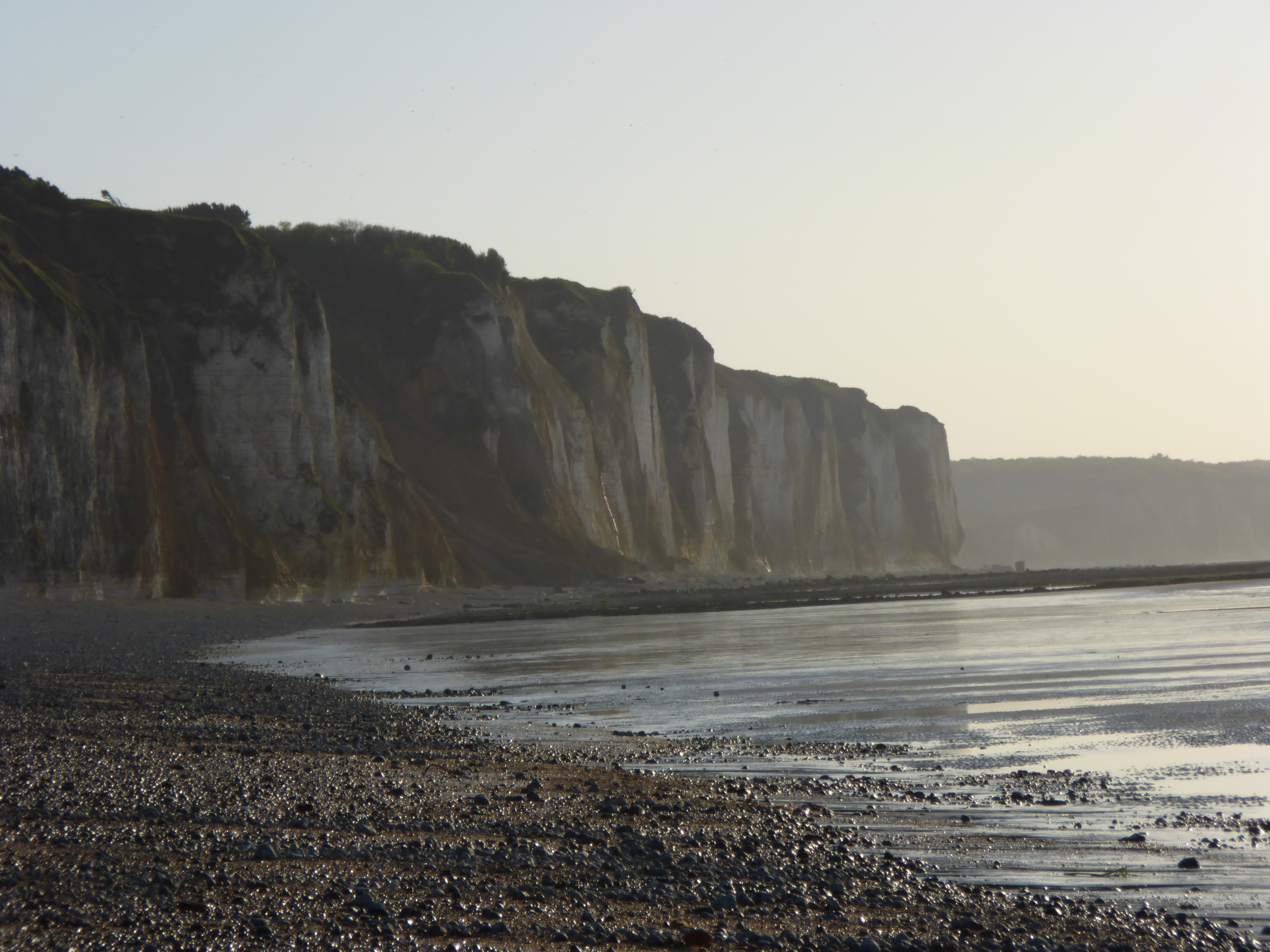
The cliffs of Dieppe

And then it was to Dieppe for the night! Despite some problems with our GPS navigator – whom we named Betty since of the female voice – we made it to the hotel down by the beach. Kudos to my mother for her good job of booking the place! After getting into our rooms, we had a nice beer down at the hotel bar, and then decided to get in a beach walk before dinner. Now I should note that this walk, despite the lovely sand and stone beach, was not strictly for enjoyment. You see, a lot happened on that beach some seventy-years ago…

In 1942, this region of France was still firmly in the hands of Nazi Germany. In addition, the Germans were still occupying much of Russia and had the British tangled up in North Africa. The United States had just entered the war and was facing a fight on two fronts – Europe and the Pacific. And with Russian losses numbering in the millions, a great deal of pressure was on the Allies to open a “Second Front” on the Continent again.

Dieppe_raidTo test the German’s coastal defenses, and evaluate the likelihood of making a successful amphibious assault, the Allies began making plans for a raid against the Atlantic coast. In what would come to be known as Operation Jubilee, a force of 6,000 infantrymen – predominantly Canadian and supported by a Canadian Armoured regiment and the Royal Navy and Air Force – the plan was to seize a port town, destroy the military facilities, and then evacuate before a German counter-attack could arrive.

Commander by Lord Louis Mountbatten, a British Admiral and 1st Earl of Burma, the attack was also intended to show that such an assault – which was the first step in liberating Europe – could be done. On August 9th at 5:00 am, the assault began as Canadian and British troops, as well as 100 US Rangers and Free French Commandos, began landing on the beach. By 10:50 a.m., the Allied commanders were forced to call a retreat.

dieppe-dsThe Dieppe Raid, or the Battle of Dieppe, would go down as one of the greatest blunders in military history, and is considered a national tragedy here in Canada. After less than 10 hours since the first landings, the last of the Allied troops had either killed, evacuated, or left behind and captured by the Germans. All told, a total of 3,623 of the 6,086 men who made it ashore were either killed, wounded, or captured, and demonstrated that the Allies could not hope to liberate Europe for some time.

There are several reasons why the raid was a failure. For starters, Allied fire support was grossly inadequate and failed to take out the German defenses. As a result, the advancing infantry was quickly trapped by machine gun fire, mortars and coastal batteries that sighted them as they tried to run up the rocky coastline. The Royal Air Force also failed to lure the Luftwaffe into open battle, and took some heavy losses themselves (96 aircraft compared to 48 lost by the Germans).

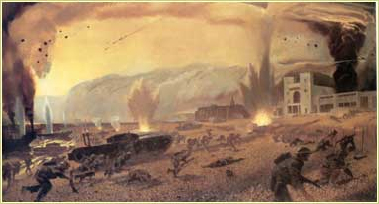
Dieppe Raid by Charles Comfort

What’s more, the operation was repeatedly downsized, reducing its troop strength several times before it was approved. The Allied commanders, most notably Mountbatten, claimed that this would not be a problem as the attacking force would have the element of surprise. However, this was immediately squandered due to the British government openly talking about the raid for weeks before it happened. In short, the Germans knew they were coming.

While a more recent interpretation of the raid – which claims it was done as part of a clandestine operation to seize a four-rotor Enigma machine – have reevaluated it’s purpose, the outcome of the operation was anything but successful. In the end, the only good to come of it lay in the fact that it taught the Allies precisely what not to do when staging a coastal assault. These lessons greatly influenced their preparations when drafting Operation Torch (the landings in North Africa) and Operation Overlord (the D-Day landings in Normandy).

Carla, my father and I taking our shoes off to walk into the surf. Photo by Rosemary Williams

While walking the beach, my father and I noted the way that it sloped upward and was covered in r0und stones. It wasn’t hard to see at all how tanks would be immobilized by these once they got stuck in their treads. What’s more, the thought of charging up the inclined beach with a rifle and sixty pounds on gear on our backs seemed like absolute folly. Especially if we knew there were machine guns and cannons aimed at us.

Such was our attempt to understand what it must have been like for the young Canucks, Brits, French and Americans who were expected to capture this town. And when we mounted the top near the breakwater, we came to a couple of monuments dedicated to the soldiers who fell on the morning of the 19th of August. This included the Red Beach Monument, which honors the members of the Essex and Kent Scottish Regiment, and all those who fell on the eastern sector of the beach.

red_beach_monumentFinanced by members of the Windsor community in Ontario, this monument was erected at town’s edge overlooking the beach and was carved from black granite with the cutout of a maple leaf in it. This cutout is aligned so that when the sun shines at 1 p.m. on Aug. 19 — the exact hour that the regiment stormed the beach — it will cast a perfect shadow of a maple leaf on the ground below. Farther down, we found another monuments commemorating the units that fell in other sectors of the beach. At both, we laid a Canadian flag pin and paid our respects.

Then it was back to the hotel for some much needed grub and some sleep. It had been quite a long day, as you can no doubt tell from the lengthy recap. And we certainly needed plenty of rest, because what came on the next day would test us both physically and emotionally. But more on that later, as it deserves a separate post for sure. Thanks for reading, more to follow, and stay tuned!

News from SpaceX: Falcon 9 Reusable Rocket Test

falcon-9-reusable-test-640x353For over two years now, Elon Musk and his private space company (SpaceX) have been working towards the creation of a reusable rocket system. Known as the Falcon 9 Reusable Development Vehicle (F9R Dev) – or “Grasshopper” – this system  may prove to be the greatest development in space travel since the invention of the multistage rocket. After multiple tests that reached greater and greater altitudes, the latest attempt at a takeoff and soft landing took place this past month.

Timed to coincide with SpaceX’s launch to the International Space Station (which took place on Friday April, 18th) the landing was apparently a success. Several days after the launch, Elon Musk tweeted that the “[d]ata upload from tracking plane shows landing in Atlantic was good!” This update came on April 22nd, and as of yet, no definitive data of whether the first stage landed correctly, or whether it was still in one piece by the time the recovery boats got to it.

falcon-9-crs-3-retractable-legsPresumably SpaceX will provide another update in due course. In the meantime, they took the opportunity to release a rather awesome video of what the Falcon 9 Reusable should look like when successfully performing a vertical takeoff and vertical landing (VTVL). The video has accumulated an astonishing 3,598,143 views in the last two weeks, which is indicative of the level of interest this project and its impications have garnered over the past few years.

Meanwhile, the resupply mission went off without a hitch. Officially designated as CRS-3, this mission was even more significant due to the fact that its Falcon 9 launch vehicle featured the same retractable landing legs and the ability to soft land as the Grasshopper test rocket. However, in the case of the ISS mission, it was the first time where a Falcon 9 was tested in a real-world scenario where the rocket would return to Earth after reaching Low Earth Orbit (LEO).

spacex-dragon-capsule-grabbed-by-iss-canadarm-640x424

Though the rocket was successfully picked up by the ISS, the jury is still out on whether or not the soft landing was a success or not. To minimize any risk, the first stage of the Falcon 9 attempted to “soft land” in the Atlantic. Unfortunately, according to Elon Musk, due to “13- to 20-foot waves… It’s unlikely that the rocket was able to splash down successfully.” Using telemetry data gathered from a SpaceX spotter plane, it appears that everything else went to plan, though.

Because of the rough seas, though, the retrieval boats couldn’t make it to the landing site, and thus the rocket is unlikely to be recovered. In the meantime, SpaceX will spend the following days and weeks analyzing more detailed data from the launch, and then update the Falcon 9 design and launch protocol accordingly. However, it is clear at this point that these latest tests are not being considered a failure, or reason to cease in their efforts.

falcon-9-r-580x386As Musk himself explained in a series of public statements and interviews after the launch:

I would consider it a success in the sense that we were able to control the boost stage to a zero roll rate, which is previously what has destroyed the stage — an uncontrolled roll… I think we’re really starting to connect the dots of what’s needed [to bring the rocket back to the launch site]. I think that we’ve got a decent chance of bringing a stage back this year, which would be wonderful.

Considering the benefits of cheap, reusable rockets, and all the things they will make possible – space-based solar power, the construction of a Moon settlement, missions to Mars, the construction of a Space Elevator – there’s simply no way that a single unsuccessful rocket recovery will deter them. In the meantime, be sure to check out this video of what a successful Falcon 9 VTVL test looks like. Hopefully, we’ll be seeing a real-world example of this happening soon:


Source:
extremetech.com


Happy DNA Day!

dna_cancerThough I am a week late in expressing this sentiment, I feel I must acknowledge this rather interesting of events. As it stands, this past April 22nd was the sixty-first anniversary of the molecular structure of DNA being revealed to the world. What began as a publication in the magazine Nature has now become emblematic of the programming language of life, and our understanding of DNA has grown by leaps and bounds over the past six decades.

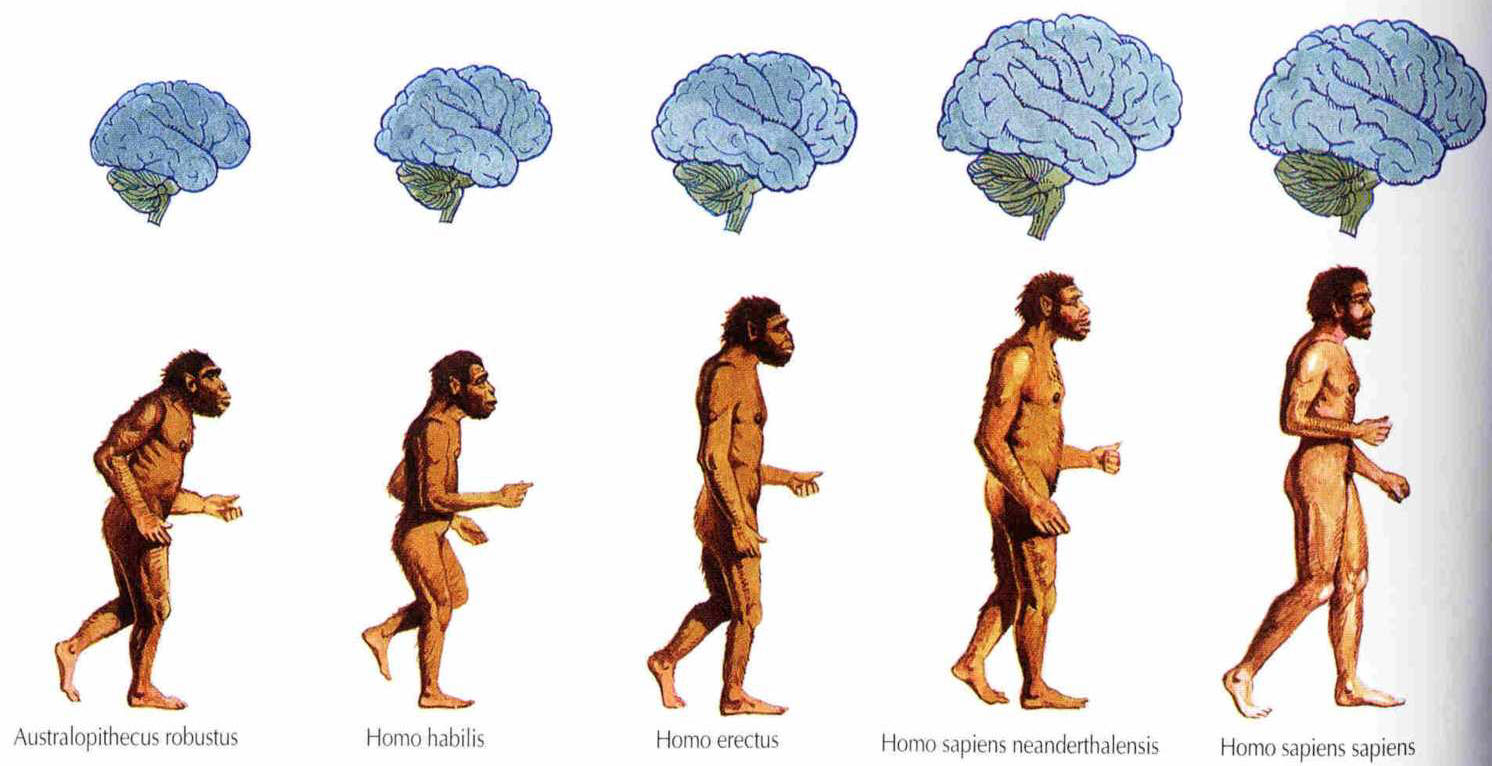
To commemorate such an important landmark in the history of humanity, a look back at some of the more recent developments in the field of genetic research would seem to be in order. For example, it was on April 22nd of this year that a rather interesting study was published in the Proceedings of the National Academy of Sciences. The lead on this study was none other than Svante Pääbo – the world’s foremost expert in Neanderthal genetics.

humanEvolutionBased on the genomes of three neanderthals that were found in disparate locations in Eurasia, Pääbo and his colleagues have concluded that the genetic diversity in Neanderthals is significantly less when compared to present-day Homo sapiens. It also appears as if the Neanderthal populations were relatively isolated and tiny, so gene flow was extremely limited for these groups. In short, our homonid cousins didn’t get around and interbreed quite as much as we’ve done, which may shed some light on their disappearance.

On the very same day, an article was published in the Proceedings of the Royal Society B that proposed that skin cancer from the sun’s damaging UV rays was actually a driving force in the national selection for dark skin in early humans. In the article, Mel Greaves delivers a compelling argument that the deadliness of skin cancer in young albino children in Africa and Central America demonstrates just how vital it was for early humans to develop dark skin.

GenoChipAnd on April 25th, National Geographic and Family Tree DNA teamed up to announce the release of a brand new version of the human Y-DNA tree. This new tree of Y chromosome mutations has over 1,200 branches — almost double the number of branches that the Genographic Project was displaying before. With this much refinement, it’s now even easier to track the historical migrations of your distant ancestors.

To celebrate this monumental roll-out, Family Tree DNA offered a 20% discount on the 37-marker Y-DNA test and all individual Y-DNA SNP (single-nucleotide polymorphism) tests, an offer which sadly expired on April 27th. However, interested parties can still have this cutting-edge anthropological genetic test performed for $200. And it’s something to keep in mind for next year certainly. What better way to celebrate DNA day than to have a full genetic profile of yourself made?

encodeAnd let’s not forget, 2012 was also the year that the Encyclopedia of DNA Elements (ENCODE) Consortium – an international collaboration of research groups funded by the National Human Genome Research Institute (NHGRI) – released the world’s most complete report on the human genome to date. Unlike the Human Genome Project, which released the first catalog of human DNA back in 2003, ENCODE was not only able to catalog the human genome’s various parts, but also what those components actually do.

Among the initiative’s many findings was that so-called “junk DNA” – outlier DNA sequences that do not encode for protein sequences – are not junk at all, and are in fact responsible for such things as gene regulation, disease onset, and even human height. As I’ve said before, these findings will go a long way towards developing gene therapy, biotechnology that seeks to create artificial DNA and self-assembling structures, and even cloning.

Tree-600x405Yes, it’s an exciting time for the field of DNA research, and not just because of the many doors its likely to open. Beyond medical and bioresearch, it helps us to understand of ourselves as a species, our collective origins, and may perhaps help us to see just how interconnected we all truly are. For centuries now, a great many evils and prejudices have been committed in the name of “racial superiority” or racial differences.

Armed with this new knowledge, we might just come to realize that this great organism known as humanity is all fruit of the same tree.

Sources: extremetech.com, genome.ucsc.edu, newswatch.nationalgeographic.com

The Nibble Approach to Asteroid Testing

Update on plans for possible asteroid mining!

J. C. Conway's avatarJ. C. Conway

NASA released this animation of a mission to capture a boulder from the surface of an asteroid. A NASA spacecraft, called an asteroid redirect vehicle, would use robotic arms to pluck a 3-meter boulder off the asteroid. The spacecraft would then enter a stable lunar orbit with the boulder where astronauts could then visit it and take samples. Take a look: 

View original post