The Future is Here: 3-D Printed Brain Scanner

openbciWhen it comes to cutting-edge technology in recent years, two areas of development have been taking the world by storm. On the one hand, there’s 3-D printing (aka. Additive Manufacturing) that is revolutionizing the way we fabricate things. On the other, there’s brain-computer interfaces (BCI), which are giving people the power to control machines with their minds and even transfer their thoughts.

And now, two inventors – Conor Russomanno and Joel Murphy – are looking to marry the two worlds in order to create the first, open-source brain scanner that people can print off at home. Thanks to funding from DARPA, the two men printed off their first prototype headset this past week. It’s known as the OpenBCI, and it’s likely to make brain scanning a hell of a lot more affordable in the near future.
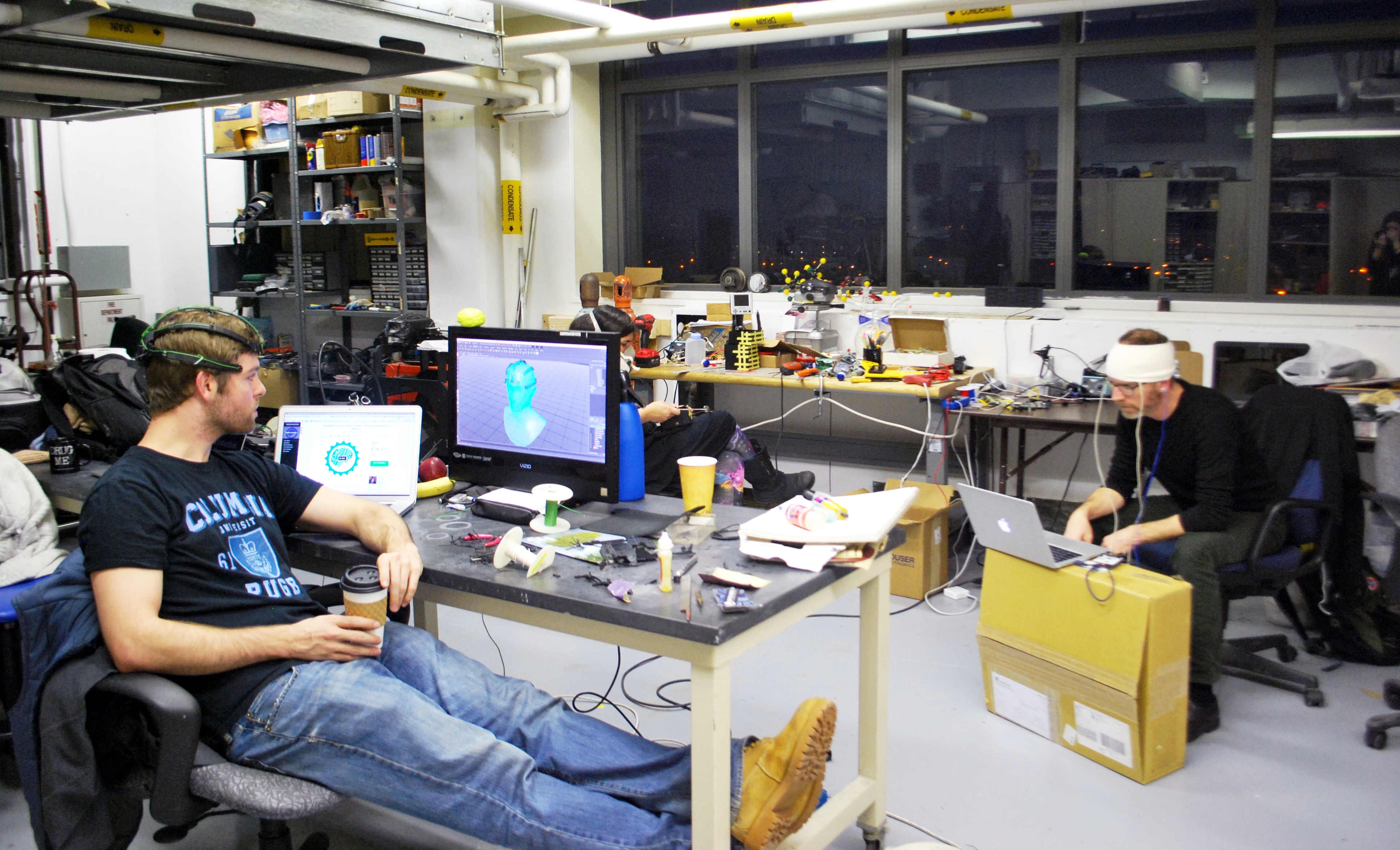
openbci1It includes a mini-computer that plugs into sensors on a black, skull-grabbing piece of plastic called the “Spider Claw 3000,” which can be created with a 3-D printer. Assembled, it operates as a low-cost electroencephalography (EEG) brainwave scanner that connects to a PC, compared to  high-grade EEG machines used by laboratories and researchers that cost thousands of dollars.

But over the past few years, cheaper models have been made by companies like Emotiv, which have in turn allowed a new era of DIY brain hackers to conduct brainwaves experiments. Since that time, everything from games, computer interfaces, personal tracking tools, and self-directed mind enhancement have been available to regular people.

openbci2But Russomanno and Murphy felt the community needed a completely open-source platform if it was truly going to take off – hence the OpenBCI. The hardware to build the headset can be ordered from the company, while the software to run it is available through GitHub, a popular code sharing site. Once procured, people will have the ability to print off, program, and adjust their own personal brain scanning device.

According to Russomanno, the greatest asset of the headset (aside from the price) is the freedom it gives to brain hackers to put their EEG probes anywhere they like:

You don’t want to limit yourself to looking to just a few places on the scalp. You can target up to 64 locations on the scalp with a maximum of 16 electrodes at a time.

As it stands, Russomanno and Murphy have built the prototype headset, but still need to raise money to build the mini-computer that it plugs into. To accomplish this, the two inventors launched a Kickstarter project to fund the development of the Arduino-compatible hardware. Last week, they reached their goal of $100,000, and expect to ship their first systems in March.

openbci3The current design of the hardware, which looks more like a hexagonly-shaped circuit board than a computer, is their third incarnation. In addition to being smaller and Adruino-compatible, the third version is also programmable via Bluetooth and has a port for an SD card. When the hardware starts shipping, Russomanno expects it to kick off a new round of experimentation:

We’ve got about 300 people that have already donated to receive the board. If you’re willing to spend $300 for a piece of technology, you’re definitely going to build something with it.

One of the hallmarks of technological revolutions is the ability to make the technology scalable and more affordable. In this way, its benefits (aka. returns) are able to multiply and expand. And with the help of open-source devices like these that people can create on 3-D printers (which are also dropping in prices) the returns on mind-controlled devices are likely to grow exponentially in the coming years.

In short, the age of mind-controlled machinery may be just around the corner. Good to know they will be obeying us and not the other way around!


Sources:
wired.com, kickstarter.com

News From Space: Space Planes and Space Colonies

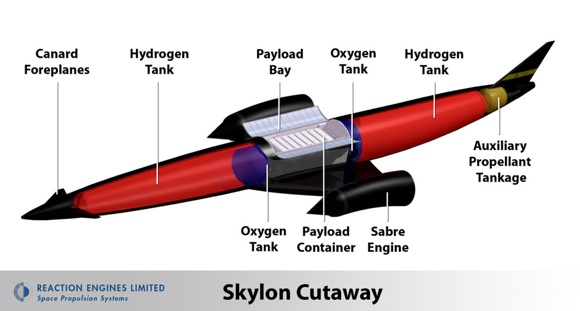
skylon-orbit-reaction-enginesThe year of 2013 closed with many interesting stories about the coming age of space exploration. And they came from many fronts, including the frontiers of exploration (Mars and the outer Solar System) as well as right here at home, on the conceptual front. In the case of the latter, it seems that strides made in the field are leading to big plans for sending humans into orbit, and into deep space.

The first bit of news comes from Reaction Engines Limited, where it seems that the Skylon space plane is beginning to move from the conceptual stage to a reality. For some time now, the British company has been talked about, thanks to their plans to create a reusable aerospace jet that would be powered by a series of hypersonic engines.

Skylon_diagramAnd after years of research and development, the hypersonic Sabre Engine passed a critical heat tolerance and cooling test. Because of this, Reaction Engines Limited won an important endorsement from the European Space Agency. Far from being a simple milestone, this test may prove to be historic. Or as Skymania‘s Paul Sutherland noted, it’s “the biggest breakthrough in flight technology since the invention of the jet engine.”

Now that Reaction Engines has proven that they can do this, the company will be looking for £250 million (approx $410 million) of investment for the next step in development. This will include the development of the LapCat, a hypersonic jet that will carry 300 passengers around the world in less than four hours; and the Skylon, which will carry astronauts, tourists, satellites and space station components into orbit.

sabre-engine-17Speaking at the press conference after the test in late November, ESA’s Mark Ford had this to say:

ESA are satisfied that the tests demonstrate the technology required for the Sabre engine development. One of the major obstacles to a reusable vehicle has been removed. The gateway is now open to move beyond the jet age.

The Sabre engine is the crucial piece in the reusable space plane puzzle, hence why this test was so crucial. Once built and operational, Skylon will take off and land like a conventional plane, but still achieve orbit by mixing air-breathing jets for takeoff, and landing with rockets fueled by onboard oxygen once it gets past a certain speed.

Skylon-space-plane-obtains-breakthrough-new-engines-2The recent breakthrough had to do to the development of a heat exchanger that’s able to cool air sucked into the engine at high speed from 1,000 degrees Celsius to minus 150 degrees in one hundredth of a second. It’s this critical technology that will allow the Sabre engine to surpass the bounds of a traditional jet engine, by as much as twofold.

Alan Bond, the engineering genius behind the invention, had this to say about his brainchild:

These successful tests represent a fundamental breakthrough in propulsion technology. The Sabre engine has the potential to revolutionise our lives in the 21st century in the way the jet engine did in the 20th Century. This is the proudest moment of my life.

And of course, there’s a video of the engine in action. Check it out:


Second, and perhaps in response to these and other developments, the British Interplanetary Society is resurrecting a forty year old idea. This society, which came up with the idea to send a multi-stage rocket and a manned lander to the moon in the 1930’s (eerily reminiscent of the Apollo 11 mission some 30 years later) is now reconsidering plans for giant habitats in space.

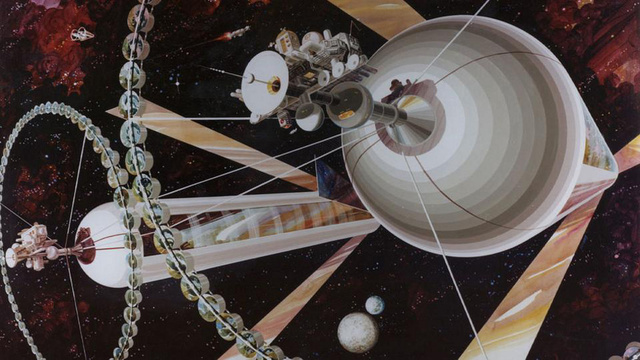
o'neil_cylinderTo make the plan affordable and feasible, they are turning to a plan devised by Gerard O’Neill back in the 1970s. Commonly known as the O’Neill Cylinder, the plan calls for space-based human habitats consisting of giant rotating spaceships containing landscaped biospheres that can house up to 10 million people. The cylinder would rotate to provide gravity and – combined with the interior ecology – would simulate a real-world environment.

Jerry Stone of BIS’s SPACE (Study Project Advancing Colony Engineering) is trying to show that building a very large space colony is technically feasible. Part of what makes the plan work is the fact that O’Neill deliberately designed the structure using existing 1970s technology, materials and construction techniques, rather than adopting futuristic inventions.

Rama16wikiStone is bringing these plans up to date using today’s technologies. Rather than building the shell from aluminium, for example, Stone argues tougher and lighter carbon composites could be used instead. Advances in solar cell and climate control technologies could also be used to make life easier and more comfortable in human space colonies.

One of the biggest theoretical challenges O’Neill faced in his own time was the effort and cost of construction. That, says Stone, will be solved when a new generation of much cheaper rocket launchers and spaceplanes has been developed (such as the UK-built Skylon). Using robot builders could also help, and other futuristic construction techniques like 3-D printing robots and even nanomachines and bacteria could be used.

RAMAAnd as Stone said, much of the materials could be outsourced, taking advantage of the fact that this would be a truly space-aged construction project:

Ninety per cent of the material to build the colonies would come from the Moon. We know from Apollo there’s silicon for the windows, and aluminium, iron and magnesium for the main structure. There’s even oxygen in the lunar soil.

Fans of Arthur C. Clarke’s Rendezvous with Rama, the series Babylon 5 or the movie Elysium out to instantly recognize this concept. In addition to being a very real scientific concept, it has also informed a great deal of science fiction and speculation. For some time, writers and futurists have been dreaming of a day when humanity might live in space habitats that can simulate terrestrial life.

Elysium_conceptWell, that day might be coming sooner than expected. And, as O’Neill and his contemporaries theorized at the time, it may be a viable solution to the possibility of humanity’s extinction. Granted, we aren’t exactly living in fear of nuclear holocaust anymore, but ecological collapse is still a threat! And with the Earth’s population set to reach 12 billion by the 22nd century, it might be an elegant solution to getting some of those people offworld.

It’s always an exciting thing when hopes and aspirations begin to become feasible. And though aerospace transit is likely to be coming a lot sooner than O’Neill habitats in orbit, the two are likely to compliment each other. After all, jet planes that can reach orbit, affordably and efficiently, is the first step in making offworld living a reality!

Until next time, keep your eyes to the skies. Chances are, people will be looking back someday soon…

Sources: IO9, skymania, (2)bbc.com
Year-End Tech News: Stanene and Nanoparticle Ink

3d.printingThe year of 2013 was also a boon for the high-tech industry, especially where electronics and additive manufacturing were concerned. In fact, several key developments took place last year that may help scientists and researchers to move beyond Moore’s Law, as well as ring in a new era of manufacturing and production.

In terms of computing, developers have long feared that Moore’s Law – which states that the number of transistors on integrated circuits doubles approximately every two years – could be reaching a bottleneck. While the law (really it’s more of an observation) has certainly held true for the past forty years, it has been understood for some time that the use of silicon and copper wiring would eventually impose limits.

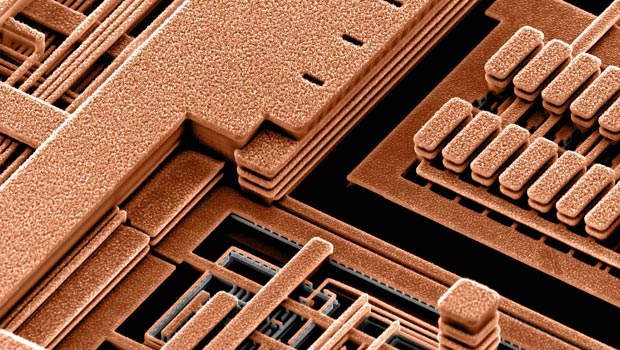
copper_in_chips__620x350Basically, one can only miniaturize circuits made from these materials so much before resistance occurs and they are too fragile to be effective. Because of this, researchers have been looking for replacement materials to substitute the silicon that makes up the 1 billion transistors, and the one hundred or so kilometers of copper wire, that currently make up an integrated circuit.

Various materials have been proposed, such as graphene, carbyne, and even carbon nanotubes. But now, a group of researchers from Stanford University and the SLAC National Accelerator Laboratory in California are proposing another material. It’s known as Stanene, a theorized material fabricated from a single layer of tin atoms that is theoretically extremely efficient, even at high temperatures.

computer_chip5Compared to graphene, which is stupendously conductive, the researchers at Stanford and the SLAC claim that stanene should be a topological insulator. Topological insulators, due to their arrangement of electrons/nuclei, are insulators on their interior, but conductive along their edge and/or surface. Being only a single atom in thickness along its edges, this topological insulator can conduct electricity with 100% efficiency.

The Stanford and SLAC researchers also say that stanene would not only have 100%-efficiency edges at room temperature, but with a bit of fluorine, would also have 100% efficiency at temperatures of up to 100 degrees Celsius (212 Fahrenheit). This is very important if stanene is ever to be used in computer chips, which have operational temps of between 40 and 90 C (104 and 194 F).

Though the claim of perfect efficiency seems outlandish to some, others admit that near-perfect efficiency is possible. And while no stanene has been fabricated yet, it is unlikely that it would be hard to fashion some on a small scale, as the technology currently exists. However, it will likely be a very, very long time until stanene is used in the production of computer chips.

Battery-Printer-640x353In the realm of additive manufacturing (aka. 3-D printing) several major developments were made during the year 0f 2013. This one came from Harvard University, where a materials scientist named Jennifer Lewis Lewis – using currently technology – has developed new “inks” that can be used to print batteries and other electronic components.

3-D printing is already at work in the field of consumer electronics with casings and some smaller components being made on industrial 3D printers. However, the need for traditionally produced circuit boards and batteries limits the usefulness of 3D printing. If the work being done by Lewis proves fruitful, it could make fabrication of a finished product considerably faster and easier.

3d_batteryThe Harvard team is calling the material “ink,” but in fact, it’s a suspension of nanoparticles in a dense liquid medium. In the case of the battery printing ink, the team starts with a vial of deionized water and ethylene glycol and adds nanoparticles of lithium titanium oxide. The mixture is homogenized, then centrifuged to separate out any larger particles, and the battery ink is formed.

This process is possible because of the unique properties of the nanoparticle suspension. It is mostly solid as it sits in the printer ready to be applied, then begins to flow like liquid when pressure is increased. Once it leaves the custom printer nozzle, it returns to a solid state. From this, Lewis’ team was able to lay down multiple layers of this ink with extreme precision at 100-nanometer accuracy.

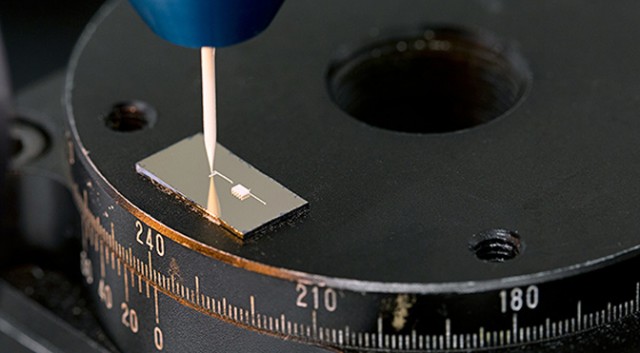
laser-welding-640x353The tiny batteries being printed are about 1mm square, and could pack even higher energy density than conventional cells thanks to the intricate constructions. This approach is much more realistic than other metal printing technologies because it happens at room temperature, no need for microwaves, lasers or high-temperatures at all.

More importantly, it works with existing industrial 3D printers that were built to work with plastics. Because of this, battery production can be done cheaply using printers that cost on the order of a few hundred dollars, and not industrial-sized ones that can cost upwards of $1 million.

Smaller computers, and smaller, more efficient batteries. It seems that miniaturization, which some feared would be plateauing this decade, is safe for the foreseeable future! So I guess we can keep counting on our electronics getting smaller, harder to use, and easier to lose for the next few years. Yay for us!

Sources: extremetech.com, (2)

Timeline of the Future…

hyperspace4I love to study this thing we call “the future”, and began to do so as a hobby the day I made the decision to become a sci-fi writer. And if there’s anything I’ve learned, its that the future is an intangible thing, a slippery beast we try to catch by the tail at any given moment that is constantly receding before us. And when predict it, we are saying more about the time in which we are living than anything that has yet to occur.

As William Gibson famously said: “…science fiction was always about the period in which it was written.” At every juncture in our history, what we perceive as being the future changes based on what’s going on at the time. And always, people love to bring up what has been predicted in the past and either fault or reward the authors for either “getting it right” or missing the mark.

BrightFutureThis would probably leave many people wondering what the point of it all is. Why not just wait and let the future tend to itself? Because it’s fun, that’s why! And as a science fiction writer, its an indispensable exercise. Hell, I’d argue its absolutely essential to society as a whole. As a friend of one once said, “science fiction is more of a vehicle than a genre.” The point is to make observations about society, life, history, and the rest.

And sometimes, just sometimes, predictive writers get it right. And lately, I’ve been inspired by sources like Future Timeline to take a look at the kinds of predictions I began making when I started writing and revising them. Not only have times changed and forced me to revise my own predictions, but my research into what makes humanity tick and what we’re up to has come a long way.

So here’s my own prediction tree, looking at the next few centuries and whats likely to happen…

21st Century:

2013-2050:

  • Ongoing recession in world economy, the United States ceases to be the greatest economic power
  • China, India, Russia and Brazil boast highest rates of growth despite continued rates of poverty
  • Oil prices spike due to disappearance of peak oil and costs of extracting tar sands
  • Solar power, wind, tidal power growing in use, slowly replacing fossil fuel and coal
  • First arcologies finished in China, Japan, Russia, India and the United States

arcology_lillypad

  • Humanity begins colonizing the Moon and mounts manned mission to Mars
  • Settlements constructed using native soil and 3D printing/sintering technology
  • NASA tows asteroid to near Earth and begins studies, leading to plans for asteroid mining
  • Population grows to 9 billion, with over 6 living in major cities across the all five continents
  • Climate Change leading to extensive drought and famine, as well as coastal storms, flooding and fires
  • Cybernetics, nanotech and biotech leading to the elimination of disabilities
  • 3D Construction and Computer-Assisted Design create inexpensive housing in developing world

europa_report

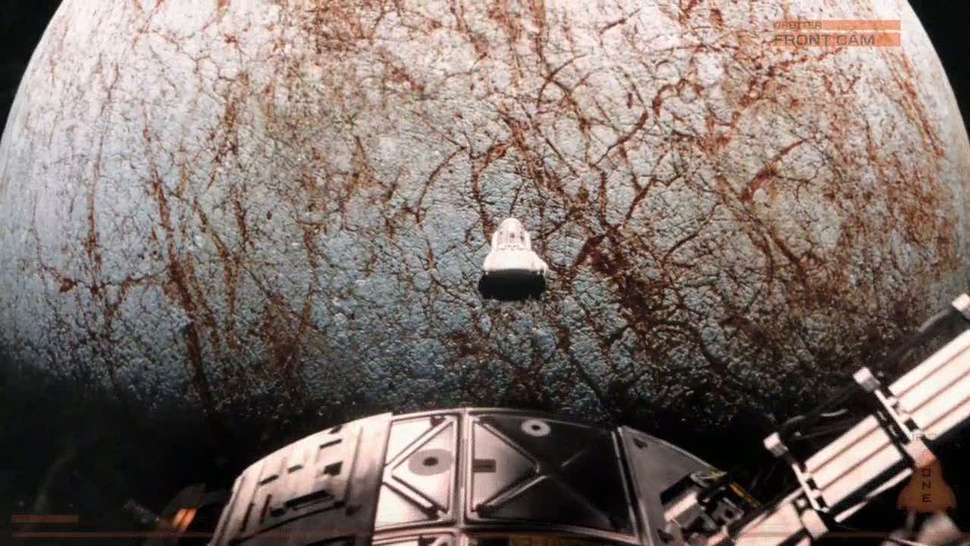
  • First exploratory mission to Europa mounted, discovers proof of basic life forms under the surface ice
  • Rome ordains first openly homosexual priests, an extremely controversial move that splits the church
  • First semi-sentient, Turing compatible AI’s are produced and put into service
  • Thin, transparent, flexible medical patches leading to age of “digital medicine”
  • Religious orders formed opposed to “augmentation”, “transhumanism” and androids
  • First true quantum computers roll off the assembly line

quantum-teleportation-star-trails-canary-islands-1-640x353

  • Creation of the worldwide quantum internet underway
  • Quantum cryptography leads to increased security, spamming and hacking begins to drop
  • Flexible, transparent smartphones, PDAs and tablets become the norm
  • Fully immersive VR environments now available for recreational, commercial and educational use
  • Carbon dioxide in the upper atmosphere passes 600 ppm, efforts to curb emissions are redoubled
  • ISS is retired, replaced by multiple space stations servicing space shuttles and commercial firms
  • World’s first orbital colony created with a population of 400 people

2050-2100:

  • Global economy enters “Second Renaissance” as AI, nanomachinery, quantum computing, and clean energy lead to explosion in construction and development
  • Commercial space travel become a major growth industry with regular trips to the Moon
  • Implant technology removes the need for digital devices, technology now embeddable
  • Medical implants leading to elimination of neurological disorders and injuries
  • Synthetic food becoming the rage, 3D printers offering balanced nutrition with sustainability

3dfood2

  • Canada, Russia, Argentina, and Brazil become leading exporters of foodstuffs, fresh water and natural gas
  • Colonies on the Moon and Mars expand, new settlement missions plotted to Ganymede, Europa, Oberon and Titan
  • Quantum internet expanding into space with quantum satellites, allowing off-world connectivity to worldwide web
  • Self-sufficient buildings with water recycling, carbon capture and clean energy becomes the norm in all major cities
  • Second and third generation “Martians” and “Loonies” are born, giving rise to colonial identity

asteroid_foundry

  • Asteroid Belt becomes greatest source of minerals, robotic foundries use sintering to create manufactured products
  • Europe experiences record number of cold winters due to disruption of the Gulf Stream
  • Missions mounted to extra-Solar systems using telexploration probes and space penetrators
  • Average life expectancy now exceeds 100, healthy children expected to live to 120 years of age
  • NASA, ESA, CNSA, RFSA, and ISRO begin mounting missions to exoplanets using robot ships and antimatter engines
  • Private missions to exoplanets with cryogenically frozen volunteers and crowdfunded spaceships

daedalus_starship_630px

  • Severe refugee crises take place in South America, Southern Europe and South-East Asia
  • Militarized borders and sea lanes trigger multiple humanitarian crises
  • India and Pakistan go to war over Indus River as food shortages mount
  • China clamps down on separatists in western provinces of Xinjian and Tibet to protect source of the Yangtze and Yellow River
  • Biotechnology begins to grow, firms using bacteria to assemble structural materials

geminoid

  • Fully sentient AIs created and integrated into all aspects of life
  • Traditionalist communities form, people seeking to disconnect from modern world and eschew enhancement
  • Digital constructs become available, making neurological downloads available
  • Nanotech research leading to machinery and materials assembled at the atomic level
  • Traditional classrooms giving way to “virtual classrooms”, on-demand education by AI instructors
  • Medical science, augmentation, pharmaceuticals and uploads lead to the first generation of human “Immortals”

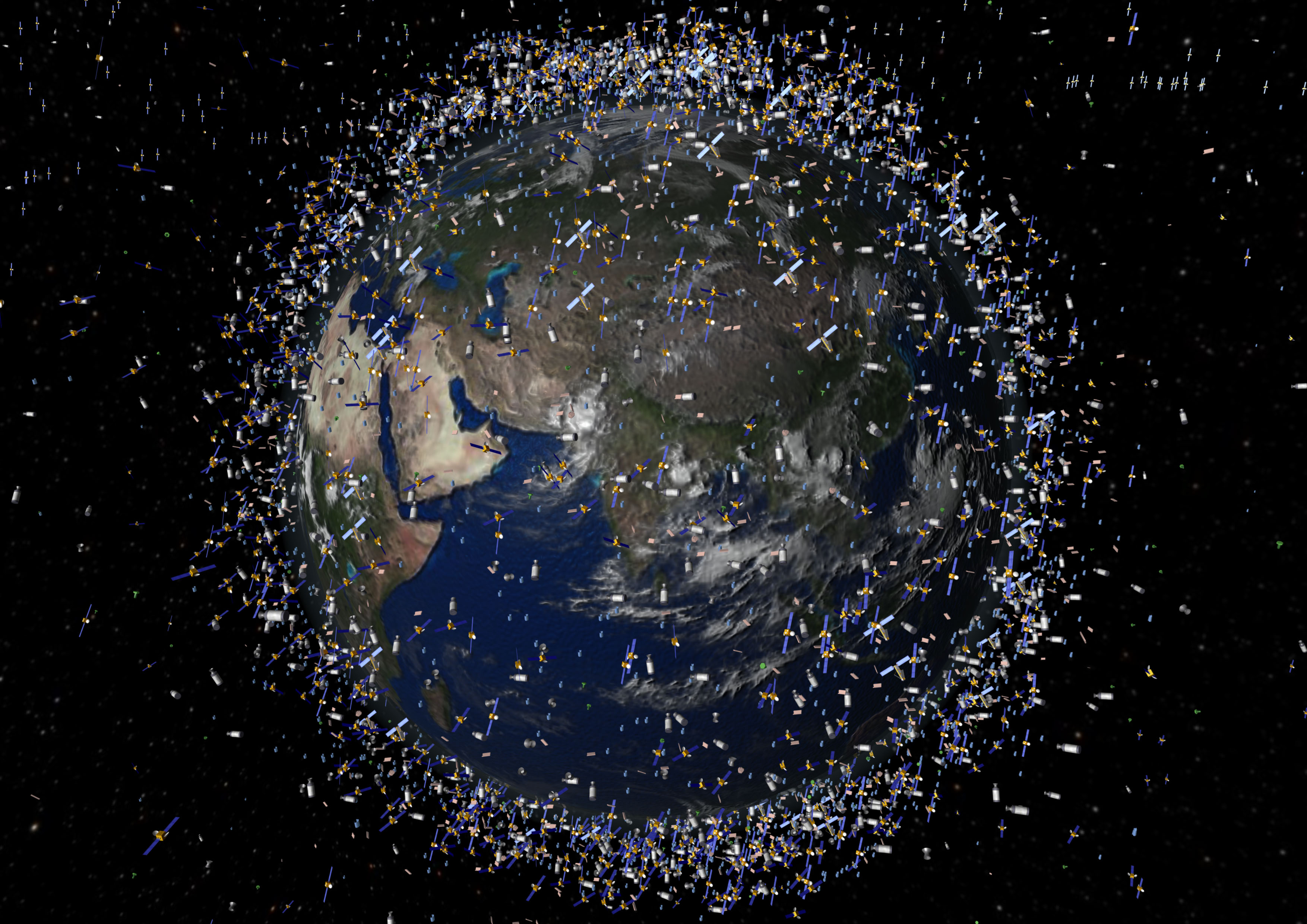
space_debris

  • Orbital colonies gives way to Orbital Nexus, with hundreds of habitats being established
  • Global population surpasses 12 billion despite widespread famine and displacement
  • Solar, wind, tidal, and fusion power replace oil and coal as the dominant power source worldwide
  • Census data shows half of world residents now have implants or augmentation of some kind
  • Research into the Alcubierre Drive begins to bear experimental results

alcubierre-warp-drive-overview22nd Century:

2100-2150:

  • Climate Change and global population begin to level off
  • First “Neural Collective” created, volunteers upload their thought patterns into matrix with others
  • Transhumanism becomes established religion, espousing the concept of transcendence
  • Widespread use of implants and augmentation leads to creation of new underclass called “organics”
  • Solar power industry in the Middle East and North Africa leading to growth in local economies
  • Biotech leads to growth of “glucose economy”, South American and Sub-Saharan economies leading in manufacture of biomaterials
  • Population in Solar Colonies and Orbital Nexus reaches 100,000 and continues to grow

asteroid_belt1

  • Off-world industry continues to grow as Asteroid Belt and colonies provide the majority of Earth’s mineral needs
  • Famine now widespread on all five continents, internalized food production in urban spaces continues
  • UN gives way to UNE, United Nations of Earth, which has near-universal representation
  • First test of Alcubierre FTL Drive successful, missions to neighboring systems planned
  • Tensions begin to mount in Solar Colonies as pressure mounts to produce more agricultural goods
  • Extinction rate of wild animals begins to drop off, efforts at ecological restoration continue
  • First attempts to creating world religion are mounted, met with limited success

networked_minds

  • Governments in most developed countries transitioning to “democratic anarchy”
  • Political process and involvement becoming digitized as representation becomes obsolete
  • “Super-sentience” emerges as people merge their neural patterns with each other or AIs
  • Law reformed to recognize neural constructs and AIs as individuals, entitled to legal rights
  • Biotech research merges with AI and nanotech to create first organic buildings with integrated intelligence

2150-2200:

  • Majority of the world’s population live in arcologies and self-sufficient environments
  • Census reveals over three quarters of world lives with implants or augmentation of some kind
  • Population of Orbital Nexus, off-world settlements surpasses 1 million
  • First traditionalist mission goes into space, seeking world insulated from rapid change and development
  • Labor tensions and off-world riots lead to creation of Solar policing force with mandate to “keep the peace”

Vladivostok-class_Frigate

  • First mission to extra=Solar planets arrive, robots begin surveying surface of Gliese 581 g, Gliese 667C c, HD 85512 b, HD 40307 g, Gliese 163 c, Tau Ceti e, Tau Ceti f
  • Deep space missions planned and executed with Alcubierre Drive to distant worlds
  • 1st Wave using relativistic engines and 2nd Wave using Alcubierre Drives meet up and begin colonizing exoplanets
  • Neighboring star systems within 25 light years begin to be explored
  • Terraforming begins on Mars, Venus and Europa using programmed strains of bacteria, nanobots, robots and satellites
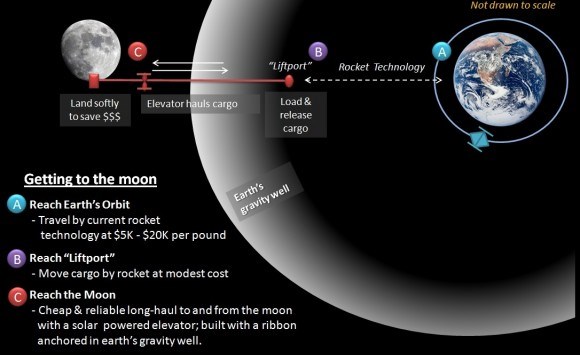
  • Space Elevator and Slingatron built on the Moon, used to transport people to space and send goods to the surface

space_elevator_lunar1

  • Earth’s ecology begins to recover
  • Natural species are reintroduced through cloning and habitat recovery
  • Last reported famine on record, food production begins to move beyond urban farms
  • Colonies within 50 light years are established on Gliese 163 c, Gliese 581 g, Gliese 667C c, HD 85512 b, HD 40307 g, Tau Ceti e, Tau Ceti f
  • Off-world population reaches 5 million and continues to grow
  • Tensions between Earth and Solar Colonies continue, lead to demands for interplanetary governing body
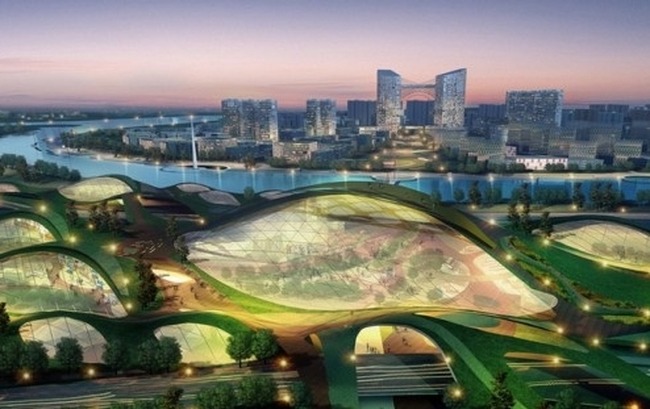
  • Living, breathing cities become the norm on all settled worlds, entire communities build of integrated organic materials run by AIs and maintained by programmed DNA and machinery

self-aware-colony

23rd Century and Beyond:

Who the hell knows?

*Note: Predictions and dates are subject to revision based on ongoing developments and the author’s imagination. Not to be taken literally, and definitely open to input and suggestions.

News From Space: 3D Printer Bound for ISS!

made-in-space-3d-printerThe International Space Station has plans to bring a 3D printer on board by 2014. And yesterday, the model in question – the startup’s Made in Space engineering model – passed an important milestone on its way into orbit. This consisted of a battery of tests at NASA’s Marshall Space Flight Center in Huntsville, Ala., which confirmed that the machine can survive the rigors of launch and function in space.

Michael Snyder, director of research and development at Made in Space, said in a statement that:

This developmental testing was vital to the design of our flight-unit printer. We’ve engaged in a fast-paced mission starting in early 2013 to produce hardware that NASA would qualify for launch and installation to the ISS in 2014. The fact that we’ve been able to pass another milestone in an abbreviated time frame is extremely exciting.

For some time, NASA has had its eye on additive manufacturing (aka. 3D printing) as a means of making space travel cheaper and more efficient. In addition to the development a 3D pizza maker and food printing, NASA also hopes to equip future ships and stations with their own printer so crews can generate spare parts and components, rather than having to mount costly resupply missions.

3DpizzaMade in Space and NASA Marsall hope to jump-start this vision with their “3D Printing in Zero Gravity” experiment (3D Print for short) which  aims to launch the first-ever 3D printer to the space station in August 2014. But before that can happen, the machine must pass some more rigorous tests. The first occurred several months ago when three prototype versions of Made in Space’s printer passed a series of microgravity tests during parabolic airplane flights.

This flight test, known colloquially as the “vomit comet”, demonstrated that the prototypes could indeed handle working in microgravity environments. The more recent tests at Marshall, performed with the company’s Engineering Test Unit (ETU), ensured that the printer can survive the vibrational stresses of launch and deal with electromagnetic interference, among other issues.

3d-printer-microgravity-flight-testData from these tests will inform the critical design review of the flight unit prototype, a big step toward clearing the machine for launch toward the space station. According to Made in Space officials, the final review process is slated for the 15th of August. Niki Werkheiser, 3D Print project manager in Marshall’s Technology Development and Transfer Office, also said in a statement that:

The successful results received from the ETU testing at [Marshall] reinforces our confidence that Made in Space, Inc. has developed the robust design required to successfully print in space. We are excited to have successfully completed yet another key step toward meeting the extensive ISS flight certification process.

If all goes well, it won’t be long before the crew of the ISS is able to regularly print out all the replacement parts they need. Given time, they might even solve the problem of what to do when freeze-dried food won’t cut it and you absolutely must have a slice of pizza!

Source: space.com
Google CEO Wants Land Set Aside for Experimentation

future-city-1Back in May, Google co-founder and CEO Larry Page hosted a rare Q&A session with the attendees of the Google I/O keynote speech. During this time, he gave some rather unfiltered and unabashed answers to some serious questions, one of which was how he and others should focus on reducing negativity and focusing on changing the world.

Page responded by saying that “the pace of change is increasing” and that “we haven’t adapted systems to deal with that.” He was also sure to point out that “not all change is good” and said that we need to build “mechanisms to allow experimentation.” Towards that end, he claimed that an area of the world should be set aside for unregulated scientific experimentation. His exact words were:

There are many exciting things you could do that are illegal or not allowed by regulation. And that’s good, we don’t want to change the world. But maybe we can set aside a part of the world… some safe places where we can try things and not have to deploy to the entire world.

So basically he’s looking for a large chunk of real-estate to conduct beta tests in it. What could possibly go wrong?

detroit_experimentOne rather creative suggestion comes from Roy Klabin of PolicyMic, who suggest that an aging and dilapidated Detroit might be just the locale Page and his associates are looking for. This past week, the city declared bankruptcy, and began offering to sell city assets and eradicate retirement funds to meet its $18 billion debt obligations.

What’s more, he suggests that SpaceX founder Elon Musk, who’s always after innovation, should team up with Google. Between the two giants, there’s more than enough investment capital to pull Detroit out of debt and work to rehabilitate the city’s economy. Hell, with a little work, the city could be transformed back into the industrial hub it once was.

And due to a mass exodus of industry and working people from the city, there is no shortage of space. Already the city is considering converting segments of former urban sprawl into farming and agricultural land. But looking farther afield, Klabin sees no reason why these space couldn’t be made available for advanced construction projects involving arcologies and other sustainable-living structures.

dragonfly-vertical-farm-for-a-future-new-york-1Not a bad idea, really. With cities like Boston, New York, Las Vegas, New Orleans, Moscow, Chendu, Tokyo and Masdar City all proposing or even working towards the creation of arcologies, there’s no reason why the former Industrial Heartland – now known as the “Rust Belt” – shouldn’t be getting in on the action.

Naturally, there are some who would express fear over the idea, not to mention Page’s blunt choice of words. But Page did stress the need for positive change, not aimless experimentation. And future generations will need housing and food, and to be able to provide these things in a way that doesn’t burden their environment the way urban sprawl does. Might as well get a jump on things!

And thanks to what some are calling the “New Industrial Revolution” – a trend that embraces nanofabrication, self-assembling DNA structures, cybernetics, and 3D printing – opportunities exist to rebuild our global economy in a way that is cleaner, more efficient and more sustainable. Anyone with space to offer and an open mind can get in on the ground floor. The only question is, what are they willing to give up?

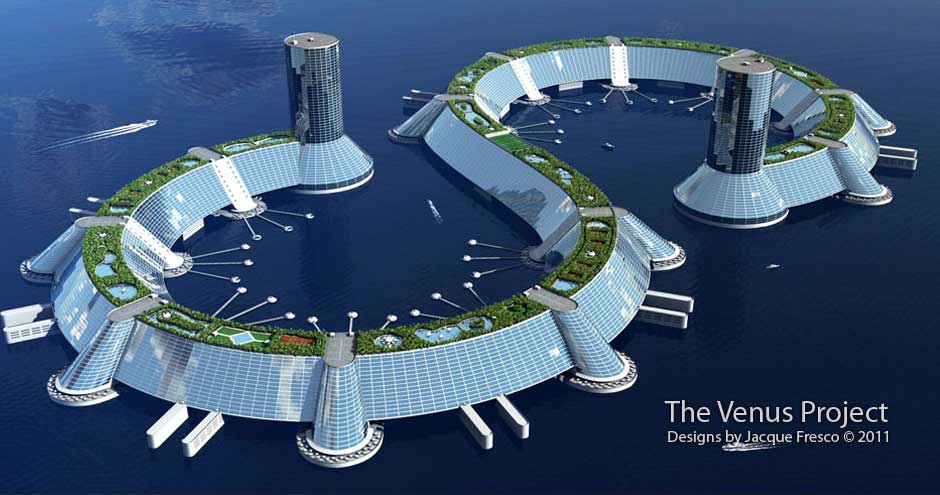
venus_projectThere’s also a precedent here for what is being proposed. The famous American architect and designer Jacque Fresco has been advocating something similar for decades. Believing that society needs to reshape the way it lives, works, and produces, he created the Venus Project – a series of designs for a future living space that would incorporate new technologies, smarter materials and building methods, and alternative forms of energy.

And then there’s the kind of work being proposed by designer Mitchell Joachim and Terreform ONE (Open Network Ecology). And amongst their many proposed design concepts is one where cities use vertical towers filled with energy-creating algae (pictured below) to generate power. But even more ambitious is their plan to “urbaneer” Brooklyn’s Navy Yard by turning natural ecological tissues into viable buildings.

future-city2This concept also calls to mind Arconsanti, the brainchild of architect Paolo Solari, who invented the concept of arcology. His proposed future city began construction back in the 1970 in central Arizona, but remains incomplete. Designed to incorporate such things as 3D architecture, vertical farming, and clean, renewable energy, this unfinished city still stands as the blueprint for Solari’s vision of a future where architecture and ecology could be combined.

What’s more, this kind of innovation and development will come in mighty handy when it comes to time to build colonies on the Moon and Mars. Already, numerous Earth cities and settlements are being considered as possible blueprints for extra-Terran settlement – places like Las Vegas, Dubai, Arviat, Black Rock City and the Pueblos and pre-Columbian New Mexico.

Black Rock City - home to "Burning Man" - shown in a Martian crater
Black Rock City – home to “Burning Man” – shown in a Martian crater

These are all prime examples of cities built to withstand dry, inhospitable environments. As such, sustainability and resource management play a major role in each of their designs. But given the pace at which technology is advancing and the opportunities it presents for high-tech living that is also environmentally friendly, some test models will need to be made.

And building them would also provide an opportunity to test out some of the latest proposed construction methods, one that do away with the brutally inefficient building process and replace it with things like drones, constructive bacteria, additive manufacturing, and advanced computer modelling. At some point, a large-scale project to see how these methods work together will be in order.

Let’s just hope Page’s ideas for a beta-testing settlement doesn’t turn into a modern day Laputa!

And be sure to check out this video from the Venus Project, where Jacque Fresco explains his inspirations and ideas for a future settlement:


Sources:
1.
Elon Musk and Google Should Purchase and Transform a Bankrupt Detroit (http://www.policymic.com/)
2. Larry Page wants to ‘set aside a part of the world’ for unregulated experimentation (theverge.com)

3. Six Earth Cities That Will Provide Blueprints for Martian Settlements (io9.com)
4. The Venus Project (thevenusproject.org)
5. Arcosanti Website (arcosanti.org)
6. Terreform ONE website (terreform.org)

National Parks on the Moon?

apollo17Might sound like the plot of a Ray Bradbury novel, where parents and children crowd into the family rocket and make a day trip to the Lunar Park. But new legislation is being proposed that would turn the Apollo 11 landing site into a national park. It would go by the name of the Lunar Landing Sites National Historical Park, and given the rate at which commercial space flight is advancing, its not surprising to see this idea being put forward.

The bill – which was introduced by Reps. Donna Edwards of Maryland and Eddie Bernice Johnson of Texas – is known as HR 2617, or “The Apollo Lunar Landing Legacy Act”. This bill, if ratified, would put the National Park Service in charge of the moon park, which would consist of all the artifacts left on the moon from the Apollo missions.

Apollo_17_lunar-rover-577x580The bill also specifies that the Apollo 11 landing site should be submitted to the United Nations Educational, Scientific, and Cultural Organization for designation as a World Heritage Site. The bill refers to the Apollo lunar program as one of the greatest achievements in American history and recommends:

..establishing the Historical Park under this Act will expand and enhance the protection and preservation of the Apollo lunar landing sites and provide for greater recognition and public understanding of this singular achievement in American history.

Naturally, the bill does not specify on when ground would be broken on this new park, nor can it be expected to. At this juncture, there’s no way of knowing when commercial trips to the moon will be possible, though many hope to make it so by 2030. Still, in an age when federal and private space companies are pushing the envelope on what is possible, it’s good to plan ahead.

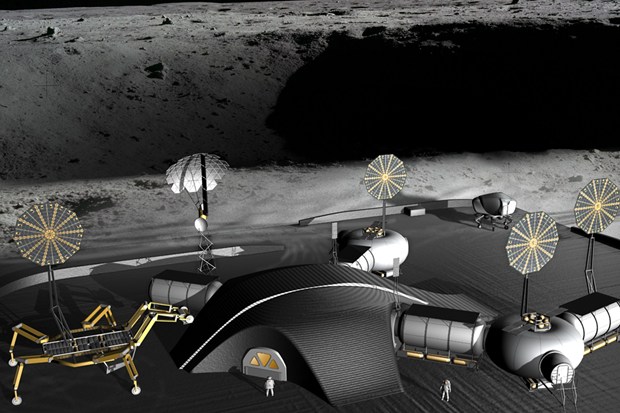
lunar_baseAnd let’s not forget that with Moon bases being contemplated and designs being proposed, it will be good to have certain recreational activities available for future Lunar settlers. Sooner or later, people are likely to go stir crazy living in 3D printed bases made out of lunar dust. And sightseeing is likely to be a popular option on a newly colonized world.

In the meantime, I think some ideas on what people will be able to do in this park might be in order. I’m sure the National Parks Service would be open to suggestions. Everything from buggy rides to concession stands offering typical astronaut treats, like freeze-dried ice cream and tang to albums of Chris Hadfields latest hits!

Source: news.cnet.com


The 3D Printing Revolution

3D-printing1From the way people have been going on about 3D printing in the past few months, you’d think it was some kind of fad or something! But of course, there’s a reason for that. Far from being a simple prescriptive technology that requires us all to update our software or buy the latest version in order to “stay current”, 3D printing is ushering in a revolution that will literally change the world.

From design models and manufactured products, the range of possibilities is now venturing into printed food and even artificial organs. The potential for growth is undeniable, and the pace at which progress is happening is astounding. And on one of my usual jaunts through the tech journals and video-sharing websites, I found a few more examples of the latest applications.

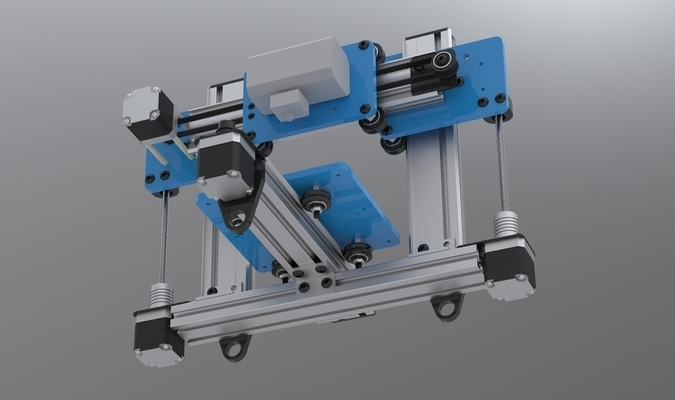
ord_bot_2_2_display_mediumFirst up is this story from Mashable, a social media news source, that discusses NYU student Marko Manriquez’s new invention: the BurritoBot. Essentially a 3D food printer that uses tortillas, salsa, guacamole and other quintessential ingredients, Manriquez’s built this machine for his master’s thesis using open-source hardware – including the ORD bot, a 3D printing mechanical platform (pictured above).

The result is a food printer that an tailor-make Burritos and other Mexican delights, giving users the ability to specify which ingredients they want, in which proportion, and all through an app on their smartphone. No demos available online as of yet, but Mashable provides a pretty good breakdown on how it works, as well as Manrquez’s inspiration and intent behind its creation:


Next up, there’s Cornell University’s food printer that allows users to created desserts. In this CNN video, Chef David Arnold at the French Culinary Institute shows off the printer by creating a chocolate cake, layer by layer, dough and icing. A grad student from Cornell’s Computational Synthesis Lab was on hand to explain that their design is also open-source, with the blueprints and technical design made available online so anyone can build their own.

As Chef Arnold explained, his kitchen has been using the printer to work with ingredients ranging from cookie dough, to icing to masa – the corn meal tortillas are made from. It also allows for a degree of accuracy that many may not possess, while still offering plenty of opportunities to be creative. “The only real limitation now is that the product has to be able to go through a syringe,” he said. “Other than that, skies the limit.”


But even more exciting for some are the opportunities that are now being explored using metals. Using metal powder and an electron beam to form manufactured components, this type of “additive manufacturing” is capable of turning out parts that are amazingly complex, far more so than anything created through the machining-process.

In this next video, the crew from CNNMoney travel to the Oakridge National Lab in Tenessee to speak to the Automation, Manufacturing and Robotics Group. This government-funded lab specializes in making parts that are basically “structures within structures”, the kind of things that are used in advanced prosthetic limbs, machinery, and robots. As they claim, this sort of manufacturing is made possible thanks to the new generation of 3D ABS and metal printers.

Oakridge_natlabWhat’s more, this new process is far more efficient. Compared to old fashioned forms of machining, it consumes less energy and generates far less waste in terms of materials used. And the range of applications is extensive, embracing fields as divergent as robotics and construction to biomedical and aerospace. At present, the only real prohibition is the cost of the equipment itself, but that is expected to come down as 3D printing and additive manufacturers receive more market penetration.


But of course, all of this pales in comparison to the prospect of 3D printed buildings. As Behrokh Khoshnevis – a professor of Industrial & Systems Engineering at USC – explains in this last video from TEDxTalks, conventional construction methods are not only inefficient, labor intensive and dangerous, they may very well be hampering development efforts in the poorer parts of the world.

As anyone with a rudimentary knowledge of poverty and underdevelopment knows, slums and shanty-towns suffer disproportionately from the problems of crime, disease, illiteracy, and infant mortality. Unfortunately, government efforts to create housing in regions where these types of communities are common are restrained by budgets and resource shortages. With one billion people living in shanties and slum-like shelters, a new means of creating shelter needs to be found for the 21st century.

contour-craftingThe solution, according to Khoshnevis, lies in Contour Crafting and Automated Construction –  a process which can create a custom house in just 20 hours! As a proponent of Computer-Assisted Design and Computer-Assisted Manufacturing (CAD/CAM), he sees automated construction as a cost-effective and less labor resource-intensive means of creating homes for these and other people who are likely to live in unsafe, unsanitary conditions.

The technology is already in place, so any claims of that is of a “theoretical nature” are moot. What’s more, such processes are already being designed to construct settlements on the moon, incorporating robotics and 3D printing with advanced computer-assisted simulations. As such, Khoshnevis is hardly alone in advocating similar usages here on planet Earth.

The benefits, as he outlines them, are dignity, safety, and far more sanitary conditions for the inhabitants, as well as the social benefits of breaking the pathological cycle of underdevelopment. Be sure to check out his video below. It’s a bit long, but very enlightening!


Once in awhile, its good to take stock of the future and see that it’s not all creepy robots and questionable inventions. Much of the time, technological progress really does promise to make life better, and not just “more convenient”. It’s also especially good to see how it can be made to improve the lives of all people, rather than perpetuating the gap between the haves and the have nots.

Until next time, keep your heads high and your eyes to the horizon!


Futurama does 3D Printing!

benderIt’s a good day when a show like Futurama begins turning out new episodes. This past week’s featured a story where Bender began taking advantage of 3D printing to create a famous folk singer’s one-of-a-kind guitar. Naturally, things got out of control, and the story was chock full of social commentary and the concept that the printing revolution might actually be ushering an age where artificial replicas could infringe on the real thing.

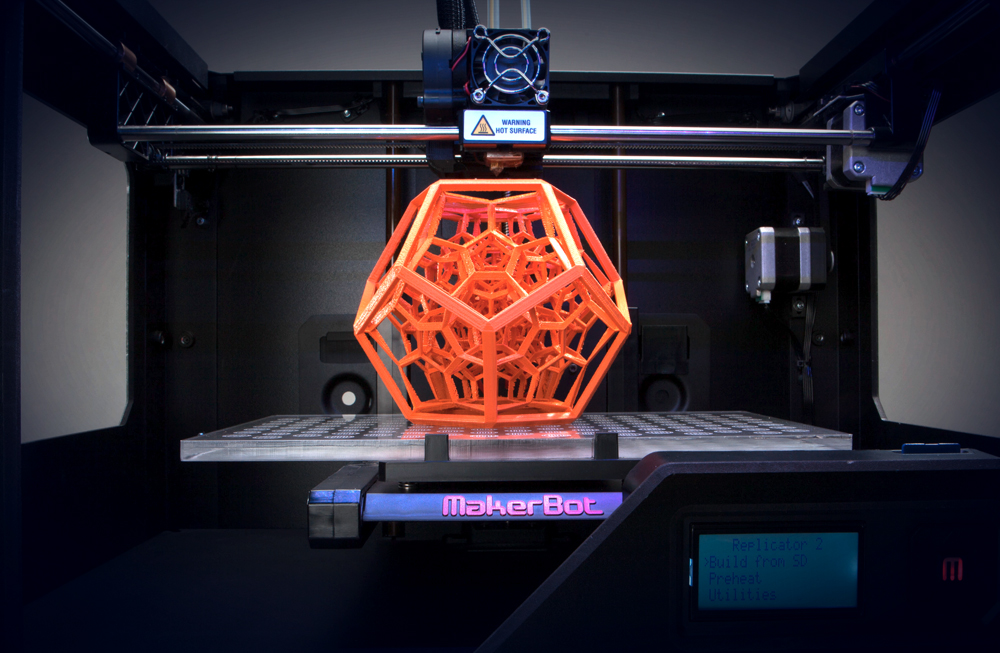
For the life of me, I can’t find clips of this episode anywhere. Guess it’s too soon to expect anyone to upload it to Youtube, lazy piraters! But I found the next best thing: a time-lapse video of a Bender figurine being printed out on a Maker Bot. It’s set to the extended cut of Futurama’s theme, and the result is a pretty cool replica of the jive-talking, amoral alcoholic robot himself!

Building the Future: 3D Printing and Silkworms

arcology_crystalWhen it comes to building the homes, apartment blocks and businesses headquarters of the future,  designers and urban planners are forced to contend with a few undeniable realities. No only are these buildings going to be need to be greener and more sustainable, they will need to be built in such a way that doesn’t unnecessarily burden the environment.

Currently, the methods for erecting a large city building are criminally inefficient. Between producing the building materials – concrete, steel, wood, granite – and putting it all together, a considerable amount of energy is expended in the form of emissions and electricity, and several tons of waste are produced.

anti-grav3d2Luckily, there are many concepts currently on the table that will alter this trend. Between using smarter materials, more energy-efficient design concepts, and environmentally-friendly processes, the future of construction and urban planning may someday become sustainable and clean.

At the moment, many such concepts involve advances made in 3-D printing, a technology that has been growing by leaps and bounds in recent years. Between anti-gravity printers and sintering, there seems to be incredible potential for building everything from settlements on the moon to bridges and even buildings here on Earth.

bridge_3One case in particular comes to us from Spain, where four students from the Institute for Advanced Architecture of Catalonia have created a revolutionary 3-D printing robot. It’s known as Stone Spray, a machine that can turn dirt and sand into finished objects such as chairs, walls, and even full-blown bridges.

The brainchild of Anna Kulik, Inder Prakash, Singh Shergill, and Petr Novikov, the robot takes sand or soil, adds a special binding agent, then spews out a fully formed architectural object of the designers’ choosing. As Novikov said in an interview with Co.Design:

The shape of the resulting object is created in 3-D CAD software and then transferred to the robot, defining its movements. So the designer has the full control of the shape.

robot-on-site_0So far, all the prototypes – which include miniature stools and sculptures – are just 20 inches long, about the size of a newborn. But the team is actively planning on increasing the sizes of the objects this robot can produce to architectural size. And they are currently working on their first full-scale engineering model: a bridge (pictured above).

If successful, the robot could represent a big leap forward in the field of sustainable design. Growing a structure from the earth at your feet circumvents one of the most resource-intensive aspects of architecture, which is the construction process.

And speaking of process, check out this video of the Stone Spray in action:


At the same time, however, there are plans to use biohacking to engineer tiny life forms and even bacteria that would be capable of assembling complex structures. In a field that closely resembles “swarm robotics” – where thousands of tiny drones are programmed to build thing – “swarm biologics” seeks to use thousands of little creatures for the same purpose.

silkpavilionMIT has taken a bold step in this arena, thanks to their creation by the Mediated Matter Group that has rebooted the entire concept of “printed structures”. It’s called the Silk Pavilion, a beautiful structures whose hexagonal framework was laid by a robot, but whose walls were shell was created by a swarm of 6,500 live silkworms.

It’s what researchers call a “biological swarm approach to 3-D printing”, but could also be the most innovate example of biohacking to date. While silkworms have been used for millennia to give us silk, that process has always required a level of harvesting. MIT has discovered how to manipulate the worms to shape silk for us natively.

silkpavilion-2The most immediate implications may be in the potential for a “templated swarm” approach, which could involve a factory making clothes just by releasing silkworms across a series of worm-hacking mannequins. But the silkworms’ greater potential may be in sheer scale.

As Mediated Matter’s director Neri Oxman told Co.Design, the real bonus to their silkworm swarm its that it embodies everything an additive fabrication system currently lacks. 

It’s small in size and mobile in movement, it produces natural material of variable mechanical properties, and it spins a non-homogeneous, non-woven textile-like structure.

What’s more, the sheer scale is something that could come in very handy down the road. By bringing 3-D printing together with artificial intelligence to generate printing swarms operating in architectural scales, we could break beyond the bounds of any 3-D printing device or robot, and build structures in their actual environments.

silkpavilion-1In addition, consider the fact that the 6,500 silkworms were still viable after they built the pavilion. Eventually, the silkworms could all pupate into moths on the structure, and those moths can produce 1.5 million eggs. That’s enough to theoretically supply what the worms need to create another 250 pavilions.

So on top of everything else, this silkworm fabrication process is self-propagating, but unlike plans that would involve nanorobots, no new resources need to be consumed to make this happen. Once again, it seems that when it comes to the future of technology, the line between organic and synthetic is once more blurred!

And of course, MIT Media Lab was sure to produce a video of their silkworms creating the Silk Pavilion. Check it out:


Sources:
fastcodesign.com, (2)