Scientists Raise the Alarm on Human Enhancements

enhancementThe concept of technological progress and its potential consequences has been the subject of quite a bit of attention lately. First, there was the announcement  from Harvard University and Human Rights Watch that a ban on killer robots was needed before the current pace of innovation led to the machines that could so without human oversight.

Then came the University of Cambridge’s announcement about the creation of the Center for the Study of Existential Risk (CSER) to evaluate new technologies. And last, there was the news the news that the DOD had signing a series of instructions to “minimize the probability and consequences of failures that could lead to unintended engagements,” starting at the design stage.

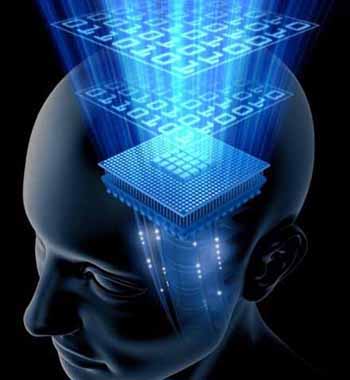
bionic_handConcordantly, back in early November, the Royal Society along with the Academy of Medical Sciences, British Academy, and Royal Academy of Engineering concluded a workshop called “Human Enhancement and the Future of Work” in which they considered the growing impact and potential risks of augmentation technologies. In their final report, they raised serious concerns about the burgeoning trend and how humanity is moving from a model of therapy to one in which human capacities are greatly improved. The implications, they concluded, should be part of a much wider public discussion.

Specifically, the report raised concerns on drugs and digital enhancements that will allow people to work longer, hard and faster. Such technologies could easily give rise to a culture of enhanced competitiveness, more than we currently know, where the latest in cybernetics, bionics and biomedical devices are used to gain and edge, not to remedy medical problems. Currently, things like bionic prosthesis are being created to aid amputees and injury victims; but as the technology improves and such devices become more effective than organic limbs, the purpose could change.

cyberpunk-eyeWhat’s more, there are the ethical implications of having such technology available to human beings. If people can upgrade their bodies to enhance their natural abilities, what will it means for those who get “left behind”? Will the already enormous gulf between the rich and poor expand even further and take on a new dimension? Will those who want to succeed in the business world be forced to scrounge so they can get the latest upgrades.

Or, as the panel’s final report put it:

“Work will evolve over the next decade, with enhancement technologies potentially making a significant contribution. Widespread use of enhancements might influence an individual’s ability to learn or perform tasks and perhaps even to enter a profession; influence motivation; enable people to work in more extreme conditions or into old age, reduce work-related illness; or facilitate earlier return to work after illness.”

At the same time however, they acknowledge the potential efficacy and demand for such technologies, prompting the call for open discourse. Again, from the report:

“Although enhancement technologies might bring opportunities, they also raise several health, safety, ethical, social and political challenges, which warrant proactive discussion. Very different regulatory regimes are currently applied: for example, digital services and devices (with significant cognitive enhancing effects) attract less, if any, regulatory oversight than pharmacological interventions. This raises significant questions, such as whether any form of self-regulation would be appropriate and whether there are circumstances where enhancements should be encouraged or even mandatory, particularly where work involves responsibility for the safety of others (e.g. bus drivers or airline pilots).”

In many ways, this report is overdue, as it is offering some rather obvious commentary on a subject which has been the subject of speculation and fiction for some time. For example, in the Sprawl Trilogy, William Gibson explored the idea of human enhancement and the disparity between rich and poor at length. In his world, the rich were ensured clinical immortality through AI and biotech while everyone else was forced to spend their savings just to afford the latest tech, merely so they could stay in the running.

However, just about all of the panel’s recommendations were most appropriate. They included further investigations into ensuring safety, affordability, and accessibility, not to mention that some of these enhancement technologies —  be they pharmaceutical, regenerative medicines, or cybernetics — should be regulated by the government. This last article is especially appropriate given the potential for personal misuse, not to mention the potential exploitation by employers.

With all the harm that could result from having technologies that could render human beings “postmortal” or “posthuman”, some degree of oversight is certainly necessary. But of course, the real key is a public educated and informed on the issue of cybernetics, bionics, and human enhancement, and what they could mean for us. As with so much else, the issue is one of choice, and awareness of what the consequences could be. Choose wisely, that’s the only guarantee! Hey, that rhymed… I smell a quote!

Source: IO9.com
The Future is… Foggy!

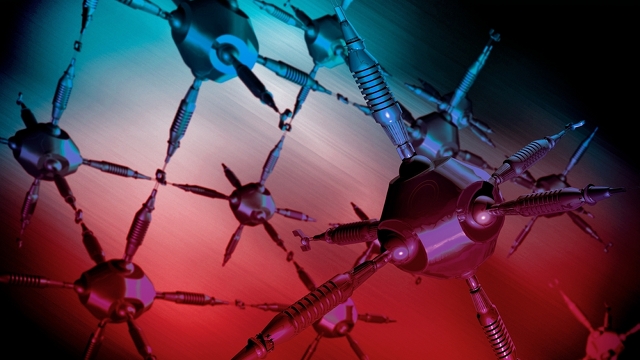
utility_fogIt’s called a Utility Fog, swarms of networked microscopic robots that can assume the shape and texture of virtually anything. Originally proposed by J. Storrs Hall, a speculative science writer back in 1993, the concept has gone on to inspired futurists and science fiction writers for years. These include Warren Ellis’s foglets in Transmetropolitan and Neal Stephenson’s personal nanodefense systems in The Diamond Age, among others.

As an extension of the nanotechnological principle – where microscopic machines are able to self-replicate and construct just about anything – the Utility Fog idea goes a step further by proposing that we have a series of robots linked, arm and arm, to form a solid mass that can assume the shape of anything we need. Another term that is often used is “Smart Matter”, because it entails the creation of materials that are capable of responding to input, storing info, and thereby predicting what a users desires.

And since they are composed by tiny robots that could be capable of computing and networking with larger machines, they could even form interfaces that allow us to store information, send emails, or take pictures. Each “foglet” would function as its own discreet computer network, in this model, making sure that separate clouds are discernible and perform different tasks. The possibilities are truly limitless, and though it may be a few decades away at this point (by liberal estimates), we can only imagine how it will alter our daily lives.

During a recent interview with IO9, Hall reminisced about how he first came up with the idea:

“I came up with this vision of form fitting foam — one that could take on the shape of anything inside it and on the fly, which got me to wondering if we could ever possibly build something like that.”

The answer, according to Hall, came to him by considering the nascent field of molecular nanotechnology. By designing and creating objects at the molecular scale, Hall envisioned a fog that could quickly morph along with the movements of anything around it — including the passengers of cars. However, the greatest potential, to Hall lies in the creation of virtual environments. In truth, there could come a day when utility fogs will blend seamlessly with the real and virtual worlds, creating a kind of hybrid reality in between.

“You could actually push this technology to the point of creating a virtual world around you. You’d essentially get Star Trek’s holodeck — one that could actually cut you and make you bleed. You could put yourself in a virtual environment where you’re interacting with something that leads to a real environment, and it’s this interface between what’s real and virtual that will prove to be the most important thing about it.”

However, the most radical possibility could be in the field of clinical immortality. Amongst science fiction writers such as William Gibson, the idea that human beings could upload their minds into constructs and interfaces has been toyed with for some time. However, why upload your mind into a box or some kind of portable hard drive when you could render it seamlessly into the form of a fog?

“You could very realistically imagine uploading into it, and then you’d be this sort of formless data amoeba controlling this formless physical amoeba and take any size or form you wanted.”

Of course, there are limitation to the whole concept, not the least of which is the fact that the constituent components of the technology are still any decades away. For starters, there’s the ability to construct robots on the scale required, then the need to fashion computers that are small enough to fit. Then there’s the software required to program such machines. Hall figures that it could take a team of experts as much as a half decade to come up with the first set of algorithms required for the most basic functions.

“To navigate that hairy interface between the continuous and the discreet — that’s more difficult, the foglets will have to link up hands, let go, walk, crawl, and so forth — it’ll be like a three dimensional square dance.”

But above all, the main issue is one of cost:

“The system will have to be capable of keeping track of any changes to the environment and to keep track of you — and this will require incredibly sophisticated simulation, sensing, and interfacing software and that’s going to be tremendously expensive.”

Not surprising really. At this juncture in time, the greatest leaps in technology that will forever alter the future and make it impossible to predict – to a point anyway – are still highly speculative. But then again, major breakthroughs are being made all the time, and are occurring at a greater and greater pace. Who’s to say when the future will arrive. It never seems to show up on schedule!

Future Timeline

This has been sitting in my box of ideas for quite some time, a website that produces videos dedicated to predicting future trends. Awhile back, I came across it while searching on the subject of the Technological Singularity, and was pretty intrigued by what I saw. Not only was this website dedicated to predicting major technological developments in the near future, the ones that would culminate in the Singularity, but was even considering humanity’s prospects as a species in the far, far future. After taking a look around I thought to myself: “truly, this is the stuff of speculative science-fiction.”

To get a breakdown of what the makers of this site predict, check out the videos posted below, as compiled by HayenMill at Youtube. A self-professed amateur historian and futurist, HayenMill took the liberty of combining the Future Timeline predictions, year by year, covering the three decades that will take us from the beginning of 2010 to 2040, by which time all the current trends of the world will reach a full, fevered pitch. These include the problems of overpopulation, climate change, the shift of economic power from the US to Asia, and the growth of information, medical, and bio technology, as well as the development of AI and commercial spaceflight.

Check them out, and for a more detailed breakdown of future events, go to futuretimeline.net. Trust me when I say that the group’s predictions range far and wide, but which are also highly detailed, at least when pertaining to this century! You can take me at my word when I say that I will be doing my best to incorporate as many of these ideas as possible into my own writing!


New Anthology Sample: The Torch (Redux)!

Morning all! Welcome back for another Anthology sample, this time, a revised second installment from the short story “The Torch”. Last time, the story involved a tired and forelorn main character – Magid Muktari, environmental engineer and exoplanet enthusiast – coming home and meeting with his wife. My group seemed to agree that it was well written and faithful to Khaalidah’s original characters, unfortunately it contained details which did not fit with the story’s timeline. In essence, Muktari was not supposed to be married at this point in time.

After gritting my teeth and cursing my jumping of the gun, I erased the whole section and began writing it anew. The resulting section is the result, a homestead in which an overworked, forlorn visionary comes home to a slew of bad news and burdensome responsibilities. In the midst of it all, he contemplates his future and the future of his word. Take a look and let me know what you think:

The lights were already on when he came home. The nighttime creatures were about, singing their evening songs and tending to their nocturnal rituals. He felt the reassuring calm spread over him as soon as the wheels stopped in his driveway, the engine quieting down from its long run. The door raised itself for him and he put his tired feet to the ground, letting out a deep sigh.

“Home again, home again…” It took some effort to get him the rest of the way out. The steps were even harder to manage. It confounded him, how travelling could still be such a draining experience when machines generated all the motion. Perhaps their minds had not kept pace, still interpreting distance in terms of physical expenditure.

He paused on the front stoop and waited for Empathy to scan him. A quick flash hit his eye, discerning his retinal pattern, then projecting a kind greeting in his visual field.

Iyi geceler, Magid! it said. He waved at the sensor, and the door opened.

He made his way to the living room and tossed his jacket and satchel on the couch. His rear end met the cushions a moment later, and he felt himself begin to melt. He was halfway into a blissful fugue state when Empathy activated her living room interface and woke him up.

“Good evening, Magid. I have a number of messages for you.”

Muktari groaned and leaned up. He brushed the fatigue from his eyes and looked at the holographics that were forming in the center of his room. Green, blue and yellow, small dancing alpha-numerics. The words 13 Messages (2 Urgent) hanging in the middle.

“Give me the urgent ones,” he ordered. Empathy blinked and the display changed. He rubbed his head to dispel the headache and missed the appearance of his friends face in the center. It didn’t matter though, since the voice was one he would recognize anywhere.

“Magid, we got a problem over here,” said the face of Serge. “Word is the Memphis City Council is thinking of pulling the plug on the whole MFC concept. They’re claiming budgets, but the higher ups got it in their heads that this is a negotiation tactic. Me? I’m thinking the negotiation team tried to fleece them on land usage rights or something. In any case, someone needs to go out there and allay their concerns. They figure a senior engineer and manager ought to be just the person to do this.”

Muktari groaned again. He had just exhausted himself, skipping over time zones, heading from west to east. Going back west was the last thing he wanted right now. But at least Serge hadn’t given a date on when this was to expected. And he could certainly get away with not calling until the morning. Perhaps this would be the perfect opportunity to send someone else in his stead, or maybe Serge himself could be trusted with the task. No one knew the Memphis Floating Concept better than he, and he was sure to be able to put a positive spin on anything the negotiation team was asking for. At worst, he could tell them they were full of shit and to drop the demands, otherwise they would lose the contract.

The second message came up. This one he was ready and watching when the bronzed complexion of Aurelia came on. The summer sun was agreeing with her apparently, though the desert wind must have been a bother.

“Magid,” she said pleasantly. “Sorry to disturb you, but I thought you might like to know. A special presentation is being held in St. Petersburg this Tuesday, hosted by the Arctic Recovery foundation. The board has asked that we send a senior representative to present on behalf of the company and specifically asked for you. It’s not until Tuesday, so you’d have time to prepare.” She rolled her eyes and sighed. “I know, last minute, but I just heard myself. I hope this doesn’t interfere with your plans. I know you must be exhausted.”

“You don’t know the half,” he said to the image.

“Anyway, please contact me at your earliest convenience. We’re making progress on the Kebili array. Would love your input. Bye!”

The image disappeared. Empathy’s voice returned. “Shall I show the other messages?”

“Summarize,” he said curtly. A short list appeared in the display reticule. There were several messages regarding his choice of homeowner insurance, sat coverage, and offers for cheap aerofare to Mumbai, Atlantic City, Cancun and Topside. Only two were from names he recognized, and only one of immediate interest. Bill, to tell him when he’d be in town next and when they could meet up. And Myrana, no doubt to let him know what she had in mind for their next soiree together.

“Select Myrana, please” he said with some enthusiasm. The message moved to the center of the screen and enlarged. “Play.”

The image of Myrana’s face resolved in front of him, and his heart immediately sank. He knew that look, the look of disquiet, guilt and the burden of coming clean. He leaned back in his seat and waited for it.

“Magid, I’m sorry to do this over the link, but you’re a hard man to get to. I thought it better that I do it here than bother you on your mobile too. Basically…” she took a deep breath, “I think we need a break. I know we both said we were looking for different things when we started this… whatever this is, but I’m at the point where I think I need someone who can make themselves available. I’m sorry, but I can’t be waiting around for someone to decide they’re finally ready for a relationship, not at my age. Feel free to call me when you get this, but if you don’t, I understand. It was lovely, Magid, it really was but… these things can’t last. Bye.”

She kissed her fingers and put them to the monitor. The image disappeared a second later. Empathy’s cluelessly cheery voice came on a second later. “Would you like to review any of the other messages?”

“No.” he said flatly. “Delete all.”

He didn’t need to hear Bill’s message. He was sure his impending trip to St. Petersburg would conflict with it anyway. And in any case, they weren’t that close. Alone, he let out a particularly long sigh and reflected on the timeless truth of the matter. There was situation so bad that you couldn’t make it worse with a dose of personal disappointment. He was learning that for the umpteenth time now.

But at least he had a good’s night sleep to look forward to. He knew Serge and the others wouldn’t fault him for arriving late tomorrow morning. Perhaps some food and a nip of whiskey while he was at it. Pushing himself to his feet, he made his way to the kitchen and began producing the particulars for his impromptu meal.

Rome is burning, he thought as he fetched small tubs of chicken, Cacik sauce and greens from the cooler. Yes, that seemed to be the shape of things. The world was spinning, faster and faster, and no one seemed to be too worried about it. It was like riding a wild beast that just kept getting angrier the longer the rider held on. On the one hand, they were afraid to let go; on the other, they knew they had to at some point.

And yet, here he was, enjoying a meal and a drink and trying to forget about all that. Was that the natural order of things? Was it the case that the Senators of old, he wondered. After looking out upon the decadence that had befallen their once great city, and espying the barbarians who weren’t far from their gates, did they all simply go home, break their bread and drink their wine, and tell themselves that they had done all they could? He had to imagine they did, because when it came right down to it, there wasn’t much else to do. The fight could only happen during business hours, the rest of the time was earmarked for rest and creature comforts.

Yes, the doors must have been crashing down before they realized they were doomed. He was sure it was the same way with the people of Uxmal and Chichen Itza. It wasn’t until all the heads had stopped rolling and the crops had failed that they knew it was time to flee for the wilderness and hope for the best.

He looked down into the tub of Cacik he held and spooned some into his mouth. He had been gone for days and he couldn’t even remember when he had bought this latest bin of sauce. And yet, it still tasted fresh and clean. He checked the chicken and noted the same.

Yes, the gates are coming down and the city is ablaze, he thought. But at least the food is still good. One had to be thankful for small mercies.

Transhumanism… The Shape of Things to Come?

“Your mind is software. Program it. Your body is a shell. Change it. Death is a disease. Cure it. Extinction is approaching. Fight it.”

-Eclipse Phrase

A lot of terms are thrown around these days that allude to the possible shape of our future. Words like Technological Singularity, extropianism, postmortal, posthuman, and Transhuman. What do these words mean? What kind of future do they point to? Though they remain part of a school of thought that is still very much theoretical and speculative, this future appears to be becoming more likely every day.

Ultimately, the concept is pretty simple, in a complex, mind-bending sort of way. The theory has it that at some point in this or the next century, humanity will overcome death, scarcity, and all other limitations imposed on us by nature. The means vary, but it is believed that progress in any one or more of the following areas will make such a leap inevitable:

Artificial Intelligence:
The gradual evolution of computers, from punch cards to integrated circuits to networking, shows an exponential trend upwards. With the concordant growth of memory capacity and processing speed, it is believed that it is only a matter of time before computers are capable of independent reasoning. Progress is already being made in this domain, with the Google X Labs Neural Net that has a connectome of a billion connections.

As such, it is seen as inevitable that a machine will one day exist that is capable of surpassing a human being. This sort of machinery could even be merged with a human’s own mind, enhancing their natural thought patterns, memory, and augmenting their intelligence to the point where their intelligence is immeasurable by modern standards.

Just think of the things we could think up once that’s possible. Well… you can’t exactly, but we can certainly postulate. For starters, such things as the Grand Unifying Theory, the nature of time and space, quantum mechanics, and other mind-bendingly complex fields could suddenly make sense to us. What’s more, this would make further technological leaps that much easier.

Biology:
Here we have an area of development which can fall into one of three categories. On the one hand, advancements in medical science could very well lead to the elimination of disease and the creation of mind-altering pharmaceuticals. On the other, there’s the eventual development of things like biotechnology, machinery that is grown rather than built, composed of DNA strands or other “programmable” material.

Lastly, there is the potential for cybernetics, a man-machine interface where organic is merged with the artificial, either in the form of implants, prosthetic limbs, and artificial organs. All of these, alone or in combination, would enhance a human beings strength, mental capacity, and prolong their life.

This is the meaning behind the word postmortal. If human beings could live to the point where life could be considered indefinite (at least by current standards), the amount we could accomplish in a single lifetime could very well be immeasurable.

Nanotechnology:
The concept of machines so small that anything will be accessible, even the smallest components of matter, has been around for over half a century. However, it was not until the development of microcircuits and miniaturization that the concept graduated from pure speculation and became a scientific possibility.

Here again, the concept is simple, assuming you can wrap your head around the staggering technical aspects and implications. For starters, we are talking about machines that are measurable only on the nanoscale, meaning one to one-hundred billionths of a meter (1 x 10⁻⁹ m). At this size, these machines would be capable of manipulating matter at the cellular or even atomic level. This is where the staggering implications come in, when you realize that this kinds of machinery could make just about anything possible.

For starters, all forms of disease would be conquerable, precious metals could be synthesized, seamless, self-regenerating structures could be made, and any and all consumer products could be created out of base matter. We’d be living in a world in which scarcity would be a thing of the past, our current system of values and exchange would become meaningless, buildings could build themselves, and out of raw matter (like dirt and pure scrap) no less, societies would become garbage free, pollution could be eliminated, and manufactured goods could be made of materials that are both extra-light and near-indestructible.

Summary:
All of this progress, either alone or in combination, will add to a future that we can’t even begin to fathom. This is where the concept of the Technological Singularity comes in. If human beings were truly postmortal (evolved beyond death), society was postscarce (meaning food, water, fuel and other necessities would never be in short supply), and machines would be capable of handling all our basic needs.

For Futurists and self-professed Singularitarians, this trend is as desirable as it is inevitable. Citing such things as Moore’s Law (which measures the rate of computing progress) or Kurzweil’s Law of Accelerating Returns – which postulates that the rate of progress increases exponentially with each development – these voices claim that it is humanity’s destiny to conquer death and its inherent limitations. If one looks at the full range of human history – from the Neolithic Revolution to the Digital – the trend seems clear and obvious.

For others, this prospect is both frightening and something to be avoided. When it comes right down to it, transhumanity means leaving behind all the things that make us human. And whereas some people think the Singularity will solve all human problems, others see it as merely an extension of a trend whereby our lives become increasingly complicated and dependent on machinery. And supposing that we do cross some kind of existential barrier, will we ever be able to turn back?

And of course, the more dystopian predictions warn against the cataclysmic possibilities of entrusting so much of our lives to automata, or worse, intelligent machines. Virtually every apocalyptic and dystopian scenario devised in the last sixty years has predicted that doom will result from the development of AI, cybernetics and other advanced technology. The most technophobic claim that the machinery will turn on humanity, while the more moderate warn against increased dependency, since we will be all the more vulnerable if and when the technology fails.

Naturally, there are many who fall somewhere in between and question both outlooks. In recent decades, scientists and speculative fiction writers have emerged who challenge the idea that technological progress will automatically lead to the rise of dystopia. Citing the undeniable trend towards greater and greater levels of material prosperity caused by the industrial revolution and the post-war era – something which is often ignored by people who choose to emphasize the down sides – these voices believe that the future will be neither utopian or dystopian. It will simply be…

Where do you fall?

Winston Agonistes, Finished!

It’s done! After weeks and weeks of writing, editing and running by my peers, my short story contribution for the Yuva Anthology is finally done. Entitled “Winston Agonistes”, the story tells the tale of synthetic human (i.e. AI) who is in the employ of the planetary government. His basic programming centers around the a social science known as Ethical Calculus, a means by which he is able to calculate the outcomes of decisions.

In any case, the story takes a turn when Winston meets another synthetic named Yohanley, an AI who’s been around a lot longer than him. At first, it seems that Yohanley intends to mentor him on what it means to be an artificial human. However, as time goes on, he realizes that Yohanley is in possession of a terrible secret, one which goes to the heart of the planet’s colonization efforts.

When Winston realizes what it is, he faces a terrible dilemma. Compelled to assess the outcomes of ethical decisions, he can see no outcome in which things turn out well. The only question is who it will endly badly for, himself and his mentor, or an entire species!

Expect more updates on the Yuva project soon, including samples from our newest writers, more artwork, and maybe even a surprise or two. The full anthology is due to be released in January 2013. Look for it online and (God willing) your local bookstore!

Envisioning Emerging Technology

Where are we headed when it comes to technology? Which fields will advance before others? When will certain devices and tools be available? How long before we can expect things like flying cars, interactive holograms, space travel, and intelligent robots? These are the questions currently being addressed by Envisioning Technology and its founder, Mitchell Zappa.

The purpose is pretty straightforward: by examining the wider context, one can see not only where technology is going in the near future, but how developments in one field will stimulate others. Once we have a better understanding of what lies ahead, according to Zappa, we can make better decisions of what to create today.

To illustrate this, ET has prepared a helpful interactive infographic, one which allows users to hover over an item and see a detailed description. The target dates range from 2012 to 2040, beginning with tablets and cloud computing and culminating in the development of Avatars, Space Elevators, and AIs. Some additional predictions include:

  • 2018: Self-driving cars
  • 2019: Space tourism
  • 2026: Domestic robots
  • 2030: Blood-powered displays embedded into human skin
  • 2033: Remote presence
  • 2035: Human missions to Mars
  • 2035: Thorium reactors
  • 2036: Space elevators
  • 2036: Climate engineering
  • 2037: Anti-aging drugs
  • 2039: Nanotechnology utility fogs
  • 2040: Arcologies (massive cities)

For a more detailed breakdown and description, check out the infographic below, or follow the link to the website for a more detailed interactive experience:

Immortality Is On The Way!

William Gibson must get a kick out of news items like these. According to a recent article over at IO9, it seems that an entrepreneur named Dmitry Itskova and a team of Russian scientists are developing a project that could render humans immortal by the year 2045, after a fashion. According to the plan, which is called the 2045 Initiative, they hope to create a fully functional, holographic avatar of a human being.

At the core of this avatar will be an artificial brain containing all the thoughts, memories, and emotions of the person being simulated. Given the advancements in the field of computer technology, which includes the Google Neural Net, the team estimates that it won’t be long before a construct can be made which can store the sum total of a human’s mind.

If this concept sounds familiar, then chances are you’ve been reading either from Gibson’s Sprawl Trilogy or Ray Kurzweil’s wishlist. Intrinsic to the former’s cyberpunk novels and the latter’s futurist predictions is the concept of people being able to merge their intelligence with machines for the sake of preserving their very essence for all time. Men like Kurzweil want this technology because it will ensure them the ability to live forever, while novelists like Gibson predicted that this would be something the mega-rich alone would have access to.

Which brings me to another aspect of this project. It seems that Itskova has gone to great lengths to secure investment capital to realize this dream. This included an open letter to roughly the world’s 1226 wealthiest citizens, everybody on Forbes Magazine’s list of the world’s richest people, offering them a chance to invest and make their mark on history. If any of them have already chosen to invest, it’s pretty obvious why. Being so rich and powerful, they can’t be too crazy about the idea of dying. In addition, the process isn’t likely to come cheap. Hence, if and when the technology is realized, the world’s richest people will be the first to create avatars of themselves.

No indication of when the technology will be commercially viable for say, the rest of us. But the team has provided a helpful infographic of when the project’s various steps will be realized (see above). The dates are a little flexible, but they anticipate that they will be able to create a robotic copy of a human body (i.e. an android) within three to eight years. In eight to thirteen, they would be able to build a robotic body capable of housing a brain. By eighteen to twenty-three, a robotic humanoid with a mechanical brain that can house human memories will be realizable. And last, and most impressive, will be a holographic program that is capable of preserving a person’s memories and neural patterns (aka. their personality) indefinitely.

You have to admit, this kind of technology raises an awful lot of questions. For one, there’s the inevitable social consequences of it. If the wealthiest citizens in the world are never going to die, what becomes of their spoiled children? Do they no longer inherit their parent’s wealth, or simply live on forever as they do? And won’t this cramp this style, knowing that mommy and daddy are living forever in the box next to theirs?

What’s more, if there’s no generational turn-over, won’t this effect the whole nature and culture of wealth? It is, by its very nature, something which is passed on from generation to generation, ensuring the creation of elites and their influence over society. In this scenario, the same people are likely to exert influence generation after generation, wielding a sort of power which is virtually godlike.

And let’s not forget the immense spiritual and existential implications! Does technology like this disprove the concept of the immortal soul, or its very transcendent nature? If the human personality can be reduced to a connectome, which can in turn be digitized and stored, then what room is left for the soul? Or, alternately, if the soul really does exist, won’t people who partake in this experiment be committing the ultimate sin?

All stuff to ponder as the project either approaches realization or falls flat on its face, leaving such matters for future generations to ponder. In the meantime, we shouldn’t worry to much. As this century progresses and technology grows, we will have plenty of other chances to desecrate the soul. And given the advance of overpopulation and climate change, odds are we’ll be dying off before any of those plans reach fruition. Always look on the bright side, as they say 😉

Robot and Frank Trailer

Check out the trailer for the new movie entitled Robot and Frank, a near future comedy/drama about an elderly man with Alzheimer’s whose family gets him a robot to help him out around the house. In time, Frank and the Robot begin to bond and form a relationship that even begins to supersede the one he has with his own children. Naturally, things get a bit awry when Frank decides to go back to his old ways and use the Robot to pull some heists!

Not only does this look like an interesting movie from a purely technological angle, I looks downright touching and deep. The existential issues it explores, like how one does not need emotions in order to form bonds, or how Frank is more willing to go on the lam (I assume) than erase his friend’s memory. Significant! Looking forward to it. Expect a review 🙂

The Future…

A recent article from The Futurist concerning trends in the coming decade got me thinking… If we can expect major shifts in the technological and economic landscape, but at the same time be experiencing worries about climate change and resource shortages, what will the future look like? Two competing forces are warring for possession of our future; which one will win?

To hear Singularitarians and Futurists tell it, in the not-too-distant future we will be capable of downloading our consciousness and merging our brains with machine technology. At about the same time, we’re likely to perfect nanobots that will be capable of altering matter at the atomic level. We will be living in a post-mortal, post-scarcity future where just about anything is possible and we will be able to colonize the Solar System and beyond.

But to hear environmentalists and crisis planners tell it, we will be looking at a worldwide shortage of basic commodities and food due to climate change. The world’s breadbaskets, like the American Midwest, Canada’s Prairiers, and the Russian Steppe, will suffer from repeated droughts, putting a strain on food production and food prices. Places that are already hard pressed to feed their growing populations, like China and India, will be even harder pressed. Many countries in the mid-latitudes that are already suffering from instability due to lack of irrigation and hunger – Pakistan, North Africa, the Middle East, Saharan Africa – will become even more unstable.

Polar ice regions will continue to melt, wreaking havoc with the Gulf Stream and forcing Europe to experience freezing winters and their own crop failures. And to top if off, tropical regions will suffer from increased tropical storm activity and flooding. This will be create a massive refugee crisis, where up to 25% of the world’s population will try to shift north and south to occupy the cooler climes and more developed parts of the world. And this, of course, will lead to all kinds of political upheaval and incidents as armed forces are called out to keep them away.

Makes you wonder…

To hear the future characterized in such dystopian and utopian terms is nothing new. But at this juncture, it now seems like both of these visions are closer to coming true than ever before. With the unprecedented growth in computing, information technology, and biology, we could very well be making DNA based computers and AI’s in a few decades. But the climate crisis is already happening, with record heat, terrible wildfires, tropical storms and food shortages already gripping the world. Two tidal waves are rising and heading on a collision course, both threatening to sweep humanity up in their wake. Which will prove successful, or will one come first, rendering the other completely ineffective?

Hard to say, in the meantime, check out the article. It proves to be an interesting read!

The Futurist – Seven Themes For the Coming Decade