Climate Crisis: Population Growth in Coming Years

trafficWhen it comes to populations and environmental problems, cities are at the very heart of the issue. Not only are they where the majority of humanity lives, a reality which will only get worse as time goes on, they are also the source of most of our pollution, waste, and land use. People require space to live and work, as well as food, water and

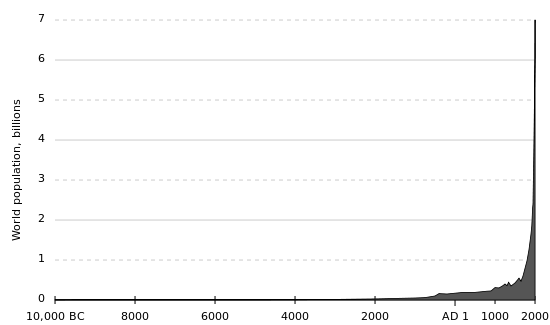
Last year, the world’s population increased to 7 billion, which represents a seven-fold increase in the space of the last two centuries. What’s more, the proportion of people living in urban centers (as opposed to rural) shot up from 3% to almost half of the world’s people. This rate of population growth and redistribution is unprecedented, and is not likely to slow down anytime soon.
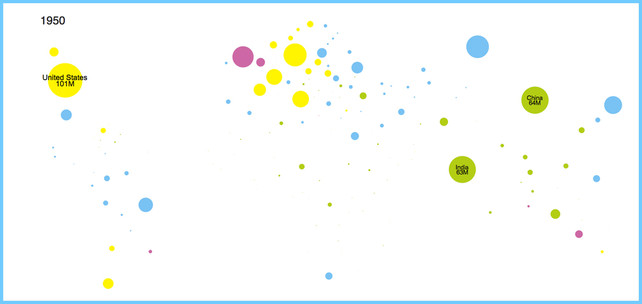
urbanworld_50Consider the following series of infographics which were released by Unicef with the help of the design studio Periscopic. Titled “An Urban World”, they illustrate the issues of population growth and distribution. This interactive, HTML5 visualization of the world covers the years of 1950-2050. But rather than showing our geographic boundaries, every country* is depicted only by their population living in urban environments.

As you can see, each country is represented by a circle that depicts the number of people living in urban environments. As these populations grow, the circles get bigger. And as urban populations get more dense, the circles shift from green to blue to yellow to fuchsia. Immediately, a glaring fact is made clear: the problem is getting worse and at an alarming rate.
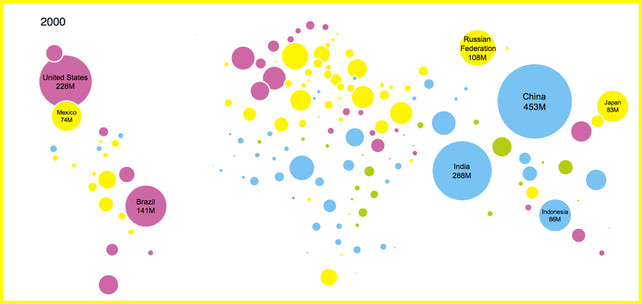
urbanworld_2000In addition, there are several nuggets of info which are staggering and particularly worrisome. For example, by 2050, both China and India will have about a billion people living in cities alone. In addition, since the 1990s, more than 75% of the U.S. population has lived in cities. At one time, the US was an outlier in this regard, but found ourselves joined over the next two decades by France, Spain, the U.K., Mexico, Korea, Australia, and Brazil.

But of course, this growth need not be a bad thing. When all is said and done, humanity has a choice. One the one hand, these megacities can take the form of smartly scaled communities of loosely populated expanses and efficient agriculture. On the other, they could easily take the form of urban slums and underdeveloped countrysides that are stricken by poverty and filthy.

urbanworld_2050It’s a complex issue, no doubt about it, especially when you consider the flip side to the whole equation. As the saying goes, every new life means a new mouth to feed, but also a pair of working hands. What’s more, studies have shown that people living in cities tend to be far more energy efficient, and that energy surplus is usually directed toward more and more technological growth and innovation.

Seen in this light, the massive cities of the future could be hubs for the ongoing development of new energies and creative living solutions. And with more people living in large, connected, interdependent environments, the more business startups, ideas, and contributions were likely to get. Part of the reason we have seen so much progress in solar, piezoelectric motors, and bio-electricity is because of this trend. More growth will conversely mean more clean energy.

overpopulation Quite the paradox, really. Who knew people could be both the cause and solution to the world’s worst problem! In the meantime, feel free to head on over to the Unicef site and watch this interactive infographic. Just press play, and watch the cities of the world swell at the edges, competing for room on the page as they compete for room on this planet.

Also, be sure to take a gander at this infographic from BBC Future that demonstrates the current population of the world’s major cities per square meter, the projected population per square meter by 2050, and the livability rating of the city in question. They even provide some context at the bottom by showing the size of relative spaces – from prison cells to Olympic swimming pools, and comparing that to the average space an urban dweller enjoys.

city_spaces
Sources:
bbc.com, fastcodesign.com
, unicef.org

Powered By The Sun: Solar-Plane Heads to Washington

solar_power1It’s known as the Solar Impulse, a solar-powered airplane that for the past few weeks has been accomplishing an historic first. After touching down at Washington’s Dulles International Airport, the plane and its pilot – André Borschberg, co-founder and CEO of Solar Impulse – completed the fourth leg of their historic flight that has taken them across the US.

The plane took off from Lambert-St.Louis International Airport early Friday morning with Borschberg at the controls. But before heading all the way to Washington, the Solar Impulse made a quick pit stop at Cincinnati Municipal Lunken Airport to avoid “challenging weather.” Bertrand Piccard, pilot and Solar Impulse’s other co-founder, took over the aircraft in Cincinnati and completed the flight to Washington Dulles International Airport on the following day.

solar_impulse_washThe Solar Impulse HB-SIA plane started its journey across America at Moffett Field in Mountain View, California, on May 3. On a mission to promote the importance of clean technology, the solar-powered plane made stops in Phoenix, Dallas, and St. Louis. Having completed the leg to DC, the fifth and final leg of the flight will take place early next month and will end at JFK Airport in New York.

The aircraft is powered by 12,000 solar cells that are built into its wings. These in turn charge its lithium batteries, enabling the plane to fly both day and night for up to 26 hours at a stretch without any on-board fuel. With a wingspan of just over 63 meters (208 feet) and a weight of 1600 kilos (3,527 pounds), it is as wide as a large passenger jet and weighs about as much as a small car.

Andre Borschberg, Bertrand PiccardOnce completed, this flight will not only enter the history books as the longest continuous flight done using clean energy, it will also demonstrate the usages of solar power. And the applications which it will promote are extensive, ranging from solar-powered cars to houses, appliances, devices, and just about anything else… under the sun. I’m sorry, bad pun!

Source: news.cnet.com, (2)

Climate Crisis: Rising Tides and Sinking Cities

climate_changetideWith all the population, urban sprawl, and consumption that we as a species are imposing on the planet, there are those who argue that we’ve entered a new geological era – known as the Anthropocene. It’s an age we’ve lived in since the neolithic revolution and the advent of farming, one where the human race is the dominant force shaping our planet. Since the industrial revolution, this era has been accelerating and escalating, and things are not likely to get better anytime soon.

It is because of this that we need to contemplate what the near future will look like. Consider the recent floods in the Canadian Prairies, or last year’s wildfires which raged across the American midwest. Consider the famines and shortages that led to a world food price crisis in 2007-8 which had serious political consequences, especially in the Middle East (i.e. the Arab Spring).

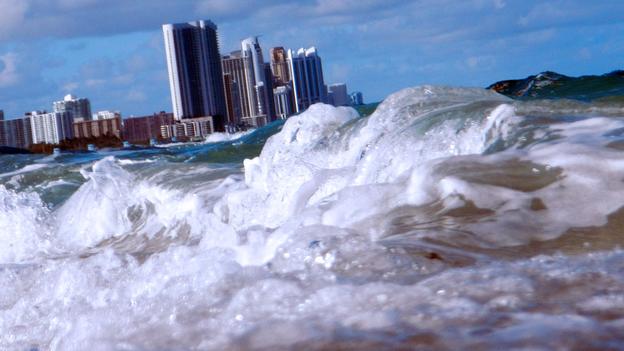
climate_changesandyWhen you add to this the fact that rising tides and the increased risk of storms are already effecting coastal communities in severe ways, you begin to understand just how turbulent the next few decades are likely to be. Already, incidents like Hurricane Katrina and Sandy, which rocked the Gulf of Mexico and the Eastern Seaboard in just the past decade, have shown just how extensive the damage can be.

Historically speaking, cities have been built in fertile river valleys and at river mouths to take advantage of fertile conditions, maritime resources and trade. Agricultural run-offs of sediment, water and nutrients created rich coastal deltas that could support greater food production. This and the good maritime and river connections for trade and transport made these ideal places to live.

Population_curve.svgBut as populations grew, rivers were tapped and diverted for irrigation, industry and canal transport. They were also trapped behind dams and reservoirs for energy and water storage, and depleted by droughts and other extractions. Meanwhile groundwater is increasingly being extracted from beneath cities, and sea levels are rising because of the run-off from the melting of glaciers and thermal expansion of the oceans.

As a result of these changes, many major cities are slowly sinking into the oceans. Our rapid industrialization over the past century has sped these processes, so that now, many urban centers face inundation by storm surges, and we stand to lose many of the most economically important parts of our planet. The loss of these cities will mean a terrible loss of life, economic fallout, and a massive refugee crisis.

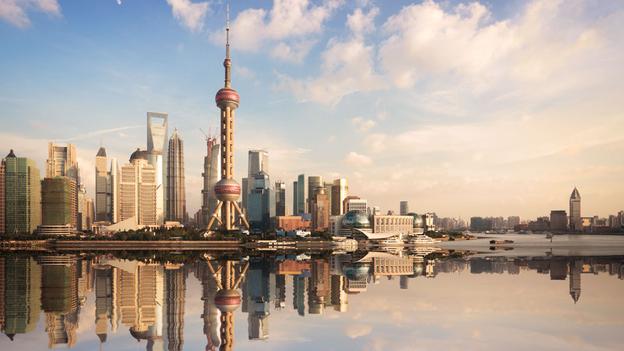
Population_densityCities from Bangkok to New York have already experienced emergency flood conditions, and many more are to follow. Those most at risk include Mumbai, Guangzhou, Shanghai, Miami, Ho Chi Minh City, Calcutta, New York City, Osaka-Kibe, Alexandria and New Orleans. More than 3 billion people currently live in coastal areas at risk of global warming impacts such as rising sea levels – a number expected to rise to 6 billion by 2025.

And as was recently learned, the carbon levels in the upper atmosphere have surpassed 400 ppm (parts per million). The last time the atmosphere boasted this concentration of greenhouse gases was the Pliocene Era, a time when sea levels were as much as 60 to 80 feet higher than they current are. If sea levels rise to that level again, we can say goodbye to all these major cities, as well as any that sit on major waterways.

climate_changeshanghaiIt’s not just a matter of water rising up to swallow the coastlines, you see. As the flooding in southern Alberta and the Canadian Prairies demonstrated this week, there’s also the threat of flooding due to increased precipitation and of sewage systems backing up from increased storms and rainfall. These threats make shoring up river deltas and waterways effectively useless, since its not simply a matter of blocking the tides and rivers.

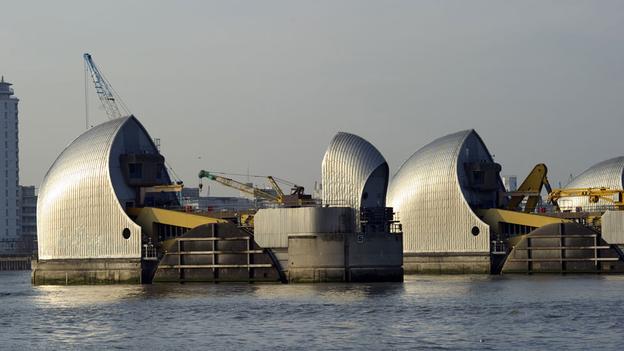
In terms of solutions, a number of major cities are investing in new sea walls, dykes and polders, or high-tide gates – like London’s Thames Barrier – to hold back high waters. In poorer places, people simply endure the problem until they are forced to abandon their homes. As the problem gets worse though, coordinated efforts to rescue people caught in flood zones will need to be mounted.

climate_changedykesAnd there are those who speculate that underwriting the damage will be a waste of time, since no government will be able to afford to compensate its citizens for the untold billions in property damage. In reality, many of these place will simply have to be abandoned as they become unlivable, and those forced out resettled to higher ground or protected communities.

At this point in any lecture on the fate of our planet, people are about ready to abandon hope and hang themselves. Hence, I should take this opportunity to point out that plans for dealing with the problem at the root – cutting our carbon footprint – are well underway. In addition to clean energy becoming more and more feasible commercially, there are also some very viable concepts for carbon capture.

These include inventions like artificial trees and ecoengineering, which will no doubt become absolutely essential in coming years. At the same time though, urban planning and architecture are beginning to embrace a number of alternative and clean technology concepts as part of their design. Not only will future buildings be designed to provide for the needs of their residents – food, water, electricity – in sustainable ways, they will also incorporate devices that can trap smog and turn it into biofuels and other useful products.

Of this, I will be saying more in the next post “Thinking, Breathing Cities of the Future”. Stay tuned!

Source: bbc.com

Towards a Cleaner Future: The Strawscaper and The Windstalk

strawscaperAs the world’s population continues to grow and climate change becomes a greater and greater problem, urban planners and engineers are forced to come up with increasingly creative solutions. On the one hand, the population is expected to rise to an estimated 8.25 billion people by 2030 and 9.25 by 2050, and they will need places to live. On the other, these people will require energy and basic services, and these must be provided in a way that is clean and sustainable.

One such solution is known as the Strawscaper. The brainchild of designer Rahel Belatchew Lerdel, this building would be able to provide its own electricity using only wind and a series of piezoelectric fronds that rustle in the wind. Thanks to this method, the building would get all the power it needs from wind passing through its exterior, and would therefore not need to be attached to the city grid.

strawscaper2In a press release by Belatchew labs, Rahel claimed that the inspiration “came from fields of wheat swaying in the wind”. He also described the building he envisions as one that would give “the impression of a body that is breathing”. Details as to how it would generate its own electricity were also described:

By using piezoelectric technology, a large number of thin straws can produce electricity merely through small movements generated by the wind. The result is a new kind of wind power plant that opens up possibilities of how buildings can produce energy.

strawscaper1The full plan calls for the completion of the Söder Torn, a building in Stockholm that began construction in 1997 but was forcibly scaled down after its architect, Henning Larsen, lost control of the project. Completing it at this point would involve adding an additional 14 stories, thus bringing it from 26 to 40, and adding the piezoelectric fronds to make it electrically self-sufficient.

Though piezoelectricity has never been used in this way, the concept is well understood and backed by a number of research reports. In addition, Belatchew is not the only one considering it as a possible means of generating clean energy. Over in Masdar City, a planned community in Abu Dhabi, something very similar is being proposed to suit their energy needs.

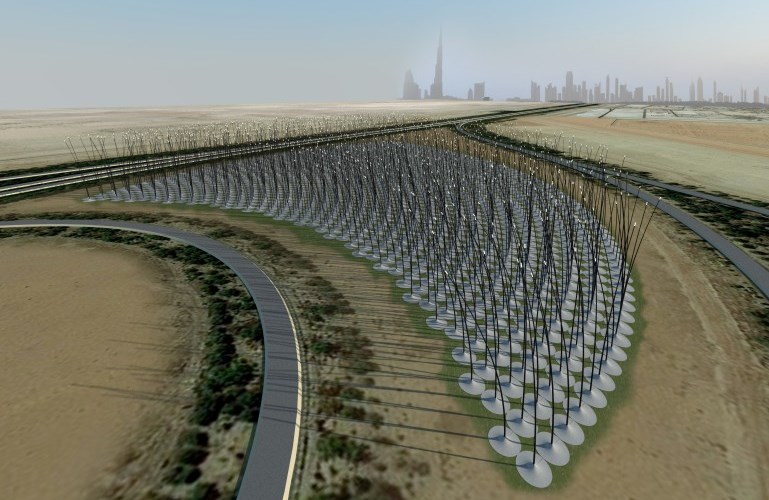
windstalkIt’s known as the Windstalk, another means of generating electricity from wind without the needs for turbines. Though wind farms have long been considered an effective means of generating sustainable energy, resident living near large-scale operations have voiced concerns about the aesthetics and low-frequency vibrations they claim are generated by them. Thus, the concept of the Windstalk, created by New York design firm Atelier DNA.

The concept consists of 1,203 carbon fiber reinforced resin poles which stand 55 meters (180 feet) high and are anchored to the ground in concrete bases. The poles measure 30cm (12 in.) in diameter at the base and taper up to a diameter of 5cm (2 in.) at the top. Each pole is packed with piezoelectric ceramic discs, between which are electrodes that are connected by cables that run the length of each pole.

windstalk-2Thus, instead of relying on turbines to move magnets and create electrical current, each pole merely sways in the wind, compressing the stack of piezoelectric discs and generating a current through the electrodes. And just to let people know how much – if any – power the poles are generating, the top 50cm (20 in.) of each pole is fitted with an LED lamp that glows and dims relative to the amount of electrical power being generated.

As a way to maximize the amount of electricity the Windstalk farm would generate, the concept also places a torque generator within the concrete base of each pole. As the poles sway, fluid is forced through the cylinders of an array of current generating shock absorbers to convert the kinetic energy of the swaying poles into additional electrical energy. But of course, storage is also an issue, since wind power (like solar) is dependent on weather conditions.

windstalk-3Luckily, the designers at Atelier DNA have that covered too. Beneath a field of poles, two large chambers are located, one on top of the other. When the wind is blowing, part of the electricity generated is used to power a set of pumps that moves water from the lower chamber to the upper one. Then, when the wind dies down, the water flows from the upper chamber down to the lower chamber, turning the pumps into generators.

At the moment, the Windstalk concept, much like the Strawscaper, is still in the design phase. However, the design team estimates that the overall electricity output of the concept would be comparable to that of a conventional wind turbine array because, even though a single wind turbine that is limited to the same height as the poles may produce more energy than a single Windstalk, the Windstalks can be packed in much denser arrays.

Though by all accounts, the situation with our environment is likely to get worse before it gets better, it is encouraging to know that the means exist to build a cleaner, more sustainable future. Between now and 2050, when the worst aspects of Climate Change are expected to hit, the implementation of a better and more sustainable means of living is absolutely crucial. Otherwise, the situation will continue to get worse indefinitely, and the prospects of our survival will become bleak indeed!

Sources: fastcoexist.com, gizmag.com

Powered By The Sun: Visualizing Swanson’s Law

solar_power1For decades, solar power has been dogged by two undeniable problems that have prevented it from replacing fossil fuels as our primary means of energy. The first has to do the cost of producing and installing solar cells, which until recently remained punitively. The second has to do with efficiency, in that conventional photovoltaic cells remained inefficient as far as most cost per watt analyses went. But thanks to a series of developments, solar power has been beating the odds on both fronts and coming down in price.

However, to most people, it was unclear exactly how far it had come down in price. And thanks to a story recently published in The Economist, which comes complete with a helpful infographic, we are now able to see firsthand the progress that’s been made. To call it astounding would be an understatement; and for the keen observer, a certain pattern is certainly discernible.

PPTMooresLawaiIt’s known as the “Swanson Effect” (or Swanson’s Law), a theory that suggests that the cost of the photovoltaic cells needed to generate solar power falls by 20% with each doubling of global manufacturing capacity. Named after Richard Swanson, the founder of the major American solar-cell manufacturer named SunPower, this law is basically an imitation of Moore’s Law, which states that every 18 months or so, the size of transistors (and also their cost) halves.

What this means, in effect, is that in solar-rich areas of the world, solar power can now compete with gas and coal without the need for clean energy subsidies. As it stands, solar energy still accounts for only  a quarter of a percent of the planet’s electricity needs. But when you consider that this represents a 86% increase over last year and prices shall continue to drop, you begin to see a very trend in the making.

What this really means is that within a few decades time, alternative energy won’t be so alternative anymore. Alongside such growth made in wind power, tidal harnesses, and piezoelectric bacterias and kinetic energy generators, fossil fuels, natural gas and coal will soon be the “alternatives” to cheap, abundant and renewable energy. Combined with advances being made in carbon capture and electric/hydrogen fuel cell technology, perhaps all will arrive in time to stave off environmental collapse!

Check out the infographic below and let the good news of the “Swanson Effect” inspire you!:

swanson_effectSource: theeconomist.com

Towards a Cleaner Future: The Molten Salt Reactor

nuclear-power

What if you heard that there was such a thing as a 500 Megawatt reactor that was clean, safe, cheap, and made to order? Well, considering that 500 MWs is the close to the annual output of a dirty coal power station, you might think it sounded too good to be true. But that’s the nature of technological innovations and revolutions, which the nuclear industry has been in dire need of in recent years.

While it is true that the widespread use of nuclear energy could see to humanity’s needs through to the indefinite future, the cost of assembling and maintaining so many facilities is highly prohibitive. What’s more, in the wake of the Fukushima disaster, nuclear power has suffered a severe image problem, spurred on by lobbyists from other industries who insist that their products are safer and cheaper to maintain, and not prone to meltdowns!

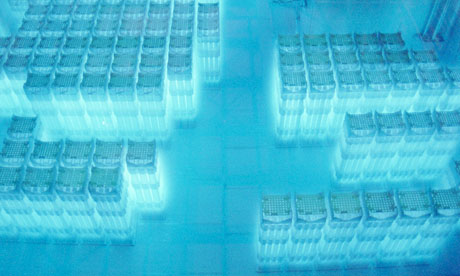
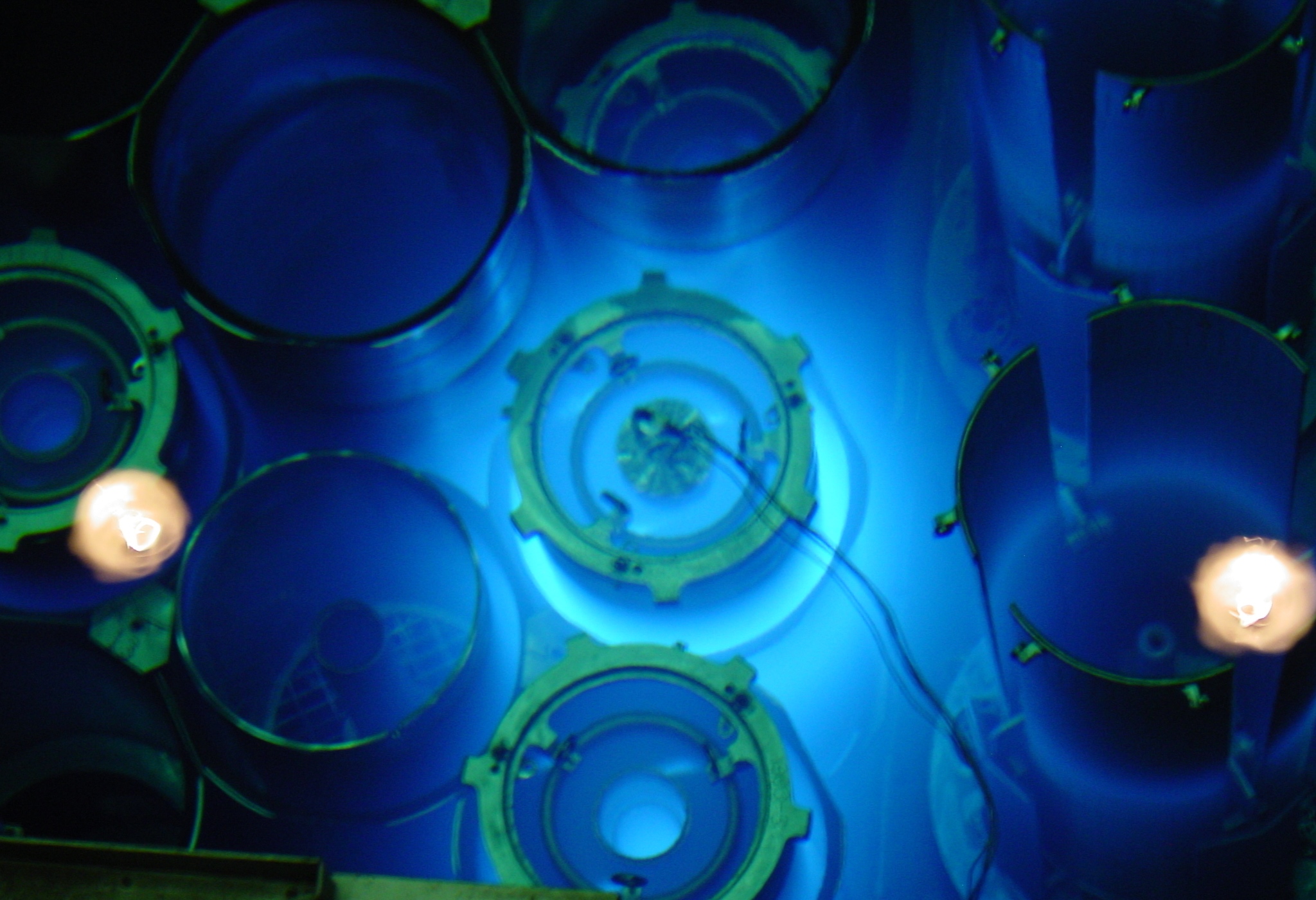
Nuclear MOX plant : recycling nuclear waste : Submerged Spent Fuel Elements with Blue Glow

As a result of all this, the stage now seems set for a major breakthrough, and researchers at MIT and Transatomic’s own Russ Wilcox seems to be stepping up to provide it. Last year, Wilcox said in an interview with Forbes that it was “a fabulous time to do a leapfrog move”. Sounded like a bold statement at the time, but recently, Transatomic went a step further and claimed it was mobilizing its capital to make the leap happen.

Basically, the plan calls for the creation of a new breed of nuclear reactor, one which is miniaturized and still produces a significant amount of mega-wattage. Such efforts have been mounted in the past, mainly in response to the fact that scaling reactors upwards has never resulted in increased production. In each case, however, the resulting output was quite small, usually on the order of 200 MW.

???????????????????????????????

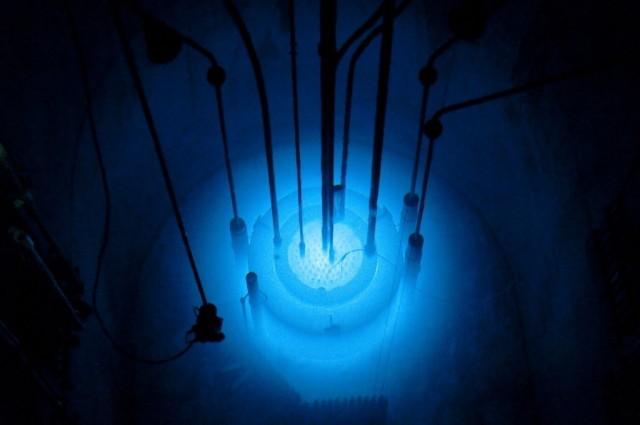
Enter into this the Transatomic’s Molten Salt Reactor (MSR), a design that is capable of producing half the power of a large-scale reactor, but in a much smaller package. In addition, MSRs possess a number of advantages, not the least of which are safety and cost. For starters, they rely on coolants like flouride or chloride salts instead of light or heavy water, which negates the need to pressurize the system and instantly reduces the dangers associated with super-heated, pressurized liquids.

What’s more, having the fuel-coolant mixture at a reasonable pressure also allows the mixture to expand, which ensures that if overheating does take place, the medium will simply expand to the point that the fuel atoms too far apart to continue a nuclear reaction. This is what is called a “passive safety system”, one that kicks in automatically and does not require a full-scale shutdown in the event that something goes wrong.

moltensalt_reactor1

Last, but not least, is the addition of the so-called freeze plug – an actively cooled barrier that melts in the event of a power failure, leading all nuclear material to automatically drain into a reinforced holding tank. These reactors are “walk away safe,” meaning that in the event of a power failure, accident, or general strike, the worst that could happen is a loss of service. In a post-Fukushima industry such disaster-proof measures simply must be the future of nuclear power.

Then, there is the costs factor. Transatomic claims their reactor will be capable of pumping out 500 megawatts for a total initial cost of about $1.7 billion, compared to 1000 megawatts for an estimated $7 billion. That’s about half the cost per megawatt, and the new reactor would also be small enough to be built in a central factory and then shipped to its destination, rather than requiring a multi-year construction project to build the plant and reactor on site.

The project has raised $1 million dollars of investment so far, and Transatomic appears to be putting all their eggs in this one basket. Their researchers also claim their design is production-ready and they are just waiting for orders to come in. And given the current energy crisis, it’s not likely to be long before government and industry comes knocking!

Source: Extremetech.com

Environment Alert: Atmospheric CO2 Reaches Record High

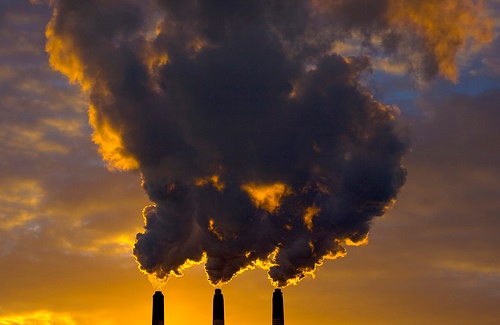
airpollutionIt’s no secret that humanity, like all terrestrial organisms, has a symbiotic relationship with the Earth’s environment. And whereas the fortunes of entire civilizations and species once depended upon the natural warming and cooling cycle, for the past few centuries, human agency has an increasingly deterministic effect on this cycle. In fact, since the beginning of the Industrial Revolution, just 250 years ago, human industry increased the levels of carbon dioxide in the atmosphere by more than 40 percent.

And now, it seems that humanity has reached a rather ignominious and worrisome milestone. Working at the Mauna Loa Observatory, an atmospheric research facility, scientists announced Friday that for the first time in millions of years, the level of the carbon dioxide in the atmosphere had reached 400 parts per million on average over the course of a full 24-hour day. The last time there were these kinds of CO2 levels was approximately 3 million years ago, and that has many worried.

co2_levelsFor some time now, climatological scientists have warned of the dangers of reaching this limit, mainly because of the ecological effects it would have. The Kyoto Protocol, an attempt during the late-90s to curb fossil fuel emissions on behalf of the industrialized nations of world, specifically set this concentration as a target that was not to be surpassed. However, with nations such as Canada, the US and China expressing criticism or pulling out entirely, it was clear for some time that this target would not be met.

And as mentioned already, the planet has not seen these kind of CO2 levels since the Pliocene Era, a time of warmer temperatures, less polar ice, and sea levels as much as 60 to 80 feet higher than current levels. If conditions of this nature are permitted to return, the human race could be looking at some very serious problems in the near future.

trafficFor starters, much of the world’s population and heavy industry is built along coastlines. With sea levels reaching an additional 60-80 feet, several million people will be displaced over the course of the next few decades. What’s worse, inland areas that have river systems connected to the sea are likely to experience severe flooding, leading to more displacement and property damage.

Those areas that find themselves far from the coast are likely to experience the opposite effects, increased heat and dryness due to increased temperatures and the loss of cloud cover and precipitation. This in turn will result in widespread drought, wildfires, and a downturn in food production. And let’s not forget that rising temperatures also mean the spread of disease and parasites, ones that are typically confined to the tropical areas of the world.

china smog 2013 TV bldgIf any of this is starting to sound familiar, it’s because that is precisely what has been happening for the past few decades, and with increasing frequency. Record hot summers, food shortages in several parts of the world, flooding, wildfires, hurricanes, the West Nile Virus, Avian Bird Flu, Swine Flu, SARS, rising sea levels – these are all symptoms of a world where increasing output of Greenhouse Gases mean increasing temperatures and ecological effects.

But of course, before anyone feels like the situation is hopeless, this news does come with a silver lining. For one, the confirmation that we have now reached 400 ppm is likely to spur governments into greater action. Clearly, our current means are not working for us, and cannot be counted on to see us into the future. What’s more, a number of clean energy concerns are well under way, providing us with viable and cost effective alternatives.

solar_array1

The growth in solar energy in just the last few years has been staggering, and carbon capture technology has been growing by leaps and bounds. What’s more, upstarts and clean energy labs no longer need government support, though public pressure has yeilded several positive returns in that area. Even so, crowd-funding is ensuring that growth and innovation that would not be possible a few years ago is now happening, so we can expect the current rate of progress to continue here as well.

And of course, geoengineering remains a viable possibility for buying our planet some time. In addition to clean energy (putting less CO2 in the air), and carbon capture (removing the CO2 there), there are also a number of possibilities for Global Dimming – the opposite of Global Warming – to slow down the process of transformation until we can get our act together. These include evaporating oceanic water to lower sea levels and ensure more cloud cover, triggering algae blooms to metabolize more CO2, and dumping sulfur dioxide (SO2) in the air to combat the warming effect.

But in the end, nothing short of serious and immediate changes will ensure that decades and centuries from now, the ecological balance – upon which all species depend – is maintained. Regardless of whether you think of humanity as the masters or the children of this planet, it’s clear we’ve done a pretty shitty job in both capacities! It’s time for a change, or the greatest natural resource in our corner of the universe, Earth itself, is likely to die out!

Source: fastcoexist.com

Towards a Cleaner Future: Generating Electricity with Steps

pavegen1

This years Boston Marathon was the site of a terrible tragedy, as runners reaching the finish line were met with the worst terrorist attack on American soil since September 11th took place. Not only was this gruesome attack an injustice of immense proportions, it also overshadowed an important story that took place overseas, one which also involved a marathon and a potential breakthrough for renewable energy.

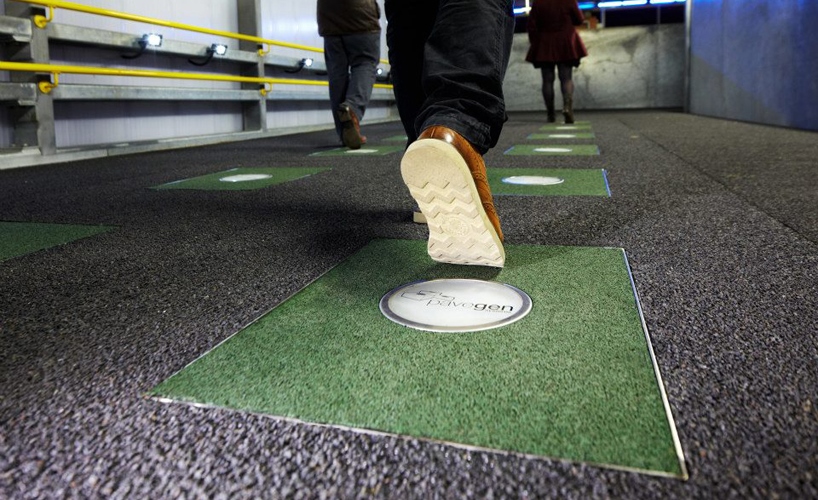
Here, the runners and spectators who waited at the finish line were also privy to something unexpected. But in this case, it involved a series of rubber panels which turned the runners steps into actual electricity. Known as Pavegen, a material invented by 27 year-old Laurence Kemball Cook and composed of recycled tires, this demonstration was the largest test to date of the experimental technology. And though the results were modest, they do present a frightening amount of potential for clean, renewable energy.

pavegen4

Essentially, a single step on a Pavegen pad is said to generate up to 8 watts of electricity per second. Based on that, and at a speed of one step a second, it would take a single pedestrian 40 minutes to charge a smartphone. However, a small army of pedestrians could generate considerably more – say for example, 50,000+ people taking part in a marathon.

Here too, the results fell short of their intended goal. Schneider Electric – who commissioned the project – held a contest on Facebook and said if they generated over 7 kilowatt-hours of energy, they would make a donation to Habitat for Humanity. As it turned out, all those runners generated more like two-thirds of that: 4.7 kilowatt-hours. Still, the potential is there.

pavegen5

Already the Simon Langton Grammar School for Boys in Kent, England, has contracted with Pavegen to become the site of the first permanent installation of the material. And as the video below demonstrates, it has the ability to at least generate enough power to keep the lights on in a building where hundreds of people take thousands of steps daily.

Given time and some improvement in the yield of the pads, this technology could very well take its place alongside solar, wind, and other renewable sources of power that will bring electricity to the cities of the future. Imagine it if you will, entire sidewalks composed of electricity-generating material, turning every step its pedestrians take into clean energy. I for one think that’s the stuff of bona fide science fiction story (it’s mine, you can’t have it!).

And be sure to check out this promotional video from Pavegen who filmed their floor at work in Simon Langton:


Source:
fastcoexist.com

Towards a Cleaner Future: The Bloom Aquatic Habitat

bloom_habitatWhen it comes to addressing Climate Change, scientists have known for some time that changing our habits is no longer enough to meet the challenge. In addition to adopting cleaner fuels and alternative energy, carbon capture – removing carbon dioxide gas from the air – will have to become an active part of our future habits. In addition to geoengineering processes, such as introducing sulfur dioxide into the upper atmosphere, carbon capturing technologies will likely need to be built into our very habitats.

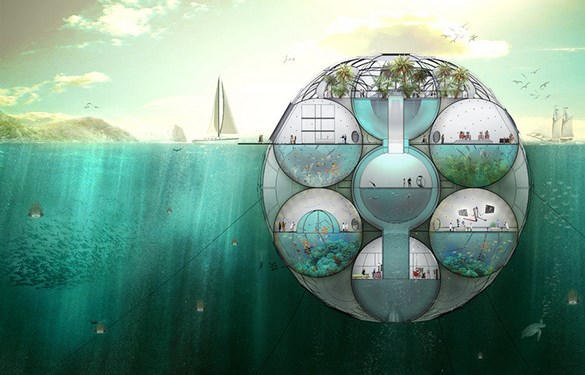
And that’s where the Bloom comes in, an artificial coastline habitat that will also generate carbon-consuming phytoplankton. In a world characterized by rising ocean tides, shrinking coast lines, changing climates, and extreme weather, a water-based living space that can address the source of the problem seems like an ideal solution. In addition to being waterborne, the Bloom is hurricane proof, semi-submersible, and even consumes pollution.

bloom_underwaterDesigned by the French firm Sitbon, these structures are a proposal for a research station moored to the seabed with a system of cables and would both house researchers and grow carbon-dioxide absorbing phytoplankton. While it’s more of an experiment than a vision for what housing looks like in the future, their goal is to install them in the Indian Ocean as part of an attempt to monitor tsunamis and absorb carbon dioxide.

Alongside skyscrapers that utilize vertical agriculture, carbon-capturing artificial trees, and buildings that have their own solar cells and windmills, this concept is part of a growing field of designs that seeks to incorporate clean technology with modern living. In addition, for those familiar with the concept of an Arcology, this concept also calls to mind such ideas as the Lillypad City.

arcology_lillypad

In this case and others like it, the idea is building sustainable habitats that will take advantage of rising sea levels and coastlines, rather than add to the problem by proposing more urban sprawl farther inland. As the creators wrote in a recent press statement:

Bloom wishes to be a sustainable answer for rising waters by decreasing our carbon footprint while learning to live in accordance with our seas. Every factory would have its own bloom allowing it to absorb the CO2 that it created.

And even if it doesn’t pan out, funding for the design and its related technologies will lead to innovation in the wider field of sustainable architecture and clean energy. And who knows? Might make some really awesome seaborne property!

Source: fastcoexist.com

The Future is Here: The Hybrid Tank!

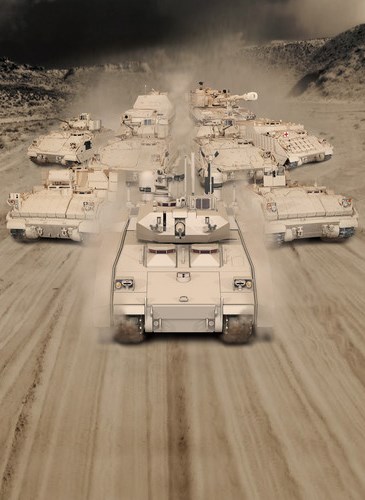
hybrid_IFVIt’s a strange thing when military planners and environmentalists find themselves seeing to eye to eye. And yet, the latest crop of proposals being considered by the Pentagon to replace their aging vehicles includes a design for a hybrid tank. Designed to replace the venerable M2 Bradley Infantry Fighting Vehicle, the GFV (Ground Fighting Vehicle) is a gas-electric hybrid that will save the army on gas and reduce their impact on the environment.

In truth, the GFV is but one of several clean energy alternatives that is being considered by the Pentagon. As far as they are concerned, the next-generation of military hardware will need to take advantage of advances made in solar, electric, hybrid and other technologies. But of course, this is not motivated out of a desire to save the environment, but to save on fuel costs.

hybrid_IFVsideWith peak oil supplies diminishing worldwide and the only remaining sources confined to geopolitcally unstable regions, the current high-cost of gasoline is only likely to get worse in the near future. What’s more, the Pentagon and every other army in the developed world understands the dangers of Climate Change, with most scenarios taking into account dwindling fuel supplies and wars being fought for what little will be left. Little wonder then why they would consider cutting their consumption!

As for the GFV, the design calls for a large, highly modifiable ground combat vehicle that grew out of years of military and defense contractor studies. Designed by BAE Systems, the engine is the result of collaboration with a number of firms who helped adapt the design of a civilian hybrid gas-electric engine. Compared to competing designs, it presents a number of advantages.

hybrid_IFVfrontIf BAE’s proposal is adopted by the military, the Defense Department is expected to save approximately 20% on its fuel costs, compared to an alternate GCV vehicle design that uses traditional propulsion. Additional advantages include the ability to switch to pure electric mode for short periods of time, the elimination of significant heat traces from the battlefield, and the ability to operate more quietly at night.

In a recent interview, BAE Systems’ Mark Signorelli further indicated the advantages of the design:

There are also 40% fewer moving parts with higher reliability, requiring less maintenance and decreasing vehicle lifetime cost. Vehicle acceleration, handling and dash speed are improved even over fuel hungry turbine systems. Finally, the system’s ability to provide large amounts of electrical power accommodates the integration of future communications and weapons technology for the next 30 to 40 years.

What’s more, the GFV is capable of undergoing extensive modification, which is a strength in and of itself. With just a few added accessories, the vehicle can work as a tank, hence why it is named a Ground Fighting Vehicle (GFV) and not an Infantry Fighting Vehicle (IFV), which is specifically designed to transport and defend infantry.

hybrid_IFVfleetThe vehicle can also be augmented with electric armor, jammers, and experimental energy weapons thanks to the in-vehicle electric power source. Most of these weapons are currently being developed by the military and are expected to be making the rounds in the not-too-distant future. As such, BAE also stressed that their vehicles could be operational for decades to come without becoming obsolete.

So telling when the decision will be made, thanks to the vagaries of politics and the military-industrial complex. However, the scuttlebutt indicates that the odds of the BAE design being adopted are good, and the company spokespeople indicated that the first GFV’s could be rolling off the line by 2020 and fielded by 2022. I guess Prius owners will have new reasons to brag!

Source: fastcoexist.com