Powered by the Sun: The Artificial Leaf

solar_power1Despite progress made in recent decades, solar power still has some obstacles to overcome before it can be completely adopted. Thanks to several innovations, the price of manufacturing and installing solar panels has dropped substantially, intermittency remains a problem. So long as solar power remains limited by both geography and weather, we can expect to remain limited in terms of use.

And short of building Space-Based Solar Power (SBSP) arrays, or producing super-capacitor batteries with graphene – both of which are being explored – the only other option is to find ways to turn solar power into other forms of usable fuel. When the sun isn’t shining, people will need something else to power their homes, appliances, heating and AC. And given that the point is to reduce pollution, it will also have to be clean.

??????And that’s precisely what Daniel Nocera and his team are doing over at the University of Harvard. Their “artificial leaf” – a piece of silicon (solar cell) coated with two catalysts – is a means of turning sunshine into hydrogen fuel. Basically, when sunlight shines in, the leaf splits the water into bubbles of hydrogen and oxygen on each side, which can then be used in a fuel cell.

Efforts in the past to build similar solar cells have faltered, due largely to the costs involved. However, with the price of solar-related materials dropping in recent years, this latest device may prove commercially viable. And built to a larger scale, the device could provide a super-cheap and storable energy source from which could then be piped off and used in a fuel cell to make electricity. And combined with arrays of solar panels, we could have the energy crisis licked!

artificial-leafNocera and his team first announced the technology back in 2011, back when he was still a chemist at MIT. Since that time, they have published a follow-up paper showing how the team has improved the leaf’s efficiency, laying out future challenges, and how these might be overcome. Foremost amongst these are a field trial, with the eventual aim of building a commercial device for the developing world.

Beyond that, Nocera hopes to commercialize the technology through his company, the Massachusetts-based Sun Catalytix. Once realized, he plans to to put his dream of giving the poor “their first 100 watts of energy” into action. Here’s hoping he succeeds. The poor need power, and the environment needs a break from all our polluting!

Thank you all for reading the latest installment of PBTS! And be sure to check out this video of the artificial leaf in action:
The Future is Here: The Hyundai E4U Eggmobile

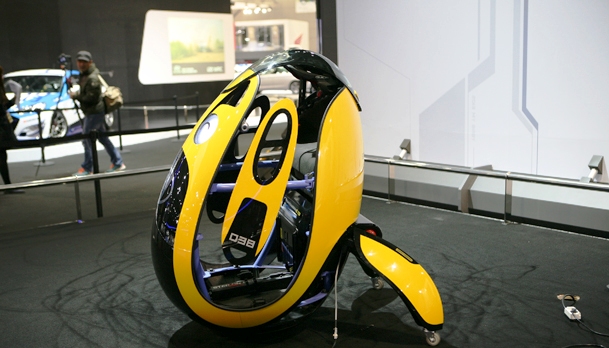
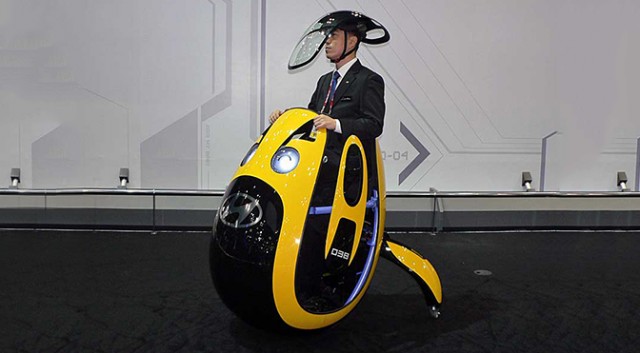
hyundai-e4u-640x353As the world’s cities continue to grow, and air quality and Climate Change continue to worsen, people will need to find cleaner and more effective ways of getting from point A to point B. One option which is being widely considered is personal transit: vehicles that are smaller, smarter, convenient, and more energy-efficient than automobiles. That’s the concept behind the Hyundai E4U Eggmobile, a personal vehicle that merges the convenience of a bicycle with a car.

Another important aspect of the Hyundai concept vehicle is to create a personal transport that will succeed where Mopeds, scooters, and Segways have failed. Though these vehicles are all perfectly good means of getting around, they have not made much of a dent in most major cities, which are still clogged with cars and have public transit that is choked by daily armies of commuters.

hyundai_e4u-640x592The Eggmobile debuted at the Seoul Motor Show this year, where Hyundai was amongst many other automobile makers that were presenting ideas for personal mobility vehicles (PMV). Amongst its advantages is the ability to maneuver in any direction, even though its motor only moves in one. This is made possible by the “semisphere” that the Eggmobile uses, which unlike conventional tires, can rotate in all directions.

When the top of the semisphere is touching and vertically aligned to the ground, the vehicle moves by rotating the semisphere horizontally. Meanwhile, the two rear-mounted training wheels prevent it from spinning uncontrollably. In order to move the vehicle in any direction without hindrance from the training wheels, the E4U simply tilts, much in the same way a helicopter works by tilting its rotors.

hyundia_e4UThe driver, meanwhile, propels the vehicle with their feet, inclining them this way or that in order to generate propulsion. The severity of the tilt determines how fast the vehicle is to go. If this sounds a bit complicated, that’s because it is. At the Motor Show, the demonstration model only moved at a walking pace and the early reports say controlling one will take some getting used to.

What’s more, Hyundai has not yet released the crucial info on what kind of fuel the Eggmobile uses. However, odds are good it is either powered by a clean burning fuel or electricity. Only time will tell. The same holds true of when Hyundai plans to release it, or whether they truly intend to spearhead a fleet of PMVs with this particular mobile. However, given the time and money they invested in this concept, it’s hard to imagine they only pulled it for a single auto show.

Sources: Extremetech.com, news.cnet.com


Powered by the Sun: Nanotech Solar Cells

???????????????????????????????????????????????????????????????????????????????????????????????????????????????????????????????????????????????????????????????????????????????????????????????????????????????????????????????????????????????????????????????????????????????????????????????????????????????????????????????????????????????????????????????????????????????????????????????????????????????????????????????????????????With every passing year, interest in solar power has been growing by leaps and bounds. Given the impacts of Climate Change, widespread droughts, tropical storms, wildfires and increasing global temperatures, this should not come as a surprise. But an equally important factor in the adoption of clean energy alternatives has to do with improvements that are being made which will make it more efficient, accessible, and appealing to power companies and consumers.

Three such recent developments come to us from Standford, MIT, and the Neils Bohr Institute, respectively; where researchers have announced new ways using nanoprocesses to boost the yield of individual solar cells. In addition to cutting costs associated with production, installation, and storage, increasing the overall electrical yield of solar cells is a major step towards their full-scale implementation.

solar_nanoFirst, there’s MIT’s new concept for a solar cell, which uses nanowires to massively boost the efficiency of quantum dot photovoltaic cells. Quantum dots – which are basically nano-sized crystals of a semiconducting material – are already being considered as an alternative to conventional silicon cells, since they are cheaper and easier to produce.

However, until recently they have been a letdown in the efficiency department, lagging significantly behind their silicon counterparts. By merging zinc oxide nanowires into the design of their quantum dot photovoltaic cells, the MIT researchers were able to boost the current produced by 50%, and overall efficiency by 5%.  Ultimately, their goal is to get that up to 10%, since that is considered to be the threshold for commercial adoption.

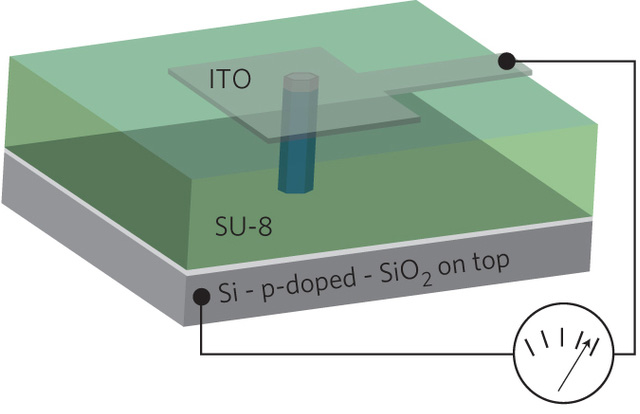
gallium-arsenide-nanowire-solar-cellMeanwhile, researchers at the Niels Bohr Institute in Denmark and EPFL in Switzerland announced that they have built solar cells out of single nanowires. In this case, the process involved growing gallium-arsenide (GaAs) wires on a silicon substrate, and then completing the circuit with a transparent indium tin oxide electrode, which are currently employed in the creation of photovoltaic cells and LEDs on the market today.

Prior to these development, nanowires were being researched mainly in conjunction with computer chips as a possible replacement for silicon. But thanks to the combined work of these researchers, we may very well be looking at solar cells which are not only hair-thin (as with the kind being developed by Penn State University) but microscopically thin. And much like the research at the University of Oslo involving the use of microbeads, this too will mean the creation of ultra-thin solar cells that have a massive energy density – 180 mA/cm2, versus ~40 mA/cm2 for crystalline silicon PVs.

solar_boosterAnd last, but not least, there was the announcement from Stanford University of a revolutionary new type of solar cell that has doubled the efficiency of traditional photovoltaic cells. This new device uses a process called photon-enhanced thermionic emission (PETE) that allows for the absorption of not only light, but heat. This combination makes this new type of cell the equivalent of a turbocharged solar panel!

pete-photovoltaic-thermionic-diagram-stanfordIn conventional cells, photons strike a semiconductor (usually silicon), creating electricity by knocking electrons loose from their parent atoms. The PETE process, on the other hand, uses the gallium arsenide wafer on top gather as much sunlight as possible, creating a lot of excited electrons using the photovoltaic effect. The underside, which is composed of nanoantennae, emits these photoexcited electrons across a vacuum to the anode with gathers them and turns them into an electrical current.

Beneath the anode is a of heat pipe that collects any leftover heat which could be used elsewhere. One of the easiest applications of PETE would be in concentrating solar power plants, where thousands of mirrors concentrate light on a central vat of boiling water, which drives a steam turbine. By concentrating the light on PETE devices instead, Stanford estimates that their power output could increase by 50%, bringing the cost of solar power generation down into the range of fossil fuels.

Though there are still kinks in their design – the cell has a very low 2% rate of energy efficient thus far – the researchers at Stanford are making improvements which are increasing its efficiency exponentially. And although their planned upgrades should lead to a solar cell capable of operating in extremely hot environments, they stress that the goal here is to build one that is capable of gathering power in non-desert environments, such as Spaced-Based solar arrays.

Combined with improved production methods, storage capacities, and plans to mount solar arrays in a variety of new places (such as on artificial islands), we could be looking at the wholesale adoption of solar power within a few years time. Every day, it seems, new methods are being unveiled that will allow Solar to supplant fossil fuels as the best, cheapest and most efficient means of energy production. If all goes as planned, all this could be coming just in time to save the planet, fingers crossed!

Sources: Extremetech.com, (2)

Powered By the Sun: The Solar Island

solar4As Climate Change becomes an ever increasing problem, nations are turning to alternative technologies and geological engineering to offset the effects. This means significant investments being made in technologies such as solar cells and other clean energies. However, the question of where to put all the resulting arrays is one which cannot be overlooked. Since we are trying to save the environment, it doesn’t exactly make sense to clear more tracts of land to make room for them.

Already, there is a land rush to build more solar power plants all around the world. In the U.S., the Department of Interior is currently processing leases for roughly 1.8 million acres in the West alone. Globally, solar photovoltaic (PV) capacity has been doubling annually, with another 16 gigawatts of power added just in 2010. At this rate, and considering how much space is needed to set up the average array, we could run out of room real fast!

solar_islandAnd yet, the one thing that accounts for the majority of the planet’s surface area has been sadly neglected up until this point. I am of course referring to the oceans, lakes, reservoirs, retention ponds, and all other natural or unnatural bodies of water. As they account for over three-quarters of the planet’s real estate, they are quickly being targeted as the new frontier for floating solar power plants, with companies and locations being considered from India to Europe, to Napa Valley.

One of the more ambitious plans comes to us from Switzerland, will a proposed array will be built on Lake Neuchâtel later this year. As a collaborative effort between the solar developer Nolaris and the Swiss energy company Viteos, the proposed floating array will be the first of three set upon the lake. Each island will measure some 25 meters in diameter, be built from plastic and steel, and support 100 photovoltaic cells that will rotate with the sun.

solar_island1What’s more, this is just one of several ideas under consideration. Other companies pursuing this concept are favoring floating pontoons with individual photovoltaic assemblies on the water’s surface. In this case, concentrating lenses will focus the sunlight on a solar cell while a simple motor, light sensors, and software rotate the cells to maximize power generation. In tropical climes, where many pilot projects are being considered and storms are quite common, the entire array will be able to submerge as the winds rise.

In other places, where land is particularly expensive, floating solar may even come to rival its land-based counterpart. In Australia, for example, a company named Sunengy is pushing the concept of “Liquid Solar Array” technology, which they claim will be able to match the power output of a typical hydroelectric dam and cover less than 10% of the reservoir’s surface. They are currently teaming up with the Indian giant Tata Power to build India’s first floating solar power plant, and estimate that if India used just 1% of its 11,500 square kilometers of captured water it could generate the equivalent of 15 large coal-fired power stations.

As the saying goes, necessity is the mother of invention. And as it stands, planet Earth needs energy, and needs to generate it in such a way that won’t mess up the environment any further or usher in the scourge of Climate Change. When the survival of our planet and our species is at stake, you can expect people to get very inventive. Very, very inventive!

Source: factcoexist.com

Powered by the Sun: The Ion Cannon Solar Panel

solar5Hello and welcome back to my ongoing series of PBTS, dedicated to all the advancements being made in solar power. Today’s entry is an interesting one, and not just because it involves an ion cannon… well sort of! It comes to us courtesy of Twin Creeks, a solar power startup that has come up with a revolutionary way to generate photovoltaic cells that are half the price of those currently found on the market.

For many decades, solar power has been held back due to the fact that the cost has been prohibitive compared to fossil fuels and coal. By offering yet another way of cutting the cost of their production, Twin Creeks is bringing this clean alternative one step closer to realization. Ah, but here’s the real kicker: turns out that this revolutionary process involves a hydrogen ion particle accelerator!

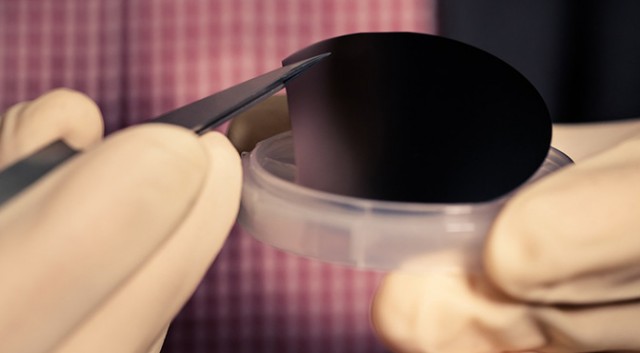
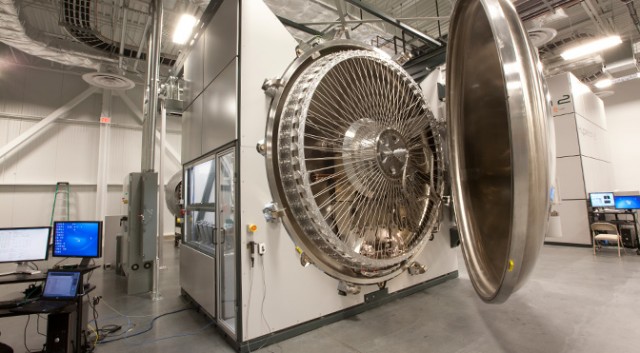
hyperion-particle-accelerator1-640x353As has been mentioned in this series before, conventional solar cells are made from slicing 200-micrometer-thick (0.2mm) sections of silicon wafer from a large block. Then electrodes are added, a sheet of protective glass is placed on top, and they are placed in the sun to generate electricity. But of course, this approach has two serious drawbacks. One, a great deal of silicon is wasted in the production process. Two, the panels would if they were thinner than 200 micrometers, but silicon is brittle and prone to cracking if it’s too thin.

And this is where Twin Creeks ion cannon, aka. Hyperion, comes into play. It’s starts with a series of 3-millimeter-thick silicon wafers being placed around the outside edge of the big, spoked wheel (see above). The particle accelerator then bombards these wafers with hydrogen ions and, with exacting control of the voltage of the accelerator, the hydrogen ions accumulate precisely 20 micrometers from the surface of each wafer.

twin-creeks-hyperion-wafer-ii-flexibleA robotic arm then transports the wafers to a furnace where the ions expand into hydrogen gas, which cause the 20-micrometer-thick layer to shear off. A metal backing is applied to make it less fragile as well as highly flexible (as seen on the right). The remaining silicon wafer is taken back to the particle accelerator for another dose of ions. At a tenth of the thickness and with considerably less wastage, it’s easy to see how Twin Creeks can halve the cost of solar cells.

This process has been considered before, but the cost of a particle accelerator has always been too high. However, Twin Creeks got around this by building their own, one which is apparently “10 times more powerful” (100mA at 1 MeV) than anything on the market today. Because of this, they are able to guarantee a product that is half the cost of solar cells currently coming out of China. At that price, solar power truly begins to encroach on standard, fossil-fuel power.

But, of course, there still needs to be some development made on producing solar cells that can store energy overnight. Weather strictures, such as the ability to generate electricity only when its sunny out, remains another stumbling block that must be overcome. Luckily, it seems that there are some irons in that fire as well, such as research into lithium-ion and nanofabricated batteries. But that’s another story and another post altogether 😉

Stay tuned for more sun-powered hope for the future!

Source: Extremetech.com

Masdar City

Imagine a city that runs entirely on solar energy and other renewable energy source. A city that generates entirely no carbon and no waste, with mass transit that relies on electronic, computer-controlled pod cars. That is the concept behind Masdar City, a planned urban environment located 17 km south-east of the capital of the United Arab Emirates (Abu Dhabi).

Designed by the British architectural firm Foster and Partners, and with the majority of the seed capital coming from the government of Abu Dhabi, Masdar is a blueprint for future cities based on sustainability, clean energy, and the latest and best in manufacturing, recycling and waste management technology. On top of that, it will contain some of the most advanced facilities in the world, dedicated to science, commerce and eduction.

In essence, it is the answer of what to do about rapidly advancing technology, urban growth, and development in the developing world. Point of interest include:

Masdar Institute:
Wouldn’t you know it? At the heart of a city based on sustainability and clean energy is an institute dedicated to the furtherance of these very things. Known as the Masdar Institute of Science and Technology (MIST), this research-oriented university was developed in conjunction with the Massachusetts Institute of Technology and focuses on the development of alternative energy, sustainability, and the environment.

In addition, its facilities use 70% less electricity and potable water than normal buildings of similar size and is fitted with a metering system that constantly observes power consumption. It’s full range of programs include Chemical Engineering, Mechanical Engineering, Material Science and Engineering, Engineering Systems and Management, Water and Environmental Engineering, Computing & Information Science, Electrical Power Engineering and Microsystems.

Renewable Energy:
In addition to its planned 40 to 60 megawatt solar power plant, which will power further construction projects, with additional solar panels to  be placed on rooftops, for a total output of 130 megawatts. In addition, wind farms will be established outside the city’s perimeter capable of producing up to 20 megawatts, and the city intends to utilise geothermal energy as well.In addition, Masdar plans to host the world’s largest hydrogen power plant, a major breakthrough in terms of clean energy!

Water Management:
When it comes to water consumption, that too will be handled in an environmentally-friendly way that also utilizes solar energy. At the hear of this plan lies a solar-powered desalination plant. Approximately 80 percent of the water used will be recycled and waste greywater will be reused for crop irrigation and other purposes.

Waste Management:
As already noted, the city will also attempt to reduce waste to zero. Biological waste will be used to create nutrient-rich soil and fertiliser, and plans exist to incinerate it for the sake of generating additional power. Industrial waste, such as plastics and metals, will be recycled or re-purposed for other uses. The exterior wood used throughout the city is Palmwood, a sustainable hardwood-substitute developed by Pacific Green using plantation coconut palms that no longer bear fruit.

Transportation:
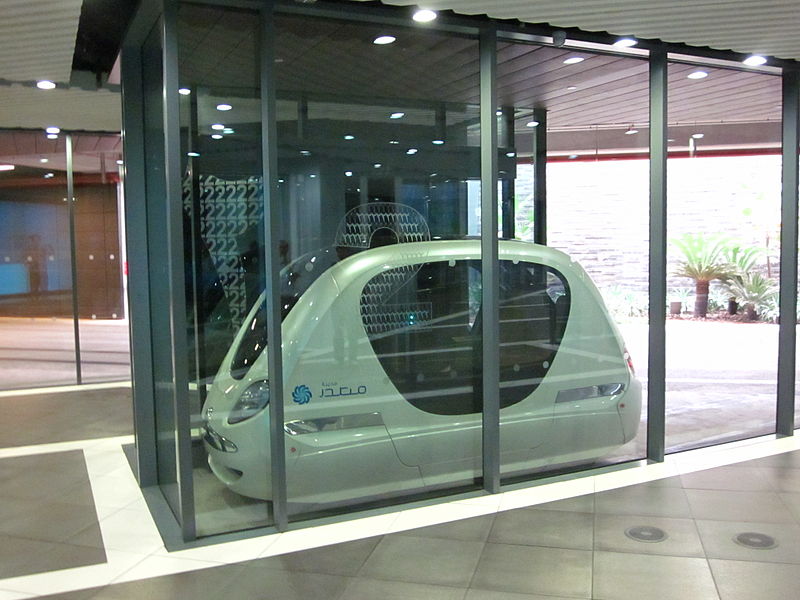
Initially, the planners for Masdar considered banning the use of automobiles altogether, focusing instead on mass transit and personal rapid transit (PRT) systems, with existing road and railways connecting to other locations outside the city. This systems utilize a series of podcars, designed by the company 2getthere, contains 10 passenger and 3 freight vehicles and serves 2 passenger and 3 freight stations connected by 1.2 kilometers of one-way track.

The cars travel at an average of 20km/h (12mph), trips take about 2 and a half minutes and are presently free of charge. Last year, a system of 10 Mitsubishi i-MiEV electric cars was deployed as part of a one-year pilot to test a point-to-point transportation solution for the city to complement the PRT and the freight rapid transit (FRT).

Summary:
Given the mounting environmental crisis this planet faces, cities like Masdar may very well be the solution to future urban planning and expansion. But of course, as an incurable sci-fi geek, I also consider cities like this to be a handy blueprint for the day when it comes time to plan extra-solar and even exoplanet settlements. Not only are they effective at curbing our carbon footprint and environmental impact, they are also a  good way to start over fresh on a new world!

Related links:
Masdar Institute (http://www.masdar.ac.ae/)
Masdar City (http://www.masdar.ae/en/home/index.aspx)