The Future is Here: The Copenhagen Wheel

copenhagen_wheelFans of the cable show Weeds ought to instantly recognize this invention. It was featured as a product invented by one of the characters while living (predictably) in Copenhagen. In addition, it was the subject of news stories, articles, design awards, and a whole lot of public interest. People wanted to get their hands on it, and for obvious reasons.

It’s known as the Copenhagen Wheel, a device invented by MIT SENSEable City Lab back in 2009 to electrify the bicycle. Since that time, engineers at MIT have been working to refine it in preparation for the day when it would be commercially available. And that time has come, as a new company called Superpedestrian announced that it has invested $2.1 million in venture capital to make the device available to the public.

copenhagen_wheel1Superpedestrian founder Assaf Biderman, who is also the SENSEable City lab associate director and one of the creators of the wheel, along with lab director Carlo Ratti, had this to say:

The project touched an exposed nerve somehow. Aside from news coverage and design awards, people were wanting it. Over 14,000 people emailed saying ‘I want to buy it, sell it, make it for you.

Three years after inventing it, Biderman finally decided that it was time to spin off a company to make it happen. MIT filed all the relevant patents, and Superpedestrian acquired exclusive licenses to the Copenhagen Wheel technology. And by late November, they plan to launch the wheel to the public for the very first time.

copenhagen_wheel2And though the much of the facts are being carefully guarded in preparation for the release, some details are already known. For example, the wheel can be fitted to almost any bike, is controlled by sensors in the peddles, and has a power assist feature that doesn’t require any work on the part of the rider. And according to Biderman, its range “will cover the average suburban commute, about 15 miles to and from work and back home.”

On top of that, a regenerative braking system stores energy for later use in a lithium battery. The wheel also comes with an app that allows users to control special features from their smartphone. These include being able to lock and unlock the bike, select motor assistance, and get real-time data about road conditions. An open-source platform called The Superpedestrian SDK also exists to allow developers to make on their own apps.
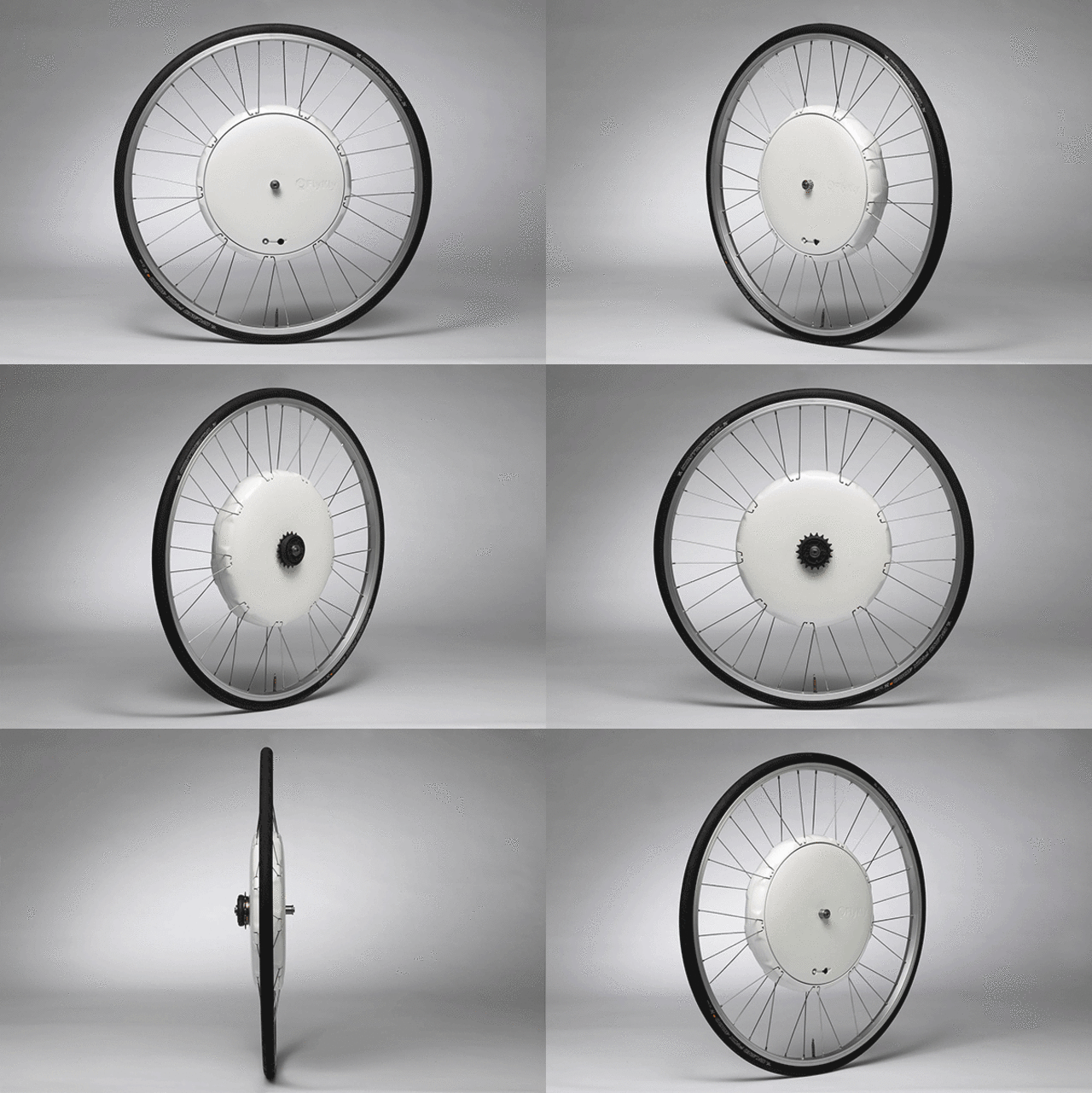
smartwheelrotatingInterestingly enough,the Copenhagen Wheel also has a rival, who’s appearance on the market seems nothing short of conspiratorial. Its competitor, the FlyKly Smart Wheel, a device which has raised over $150,000 on Kickstarter so far. It is extremely similar to the Copenhagen Wheel in most respects, from its electrical assistance to the fact that it can be integrated via smartphone.

According to Biderman, the appearance of the Smart Wheel is just a coincidence, though it is similar to their product. And her company really doesn’t have to worry about competition, since the Copenhagen Wheel has years of brand recognition and MIT name behind it. In terms of the the target audience, Biderman says that they are looking at targeting city dwellers as well as cyclists:

If you’re an urbanite, you can use it to move all around, and go as far as the edges of most cities with this quite easily. You overcome topographical challenges like hills. The point is to attract more people to cycling.

Though no indication has been given how much an individual unit will cost, it is expected to have a price point that’s competitive with today’s e-bikes.

copenhagen_wheel3The FlyKly Smart Wheel, by comparison, can be pre-ordered for $550 apiece. In total, that campaign has raised $301,867 (their original goal was $100,000) since opening on Oct. 16th. As a result, they have been able to reach their first “stretch goal” of producing a 20″ wheel. If they can reach $500,000 before the campaign closes on Nov. 25th, they will be able to deliver on their other goals: a motor brake and a glow in the dark casing.

For some time, designers and engineers have been trying to find ways to make alternative transportation both effective and attractive. Between these designs and a slew of others that will undoubtedly follow, it looks like e-bicycling may be set to fill that void. Combined with electric cars, self-driving cars, hydrogen cars, robotaxis, podcars, and high speed trains, we could be looking at the revolution in transit that we’ve been waiting for.

Sources: fastcoexist.com(2), kickstarter.com
3-D Printed Prosthetics: The Open Hand Project

Open_Hand3-D Printing has been a boon for a number of industries, offering a cheaper method of production and sending those savings onto the consumer. One such industry is prosthetics, which is taking advantage of the new technology to cheaply generate all the components needed to create robotic replacement limbs. And with the proliferation of models, amputees and accident victims have a range of options that was previously unimaginable.

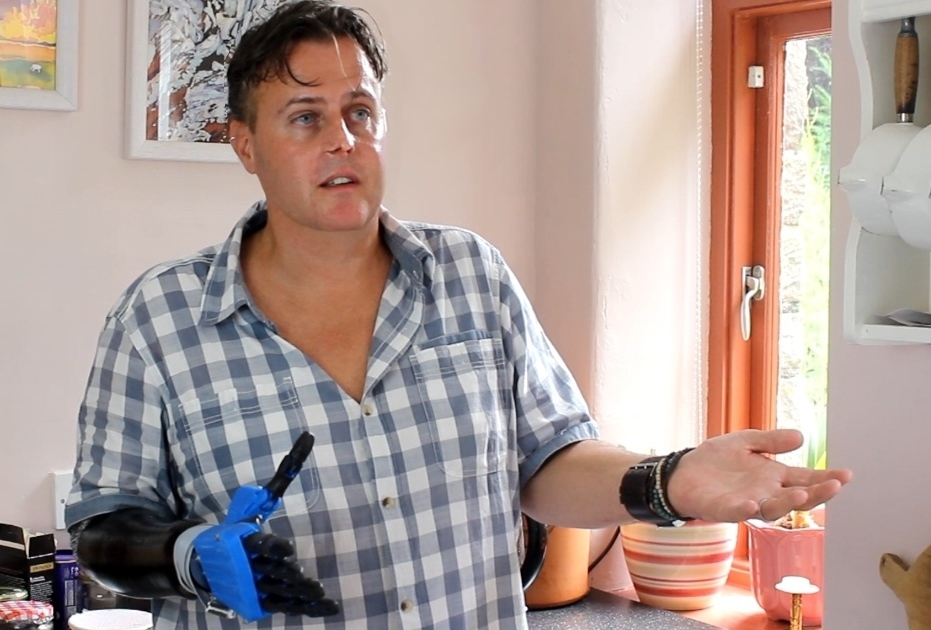
The latest comes to us from Bristol in the UK, where the robotics company known as The Open Hand Project has developed a robot limb that is cheaply produced and can be purchased for under £650 (or roughly $1000 US). At this price, their prosthetic device – known as the Dextrus robot hand = is significantly cheaper than existing robotics technology.

Open_hand3Inventor Joel Gibbard first came up with the idea for the Dextrus robotic hand while studying Robotics at the University of Plymouth in 2011. He developed a prototype for his final-year project before leaving to work for National Instruments. After two years in the workplace, he left his job in March 2013 to launch the Open Hand Project, an open-source venture that aims to make robotic prosthetic hands accessible for people in the developing world.

Gibbard’s hand relies entirely on off-the-shelf DC motors with a spool on the end that connects to a steel “tendon” that can be tightened and loosened when the user wants to move their fingers. The outer casing is composed of 3D-printed plastic parts that act like bones while a rubber coating acts as the skin. The user can control the fingers using electomyographical signals picked up from the muscle in their arm using stick-on electrodes.

open_hand2As Gibbard explained in an interview with Wired magazine:

Each finger is individually actuated so you can grasp funny shaped objects. It’s not all that complicated. I’ve put a little tensioner in between each one so you have a bit of mechanical compliance. Even if an amputee has lost their hand, all of the muscles are still in the forearm and they can still flex them, so you can use that signal.

Already, the prosthesis was tested out by a chef named Liam Corbett, who lost his hand to meningitis two years ago and contacted Gibbard via Facebook when he heard about the Open Hand Project. According to Corbett, he was very impressed with the device and said that:

I think it’s certainly going to enable me to do the finer things in life which I certainly haven’t been able to do with a hook… I would be proud to wear this, it would make me feel more confident.

open_hand1Gibbard hopes to refine the design to cut down on the electrical noise it produces, and to develop specialized software to configure the electrodes to simplify the calibration process. Back in September, he opened up a crowdfunding campaign with Indiegogo to raise the necessary money. As of writing this article, he has surpassed his goal of £39,000 and raised a total of £41,065.

However, there is still four days left before the campaign closes. So if you want to donate, thus enabling GIbbard and his colleagues to refine the design further, simply click here and follow the prompts. And be sure to check out the Indiegogo video to see how the hand works:


Sources: wired.co.uk, indiegogo.com

News From Space: Manned Europa Mission!

europa-landerWith so much attention focused on Mars in recent years, the other planets of the Solar System have a hard time getting noticed. But lately, Europa has found itself the subject of some interest. In addition to NASA proposing to send a lander there in the near future, a private space organization is thinking of mounting a manned mission to the Jovian moon in search of knowledge and extra-terrestrial life.

This organization is known as Objective Europa, a group made up of  volunteer scientists, conceptual artists, and social-media experts. At the moment, they exist only on the internet. But with time and financial backing, they hope to form a volunteer corps of settlers that would make a one-way trip to Europa and settle the planet while they researched it.

europa-lander-2Inspired by the recent missions to Mars, Objective Europa also believes a mission to this moon would be worthwhile since it is a far better candidate for extra-terrestrial life. Mars, though it is thought to have once hosted life, is a barren and dry world in its present state. Though many are holding out for the discovery of organic particles in the near future, the likelihood of finding any complex organisms larger than a microbe remains extremely low.

Not surprisingly, their group has attracted some big-name celebrities. This includes Kristian von Bengtson, a Danish architect and co-founder of Copenhagen Suborbitals, a nonprofit focused on launching humans into space. Then there’s Michele Faragalli, a rover mobility specialist for a NASA private contractor. Scientist and diver Pierre-Yves Cousteau, son of legendary explorer Jacques Cousteau, is also on the team as an ambassador for the group.

europa_reportCurrently, the group is in Phase 1 of their plan, which is geared towards the gathering of ideas. Towards this end, they have opened up a variety of research topics for discussion on their website. These include investigating the feasibility of a manned mission versus a robotic mission, launch vehicle studies, and cost analysis.Future phases would involve raising funds, and prototyping and testing technology.

What’s more, while they have not yet stated outright how they plan to fund the mission, it seems likely at this point that crowdfunding and sponsorship will come into play. As the goal statement reads on their site:

“Our purpose is to establish the foundation for and carry out a crewed mission to Jovian ice moon Europa through international crowd-research and participation.”

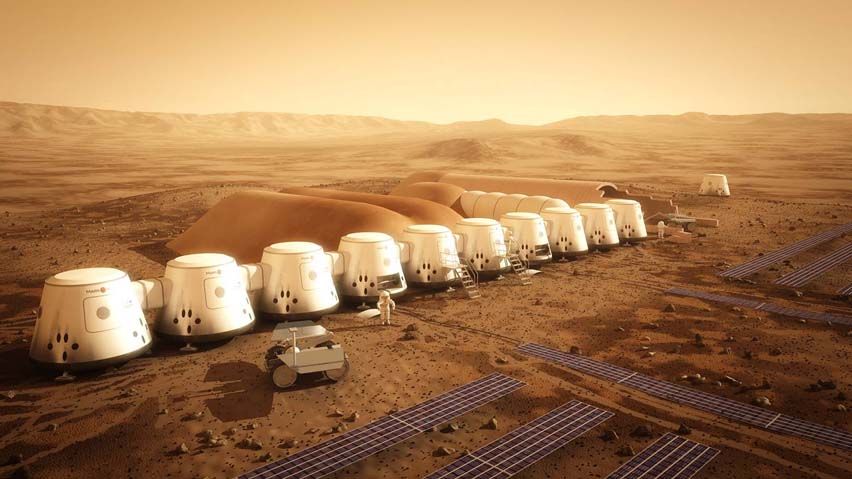
mars-one-brian-versteegIf this is beginning to sound a little bit like Mars One – a similar space organization looking to send volunteers to Mars – then chances are you’ve been paying attention! In terms of their purpose, objectives, and the fact that the trips they are planning would be a one-way, the two organizations are very similar. But even more interesting is what these and other space organizations like them represent.

In an age when private space travel and exploration are beginning in earnest, crowdfunded, volunteer groups are emerging with the common goal of making things happen ahead of anyone else’s schedule. Whereas space was once the exclusive province of government-sanctioned and funded agencies, now the public is stepping in to assume a measure of control.

And thanks to new media and communications, the money, talent, and energy needed are all available. It’s just a matter of bringing them all together!

Source: news.cnet.com

Detroit’s New Robocop Statue

robocop-statue-2Some of you may recall how a few years back, a group of Detroit citizens began talking about erecting a statue of Robocop in their fair city. At the time, Detroit’s Mayor David Bing shot the idea down, eventually referring to it as “silly”. This led to a campaign that was dedicated to making the statue happen, and after three years, it looks like they are finally going to get their wish.

In addition to a promotional video starring Peter Weller (Robocop himself), a Kickstarter campaign was mounted to fund the statue’s creation. The campaign was launched back in 2011 by the group known as Imagination Station, a Detroit nonprofit specializing in art and renovation. Within 45 days, they had raised over $67,000, thanks to public donations but also from an unexpected source.

ROBOCOP-Concept-Art-Image-02 As the story goes, Brandon Walley – director of development at the Imagination Station – received a call from Pete Hottelet, the founder of Omni Consumer Products (OCP). As anyone who’s seen Robocop knows, this is the name of the evil megacorporation at the center of the RoboCop universe. But in this case, OCP specializes in selling real-world versions of products seen in popular movies and TV shows.

Apparently, Hottelet had contacted Mayor Bing’s office and was told outright that the city was not involved in any such project. He then called Walley, got the low-down on their intentions to go ahead with creating one anyway, and agreed to match the money they raised. After six days and $25,000 raised, Hottelet cut them a cheque for the same amount. Thirty nine-days later, they had the remaining ten grand they needed, and then some.

robocop_concept_art_walkerAnd as I recently learned, back in May production began on the statue right here in British Columbia by Across the Board Creations, a studio that specialized in 3D models, props, and artistic recreations. This past Wednesday, the finished product arrived in a crate at the Imagination Station, and photos have began to circulate of the finished product.

The Imagination Station in Detroit has offered a place on its property at Roosevelt Park to install the 10-foot-tall statue, which has now been cast and is headed to Venus Bronze Works in Detroit to be bronzed. And as you can see from the photo (see below), it is rather large, detailed, and pretty badass! Plans have already been made to erect the statue in 2014, just in time for the Robocop movie relaunch.

Robocop_concept_art_UAVYou may also notice I’ve peppered concept art for the movie throughout. These include Robocop’s new sidearm, OCP’s ED-209 Assault Walker, and the XT-908 Area Drone. Clearly, they are looking to merge elements of the original with a more model feel, going beyond mere cyborgs, walkers and corporate greed to include unmanned aerial surveillance and the motif of a police state.

Pretty badass, huh?
Pretty badass, huh?

And be sure to check out Peter Weller’s hilarious promotional video for the statue, plus the trailer for the Robocop relaunch. Enjoy!


Sources: blastr.com, motherjones.com, kickstarter.com, acrosstheboardcreations.com

The Future is Here: The Desalination Bottle

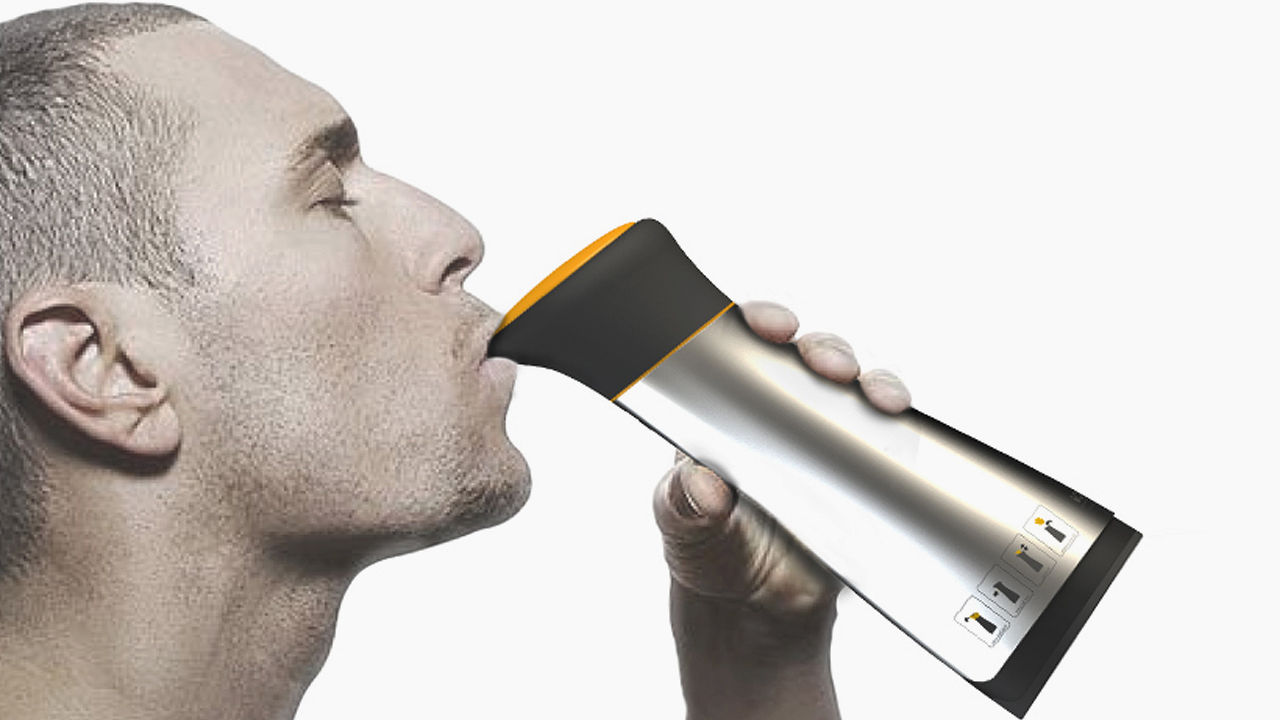
desalination_bottleDesalination might not just be handy if you find yourself lost at sea or shipwrecked on a remote island. In the near future, it might be an absolute necessity. As sea levels rise and sources of rivers, irrigation and ground water dry up, turning sea water into drinking water might be the only way to keep people hydrated and crops growing.

And that’s where this new bottle concept comes in, which was designed by a team from Yonsei University in South Korea and entered in the 2013 IDEA awards. The idea is simple: You pump a plunger at the top, pressurizing ocean water until it’s pushed through a membrane at the bottom and fresh water enters into another chamber.

puri_bottleAnd though such a water bottle does not yet exist, the students make a plausible case for what it might look like, right down to the materials for all the parts. And they’ve manage to produce advertising and a concept video of how it would work (see below). As they describe it:

The Puri portable fresh water equipment has reverse osmosis technology. This is the only product that can continually supply water when people get into marine disasters. It puts the best face on it when people get into emergency situations.

At this point, the students are likely to mount a crowdfunding campaign in order to get the necessary seed capital to develop the technology. Personally, I look forward to seeing this and other such products being made available in camping and outfitting stores. If walking the Sunshine Coast Trail has taught me and the wife anything, it’s that water is mighty precious, and not always readily available!

And be sure to check out this concept video produced by the Yonsei students, or visit their website by clicking here.


Sources:
fastcoexist.com, idsa.org

The Future is Here: Painting with Thought

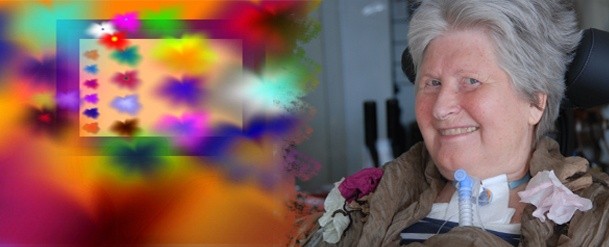
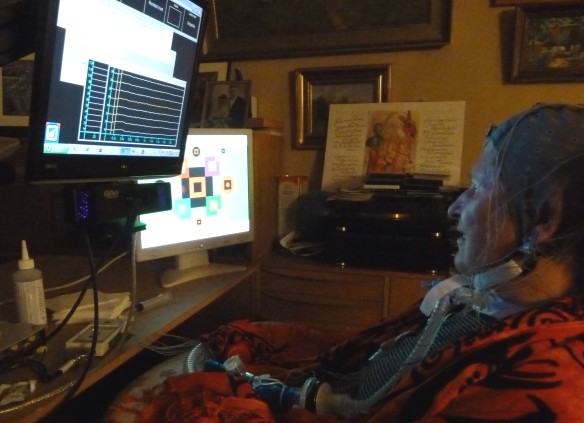
Heide-PfutznerIn 2007, when artist Heide Pfüetzner was diagnosed with Amyotrophic Lateral Sclerosis (Lou Gehrig’s disease), she considered it a “personal catastrophe”. Given the effects of ALS, which include widespread muscle atrophy that affects mobility, speaking, swallowing, and breathing, this is hardly surprising. And yet, just six years later, an exhibit of her paintings made their debut; all created by her mind and a computer.

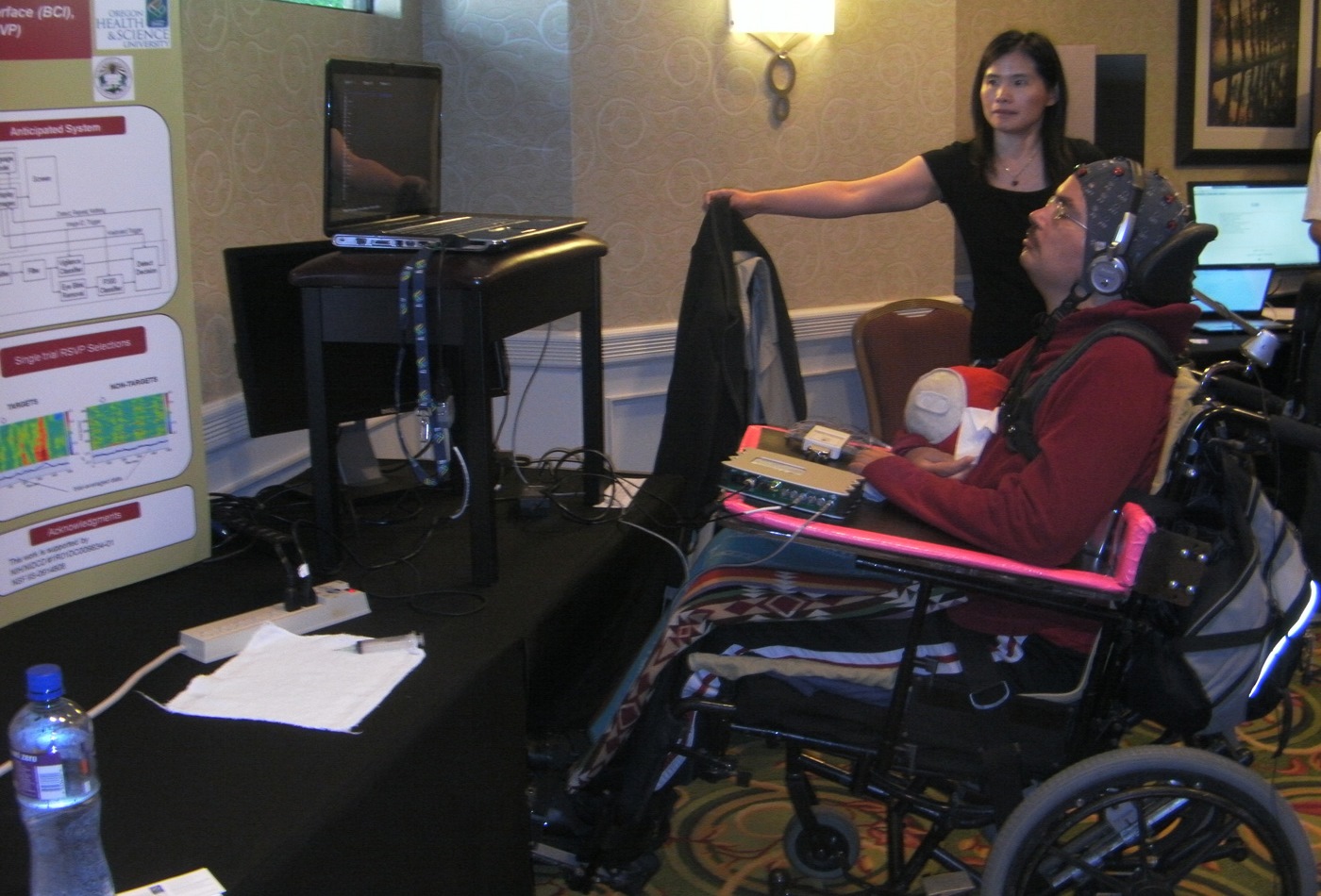
Known as “Brain on Fire,” the exhibit took place on Easdale, a small island off the west coast of Scotland, this past July. Those who visited the exhibit were treated to a vibrant display of colorful digital paintings that she made using a computer program that lets her control digital brushes, shapes, and colors by concentrating on specific points on the screen.

bmi_paintingPfüetzner, a former English teacher from Leipzig, Germany, “brain paints” using software developed by the University of Wurzburg and German artist Adi Hösle, along with equipment from biomedical engineering firm Gtec. Thanks to the equipment and software, Pfüetzner is able to paint using two monitors and an electrode-laden electroencephalogram (EEG) cap without having to move her hands or leave her chair.

While one screen displays the program’s matrix of tools, another functions like a canvas, showing the picture as it evolves. Images of the various tools flash at different times, and Pfüetzner focuses on the tool she wants to select, causing her brain activity to spike. The computer determines which option she’s focusing on by comparing the timing of the brainwaves to the timing of the desired flashing tool.

brainpainting_indexRelying on a Startnext crowdfunding campaign, Pfüetzner was able to raise the $6,500 she needed to hold the exhibit in Easdale. The money she raised through the campaign went toward printing and framing her work, as well as transporting her and her nursing team, as well as the medical equipment she needs, to Easdale, where the exhibit ran until July 25th.

Pfüetzner admits that prior to becoming ill, she was not too fond of technical equipment and did not like working with computers. But since she became acquainted with the new technology, an EEG cap and brain computer interface have become her everyday companions. Much like a canvas, brush and paint palate, “brain painting” has become second nature to her.

Heide-Pfutzner_paintingBetween her Startnext page and interviews since her exhibit went public, Pfüetzner had the following to say about her work and the software that makes it possible:

For the first time, this project gives me the opportunity to show the world that the ALS has not been the end of my life… BCI is a pioneer-making technology which allows me to create art and therefore, reconnect to my old life.

For some time now, Brain to Computer Interface (BCI) research has been pushing the realm of the possible, giving a man with locked-in syndrome the ability to tweet using eye movement, or a paraplegic woman the ability to control a robotic arm. And thanks to research team like that working at the University of Wurzburg’s labs,  the range of BCI applications for the paralyzed are quickly beyond text input and into the realm of visual art.

brainpainting-brain-computer-interfaces-3Though the life expectancy of an ALS patient averages about two to five years from the time of diagnosis, according to the ALS Association, some ALS patients, including physicist and cosmologist Stephen Hawking, have far outlived that prognosis. given her obvious inspiration and passion, not to mention talent, I sincerely hope Pfüetzner has a long and productive career!

And be sure to enjoy this video from Heide Pfüetzner’s Startnext page. It contains a personal address in German (sadly, I couldn’t find an English translation), followed by members of the University of Wurzburg team explaining how “brain painting” works:


Source: cnet.news.com, neurogadget.com, startnext.com

,

Towards a Safer Future: The Roofie-Detecting Glass

drinksavvy_glassAttention date rapers and sex offenders: you’re free ride is over! Thanks to a product known as DrinkSavvy, a new line of glassware, plastic cups, straws, and stirrers, the previously undetectable drug known as flunitrazepam (aka. rufies), has finally met its match! Basically, when a drink is spiked, a series of stop sign-red stripes show up on the cup’s sides, and the clear straw or stirrer turn red too, and the user knows not to drink.

That such a product is necessary is truly a sign of the times. Every year, over a million people find themselves becoming the victim of date rape drugs. And in 2010, DrinkSavvy founder Mike Abramson was one of them. As he recounted the incident:

I ordered my first drink of the night at a birthday party at a Boston club. But halfway through that first drink, it started to feel more like my 15th. One of the few things I remember after that is waking up with a massive headache and substantial nausea, feeling confused, and wondering, ‘What happened to me that I don’t remember?’”

drinksavvy_strawLuckily for Abramson, he was not injured or assaulted after consuming the drink. Without any explanations, he could only assume that he was either the intended victim or a robbery and the perpetrator backed out as the last minute. Or worse, that the drink was intended for someone else (a intended rape victim) and he just happened to consume it.

Because of this experience, Abramson made it his mission to avoid another hellish blackout and make sure similar experiences stopped happening to others. At first, this consisted of buying drug-testing strips and periodically pouring some of his drinks on one for analysis. However, he quickly realized that this was impractical and there needed to be a better way.

drinksavvySo he took his idea of merging the software with the hardware to Dr. John MacDonald, a chemistry professor at Worcester Polytechnic Institute, who integrated a color-changing, drug-testing material into plastic and glassware. This was followed by a crowdfunding campaign on IndieGoGo, where Abramson was able to raise $52,089 as seed capital to begin mass production.

Thanks to all this, the first batch of straws and 16-oz. plastic cups will be shipping out next month. By 2014, the company expects products to be widely commercially available. Abramson hopes the products will someday become the new norm in bars, clubs, and on college campuses, and bottles and cans with similar detection functions are in the works.

drinksavvy_cupIt is a sad time indeed when people need to get this creative in order to prevent sexually-based crimes. But inventions such as these remind us of the existence of socially-conscious individuals, and how much more powerful we are than cowardly predators who sulk in dark corners, slipping their dangerous wares to us when they think we’re not paying attention.

One can only hope that future versions of the Drinksavvy or similar products will also have some kind of detection system. Perhaps a finger printer or DNA sampler than can tell us who touched the glass, thus giving police and security an immediate list of suspects. Wouldn’t that be both cool and immensely affirming?!

And be sure to check out Abramson’s IndiGoGo promotional video, which includes some nauseating footage about drug-related sexual assaults:

Source: fastcodesign.com

The Future is Here: The AR Bike Helmet

AR_helmetAR displays are becoming all the rage, thanks in no small part to Google Glass and other display glasses. And given the demand and appeal of the technology, it seemed like only a matter of time before AR displays began providing real-time navigation for vehicles. For decades, visor-mounted heads-up displays have been available, but fully-integrated displays have yet to have been produced.

Live Helmet is one such concept, a helmet that superimposes information and directions into a bike-helmet visor. Based in Moscow, this startup seeks to combine a head-mounted display, built-in navigation, and Siri-like voice recognition. The helmet will have a translucent, color display that’s projected on the visor in the center of the field of vision, and a custom user interface, English language-only at launch, based on Android.

AR_helmet1This augmented reality helmet display includes a light sensor for adjusting image brightness according to external light conditions, as well as an accelerometer, gyroscope, and digital compass for tracking head movements. Naturally, the company anticipated that concerns about driver safety would come up, hence numerous safety features which they’ve included.

For one, the digital helmet is cleverly programmed to display maps only when the rider’s speed is close to zero to avoid distracting them at high speeds. And for the sake of hands-free control, it comes equipped with a series of voice commands for navigation and referencing points of interest. No texting and driving with this thing!

ar_helmet4So far, the company has so far built some prototype hardware and software for the helmet with the help of grants from the Russian government, and is also seeking venture capital. However, they have found little within their home country, and have been forced to crowdfund via an Indiegogo campaign. As CEO, Andrew Artishchev, wrote on LiveMap’s Indiegogo page:

Russian venture funds are not disposed to invest into hardware startups. They prefer to back up clones of successful services like Groupon, Airnb, Zappos, Yelp, Booking, etc. They are not interested in producing hardware either.

All told, they are seeking to raise $150,000 to make press molds for the helmet capsule. At present, they have raised $5,989 with 31 days remaining. Naturally, prizes have been offered, ranging from thank yous and a poster (for donations of $1 to $25) to a test drive in a major city (Berlin, Paris, Rome, Moscow, Barcelona) for $100, and a grand prize of a helmet itself for a donation of $1500.

ar_helmet3And of course, the company has announced that they have some “Stretched Goals”, just in case people want to help them overshoot their mandate of $150,000. For 300 000$, they will include a Bluetooth with a headset profile to their helmet, and for 500 000$, they will merge a built-in high-resolution 13Mpix photo&video camera. Good to have goals.

Personally, I’d help sponsor this, except for the fact that I don’t have motorbike and wouldn’t know how to use it if I did. But a long drive across the autobahn or the Amber Route would be totally boss! Speaking of which, check out the company’s promotional video:

Sources: news.cnet.com, indiegogo.com

News From Space: Arkyd Telescope and Shenzhou 10

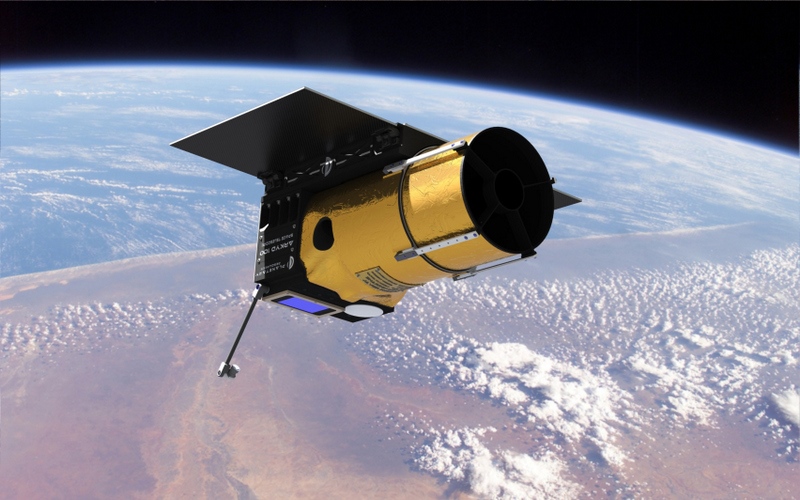
spacex-icarus-670It seems that every day, the frontiers of space exploration are being pushed. In recent months, two stories occurred close to home (relatively speaking) that have stuck out in my memory. The first had to do with Planetary Resources plan to commission the world’s first crowdfunded telescope. The second came from China, where the new Shenzou 10 space ship launched on its way to dock with the prototype Tiangong-1 space station.

These stories were both groundbreaking for a number of reasons. Arkyd’s plan for a publicly-owned and funded telescope is not only an historic first, its also a major step forward in the creation of a new era of space exploration, one which is far more open and democratic than before. The second story represents a major leap for China as a major power, and their plans to conduct research aboard the Tiangong-1 shows a commitment to opening their space program to the public.

ARKYD-in-SpaceAnd as it happens, there have been recent developments on both fronts. On June 20th, less than a week ago, the Arkyd space telescope passed their goal of $1 million with its Kickstarter campaign. But perhaps to keep the money flowing, the company announced an ambitious aim to add extrasolar planet searching  to the list they can double that goal to $2 million.

And they’ve set some other fundraising milestones just to keep things interesting:

  • $1.3 million: A ground station at an undisclosed “educational partner” that would double the download speed of data from the orbiting observatory.
  • $1.5 million: This goal, just released yesterday, is aimed at the more than 20,000 people who signed up for “space selfies” incentive where uploaded pictures are photographed on the telescope while it is in orbit. For this goal, “beta selfies” will be taken while the telescope is in the integration phase of the build.
  • $1.7 million: The milestone will be announced if Arkyd reaches 15,000 backers. (It has more than 12,000 as of this

With five days remaining and a total of $1,189,359 now raised, they are not likely to break that ceiling. Still, the company’s plan to begin prospecting asteroids for the sake of future mining efforts now seems well within reach. Best of luck to them!

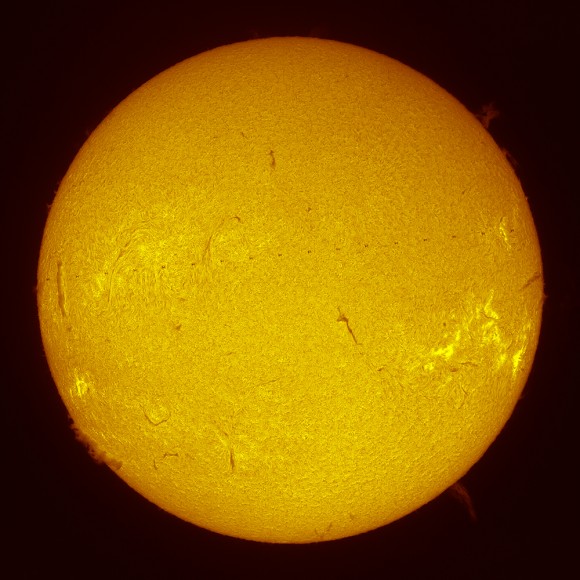
shenzhou10_tiangong1As for China’s Shenzhou 10, in an event that was captured on film, the space module is now docked with the Tiangong-1 space station and made a scenic transit in front of the sun. Astrophotographer Terry Legault had less than half a second to capture these incredible shots, but managed to get not one, but two shots in two consecutive days. Not an easy task to pull off, let alone twice!

If you look closely at the picture above, you can just make out Tiangong-1 station to the right of the sun, located below and to the left of a large cluster of sun spots. This top image is a crop of a full-face view of the Sun, taken with white light filters by Thierry from southern France on June 16, just after noon UTC. The transit duration was just 0.46 seconds, the distance of the spacecraft to observer was 365 km away, and the spacecraft was traveling at 7.4km/s (26,500 km/h or 16,500 mph).

shenzhou10_tiangong3This second imagine was taken the next day, again from the south of France, at 12:34:24 UTC on June 17, 2013. This one, in Hydrogen-alpha shows the Shenzhou-10/Tiangong-1 complex in multiple shots over the 0.46 second transit. Click on the photo to get the full resolution, then zoom in to see multiple shots of station as it made its transit across the face of the sun.

In a previous interview with Universe Today, Thierry explained how he prepares to take images like these:

For transits I have to calculate the place, and considering the width of the visibility path is usually between 5-10 kilometers, but I have to be close to the center of this path, because if I am at the edge, it is just like a solar eclipse where the transit is shorter and shorter. And the edge of visibility line of the transit lasts very short. So the precision of where I have to be is within one kilometer.”

Legault studies maps, and has a radio synchronized watch to know very accurately when the transit event will happen.

My camera has a continuous shuttering for 4 seconds, so I begin the sequence 2 seconds before the calculated time. I don’t look through the camera – I never see the space station when it appears, I am just looking at my watch!

Kudos to the man for once again capturing images of the heavens and sharing them with the world. And exciting times these are, when space exploration is once again booming and the frontiers of tomorrow are increasingly within our reach.

Sources: universetoday.com, (2), legault.perso.sfr.fr

Tweeting Aliens: The Lone Signal Array

gliese-581-eIn what could be called a case of serious repurposing – beating swords into plowshares and so forth – or something out of science-fiction, a crowdfunded project has sought to turn a Cold War era dish into a deep-space communications array. This array will send messages to that’s relatively near to us, and potentially inhabited. And assuming anything sufficiently advanced lives there, we could be talking to them soon enough.

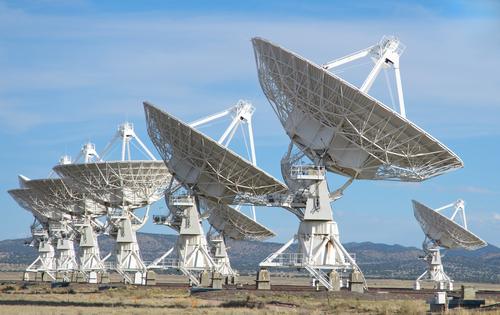
dishantennaThe project is known as Lone Signal, a crowdfunded effort to send a continuous stream of messages to the folks at Gliese 526, a red dwarf star 17.6 light-years away in the constellation of Bootes (aka Wolf 498). And the dish with which they intend to do this is known as the Jamesburg Earth Station, a nuke-proof satellite relay station in California that dates from the 1960s and even helped broadcast images of Neil Armstrong on the moon.

Long Signal, it should be noted, is the brainchild of The Blue Marble Space Institute of Science, non-profit virtual research institute that networks scientists from across the globe and multiple disciplines for the purpose of expanding the boundaries of knowledge, science and astronomy and promoting an open dialogue on the subject of exploration and settlement.Towards this end, they arranged for a 30-year lease on the Cold War-era dish (for a cool $3 million) and set up a project that will allow participants who contribute money to send a personalized message into space.

exoplanetsUltimately, they plan to direct two beams at Gliese 526: a continuous wave with fundamental physics laws and basic information about Earth, and another consisting of crowdsourced greetings. The project is open to anyone and a series of initial short message (the equivalent of a 144-character tweet) will be available free of charge. Subsequent messages, images, and longer greetings, however, will cost money (about $1 for four texts) that will help the project fund itself.

The project’s website also lets participants track their messages and share them via social media, dedicate messages to others, and view signal stats. In an interview with Universe Today, Lone Signal co-founder Pierre Fabre, told people:

Our scientific goals are to discover sentient beings outside of our solar system. But an important part of this project is to get people to look beyond themselves and their differences by thinking about what they would say to a different civilization. Lone Signal will allow people to do that.

Indeed. Nothing like the prospect of facing another life form, a potential space invader even, to make people forget about all their petty bickering!

Gliese_581_-_2010As our knowledge of the universe expands, we are becoming aware of the existence of more and more exoplanets. Many of these exist within the Habitable Zones of their parent star, which means two things. On the one hand, they may be candidates for potential settlement in the future. On the other, they may already be home to sentient life. If said life is sufficiently advanced, its entirely possible they could be looking back at us.

For some time, the human race has been contemplating First Contact with potential extra-terrestrial life, which was the very purpose behind the creation of NASA’s SETI (Search for Extra-Terrestrial Intelligence) program in 1961. The Pioneer space probes were another attempt at making contact, both of which carried small metal plaques identifying their time and place of origin for the benefit of any other spacefarers that might find them in the distant future.

SETIFollowing in that tradition, Voyager 1 and 2 space probes contained even more ambitious messages, otherwise known as the Golden Record. These phonograph records – two 12-inch gold-plated copper disks – contained both sounds and images selected to portray the diversity of life and culture on Earth that would give any civilization that found them a good idea of what the people of Earth were capable of.

The contents of the records were selected for NASA by a committee chaired by Carl Sagan of Cornell University, and consisted of 115 images and a variety of natural sounds – surf, wind, thunder, birds, whales, and other animals. To this they added musical selections from different cultures and eras, and spoken greetings from Earth-people in fifty-five languages, and printed messages from then-President Carter and U.N. Secretary General Waldheim.

golden_record_cover_smIn this respect, Lone Signal represents the latest step in promoting contact and communication with other life forms. And in keeping with the trend of modern space exploration, it is being opened to the public via crowdfunding and personalized messages. But unlike SETI, which lost its government funding in 1995 and had to turn to private supporters, crowdfunded space exploration is something directly accessible by all citizens, not just corporate financiers.

Update: The Lone Signal project is now operational and on 9:00 PM EDT Monday, June 17 at a press event in New York, the team announced the transmission of the first interstellar message. The message was sent by none other than Ray Kurzweil, noted Futurist and science guru. That message was then read during his welcome talk to the Singularity University class of 2013, from the Computer History Museum in Mountain View, California:

Greetings to Gliese 526 from Singularity University. As you receive this, our computers have made us smarter, the better to understand you and the wisdom of the universe.

What he means by this is that by the time the message is recieved – roughly 18 years from now, assuming it ever is – humanity is likely to have taken the first steps towards merging our brains with computers via biotech, artificial intelligence, or other means of computer-assisted brain augmentation. At least, that’s what guys like Kurzweil hope for.

Other “alpha beamers” — including Dan Aykroyd, Alicia Keys, and Jason Silva — also sent beams Monday night. And for the time being, anyone can send a “crowdsourced” 144-character beam and pic. Better get on it before they start charging. If texting and phone rates are any indication, the price is likely to go up as the plan improves!

And be sure to enjoy this promotional video from Lone Signal:


And also check out this time-lapse video of the Jamesburg Earth Station in operation:

Sources: cnet.news.com, universetoday.com, voyager.jpl.nasa.gov, bmsis.org, kurzweil.net