Glowing Plants and the Future of Gene Patenting

DNA-1Synthetic biology – also known as biohacking – is an emerging and controversial scientific field that uses gene-writing software to compile DNA sequences. And thanks to a recent ruling handed down by the US Supreme Court, it is a process which is now entirely legal. All told, the potential applications of synthetic biology are largely useful, leading to lifesaving cures, or altered crops that survive in any environment.

However, there are numerous potential (and potentially harmful) commercial applications that could emerge from this as well. One such advancement comes from a DIY synthetic biology lab known as Glowing Plant, one that specializes in synthetic bio hacking. Basically, the project was one of many that emerged out of Singularity University – a research institute dedicated future technologies today.

glowing_plantsGlowing Plant was  originally created to show the power of DIY synthetic biology, and has since sets its sights on developing a species of glowing house plant for consumers. To fund their goal, they opened up a Kickstarter campaign – the first of its kind – with the goal of $65,000. Based on research from the University of Cambridge and the State University of New York, the Glowing Plants campaign promised backers that they would receive seeds to grow their own glowing Arabidopsis plants at home.

glowing_plants2Glowing Plant also announced that if the campaign reaches its $400,000 stretch goal, glowing rose plants will also become available. As of the publication of this article, they passed that goal with a whopping $484,013 from a total of 8,433 backers. It seems there are no shortage of people out there who want to get their hands on a glowing house plant.

But Glowing Plant, the laboratory behind the project, has no intention of stopping there. As Antony Evans, co-founder of the project explained:

We wanted to test the idea of whether there is demand for synthetic biology projects. People are fundamentally excited and enthusiastic about synthetic biology.

Given the thousands of people backing the project, I’d say he’s right! But rest assured, Evans and his team have no intention of stopping there. The ultimate goal is to create larger species of glowing plants.
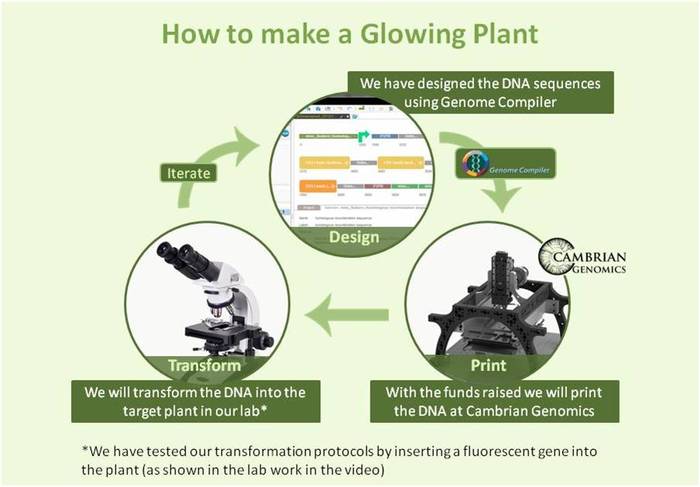
glowing_plants1The method used to achieve this is really quite interesting. It starts with the team downloading the luciferase-lucifern genes – the firefly DNA that allows them to glow – into a Genome Compiler, and then rewiring the DNA so that the proteins can be read by plants. The DNA sequences are then sent off to DNA printing company Cambrian Genomics, which has developed a relatively low-cost laser printing system. Those sequences are printed, put on a little spot of paper, and mailed back to the team.

After that, the team relies on one of two methods to transmit the firefly DNA into the Arabidopsis’ themselves. One way is to use a bacteria solution that is capable of injecting its own DNA into plants and rewriting theirs, which then causes the altered plants to germinate seeds of the new glowing strain. The other involves gold nano-particles coated with a DNA construct that are then fired at the plant cells, which are then absorbed into the plant chromosomes and alters their DNA.

NanoparticlesThis second method was devised to do an end run around specific Department of Agriculture regulations that govern the use of viruses or other pathogens to modify DNA. Though technically legal, the process has attracted resistance from environmental groups and the scientific community, fearing that the DNA of these altered plants will get into the natural gene pool with unknown consequences.

In fact, an anti-synthetic biology group called ECT has emerged in response to this and other such projects – and is centered in my old hometown of Ottawa! They have countered Glowing Plant’s Kickstarter campaign (which is now closed) with a fundraising drive of their own, entitled “Kickstopper”. In addition, the group has started a campaign on Avaaz.org to force the Supreme Court to reconsider the ruling that allows this sort of bioengineering to take place.

At present, their fundraising campaign has raised a total of  $1,701 from 58 backers – rougly 9% of its overall goal of $20,000 – and their Avaaz campaign has collected some 13,000 signatures. With 36 days left, there is no telling if they’re efforts will succeed in forcing a legal injunction on Glowing Plant, or if this is the first of many synthetic biology products that will make it to the market through private research and crowdfunding.

A fascinating time we live in, and potentially frightening…

Sources: fastcoexist.com, (2), kickstarter.com, glowingplant.com

The Future of the Classroom

virtual_learning2As an educator, technological innovation is a subject that comes up quite often. Not only are teachers expected to keep up with trends so they can adapt them into their teaching strategies, classrooms,and prepare children in how to use them, they are also forced to contend with how these trends are changing the very nature of education itself. If there was one thing we were told repeatedly in Teacher’s College, it was that times are changing, and we must change along with them.

And as history has repeatedly taught us, technological integration not only changes the way we do things, but the way we perceive things. As we come to be more and more dependent on digital devices, electronics and wireless communications to give us instant access to a staggering amount of technology, we have to be concerned with how this will effect and even erode traditional means of information transmission. After all, how can reading and lecture series’ be expected to keep kid’s attention when they are accustomed to lighting fast videos, flash media, and games?

envisioning-the-future-of-education

And let’s not forget this seminal infographic, “Envisioning the future of educational technology” by Envisioning Technology. As one of many think tanks dedicated to predicting tech-trends, they are just one of many voices that is predicting that in time, education will no longer require the classroom and perhaps even teachers, because modern communications have made the locale and the leader virtually obsolete.

Pointing to such trends as Massive Open Online Courses, several forecasters foresee a grand transformation in the not too distant future where all learning happens online and in virtual environments. These would be based around “microlearning”, moments where people access the desired information through any number of means (i.e. a google search) and educate themselves without the need for instruction or direction.

virtual_learning3The technical term for this future trend is Socialstructured Learning = an aggregation of microlearning experiences drawn from a rich ecology of content and driven not by grades but by social and intrinsic rewards. This trend may very well be the future, but the foundations of this kind of education lie far in the past. Leading philosophers of education–from Socrates to Plutarch, Rousseau to Dewey–talked about many of these ideals centuries ago. The only difference is that today, we have a host of tools to make their vision reality.

One such tool comes in the form of augmented reality displays, which are becoming more and more common thanks to devices like Google Glass, the EyeTap or the Yelp Monocle. Simply point at a location, and you are able to obtain information you want about various “points of interest”. Imagine then if you could do the same thing, but instead receive historic, artistic, demographic, environmental, architectural, and other kinds of information embedded in the real world?

virtual_learningThis is the reasoning behind projects like HyperCities, a project from USC and UCLA that layers historical information on actual city terrain. As you walk around with your cell phone, you can point to a site and see what it looked like a century ago, who lived there, what the environment was like. The Smithsonian also has a free app called Leafsnap, which allows people to identify specific strains of trees and botany by simply snapping photos of its leaves.

In many respects, it reminds me of the impact these sorts of developments are having on politics and industry as well. Consider how quickly blogging and open source information has been supplanting traditional media – like print news, tv and news radio. Not only are these traditional sources unable to supply up-to-the-minute information compared to Twitter, Facebook, and live video streams, they are subject to censorship and regulations the others are not.

Attractive blonde navigating futuristic interfaceIn terms of industry, programs like Kickstarter and Indiegogo – crowdsources, crowdfunding, and internet-based marketing – are making it possible to sponsor and fund research and development initiatives that would not have been possible a few years ago. Because of this, the traditional gatekeepers, aka. corporate sponsors, are no longer required to dictate the pace and advancement of commercial development.

In short, we are entering into a world that is becoming far more open, democratic, and chaotic. Many people fear that into this environment, someone new will step in to act as “Big Brother”, or the pace of change and the nature of the developments will somehow give certain monolithic entities complete control over our lives. Personally, I think this is an outmoded fear, and that the real threat comes from the chaos that such open control and sourcing could lead to.

Is humanity ready for democratic anarchy – aka. Demarchy (a subject I am semi-obsessed with)? Do we even have the means to behave ourselves in such a free social arrangement? Opinion varies, and history is not the best indication. Not only is it loaded with examples of bad behavior, previous generations didn’t exactly have the same means we currently do. So basically, we’re flying blind… Spooky!

Sources: fastcoexist.com, envisioningtech.com

The Arkyd 100: Crowdfunding Space Exploraiton

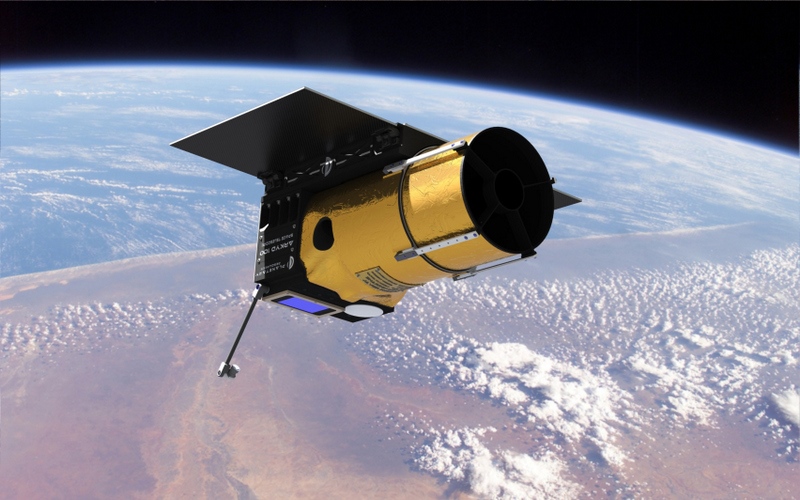
ARKYD-in-SpacePlanetary Resources made quite the impression last year when they announced their plans to begin prospecting near-Earth asteroids with in the intention of mining them in the near future. Alongside such companies as SpaceX and Golden Spike, they are part of a constellations of private interests looking to establish commercial space travel and tourism. But their latest proposal goes a step further, bringing crowdfunding and the realm of space exploration together.

That’s the idea behind a Kickstarter campaign that the company began to raise money for a crowdfunded space telescope. Known as the Arkyd 100, the company claims that this new telescope will provide unprecedented public access to space and place the most advanced exploration technology into the hands of students, scientists and a new generation of citizen explorers.

asteroid_miningTo make their campaign successful, they need to raise $1 million in Kickstarter pledges by the end of June 2013. Once the telescope is up and running, it will allow them to better map the asteroid belt, thus assisting them in finding the rocks they want to mine for precious metals and trace elements. And with public financial backers making it happen, anyone pledging money will be able to own a piece of the prospector!

During a webcast on May 28th to announce the Kickstarter campaign, Chris Lewicki, President and Chief Engineer for Planetary Resources, gave a rundown on the details of the telescope. And interestingly enough, the Planetary Resources’ technical team that designed it also worked on every recent U.S. Mars lander and rover. So if you do choose to invest, you will do so with the knowledge that the same people who helped build the Opportunity and Curiosity rovers are behind this project. If that doesn’t inspire investor confidence, I don’t know what will!

ARKYD-Space-SelfieA wide array of scientists, space enthusiasts and even Bill Nye the Science Guy have voiced their support for Planetary Resources’ new public space telescope. And those who invest will have the chance of recouping certain rewards, depending on how much they choose to pledge. Those pledging the minimum donation of $25 will receive the “Your Face in Space” benefit, where you will have you picture placed on the Arkyd and receive a picture of said photo the telescope with Earth in the background. Higher pledges will provide access to the telescope for students and researchers worldwide.

After less than 2 hours into their campaign, Planetary Resources had raised over $100,000. And as of this article’s writing, just one day shy of a week, the campaign has reached $710,945 of their $1 million goal, and they still have 27 days left. I guess people want a piece of this project. And who can blame them, since it is a scientific and historic first!

Check out the promotional video for the Arkyd and Planetary Resources below. To make a donation or get information about the Kickstarter campaign, visit the campaign page here.


Source:
universetoday.com

Environment Alert: Atmospheric CO2 Reaches Record High

airpollutionIt’s no secret that humanity, like all terrestrial organisms, has a symbiotic relationship with the Earth’s environment. And whereas the fortunes of entire civilizations and species once depended upon the natural warming and cooling cycle, for the past few centuries, human agency has an increasingly deterministic effect on this cycle. In fact, since the beginning of the Industrial Revolution, just 250 years ago, human industry increased the levels of carbon dioxide in the atmosphere by more than 40 percent.

And now, it seems that humanity has reached a rather ignominious and worrisome milestone. Working at the Mauna Loa Observatory, an atmospheric research facility, scientists announced Friday that for the first time in millions of years, the level of the carbon dioxide in the atmosphere had reached 400 parts per million on average over the course of a full 24-hour day. The last time there were these kinds of CO2 levels was approximately 3 million years ago, and that has many worried.

co2_levelsFor some time now, climatological scientists have warned of the dangers of reaching this limit, mainly because of the ecological effects it would have. The Kyoto Protocol, an attempt during the late-90s to curb fossil fuel emissions on behalf of the industrialized nations of world, specifically set this concentration as a target that was not to be surpassed. However, with nations such as Canada, the US and China expressing criticism or pulling out entirely, it was clear for some time that this target would not be met.

And as mentioned already, the planet has not seen these kind of CO2 levels since the Pliocene Era, a time of warmer temperatures, less polar ice, and sea levels as much as 60 to 80 feet higher than current levels. If conditions of this nature are permitted to return, the human race could be looking at some very serious problems in the near future.

trafficFor starters, much of the world’s population and heavy industry is built along coastlines. With sea levels reaching an additional 60-80 feet, several million people will be displaced over the course of the next few decades. What’s worse, inland areas that have river systems connected to the sea are likely to experience severe flooding, leading to more displacement and property damage.

Those areas that find themselves far from the coast are likely to experience the opposite effects, increased heat and dryness due to increased temperatures and the loss of cloud cover and precipitation. This in turn will result in widespread drought, wildfires, and a downturn in food production. And let’s not forget that rising temperatures also mean the spread of disease and parasites, ones that are typically confined to the tropical areas of the world.

china smog 2013 TV bldgIf any of this is starting to sound familiar, it’s because that is precisely what has been happening for the past few decades, and with increasing frequency. Record hot summers, food shortages in several parts of the world, flooding, wildfires, hurricanes, the West Nile Virus, Avian Bird Flu, Swine Flu, SARS, rising sea levels – these are all symptoms of a world where increasing output of Greenhouse Gases mean increasing temperatures and ecological effects.

But of course, before anyone feels like the situation is hopeless, this news does come with a silver lining. For one, the confirmation that we have now reached 400 ppm is likely to spur governments into greater action. Clearly, our current means are not working for us, and cannot be counted on to see us into the future. What’s more, a number of clean energy concerns are well under way, providing us with viable and cost effective alternatives.

solar_array1

The growth in solar energy in just the last few years has been staggering, and carbon capture technology has been growing by leaps and bounds. What’s more, upstarts and clean energy labs no longer need government support, though public pressure has yeilded several positive returns in that area. Even so, crowd-funding is ensuring that growth and innovation that would not be possible a few years ago is now happening, so we can expect the current rate of progress to continue here as well.

And of course, geoengineering remains a viable possibility for buying our planet some time. In addition to clean energy (putting less CO2 in the air), and carbon capture (removing the CO2 there), there are also a number of possibilities for Global Dimming – the opposite of Global Warming – to slow down the process of transformation until we can get our act together. These include evaporating oceanic water to lower sea levels and ensure more cloud cover, triggering algae blooms to metabolize more CO2, and dumping sulfur dioxide (SO2) in the air to combat the warming effect.

But in the end, nothing short of serious and immediate changes will ensure that decades and centuries from now, the ecological balance – upon which all species depend – is maintained. Regardless of whether you think of humanity as the masters or the children of this planet, it’s clear we’ve done a pretty shitty job in both capacities! It’s time for a change, or the greatest natural resource in our corner of the universe, Earth itself, is likely to die out!

Source: fastcoexist.com

The Future is Here: The 3D-printed Robotic Hand

robotic_handThe field of robotic has been advancing by leaps and bounds in recent years, especially where robotic limbs and prosthetics are concerned. But until recently, cost has remained an issue. With top of the line bionic limbs – like the BeBionic which costs up to $35,000 = most amputees simply can’t afford them. Little surprise then why there are many efforts to create robotic limbs that are both cheaper and more accessible.

Last month, DARPA announced the creation of a robotic hand that could perform complex tasks, and which was made using cheap electronic components. And then there’s Robohand, the online group that creates 3D-printed robotic hands for children with a free, open-source 3D-printing pattern available on Thingiverse for people who wish to make their own.

robotic_hand2

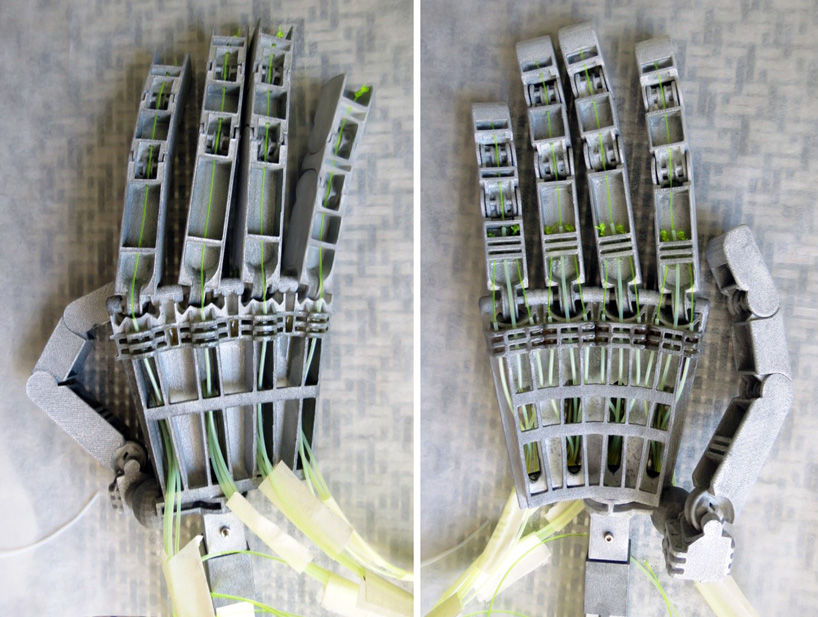
And now, Christopher Chappell of the U.K. wants to do take things a step further with his “Anthromod”. Using Kickstarter, a crowdfunding website, he has started a campaign for a 3D-printed robotic hand that is a little bit more sophisticated than the Robohand, but would cost around $450. In short, the proposed design offers the ambulatory ability of a bionic limb, but at a cost that is far more affordable.

To break it down, the arm uses a tendon system of elastic bands with the movement being provided by five Hobby Servos, which are in turn built out of off-the-shelf electronics. Wearers will be able to move all four of the units fingers, thumb and wrist, once the sensors have been calibrated, and the software to control the hand and EEG sensors is available online for free. This all adds up to a unit that is not only more affordable, but easy to assemble, repair and maintain.

robotic_hand3On their Kickstarter page, Chappell describes his campaign and their long-term goals:

Our Kickstarter campaign is to develop a humanoid robotic hand and arm that is of far lower cost than any other available. We believe that this will open up robotics to a far wider market of makers and researchers than has ever been possible. This should then trigger an explosion of creativity in the areas of robotics, telepresence and ultimately prosthetics.

Much like the InMoov, a 3D printed android with limited function, the Anthromod represents an age of robotics that are accessible to the public. And with time, its not hard to imagine an entire line of enhancements and robotics, such as household servants and cybernetic components, that could be manufactured in-house, provided you’re willing to shell out the money for a industrial-sized 3D printer!

To check out the Anthromod website, click here. And be sure to check out the video below of their hand in action.

Note: As of this article’s writing, Chappell and his colleagues passed their goal of £10,000 and reached a whopping total of £12,086 (18,808 dollars US). Congratulations folks!


Sources:
news.cnet.com, kickstarter.com


The Future is Here: Thinx Underwear!

thinx_mainThere are those who believe that underwear can change the world. And when you consider the way that young girls are disadvantaged, disrespected, and neglected worldwide, you have to believe they’re onto something. In many poverty-stricken countries, young women are disadvantaged simply by being young women, and because of a lack of health and medical services as well as sanitary products.

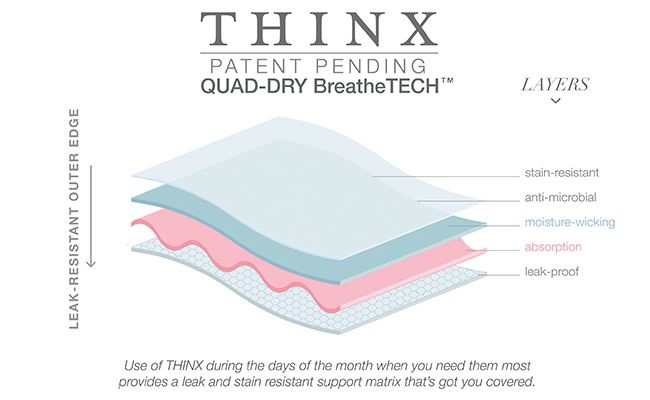
And that’s one of the reasons that Antonia, Miki and Radha Agrawal decided to come up with the product known as the Thinx. After a series of harrowing experiences and inspiration gained from traveling abroad, they developed the idea for a leak/stain-resistant, anti-microbial, and moisture-wicking underwear. And with a little crowdfunding through Kickstarter ($130,000 to be exact), they were able to make it a reality.

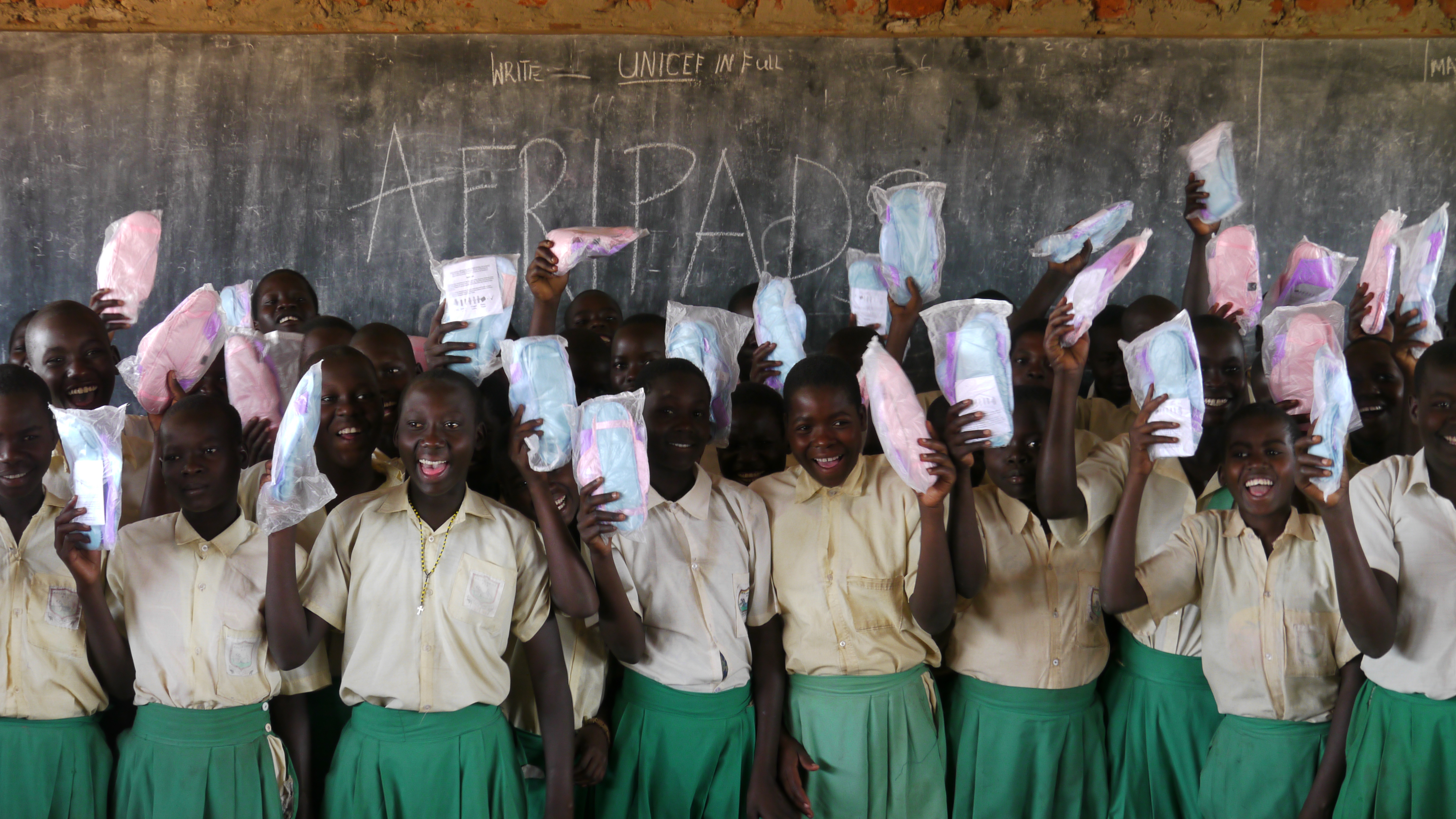
thinxThe women also partnered with Uganda-based organization AFRIpads, which creates washable pads for women in developing countries so they don’t have to miss work or school for a week each month. For each pair of underwear Thinx sells, it donates enough money for AFRIpads to create seven pads for young women in their country.

And as a final boost, the women beat out another 145 entrepreneurs in a contest held by the online marketplace known as the Daily Grommet, to have their product sold on the online marketplace, promoted in the media and be featured on the funding website Indiegogo. Here, the ladies appear together to offer their thoughts on insights on how their product can help change the world, as well as relating the story of how they came came up with it.

afripad

So in addition to showing how new media and international marketing to help change the world, this also demonstrates the power of crowdfunding and taking socially-conscious, sustainable ideas directly to the marketplace. What an age we live in! And one also has to consider what this case demonstrates about small things making big impacts.

In addition to helping women in the industrialized world avoid embarrassment and infection, it also will help girls abroad overcome the disadvantages that are so often heaped upon them because of their gender. And this comes not long after the development of the Smart Bra, a revolutionary undergarment that helps women beat breast cancer through early detection. Who say’s underwear can’t change the world?

And be sure to check out the video of the Agrawal sisters Indiegogo interview:


Source:
shethinx.com, fastcompany.com
, indiegogo.com