The Birth of an Idea: The Computer Coat!

optical_computer1I’ve been thinking… which is not something novel for me, it just so happens that my thoughts have been a bit more focused lately. Specifically, I have an idea for an invention: something futuristic, practical, that could very well be part of our collective, computing future. With all the developments in the field of personal computing lately, and I my ongoing efforts to keep track of them, I hoped I might eventually come up with an idea of my own.

Consider, the growth in smartphones and personal digital assistants. In the last few years, we’ve seen companies produce working prototypes for paper-thin, flexible, and durable electronics. Then consider the growth in projection touchscreens, portable computing, and augmented reality. Could it be that there’s some middle ground here for something that incorporates all of the above?

Pranav Mistry 5Ever since I saw Pranav Mistry’s demonstration of a wearable computer that could interface with others, project its screen onto any surface, and be operated through simple gestures from the user, I’ve been looking for a way to work this into fiction. But in the years since Mistry talked to TED.com and showed off his “Sixth Sense Technology”, the possibilities have grown and been refined.

papertab-touchAnd then something happened. While at school, I noticed one of the kids wearing a jacket that had a hole near the lapel with a headphones icon above it. The little tunnel worked into the coat was designed to keep the chord to your iPod or phone safe and tucked away, and it got me thinking! Wires running through a coat, inset electrical gear, all the advancements made in the last few years. Who thinks about this kind of stuff, anyway? Who cares, it was the birth of an idea!

headphonesFor example, its no longer necessary to carry computer components that are big and bulky on your person. With thin, flexible electronics, much like the new Papertab, all the components one would need could be thin enough and flexible enough to be worked into the inlay of a coat. These could include the CPU, a wireless router, and a hard drive.

Paper-thin zinc batteries, also under development, could be worked into the coast as well, with a power cord connected to them so they could be jacked into a socket and recharged. And since they too are paper-thin, they could be expected to move and shift with the coat, along with all the other electronics, without fear of breakage or malfunction.

flexbatteryAnd of course, there would be the screen itself, via a small camera and projector in the collar, which could be placed and interfaced with on any flat surface. Or, forget the projector entirely and just connect the whole thing to a set of glasses. Google’s doing a good job on those, as is DARPA with their development of AR contact lenses. Either one will do in a pinch, and could be wirelessly or wired to the coat itself.

google_glass1Addendum: Shortly after publishing this, I realized that a power cord is totally unnecessary! Thanks to two key technologies, it could be possible to recharge the batteries using a combination of flexible graphene solar panels and some M13 peizoelectric virus packs. The former could be attached to the back, where they would be wired to the coats power system, and the M13 packs could be placed in the arms, where the user’s movement would be harnessed to generate electricity. Total self-sufficiency, baby!

powerbuttonAnd then how about a wrist segment where some basic controls, such as the power switch and a little screen are? This little screen could act as a prompt, telling you you have emails, texts, tweets, and updates available for download. Oh, and lets not forget a USB port, where you can plug in an external hard drive, flash drive, or just hook up to another computer.

So that’s my idea, in a nutshell. I plan to work it into my fiction at the first available opportunity, as I consider it an idea that hasn’t been proposed yet, not without freaky nanotech being involved! Look for it, and in the meantime, check out the video of Pranav Mistry on TED talks back in 2010 when he first proposed 6th Sense Tech. Oh, and just in case, you heard about the Computer Coat here first, patent pending!

DARPA’s Next-Generation Spygear!

super-soldier-in-repose Remember how not that long ago some researchers were able to produce a new breed of dissolving electronics? Well as it turns out, there are those who want to find a way to militarize this technology. Those people are the Defense Advanced Research Projects Agency (DARPA), who are looking to create a breed of “suicide sensors” as part of what they call the VAPR (Vanishing Programmable Resources) program.

As it stands, war zones are often littered with “sophisticated electronic microsystems” that create enticing opportunities for adversaries to collect, study and reverse-engineer their enemy’s technology. And since it’s not practical for advanced armies to pick up all their microscopic gear when they withdraw from an area, it would be nice if there was a way to push a button that would cause all of those deployed electronics to dissolve, destruct or biodegrade.

super_soldierOf particular interest is the “degradation” involving implants in a soldier’s body. Given DARPA’s efforts to develop super soldiers – enhanced with bionic limbs, cybernetics, and implantable sensors and medical devices – future armies will run the risk of seeing that technology fall into enemy hands whenever a soldier is killed or taken prisoner. Here especially, a super soldier would be inclined to see their advanced bio-implants to break down and be irretrievable.

In order to accomplish this, it will be inviting a number of companies to a Virginia conference to kick around ideas for creating what it calls “triggered degradation.” In a recent interview with Wired, program manager Dr. Alicia Jackson expressed the goal of the program as follows:

“VAPR will focus on developing and establishing a basic set of materials, components, integration, and manufacturing capabilities to undergird this new class of electronics defined by their performance and transience.”

VAPR_imageSometimes the hardware will be pre-programmed to self-destruct and in others biodegrade into the surrounding environment. In other cases, such as where human implants are concerned, the electronics will be triggered to dissolve into a liquid. In this last respect, DARPA is already making headway, as they demonstrated last year with a super-thin electronic circuit made out of silicon and magnesium could be fabricated to dissolve in liquid.

Naturally, DARPA concedes that things are not quite where they need to be for everything to work. As they stated in part of the VAPR press release, “key technological breakthroughs are required across the entire electronics production process, from starting materials to components to finished products.” But of course, where there is a will – and unlimited funding – there’s usually a way.

Source: Wired.com, DARPA.mil

DARPA’s New Sub-Hunting Robot

robot_sub-hunterWhen it comes to planning for the next possible conflict, military planners are often forced to take into account emerging trends in technology, and find both uses and countermeasures for them. And when it comes to future wars at sea, possibly fought in the Straight of Hormuz or the Sea of Japan, a number of startling developments are being taken into account, and solutions drawn up!

One such “solution” is the new robot sub-hunter being jointly created by the Science Applications International Corporation and DARPA – the Defense Advanced Research Projects Agency. That unmanned maritime robot, called the Anti-Submarine Warfare Continuous Trail Unmanned Vehicle, or ACTUV, doesn’t exist yet and won’t for years. But the SAIC’s plan does have the backing it needs, and presents an idea that is likely to inspire fear in submariners everywhere!

knifefish-drone-640x353For one, the unmanned vehicle will be capable of operating for periods ranging between 60 and 90 days, significantly longer than any aerial drone is capable of staying airborne. What’s more, SAIC is designing the ACTUV to be way more autonomous than contemporary drone aircraft. Once powered up, all a ship need do is release the drone and allow it to rely on its long-range acquisition sonar and other advanced sensors to scan for submarines, while at the same time steering clear of any nearby surface ships.

And then there is the advanced technology powering the drone’s sonar arrays. Unlike other ships, the ACTUV’s sensors create an acoustic image of its target to know it has the right one. Once the ACTUV thinks it’s got something, it pings nearby Navy ships through a satellite link, which they can either confirm or deny, either giving the ship the green light to hunt or instructions to search elsewhere.

And last, but not least, the ACTUV can operate alongside its surface fleet, remain in constant communication with a mothership as well as naval aircraft as they deploy sonar charges to help it hunt subs. This is a level of coordination that is rarely seen in aerial drones, which are either sent into action far from the front lines or controlled remotely by infantry in the field to offer fire support.

X-47BAh, but there’s one thing: the drone isn’t armed. Primarilyy developed to help Naval ships with hunting silent subs and/or cheap diesel-electric models, the ship may be capable of operating autonomously, but cannot take action to end lives. This feature may be the result of the Pentagon’s recent decision to limit the killing powers of UAV and autonomous drones, which amounted to ensuring that a human being will always be at the helm wherever the death of human beings is involved.

What’s more, the drone is designed with all kinds of futuristic and present-day scenarios in mind. While silent subs – ones that use advanced drive systems to generate little to no noise (a la The Hunt for Red October) – are one likely scenario, there is also the possibility of the US Navy running into the cheap diesel models which are technologically inferior, but can be much quieter and harder to track than anything nuclear. Russia is known to sell them and Iran claims to have them, so any military analyst worth his salt would advise being prepared to meet them wherever they present themselves.

And of course, the SAIC was sure to create a video showing the ACTUV in action:


Source:
Wired.com

Criminalizing Transhuman Soldiers

biosoldiersIt seems to be the trend these days. You take a predictions that was once the domain of science fiction and treat it as impending science fact. Then you recommend that before it comes to pass, we pre-emptively create some kind of legal framework or organization to deal with it once it does. Thus far, technologies which are being realized have been addressed – such as autonomous drones – but more and more, concepts and technologies which could be real any day now are making the cut.

It all began last year when the organization known as Human Rights Watch and Harvard University teamed up to release a report calling for the ban of “killer robots”. It was soon followed when the University of Cambridge announced the creation of the Centre for the Study of Existential Risk (CSER) to investigate developments in AI, biotechnology, and nanotechnology and determine if they posed a risk.

X-47BAnd most recently, just as the new year began, a report funded by the Greenwall Foundation examined the legal and ethical implications of using biologically enhanced humans on the battlefield. This report was filed in part due to advances being made in biotechnology and cybernetics, but also because of the ongoing and acknowledged efforts by the Pentagon and DARPA to develop super-soldiers.

The report, entitled “Enhanced Warfighters: Risks, Ethics, and Policy”, was written by Keith Abney, Patrick Lin and Maxwell Mehlman of California Polytechnic State University.  The group, which investigates ethical and legal issues as they pertain to the military’s effort to enhance human warfighters, received funding from the Greenwall Foundation, an organization that specializes in biomedicine and bioethics.

In a recent interview, Abney expressed the purpose of the report, emphasizing how pre-emptive measures are necessary before a trend gets out of hand:

“Too often, our society falls prey to a ‘first generation’ problem — we wait until something terrible has happened, and then hastily draw up some ill-conceived plan to fix things after the fact, often with noxious unintended consequences. As an educator, my primary role here is not to agitate for any particular political solution, but to help people think through the difficult ethical and policy issues this emerging technology will bring, preferably before something horrible happens.”

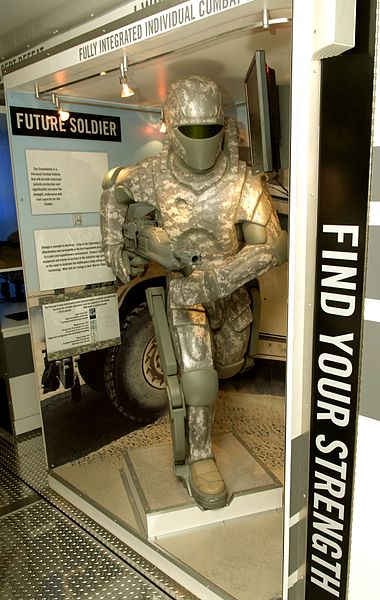
US_Army_powered_armorWhat’s more, he illustrated how measures are necessary now since projects are well-underway to develop super soldiers. These include powered exoskeletons to increase human strength and endurance. These include devices like Lockheed Martin’s HULC, Raytheon’s XOS, UC Berkeley’s BLEEX, and other projects.

In addition, DARPA has numerous projects on the books designed to enhance a soldiers abilities with cybernetics and biotech. These include VR contact lenses, basic lenses that enhance normal vision by allowing a wearer to view virtual and augmented reality images without a headset of glasses. There’s also their Cognitive Technology Threat Warning System (CT2WS), which is a computer-assisted visual aid that instantly identifies threats by augmenting their visual faculties.

CREATOR: gd-jpeg v1.0 (using IJG JPEG v62), quality = 90And in the cognitive realm, there are such programs as Human Assisted Neural Devices (HAND) that seeks to strengthen and restore memories and the Peak Soldier Performance (PSP) program that will  boosthuman endurance, both physical and cognitive. But of course, since post-traumtic stress disorder is a major problem, DARPA is also busy at work creating drugs and treatments that can erase memories, something which they hope will give mentally-scarred soldiers a new lease on life (and military service!)

And of course, the US is hardly alone in this regard. Every industrialized nation in the world, from the EU to East Asia, is involved in some form of Future Soldier or enhanced soldier program. And with nations like China and Russia catching up in several key areas – i.e. stealth, unmanned aerial vehicles and aeronautics – the race is on to create a soldier program that will ensure one nation has the edge.

bionic_handsBut of course, as Abney himself points out, the issue of “enhancement” is a rather subjective term. For example, medical advancements are being made all the time that seek to address disabilities and disorders and also fall into the category of “enhancement”. Such ambiguities need to be ironed out before any legal framework can be devised, hence Abney and his associates came up with the following definition:

“In the end, we argued that the best definition of an enhancement is that it’s ‘a medical or biological intervention to the body designed to improve performance, appearance, or capability besides what is necessary to achieve, sustain or restore health.”

Working from this starting point, Abney and his colleagues made the case in their report that the risk such enhancements pose over and above what is required for normal health helps explain their need for special moral consideration.

These include, but are not limited to, the issue of consent, whether or not a soldier voluntary submits to enhancement. Second, there is the issue of long-term effects and whether or not a soldier is made aware of them. Third, there is the issue of what will happen with these people if and when they retire from the services and attempt to reintegrate into normal society.

It’s complicated, and if it’s something the powers that be are determined to do, then they need to be addressed before they become a going concern. Last thing we need is a whole bunch of enhanced soldiers wandering around the countryside unable to turn off their augmented killer instincts and super-human strength. Or, at the very least, it would be good to know we have some kind of procedure in place in case they do!

What do you think of when you hear the word "super soldier"? Yeah, me too!
What do you think of when you hear the word “super soldier”? Yeah, me too!

Source: IO9.com

Drone Wars!

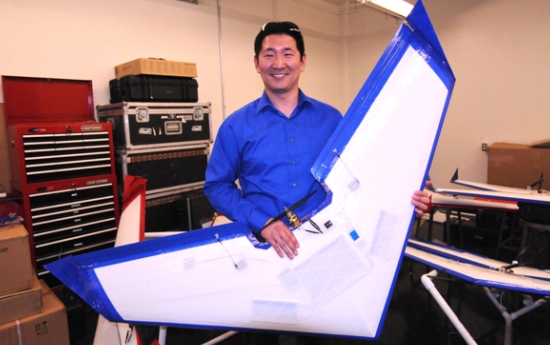
X-47BThat’s the crux of Timothy Chung’s research, an assistant professor in the Systems Engineering department at the Naval Postgraduate School in Monterey, California. For the most part, he and the Advanced Robotics Systems Engineering Lab (ARSENL) have been working on a way to construct a series of low-cost, lightweight autonomous flying vehicles known as Aerial Battle Bots that will give the US and the western allies an advantage should a full-scale conflict involving UAV’s happen.

The aspect of cost is especially important, seeing as how drones cost on the order of several million dollars apiece. By supplementing reconnaissance and hunter-killers with dogfighting drones, the army and navy of the future will have a lost cost-option for keeping their big-budget fliers safe. What’s more, it’s extremely important that the drones work in tandem, since it’s highly likely other nations will be developing similar swarms of drones in the future too.

Chung_droneWith the help of a DARPA research grant, Chung and his associates have completed a small fleet of about a dozen drones. Each is a essentially a commodity radio-controlled flying machine, called Unicorn, that has been retrofitted with an onboard computer and other gear in order to take their places in the larger group. He hopes that by this August, he and his team will be able to get the vehicles flying and be able to start experimenting with getting them working together, as well as facing off!

In other news, questions relating to drone dogfights and the issue of autonomous drones were raised once again at the White House. Back around Thanksgiving, the mounting concerns from the human rights community led Deputy Defense Secretary Ashton Carter to sign a series of instructions that were designed to ensure that human oversight would always be a factor where drone strikes and UAV’s were concerned.

john-brennanThese concerns have since mounted with the recent announcement that John Brennan, the White House’s counter-terrorism adviser and the man known as the “Drone Godfather”, was nominated to become the next head of the CIA. For years now, he has been the man in charge of the US antiterrorism efforts in Central Asia, many of which have involved the controversial use of Predator and Reaper strikes.

These concerns were voiced in a recent letter from Sen. Ron Wyden (D-Ore), a member of the Senate intelligence committee. In it, he asked Brennan pointedly when and under what conditions the president would be able to target American citizens using drones:

“How much evidence does the President need to determine that a particular American can be lawfully killed? Does the President have to provide individual Americans with the opportunity to surrender before killing them?”

Naturally, the questions were quite specific when it came to the authorization of lethal force and when such authorization would be given to target people within the US’s borders. But there were also many questions that highlighted concerns over how this same process of authorization has taken place in other countries, and how little oversight has taken place.

(U.S. Air Force photo/Staff Sgt. Brian Ferguson)(Released)In short, Wyden used the occasion to express “surprise and dismay” that the intelligence agencies haven’t provided the Senate intelligence committee with a complete list of countries in which they’ve killed people in the war on terrorism, a move which he says “reflects poorly on the Obama administration’s commitment to cooperation with congressional oversight.” And given the mounting criticism at home that using killer drones against unspecified targets in Afghanistan and Pakistan has earned, not to mention the blowback happening overseas, he is not alone in thinking this.

Like it or not, it’s a new age where “umanning” the front lines is having an effect, albeit not the desired one. At one time, the predominant thinking in military and intelligence communities was that using automated aerial, land and sea vehicles, war could be fought cleanly, effectively, and without the loss of life – at least on OUR side. However, this thinking is coming under increasing scrutiny as it comes closer and closer to realization. And at the center of it all, the philosophical and existential questions are numerous and impossible to ignore.

For starters, war is and always will be a human endeavor. Just because you are not risking the lives of your own people doesn’t mean the fight is any more sanitary or bloodless. Second, even though none of your own citizens will be mourning the death of their loved ones doesn’t mean there won’t be mounting civilian opposition as conflicts go on. In a global community, people are able to witness and empathize with the plight of others. And finally, the increased use of machinery, be it autonomous or remote controlled, will inevitably lead to fears of what will happen if that same technology would ever be turned against its own people. No weapon is so safe and no government so trustworthy that people won’t fear the possibility of it being turned on them as well.

Source: news.cnet.com, wired.com

The Future is Here: The tDCS Headband!

tcdsOh what a time to be alive, when more and more science fiction concepts that once seemed hokey are now becoming a reality! Take the transcranial direct current stimulation for example, otherwise known as the tDCS. It’s essentially a high-tech headband, one which is used to trigger the release of the powerful opioids – the human body’s most powerful, euphoria-inducing painkillers that are very similar to opiates such as morphine.

A team of international researchers headed up by the University of Michigan tested this noninvasive device and realized it could be both safe and effective. By applying a very small current to your scalp (2 milliamps), the headband alters the behavior of neurons in the brain, triggering the release of opioids that relieve pain, relax the body and create a general sense of well-being. This is big news for the medical industry and patients, since it means that artificial painkillers may not be necessary for much longer.

sniperTo be fair, the tDCS is not entirely new. Back in March of 2012, DARPA announced that it was using this device to assist in the training of military sniper. Essentially, the device was created to alter brain chemistry since the application of current to the brain was shown to make neurons fire faster and improve their neurolasticity. In short, the device could improve reaction time and help users to learn things faster.

However, Alexandre DaSilva and a team of researchers out of the University of Michigan found that the tDCS, when the electrodes are placed above the motor cortex, releases endogenous μ-opioid. In their study, the patient’s threshold for pain improved by 36% and the researchers seem confident that repeated uses of tDCS would also reduce clinical, chronic pain. By boosting the release of natural painkillers, less pharmaceutical opiates are required for managing pain, thus reducing the side effects and the risk of addiction.

neurozeneFurther analysis and long-term trials are needed to confirm these initial results, and I’m thinking a study on the possible effects of tDCS abuse might be needed as well. Sure, patients can avoid getting hooked on Oxycontin, morphine, and codeine with this device, but couldn’t they also get hooked on their headband? Yes, I can see it now. “I don’t need to wear my TransCranBand! I can quite whenever I want!”

Source: Extremetech.com

The Future is Here: Insect Biobots!

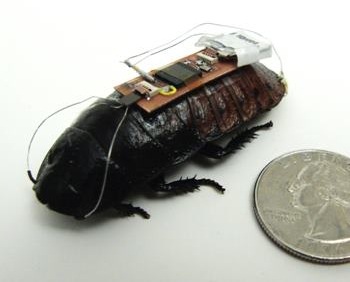
One small step for man, one giant leap for man-machine interface! Or man-roach interface, I guess! It seems that researchers at the iBionicS lab at North Carolina State University have created a remote-control system to stimulate and steer cockroaches. This report came at the 34th Annual International Conference of the IEEE Engineering in Medicine & Biology Society last month, and represents quite the step forward for cybernetics.

In short, the research team equipped a Madagascar hissing cockroach with a circuit board that connects directly to its antennae. It’s a well known fact that cockroaches, in addition to being nuclear war-resistant, use their two antennas to find their way around. By sending electrical signals to one or the other, they were able to steer the cockroach as it made its way around.

To be fair, this is not the first case of insect cyborgs being developed. In 2009, the researchers at iBionicS unveiled a similar program using remote-controlled hawk moths. In that same year, the University of California, Berkeley, and the University of Michigan presented their collaborate project: remote-controlled beetles! Here, the beetles had electrodes wired into their brains and flight muscles which were used to command them to take off and steer them while in the air.

Interestingly enough, research in both of these latter cases was being funded by the Defense Advanced Research Projects Agency (DARPA) with the goal of creating remote-controlled insects could go where humans cannot and aid in search-and-rescue or even spy missions. You’ve heard of UAV’s, aka. spy drones, doing reconnaissance, right? Well look out! The next time you see a flying beetle or a hawk moth, you could be on someone’s camera. Smile before you step on it!

And be sure to check out the video below of iBionicS lad testing their remote-control roach steering system.

Source: Discover Magazine

The Legged Squad Support System

Ever since man began killing man in an organized fashion – i.e. the rise of armies –  political and military leaders have struggled with the problem of how to keep them supplied. As Napoleon himself stated in the early 19th century, “An army marches on its stomach”. Since his time, things have not improved drastically. Even with the advent of the steam train, trucks and airplanes, a fully-loaded soldier must still carry upwards of 90 lbs of equipment on their backs. Not an easy task, especially when marching through particularly hot, wet, or rugged terrain.

Well it just so happens that DARPA and the United States Marine Corps might be in possession of something that can help real soon. A few years back, they awarded a contract to an engineering firm named Boston Dynamics to develop a prototype for Darpa’s Legged Squad Support System (LS3). This system calls for a walking quadruped robot that will augment squads by being able to carry equipment autonomously over the kinds of complex terrain where traditional tactical vehicles can’t go.

The walker will reportedly be able to carry a payload of 40o pounds over as much as 20 miles and provide 24 hours of self-sustained capability. In addition, it requires no drivers or remote controllers, since it will be fitted with remote sensors that will allow it to follow the team leader, and a GPS so it can travel to predesignated coordinates. Already, the prototype LS3 has taken its first steps, and the USMC hopes to have some in the field sometime this decade.

One has to wonder… is the beginning of AT-AT walkers and other Star Wars stuff? If so, then I’m thinking we might just be seeing some prototypes for hover cars and lightsabers very soon. Like many fanboys, I was a little kid when the originals came out. Now, like them, I’m in my thirties and thinking I’ve waited long enough! Check out the video below to see the LS3 in action:

Real-life Robocop?

Imagine if you will, a machine that gives disabled police officers a chance to continue working with the force, but from the comfort and safety of an office. Rather than walking the beat and putting themselves in harm’s way, they could telepresence themselves to the streets through a robot body, one which does the job of getting around and locating offenders, while they issue the arrests and infractions. This is the concept that lies behind a new breed of patrol robot that is being developed by Lieutenant Commander Jeremy Robins and Florida International University’s Discovery Lab.

Initially, Robins began this program as a way of bringing some of the thousands of disabled police officers and soldiers in the U.S. back to the workforce. Ultimately, this would call for the creation of a “telebot” that is not only equipped with the latest in wireless technology, but also one that can get around and take some serious punishment. In many ways, this is an elaboration on the concept of Robocop, the hybrid man-machine that stole our hearts back in the 80’s with his signature lines: “You’re move creep!” and “Dead or alive, you are coming with me!” And let’s not forget that sweet gun trick!

But of course, these new robots would be asked to do less adventurous things than the gun-toting cyborg who saved Old Detroit. In addition to working as patrol officers, they would responsible for handling all the regular tasks of police officers. These would include responding to 911 calls, writing traffic tickets, patrolling specific routes, and staying vigilant for law breakers. In addition, they could also be charged with safe guarding government and high-value facilities from terrorists or other criminals, doing both surveillance and acting as an on-site security force.

Early sketches of the robot give some indication of what it would look like. Essentially, it would have to be mobile, which would call for a wheeled chassis. It would have to be ambulatory, which would require arms. And it ought to have some semblance of a person, since it would be expected to carry the officer’s voice and interact with people. In essence, even little children need to be able to approach this robot and ask it if it can help them find their mothers.

An early rendition, shown here, has been appropriately named “Tough Guy”. Like all other design ideas, the end result calls for a robot that has a two-wheeled chassis, a mobile upper body, and a head that carries a two-way audio and video device so that the officer commanding it can both view and interact with the robots and environment and other people.

Already, the Discovery Lab has announced that the end product will be military grade and usable by the army under the 2 million dollar initiative that DARPA’s (Defense Advanced Research Projects Agency) set up years ago. Robins is also trying to get NASA to sign on with its Robonaut tech – a program to develop a robotic astronaut. So while the end product will be used primarily by police, plans are already in place to expand it to other areas – such as military operations and unmanned space exploration – as well.

The Future is Here!: VR Contact Lenses

Not long ago, it was Google who introduced eye pieces that could project augmented reality into a person’s visual field. Known as Google Glasses, they sure seemed futuristic, didn’t they? And yet, it seems someone else has gone a step farther. The Defense Advanced Research Projects Agency’s (aka. DARPA) own researchers, based in Washington’s Innovega iOptiks.

The concept calls for contact lenses that enhance normal vision by allowing a wearer to view virtual and augmented reality images without the need for bulky apparatus. One of the obvious advantages of this is the ability to get around easily while interacting with virtual images. But in addition, they also will help a person focus on both near and distant objects.

Developed as part of DARPA’s “Soldier Centric Imaging via Computational Cameras” (SCENICC) program, the objective was to create a device that could enhance a soldier’s vision, allow them to access information, while still being highly ergonomic and portable. But of course, the line between military and civilian applications is always a fine one, with inventions trickling down to the street all the time. Very soon, these could be making their way onto the shelves of the Apple store. I can see it now… the new eyePhone!

No word yet as to how these things are powered, like if they have some kind of battery. Where would that go? Are these things solar powered? Unclear at this time. Regardless, as someone who is near-sighted, a big fan of cyberpunk, and damn eager to try out some augmented reality, I’ll be looking to get me some as soon as they’re available!