
 Few politicians today elicit the same level of controversy as Vladimir Putin. Adored by many Russians at home and abroad, he is also reviled by many for his near-absolute grip on power, intimidation of political opponents, political repression, and military aggression against neighboring states. But in this latest coup de grace, Putin may be seeking the kind of power that few modern states enjoy – the ability to shut down his country’s access to the internet.
According to the Russian business newspaper Vedomosti, Putin and his security council met this past Monday to discuss a way to disconnect Russia’s internet should it be deemed necessary. According to various sources, it is a tool that could be enacted in times of war, massive anti-government protests, or in order to “protect” Russians from Western countries like the United States or members of the European Union.
 Citing an intelligence officer as their source, Vedomosti claims that this is the result of the Ministry of Communications conducting exercises to test vulnerabilities in Russia’s internet and can now successfully disable IP addresses outside of Russia. All of this is being done in order to see if the Runet (Russia’s internet) can operate on its own without Western web access, with the hope that it will be functional next year.
It is not hard to imagine the Kremlin justifying such a clamp-down by whipping up fears that it’s the West that wants to disconnect Russia from the web, said industry experts. In Russia’s current political environment, anti-western propaganda has been used effectively to create the impression of a siege mentality, used largely to justify their current economic woes and the ongoing Ukrainian Crisis.
 Analysts say similar measures have been introduced by countries such as Iran and Cuba, which developed national Internet limits to curb the spread of Western culture and ideas. Prior to the meeting, Putin’s spokesman Dmitry Peskov confirmed that the Security Council meeting on Internet security would be taking place, but he declined to discuss details of the agenda.
In addition, he denied that Russian authorities have plans to disconnect the Internet, instead insisting this is a question for other countries to answer. He also added that Russia needs a way to protect itself from the West. Peskov cited the “unpredictability” of the European Union and the United States before implying that these countries would in fact disconnect Russia from the Internet and not the reverse.
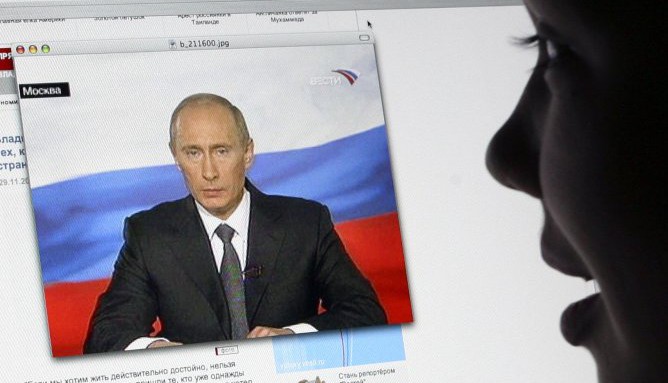 In a statement to Russia Today – a government-run website launched in 2005 by Putin as a “PR campaign to improve [Russia’s] image in the eyes of the world.”- Russia’s communications minister, Nikolay Nikiforov, said:
Russia is being addressed in a language of unilateral sanctions: first, our credit cards are being cut off; then the European Parliament says that they’ll disconnect us from SWIFT*. In these circumstances, we are working on a scenario where our esteemed partners would suddenly decide to disconnect us from the internet.
*Society for Worldwide Interbank Financial Telecommunication
The “unilateral sanctions” he refers to are the ones that were placed upon Russia by the US and the EU in response to its seizure of the Crimea, which have since escalated thanks to Russia’s ongoing involvement in the eastern portions of Ukraine where rebels – whom many claim have been supplied with Russian-made weapons and are now being supported by Russian troops – continue to fight against the new Kiev government.
 Interestingly enough, whether it is the West that disconnects Russia from the Internet or if it is Putin that does so, both possibilities highlight the world’s dependence on Western internet. In fact, many countries, including Brazil and Germany, have been complaining about this since Edward Snowden’s revelations last year. Putin himself has expressed concern over the NSA spying on him via the web and the security of the internet in his country in the past.
Nevertheless, the question remains as to whether or not it could be done. According to Andrei Soldatov, a Russian spy expert who recently spoke to the Guardian on the subject, claims that it is technically possible given how few internet exchange points Russia has. However, it seems unlikely at this point that Putin would do this given the repercussions for Russian businesses that rely on the Western internet to function.
 Already, Russia has been feeling the pinch because of Western sanctions, particularly sanctions targeting its oil industry that have been leading to a drop in prices. At this rate, several economists and even Russian ministers are predicting a recession in the near future. This in turn could present Putin with a scenario whereby he would have to disconnect the internet, in order to block mass protests sites in the event of people protesting the economic downturn.
Similar measures have been taken in the past by countries like Egypt, Iran, Syria, China, the UK, and Thailand, who chose to block Facebook at various points because protesters were using it to organize. Venezuela also blocked Twitter this year during times of political unrest to prevent people from sharing information and real-time updates. But a total disconnect has yet to be seen, or even seriously contemplated.
 Whether or not Putin and Russia’s ruling party is the first to do so remains to be seen. But it is not entirely unfeasible that he wouldn’t, even if economic consequences were entailed. For as the saying goes, people will “cut off their nose to spite their face”, and Putin has already shown a willingness to challenge his country’s economic interdependence with the world in order to ensure control over neighboring territories.
One can only hope that he won’t feel the need to snip his country’s connection to the rest of the world. In addition to ensuring its ec0nomic isolation – which would have dire consequences and reduce the country to the status of a developing nation – it will also resurrect the specter of the Cold War years where Russians were effectively cut off from the outside world and entirely dependent on state-controlled media.
We’ve simply come too far to go back to an age where two superpowers are constantly aiming nuclear warheads at each other and entire blocs of nations are forbidden to trade or interact with each other because of political rivalries. History does not respect regression, and the only way to make progress is to keep moving forward. So let’s keep the internet open and focus on building connections instead of walls!
Source: motherboard.com, news.discovery.com, ibtimes.com




 When it comes to the future, it is clear that the concept of the “Internet of Things” holds sway. This idea – which states that all objects will someday be identifiable thanks to a virtual representations on the internet – is at the center of a great deal of innovation that drives our modern economy. Be it wearables, wireless, augmented reality, voice or image recognition, that which helps us combine the real with the virtual are on the grow.
 As Ambarish Mitra, the head of Blippar stated, AR is already gaining traction among consumers thanks to some of the world’s biggest industrial players recognizing the shift to visually mediated lifestyles. Examples include IKEA’s interactive catalog, Heinz’s AR recipe booklet or Amazon’s recent integration of the Flow AR technology into its primary shopping app. As this trend continues, we will need a Wikipedia-like database for 3-D objects that will be available to us anytime, anywhere.
 For better or for worse, wearable designs of consumer electronics have come to reflect a new understanding in the past few years. Basically, they have come to be extensions of our senses, much as Marshall McCluhan wrote in his 1964 book Understanding Media: The Extensions of Man. Google Glass is representative of this revolutionary change, a step in the direction of users interacting with the environment around them through technology.
 Augmented reality has already proven itself to be a multi-million dollar industry – with 60 million users and around half a billion dollars in global revenues in 2013 alone. It’s expected to exceed $1 billion annually by 2015, and combined with a Google-Glass type device, this AR could eventually allow individuals to build vast libraries of data that will be the foundation for finding any 3-D object in the physical world.
 This past week, the Electronic Entertainment Expo (commonly referred to as E3) kicked off. This annual trade fair , which is presented by the Entertainment Software Association (ESA), is used by video game publishers, accessory manufacturers, and members of the computing industry to present their upcoming games and game-related merchandise. The festivities wrapped up this Friday, and was the source of some controversy and much speculation.
 Nowhere was this more clear than with Nintendo, which was the source of quite a bit of buzz when the Expo began. But it was evident that games – particularly for the Wii U – were not going to materialize until 2015. The company got a jump on the next-generation console battle by launching its Wii U in late 2012, a year ahead of Sony and Microsoft, but poor sales have led to big game developers largely abandoning it.
 The companies have some respective big guns in the works, such as Halo 5: Guardians and Uncharted 4: A Thief’s End, but they’re also scheduled for release in 2015. However, with the brisk sales of the Xbox One and PlayStation 4 consoles, both companies have the luxury of taking their time with big games. Nintendo is not so fortunate, since the jump they made with the Wii U leaves them with a big gap that they aren’t apparently filling.
 The software giant bumbled the Xbox One launch last year and alienated many gamers, mainly by focusing on TV and entertainment content instead of gaming and tying several unpopular policies to the console, which included restrictions on used games. The company eventually relented, but the Xbox One still came bundled with the voice- and motion-sensing Kinect peripheral and a price tag that was $100 higher than Sony’s rival PlayStation 4.
 That was certainly the focus for Microsoft at E3. TV features weren’t even mentioned during the company’s one-and-a-half-hour press conference on Monday, with Microsoft instead talking up more than 20 upcoming games. As Mike Nichols, corporate vice-president of Xbox and studios marketing, said in an interview:
 But this new virtual reality headset, which was recently bought by Facebook for $2 billion, was undeniably the hottest thing on the show floor. And the demo booth, where people got to try it on and take it for a run, was booked solid throughout the expo. Sony also wowed attendees with demos of its own VR headset, Project Morpheus. And while the PlayStation maker’s effort isn’t as far along in development as the Oculus Rift, it does work and adds legitimacy to the VR field.
 Legendary Japanese creator Hideo Kojima also had to defend the torture scenes in his upcoming Metal Gear Solid V: The Phantom Pain, starring Canadian actor Kiefer Sutherland (man loves torture!), which upset some viewers. Kojima said he felt the graphic scenes were necessary to explain the main character’s motivations, and that games will never be taken seriously as culture if they can’t deal with sensitive subjects.
 If one were to draw any conclusions from this year’s E3, it would undoubtedly be that times are both changing and staying the same. From console gaming garnering less and less of the gamers market, to the second coming of virtual reality, it seems that there is a shift in technology which may or may not be good for the current captains of industry. At the same time, competition and trying to maintain a large share of the market continues, with Sony, Microsoft and Nintendo at the forefront.
 T
T
 This year, the detainees included
  On the subject of why Google was being targeted,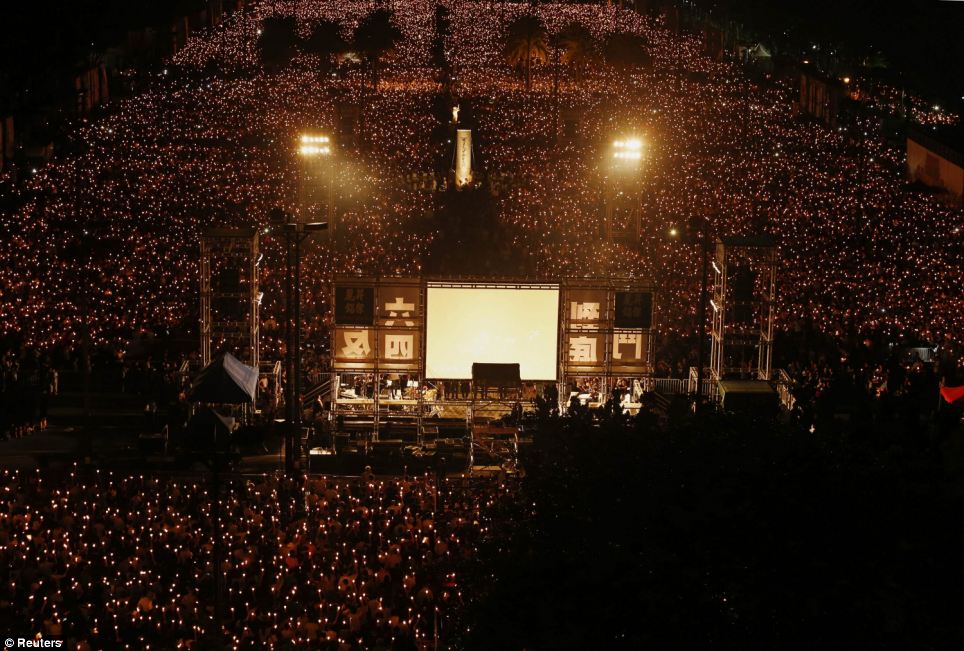


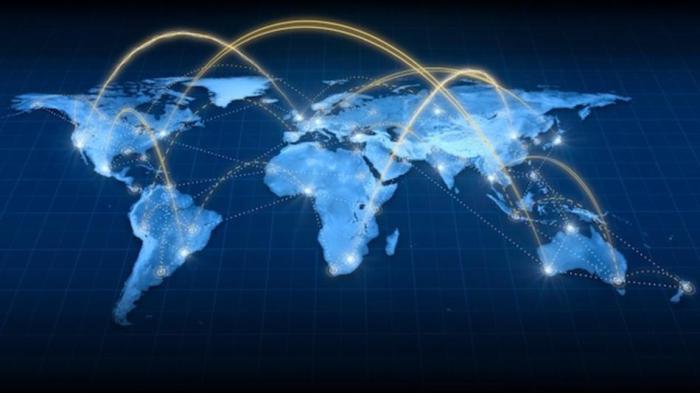 However, TechCrunch reports that Facebook would launch 11,000 Solara 60 drones. Their coverage would begin with Africa, and then spread out from there. There’s no word on how fast these connections might be, nor how much such a connection would cost per user. Perhaps more importantly, there’s also no word on how Facebook intends to connect these 11,000 satellites to the internet, though it is obvious that Facebook would need to build a series of ground stations.











 Stories by Williams