New Drones Art Campaign

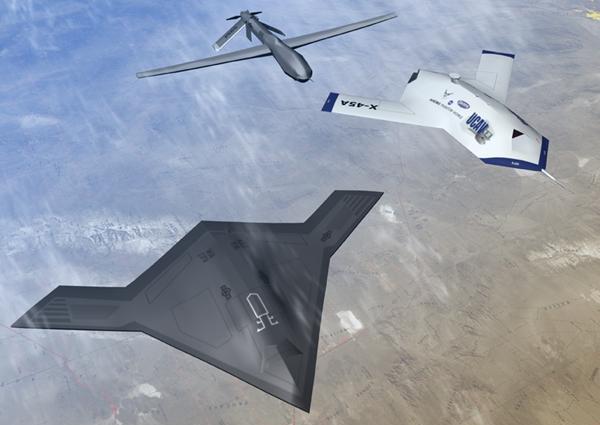
UAVsOver at deviantART, a constant source of inspired art for me, there’s an interest new campaign designed to raise awareness and stimulate debate on a rather controversial issue. I am referring, as the topic line would suggest, to the use of drones and UAV’s and all that it entails.

As one of the greatest concerns facing developed nations today, not to mention the developing world where they are being increasingly used, this campaign is not only timely and relevant, but an intriguing display of artwork motivated by social conscience. In short, it asks the question: how is this debate reflected in art and what will future generations think of it?

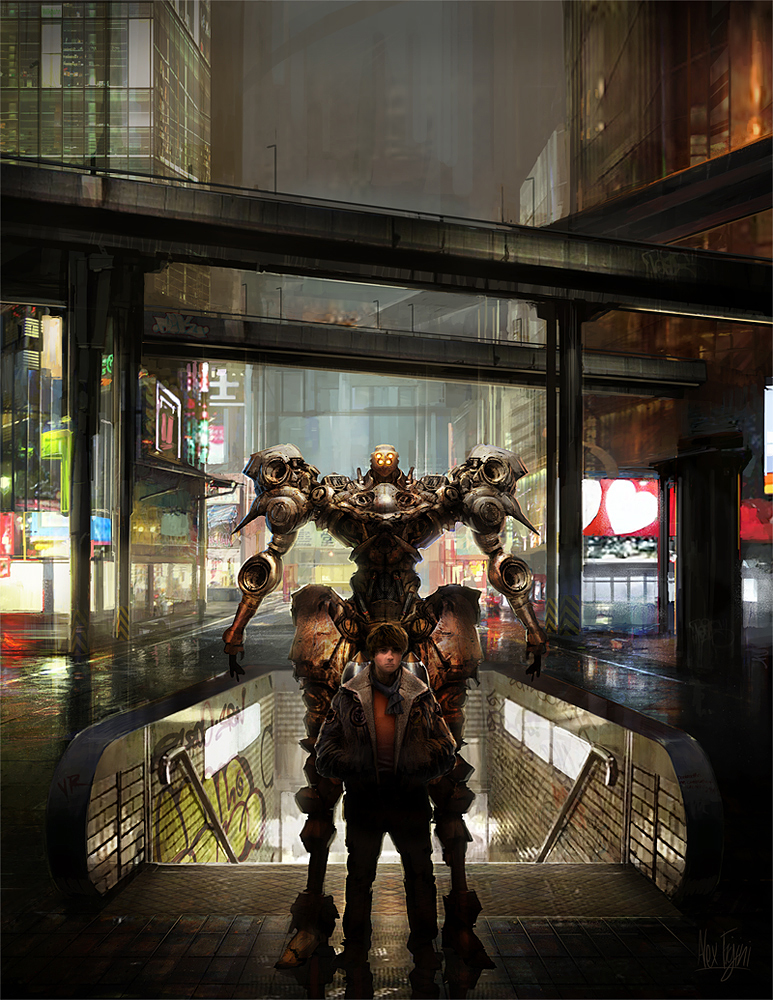
looking for a hole, by arcas art

Inspired by similar projects which are taking place around the world, the purpose of the campaign is to draw attention to the fact that were are living in a world increasingly characterized by surveillance and killing machines. Or as technognotic puts it:

Drones have become the white hot center of debate for a multitude of deeply consequential concerns for the entire Earth Sphere. No matter the digital end point or theatre of conversation, whether it be politics, war, privacy, pop culture, or the rise of machines – Drones or UAV’s (unmanned aerial vehicles) are the current catalyst du jour in any number of flashpoint discussions…

Even more interesting is the tone of inevitability of outcome. Core discussion seems to focus on a coming drone-filled sky and how we might govern our selves accordingly as this fact becomes a reality… Is this the dark side of human creativity and inquisitiveness that will ultimately one day spell our doom or the first signs of a coming technological Utopia.

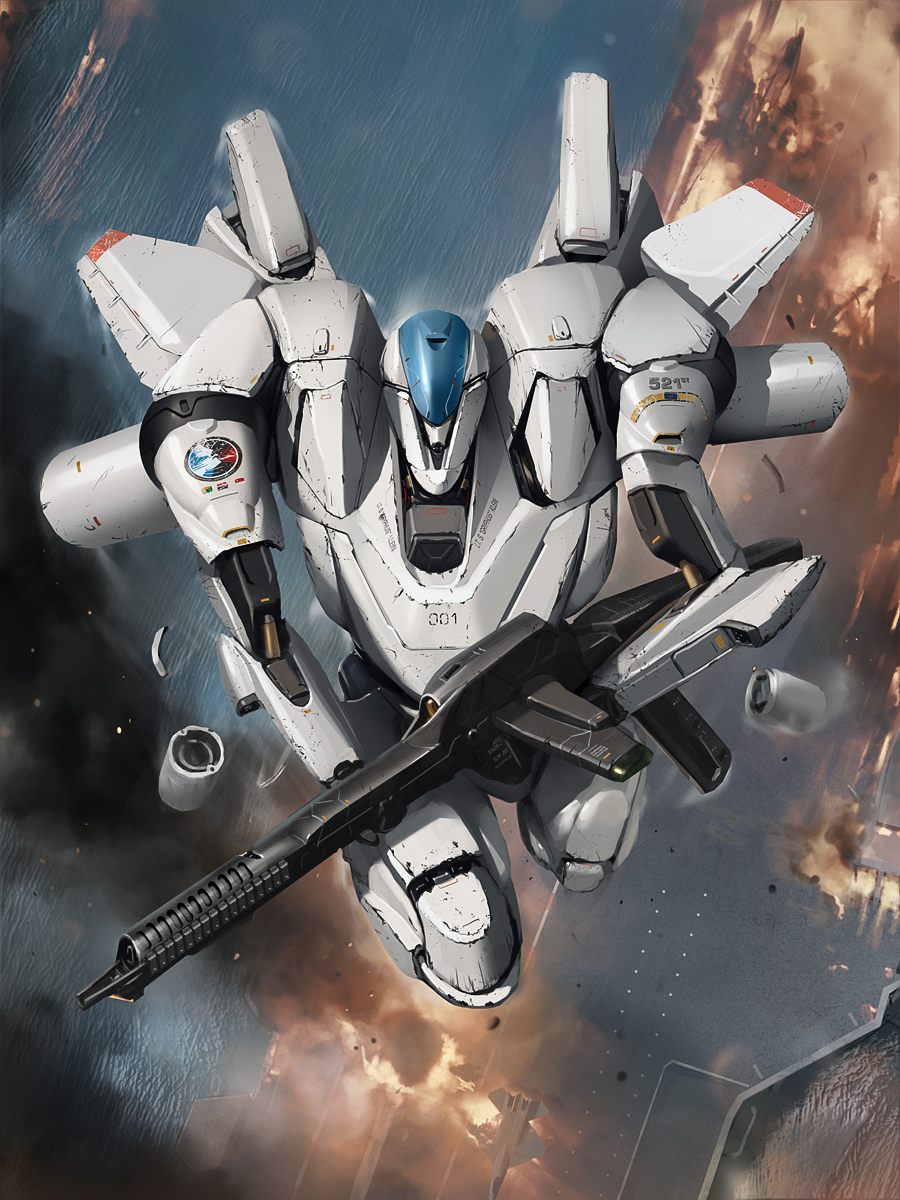
galaxy saga - white gryphon, by ukitakumuki
galaxy saga – white gryphon, by ukitakumuki

In addition, the campaign features the thoughtful essay of the same name by Jason Boog (deviantART handle istickboy), who takes a look at how killing machines and drones have been explored through art and popular culture. Beginning with a short romp through history, identifying the first “drone” to ever be used, he goes on to examine how several generations of artists chose to portray them and their use.

Things culminate in the modern age, where spending on drone development and humanitarian concerns have culminated to make this a truly global and auspicious concern. With remote-controlled drones giving way to autonomous models and UAV’s being used for domestic surveillance, there’s no telling where things could go.

mysterious journals, by sundragon83

On the one hand, a concerned and mobilized public could place limits and controls on them, or counter using their own form of “sousveillance” (public counter-surveillance). On the other hand, we could be headed for a police state here privacy is non-existent and robots decide who lives and who dies – maybe entirely on their own!

As you can certainly imagine, when I first learned of this campaign I could tell that it was right up my alley. Being such an obsessive geek for all things technological and how innovation and progress affect us, I knew I had to post about it. And as you can certainly tell from the samples posted here, the artwork is pretty damn badass!

I would recommend checking it out for the aesthetic appeal alone. Knowing you’re taking part in a campaign dedicated to public awareness is just a big bonus!

For more information, and to take a gander at some galleries, visit the campaign at techgnotic.deviantart.com.

Movie Trailer Monday: Elysium

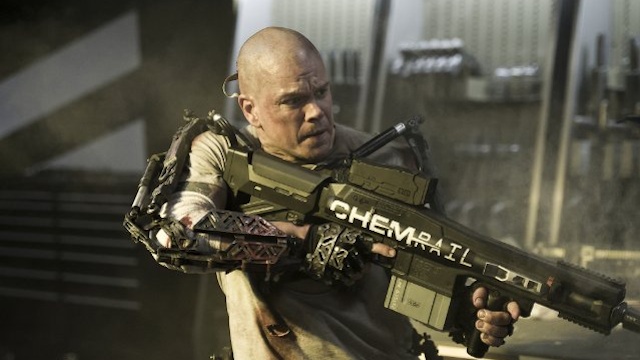
ElysiumHello people and welcome back to another installment of MTM! Today, its a full-length trailer for the upcoming movie Elysium, a dystopian tale that takes place in the year 2159, where the class divide between rich and poor extends into orbit. The very wealthy live on a man-made space station (named Elysium) while the rest of the population resides on a ruined Earth.

Into this, a cybernetically-enhanced man from Earth takes on a mission that could bring equality to the polarized worlds. Written and directed by Neil Blomkamp, who wrote District 9, and starring Matt Damon, Jodie Foster and Sharlto Copley (who played the protagonist of District 9), the sci-fi makes use of a lot of classic dystopian themes and showcases some very impressive looking sets.

I for one shall bookmark this movie as a must-see/must rent/catch on Netflix/worst-case-scenario must download. Stuff happens, what can I say?

Relaunching an Idea: Genome!

GenomeIn recent months, I did what I often do when I find myself in the midst of a few projects, where none of them are occupying my attenti0n completely. I went back to an old idea that never got finished, but which I felt pretty passionate about at the time. This idea was one a friend and I came up with while we chatted about human nature and genetic engineering.

Specifically, we talked about how people in the future might try to tailor their children to weed out self-doubt and the self-directed critical tendencies we all seem to have. That got the ball rolling, and in short order, I began writing the full-length concept into a story I called Genome. Unfortunately, this project, like so many others, lost my interest part way through and got stock in the Incomplete folder.

Luckily, writing for China Daily Mail got me interested in it again. You see, the story takes place in one of my favorite environments: the Northeaster Megapolitan region known as BosWash – aka. the Boston-Washington D.C. metropolitan axis. In the story, I decided to add a little symbolic feature known as the BWHM, or BosWash Health Monitor, which rates the cities pollution based on the Air Toxicity Factor (or ATF).

The scale was out of 100 and during the course of the story, it kept getting higher. Well after reading about China’s air pollution and the AQI (Air Quality Index) which has a maximum ranking of 500, but which needs to be revised to account for Beijing’s 700 plus ratings of late, I began to think I had stumbled onto something golden!

Or, I had simply stolen something without knowing it and ought to pursue it since it’s relevant. But of course, to make the reference accurate and work for readers, I had to since revise it to make the BWHM out of 1000 so people would know exactly how toxic and polluted this future, dystopic megacity really was!

In addition, I also began thinking I should do with Genome what I did with Whiskey Delta and begin sharing it here, chapter by chapter. And so here it is, the first-ever installment of Genome, which is the prologue chapter entitled “The Big Sink”. As you can probably tell, I was going for a real urban noire feeling, with some cyberpunk elements thrown in for good measure. This, you will find, is offset by some dry humor down the road…

Enjoy, and feel free to let me know if it’s any good, in need of a full-scale rewrite, or a short trip to the Recycle Bin! 🙂

*                    *                    *

It was an evening like any other. The sky was ashen grey, rain clouds and thunderclaps flashing over the urban landscapes. Outside of the establishment, a few people lingered in the rain, taking in their carcinogenic fixes and staring with blank faces.

In the distance, the sound of thunderclaps and sirens set the nighttime scene. And the rain, it fell hard. So hard it could almost wash the scum off the sidewalk for another night. But even if it could, the scum would return tomorrow. It came in endless supplies, and the fight to keep it at bay was always constant.

Bastion stepped out of the twenty-four café and made a quick appraisal of the evening. The prospects were grim, much like the weather. No one to go home to, few women adequate enough to invite home, and a whole lot of pain and misfortunate to look forward to tomorrow. Another day of bills, alimony and hard-luck stories from perps, policemen and unaffiliated scumbags, nothing but the bottle and takeout meals to keep him company in the one bedroom flat that passed for a home.

Just another day in the life of a Detective working the Big Sink.

Sparking up his torch, Bastion lit up the stubby green tube between his lips and inhaled deeply. Everyone who stood out in the rain with him was taking their daily smoke break, sucking in the terrible tasting shit that was supposed to ward off the tumors and slow death that city living brought on.

It was a constant feature in the news, the build-up of toxins that was forcing everyone to ingest one kind of poison to offset the others, and every day the count got higher, bringing the city closer to the brink.

Last he checked, the experts said it was at a robust eight-hundred eighty-five on a scale that reached to one thousand, though that could be updated in the near future, as it had in the past. No one in his immediate surroundings could say with any certitude what would happen once they reached the top of that index, but all indications said it would be bad.

He looked around and gauged the people next to him by the tired, sunken looks in their eyes. Already he could tell how long they had been on the medication just by the look of them.

Sandra, the head waitress, the one with the yellowing skin and eyes to match: five years.

The gentleman in the nice linen suit with the bowler cap on: three or so.

The server boy with the terrible nostalgic get-up that was supposed to be the theme of the restaurant, red suspenders and a white collared shirt. A year tops. And then there was the old Manchu fella with the white hair and the terrible wrinkles, his skin the color of leather and just as tough: ten years!

Of course, he himself wasn’t too enthused about taking up this particular dirty habit. But the nice doc had summarized it for him thusly: Smoke it, and live to the ripe old age of sixty-five, then proceed steadily downhill. Don’t, and die of melanoma or an inoperable tumor at fifty-five. Twenty years was what he was buying with this terrible, stinking stick that was smoldering in the corner in his mouth then. It smelt awful and tasted a hell of a lot worse!

One could fit a lot of living in the space of twenty years, consuming one poison to kill another. And they learned a valuable lesson from it too. Just another gift the Big Sink provided for anyone lucky enough to be born into her. Just like life, it was a gift nobody asked for and was unreturnable, so you enjoyed it while you could.

If only, he thought, bringing him smoke to a quick conclusion and then stubbing it out on the ground. He checked his right side to make sure his piece was still there. On the way home, he might just get lucky tonight and have someone try to kill him. Then he knew he’d get the added excitement of a life or death struggle, a nice trip to the emergency room, and maybe a new lease on life. They always said you had to have a brush with death to find the value in living. Bastion was eager to find out.

The Future is Here: Brain to Brain Interfaces!

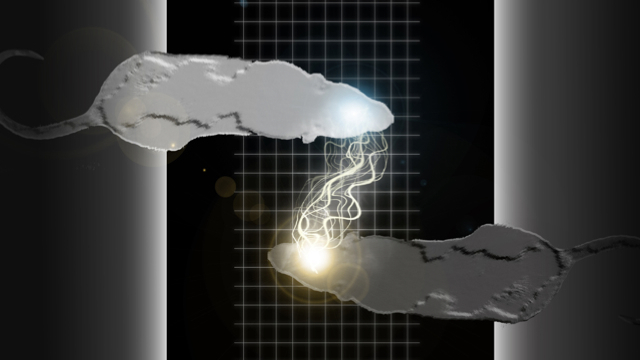
?????????????????And I thought the month of February was an already exciting time for technological breakthroughs! But if a recent report from Nature.com is any indication, February will go down in history as the biggest month for breakthroughs ever! Why just last week, researchers in Natal, Brazil created the first ever electronic link between the brains of two living creatures.

The creatures in question were rats, and the link between their brains enabled one to help the other solve basic puzzles in real time — even though the animals were separated by thousands of kilometers of distance. The experiment was led by Miguel Nicolelis of Duke University, a pioneer in the field of brain-machine interfaces (BMIs), and a team of neurobiologists who’ve been working in the field for some time.

BMIHere’s how it works: An “encoder” rat in Natal, Brazil, trained in a specific behavioral task, presses a lever in its cage which it knows will result in a reward. A brain implant records activity from the rat’s motor cortex and converts it into an electrical signal that is delivered via neural link to the brain implant of a second “decoder” rat. The second rat’s motor cortex processes the signal from rat number one and – despite being thousands of km away and unfamiliar with what rat one is up to — uses that information to press the same lever.

MMIBack in 2011, Nicolelis and his colleagues unveiled the first such interface capable of a bi-directional link between a brain and a virtual body, allowing a monkey to not only mentally control a simulated arm, but receive and process sensory feedback about tactile properties like texture. And earlier this month, his team unveiled a BMI that enables rats to detect normally invisible infrared light via their sense of touch.

However, this latest experiment really takes the cake. Whereas brain-machine interfaces have long been the subject of research, generally for the sake of prostheses, a brain-to-brain interface between two living creatures in something entirely new, especially one that enables realtime sharing of sensorimotor information. And while it’s not telepathy, per se, it’s certainly something close, what Nicolelis calls “a new central nervous system made of two brains.”

Obviously, this kind of breakthrough is impressive in its own right, but according to Nicolelis, the most groundbreaking application of this brain-net (or n-mind) is yet to come:

These experiments demonstrated the ability to establish a sophisticated, direct communication linkage between rat brains, so basically, we are creating an organic computer that solves a puzzle. We cannot predict what kinds of emergent properties would appear when animals begin interacting as part of a brain-net. In theory, you could imagine that a combination of brains could provide solutions that individual brains cannot achieve by themselves.

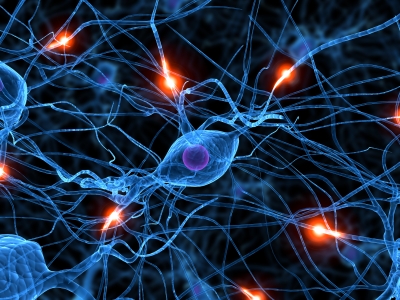
neural-networksNaturally, there are some flaws in the process, which were made evident by the less-than-perfect results. For starters, the untrained decoder rats receiving input from a trained encoder only chose the correct lever around two-thirds of the time. Those results could not be the result of random odds, but they are also a far cry from the 95% accuracy where the signals were reversed, going from the untrained decoder to the trained encoder. As any student of science knows, one-way results are not the basis of a sound process.

And I imagine the people who are lobbying to make biosoldiers illegal and limit the use of autonomous drones will be on this like white on rice! Hence why we can probably look forward to many years of research and development before anything akin to human trials or commercial applications of this technology seem realizable.

And of course, there is a video demonstrated the mind link at work. a word of warning first though. If you’re an animal lover, like me, the video might be a little difficult to take. You be the judge:


Source:
IO9, nature.com

New Anthology Sample!

gliese 581Hey folks! In the past few weeks, I’ve been working diligently to get my “works in progress” pile under control. This included getting Data Miners off my computer and onto the shelves, but also to get this anthology known as Yuva moving again. I’ve done my best to get more writings on the project, and actually managed to get some writing done myself.

As a result “The Torch”, the first chapter in the story which acts as the prologue, is coming long and is almost complete. After some months of letting it accumulate dust, I finally managed to get the third section finished and plotted out how I wanted it to end. The following sample is the next half-section, which is the just shy of the final chapter. I hope you like it, and enjoy the not-too-subtle tech references which I have been researching of late and knew I had to incorporate. This is, after all, taking place in the near future…

For the sake of preserving some element of surprise and mystery, I won’t say exactly what they are or where to find them. Suffice it to say, I think that flexible, transparent computer tablets and commercial space flight will be a reality in the near future. Based on discussions that took place between myself and Khaalidah, this story’s co-author and a major anthology contributor, we also figured that orbital satellites would be island estates of the future.

In addition to orbital banking replacing “offshore banking” – a la Cayman Islands, Isle of Man, Cyprus, etc – there would also be private estates in orbit where laws were laxer and people with money could do whatever the heck they wanted! It’s like international waters, but with the added benefit of low gravity and high-tech medical treatments which would never be legal planetside.

Anyway, no more spoilers! Enjoy!

*                    *                    *

From the spacious backseat, Muktari got quite the view of the Frankfurt skyline. The window’s active display matrix was sure to keep him apprised of what he was seeing as they passed along the Schaumainkai. The patterned lights – yellow, orange, white and opal – achieved a beautiful, glittering balance, drawing the eye and appeasing the senses all at once.

In truth, it wasn’t much different from the skylines of Dubai, Mumbai or Shanghai, or even London or New York for that matter. They all were a testament to the grandeur and excesses of humanity, how people could always be expected to build higher and higher when they had run out of room to expand sideways. Or, in other cases, to avoid pillaging the lands occupied by more traditional buildings and boroughs.

But this was always the challenge of such metropolitan centers. The inflow of capital, investment, new people and technological change; one always had to find places to put the new things. And places to put the things needed to dispose of. And every new age seemed to trigger a new wave of this process: redevelopment, rezoning, and redistribution.

The car veered left and began joining the highway. For many minutes, the skyline disappeared in the distance, replaced by the developments that ran south of the river. The window had a hard time keeping up, as there weren’t many heritage sites in this area, but plenty of modern buildings of note. He turned away finally, and began paying attention to his fellow passenger. She had shown up the airport to escort him, and he was beginning to sense this would become a pattern.

“You didn’t have to meet me,” he had said as soon as he reached the front doors.

“Escorts can be so impersonal,” she said. “Besides, my father doesn’t trust specialized talent to just anyone.”

“So I can expect you to be a noose around my neck then?” he said. He had been in a bad mood after the flight, admittedly. A restless sleep and an early morning flight was known to do that to people. And changing time zones and shuttling from one part of the Earth to the next was something he had been doing far too much of lately.

Now, seated across from her, he thought some polite conversation might be in order.

“So where is Mr. Harding flying me to?”

She looked up from her Tab and smiled. “To him,” she replied simply.

“To him? You mean to his private estate somewhere, or corporate HQ?”

She chuckled mildly and continued typing and stroking at her device. Muktari sighed heavily. He was hoping to be pleasant, but the way she was preserving the surprise was beginning to annoy him. Was it too much to ask that she help him plan his evening? If he were to be taken to yet another time zone and have to face the prospect of even more lag, he would like to know about it now.

“You know, I heard that Harding was not in the best of health lately.” He let the words hang, hoping to gauge her reaction. “I might suspect we were heading for the Swiss Alps, or perhaps some clinic in Brazil.”

She made a sideways gesture with her head, like a half shake. A denial perhaps, or an indication that she could not say either way.

“It would seem ill-advised for a man who was in the twilight of his days to still be chained to his desk.”

She appeared to be finishing up with her work and put the Tab aside. She looked at him furtively and said nothing.

“No?” he said, and nodded. “Very well, keep your secrets. But know that all this running around and pretense isn’t making me any more interested in what he has to say.”

She continued to stare at him, smiling in her usual way. It too was becoming very annoying.

“What?” he said at last.

“We’re here,” she replied, motioning to the window. Muktari looked out and spotted the strip that they were now parked upon. Less than a hundred meters to their right, a small Atmo was parked.

“We’re flying in that?” he said, gesturing to the craft.

She smiled.

“Where are we going?”

“To the stars,” she replied. “Have you been topside before?”

Muktari blanched. It was one thing he had assiduously avoided, and hoped to continue not to do in his lifetime.

“Well then,” she said, taking his expression to mean he had not, “you’re in for quite the treat.”

Should I Be Afraid of the Future?

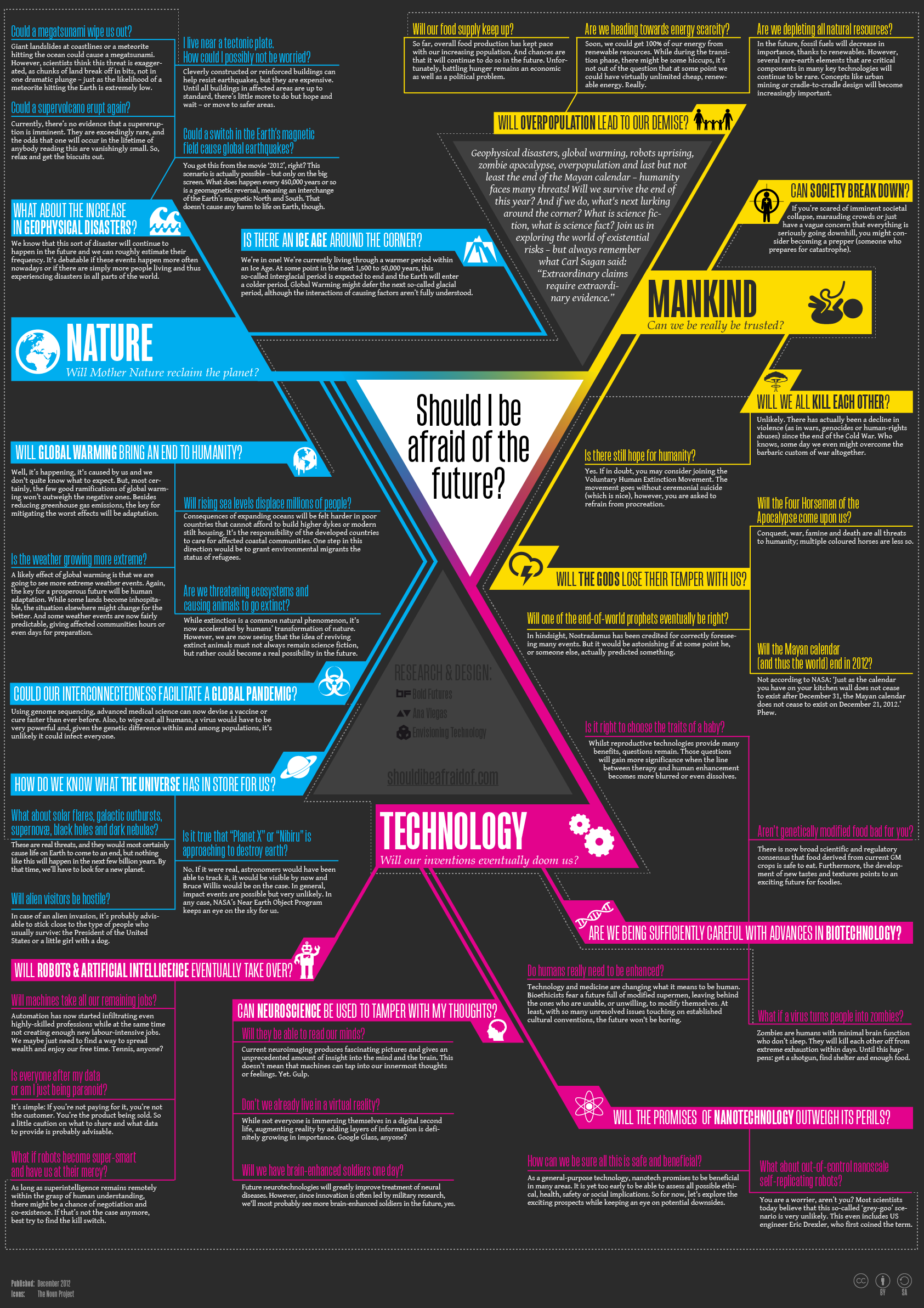
should-i-be-afraid-of-the-futureNot that long ago, I discovered a site dedicated to taking speculations about the future, crunching data and trends, and producing visualizations about them. Already, they had me with their graph that shows when future technologies will emerge, and how they will be interrelated. But then came their future of education and health technology, both of which addressed the same issue – what can we can expect within the next few decades, leading up to the middle of this century?

And now, the good folks at Envisioning Technology have created something truly informative and relevant. Entitled “Should I be afraid of the future?”, the infograph addresses all the big questions people might have when it comes to emerging technology, environmental perils, and the kind of technophobia that often result.

“Geophysical disasters, global warming, robot uprisings, zombie apocalypse, overpopulation, and last but not least the end of the Mayan calendar – humanity faces many threats! Will we survive the end of the year? And if we do, what’s next lurking around the corner? What is science fiction, what is science fact? Join in exploring the world of existential risks – but always remember what Carl Sagan said: ‘Extraordinary claims require extraordinary evidence.'”

The questions are broken down into three interrelating fields. First, there is Nature, covering such things as geological disasters, climate change, a possible ice age, and even astronomical events. Then comes Mankind, addressing possible factors such as war, apocalyptic scenarios, and overpopulation. And finally, there is technology, where questions about whether robots and AIs could turn hostile, and if advances in nanotech, biotech, and neuroscience could be potentially harmful.

And of course, each question is addressed in a rational, sensible fashion, even when the questions themselves are based on irrational, myth-peddling paranoia. The Mayan Calendar, bio-outbreaks, every possible technophobic impulse, and even a zombie apocalypse are covered. But then again, the infograph is all about addressing fears. Fear, by its very definition is irrational, and the only cure is information. A well-informed public is not only a safeguard against persecution and bigotry, but against a future full of existential risks.

Source: Envisioning Technology

Relaunching an Idea: Apocrypha!

future-city-1Recently, I began to seriously contemplate revisiting an old idea. Not just any old idea, mind you. This was an idea that went back to 2008, to the point where I first decided I wanted to move away from far-reaching, distant future speculative writing. It was also my first real stab at social commentary, predating Data Miners by several months, and which called for a lot of research.

The name I had in mind for it was Apocrypha. Basically, the two threads that came together to form this idea for me were the ideas of Demarchy and Apocalypticism. At the time, the idea that digital technology and wireless communication might one day lead to direct democracy, while religious fervor might actually spike within the current century due to climate change and the social impacts thereof.

singularity.specrepHowever, after a lot of tinkering and writing the story halfway, I found I couldn’t really make the idea work. It was my first attempt to write something contemporary and it really didn’t go so well. I’ve since tried to reboot it at least once and found I could only get a few chapters out of myself. But I couldn’t dispose of it entirely, not after all the work I put into it and all the bits of wheat I felt were buried in the chaff. And so, its lingered in my files for years.

And now, years later and after all the tech research I’ve done, I find myself coming back to the idea. This is due in part to to trends which I’ve been researching in the last few months. The way I see it, by the middle of this century, two trends will be coming together, and its anybody’s guess which will come to determine our future. The one is technological growth and change – culminating in a future of post-scarcity – and the other is Climate Change, which will lead to a future of nothing but!

Megalopolis'And that’s where this story opens up. The year is 2030, and the world is a fast-changing place. On the one hand, mega-cities have taken root in several places, such as the Nanjing Peninsula, the Gangetic Plain, Cascadia, the Northeast Megalopolis, the “Blue Banana”, and the west coast of Japan. Life in these megalopolis’ is increasingly characterized by violence, poverty, unemployment, bigotry, and an ever increasing fast-pace of life due to increasingly advanced technologies trickling down to the street.

Meanwhile, the wealthy and privileged continue to buy up property and move to higher altitudes and latitudes in order to avoid the coming difficulties. It is widely accepted that within the next few decades, waves of immigration and refugees will pour into the coastal and border regions of the developed parts of the world (those that exist outside the equatorial regions that is) and life is likely to get more difficult.

In the midst of all this, a new group is taking to the streets, a group of quasi-apocalyptics who claim that the End of Days is coming. Their message is code-named Apocrypha, since it is really a cover for their more deeply laid plans to usher about something far more sinister. As they say, some spend their lives waiting for the apocalypse, while others are determined to make it happen in their lifetime.

Crashland.ebookThis story was actually the basis for my short Hunluan, which is part of the proposed Grim5Next anthology known as World’s Undone. It’s also the basis for the serial novel Crashland that I began posting over Story Time.me back when 2012 first started. Funny thing, the year 0f 2012 was marked by a lot of dystopian and apocalyptic lit. Maybe that’s why I want to revisit it now, seeing as how we’re in the clear for the time being!

In any case, as soon as Yuva is complete, Pappa Zulu is all wrapped up, and I’m done editing and releasing Data Miners (one of these days I’ll get that damn book finished!), I plan to return to this concept and give it my full attention. There’s plenty of potential to make some predictions about the future and that’s something I can’t pass up! In addition, it was my first attempt at something truly speculative and relevant and I definitely want to pursue that again.

It is my dream, after all, to produce something that capture the spirit of this age, and since Climate Change, break-neck progress, and fears for the future seem to be the dominant trends as I see them, this might just be the book to do it with! Look for it soon, I hope it will please the discerning reader!

climatewars

New Anthology Sample!

gliese 581Boy, its been awhile since I posted anything from my group’s anthology. But, since it is something I am committed to do doing on my site, I always feel the need to post sample updates whenever they become available. And here is the latest from one of my own contributions to the anthology (titled “Yuva”), the fourth installment to be exact. I imagine there will be two more like it before the story has reached fruition and “The Torch”, as it is called, will be complete.

Hope you all enjoy it, and I really hope people will come on out to support Yuva once it too is completed and available for purchase/download. I’m hoping to make it available in both paperbacks and ebook format, and of course, there will be promotional discounts. But that’s another day and we still need more contributors before it can happen. If you’re an indie, there are still a few spots open…

*               *               *

The door slid open, admitting the faint light of the room’s nighttime bioluminescent units. Muktari stumbled in, his eyes set on the desk at the far side of the room, where his satchel and compad rested It was a bit of an effort to make it there without knocking anything over, and yet he found his way to his chair within a few minutes.

Muktari had been drunk exactly three times in his life. The first two occurred in university while studying abroad. Being in the company of some many young men who were either not members of the faith, or who had turned their backs on its more rigorous elements long ago, had sufficed to get him to indulge then. But after discovering there was little in inebriation, he had quickly put a stop to that.

The third time was tonight. After the first drink with Mazzini, he had quickly found his way back to the front where the company shuttle was awaiting him. After hopping in the back and ordering the automated driver to take him home, he had indulged heavily in the private stock that was kept in the back. There was no trace of the whiskey Mazzini had coaxed him into drinking, but he found plenty of another generic variety to sip on. No soda water was needed, as he wanted the full, punishing effect of it.

It was somewhere between the old opera house and his hotel he realized the true purpose of such poison. The use was to be found in its abuse. The infliction of pain and torture upon oneself, not to alleviate pain or worry, but to punctuate and drive it home. He had to admit, it was genius, in a bleak and sardonic sort of way.

But were human beings if not lovers of irony and masochism?

Setting his eyes on his satchel, he pulled out his compad and flexed it a few times to activate its bio cell. The light came on and the image of its welcome screen was projected into his visual field.

Meşale, he typed on the virtual keyboard, and was rewarded with a desktop. He called up all his files on his presentation and eyed them despondently. The images of the five planets arrayed from left to right suddenly seemed like a terribly lost cause, a fool’s hope that he made the unfortunate mistake of sharing with others. Running his hand over the screen, he took the entire file in hand and began drifting it towards the icon of the trash in the lower right corner. It hovered directly above the icon, darkening it… and there it waited.

He wanted so badly to destroy it all, to remove all traces of the proposal and all the difficulty such ideas was bringing him. He wanted to forget about everything that had happened in the last week, to start fresh and stop feeling like a fool who was shouting at the rain. He was so tired of staking everything – his life, his job, his reputation, his future – on gambits that got him nowhere.

Really, what made him think that Zimmerman, or anyone for that matter, would have taken it seriously? Could it have been the fact that after years of doing the same thing, over and over, that he was beginning to suspect there was no future to be had here at home? Was it that deep down inside, all empirical evidence pointed towards the same outcome and all attempts to defer or delay it seemed futile? Was it really so absurd, with all he saw happening around him on daily basis, to plan for the worst? And who could fault him for looking further, given the audacious but still limited plans for Solar Colonies?

In business school, they still taught young academics that ambition and initiative were the keys to the success. Was it so wrong to think that that still applied? Would he be calling them tomorrow and demanding that they revise the curriculum to teach conformity and affability instead?

His nerve faltered and he pulled the file away from the trash. Taking a deep breath, he did his best to get his head together and proceeded to the lavatory. Some cold water on his face, and some mineral water in his belly, and he was sure to feel better. He also needed to get out his night clothes, as they were ruffled and beginning to stink of self-pity.

The door chimed. His head snapped around in a hurry and he felt his heart leap. Between the fatigue and alcohol, he was in no shape to be startled. Sighing, he proceeded to the room’s common area and approached the front door. It chimed again…

“Who’s there?” he asked irately.

“An interested party,” came a female voice through the comm. Muktari frowned. What could possibly the meaning of this, he wondered.

When he reached the door, several possible answers came to mind. It slid open to reveal the woman from earlier, the one he had left Mazzini with at the afterparty. At the time, he had suspected her of being an industrial spy, or possibly a professional. He now suspected the former, as there was little chance she had passed on Mazzini in order to seek him out. Mazzini was not known to turn his nose up at a fine lady who would deign to ask for money before performing an act he held so dear.

“Magid Muktari?” she said.

“Yes,” he replied, putting his arm to door frame, blocking her entry. “How may I help you?”

“Actually, I was thinking it was I who could help you.”

“I’m not sure what you’re selling, but I can tell you I’m not interested.”

She smiled at that, exposing to perfectly ordered rows of white teeth. Another very impressive and pretty feature she boasted. It was little wonder she was sent out to deliver messages.

“I can assure you, I’m not here to solicit anything. I’m just here to relay a proposal.” She looked past him into the common area. “May I come in?”

Muktari looked behind him to the couch and considered his options. He could slide the door shut, leaving the lovely lady out in the corridor. Or he could invite her in, hear her out. Aside from being rude, the former option seemed downright needless seeing as how he had nothing else planned. And an offer might be just what he needed, given his prospects.

Stepping out of her way, he ushered her in and made his way over to the dispenser in the far corner of the room. “Can I offer you something? Coffee? Tea? Mineral Water? Perhaps some poison?”

“You look like you’ve had your fair share yourself,” she said, sitting on the couch and getting comfortable. Muktari shook his head, began filling two glasses with mineral water and some ice cubes.

“So… what’s so important that you chose to bother me at this late hour? Was my friend not entertaining enough for you?”

That made her smile again. He had to admit, she had a very pretty smile, and the way she was seated right now showed just enough leg to intrigue him. Perhaps it was the alcohol thinking for him. He offered her a glass and sipped from his own.

“Oh, Mazzini is quite charming. But I didn’t come to this city to enlist him. It was your presentation that I wanted to hear.”

“You mean the lecture on Oceanic Enhancement?” he said, shrugging and taking a sip from his glass. “Not my work, specifically. I merely presented the relevant findings, based on the company’s ongoing efforts.”

“Not that one,” she said. “I was referring to the one you presented to your boss, Mr. Zimmerman, less than a week ago.”

Muktari stopped in the midst of sip. He was worried he might choke. He stared over the edge of his glass for a few seconds and carefully lowered it. The lady smiled again and placed her glass down on the table in front of her.

“Ah, I see you I have your attention now. I can imagine you’re also wondering how I knew about it?”

 Muktari cleared his throat. “The thought crossed my mind.”

“Our sources are very good. And company gossip has always been a prime source of intel. One scarcely needs sources at all when people speak so freely.”

Muktari wasn’t sure how to respond. He shuffled awkwardly and cleared his throat.

“What was not being spoken of so freely was the fact that you are also scheduled to be transferred to Oslo. That information came at a price, but it was a good investment, in my employer’s opinion.”

Muktari saw where this was going now and saw an opportunity to respond.

“And who is this employer, pray tell?”

She reached into a small fold in her dress, invisible to the naked eye, and pulled out a card. She laid it down on the table carefully and slid it in his direction. Muktari snatched it up in his left hand and held it up, depressing one corner to activate the display chip within.

A small presentation video began, colorful graphics dancing around and showing a name.

Harding International, it said. Muktari’s eyes widened and his mouth fell open a few centimeters. When he looked back at the lady before him, he glared intently at her, a frown forming on his face.

“Who are you?”

Again, that smile. “Seriously, you don’t recognize me? Don’t you read the trade pages?”

He frowned harder. It was a rhetorical question largely, just about everyone was familiar with the Harding family and their holdings. And aside from the slight tan she had picked up, it was not hard to see the resemblance to her father.

“Not that ones that deal exclusively in global capital and investment,” he said firmly. “Why would your father be interested in exoplanet colonization?”

She spread her hands before her. “He likes to think he sees things in people, in ideas. It’s what built our family empire after all. And he also liked to enlist people who can do the same, who see potential in things down the road.”

She let that linger in the air for a moment, during which time, Muktari could think of nothing to say. He was hit by a wave of self-satisfaction and found he couldn’t speak. Naturally, he did his best not to show it, but knowing that a corporate headhunter was interested in his work could not help but inspire a certain sense of self-satisfaction. He had to wonder if Zimmerman had sources of his own implanted in Harding, whether or not they would get wind of this and wonder if it was an indication to start taking his proposals more seriously…

But alas, such feelings were tempered by the fact that he knew nothing about what Harding or his people had in mind here. What’s more, he knew enough not to trust any offer at face value. Regardless of how bleak his future looked with Zimmer and Associates, he still needed to proceed as if he were in a position of strength, unwilling to settle too quickly or easily.

“So what does your… father want of me?” he asked firmly. “Is this to be a matter of intellectual property, buying up and patenting an idea so it can be turned into cash once it becomes profitable?”

She didn’t smile this time. Instead, she rose to her feet and extended her hand to him.

“Nothing so crass. But if you’re interested in making your proposal again, to someone who is genuinely interested and willing to listen, then I’ll arrange a meeting?” She looked to her hand, back at Muktari. “Sound fair?”

Muktari looked at her hand as well, cautiously, and then took it in his. “Alright. I will meet with him. But no guarantees. I hear Oslo is very nice this time of year.”

“It is,” she said, smiling very broadly. He was almost dazzled by her two rows of impeccable teeth.

Artificial Trees to Fight Climate Change?

The indices of Climate Change have been growing in the past few decades, culminating in some serious trends that have left the scientific community worried and the general public far from calm. In addition to Arctic sea ice levels reaching a record low and record high temperatures being set during the summer, North Americans also experienced the worst wildfire season in recorded history. Over a million acres of forest burned up in the US alone, but the extended range of the fires reached from as far south as Texas to as far north as Nunavut.

For many years now, those on the forefront of climate science have been arguing that things will get a lot worse before they get better, and argue that some drastic geoengineering projects might be the only way to avert disaster. Many of these involve advanced climate science, such as evaporating more water around the mid-latitudes or “capturing” carbon in the upper atmosphere and converting it to harmless compounds. But as Gaia Vince, a science writer from BBC’s Future pointed out, the solution may be as a simple as improving upon an existing “carbon capture” technology, otherwise known as the Tree.

For some time now, climatologists and naturalists have understood the role that trees, plants, algae and plankton play in the carbon cycle. Unfortunately, the long life-cycle of trees, and the various ecological issues surrounding the artificial stimulation of algae and plants, make this aspect of ecoengineering somewhat impractical. What’s more, the growing demand for agricultural space is also putting pressure on existing green spaces. As our population continues to grow and more farmland is needed to provided for them, simply planting plants and trees more may not even be an option.

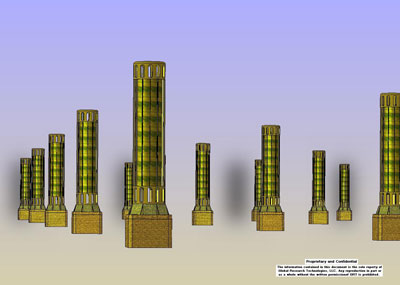
Luckily, there is an invention that takes all this into account and provides a possible solution: the artificial trees. Designed by Klaus Lackner, director of the Lenfest Center for Sustainable Energy at Columbia University, this “tree” is capable of absorbing CO2 from the air using “leaves” that are 1,000 times more efficient than the real thing, but at the same time does not require exposure to sunlight in order to carry out the process.

As Vince himself describes them: “The leaves look like sheets of papery plastic and are coated in a resin that contains sodium carbonate, which pulls carbon dioxide out of the air and stores it as a bicarbonate (baking soda) on the leaf. To remove the carbon dioxide, the leaves are rinsed in water vapour and can dry naturally in the wind, soaking up more carbon dioxide.”

Based on Lackner calculations, a single tree would be capable of removing one tonne of carbon dioxide from our atmosphere in a single day. By that reckoning, a forest of ten million would be able to remove 3.6 billion tonnes of carbon dioxide in a single year, the equivalent of about 10% of our global annual carbon dioxide emissions. One hundred million would solve our emission crisis altogether!

As for the resulting mass that the process creates, Lackner claims that could be turned into liquid fuels to power vehicles. In fact, when CO2 and water are combined, the end result is what is known as syngas, a fuel that is easily converted into methanol and diesel. So basically, while the artificial trees are scrubbing the air of fossil fuel emissions, they are also actively creating the means to generate more fossil fuel. Might seem ironic, but this in turn will allow humanity to keep using their carbon engines, all the while knowing that they are producing less than the trees are extracting. This will give the scientists of the world more time to invent a clean alternative to the fossil fuel engine, and that by the time they do it won’t already be too late.

Although some question the viability of this entire process, mainly where the issue of total cost is concerned, Lackney stresses that as global fuel supplies dwindle, fuel companies will see the wisdom in buying into this process, mainly because it offers them the possibility of fuel retention. Yes, by investing in artificial trees, oil and gas companies will be able to turn their own carbon emissions back into hydrocarbon fuel. Which will come in handy if the oil runs out as quickly as some analysts say it will. In addition, us consumers can expect a break the pump if it all goes well!

Does this strike you as ironic, or just a weird and interesting take on recycling? Who knows? All that is certain is that the technology is making some pretty bold forecasts, and if it should prove successful, we are likely to see a great deal of investment towards this new method. I can see it now, countless roofs and skyscrapers with fields of artificial trees lining their roofs. Water circulation systems that capture the CO2 once its sucked off the leaves and then channeled down to the fuel cells in the basement. And the rest trucked off by trucks that bear the logo of Haliburton, Shell, and Petro Canada. And for once, the drivers won’t feel a lick of shame!

Dealing With Rejection

As all successful writers will tell you, rejection is part of the process. From Ray Bradbury, to Frank Herbert, to George Orwell and James Joyce, every great has always admitted that before they were well known, they were a nobody. Publishing houses wouldn’t take risks on their manuscripts, editors told them it simply wasn’t what they were looking for, and friends and family told them to simply persevere. Sooner or later, their genius would be recognized for what it was.

That’s what I tell myself whenever I get the form rejection letter that I found in my Inbox this morning. For some months, I have been trying to get my short story “Domicile 4.5” published with a magazine. It’s a story of the not-too-distant future, of nanotechnology, avarice, and the dangers of constantly trying to “keep up”. And this is the third magazine to tell me, in essence, “thanks, but not what we’re looking for.”

Of course, I will try again. There are other magazines who have specified that they interested in speculative fiction and technologically based stories, so all hope is not lost yet. But it does get me down, right? One can’t help but feel personally rejected when a  form letter like this arrives. Whenever you express yourself creatively and someone says “no, thanks”, you can’t help but go through gambit of emotions. Self-doubt, sadness, and maybe even a little anger. What am I doing wrong? What was wrong with it? Surely, there must be a reason right?

Of course, I know that everyone out there knows precisely what I’m talking about. Whether it was a job application, a relationship, a petition to join a group – we’ve all been there. So I thought I might open the floor and ask my friends and colleagues out there, what kind’s of rejection stories do you have? More importantly, what did you do to soldier on when it happened? Is there a magical elixir to let yourself know that you are the problem, that this is just part of the process, or that you’re efforts are worth and just haven’t been recognized yet? Feel free to share because I’m interested to know 🙂

In the meantime, I thought I might post it here, just to see if people might actually find it worth reading. Stay tuned!