
 Just months after the Heartbleed bug made waves across the internet, a new security flaw has emerged which threatens to compromise everything from major servers to connected cameras. It is known as the Bash or Shellshock bug, a quarter-century old vulnerability that could put everything from major internet companies and small-scale web hosts to wi-fi connected devices at risk.
This flaw allows malicious code execution within the bash shell – commonly accessed through Command Prompt on PC or Mac’s Terminal application – to take over an operating system and access confidential information. According to the open-source software company Red Hat, bash shells are run in the background of many programs, and the bug is triggered when extra code is added within the lines of Bash code.
 Because the bug interacts with a large percentage of software currently in use, and does in ways that are unexpected, Robert Graham – an internet security expert – claims that the Bash bug is bigger than Heartbleed. As he explained it:
We’ll never be able to catalogue all the software out there that is vulnerable to the Bash bug. While the known systems (like your Web server) are patched, unknown systems remain unpatched. We see that with the Heartbleed bug: six months later, hundreds of thousands of systems remain vulnerable.
According to a report filed by Ars Technica, the vulnerability could affect Unix and Linux devices, as well as hardware running Max OS X – particularly Mac OS X Mavericks (version 10.9.4). Graham warned that the Bash bug was also particularly dangerous for connected devices because their software is built using Bash scripts, which are less likely to be patched and more likely to expose the vulnerability to the outside world.
 And since the bug has existed for some two and a half decades, a great number of older devices will be vulnerable and need to be patched because of it. By contrast, The Heartbleed bug was introduced into OpenSSL more than two years ago, allowing random bits of memory to be retrieved from impacted servers. And according to security researcher Bruce Schneier, roughly half a million websites could be vulnerable.
For the time being, the administrative solution is to apply patches to your operating system. Tod Beardsley, an engineering manager at security firm Rapid7, claims that even though the vulnerability’s complexity is low, the level of danger it poses is severe. In addition, the wide range of devices affected by the bug make it essential that system administrators apply patches immediately.
 As Beardsley explained during an interview with CNET:
This vulnerability is potentially a very big deal. It’s rated a 10 for severity, meaning it has maximum impact, and ‘low’ for complexity of exploitation — meaning it’s pretty easy for attackers to use it… The affected software, Bash, is widely used so attackers can use this vulnerability to remotely execute a huge variety of devices and Web servers. Using this vulnerability, attackers can potentially take over the operating system, access confidential information, make changes etc. Anybody with systems using bash needs to deploy the patch immediately.
Attackers can potentially take over the operating system, access confidential information, and make changes. After conducting a scan of the internet to test for the vulnerability, Graham reported that the bug “can easily worm past firewalls and infect lots of systems” which he says would be “‘game over’ for large networks”. Similar to Beardsley, Graham said the problem needed immediate attention.
 In the meantime, Graham advised people to do the following:
Scan your network for things like Telnet, FTP, and old versions of Apache (masscan is extremely useful for this). Anything that responds is probably an old device needing a Bash patch. And, since most of them can’t be patched, you are likely screwed.
How lovely! But then again, these sorts of exploitable vulnerabilities are likely to continue to pop up until we rethink how the internet is run. As the Heartbleed bug demonstrated, the problem at the heart (no pun!) of it all is that vast swaths of the internet run on open-source software that is created by only a handful of people who are paid very little (and sometimes, not at all) for performing this lucrative job.
In addition, there is a terrible lack of oversight and protection when it comes to the internet’s infrastructure. Rather than problems being addressed in an open-source manner after they emerge, there needs to be a responsible body of committed and qualified individuals who have the ability to predict problems in advance, propose possible solutions, and come up with a set of minimum standards and regulations.
 Ensuring that it is international body would also be advisable. For as the Snowden leaks demonstrated, so much of the internet is controlled the United States. And as always, people need to maintain a degree of vigilance, and seek out information – which is being updated on a regular basis – on how they might address any possible vulnerabilities in their own software.
I can remember reading not long ago that the growing amount of cyber-attacks would soon cause people to suffer from “alert fatigue”. Well, those words are ringing in my ears, as it seems that a growing awareness of our internet’s flaws is likely to lead to “bug fatique” as well. Hopefully, it will also urge people to action and lead to some significant reforms in how the internet is structured and administered.
Source: cnet.com, arstechnica.com, blog.erratasec.com, securityblog.redhat.com


 BRCK CEO Erik Hersman, who cut his teeth in the industry as a blogger, sees the company’s base in Nairobi as one of its greatest assets, particularly given its target market. Having been born in Sudan and having settled in Kenya with his young family, ( is well-suited to addressing local needs with local solutions:


 In a first amongst firsts, a team of international researchers have
 This is a phenomenon whereby a person sees flashes of light, without light actually hitting the retina. The recipient “sees” these phosphenes at the bottom of their visual field, and by decoding the flashes — phosphene flash = 1, no phosphene = 0 — the recipient can “read” the word being sent. While this is certainly a rather complex way of sending messages from one brain to another, for now, it is truly state of the art.

 A new video was recently posted online that shows North Korean dictator Kim Jong Un breaking out the dance moves, getting pranked, and engaging in some serious fight scenes. The video has gone absolutely viral and has everybody laughing – except for Kim Jong Un himself. In fact, the “Great Leader’s” outrage was such that North Korea made a public statement denouncing the video and demanding it be taken down.
 The reaction is predictable, and the request certainly betrays the North Korean regime’s internet-phobic tendencies, not to mention their ignorance of how the internet actually works. For starters, once something is posted on the internet, it becomes part of the digital ether and can never be destroyed. In addition, drawing attention to an internet phenomenon only makes it stronger! By condemning it, Kim Jong Un’s people just ensured it’s viral nature!

 As Butow explained, it’s all about taking the next step in the development of the internet as we know it:
 More experienced women are encouraged to teach classes, and the Academy already boasts a variety of events, ranging from hackathons, makerfests, code getaways and study tours. The team is already organising the very first study tour, hoping to take Australian women to visit global startup hotspots such as Silicon Valley and Tel Aviv. And though women are the focus, men are welcome too, as long as they attend with a girl geek and are willing to lend a helping hand.

 The
The  On occasion, the map is likely to show a big burst of coordinated attacks coming from China and directed towards the US. And while it is difficult to blame these attacks directly on the Chinese government (as they are adept at routing their attacks through other servers) government and independent researchers are confident the majority of these attacks are being directed by the People’s Liberation Army’s Unit 61398 – aka. the PLA’s cyberwarfare division.
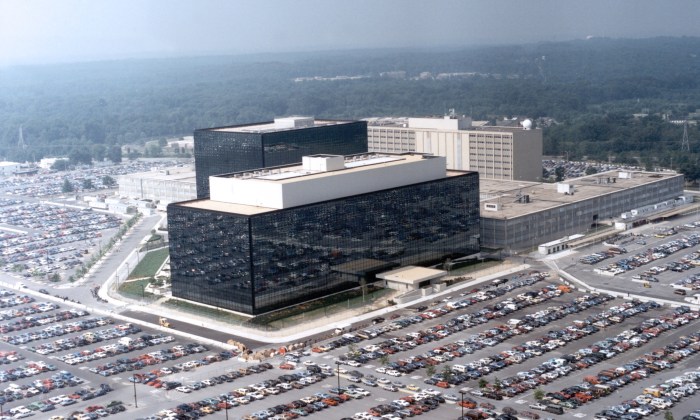 But a general picture of the size and shape of global hacking and cyberwarfare can be divined by looking at the stats. Back in 2012, the US DOD reported that it was the target of 10 million cyber attacks per day. Likewise, the National Nuclear Security Administration says it saw 10 million attacks per day in 2012. In 2013, BP’s CEO said it sees 50,000 cyber attacks per day, and the UK reported around 120,000 attacks per day back in 2011.
 When it comes to the future, it is clear that the concept of the “Internet of Things” holds sway. This idea – which states that all objects will someday be identifiable thanks to a virtual representations on the internet – is at the center of a great deal of innovation that drives our modern economy. Be it wearables, wireless, augmented reality, voice or image recognition, that which helps us combine the real with the virtual are on the grow.
 As Ambarish Mitra, the head of Blippar stated, AR is already gaining traction among consumers thanks to some of the world’s biggest industrial players recognizing the shift to visually mediated lifestyles. Examples include IKEA’s interactive catalog, Heinz’s AR recipe booklet or Amazon’s recent integration of the Flow AR technology into its primary shopping app. As this trend continues, we will need a Wikipedia-like database for 3-D objects that will be available to us anytime, anywhere.
 For better or for worse, wearable designs of consumer electronics have come to reflect a new understanding in the past few years. Basically, they have come to be extensions of our senses, much as Marshall McCluhan wrote in his 1964 book Understanding Media: The Extensions of Man. Google Glass is representative of this revolutionary change, a step in the direction of users interacting with the environment around them through technology.
 Augmented reality has already proven itself to be a multi-million dollar industry – with 60 million users and around half a billion dollars in global revenues in 2013 alone. It’s expected to exceed $1 billion annually by 2015, and combined with a Google-Glass type device, this AR could eventually allow individuals to build vast libraries of data that will be the foundation for finding any 3-D object in the physical world.
 T
T
 This year, the detainees included
  On the subject of why Google was being targeted,
 A little over two years ago, a tiny piece of code was introduced to the internet that contained a bug. This bug was known as Heartbleed, and in the two years it has taken for the world to recognize its existence, it has caused quite a few headaches. In addition to allowing cybercriminals to steal passwords and usernames from Yahoo, it has also allowed people to steal from online bank accounts, infiltrate governments institutions (such as Revenue Canada), and generally undermine confidence in the internet.



 Though security vulnerabilities come and go, this one is deemed catastrophic because it’s at the core of SSL, the encryption protocol trusted by so many to protect their data. And beyond abuse by government sources, the bug is also worrisome because it could possibly be used by hackers to steal usernames and passwords for sensitive services like banking, ecommerce, and email. In short, it empowers individual troublemakers everywhere by ensuring that the locks on our information can be exploited by anyone who knows how to do it.
 Regardless, Heartbleed does point to a much larger problem with the design of the internet. Some of its most important pieces are controlled by just a handful of people, many of whom aren’t paid well — or aren’t paid at all. In short, Heartbleed has shown that more oversight is needed to protect the internet’s underlying infrastructure. And the sad truth is that open source software — which underpins vast swathes of the net — has a serious sustainability problem.


 However, TechCrunch reports that Facebook would launch 11,000 Solara 60 drones. Their coverage would begin with Africa, and then spread out from there. There’s no word on how fast these connections might be, nor how much such a connection would cost per user. Perhaps more importantly, there’s also no word on how Facebook intends to connect these 11,000 satellites to the internet, though it is obvious that Facebook would need to build a series of ground stations.

 Stories by Williams