News from Space: Chris Hadfield Says Goodbye to the ISS with a Music Video

chris_hadfield

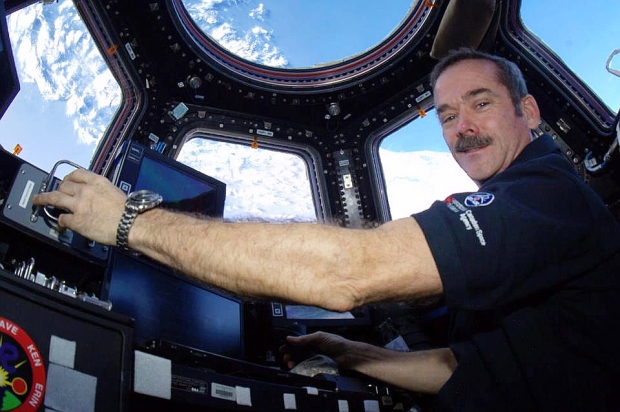
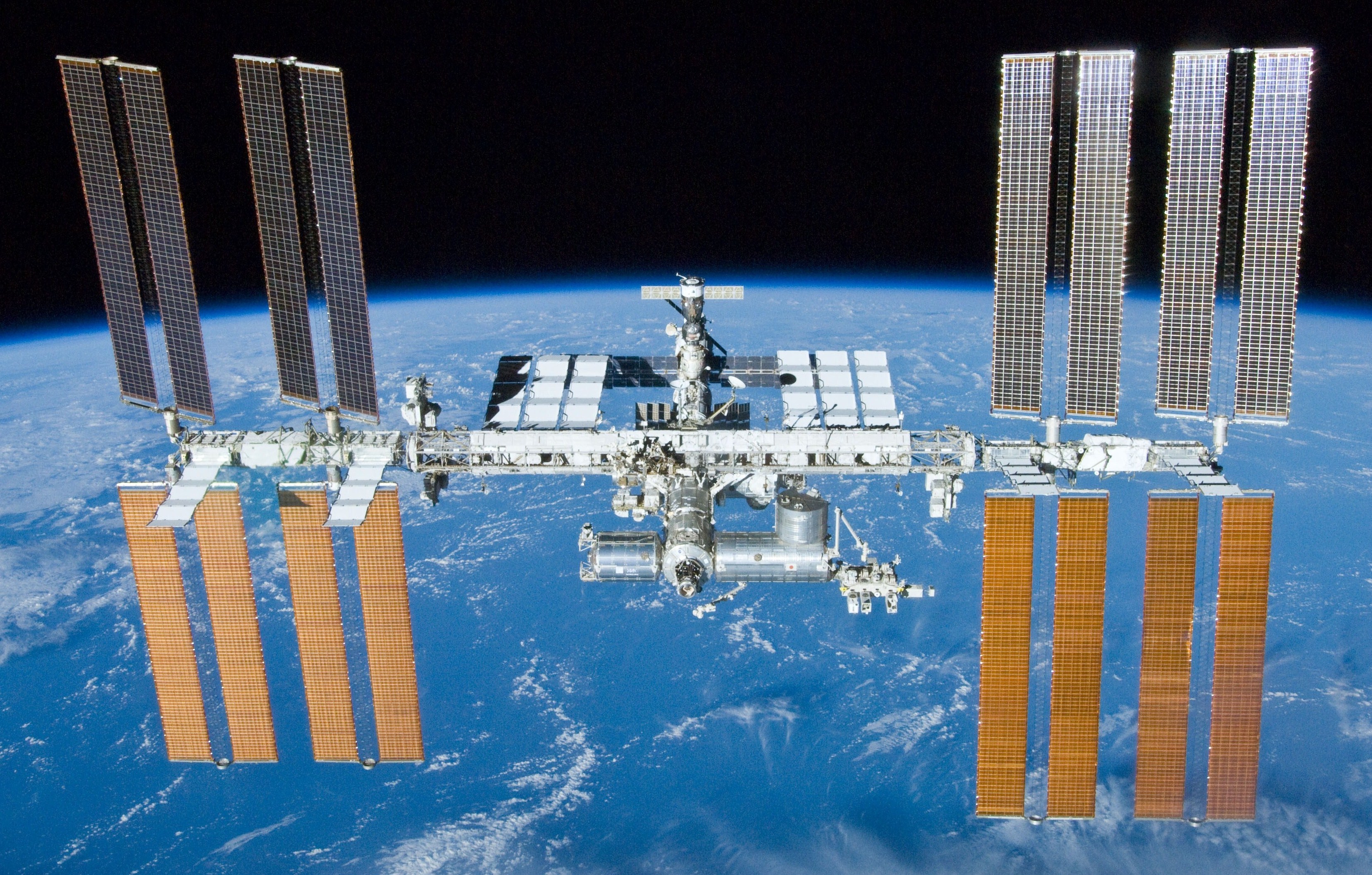
How do you say goodbye to the International Space Station after five months in orbit? Well, if you’re Chris Hadfield, the commander of the latest mission to the ISS, you do so with a musical rendition! Yes, the Commander who back in February via telepresence with the Barenaked Ladies and Wexford Gleeks, is at it again. Back then, it was the original song “I.S.S. (Is Somebody Singing)” that captured the hearts and minds of Canadians and people around the world.

This time around, it was his rendition of David Bowie’s “Space Oddity” that blew people away. Changing the lyrics just a little to make for a more positive tone, the version Hadfield sings here is essentially a farewell to the ISS and an expression of anticipation about his impending trip home. And as usual, he played his own guitar, sang all of his own the lyrics, and managed to capture the perfect combination of happiness and poignancy.
ISS

And it was a bittersweet event, when you get right down to it. Though Hadfield acknowledges that he will be coming home after many months of being away, he also repeatedly acknowledges in his musical rendition that this is the last time he will be seeing the ISS or looking down at Earth from orbit. One cannot help but feel that, under those circumstances, that Hadfield was expressing some mixed emotions, and this song is quite sad as well as upbeat as a result.

But of course, he had some help from people back home. On the YouTube post where the video was uploaded, Hadfield thanked Canadian musician Emm Gryner, his son Evan Hadfield, music producer Joe Corcoran, and TV producer Andrew Tidby “for all their hard work.” A link to the music video was also Tweeted out from his Twitter account about one hour after he formally turned over command of the ISS to Russian cosmonaut Pavel Vinogradov with the message:

With deference to the genius of David Bowie, here’s Space Oddity, recorded on Station. A last glimpse of the World.
Soyuz_capsule

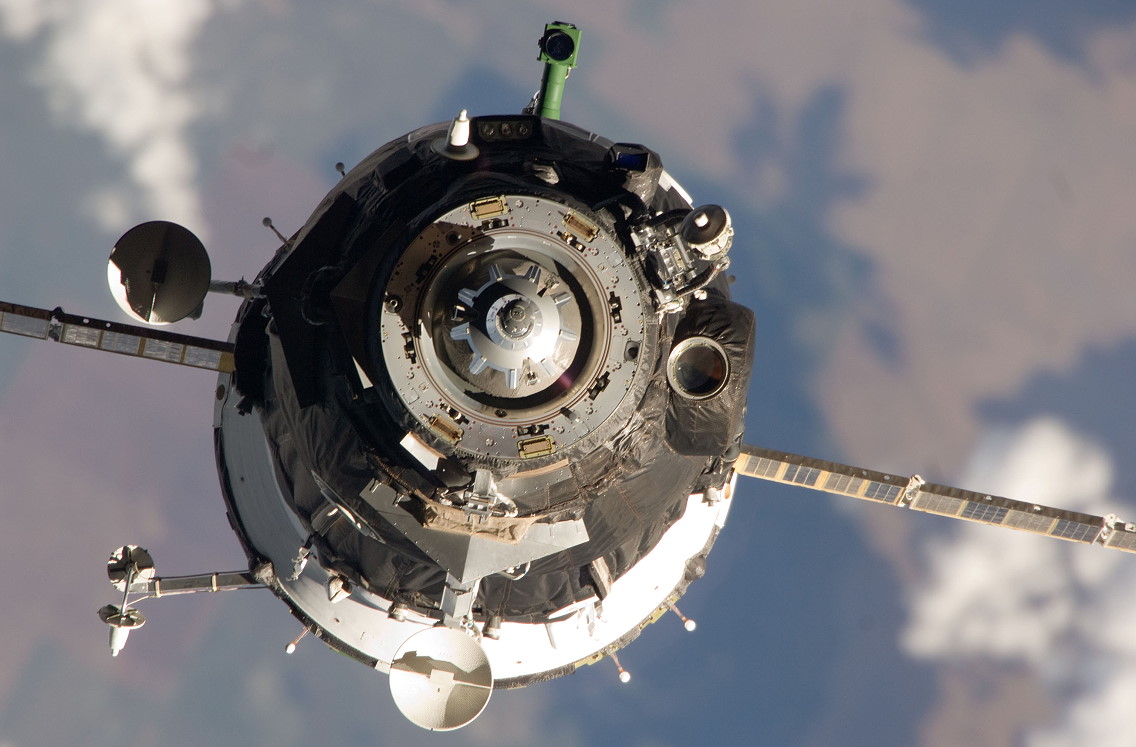
Some of Hadfield’s own lyrics refer to his impending return, such as “Lock your Soyuz hatch and put your helmet on” or “Detach from station and may God’s love be with you.”  Along with the two other members of his mission crew, the departure took place shortly after 7 p.m. ET, yesterday. The trio then landed under a large parachute in the flat steppes of Kazakhstan at 10:31 p.m. ET where they were picked up by helicopter and flown to Karaganda, Kazakhstan for medical checkups.

What’s next for Hadfield and his crew? Late tomorrow, Hadfield and Marshburn will be arriving via a NASA flight back in Houston while Romanenko will board a Russian aircraft for a flight to Star City (aka. Zvyozdny gorodok), just outside of Moscow. And when Hadfield finishes the last leg of his trip home, I am sure he can look forward to a hero’s welcome, not to mention a lifetime of endorsements an fond memories.

After all, if he’s demonstrated anything in the past five months, its that he’s quite the performer in addition to being an astronaut and commander. And given the impact he has had, I’d be very surprised if Canadians or the world at large stopped thinking about him anytime soon. In the meantime, check out the video of his cover of “Space Oddity” below. The production values and Hadfield’s singing are pretty damn awesome, if I do say so myself!


Source:
ctvnews.ca
, cbc.ca

Space Junk: The of Bane of the Space Age

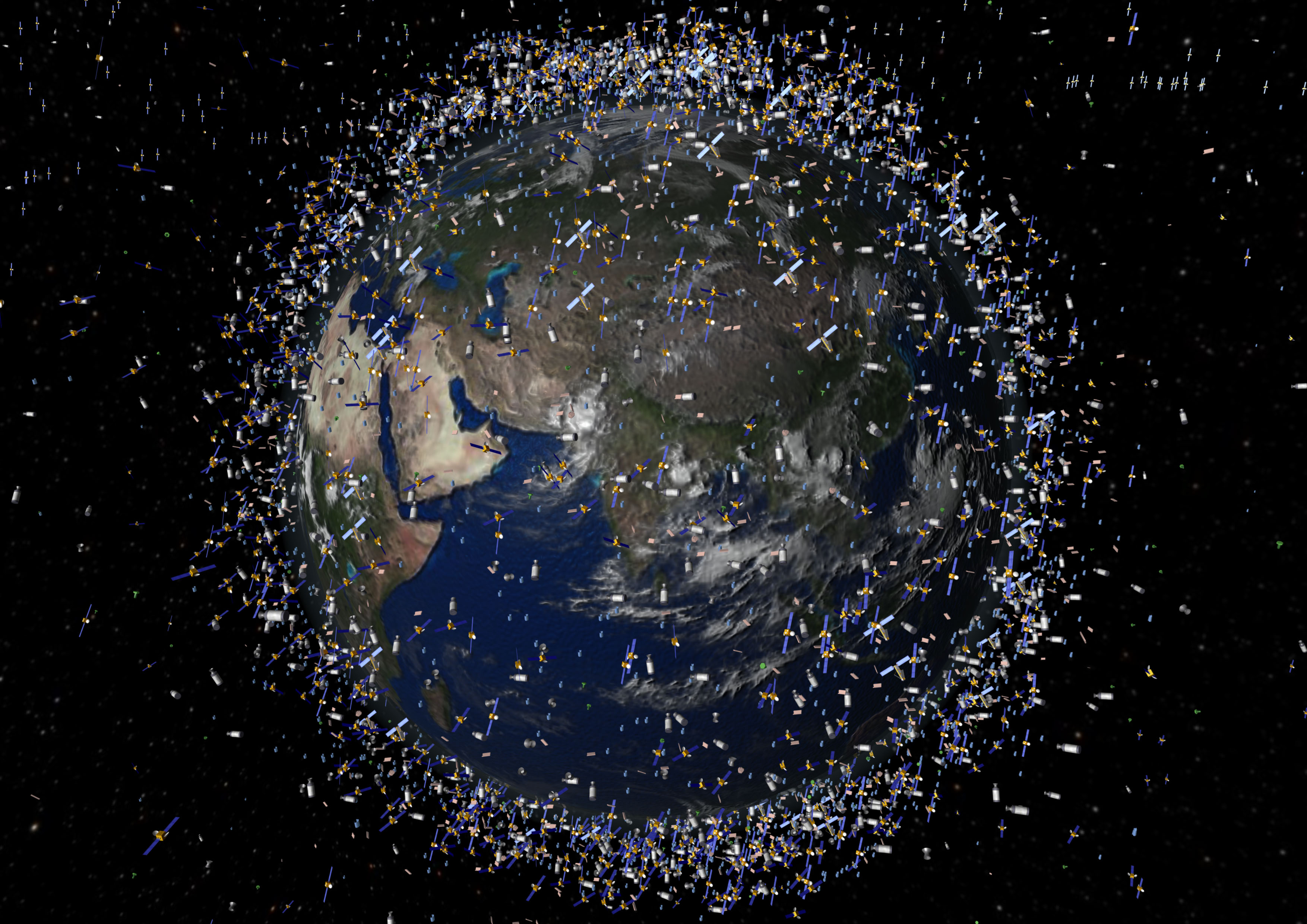
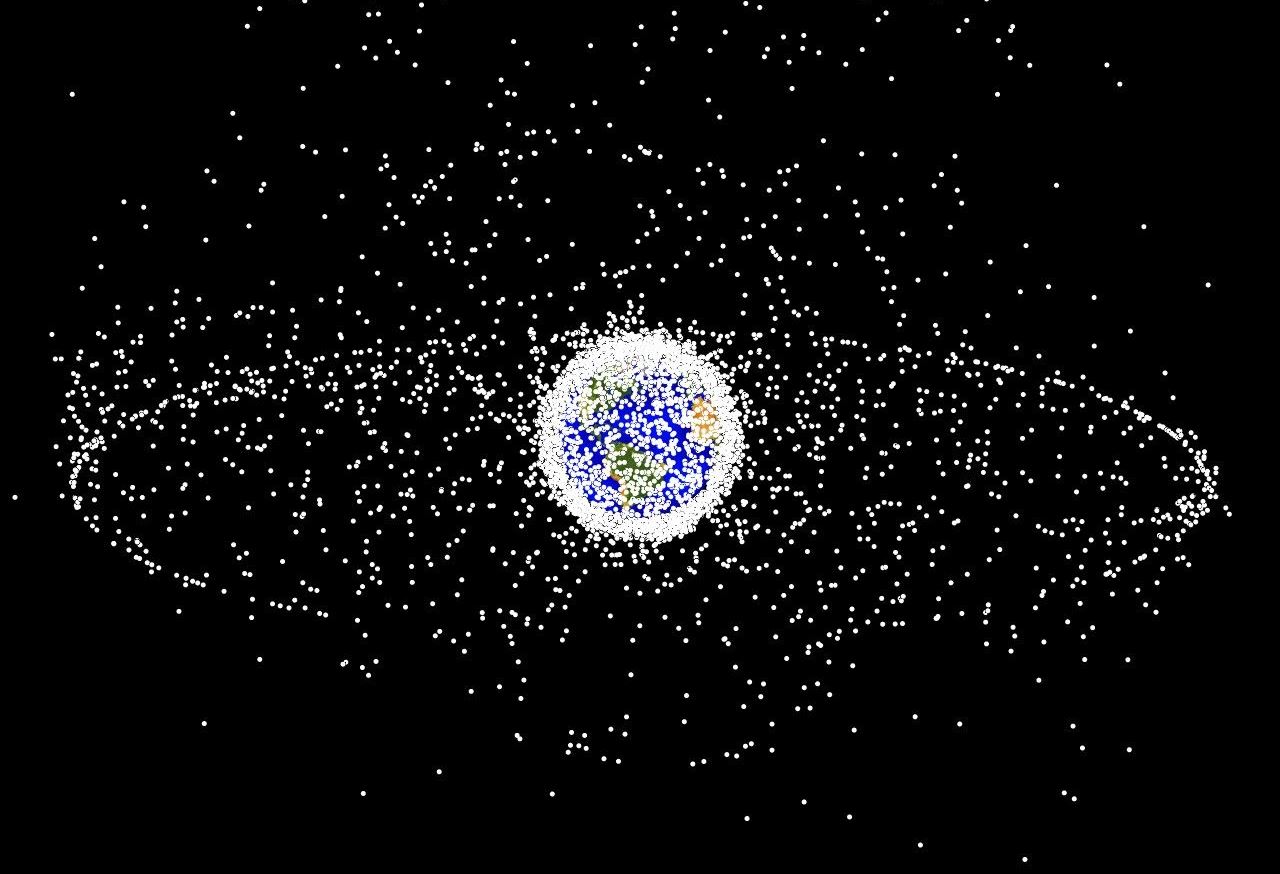
janitorOneSpace, or at least the portion which sits in low orbit around our planet, is quite literally a junkyard. Currently, it is estimated that there over 500,000 bits of debris floating above our world, which takes the form of satellite and rocket components, as well as broken down satellites that ceased functioning long ago. Naturally, these objects pose hazards for space flight, and collisions between objects have been known to occur.

In fact, just three years ago, a U.S. and Russian satellite collided over Siberia, generating an estimated 1,000 pieces of new debris at least 4 inches across. In addition, the International Space Station has to periodically adjust its orbit just to get out of the way of traffic. And since exploration and commercial travel to and from the Moon is expected within the near future, something needs to be done to take the garbage out.

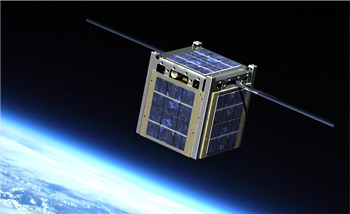
cubesatAnd that’s where CleanSpace One comes into play, a janitor satellite that the Swiss Space Center in the Swiss Federal Institute for Technology (EPFL) began developing last year. Specifically designed to target derelict satellites that threaten our communications and information networks. The satellite has a price tag of 11 million dollars, and is expected to be deployed in three to five years.

Naturally, the task before it is a tricky one. In order to do a “launch and seize” operation, the satellite would have to get onto the same orbital plane as its target, latch onto it at high speed, and then de-orbit it. To do this, EPFL is working on an “ultra-compact motor” to get the janitor onto the right track, as well as a grasping mechanism to grab hold of the space junk once its aligned and within distance of it.


And then there’s the efficiency factor. As it stands, a vessel like the CleanSpace One is a one-shot deal design. Once it’s latched onto space junk, it essentially re-enters the atmosphere with it and drops it below, meaning it is unable to gather up multiple pieces of debris and dispose of them discreetly. As such, it would take even a large fleet of janitor satellites quite a long time before they made a dent in all the space junk.

Luckily, there’s another option that has been on the table even longer than the janitor satellite. The reasoning behind this concept is, if you don’t the means to de-orbit all that space junk, just hit it with some photons! When you consider all the debris in orbit and the havoc it plays with the space lanes, not to mention how its only getting worse, a “targeted” approach may just be what the doctor ordered.

space_laserBack in 2011, James Mason, a NASA contractor at the Universities Space Research Association in Moffett Field, Calif., and his colleagues presented a paper claiming that an anti-collision laser system which would target space debris was feasible. Although they acknowledged that more study was required before it could be implemented, they also claimed that lab simulations suggested that the idea would work in practice.

The idea would center around the deployment of a medium-powered laser of 5 to 10 kilowatts to essentially nudge debris off a potential collision course. Rather than eradicate the junk that clutters up the space lanes, this system would be responsible for anticipated crashes and preventing them by ensuring space junk didn’t cross paths with the ISS, satellites, or orbiting shuttles.

space_debrisAnd even that doesn’t represent the entirety of proposed solutions. In addition to janitor satellites and laser, the Russian Space Agency has also been batting around an idea for an orbital pod that would sweep away satellite debris. Details remain sketchy and little information has been released to the public, but the RSA has claimed that they hope to have such a craft ready to go no later than 2023.

Yes, it seems we as a species are entering into phase two of the Space Age. And in this segment of things, orbital pods, offworld habitations, and exploration into the outer Solar System may very well be the shape of things to come. As such, we’re going to need clearer skies above our heads if anything hopes to make it off of Earth without a series fender bender!

space_debris_wide

Sources: news.cnet, cbsnews.com

Powered by the Sun: The Future of Solar Energy

Magnificent CME Erupts on the Sun - August 31Researchers continue to work steadily to make the dream of abundant solar energy a reality. And in recent years, a number of ideas and projects have begun to bear fruit. Earlier this year, their was the announcement of a new kind of “peel and stick” solar panel which was quite impressive. Little did I know, this was just the tip of the iceberg.

Since that time, I have come across four very interesting stories that talk about the future of solar power, and I feel the need to share them all! But, not wanting to fill your page with a massive post, I’ve decided to break them down and do a week long segment dedicated to emerging solar technology and its wicked-cool applications. So welcome to the first installment of Powered By The Sun!

spaceX_solararrayThe first story comes to us by way of SpaceX, Deep Space Industries, and other commercial space agencies that are looking to make space-based solar power (SBSP) a reality. For those not familiar with the concept, this involves placing a solar farm in orbit that would then harvest energy from the sun and then beam the resulting electricity back to Earth using microwave- or laser-based wireless power transmission.

Originally described by Isaac Asimov in his short story “Reason”, the concept of an actual space-based solar array was first adopted by NASA in 1974. Since that time, they have been investigating the concept alongside the US Department of Energy as a solution to the problem of meeting Earth’s energy demands, and the cost of establishing a reliable network of arrays here on Earth.

Constructing large arrays on the surface is a prohibitively expensive and inefficient way of gathering power, due largely to weather patterns, seasons, and the day-night cycle which would interfere with reliable solar collection. What’s more, the sunniest parts of the world are quite far from the major centers of demand – i.e. Western Europe, North America, India and East Asia – and at the present time, transmitting energy over that long a distance is virtually impossible.

NASA "Suntower" concept
NASA “Suntower” concept

Compared to that, an orbiting installation like the SBSP would have numerous advantages. Orbiting outside of the Earth’s atmosphere, it would be able to receive about 30% more power from the Sun, would be operational for almost 24 hours per day, and if placed directly above the equator, it wouldn’t be affected by the seasons either. But the biggest benefit of all would be the ability to beam the power directly to whoever needed it.

But of course, cost remains an issue, which is the only reason why NASA hasn’t undertaken to do this already. Over the years, many concepts have been considered over at NASA and other space agencies. But due to the high cost of putting anything in orbit, moving up all the materials required to build a large scale installation was simply not cost effective.

spacex-dragon-capsule-grabbed-by-iss-canadarm-640x424However, that is all set to change. Companies like SpaceX, who have already taken part in commercial space flight (such as the first commercial resupply to the ISS in May of 2012, picture above) are working on finding ways to lower the cost of putting materials and supplies into orbit. Currently, it costs about $20,000 to place a kilogram (2.2lbs) into geostationary orbit (GSO), and about half that for low-Earth orbit (LEO). But SpaceX’s CEO, Elon Musk, has said that he wants to bring the price down to $500 per pound, at which point, things become much more feasible.

And when that happens, there will be no shortage of clients looking to put an SBSP array into orbit. In the wake of the Fukushima accident, the Japanese government announced plans to launch a two-kilometer-wide 1-gigawatt SBSP plant into space. The Russian Space Agency already has a a working 100-kilowatt SBSP prototype, but has not yet announced a launch date. And China, the Earth’s fastest-growing consumer of electricity, plans to put a 100kW SBSP into Low-Earth Orbit by 2025.

space-based-solarpowerMost notably, however, is John Mankins, the CTO of Deep Space Industries and a 25-year NASA vet, who has produced an updated report on the viability of SBSP. His conclusion, in short, is that it should be possible to build a small-scale, pilot solar farm dubbed SPS-ALPHA for $5 billion and a large-scale, multi-kilometer wide power plant for $20 billion. NASA’s funding for SPS-ALPHA dried up last year, but presumably Mankins’ work continues at Deep Space Industries.

Cost and the long-term hazards of having an array in space remain, but considering its long-term importance and the shot in the arm space exploration has received in recent years – i.e. the Curiosity Rover, the proposed L2 Moon outpost, manned missions to Mars by 2030 – we could be looking at the full-scale construction of orbital power plants sometime early in the next decade.

And it won’t be a moment too soon! Considering Earth’s growing population, its escalating impact on the surface, the limits of many proposed alternative fuels, and the fact that we are nowhere near to resolving the problem of Climate Change, space-based solar power may be just what the doctor ordered!

Thanks for reading and stay tuned for the next installment in the Powered By The Sun series!

Source: Extremetech.com

Global Warming Slowed by Volcanoes

Klyuchevskaya Volcano. NASA Goddard Space Flight Center

Global mean temperatures have been rising in recent years, consistent with every projection provided by Climate Change specialists and planetary ecologists. However, it now seems as though the rate of increase is not as bad as it should have been, thanks to a series of small-to-moderate-sized volcanic eruptions that have spewed sunlight-blocking particles high into the atmosphere.

Between 2000 and 2010, the average atmospheric concentration of carbon dioxide rose more from about 370 parts per million to nearly 390. According to Ryan Neely III, an atmospheric scientist at the University of Colorado, Boulder, if that uptick were the only factor driving climate change, the average global temperature would have risen about 0.2°C. But a surge in the concentration of light-scattering particles in the stratosphere countered as much as 25% of that potential temperature increase.

Sanpedropable Volcano as seen from the ISS
San Pedro Volcano, as seen from the ISS

In addition, Neely and his colleagues ran a series of simulations that indicated that human the human contribution of aerosols to the stratosphere – which would have had a counteractive effect to the carbon – was minimal between 2000 and 2010. William Randel, an atmospheric scientist at the National Center for Atmospheric Research in Boulder claimed that the pattern of stratospheric particulate variations during the past decade “shows the fingerprint of volcanoes, with the right episodes showing up at the right time.”

For some time now, researchers and ecologists have known that sulfur dioxide, a major biproduct of volcanic eruptions, has a global cooling effect. Once introduced into the upper atmosphere, this particulate matter blocks out solar radiation and prevents it from being absorbed by the Earth’s soil, water, and plant life. In fact, it was a massive series of eruptions which took place during the Cretaceous–Paleogene Era that is believed to be linked to the extinction of the dinosaurs.

converted PNM fileFor many years, geoengineers have considered releasing sulfur dioxide into the upper atmosphere in order to slow down the process of Climate Change, a measure intended to give Earth’s scientists more time to develop alternative fuels and its people more time to get their act together. However, at this juncture it seems that the planet has obliged us and given us a bit of window, and completely unheeded.

It’s good to know that human agency alone does not determine the course this planet will take. At the same time however, one should not get too enthused and think this means we’re in for a big reprieve. Based on the most recent data, humanity still only has a few decades before the worst begins to happen and our world slowly becomes uninhabitable.

Source: sciencemag.org, Wired.com


ISS Astronaut Chris Hadfield sings with the Barenaked Ladies!

ISS_Hadfield_BNLFans of The Big Bang Theory, or anyone who has lived in Canada for the last 20 years, ought to be instantly familiar with the Barenaked Ladies. However, what is not common knowledge is that Chris Hadfield, an astronaut aboard the International Space Station, is himself Canadian and apparently, quite the musician! Not only can he sing, he can play the guitar in zero-gravity and even execute some sweet moves. Quite the ensemble!

And in this rare treat, which took place back in February, Hadfield, the Barenaked Ladies, and the Wexford Gleeks children’s choir all collaborated to create the world’s first space-to-earth musical collaboration. The song they sang was an original creation, entitled “I.S.S. (Is Somebody Singing)”, which was commissioned by CBCMusic.ca and The Coalition for Music Education with the Canadian Space Agency to celebrate music education in schools across Canada.

So if you have a few minutes, I recommend you cue up this video, turn the volume up, and enjoy a truly heartwarming and breathtaking song that celebrates Canada, music, planet Earth, and the wonder of looking down at it all from space. It’ll give you goose bumps, I swear!

NASA Loses Contact With ISS

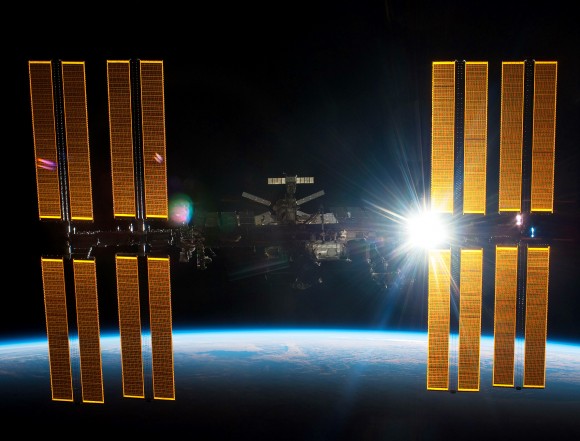
International-Space-Station-ISS-580x441It’s something no one hovering hundreds of kilometers over the Earth ever really wants to experience. Yes, when you floating in a tin can, you’re only connection to the surface being a communications relay, it can be pretty scary when it suddenly stops working. Can’t be much of a picnic for those working Mission Control either, or the families forced to sit idly by and wait for others to figure out what went wrong.

The communications blackout began on Tues, Feb. 19th at 9:45 am EST(15:45 UTC) , and lasted until 11:34 am yesterday (17:34 UTC). So for a good twenty-six hours straight, the ISS was unable to communicate with ground crews, which as anyone can guess caused a bit of a stir. Luckily, it turns out everyone on board the ISS was just fine the whole time, no injuries or space invaders to speak of!

According to a statement filed by NASA, communications were apparently lost when flight controllers in Houston were updating the software onboard the station’s flight computers and one of the station’s data relay systems malfunctioned. The primary computer that controls critical station functions defaulted to a backup computer, but was not allowing the station to communicate with NASA’s Tracking and Data Relay Satellites.

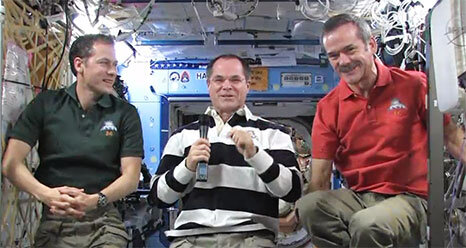
NASA_ISScrewThen, just before 11:00 a.m. EST, flight controllers were able to communicate with the crew once more as the space station flew over Russian ground stations. They then instructed the crew to connect a backup computer to begin the process of restoring communications. Once that was done, Expedition 34 Commander Kevin Ford reported the following:

“Hey, just FYI, the station is still flying straight, everybody is in good shape, or course, and nothing unexpected except lots of caution and warning [alarms]. All the systems look like they are doing just fine.”

According to the Johnson Space Center’s latest Twitter update, the crew is back at work and the crew is taking questions from fans. Click here to see what the crew had to say about the temporary communications blackout and what’s in store for them now.

In an ironic twist, sources have since indicated that Canadian astronaut Chris Hadfield Tweeted the following from the ISS shortly before the blackout took place: “Good Morning, Earth! Today we transition the Space Station’s main computers to a new software load. Nothing could possibly go wrong.” The moral here? Things can always go wrong! And don’t tempt fate, especially when you’re hurling through space, hundreds of kilometers above the Earth.

Source: universetoday.com


Captain Kirk Hails the ISS

ISSIn a move that was sure to give Trekies a collective fangasm, William Shatner made contact with the International Space Station this week. This past Thursday, thanks to the marvels of 21st century communications technology, the man who portrayed Captain Kirk was able to speak to Chris Hadfield, an astronaut on board the International Space Station.

Captain-KirkThe conversation began when Shatner – ahem! – opened hailing frequencies and contacted the ISS. Hadfield replied and, using some Star Trek sound effects as background, the two had a live, streaming video conversation. The entire conversation was recorded and uploaded to Youtube for the benefit of fans and amateur astronomers everywhere.

Needless to say, when science fiction and reality collide like this, it is an epic day in nerdom! Check out the video below…


Source:
universetoday.com

More Plans to Colonize Mars!

mars_lifeFolks may recognize the name SpaceX, the private aerospace company that in May of last year launched a module into space to resupply  the International Space Station. An historic occasion, that was the first time a private spacecraft has has ever docked with the ISS, and signaled a growing trend in the development in commercial space travel. Well, it seems that the company’s founder has more ambitious plans now.

Yes, in a bid to make sure his company is not left behind in any future space endeavors, CEO and billionaire Elon Musk has announced plans to colonize the Red Planet with a population of 80,000. The announcement came back in November at the Royal Aeronautical Society in London, where Musk appeared to receive the Society’s gold medal for helping to advance the commercial space industry.

The first phase of the program, which is contingent on the development of reusable rocket that can take off and land vertically, would start off modestly with only a handful of explorers leaving Earth at a time. To make it happen, SpaceX has already started to work on their next-generation reusable Falcon 9 rocket, known as “Grasshopper”. This rocket has already made two short flights, including one in which it reached a height of 2 meters (6 feet), and another in which it leaped to a height of  5.4 meters (17.7 feet). Small beginnings, as they say!

The projected cost for each colonist looking to make the trip would be roughly $500,000. In short, those who are not rich or extremely adventurous need not apply! What’s more, he estimated that the entire program would cost about $36 billion, an inevitable expense to set up the initial infrastructure and transport. But once that is done, he believes enough people will be interested and find it within their means that the venture will pay for itself.

In an interview with Space.com, Musk’s vision for sending people to Mars was described as follows:

“Accompanying the founders of the new Mars colony would be large amounts of equipment, including machines to produce fertilizer, methane and oxygen from Mars’ atmospheric nitrogen and carbon dioxide and the planet’s subsurface water ice.

“The Red Planet pioneers would also take construction materials to build transparent domes, which when pressurized with Mars’ atmospheric CO2 could grow Earth crops in Martian soil. As the Mars colony became more self sufficient, the big rocket would start to transport more people and fewer supplies and equipment.”

So save your pennies and prepare for the day when tickets go on sale! Hard to say exactly when that will be, but chances are, it will be either feasible or abandoned by 2030. That’s when NASA plans to mount manned missions to the Red Planet. And like I said, men like Musk don’t want to be left behind!

Source: space.com

The White House’s Death Star Petition

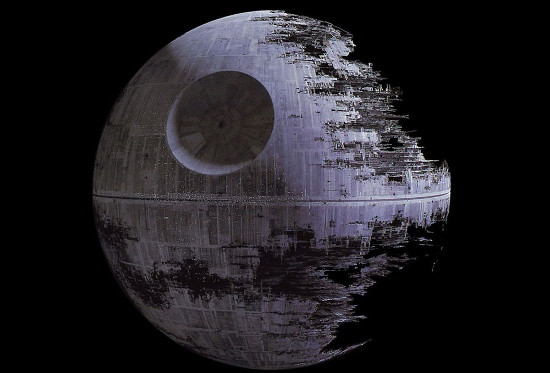
Death-Star-thumb-550x373-109406Remember a few weeks back when the White House was petitioned to conduct a feasibility study on the building of the USS Enterprise? Well, as it turns out, it received another petition at that time, similar in theme, but bolder by several orders of magnitude. The petition, which was filed in November of 2012 and got 34,435 signatures, was for the White House to build a real-life Death Star by 2016.

You read that right, a real-life Death Star. Yes, the petitioners seemed to think that the USS Enterprise wasn’t a big enough project, and the 20 year window for completing it too long. So instead, they recommend the Obama administration commit to building a massive, planet-destroying space station and to do it within the next four years.

And as it turns out, the petition got a response. Since it met the minimum requirement of 24,000 signatures, the White House was obliged to let the petitioners know exactly what they thought of their idea. Their answer came in the form of a cheekily titled document entitled “This Isn’t the Petition Response You’re Looking For”, and listed some of many, many reasons why the US couldn’t commit to such a program. Here is the opening section of the reply, as made by Paul Shawcross, chief of the Science and Space Branch at the White House Office of Management and Budget:

“The Administration shares your desire for job creation and a strong national defense, but a Death Star isn’t on the horizon. Here are a few reasons:

  • The construction of the Death Star has been estimated to cost more than $850,000,000,000,000,000. We’re working hard to reduce the deficit, not expand it.
  • The Administration does not support blowing up planets.
  • Why would we spend countless taxpayer dollars on a Death Star with a fundamental flaw that can be exploited by a one-man starship?”

Not the cheekiness of the reply. He then went on to tout NASA’s accomplishments in the last few years, drawing attention to recent advances in robotics, the International Space Station, Curiosity’s Mission to Mars, commercial space flight, and the possibility of building an outpost on the moon. This, he claims, are evidence that “we are living in the future!”, after which he urges the petitioners to “Enjoy it,” and even encourages them to consider a career in science and space.

What’s more, the report was filled with many tongue-in-cheek Star Wars references. For example, at one point he states “Even though the United States doesn’t have anything that can do the Kessel Run in less than 12 parsecs, we’ve got two spacecraft leaving the Solar System and we’re building a probe that will fly to the exterior layers of the Sun.” Clever. If you ever want to draw attention to the Voyager spacecraft or the Solar Probe, just compared it to the Millennium Falcon.

He also mentioned President Obama’s hosting of the White House science fairs and astronomy events, where he playfully danced around with a toy lightsaber to the delight of the crowd, and how the Defense Advanced Research Projects Agency work on robotics and bionic limbs would lead to the creation of “Luke’s arm”. And the sign-off line left no doubts as to the tone of this response, playful, yet stalwart and optimistic:

“If you do pursue a career in a science, technology, engineering or math-related field, the Force will be with us! Remember, the Death Star’s power to destroy a planet, or even a whole star system, is insignificant next to the power of the Force.”

Take that, frivolous petitioners! You just got poned! To read the entire response (trust me, its worth your time!), click on the following link and be glad there are civil servants like this out there!

Source: blastr.com, petitions.whitehouse.gov

Three-Man Soyuz Crew Headed for ISS

I just came across this news story on cnet.com, of how a Russian Soyuz rocket departed Earth to deposit a team of two rookies and one veteran cosmonaut on the International Space Station. Hmm, a three man crew is heading for the ISS aboard a Russian-built Soyuz rocket? That sound familiar to you? Provided you’re a fan of Big Bang Theory, it damn well ought to seeing as how this is exactly how the last season ended.

In any case, this mission has a somewhat unusual profile: to test the effect of zero-g on aquariums and aquatic life forms contained therein. I kind you not. The Soyuz craft, which lifted off at 4:51 p.m. (local time) from the Baikonur Cosmodrome in Kazakhstan, was carrying with it a tank with 32 medaka fish that were bound for a zero-gravity research aquarium aboard the ISS’s lab complex.

At the same time, the crew will be shuttling supplies to the station and conducting routine maintenance on the station’s spacewalk while they are aboard. This will consist of fixing a leak in the coolant system of the station’s far left-side solar array, which is responsible for dissipating heat within the station. The mission is expected to last a total of 143 days, with the three man crew returning to Earth in March 2013. Personally, I can’t imagine being in space, or anywhere, for that long! I hope they packed plenty of digital devices, and at least have an internet hookup up there 😉