
 With the exploration of Mars continuing apace and a manned missions looming, there has been an explosion of interest in the idea of one day settling the planet. As the non-profit organization known as Mars One can attest, many people are interested in becoming part of a mission to colonize the Red Planet. In fact, when they first went public, some 200,000 people signed on to become part of the experience.
The fact that the trip would be one-way and that the plans for getting them there did not yet exist was not an deterrent. But if a recent study from MIT is to be believed, those who choose to go will and have the experience televised will be in for a rather harsh experience. According to a feasibility study produced by researchers at the Institute, the plan has potentially deadly and astronomically expensive flaws.
 After analyzing the Mars One mission plan, the MIT research group found that the first astronaut would suffocate after 68 days. The other astronauts would die from a combination of starvation, dehydration, or incineration in an oxygen-rich atmosphere. The analysis also concludes that 15 Falcon Heavy launches – costing around $4.5 billion – would be needed to support the first four Mars One crew.
The technology underpinning the mission is rather nebulous; and indeed, that’s where the aerospace researchers at MIT find a number of potentially catastrophic faults. While the technology to set up a colony on Mars does technically exist, most of it is at a very low technology readiness level (TRL) and untested in a Mars-like environment. And the prediction that things will be worked out with time and crowdfunding does not appear to be sufficient.
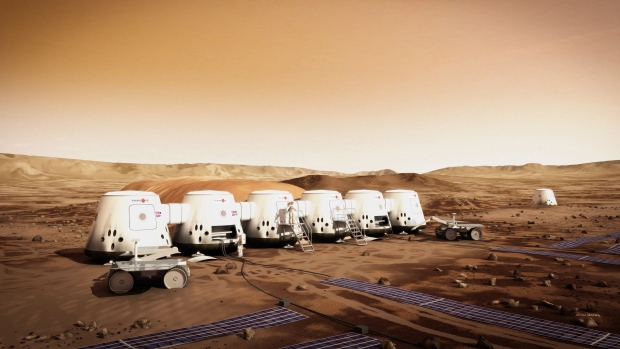 Mars One will rely heavily on life support and in-situ resource utilization (ISRU) – squeezing water from Martian soil and oxygen from the atmosphere. But these technologies are still a long way off large-scale, industrial use by a nascent human colony on Mars. NASA’s next Mars rover will have an ISRU unit that will make oxygen from the Red Planet’s atmosphere of CO2 – but that rover isn’t scheduled to launch until 2020, just two years before the planned launch of Mars One.
Originally, Mars One’s sign-up list included some 200,000 candidates. That number has now been whittled down to 705 – a fairly even mix of men and women from all over the world, but mostly the US. Several teams of four astronauts (two men, two women) will now be assembled, and training will begin. The current plan is to send a SpaceX Falcon Heavy rocket carrying the first team of four to Mars in 2022 – just eight years from now.
 The whole thing will be televised as a reality TV show, an instrinsic part of the plan since much of the funding is expected to come from media sponsors and advertisers. In the interim, a number of precursor missions – supplies, life-support units, living units, and supply units – will be sent to Mars ahead of the human colonizers. More colonists will be sent fairly rapidly thereafter, with 20 settlers expected by 2033.
The new feasibility study was led by Sydney Do, a PhD candidate at the Massachusetts Institute of Technology who has done similar studies on other space missions. Do and his team ran a computer simulation based on publicly available information about the Mars One plan and the kinds of technologies it would rely on. The researchers entered data about the crew’s age, weight and activities to find out how much food, oxygen and water they would need.
 They took into account information from Mars One, such as its plan that “food from Earth will only serve as emergency rations” and the astronauts will mainly eat fresh food they grow themselves. The simulation monitored conditions in the Mars One habitat over 26 months – the amount of time between spaceships from Earth that would resupply them – or until the death of a crew member, whichever came first.
The results of their study were presented in a paper at the International Astronomic Union conference in Toronto last month. They suggest that serious changes would need to be made to the plan, which would either call for the astronauts to grow all their plants in a unit isolated from the astronauts’ living space to prevent pressure buildup in the habitats, or import all food from Earth instead of growing it on Mars.
 The researchers recommend the latter, as importing all the necessary food along with the first wave of colonists (not including the costs of development, operations, communications, and power systems) would cost $4.5 billion and require 15 Falcon 9 Heavy Rockets to transport it. Comparatively, flying all the equipment needed for the astronauts to grow their own food indefinitely which cost roughly $6.3 billion.
On top of all that, Do and his research staff have concluded that the project will not be sustainable financially. While Mars One says each subsequent manned mission will cost $4 billion, Do’s study found that each mission would cost more than the one before, due to the increasing number of spare parts and other supplies needed to support an increasing number of people.
 Naturally, Mars One replied that they are not deterred by the study. CEO and co-founder Bas Landorp – who helped develop the mission design – said the plan was based on the company’s own studies and feedback from engineers at aerospace companies that make space systems, such as Paragon Space Development and Lockheed Martin. He added that he and his people are “very confident that our budgets, timelines and requirements are feasible”.
In any case, the study does not claim that the plan is bogus, just that it may be overreaching slightly. It’s not unreasonable to think that Mars One could get people to Mars, but the prospects for gradually building a self-sustaining colony is a bit farfetched right now. Clearly, more time is needed to further develop the requisite technologies and study the Martian environment before we start sending people to live there.
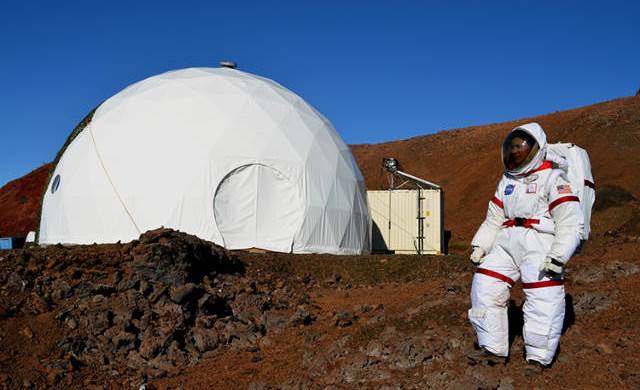 Oh well, people can dream can’t they? But the research and development are taking place. And at this point, it’s a foregone conclusion that a manned mission to Mars will be happening, along with additional robot missions. These will help lay the groundwork for eventual settlement. It’s only a question of when that could happen…
Sources: cbc.ca, extremetech.com, web.mit.edu














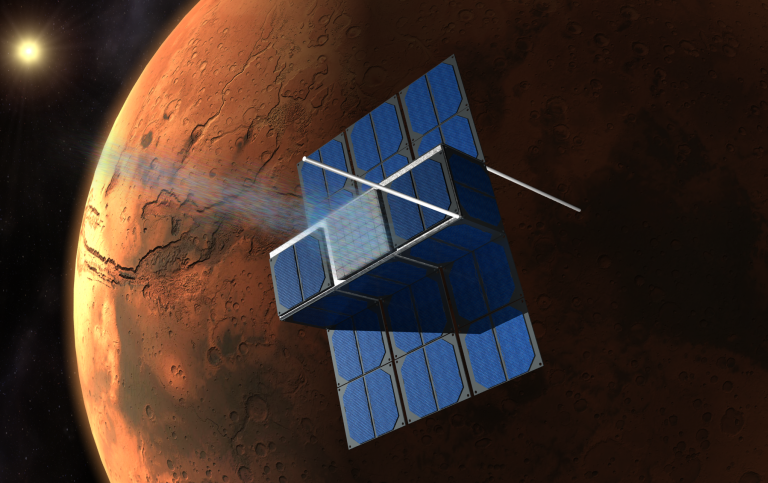
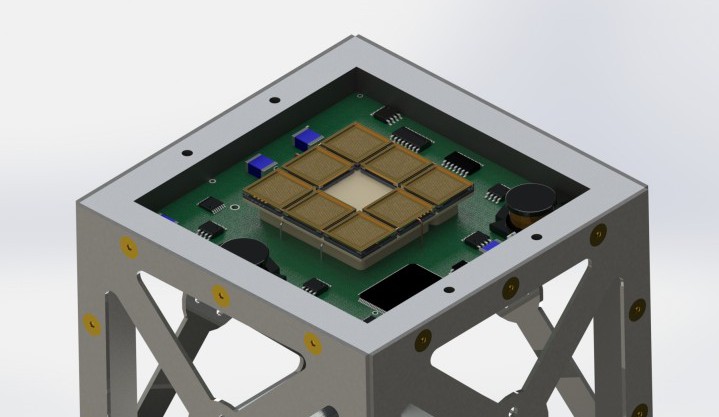
 The technologies being tested on the three spacecraft include delay-tolerant networking for the Deep Space Internet, inflatable antennae, and new interplanetary radiation sensors that will pave the way for future human trips to Mars. But out of all the new technologies being tested, the most exciting is certainly the propulsion system. But the most interesting technology of all will be in the form of its engines.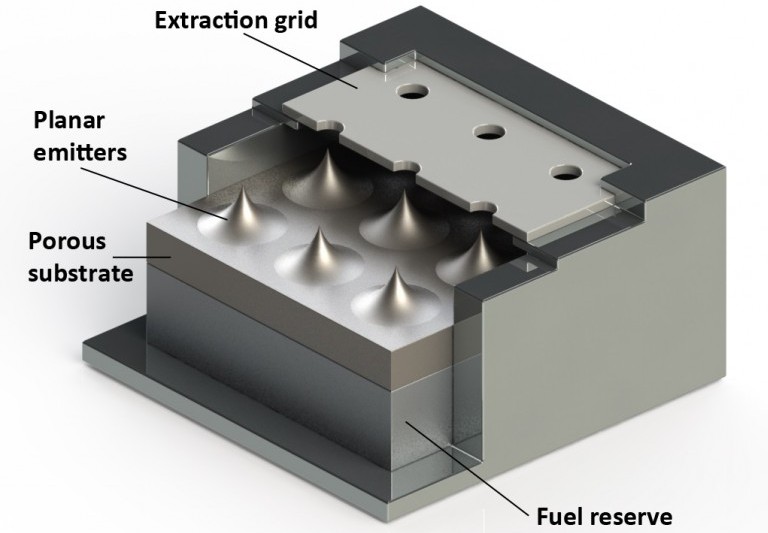




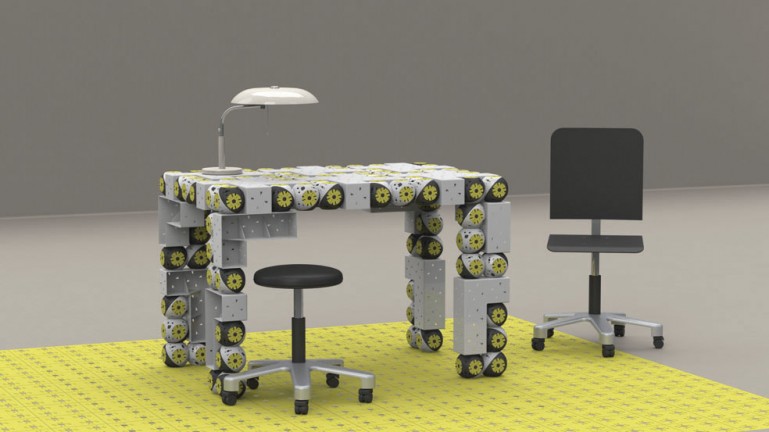
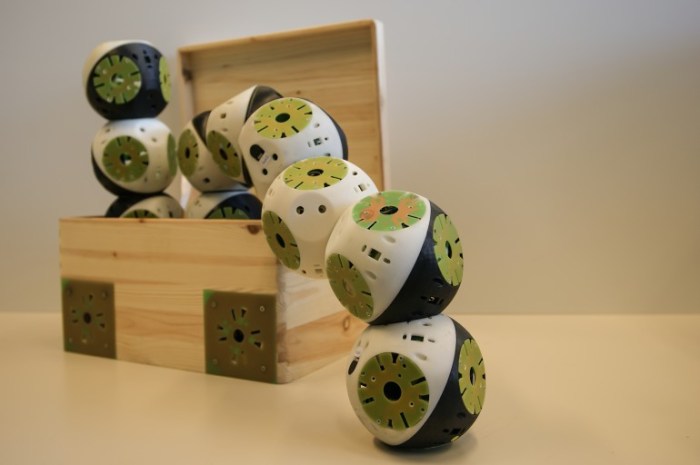 Like LEGO bricks, Roombots can be stacked upon each other to create various structures and/or combined with furniture and other objects, changing not only their shape, but also and functionality. For instance, a person lying down on a Roombot bed could slowly be moved into a seated position, or a table could scoot over to a corner or tilt itself to help a book slide into a person’s hands. The team has solved a number of significant milestones, such as the having the Roombots move freely, to bring all this multi-functionality closer.
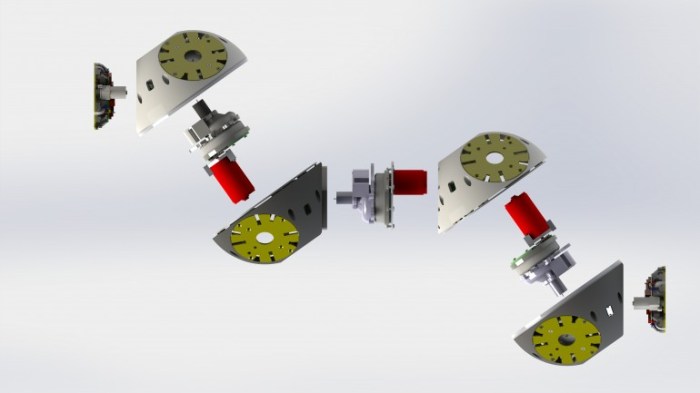 The Roombots can even climb up a wall or over a step, when the surface is outfitted with connector plates. They’re are also capable of picking up connector plates and arranging them to form, say, a table’s surface. Massimo Vespignani, a PhD student at BioRob, explained the purpose of this design and the advantages in a recent interview with Gizmag:
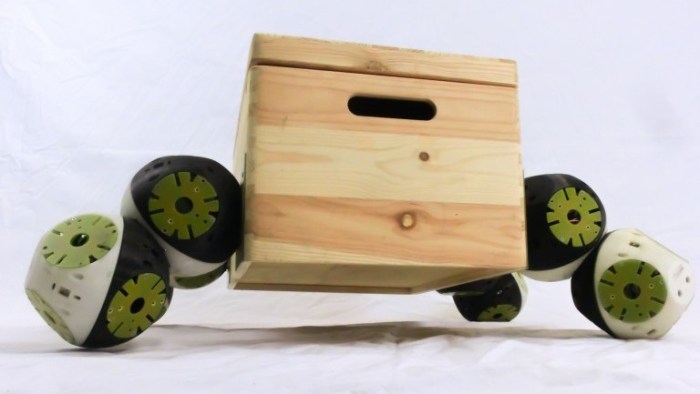 The range of applications for these kind of robotics is virtually infinite. For example, as seen in the video below, a series of Roombots as feet on a table that not only let it move around the room and come to the owner, but adjust its height as well. Auke Ijspeert, head of the Biorob, envisions that this type of customization could be used for physically challenged people who could greatly benefit from furniture that adapts to their needs and movements.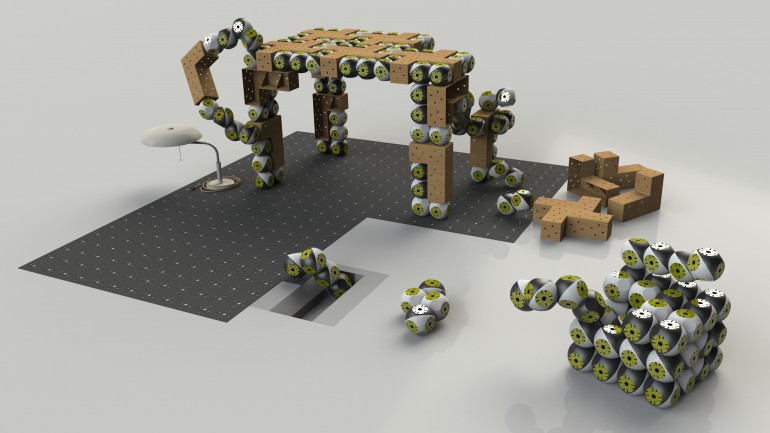

 This Tuesday, the Whitehouse received the latest draft of the Climate Assessment Report, a scientific study produced by the National Climate Assessment to determine the impacts of Climate Change. In addition to outlining the risks it poses to various regions in the US, the report also addresses the apparent increase in the number of severe weather events that have taken place in the past few years, and how these events affect local economies and communities.
 Henry Jacoby, co-director of the Joint Program on the Science and Policy of Global Change at the MIT, was joined by other scientists and White House officials when he claimed that this is the most detailed and U.S.-focused scientific report on global warming. Above all, the most chilling claim contained within is the fact that “Climate change, once considered an issue for a distant future, has moved firmly into the present.”
 The report says the intensity, frequency and duration of the strongest Atlantic hurricanes have increased since the early 1980s. Winter storms have increased in frequency and intensity and shifted northward since the 1950s, with heavy downpours increasing by 71 per cent in the northeast alone. Heat waves are projected to intensify nationwide, with droughts in the southwest expected to get stronger. Sea levels have risen 20 centimetres since 1880 and are projected to rise between 0.3 meters and 1.2 metres by 2100.
 As she described it, America is basically in a boxing match, and is currently on the ropes:
 And then there’s more pollen because of warming weather and the effects of carbon dioxide on plants. Ragweed pollen season has lengthened by 24 days in the Minnesota-North Dakota region between 1995 and 2011, the report says. In other parts of the Midwest, the pollen season has gotten longer by anywhere from 11 days to 20 days. And all of this has associated costs, not the least of which is in damages, insurance costs, and health care expenses.



 And unlike the current microgravity suits, the Z-series is designed for walking in extra-terrestrial environments where gravity is the norm (i.e. the Moon and Mars). Intrinsic to the new design is flexibility: it makes it much easier to walk, bend, and pick things up off the surface of a planet or moon. It also goes on quite differently. Whereas the old suit is pulled on like a pair of pants and a shirt, the new version has a handy door built into the back so someone can climb inside.
 Stories by Williams