News From Space: Volcanic Eruption on Io!

Io.1Io, the innermost of Jupiter’s four largest moons, has always been a source of wonder for astronomers and scientists. In addition to its pockmarked and ashen surface, it is the most volcanically active object in the Solar System, with about 240 active regions. This is due to the immense tidal forces that Jupiter provides, which create oceans of lava beneath the surface and huge volcanoes blasting it hundreds of kilometers into space.

Naturally, these eruptions are not visible directly from Earth unless one is using infrared cameras. But recently, a new series of eruptions were observed by Dr. Imke de Pater, Professor of Astronomy and of Earth and Planetary Science at the University of California in Berkeley. She was using the Keck II telescope on Mauna Kea in Hawaii on August 15, 2013 when it immediately became apparent something big was happening at Io.

Io_eruptionIn a telephone interview with Universe Today, de Pater claims this eruption is one of the top 10 most powerful eruptions that have been seen on Io, and she just happened to have the best seat in the house to observe it.

When you are right at the telescope and see the data, this is something you can see immediately, especially with a big eruption like that. It is a very energetic eruption that covers over a 30 square kilometer area. For Earth, that is big, and for Io it is very big too. It really is one of the biggest eruptions we have seen.

However, the fact that it occurred in the Rarog Patera region of Io, aptly named for a Czech fire deity, is somewhat unusual. While many regions of Io are volcanically active, de Pater said she’s not been able to find any other previous activity that has been reported in the Rarog Patera area, which the team finds very interesting.

Galileo_IoAccording to Ashley Davies of NASA’s Jet Propulsion Laboratory in Pasedena, California, Rarog Patera was identified as a small, relatively innocuous hot spot by the Galileo spacecraft during its encounter with the Jovian moon during the late 90’s. However, the observations made indicated that the volcanic activity was at a level way, way below what was seen on Aug 15.

Though we cannot see the eruptions directly, observation using the Keck telescope in the past have ascertained there are likely fountains of lava gushing from volcanically active fissures. But unlike volcanic eruptions here on Earth, which are already awesome and frightening to behold, eruptions on Io would be roughly 1000 times as powerful.

And since Io has no atmosphere to speak of, and the planet’s mass is significantly less than that of Earth’s (0.015 that of Earth’s to exact), the lava shoots off into space. Thus, for anyone standing on the moon’s surface, the result would look very much like a space launch at night, with plumes of flames reaching from the ground and extending indefinitely into the sky.

Io_Earth_Moon_ComparisonAs de Pater further indicated in the course of her interview, volcanic activity remains quite unpredictable on the Jovian moon:

We never know about eruptions – they can last hours, days months or years, so we have no idea how long it will stay active. but we are very excited about it.

No data or imagery has been released on the new eruption yet since the team is still making their observations and will be writing a paper on this topic. One thing is clear at this point, though. Despite its mysterious nature, Io still has a few surprises left for Earth scientists.

And for more information on the mysterious planet of Io, check out this Astronomycast podcast, featuring an interview with Dr. Pamela Gay of Southern Illinois University:

http://www.astronomycast.com/2011/12/ep-244-io/

Source: universetoday.com, astronomycast.com

Space Elevators!

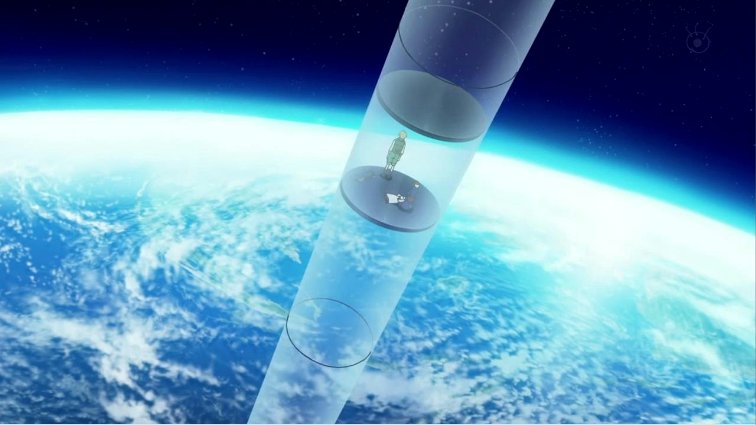
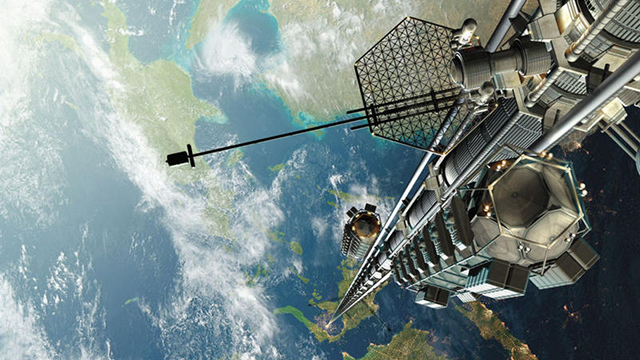
space_elevatorWhen it comes to classic and hard science fiction, there are few concepts more inspired, more audacious, and more cool than the Space Elevator. Consisting of a cable (or tether) attached the Earth near the equator and a station in geosynchronous orbit, a structure of this kind would allow us to put objects, supplies and even people into orbit without the need for rockets and space ships.

And perhaps I am a bit biased, seeing as how one of the writer’s featured in the Yuva anthology happens to have written a story that features one – Goran Zidar, whose story “Terraformers” includes an orbital colony that is tethered to the planet by a “Needle”. But I’ve found the concept fascinating for as long as I have known about it, and feel like its time for a conceptual post that deals with this most awesome of concepts!

Here goes…

History:
The first recorded example of the space elevator concept appeared in 1895 when Russian scientist Konstantin Tsiolkovsky was inspired by the Eiffel Tower in Paris. He considered a similar tower that extended from the ground into geostationary orbit (GSO) in space. Objects traveling into orbit would attain orbital velocity as they rode up the tower, and an object released at the tower’s top would also have the velocity necessary to remain in orbit.
space_elevator1However, his concept called for a compression structure, which was unfeasible given that no material existed that had enough compressive strength to support its own weight under such conditions. In 1959, another Russian scientist named Yuri N. Artsutanov suggested a more feasible proposal, a tensile structure which used a geostationary satellite as the base from which to deploy the structure downward.

By using a counterweight, a cable would be lowered from geostationary orbit to the surface of Earth, while the counterweight was extended from the satellite away from Earth, keeping the cable constantly over the same spot on the surface of the Earth. He also proposed tapering the cable thickness so that the stress in the cable was constant. This gives a thinner cable at ground level that becomes thicker up towards the GSO.

space_elevator_liftIn 1966, Isaacs, Vine, Bradner and Bachus, four American engineers, reinvented the concept under the name “Sky-Hook”. In 1975, the concept was reinvented again by Jerome Pearson, whose model extended the distance of the counterweight to 144,000 km (90,000 miles) out, roughly half the distance to the Moon. However, these studies were also marred by the fact that no known material possessed the tensile strength required.

By the turn of the century, however, the concept was revitalized thanks to the development of carbon nanotubes. Believing that the high strength of these materials might make an orbital skyhook feasible, engineer David Smitherman of NASA put together a workshop at the Marshall Space Flight Center and invited many scientists and engineers to participate. Their findings were published in an article titled “Space Elevators: An Advanced Earth-Space Infrastructure for the New Millennium”.

carbon-nanotubeAnother American scientist, Bradley C. Edwards, also suggested using nanotubes to create a 100,000 km (62,000 mile) paper-thin cable that would be shaped like a ribbon instead of circular. This, he claimed, would make the tether more resistant to impacts from meteoroids.  The NASA Institute for Advanced Concepts began supporting Edwards’ work, allowing him to expand on it and plan how it would work in detail.

In Fiction:
arthurcclarke_fountains-of-paradiseIn 1979, the concept of the Space Elevator was introduced to the reading public thanks to the simultaneous publications of Arthur C. Clarke’s The Fountains of Paradise (1979) and Charles Sheffield’s The Web Between the Worlds. In the former, engineers construct a space elevator on top of a mountain peak in the fictional island country of Taprobane, which was loosely based on Clarke’s new home in Sri Lanka, albeit moved south to the Equator.

In an interesting and fact-based twist, the purpose for building the elevator on Earth is to demonstrate that it can be done on Mars. Ultimately, the protagonist of the story (Dr Vannevar Morgan) is motivated by his desire to help a Mars-based consortium to develop the elevator on Mars as part of a massive terraforming project, something which has been proposed in real life.

Sheffield- The Web Between the WorldsSimiliarly, in Sheffield’s Web, which was his first novel, we see a world famous engineer who has created extensive bridge networks all over the world using graphite cable. In hoping to achieve the unachievable dream, he begins work on a space elevator code named the “Beanstalk”. This brings him into an alliance with a corrupt tycoon who wants to make rockets obsolete, and intrigue ensues…

Three years later, Robert A. Heinlein’s novel Friday features a space elevator known as the “Nairobi Beanstalk”. In Heinlein’s vision, the world of the future is heavily Balkanized, and people exist in thousands of tiny nation states and orbital colonies which are connected to Earth via the Beanstalk, which as the name suggests, is located in equatorial Africa.

ksr_redmarsIn 1993, Kim Stanley Robinson released Red Mars, a sci-fi classic that remains a quintessential novel on the subject of Mars colonization. In the novel, the Martian colonists build a space elevator that allows them to bring additional colonists to the surface, as well as transport natural resources that were mined planetside into orbit where they can be ferried back to Earth.

In 1999, Sid Meier’s, creator of the famed Civilization gaming series, released the sci-fi based Sid Meier’s Alpha Centauri that deals with the colonization of the planet “Chiron” in the Alpha Centauri system. In the course of the turn-based strategy game, players are encouraged to construct special projects as a way of gaining bonuses and building up their faction’s power.

One such project is the Space Elevator, which requires that the faction building first research the technology “super tensile solids” so they have the means of building a super-tensile tether. Once built, it confers bonuses for space-based unit production, allows orbital drop units to be deployed over the entire planet, increases production rates for satellites, and removes the need for aerospace facilities. spaceelevator_alpha_centauriIn David Gerrold’s 2000 novel, Jumping Off The Planet, we are again confronted with an equatorial space elevator, this time in Ecuador where the device is once again known as the “beanstalk”. The story focuses on a family excursion which is eventually revealed to be a child-custody kidnapping. In addition to this futuristic take on domestic issues, Gerrold also examined some of the industrial applications of a mature elevator technology.


Chasm_City_coverIn 2001, Alastair Reynolds, a hard sci-fi author and creator of the Revelation Space series, released Chasm City, which acted as a sort of interquel between the first and second books in the main trilogy. At the opening of the novel, the story takes place on Sky’s Edge, a distant world where settlers travel to and from ships in orbit using a space elevator that connects to the planetary capitol on the surface.

And in 2011, author Joan Slonczewski presented a biological twist on the concept with her novel The Highest Frontier. Here, she depicts a college student who ascends a space elevator that uses a tether constructed from self-healing cables of anthrax bacilli. The engineered bacteria can regrow the cables when severed by space debris, thus turning the whole concept of tensile solids on its head.

Attempts to Build a Space Elevator:
Since the onset of the 21st century, several attempts have been made to design, fund, and create a space elevator before the end of this century. To speed the development process, proponents of the concept have created several competitions to develop the relevant technologies. These include the Elevator: 2010 and Robogames Space Elevator Ribbon Climbing, annual competitions seeking to design climbers, tethers and power-beaming systems.

space_elevator_nasaIn March of 2005, NASA announced its own incentive program, known as the Centennial Challenges program, which has since merged the Spaceward Foundation and upped the total value of their cash prizes to US$400,000. In that same year, the LiftPort Group began producing carbon nanotubes for industrial use, with the goal of using their profits as capital for the construction of a 100,000 km (62,000 mi) space elevator.

In 2008, the Japanese firm known as the Space Elevator Association, chaired by Shuichi Ono, announced plans to build a Space Elevator for the projected price tag of a trillion yen ($8 billion). Though the cost is substantially low, Ono and his peers claimed that Japan’s role as a leader in the field engineering could resolve the technical issues at the price they quoted.
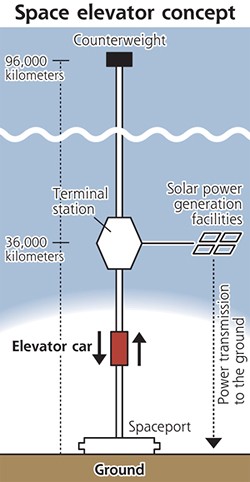
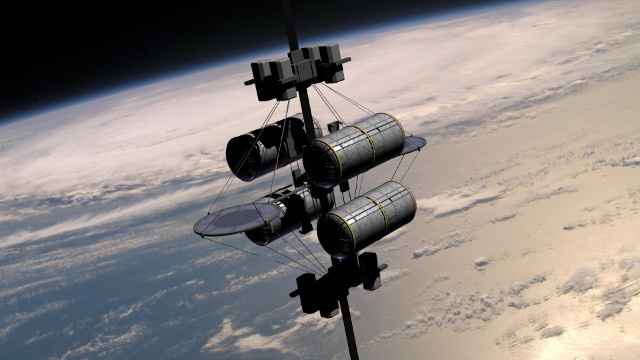
obayashi-2In 2011, Google was reported to be working on plans for a space elevator at its secretive Google X Lab location. Since then, Google has stated that it is not working on a space elevator. But in that same year, the first European Space Elevator Challenge (EuSEC) to establish a climber structure took place in August.

And in 2012, the Obayashi Corporation of Japan announced that in 38 years it could build a space elevator using carbon nanotube technology. Their detailed plan called for a 96,000 long tether, supported by a counterweight, that could hold a 30-passenger climber that would travel 200 km/h, reaching the GSO after a 7.5 day trip. However, no cost estimates, finance plans, or other specifics were made at this point.

space-elevator-schematics-largeDespite these efforts, the problems of building are still marred by several technical issues that have yet to be resolved. These include the problems of tensile strength, dangerous vibrations along the tether line, climbers creating wobble, dangers posed by satellites and meteoroids, and the fact that such a structure would be vulnerable to a terrorist or military attack.

Other Possibilities:
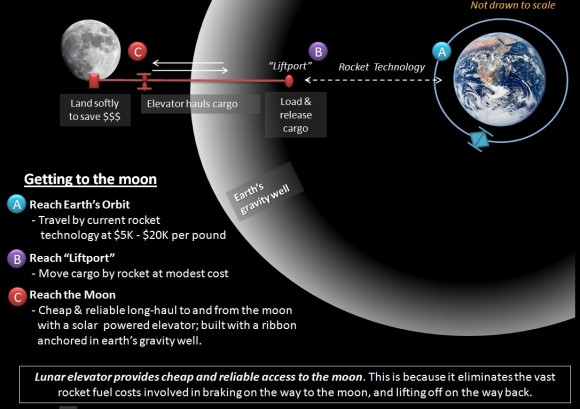
Though we may never be able to resolve the problems of building a space elevator on Earth, scientists are agreed that one could be made on other planets, particularly the Moon. This idea was first devised by Jerome Pearson, one of the concepts many original proponents, who proposed a smaller elevator that would be anchored by Earth’s gravity field.
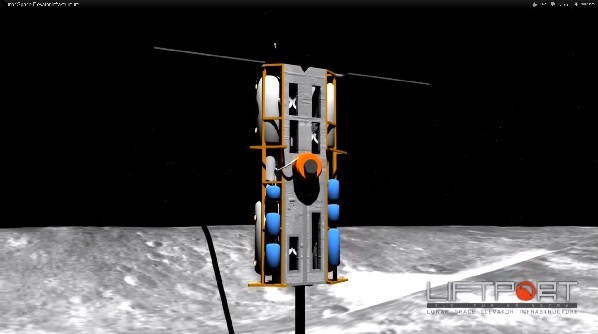
LiftPort1This is a necessity since the Moon does not rotate and could therefore not maintain tension along a tether. But in this scenario, the cable would be run from the moon and out through the L1 Lagrangian point. Once there, it would be dangled down into Earth’s gravity field where it would be held taught by Earth gravity and a large counterweight attached to its end.

Since the Moon is a far different environment than planet Earth, it presents numerous advantages when building a space elevator. For starters, there’s the strength of the materials needed, which would be significantly less, thus resolving a major technical issue. In addition, the Moon’s lower gravity would mean a diminished weight of the materials being shipped and of the structure itself.
space_elevator_lunarAs Pearson explained:

[T]o lift a thousand tons per day off the lunar surface, it would take less than 100,000 tons of elevator to do it — which means it pays back its own mass in just 100 days, or somewhere between three and four times its own mass per year — which is not a bad rate of return… You don’t need nanotubes and very, very high strength materials. But the higher the strength, the more of the ratio you can get for hauling stuff on the moon.

In fact, LiftPort is already deep into developing a “Lunar Elevator”. Plans to build one by 2020 were announced back in 2010, and since that time, the company launched a Kickstarter campaign to get the funding necessary to conduct tests that will get them closer to this goal. These consisting of sending a tethered robot 2km from the surface to conduct stress and telemetry tests.

Ultimately, the company estimates that a Lunar Elevator could be made at the cost of $800 million, which is substantially less than a “Terran Elevator” would cost. Similarly, it is likely that any manned missions to Mars, which will include eventual settlement and plans to terraform, will involve a Martian elevator, possibly named the “Ares Elevator”.

Much like SpaceX’s attempts to resolve the costs of sending rockets into space, the concept of a space elevator is another means of reducing the cost of sending things into orbit. As time goes on and technology improves, and humanity finds itself in other terrestrial environments where resources need to be exported into space, we can expect that elevators that pierce the sky will become possible.

In the meantime, we can always dream…

space_elevator_conceptSources: en.wikepedia.org, gizmag.com, io9.com, forbes.com, universetoday.com, futuretimeline.com

New Movie Trailer: Europa Report

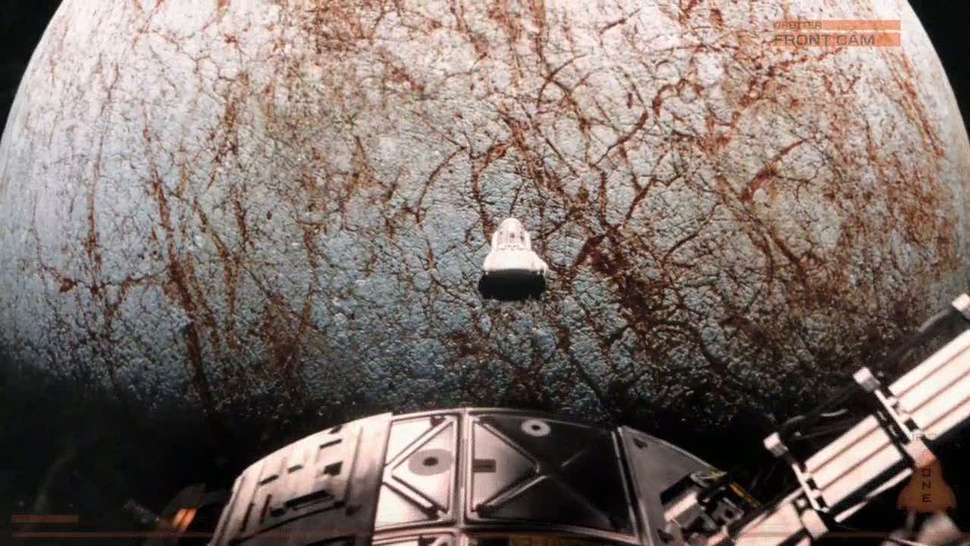
europa_reportOrdinarily, I like to show movie previews before the movie has been released. This time around, I’m a little behind the curve. But my thanks to Rami for bringing this movie to my attention, since it seems like just the thing for us sci-fi geeks and buffs. It’s called the Europa Report, a near-future speculative science fiction film that follows in the vein of the 2001: A Space Odyssey and the Blair Witch Project.

Taking place in 2061, the story follows a group of astronauts who are sent on a private venture to Jupiter’s moon of Europa to investigate it for signs of life. Naturally, things go wrong, lives are lost, and the footage of their mission becomes the basis of a “report” that people back at Earth pour over, hoping to find some answers to the mystery of what happened.

The film was officially released just under two weeks ago, on August 2nd, and has received some pretty kick-ass reviews. Over at space.com, they claimed the movie was “One of the most thrilling and realistic depictions of space exploration since Moon or 2001: A Space Odyssey”, while IO9’s Annalee Newitz wrote of the film:

The representations of Jupiter and Europa in this film come directly from real satellite imagery gathered by NASA, and the journey to Europa itself is both realistic and gorgeous. There’s a lesson here about how dramatic tension and brilliant concept design, even on an indie budget, can create a sense of wonder rivaling that of a VFX blockbuster. And the payoff at the end is electrifying.

Hot damn, that’s a good endorsement! As for me, and I imagine Rami, I plan to see it and offer a review of my own! A movie like this couldn’t be more timely. Already, long-term plans are being made to send a lander or a space penetrator to Europa to have a gander at what lies beneath its icy veil. And I look forward to the day when the reality of that planet and all the speculative fiction can get together and compare notes!

Source: IO9.com

News From Space: Eyes on Europa

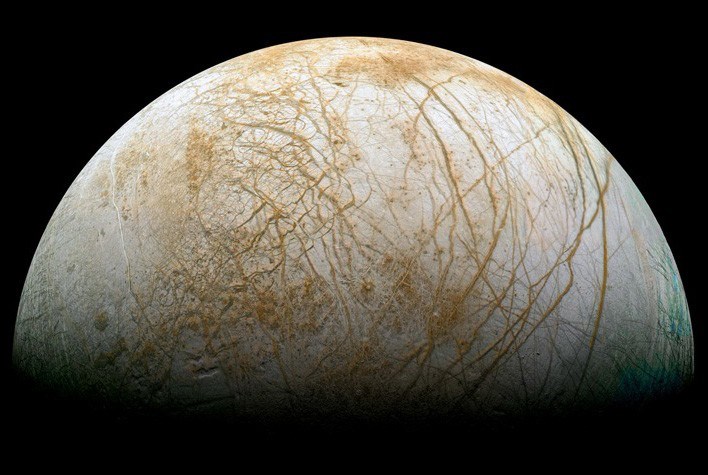
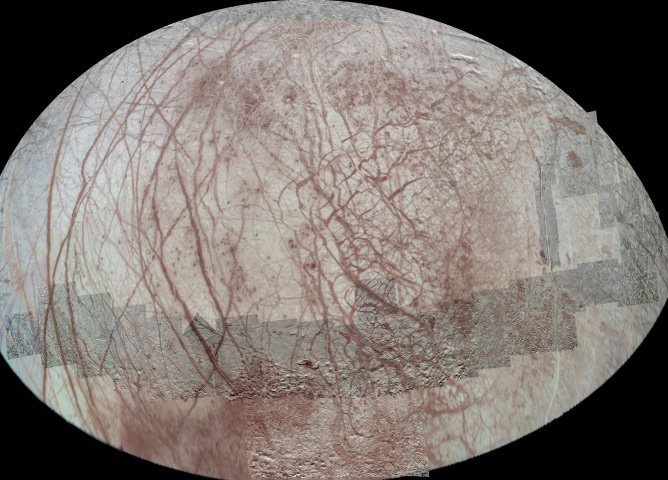
europa-landerIt’s one of Jupiter’s four largest moons, named the Jovians by the famed astronomer – Galileo Galilee – who first discovered them. And from all outward appearances, the moon is an icy, inhospitable place, with surface temperatures never reaching above -160º C (-256º F). Yet, beneath that frozen outer shell is believed to be a liquid, saltwater ocean, one that draws warmth from its orbit around Jupiter.

If this should indeed be the case, then Europa would be about the best candidate for extraterrestrial life in the Solar System, albeit in microbial form. For decades now, NASA has been working under that assumption and preparing for the day that it might be able to send an expedition or probe to confirm it. And it now seems that that day may be on the horizon.

europa-lander-2According to NASA, this would likely take the form of a robot lander. Much like Curiosity, Opportunity, and other robotic research vehicles, it would packed with a variety of sensors and analytical equipment. But of course, the nature of that equipment would be specifically tailored to answer a series of unknowns pertaining to Europa itself.

Overall, the lander would have three priorities: discover the makeup of minerals and organic matter present on the moon; examine the geophysics of the ice and the ocean underneath; and determine how the geology looks (and therefore how it might have evolved) at a human scale on the surface. Basically, it would all boil down to looking at chemistry, water and energy – in other words, the conditions necessary for life.

And though NASA has not announced any official dates, it has begun to speak of the idea an indication of intent. A new article by NASA scientists published in the peer-reviewed journal Astrobiology entitled Science Potential from a Europa Lander set out their research goals in more detail, and speculated how they might be practically achieved.

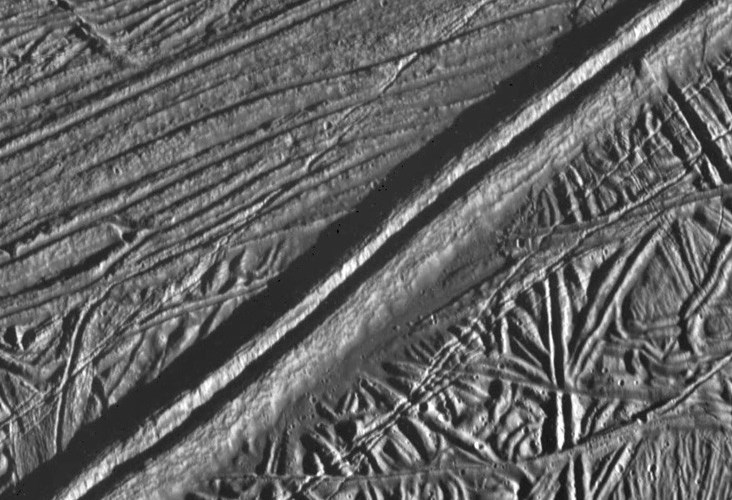
europa-lander-4One area of focus would be Europa’s distinctive linear surface cracks which are believed to be the result of tidal forces. Europa’s eccentric orbit about Jupiter causes very high tides when the moon passes closest to the gas giant, so it is thought that this process would generate the heat necessary for simple life to survive. NASA thinks the cracks could contain biological makers, molecules indicating the presence of organic life, which have come from the ocean.

But of course, plotting a mission is not as simple as simply launching a robot into space. To ensure that such a mission would maximize returns requires that a “scientifically optimized” landing site be identified, and to do that, Europa’s surface must be thoroughly surveilled. Thus far, the little we know and think about Europa is based on a handful of flybys by Voyager 2 in the 70s and the Galileo probe in the 90s.

europa-lander-3Lead author Robert Pappalardo of NASA’s Jet Propulsion Laboratory summed up the situation as follows:

There is still a lot of preparation that is needed before we could land on Europa, but studies like these will help us focus on the technologies required to get us there, and on the data needed to help us scout out possible landing locations. Europa is the most likely place in our solar system beyond Earth to have life today, and a landed mission would be the best way to search for signs of life.

At the present time, NASA’s exploratory itinerary is quite packed. In addition to wanting to tow an asteroid closer to Earth to study it, launching two more rovers to Mars, constructing a settlement on the far side of the Moon, and conducting a manned mission to Mars, it’s safe to say that a robot lander on Europa won’t be happening for some time.

converted PNM fileBut of course, the plans are in place and moving forward with every passing year. NASA is certainly not going to pass up a chance to examine one of the Solar Systems best candidates for extra-terrestrial life, and we can certainly expect more deep-space probes to be launched once Cassini is finished shooting pictures of Saturn.

I am willing to bet good money that any future probe sent into the outer reaches of the Solar System will be tasked with taking high-resolution photos of Europa as part of its mission. And from that, we can certainly expect NASA, the ESA, and even the Chinese, Russians and Indians to start talking turkey within our lifetimes.

What do you think? 2035 seem like a safe bet for a Europa lander mission?

Source: gizmag.com

100,000 People Want to Go to Mars, And Not Come Back

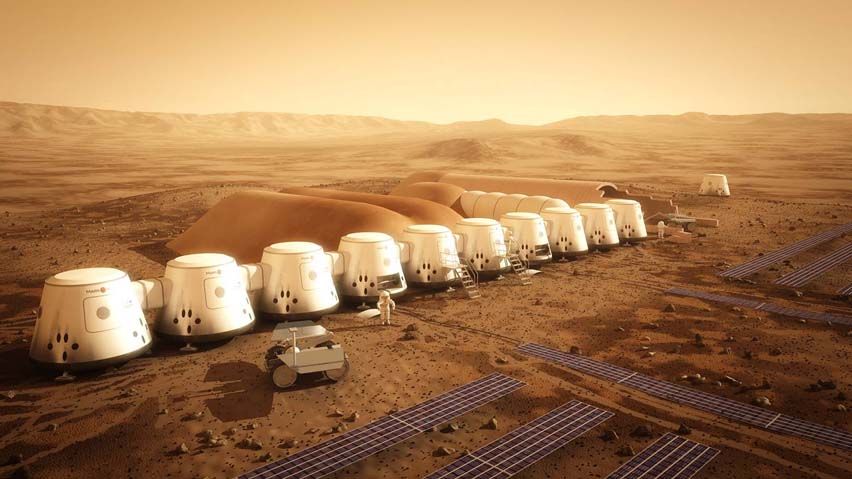
MarsOneEver since they announced their plan to establish a colony on Mars by 2022, Mars One has been flooded by applicants eager to set foot on a new planet and make it their home. In fact, according to a recent story by CNN Tech, over 100,000 people have volunteered for the mission, knowing full well that it would be a one-way trip and their stay on the Red Planet would be permanent.

Anyone who is 18 years of age or older can apply, and the fee runs anywhere from $15 to $38, depending on your nationality and the gross domestic product of your country. Ultimately, only 40 people will be selected this year, and only two couples will be sent ahead with the first mission. This mission is slated to leave by September of 2022 and land on Mars by April of 2023, with another group of four to be sent two years later.

Mars_landerThe applicants can all be seen simply be going to their website, where each person has created a profile and can be voted on. According to Bas Lansdorp, co-founder and CEO of Mars One, only those who have completed the registration process can be seen here:

There is also a very large number of people who are still working on their profile, so either they have decided not to pay the application fee, or they are still making their video or they’re still filling out the questionnaire or their resume. So the people that you can see online are only the ones that have finished and who have set their profiles as public.

In terms of what the selectees will do once the project is up and running, the website offers a basic rundown. First, the volunteer astronauts will undergo a required eight-year training in a secluded location, where they will learn how to repair habitat structures, grow vegetables in confined spaces and address “both routine and serious medical issues such as dental upkeep, muscle tears and bone fractures.”

mars-one-brian-versteegIn terms of how settlement will occur, the plan is to send a series of Mars One landers equipped with up to 2500 kg (5,500 pounds) of food, solar panels and supplies each. After eight missions, more than 44,000 pounds of supplies and 40 people will have arrived and the capsules themselves will be formed into the settler’s habitat.

Two things Earth won’t be sending is water and oxygen, since the settlers will be manufacturing these themselves. According to Lansdrop, these will be manufactured on Mars:

We will evaporate it and condense it back into its liquid state. From the water we can make hydrogen and oxygen, and we will use the oxygen for a breathing atmosphere inside the habitat. This will be prepared by the rovers autonomously before the humans arrive.

mars_astronautsNaturally, a good many details, such as where the $6 billion dollars for the first mission are going to come from, whether or not the technology truly exists to create a self-sustaining colony on Mars, and whether the people going up will be able to survive for extended periods of time until new waves arrive and new settlements are opened up.

In addition, there are experts who say that the risks are too high given the distance and exposure to radiation involved. A round-trip journey to Mars could expose astronauts to the maximum amount of radiation allowed in a career under current NASA standards. While Mars One does not negate this issue, they have yet to indicate how they intend to keep their astronauts shielded from the harmful cosmic rays.

mars_astronauts1However, this has not deterred some 30,000 Americans and over 100,000 people worldwide from signing on. What’s more, Lansdrop has said repeatedly that the project will be funded by sponsors and media that will pay for broadcasting rights of shows and movies documenting everything from the astronauts’ training on Earth to their deployment and colonization of Mars.

Basically, they intend for the entire process to be a worldwide media event, a massive reality TV show, with the necessary advances and funding worked out as time goes on. Right now, all they are looking for is volunteers so that corporate and media sponsors understand just how serious this is and that the willingness to go is there. No telling if that will be enough, but it is a start.

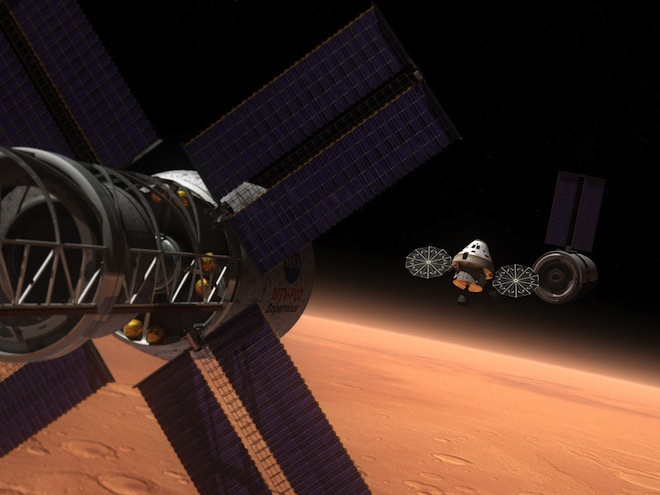
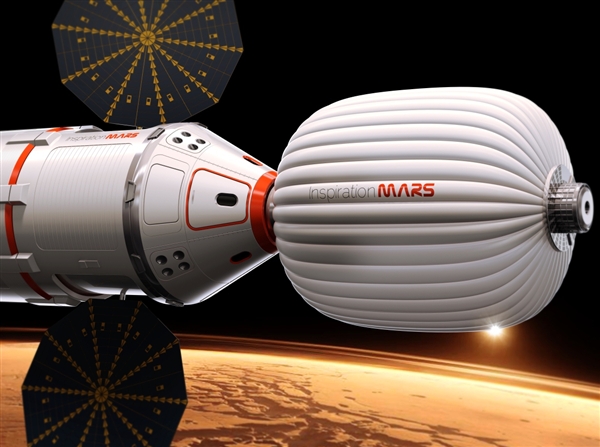
tito-mars-mission-conceptWhat’s more, Mars One is not alone in trying to make a trip to the Red Planet a reality. The Inspiration Mars Foundation is another such private venture, which is seeking to send a couple on a 501-day, round-trip journey aboard a space craft that will take then to Mars and back in 2018 without ever touching down on the surface.

Here too, the issue of funding, the technology involved, and the problem of radiation shielding are all being considered and ironed out in an ongoing manner, with some rather interesting possibilities being considered (such as using human feces and waste plumbing to shield the astronauts from radiation!)

spacecraft_marsUltimately, it seems that certain private ventures are not willing to wait for NASA’s planned 2030 excursion to Mars before general settlement and terraforming can begin. And though it may prove unfeasibly by the time frames being proposed, the excitement and desire to make things happen sooner than projected are understandable.

And as Lansdorp explains, much of the project has to do with telling a story, perhaps the greatest ever told:

What we want to do is tell the story to the world. When humans go to Mars, when they settle on Mars and build a new Earth, a new planet. This is one of the most exciting things that ever happened, and we want to share the story with the entire world.

For the full CNN story, plus video of the interview with the Mars Society, follow the link below:

http://www.cnn.com/video/data/2.0/video/world/2013/04/22/w1-mission-to-mars-willett.cnn.html

And be sure to check out Mars One promotional video:


Sources:
cnn.com, mars-one.com, applicants.mars-one.com

News From Space: 3D Printer Bound for ISS!

made-in-space-3d-printerThe International Space Station has plans to bring a 3D printer on board by 2014. And yesterday, the model in question – the startup’s Made in Space engineering model – passed an important milestone on its way into orbit. This consisted of a battery of tests at NASA’s Marshall Space Flight Center in Huntsville, Ala., which confirmed that the machine can survive the rigors of launch and function in space.

Michael Snyder, director of research and development at Made in Space, said in a statement that:

This developmental testing was vital to the design of our flight-unit printer. We’ve engaged in a fast-paced mission starting in early 2013 to produce hardware that NASA would qualify for launch and installation to the ISS in 2014. The fact that we’ve been able to pass another milestone in an abbreviated time frame is extremely exciting.

For some time, NASA has had its eye on additive manufacturing (aka. 3D printing) as a means of making space travel cheaper and more efficient. In addition to the development a 3D pizza maker and food printing, NASA also hopes to equip future ships and stations with their own printer so crews can generate spare parts and components, rather than having to mount costly resupply missions.

3DpizzaMade in Space and NASA Marsall hope to jump-start this vision with their “3D Printing in Zero Gravity” experiment (3D Print for short) which  aims to launch the first-ever 3D printer to the space station in August 2014. But before that can happen, the machine must pass some more rigorous tests. The first occurred several months ago when three prototype versions of Made in Space’s printer passed a series of microgravity tests during parabolic airplane flights.

This flight test, known colloquially as the “vomit comet”, demonstrated that the prototypes could indeed handle working in microgravity environments. The more recent tests at Marshall, performed with the company’s Engineering Test Unit (ETU), ensured that the printer can survive the vibrational stresses of launch and deal with electromagnetic interference, among other issues.

3d-printer-microgravity-flight-testData from these tests will inform the critical design review of the flight unit prototype, a big step toward clearing the machine for launch toward the space station. According to Made in Space officials, the final review process is slated for the 15th of August. Niki Werkheiser, 3D Print project manager in Marshall’s Technology Development and Transfer Office, also said in a statement that:

The successful results received from the ETU testing at [Marshall] reinforces our confidence that Made in Space, Inc. has developed the robust design required to successfully print in space. We are excited to have successfully completed yet another key step toward meeting the extensive ISS flight certification process.

If all goes well, it won’t be long before the crew of the ISS is able to regularly print out all the replacement parts they need. Given time, they might even solve the problem of what to do when freeze-dried food won’t cut it and you absolutely must have a slice of pizza!

Source: space.com

Climate Crisis: NASA’s Projected Changes

NASA_global_warming_predAs the world’s foremost space agency, NASA has been at the forefront of climate research for many decades. Their contributions to this field of science has helped to shape our understanding of the planet’s past and has led to our current understanding of the Greenhouse Effect, Global Warming, and Climate Change. As a result, they are committed to educating the public about what’s in store for our blue planet in the near future.

Below are two videos that were recently released by NASA’s Goddard Space Flight Center. Both briefly, but succinctly, provide visualizations of what an average temperature increase of up to 5.5 Celsius (8 degrees Fahrenheit) and the resulting effect on weather patterns would look like, which is expected to happen by the end of the 21st century.

These visualizations – which highlight computer model projections from the draft National Climate Assessment – show how average temperatures and precipitation patterns could change across the U.S. in the coming decades under two different scenarios. As you can see, both predict significant warming and drying as a result of increased concentrations of CO2 in the upper atmosphere.

Projected Temperature Change by 2100:


Projected Precipitation Change by 2100:


The visualizations, which combine the results from 15 global climate models, present projections of temperature and precipitation changes from 2000 to 2100 compared to the historical average from 1970 -1999. They were produced by the Scientific Visualization Studio at NASA’s Goddard Space Flight Center, Greenbelt, Md., in collaboration with NOAA’s National Climatic Data Center and the Cooperative Institute for Climate and Satellites, both in Asheville, N.C.

Speaking on the subject of these videos, Allison Leidner, Ph.D. – a scientist who coordinates NASA’s involvement in the National Climate Assessment – said:

These visualizations communicate a picture of the impacts of climate change in a way that words do not. When I look at the scenarios for future temperature and precipitation, I really see how dramatically our nation’s climate could change.

But of course, these visualizations only tell part of the story. Far from this being a geographically restricted phenomena, residents inside the US are likely to be less severely hit than those people living in Sub-Saharan Africa, the Mediterranean, the Middle East, Central Asia, India and East Asia, where the problems of flooding, water loss, famine and drought area already common.

Add to this flooding coastlines, invasive parasites and diseases, militarized borders, potential skirmishes over dwindling resources, and a refugee crisis the likes of which the world has never seen, and you get a pretty good idea of why this issue matters as much as it does. The next century is going to be an interesting time. Here’s hoping we survive it!

Source: nasa.gov

Happy Anniversary Curiosity!

curiosity_sol-177-1Two days ago, the Mars Rover known as Curiosity celebrated a full year of being on the Red Planet. And what better way for it to celebrate than to revel in the scientific discoveries the rover has made? In addition to providing NASA scientists with years worth of valuable data, these groundbreaking finds have also demonstrated that Mars could once have supported past life – thereby accomplishing her primary science goal.

And it appears that the best is yet come, with the rover speeding off towards Mount Sharp – the 5.5 km (3.4 mile) high mountain dominating the center of the Gale Crater – which is the rover’s primary destination of the mission. This mountain is believed to contain vast caches of minerals that could potentially support a habitable environment, thus making it a veritable gold mine of scientific data!

curiosity-anniversary-1To take stock of everything Curiosity has accomplished, some numbers need to be tallied. In the course of the past year, Curiosity has transmitted over 190 gigabits of data, captured more than 71,000 images, fired over 75,000 laser shots to investigate the composition of rocks and soil, and drilled into two rocks for sample analysis by the SAM & CheMin labs housed in her belly.

On top of all that, the rover passed the 1 mile (1.6 km) driving mark on August 1st. Granted, Mount Sharp (aka. Aeolis Mons) is still 8 km (5 miles) away and the trip is expected to take a full year. But the rover has had little problems negotiated the terrain at this point, and the potential for finding microbial life on the mountain is likely to make the extended trip worthwhile.

curiosity-anniversary-20But even that doesn’t do the rover’s year of accomplishments and firsts justice. To really take stock of them all, one must consult the long-form list of milestones Curiosity gave us. Here they are, in order of occurrence from landing to the the long trek to Mount Sharp that began last month:

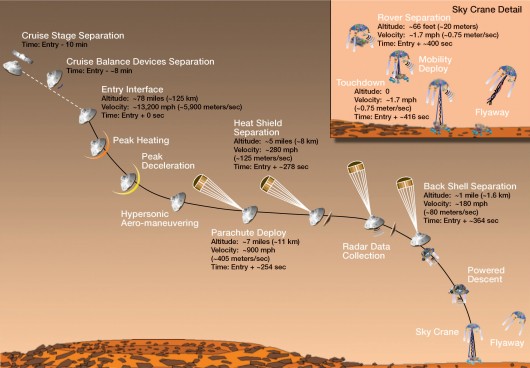
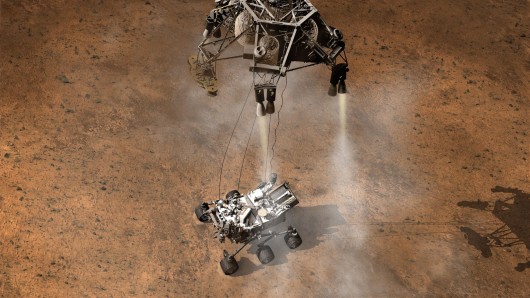
1. The Landing: Curiosity’s entrance to Mars was something truly new and revolutionary. For starters, the distance between Earth and Mars at the time of her arrival was so great that the spacecraft had to make an entirely autonomous landing with mission control acting as a bystander on a 13-minute delay. This led to quite a bit a tension at Mission Control! In addition, Curiosity was protected by a revolutionary heat shield that also acted as a lifting body that allowed the craft to steer itself as it slowed down in the atmosphere. After the aeroshell and heat shield were jettisoned, the rover was lowered by a skycrane, which is a rocket-propelled frame with a winch that dropped Curiosity to the surface.

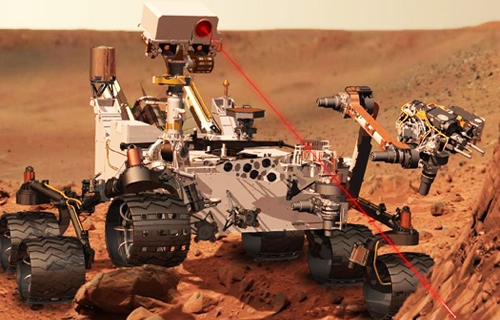
2. First Laser Test: Though Curiosity underwent many tests during the first three weeks after its landing, by far the most dramatic was the one involving its laser. This single megawatt laser, which was designed to vaporize solid rock and study the resultant plasma with its ChemCab system, is the first of its kind to be used on another planet. The first shot was just a test, but once Curiosity was on the move, it would be used for serious geological studies.Curiosity-Laser-Beam3. First Drive: Granted, Curiosity’s first drive test was more of a parking maneuver, where the rover moved a mere 4.57 m (15 ft), turned 120 degrees and then reversed about 2.4 m (8 feet). This brought it a total of about 6  m (20 ft) from its landing site – now named Bradbury Landing after the late author Ray Bradbury. Still, it was the first test of the rover’s drive system, which is essentially a scaled-up version of the one used by the Sojourn and Opportunity rovers. This consists of six 50 cm (20-in) titanium-spoked aluminum wheels, each with its own electric motor and traction cleats to deal with rough terrain.

4. Streams Human Voice: On August 28, 2012, Curiosity accomplished another historical first when it streamed a human voice from the planet Mars back to Earth across 267 million km (168 million miles). It was a 500 kilobyte audio file containing a prerecorded message of congratulations for the engineers behind Curiosity from NASA administrator Charles Bolden, and demonstrated the challenges of sending radio beams from Earth to distant machines using satellite relays.

curiosity-anniversary-45. Writes a Message: Demonstrating that it can send messages back to Earth through other means than its radio transmitter, the Curiosity’s treads leave indentations in the ground that spell out JPL (Jet Propulsion Lab) in Morse Code for all to see. Apparently, this is not so much a gimmick as a means of keeping track how many times the wheels make a full revolution, thus acting as an odometer rather than a message system.

6. Flexing the Arm: Curiosity’s robotic arm and the tools it wield are part of what make it so popular. But before it could be put to work, it had to tested extensively, which began on August 30th. The tools sported by this 1.88 m (6.2-ft) 33.11kg (73 lb) arm include a drill for boring into rocks and collecting powdered samples, an Alpha Particle X-ray Spectrometer (APXS), a scooping hand called the Collection and Handling for In-Situ Martian Rock Analysis (CHIMRA), the Mars Hand Lens Imager (MAHLI), and the Dust Removal Tool (DRT).

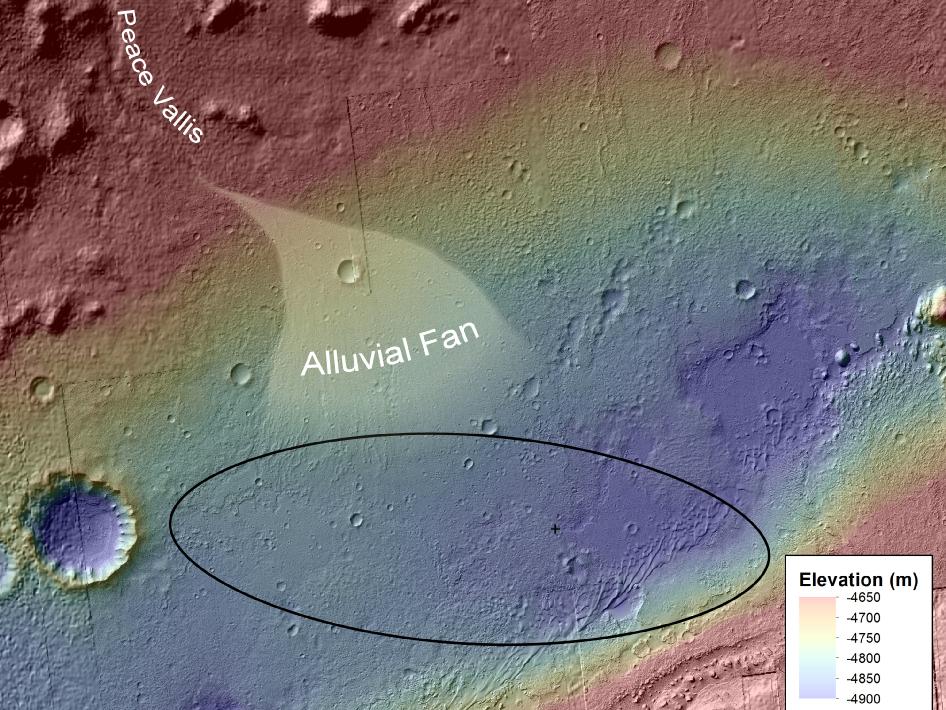
curiosity-alluvialplain7. Discovery of Ancient Stream Bed: Curiosity’s main mission is to seek out areas where life may have once or could still exist. Therefore, the discovery in September of rocky outcroppings that are the remains of an ancient stream bed consisting of water-worn gravel that was washed down from the rim of Gale Crater, was a major achievement. It meant that there was a time when Mars was once a much wetter place, and increases the chances that it once harbored life, and perhaps still does.

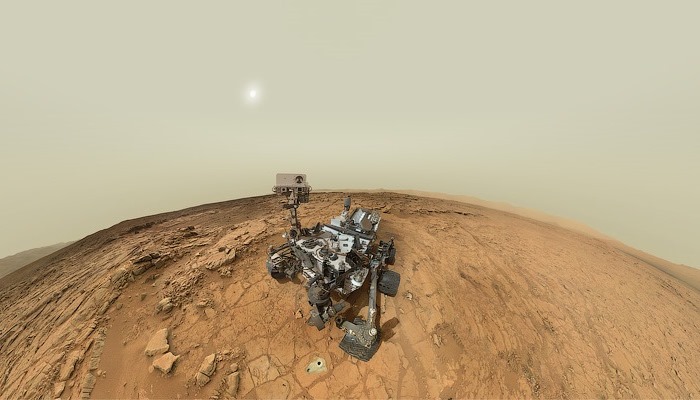
8. First Drilling: In February, Curiosity conducted the first robot drill on another planet. Whereas previous rovers have had to settle for samples obtained by scooping and scraping, Curiosity’s drill is capable of rotational and percussive drilling to get beneath the surface. This is good, considering that the intense UV radiation and highly reactive chemicals on the surface of Mars means that finding signs of life requires digging beneath the surface to the protected interior of rock formations.Curiosity_drillings9. Panoramic Self Portrait: If Curiosity has demonstrated one skill over and over, it is the ability to take pictures. This is due to the 17 cameras it has on board, ranging from the black and white navigation cameras to the high-resolution color imagers in the mast. In the first week of February, Curiosity used its Mars Hand Lens Imager to take 130 high-resolution images, which were assembled into a 360⁰ panorama that included a portrait of itself. This was just one of several panoramic shots that Curiosity sent back to Earth, which were not only breathtakingly beautiful, but also provided scientists with a degree of clarity and context that it often lacking from images from unmanned probes. In addition, these self-portraits allow engineers to keep an eye on Curiosity’s physical condition.
10. Long Trek: And last, but not least, on July 4th, Curiosity began a long journey that took it out of the sedimentary outcrop called “Shaler” at Glenelg and began the journey to Mount Sharp which will take up to a year. On July 17, Curiosity passed the one-kilometer mark from Bradbury Landing in its travels, and has now gone more than a mile. Granted, this is still a long way from the breaking the long-distance record, currently held by Opportunity, but it’s a very good start.

curiosity_roadmapSuch was Curiosity’s first 365 days on Mars, in a nutshell. As it enters into its second year, it is expected to make many more finds, ones which are potentially “Earthshaking”, no doubt! What’s more, the findings of the last year have had an emboldening effect on NASA, which recently announced that it would be going ahead with additional missions to Mars.

These include the InSight lander, a robotic craft which will conduct interior studies of the planet that is expected to launch by 2016, and a 2020 rover mission that has yet to be named. In addition, the MAVEN (Mars Atmosphere and Volatile Evolution) orbiter as just arrived intact at the Kennedy Space Center and will be blasting off to the Red Planet on Nov. 18 from the Florida Space Coast atop an Atlas V rocket.

maven_orbitThese missions constitute a major addition to NASA’s ongoing study of Mars and assessing its past, present and future habitability. Between rovers on the ground, interior studies of the surface, and atmospheric surveys conducted by MAVEN and other orbiters, scientists are likely to have a very clear picture as to what happened to Mars atmosphere and climate by the time manned missions begin in 2030.


Stay tuned for more discoveries as Curiosity begins its second year of deployment. Chances are, this year’s milestones and finds will make this past years look like an appetizer or a warm-up act. That’s my hope, at any rate. But considering what lies ahead of it, Curiosity is sure to deliver!

In the meantime, enjoy some of these videos provided by NASA. The first shows Curiosity’s SAM instrument singing “happy birthday” to the rover (though perhaps humming would be a more accurate word):


And check out this NASA video that sums up the rover’s first year in just two minutes:

News From Space: MAVEN’s “Time-Machine” for Mars

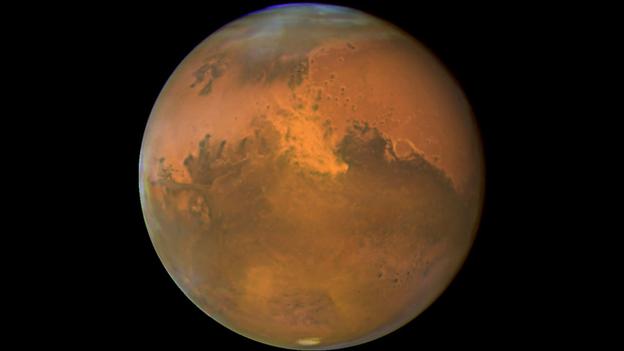
marsYes, the name is a bit of a attention-getter, but when you come to understand the purpose behind Lockheed Martin’s new spacecraft, the description does appear to be quite apt. It’s known as MAVEN, which stands for Mars Atmosphere and Volatile EvolutioN, and it is currently being produced in Lockheed Martin’s Martin Space Systems facility in Denver, Colorado.

People may recall how earlier this year, MAVEN was mentioned as part of the “Going to Mars” campaign. A project that is being organized by the University of Colorado at Boulder’s Laboratory for Atmospheric and Space Physics (CU/LASP), the Martian orbiter will be carrying a DVD featuring the names of everyone who applies, as well as three specially-selected haikus.

However, it is MAVEN’s larger mission which is now the focus of much interest. Later this year, NASA will be launching the orbiter to Mars for the sake of examine the atmosphere and answering some burning questions that remain about the planet. Thanks to evidence provided by Curiosity, Opportunity, and other missions, scientists now know that the Martian surface once boasted conditions suitable for life, including liquid water.
maven_orbitHence, Maven’s ultimate purpose, which will be will to orbit the planet and examine whether the atmosphere could also have provided life support. Scientists working on the Maven mission want to understand what this atmosphere was like, and the processes that led to its destruction. As Guy Beutelschies, Maven Programme Manager at Lockheed Martin, put it:

What we know from our missions looking at the surface of Mars is that there used to be water there. We can see the outlines of ancient rivers, the shorelines of ancient oceans. But water can’t exist there now – the atmosphere is too thin and too dry, any water would just evaporate or freeze. 

So the big question is what happened to Mars’ atmosphere? Short of being able to travel back in time into the Martian past, how would anyone go about tackling these questions with a mission today? Beutelshcies explained it as follows:

[The atmosphere] used to be thicker, warmer, wetter, now it’s thin and dry. How did we get there? In a sense we are building a little bit of a time machine. What we’re doing is understanding the processes.

maven_atmosphereJust last week, evidence provided by the Curiosity rover supports the theory that Mars may have lost most of its atmosphere billions of years ago. Still, scientists remain skeptical that Mars once had an atmosphere comparable to that of Earth. Today, that atmosphere is roughly one-hundredth the thickness of Earth’s, made up mostly of carbon dioxide and a tiny fraction of water vapor. What little remains is being stripped away by the solar wind.

And unlike Earth, Mars does not have a magnetosphere to protect its atmosphere from being blown away – at least not anymore. Such a fragile, thin band around is now unlikely to support any sort of life, as far as we know. But the atmosphere in the past must have been more substantial to allow the formation of rivers, lakes and oceans.

mars_sunsetBruce Jakosky, the Principal Investigator for Maven who is based at the University of Colorado’s CU/LASP lab in Boulder, claims:

We think that Mars used to have a magnetic field. We see places on the surface that retain some remnant magnetism, they were imprinted when they formed with whatever magnetism was there. We think that some four billion years ago, when the magnetic field turned off, that turn-off of the magnetic field allowed [for the] turn-on of the stripping by the solar wind.

To investigate the processes taking place today, Maven will dip into the Martian upper atmosphere with each orbit, measuring the particles, sampling gases, monitoring the magnetic field and solar wind. Whereas the rovers have looked at the atmosphere from the ground up, MAVEN will look at it from the top down. At this point, both are needed to put together a picture of what’s controlling the Mars environment.

maven_atmo1As well as filling in the blanks about Mars’ depleted atmosphere, Maven will also provide clues to the habitability of other planets beyond the solar system. As Jakosky said, the research conducted will have far-reaching implication for our understanding:

In trying to understand the distribution of life throughout the Universe, this is a really important indicator. Understanding the environmental conditions that allow [life] to exist, or don’t allow it to exist, is key to being able to extrapolate elsewhere.

What’s more, understanding what happened to Mars will provide some key insight into the history of our Solar System, and how it went from being a star with two planets that had oceans and atmospheres to just one. Knowing why things continued to operate on Earth, while on Mars they went horribly wrong, is likely to be quite the eye-opener, and make us all thankful we evolved here on Earth.

Source: bbc.com


News From Mars: Curiosity and Opportunity On the Move

marsMars has been quite the source of news in recent weeks. And perhaps its the fact that I got to witness some truly interesting astronomical phenomena yesterday – i.e. Sunspots through a telescope – but all of them seem to have caught my attention at once. And given their importance to the ongoing exploration of Mars and our Solar System, I would be remiss if I didn’t pass them on.

The first bit of news began late last month, when the High Resolution Imaging Science Experiment (HiRISE) camera on the Mars Reconnaissance Orbiter snapped this image of the Curiosity rover as it made its way through the “Glenelg” area of Gale Crater. The rover appeared as a little more than a blueish dot in the picture, but much more visible was the rover’s tracks.

curiosity_hirise_tracks This unique photo was made possible thanks to a little maneuvering and a some serious alignment. Basically, the folks working at the Mars Science Laboratory were able to bring the Mars Reconnaissance Orbiter (MRO) into position between the Sun and curiosity, bringing the Sun, MRO, and the rover on the surface were in a near-perfect alignment.

HiRISE principal investigator Alfred McEwen addressed the photos on the HiRISE website and explained how it was all made possible:

The rover tracks stand out clearly in this view, extending west to the landing site where two bright, relatively blue spots indicate where MSL’s landing jets cleared off the redder surface dust. When HiRISE captured this view, the Mars Reconnaissance Orbiter was rolled for an eastward-looking angle rather than straight downward. The afternoon sun illuminated the scene from the western sky, so the lighting was nearly behind the camera. Specifically, the angle from sun to orbiter to rover was just 5.47 degrees.

Curiosity has since moved on and is now heading towards the large mound in Gale Crater officially named Aeolis Mons (aka. Mount Sharp).

curiosity_roadmapWhich brings us to the second news item in this week’s Mars bulletin. It seems that since July 4th, after finishing up a seven months survey in Yellowknife Bay, Curiosity has achieved a long-distance driving record as it made its way to Mount Sharp. This took place on Saturday July 21st (Sol 340), when Curiosity drove a distance of 100.3 meters (109.7 yards) in a single day.

To give you some perspective, that’s the length of a football field (at least in the US), a distance that is without equal since she first landed inside the Gale Crater nearly a year ago. The previous record for a one-day drive was about half a football field – 49 meters (54 yards) – and was achieved on Sept. 26, 2012 (Sol 50), roughly seven weeks after Curiosity made its tense, nail-biting landing.

Curiosity-departs-Glenelg-Sol-324_2a_Ken-Kremer--580x291Paolo Bellutta, a rover planner at NASA’s Jet Propulsion Laboratory, Pasadena, Calif, explained what made the feat possible in a statement:

What enabled us to drive so far on Sol 340 was starting at a high point and also having Mastcam images giving us the size of rocks so we could be sure they were not hazards. We could see for quite a distance, but there was an area straight ahead that was not clearly visible, so we had to find a path around that area.

A combination of increased experience by the rover’s engineers and a series of intermediate software upgrades have also played a key role in getting Curiosity on its way to the 5.5 kilometer (3.4 mile) high Mount Sharp. This is expected to improve even more as soon as new driving software called autonomous navigation (or autonav) finishes development and is incorporated.

mountsharp_galecraterFollowing another lengthy drive of 62.4 meters (68.2 yards) on Wednesday, July 23 (Sol 342), the mission’s total driving distance  stands at 1.23 kilometers (0.81 mile) so far. But Mount Sharp still lies about another 8 km (5 miles) away at this point, so we can be expect to be hearing plenty from the rover between now and when it arrives.

For the record, it has already been discovered that the mountain contains vast caches of minerals that could potentially support a habitable environment. So when Curiosity arrives, we can expect another string of exciting finds!

Opportunity-nears-Solander-Point-Sol-3374-N1-crop_Ken-Kremer-580x309And it is this subject of mountain goals which brings me to the last, but by no means least, of the Martian updates. While Curiosity has been making its way towards Mt. Sharp to conduct research on potentially habitable environments, Opportunity is just days away from reaching Solander Point, another Martian mountain which NASA seeks to learn more about.

This comes on the heels of the rover’s ten year, ongoing mission that was only ever expected to last ninety days. According to an update from Ray Arvidson earlier today, the mission’s deputy principal scientific investigator from Washington University in St. Louis, the rover is now just 180 meters away from the new mountain.

opportunity_roadmapAs NASA had previously stated, Solander Point represents ‘something completely different’ for the rover, being the first mountain it will ever climb. What’s more, the mountains mineral wealth may possess the key chemical ingredients necessary to sustain Martian life forms, and the area exhibits signatures related to water flow.

In many ways, you could say Solander Point represents a chance for the Mars Science Laboratory to find the elusive “organic molecules” they’ve been searching for since Curiosity first landed. And if it’s the veteran rover that finds the first hard evidence of their existence, it would be quite the feather in the Opportunity team’s cap.

opportunity_bdayBut before moving onto the first leg of ascent, Arvidson explained that the rover will be making a brief pause in its current location to conduce some exciting experiments. Thanks to observations made of the area by the Mars Reconnaissance Orbiter with its CRISM instrument (Compact Reconnaissance Imaging Spectrometers for Mars), the rover will be conducting some on-the-spot analysis to see if there is indeed evidence of water.

This past spring, Opportunity made the historic discovery of clay minerals and a habitable environment on a low hill called Cape York, the rover’s prior stop along the rim of Endeavour Crater. Solander was selected as the robot’s next destination because it also offers a goldmine of scientific data. Another reason was because its north facing slopes will be a boon to Opportunity’s solar wings, ensuring it more power before Martian winter sets in.

opportunity_missionmapBut since Opportunity is currently sitting on a healthy supply of power and has some time before the onset of her 6th Martian winter, the team decided to take a small detour to the southeast and spend several days exploring the area for more evidence of water-bearing minerals.

If successful, this will be yet another accomplishment for the rover during its long tenure of service to NASA. Today marks the 3380th day of continuous service for the rover – aka. Sol 3380 – a mission which has resulted in numerous scientific finds, over 182,000 images, and a driving distance of roughly 38 kilometers (23.6 miles). This, as already mentioned, puts Opportunity in the top spot for the longest distance traveled on another planet.
Yes, it seems that the Red Planet is certainly doing all it can to keep explorers and scientists intrigued. No telling what we might learn between now and the point when manned missions take place, and human astronauts are able to see the surface and study its mysteries close up. Personally, I’m hoping for signs of existing supplies of water, not to mention those tricky organic molecules. If settlement and terraforming are ever to take place, we need to know we’ve got something to work with!
Sources: universetoday.com, (2) , (3), nasa.gov, space.com