Iran Launches Monkey Into Space (Apparently)

iran_rocketIn spite of years being under a trade embargo, Iran claims to be making some rather interesting breakthroughs. In addition to drones, long range missiles and stealth aircraft, they now claim to have sent a primate into space. According to the state news network, the successful flight involved a relatively small rocket that went straight up and down, and is a “prelude to sending humans.” Oh, and the monkey arrived safe and sound.

Whereas some defense analysts in the US and other nations worry that this was a demonstration of potential military might, others see it in different terms. For example, Jonathan McDowell – a Harvard astronomer who tracks rocket launches and space activity – claims that the exercise was merely a step towards Iran’s stated goal of developing rockets that could send human astronauts into space, a goal Tehran has repeated publicly for more than a year.

Alive, but not comfortable!

“It doesn’t demonstrate any militarily significant technology,” he said. “This is a tiny old rocket, and what’s on top is useful only for doing astronaut stuff.” Charles P. Vick, an expert on Iranian rockets at GlobalSecurity.org, went farther, stating that the report may have been a fabrication, seeing as how Iran tried and failed to perform the same launch operation back in 2011.
Naturally, there was also the propaganda value of the feet. James E. Oberg, a former NASA engineer and author of a dozen books on human spaceflight, claim that “to a large degree, it’s a fig leaf.” Apparently, such peaceful flights could take global attention off the nation’s military feats and ambitions, comparable to what North Korea does with much of its research and development programs.

In any case, the reportedly successful launch of the Kavoshgar-class rocket – which went by the name of Pishgam (trans: Pioneer) –  came amidst announcements by Iranian sources that stated they were developing a space capsule meant to hold human astronauts. “It’s based on Chinese technology,” Mr. Vick said, adding that Iran had nearly completed a large new launching pad big enough for powerful rockets that could loft warheads, satellites or people into space.

In short, we can expect little in the way of clarity and plenty in the way of worrying from western analysts over this latest development. And of course, as usual, the monkey always get forgotten in the mix! One thing that was not reported on was the brave little astronauts name. After all we’ve put them through for the sake of advances space travel, don’t the space monkeys deserve the same kind credit as human astronauts? Hell, even Russia put Laika on a commemorative stamp!

laika-stampSee? Guess you got to die if you’re an animal and want some recognition around here! Rest in peace Laika! Click on the links below to read more:

Source: The New York Times.com, Universtoday.com

NASA Considers Catching Asteroids

CometNASA is apparently considering playing a little catch and release with some giant rocks. Basically, they want to capture an asteroid and deposit in orbit around the Moon by the early 2020s. The announcement of this new plan was made earlier this month, and left many wondering if this has anything to do with the Obama administration’s long term plans for establishing an outpost on the dark side of the moon or sending a manned mission to a near-Earth asteroid.

This makes sense, since if NASA were to place an asteroid in orbit around the Moon, a crewed space craft could practice engaging with it without needing to move beyond the range of a rescue mission. What’s more, such a body would come in handy as a potential stopover base for spaceships looking to refuel and resupply before setting off on deeper space missions – particularly to Mars.

NASA_moonWhat’s more, capturing a near Earth asteroid and bringing it in orbit of the Moon is a safer, cheaper way to perform manned landings on object in the asteroid belt. The nearest proposed target is a space rock named 1999 AO10, an asteroid which is roughly a year’s trip away. Traveling to this body would expose astronauts to long-term radiation since they would be beyond Earth’s protective magnetic field, and would also take them beyond the reach of any possible rescue.

Researchers with the Keck Institute for Space Studies in California have confirmed that NASA is mulling over the plan to build a robotic spacecraft for just such a purpose. They also confirmed that the project would take six to ten years and would involve the launching of a slow-moving spacecraft propelled by solar-heated ions on an Atlas V rocket. After locating and studying the target asteroid, the robot would catch it in a bag measuring about 10 by 15 meters and bring it back towards the moon.

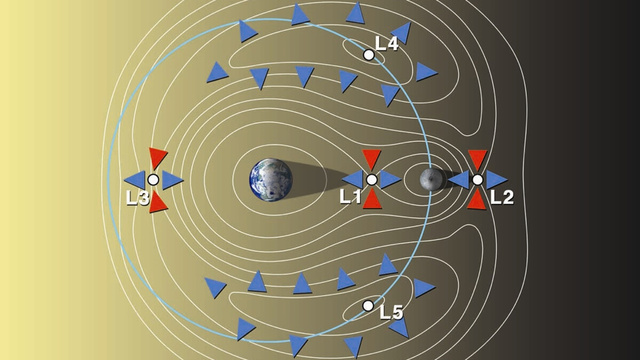
Altogether, the mission would take 6 to 10 years, and cost about 2.6 billion. If successful, it may cut costs when it comes time to place a base in orbit at Lagrange Point 2 – on the dark side of the moon – or when missions to Mars start heating up by 2030. Yes, at this point, I’m thinking the people at NASA are thanking their lucky stars (no pun!) that Obama was reelected back in November. Always good to have powerful friends, especially when they can sign multi-billion dollar checks!

Source: Wired.com, newscientist.com

NASA’s Next-Gen Spacesuit

NASA_suitIt’s like something Buzz Lightyear would be seen in, minus the death ray laser. It’s called the Z-1 spacesuit, a prototype that NASA hopes to incorporate into their equipment lineup by 2015. Not only does this new design offer a wide range of advantages compared with the space agency’s previous suit – the Extravehicular Mobility Unit (EMU) spacesuit – it also represents the first major overhaul in spacesuit technology since 1998.

For example, it boasts a rear-entry hatch which lets an astronaut put on the suit from the back, as opposed to putting on the top, bottom and helmet separately. This hatch also coincides with a feature known as the suit port, which allows the suit to be attached to the outside of a vehicle (such as a rover), thus allowing the astronaut to simply enter the suit from inside the vehicle. This is a big step from the current space suits which must be stored and put on internally.

I don't see a resemblance, do you?
I don’t see a resemblance, do you?

On top of that, the Z-1 excels in the areas of mobility and visibility. The former arises from the fact that the suit comes as a single piece rather than being made up of multiple segments. The larger, bubble dome helmet is what ensures that the astronauts has a better field of view. And finally, NASA plans to address the issue of life support through the portable PLSS 2.0 which condenses all life support systems into one package and does not need external components.

The PLSS 2.0 design also incorporates a massive bonus in the form of the Spacesuit Water Membrane Evaporator temperature regulator, which would actually make it possible for future astronauts to comfortably walk on extraterrestrial planets. According to NASA’s PLSS engineer Carly Watts, the PLSS 2.0 “can be used in a Martian environment. It can be frozen without damaging the unit, and it’s not particularly sensitive to contamination.” Good news for the astronauts heading to Mars in 2030, assuming the budget environment remains friendly after President Obama is no longer in power.

Check out this video of NASA Public Affairs Officer Brandi Dean talking with Cristina Anchondo, Z1 spacesuit test director, about the Z1 spacesuit at the Johnson Space Center.


Source: news.cnet.com

NASA Makes Appearance at 2013 Inauguration

2013_inaugural_nasaThe 2013 Inaugural Parade on January 21st – my birthday, fyi – was quite the sight to see. In addition to the President and First Lady, many floats, and thousands of onlookers, the good folks at NASA also made an appearance. Specifically, two floats featuring the Orion deep space capsule and the Curiosity Rover were part of the parade, passing in front of the White House and the official reviewing stand while President Obama, VP Joe Biden, their families and numerous dignitaries smiling and waving.

The life-sized models were greeted with plenty of fanfare and fair weather as they floated near the front of the procession, and it is estimated that over a million people were on hand to witness the event. NASA was the only federal agency to be asked to take part in the inaugural parade, which goes to show you how important the administration considers their efforts. But given all that NASA has accomplished as of late, that should come as no small surprise.

In the few short months since it landed, Curiosity has uncovered very compelling evidence that water once flowed on Mars, and the Orion capsule is expect to take astronauts back to the moon and father into space than ever before. What’s more, the Obama administration has already granted the funding for NASA to go ahead with its plans to establish an outpost on the Moon in the next few years, as well as a manned mission to the Mars by 2030. In short, NASA and the Obama administration are pretty tight; and if you ask me, both are stronger for it!

Check out the video below of the procession, or go to NASA Flickr page for more photos of the inaugural parade.


Source:
Universe Today.com

More Plans to Colonize Mars!

mars_lifeFolks may recognize the name SpaceX, the private aerospace company that in May of last year launched a module into space to resupply  the International Space Station. An historic occasion, that was the first time a private spacecraft has has ever docked with the ISS, and signaled a growing trend in the development in commercial space travel. Well, it seems that the company’s founder has more ambitious plans now.

Yes, in a bid to make sure his company is not left behind in any future space endeavors, CEO and billionaire Elon Musk has announced plans to colonize the Red Planet with a population of 80,000. The announcement came back in November at the Royal Aeronautical Society in London, where Musk appeared to receive the Society’s gold medal for helping to advance the commercial space industry.

The first phase of the program, which is contingent on the development of reusable rocket that can take off and land vertically, would start off modestly with only a handful of explorers leaving Earth at a time. To make it happen, SpaceX has already started to work on their next-generation reusable Falcon 9 rocket, known as “Grasshopper”. This rocket has already made two short flights, including one in which it reached a height of 2 meters (6 feet), and another in which it leaped to a height of  5.4 meters (17.7 feet). Small beginnings, as they say!

The projected cost for each colonist looking to make the trip would be roughly $500,000. In short, those who are not rich or extremely adventurous need not apply! What’s more, he estimated that the entire program would cost about $36 billion, an inevitable expense to set up the initial infrastructure and transport. But once that is done, he believes enough people will be interested and find it within their means that the venture will pay for itself.

In an interview with Space.com, Musk’s vision for sending people to Mars was described as follows:

“Accompanying the founders of the new Mars colony would be large amounts of equipment, including machines to produce fertilizer, methane and oxygen from Mars’ atmospheric nitrogen and carbon dioxide and the planet’s subsurface water ice.

“The Red Planet pioneers would also take construction materials to build transparent domes, which when pressurized with Mars’ atmospheric CO2 could grow Earth crops in Martian soil. As the Mars colony became more self sufficient, the big rocket would start to transport more people and fewer supplies and equipment.”

So save your pennies and prepare for the day when tickets go on sale! Hard to say exactly when that will be, but chances are, it will be either feasible or abandoned by 2030. That’s when NASA plans to mount manned missions to the Red Planet. And like I said, men like Musk don’t want to be left behind!

Source: space.com

Curiosity Prepares to Drill

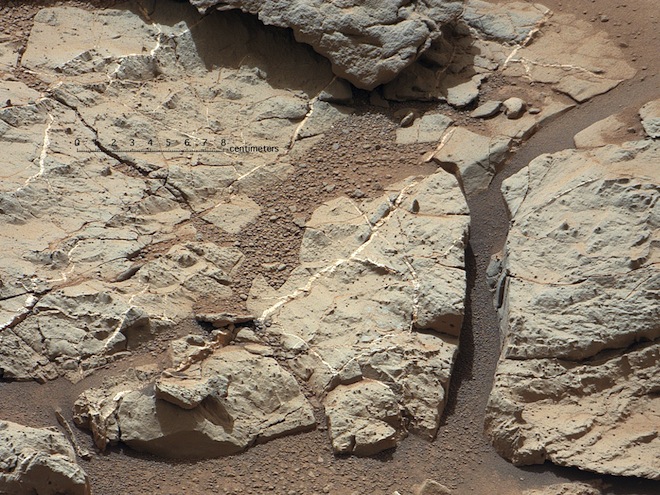
curiosity_rocksMore news from Mars! Or more specifically, from Yellowknife Bay, a place that shows extensive evidence of flowing water. After relocating to the region and performing a preliminary search, Curiosity has located the rock it will drill in order to gain an understanding of its composition and search for organics molecules. The rock has been dubbed “John Klein”, and this will be the first time engineers have drilled into the surface of another planet.

Already, Curiosity has determined that at one time, the Gale Crater was once the site of flowing water. But in its current location, they are able to assess the geological history and have stumbled upon a number of interesting features. In the course of descending from the plateau region where it landed into the relative depression that is Yellowknife Bay, Curiosity has observed many layers of rock that are increasingly older, effectively taking it backwards into the planet’s history.

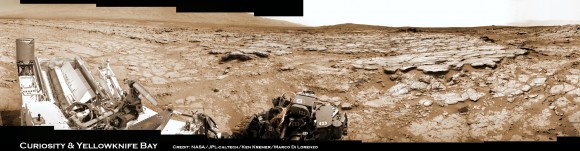
Curiosity-Yellowknife-Bay-Sol-125_2c_Ken-Kremer-580x151Geologists are finding a lot of different rock types, indicating that many different geologic processes took place here over time, all of which confirm that water passed through the region at one time. For example, some of the minerals are sedimentary, which suggests that flowing water moved small grains around and deposited them. Other samples are cracked and filled with veins of material such as calcium sulfate, which were formed when water percolated through the cracks and deposited the mineral.

terraformingAll these investigations suggest if you could go deep into Mars’ past and stand at the same spot as the rover, you’d probably see a river of flowing water with small underwater dunes along the riverbed. And since these rivers left traces behind, drilling into the rocks will reveal what else they carried, which could very well include the building blocks of life!

Already, Curiosity brushed some of these rocks to remove their dust covering and then examined them with its high-resolution Mars Hand Lens Imager (MAHLI) camera. The next step will be to drill 5 centimeter holes into some of these rocks and veins to definitively determine their composition. Geologist John Grotzinger of Caltech said that the team will search for aqueous minerals, isotope ratios that could indicate the composition of Mars’ atmosphere in the past, and possibly organic material.

curiosity_drillingThe drilling will probably take place within two weeks, though NASA engineers are still unsure of the exact date. But, says Richard Cook, Curiosity’s project manager, the procedure will be “the most significant engineering thing we’ve done since landing,” and will require several trial runs, equipment warm-ups, and drilling a couple test holes to make sure everything works. The team wants to take things as slowly as possible to correct for any problems that may arise, such as potential electrical shorts and excessive shaking of the rover.

And of course, this time around they are likely to be much more tight-lipped and reserved when it comes to announcing their findings. Should they uncover evidence of life at one time in Mars’ deep past, they will certainly need to be sure. Such a finding is likely to be… “Earthshaking”! I admit, that’s getting old. I’ll stop now…

Source: Wired.com

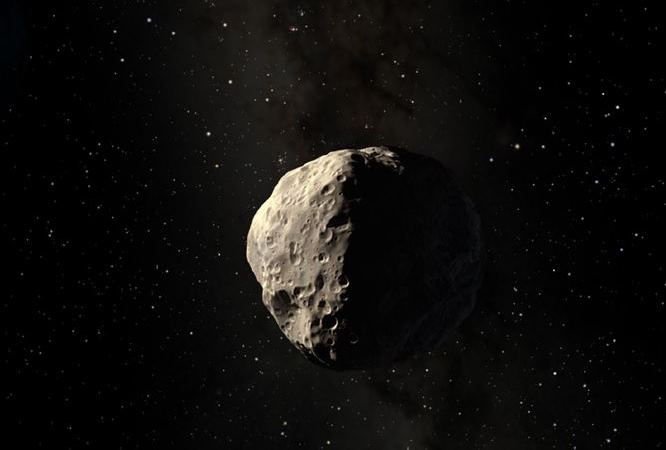
Update on Asteroid Apophis: No Apocalypse by 2036

apophisDiscovered back in 2004, the Apophis asteroid garnered lots of attention when initial calculations of its orbit indicated that there was a 2.7 percent chance that it would hit Earth when it did a flyby in 2029. After running additional calculations based on the asteroids data, scientists were able to rule out a 2029 impact, but there was still a remote possibility that it might hit Earth during another flyby in 2036. However, that estimate has also been revised.

Thanks to the European Space Agency’s Herschel Space Observatory, a number of thermal infrared observations were captured of Apophis at different wavelengths. Taken together with optical measurements, Hershel was able to refine earlier estimates of the asteroid’s properties, which included its overall diameter. Initially, it was estimated to be 270 m on a side but now stands at a robust 325 m, an increased which translates into a 75% increase in its volume.

The thermal readings on the asteroid also provided a new estimate of the asteroid’s albedo, which is the a measure of its reflectivity. Knowing the thermal properties of an asteroid indicates how its orbit might be altered due to subtle heating by the Sun. Known as the Yarkovsky effect, the heating and cooling cycle of a small body as it rotates and as its distance from the Sun changes can instigate long-term changes to the asteroid’s orbit.

All of this taken together, has allowed NASA, the ESA and other space authorities to rule out the possibility of an impact by 2036 as well. Don Yeomans, manager of NASA’s Near-Earth Object Program Office at the Jet Propulsion Laboratory:

“We have effectively ruled out the possibility of an Earth impact by Apophis in 2036. The impact odds as they stand now are less than one in a million, which makes us comfortable saying we can effectively rule out an Earth impact in 2036. Our interest in asteroid Apophis will essentially be for its scientific interest for the foreseeable future.”

But the flyby on April 13, 2029 will be one for the record books, says NASA. On that date, Apophis will achieve the closest flyby of an asteroid of its size when it comes to within 31,300 kilometers (19,400 miles) of the Earth’s surface. And in the meantime, an smaller asteroid (40 meters in diameter) named 2012 DA14 will make an ever closer flyby as it passes Earth at a distance of 27,670 km (17,200 miles).

So people can rest, safe in the knowledge that no asteroids are likely to hit us anytime soon. But at the same time, apocalyptics can rest assured that there will be plenty of remote chances to exploit for the sake of their unusual brand of paranoia. As Yeomans said:

“With new telescopes coming online, the upgrade of existing telescopes and the continued refinement of our orbital determination process, there’s never a dull moment working on near-Earth objects.”

The Future is Here: NASA’s Ion Drive!

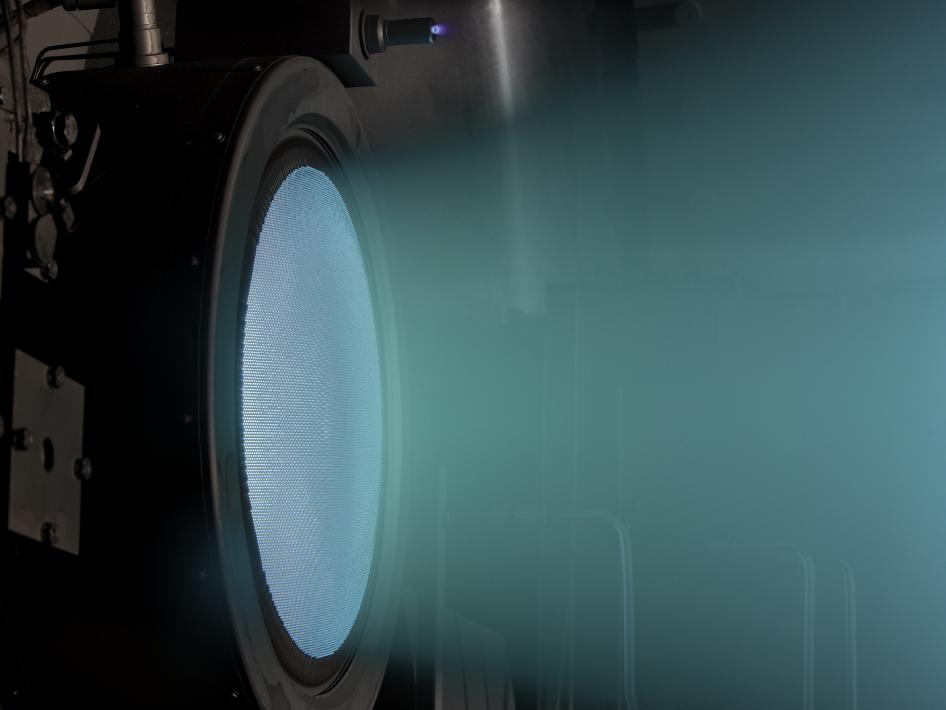
Ion_thruster_nasaWell, it seems Star Trek might have gotten another one right. In addition to warp travel, computer pads, and the possibility of a real-life star ship Enterprise being built by 2030, it seems that ion engines that can propel ships on interplanetary missions are also possible. As a staple of many science fiction franchises, many have wondered whether or not the technology would ever be truly feasible.

For years, NASA has been experimenting with various ionic propulsion drives. But with this latest announcement, they’ve not only indicated success, but broke a world record. On Dec 28th, in one of the last news stories of the year, NASA announced that their Evolutionary Xenon Thruster (NEXT) has operated continually for over 43,000 hours (just shy of five years). Since ion thrusters are believed to be one of the best ways to power long-term deep-space missions, this is a big step towards powering NASA’s next-gen spacecraft.

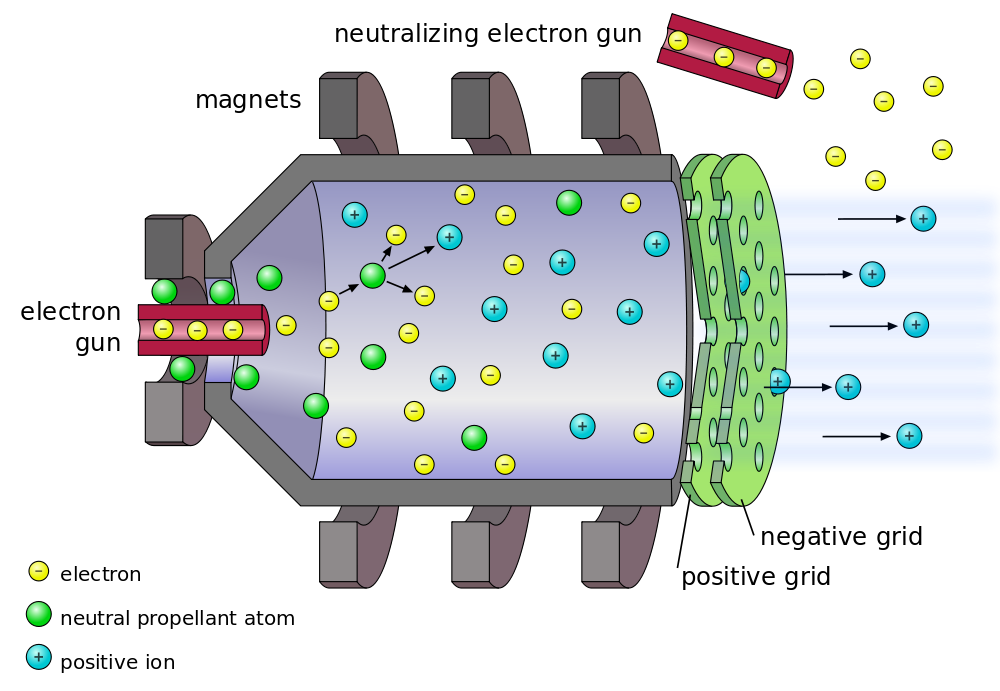
Electrostatic_ion_thruster-en.svg_As the name suggests, ion thrusters work by firing ions (charged atoms or molecules) out of a nozzle at high speed. In the case of NEXT, Xenon (a noble gas) is squirted into a chamber where its molecules are charged via an electron gun, creating a plasma of negative and positive ions. The positive ions diffuse to the back of the chamber, where high-charged accelerator grids grabs them and propel them out of the engine, creating thrust.

The upside of such a thruster lies in its fuel efficiency, in that it uses 10-12 times less fuel than a regular chemical thruster. Unfortunately, the downside lies in the thrust, again relative to its chemical counterparts. Due to this, NASA scientists calculated that an ion engine needs to operate continuously for a minimum of 10,000 hours (roughly a year) to slowly accelerate a spacecraft to speeds necessary to reach the asteroid belt or beyond.

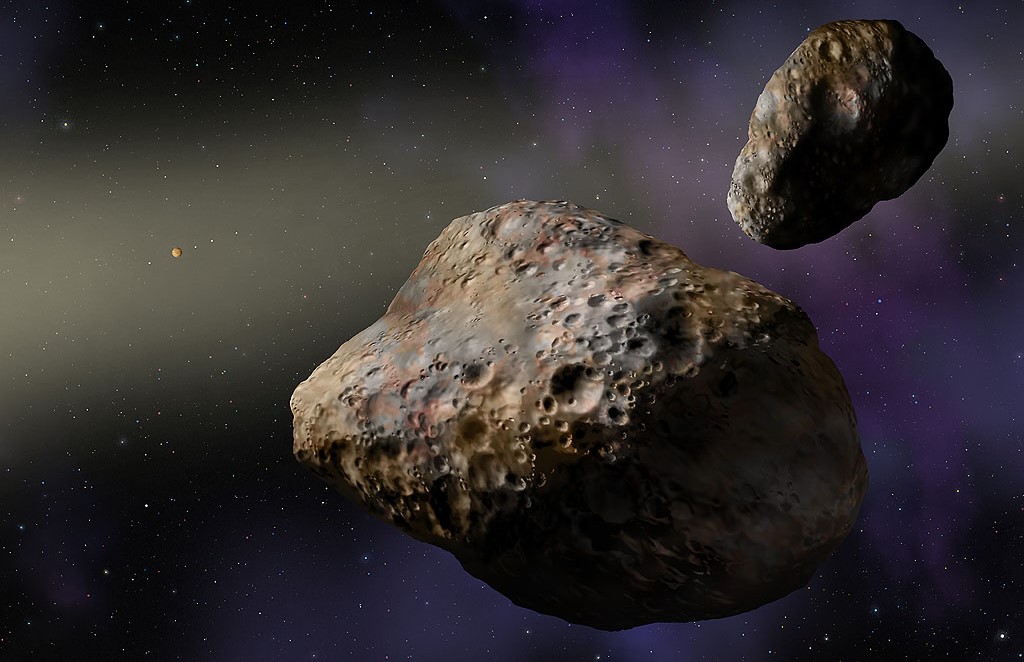
asteroidsWith this test, NASA proved that their new ion thruster would not only be able to propel a spaceship to the asteroid belt, but to the outer planets and their moons as well. That’s good news for people looking forward to visiting Ganymede, Europa, Titan, and maybe even the Kuiper Belt. What’s more, the maximum speed of the spacecraft would be in the region of  321,000 km/h (200,000 mph).

Back in 2011, NASA put out a request-for-proposals for a test mission that will likely use a NEXT engine. Presumably, following this successful engine test, we might be hearing more about this in the near future. And, now that the proof in the pudding, other space agencies are likely to unveil their own prototypes for ion engines, and even equipping the next generation of space craft with them.

Asteroid mining? Mars colonization? Off-world resource and manufacturing allocation? Looks like we got ourselves the means to get us there! Oh, and Star Trek nerds? Looks like you guys got your nacelles! Full impulse ahead!

asteroid_beltSource: Extremtech.com, NASA.org

White House Petition: Build the USS Enterprise!

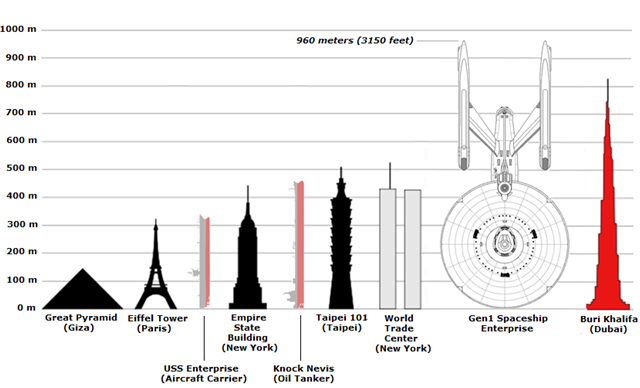
USS-EnterpriseEarlier this year, an engineer who goes by the alias BTE Dan claimed that a working model of the USS Enterprise could be built with existing technology and completed within 20 years. And this was a full-scale Enterprise, complete with a lower hull, upper saucer section, artificial gravity, ion engines, nuclear power, and a 100 kilowatt laser.

Well it seems that Dan wasn’t finished just yet. To follow up on this move, he stated a White House petition to do a feasibility study and conceptual design of the USS Enterprise interplanetary spaceship. This, he sees as a viable step towards ensuring that a segment of scientists and engineers in the space industry take an active interest and help move the concept forward.
entpriseAs it stands, the concept still has numerous technical flaws, Dan admits, but that is precisely why he is seeking professionals help. As he put it, “There is a lot of waste heat to get rid of, today’s ion propulsions engines need major advances, and perhaps stability problems will be found with the gravity wheel.” And that’s just for starters…

What’s more, his initial visit with NASA space engineers and space contractors did not go so well. As he put it, “I am an outsider poking around in their sandbox, and human nature is that people don’t like that.” However, since the story first broke earlier this year, Dan’s website has crashed because of the massive increase in traffic.

USS-Enterprise-size-comparisons-640Mainly, people are impressed with the depth and detail of his planning, which not only includes conceptual designs and designs specs, but also comes complete with a funding schedule and accounting for just about every detail of the ship’s construction. But mainly, I’m thinking people are intrigued by the possibility that such a project could actually be feasible, and are impressed with Dan’s passion and commitment to seeing it happen by the 2030’s.

As of this evening, the petition has collected 19,804 signatures, and needs only 5,196 more to reach the minimum required for consideration. Personally, I recommend we get on it. It’s just a feasibility study, after all, and I for one am interested to see if it could really be done. To read and/or sign the White House petition, click here. And be sure to check out the video below of some of the proposed star craft’s inner workings:


Source:
Universe Today.com, Build the enterprise.org

More Top Stories of 2012

large-hadron-collider-640x399

With 2012 now officially behind us, and more and more stories trickling into this humble bloggers account about what was accomplished therein, it seems that the time is ripe for another list of breakthroughs, first, and achievements that made the news during the previous year!

Last time, I listed what I saw as the top 12, only to find that there were several others, some of which I actually wrote about, that didn’t make the cut. How foolish of me! And so, to remedy this and possibly cover stories that I neglected to cover the first time around, I have produced another list of the top stories from 2012.

And much like last time, I have listed them according to alphabetical order, since I couldn’t possibly assign them numbers based on importance.

Abortion Study:
anti-abortion-pushAbortion has always been a contentious issue, with one side arguing for the rights of the unborn while the other argues in favor of women’s right to control her own body and reproduction. And as it happens, 2012 saw the publication of the first longitudinal study of what happens to women who are denied this right.

The UC San Francisco research team, Advancing New Standards in Reproductive Health (ANSIRH), studied nearly 1,000 women from diverse backgrounds across the U.S. over several years. All of these subjects were women had sought out abortions but been denied access for one reason or another. What they discovered was that these women were more likely to slip below the poverty line, be unemployed, remain in abusive relationships, and suffer from hyper stress. What this ongoing study demonstrates is that abortion is an economic issue for women, with dire consequences for those denied them.

Autism Reversed:
mice
2012 was an especially significant year in medical advances thanks to a team at McGill University in Montreal announced that they’ve successfully reversed the symptoms of autism in mice. Using mice with autism-like symptoms caused by a genetic mutation, the researchers figured out how to administer a protein that reversed the symptoms.

Naturally, this development is a step in the long process of understanding a disorder which remains largely misunderstood. In addition, it may, in time, lead to the development of a gene therapy that will prevent autism from being triggered in children and even weed it out of parent’s genetic code, ensuring that their children will be immune.

Commercial Space Travel:
virgin_galacticIt has long been the dream of financiers, captains of industry and enthusiasts to create commercial space travel; a means for the average person to go into space, the moon, and even beyond. And all at a reasonable price! This dream is still the subject of speculation and fantasy, but 2012 was a year of firsts that made it seem that much closer.

For starters, Virgin Galactic, the brain-child of Richard Branson, began flight tests on SpaceShipTwo, the rocket ship that will take people into orbit. Then came Reaction Engines Limited with the proposed design for the hypersonic aerospace engine. And finally, there was the creation of Golden Spike, a company made up largely of former astronauts, who want to make commercial flight to the moon a go by 2020.

Electricity-Creating Virus:
M13_virusA breakthrough virus named M13 made news in 2012 for being the first ever virus that could turn physical activity into electricity. The key is what is known as the “piezoelectric effect,” which happens when certain materials like crystals (or viruses) emit a small amount of power when squeezed. Created by a  team of scientists at the Berkeley Lab, this genetically engineered M13 viruses was able to emit enough electricity to power a small LED screen, but poses no threat to humans. One day, all devices could be powered through the simple act of typing or walking, and buildings could be powered by absorbing people’s activity.

Encyclopedia of DNA (ENCODE):
encodeThe publication of the human genome back in the late 90’s was a major breakthrough for genetics and medical science. And in 2012, another breakthrough was achieved by researchers at USC with the publication of ENCODE – The Encyclopedia of DNA Elements Project. Unlike the previous project, these researchers were able not only to catalog the human genome’s various parts, but what those components actually do.

Among the initiative’s many findings was that so-called “junk DNA” – outlier DNA sequences that do not encode for protein sequences – are not junk at all, and are in fact responsible for such things as gene regulation, disease onset, and even human height. These findings will go a long way towards developing gene therapy, biotechnology that seeks to create artificial DNA and self-assembling structures, and even cloning.

Face Transplant:
FaceTransplant_6062012 was also the year that the first full-face transplant was ever conducted. The recipient in question was a man named Richard Norris, a man who lost significant portions of his face from a gunshot accident back in 1997. And after years of attempted reconstructive surgeries, doctors working out of the University of Maryland Medical Center performed a procedure that gave Mr. Norris a has face, teeth, tongue, and a completely new set of jaws.

Not only that, but within days of the surgery, Norris was able to move his facial muscle and jaw. Combined with the nature of the surgery itself, this is not short of unprecedented, and could mean a new age in which severe accident victims and veterans are able to recover fully from physical traumas and live perfectly normal, happy lives.

The Higgs Boson Discovered:
higgs_boson
I can’t believe I didn’t include this story last time, as it is possibly the biggest story of 2012, and perhaps one of the biggest stories since the millennium! 2012 will forever go down in history as the year that the Higgs Boson was discovered. After some 40 years of ongoing research, and fears that it would never be discovered, the last missing piece of The Standard Model of particle physics was found.

Not only does the existence of the Higgs Boson confirm that the Standard Model is valid, it also helps explain how other elementary particles get their mass. This will herald a new step in the advance of particle and the quantum physics, and could lead to the development of quantum computing, quantum generators, and a greater understand of the universe itself.

High-Tech Condom:
condom1Using a revolutionary nano-fabrication process known as electrospinning, researchers at the University of Washington have produced the world’s first female condom that not only prevents pregnancy and protects against HIV, but also evaporates after use. In addition, the manufacturing method used is a step in the direction of viable nanotechnology. Score one for safe sex, public health, and a waste free future permeated by tiny machines and smart materials! That’s a big score card…

Infinite Capacity Wireless:
vortex-radio-waves-348x1962012 was also the year that it was proven that it could be possible to boost the capacity of wireless communication infinitely. The discovery was first made by Bo Thide of the Swedish Institute of Space Physics and some Italian colleagues in Venice, and then confirmed by a team of American and Israeli researchers who used the technique to transmit data at a rate of 2.5 terabytes a second.

Conventional radio signals are transmitted on a flat plane, but Thide twisted the transmitting and receiving antennae into the shape of corkscrew. By adding another dimension to the mix, the technique added a lot of extra bandwidth. As a result, the problem of bandwidth crunches might be a thing of the past, not to mention problems of slow download/upload.

Google Neural Net:
googleneuralnetwork1
Another first and definitely one of the biggest headlines of 2012, far as I was concerned. So why I forgot to include it last time is beyond me! For generations scientists have contemplating the idea of AI and wondered how and where the first leap might be made from basic computing towards true machine intelligence. And as it turns out, Google X Labs, the same place where Project Glass was conceived, seems to have accomplished just that.

The accomplishment came when the labs created a neural network based on sixteen core processors and a connectome with a billion connections. The network accomplished its first task by studying millions of images on Youtube and then demonstrating the ability to differentiate between the faces of cats and humans. This act of independent reasoning that went beyond mere image recognition, and is a major step towards the achievement of a fully-functional artificial intelligence.

Stem cell mammal:
stem_cellsFor the first time in history, researchers at Kyoto University created a mouse by using eggs derived from stem cells alone. The achievement once again shows the remarkable possibilities presented by regenerative technologies like stem cells, while raising pressing ethical questions about the potential for human births in which parents might not be required.

Water in the Solar System:
titan_lakes2012 was also the year that an unprecedented amount of discoveries were made in our solar system. In addition to all the interesting revelations made by the Curiosity Rover, a number of probes discovered water on Europa, Mercury, Titan, and other Saturnalian moons. Usually, this comes in the form of water saturated with hydrocarbons, as was evident on Titan, but the discoveries remain monumental.

In addition to Titan’s methane lakes and Nile-like river, ice and organic molecules were discovered near the poles of Mercury. Evidence of water was found on Mars, indicating the existence of rivers and oceans at one time, and the Cassini space probe confirmed that Enceladus has its own oceans. All of this bodes well for the future of space exploration and colonization, where domestic sources of water may be used for hydrogen cells, hydroponics and even drinking water.

World’s First Tractor Beam:
tractor_beamIn another interesting first, NASA scientists demonstrated in 2012 that another staple technology from Star Trek may be realizable. Yes, in addition to the warp drive, scientists scientists David Ruffner and David Grier demonstrated that a tractor beam may also be realizable in the not-too-distant future. And given the 100 Year Starship Project and other desires to commit to space exploration, such a device could come in mighty handy!

Using a prototype optical beam to pull a small sphere of silica (30 micrometers) suspended in water, Grier and Ruffner pioneered the use of a Bessel beam, a long-established concept, to pull an object of discernible size and mass around. Naturally, NASA hopes to create a more high-powered version of the technology for use on space craft down the road.

*                    *                    *

Thank you once more for attending this symposium on technological breakthroughs during the year of 2012! It was a good year, wouldn’t you say? And barring the advent of killer robots sometime in the near future that unleash a nuclear holocaust on us and force us all to work as slaves, I think people will look back on these developments in a positive light.

Yes, assuming humanity can keep its wits about itself and ensure the ethical application of all we’ve accomplished, 2012 may be seen as a turning point, where incurable diseases became preventable, AI’s became realizable, and limitless communications, super-fast computations, paper-thin flexible devices, green technology, commercial spaceflight, and Solar planet colonization all became truly viable.

Source: extremetech.com, IO9.com