Robonauts

A robot and an astronaut shake hands… That might sound like the set up for a really cheesy joke, but in fact, it was a moment in history. Back in February of this year, a first occurred when Daniel Burbank. the commander of the International Space Station, shook hands with the first ever Robonaut. Controlled by ground crews, and currently lacking in full-body motion – they aint got no legs! – this does represent a big step forward in robotics.

As things stand, it is not yet clear if this represents a plan to “unman” space, or just supplement astronauts with humanoid machines that are capable of performing rote tasks and the more labor intensive aspects of space travel. But given the fact that space travel still requires adaptation and flexibility as much as calculations and precision, and that no amount of remote control can equal the thrill of actually being there, I’m thinking human astronauts are going to be around for a long time.

Check out this video of the Robonaut and Burbank making their historic handshake!

Source: CNET.com

Aerospace Flight!

To say that Richard Branson is an eccentric billionaire or oddball visionary would be the understatement of the century. Though not formally educated in business or economics, he’s got a knack for investing in new and relevant things, and always seems to be able to turn a profit while doing it. So it’s little wonder then why he started Virgin Galactic, a private aerospace company that is offering patrons their first shot at sub-orbital flights.

The idea commercial space ships has been in development for some time, with Branson committing a great deal of his empire’s investment capital and research funds towards this end. In 2008, these efforts bore fruit with the first flight of the White Knight Two launcher craft, known officially as the VMS Eve. This plane, also known as a “mothership”, is a four-engine, twin-fuselage craft with an extended wing base and two air crews. As the name suggests, it acts as a launching platform for the aerospace vehicle itself, which deploys once the WK2 is fully airborne.

Then, in December of 2009, Virgin unveiled the suborbital space ship, known as SpaceShip Two. Ever since 2004, Branson’s company ran test flights using a smaller model, but decided to upgrade to a larger, twin-pilot model for long-term commercial use. By February 2012, SpaceShipTwo had completed 15 test flights and an additional 16 glide tests, the last of which took place in September 2011.

In the end, the process is pretty simple and borrows from NASA’s long-standing practice of launching their space shuttles by piggybacking them onto commercial craft. In this case, the process involves the WK2 flying the SS2 to deployment altitude where it will then be released and take over its own flight using its rocket engines. The SS2 will then fly to an altitude of 100 km (330,000 feet) above see level. After performing a circuit in near-zero gravity, it will deploy its wings and glide back to Earth.

No firm schedule has been given as to when commercial flights will commence, but given the pace at which things are moving, it would not be farfetched to think that they are likely to begin before the decade is out. In addition, no word has been given on when exactly it will affordable for the vast majority of people to use this service, or when aerospace terminals will be built into existing international airports.

As it stands, tickets for the maiden voyage go for a whopping $200,000 US or £121,000, and 400 seats have already been spoken for, largely by public figures and international tycoons. The flight will be two hours end-to-end, and will involve six minutes of weightlessness once its reaches maximum altitude. Seems like a lot of money for something that only lasts six minutes; but hey, people have spent way more on far less!

Also, check out the promotional video from Virgin Galactic’s own website. I think you’ll agree, though they may oversell the significance of this by just a bit, the production values are still pretty damn good!

Real-life Robocop?

Imagine if you will, a machine that gives disabled police officers a chance to continue working with the force, but from the comfort and safety of an office. Rather than walking the beat and putting themselves in harm’s way, they could telepresence themselves to the streets through a robot body, one which does the job of getting around and locating offenders, while they issue the arrests and infractions. This is the concept that lies behind a new breed of patrol robot that is being developed by Lieutenant Commander Jeremy Robins and Florida International University’s Discovery Lab.

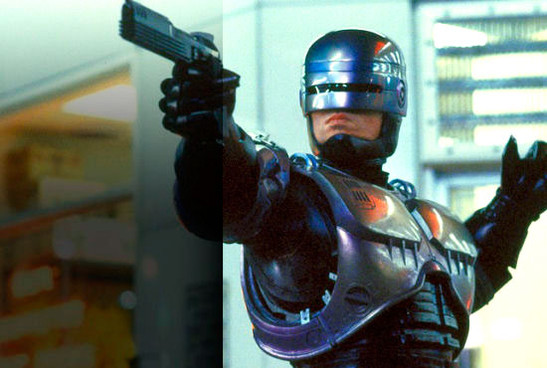
Initially, Robins began this program as a way of bringing some of the thousands of disabled police officers and soldiers in the U.S. back to the workforce. Ultimately, this would call for the creation of a “telebot” that is not only equipped with the latest in wireless technology, but also one that can get around and take some serious punishment. In many ways, this is an elaboration on the concept of Robocop, the hybrid man-machine that stole our hearts back in the 80’s with his signature lines: “You’re move creep!” and “Dead or alive, you are coming with me!” And let’s not forget that sweet gun trick!

But of course, these new robots would be asked to do less adventurous things than the gun-toting cyborg who saved Old Detroit. In addition to working as patrol officers, they would responsible for handling all the regular tasks of police officers. These would include responding to 911 calls, writing traffic tickets, patrolling specific routes, and staying vigilant for law breakers. In addition, they could also be charged with safe guarding government and high-value facilities from terrorists or other criminals, doing both surveillance and acting as an on-site security force.

Early sketches of the robot give some indication of what it would look like. Essentially, it would have to be mobile, which would call for a wheeled chassis. It would have to be ambulatory, which would require arms. And it ought to have some semblance of a person, since it would be expected to carry the officer’s voice and interact with people. In essence, even little children need to be able to approach this robot and ask it if it can help them find their mothers.

An early rendition, shown here, has been appropriately named “Tough Guy”. Like all other design ideas, the end result calls for a robot that has a two-wheeled chassis, a mobile upper body, and a head that carries a two-way audio and video device so that the officer commanding it can both view and interact with the robots and environment and other people.

Already, the Discovery Lab has announced that the end product will be military grade and usable by the army under the 2 million dollar initiative that DARPA’s (Defense Advanced Research Projects Agency) set up years ago. Robins is also trying to get NASA to sign on with its Robonaut tech – a program to develop a robotic astronaut. So while the end product will be used primarily by police, plans are already in place to expand it to other areas – such as military operations and unmanned space exploration – as well.

Evidence of Ancient Streambed Found on Mars

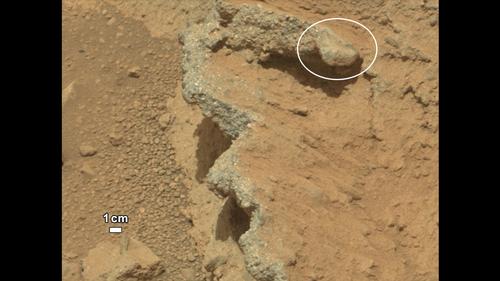
More news from the Red Planet! At a press conference held just yesterday, members of the Mars Science Laboratory announced that Curiosity discovered some interesting gravel patterns in the Gale Crater which would seem to indicate that water once flowed there. What more, according to William Dietrich (Curiosity’s co-investigator from the University of California, Berkeley) the water would have been flowing for some time.

“Too many things that point away from a single burst event,” he said in the press statement. “I’m comfortable to argue that it is beyond the 1,000 year timescales, even though this is very early on in our findings.”

Specifically, what Curiosity found was outcroppings of layered rock that are the result of multiple deposits of gravel, which the science team claims could not have been laid by any other naturally occurring source, such as wind. What’s more, the sizes and shapes of stones offer clues to the speed and distance of a long-ago stream’s flow. Although initially classifying this as a “surprise”, the team inevitably claimed that they weren’t too surprised by the finding.

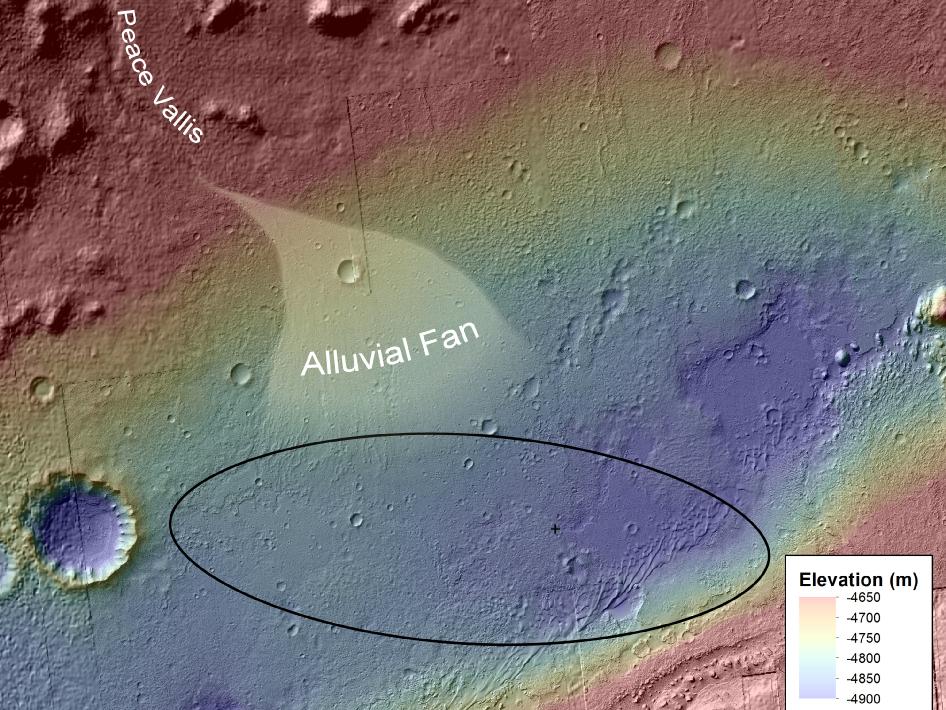
The location of the site lies between the north rim of the Gale Crater and the base of Aeolis Mons (aka. Mount Sharp), a mountain inside the crater. To the north of the crater, a channel named Peace Vallis feeds into the alluvial fan, where the abundance of channels between the rim and conglomerate suggests the presence of flowing water over a long period of time.

For some time, scientists have speculated about the existence of ancient rivers on Mars, based solely on observations from afar. In fact, the “canals of Mars”, as they were often known, have remained a source of inspiration for astronomers and fired the public imagination. The notion that there might be life on the Red Planet inevitably led some to suggest that there was such a thing as a Martian race that was responsible for their creation.

This, in turn, has led to generations of science fiction and storytelling, with images of little Martian men invading Earth in their terrible war machines (a la War of the Worlds) or as benevolent psychic begins who succumbed to disease and the onset of human colonization (i.e. The Martian Chronicles). Naturally, these fantastic notions died when it became known that the Martian surface is all but lifeless. However, evidence that Mars was once capable of supporting life remains; and thanks to Curiosity, continues to grow.

Stay tuned for more news from Curiosity! As of yesterday, it moved on from the Garland Crater and began its longest journey yet towards the Glenelg area, where it will begin taking soil samples and performing test drills. The goal here will be to find samples of preserved organic carbon, another step in the long mission to determine whether Mars really did support life in the past. Exciting times!

Update on Curiosity

More news from Mars! It seems that after a full month of being on Mars, running routine checks on its equipment and snapping some breathtaking photos, Curiosity is ready to begin the first leg of its study mission. This consisted of finding a Martian rock, the first sample in Curiosity’s extensive contact surveys.

And, after a week of searching, the NASA team piloting the rover found a pyramid shaped rock that they feel will be perfect for their surface analysis. The rock is described as a pyramid-shaped hunk, likely composed of basalt, which they nicknamed “Jake Matijevic” after one of the rover engineers who died back in August.

The sample was located just three meters from Curiosity’s landing zone, now known as the “Bradbury Landing” in honor of the late, great Ray Bradbury, author of the Martian Chronicles. On Saturday, it will extend its arm, take possession of the rock, and begin chemical analysis to determine the rock’s primary mineral and precise composition.

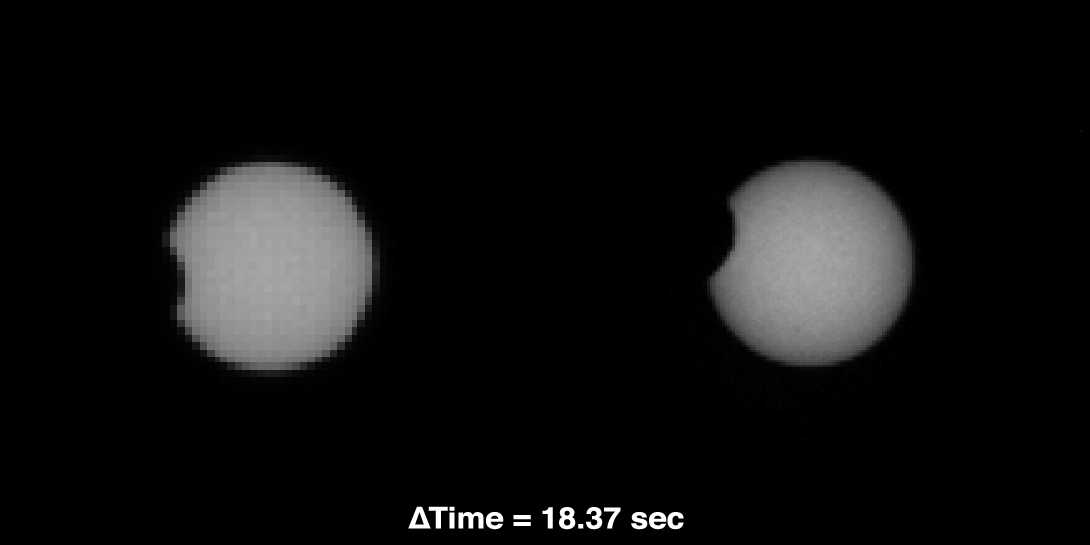
Another important aspect of Curiosity’s mission began this week, as the rover set it’s camera eyes to the skies and captured photos of Phobos making a Solar transit. To be fair, this was not the first time a Martian eclipse was captured on camera. In fact, the Opportunity and Spirit rovers both snapped similar images back in December of 2010 and 2005. However, the images taken by Curiosity were of such high resolution that experts will be able to estimate the consistency of the interior of Mars itself for the first time.

Apparently, this is done by measuring the tidal forces these moons exert on Mars, examining how the planet changes shape ever so slightly as a the moons orbit about it. By measuring this “deformation bulge”, along  with the precise spatial orientation provided by Curiosity’s photos, experts at NASA and abroad will be able to conjecture what the core of Mars is made of based on how much the planet deforms. I always wondered how scientists were able to guess what lay at a planet’s core. Now I know, go figure!

Stay tuned for more news from the Curiosity and the Red Planet!

Source: Popular Mechanics

Curiosity Captures Martian Eclipse

Yes, it seems that Mars has eclipses too. And thanks to the presence of Curiosity and other rovers, we here on Earth are now in a prime position to watch them. As part of its mission to Mars, Curiosity recently turned its cameras to the Martian sky to photograph the Martian sunset, the panoramic landscape, and even managed to capture these photos of Phobos (one of Mars’ two moons) passing in front of the sun. Teams at NASA captured all the photos and compiled a video of the footage, which shows Phobos just hovering at the edge of the sun.

This is just the first step in Curiosity’s planned mission to study Mars’ two satellites – Phobos and Deimos – in greater depth. More in this in a coming post, so stay tuned for that and other news from the Red Planet. Go Curiosity!

Source: Universe Today.com, Space.com

Hello Hyperbike!

Thanks to Popular Mechanics for turning me onto this recent invention! Back in 2007, an inventive engineer named Curtis DeForest created a contraptio nas a safe and effective alternative to the traditional bike. He called it the Hyperbike, and one look at the contraption will tell you why! Featuring three wheels, the vehicle is a full-body machine that utilizes hand and foot motions to generate speed. Since it does not require forward momentum to stand up, a rider is incapable of falling off, and can reach speeds of up to 50 mph.

DeForest also designed the prototype so that the rider’s center of gravity is below the spinning axis of the wheels – as opposed to above it, like in most bikes. This difference, along with its additional front wheel, increases stability, and also caught the attention of NASA. Impressed with its design and its possibility for use in low-gravity environments, the space agency invested in a new prototype. However, no updates have been made available on the progress of this development, and rumor has it NASA has moved on.

Too bad too! Tell me something like this wouldn’t be useful in a number of different environments. And I’m sure there’s plenty of military applications for something like this. Maybe add a gasoline engine, 800 hp, some missiles and some jump jets. Make a lovely Hyperbike, that would!


The 50th Anniversay of JFK’s Moon Speech

Well wouldn’t you know it? It’s been only a day since a somber anniversary came and went, and already another one is upon us. Yes, it was 50 years ago today that John F. Kennedy, then-president of the United States, made his famous Moon Speech. Of the many speeches that were issued during the height of the Cold War and the Space Race, this one stands out in people’s minds as one of the most inspiring and iconic.

Though Kennedy did not live to see the fruition of the space program he helped spearhead, his words encapsulated the drive and determination that made the Appollo Moon Landing possible. Much like Neil Armstrong’s “One Small Step For Man” speech, this speech is one that continues to inspire, regardless of how much time has passed.

The full transcript appears below:

President Pitzer, Mr. Vice President, Governor, Congressman Thomas, Senator Wiley, and Congressman Miller, Mr. Webb, Mr. Bell, scientists, distinguished guests, and ladies and gentlemen:

I appreciate your president having made me an honorary visiting professor, and I will assure you that my first lecture will be very brief.

I am delighted to be here, and I’m particularly delighted to be here on this occasion.

We meet at a college noted for knowledge, in a city noted for progress, in a State noted for strength, and we stand in need of all three, for we meet in an hour of change and challenge, in a decade of hope and fear, in an age of both knowledge and ignorance. The greater our knowledge increases, the greater our ignorance unfolds.

Despite the striking fact that most of the scientists that the world has ever known are alive and working today, despite the fact that this Nation¹s own scientific manpower is doubling every 12 years in a rate of growth more than three times that of our population as a whole, despite that, the vast stretches of the unknown and the unanswered and the unfinished still far outstrip our collective comprehension.

No man can fully grasp how far and how fast we have come, but condense, if you will, the 50,000 years of man¹s recorded history in a time span of but a half-century. Stated in these terms, we know very little about the first 40 years, except at the end of them advanced man had learned to use the skins of animals to cover them. Then about 10 years ago, under this standard, man emerged from his caves to construct other kinds of shelter. Only five years ago man learned to write and use a cart with wheels. Christianity began less than two years ago. The printing press came this year, and then less than two months ago, during this whole 50-year span of human history, the steam engine provided a new source of power.

Newton explored the meaning of gravity. Last month electric lights and telephones and automobiles and airplanes became available. Only last week did we develop penicillin and television and nuclear power, and now if America’s new spacecraft succeeds in reaching Venus, we will have literally reached the stars before midnight tonight.

This is a breathtaking pace, and such a pace cannot help but create new ills as it dispels old, new ignorance, new problems, new dangers. Surely the opening vistas of space promise high costs and hardships, as well as high reward.

So it is not surprising that some would have us stay where we are a little longer to rest, to wait. But this city of Houston, this State of Texas, this country of the United States was not built by those who waited and rested and wished to look behind them. This country was conquered by those who moved forward–and so will space.

William Bradford, speaking in 1630 of the founding of the Plymouth Bay Colony, said that all great and honorable actions are accompanied with great difficulties, and both must be enterprised and overcome with answerable courage.

If this capsule history of our progress teaches us anything, it is that man, in his quest for knowledge and progress, is determined and cannot be deterred. The exploration of space will go ahead, whether we join in it or not, and it is one of the great adventures of all time, and no nation which expects to be the leader of other nations can expect to stay behind in the race for space.

Those who came before us made certain that this country rode the first waves of the industrial revolutions, the first waves of modern invention, and the first wave of nuclear power, and this generation does not intend to founder in the backwash of the coming age of space. We mean to be a part of it–we mean to lead it. For the eyes of the world now look into space, to the moon and to the planets beyond, and we have vowed that we shall not see it governed by a hostile flag of conquest, but by a banner of freedom and peace. We have vowed that we shall not see space filled with weapons of mass destruction, but with instruments of knowledge and understanding.

Yet the vows of this Nation can only be fulfilled if we in this Nation are first, and, therefore, we intend to be first. In short, our leadership in science and in industry, our hopes for peace and security, our obligations to ourselves as well as others, all require us to make this effort, to solve these mysteries, to solve them for the good of all men, and to become the world’s leading space-faring nation.

We set sail on this new sea because there is new knowledge to be gained, and new rights to be won, and they must be won and used for the progress of all people. For space science, like nuclear science and all technology, has no conscience of its own. Whether it will become a force for good or ill depends on man, and only if the United States occupies a position of pre-eminence can we help decide whether this new ocean will be a sea of peace or a new terrifying theater of war. I do not say the we should or will go unprotected against the hostile misuse of space any more than we go unprotected against the hostile use of land or sea, but I do say that space can be explored and mastered without feeding the fires of war, without repeating the mistakes that man has made in extending his writ around this globe of ours.

There is no strife, no prejudice, no national conflict in outer space as yet. Its hazards are hostile to us all. Its conquest deserves the best of all mankind, and its opportunity for peaceful cooperation many never come again. But why, some say, the moon? Why choose this as our goal? And they may well ask why climb the highest mountain? Why, 35 years ago, fly the Atlantic? Why does Rice play Texas?

We choose to go to the moon. We choose to go to the moon in this decade and do the other things, not because they are easy, but because they are hard, because that goal will serve to organize and measure the best of our energies and skills, because that challenge is one that we are willing to accept, one we are unwilling to postpone, and one which we intend to win, and the others, too.

It is for these reasons that I regard the decision last year to shift our efforts in space from low to high gear as among the most important decisions that will be made during my incumbency in the office of the Presidency.

In the last 24 hours we have seen facilities now being created for the greatest and most complex exploration in man’s history. We have felt the ground shake and the air shattered by the testing of a Saturn C-1 booster rocket, many times as powerful as the Atlas which launched John Glenn, generating power equivalent to 10,000 automobiles with their accelerators on the floor. We have seen the site where the F-1 rocket engines, each one as powerful as all eight engines of the Saturn combined, will be clustered together to make the advanced Saturn missile, assembled in a new building to be built at Cape Canaveral as tall as a 48 story structure, as wide as a city block, and as long as two lengths of this field.

Within these last 19 months at least 45 satellites have circled the earth. Some 40 of them were “made in the United States of America” and they were far more sophisticated and supplied far more knowledge to the people of the world than those of the Soviet Union.

The Mariner spacecraft now on its way to Venus is the most intricate instrument in the history of space science. The accuracy of that shot is comparable to firing a missile from Cape Canaveral and dropping it in this stadium between the the 40-yard lines.

Transit satellites are helping our ships at sea to steer a safer course. Tiros satellites have given us unprecedented warnings of hurricanes and storms, and will do the same for forest fires and icebergs.

We have had our failures, but so have others, even if they do not admit them. And they may be less public.

To be sure, we are behind, and will be behind for some time in manned flight. But we do not intend to stay behind, and in this decade, we shall make up and move ahead.

The growth of our science and education will be enriched by new knowledge of our universe and environment, by new techniques of learning and mapping and observation, by new tools and computers for industry, medicine, the home as well as the school. Technical institutions, such as Rice, will reap the harvest of these gains.

And finally, the space effort itself, while still in its infancy, has already created a great number of new companies, and tens of thousands of new jobs. Space and related industries are generating new demands in investment and skilled personnel, and this city and this State, and this region, will share greatly in this growth. What was once the furthest outpost on the old frontier of the West will be the furthest outpost on the new frontier of science and space. Houston, your City of Houston, with its Manned Spacecraft Center, will become the heart of a large scientific and engineering community. During the next 5 years the National Aeronautics and Space Administration expects to double the number of scientists and engineers in this area, to increase its outlays for salaries and expenses to $60 million a year; to invest some $200 million in plant and laboratory facilities; and to direct or contract for new space efforts over $1 billion from this Center in this City.

To be sure, all this costs us all a good deal of money. This year¹s space budget is three times what it was in January 1961, and it is greater than the space budget of the previous eight years combined. That budget now stands at $5,400 million a year–a staggering sum, though somewhat less than we pay for cigarettes and cigars every year. Space expenditures will soon rise some more, from 40 cents per person per week to more than 50 cents a week for every man, woman and child in the United Stated, for we have given this program a high national priority–even though I realize that this is in some measure an act of faith and vision, for we do not now know what benefits await us.

But if I were to say, my fellow citizens, that we shall send to the moon, 240,000 miles away from the control station in Houston, a giant rocket more than 300 feet tall, the length of this football field, made of new metal alloys, some of which have not yet been invented, capable of standing heat and stresses several times more than have ever been experienced, fitted together with a precision better than the finest watch, carrying all the equipment needed for propulsion, guidance, control, communications, food and survival, on an untried mission, to an unknown celestial body, and then return it safely to earth, re-entering the atmosphere at speeds of over 25,000 miles per hour, causing heat about half that of the temperature of the sun–almost as hot as it is here today–and do all this, and do it right, and do it first before this decade is out–then we must be bold.

I’m the one who is doing all the work, so we just want you to stay cool for a minute. [laughter]

However, I think we’re going to do it, and I think that we must pay what needs to be paid. I don’t think we ought to waste any money, but I think we ought to do the job. And this will be done in the decade of the sixties. It may be done while some of you are still here at school at this college and university. It will be done during the term of office of some of the people who sit here on this platform. But it will be done. And it will be done before the end of this decade.

I am delighted that this university is playing a part in putting a man on the moon as part of a great national effort of the United States of America.

Many years ago the great British explorer George Mallory, who was to die on Mount Everest, was asked why did he want to climb it. He said, “Because it is there.”

Well, space is there, and we’re going to climb it, and the moon and the planets are there, and new hopes for knowledge and peace are there. And, therefore, as we set sail we ask God’s blessing on the most hazardous and dangerous and greatest adventure on which man has ever embarked.

Thank you.

Hey, and is it turns out, this is my 500th post! I’m honored that this personal milestone coincided with an anniversary of such significance! If only Neil were still around, he would certainly have something to say about this momentous occasion. RIP JFK, and you too Neil. And here’s to the dream you both made a reality!

Astronaut Frank Culbertson On 9/11

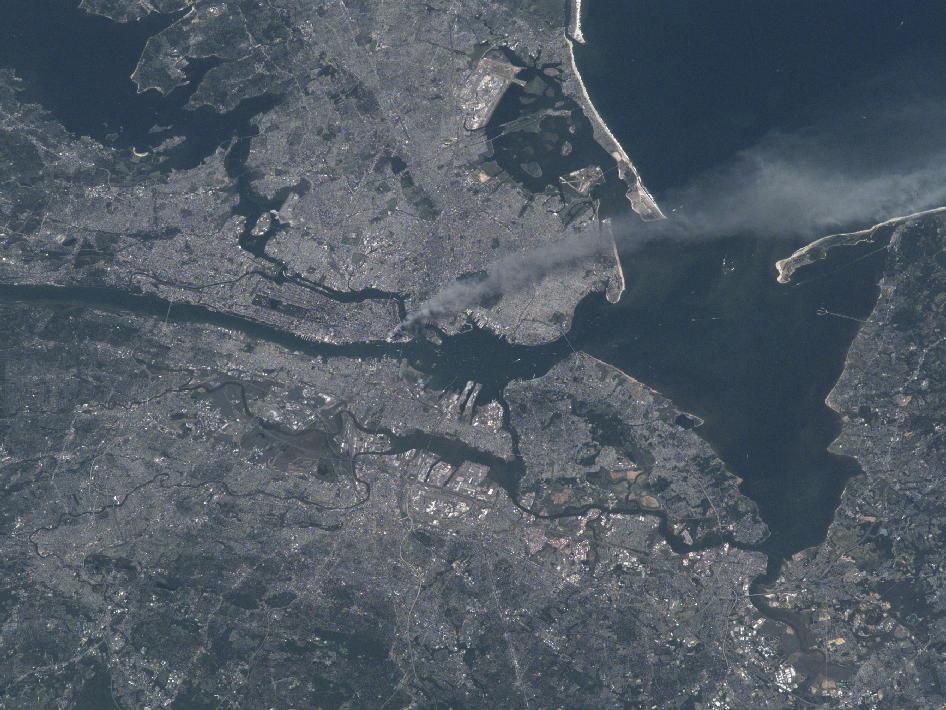
The following is a letter composed by Captain Frank Culbertson (retired), the Expedition Three Commander who was aboard the ISS on 9/11 and saw the carnage from a unique vantage point – from space! Having bared witness to one of the most auspicious and terrible events in the history of his country, he composed a latter describing what it was like on the day of and during the days that followed. He was unable to get back home in the wake of the attack, and therefore had to continue to watch from orbit as he and his crew – much like the people of Earth – carried on as best they could.

The full transcript appears below, and thanks to Dr. Sci-Fi for turning me on to it. I especially enjoyed your 9/11 post. It was good to hear from someone else as they described what they were doing on that fateful day.

September 12, 2001; 19:34 hours

I haven’t written very much about specifics of this mission during the month I’ve been here, mainly for two reasons: the first being that there has been very little time to do that kind of writing, and secondly because I’m not sure how comfortable I am sharing thoughts I share with family and friends with the rest of the world.

Well, obviously the world changed today. What I say or do is very minor compared to the significance of what happened to our country today when it was attacked by …. by whom? Terrorists is all we know, I guess. Hard to know at whom to direct our anger and fear…

I had just finished a number of tasks this morning, the most time-consuming being the physical exams of all crew members. In a private conversation following that, the flight surgeon told me they were having a very bad day on the ground. I had no idea…

He described the situation to me as best he knew it at ~0900 CDT. I was flabbergasted, then horrified. My first thought was that this wasn’t a real conversation, that I was still listening to one of my Tom Clancy tapes. It just didn’t seem possible on this scale in our country. I couldn’t even imagine the particulars, even before the news of further destruction began coming in.

Vladimir came over pretty quickly, sensing that something very serious was being discussed. I waved Michael into the module as well. They were also amazed and stunned. After we signed off, I tried to explain to Vladimir and Michael as best I could the potential magnitude of this act of terror in downtown Manhattan and at the Pentagon. They clearly understood and were very sympathetic.

I glanced at the World Map on the computer to see where over the world we were and noticed that we were coming southeast out of Canada and would be passing over New England in a few minutes. I zipped around the station until I found a window that would give me a view of NYC and grabbed the nearest camera. It happened to be a video camera, and I was looking south from the window of Michael’s cabin.

The smoke seemed to have an odd bloom to it at the base of the column that was streaming south of the city. After reading one of the news articles we just received, I believe we were looking at NY around the time of, or shortly after, the collapse of the second tower. How horrible…

I panned the camera all along the East Coast to the south to see if I could see any other smoke around Washington, or anywhere else, but nothing was visible.

It was pretty difficult to think about work after that, though we had some to do, but on the next orbit we crossed the US further south. All three of us were working one or two cameras to try to get views of New York or Washington. There was haze over Washington, but no specific source could be seen. It all looked incredible from two to three hundred miles away. I can’t imagine the tragic scenes on the ground.

Other than the emotional impact of our country being attacked and thousands of our citizens and maybe some friends being killed, the most overwhelming feeling being where I am is one of isolation.

Next day….

I guess the fatigue and emotional strain got the best of me. I couldn’t stay awake and continue to write. Today was still difficult, but we started getting more information, plus we had the honor of talking directly with the Center Director, Roy Estess, who assured us that the ground teams would continue to work and ensure our safety, as well as the safe operation of the Station. We also heard from our Administrator, Mr. Goldin, who added that the partners in the Program are all totally committed to continuing safe operations and support. These were never questions for me. I know all these people! The ground teams have been incredibly supportive, very understanding of the impact of the news, and have tried to be as helpful as possible. They have all been very professional and focused though I can’t imagine the distraction of this type of news coming in and the thought that government buildings might be at risk. They never skipped a beat, even when relocating control centers. And a group of senior personnel and friends gave us a pretty thorough briefing on what was known and what was being done in the government and at NASA on Tuesday afternoon, which was very helpful and kind of them to do in the midst of all the turmoil. The Russian TsUP has also been supportive and helpful, trying to uplink news articles when our own assets were inoperable, and saying kind words…

My crewmates have been great, too. They know it’s been a tough day for me and the folks on the ground, and they’ve tried to be as even keeled and helpful as possible. Michael even fixed me my favorite Borscht soup for dinner. And they give me plenty of room to think when I needed it. They are very sympathetic and of course outraged at whoever would do this.

I know so many people in Washington, so many people who travel to DC and NYC, so many who are pilots, that I felt sure I would receive at least a few pieces of bad news over the next few days. I got the first one today when I learned that the Captain of the American Airlines jet that hit the Pentagon was Chic Burlingame, a classmate of mine. I met Chic during plebe summer when we were in the D&B together, and we had lots of classes together. I can’t imagine what he must of gone through, and now I hear that he may have risen further than we can even think of by possibly preventing his plane from being the one to attack the White House. What a terrible loss, but I’m sure Chic was fighting bravely to the end. And tears don’t flow the same in space…

It’s difficult to describe how it feels to be the only American completely off the planet at a time such as this. The feeling that I should be there with all of you, dealing with this, helping in some way, is overwhelming. I know that we are on the threshold (or beyond) of a terrible shift in the history of the world. Many things will never be the same again after September 11, 2001. Not just for the thousands and thousands of people directly affected by these horrendous acts of terrorism, but probably for all of us. We will find ourselves feeling differently about dozens of things, including probably space exploration, unfortunately.

It’s horrible to see smoke pouring from wounds in your own country from such a fantastic vantage point. The dichotomy of being on a spacecraft dedicated to improving life on the earth and watching life being destroyed by such willful, terrible acts is jolting to the psyche, no matter who you are. And the knowledge that everything will be different than when we launched by the time we land is a little disconcerting. I have confidence in our country and in our leadership that we will do everything possible to better defend her and our families, and to bring justice for what has been done. I have confidence that the good people at NASA will do everything necessary to continue our mission safely and return us safely at the right time. And I miss all of you very much. I can’t be there with you in person, and we have a long way to go to complete our mission, but be certain that my heart is with you, and know you are in my prayers.

Humbly,
Frank

September 14, 2001; 22:49

An update to the last letter… Fortunately, it’s been a busy week up here. And to prove that, like our country, we are continuing on our intended path with business as usual (as much as possible). Tonight the latest addition to the station, the Russian Docking Compartment will be launched from Baikonur, Kazakhstan. On Saturday night (US time), it will dock with us, at a port never used before on the nadir side of the Service Module. This new module will give us another place to dock a Progress or Soyuz and will provide a large airlock with two useable hatches for conducting EVA’s in Russian Orlan suits, which we will do a few of before we come home.

The problem before in dealing with this week was too little news. The problem now is too much. It came all at once when email was restored, and there’s not enough time to read it all! Plus it’s too hard to deal with all of it at once. But I appreciate getting it, and I really appreciate the great letters of support and friendship I am receiving.

We are doing well on board, getting our work done, and talking about things. Last night we had a long discussion over dinner about the significance of these events, the possible actions to follow, and what should be done. After dinner, Michael made a point of telling me that every email he received from friends in Russia said specifically to tell me how sorry they were that this happened, extending their condolences, and asking how I was doing. Vladimir taught me the Russian word for “condolences” after talking to the previous CDR, Yuri Usachev, on the phone in Star City. (Both the Russian and the English words are much too long to pronounce easily.) Very kind people.

For the last two days, the Russian MCC has been good enough to transmit live broadcasts of radio news about the event and associated stories, to make sure I was well informed. Every specialist who has come on the line to discuss a procedure or a problem has at some point extended greetings to me with kind words. Tonight the Russian capcom told us that because of the special day of remembrance in the US, all day people had been bringing flowers and lining all the walls of the US embassy in Moscow, and this evening they were lighting candles in the street outside the embassy. How the world has changed.

People everywhere seem to recognize the senselessness and horror in this attack. And the tremendous loss. Moscow has dealt with these kind of problems in the last few years with apartment and subway bombings, so they are as anxious to get rid of this threat as we are. But the bottom line is that there are good people everywhere who want to live in peace. I read that a child asked, “America is so good to other countries, we always help everyone, how can they hate us so much?”

I hope the example of cooperation and trust that this spacecraft and all the people in the program demonstrate daily will someday inspire the rest of the world to work the same way. They must!

Unfortunately, we won’t be flying over the US during the time people are lighting candles. Don’t know if we could see that anyway. We did, however, see a very unusual and beautiful sight a few minutes ago: the launch of our Docking Compartment on a Soyuz booster. We were overtaking it and it came into view about three minutes after its launch from Baikonur as the sun hit our station, so it was still in the dark. It looked like a large comet with a straight, wide tail silhouetted against the dark planet beneath. Despite some bad lighting for a while as the sun hit our window at a low angle, I managed some video of it as first we passed the rocket, and then watched it begin to catch up as it gained altitude and speed. I filmed until main engine cutoff and booster separation occurred just as we approached sunrise on the Himalayas. An unforgettable sight in an unforgettable week…

Life goes on, even in space. We’re here to stay…
Frank

How To Get To Mars…

A new video has been making the rounds recently. In this full-length compilation video, we get a glimpse of what the flight and deployment of Spirit/Opportunity Rover to Mars looked like, using CGI animation of course. In between, real footage from NASA is spliced in to provide real-time background to the simulated events. We see the navigators eagerly awaiting the landing and recovery of the rover’s signal, and the first photographs sent back by that rover. The arrival of this footage is very timely of course, coming soon after the arrival of Curiosity. Enjoy!