News From Space: Kepler Finds Many New Worlds!

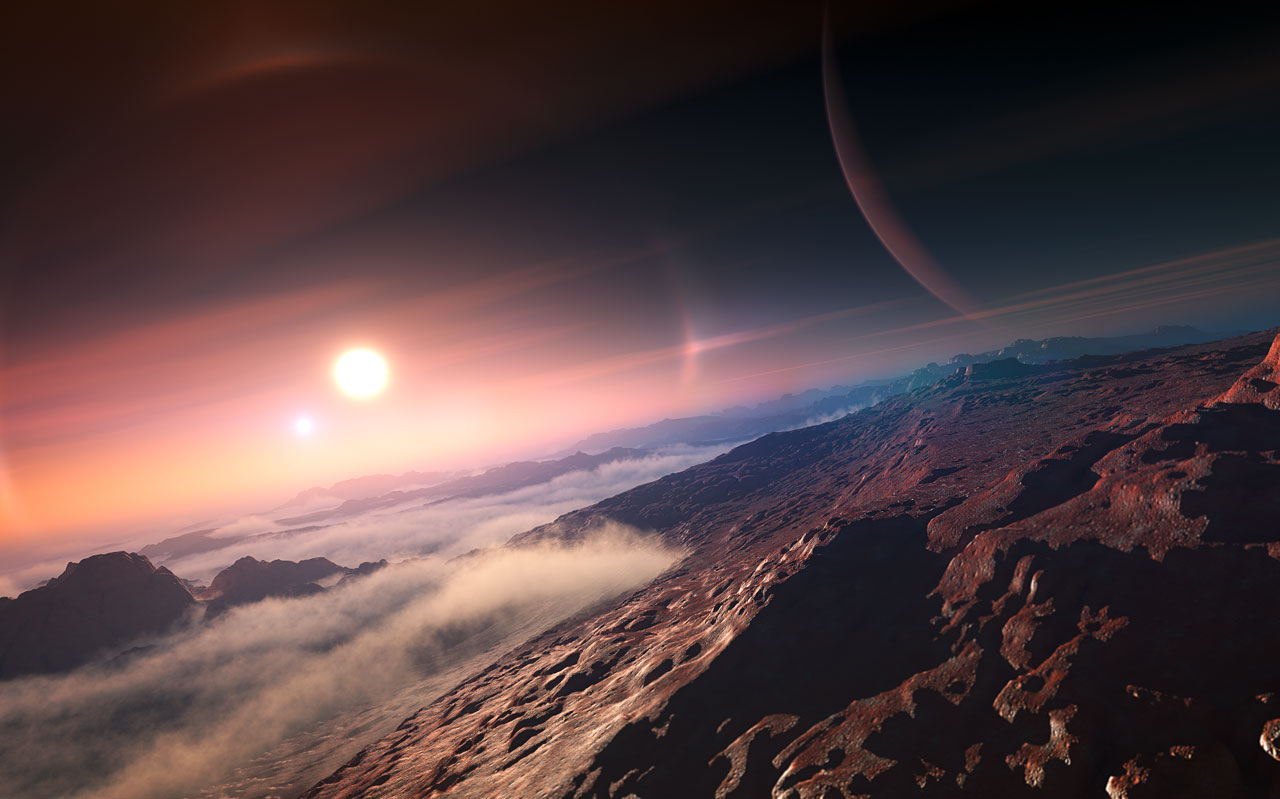
exoplanets2Late last month, NASA announced the discovery of 715 more exoplanets, nearly doubling the number of planets beyond our Solar System. These newly-verified worlds orbit 305 stars, revealing multiple-planet systems outside of our own, with four of them within their stars habitable zones. It’s the single largest windfall of new confirmations at any one time, and its all thanks to a new verification technique employed by the Kepler space probe’s scientists.

Nearly 95 percent of these planets are smaller than Neptune, which is almost four times the size of Earth. What’s more, this latest batch of exoplanets puts the total number of those confirmed from about 1000 to just over 1700 – and increase of 70% that occurred overnight! This discovery marks a significant increase in the number of known small-sized planets more akin to Earth than previously identified exoplanets.
alien-worldJohn Grunsfeld, associate administrator for NASA’s Science Mission Directorate in Washington, had this to say in a press release:

The Kepler team continues to amaze and excite us with their planet hunting results. That these new planets and solar systems look somewhat like our own, portends a great future when we have the James Webb Space Telescope in space to characterize the new worlds.

Since the discovery of the first planets outside our solar system roughly two decades ago, verification has been a laborious planet-by-planet process. Now, scientists have a statistical technique that can be applied to many planets at once when they are found in the same planetary systems. From NASA’s Ames Research Center in Moffett Field, Calif, the Kepler research team used a technique called verification by multiplicity, which relies in part on the logic of probability.
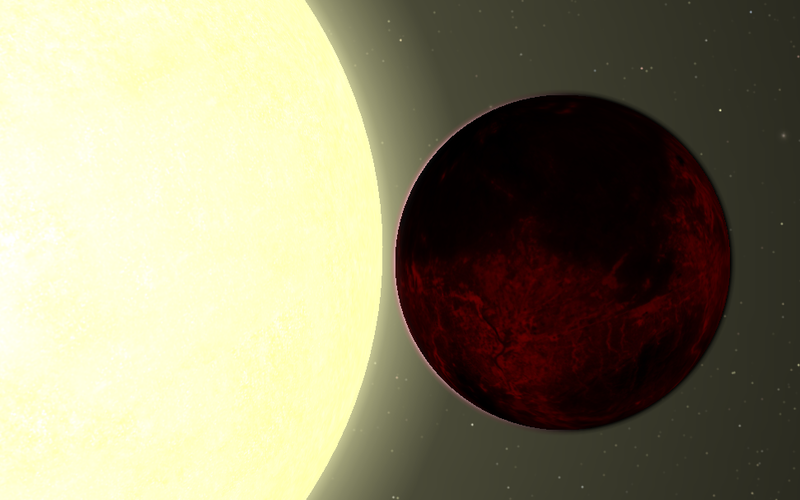
Kepler78b1The Kepler space probe observes some 150,000 stars and has found a few thousand of those to have planet candidates. If the candidates were randomly distributed among Kepler’s stars, only a handful would have more than one planet candidate. However, Kepler observed hundreds of stars that have multiple planet candidates. Through a careful study of this sample, these 715 new planets were verified.

This method can be likened to the behavior we know of lions and lionesses – where the lions are the Kepler stars and the lionesses are the planet candidates. The lionesses would sometimes be observed grouped together whereas lions tend to roam on their own. If more than two large felines are gathered, then it is very likely to be a lion and his pride. Thus, through multiplicity the lioness can be reliably identified in much the same way multiple planet candidates can be found around the same star.
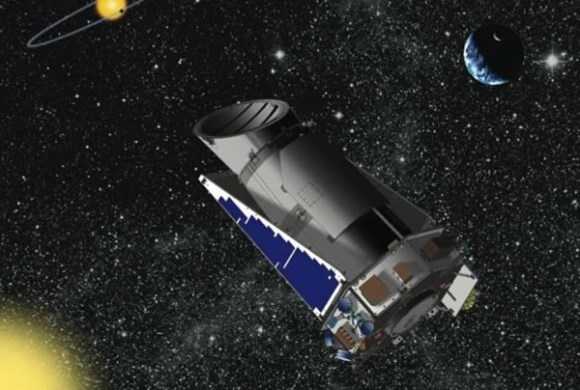
Kepler-telescope-580x448Jack Lissauer, c0-leader of the Kepler science team at NASA’s Ames Research Center, explains the difference this process ushers in:

Four years ago, Kepler began a string of announcements of first hundreds, then thousands, of planet candidates –but they were only candidate worlds. We’ve now developed a process to verify multiple planet candidates in bulk to deliver planets wholesale, and have used it to unveil a veritable bonanza of new worlds.

Of these planets, the vast majority are small, boosting the number of known small Earth-sized planets by a factor of 400%. Other jumps include a 600% increase is known Super-Earths (or Mini-Neptunes), a 200% boost for Neptune-sized planets, and just 2% for Jupiter-sized planets. The 305 solar systems are also quite similar to our own, with the planets orbiting along a flat plane in tightly-packed, nearly circular orbits.

kepler_graphAs noted, the Kepler scientists confirmed the existence of four planets situated within their solar system’s habitable zone. They are Kepler-174d, Kepler-296f, Kepler-298d and Kepler-309c, are less than 2.5 times the size of Earth, and all orbit around M and K stars. Kepler-296f is especially interesting, in that it orbits a star half the size and 5 percent as bright as our sun, and is either a gaseous planet composed of hydrogen-helium, or a water world surrounded by a deep ocean.

In the meantime, NASA has released this animated graph (shown above) to put all the discoveries into context. And while the discovery of only four potentially habitable planets amongst 715 (a mere 0.0056% of the total) may seem discouraging, each discovery brings us one step closer to a more accurate understanding of our place in the galaxy. The findings papers will be published March 10 in The Astrophysical Journal.

Sources: IO9, (2), nasa.gov

News from Space: Crimean Crisis Highlights US Dependence

crimean_crisis3The crisis in the Crimea continues, with Russia and the Ukraine threatening military action and the US and its western allies threatening sanctions. In addition to anxieties about the likelihood of war and the conflict spilling over into other regions, the crisis has served to highlight other possible global repercussions. And interestingly enough, some of them have to do with the current balance of space exploration and research.

In essence, every aspect of the manned and unmanned US space program – including NASA, other government agencies, private aerospace company’s and crucially important US national security payloads – is highly dependent on Russian & Ukrainian rocketry. Thus, all of the US space exploration and launches are potentially at risk amidst the current crisis.

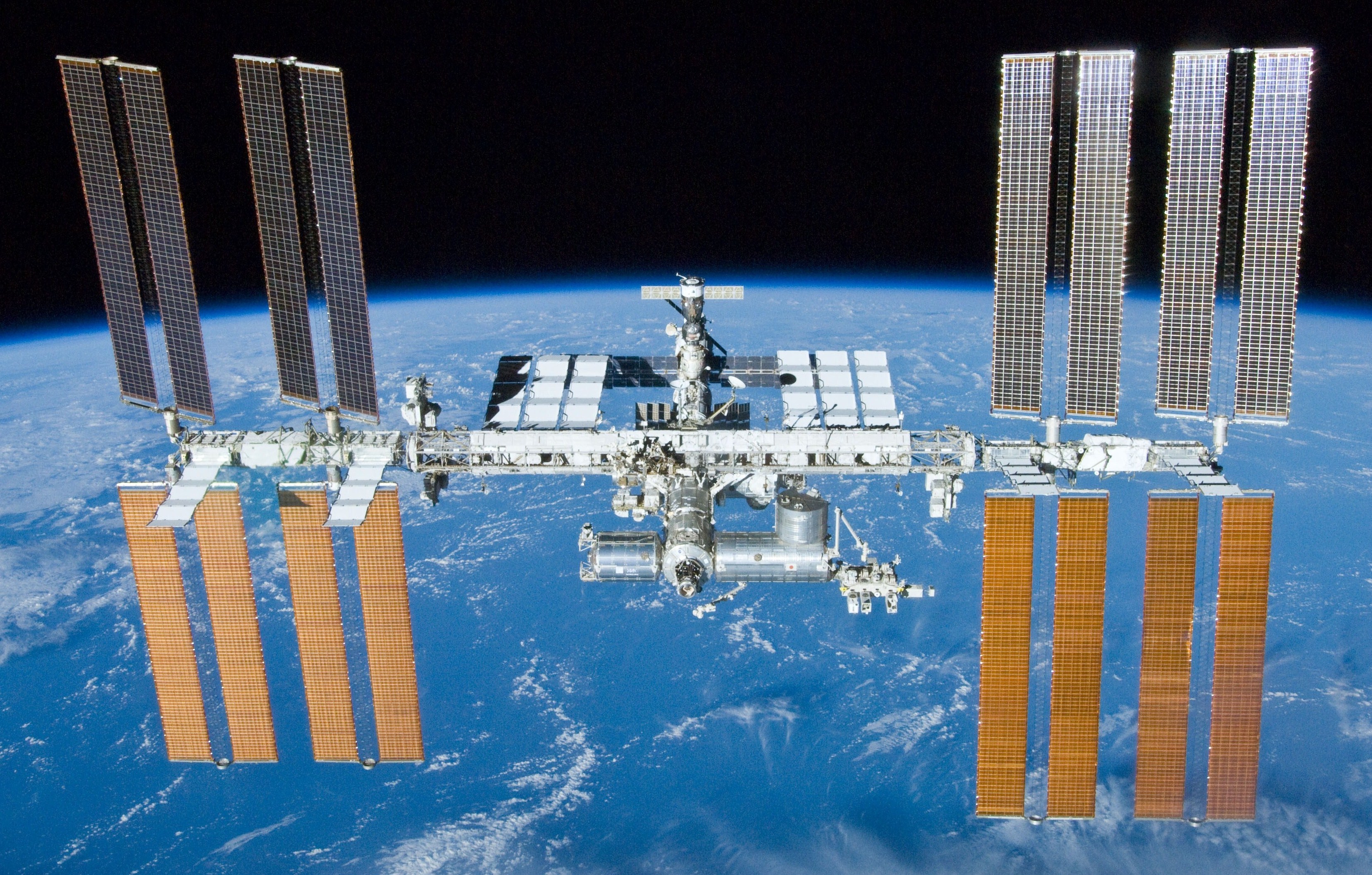
SoyuzCompared to the possibility of an outbreak of war that could engulf the Eurasian triangle, this hardly seems terribly consequential. But alas, quite a few people stand to suffer from seeing all rockets grounded in the Ukraine and Russia as a result of the current climate. Consider the ISS, which is entirely dependent on Earth-based rockets for resupply and personnel rotation.

As it stands, astronauts on the International Space Station (ISS) ride to space and back on regularly scheduled launches, and each new rocket carried fresh supplies of food and equipment. The Atlas V and Antares rockets, plus critical U.S. spy satellites that provide vital, real time intelligence, are just some of the programs that may be in peril if events deteriorate, or worse yet, spin out of control.

ISSThe threat to intelligence gathering operations would be especially critical, since it would hamper efforts to monitor the crisis. In short, the Crimean confrontation and all the threats and counter threats of armed conflicts and economic sanctions shines a spotlight on US vulnerabilities regarding space exploration, private industry and US national security programs, missions, satellites and rockets.

But the consequences of escalating tensions would hardly be felt by only one side. Despite what some may think, the US, Russian and Ukrainian space programs, assets and booster rockets are inextricably intertwined and interdependent, and all would suffer if anything were to shut it down. For instance, some 15 nations maintain participation and funding to keep the ISS and its programs running.

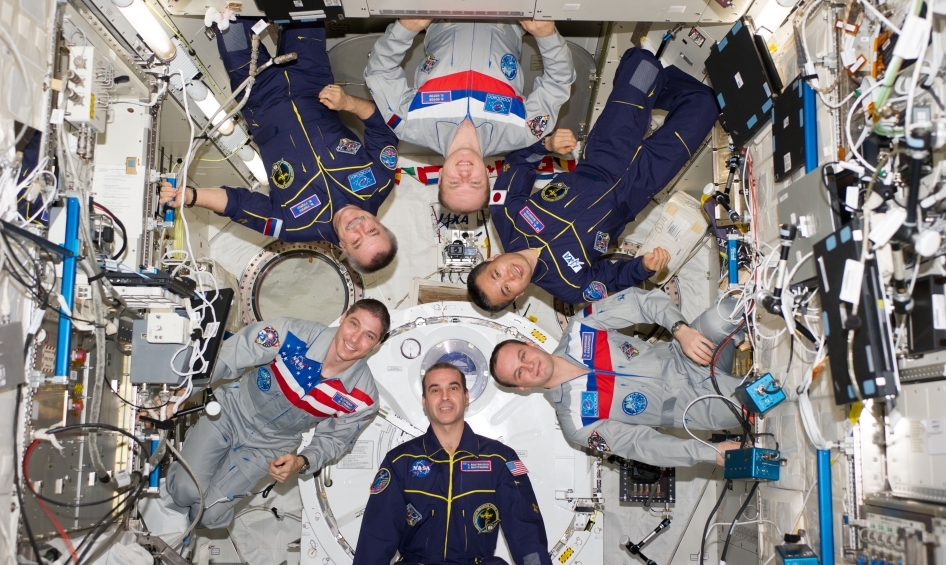
ISS_crewAnd since the forced retirement of NASA’s space shuttle program in 2011, America has been dependent on Russia for its human spaceflight capability. ISS missions are most often crewed by American astronauts and Russian cosmonauts. And under the most recent contract, the US pays Russia $70 million per Soyuz seat, and both they and the Ukraine’s space programs are dependent on this ongoing level of investment.

The fastest and most cost effective path to restore America’s human spaceflight capability to low Earth orbit and the ISS is through NASA’s Commercial Crew Program (CCP) seeking to develop private ‘space taxis’ with Boeing, SpaceX and Sierra Nevada. But until such time as long-term funding can be guaranteed, the current arrangement will persist.

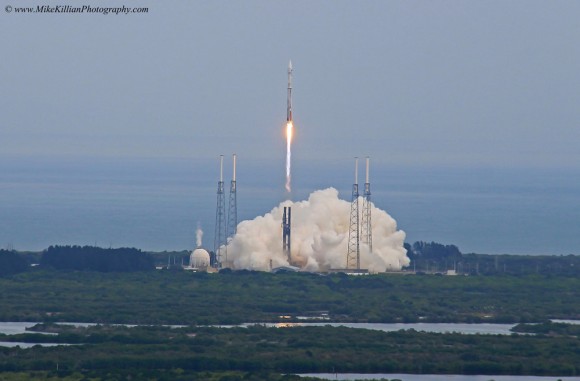
maven_launchWhen NASA Administrator Chales Bolden was asked about contingencies at a briefing yesterday, March 4, he responded that everything is OK for now:

Right now, everything is normal in our relationship with the Russians. Missions up and down are on target… People lose track of the fact that we have occupied the International Space Station now for 13 consecutive years uninterrupted, and that has been through multiple international crises… I don’t think it’s an insignificant fact that we are starting to see a number of people with the idea that the International Space Station be nominated for the Nobel Peace Prize.

At the same time, he urged Congress to fully fund CCP and avoid still more delays:

Let me be clear about one thing. The choice here is between fully funding the request to bring space launches back to the US or continuing millions in subsidies to the Russians. It’s that simple. The Obama administration chooses investing in America, and we believe Congress will choose this course as well.

spacex-dragon-capsule-grabbed-by-iss-canadarm-640x424At a US Senate appropriations subcommittee hearing on Defense, which was held yesterday to address national security issues, SpaceX CEO Elon Musk underscored the crucial differences in availability between the Falcon 9 and Atlas V in this excerpt from his testimony:

In light of Russia’s de facto annexation of the Ukraine’s Crimea region and the formal severing of military ties, the Atlas V cannot possibly be described as providing “assured access to space” for our nation when supply of the main engine depends on President Putin’s permission.

So, continuing operations of the ISS and US National Security are potentially held hostage to the whims of Russian President Vladimir Putin. And given that Russia has threatened to retaliate with sanctions of its own against the West, the likelihood that space exploration will suffer is likely.

?????????????????????????????????????????????????????????????????????????????????????????????????????????????????????????????????????????????????????????????????????????????????????????????????????????????????????????????????????????????????????????????????????????????????????????????????????????????????????????????????????????????????????????????????????????????????????????????????????????????????The Crimean crisis is without a doubt the most dangerous East-West conflict since the end of the Cold War. Right now no one knows the future outcome of the crisis in Crimea. Diplomats are talking but some limited military assets on both sides are reportedly on the move today.

News from Mars: Updates on Panspermia Theory

PanspermiaFor centuries now, scientists have been toying with the idea that the origins of life may owe a great deal to space borne debris. And with ongoing research in the past few years, the link between Earth and Mars have become increasingly convincing. And a new bit of research out of the University of Hawaii has provided yet another piece of the puzzle by suggesting solar wind plays a major role.

Solar wind – the stream of charged particles consisting mostly of naked protons called H+ ions – permeate our Solar System because they are periodically ejected from the sun. The University paper shows that in an airless environment, typical space rocks will react with impacting protons to create tiny vesicles of water, thus allowing water and organic molecules to travel through space in tandem.

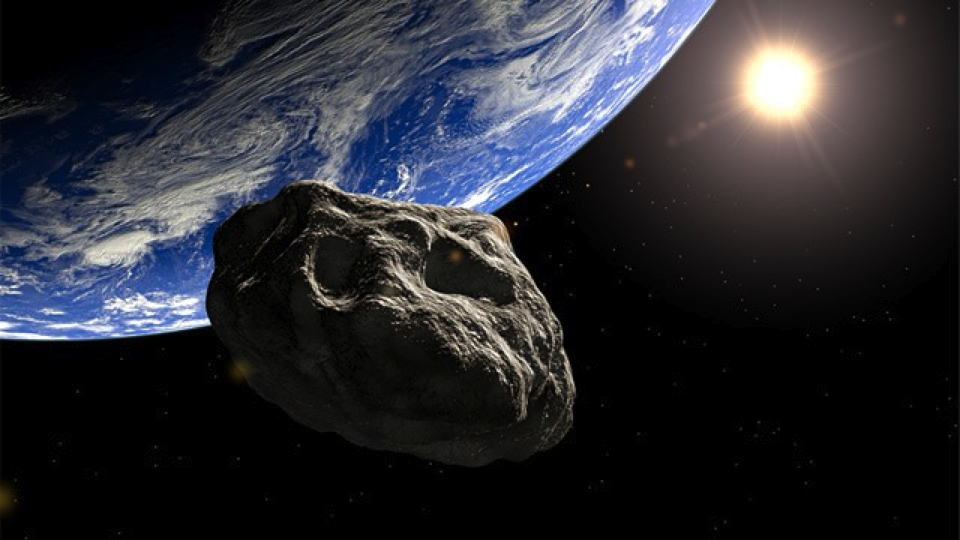
asteroid_earthInterestingly, the paper comes soon after NASA released evidence that Mars once sported a fair amount of water in the past, and that this water is sometimes found in unexpected places. The finding that water can be generated within dry space rocks, coupled with the fact that space rocks are known to deliver organic compounds to the surface of the Earth, is yet another indication that Earth and Mars might be linked.

Other recent papers have suggested that life’s important molecules arrived intact from Mars – a primitive version of RNA is one major proposed molecular stow-away – but these researchers claim only that “complex organic molecules” came from somewhere else in space. Complex organic compounds and liquid water, in conjunction, could theoretically provide the potential for non-living material to come alive.

Comet1One important aspect of this idea is that it focuses on small particles of material, rather than comets. Prior research has looked to such large bodies as the carriers of life and the drivers of the chemistry that created it, due to their energetic impacts. It’s been suggested that the earliest living things were cobbled together from high-energy molecules that couldn’t exist unless their synthesis was driven by massive astronomical impacts.

This more passive, dust-based explanation seems to fit well with the known history of the Earth, which predicts there was a high level of dust flux in the period before life began to flourish. In addition, the theory could help explain how in the predominantly shadowy areas of the Moon – another airless silicate body – unexpectedly high levels of water have been detected.

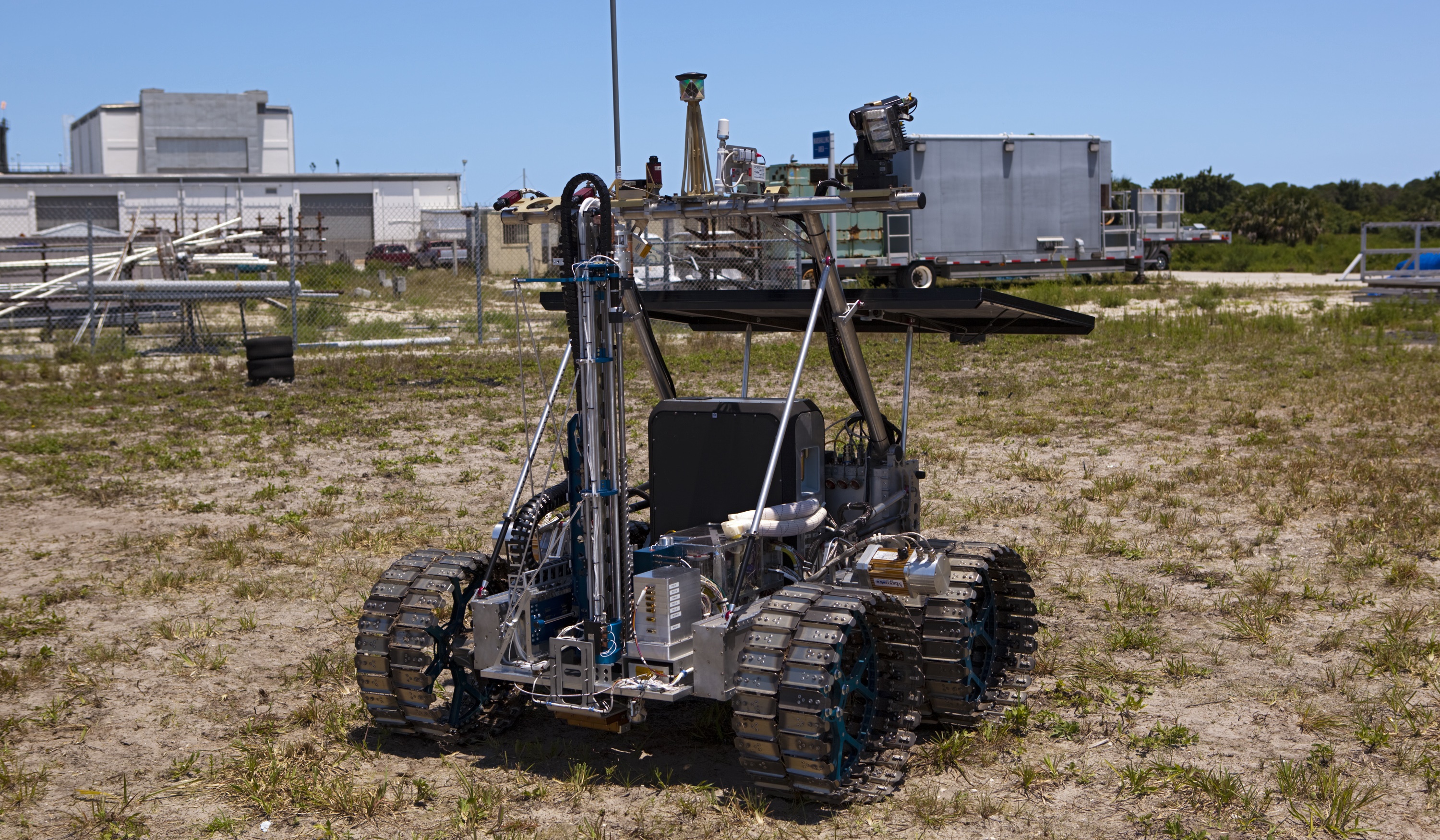
resolve_roverNASA has plans to launch RESOLVE (Regolith and Environment Science and Oxygen & Lunar Volatile Extraction) in 2018 to collect and analyze ice samples and use them to look back into just that sort of astronomical history. Large quantities of water are thought to have arrived on the Moon via impacting comets, but this research suggests that at least some of it could have been created on the Moon itself.

All of this is of extreme importance to discovering how life began on Earth, mainly because scientists are still unsure of what makes the process complete. For instance, evolutionary theory can adequately explain how a bacterium becomes a protist that becomes an animal, but it cannot explain how a pile of non-living molecules ever became a living cell.

panspermia2Evidence seems to be mounting that, whether it was seeded with dust or fused into existence by huge asteroid impacts, life on Earth needed a kickstart in its earliest days. Interestingly, Earth’s atmosphere and the abundance of messy lifeforms on its surface could mean that Earth is the single worst place to search for such evidence.

The Moon or Mars, by contrast, are perfect environments for preserving evidence of the past given their dry and airless nature. And with ongoing research into both planets and our scientific knowledge of them expanding apace, whatever role they may have played in kickstarting life on Earth may finally be learned. This could come in handy if ever we need to do a little kickstarting of our own…

Source: extremetech.com

News from Space: Biggest Lunar Explosion Ever Seen!

moon-asteroid-impact-1600Back in September of 2013, something truly amazing happened on the surface of the Moon. Granted, small objects impact with Earth’s only satellite all the time, hence its cratered surface. But this time around, Earth-based instruments observed an impact that was caused by an object the size of a small car, ten times bigger than any previously-recorded impacts.

The burst occurred on Sept. 11, 2013, at about 20:07 GMT in a area on the moon known as Mare Nubium, producing a flash that would have been visible from Earth. It was caused by a meteor that is believed to measure between 0.6- and 1.4-meters wide, weighed some 400 kg (880 pounds) and generated a crater with a diameter of about 40 meters.

Mars_impact_craterJudging from the explosion and the crater it left behind, scientists estimate that the rock hit Mare Nubium at a speed of 61,000 kph (38,000 mph), generating an explosion equivalent to roughly 15 tons of TNT. This beats the previous record, which occurred in March 2013 when a 40 kg meteoroid 0.3 or 0.4 meters wide struck the moon at about 90,000 km/hr (56,000 mph) and caused an explosion equivalent to 5 tons of TNT.

These findings appeared in the February issue of Monthly Notices of the Royal Astronomical Society (MNRAS), in a paper entitled “A large lunar impact blast on 2013 September 11”. According to the paper’s authors – Jose M. Madiedo, from the University of Huelva and Jose L. Ortiz, from the Institute of Astrophysics of Andalusia – the impact was the longest and brightest impact ever observed, as the “afterglow” remained visible for 8 seconds.

moonIn a subsequent press release, Madiedo and Ortiz said that:

Our telescopes will continue observing the Moon as our meteor cameras monitor the Earth’s atmosphere. In this way we expect to identify clusters of rocks that could give rise to common impact events on both planetary bodies. We also want to find out where the impacting bodies come from.

Knowing how often such collisions happen on the moon could be important for future lunar explorers, one reason why NASA has set up a specific program – Lunar Impacts, working out of the Marshall Space Flight Center – to study them. This campaign started in 2005 and has already proved that lunar impacts happen about 10 times more frequently than scientists previously expected.

Russian_meteorBecause the moon is our next-door neighbor, and a place where human beings may someday live in large numbers, knowing the frequency and severity of meteoric impacts is certainly important. These latest findings also suggests that the Earth might get hit more often than we previously thought by objects of a similar size. And given the damage associated with such impacts, knowing all we can is certainly prudent.

In the meantime, check out this outreach video provided by J.M. Madiedo (co-author of the MNRAS paper) that discusses this record-breaking lunar impact:


Source:
universetoday.com, wired.com, nasa.gov

News from Space: First Detailed Map of Ganymede

ganymedeLast week, researchers released the first-ever geological map of Ganymede, Jupiter’s largest moon and the largest planetary satellite in the Solar System. Led by Geoffrey Collins of Wheaton College, these scientists produced the first global geologic map that combines the best images obtained by NASA’s Voyager 1 and 2 spacecraft (1979) and the Galileo orbiter (1995 to 2003).

The information of these probes was pieced together as a mosaic image of the planet, giving us our first complete image of the geological features of the world. This image has now been published by the U. S. Geological Survey as a global planar map. The 2D version of the planet surface illustrates the varied geologic character of Ganymede and is the first global, geologic map of the icy, outer-planet moon.

ganymede_mapAnd its about time too! As Robert Pappalardo of NASA’s Jet Propulsion Laboratory in Pasadena, California put it:

This map illustrates the incredible variety of geological features on Ganymede and helps to make order from the apparent chaos of its complex surface. This map is helping planetary scientists to decipher the evolution of this icy world and will aid in upcoming spacecraft observations.

Since its discovery in January 1610 by Galileo Galilee, Ganymede has been the focus of repeated observation; first by Earth-based telescopes, and later by the flybys and orbiting spacecraft. These studies depict a complex, icy world whose surface is characterized by the striking contrast between the dark, very old, highly cratered regions, and the lighter, somewhat younger regions marked with an extensive array of grooves and ridges.

Ganymede-JupiterMoon-GeologicMap-SIM3237-20140211The map isn’t just aesthetically pleasing; it also informs our understanding of Ganymede’s geological history. Researchers have identified three geological periods – one involving heavy impact cratering, followed by tectonic upheaval, and then a decline in geological activity. The more detailed images let them study the ridges and groves, and have revealed that the formation of cryovolcanos is rare on Ganymede.

Baerbel Lucchitta, scientist emeritus at the U.S. Geological Survey in Flagstaff, Ariz., who has been involved with geologic mapping of Ganymede since 1980, had this to say:

The highly detailed, colorful map confirmed a number of outstanding scientific hypotheses regarding Ganymede’s geologic history, and also disproved others. For example, the more detailed Galileo images showed that cryovolcanism, or the creation of volcanoes that erupt water and ice, is very rare on Ganymede.

ganymede_ridges_craters_600According to the Jet Propulsion Laboratory, Ganymede is an especially valuable body to study because it is an ice moon with a richly varied geology and a surface area that is more than half as large as all the land area on Earth. The Ganymede map will also enable researchers to compare the geologic characters of other icy satellite moons, since most features found on other icy satellites have a similar feature somewhere on Ganymede.

Laszlo Kestay, the director of the United States Geological Survey (USGS) Astrogeology Science Center, explained the implications of this in a statement:

After Mars, the interiors of icy satellites of Jupiter are considered the best candidates for habitable environments for life in our solar system. This geologic map will be the basis for many decisions by NASA and partners regarding future U.S. missions under consideration to explore these worlds.

The project was funded by NASA through its Outer Planets Research and Planetary Geology and Geophysics Programs, and the images can all be downloaded by going to the Jet Propulsion Laboratory’s website at the California Institute of Technology (Caltech). And be sure to check out the animated version of the Ganymede planetary map below:


Sources:
IO9.com, (2), jpl.nasa.gov, space.com

News From Mars: Jelly Donut Rock Mystery Solved

mars_donut1In the course of investigating the surface of Mars, NASA has uncovered some rather interesting and curious rock formations. And if once in awhile those rocks should resemble something odd and Earth-like then one should expect the media maelstrom that follows. And the sudden appearance of what people referred to as the “jelly doughnut” rock in January was no exception to this rule.

Much the Martian “rat” discovered last summer, the appearance of the doughnut rock was met with all kinds of speculation. The rock – now dubbed “Pinnacle Island” – first appeared on January 8th in a series of pictures taken by the Opportunity Rover. Measuring only about 4 centimeters (1.5 inches) in diameter with a noticeable white rim and red center, the rock quickly picked up the nickname “jelly doughnut”.

mars_donutAccording to pictures taken just four days earlier by Opportunity, during which time it had not moved an inch, that area had been free of debris. In response, wild theories began to emerge, with some thinking it was an indication that rocks were falling from the sky. Others, looking to explain how something so odd in appearance could suddenly have appeared, claimed it was a heretofore undetected Martian surface beings.

Luckily, the ongoing work of mission scientists solved the by determining that the rock was actually created by an “alien invader” – the Opportunity Rover! Apparently, the mysterious rock was created when Opportunity unknowingly drove over a larger rock formation on Solander Point, where she is currently located. It then crushed the rock, sending fragments across the summit.

Opportunity-Route-map_Sol-3560_Ken-KremerOne piece, the ‘Pinnacle Island’ fragment, unwittingly rolled downhill where Opportunity caught it on camera a few days later. This explanation became apparent when the Opportunity was moved a tiny stretch and took some look-back photographs. Another fragment of the rock that was eerily similar in appearance to the ‘Pinnacle Island’ doughnut appeared, indicating that it had left a trail of such debris in its wake.

Ray Arvidson, Opportunity’s Deputy Principal Investigator, explained in a recent NASA statement:

Once we moved Opportunity a short distance, after inspecting Pinnacle Island, we could see directly uphill an overturned rock that has the same unusual appearance. We drove over it. We can see the track. That’s where Pinnacle Island came from.

Opportunity-and-Pinnacle-Island_Sol-3540_1_Ken-KremerTo gather some up-close clues before driving away, the rover deployed its robotic arm to investigate ‘Pinnacle Island’ with her microscopic imager and APXS mineral mapping spectrometer. According to Arvidson, the results revealed high levels of the elements manganese and sulfur which suggest that:

[these] water-soluble ingredients were concentrated in the rock by the action of water. This may have happened just beneath the surface relatively recently, or it may have happened deeper below ground longer ago and then, by serendipity, erosion stripped away material above it and made it accessible to our wheels.

The Solander Point mountaintop is riven with outcrops of minerals, including clay minerals, that likely formed in flowing liquid neutral water conducive to life – a potential scientific goldmine. Thus, the presence of such water-soluble minerals in this particular rock indicates quite strongly that the Opportunity brought it with her while rolling through the area.

mars-map

Meanwhile, on the opposite side of Mars, Opportunity’s younger sister rover Curiosity is trekking towards gigantic Mount Sharp and just crested over the Dingo Gap sand dune. She celebrated 500 days (Sols) on Mars on New Years Day, 2014. And a pair of new orbiters are streaking to the Red Planet to fortify Earth’s invasion fleet- NASA’s MAVEN and India’s MOM.

So expect more surprises from the Red Planet soon enough, which will include more information on surface conditions and the history of Mars’ atmosphere and how it disappeared. And maybe, just maybe, one of the rovers will uncover the existence of the long-sought after organic molecules – thus demonstrating unequivocally that life still exists on Mars.

Stay tuned!


Source: universetoday.com

The Future is Here: The Holodeck Video Trainer

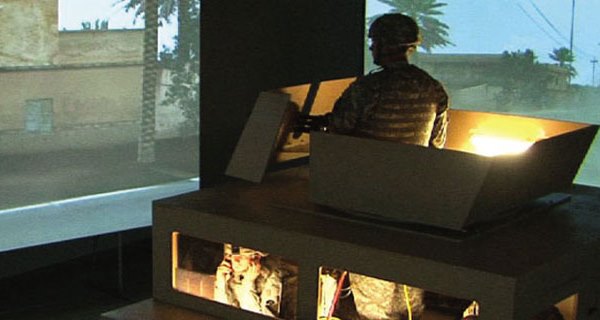
VIPE1A current obsession of military planners is keeping up with the latest in battlefield challenges while also dealing with troop reductions and tightened budgets. Video games are one solution, providing soldiers with  training that does not involve real munitions or loss of equipment. Unfortunately, most of these games do not provide a real-world immersive feel, coming as close to the real thing as possible while still being safe.

Hence why the the Army Contracting Command enlisted the help of Northrop Grumman this past January to integrate their Virtual Immersive Portable Environment (VIPE) “Holodeck” into the US Army’s training program. Much like the CAVE2, a VR platform created by the Electronic Visualization Laboratory (EVL) at the University of Illinois, this latest holodeck is a step towards fully-realized VR environments.

VIPE_HolodeckUsing commercial, off-the-shelf hardware combined with gaming technology, the VIPE Holodeck virtual training system provides users with a 360 degree, high-fidelity immersive environment with a variety of mission-centric applications. It can support live, virtual and constructive simulation and training exercises including team training, cultural and language training and support for ground, air and remote platform training.

Last year, the VIPE Holodeck took first place in the Federal Virtual Challenge – an annual competition led by the U.S. Army Research Laboratory’s Simulation and Training Technology Center – for the system’s Kinect integration navigation sensor, which gives users the ability to crawl, walk, run, stop, jump, and move side to side in the virtual environment.

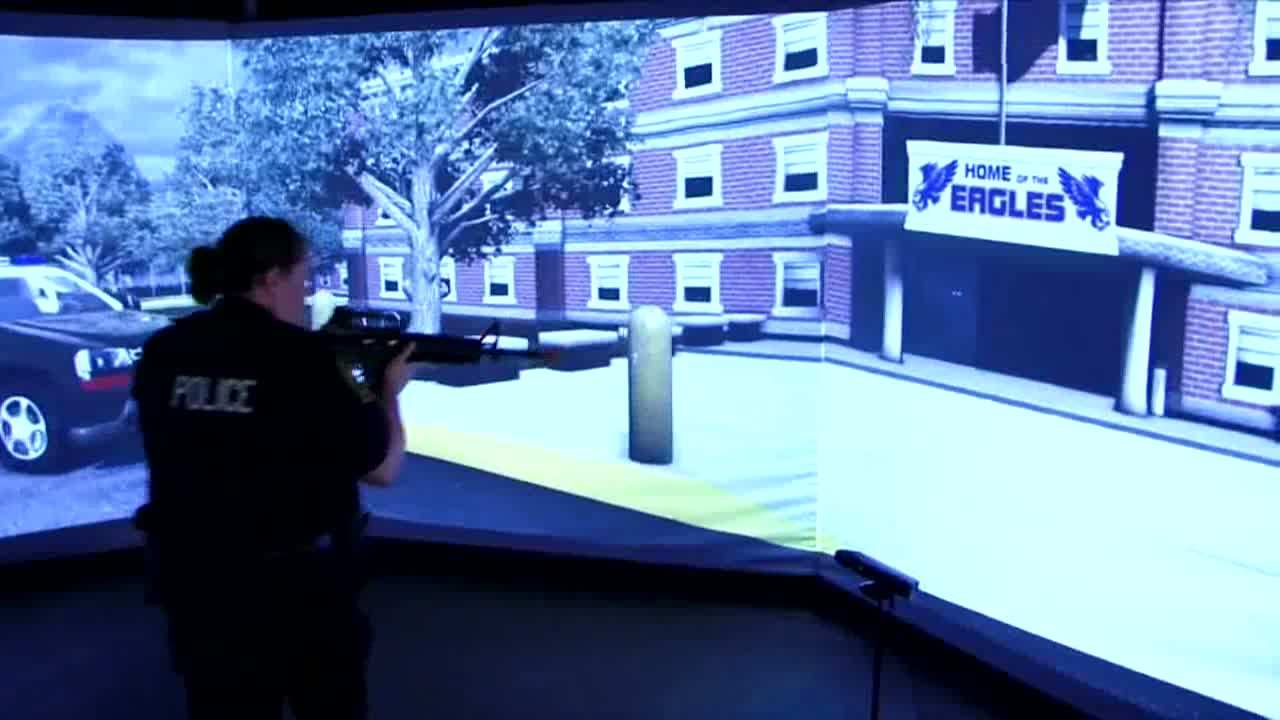
?????????????????????????????????According to Northrop, the VIPE Holodeck moves ahead of other virtual simulators thanks to its advanced situational training, where service members can walk through an area in the replicated virtual environment and prepare for what they may encounter in real life. This works not only for infantry and target practice, but for vehicle drivers and police officers looking to simulate various situations they are likely to encounter.

To enhance that training, operators can drop threats into the environment, including IEDs and enemy shooters, as well as signals that should tip them off to potential threats and see how they respond before they actually find themselves in that situation. This sort of versatile, multi-situational complexity is precisely what the Army is looking for.

VIPE3Brig. Gen. Michael Lundy, deputy commanding general at the Army Combined Arms Center, said during the AUSA Aviation symposium earlier this month:

For us to be able to execute realistic training — good training — we have to be able to bring that operational environment [into the virtual world]. We want to get away from having multiple environments, virtual gaming and instruction, and go to one synthetic environment, get to a lower overhead and integrate the full operations process … according to the common operating picture.

But looking ahead, the applications for this type of technology are virtually (no pun!) limitless, never mind the fact that we are realizing something directly out of Star Trek. Northrop says it’s also exploring options for VIPE as a stepping stone to live-training within the medical field, as well as law enforcement and first responders for situations such as live-shooter or hostage scenarios.

ESO2Immersive virtual reality also figures quite prominently in NASA’s and other space agencies plans for future exploration. Given that manned missions are expensive, time-consuming, and potentially dangerous, mission planners are investigating Telexploration as a possible alternative. Here, orbiters and rovers would transmit visual information in real-time, while VR decks would be used to give the appearance of being on location.

As Ryan Frost, Northrop’s program manager for the VIPE Holodeck, put it:

The great thing about virtual reality and gaming technology [is that] it’s moving so rapidly that really it has endless possibilities that we can do. If you can think it, we can create it, eventually.

And be sure to check out this video from Northrop Grumman showing the VIPE Holodeck in action:


Sources:
wired.com, northropgrumman.com

The Future of Energy: Cold Fusion for US and China

NASA_coldfusionThe science behind cold fusion has been a source of constant controversy for decades. Not only has this pursuit turned up its share of phony claims, the fact that it also promises to yield clean, abundant energy on the cheap has led to no shortage of romantic endorsements and vocal detractors. But if it could be made to work, there is no doubt that our energy problems would be solved, and in a way that is not harmful to our environment.

Last February, NASA made waves by announcing that they were working towards cold fusion through low-energy nuclear reaction (LENR) technology. Then in September, the National Ignition Facility (NIF) in California announced a major milestone when they managed to produce a controlled reaction that provided more energy that was required to start it.

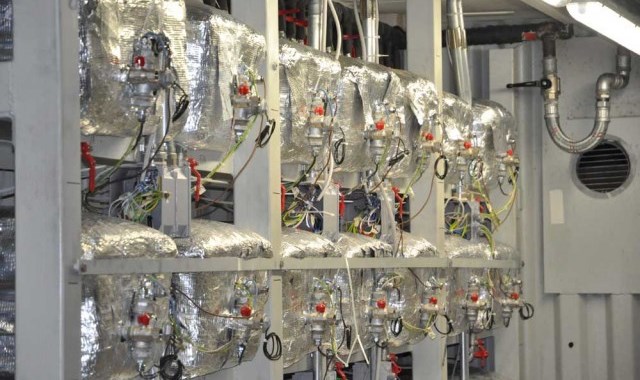
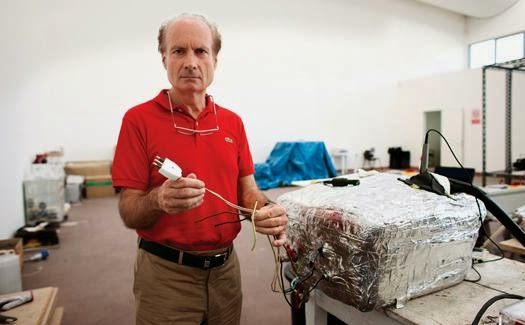
e-cat1But all of that seemed to pale in comparison to the announcement by Andrea Rossi’s that he managed to create a fusion power plant that was reportedly capable of generated a single megawatt of power. Known as the E-Cat 1MW Plant (short for Energy-Catalyser), Rossi announced its creation back in November, and indicated that he and his company were taking pre-orders and that they would start deliveries by 2014.

Today, the big news is that a large US investment company has acquired the rights to the cold fusion LENR technology. That investment company is Cherokee Investment Partners, and they appear to be interested in deploying the cold fusion tech commercially in both China and the US to meet both countries existing and projected energy needs.

fusion_energyRelying on the same process as other LENR technology, the E-Cat generates cold fusion by taking nickel and hydrogen and fusing them into copper – a process that has 10,000 times the energy density of gasoline, and 1,000 times the power density. Rossi says he’s found a special catalyst that makes the process work, but many scientists remain unconvinced.

Regardless of whether or it not it can deliver, it now seems that Rossi’s previously allusions to an American partner are true after all. Much like everything surrounding Rossi, he chose to be nebulous about the identity of the company that was supporting him. However, with this latest deal, Cherokee and its CEO Thomas Darden, a man who has a history of investing in clean energy, is a believer in the design.

e-cat3In addition to preparing the patents through a Limited Liability Company – known as Industrial Heat – there are also reports that Darden recently visited China to showcase the E-Cat to Chinese officials and businesspeople. China is reportedly looking at using the E-Cat to significantly reduce its carbon footprint and meet its the energy needs of its growing cities in a way that won’t generate more air pollution.

Needless to say, this deal has bolstered Rossi’s and the E-Cat’s credibility, but the technology remains unproven. Rossi says that he has a team of international scientists that are planning to do another round of tests on the E-Cat which are slated to end in March, with a peer-reviewed report to follow sometime after that. Fingers crossed, those rounds of test will provide conclusive proof.

Then, we can all get to work dreaming about a bright, clean future, and the thousands of applications such plants will have!

Source: extremetech.com

News From Mars: New Impact Crater and Landslides

Mars_impact_craterThe Mars Reconnaissance Orbiter, which has been in operation around Mars since March of 2006, has provided ongoing observation of the planet. Because of this, scientists and astronomers have been able to keep track of changes on the surface ever since. This new impact crater, which was formed by a recent meteor impact, is just the latest example.

The image was taken by the Orbiter’s High Resolution Imaging Science Experiment (HiRISE) camera on Nov. 19, 2013. Since that time, NASA scientists have been working to enhance the image and rendering it in false color so the fresh crater appears.The resulting image shows the stunning 30-meter-wide crater with a rayed blast zone and far-flung secondary material surrounding.

Mars_Reconnaissance_OrbiterResearchers used HiRISE to examine this site because the orbiter’s Context Camera had revealed a change in appearance here between observations in July 2010 and May 2012, when the impact was thought to have occurred. After examining the impact site, scientists estimate the impact and resulting explosion threw debris as far as 15 kilometers in distance.

Before-and-after imaging that brackets appearance dates of fresh craters on Mars has indicated that impacts producing craters at least 12.8 feet (3.9 meters) in diameter occur at a rate exceeding 200 per year globally. But most of those are much smaller than this new one, and leave scars are as dramatic in appearance. This latest impact was definitely one for the history books.

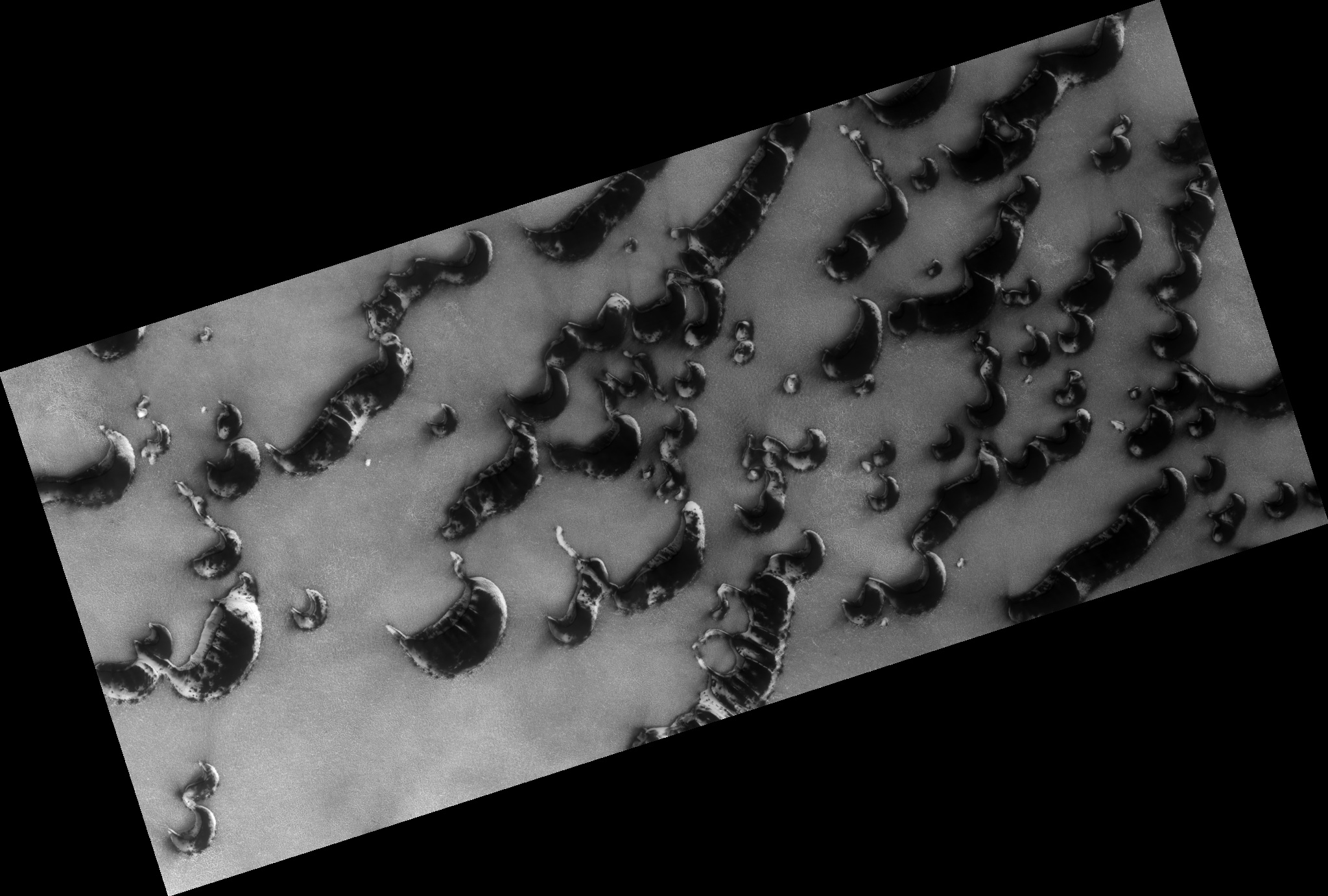
Mars_dunesSpeaking of dramatic, these recent releases from the HiRISE laboratory captured some truly magnificent activity, which included a series of avalanches and defrosting dunes on the surface. Snow, dust and wind are combining to make the incredible images that were captured. The raw images appear in black and white (as the snowy dunes pictured above).

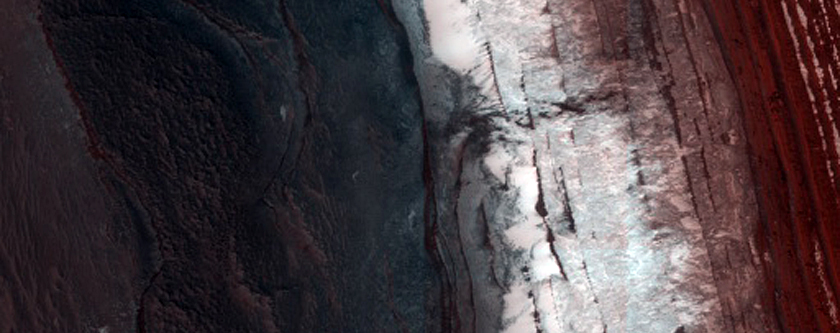
The colorized versions, as show below, indicate the presence of snow, ice and red surface dust. These latest pictures, perhaps more than any previous, illustrate the awe and wonder the Red Planet holds. And as humanity’s contact and involvement with the planet and continues, they remind us that nothing from that world is to be taken for granted.

mars_avalanche mars_avalanche1 mars_avalanche2 mars_avalanche3And as we get closer to 2030, when a manned mission is scheduled to take place – not to mention private missions that aim to put colonists there by 2023 – chance encounters with the surface like this are certain to inspire excitement and anticipation. Right now, these events and surface features are being watched from above or by rovers on the surface.

But someday soon, people will be standing on the surface and looking upon it with their own eyes. Their feet will be crushing into red sand, romping through Martian snow and ice, and standing in the middle of craters and looking up at Olympus Mons. What will they be thinking as they do it? We can only wonder and hope that we’ll be able to share it with them…

The Future of Flight: Morphing Wings

morphing-wingsSince the Wright Brothers developed the world’s first airplane, scientists and aerospace engineers have understood how important airflaps and wing design are to ensuring that a plane is able to achieve lift and land safely. During and after World War II, additional lessons were learned, where the sweep of a wing was found to be central to a plane achieving higher service ceilings and air speed velocities.

Since that time, many notable improvements have been made, but some strictures have remained the same. For example, conventional wings suffer from the problem of being fixed in a single position, which makes some aspects of performance possible but other things extremely difficult. In addition, flaps have remained virtually unchanged over the years, relying on hinged joints that are limited and vulnerable.

flexfoilIn both cases, the answer may lie in flexible and seamless materials, leading to wings that can change shape as needed. Such technology could not only enable better performance, but remove the need for hinges and gears. Towards this end, Michigan-based FlexSys has developed a way to optimize wing aerodynamics with FlexFoil, a seamless variable geometry airfoil system.

In development since 2001, FlexFoil is made from what is described only as “aerospace materials,” and is seamlessly integrated into the trailing edge of the wing. Based on a technology known as “distributed compliance,” the morphing structure integrates actuators and sensors that, according to Flexsys, results in “large deformations in shape morphing with very small strains.”

flexfoil1According to a 2006 paper co-written by mechanical engineer Dr. Sridhar Kota (the FlexFoil’s inventor), the foils are:

optimized to resist deflection under significant external aerodynamic loading and are just as stiff and strong as a conventional flap.

What this translates to in real terms is a tolerance of over 4500 kg (10,000 lbs) in air loads and the ability to distribute pressure more evenly throughout the wing, resulting in less strain in any one area. It is also said to reduce wind noise by up to 40 percent on landing, and to lessen build-up of both ice and debris. But the biggest benefit comes in terms of fuel economy.

flexfoil2When retrofitted onto a wing, FlexFoil can reduce fuel consumption by a claimed 4 to 8 percent, with that number climbing to 12 percent for those wings that are built are the system. What’s more, the technology could be applied to anything that moves relative to a fluid medium, including things like helicopter rotor blades, wind turbine blades, boat rudders, or pump impellers.

FlexFoil was officially introduced to the public this week at the AIAA (American Institute of Aeronautics and Astronautics) SciTech exposition in Washington, DC. Plans call for flight tests to be performed this July at NASA’s Dryden Flight Research Center, where the flaps of a Gulfstream business jet will be replaced with the foils.

Check out this video of the airwing design and what it does here:

morphing-wings1To be fair, this is not the only case of flexible, morphing aircraft in development right now. In fact, NASA has been looking to create a morphing aircraft concept ever since 2001. So far, this has included collaborating with Boeing and the U.S. Air Force to create the Active Aeroelastic Wing (AAW) which was fitted to the F/A-18 Hornet, a multirole combat jet in use with the USAF.

But looking long-term, NASA hopes to create a design for a morphing airplane (pictured above). Known as the 21st Century Aerospace Vehicle, and sometimes nicknamed the Morphing Airplane, the concept includes a variety of smart technologies that could enable inflight configuration changes for optimum flight characteristics, and is an example of biomimetic technology.

morphing-wings2In this case, the biological design being mimicked is that of a bird. Through the use of smart materials that are flexible and can change their shape on command, the 21st Century Aerospace Vehicle is able to shape its wings by extending the tips out and slightly upward to give it optimal lift capability. In this configuration, the inspiration for the aircraft’s wings is most clear (pictured above).

But once airborne, the aircraft needs a wing that is capable of producing less wind resistance while still maintaining lift. This is why the wings, upon reaching and service ceilings in excess of 3000 meters (10,000 feet), the wings then contract inward and sweep back to minimize drag and increase airspeed velocity.
Though this program has yet to bear fruit, it is an exciting proposal, and provides a glimpse of the future.

Be sure to check out NASA’s video of the CAV too, and keep your eyes on the skies. Chances are, jets that utilize smart, morphing surfaces are going to be there soon!


Sources:
gizmag.com
, flexsys.com, nasa.gov