
 Jupiter’s moon of Europa has been the subject of much speculation and intrigue ever since it was first discovered by Galileo in 1610. In addition to having visible sources of (frozen) surface water and a tenuous oxygen atmosphere, it is also believed to boast interior oceans that could very well support life. As evidence for this mounts, plans to explore Europa using robot landers, miners, submersibles, or even manned missions have been floated by various sources.
However, it was this past December when astronomers announced that water plumes erupting 161 kilometers (100 miles) high from the moon’s icy south pole that things really took a turn. It was the best evidence to date that Europa, heated internally by the powerful tidal forces generated by Jupiter’s gravity, has a deep subsurface ocean. In part because of this, NASA recently issued a Request for Information (RFI) to science and engineering communities for ideas for a mission to the enigmatic moon. Any ideas need to address fundamental questions about the subsurface ocean and the search for life beyond Earth.
 This is not the first time that NASA has toyed with the idea of investigating the Jovian moon for signs of life. Last summer, an article by NASA scientists was published in the peer-reviewed journal Astrobiology, which was entitled “Science Potential from a Europa Lander“. This article set out their research goals in more detail, and speculated how they might be practically achieved. At the time, the article indicated NASA’s ongoing interest, but this latest call for public participation shows that the idea is being taken more seriously.
This is positive news considering that NASA’s planned JIMO mission – Jupiter Icy Moon Orbiter, which was cancelled in 2005 – would be taking place by this time next year. Originally slated for launch between May and January of 2015/16, the mission involved sending a probe to Jupiter by 2021, which would then deploy landers to Callisto, Ganymede, Io and Europa for a series of 30 day studies. At the end of the mission in 2025, the vehicle would be parked in a stable orbit around Europa.
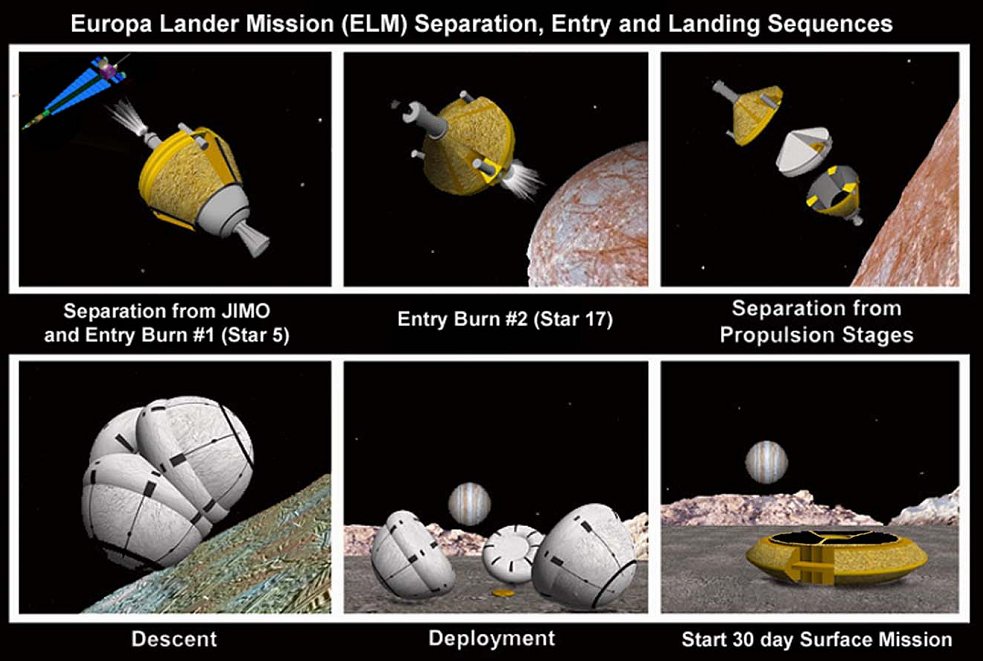 John Grunsfeld, associate administrator for the NASA Science Mission Directorate, had the following to say in a recent press release:
This is an opportunity to hear from those creative teams that have ideas on how we can achieve the most science at minimum cost… Europa is one of the most interesting sites in our solar system in the search for life beyond Earth. The drive to explore Europa has stimulated not only scientific interest but also the ingenuity of engineers and scientists with innovative concepts.
By opening the mission up to public input, it also appears that NASA is acknowledging the nature of space travel in the modern age. As has demonstrated with Chris Hadfield’s mission aboard the ISS, the Curiosity rover, as well as private ventures such as Mars One, Inspiration Mars, and Objective Europa – the future of space exploration and scientific study will involve a degree of social media and public participation never before seen.
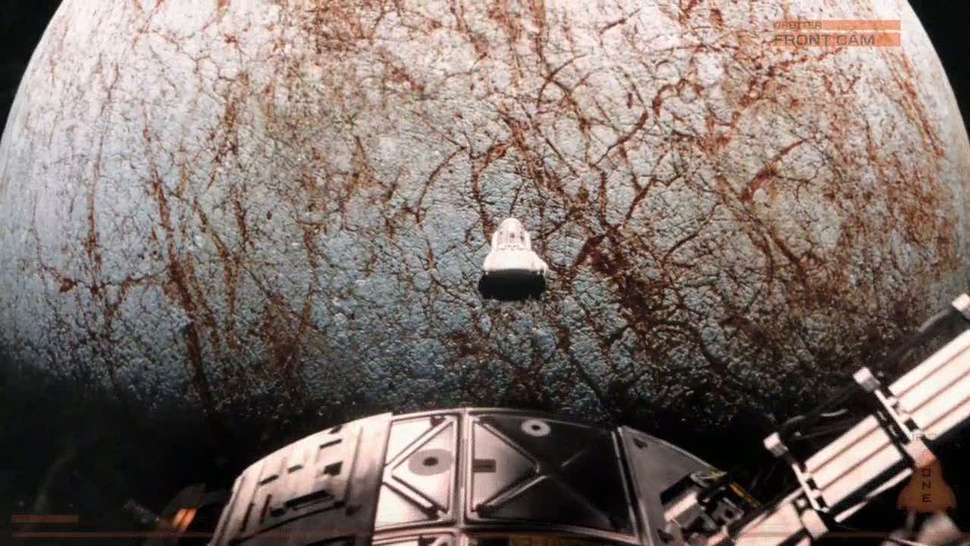 The RFI’s focus is for concepts for a mission that costs less than $1 billion, but will cover five key scientific objectives that are necessary to improve our understanding of this potentially habitable moon. Primarily, the mission will need to:
- Characterize the extent of the ocean and its relation to the deeper interior
- Characterize the ice shell and any subsurface water, including their heterogeneity, and the nature of surface-ice-ocean exchange
- Determine global surface, compositions and chemistry, especially as related to habitability
- Understand the formation of surface features, including sites of recent or current activity, identify and characterize candidate sites for future detailed exploration
- Understand Europa’s space environment and interaction with the magnetosphere.
Although Europa has been visited by spacecraft and imaged distantly by Hubble, more detailed research is necessary to understand the complexities of this moon and its potential for life. NASA’s Galileo spacecraft, launched in 1989 was the only mission to visit Europa, passing close by the moon fewer than a dozen times. Ergo, if we’re ever to determine conclusively whether or not life exists there, we’re going to have to put boots (robotic or human) onto the surface and start digging!
To read the full Decadal Survey report on NASA’s website, click here.
Sources: universetoday.com, IO9.com, science.nasa.gov

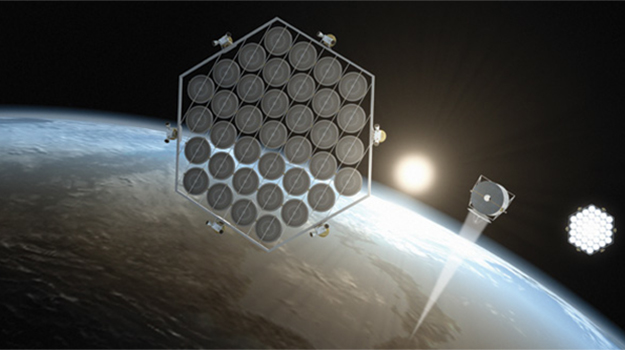
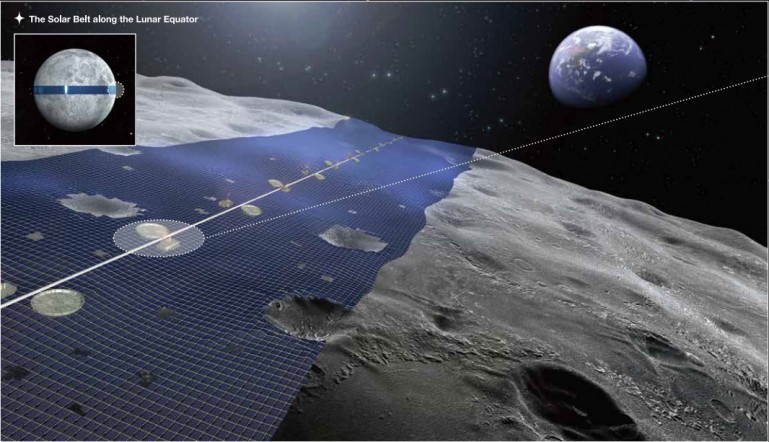
 Beyond Japan, solar power is considered the of front runner of alternative energy, at least until s fusion power comes of age. But Until such time as a fusion reaction can be triggered that produces substantially more energy than is required to initiate it, solar will remain the only
  Luckily, putting arrays into orbit solves both of these issues. Above the
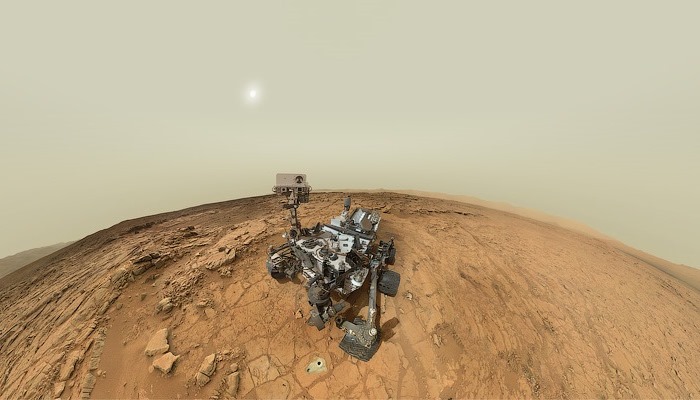

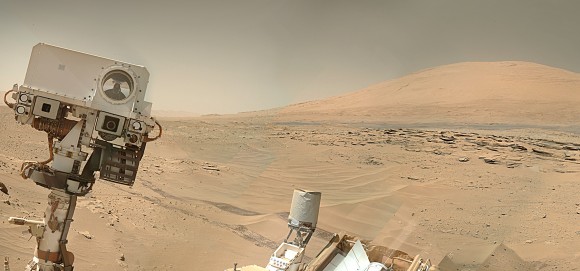 As for the latest in Curiosity’s long-line of panoramic self-portraits, this one comes to us courtesy of Jason Major. As a graphic designer and amateur space explorer, Major assembled the picture from about the dozen or so images acquired with the rover’s Mars Hand Lens Imager (MAHLI) instrument on April 27-28, 2014 (Sol 613). In the background, one can see the 5.5-km-high (3.4 miles) Mount Sharp (Aeolis Mons) that sits in the center of the Gale Crater.

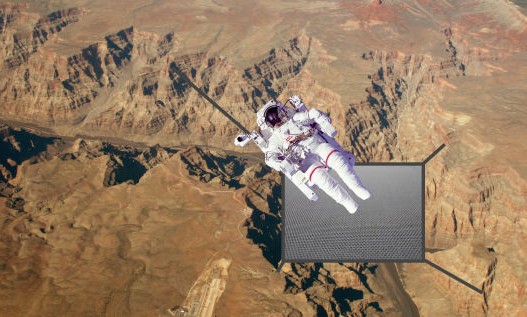 After initially joking that American astronauts would be left stranded on the ISS, he also recommended that NASA try using a trampoline to reach orbit. The joke was naturally irrelevant, since day-to-day operations involving the ISS are not going to be affected by these sanctions. Still, the inability to rely on Russian Soyuz’s in the near future will mean that US satellites – which are used for everything from GPS to spying – will be undeployable for the time being.


 And that’s not only discovery of cosmic significance that was made in recent months. In this case, the news comes from NASA’s Fermi Gamma-ray Space Telescope, which has been analyzing high-energy gamma rays emanating from the galaxy’s center since 2008. After pouring over the results, an independent group of scientists claimed that they had found an unexplained source of emissions that they say is “consistent with some forms of dark matter.”
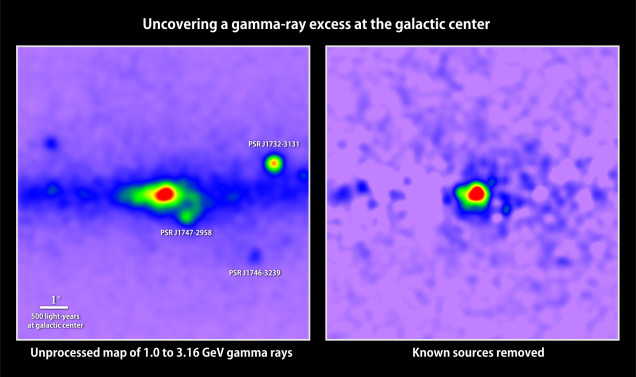 The galactic center teems with gamma-ray sources, from interacting binary systems and isolated pulsars to supernova remnants and particles colliding with interstellar gas. It’s also where astronomers expect to find the galaxy’s highest density of dark matter, which only affects normal matter and radiation through its gravity. Large amounts of dark matter attract normal matter, forming a foundation upon which visible structures, like galaxies, are built.


 And unlike the current microgravity suits, the Z-series is designed for walking in extra-terrestrial environments where gravity is the norm (i.e. the Moon and Mars). Intrinsic to the new design is flexibility: it makes it much easier to walk, bend, and pick things up off the surface of a planet or moon. It also goes on quite differently. Whereas the old suit is pulled on like a pair of pants and a shirt, the new version has a handy door built into the back so someone can climb inside.
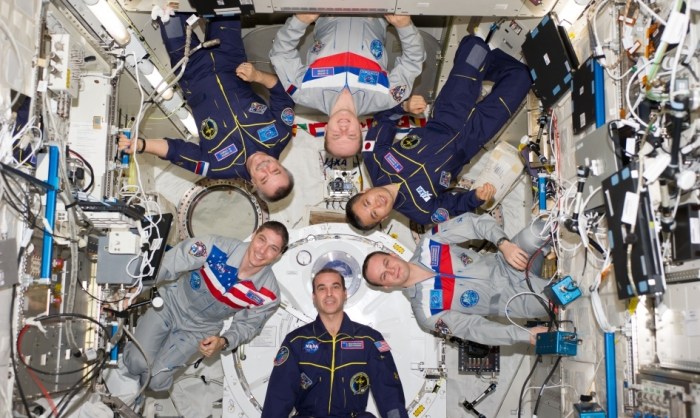 Yesterday, NASA officially announced that it intends to cease most work with the Russian Federal Space Agency amid growing tensions concerning the Ukrainian crisis. The statement came from Bob Jacobs, NASA’s deputy associate administrator of communications, who formalized the space agency’s position with a message sent to Universe Today, a copy of which was then posted on it’s Google+ message board on Wednesday, April 2nd.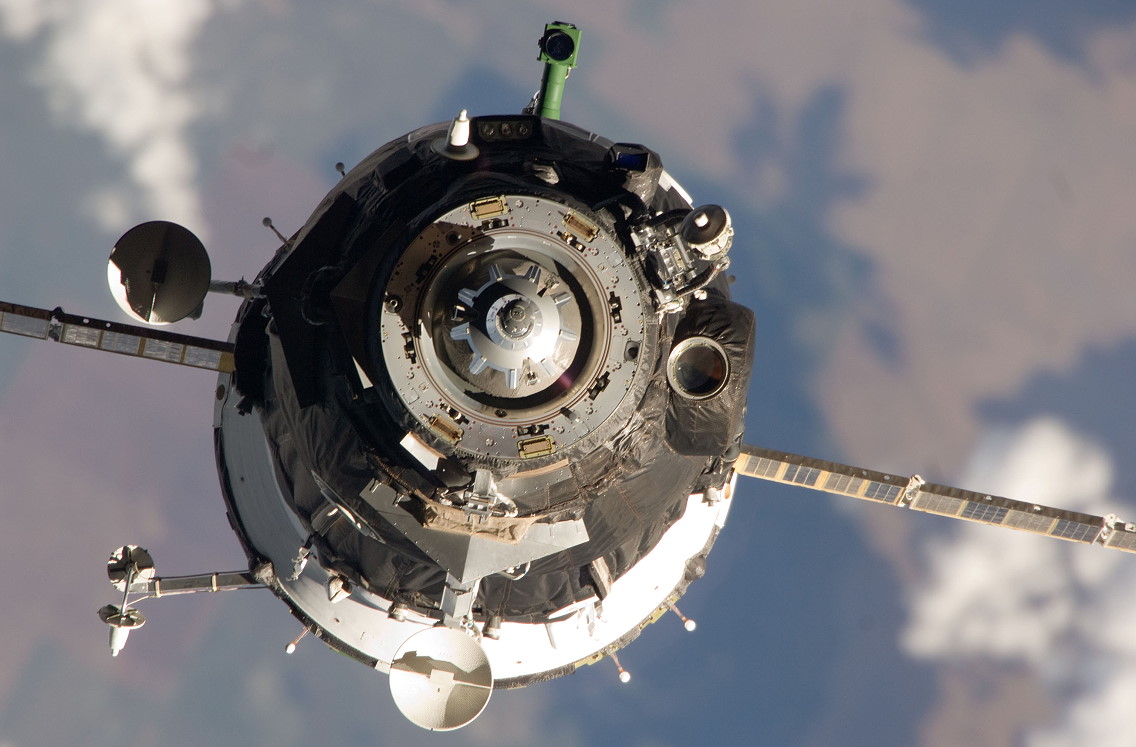
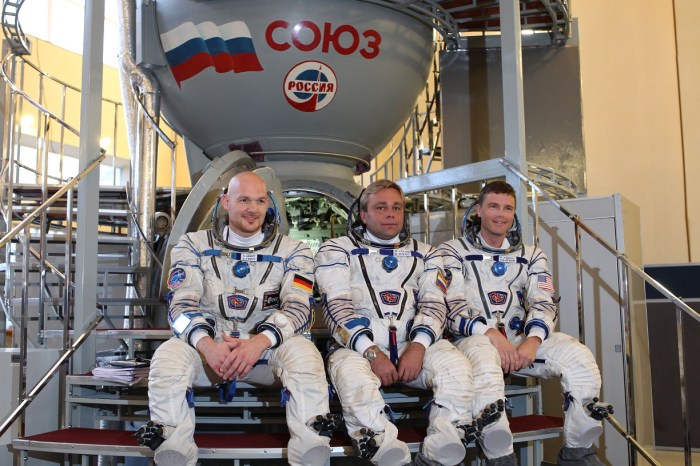 Since the Space Shuttle Program was retired in 2011, NASA and other space agencies such as the European Space Agency have relied on Russian Soyuz spacecraft to bring astronauts to the International Space Station. Crews are generally made up of large proportions of Russian cosmonauts and American astronauts, as well as a few astronauts from other agencies. The current Expedition 39 crew has has three Russians, two Americans and a Japanese commander, Koichi Wakata.
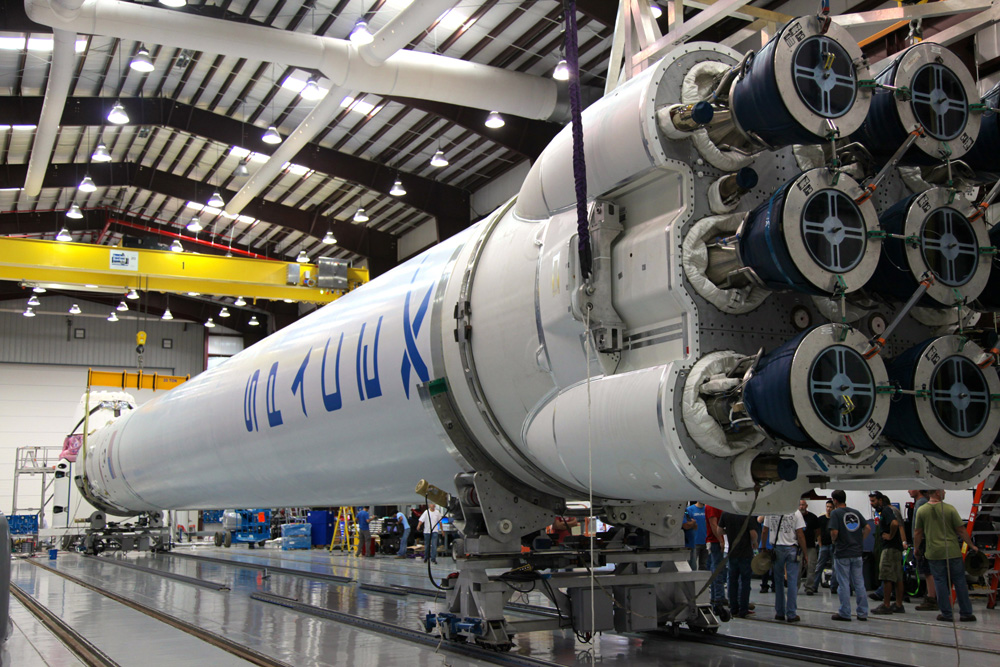
 NASA is working on a commercial crew program that right now is slated to bring U.S. astronauts back into space from American soil by 2017. There are several proposals being considered: a human-rated version of SpaceX’s Dragon, Blue Origin’s New Shepard, Sierra Nevada’s Dream Chaser and the Boeing CST-100. However, these depend upon continued funding and it is currently unclear how much money the CCP program will receive in the upcoming fiscal 2015 budget request before Congress.

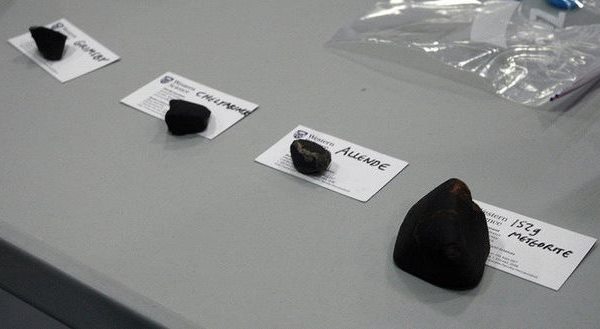 Hence why Brown is asking for the public to help look for the meteorite, which has been described as a rock that looks like it was painted black, and contact the researchers if they find it. The researchers are also interested in hearing accounts from anyone who may have heard a whistling sound “like artillery coming in” or a thud after witnessing the fireball, indicating that it may have landed within a few hundred metres. That may help narrow down the area for the search.

