Judgement Day Update: Google Robot Army Expanding

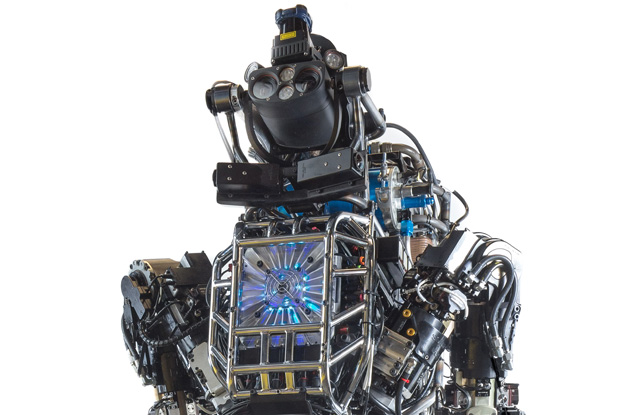
Atlas-x3c.lrLast week, Google announced that it will be expanding its menagerie of robots, thanks to a recent acquisition. The announcement came on Dec. 13th, when the tech giant confirmed that it had bought out the engineering company known as Boston Dynamics. This company, which has had several lucrative contracts with DARPA and the Pentagon, has been making the headlines in the past few years, thanks to its advanced robot designs.

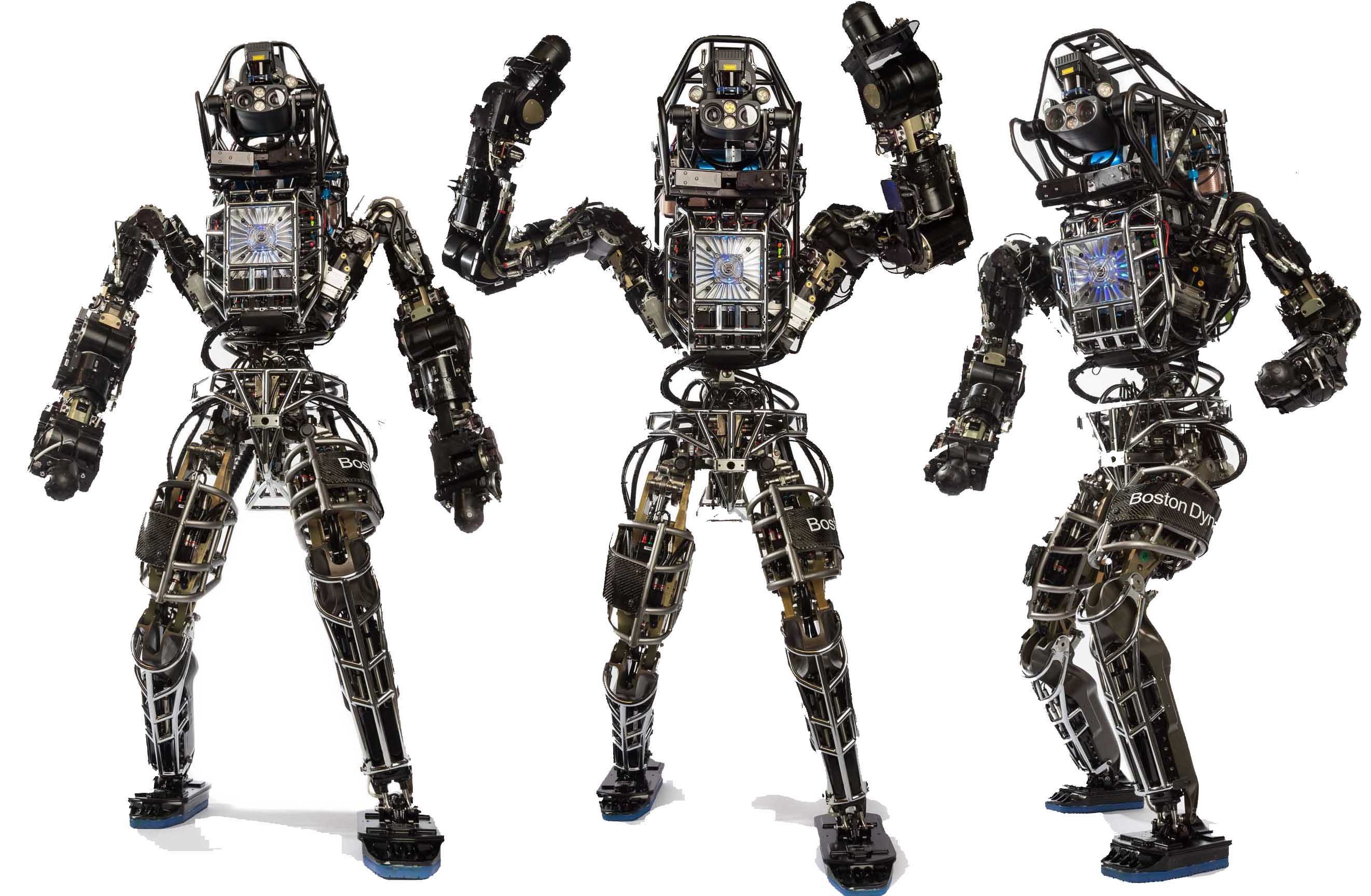
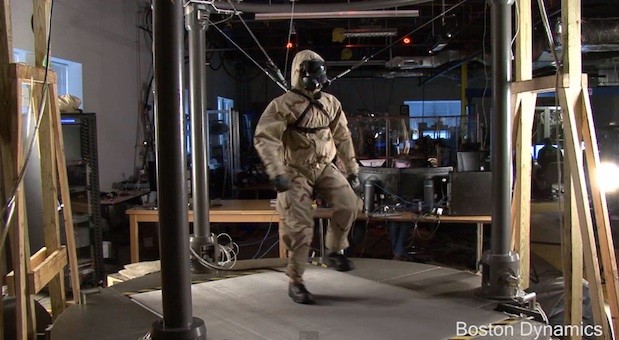
Based in Waltham, Massachusetts, Boston Dynamics has gained an international reputation for machines that walk with an uncanny sense of balance, can navigate tough terrain on four feet, and even run faster than the fastest humans. The names BigDog, Cheetah, WildCat, Atlas and the Legged Squad Support System (LS3), have all become synonymous with the next generation of robotics, an era when machines can handle tasks too dangerous or too dirty for most humans to do.

Andy-Rubin-and-Android-logoMore impressive is the fact that this is the eight robot company that Google has acquired in the past six months. Thus far, the company has been tight-lipped about what it intends to do with this expanding robot-making arsenal. But Boston Dynamics and its machines bring significant cachet to Google’s robotic efforts, which are being led by Andy Rubin, the Google executive who spearheaded the development of Android.

The deal is also the clearest indication yet that Google is intent on building a new class of autonomous systems that might do anything from warehouse work to package delivery and even elder care. And considering the many areas of scientific and technological advancement Google is involved in – everything from AI and IT to smartphones and space travel – it is not surprising to see them branching out in this way.
wildcat1Boston Dynamics was founded in 1992 by Marc Raibert, a former professor at the Massachusetts Institute of Technology. And while it has not sold robots commercially, it has pushed the limits of mobile and off-road robotics technology thanks to its ongoing relationship and funding from DARPA. Early on, the company also did consulting work for Sony on consumer robots like the Aibo robotic dog.

Speaking on the subject of the recent acquisition, Raibert had nothing but nice things to say about Google and the man leading the charge:

I am excited by Andy and Google’s ability to think very, very big, with the resources to make it happen.

Videos uploaded to Youtube featuring the robots of Boston Dynamics have been extremely popular in recent years. For example, the video of their four-legged, gas powered, Big Dog walker has been viewed 15 million times since it was posted on YouTube in 2008. In terms of comments, many people expressed dismay over how such robots could eventually become autonomous killing machines with the potential to murder us.
petman-clothesIn response, Dr. Raibert has emphasized repeatedly that he does not consider his company to be a military contractor – it is merely trying to advance robotics technology. Google executives said the company would honor existing military contracts, but that it did not plan to move toward becoming a military contractor on its own. In many respects, this acquisition is likely just an attempt to acquire more talent and resources as part of a larger push.

Google’s other robotics acquisitions include companies in the United States and Japan that have pioneered a range of technologies including software for advanced robot arms, grasping technology and computer vision. Mr. Rubin has also said that he is interested in advancing sensor technology. Mr. Rubin has called his robotics effort a “moonshot,” but has declined to describe specific products that might come from the project.

Cheetah-robotHe has, however, also said that he does not expect initial product development to go on for some time, indicating that Google commercial robots of some nature would not be available for several more years. Google declined to say how much it paid for its newest robotics acquisition and said that it did not plan to release financial information on any of the other companies it has recently bought.

Considering the growing power and influence Google is having over technological research – be it in computing, robotics, neural nets or space exploration – it might not be too soon to assume that they are destined to one day create the supercomputer that will try to kill us all. In short, Google will play Cyberdyne to Skynet and unleash the Terminators. Consider yourself warned, people! 😉

Source: nytimes.com

The Future is Here: The DARPA/BD Wildcat!

BD_atlasrobotThe robotics company of Boston Dynamics has been doing some pretty impressive things with robots lately. Just last year, they unveiled the Cheetah, the robotics company set a new land speed record with their four-footed robot named Cheetah. As part of DARPA’s Maximum Mobility and Manipulation program, the robotic feline demonstrated the ability to run at a speed of 45.06 km/h (28 mph).

And in July of this year, they impressed and frightened the world again with the unveiling of their ATLAS robot – a anthropomorphic machine. This robot took part in the DARPA Robotics Challenge program. capable of walking across multiple terrains, and demonstrated its ability to walk across multiple types of terrain, use tools, and survey its environment with a series of head-mounted sensors.

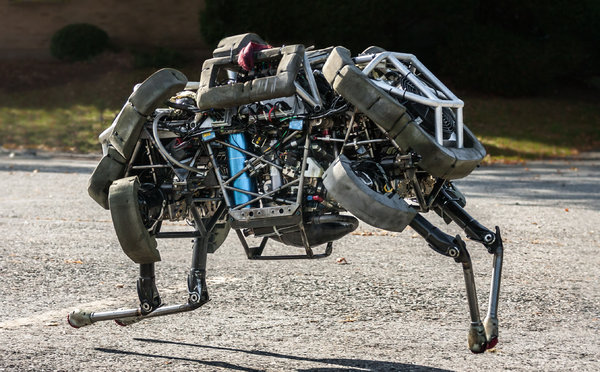
Atlas_robotAnd now, they’ve unveiled an entirely new breed of robot, one that is capable of running fast on any kind of terrain. It’s known as the WildCat, a four-legged machine that builds on the world of the Legged Squad Support System (LS3) that seeks to create a robot that can support military units in the field, carrying their heavy equipment and supplies over rugged terrain and be operated by remote.

So far, not much is known about the robot’s full capabilities and or when it is expected to be delivered. However, in a video that was released in early October, Boston Dynamics showed the most recent field test of the robot to give people a taste of what it looks like in action. In the video, the robot demonstrated a top speed of about 25 km/h (16 mph) on flat terrain using both bounding and galloping gaits.

Cheetah-robotFollowing in the footsteps of its four-legged and two-legged progeny, the WildCat represents a coming era of biomimetic machinery that seeks to accomplish impressive physical feats by imitating biology. Whereas the Atlas is designed to be capable of doing anything the human form can – traversing difficult terrain, surveying and inspecting, and using complex tools – the Cheetah, LS3, and WildCat draw their inspiration from nature’s best hunters and speed runners.

Just think of it: a race of machines that can climb rocky outcroppings with the sure-footedness of a mountain goat, run as fast as a cheetah, stalk like a lion, bound like an antelope, and swing like a monkey. When it comes right down to it, the human form is inferior in most, if not all, of these respects to our mammalian brethren. Far better that we imitate them instead of ourselves when seeking to create the perfect helpers.

LS3-AlphaDog6reducedIn the end, it demonstrates that anthropomorphism isn’t the only source of drive when it comes to developing scary and potential doomsday-bating robots! And in the meantime, be sure to enjoy these videos of these various impressive, scary, and very cool robots in action:

WildCat:


Cheetah:


Atlas:


Source:
universetoday.com, bostondynamics.com

3-D Printing Martian and Lunar Housing

3dprinted_moon_base1For enthusiasts of 3-D printing and its many possibilities, a man like Berokh Khoshnevis needs no introduction. As for the rest of us, he is the USC’s Director of Manufacturing Engineering, and has spent the last decade working on a new direction for this emerging technology. Back in 2012, he gave a lecture at TEDxTalks where he proposed that automated printing and custom software could revolutionize construction as we know it.

Intrinsic to this vision are a number of technologies that have emerged in recent years. These include Computer-Assisted Design/Computer-Assisted Manufacturing (CAD/CAM), robotics, and “contour crafting” (i.e. automated construction). By combining design software with a large, crane-sized 3-D printing machine, Khoshnevis proposes a process where homes can be built in just 20 hours.

contour-craftingKhoshnevis started working on the idea when he realized the gigantic opportunity in introducing more speed and affordability into construction. All of the technology was already in place, all that was required was to custom make the hardware and software to carry it all out. Since that time, he and his staff have worked tirelessly to perfect the process and vary up the materials used.

Working through USC’s Center for Rapid Automated Fabrication Technologies, Khoshnevis and his students have made major progress with their designs and prototypes. His robotic construction system has now printed entire six-foot tall sections of homes in his lab, using concrete, gypsum, wood chips, and epoxy, to create layered walls sections of floor.

3dprinted_moon_base3The system uses robotic arms and extrusion nozzles that are controlled by a computerized gantry system which moves a nozzle back and forth. Cement, or other desired materials, are placed down layer by layer to form different sections of the structure. Though the range of applications are currently limited to things like emergency and temporary shelters, Khoshnevis thinks it will someday be able to build a 2,500-square-foot home in 20 hours.

As he describes the process:

It’s the last frontier of automation. Everything else is made by machines except buildings. Your shoes, your car, your appliances. You don’t have to buy anything that is made by hand.

contour-crafting2As Khoshnevis explained during his 2012 lecture at TEDx, the greatest intended market for this technology is housing construction in the developing world. In such places of the world, this low-cost method of creating housing could lead to the elimination of slums as well as all the unhealthy conditions and socioeconomic baggage that comes with them.

But in the developed world, he also envisions how contour crafting machines could allow homes to be built more cheaply by reducing labor and material costs. As he pointed out in his lecture, construction is one of the most inefficient, dirty and dangerous industries there is, more so than even mining and oil drilling. Given a method that wastes far less material and uses less energy, this would reduce our impact on the natural environment.

3dprinted_moon_base2But of course, what would this all be without some serious, science fiction-like applications? For some time now, NASA and the ESA has been looking at additive manufacturing and robotics to create extra-terrestrial settlement. Looking farther afield, NASA has given Khoshnevis a grant to work on building lunar structures on the moon or other planets that humans could one day colonize.

According to NASA’s website, the construction project would involve:

Elements suggested to be built and tested include landing pads and aprons, roads, blast walls and shade walls, thermal and micrometeorite protection shields and dust-free platforms as well as other structures and objects utilizing the well known in-situ-resource utilization (ISRU) strategy.

3dprinted_moon_baseMany existing technologies would also be employed, such as the Lunar Electric Rover, the unpressurized Chariot rover, the versatile light-weight crane and Tri-Athlete cargo transporter as well some new concepts that are currently in testing. These include some habitat mockups and new generations of spacesuits that are currently undergoing tests at NASA’s Desert Research And Technological Studies (D-RATS).

Many of the details of this arrangement are shrouded in secrecy, but I think I can imagine what would be involved. Basically, the current research and development paradigm is focusing on combining additive manufacturing and sintering technology, using microwaves to turn powder into molten material, which then hardens as it is printed out.

sinterhab3To give you an idea of what they would look like, picture a crane-like robot taking in Moon regolith or Martian dust, bombarding it with microwaves to create a hot glue-like material, and then printing it out, layer by layer, to create contoured modules as hard as ceramic. These modules, once complete, would be pressurized and have multiple sections – for research, storage, recreation, and whatever else the colonists plan on getting up to.

Pretty cool huh? Extra-terrestrial colonies, and a cheaper, safer, and more environmentally friendly construction industry here on Earth. Not a bad way to step into the future! And in the meantime, be sure to enjoy this video of contour crafting at work, courtesy of USC’s Center for Rapid Automated Fabrication Technologies:


Sources:
fastcoexist.com, nasa.gov

Judgement Day Update: Artificial Muscles for Robots

artificial-muscle-1It’s a science fiction staple, the android or humanoid robot opens up its insides to reveal a network of gears or brightly-lit cables running underneath. However, as the science behind making androids improves, we are moving farther and farther away from this sci-fi cliche. In fact, thanks to recent advancements, robots in the future may look a lot like us when you strip away their outer layers.

It’s what is known as biomimetics, the science of creating technology that mimics biology. And the latest breakthrough in this field comes from National University of Singapore’s Faculty of Engineering where researchers have developed the world’s first “robotic” muscle. Much like the real thing, this artificial tissue extends to five times its original length, has the potential to lift 80 times its own weight.

???????????????????????In addition to being a first in robotics, this new development is exciting because it resolves a central problem that has plagued robots since their inception. In the 1960s, John W. Campbell Jr, editor of Analog Science Fiction magazine, pointed out this problem when he outlined a scenario where a man is chased across rough country by a mad scientist’s horde of killer robots.

In this scenario, the various models that were chasing the man were stymied by obstacles that the he could easily overcome, such as sinking in mud, jumping over logs, getting around rocks, or tangled up in bushes. In the end, the only robots that were capable of keeping up with him were so light and underpowered that he was able to tear them apart with his bare hands.

robot_muscleThis is a far cry from another science fiction staple, the one which presents robots as powerful automatons that can bend steel girders and carry out immense feats of strength. While some robots certainly can do this, they are extremely heavy and use hydraulics for the heavy lifting. Pound for pound, they’re actually very weak compared to a human, being capable of lifting only half their weight.

Another problem is the fact that robots using gears and motors, pneumatics, or hydraulics lack fine control. They tend to move in jerky motions and have to pause between each move, giving rise to a form of motion that we like to call “the robot”. Basically, it is very difficult to make a robot that is capable of delicate, smooth movements, the kind humans and animals take for granted.

kenshiroFor some time now, scientists and researchers have been looking to biomimetics to achieve the long sought-after dream of smaller, stronger robots that are capable of more refined movements. And taken in tandem with other development – such as the Kenshiro robot developed by roboticists at the University of Tokyo – that time might finally be here.

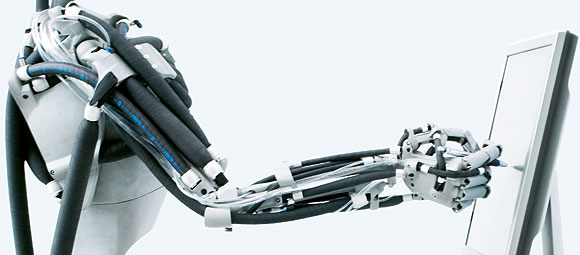
Developed by a four-person team led by Dr. Adrian Koh – from the NUS Engineering Science Program and Department of Civil and Environmental Engineering – the new artificial muscle is an example of an electroactive polymer. Basically, this is a combination dielectric elastomer and rubber that changes shape when stimulated by an electric field. In this respect, the artificial muscle is much like an organic one, using electrical stimulus to trigger movement.


robot-arm-wrestling-03-20-09Robots using artificial muscles would be a far cry from clanking mechanical men. They would be much more lifelike, capable of facial expression and precise, graceful movements. They would also have superhuman strength, yet weigh the same as a person. In addition, the polymer used to fabricate the muscles may have more general applications in machines, such as cranes.

An added bonus of the polymer is that is can convert and store energy, which means it’s possible to design robots that power themselves after charging for only minutes. In a statement released by his department, Dr. Koh highlighted the benefits of the design and what it is capable of doing:

Our novel muscles are not just strong and responsive. Their movements produce a by-product – energy. As the muscles contract and expand, they are capable of converting mechanical energy into electrical energy. Due to the nature of this material, it is capable of packing a large amount of energy in a small package. We calculated that if one were to build an electrical generator from these soft materials, a 10 kg (22 lb) system is capable of producing the same amount of energy of a one-ton electrical turbine.

AI_robotDr. Koh also indicated that robots equipped with these types of muscles “will be able to function in a more human-like manner – and outperform humans in strength.” Theoretically, such polymer-based tissues could extend to ten times their original length and lift up to 500 times its own weight, though the current version isn’t anywhere near that limit just yet.

In the meantime, Dr Koh and his team have applied for a patent for the artificial muscle and are continuing work on it. They predict that within five years they could have a robot arm that is half the size and weight of a human arm, yet could win an arm wrestling match. And the applications are limitless, ranging from robotic servants to search and rescue bots and heavy robot laborers. And let’s not forget that cybernetic arms that boast that kind of increased strength are also likely to become a popular prosthetic and enhancement item.

And for those who are naturally afraid of a future where super-human robots that have the strength to tear us limb from limb are walking among us, let me remind you that we still have Asimov’s “Three Laws of Robotics” to fall back on. Never mind what happened in the terrible movie adaptation, those laws are incontrovertible and will work… I hope!

Sources: gizmag.com, engadget.com, 33rdsqaure.com

Judgement Day Update: Headless Ape Bot

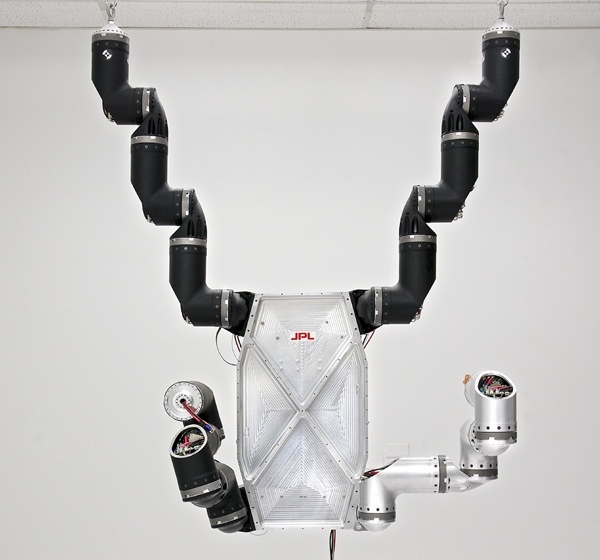
robosimianIt goes by the name of Robosimian, an ape-like robot that was built by NASA’s Jet Propulsion Laboratory. Designed and built by JPL and Stanford engineers, RoboSimian was a recent competitor in the DARPA Robotics Challenge, a competition where participants attempt to create strong, dextrous, and flexible robots that could aid in disasters as well as search and rescue missions.

Admittedly, the robot looks kind of creepy, due in no small part to the fact that it doesn’t have a head. But keep in mind, this machine is designed to save your life. As part of the DARPA challenge, they are intended to go places that would be too dangerous for humans. So I imagine whatever issues a person may have with its aesthetics would disappear when they spotted one crawling to their rescue.

robosimian1To win the challenge, the semi-autonomous robots will have to complete difficult tasks that demonstrate its dexterity and ambulatory ability. These include removing debris from a doorway, using a tool to break through a concrete panel, connecting a fire hose to a pipe and turning it on, and driving a vehicle at a disaster site. The competition, which began in 2012, will have its first trials in December.

Many of the teams in the challenge are creating fairly humanoid robots but RoboSimian, as its name implies, looks a bit more like an ape. And there is a reason for this: relying on four very flexible limbs, each of which has a three-fingered hand, the robot is much better suited to climbing and hanging, much like our Simian cousins. This makes it well-suited for the DARPA-set requirement of climbing a ladder, and will no doubt come in handy when the robot has to navigate difficult environments.

Robosimian2The demo video, featured below, shows the robots hands doing dextrous tasks as well as doing some pull ups. There’s also a computer renderings of what the final machine may look like. Check it out:


Source: wired.com

Judgement Day Update: Robot Versatility

AI_robotWhat is it about robots that manages to inspire us even as they creep us out? Somehow, we just can’t stop pushing the envelope to make them smarter, faster, and more versatile; even as we entertain fears that they might someday replace us. And at the forefront of this expanding research is the desire to create robots that can not only think for themselves, but also maintain and/or repair themselves.

Case in point, the new hexapod robot that was developed by researchers from Pierre-and-Marie-Curie University, in Paris. Built with survivability in mind, this robot is the first of its kind to be able to address structural damage, adapt, and carry on. In a world where robots can be very expensive, the ability to keep working despite the loss of a component is invaluable.

clever-hexapodTo do this, the hexapod uses what the team refers to as a T-resilience (the T standing for Transferability-based) algorithm. With six legs, the hexapod moves along quite at a steady 26 cm/s. But once it loses one its front legs, it manages only 8 cm/s. But after running 20 minutes’ worth of simulations and tests, the robot works out a new way of walking, and is able to more than double its speed and cover 18 cm/s.

Essential to this approach is that the robot is programmed with what amounts to an understanding of its ideal undamaged anatomy. Previously, roboticists believed that it was necessary for a robot to analyze its new gait to diagnose the damage and compensate accordingly. But the team argues that a robot can arrive at an answer more quickly by generating a number of possible alternatives based on an undamaged state, and then testing them.

clever-hexapod-4The robot spends 20 minutes testing 25 alternatives, during which a ranging camera feeds data to a separate algorithm which works out the distance traveled. In this way the robot is able to compare its actual performance with its theoretical performance, finally settling for the closest match: a gait which recovers much of the lost speed.

This resilience could one day be a godsend for crew that rely on robots to survey disaster zones, conduct rescue operations, or deal with explosive devices. The ability to carry on without the need for repair not only ensures a better history of service, but makes sure that a task can be completed with subjecting repair crews to danger.

The team’s findings were released in a self-published paper entitled “Fast Damage Recovery in Robotics with the T-Resilience Algorithm”. And of course, the hexapod’s test run was caught on video:


And then there’s the RHex robot, a machine designed with versatility and performance in mind. Much like many robots in production today, it utilizes a six-foot (hexapod) configuration. But it is in how the RHex uses its appendages that set it apart, allowing for such athletic feats as long jumps, pull-ups, climbing stairs and even scaling walls.

This is all made possible by RHex’s six spinning appendages, which act as a sort of wheel-leg combination rather than traditional feet. These legs provide for a form of motion that exceeds standard locomotion, and allow the robot to go places others could not. The robot was created through the collaborative efforts of Aaron Johnson, an engineering graduate student at the University of Pennsylvania, and professor Daniel Koditschek at Penn State’s Kod*Lab.

RhexSaid Johnson of their robotic creation:

What we want is a robot that can go anywhere, even over terrain that might be broken and uneven. These latest jumps greatly expand the range of what this machine is capable of, as it can now jump onto or across obstacles that are bigger than it is.

Here too, the potential comes in the form of being able to mount rescue missions in rugged and hostile terrain. Thanks to its versatile range of motions, the RHex could easily be scaled into a larger robot that would be able to navigate rocky areas, collapsed buildings, and disaster zones with relative ease, and would have no trouble getting up inclined surfaces of hopping over gaps and holes.

And be sure to check out the video of the RHex in action. It’s like watching robot Parkour! Check it out:


Granted, we’re still a long way from the Nexus 6 or NS-5, but real advances are far more impressive than fictional representations. And with parallel developments taking place in the field of AI, it is clear that robots are going to be an integral part of our future. One can only hope its a happy, docile part. When it comes time for science fiction to give way to science fact, we could all do without certain cliches!

bender_killallhumans

Sources: gizmag.com, fastcoexist.com

News from Space: The Canadarm2!

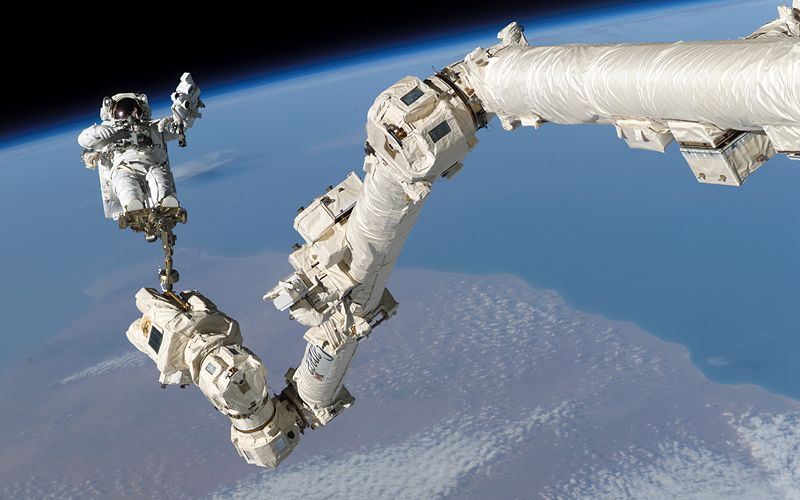
Astronaut Steve K. Robertson during STS-114

For decades, the Canadian Space Agency has been building the Shuttle Remote Manipulator System (SRMS) – also known as the Canadarm. Since 1981, aboard the shuttle STS-2 Columbia, this model of robotic arm has come standard on all NASA shuttles and was used as its main grasper. However, due to the progress made in the field of robotics over the past thirty years and the need for equipment to evolve to meet new challenges, the Canadarm was retired in 2011.

Luckily, the CSA is busy at work producing its successor, the Mobile Service System – aka. Canadarm2. The latest versions are in testing right now, and their main purpose, once deployed, will be to save satellites. Currently, an earlier version of this arm serves as the main grasper aboard the ISS, where it is used to move payloads around and guide objects to the docking port.

canadarm2However, the newest models – dubbed Next Generation Canadarm (NGC) – are somewhat different and come in two parts. First, there is the 15 meter arm that has six degrees of freedom, extreme flexibility, and handles grappling and heavy lifting. The second is a 2.58 meter arm that comes attached to the larger arm, is similarly free and flexible, and handles more intricate repair and replacement work.

This new model improves upon the old in several respects. In addition to being more intricate, mobile, and handle a wider array of tasks, it is also considerably lighter than than its predecessor. When not in use, it is also capable of telescoping down to 5 meters of cubic space, which is a huge upshot for transporting it aboard a shuttle craft. All of this is expected to come in handy once they start the lucrative business of protecting our many satellites.

canadarm2_missioncontrolIt’s no secret that there is abundance of space junk clogging the Earth’s upper atmosphere. This moving debris is a serious danger to both manned and unmanned missions and is only expected to get worse. Because of this, the ability to repair and retool satellites to keep them in operation longer is of prime importance to space agencies.

Naturally, every piece of equipment needs to undergo rigorous testing before its deployed into space. And the Canadarm2 is no exception, which is currently being put through countless simulations. This battery of tests allows operators to guide dummy satellites together for docking using the arms in both full manual and semi-autonomous mode.

canadarm2_chrishadfieldNo indication on when they will be ready for service, but it seems like a safe bet that any manned missions to Mars will likely feature a Canadarm2 or two. And as you can see, Chris Hadfield – another major Canadian contribution to space – is on hand to help out. Maybe he and the new arm can perform a duet together, provided it can handle a guitar!

And be sure to check out this video of the NGC Canadarm2 in action, courtesy of the Canadian Space Agency:


Source:
Wired.com

Judgement Day Update: Geminoid Robotic Clones

geminoidWe all know it’s coming: the day when machines would be indistinguishable from human beings. And with a robot that is capable of imitating human body language and facial expressions, it seems we are that much closer to realizing it. It’s known as the Geminoid HI-2, a robotic clone of its maker, famed Japanese roboticist Hiroshi Ishiguro.

Ishiguro unveiled his latest creation at this year’s Global Future 2045 conference, an annual get-together for all sorts of cybernetics enthusiasts, life extension researchers, and singularity proponents. As one of the world’s top experts on human-mimicking robots, Ishiguro wants his creations to be as close to human as possible.

avatar_imageAlas, this has been difficult, since human beings tend to fidget and experience involuntary tics and movements. But that’s precisely what his latest bot excels at. Though it still requires a remote controller, the Ishiguro clone has all his idiosyncrasies hard-wired into his frame, and can even give you dirty looks.

geminoidfThis is not the first robot Ishiguro has built, as his female androids Repliee Q1Expo and Geminoid F will attest. But above all, Ishiguro loves to make robotic versions of himself, since one of his chief aims with robotics is to make human proxies. As he said during his talk, “Thanks to my android, when I have two meetings I can be in two places simultaneously.” I honestly think he was only half-joking!

During the presentation, Ishiguro’s robotic clone was on stage with him, where it realistically fidgeted as he pontificated and joked with the audience. The Geminoid was controlled from off-stage, where an unseen technician guided it, and fidgeted, yawned, and made annoyed facial expressions. At the end of the talk, Ishiguro’s clone suddenly jumped to life and told a joke that startled the crowd.

geminoid_uncanny_valleyIn Ishiguro’s eyes, robotic clones can outperform humans at basic human behaviors thanks to modern engineering. And though they are not yet to the point where the term “android” can be applied, he believes it is only a matter of time before they can rival and surpass the real thing. Roboticists and futurists refer to this as the “uncanny valley” – that strange, off-putting feeling people get when robots begin to increasingly resemble humans. If said valley was a physical place, I think we can all agree that Ishiguro would be its damn mayor!

And judging by these latest creations, the time when robots are indistinguishable from humans may be coming sooner than we think. As you can see from the photos, there seems to be very little difference in appearance between his robots and their human counterparts. And those who viewed them live have attested to them being surprisingly life-like. And once they are able to control themselves and have an artificial neural net that can rival a human one in terms of complexity, we can expect them to mimic many of our other idiosyncrasies as well.

As usual, there are those who will respond to this news with anticipation and those who respond with trepidation. Where do you fall? Maybe these videos from the conference of Ishiguro’s inventions in action will help you make up your mind:

Ishiguro Clone:


Geminoid F:

Sources: fastcoexist.com, geminoid.jp

The Future is Here: Smart Skin!

neuronsWhen it comes to modern research and development, biomimetics appear to be the order of the day. By imitating the function of biological organisms, researchers seek to improve the function of machinery to the point that it can be integrated into human bodies. Already, researchers have unveiled devices that can do the job of organs, or bionic limbs that use the wearer’s nerve signals or thoughts to initiate motion.

But what of machinery that can actually send signals back to the user, registering pressure and stimulation? That’s what researchers from the University of Georgia have been working on of late, and it has inspired them to create a device that can do the job of the largest human organ of them all – our skin. Back in April, they announced that they had successfully created a brand of “smart skin” that is sensitive enough to rival the real thing.

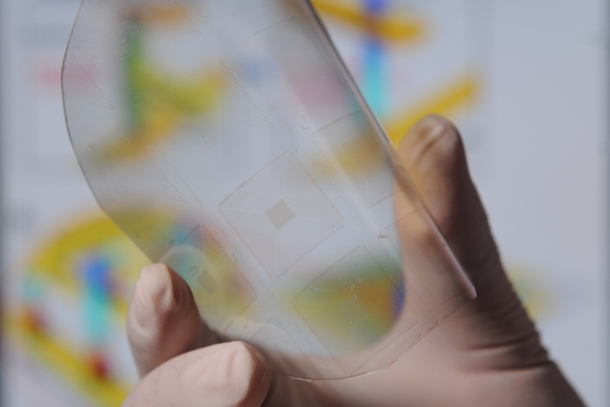
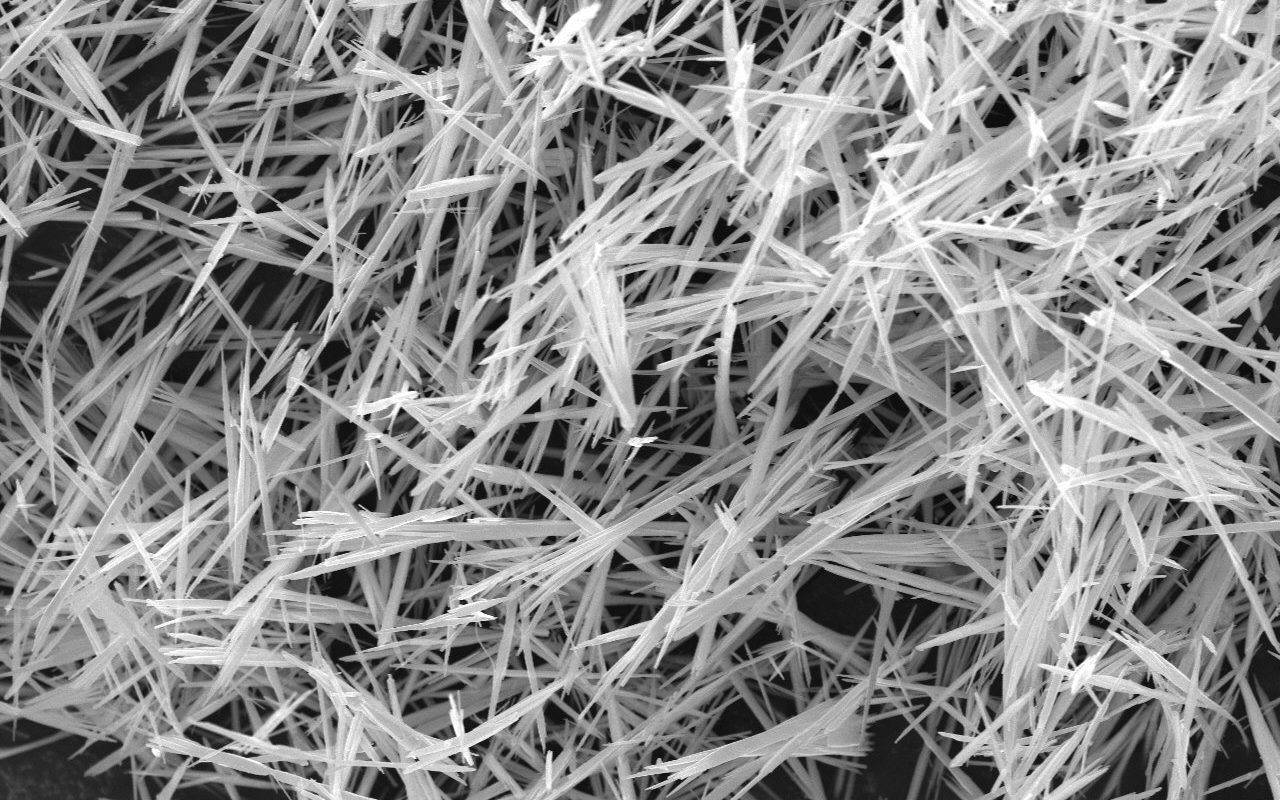
smart-skin_610x407In essence, the skin is a transparent, flexible arrays that uses 8000 touch-sensitive transistors (aka. taxels) that emit electricity when agitated. Each of these comprises a bundle of some 1,500 zinc oxide nanowires, which connect to electrodes via a thin layer of gold, enabling the arrays to pick up on changes in pressure as low as 10 kilopascals, which is what human skin can detect.

Mimicking the sense of touch electronically has long been the dream researchers, and has been accomplished by measuring changes in resistance. But the team at Georgia Tech experimented with a different approach, measuring tiny polarization changes when piezoelectric materials such as zinc oxide are placed under mechanical stress. In these transistors, then, piezoelectric charges control the flow of current through the nanowires.

nanowiresIn a recent news release, lead author Zhong Lin Wang of Georgia Tech’s School of Materials Science and Engineering said:

Any mechanical motion, such as the movement of arms or the fingers of a robot, could be translated to control signals. This could make artificial skin smarter and more like the human skin. It would allow the skin to feel activity on the surface.

This, when integrated to prosthetics or even robots, will allow the user to experience the sensation of touch when using their bionic limbs. But the range of possibilities extends beyond that. As Wang explained:

This is a fundamentally new technology that allows us to control electronic devices directly using mechanical agitation. This could be used in a broad range of areas, including robotics, MEMS, human-computer interfaces, and other areas that involve mechanical deformation.

prostheticNot the first time that bionic limbs have come equipped with electrodes to enable sensation. In fact, the robotic hand designed by Silvestro Micera of the Ecole Polytechnique Federale de Lausanne in Switzerland seeks to do the same thing. Using electrodes that connect from the fingertips, palm and index finger to the wearer’s arm nerves, the device registers pressure and tension in order to help them better interact with their environment.

Building on these two efforts, it is easy to get a glimpse of what future prosthetic devices will look like. In all likelihood, they will be skin-colored and covered with a soft “dermal” layer that is studded with thousands of sensors. This way, the wearer will be able to register sensations – everything from pressure to changes in temperature and perhaps even injury – from every corner of their hand.

As usual, the technology may have military uses, since the Defense Advanced Research Projects Agency (DARPA) is involved. For that matter, so is the U.S. Air Force, the U.S. Department of Energy, the National Science Foundation, and the Knowledge Innovation Program of the Chinese Academy of Sciences are all funding it. So don’t be too surprised if bots wearing a convincing suit of artificial skin start popping up in your neighborhood!

terminator2Source: news.cnet.com

The Future of Cities and Urban Planning

future-city-1With the development of vertical farms, carbon capture technology, clean energy and arcologies, the future of city life and urban planning is likely to be much different than it does today. Using current trends, there are a number of people who are determined to gain some understanding of what that might look like. One such group is Arup, a design and engineering firm that produced a mockup that visualizes what urban environments will look like in 2050.

Based on the world as it is today, certain facts about the future seem relatively certain. For starters, three-quarters of the population will live in cities, or 6.75 billion of the projected 9 billion global total. In addition, everyone will have grown up with the Internet, and its successors, and city residents will have access to less natural resources than they do today, making regeneration and efficiency more of a priority.

Add to this several emerging technologies, and our urban environments are likely to look something like the building mockup below. As you can see, it has its own energy systems (“micro-wind,” “solar PV paint,” and “algae facade” for producing biofuels). There is an integrated layer for meat, poultry, fish, and vegetable farming, a “building membrane” that converts CO2 to oxygen, heat recovery surfaces, materials that phase change and repair themselves, integration with the rest of the city, and much more.

future_urban_planning

Most futuristic of all is the fact that the structure is completely modular and designed to be shifted about (by robots, of course). The building has three layer types, with different life-spans. At the bottom is a permanent layer – with a 10 to 20-year lifespan – which includes the “facade and primary fit-out walls, finishes, or on-floor mechanical plant” – and a third layer that can incorporate rapid changes, such as new IT equipment.

As Arup’s Josef Hargrave described the building when unveiling the design:

[A]ble to make informed and calculated decisions based on their surrounding environment… [a] living and breathing [structure] able to support the cities and people of tomorrow.

In short, the building is designed with personal needs in mind, based on information gleamed from a person’s behaviors, stated preferences, and even genetic information.

aircleaning_skyscraper3But what is even more interesting is how these buildings will be constructed. As countless developments are made in the field of robotics, biotechnology and nanotechnology, both the materials used and the processes involved are likely to be radically different. The rigid construction that we are used to is likely to give way to buildings which are far more flexible, adaptive, and – best of all – built by robots, drones, tiny machines and bacteria cultures.

Once again, this change is due mainly to the pressures that are being placed on urban environments, and not just technological advances. As our world becomes even more densely populated, greater proportions of people live in urban environments, and resources become more constrained, the way we build our cities must offer optimum efficiency with minimal impact.

nanomachineryTowards this end, innovations in additive manufacturing, synthetic biology, swarm robotics, and architecture suggest a future scenario when buildings may be designed using libraries of biological templates and constructed with biosynthetic materials able to sense and adapt to their conditions.

What this means is that cities could be grown, or assembled at the atomic level, forming buildings that are either living creatures themselves, or composed of self-replicated machines that can adapt and change as needed. Might sound like science fiction, but countless firms and labs are working towards this very thing every day.

It has already been demonstrated that single cells are capable of being programmed to carry out computational operations, and that DNA strains are capable of being arranged to carry out specialized functions. Given the rapid progress in the field of biotech and biomimetics (technology that imitates biology), a future where the built environment imitates organic life seems just around the corner.

biofabrication For example, at Harvard there is a biotech research outfit known as Robobees that is working on a concept known as “programming group dynamics”. Like corals, beehives, and termite colonies, there’s a scalar effect gained from coordinating large numbers of simple agents to perform complex goals. Towards this end, Robobees has been working towards the creation of robotic insects that exhibit the swarming behaviors of bees.

Mike Rubenstein leads another Harvard lab, known as Kilobot, which is dedicated to creating a “low cost scalable robot system for demonstrating collective behaviors.” His lab, along with the work of researcher’s like Nancy Lynch at MIT, are laying the frameworks for asynchronous distributed networks and multi-agent coordination, aka swarm robotics, that would also be capable of erecting large structures thanks to centralized, hive-mind programming.

nanorobot1

In addition to MIT, Caltech, and various academic research departments, there are also scores of private firms and DIY labs looking to make things happen. For example, the companies Autodesk Research and Organovo recently announced a partnership where they will be combining their resources – modelling the microscopic organic world and building bioprinters – to begin biofabricating everything from drugs to nanomachines.

And then there are outfits like the Columbia Living Architecture Lab, a group that explores ways to integrate biology into architecture. Their recent work investigates bacterial manufacturing, the genetic modification of bacteria to create durable materials. Envisioning a future where bacterial colonies are designed to print novel materials at scale, they see buildings wrapped in seamless, responsive, bio-electronic envelopes.

ESA_moonbaseAnd let’s not forget 3D printing, a possibility which is being explored by NASA and the European Space Agency as the means to create a settlement on the Moon. In the case of the ESA, they have partnered with roboticist Enrico Dini, who created a 3-D printer large enough to print houses from sand. Using his concept, the ESA hopes to do the same thing using regolith – aka. moon dust – to build structures on Earth’s only satellite.

All of these projects are brewing in university and corporate labs, but it’s likely that there are far more of them sprouting in DIY labs and skunkworks all across the globe. And in the end, each of them is dedicated to the efficiency of natural systems, and their realization through biomimetic technology. And given that the future is likely to be characterized by resources shortages, environmental degradation and the need for security, it is likely to assume that all of these areas of study are likely to produce some very interesting scenarios.

As I’ve said many times before, the future is likely to be a very interesting place, thanks to the convergence of both Climate Change and technological change. With so many advances promising a future of post-scarcity, post-mortality, a means of production and a level of control over our environment which is nothing short of mind-boggling – and a history of environmental degradation and resource depletion that promises shortages, scarcity, and some frightening prospects – our living spaces are likely to change drastically.

The 21st century is going to be a very interesting time, people. Let’s just hope we make it out alive!

Sources: fastcoexist.com, (2)