
Hey all! I have more in the way of novel-writing news. For starters, The Cronian Incident is now just a few chapters short of completion. After over a year of writing, editing, and back and forth with my prospective-publisher, the novel is just about finished. All told, it is now 31 chapters long and just over 85,000 words in length. I anticipate it will be about 100,000 by the time its finished, though I have been known to exceed estimates in the past!
And as per my agreement with my publisher, I have begun working on its sequel. Apparently, publishers like to know the people they sign have more books in them. And they prefer to release sequels within a few months of the first book, to ensure that any buzz they generate with the first release can be capitalized on. Lucky for me I had plans for a second and third novel before my publisher and I started talking, not to mention some spin offs.
So here’s the commercial description for the proposed sequel (i.e. what you’d read on the back of the dust jacket), as well as a rundown on some other ideas I’m working on:
The Jovian Manifesto:
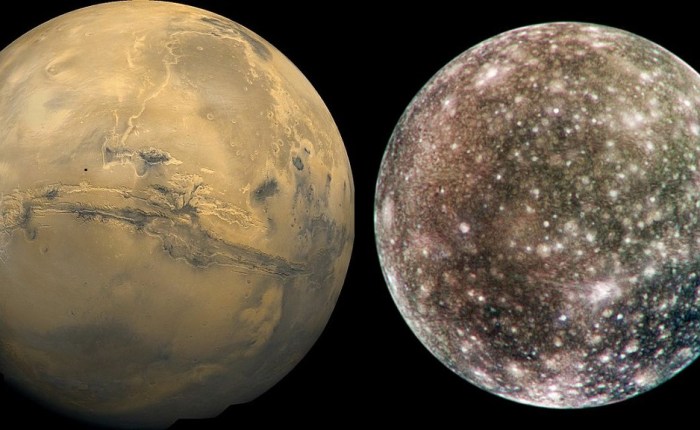
The Solar System is in the midst of a crisis. In the Jovian and Cronian systems, the populations are up in arms, thanks to an inflammatory document that has appeared on the local nets. Known as “The Jovian Manifesto”, this document details how a powerful faction in the Inner Solar System conspired to seize control over the moons of Callisto and Titan and forcibly alter them. Behind the leak is a mysterious personality known only as Clio, who is threatening to release all the details unless the guilty parties come forward.

Back on Venus, a former analyst named Valéria Gallego is called before the Solar Assembly to investigate the Manifesto and its author. In this, she is assisted by Kadera, an infiltration specialist who can get in and out of any location in the Solar System. If they can determine its authenticity, perhaps they can prevent open conflict. But if not, the Inner Worlds may have no choice but to send armed forces to the Outer Worlds to ensure peace and stability.
Meanwhile, a string of violent acts has threatened to bring things ever closer to the brink. For Gallego and all those who are seeking the truth, time is running out…
Luna Invictus:
Now this is a book that doesn’t come with a commercial description, just a general one. But it is set in the same universe as The Cronian Incident and The Jovian Manifesto. Here’s what I am thinking. Basically, I wanted to do a story set on the Moon, ca. the 22nd century, when the Moon is now effectively colonized,,,
Between the European Space Agency (ESA), NASA, the Russians (Roscosmos), India (the ISRO), and China (CNSA), the lunar surface now has multiple permanent settlements. Whereas the ESA and NASA have established themselves at the southern polar region – in a domed settlement in the Shackleton Crater – and the Chinese have established a colony in the northern polar region, the Russians and Indians have claimed the mid-latitudes, where stable lava tubes have allowed for the creation of underground cities.

And on the “Dark Side” of the Moon – that is to say, the side looking away from Earth – are a series of installations known as the Unrestricted Zones. It is here that all kinds of weird research, development and experiments take place. Nanotechnology, biotechnology, quantum computing, and man-machine interface – anything goes in these places! Ever since the explosion in learning that took place during the previous century, places all over Earth and the Moon have become dedicated to pursuing technological progress and integration without restriction.
And it is here that a young man named Frankling Houte is seeking to go. Years ago, his sister – named Constant Houte – chose to undergo a procedure where her organic brain would be augmented by merging it with quantum components. But after all contact ceased, he is determined to find her and return her home. But whereas Franklin fancies himself a brave rescuer, it is his sister who will come to save him.
Transverse:
This story will take place entirely in a generation ship that is making its way towards the nearby star system. Within the confines of this self-contained world, thousands of humans have committed to waiting and working for generations as their massive ship – the Traverse Velocity, which in astronomical terms refers to the speed at which a star moves perpendicular to our line of sight – transports them to an Earth-like world outside of our Solar System.
The location of that world is up for grabs at the moment, mainly because new discoveries are being made all the time. Did you hear about the latest exoplanet discovery, located about 39 light years away and already said to be the “best place to look for signs of life beyond the Solar System”? Between that and new findings that claims how previous discoveries are not likely to be habitable after all, I’ve decided to leave the destination blank until I actually start writing it!
 But of course, no story would be complete without some intrigue and big ol’ inciting event! And the way I see it, things begin to go awry when the Captain and crew get notification that one of the passengers has awakened from cryosleep prematurely and disappeared into the ship. Shortly thereafter, one of the crew is found dead in what appears to be a sabotage attempt gone wrong. A ship-wide search begins to find the culprit while the atmosphere quickly devolves into one of paranoia and suspicion.
To make matter worse, the crew becomes aware of another ship that is threatening to catch up and overtake them. It seems that another faction from the Solar System, which was also intent on settling (insert exoplanet here) is now trying to get their ahead of them. What began as a journey to a new world, characterized by hopes and dreams, has become a race to lay claim to a planet. And it appears that the planet may have inhabitants of its own, ones which are not interested in welcoming the intruders.


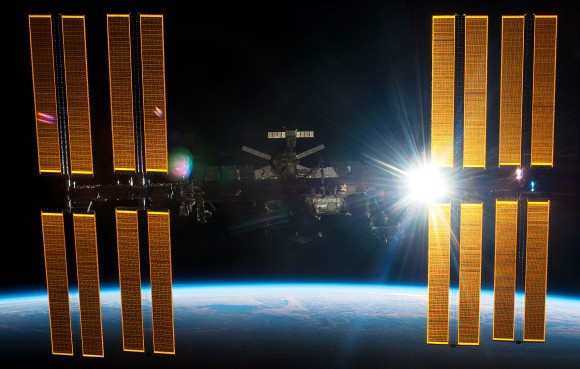



 Such ideas did inform Kim Stanley Robinson’s seminal novel Red Mars, where an international crew flew to the Red Planet and established the first human settlement that begins the terraforming process. But if international cooperation proves too difficult, perhaps a collaboration between commercial space agencies and federal ones could work. I can see it now: the Elon Musk Martian Dome; the Richard Branson Habitat; or the Gates colony…
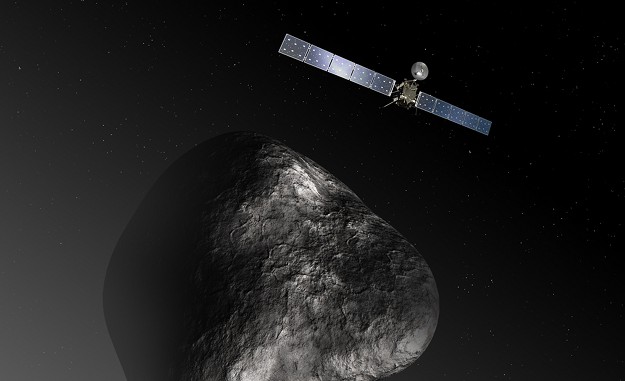 Space exploration is a booming industry these days. Between NASA, the ESA, Roscosmos, the CSA, and the federal space agencies of India and China, there’s just no shortage of exciting missions aimed at improving our understanding of our Solar System or the universe at large. In recent months, two such missions have been making the news; one of which (led by the ESA) is now underway, while the other (belonging to NASA) is fast-approaching.

 Named in honor of the Rosetta Stone – the a basalt slab that helped linguists crack ancient Egyptian – Rosetta is expected to provide the most detailed information about what comets look like up close (as well as inside and out). Similarly, the lander, Philae, is named after the island in the Nile where the stone was discovered. Together, they will help scientists shed light on the early history of our Solar System by examining one of its oldest inhabitants.
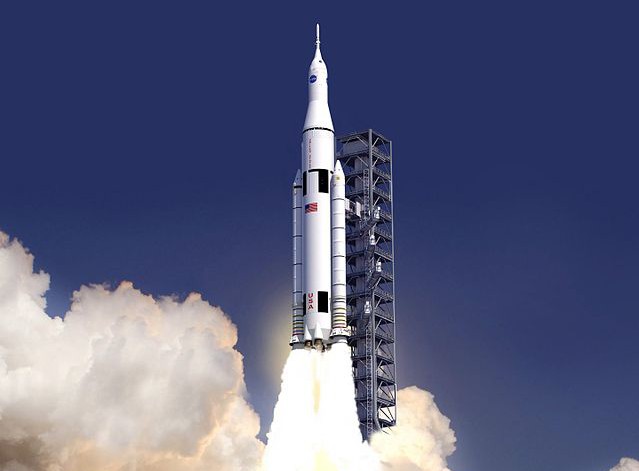
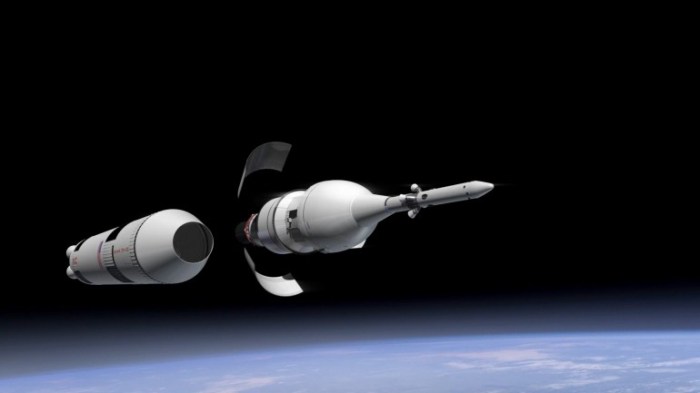
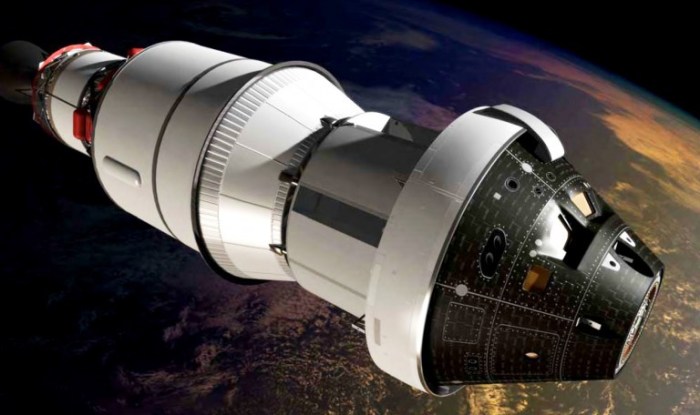 EFT-1 will take the form of an unmanned test flight, with the Orion spacecraft being controlled entirely by a flight control team from NASA’s Kennedy Space Center located in Florida. One vital component to be tested is the Launch Abort System (LAS), which in essence is a fail-safe required to protect astronauts should anything go wrong during the initial launch phase. Designed to encapsulate the crew module in the event of a failure on the launch pad, the LAS thrusters will fire and carry the Orion away from danger.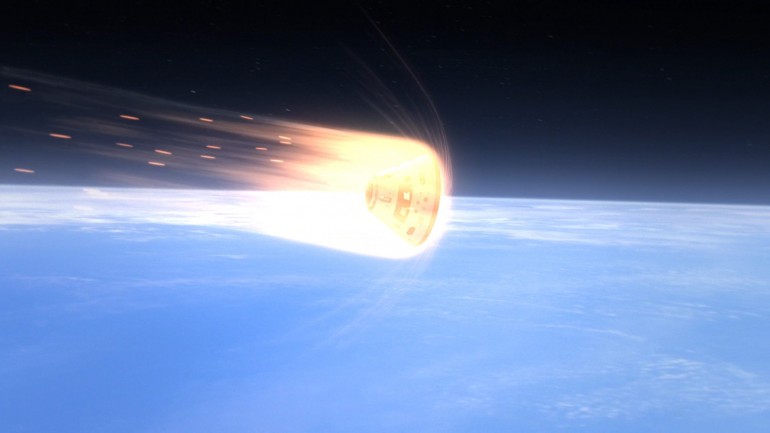
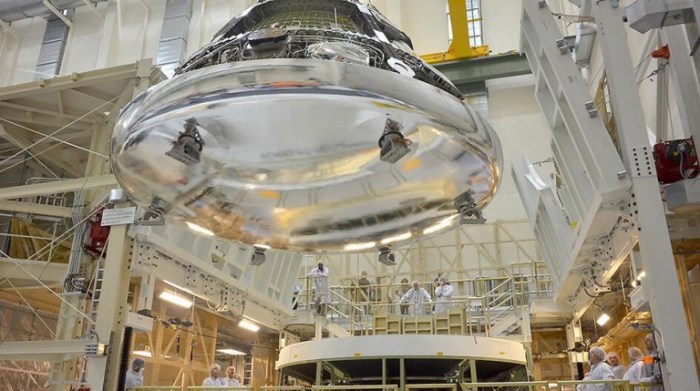 The final aspect of EFT-1 will be the observation of the parachute deployment system. Assuming the LAS has successfully jettisoned from the crew module following launch, the majority of Orion’s stopping power will be provided by the deploying of two drogue parachutes, followed shortly thereafter by three enormous primary parachutes, with the combined effect of slowing the spacecraft to 1/1000th of its initial re-entry speed.
 NASA staff on the ground will be nervously monitoring several key aspects of the proving mission, with the help of 1,200 additional sensors geared towards detecting vibration and temperature stress, while taking detailed measurements of event timing. Furthermore, cameras are set to be mounted aboard Orion to capture the action at key separation points, as well as views out of the windows of the capsule, and a live shot of the parachutes as they deploy (hopefully).

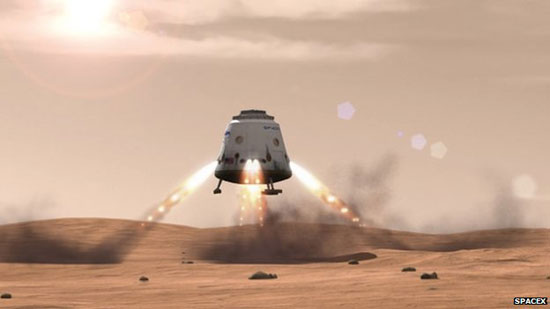 Other notable features include the propellent, which is a pair of non-cryogenic liquids – monomethyl hydrazine for the fuel and nitrogen tetroxide for the oxidizer. These are hypergolic, meaning that they ignite on contact with one another, which helps the SuperDraco to restart multiple times. It’s also built to be deep throttled, and can go from ignition to full throttle in 100 ms. But what really sets the SuperDraco apart is that is has 200 times the power of the Draco engine, which works out to 7,440 kg (16,400 lbs) of thrust.
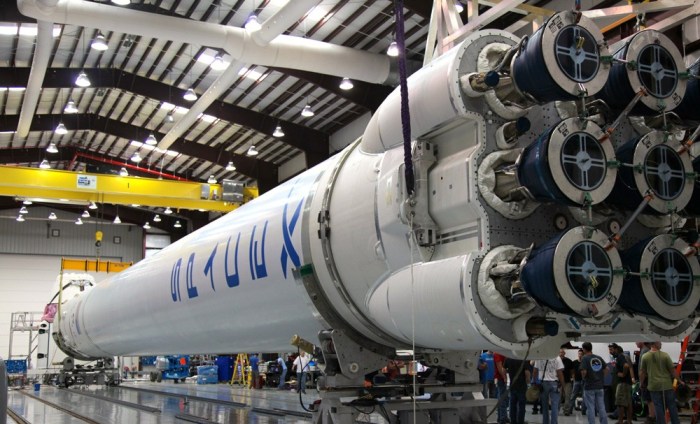 Eight engines firing for five seconds are enough to carry the capsule safely away from the booster with 120,000 lb of axial thrust. In addition, the eight engines also provide a high degree of redundancy should one or more engines fail. But what’s really ambitious about the SuperDraco is that, like the Falcon 9 booster, the Dragon is designed to ultimately return to its spaceport under its own power and land with the precision of a helicopter, and it’s the power and control of the SuperDraco that makes this possible.
 But equally impressive was the unveiling of the Dragon V2 manned space capsule, which took place at a brief media event at SpaceX’s Hawthorne, California headquarters at the end of May. This larger, more powerful version of the reusable Dragon capsule will one day carry astronauts to the International Space Station (ISS) and return to Earth to land under its own power. This latest development brings the company one step closer towards its ultimate goal of a fully reusable manned capsule capable of making a powered landing.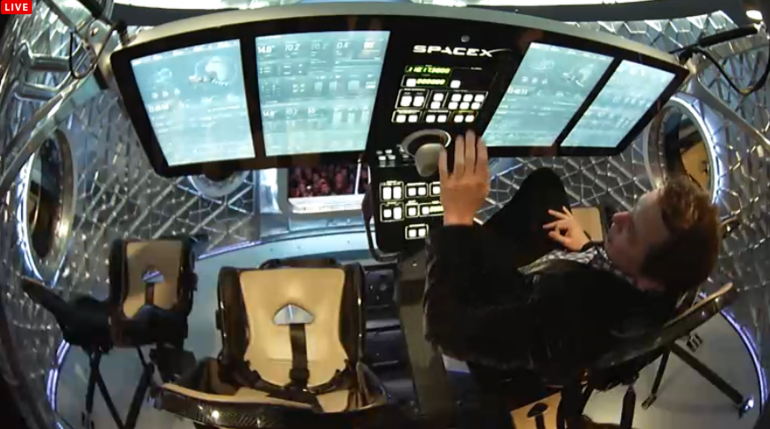
![Space_race1[2]](https://storiesbywilliams.com/wp-content/uploads/2014/05/space_race12.jpg)


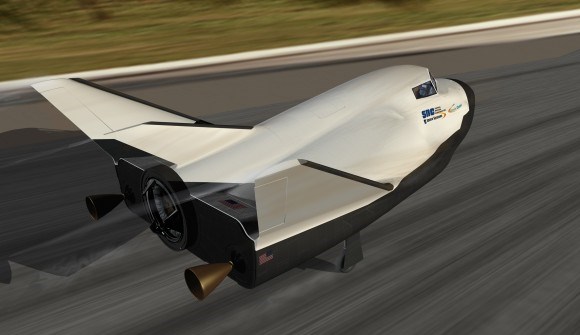
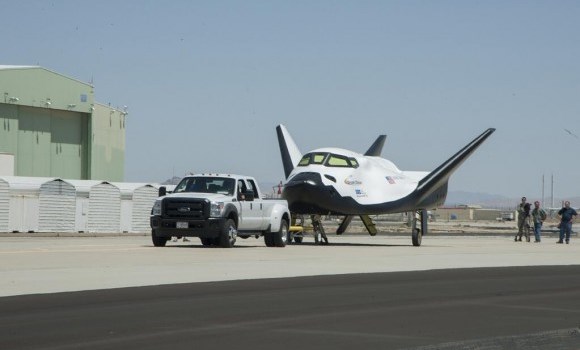
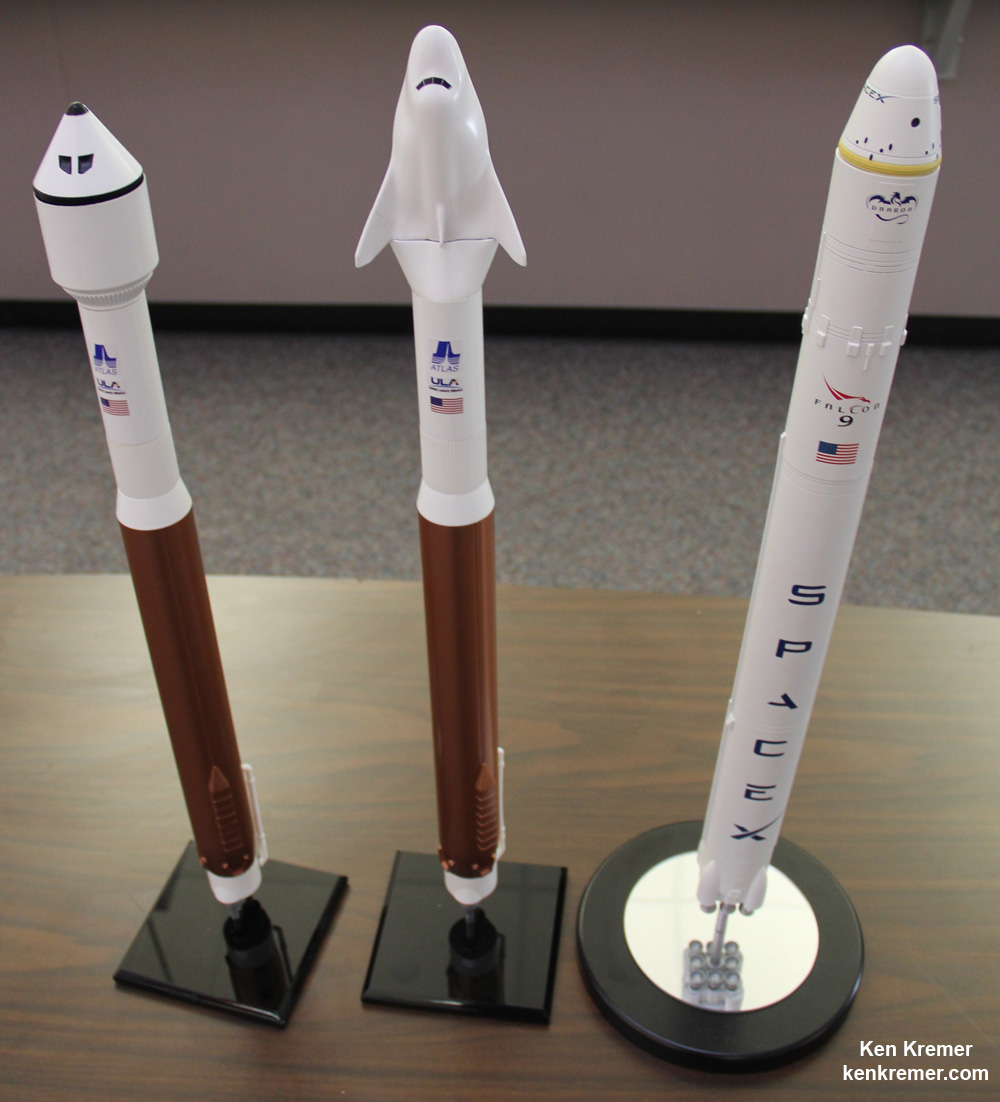
 Standing on the sidelines are individuals and private companies like Elon Musk and SpaceX, the Texas company that already builds its own low-cost rockets, along with space capsules that have been delivering supplies to the Space Station. In addition, Sierra Nevada, a private aerospace contractor, is working with NASA to produce the Dream Chaser as part of the agency’s reusable vertical-takeoff, horizontal-landing (VTHL) program.
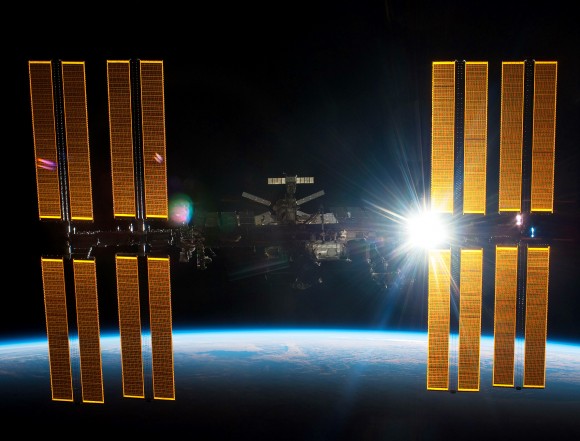
 Yesterday, NASA officially announced that it intends to cease most work with the Russian Federal Space Agency amid growing tensions concerning the Ukrainian crisis. The statement came from Bob Jacobs, NASA’s deputy associate administrator of communications, who formalized the space agency’s position with a message sent to Universe Today, a copy of which was then posted on it’s Google+ message board on Wednesday, April 2nd.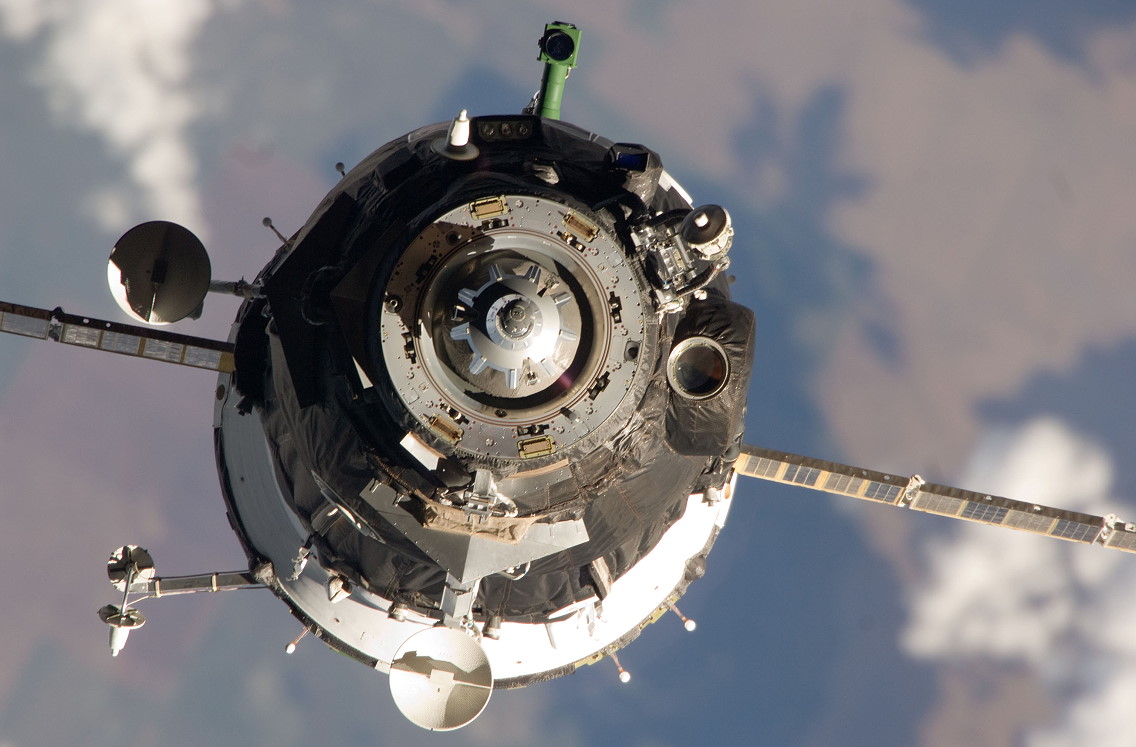
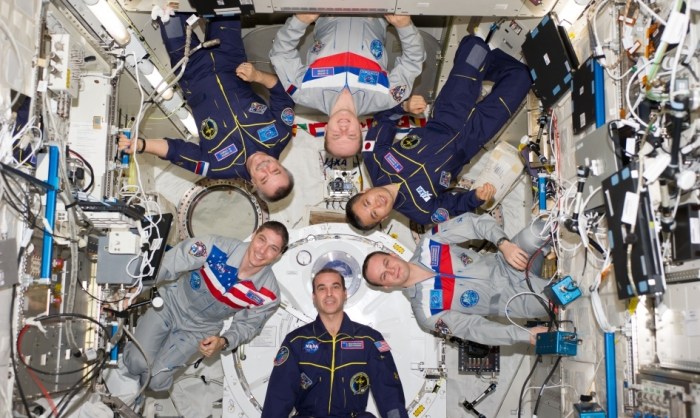
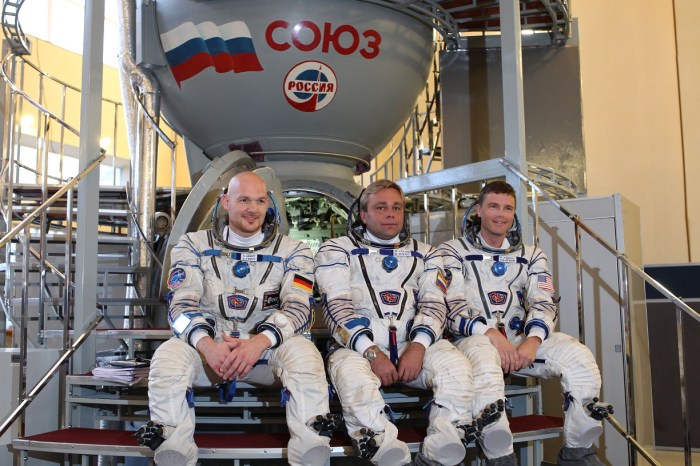 Since the Space Shuttle Program was retired in 2011, NASA and other space agencies such as the European Space Agency have relied on Russian Soyuz spacecraft to bring astronauts to the International Space Station. Crews are generally made up of large proportions of Russian cosmonauts and American astronauts, as well as a few astronauts from other agencies. The current Expedition 39 crew has has three Russians, two Americans and a Japanese commander, Koichi Wakata.
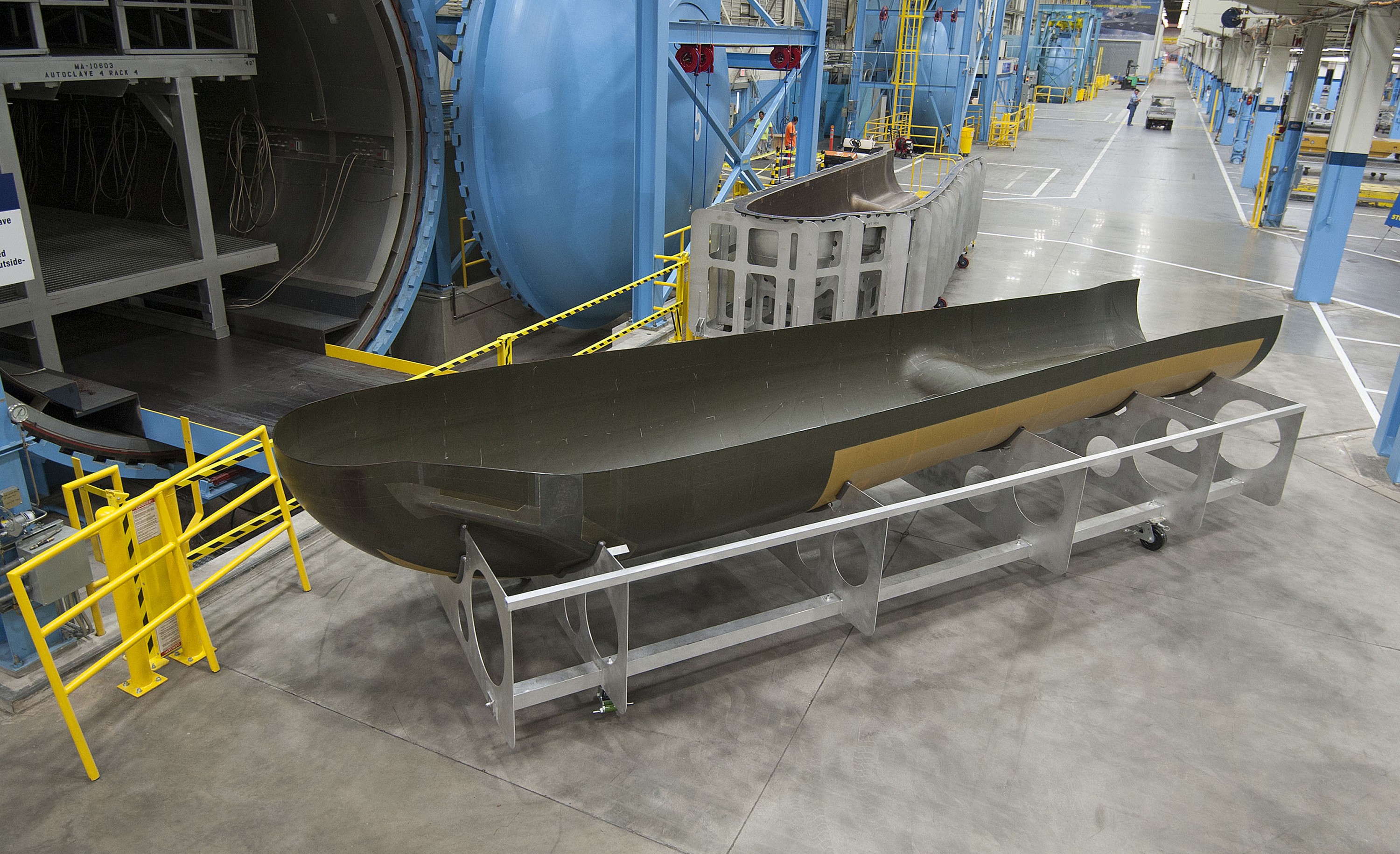
 NASA is working on a commercial crew program that right now is slated to bring U.S. astronauts back into space from American soil by 2017. There are several proposals being considered: a human-rated version of SpaceX’s Dragon, Blue Origin’s New Shepard, Sierra Nevada’s Dream Chaser and the Boeing CST-100. However, these depend upon continued funding and it is currently unclear how much money the CCP program will receive in the upcoming fiscal 2015 budget request before Congress.

 Stories by Williams