What’s On…

If you’re like me, and suffer from what I assume is a form of literary ADD – where you can’t seem to commit to reading, or writing, one thing at a time – then it helps to take stock once in a while and make a list. At other times, its disconcerting, like whenever I check out my Goodreads account and see that a book I cracked over a year ago is still on my “Currently Reading” list.

But today I thought I’d combine that list with my list of upcoming reviews. As I’m sure I mentioned in a previous post or two, this vacay has been pretty good for scoring new books. I got some long 0verdue ones and managed to find at least one that has come highly recommended. To ensure that they don’t wind up in my pile, partially read and collecting dust, I thought I’d make a definitive list. That oughta help my ADD!

Editor’s Note: The author of this article is not a physician or psychiatrist and has no medical credentials whatsoever. He is thus in no position to diagnose, either in himself or others, any form of ADD or its hyperactive cousin, ADHD.

  1. Mona Lisa Overdrive – the final book in the Sprawl Trilogy by William Gibson. Due to diversions in reading The Hunger Games, Second Foundation and a slew of others, this book has remained opened far longer than it had to have been. I hope to finish it this or next week.
  2. Second Foundation – the third installment in the Foundation series, which I have been meaning to read for some time. As the (sort of) conclusion to the Foundation saga, and after reviewing the first two, it was only fitting that I find and tackle the third book. I say sort of because decades after finishing this third novel in the series, Asimov would finally cave to demands that he return to the series with three more books. Fans and publishers, what can you do?
  3. Martian Chronicles – this book I just picked up last week. After years of hearing great things and wanting to get into it, I finally procured a copy and began devouring it. I got half way through before the wife and I got back to civilization and it was forced to take its place in the queue. It’s a testament to Bradbury’s old school, accessible, yet still high-minded style that you can read through his works quickly and still feel like you’ve digested a lot. I look forward to finishing this one and borrowing freely from it 😉
  4. A Feast for Crows – my reading of this fourth installment in the Game of Thrones series has stalled for a few reasons. One, I got a little tired after the first three books, especially since all the main characters keep dying! Second, after three books of excitement and climactic battles, George RR Martin seemed to think that was needed was a book that contained all the scraps. Not a bad read by any measure, but it’s kind of like a serving of leftovers after three sumptuous banquets.
  5. We – the classic of classic by Yevgeny Zamyatin. Again, I cracked this book a long time ago and haven’t been able to get into it due to the myriad of books that have entered and left my reading pile in the interim.  I want nothing more than to finish it and give it its long overdue due! For crying out loud, this man practically invented the dystopian satire and inspired my heroes – Orwell and Huxley. If that doesn’t warrant a read, I don’t know what does!
  6. The Giver – here’s a book that my wife has been recommending for ages! Considered to be a classic of YA fiction, this novel is certainly a must-read for those looking to stay current on the genre. Having found a copy at my local Coles, right next to City of Ember, I decided it was time to have a looky-loo so that I knew what I was talking about next time I chose to include it in a review of current utopian/dystopian lit.
  7. Red Mars – holy crap has this one been on my shelf for a long time! I can’t tell you how many times I’ve picked it up and put it down. Which is really too bad. It’s definitely one of the more profound sci-fi books that I’ve ever read, but somehow, the style lends itself to a certain inaccessibility for me. I do enjoy reading it, but find that it doesn’t quite happen easily or organically. In that respect, Kim Stanley Robinson is not unlike William Gibson for me. I know I want to hear from them, and I do get through their books, but not with the ease and grace that I would something by Bradbury or Asimov.
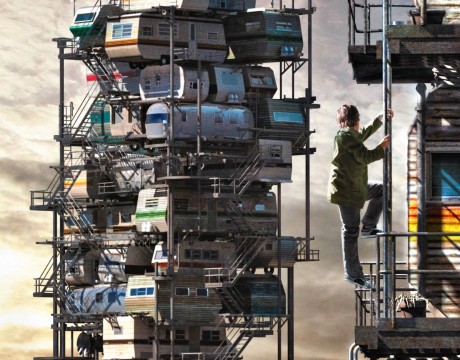
  8. Ready Player One – this one I bought alongside The Giver because I thought it was time to invest in something new. I tend to be reserved about buying the works of new authors, mainly because I don’t invest time and money in something which might prove to be disappointing or a flavor of the month kind of thing. However, I said ‘screw it’ this time around and picked this one up. And lo and behold, I discovered that it is actually a quite famous read, with the entire back of the dust jacket dedicated to the heaps of accolades that have been piled on it. Not only was it a manager’s pick at the Coles, it also comes recommended by my peeps over Io9.com. Them folks know their sci-fi, so I’m glad I went with my gut and checked this one out!
  9. Starfire – this hard sci-fi novel, by Charles Sheffield, is actually one I picked up in a laundry room at the park where my wife and I were staying in Lund. We had just returned from camping, were in the process of returning to civility (with showers and other amenities) and realized we still didn’t have anything to read! So I took a gander at this one, and after seeing that it was endorsed by Kim Stanley Robinson, I gave it a chance. I only got about 70 pages in before we had to leave and I chose not to take it (having nothing to exchange), but I was wrapped up enough in the plot that I decided I’d get a copy as soon as I could. Still looking, might have to go Amazon or Kindle on this bad boy, but I don’t intend to let it slip. The plot, which involves the creation of a massive orbital shield after A/B Centauri goes supernova, is quite interesting, and constructed using the latest in astronomical data. Check it out if you can!

Well, that about does it for me. Nine books in the reading list, not so bad. I could think of some more but… seriously, who the hell wants that kind of responsibility 😉

Nazis on the Moon?

Well, that seems to be the premise of this new dark sci-fi comedy. Based on the idea that the Nazis have been hiding on the Dark Side of the Moon since shortly before losing the war, the movie opens with their long-awaited offensive to retake Earth. The movie is called Iron Sky, and premiered in Europe back in April. Since then, the movies been making the round, going to cities and theaters wherever fans have requested it be shown.

And judging from the promos and teaser trailer, this movie is a seriously bad film! And I mean the kind of film that’s so bad, it’s awesome! It puts me in mind of more respectable science fiction, such as the alternate history classics of The Man In The High Castle and Fatherland, except those wre actually realistic portrayals of what thw world would be like had the Nazis won. Still, this premise seems much more fun!

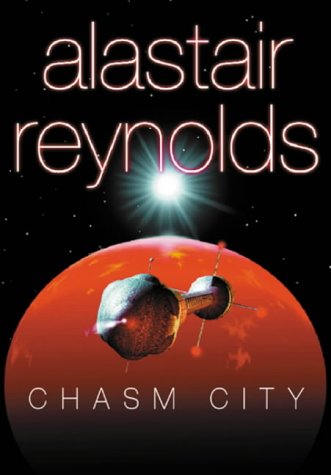
Chasm City

Next up in my review of Alastair Reynold’s Revelation Space universe is the prequel novel and setting piece known as Chasm City! Released in 2001, one year after Revelation Space and a year before Redemption Ark (I know, prolific, aint he?), the story takes place outside of the main trilogy, but details the setting and some of the characters who will play an important role in it.

As the name would suggest, the setting of this novel is the all-important location known as Chasm City itself. In Revelation Space, we got treated to an earful about this place since it is the undisputed hub of the known universe. Or at least it was before the Melding Plague, a terrible nanotechnological virus, turned the place into a twisted, gothic nightmare.

Background:
According to Reynold’s many descriptions of the place throughout the series, Chasm City was not only the capitol of Yellowstone (chief planet of the Epsilon Eridani system), it was also the center of the universe when it came to commerce, innovation and technological progress. It’s multi-tiered cities, contained within the “Mosquito Net” (i.e. habitation dome) were a marvel of nanotechnological achievement, living buildings that were capable of maintaining themselves.

The name itself referred to the fact that the city itself was built in a chasm which was open to the planet’s interior. From this chasm, large clouds of gas would erupt periodically, which the inhabitants used to fashion an atmosphere. In orbit, a huge array of satellites and orbital platforms had been installed, known as the “Glitter Band” due to their unrivaled beauty and the fact the wealthiest citizens maintained opulent homes in orbit.

And last, but not least, Chasm City was the home of the human faction known as the “Demarchists”, a name which is an amalgam of Democratic and Anarchy. These people were the most advanced factions in the universe, save for perhaps the Conjoiners, who used implant technology and wireless communications to create a society that needed no official offices or institutions. All decision making processes were run by direct democracy and the law maintained by police who enforced the public will. Sure, there were still offices and ranks, but the general trend was towards de-structurizing and an avoidance of hierarchy.

Plot Synopsis:
The first thread story opens on the planet known as Sky’s Edge, a planet in orbit of 61 Cygni A, where an enforcer named Tanner Mirabel is looking for a post-mortal noble named Argent Reivich. This man, we quickly learn, was responsible for the death of the wife of Tanner’s employer and is fleeing the planet for Yellowstone. Tanner and his friend pursue him, a chase which takes them into the depths of Chasm City and provides a first-hand look at the effects the Melding Plague has had and the illicit activities that have taken over the now fallen city.

In addition, two more threads open through a series of flashbacks and dream sequences. It is established early on that Tanner has been infected by an “indoctrination virus” – a sort of bio-engineered program which forces those who have it to experience religious visions. He interprets the dreams he has as a symptom, which are predictably concerned with the life of Sky Haussmann, the oft-revered and hated man who founded the colony of Sky’s Edge. This constitutes thread two of the story, where Tanner dreams of Sky’s childhood aboard the Flotilla that traveled to Sky’s Edge from Earth many centuries in the past, aboard generational ships where he was amongst the waking crew.
In the third thread, Tanner relives the traumatic events that led him to Yellowstone in pursuit of Reivich. Apparently, Tanner worked for a man named Cahuella, an arms dealer who is being pursued by Reivich because he sold arms to a rival family which used them to kill his parents. We also learn that Tanner loved Cahuella’s wife, a woman named Gritta. According to the flashbacks he experiences, it was while deploying to the jungles of Sky’s Edge, in an attempt to intercept Reivich, that the incident that led to Gitta’s death took place.

Upon reaching Chasm City, Tanner sees first hand what has become of the city. A once technological marvel, it has now degenerated into a dark and ugly, the buildings appearing as twisted, diseased trees. The Glitter Band has fallen into disrepair, and is now known as the “Rust Belt”. There is also a lucrative trade in what is referred to as “Dream Fuel”, which appears to render users temporarily immune to the Melding Plague. And last, there is the “Game” which Tanner becomes trapped in, where residents of the Canopy (those few still-privileged people who live close to the Mosquito Net) hunt people who live down in “The Mulch” (aka. down below).

After escaping the “gamers”, Tanner takes a female resident of the Canopy hostage and learns that she is part of the lucrative “Dream Fuel” trade. With her help, they travel deep into Yellowstone’s underground network and tunnels and find the source of it, which appears to be a giant, sentient slug. This begins to line up with some of the vision’s Tanner has been having involving Sky and the Flotilla, which continue to haunt his dreams.

Basically, Tanner is now aware that Sky took over control of the Flotilla after his father was murdered by an embedded agent. In a twist, Sky allowed this to happen because he was outraged to learn that his parents had taken him from another family that had died while in cryosleep. While in command of the fleet, he learned that they were being pursued by a strange, phantom ship. When they investigated, they discovered that it was an alien vessel that had morphed to look like one of their own. Inside – drumroll please – was a giant slug living in a big pool of Dream Fuel!

Yes, it seems that the fuel is in fact the organic secretions of the Slug, and that they are a sentient race that has been living in hiding ever since the emergence of a terrible alien threat that has been destroying all space-faring life. For those who have read Revelation Space at this point, it is clear the slug is referring to the Inhibitors. Hence why the Slug ship was following the Flotilla, it had hoped to remain inconspicuous by mimicking other species and their ships. The one currently being used to provide Dream Fuel is another, one which chose to hide deep within Yellowstone to avoid detection.

At the same time, Tanner becomes aware of one horrid fact. After remembering everything from the night where Gitta died, Tanner comes to the realization that it was he that killed her. In the course of their advance through the jungle to intercept Reivich, he and his men ambushed their camp and took Gitta hostage. Rather than let them get away, Tanner opened fire and accidentally killed her. However, he is confused because his memories end with Cahuella taking his own revenge by feeding Tanner to one of his giant snakes.

Nevertheless, Tanner gets back on Reivich’s trail and finally corners him in orbit. There, he finds the ruined body of Reivich who has been hooked up to a machine that was supposed to recor*d his consciousness and create an “alpha” (i.e. a living computer construct) of him. However, the process was rushed, and now Reivich’s body has been irreparably damaged. Close to death, he reveals another twist. It seems that he is not Tanner after all, but Cahuella himself! Small hints are given throughout the novel tot his effect, but he realizes that it is true when Tanner himself walks in!

Yes, it seems that Cahuella couldn’t deal with the anguish of losing his wife and decided to switch memories and appearances with Tanner while he was busy torturing him. However, Tanner managed to escape after Cahuella left and made his way to Yellowstone to get some payback of his own. The two fight, but eventually Cahuella realizes his body contains all kinds of enhancements, such as poisonous snakes’ teeth, which he used to overpower Tanner. Reivich dies too, and Cahuella is left with his many painful revelations.

Another painful revelation is the fact that the dreams he’s having or not the result of the indoctrination virus, but his own memories coming to the surface. It seems that he, Caheulla, is in fact Sky Haussmann himself, and that after sacrificing several innocent lives to get his own ship to 61 Cygni A ahead of the rest of the Flotilla. Because of this, the world was named Sky’s Edge, a sly reference (and criticism) of all he did to make it there first. After he set down, he was set upon by other groups of colonists who wanted him brought to justice. Contrary to popular belief, he wasn’t crucified publicly, but substituted himself with a look0alike and then slipped into the jungle to live out his life in a new persona (Cahuella).

Seeking redemption now, he returns to Chasm City and teams up with his lady friend in the hopes of making some changes. For one, the Dream Fuel trade is to be regulated and humane now, no more torturous extraction from the poor Slug. Second, the “Game” is reformed so that the hunt is for volunteers only, with plenty of rules and chances for the “hunted” to save themselves after they are caught. With all this in place, Tanner Mirabel, aka. Caheulla, aka. Sky Haussmann, settles in for a life he can live with and says goodbye to a life of revenge and running.

Summary:
To begin with the good points, this book was once again an intriguing and exciting romp through the Revelation Space universe. After that first installment, this book cashed in on all the buzz and interest he had created for his fictitious backdrops, such as Sky’s Edge and Chasm City, both very interesting place in their own right. It also detailed a number of elements that were brought up but not developed too much in the first novel, such as the game “Shadowplay”, which Ana Khouri was a member of. At the same time, it also discussed and delved into the dynamics of life and the wars on Sky’s Edge, which also came up in relation to Khouri’s character.

And of course, there was plenty more of the same interesting stuff that set’s Reynold’s universe apart. The concept of time dilation, post-mortality, alpha-level simulations, the Inhibitors, the Melding Plague, nanotechnology, cybernetic implants, and the “indoctrination virus”. All of these elements were brought up in Revelation Space or the subsequent novels to one degree or another, and it was good that Reynold’s side-stepped the trilogy in order to provide some more deep background and development for these concepts.

But above all, the primary focus of the novel, which was on Chasm City itself, was indispensable to this series. A once powerhouse of technology and civility, the Gothic, steampunk-themed environment is just so interesting and rich that it really had to have it’s own book. After reading about it in the first novel and seeing subsequent references to it later in the series, I just knew that Reynold’s would have to come back to it at some point. There was simply too much there for it to a passing mention, not to mention too much in the way of implied significance.

In addition to being an richly detailed environment that inspires so much mental imagery, Chasm City is a fitting metaphor for how technological progress can so easily go from being the stuff of dreams to the stuff of nightmares. It only makes sense that the urban center where all the greatest technological leaps of the future were developed – brain implants, man-machine interface, alpha-level constructs, clinical immortality, nanotech, biotech – that it is also be the place where it all came crashing down. And what did it was especially appropriate – a nano-virus which hit them where they were most vulnerable by perverting the very technology they were so dependent on.

As for the weaknesses, well, they are something that comes up a lot in Reynold’s works. For one, there are too many twists! Why, for example, was it necessary for Cahuella to take on Tanner Mirabel’s identity? Wasn’t it enough that the man who failed to save the woman he loved, who also had a bit of an elicit thing going with her, was out for revenge? And why for that matter did he also need to be Sky Haussmann. One hidden identity was enough, and given its importance to the storyline, it would have been enough for him to be Sky.

Think about it, the reviled and worshiped founded of the colony runs into the jungle and takes on the identity of a simple bounty hunter. Wouldn’t that have been better than assuming the identity of a high-profile arms dealer? And since he settled down to become a professional hunter in Chasm City anyway, wouldn’t him being Tanner all along provide more symmetry? And to explain the whole memory wipe thing, just say that he assumed the identity of Tanner completely to avoid any slip ups, or because he genuinely wanted a new lease on life. Playing it the other way was just plain weird.

Also, there are some other odd elements in the book, stuff that seemed less creative and more far-fetched than his usual story elements. For example, we see that in Chasm City, people rely on more than just “Dream Fuel” to protect themselves from the Melding Plague and prolong their lives now that they can no longer depend on nanotechnology. One of them is a genetic enhancement using Koi fish DNA. Seeing as how the Koi is quasi-immortal and will continue to grow so long as they have new environments to grow into, the residents of Chasm City decided to harness their genetic material in order to prolong their lives indefinitely.

In fact, Tanner/Cahuella/Sky is shown to a sort of shrine in one of the city’s thoroughfares where a massive, centuries-old  Koi is being kept in a tank and revered. And it struck me as just plain strange. Sure, this scene provides a sort of commentary on the vagaries of clinical immortality, but it still felt oddly out of place. So, for that matter, did the descriptions of the various people of the city who have used genetic enhancements to elongate their faces and skulls in unnatural shapes, as well as grow wings and other appendages. I get that in this universe, people can do some rather odd things with their biology, but why the hell would they want to? Much like hypercats, superchimps, the winged unicorns and other such creations from the series, it felt like Reynold’s is getting off-kilter and being weird for the sake of weird.

But other than that, the book is a worthy read and kind of required if you want to be able to make sense of the series. Like I said before, there were aspects of Redemption Ark that I didn’t get until well after I read this book, and since it’s placement in the series comes before the other books, it behooves the reader to tackle this one before moving on to the later books in the series.

Coming up next, Absolution Gap and the conclusion to Alastair Reynold’s lineup!

Astronomers Confirms The Existence of Habitable Exoplanets!

Wow! It’s fun and amazing when things line up like this. According to IO9, astronomers have confirmed that there are two exoplanets that may be habitable, which will come in handy when the human race begins looking for new planets to colonize. Officially, these planets are known as Gliese 581 g and c, which orbit a star system located roughly 20 light years from Earth.

Can you say coincidence? By now, just about everyone who reads my blog knows that myself and a group of writers are hard at work producing an anthology about the colonization of a distant world in the not-too-distant future. Well guess where it’s set? Gliese 581-freaking-g! That’s where! Yes, in the course of researching realistic locations for our story, Mr. Goran Zidar suggested we use this star system seeing as how it is known to have a system of planets.

After doing our due diligence, we learned that two planets are deemed habitable by human standards, Gliese 581 g and c. And of the two, g is the prime candidate for settlement, being the closest in mass, surface temperature and gravity to Earth. Yes, with a little terraforming, this planet could be hosting a settled population withing a few generations.

I love it when fiction and real life come together like this! Granted, this “news” isn’t exactly new. In fact, Gliese has been in on astronomers radar for quite some time, and has been dubbed “Zarmina” by scientists. But it’s new to us. And frankly, I like our choice of name better. Yeah, Yuva sounds so much more palatable than Zarmina, doesn’t it? I think so…

Anthology Sample: “Swan Song”


Hello all. There’s plenty of things happening on the Anthology front! More authors, more contributions, and more final drafts being produced. As it happens, our good contributor and friend here, Melanie Edmonds, has just finished work on her story “Swan Song”. This is the third installment in Part II of the anthology, which deals with the final mission of the Colony Ships.

The story takes place roughly 100 years after Planetfall is made, when the Avincenna, Taftazani, and Kashani delivered the first wave of colonists to Yuva. Those who crewed them have lived a comparatively empty existence ever since, being unable to live planetside due to the intense gravity and finding little else of value to do since.

Edmonds take us into the world of these people and inside the ships as they perform their final duty to the colony and embrace their destiny. Here is the first section of the story, fresh from the digital press!

They say there is a swan that is silent for its whole life. It grows and loves and does all the swan-like things, but it does not utter a sound. Then, the moment before it dies, it opens its throat, and not even the vacuum of space can swallow the beauty of its song.

*          *          *          *

[The image broadcast across the Yuva networks is dominated by the great globe of her sun, Gliese 581. Nearing the glow, three shapes track slowly and majestically. Their silhouettes are familiar, for they are the great colony ships.]

[Transmission Voiceover]

“It has been ten years since we arrived here. Ten years since we slowed our ships and woke our children. Ten years since we put a stake in this planet and said, ‘this is our new home’. This is Yuva.”

*          *          *          *

Avicenna, Bridge
Gliese 581 – 20 minutes

“Final corrections made. We’re on approach vector.” Pilot Gnana Tanaq slid her hands off the controls. This is the last time I’ll do this, she thought. “Inertia will carry us in, now.”

The first time she touched the console, her hands were smooth and soft, barely out of puberty. Now, sixty-four years later, they were wrinkled and worn, though they still curled around the grips easily. Just as she had worn shiny spots into the plastic, so the grips had worn her hands into control-friendly curves. Pilots’ claws, some people called them. She bore hers proudly.

Behind her, she felt Jackson sigh and loosen his grip on his console. “So, that’s it, then.”

“Yup.”

“How long?”

Gnana glanced down at the readouts scrolling before her. “Not long. Twenty minutes, maybe, depending on how quickly the gravity pulls us in.” She turned her chair so she could see him. “You’re the navigator, though.”

Jackson didn’t even bother to check his readings. He shrugged. “Sounds right.”

She smiled at him, dark skin crinkling around her eyes. “I know, I know: it goes against everything you believe in to navigate purposefully into something.”

He wrinkled his nose and his moustache twitched. “I keep wanting to tell you to alter course. Can’t help it.”

Gnana laughed softly, but there was no real humour in it. The forward viewports were unshuttered and Gliese 581 filled the entire window. Its orange glow lit the Bridge as if it was already on fire.

With a sigh, she unclipped the tether that held her to the chair and pushed over to where Jackson floated. She covered his hand with hers and his head dipped slightly in acknowledgement. The sunlight was turning his hair red, like it had been years ago. Gnana used to joke that he was the whitest man she’d ever met, so pale he wasn’t even freckled. Like her, he’d spent his whole life in space behind radiation shielding; his skin had never felt the real touch of a sun. Another twenty minutes would change that.

She turned her attention forward. It was hard to look at the Bridge now; it wasn’t the home she had known anymore. She had expected memories to crowd in here, but instead, all she saw was gaps. The holes where missing stations once were: communications, cryonics, long-range sensors. The stripped-down environmental console and the bare patches of decking where chairs used to be; the only one remaining was hers, because the pilot still needed it for this final journey. Even navigation was stripped down.

This room used to be busy with bodies, full of shifting console displays and the shadows of the crew. Now, it was just her and Jackson.

Gnana glanced sideways and saw Jackson frowning. “Still angry that he chose not to come?” She didn’t have to say who she meant; he knew.

Jackson’s expression scrunched down. “His place is here.”

“It was his choice.” Gnana’s tone was non-committal; in truth, she wasn’t sure what she thought about the captain’s decision.

Three days ago, she had agreed with Jackson: the captain was a coward who refused the honourable path. They had all known this was a likely end to this journey when they signed on, but he had chosen to stay on the orbital platforms, training the colonists in… she wasn’t even sure what.

Then, the night before they departed on their final voyage, she had seen the captain at a bar. It was the only time in her life she had ever seen him drunk, and it wasn’t pretty. He had slurred goodbye to her and hugged her – hugged her – and she had seen it in his eyes. It tore him up to deny his duty but he wasn’t ready to stand on his ship and sail into the sun for the last time; there was still living left for him to do.

She couldn’t begrudge him that. He was younger than the other captains, though his time commanding the Avicenna meant he would never be able to step foot on the planet below. The toll of space on bones and organs meant the gravity would kill him, slowly and painfully. But he could have a life on the orbital platforms, maybe even lead the colonial effort the way he had led the ship.

She had considered staying too, but the only position open for her was as a shuttle pilot. It wasn’t anything like flying the Avicenna, though, and even a short atmospheric stay caused her pain. The last time, she’d had a bone-deep ache for two weeks afterwards, making her hands shake so badly that she couldn’t fly at all.

Besides, she was tired. This was her last flight, and it seemed fitting to her that it was with her baby, her ship, the machine that spoke to her through her hands on its controls.

With a sigh, she lifted her gaze to the sun burning before them.

“Look on the bright side,” she said to Jackson without looking. “Maybe you’ll finally get a tan.”

And that’s from Part II of the novel, so suffice it to say, we’re making headway! Stay tuned for more!


New Movie: Elysium!

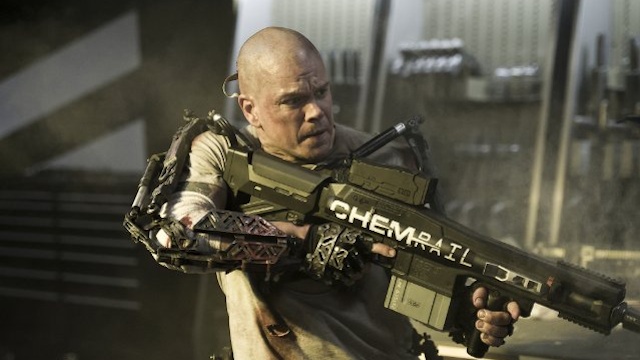
Yet another cool aspect of the recent Comic Con was the trailers for new movies previews that fans were treated to. One such movie was Neil Blomkamp’s (director of District 9) new film, entitled Elysium. According to IO9 magazine, the movie stars Matt Damon in the lead role and is scheduled for release in 2013.

Based on the video reel Blomkamp offered, the movie is still very much in development. Rough place holders had to stand in for many of the visual effects, which are as of yet incomplete. However, the fans were given a precis of the storyline, which is decidedly dystopian and cyberpunk in nature.

Set in 2159, the plot revolves around the eponymously named space station of Elysium, an apparently utopian retreat where the ultra-rich and beautiful live and have access to the most advanced medical technology. The rest of humanity lives planet-side, where overcrowding, disease and radiation have resulted from overpopulation and pollution. Enter into this Max (Matt Damon), a criminal who’s suffering from radiation sickness and must make it to Elysium’s medical facilities at all costs.

In time, Max’s mission becomes complicated as he comes into information which could shut down Elysium and usher in an age of equality for the human race, or at least a less polarized division of wealth. Additional concept art was also released, like an interior shot of the station featured below. Given the layout, Elysium appears to be based on an Island Three design, a circular space station and rotates to provide gravity. Echoes of 2001: A Space Odyssey there. Good for Blomkamp, referencing a classic!

Additional cast members will include Jodie Foster, District 9‘s Sharlto Copley, and Alice Braga (of City of God, Predators, Repo Men and I Am Legend fame). Think I might catch this one!

Ray Bradbury Gives Writing Advice

I recently came across this article, which seems to have been one of many I found when researching the life and works of sci-fi great Ray Bradbury. The source is Open Culture, an online magazine dealing with cultural and educational media. And like many other publications, they chose to honor the passing of Bradbury by publishing a series of articles which dealt with the man’s monumental influence on science fiction and writing in general.

This particular one deals with his 2001 keynote address at Point Loma Nazarene University’s Writer’s Symposium By the Sea, where he treated audiences to the benefit of his accumulated wisdom by boiling it down into 12 tips. As a newbie writer, I can tell you that many of these spoke to me as if they were written with me in mind! That’s the true mark of a great and relatable writer though, isn’t it? Their words somehow seem to transcend the page and all distance between you and get you right at your core.

And even if you’re not an aspiring writer, or an established one, I recommend reading through this list and digesting some of these nuggets. Their value goes beyond mere writing, I tells ya! But don’t take my word for it, read them yourself:

  1. Don’t start out writing novels. They take too long. Begin your writing life instead by cranking out “a hell of a lot of short stories,” as many as one per week. Take a year to do it; he claims that it simply isn’t possible to write 52 bad short stories in a row. He waited until the age of 30 to write his first novel, Fahrenheit 451. “Worth waiting for, huh?”
  2. You may love ‘em, but you can’t be ‘em. Bear that in mind when you inevitably attempt, consciously or unconsciously, to imitate your favorite writers, just as he imitated H.G. Wells, Jules Verne, Arthur Conan Doyle, and L. Frank Baum.
  3. Examine “quality” short stories. He suggests Roald Dahl, Guy de Maupassant, and the lesser-known Nigel Kneale and John Collier. Anything in the New Yorker today doesn’t make his cut, since he finds that their stories have “no metaphor.”
  4. Stuff your head. To accumulate the intellectual building blocks of these metaphors, he suggests a course of bedtime reading: one short story, one poem (but Pope, Shakespeare, and Frost, not modern “crap”), and one essay. These essays should come from a diversity of fields, including archaeology, zoology, biology, philosophy, politics, and literature. “At the end of a thousand nights,” so he sums it up, “Jesus God, you’ll be full of stuff!”
  5. Get rid of friends who don’t believe in you. Do they make fun of your writerly ambitions? He suggests calling them up to “fire them” without delay.
  6. Live in the library. Don’t live in your “goddamn computers.” He may not have gone to college, but his insatiable reading habits allowed him to “graduate from the library” at age 28.
  7. Fall in love with movies. Preferably old ones.
  8. Write with joy. In his mind, “writing is not a serious business.” If a story starts to feel like work, scrap it and start one that doesn’t. “I want you to envy me my joy,” he tells his audience.
  9. Don’t plan on making money. He and his wife, who “took a vow of poverty” to marry him, hit 37 before they could afford a car (and he still never got around to picking up a license).
  10. List ten things you love, and ten things you hate. Then write about the former, and “kill” the later — also by writing about them. Do the same with your fears.
  11. Just type any old thing that comes into your head. He recommends “word association” to break down any creative blockages, since “you don’t know what’s in you until you test it.”
  12. Remember, with writing, what you’re looking for is just one person to come up and tell you, “I love you for what you do.” Or, failing that, you’re looking for someone to come up and tell you, “You’re not nuts like people say.”

Rules one and two are especially important to me right now. I began trying to write novels and found the process overwhelming. Today, full-length novels constitute the majority of my unfinished works, cluttering up my inbox folder and making me feel like I’m a slow writer. Bah! Who needs that? Rule two is like gospel; though you may have writer’s you wish to emulate, do not try to be better than them. It will only lead to unfair comparisons and rob your work of originality. It put’s me in mind of what the poet Basho Mastsuo said: “Do not follow in the footsteps of the masters, but seek what they sought”. That’s right, I read a poem, try not to faint!

The rest all blend together for me in that they all ring true. If they could be boiled down into one simple rule, I’d say it would be “do what you love, and screw the rest!” Best advice I ever got, from J.M. Straczynski of all people (creator of Babylon 5). As long as you’re doing that, you can do no wrong, and your natural passion and dedication will yield results, sooner or later. And if it doesn’t, who cares? For in the end, its about you and not what others think, right? Thought money, fame and recognition are kind of sweet…

Until next time, RIP Mr. Bradbury and here’s hoping myself and my colleagues can acheive a small iota of the respect and recognition you did in your lifetime. I promise that we will stick to short stories for the time being, and that we won’t try to beat you, even if we do try to emulate you 😉

Winston Agonistes, Part III

Hey all. One thing that I like about summer, the added time it gives me to write! Yesterday, I went back to work on my story for Yuva, “Winston Agonistes” and finished part III. Last time, Winston met another synthetic named Yohanley, a aging AI who perplexed him with some rather odd questions. After asking him what he was, he told him that time would effectively erase all barriers between himself and his masters. Not knowing what to make of it, Winston put the encounter out of his mind and went on about his work.

And now, Winston is hard at work, accompanying the planetary council as they mount a diplomatic mission to another settlement. The mission proves interesting, as Winston is finding the settlers attitude towards him is undergoing a shift. He also begins to realize that much of what the Council has been doing of late is cloaked in secrecy, which is strange given that governments usually need more time to become clandestine. And last, he is beginning to contemplate what Yohanley said and what significance it might have for him. Could it all be connected…

“Everyone set?”

The personnel inside all signaled with a raised hand or a thumbs up gesture. The deckhand nodded and shut the vehicle’s door. Air seals engaged and the cabin suddenly became airtight. Still, no one inside seemed to feel comfortable enough to remove their helmets. The engine engaged and the cabin lurched a second later. They were, as the saying went, on the move. Their next stop, the Jiahu settlement and their litany of responsibilities.

They passed beyond the doors of the settlement, and the cabin filled with a bright orange glow. Winston set his eyes to the cabin’s window and watched as the surface began to roll past. Under the exposure of the sun, the earth looked much the same color as the sky, a warm, golden brown. The ATV blew by these quickly, leaving clouds of sand in its wake.

Before long, Winston could see native flora pass them by. It was sparse at first, but soon large stretches of the ruddy and purple mosses could be seen, the rich fungi that were indigenous to the surface. One had to travel some distance now to see these, even more so to witness the indigenous Deveroza that were once so common to the region. Strange, the plants seemed to grow through conveyance, but also demonstrated the trend of avoidance.

Curious…

“What do you see, Winston?” asked Bhutto, seated next to him. The words were muffled by the helmet she was still in the process of removing. He looked in time to see her hair extricate itself from her helmet in the form of a knotted tail. Somewhat shorter than usual, he noted.

“Councilor, have you done something with your hair?”

She smiled and touched a finger to the tail. “Yes, I trimmed it in anticipation for the mission. I didn’t want it coiling up around my face inside this thing. I might suffocate myself.”

Statistically unlikely, but Winston knew it to be a jest. He chuckled in accordance.

“So… what do you see?” she asked again. Winston looked out again and surveyed the landscape. The moss was getting thicker, the ATV’s wheels registering greater resistance as its adhesive filaments came into contact with its tires. Still, he knew that the question had an abstract feel to it, irrespective of the terrain’s objective qualities.

“Progress,” he said. “I see a world in transition, moving towards total transformation.”

Bhutto hummed happily. Clearly that was the answer she was hoping for. Their efforts, couched in such positivistic terms. Implying linear advancement, the inevitability of desired outcomes.

“What do you see?” he asked. She looked at him with some surprise. Perhaps she thought he had said it all already.

“Dirt,” She replied. “And moss. Raw material waiting to be molded.”

Interesting. He had thought she was digressing into the literal. It was good to know the metaphor was still in play.

“A new homeworld for our people.”

“Precisely.” She put her hand to his arm and gave it a squeeze. “And it’s amazing how fast it will happen, once everything is in place and ready to go.”

“You refer to the terraforming efforts, Councilor?”

She shook her head. “That’s just the beginning. Phase One. Phase two will be much more impressive.” Her expression changed and she released her hold on his arm. “But of course, that’s not for me to share.”

Winston nodded. Her eyes had taken on a longing quality. He turned his eyes back to the horizon, hoping to catch a glimpse of what she saw. She spoke of things he was not privy to, information that the Council did not readily share with him. Were he in possession of the decidedly human quality of impertinence, he might be inclined to exploit the moment to find out more. But every government was to be forgiven for keeping some information firmly under control.

At least, once it was up and running. Their own was still barely out of its cradle. Secrets at this juncture seemed somewhat… irregular.

Things changed suddenly, their transit becoming smoother. The cabins com pinged. The voice of the driver came on to make an announcement.

“Ladies and gentlemen, we are Jiahu is twenty minutes.”

“Excellent,” Winston said, clapping his hands together. He looked over to Bhutto, who had her helmet poised on her lap, ready to put back on once they arrived. He would have to ask now to avoid any awkwardness later.

“Do you think I could witness the proceedings, Councilor?”

She looked at his strangely. “You want to meet the mayor?”

“Just to be on hand for the meeting. I would find it most… stimulating.”

Bhutto nodded but looked away. Of all the Council, she seemed the least uncomfortable around Winston and other synthetics. Asking her seemed to be the logical choice. And yet, her hesitation gave him a strong indication of his chances. So did her tone.

“I will ask. But of course, this is Councilor Muhlu’s show. Final approval will have to come from him.”

“Thank you. Please be persuasive.”

Bhutto laughed. He put his odds of a successful case at 2.6468 to 1, against. Not entirely bad, all things considered. Getting better too. With time, he imagined he would be privy to all proceedings and internal matters.

Time… wasn’t that what Yohanley said was key? Was this what he meant. Who could be sure? It was entirely possible that model was experiencing a breakdown. His processors producing nonsense due to lack of maintenance. He would have to make such inquiries with Maintenance once they returned. Such a presence could be dangerous to the settlement.

“Look!” Bhutto pointed out the window. Winston obliged.

On the horizon, just off to their left, the gleaming cupola of Jiahu appeared. Its tall buildings were outlined in light within the dome’s enclosures. And within, the very person who could make or break their constitutional process. Mayor Len Wu, leader of the East Asian bloc, and one of Yuva’s most influential men.

Thank you and stay tuned. More to follow on this and other fronts, and my colleagues got plenty more to share as well!

10 Sci-Fi Novels People Pretend to Have Read

Came across this article in Io9 recently, then again over at Scoop.it. You can tell something is important not only when it speaks to you, but when like-minded individuals begin referencing it! And if you own a blog, you definitely want to get on that! In any case, I found the list especially interesting for two reasons. One, many of the books I have already read. And two, I haven’t even heard of the rest.

I’d say a list like this is long overdue, but it’s still highly subjective isn’t it? The books we pretend we’ve read all comes down to what we consider important and relevant, not to mention popular. And even within the genre of sci-fi, I’d say that list is too big to boil down to a simple top ten. Even so, it’s interesting to read and compare, and find out just how many you’ve read yourself. So please, check this out and tell me which of these you have read and which you think you’ll want to check out:

1. Cryptonomicon:
Read it! This book is Neal Stephenson’s groundbreaking piece of historical fiction, combining narratives involving World War II cryptographers with modern day IT geeks who are looking to establish a data haven in the South Pacific. The story tells the tale of a massive shipment of Nazi gold that got lost on its way to Japan, ran aground in the Philippines, and remained hidden until the late 90’s.

Personally, I loved this book because of the way it weaves history, both recent and distant, into a seamless narrative and draws all the characters into the same overarching plot. One would think that Stephenson was making a point about how we are all subjects of our shared history, but it could just be he’s that good a writer!

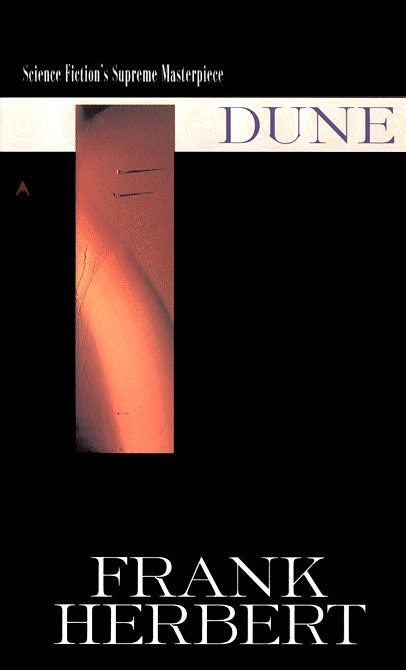
2. Dune:
Read it thrice! In Dune, Frank Herbert draws upon an immense store of classical sci-fi themes, a grand awareness of human nature and history, and a keen grasp of ecology and the influence environment has on shaping its inhabitants to create the classic that forever established him as one of the greatest sci-fi minds of all time.

Sci-fi geeks everywhere know this one and it saddens to me to think that it’s even on this list. Anyone who’s willing to pretend that they read this book clearly considers it important, which is why they should have read it, dammit! Not only is it a classic, it’s from the guy who literally wrote the book on science fiction that was meant to be taken seriously.

3. Gravity Rainbow:
Never heard of it! Apparently, the story came out in 1974 and deals with the German V2 rocket program near the end of World War II. Pat Murphy, author of The City, Not Long After and The Wild Girls, went so far as to compare this book to James Joyce, a the great Irish modernist writer who was also renowned for being brilliant and inaccessible.

In addition to be classified as enriching, it is known for being odd and hard to get through, with many authors themselves claiming to have started it several times but never being able to finish it. The plot is also rather unique, combining transgressive sexuality with the idea of total war and technological races. But one look at the dust jacket will tell you all of that, right? Crazy Germans!

4. Foundation:
Read it myself, and also am somewhat sad that it made the list. Sure, the fact that it’s a classic means that just about everyone who’s eve shown the slightest interest in sci-fi would want to read it. But I can’t for the life of me understand why people would claim to have read it. Jesus, it’s not a hard read, people. And Amazon sells used copies for cheap and handles shipping. No excuses!

And having just reviewed it, I shall say nothing of the plot, except that it in many ways inspired fellow great Frank Herbert in his creation of Dune. Like Frank, Asimov combined the idea of a Galactic Empire with a keen awareness of human history, eternal recurrence, and prescient awareness.

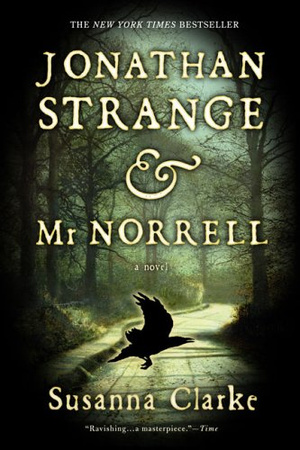
5. Johnathon Strange & Mr. Norrell:
Now this one I have heard of, but never felt compelled to pick up and read. Apparently, its size and bulk are the reason many people react the same. This 2004 book is the first novel by British writer Susanna Clarke which deals with the nature of the English character and the boundary between reason and irrationality.

Set in 19th-century England during the time of the Napoleonic Wars, the story is an alternative history that is based on the idea that at one time, magic existed in England and has thanks to the help of two men – the namesakes of the story, Jonathan Strange and Gilbert Norrell. At once interesting and speculative, it also presents the rather romantic vision of romance returning to a world increasingly characterized by modernity and cold reason.

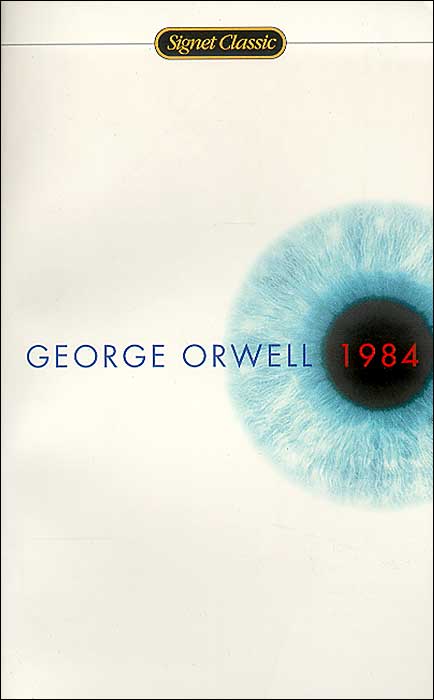
6. 1984:
Yep, read this one thrice as well! And given it’s reputation and place in the annals of literary history, I can totally see why people pretend to have read it. Oh, and let’s not forget the way people love to reference and abuse it’s message for the sake of making a quick and easy political point! But none of that excuses not reading it.

Set in an alternate history where WWIII and revolution have led to totalitarian governments in every corner of the world, the story tells the tale of one man’s quest to find answers and facts in a world permeated by lies and absolute repression. Of course, this meager description doesn’t do it justice. In the end, so much comes into play that it would take pages and pages just to provide an adequate synopsis. Suffice it to say, it’s a book that will change your life. READ IT!

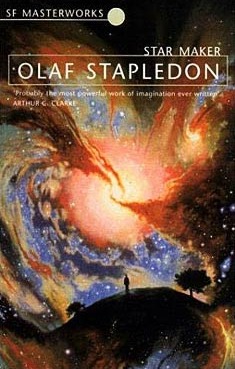
7. First and Last Men and Star Maker:
Another one which I’m not too sure about. Much of what is described within are concepts I have heard of in other places, and some of the content sounds familiar. Still, can’t say I’ve ever heard of Stapledon or these two works by name. But after reading about his work, I’m thinking I ought to check him out now. Tell me if you’d agree…

Published in 1930 and 1937, these two books tackled some rather broad ground. The first deals with the history of humanity, covering 18 species of humanity from the present to two billion years into the future. Based on Hegelian concept of history, humanity goes through several different types of civilizations and passes between stability and chaos over the course of it all. However, undeniable progress is made, as each civilization reaches further the last, culminating in leaps in evolution along the way.

In Star Maker, the plot revolves around a man who is able to leave his body and venture throughout the universe. He is able to merge with more minds along the way, a snowballing effect which allows him and his companions to explore more and worlds through time and space. This leads to a climax where a cosmological mind is created and makes contact with the “Star Maker” – the creator of the universe.

Sounds cool huh? And they appear to have no shortages of accolades. For example, Arthur C. Clarke called Star Maker one of the finest works of science fiction ever written, and the concept explored therein had a profound influence on many subsequent sci-fi minds, not the least of which were Gene Roddenberry and J.M. Straczynski.

8. The Long Tomorrow:
This one, I have heard of, mainly because it’s on my list as an example of post-apocalyptic fiction. I have yet to read it, but after reading about it, I think I would like to. Set in a post-apocalyptic world devastated by nuclear war, the story takes place within a society that is controlled by religious groups preaching a technophobic message.

Inevitably, the story comes to a head when young people, intrigued by stories of a neighboring community, go out in search of it, braving punishment and even exile. Sounds familiar? Well, it should. This book, which was published in 1955, has gone on to inspire countless variations and pop culture renditions. It also attempts to illustrate the connection between natural disasters and regression, traditionalism and repression.

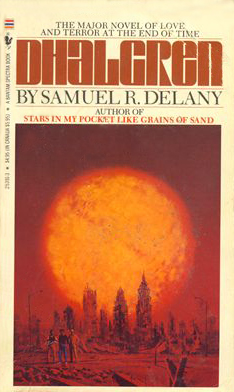
9. Dhalgren:
Yet another book that’s compared to James Joyce, largely by people that haven’t read it. I’m one of them! Apparently, this 1975 story by Samuel R. Delany takes place in a fictitious Midwestern town that has become cut off from the outside world by an event horizon. All communications are cut off, and the population become frightened by the night sky reveals two moons, and the morning sun is many times larger than our own.

More strange is the fact that street signs and landmarks shift constantly, while buildings that have been burning for days are either never consumed or show signs of damage. Gangs also begin to roam the nighttime streets, their members hidden within holographic projections of gigantic insects or mythological creatures. Against this backdrop, a group of people come together and try to make sense of what has happened as they struggle to survive.

Told from the point of view of a partial amnesiac, dysmetric, schizophrenic, as well as a bunch of other people who find themselves stranded in the city, the story is an exercise is confusion, dissociation, and a really just a big mystery. In the end, what is truly going on is never revealed, thus leaving the reader with their own interpretations. This is one of the selling points of the book, with William Gibson himself saying that it was “A riddle that was never meant to be solved.” Yeah, I definitely need to read this one!

10. Infinite Jest:
This last novel is more recent, having been released in 1996. Once again, haven’t heard of it, but given its content, praise, and the fact that the author’s low life was cut tragically short, it doesn’t surprise me that its one of those books that everyone feels they must read. But given the length, complexity and the fact that story contains 388 numbered end notes, I can see why they’ve also held back!

The story focuses on the lives of a celebrity family known as the Incandezas, a clear pun on their, shall  we say… luminous fame? The family is deeply involved in tennis, struggles with substance abuse, and in a state of disrepair since the father – a famous film director – committed suicide with a microwave. His last work was apparently a film (entitled “Infinite Jest”, but known throughout the story as “The Entertainment”) which is so entertaining, it causes viewer to lose all interest in everything besides watching the movie.

Clearly meant as a satire on North American culture, particularly celebrity families, entertainment, substance abuse and the sideshow that is celebrity rehab, the story is all about various people’s search for the missing tape of “The Entertainment” and what they plan to do with it. The novel received wide recognition and praise after its publication and became a testament to Wallace’s talent after he committed suicide in 2008.

Okay, that’s four out of ten for me. How did you do? And even if you could say that you’ve read most of the books on this list, or at least the one’s you’ve heard of, I’d say we’ve all come away with a more additions to our reading lists, hmmm? Yeah, I guess its back to Amazon for me!

Dystopan Literature Over Time

Came across this list on Goodreads, thanks largely to Molly Spring’s post (which I will reblog next since it’s pretty dawn awesome!). Basically, the table gives graphic representation to historical trends and the popularity of dystopian lit over the past few decades. Though it does preclude Yevengy Zamyatin’s We and Jack London’s The Iron Heel by a few years, it manages to pick up in the early 30′ with the creation of Brave New World.

Cataloging what led to the creation of that and all many subsequent dystopian classics, the creator of this infographic shows how our perceptions and tastes – as expressed through popular dystopian visions – have changed over time. In the end, the point seems to be that we’ve evolved from thinking simply that the state is the primary threat to human freedom in our world. Things like body image, reproductive rights, environmental issues, nuclear weapons, epidemics (both man-made and natural) and agism.

You might think that it’s making the point that people have more to worry about today than they did before. But personally, I just think it’s pointing out how the literature is evolving to focus on our own evolving sense of self and understanding of ourselves. You know the old saying, “the world isn’t any worse, you just understand it better?” Well, it’s a little like that. The literature isn’t any darker, just more complex. Quite the little romp too, if you ask me.