
 The explosion in computing and personal devices in recent years has led to a world where we are constantly surrounded by displays. Whether they belong to personal computers, laptops, smartphones, LCDs, PDAs, or MP3 players, there is no shortage to the amount of screens we can consult. In turn, this proliferation has led computer scientists and engineers to address a number of imperfections these displays have.
For instance, some of these displays don’t work in direct sunlight or are subject to glare. Others are horridly energy-inefficient and will drain their battery life very quickly. Some don’t have high-definition, rich color, and can’t display true black color. Just about all of them are rigid, and all can be broken given a solid enough impact. Luckily, a new age of flexible, ultra-HD screens are on the way that promise to resolve all of this.
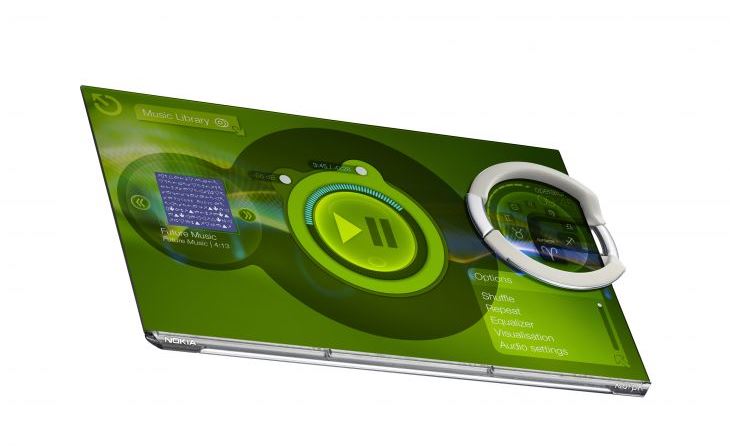
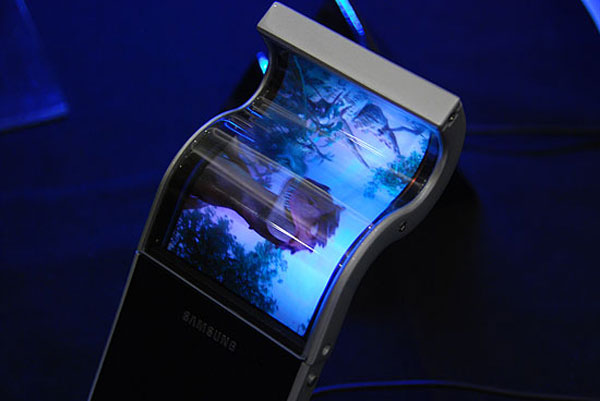 The first examples of this concept were rolled out at the 2011 Consumer Electronics Show, where Samsung unveiled its revolutionary new AMOLED display on a number of devices. This was followed up in September of 2012 when Nokia unveiled its Kinetic Device at the World Nokia Conference in London. Both devices showcased displays that could bend and flex, and were followed by concept videos produced by electronic giants Sony, 3M and Microsoft.
Since that time, numerous strides have been taken to improve on the technology before it hits the open market. In research published earlier this month in Nature, scientists describe what may be the first steps toward creating a new type of ultrathin, superfast, low-power, high-resolution, flexible color screen. If successful, these displays could combine some of the best features of current display technologies.
 The new displays work with familiar materials, including the metal alloy already used to store data on some CDs and DVDs. The key property of these materials is that they can exist in two states – when warmed by heat, light, or electricity, they switch from one state to the other. Scientists call them phase-change materials (PCMs); and as Alex Kolobov, a researcher at Japan’s Nanoelectronics Research Institute who was not involved in the new work, explains:
It is really fascinating that phase-change materials, now widely used in optical and nonvolatile electronic memory devices, found a potentially new application in display technology.
A PCM display would work similar to the electronic paper used in products like Amazon’s Kindle reader. Both are made by sandwiching a material that has two states, one lighter and one darker, in between layers of transparent conductors. The inner material is a viscous black oil filled with tiny white titanium balls. To make a pixel black or white, a current is run through a tiny area of the glass to either pull the reflective balls to the front, or cause them to recede.
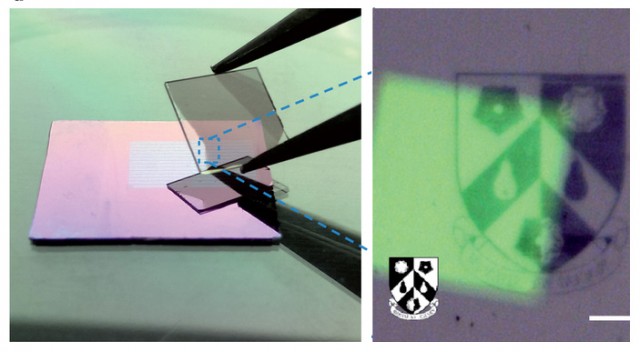 In a PCM display, the inner material is a substance made of silicon’s heavier cousins: germanium, antimony, and tellurium. The two states of this material (known as GST) are actually two different phases of matter: one an ordered crystal and the other a disordered glass. To switch between them, current pulses are used to melt a tiny column, and either cooled gently to make the crystal or rapidly to make the glass.
This cycle can be done remarkably quickly, more than 1 million times per second. That speed could be a big advantage in consumer products. While scrolling on a Kindle can be terribly slow because the screen only refreshes once per second, the refresh rate on a PCM display would be fast enough to play movies, stream videos, and perform all the tasks people routinely do with their devices.
 To make the new displays, the research team – led by Harish Bhaskaran, a nanoscale manufacturing expert from Oxford University – used a 35-year-old machine developed by the semiconductor industry. They then laid down three layers that were a few nanometers thick of conducting glass, GST, and another layer of conducting glass. Then they used current from the tip of an atomic force microscope to draw pictures on the surface.
These images included everything from a Japanese print of a tidal wave to fleas and antique cars – each one smaller than the width of a human hair. With this sort of flexible, ultra-high resolution screen, a PCM display could be made into everything from a bendable laptop and personal device to a programmable contact lens — like Apple’s Retina Display, except that it would actually fit on your retina.
 Turning this technology into products will require years of labor and hundreds of millions of dollars. Nevertheless, Bhaskaran and his colleagues are optimistic. The electronics industry has lots of experience with all the components, so there are plenty of well-known tricks to try to improve this first draft. And they are hardly alone in their efforts to bring flexible displays to market.
For instance, LG unveiled their new line of flexible OLED TVs at CES earlier this year. Now, they are taking things a step further with the unveiling of two new 18-inch OLED panels, the first of which is a transparent display, while the second can be rolled up. Although both fall short of the 77-inch flexible TV on show at CES, the company says the new panels prove that it has the technology to bring rollable TVs with screens in excess of 50 inches to market in the future.
 Unlike their 77-inch flexible TV that has a fairly limited range of changeable curvature, LG Display’s latest flexible OLED panel can be rolled up into a cylinder with a radius of 3 cm (1.18 in) without the function of the 1,200 x 810 pixel display being affected. This is made possible though the use of a high molecular substance-based polyimide film to create the backplane, rather than conventional plastic .
The transparent OLED panel, on the other hand, was created using LG Display’s transparent pixel design technology. With transmittance of 30 percent, the company says the panel is superior to existing transparent LCD panels that generally achieve around 10 to 15 percent transmittance. LG Display claims to have also reduced the haze of the panel, caused by circuit devices and film components, to just 2 percent.
 As In-Byung Kang, Senior Vice President and Head of the R&D Center at LG Display, explained:
LG Display pioneered the OLED TV market and is now leading the next-generation applied OLED technology. We are confident that by 2017, we will successfully develop an Ultra HD flexible and transparent OLED panel of more than 60 inches, which will have transmittance of more than 40 percent and a curvature radius of 100R, thereby leading the future display market.
Granted, it will be still be a few years and several hundred million dollars before such displays become the norm for computers and all other devices. However, the progress that is being made is quite impressive and with all the electronics megagiants committed to making it happen, an age where computing and communications are truly portable and much more survivable is likely just around the corner.
Sources: wired.com, gizmag.com, extremetech.com
 This past week, the Electronic Entertainment Expo (commonly referred to as E3) kicked off. This annual trade fair , which is presented by the Entertainment Software Association (ESA), is used by video game publishers, accessory manufacturers, and members of the computing industry to present their upcoming games and game-related merchandise. The festivities wrapped up this Friday, and was the source of some controversy and much speculation.
 Nowhere was this more clear than with Nintendo, which was the source of quite a bit of buzz when the Expo began. But it was evident that games – particularly for the Wii U – were not going to materialize until 2015. The company got a jump on the next-generation console battle by launching its Wii U in late 2012, a year ahead of Sony and Microsoft, but poor sales have led to big game developers largely abandoning it.
 The companies have some respective big guns in the works, such as Halo 5: Guardians and Uncharted 4: A Thief’s End, but they’re also scheduled for release in 2015. However, with the brisk sales of the Xbox One and PlayStation 4 consoles, both companies have the luxury of taking their time with big games. Nintendo is not so fortunate, since the jump they made with the Wii U leaves them with a big gap that they aren’t apparently filling.
 The software giant bumbled the Xbox One launch last year and alienated many gamers, mainly by focusing on TV and entertainment content instead of gaming and tying several unpopular policies to the console, which included restrictions on used games. The company eventually relented, but the Xbox One still came bundled with the voice- and motion-sensing Kinect peripheral and a price tag that was $100 higher than Sony’s rival PlayStation 4.
 That was certainly the focus for Microsoft at E3. TV features weren’t even mentioned during the company’s one-and-a-half-hour press conference on Monday, with Microsoft instead talking up more than 20 upcoming games. As Mike Nichols, corporate vice-president of Xbox and studios marketing, said in an interview:
 But this new virtual reality headset, which was recently bought by Facebook for $2 billion, was undeniably the hottest thing on the show floor. And the demo booth, where people got to try it on and take it for a run, was booked solid throughout the expo. Sony also wowed attendees with demos of its own VR headset, Project Morpheus. And while the PlayStation maker’s effort isn’t as far along in development as the Oculus Rift, it does work and adds legitimacy to the VR field.
 Legendary Japanese creator Hideo Kojima also had to defend the torture scenes in his upcoming Metal Gear Solid V: The Phantom Pain, starring Canadian actor Kiefer Sutherland (man loves torture!), which upset some viewers. Kojima said he felt the graphic scenes were necessary to explain the main character’s motivations, and that games will never be taken seriously as culture if they can’t deal with sensitive subjects.
 If one were to draw any conclusions from this year’s E3, it would undoubtedly be that times are both changing and staying the same. From console gaming garnering less and less of the gamers market, to the second coming of virtual reality, it seems that there is a shift in technology which may or may not be good for the current captains of industry. At the same time, competition and trying to maintain a large share of the market continues, with Sony, Microsoft and Nintendo at the forefront.





 Stories by Williams