Buzz Aldrin: Let’s Go to Mars!

Apollo11_Aldrin1This past weekend was the 45th anniversary of the Moon Landing. To mark that occasion, NASA mounted the @ReliveApollo11 twitter campaign, where it recreated every moment of the historic mission by broadcasting updates in “real-time”. In addition to commemorating the greatest moment in space exploration, and one of the greatest moments in history, it also served to draw attention to new efforts that are underway.

Perhaps the greatest of these is one being led by Buzz Aldrin, a living-legend and an ambassador for current and future space missions. For decades now, Aldrin has been acting as a sort of elder statesman lobbying for the exploration of the cosmos. And most recently, he has come out in favor of a mission that is even grander and bolder than the one that saw him set foot on the Moon: putting people on Mars.

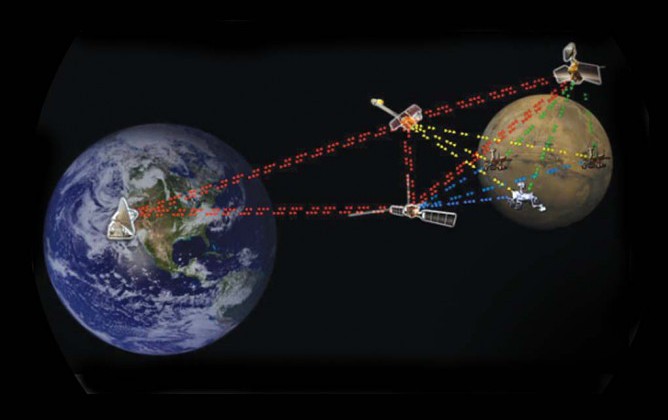
mars_spaceXmissionIt’s no secret that NASA has a manned mission planned for 2030. But with space exploration once again garnering the spotlight – thanks in no small part to commercial space companies like SpaceX and Virgin Galactic – Aldrin is pushing for something even more ambitious. Echoing ideas like Mars One, his plan calls for the colonization of Mars by astronauts who would never return to Earth.

To be sure, the spry 84 year-old has been rather busy in the past few years. After going through a very public divorce with his wife 0f 23 years in January of last year, he spent the past few months conducting a publicity blitz on behalf of the 45th anniversary of Apollo 11. In between all that, he has also made several appearances and done interviews in which he stressed the importance of the Martian colonization project.

Mars_OneA few months ago, Aldrin wrote an op-ed piece for Fast Company about innovation and the need for cooperation to make a new generation of space exploration a reality. During a more recent interview, which took place amidst the ongoing crisis in the Ukraine, he once again stressed the importance of cooperation between the United States, Russia, China, and their respective space programs.

As he told Fast Company in the interview:

I think that any historical migration of human beings to establish a permanent presence on another planet requires cooperation from the world together. That can’t be done by America competing with China… Just getting our people back up there is really expensive! We don’t compete but we can do other things close by with robots, which have improved tremendously over the past 45 years (since Apollo 11). You and I haven’t improved all that much, but robots have. We can work together with other nations in design, construction, and making habitats on both the near side and far side of Mars. Then when we eventually have designs, we’ll have the capacity to actually build them.

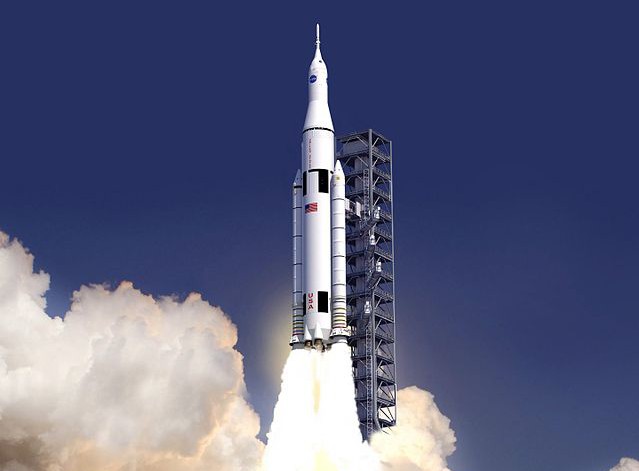
SLS_launchSimilarly, Aldrin took part in live Google Hangout with Space.com’s managing editor Tariq Malik and executive producer Dave Brody. This took place just eight days before the 25th anniversary of the Landing. During the broadcast, he discussed his experiences as an astronaut, the future of lunar exploration, future missions to Mars and beyond, and even took questions via chatwindow on Google+’s webpage.

At this juncture, its not clear how a colonization mission to Mars would be mounted. While Mars One is certainly interested in the concept, they (much like Inspiration Mars) do not have the necessary funding or all the technical know-how to make things a reality just yet. A possible solution to this could be a partnership program between NASA, the ESA, China, Russia, and other space agencies.

terraformingSuch ideas did inform Kim Stanley Robinson’s seminal novel Red Mars, where an international crew flew to the Red Planet and established the first human settlement that begins the terraforming process. But if international cooperation proves too difficult, perhaps a collaboration between commercial space agencies and federal ones could work. I can see it now: the Elon Musk Martian Dome; the Richard Branson Habitat; or the Gates colony…

With that in mind, I think we should all issue a prayer for international peace and cooperation! And in the meantime, be sure to check out the video of the Google Hangout below. And if you’re interested in reading up on Aldrin’s ideas for a mission to Mars, check out his book, Mission to Mars: My Vision for Space Exploration, which is was published by National Geographic and is available at Amazon or through his website.


Sources:
fastcompany.com, buzzaldrin.com, space.com

News from Space: Latest Tests and New Players

Apollo11_earthIn the new age of space travel and exploration, commercial space companies are not only boasting immense growth and innovation, but are reaching out to fill niche markets as well. In addition to launchers that can send orbiters and payloads into space, there are also new breeds of commercial satellites, new engines, and a slew of other concepts that promise to make the industry more promising and cost effective.

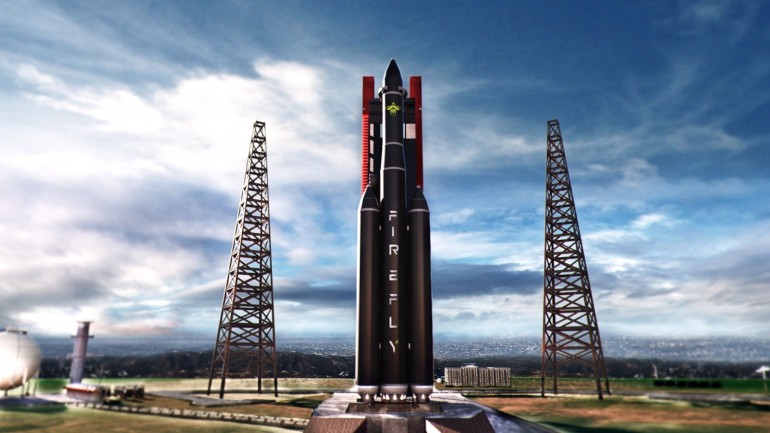
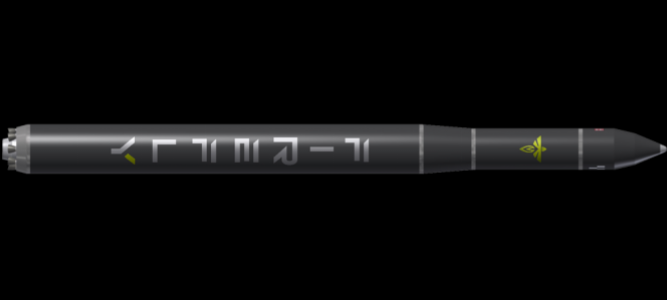
A case in point is the small satellite launch company Firefly Space Systems, which recently unveiled its planned Alpha launcher. Aimed at the small satellite launch market, it’s designed to launch satellites into low-Earth orbit (LEO) and Sun-synchronous orbits for broadband communication using an unconventional aerospike engine, it is also the first orbital launcher to use methane as fuel.

firefly-alphaThe Firefly Alpha is a specialized design to launch light satellites at low cost into low Earth Designed to carry payloads of up to 400 kg (880 lb), the Alpha features carbon composite construction and uses the same basic design for both of its two stages to keep down costs and simplify assembly. Methane was chosen because it’s cheap, plentiful, clean-burning and (unlike more conventional fuels) self-pressurizing, so it doesn’t require a second pressurization system.

But the really interesting thing about the two-stage rocket assembly is that the base of the engine is ringed with rocket burners rather than the usual cluster of rocket engines. That’s because, while the second stage uses conventional rocket engines, the first stage uses a more exotic plug-cluster aerospike engine that puts out some 400.3 kN (or 40,800 kg/90,000 lb)  of thrust.

firefly-alpha-4Aerospike engines have been under development since the 1960s, but until now they’ve never gotten past the design phase. The idea behind them is that rockets with conventional bell-shaped nozzles are extremely efficient, but only at a particular altitude. Since rockets are generally used to make things go up, this means that an engine that works best at sea level will become less and less efficient as it rises.

The plug aerospike is basically a bell-shaped rocket nozzle that’s been cut in half, then stretched to form a ring with the half-nozzle forming the profile of a plug. This means that the open side of the rocket engine is replaced with the air around it. As the rocket fires, the air pressure keeps the hot gases confined on that side, and as the craft rises, the change in air pressure alters the shape of the “nozzle;” keeping the engine working efficiently.

firefly-alpha-2The result of this arrangement is a lighter rocket engine that works well across a range of altitudes. Because the second stage operates in a near vacuum, it uses conventional rocket nozzles. As Firefly CEO Thomas Markusic put it:

What used to cost hundreds of millions of dollars is rapidly becoming available in the single digit millions. We are offering small satellite customers the launch they need for a fraction of that, around US$8 or 9 million – the lowest cost in the world. It’s far cheaper than the alternatives, without the headaches of a multi manifest launch.

Meanwhile, SpaceX has been making headlines with its latest rounds of launches and tests. About a week ago, the company successfully launched six ORBCOMM advanced telecommunications satellites into orbit to upgrade the speed and capacity of their existing data relay network. The launch from Cape Canaveral Air Force Station in Florida had been delayed or scrubbed several times since the original launch date in May due to varying problems.

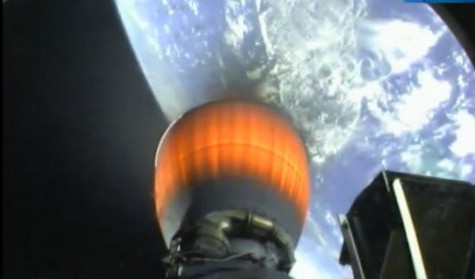
spacex_rocketHowever, the launch went off without a hitch on Monday, July 14th, and ORBCOMM reports that all six satellites have been successfully deployed in orbit. SpaceX also used this launch opportunity to try and test the reusability of the Falcon 9′s first stage and its landing system while splashing down in the ocean. However, the booster did not survive the splashdown.

SpaceX CEO Elon Musk tweeted about the event, saying that the:

Rocket booster reentry, landing burn & leg deploy were good, but lost hull integrity right after splashdown (aka kaboom)… Detailed review of rocket telemetry needed to tell if due to initial splashdown or subsequent tip over and body slam.

SpaceX wanted to test the “flyback” ability to the rocket, slowing down the descent of the rocket with thrusters and deploying the landing legs for future launches so the first stage can be re-used. These tests have the booster “landing” in the ocean. The previous test of the landing system was successful, but the choppy seas destroyed the stage and prevented recovery. Today’s “kaboom” makes recovery of even pieces of this booster unlikely.

sceenshot-falcon9-580x281This is certainly not good news for a company who’s proposal for a reusable rocket system promises to cut costs exponentially and make a whole range of things possible. However, the company is extremely close to making this a full-fledged reality. The take-off, descent, and landing have all been done successfully; but at present, recovery still remains elusive.

But such is the nature of space flight. What begins with conceptions, planning, research and development inevitably ends with trial and error. And much like with the Mercury and Apollo program, those involved have to keep on trying until they get it right. Speaking of which, today marks the 45th anniversary of Apollo 11 reaching the Moon. You can keep track of the updates that recreate the mission in “real-time” over @ReliveApollo11.

As of the writing of this article, the Lunar module is beginning it’s descent to the Moon’s surface. Stay tuned for the historic spacewalk!

apollo11_descent

Sources: universetoday.com, gizmag.com

News from Space: Time Capsule to Mars

Time_capsule_to_mars1The selfie is an apparent obsession amongst today’s youth, snapping pictures of themselves and posting them to social media. But for just 99 cents, people can send a picture of themselves to the Red Planet as part of the Time Capsule to Mars (TC2M) – a student-led, crowdfunded project that aims to send three CubeSat microsatellites to the planet containing digital messages from tens of millions of people from all around around the world.

The objective of the TC2M – a project of Explore Mars – mission is to inspire people throughout the globe and allow them a personal connection with space exploration in the same spirit of the Apollo missions. The non-profit organization also aims to educate and inspire children by enabling them to upload their media content, track their spacecraft and lander, and participate in the mission via a personalized Mission Control portal over the internet.

Mars_exploreWith the help and support of NASA, MIT, Stanford University and Deep Space Industries (among others), the student-led team will design, launch, fly and land three CubeSat-based spacecraft on the surface of Mars. The projected cost of the mission, covering everything from design to launch, is $25 million, which TC2M will attempt to raise by way of crowdfunding.

In terms of sending media content, people currently have the option of uploading only images up to 10 MB in size. However, in the coming months, TC2M claims that participants will also be able to upload other types of media such as videos, audio clips and text files. In order to reach as many people as possible, uploads in the developing world will be free of charge for smaller files, underwritten by corporate sponsors.

Time_capsule_to_mars2Emily Briere, a mechanical engineering student who is heading the project, explained their aim thusly:

We hope to inspire and educate young people worldwide by enabling them to personally engage and be part of the mission. The distributed approach to funding and personal engagement will ultimately guarantee our success.

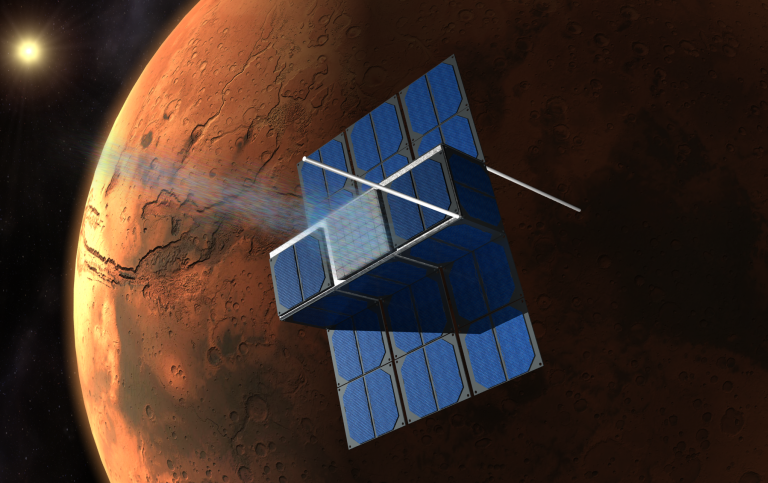
The data will be carried by three identical 13-kg (27-lb) CubeSat spacecraft, each 30 x 40 x 10 cm (12 x 16 x 4 inches) in size. This will be the first time that such spacecraft are used for interplanetary travel, as well as the first time that many of the new technologies are being tested. The data will be stored in a quartz crystal, which is extremely dense and could last for millions of years, hence making it ideal for surviving the hostile conditions on Mars.

Time_capsule_to_mars_thrusterThe technologies being tested on the three spacecraft include delay-tolerant networking for the Deep Space Internet, inflatable antennae, and new interplanetary radiation sensors that will pave the way for future human trips to Mars. But out of all the new technologies being tested, the most exciting is certainly the propulsion system. But the most interesting technology of all will be in the form of its engines.

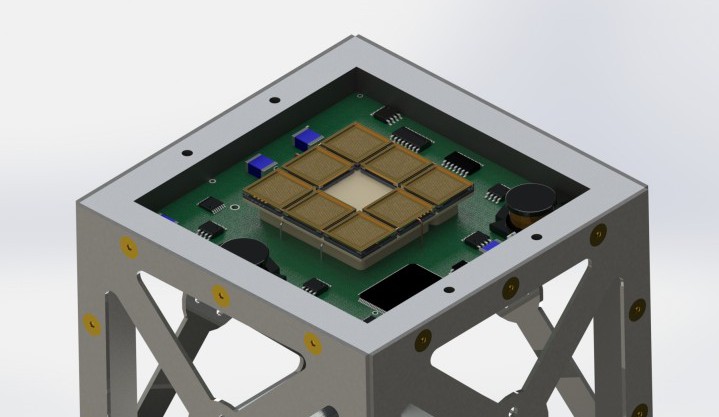
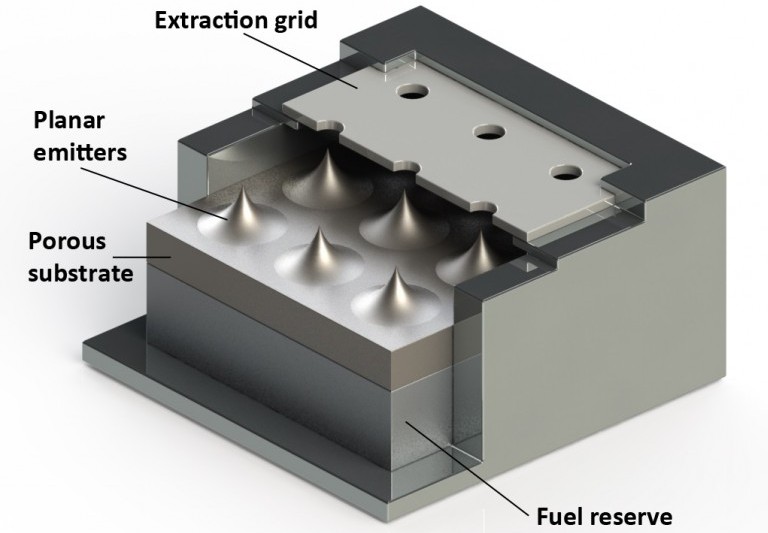
The three spacecraft will be propelled by an ion electrospray system (iEPS), a microthruster developed at MIT that is essentially size of a penny (pictured above). Each spacecraft will be powered by 40 thruster pairs, which will generate thrust using an electric field to extract and accelerate ions. The ionic liquid propellant is much more efficient than rocket fuel, and MIT scientists believe a scaled-up version may one day bring humans to Mars.

Time_capsule_to_mars_thruster1The choice of employing three separate but identical spacecraft for the mission may be due in part to the fact that so many new technologies are being tested at the same time. To triple the chances of success, Briere has previously said that crowdfunders who want to send their media to Mars will have the option of having the data uploaded on all three spacecraft, for an additional price.

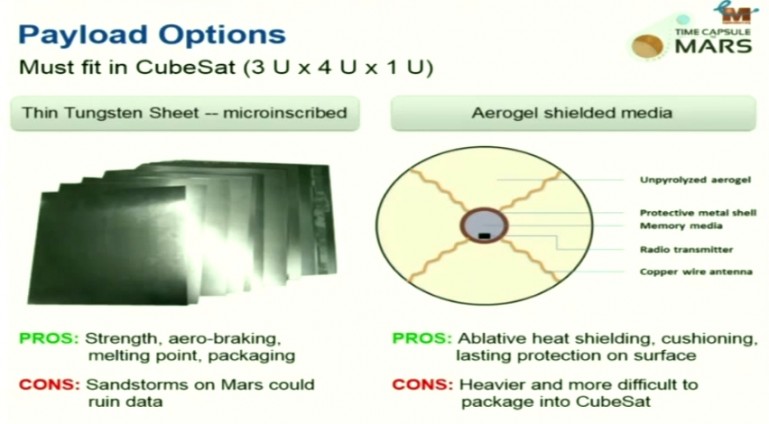
The spacecraft themselves will disintegrate as they traverse the Martian atmosphere. However, the payloads are being designed to aerobrake and land on the surface of Mars while keeping the data intact and preserved uncorrupted on the surface of the planet for a long, long time. As for how they intend to keep it stored until the day that manned missions can retrieve it, there are a few options on the table.

Time_capsule_to_marsOne option that is being considered is to use a microinscribed thin tungsten sheet, which has the advantage of being thin, light and strong, with a high melting point – meaning it won’t disintegrate upon entry – and good aerobraking properties because of its large surface area. However, there are concerns that sandstorms on Mars might damage the data once it has landed.

A second option would be an aerogel-shielded media. A metal ball could encase the data which would be stored in a very light medium, such as a quartz memory. The metal ball would be surrounded with an aerogel that will act as an ablative shield as it enters the atmosphere. And as it gets closer to the surface, the metal ball will act as a cushion for the data as it lands on Mars.

Time_capsule_to_mars3The organizers have only just announced their crowdfunding plans, and expect to reach the very ambitious goal of $25 million before the launch, which is planned for 2017. You can contribute to the mission and upload your own picture by visiting the mission website. And for those interested in possibly contributing, stay tuned to find out how and where you can donate once the crowdfunding campaign is up and running.

So in addition to showcasing new spacecraft, new media technologies, this project is also an attempt to stimulate interest in the new age of space exploration – an age characterized by public access and involvement. It’s also an opportunity to make your mark on the Red Planet, a mark which will someday (if all goes to plan) be uncovered by a new generation of explorers and settlers.

In the meantime, be sure to watch the short promotional video below which describes the mission and its goals:


Sources:
gizmag.com, timecapsuletomars.com, web.mit.edu

News From Space: Cold War Chill Returning to Space

Space_race1[2]It’s no secret that relations between the US and Russia have been strained due to the latter’s recent military activities in Crimea. And now, it appears that Russia is using their space program as leverage in their ongoing fight over sanctions. Back in April, NASA announced that collaboration with Roscosmos – Russia’s Federal Space Agency – had ended for the time being. Since then, an escalating war of words and restrictions have followed.

For instance, in the past months, the U.S. has restricted communication between some American scientists and their Russian colleagues as part of their protest against Crimea. In response, Dmitry Rogozin – Deputy Prime Minister and head of the Russian Military-Industrial Commission – said on his Twitter feed that he is restricting the export to the US of Russia’s RD-180 rocket engines, for uses that do not involve the U.S. military – a move which has temporarily grounded all US military satellites from being deployed into orbit.

NASA_trampolineMr. Rogozin also posted an image of a trampoline with a big NASA logo in the centre, saying that after 2020 it is the technology U.S. astronauts will need to use get to the International Space Station. One week later and in response, NASA Administrator Charles Bolden said that the cooperation between NASA and Roscosmos on the International Space Station hadn’t changed “one iota” in recent years, and has withstood the increasingly frosty atmosphere between Washington and Moscow over the events in the Crimea and Ukraine.

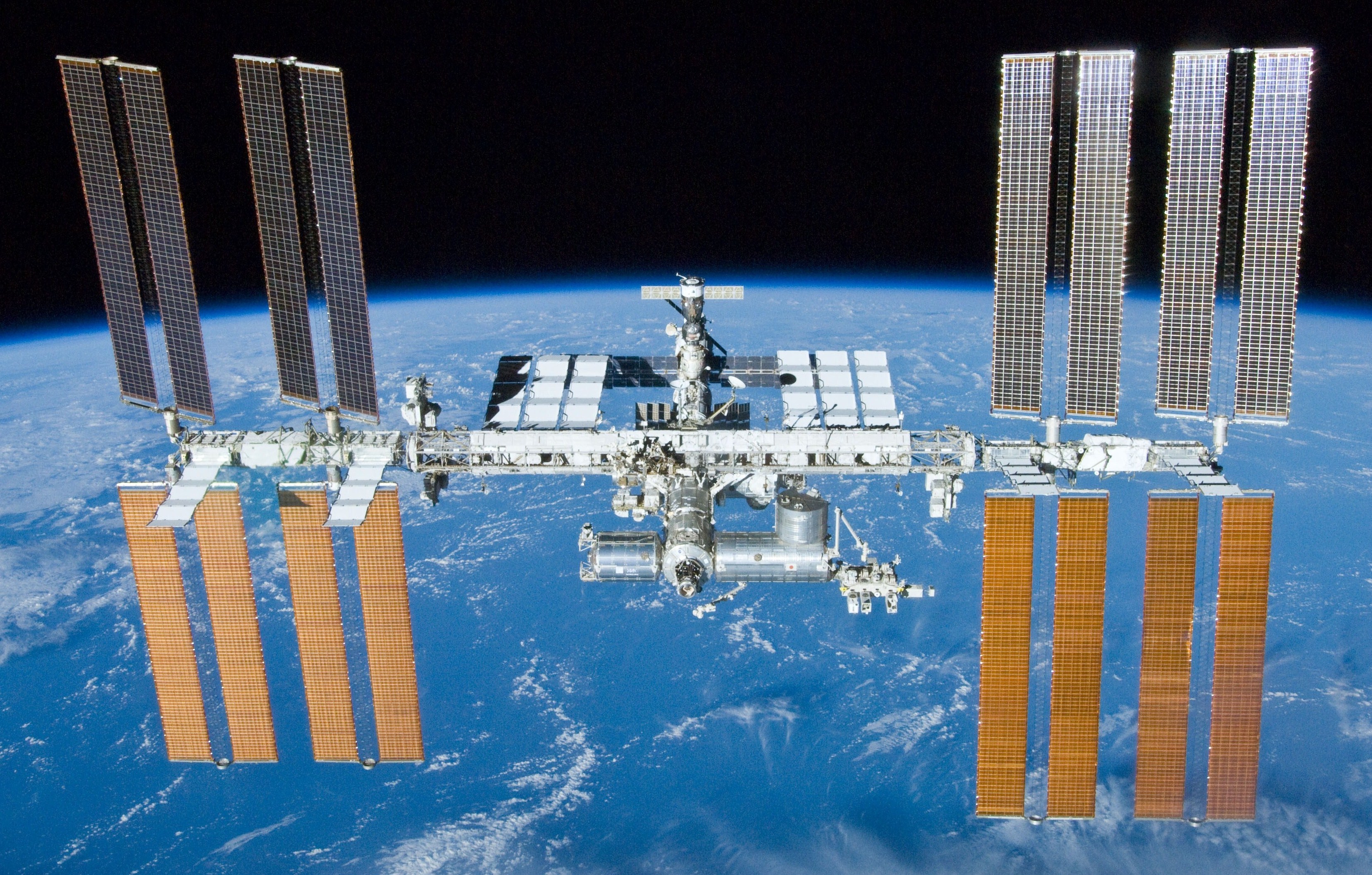
Still, Bolden indicated that if for one reason or other a country should drop out of the project, the others would seek to continue. But in the meantime, this would means the US would lose its capacity to put its own spy and military satellites into orbit, the future of the International Space Station (ISS) would be uncertain. In addition to the US, Japan, Europe and Canada are also members of the ISS and all currently depend on Russian Soyuz capsules to take astronauts to the space station since NASA retired its shuttle fleet.

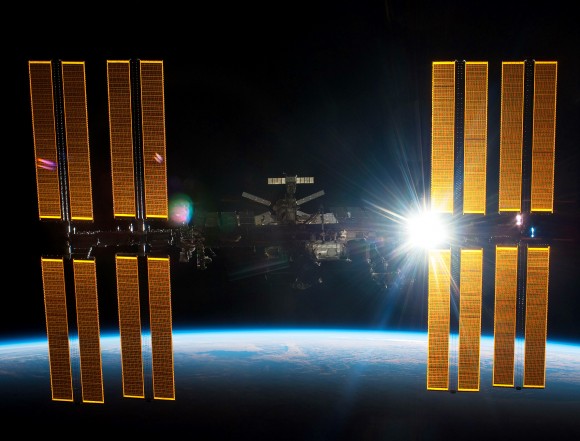
International-Space-Station-ISS-580x441All in all, it is a sad state of affairs, and not just because of the repercussions to space exploration and scientific research. As a product of post-Cold War co-operation, the ISS cost $100 billion to create and was arguably the most expensive multinational peacetime undertaking in history. Now, it is being threatened because the two nations that came together to make it a reality are regressing into a state of Cold War detente. And though the Russians currently feel that they have the upper hand, the long-term reality is far different.

Back in the early 1990s, both the U.S. and Russian space programs were floundering. The Russian program was running broke because of the collapse of the Soviet Union, and the U.S. was operating a space shuttle program that was proving to be more expensive than promised. The Americans were also having difficulty finding support for their Freedom space station project, which had a budget that was also ballooning upwards, and the Russian’s weren’t sure how much longer Mir would remain in operation.

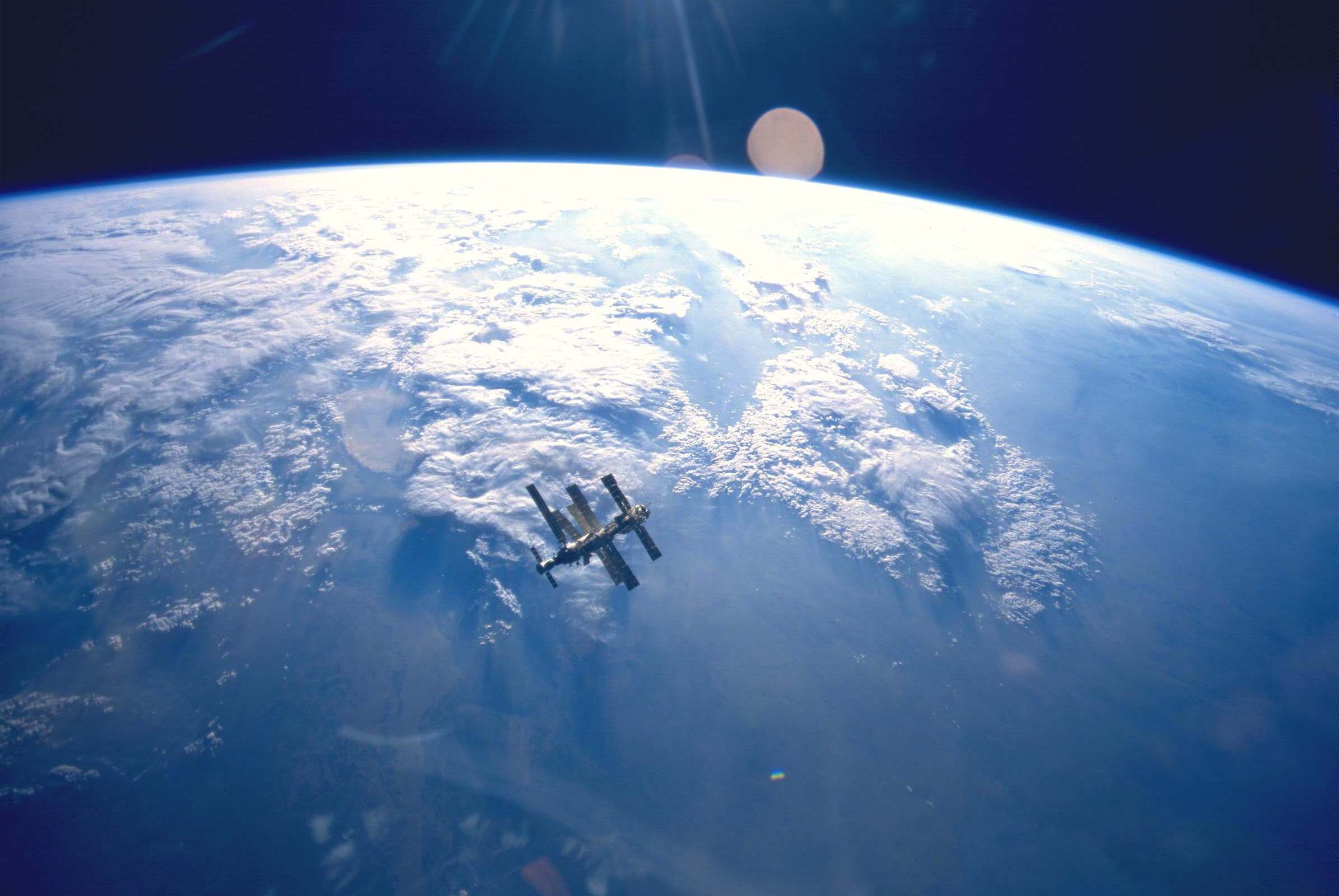
Earth_&_Mir_(STS-71)Both countries agreed the only way to keep their space programs alive and build a large space station was to share the costs and technology, which also allowed other countries from Europe, as well as Japan and Canada, to participate. In the 13 years since it has been occupied, the International Space Station has literally known no borders, as astronauts from dozens of nations have participated in missions that have had wide-ranging benefits.

And in the process, Russia has benefited greatly in financial terms as the US has paid tens of millions of dollars to have American astronauts fly aboard the former space station Mir and ride along on their Soyuz rockets. If this friendly arrangement breaks down, it will cost both countries dearly. Russia will lose all that income from the sale of its space technology, and the U.S. will have to accelerate the development of its own space capsules and rockets to launch people and satellites into space from American soil.

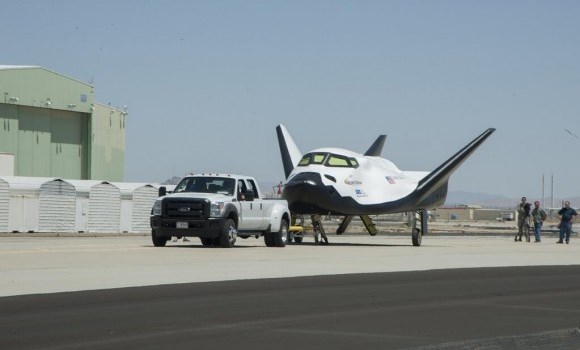
dream_chaserStanding on the sidelines are individuals and private companies like Elon Musk and SpaceX, the Texas company that already builds its own low-cost rockets, along with space capsules that have been delivering supplies to the Space Station. In addition, Sierra Nevada, a private aerospace contractor, is working with NASA to produce the Dream Chaser as part of the agency’s reusable vertical-takeoff, horizontal-landing (VTHL) program.

Between SpaceX already delivering capsules to the ISS, its successful reusable rocket demonstrations, and the multiple proposals NASA has for a new era of space vehicles, the US space program may not be grounded for much longer. And there is something to be said about competition spurring innovation. However, one cannot deny that it is unfortunate that the US and Russia may be once again moving forward as competitors instead of companions, as that is likely to cost all sides far more.

But of course, there is still plenty of time for a diplomatic solution to tensions in the east, and plenty of reasons for all sides to avoid regressive to a Cold War footing. We’ve come too far at this point to turn back. And considering how much of our future depends on space travel and exploration going ahead unimpeded, we can’t afford to either!

Sources: cbc.ca, phys.org

New Theatrical Trailer: Interstellar

interstellar_2014This weekend, when the Godzilla remake will be screening, audiences will be treated to another first. After wrapping up with the Dark Knight series, Christopher Nolan has taken a different route with this next project, title Interstellar. And with this latest theatrical trailer, moviegoers will finally see exactly what his new film is about. Basically, in the not-to-distant future, a global food crisis hits Earth, and to find solutions, humanity must look to the stars.

That’s the bare bones of it at any rate.  To be more specific, the plot revolves around Cooper (Matthew McConaughey) and his family. A former pilot and engineer who has had to turn to farming to feed his family, Conner finds himself being called upon to take part in an expedition in order to find a new place for humanity to live. As Michael Caine’s character is quoted as saying: “We’re not meant to save the world, we’re meant to leave it.”

Embracing such things as Climate Change and the public’s growing fascination with space exploration and the next great leaps humanity is likely to take, Nolan has announced his return to the world of epic space-exploration. And between the scenes of gritty desolation seen on planet Earth, to the majestic grandeur of the scenes set in space, it’s clear that Nolan is well suited to the medium, being a director who’s well known for his stunning visuals and ability to create atmosphere.

News From Space: Robotnaut Gets a Pair of Legs!

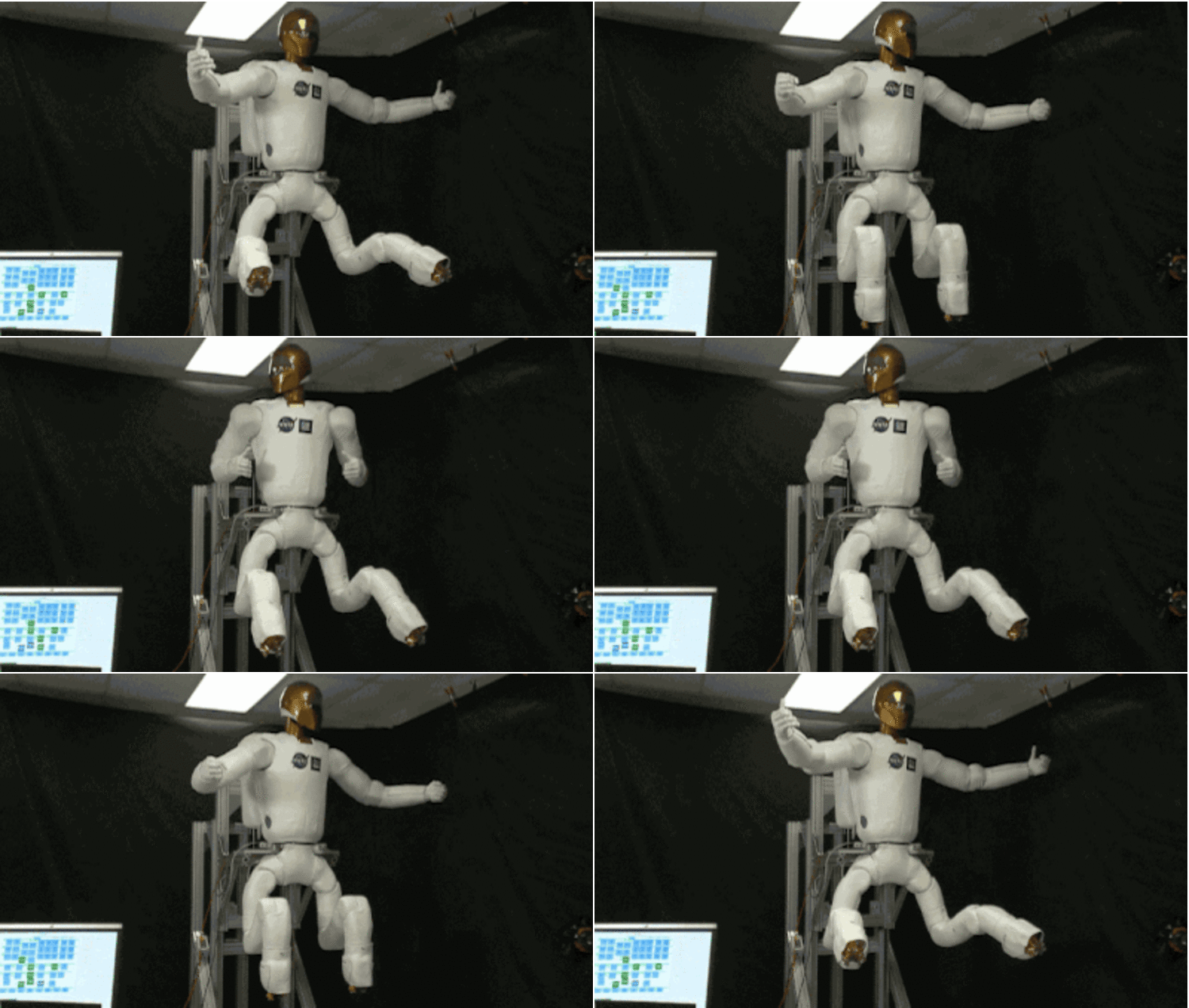
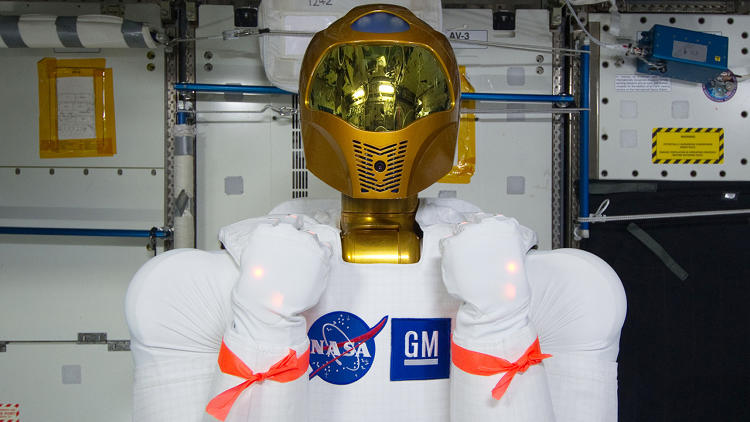
robotnaut_movementSpaceX’s latest delivery to the International Space Station – which was itself pretty newsworthy – contained some rather interesting cargo: the legs for NASA’s robot space station helper. Robotics enthusiasts know this being as Robonaut 2 (R2), a humanoid robot NASA placed on the space station to automate tasks such as cleaning and routine maintenance. Since its arrival at the station in February 2011, R2 has performed a series of tasks to demonstrate its functionality in microgravity.

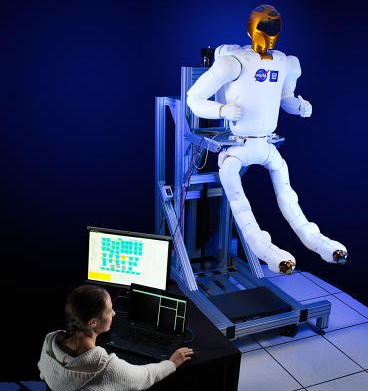
Until now, Robonaut navigated around the ISS on wheels. But thanks to a brand-new pair of springy, bendy legs, the space station’s helper robot will now be able to walk, climb, and perform a variety of new chores. These new legs, funded by NASA’s Human Exploration and Operations and Space Technology mission directorates, will provide R2 the mobility it needs to help with regular and repetitive tasks inside and outside the space station. The goal is to free up the crew for more critical work, including scientific research.

robonaut1NASA says that the new seven-jointed legs are designed for climbing in zero gravity and offer a considerable nine-foot leg span. Michael Gazarik, NASA’s associate administrator for space technology in Washington, explained:

NASA has explored with robots for more than a decade, from the stalwart rovers on Mars to R2 on the station. Our investment in robotic technology development is helping us to bolster productivity by applying robotics technology and devices to fortify and enhance individual human capabilities, performance and safety in space.

Taking their design inspiration from the tethers astronauts use while spacewalking, the legs feature a series of “end effectors” – each f which has a built-in vision system designed to eventually automate each limb’s approaching and grasping – rather than feet. These allow the legs to grapple onto handrails and sockets located both inside the space station and, eventually, on the ISS’s exterior. Naturally, these legs don’t come cheap -costing $6 million to develop and an additional $8 million to construct and test for spaceflight.

robonaut_legsRobonaut was developed by NASA’s Johnson Space Center in collaboration with General Motors and off-shore oil field robotics firm Oceaneering. All that corporate involvement isn’t accidental; Robonaut isn’t designed to simply do chores around the space station. NASA is also using R2 to showcase a range of patented technologies that private companies can license from Johnson Space Center.

The humanoid, task-performing robot is also a NASA technology showcase. In a webcast, the space agency advertised its potential uses in logistics warehouses, medical and industrial robotics, and in toxic or hazardous environments. As NASA dryly puts it:

R2 shares senses similar to humans: the ability to touch and see. These senses allow it to perform in ways that are not typical for robots today.

robonaut_legs2In addition to these legs, this latest supply drop – performed by a SpaceX Dragon capsule – included a laser communication system for astronauts and an outer space farming system designed to grow lettuce and other salad crops in orbit. We can expect that the Robotnaut 2 will be assisting in their use and upkeep in the coming months and years. So expect to hear more about this automated astronaut in the near future!

And in the meantime, be sure to check out this cool video of the R2 robotic legs in action:


Sources:
fastcompany.com, nasa.gov

News from Space: NASA’s Future Spacesuit

z-seriessuit1It’s no secret that the human race is poised on a new generation of space exploration and travel. With future missions based on towing asteroids to Earth, building settlements on the Moon, and walking on Mars, NASA and other space agencies are eying their aging hardware and looking for design modifications. From shuttles, to rockets, to capsules, everything is getting an overhaul. And now, NASA is looking to create the next generation of space suits, and is looking to the public’s for help.

They are called the Z-series, a revolutionary new suit that is designed for walking on Mars as well as floating around in space and performing spacewalks. This new series is expected to replace the current aging design, which has been in continuous use on both space flights and aboard the International Space Station since 1982. In addition to updated technology and functionality, the new spacesuit also has an updated look.

NASA_suitThe first design was unveiled back in December of 2012 with the Z-1, which bore a striking resemblance to Buzz Lightyear’s own spacesuit. The new version (the Z-2 series), which has different joint designs and a more durable torso, also comes with a trio of “flashy” cover designs that were made in collaboration with fashion students at Philadelphia University, and were inspired by biomimicry, the evolution of technology, and even – supposedly – street fashion.

z-seriessuit2And unlike the current microgravity suits, the Z-series is designed for walking in extra-terrestrial environments where gravity is the norm (i.e. the Moon and Mars). Intrinsic to the new design is flexibility: it makes it much easier to walk, bend, and pick things up off the surface of a planet or moon. It also goes on quite differently. Whereas the old suit is pulled on like a pair of pants and a shirt, the new version has a handy door built into the back so someone can climb inside.

As Bobby Jones, an engineer for ILC, the company that worked on the new design explained:

There are a lot of fundamental design differences between developing a microgravity suit versus a planetary walking suit. A lot of that has to do with how much mobility is built into the lower torso. With microgravity you’re using your arms to move around and your feet just hang out there. You can dock the suit up to your habitat or vehicle and leave it outside, so you don’t drag dust and other things into your cabin,” Jones explains.

z-seriessuit4As previously noted, anyone can help decide among the three cover designs by casting a vote on NASA’s website. One option, inspired by underwater creatures (and known as the “Biomimicry” suit), employs glowing wires to help the suit stay visible at night. A second version – known as the “Technology” suit – pays homage to past spacesuits and uses light-emitting patches along with wire. The third option, inspired by “Trends in Society”, uses electroluminescent wire and a bright color scheme to mimic the appearance of sportswear and the emerging world of wearable technologies.

NASA says the final design is “reflective of what everyday clothes may look like in the not too distant future,” pulling in elements of sportswear and wearable tech. NASA will move forward with the most popular cover in the public vote, and plans to have the suit ready for testing by the end of the year. And they are hardly alone in looking to create suits that can handle the challenges of future exploration. For example, it’s also worth checking out this MIT professor Dava Newman sleek Mars spacesuit, aka. the “Spiderman Spacesuit”, that is currently in development.

In the meantime, check out this video from Ted Talks where Newman showcases her Spiderman suit. And be sure to head over to the Johnson Space Center’s website and cast your vote for what NASA’s next-generation spacesuit will look like.


Sources:
fastcoexist.com, jscfeatures.jsc.nasa.gov

New Anthology Sample: Arrivals!

dome_cityI told you it’s been a busy time for the Yuva anthology, and not just for my venerable colleagues. In my case as well, I’ve made some headway on the short story Arrivals and thought it was time to share! For the last few samples, the story was focused on the goings-on of the Planetary Council once they had learned that a new convoy of ships was approaching the planet. As always, there were hard questions, fears and agendas at play.

For this part, I have chosen to shift the focus back to the person who noticed the new convoy of colonists (aka. the Second Wave) coming in the first place – Marcellin Strauss, a simple technician who toiled in anonymity prior to the detection of the approaching convoy that set everything on the planet in motion. Now, he finds himself being sought out by the Planetary Council, and told to report to strange location for reasons that are not shared. Hope you like the sampling, and stay tuned for more!

_____

Asteria Research Facility
Zarmina, Vogt

It was like looking at a still frame in some futuristic SenSim. The building had the appearance of a mushroom, an off-white, ground-hugging thing with just the slightest overhanging edges. And yet, its dimensions seemed unnaturally large for the setting, far bigger than anything he’d seen in an auxiliary dome, which this place certainly appeared to be.

As he disembarked from the transit car, Strauss consulted his Tab to make sure he was in the right place. The Council’s message had been somewhat short on explanations, but the directions had been quite precise. The private line he had taken to get here had deposited him at a stop just over a hundred meters away, and every building and laneway that sat between him and the mushroom cap seemed awfully quiet. As he looked around the expanse of the small dome, he got the strange feeling that he was very much alone… and being watched.

“Welcome resident! How may I assist you?”

Strauss almost jumped. He turned quickly to the right and noticed the transit chest sitting there. As always, this consisted of a squat red box with a tall display stand at the side. On the display screen, the words it had just uttered were displayed prominently; the happy, iconic face of Magid Mukhtari smiling as it repeated them.

“Welcome resident! How may I assist you?”

“I, uh…” he replied dumbfoundedly, and looked back in the direction of the far building.

“Will you be requiring personal transit on this trip?” the voice asked, suggesting the most obvious option. He considered the distance between him and his destination and judged that it was not an unreasonable suggestion.

“I guess so,” he said, and placed his Tab on his chest.

“Very good, sir. Please return the vehicle to one of several designated transit boxes on your journey when you are finished with it.”

The door on the box opened and a ground car presented itself to him. Stepping onto the foot rest, he placed his hands on the control ring and felt the car power up. The terminal in the middle came online and the face of Muhktari was there as well, giving him a quick tutorial.

“Just place your feet on the acceleration pads located at the front of the footrest to-”

Strauss didn’t bother to wait for it to finish. He had had enough experience driving himself around to know how the capitol cars worked. The face of the screen laughed as he took off, putting distance between himself and the stop.

“Whoa! I see you’ve done this before! Please exercise caution when driving amongst pedestrians and other vehicles. And remember to return the car to a designated transit chest when you are finished with it. Have a nice day!”

What pedestrians? he wondered, as he drove towards his destination. Several minutes passed as he closed the distance between the transit line and the far building. And at no point did he see anyone, nor any indication of people working inside the other structures. The feeling of isolation intermixed with the sense that he was being watched yet again, and it did not make for a happy state of mind.

He was just glad he wasn’t hungover as well, though a shot of liquid courage would certainly have been welcome! He did his best to focus on where he was headed and tried not to think of the eerie, empty buildings that were passing him by, or the distinct impression that they weren’t so much empty as containing spies who watched him from every window.

But on that front, things weren’t much better. At his current distance, the building seemed to loom much higher than before, forcing him to look up towards the dome’s roof to take it all in. This meant that the ceiling, with all it’s rigid struts and panels were now it’s backdrop. The strange, webbed pattern only served to make it all look somehow more… spooky.

As he got closer, he came to realize something else about the building. All along the façade, there were lines of various colors, but none of them seemed to correspond to a segment in the structure. As far as one could tell, the building was a single piece, no joints or seams to speak of. Such seemed unlikely, but the illusion was not dispelled with any decrease of distance.

That’s when every single device on his body began to signal to him. The sound was unmistakable, indicating that they were going into offline mode since there was no longer any bandwidth in this area. He came to a stop and pulled his Tab from his chest to confirm this. Sure enough, the Tab presented a topographical representation of the area that showed a large, circular dead zone emanating out from the mushroom-shaped building. Rather than having ventured beyond the range of the QIN’s wireless network, he was now entering an area where it was actively being denied.

He took a deep breath and let it out slowly. Between his observations of the structure and this latest revelation, it seemed clear that whoever was inside was taking great pains to keep what they were doing in there a secret.

What am I stepping into here? he wondered. He scanned the outer edge of the building again, trying to see if he could spot any telltale signs of cameras or spy drones. There were none that he could see, but he sensed they were there… somehow, somewhere.

And yet, he found himself pressing the accelerator pedal again and driving closer. Whatever this summons was, whatever was going on inside that odd-looking building, he wanted to know. Besides, at this point, he was just about there. Might as well go all the way and see what all the hubbub was about.

“You have reached your destination,” the happy face of Mukhtari said once he came to  stop. “I am not picking up any transit chests at this location. If you would like to park this vehicle for later use, please say so now. If not, please tell this car to –”

“Return,” he ordered, stepping free of the footrest. The voice stopped in midsentence, having recieved the requisite order to head back to it’s last storage location. It did manage to issue a kind farewell as it zipped away along the street, moving in a perfect rectilinear fashion.

“We hope that you enjoyed your ride!”

Strauss chuckled to himself and looked towards the mushroom, which now had the appearance of being a big, white giant. He was tempted to walk up and touch it, thinking at this point that it had to be composed of some kind of ceramic or composite material.

However, in one spot there was an irregularity –  a sort of circular hole that was two meters high and less than a single meter deep. Inside, the same seamless ceramic material sat, solid and impenetrable. But this was the only thing that even resembled a door. Taking another deep breath, Strauss took a few steps towards it and steeled himself for a surprise, one way or another.

That’s when he heard a loud hiss and a high pitched squeal. Strauss’ gate came to an immediate halt and his heart began to beat overtime. He stood motionless for several seconds, worried that he had set something off, afraid to move lest he make it worse.

But the noticed, the circular opening was opening further. Inside, several small lines appeared on the circular surface, bisecting the door at cross-angles, and then began pulling it open. When they finally opened all the way, he saw a woman standing there, wearing a grey jumpsuit with the same strange color patterns he noticed on the building’s façade.

“You Marcellin Strauss?” she asked, sticking her head through the open doorway. He found himself scanning her suit still, wondering just what the hell section it represented. She wasn’t with Planetary, or Defense, for that matter. Neither the color nor the insignia patches matched. He then realized she had asked him a question and simply nodded, unable to form words at the moment.

“Good,” she said. “Get inside, we have a lot to cover and we’re running late.”

She turned back inside and clearly meant for him to follow. Strauss managed to find his voice and clumsily uttered the obvious question. “I- I’m sorry. Who are you?”

She turned back to him and raised an eyebrow, a reaction that let him know exactly how little she thought of the question. “Madeleine Hartberg, Yuva Cosmonautic Corps.”

“Cosmonau-” he stuttered. “I- I wasn’t aware there was one.”

She smiled sideways. “There is now. And there are people inside who would very much like to talk to you. Are you going to come see them, or stand there like an idiot all day?”

Strauss once again fell mute and couldn’t move. And whoever this woman was, she was clearly getting annoyed because of it.

“Look, Strauss, I don’t have time to explain everything right now. Bottom line is, you’ve been asked to participate in something bigger than anyone on this planet has known since we made ‘Fall. Now are you coming, or are you going to miss out on that opportunity?”

Marcellin’s voice didn’t respond, but his feet seemed to be in working order. He knew this, because he began to follow her inside.

“Good!” she said, ushering him in. “Now please move it. Thirty seconds of this and I’m already sick of you!”

News from Space: Space Elevator by 2035!

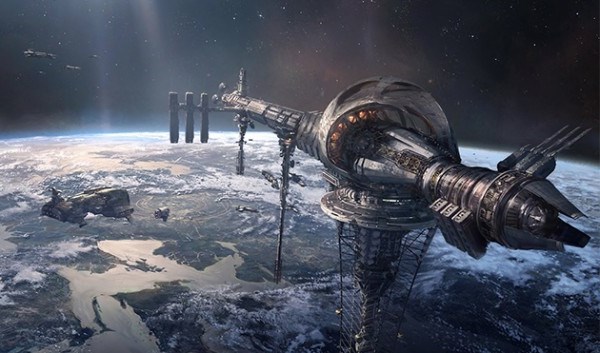
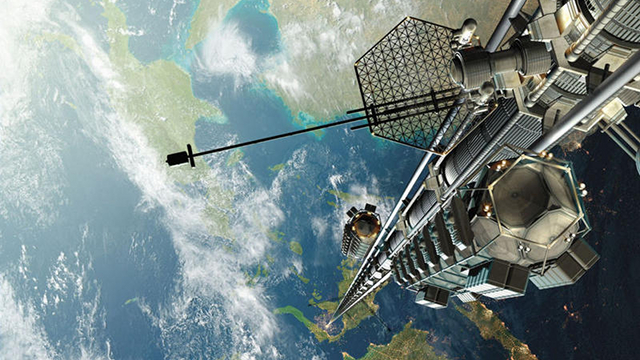
space_elevator2Imagine if you will a long tether made of super-tensile materials, running 100,000 km from the Earth and reaching into geostationary orbit. Now imagine that this tether is a means of shipping people and supplies into orbit, forever removing the need for rockets and shuttles going into space. For decades, scientists and futurists have been dreaming about the day when a “Space Elevator” would be possible; and according to a recent study, it could become a reality by 2035.

The report was launched by the International Academy of Astronautics (IAA), a 350-page report that lays out a detailed case for a space elevator. At the center of it that will reach beyond geostationary orbit and held taught by an anchor weighing roughly two million kilograms (2204 tons). Sending payloads up this backbone could fundamentally change the human relationship with space, with the equivalent of a space launch happening almost daily.

space_elevatorThe central argument of the paper — that we should build a space elevator as soon as possible — is supported by a detailed accounting of the challenges associated with doing so. The possible pay-off is as simple: a space elevator could bring the cost-per-kilogram of launch to geostationary orbit from $20,000 to as little as $500. Not only would be it useful for deploying satellites, it would also be far enough up Earth’s gravity well to be able to use it for long-range missions.

This could include the long-awaited mission to Mars, where a shuttle would push off from the top and then making multiple loops around the Earth before setting off for the Red Planet. This would cut huge fractions off the fuel budget, and would also make setting up a base on the Moon (or Mars) a relatively trivial affair. Currently, governments and corporations spend billions putting satellites into space, but a space elevator could pay for itself and ensure cheaper access down the line.

terraforming-mars2The report lays out a number of technological impediments to a space elevator, but by far the most important is the tether itself. Current materials science has yet to provide a material with the strength, flexibility, and density needed for its construction. Tethers from the EU and Japan are beginning to push the 100-kilometer mark, are still a long way off orbital altitude, and the materials for existing tethers will not allow much additional length.

Projecting current research in carbon nanotubes and similar technologies, the IAA estimates that a pilot project could plausibly deliver packages to an altitude of 1000 kilometers (621 miles) as soon as 2025. With continued research and the help of a successful LEO (low Earth orbit, i.e. between 100 and 1200 miles) elevator, they predict a 100,000-kilometer (62,137-mile) successor will stretch well past geosynchronous orbit just a decade after that.

carbon-nanotubeThe proposed design is really quite simple, with a sea platform (or super-ship) anchoring the tether to the Earth while a counterweight sits at the other end, keeping the system taught through centripetal force. For that anchor, the report argues that a nascent space elevator should be stabilized first with a big ball of garbage – one composed of retired satellites, space debris, and the cast-off machinery used to build the elevator’s own earliest stages.

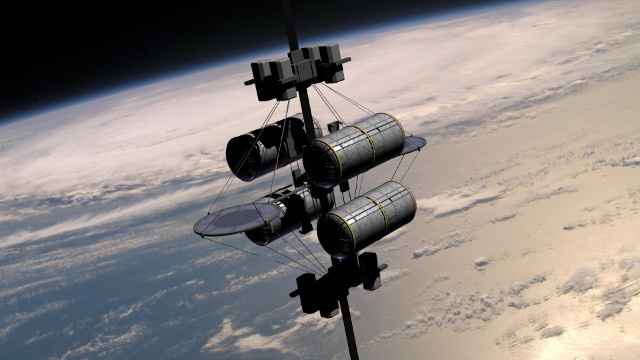
To keep weight down for the climbers (the elevator cars), this report imagines them as metal skeletons strung with meshes of carbon nanotubes. Each car would use a two-stage power structure to ascend, likely beginning with power from ground- or satellite-based lasers, and then the climber’s own solar array. The IAA hopes for a seven-day climb from the base to GEO — slow, but still superior and far cheaper than the rockets that are used today.

Space Elevator by gryphart-d42c7sp

One thing that is an absolute must, according to the report, is international cooperation. This is crucial not only for the sake of financing the elevator’s construction, but maintaining its neutrality. In terms of placement, IAA staunchly maintains that a space elevator would be too precious a resource to be built within the territory of any particular nation-state. Though every government would certainly love a space elevator of their very own, cost considerations will likely make that impossible in the near-term.

By virtue of its physical size, a space elevator will stretch through multiple conflicting legal zones, from the high seas to the “territorial sky” to the “international sky” to outer space itself, presenting numerous legal and political challenges. Attacks by terrorists or enemies in war are also a major concern, requiring that it be defended and monitored at all levels. And despite being a stateless project, it would require a state’s assets to maintain, likely by the UN or some new autonomous body.

space_elevator1In 2003, Arthur C. Clarke famously said that we will build a space elevator 10 years after they stop laughing. Though his timeline may have been off, as if often the case – for example, we didn’t have deep space missions or AIs by 2001 – sentiments were bang on. The concept of a space elevator is taken seriously at NASA these days, as it eyes the concept as a potential solution for both shrinking budgets and growing public expectations.

Space is quickly becoming a bottleneck in the timeline of human technological advancement. From mega-telescopes and surveillance nets to space mining operations and global high-speed internet coverage, most of our biggest upcoming projects will require better access to space than our current methods can provide for. And in addition to providing for that support, this plans highlights exactly how much further progress in space depends on global cooperation.

Source: extremetech.com

News from Space: Crimean Crisis Highlights US Dependence

crimean_crisis3The crisis in the Crimea continues, with Russia and the Ukraine threatening military action and the US and its western allies threatening sanctions. In addition to anxieties about the likelihood of war and the conflict spilling over into other regions, the crisis has served to highlight other possible global repercussions. And interestingly enough, some of them have to do with the current balance of space exploration and research.

In essence, every aspect of the manned and unmanned US space program – including NASA, other government agencies, private aerospace company’s and crucially important US national security payloads – is highly dependent on Russian & Ukrainian rocketry. Thus, all of the US space exploration and launches are potentially at risk amidst the current crisis.

SoyuzCompared to the possibility of an outbreak of war that could engulf the Eurasian triangle, this hardly seems terribly consequential. But alas, quite a few people stand to suffer from seeing all rockets grounded in the Ukraine and Russia as a result of the current climate. Consider the ISS, which is entirely dependent on Earth-based rockets for resupply and personnel rotation.

As it stands, astronauts on the International Space Station (ISS) ride to space and back on regularly scheduled launches, and each new rocket carried fresh supplies of food and equipment. The Atlas V and Antares rockets, plus critical U.S. spy satellites that provide vital, real time intelligence, are just some of the programs that may be in peril if events deteriorate, or worse yet, spin out of control.

ISSThe threat to intelligence gathering operations would be especially critical, since it would hamper efforts to monitor the crisis. In short, the Crimean confrontation and all the threats and counter threats of armed conflicts and economic sanctions shines a spotlight on US vulnerabilities regarding space exploration, private industry and US national security programs, missions, satellites and rockets.

But the consequences of escalating tensions would hardly be felt by only one side. Despite what some may think, the US, Russian and Ukrainian space programs, assets and booster rockets are inextricably intertwined and interdependent, and all would suffer if anything were to shut it down. For instance, some 15 nations maintain participation and funding to keep the ISS and its programs running.

ISS_crewAnd since the forced retirement of NASA’s space shuttle program in 2011, America has been dependent on Russia for its human spaceflight capability. ISS missions are most often crewed by American astronauts and Russian cosmonauts. And under the most recent contract, the US pays Russia $70 million per Soyuz seat, and both they and the Ukraine’s space programs are dependent on this ongoing level of investment.

The fastest and most cost effective path to restore America’s human spaceflight capability to low Earth orbit and the ISS is through NASA’s Commercial Crew Program (CCP) seeking to develop private ‘space taxis’ with Boeing, SpaceX and Sierra Nevada. But until such time as long-term funding can be guaranteed, the current arrangement will persist.

maven_launchWhen NASA Administrator Chales Bolden was asked about contingencies at a briefing yesterday, March 4, he responded that everything is OK for now:

Right now, everything is normal in our relationship with the Russians. Missions up and down are on target… People lose track of the fact that we have occupied the International Space Station now for 13 consecutive years uninterrupted, and that has been through multiple international crises… I don’t think it’s an insignificant fact that we are starting to see a number of people with the idea that the International Space Station be nominated for the Nobel Peace Prize.

At the same time, he urged Congress to fully fund CCP and avoid still more delays:

Let me be clear about one thing. The choice here is between fully funding the request to bring space launches back to the US or continuing millions in subsidies to the Russians. It’s that simple. The Obama administration chooses investing in America, and we believe Congress will choose this course as well.

spacex-dragon-capsule-grabbed-by-iss-canadarm-640x424At a US Senate appropriations subcommittee hearing on Defense, which was held yesterday to address national security issues, SpaceX CEO Elon Musk underscored the crucial differences in availability between the Falcon 9 and Atlas V in this excerpt from his testimony:

In light of Russia’s de facto annexation of the Ukraine’s Crimea region and the formal severing of military ties, the Atlas V cannot possibly be described as providing “assured access to space” for our nation when supply of the main engine depends on President Putin’s permission.

So, continuing operations of the ISS and US National Security are potentially held hostage to the whims of Russian President Vladimir Putin. And given that Russia has threatened to retaliate with sanctions of its own against the West, the likelihood that space exploration will suffer is likely.

?????????????????????????????????????????????????????????????????????????????????????????????????????????????????????????????????????????????????????????????????????????????????????????????????????????????????????????????????????????????????????????????????????????????????????????????????????????????????????????????????????????????????????????????????????????????????????????????????????????????????The Crimean crisis is without a doubt the most dangerous East-West conflict since the end of the Cold War. Right now no one knows the future outcome of the crisis in Crimea. Diplomats are talking but some limited military assets on both sides are reportedly on the move today.