 The past few months have been a busy and productive time for the people behind the Yuva anthology. Not only did we take on a host of new writers who adventurously volunteered to join us and share their passion for science fiction, they even managed to produce some solid first and even second drafts. In addition, several members that have been with the project from the beginning have managed to do some final drafts which merit sharing right now!
And this time, it’s Amber Iver’s and Goran Zidar’s Ember Storm, which they just put the final touches on. In this story, we see are given front row seats to a crisis in progress – as told from the points of view of two down and out maintenance workers, and a small family unit caught in the thick of things. Here’s a sample from the beginning, hope you all enjoy! And remember, there’s more where this came from once the book is published:
_____
“Hey, Charlie, do you hear that?”
“Leave me alone, Rhina,” Charlie grunted and pulled his cap down over his face. “I’m trying to sleep here.”
“The environmental alarm’s going off.” Rhina moved over to the console and brought up the display.
“So?”
Rhina studied the screen for a moment. “So it looks like there’s a storm coming.”
“Good.”
“Good?”
“Yeah, it means I’ve got nothing else to do but kick back and study the inside of my eyelids.”
“Wake up idiot,” Rhina tossed a PAD at her colleague’s supine form.
“Hey! What was that for?”
“Strap in. I’m taking us back.”
Charlie let out a huge sigh as he got to his feet and stumbled across to Rhina. She could smell the alcohol on his breath as he loomed over her and tried to get his eyes to focus on the screen.
“You won’t make it.”
“What do you mean?”
Charlie stabbed a finger at a coloured line on the screen. “Front’s coming in fast, it’ll hit before we reach the colony. We might as well just wait it out here.”
“Well I’m gonna try anyway.” Rhina reached forward and touched the ignition. “I don’t relish the idea of spending the next few hours with just your drunk arse for company.”
“That’s harsh.” Charlie’s face twisted in mock disappointment. “I’ll just be asleep on the floor. You won’t even notice I’m here.”
“Even asleep you’re crap company. Now strap yourself in, we’re leaving.”
* * *
“Good morning, Miss Siera. It’s time to wake up.”
“Just ten more minutes, please,” Siera said, sleep making her words run into each other.
The room was suddenly bathed in sunlight.
“Hey!” Siera was forced to shield her eyes from the bright light.
“Your mother’s instructions were quite clear, miss.”
Siera squinted as she threw the covers aside and strode across the room, snatching the PAD from David’s loose grasp. “Leave my PAD alone.” Her fingers danced over the screen and soon the light in the room dimmed to a more manageable level. “Why do I need to be up? It’s the weekend.”
“Isn’t this the day you’re to make lunch for your father?”
Siera sucked a breath, her drowsiness banished.
“Oh, no. I forgot.”
“That’s why I am here, miss.”
Siera smiled and leaned forward to kiss David lightly on the cheek. “What would I do without you?”
David raised a hand to his face, the latex skin of his cheek still warm where Siera’s lips touched him. “You’re appreciation is welcome but not necessary, miss. I am simply doing what I have been programmed to do.”
“If you’re going to look like a human being, I’m going to treat you like one.” She said as she scooped a bundle of clothes from the floor then ran to the bathroom.
“I am not responsible for my appearance. It was your father who constructed me. I had no say in the matter at all.”
Siera called from the bathroom. “None of us do, David. You’ve got more in common with humans than you realise.”
David shrugged. “I must say I don’t really think about it.”
Siera emerged from the bathroom. “Well you should. You’re part of this family, you know. You’re like the big brother I never had.”
“Well this big brother needs you to go to the kitchen.”
“Hang on a minute, I need my wrist com.”
Siera looked around the room quickly but couldn’t see the wearable communication device anywhere. She moved to the bedside table and rummaged through the drawer to no avail.
“Don’t just stand there. Help me find it,” she said, as she started tearing the sheets off her bed.
“When was the last time you saw it?”
Siera raised an eyebrow as she looked at David. “Are you kidding me?”
“You asked me to help.”
“How is that helping? Just look for it.”
David walked to the bathroom and returned a few seconds later holding the wrist com. “Here you go, miss.”
Siera ran up to him and enveloped him in a firm embrace. “Thank you, David. You’re a life saver.”
“As I said before, your thanks are not necessary.”
Siera clipped the device onto her wrist then looked at the mess she’d created in her room. “Oops … Mum’s going to kill me.”
“Don’t worry, miss. You go to the kitchen; I’ll stay and clean this up for you.”
Siera opened her mouth to say thank you, but David placed a finger on her lips. “Go. Your mother is waiting for you.”
Siera gave her untidy room one last glance then sped down the hall to the kitchen. The sound of pots and pans clanking told her that her mum and sister had started without her, and she hoped that she hadn’t missed too much of the preparation. Cooking with fresh ingredients, on an actual stove, like they did on Earth in the old days was a real treat, and one that didn’t happen very often.
Her mum, Tara, looked up as Siera entered the kitchen. “Good, you’re finally up. You can start by cleaning up Meghan’s mess.”
Her four year old sister, Meghan, sat with a broad grin as she stirred a bowl of dark coloured sauce. With each turn of the spoon, more of the sticky substance spilled on the bench and dripped onto the floor.
“Give the bowl to Siera, sweetie,” Tara said. “Then go wash your hands before we start on the next part.”
Meghan did as she was told, and Siera was left standing with a sticky mess to clean up. “I probably should have gotten up earlier, eh?”
Her mum glanced up. “I didn’t say a word.”
Siera set to cleaning the mess her sister created. “What’re we making?”
“It’s called Mongolian barbeque. The protein sequencer has replicated a few different kinds of meat, and I was able to pick up some garlic and onions from the market as well as something that tastes a bit like plum.”
“The sauce smells good.”
“Try some,” her mother suggested.
Siera dipped a finger in the sauce and placed it in her mouth. The sweet, spicy flavour of the fruit combined with the garlic and other ingredients exploded in her mouth.
“Oh my god, that’s amazing.”
Tara smiled. “Much better than synth food isn’t it?”
“I’ll say. Pity we can’t eat like this all the time.”
“It wouldn’t be special if we did it every day.”
“I suppose.” Siera took another taste.
“Enough of that, we’ve got a lot to do before your father and Joey get here.”
Siera placed the bowl of delicious sauce down on the bench and finished wiping the floor while her mother used a knife to cut the replicated meat into strips. When Tara was done she took the meat and placed it into the bowl of sauce using her fingers to knead the mixture together.
“What can I do now?” Siera asked.
“Can you ground some pepper in here while I do this? There should be some in the pantry.”
Siera opened the pantry door and hunted around for the pepper grinder. She picked it up and shook it. “I think we’re out of pepper, mum.”
“You’re sure?”
Siera rolled her eyes. “Yes, mum, I’m sure. Can we do without it?”
“It won’t be the same without pepper. I need you to run up to the market and get some.”
“Can’t David do it?”
Tara gave Siera a serious look. “I thought you wanted to help.”
“I do but–”
“Well this is helping. Take my chit and go to the market. Don’t worry; there’ll still be lots to do when you get back.”
Siera left their home, and walked along the open streets of the colony to the market. It was a clear day, and Yuva’s orange sun bathed the habitat with light and warmth, but this close to the light side of the planet, warmth was rarely an issue.
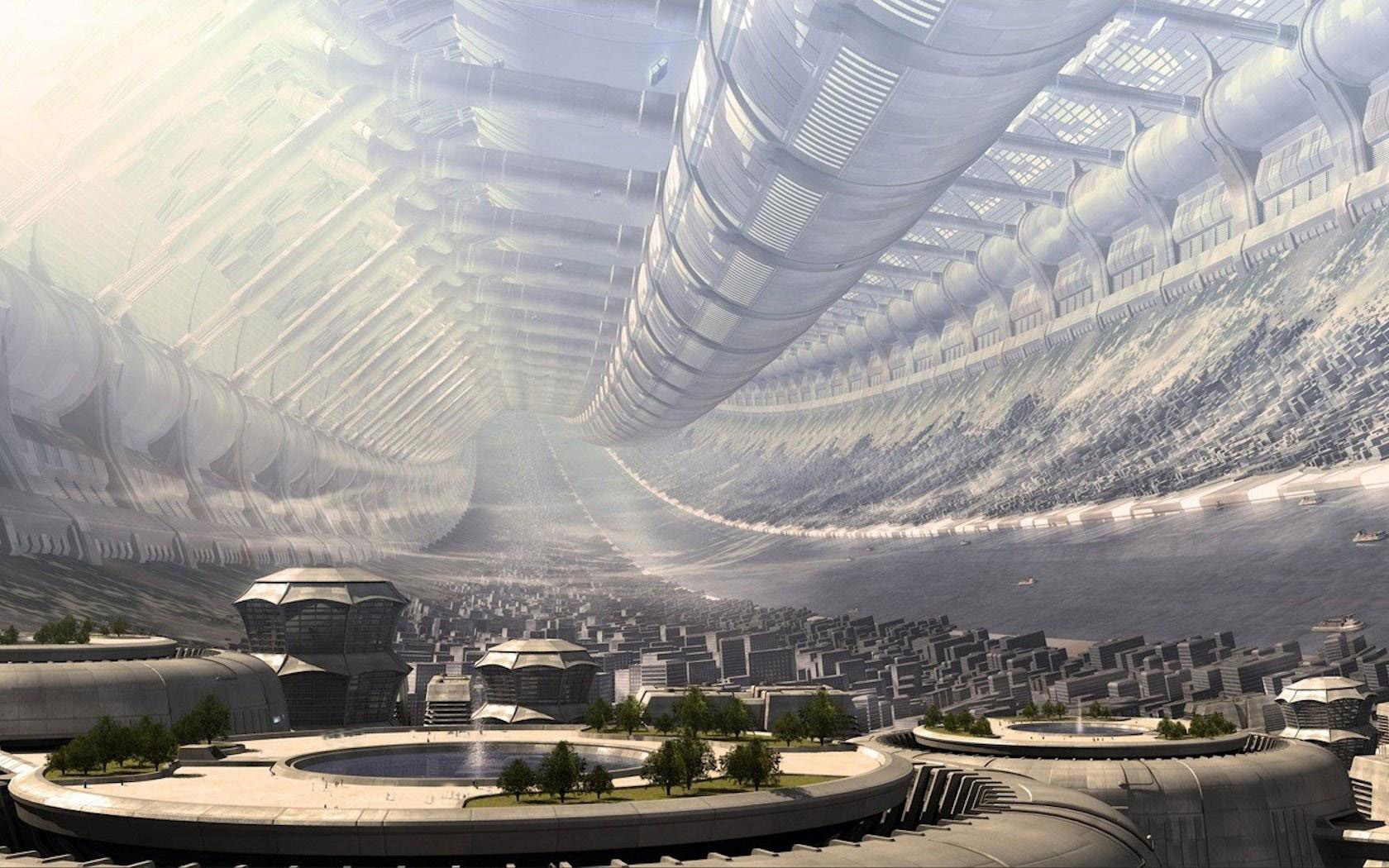
Their colony was built in the new style; a new style for Yuva.
The market and other amenities were located at the center of the colony, with the residential population surrounding it. It was a civic model that dated back to ancient times. No matter how far humanity had come, some things would never change.
People here lived and worked in detached buildings, with streets and walkways linking them together beneath a massive plasteel dome that shielded them from radiation and the elements. The terraformers had been able to make the air of Yuva breathable, but the planet’s ozone layer remained weak.
It was possible for a person to go outside the dome, but unless they wore a suit their skin would suffer from dangerous levels of ultra violet radiation.
Siera’s wrist com buzzed as she crested a rise in the street.
“Now what’s she forgotten?” she muttered as she checked the device.
LEVEL 5 STORM WARNING
Environment hazard protocols in place
Her heart raced and she lifted her gaze to look out past the colony’s dome. A thin line of grey marked the horizon. The storm was still a long way off, but she’d lived here long enough to know that it would be here in no time at all.

 NASA’s return to manned spaceflight took a few steps forward this month with the completion of the Orion crew capsule. As the module that will hopefully bring astronauts back to the Moon and to Mars, the capsule rolled out of its assembly facility at the Kennedy Space Center (KSC) on Thursday, Sept. 11. This was the first step on its nearly two month journey to the launch pad and planned blastoff this coming December.
 The unmanned test flight – Exploration Flight Test-1 (EFT-1) – is slated to blast off on December 2014, and will send the capsule into space for the first time. This will be NASA’s first chance to observe how well the Orion capsule works in space before it’s sent on its first mission on the Space Launch System (SLS), which is currently under development by NASA and is scheduled to fly no later than 2018.
 As Mark Geyer, Orion Program manager, explained:
 The two-orbit, four and a half hour EFT-1 flight will lift the Orion spacecraft and its attached second stage to an orbital altitude of 5,800 km (3,600 miles), about 15 times higher than the International Space Station (ISS) – and farther than any human spacecraft has journeyed in 40 years. It will be an historic occasion, and constitute an important step in what is sure to be known as the Second Space Age.
 Lately, I’ve been getting back to work on the space anthology known as Yuva – and for good reason. Not only has our group been blessed with the arrival of some new blood in recent months, but for many of us (me especially), the inspiration bug has bitten after a long hiatus.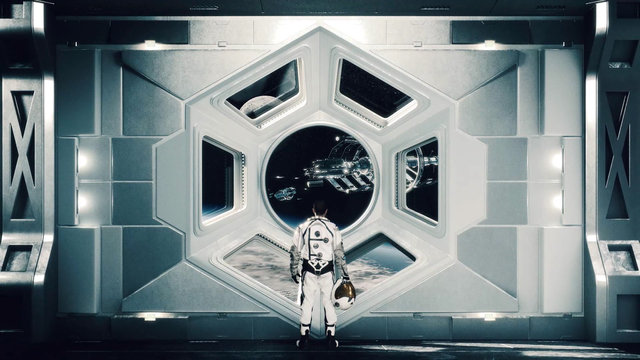




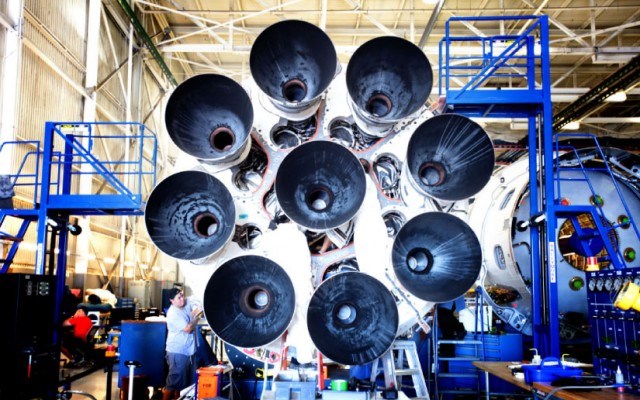
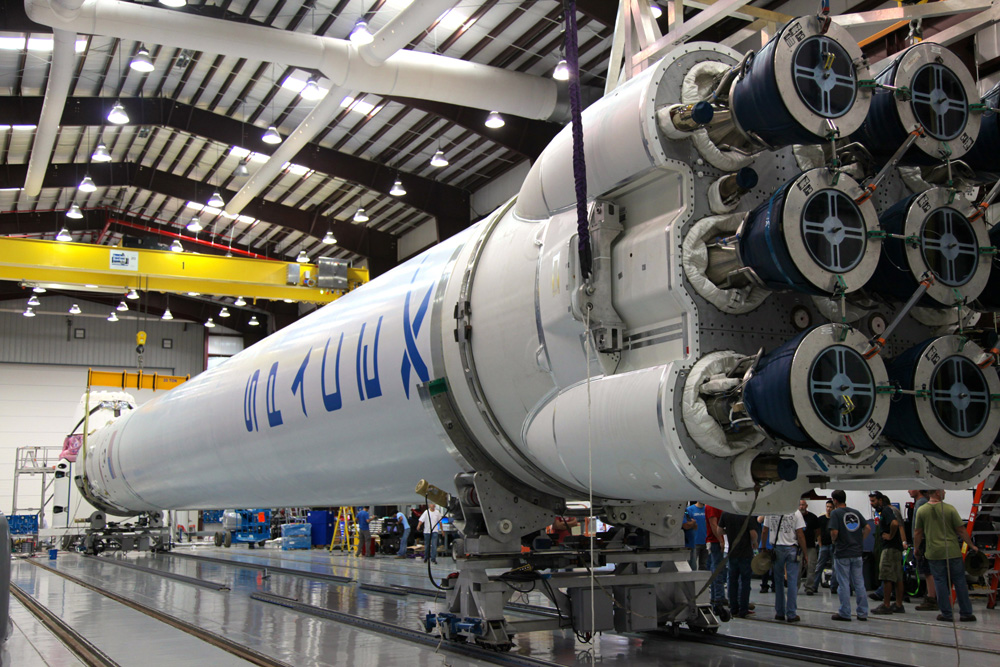
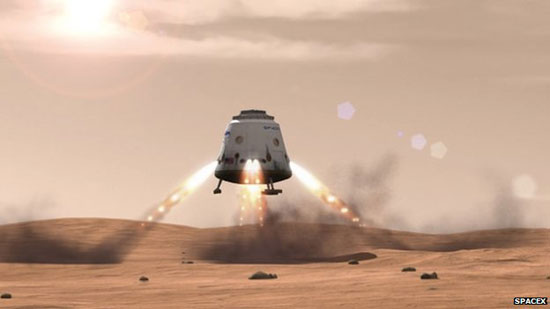 Other notable features include the propellent, which is a pair of non-cryogenic liquids – monomethyl hydrazine for the fuel and nitrogen tetroxide for the oxidizer. These are hypergolic, meaning that they ignite on contact with one another, which helps the SuperDraco to restart multiple times. It’s also built to be deep throttled, and can go from ignition to full throttle in 100 ms. But what really sets the SuperDraco apart is that is has 200 times the power of the Draco engine, which works out to 7,440 kg (16,400 lbs) of thrust.
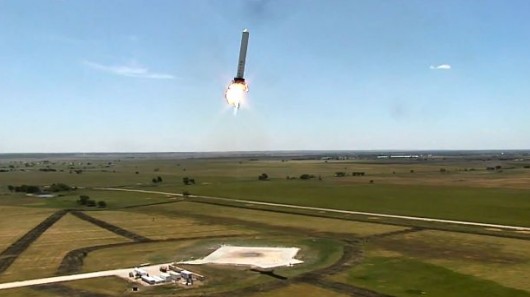
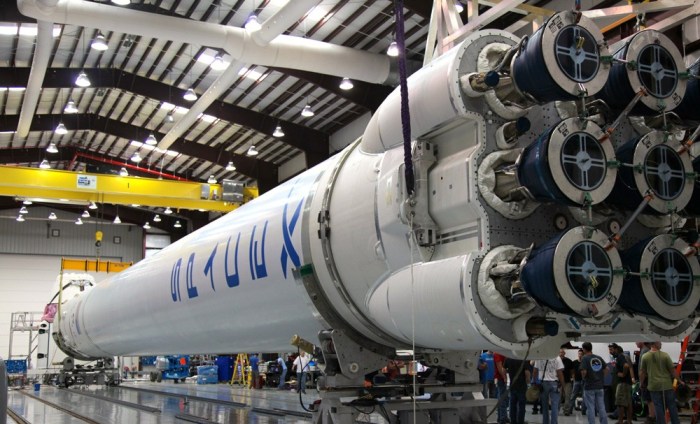 Eight engines firing for five seconds are enough to carry the capsule safely away from the booster with 120,000 lb of axial thrust. In addition, the eight engines also provide a high degree of redundancy should one or more engines fail. But what’s really ambitious about the SuperDraco is that, like the Falcon 9 booster, the Dragon is designed to ultimately return to its spaceport under its own power and land with the precision of a helicopter, and it’s the power and control of the SuperDraco that makes this possible.
 But equally impressive was the unveiling of the Dragon V2 manned space capsule, which took place at a brief media event at SpaceX’s Hawthorne, California headquarters at the end of May. This larger, more powerful version of the reusable Dragon capsule will one day carry astronauts to the International Space Station (ISS) and return to Earth to land under its own power. This latest development brings the company one step closer towards its ultimate goal of a fully reusable manned capsule capable of making a powered landing.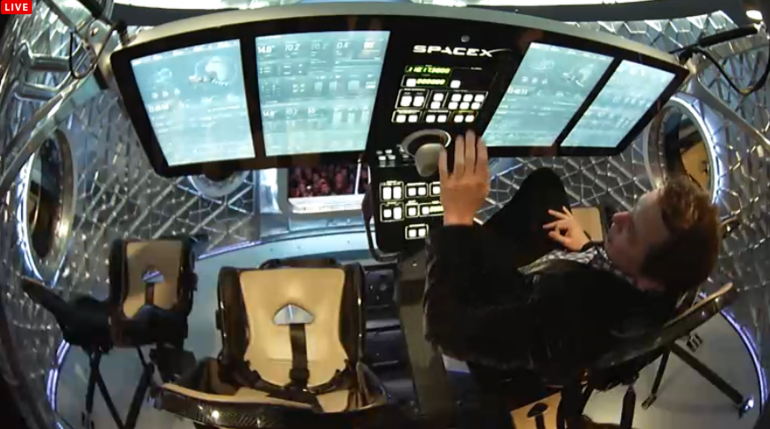




 One important aspect of this idea is that it focuses on small particles of material, rather than comets. Prior research has looked to such large bodies as the carriers of life and the drivers of the chemistry that created it, due to their energetic impacts. It’s been suggested that the earliest living things were cobbled together from high-energy molecules that couldn’t exist unless their synthesis was driven by massive astronomical impacts.
 Stories by Williams