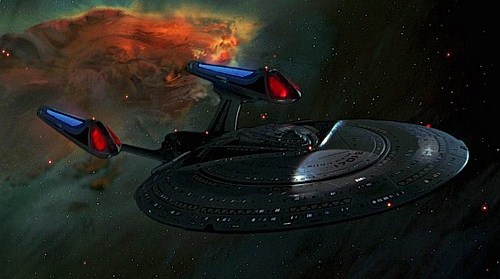
Technology in the Star Trek Universe (updated!)

I’ve wanted to do a post like this for awhile, ever since my conceptual post on Galactic Empires in fact. After doing my research on what distinguished one from the other, I noticed just how central technology, or the perception thereof, is to it all.

And let’s face it, Star Trek has had a lot to say about technology over the years, not all of it consistent! So with a series of examples, I thought I’d examine just what Gene Roddenberry and his successors have had to say.

Cloaking Device:
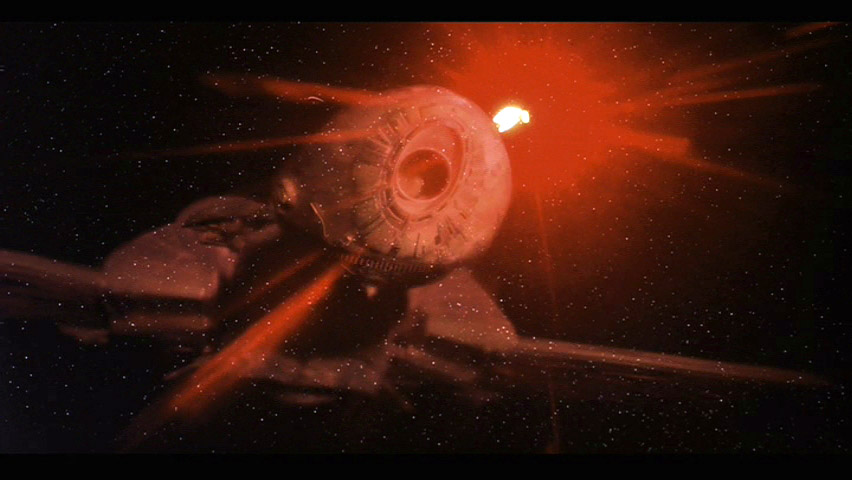
First developed by the Romulan Empire, the concept for an invisibility field that encompasses an entire ship has been picked up by just about every advanced race in the galaxy. Considered impractical by many because of the intense power drain, other races have found ways to adapt it to give their ships a decided edge in combat.

One such race are the Klingons whose vessels all come equipped with a cloak. The Romulans maintain use of this technology on their military vessels, particularly their warbirds, and even the Federation has been known to dabble in it from time to time. Another discernible weakness is the presence of tachyons and anti-protons that cloaked vessels are known to produce.

Holodecks:
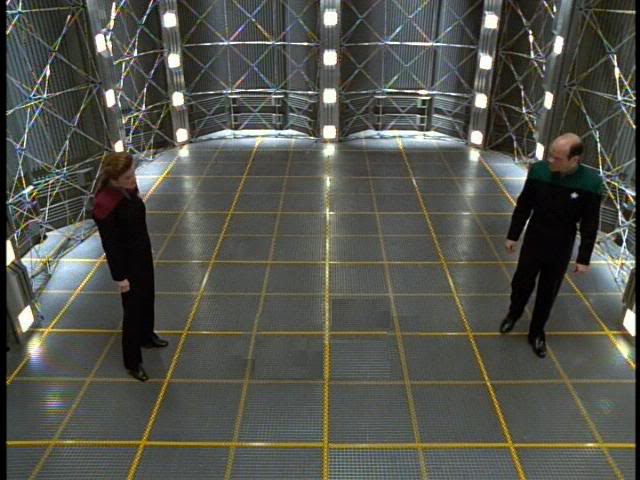
The holodeck is an advanced holoprojector device that was designed by Starfleet for use aboard starships, stations, and institutions. It serves the purpose of entertaining, training and training purposes. Using focused photons to simulate matter, the holodeck is able to create physically real virtual environments out of pure energy.

Because of their potential for danger, all holodecks come equipped with built-in safeguards. Matter created aboard the holodeck ceases to exist as soon as it passes beyond its generators, and the technology has been adapted to creating AI’s such as the ship’s emergency doctor program.

Hypospray:
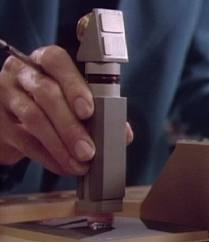
This non-invasive piece of medical technology is the mainstay of Starfleet medical. Using a compressed air transport mechanism, this device is able to transfer the injectant painlessly from the device into the subdermal layer below the skin of the body, or artery.

In the original series, hyposprays resembled hypodermic needles, but by the time of the 24th century (the TNG series) they had become much more sophisticated, resembling the unit pictured at top left.

Phasers:
Short for phased-energy laser, phasers are the most common energy weapon in Starfleet and the known universe. Beginning in the 23rd century, the technology was adapted for use as hand-held weapons, military rifles, and as the primary weapons banks on ships.

The 24th century saw further developments in the development of this weapon, which included mutli-segment phaser arrays,  and phaser cannons. The former made their first appearance in TNG on the USS Enterprise D and other updated ships while the latter appeared for the first time on USS Defiant.

Replicators:
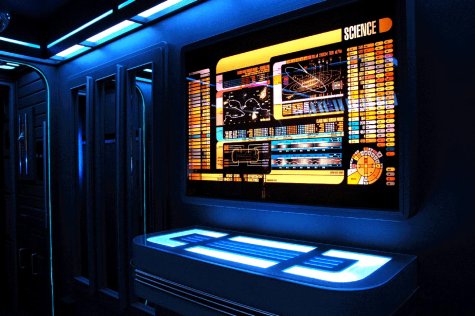
Using the same technology as the holodeck, a replicator is a matter-energy device that is capable of dematerializing quantities of small matter and reconstituting it as something else. This can take the form of food, commercial products, or machine parts. In short, anything can come out of a replicator so long as it has the atomic matrix down, and isn’t illegal!

Prior to TNG, Starfleet ships used food synthesizers, but by the 24th century, the technology had been perfected and made standard on all starships, stations, outposts and settlements. Because of their sheer usefulness and versatility, every advanced race has adapted the technology for their own use.

Shields:
Also known as Deflector Shields or Screens, these devices are the mainstay of all advanced races in the Star Trek universe. Operating by creating a layer, or layers, of energetic distortion containing a high concentration of gravitons, they are able to provide protection against weapons fire and natural hazards.

Typically, shields are emitted from either a central emitter dish or a series that are dispersed over the hull. They usually come in six sections, covering the fore, aft, port, starboard, dorsal and ventral areas of the ship. In time, shields can be dissipated by either continuous or repeated energy discharges, leaving the ship vulnerable.

Transporters:
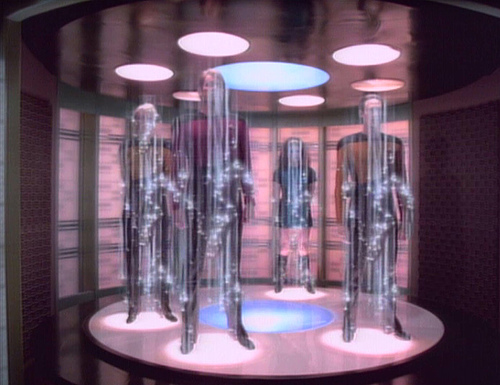
Utilizing subspace technology and the same matter-to-energy concept as a holodeck, the transport is the principle means of transportation to and from ships in the Star Trek universe. Often referred to as “beaming”, transporters are able to dematerialize, transmit and reassemble an object from one pad to another.

Making its debut in the original series, the technology has been updated in the TNG universe and its various spinoffs to allow for greater accuracy and safety through the addition of added redundancies. This increased accuracy allows for point-to-point transport, usually within smaller areas like the ship itself.

Tricorders:

A handheld sensing device, the tricorder was invented by Starfleet specifically for use by Starfleet personnel. However, since their inception in the 22nd century, they’ve gone through repeated upgrades, adaptations and have been adopted by just about every advanced race in the Alpha Quadrant.

As it stands, there are six varieties of tricorder in use within Starfleet alone. These include the psychotricorder which measures a patients brainwaves, a medical tricorder which diagnoses ailments and injury, and four models (VI,VII, X and XV) all of which are in service in one branch of Starfleet or another.

Warp Drive:
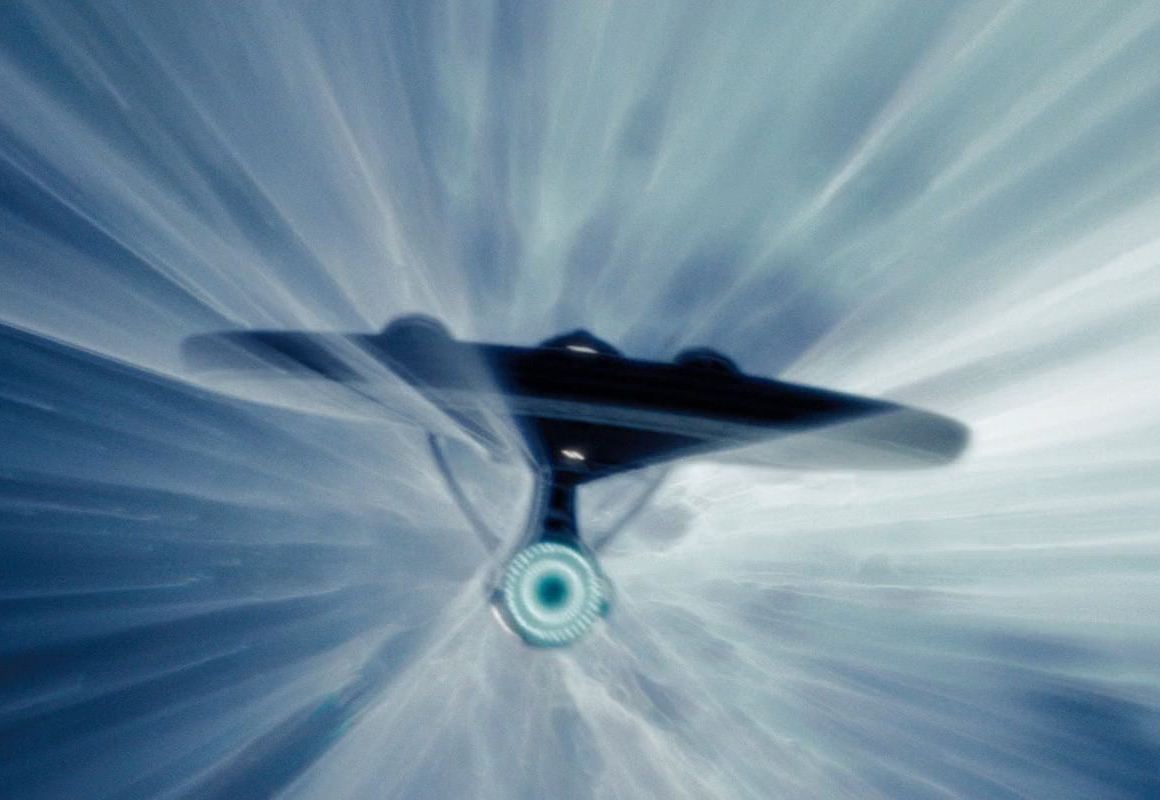
In the Star Trek universe, the warp drive is both the primary means of transport and the pinnacle of a race’s technology. In fact, Starfleet only makes contact with a new alien race once they’ve developed this technology, as it’s felt that it is only at this point in a species’ development that they will be advanced enough to experience first contact.

First developed by the human race in the late 21st century, warp technology was what precipitated First Contact with the Vulcans. Utilizing a matter/antimatter process and a dilithium chamber, a warp drive generates a “warp field” to envelope a starship. This has the effect of distorting the local spacetime continuum and moving the starship at velocities that exceeded the speed of light.

Every advanced race in the Alpha Quadrant has this technology, though some are able to achieve greater velocities (known as warp factors) than others. In the course of the old series and new, new and more advanced forms of FTL are being researched which may replace standard warp. These include transwarp, quantum slipstream, and a host of others.

Conclusions:
Technology as Utopian:
For the most, part Star Trek seems to be making the point that technology is a good thing. Whether it was the original series, TNG, or the many spinoffs to follow, it seemed that humanity owed much of its current condition to technological progress. Though they never explained how, at many points in the franchise it is said that Earth is now a paradise, bereft of crime, bigotry, hunger, and inequality. Just about all known diseases have been cured, and even money has become obsolete.

Yes, it seems that in the future, the focus of the economy has shifted to one of “self-improvement”… Might seem a bit hokey on the surface, but as I said in the Galactic Empires post, it’s really not that farfetched. Although its still pure fiction, the advent of something like warp drive, which would make space travel quick and affordable, commerce and transport between colony worlds would be open. This would mean abundant resources that went far beyond Earth and the Solar System, and we already know just how rich our system is in resources (see Asteroid Mining).

But more importantly is the development of replicator technology, which comes in the form of personal and industrial sized units. The former are used to produce everything from food and clothing to consumer products while the latter can create just about anything in bulk quantity. If this were possible, then all scarcity and deprivation would cease to exist. What’s more, the entire basis of an unequal distribution of wealth would disappear. Frankly, it puts me in mind of what Orwell said in 1984:

From the moment that the machine first made its appearance it was clear to all thinking people that the need for human drudgery, and therefore to a great extent for human inequality, had disappeared. If the machine were used deliberately for that end, hunger, overwork, dirt, illiteracy and disease could be eliminated within a few generations.

By the “machine”, Orwell was of course referring to industrial technology and the economy it spawned. However, his overall point was clear. Modern technology, dedicated to the write purpose, had the ability to significantly raise the fortunes of all people. And let’s not forget how in the Star Trek universe, hyposprays and various medical devices can solve just about all that ails you! Break a bone, you get the bone knitter! Tear your ACL, you get the… ligament bonder. I don’t know, all I do know is that pain is virtually obsolete in this universe and its because of progress.

So really, Roddenberry wasn’t far off when he envisioned a “perfect society” in the future. It was just in how he failed to explain how this could done that things seemed a little weak. But of course, there was a flip side to the whole thing.

Technology as Dystopian:
But of course, there were plenty of examples of technology gone wrong. The examples are a little too many to name, so I’ll keep it to just a few. The first comes from the first season when the Enterprise D comes to a planet of Aldea. There, a group of advanced humanoid aliens live in relative peace and prosperity, except that they are sterile and therefore dying off. Hence why they start kidnapping the Enterprise’s children!

Eventually, the Enterprise crew determines that the source of their problem is the great machine that runs their planet, otherwise known as “Custodian”. Because they’ve forgotten how to use the machine, the Aldeans have been unaware of the fact that it’s long since broken down and has been letting harmful radiation in. They assist them in fixing it, and the lesson about letting technology run your life has landed!

The second example comes from the regrettable movie Insurrection, where the Enterprise E comes to an idyllic planet inhabited by the Bak’u. Here, people live in virtually perfect harmony with the planet by denying themselves certain technology, opting instead for the simple life. Their philosophy is simple: “when you create a machine to do the job of  man, you take something away from the man”.
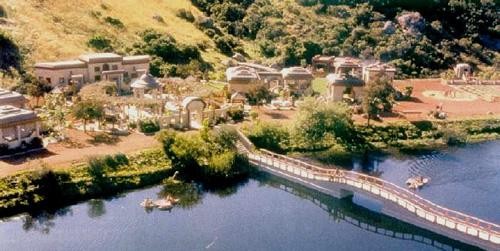
All of this seems inconsistent with the usual message of Star Trek, and even the movie itself. Far from being purely primitive, the Bak’u employ all kinds of labor saving technology, which includes irrigation and dams. So really, are they really so opposed to technology or just specific technologies? Nevertheless, the metaphor is clear. Combined with the fact that this place has youth-preserving powers, the metaphor of this place is pretty obvious. It is the fountain of youth, garden of Eden, and the evil Son’a who are advanced and creepy want to destroy it. Not their best movie!
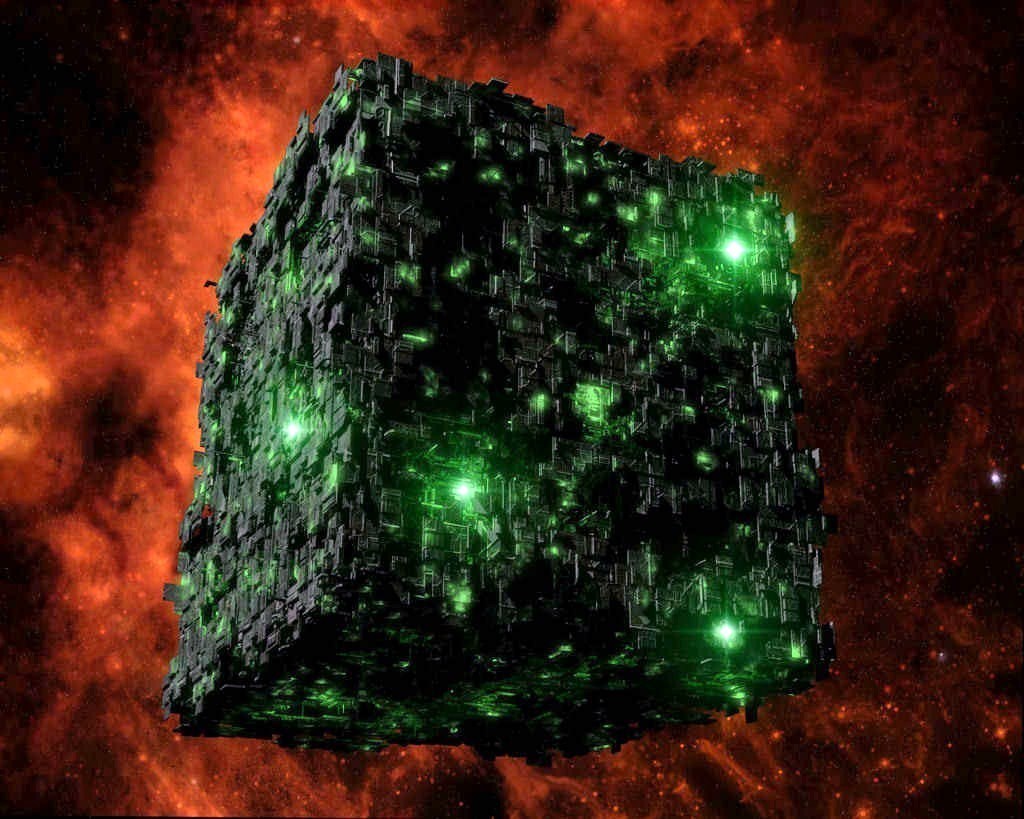
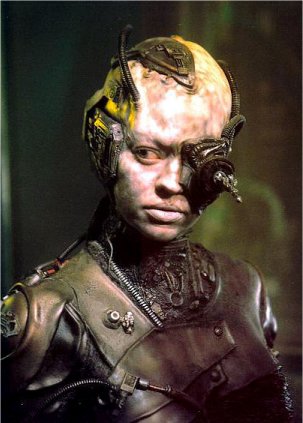
But the last and best example comes in the form of The Borg. A race of cybernetic beings who have merged the organic and synthetic, run by a hive mind that quashes all individuality, and threatening to assimilate all in their path, the metaphor is so thick you need a knife to cut through it. They are the ruthless march of progress personified!

And just look at them and their ships, are they not the perfect representation of cold, unfeeling technology? Sure they are! And the way people change once they’ve been assimilated, becoming soulless automatons and losing all color and individuality. Tell me that’s not a perfect visual representation of the death of the human spirit under the weight of urbanization and anonymity.

Some might call this inconsistent, but it seemed more likely like Roddenberry and his writers were simply hedging their bets. On the one hand, he was showing how human potential could one day yield the perfect society, or at least one that was free of all the problems we know and lament today. On the other, they must have wanted to show the obvious downside and dangers at worshiping at the altar of progress. After all, if you put an ideal, any ideal, ahead of humanity and life, all you get is dystopia!

And as always, other races in the Star Trek universe serve as a mirror for the human condition, or rather different aspects of it. If the human race has got it right, then others must not have achieved that careful balance of humanity and progress just yet. Whereas some prefer to be Luddites and live in an agrarian Eden, others have become runaway cyborgs who assimilate all in their path. It’s all about balance people!

Well, that was kind of fun! And it combined two of my favorite things in the world. Sci-fi and literary criticism. Perhaps I should do more of these. As always, suggestion on which franchise should be covered would be great. I can think of a few off the top of my head – such as the Star Wars universe, Dune, Aliens, Terminator, and possibly Battletech – but I would like to hear from others too. There’s always those added few that would be perfect but I fail to think of. Thanks all!
Giant Robots (vol. 3)

As Smith said that ambiguous sequel known as Matrix: Reloaded, “More!” And what better way to start this latest list off than with an example from that franchise…

APU:

Concept by davpea1 at deviantArt

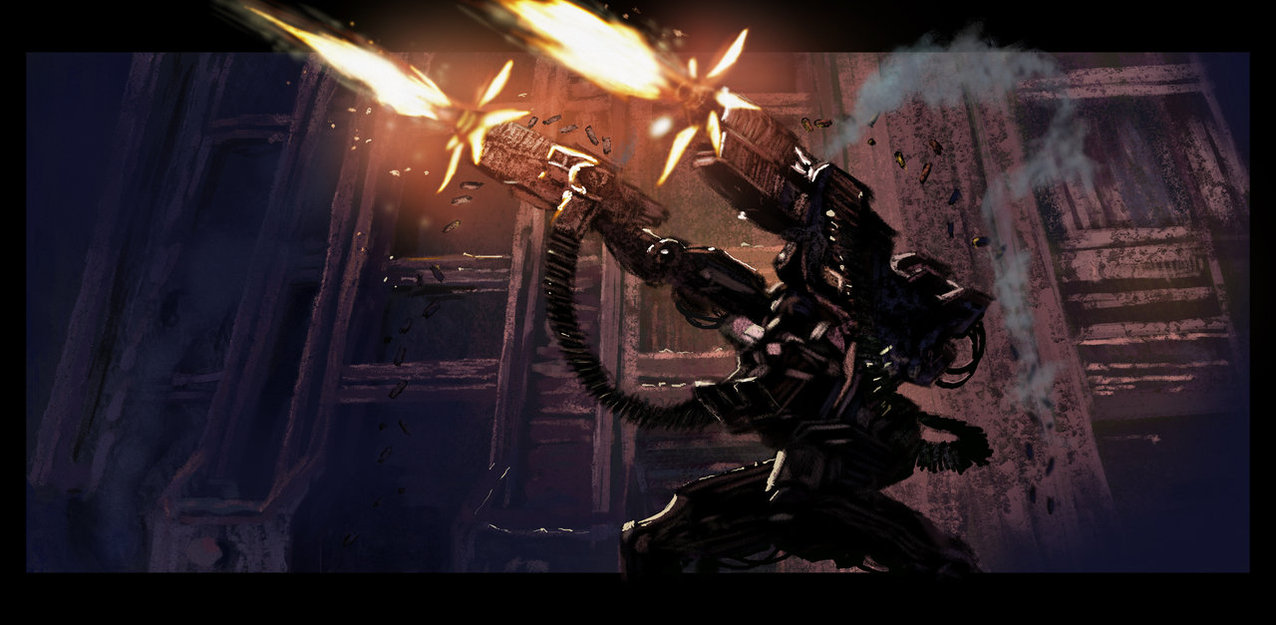
Starting off today’s list is the Armored Personnel Unit (or APU) from the Matrix trilogy. Making it’s first appearance in Matrix: Reloaded, it’s real c0ntribution came in Revolutions when every single unit in existence was used in the defense of Zion.

Hydraulically operated, the APU was run by a single operator who sat in a central cage and operated everything through a series of hand controls and leg straps, much like the Cargo Loader from Aliens.

It’s weaponry consisted of two 30mm cannons which are mounted on the arms. Loading these weapons required the assistance of an ammo carrier who would feed the ammo boxes into the back with the assistance of the APU’s crane. Due to its flexible reach, a single APU could defend itself from multiple Sentries without much difficulty.

During the battle for Zion, some 350 APU’s took part in the defense. Unfortunately, they faced overwhelming odds and all were lost. Though some were still functional even after their pilots died, their systems were rendered inoperative after the Hammer arrived on scene and detonated its EMP device.

Arm Slave:
https://i0.wp.com/ih2.redbubble.net/image.10793093.2886/flat%2C550x550%2C075%2Cf.u1.jpgThis next example comes once again from the manga and anime world of Full Metal Panic. Officially, the name “Arm Slave” is short for Armored Mobile Master-Slave System, referring to their coordinated unidirectional control system. Basically, this means that a single pilot would be controlling multiple suits, either from inside a command mecha or from a remote location.

Built by the US in the fictional FMP universe, these powered suits went on to become the mainstay in every western army, giving new meaning to the term “mechanized infantry”. However, these mecha were featured chiefly as the weapons of Amalgam and Mithril, organizations to whom the main characters were members.

In the course of the story, every state produced its own variations of the Arm Slave and the design went through several generations. Beginning as smaller variants powered by internal combustion engines, the later models would feature cold fusion reactors and electroactive polymer muscles, making them faster, more mobile, and capable of much better performance. In terms of weapons, the Arm Slave is limited only to what it can carry, making many different configurations possible.

These include, but are not limited to, two 12.7 mm chain guns, two XM18 wire guns, a single 40, 57, or 70 mm smooth-bore cannon, a single missile launcher, or hand to hand weapons such as the M1108 anti-tank dagger or the GRAW-2 Monomolecular cutter. And given its raw power and strength, it can also attack with its bare hands and just bash things to death. Good to have options!

AT-ST:
The other famous walker from the original Star Wars universe! Designated as the All Terrain Scout Transport, the AT-ST was a bipedal walker that was created by the Republic for use in the Clone Wars, but saw more extensive service with the Empire during the Galactic Civil War.

Appearing in both Empire and Jedi, the scout walker was basically the reconnaissance version of the AT-AT, often serving in a support capacity during major assaults. However, in situations where the terrain was more dense and difficulty to navigate, as was the case with Endor, the AT-ST was considered more favorable. Hence why the Imperial garrison chose to deploy several in the field while keeping their AT-AT closer to the shield generator station itself.

In terms of armaments, the AT-ST carried a twin-blaster cannon on the front of its module, along with a light twin blaster and a concussion grenade launcher mounted one either side. While relatively fast and able to negotiate Endor’s heavily wooded terrain, its bipedal configuration and relatively thin armor made it vulnerable to the Ewok’s log traps.

Two were destroyed in this way, while another was commandeered by Chewi and two Ewoks and used to destroy a fourth. Without any walker remaining to provide cover, the garrison was quickly routed and all their speeders destroyed. Not a very good record of service, being beaten by furry wooded creatures and their flying logs!

Dreadnought:

Concept by garr0t at deviantArt

Back to the good ol’ universe of Warhammer 40k with another installment! And this time around, boy did we bring out the heavy hitters! Here we have the Dreadnought, a heavy cybernetic mecha that is similar in concept to the Dragoon and Immortal from Starcraft.

Basically, whenever a Space Marine is mortally wounded in combat, they can have their remains transferred into one of these behemoths so they can keep on fighting. Entombed within the unit ceramite skin, the pilot controls the Dreadnought through a series of neural links from a command “sarcophagus”.

As a heavy mech, the Dreadnought’s primary function is that of infantry support. Its weaponry can take many different configurations, but often involves laser or gatling cannons mounted in the arms, missile launchers embedded in the shoulders, and additional launchers or cannons mounted over the head. Smaller weapons are generally mounted under the upper body for point-defense against lighter infantry as well.

Enhanced Powered Armor:
Enhanced_Powered_ArmorThis next example comes from the F.E.A.R. gaming universe. Known as EPA’s, these bad boys are the latest generation of powered armor to come from this universe and are by far the biggest and baddest of the bunch!

Much like its predecessor, the Elite Powered Armor, the Enhanced was designed for combat against both infantry and vehicles. For these purposes, it is armed with two GAU-19/A heavy rotary machine guns, one on each arm. In addition, it has three sets of rocket launchers, mounted in the shoulders and above the right arm, that launch homing missiles.

For strictly defense and maintenance purposes, the EPA also has an automatic repair system which activates when the unit is heavily damaged and a new shielding system. Although it does not have the ability to engage in melee attacks with its hands, it is still capable of generating powerful stomp attacks with its feet that send powerful shockwaves in all directions. Because of their power and obvious expense, these units are rarely encountered in the game, and only ever at the end of a level.

Gun X Sword:
Gun-X-SwordBack to the world of anime, this time for a robot that puts the swash in swashbuckling! Officially known as “Dann of Thursday”, this mecha comes from the anime of the same name and was the personal powered armor of Van, the show’s main protagonist.

Built to resemble its user, who is also tall and lanky, this mecha is unique amongst its peers in that it has no ranged weapons. All its capabilities revolve around its central blade, which while in compact form, causes the mech to resemble a giant sword. When in humanoid form, this blade can be wielded as a single sword, or broken down for use as two.

In additi0n, Dann has also has an electromagnetic shield which protects it from ranged attacks. This allows van to close ranks with enemy mechs and eviscerate them with his blades. But by far, the Dann’s greatest feature is its ability to heal its pilot once they enter the cockpit. Pretty handy when you need to recover from some wounds, or just shrug off a hangover!

Iron Giant:
iron_giantThere’s something to be said about a gentle giant, even if he is 40 feet tall and made out of solid metal. Taken from the 1999 Disney movie of the same name, the Iron Giant is distinguished amongst its peers here in that it is not only an alien machine, but a sentient one. As such, it is as much at home on a list of AI’s as it is giant robots.

Apparently, this robot was meant for first contact purposes, possessing the ability to learn and boasting some rather impressive defensive protocols. When activated, these weapons are capable of evaporating tanks, aircraft and entire platoons of infantry. However, as was demonstrated, these only become active when the robot is threatened, or he becomes angry.

And few things make an Iron Giant more angry than threatening his best friend in the world, which in this case was the little boy Hogarth Hughes. In addition to seeing past his massive metal frame, Hogarth taught him how to understand English and acted as his guide to the confusing world of humans.

Above all, the Iron Giant demonstrated a tremendous capacity for emotion. Aside from anger, he also demonstrated love, attachment and empathy. This last aspect was demonstrated when he chose to sacrifice himself rather than bring destruction down on the town of Rockwell (obvious allusion to Roswell). Having learnt that a nuclear missile was heading for him, he chose to fly away to intercept it rather than let it destroy everything and everyone around him. So sad when gentle giants are misunderstood!

Nova (Black Hawk):

"Blackhawk 1st test run" by pinksniperiii
“Blackhawk 1st test run” by pinksniperiii

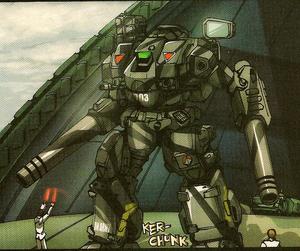
Back to Battltech, once again for an Omnimech that is the workhorse of the Clans that employ it. Known as the Nova by its inventors, it also bears the name of Black Hawk by the Inner Sphere who captured one and began producing their own variants of it.

Designed initially for infantry support, the Nova was unique in that it was built with hardpoints which allowed infantry soldiers to easily mount and dismount. As such, the Nova could function as a mech and a sort of battle taxi, ferrying infantry into battle alongside it.

In terms of armaments, the Nova was again unique in that it could be armed exclusively with energy weapons, 12 of them to be exact. However, in other configurations, it could be outfitted with machine guns, autocannons, gauss rifles, or even a sword. These would be mounted almost entirely on its arms, but also in two large clusters around the head.

Unfortunately, production of this model soon ceased after a unit was captured by Inner Sphere forces and duplicates fashioned. Believing that their mech design had been compromised, the Clans began to focus on other models to serve as their omnimechs of choice.

Sentinels:
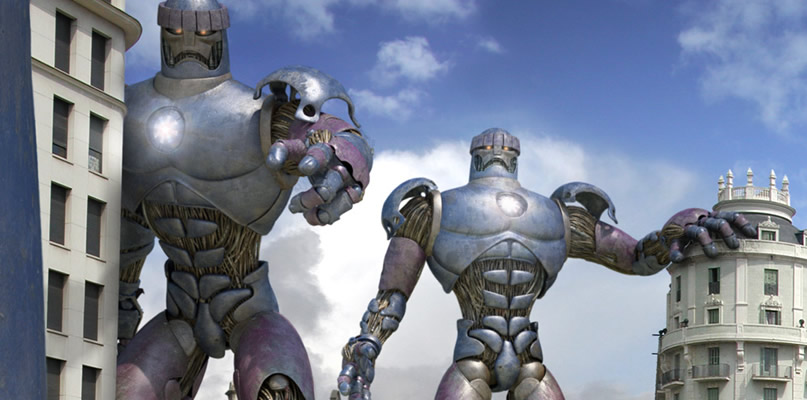
This example is kind of obvious, surprised I didn’t think of it sooner. While I was never much of a fan of the comics, I did see a few episodes of the animated show, and these things certainly made an appearance! As a potential shout out, they were also featured in the movie X-Men: The Last Stand, appearing in the Danger Room as a simulation.

In the comic books and animated series, however, these massive robots made several appearances and were quite important to the overall story. Designed for hunting mutants, the Sentinels went through several different models. However, the most common were three stories tall, capable of flight, employed energy weapons, and had advanced sensors which could detect mutants.

In addition, their programming ran from the semi-intelligent, involving advanced tactical thinking and decision-making skills, to the fully self-aware. But of course, these were few in number, usually designed for the sole purpose of commanding other Sentinels (such as the Master Mold). Many Sentinels were designed to be capable of learning from their engagements, adjusting strategies to deal with mutants of varying ability.

Often serving as the antagonists in the X-Men universe, these robots were nothing if not a prime example of terrifying gigantism! Can’t believe I didn’t think of them sooner!

VF-0 Pheonix:
And last, but certainly not least, we return to the Macross universe for another example of an over-sized mecha! In this case, we have what’s known as a variable fighter, which is basically a mecha that is capable of transforming from an aircraft to a humanoid form.

As part of Earth’s plan to counter a Zentraedi invasion, the Pheonix was a merger of fighter designs with Overtechnology. Composed of titanium/carbon composite, space metal alloy and SWAG energy converting armor, this mecha is capable of operating in space, upper atmospheres, lower atmospheres and even underwater. It’s clipped wing air design also ensures a great deal of maneuverability when in flight mode.

In terms of armaments, the Pheonix prefers energy weapons to autocannons due to a lack of internal storage space. As a result, it comes equipped with either one VF-0A/D or two VF-0S fixed Mauler laser cannons, and multiple micro-missile launchers mounted in the shoulders and chest. In flight mode, it is also capable of carrying a GPU-9 35 mm gatling gun pod and up to twelve air to air or air to ground missiles or guided munitions.

The Pheonix also comes with the added feature of being able to carry reactive armor for added protection. In fighter mode, it has two seats, one for the pilot and one for a radar engineer, similar to the F-14 Tomcat. And like most variable fighters, it can also deploy in GERWALK mode (or Ground Effective Reinforcement of Winged Armament with Locomotive Knee-joint ), a sort of half-fighter, half humanoid configuration which allows for ground assaults and quick take off.

Coming soon: Video game reviews!

A short while ago, I did a review on my top ten favorite nostalgic games. I might have mentioned somewhere in there that this was an intro to a new segment I was thinking of getting into: video game reviews! Well, I’ve decided to take the plunge. In the next few weeks and months, I’d like to do full reviews on the sci-fi video games that have made an impact on me over the years, or that I’ve just taken the time to enjoy.

I’ve prepared a tentative list below and would like to know if anyone has any games they’d like to add. Keep in mind two basic criteria: One, it should be a sci-fi or fantasy game, or at least something that’s mildly futuristic (which is how I justified adding Modern Warfare to this list). And two, it needs to be something I have or will be able to get my hands on in the near future. But anything’s possible given time, so just make your suggestions and I’ll let you know if I can or can’t find it!

Thanks you and happy gaming! Expect the first reviews soon 😉 *Note that the list is a mock-up and the actual reviews need not occur in that order.

  1. Knights of the Old Republic
  2. The Sith Lords
  3. Star Wars: Force Unleashed (I and II)
  4. Sid Meiers Alpha Centauri
  5. Halo (1, 2, 3)
  6. Starcraft (and Brood War)
  7. Starcraft II: Wings of Liberty
  8. Elder Scrolls IV: Oblivion
  9. Modern Warfare (1, 2 and 3)
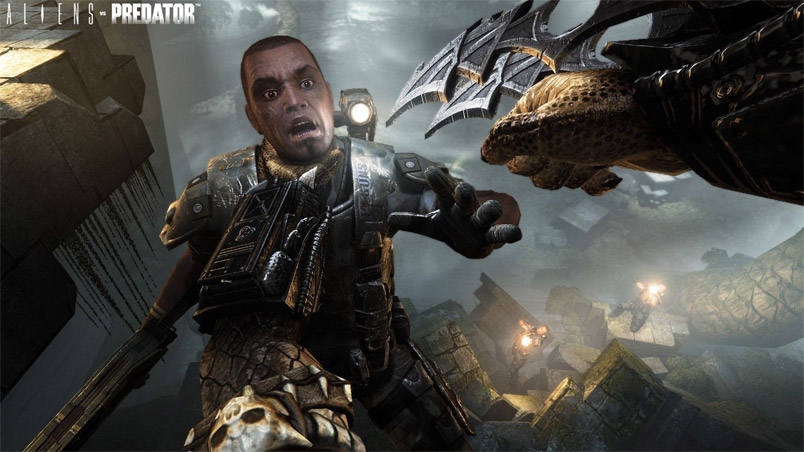
  10. AVP (2010)
  11. Wing Commander (I, II, III)
  12. Wing Commander Privateer (1 and 2)

Cool Cyborgs (updated)!

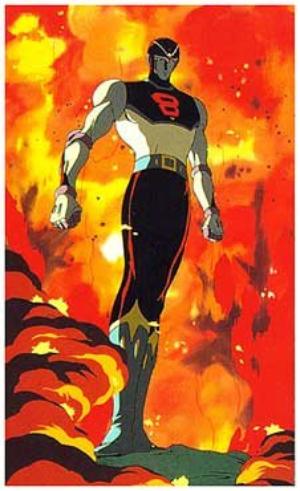
8 Man:
Always good to start with a classic, don’t you think? Especially one that really doesn’t get the attention it deserves. In addition to being Japan’s first cyborg superhero, this 60’s anime character was also the inspiration for Robocop. You heard me right!

Apparently, the main character was a Detective who was murdered by a group of ruthless criminals, but whose body was retrieved by a scientist who conducted an experimental procedure to transfer his “life force” into a machine body. Having failed the previous seven times, his eights and successful attempt is aptly named “8 Man”.

But unlike Robocop, this cyborg can do some pretty freaky stuff! In addition to being heavily armored, he can run at incredible speeds and shape-shift into other people. His true identity is kept a secret from everyone except his old police chief and the professor who conducted his experiment.

But like Robocop, 8 Man chooses to go beyond his crime-fighting mandate to find his old girlfriend, best friend and attempt to rebuild his old life. His attempts are often marred by the fact that he is no longer human, but as they say, it’s the journey that counts!

Bionic Woman:
Sure, Steve Austin was pretty cool, but did he look this good? Hell no! And in the case of the Bionic Woman, the hero story was far less crude. Though the original series was little more than a spinoff of The Six Million Dollar Man (featuring Oscar Goldman as the scientist again), the re-imagined series was far more original and endearing.

In this version, the main character (again named Jaime Sommers) is a surrogate mother and bartender struggling to make ends meet. After a near fatal car accident, she is saved by an experimental procedure involving advanced prosthetics and implants (no, not those kind!). Afterwards, she goes to work for the people who performed her operation – the Berkut Group, whom he boyfriend works for.

Through her work, she is responsible for thwarting crimes and evil machinations, while trying to explore her role and the changes she’s endured. As with the original series, Jaime’s modifications include bionic legs, a bionic right arm, a bionic right ear, and a bionic eye like that of Steve Austin. In the updated series, she also gets a dose of nanomachines called “anthrocytes” which are capable of healing her body at a highly accelerated rate.

The Borg:
Now here is a race who’s name is the second half of Cyborg! No chance for misunderstandings here! And as all fans of Star Trek know, the Borg are extremely proud of what they are. A race of beings dedicated to the perfection of life by merging the organic with the synthetic. And of course, they are all networked to a hive mind known as “the collective.”

Native to the Delta Quadrant of the Star Trek universe, the Borg occupy thousands of systems and hundreds of races. No indication is ever given where they originated from or what their intentions are, beyond adding “the biological and technological distinctiveness of other species to [their] own” in pursuit of “perfection”.

Is there a more perfect metaphor for runaway progress and the deification of technology? It’s not exactly a subtle commentary on the issue, but it does encapsulate the kinds of fear many people have when faced with a rapidly changing world that seems to be growing more complicated all the time. I imagine the Singularitarians don’t like the analogy much, but then again, Star Trek has been known to send mixed messages 😉

Cylon:
In the original series, the Cylons were lumbering, chrome covered robots that kind of resembled toasters. It was for this reason that they frequently got a shout out in the re-imagined by being referred to as such. However, the re-imagined versions were quantum leaps ahead, the result of bioengineering rather than conventional robotics.

Unlike the “skin jobs” (a reference to Blade Runner), Centurions and Cylon Raiders were only partially organic, consisting of organic brains inside machine bodies. Much the same is true of the Cylon Hybrids, the minds that operated their Basestar’s jump systems. In their case, their bodies are largely organic, but their minds are enhanced with advanced machinery and networked into their ship.

Because of this combination of organic and synthetic, Centurions and Raiders are capable of being “lobotomized”, which took place in the third season when their handlers became suspicious of their behavior. Ultimately, these three begins represented a key step in the Cylon’s evolution from mechanical to biological, which achieved perfection with the creation of the seven purely biological models.

Cyberman:
A fictional race taken from Dr. Who, these cyborgs were another one of the good Doctor’s recurring enemies. But unlike their Dalek counterparts, they seemed to change with every appearance. A possible inspiration for the Borg, these being were as humans who chose to begin experiment more and more with artificial implants.

This eventually led them to become the cold, calculated and ruthlessly logical beings that are, with every emotion all but deleted from their minds. While they do maintain their human brains and some human organs, they possess little of their original humanity, which is why they don’t get along with us decent folk!

Another parallel they share with the Borg is their means of proliferation, which is to turn other organic beings into Cybermen (a process known as “cyber-conversion”). However, they remain few in number during the course of the series and therefore prefer to act covertly, conducting their schemes from hiding places and using human pawns or robots to act in their place until they need to appear. Quite unlike the Borg, who prefer to get right in there, blow shit up, and assimilate anything that’s left!

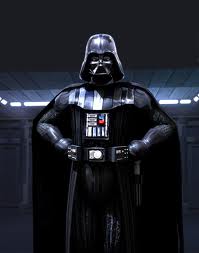
Darth Vader:
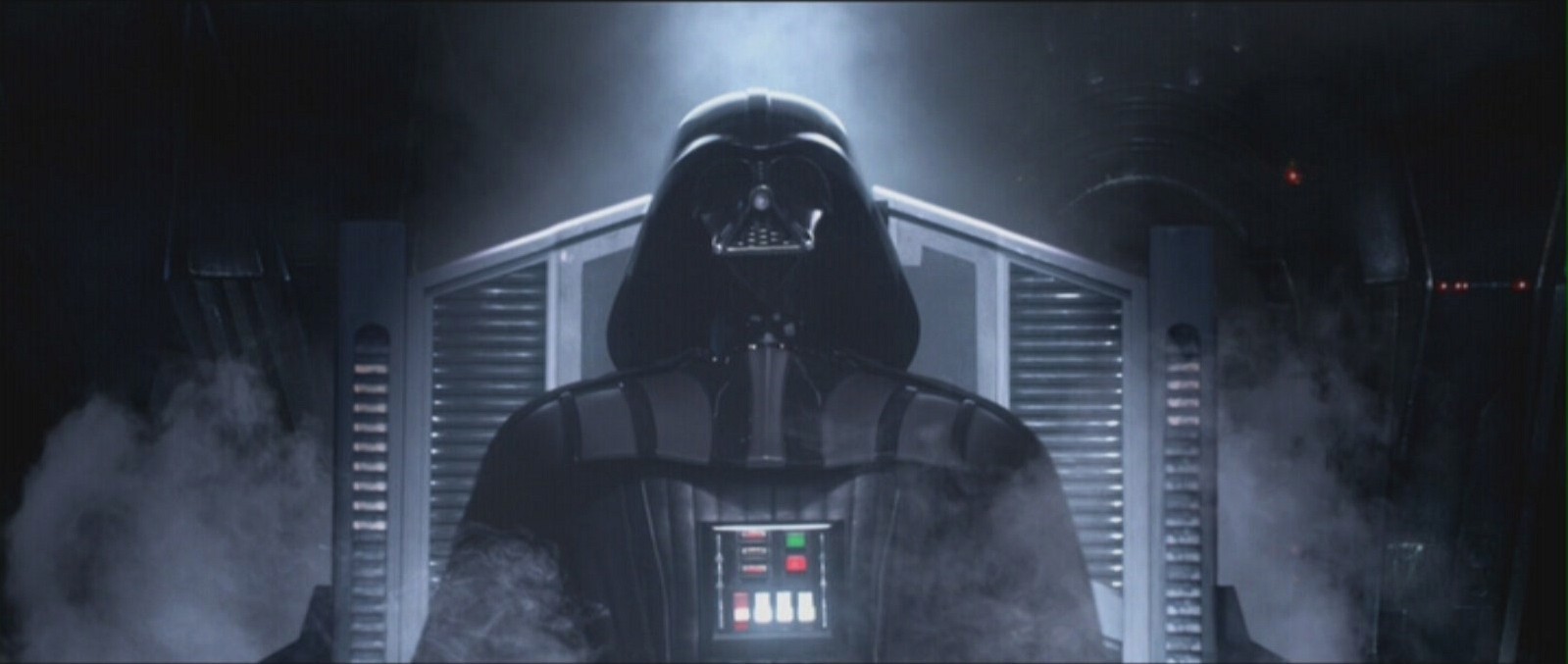
“He’s more machine than man… twisted and evil!” That’s not to say all people who are more machine than man are evil! But it is the working definition of “cyborg.” Having lost both arms and legs in lightsaber duels and much of his body severely burned, Darth Vader (nee Anakin Skywalker) had to be put in a protective suit that regulated his breathing and bodily functions… I don’t even want to think about that!

But there was an upside to all those enhancements. For one, he got James Earl Jones vocals and the most intimidating, badass exterior in the Galaxy! Hell, even his breathing sounded scary. And it didn’t encumber his use of the Force at all, as exemplified by his ability to crush throats and toss objects around at will. And the ghosts of many dead Jedi and Luke’s missing hand can attest to it not hampering his sword fighting skills either.

Ultimately, this suit proved to be his undoing when, in the course of betraying his evil master, most of its circuits were fried by the Emperor’s electrical bolts. He died shortly thereafter, redeemed and looking upon his son for the first time “with his own eyes.” Sniff… I hate this mushy stuff!

Motoko Kusanagi:
The star of Ghost in the Shell, the beautiful, deadly and artificially enhanced Motoko Kusanagi. Known by her fellow officers as “the Major”, Kusanagi is a member of Section 9, a counter-terrorism squad working for Japan’s National Public Safety Commission. As part of her commitment to her job, Kusanagi underwent cybernetic enhancements, marrying her human brain to the “shell” that is her new body.

Throughout the original manga, anime and cinematic versions, Kusanagi’s basic role is the same. She fights all kinds of criminal elements: kingpins, warlords, and cyber terrorists, but also uses these experiences to reflect on the larger issues and her fateful choice to become a cybernetic being. These issues include what it means to be human, what constitutes life, and the line between authentic and artificial.

In addition, she’s also a pretty vivacious and good-looking being! Though technically not flesh and blood, she still maintains a pretty active sex life, at least in some versions of the story. In others, her personal life is not dealt with, but there are still plenty of nude shots, provided exposed synthetic flesh can be counted as nudity 😉

Robocop/Murphy:
Here we have another case of tragedy yielding the perfect union between man and machine. Alex Murphy, dedicated cop and family man, gets ruthlessly gunned down by a bunch of criminal thugs, only to be resurrected by a bunch of corporate thugs as a cop cyborg. Heavily armed, armored, and programmed to serve and protect, he became the Detroit Police Departments signature weapon in the war on crime.

But of course, things begin to go awry when Murphy’s memories and personality began to re-emerge. For one, there was the question of his wife and son, both of whom had been led to believe he was dead. Second, there was the psychological and emotional strain of knowing you could never be fully human again.

Alas, Murphy resolves the sacrifice of his identity and humanity by doing what he did best, kicking criminal ass and taking criminal names! These of course included crime lords, drug bosses, and the thugs who murdered him, but also the corporate crooks who created him and were plotting to take over Detroit. So aside from the sci-fi elements and human interest angles, there was also some social commentary in this franchise. Lots going on here!

Nexus Six Replicant:
“If we gift them with a past, we create a cushion or a pillow for their emotions, and consequently, we can control them better.” What is a machine when it has feelings, thoughts, and even memories?  Is it, as the Tyrell Corporation motto goes, “More human than human”?

Sure, some purists would say that a Nexus 6 isn’t technically a cyborg. But as I recall, the working definition of Cyborg is a merger of the cybernetic and organic. And as any fan of Blade Runner knows, Nexus 6’s are not so much built as grown, the product of biomedics rather than mechanics. And if that’s not good enough to get this one past the censors, screw em! Moving on…

Designed for service on the off-world colonies, every Replicant was designed to fill a certain role, ranging from military, to worker, to pleasure. In short, they could do the work of any human while simultaneously being denied the basic rights humans take for granted. However, since it was understood that they could become unruly after too much time, each unit was built with a four-year lifespan.

Inevitably, the Replicants of the movie came to Earth seeking a reprieve from their inevitable deaths. Their leader, Roy Batty, was especially obsessed with buying more time, since he himself was near the end of his lifespan. When told that there was nothing that could be done, he went a little beserk, but also came to appreciate life all the more in his last few moments.

T-800 Terminator:
“The Terminator’s an infiltration unit, part man, part machine. Underneath, it’s a hyper-alloy combat chassis – micro processor-controlled, fully armored. Very tough. But outside, it’s living human tissue – flesh, skin, hair, blood, grown for the cyborgs..” That’s how Kyle Reese, the warrior from the future, describes them. Arny’s version was a bit less… loquacious. “I’m a cybernetic organism. Living tissue over a metal endoskeleton.” Take your pick, they’re both right!

Designed to impersonate human beings, mainly so he could get close to them and kill them, the two Arny models were quite at home in the past. If you looked like this, would anyone really complain if you chose to walk the streets of LA naked? It’s LA man, anything goes! What’s more, Arny’s cyber strength and tough skeleton make him deadly and very survivable.

This proved quite the headache when one was sent back to kill Sarah Conner, but was quite a plus when one was later providing protection for her and her son! In the end, it took a hail of bullets, some well placed plastic explosives and a machine press to kill the first one. And the second one managed to survive an impalement, the loss of a limb, about a million bullets, and still managed to lay the smack down on a T-1000. Perhaps they should amend the name… Endurinators!

Thank you all! Stay tuned for the follow-up, Sexy Female Robots! I guess I’m just in a robot kind of mood 😉

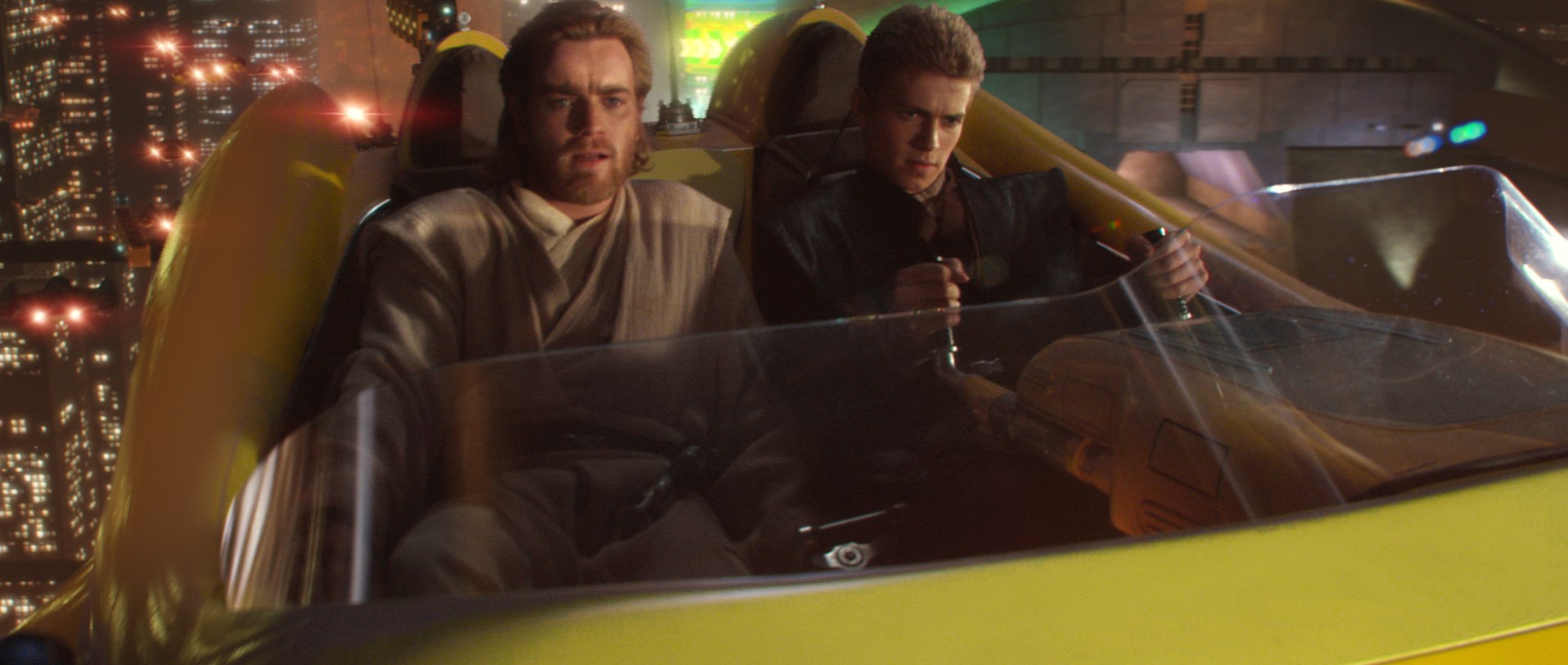
Revenge of the Sith. The Last Hope!

I come to it at last, the third and final installment in the prequel series, and sixth in the overall Star Wars franchise! Hard to imagine I started this whole thing three weeks ago. Seems like a lifetime has passed, but that’s the way time works!

And what can I say about this last installment? Well, I can tell you that between movies two and three, Lucas seemed to be taking mounting criticisms of his movies seriously. I can also say without exaggeration that after two generally panned movies, we were all pulling for him! Many reviewers openly wondered if the third and final movie could save the franchise, cuz Lord knew the fans weren’t likely to endure a third disappointment.

Luckily, Lucas seemed to pull if off with this third and final one. After the release, critics and fans seemed united in hailing it as the best of the three. Of course, the competition wasn’t exactly fierce, and there were still loads of problems that would become more apparent as time went on. The initial gentleness and praise with which this movie was met seemed to be the result of wishful thinking, really. No one wanted to see Star Wars fail.
Plot Synopsis:
The movie opens, as always, with the crawl. WAR! It says. It then goes on to explain… See, there’s the thing known as the Clone Wars. They’re bad. Lots of people dying, lots of systems being overrun. And now, the fight seems to have come to Coruscant.
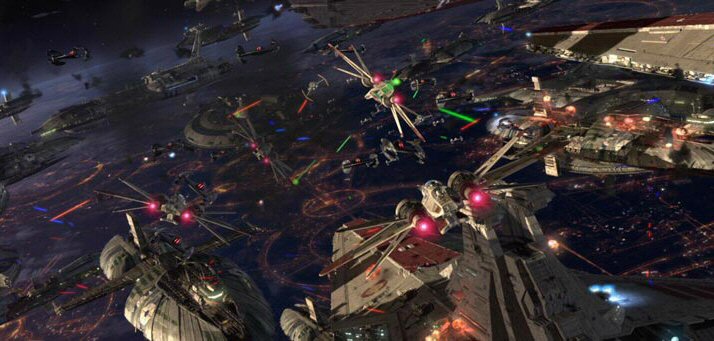
We cut, as usual, to ships in space. And after a brief, silent flyby, we see that its in fact some mad space combat! Ships everywhere are engaged in close quarters combat, destroyers, cruisers, and tons of fighters between them. And it’s all happening over the capitol. And to top it off, Skywalker and Kenobi are there too, leading the assault in their fighters.

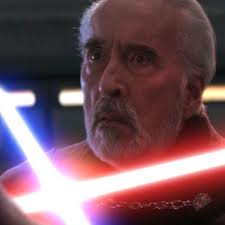
There mission is to reach General Grievous’ command vessel, where Palpatine, a hostage, is being kept. They fight there way through several droid fighters, pull some cool moves, board the ship, take out tons of droids – all rendered with state of the art CGI of course – and begin working their way to the room where he’s being kept. Once there, a room that is made to resemble the Emperor’s own throne room, they do the deed of fighting Dooku for the second time.

And this time, things go much the same. Obi-Wan is taken out early, and dismemberment ensues. But this time, it’s Anakin hewing off Dooku’s limbs. Defeated, Palpatine tells Anakin to kill him, and after a minimum of discussion, Anakin slices his head off.

He expresses some regret, but Palpatine tells him not to worry about it. Second time Anakin has committed cold blooded murder and the whole thing’s brushed off without a second thought. They even raise the issue of the last time he did this, appropriately…

He also tries to get him to leave Obi-Wan behind, but this Anakin proves immune to. Together, they begin the process of fleeing, only to get caught and brought to meet Grievous himself. Now this guy, though he’s hasn’t been introduced yet, is apparently important. He’s killed Jedi too, judging from his collection. However, Anakin and Obi-Wan have no trouble escaping and take control of the ship.

Anakin, in demonstrating his alleged flying skills, begins trying to land the ship on Coruscant itself. A spectacular crash ensues, in which we see a surprisingly callous attitude towards the potential loss of life. But then again, they never confirm that anyone was hurt, despite all the damage they do.

Anyhoo, a tender reunion soon follows. Anakin is reunited with Padme, admits he’s missed he, and learns she’s pregnant. This is a bad thing, for as we soon learn, Anakin’s been having bad dreams again. This time about Padme dying. He remembers what happened with his mother and doesn’t want a repeat.

Meanwhile, Obi-Wan and the Jedi are getting nervous about Palpatine. He’s had his emergency powers for some time and even expanded on them. Now that the war is nearing its end, they fear he won’t give up his powers. After years of benefiting from all the chaos and confusion, it seems they are finally sensing that he’s not on the level. They propose to devise a test. Once they’ve hunted down Grievous, they’ll confront him. If he doesn’t relinquish his powers, they’ll know he’s up to no good.

At the same time, Palpatine continues to use Anakin to further his own aims. He appoints Anakin as his personal representative to the Council, who do not trust him so they don’t promote him to Master. Anakin is incensed.

However, the Council still asks that Anakin spy on Palpatine for them. They also begin to express doubts about Anakin and the prophecy, whether or not it might be misread. Seems late to be bringing this up, but the die is kind of cast at this point…

Palpatine also seems to know more about Anakin than he’d prefer to know. That much is clear when he begins to address the possibility of how the Dark Side can save people from dying. Anakin is obviously intrigued, and begins to promise Padme in the most cryptic of ways that everything will be fine.

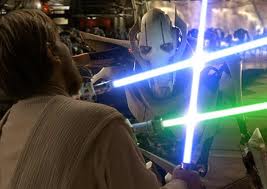
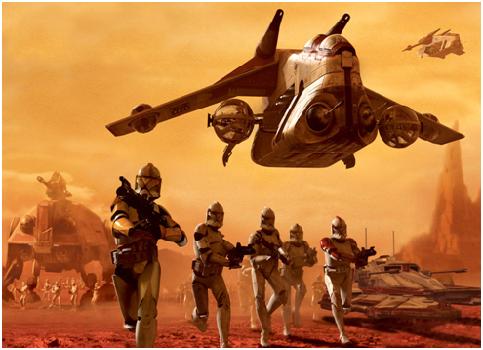
Once more, the Council decide to divide Anakin and Obi-Wan and send them on separate missions. While Anakin spies on Palpatine, Obi-Wan is dispatched to deal with Grievous. He flies to Atapau, where the Separatists base used to be, and engages Grievous in single combat. The Clones troops arrive shortly thereafter, and a big CGI fight ensues.

After a big chase involving a giant lizard, a ZOOM, and a cliffside fight, Anakin blows Grievous away with a blaster. In a shout out to remarks made in the first movie, he then mocks the weapon that saved his life. Seems kind of callous…

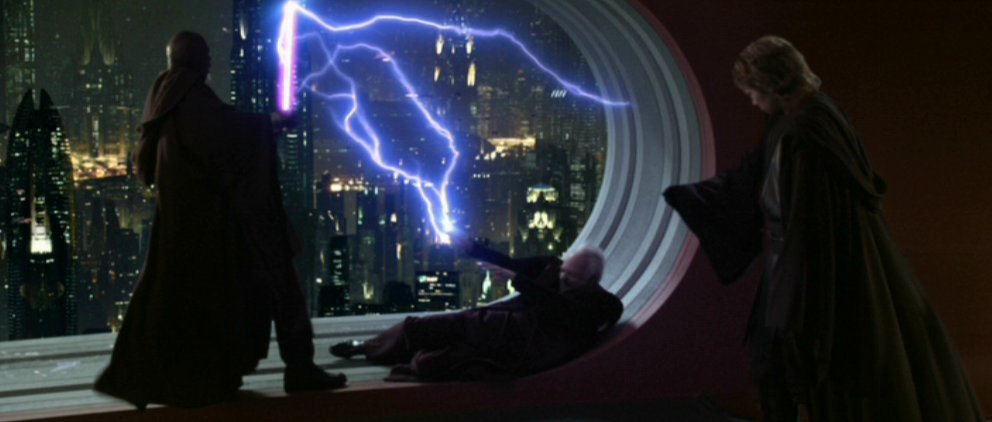
Back on Coruscant, Anakin gets wise to Palpatine after he practically spells it out for him. He draws his blade, but hesitates to take him down when Palpatine reminds him that he will never save Padme without his help. Instead, Anakin runs to Master Windu and tells him what he’s learned. Windu takes some backup and goes to arrest the Chancellor and another fight ensues. Palpatine quickly dispatches his backup, but Windu manages to subdue him before long.

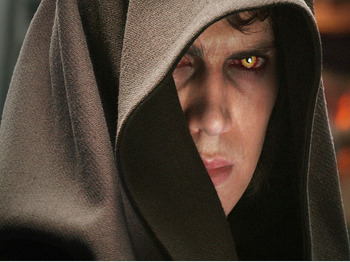
Of course, Anakin shows up and pleads for Palpatine’s life. Windu seems set on killing him, which seems odd considering that he’s a Jedi Master and killing prisoners is not something they do. But this forces Anakin to intervene and Windu dies. Anakin is crippled by guilt, but out of a desire to save Padme declares his loyalty to Palpatine.

His first task, it seems, is to kill everyone in the Jedi Temple, which Anakin does, including all the kids. Once he’s done that, he’s sent to Mustafar to wipe out the Seperatist leadership, a move which will end the war and eliminate the last of Palpatine’s liabilities. He kills them too, and seems to enjoy it just a little too much!

Obi-Wan returns to learn what Anakin has done. He and Yoda arrive at the Temple to find the corpses of all the “Younglings” (guess they couldn’t say kids, might have sounded too… murdery). Obi-Wan then tells Padme, who for some reason seems surprised that Anakin has done this… again.

Once more, the Jedi choose to divide their forces. Yoda will go and take on Palpatine while Obi-Wan will fly all the way to Mustafar to deal with Anakin. Palpatine then declares the formation of the Galactic Republic, and outside of Padme and Bail Organa, no one seems to mind! She issues a line meant to capture the absurdity: “So this is how liberty ends… in thunderous applause.”

And so we get two fight-scenes, almost interspersed. Yoda fights with Palpatine in the Senate and gets several floating pods thrown at him. He loses, is picked up by Senator Organa (Leia’ adoptive father), and declares he’s failed and must go into hiding.

Padme and Obi-Wan confront Anakin, who seems to have gone a little Batty McPsycho now. After all he’s done to save her from death, he then turns on Padme with a choke move. And then of course Obi-Wan and him go at it like a bunch of Highlanders on crank!

After a VERY long, drawn out fight scene, Obi-Wan takes off Anakin’s legs and remaining arm. Anakin burns on the slopes above molten magma, and Obi-Wan just leaves him there. Palpatine picks him up and takes him a medical facility where they begin the process of turning him into Vader. Simultaneously, Amidala delivers her babies and dies in childbirth. No medical reason is given, it just seems that she’s lost hope… okay.

All remaining threads are tied up nicely. It is agreed that Luke will go to Tatooine, Leia will go to Alderaan, and Obi-Wan will also go to Tatooine to hide and commune with his old master. And then, the newly-created Vader has a ham moment by wailing when Palpatine tells him that he killed Padme accidentally. “Nooooo!” is his reply. And it seems that they are no in total cahoots. The movie ends with them witnessing the construction of the Death Star.

Last Word:
Well, like I said, this movie did better than the previous two. However, there were problems that few were prepared to admit so long as the Star Wars legacy seemed on the line. Most had to do with the plot, so I’ll save those for last. First, the movie shared some problems from the previous two which really became apparent by now.

They include the shooting, how Lucas shot all his scenes from the comfort of his chair using two cameras and simply had his actors walk slowly across the screen or sitting to deliver the lines. And then there was the bad dialogue. The romance factor was diminished in this movie, but there were still those painfully awkward scenes where Anakin and Padme are forced to say how much they love each other and it all comes out tasting of ham and wood!

And it wasn’t just the romance, it was every dramatic line in the movie. Padme’s line about “how liberty ends” was one. Mace Windu’s angry declaration, “The oppression of the Sith must not be allowed to return!” was another. Why didn’t anyone ever tell Lucas, “this is NOT how people talk!” Where is Harrison Ford when you need him? And of course, the way he kept showing characters from the first as if it were necessary to cram them all in. This time it was Chewbacca, Leia, Luke, and bit more of Bail Organa, which pretty much completes the original cast. In fact, the only person he didn’t preview was Han Solo! Wonder why…

And of course there was more of the same on the recycling front. Here too, the examples were many and close together. At the beginning, we’re meant to remember Jedi where we see Palpatine in that chair in front of that window. The battle at the end was meant to call to mind the final duel between Luke and Vader. The attack on the Wookie compound on Kashyyk also seemed like a not-too-subtle attempt to resurrect the Battle of Endor (which originally called for Wookies). And the scene at the end where they are all stowed aboard a Corellian blockade runner is supposed to remind us of the first movie when Leia’s ship (same make and model) was boarded.

But none of that compared to the fact that the majority of the war, the most important aspect of the prequel movies, all happens off screen. It begins at the tail end of the movie II, then ends at the beginning of movie III, with the vast bulk of events taking place between them. Like most fanboys, I went to theaters back in 1999 expecting the prequels to be ABOUT this, but instead the war served as a backdrop to the duty of showing how Anakin fell and all the rest.

In fact, beyond a few action shots and some talk of it, the war seems to have no real consequences whatsoever to the Republic. No shortages, no recruitment drives, no resistance to the war. Even Coruscant itself seems completely unmarred by the fact that it was attacked in the beginning. A few scenes after an invasion, people are going to the opera and acting like nothing’s happened. There’s not even a single indication of damage done to the city.

Okay, plot holes time! I’ve chosen to list them in sequential order to save time and prevent overlap. Here goes!

  1. Opening Battle: Much like in Clones, the fight between Anakin, Obi-Wan and Dooku suffered from an obvious contrivance. Once again, Obi-Wan had to go down and stay down so Anakin and Dooku could fight one on one. But this time around, there was the added necessity of making sure he unconscious while Anakin executed Dooku. Which brings me to point 2!
  2. Murder? No Biggie: Once more, Anakin has committed a severe violation of the Jedi Code and basic morality by killing a man in cold blood, and no one seems to notice or care. Palpatine tells him to do it, he issues mild protests, but then does so without much regret. What little guilt he expresses is assuaged when Palpatine brings up how he’s done it before. That seemed appropriate, since there were no consequences then either.
  3. The Jedi Council, Assholes!: In the first movie, the Jedi Council tell Anakin that he has to severe all ties with his mother in order to be one of them. Why? Because his fear of losing her is bad and a path to evil. Okay, seems pretty callous, but I guess they needed something to hint at his descent into evil. Now, in movie three, Anakin is told by Yoda that his fear of losing Padme is wrong. Basically, he tells her that these fears are selfish and he should be happy this person, whoever they are, is going to die. He uses better sounding words, but the reasoning is basically the same. What kind of gurus are these? Why do they insist on being so harsh in their rules? It’s like their begging people to rebel against them by making their code impossible to follow. No love, no attachment, no sadness over loss. If anything, it’s their fault Anakin turned bad. They made him leave his mother behind, she dies and he goes on a rampage. His wife is near death, once again they tell him to let her go, and he goes on rampage to save her. There’s a lesson here I’m thinking…
  4. The Jedi Council, Idiots!: It is astounding how many stupid calls the Jedi Council make by this time in the series. First up, they’ve been saying for all three now that there’s something not quite right, some dark force, some hidden danger, but they never act on it. In this movie, they finally seem to be catching on. Mace Windu says he senses the Dark Side around Palpatine, Yoda expresses doubt about the so-called prophecy, and Mace and Yoda both fear putting Anakin in his presence. And yet, they do! Not only that, they continually fail to act to stop Palpatine even thought it’s obvious that he’s at the center of all things. Really, where is the mystery? Granted, Lucas tried to explain this away by saying the Jedi’s were being blinded by the Dark Side. But you don’t need ESP to see what’s going on here! The simple question, que bono, would have solved their entire dilemma. Who’s been benefiting from the all crises, again and again? Palpatine! And if you can sense dark energy coming from him, I’d say mystery solved!
  5. Anakin’s Descent: Now to be fair, Anakin had already turned to the Dark Side long before this movie. The moment he murdered women and children, he was bad. That wasn’t no preview of how it happened, that was it happening! But still, the way he chooses evil in this movie seems just so stupid. He saved Palpatine, that I get. But immediately after, Palpatine tells him he doesn’t know how to save Padme. That should have been the end of it. Anakin should have gone into a rage and killed him for lying through his teeth. Instead, he agrees to join him based on the promise of helping him, and that’s enough to convince him to murder children. On top of that, did he also not realize after Palpatine said go to Mustafar and kill all the Separatists that Palpatine was the one leading them? He had ample clues, like how did he know they were there? Why were they expecting him when he arrived? Why did they keep pleading that they were all friends? Did he not know, or did he not care?
  6. “No, not Anakin!”: I’ve harped on about how Anakin killed kids and no one, particularly Padme seemed to care. But what really makes no sense was how Padme reacts when Obi-Wan tells her he’s murdered the “younglings”. “No, not Anakin! He couldn’t!” Whaaaaat? You know he could, because he told you he’s done it before! The real answer should have been “Oh, no! Not again!”.
  7. Constant Separations: Why was it necessary to send Obi-Wan alone to get Grievous? On the one hand, they said they wanted an experienced Jedi to go deal with him. Okay, but why does he have to go alone? They say it’s also because it might just be a wild goose chase. Still not making sense. If Anakin’s the one who’s constantly saving Obi-Wan’s bacon, then it only makes sense to keep them together. No, the real reason is so they can be apart while Anakin does all that evil shit. Second, Yoda and Obi-Wan break up to deal with Palpatine and Anakin seperately. Again… why? Why not kill Palpatine first since he’s on Coruscant, then fly to Mustafar to deal with Anakin together. In every other movie, even at the beginning of this one, they always worked in pairs. Now they suddenly they are deliberately isolating themselves to have one-on-one showdowns. Again, the only reason is plot necessity, making sure that Yoda fails while Obi-Wan has his big fight with Anakin.
  8. The Senate, Morons!: As if the Jedi’s missing the obviousness of Palpatine’s rise to power wasn’t enough, there’s the added idiocy of the Senate. For years, these guys, have been surrendering more and more power willingly to Palpatine. And then when he announces that the Jedi attacked him, they buy it. Really? They believed that the Jedi, the servants of peace and justice for 1000 generations, are trying to take power? Not the hideously scarred man who took power in the name of security, wiped out the Jedi, and is now declaring the government a military dictatorship? They don’t see this as the slightest bit suspicious? What’s more, the entire reason they gave Palpatine “Emergency Powers” was because of the war. Now that it’s over and all the threats eliminated, he claims that arrangements is to be made permanent. And how does the Senate respond? According to Padme, “with thunderous applause”! How stupid are these people?
  9. “Noooooo!”: Another perfect opportunity for Anakin to turn on Palpatine would have been when he told him Padme was dead. Saving her was the whole reason he turned to the Dark Side, betrayed the Jedi, killed the “younglings”, and murdered the Separatists leaders. Now he’s told she isn’t even alive, and what does he do? Cries and still agrees to be the Emperor’s lap dog. Again, I would have been like “Well then f*** you, pal! I got no reason to follow you, so I’m taking it all!” He already said how he could defeat Palpatine and run things with Padme. Why not do it now and run the whole thing himself? What kind of Sith is he, turning down obvious opportunities for personal power?
  10. Contradictions: As a last point, I’d like to highlight how there were even contradictions here between this last movie and the originals. Didn’t Leia say that she knew her mother, and that she died when she was very young? That she was beautiful, kind, but… sad? She sure did, and this hinted at the fact that her mother was lamenting the loss of her husband, Anakin. So Padme dying in child birth kind of contradicts that. And it was just plain silly! Are we to believe that in this day and age, women die in child birth because they’ve got broken hearts? Even if she were feeling dejected and in the mood to give up, they got defibrillators and adrenaline, don’t they? They can restart a heart! And why was it necessary to have the Death Star being built at the end? Was it so important to preview it as well? As I recall, the first one was built to combat the threat of the Rebellion. Since that’s a good twenty years away at this point, the Empire has no justification to build it yet. And the second one only take a few years to build and it was bigger and badder than the first. Why then would it take them twenty years to build the first one?

Wow, that’s a lot of complaints. But like I said, time has a way of making these things more apparent. And listening to geeks way bigger than myself grip about the prequels flaws has kind of helped. And in truth, I didn’t mind this movie too much. It was just that by this point, the flaws of all the others seemed to snowball into one. So it really didn’t matter that this one was “the best of the three” because in the end, the whole production suffered from the same immutable flaws.

One thing I remember Lucas saying before the movie premiered was that he had to force himself to sit down and bang out this script. Not a good admission to make, but that seemed true of the first and second as well. It seemed like, beginning in the mid nineties, he sat down with the intent of writing a prequel, and focused entirely on how he was going to bring it to life through visuals and special effects. The plot was only important in so far as it explained everything from the original movies.

And with no one willing to question Lucas and help him with his writing, the plots for all three movies felt like they were first drafts that didn’t make much sense and were really just forced explanations and connections. Sure they explained where everyone came from. Sure, the fight scenes and CGI were pretty damn cool. But there was no tension, no suspense. We knew where everything was going since we already saw the originals. So any attempt at recapturing the feel of the originals was lost.

Really, what was the point of these movies? We all wanted them back so badly, but why couldn’t they have been about the Clone Wars and the stuff we didn’t know about? The best prequels are the ones that explore the things you don’t know, not the things you’ve already been told but haven’t yet seen. And that was where these movies were the weakest. It’s easy to criticize, I know. Especially with the benefit of hindsight. But even I could think of better plot lines and outcomes when I was watching the movies for the first time!

Well, that about does it for these movies. My apologies for not being more positive, but that’s the effect these movies tend to have. As the documentary The People Versus George Lucas contended, it’s only because people loved the original Star Wars so much that they expressed such disappointment and feelings of betrayal over these ones. I can think of one other franchise that has this sort of polarizing effect on people, except for maybe Dune!

Personally, I would be wishing Lucas well, were it not for the fact that he seems to have learned nothing from this experience. After the third and final movie was released, he completely took over the Clone Wars animated series which he didn’t seem to care about until he realized it was profitable. Then, he decided to re-release all six movies in 3D. Once again, he seems to be re-releasing his movies for no other reason than because he wants to take advantage of the latest technology. That makes three releases for the origins and two for the prequels.

On top of that, he has stalwartly refused for years to release the original movies on DVD. This was in response to fans saying they would like them available alongside the Gold Editions that feature all the added CGI and new ending where Hayden Christensen’s ghost shows up at the end. Lucasarts claimed that it was because they no longer existed, but he also went on the offensive saying it was his movie so he had the right to choose which version history would remember and which would be forgotten.

This, more than anything, would seem to indicate that Lucas has surrendered to the lure of the Dark Side of the industry, where money and power rule. All this from the man who used to resent studio control and industry greed. How bitterly ironic! Sad that he can’t see it, but what can you do? Well, some fans are taking it upon themselves to make their own versions. Topher Grace is one. As already noted, his movie, Star Wars 3.5, is slated for release one of these days. All he needs is for Lucas to give him the green light. It could happen…

GIANT ROBOTS!

Forgive the all caps, but with a name like this, you gotta go big! Thanks to a helpful suggestion from a respected colleague (thanks Rami!), I’ve finally found the latest for my series on conceptual post. And I think my reasons for going with it are clear. Whether we are talking about mechs, mechas, walkers or sentient machines, giant robots are just plain cool! And here’s a list of some memorable ones from various franchises that have come down to us over the years:

AT-AT Walker:
It’s only right to start the list with a classic example from the classic franchise. Though I’m sure this giant needs no intro, I’ve recently come to learn that there are some people who really haven’t seen the original trilogy. Yeah, I can’t believe it either!

Known officially as the All Terrain Armored Transport, this beast was the Empire’s weapon of choice for digging Rebel troops out of fortified emplacements. It’s size alone made it an intimidating sight to behold, which was kind of the point! But in case that wasn’t enough to make people run, it also packed quite a punch.

AT-AT cross-section

Although they were invented by the Republic during the time of the Clone Wars, the AT-AT didn’t emerge as a weapon of terror until the time of the Empire when it was resurrected by General Veers. During the Battle of Hoth, her personally led a force against the Rebel Echo Base and overwhelmed its defenders. Its armor proved too strong for conventional blasters, and its weapons were devastating once they were in range.

Under Luke Skywalker’s command, Rogue Squadron was able to destroy one using their tow cables while Skywalker destroyed another using his lightsaber and a concussion grenade. However, this did not stop Veers from destroying the shield generator and reaching Echo Base in the end. On Endor, an AT-AT would make an appearance guarding the Imperial shield generator.

Broadside Battlesuit:
Finally, I’ve found an excuse to use something from Warhammer 40k! It’s a little hard to incorporate ships when the focus is really on cool battlefield stuff. But hey, the sign says Giant Robots, so we’re all good!

The Broadside Battlesuit is the Tau Army’s heavy hitter, marrying the concept of a tank with that of an infantryman. Armed with two arm-mounted missile launchers and two rail guns on its back, the Broadside is more like a mobile artillery piece than a mechanized suit of armor.

But of course, it also has a thick hide, which is a necessity given the mighty kickback of its weapons. Though they are comparatively slow and have no jetpacks, like other Warhammer mechs, they are able to entrench and kill their enemies from a distance.

Destroid Tomahawk:
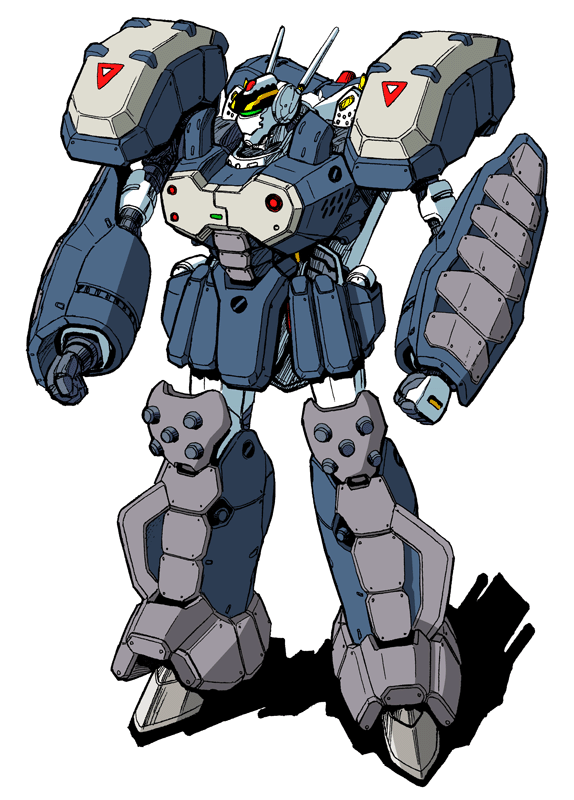
Speaking of walking tanks, this next example comes from the Robotech universe and is the mainstay of Earth’s mecha forces. Big, bad, heavily armed and armored, the Tomahawk is essentially a walking version of the main battle tank.

In terms of armaments, the Tomahawk carries just about every weapon under the sun. It’s two heavy beam cannons constitute its arms while two missile launchers make up the shoulders. It also carries two head-mounted machine guns, two gun clusters in the lower chest consisting of an auto-cannon, flame thrower, laser and direct-fire mortar. On top of all that, it also has an outboard missile launcher over its right shoulder.

Measuring almost 13 meters in height and weighing a whopping 31 tons fully loaded, this beast is still capable of running at 88 km/h. It also came equipped with vernier thrusters, making it capable of limited space operations. Unfortunately, its size and weight made it somewhat cumbersome when engaged with Zentraedi Battlepods (see below), which is why the design was eventually abandoned in favor of lighter designs.

Dragoon:
You know, I think this is the first time I’ve mentioned Starcraft in the context of one of these posts. Bout time really! And as a primary example of something cool from this universe, here’s the Dragoon! Much like other examples on this list, this machine requires an organic operator, or at least parts of them…

A quadrupedal attack walker employed by the Protoss, the Dragoon was considered a second chance for templars who had been seriously wounded in the line of duty. These pilots would generally be submerged in a fluid-filled tank in the Dragoon’s interior and operate it through an “essence translator”.

The Dragoon’s main weapon was of a centrally-mounted cannon which fired phases antimatter at targets. Combined with the units speed and maneuverability over unstable terrain, the Dragoon was a highly effective fighting vehicle and played a crucial role in the Brood War. It was due to this success that other factions, such as the Dark Templars and the Confederates, attempted to copy or adapt the designs for their own armies.

Fuchikoma:
Also known as “Tachikoma”, these walker/rollers are essentially tanks that are used by police in the manga series “Ghost In The Shell”. Heavily armored, packing serious weapons and run by a simple artificial-intelligence, these robots can act independently but are generally used for fire support.

Every unit is based on the same quadrupedal configuration with two three-fingered hands which double as machine guns. They carry their sensor equipment in their “heads”, which consists of a large main lens and two sensors mounted on the “mouth” below. Heavier weapons can also be mounted on the underside, which can either be a heavy machine gun or a grenade launcher.

In addition to their firepower, the Fuchikoma is also highly versatile. They can handle many different types of terrain, are able to walk up walls, rappel, walk, extend wheels from their feet and drive, and are also even submersible. After missions, the AI’s also share their experiences with all other units so that they can learn and anticipate different scenarios.

Goliath:
Back to Starcraft for another prime example of supreme robotry. And fans of the Marine campaign will certainly recognize this one. Officially, it is known as a Terran all-terrain combat walker. But to those who fight alongside it, it’s known simply as a Goliath.

Designed to provide support for troops in urban settings, the role of the Goliath expanded to providing infantry assault in all terrains and conditions. Employed by just about all sides during the Guild Wars, the Goliath became the backbone of Confederate forces against the Zerg and Protoss.

Composed of neosteel alloy, the Goliath’s exterior is highly resistance to small arms fire and most munitions. It’s weapons consist of two arm-mounted autocannons, two shoulder-mounted missile launchers. With the arrival of the UED during the Brood War, the Goliath’s design was upgraded with a belly-mounted machinegun and improved missile range. By the time of the Second Great War, the design was retired in favor of updated designs.

Metal Gear Rex:
Seems like a fitting name when you look at that gaping maw doesn’t it? And given its size, shape and terrifying power, the comparison seems even more apt. The focal point of the Metal Gear game series, this behemoth was a prototype weapon developed by DARPA and Arms Tech for the US Armed Forces.

Based on stolen designs from the former Soviet Union, Metal Gear was a revolutionary concept for a “bipedal tank” which would be capable of carrying nuclear weapons. After decades of toying and production, the end result was Rex.

In terms of armaments, the Rex has two 30 mm rotary cannon, a compliment of anti-tank missiles and 100 megawatt free-electron laser. However, its biggest surprise comes in the form of a massive shoulder-mounted rail gun which is capable of deploying stealth nuclear warheads. So in addition to being able to gallop into the field of battle and level everything in its wake, it was also capable of nuking an enemy city from several kilometers away.

Scary! I want one! Several version of Metal Gear would appear in the subsequent games with various modifications. But that’s something for another post (or more) 😉

Timberwolf:
No list of giant robots would be complete without at least one example from the Battletech universe. And here it is! The Timberwolf, otherwise known as the Mad Cat. Fast, heavy and quite formidable, this vehicle puts the “mech” in omnimech!

According to the series, this vehicle was the first omnimech to be encountered by the Inner Sphere Clans invaded. It was here that it earned the name “Mad Cat”, being similar in design to both the Marauder (MAD) and Catapult (CAT). It’s rare combination of speed, heavy armor and armaments also led to this designation. Apparently, this combination is quite rare!

In its primary configuration, the Timberwolf packs a good balance of energy and projectile weapons. It’s main armaments consist of arm lasers and two shoulder-mounted missile pods, both of which are effective at long range. It also carries two medium lasers and a medium pulse laser for close range combat, and a set of cockpit mounted machine guns for point defense against infantry.

Though it has no jump jets, the Timberwolf is capable of running at over 80 km an hour and is capable of some nimble maneuvering. It’s composite ferro-fibrous armor also mean it can withstand several directs hits from enemy fire.

Unicron:
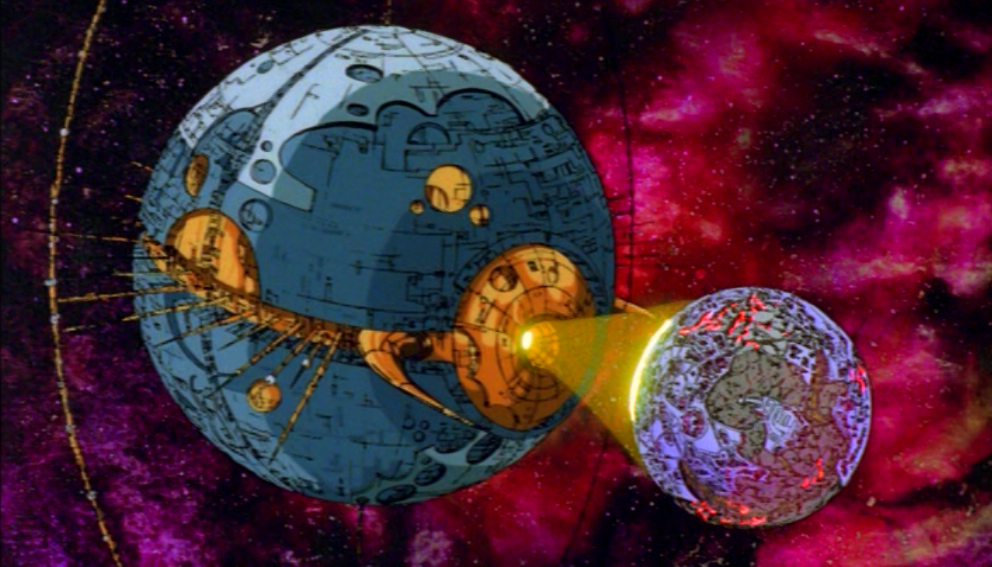
You know, I’m loathe to use the same example twice. But hey, the name says Giant Robots, and Unicron is nothing if not both of these things! Taken from the Transformers movie (circa. 1986), this big bot is the biggest bot in the universe, and an appropriate one to end this first installment on.

Also known as the “Lord of Chaos” and “Planet Eater”, Unicron is essentially a planet-sized transformer who goes about the universe consuming stellar objects. These can include planets, asteroids and even stars.

Powered by an array of massive quantum computers, Unicron is dedicated to being a force of uncreation, traveling across universes and consuming all he can to bring about an end to all existence. In addition, he is apparently able to confer powers on lesser beings, using the impressive technology which powers him to upgrade other machines.

In the end, the only thing that could stop him was the Matrix of Leadership, which contained the essence of his equal and opposite – a being known as Primus. Being a creature of destruction, such a creative power could only be seen as a threat. And it certainly was! In the end, the Matrix was opened inside his hull and unleashed a force which completely consumed him.

Well that’s all I got for now. Hope people enjoyed this little display of oversized automatons, mechanized vehicles and massive war machines. And like the song says:

“You dig giant robots
I dig giant robots
We dig giant robots
Chicks dig giant robots
Nice.”
-theme song from Megas XLR

And it’s true aint it? Except for the part about chicks, I can’t say with any authority that they actually dig giant robots. But I know I do! See ya next time.

Cool Ships (volume IX)

Borg Sphere:
BThis first example shows us that thought they were obsessed with simple geometric shapes, the Borg were capable of thinking outside of the cube. If anything, the sphere is a more perfect shape and aesthetically way more pleasing, so its a wonder why they didn’t do it sooner.

Making its first appearance in Star Trek: First Contact, the sphere appeared to be an auxiliary craft which was housed inside a Borg Cube. But in truth, these vessels were actually much more versatile, acting as scout ships and tactical vessels, doing deep-space reconnaissance or performing light assault missions.

In the spinoff series Voyager, Borg Spheres make several appearances. The most notable of which was the series finale (episode 168: “Endgame”), where Voyager was pursued and overtaken by one and had to destroy it from the inside to escape. This, in addition to scenes from other episodes, indicated that every sphere has an internal compartment capable of housing a sizable starship.

Measuring 600 meters in diameter, a standard Borg Sphere carries a crew of 11,000 drones, is protected by regenerative shields, ablative armor, and has the usual array of Borg weapons (which include tractor beams and disruptors). It is capable of warp speed, transwarp speed, and in some cases, can even generate a temporal vortex to achieve time travel (as was demonstrated in First Contact).

Jem’Hadar Battleship:
dominion_dread2You know, I was never was much of a Trekkie. Compared to other franchises, I never really did get into the shows that much. That is, until DS9 introduced the whole Dominion plot line, then I got into it with both feet! Space battles, explosions, ships blowing each other up… what’s not to like? And to make these battles happen, the show’s conceptual artist had to come up with some new designs.

One such design was the Jem’Hadar Battleship, which made its debut in season 6 (episode 144, “Valiant”). Introduced midway through the war, this new breed of warship was designed for the sole purpose of breaking the stalemate between the Dominion and the Allies. That and inspiring fear!

At twice the size of a Galaxy-class vessel (USS Enterprise D) and boasting over 40 torpedo launchers, this ship was clearly meant to be so large and so powerful that no Federation or allied ship would have a hope of stopping it. However, its size and speed also made it a relatively easy target for multiple enemy ships, which would have no trouble hitting it and could outmaneuver it in battle.

After it’s initial deployment, where it destroyed the USS Valiant, several battleships were rolled off the line and took part in the war, especially during the latter engagements of the war like the Battle of Cardassia. Many ships were needed to break the lines which they reinforced, and it was only by the timely defection of Cardassian forces that the Dominion was overwhelmed in these battles.

USNC Spirit of Fire:
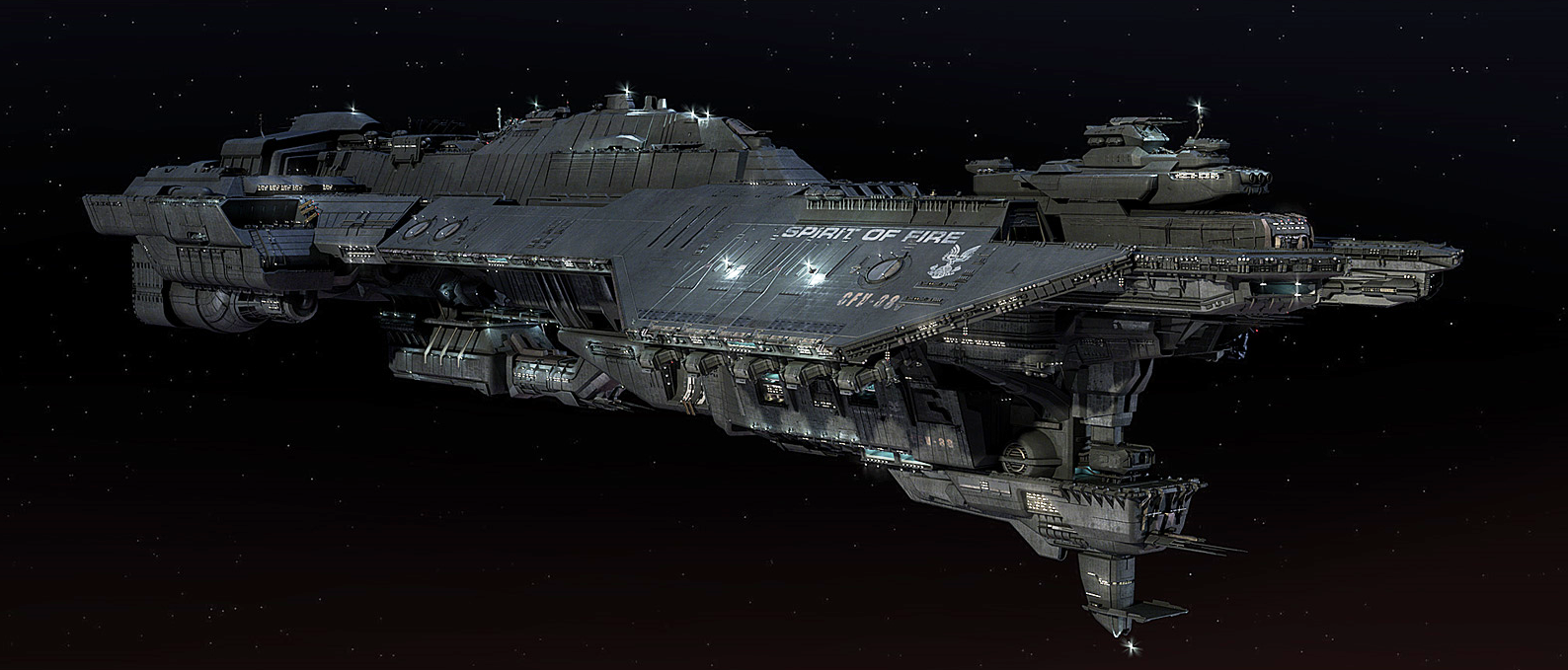
To the Halo universe once more, this time for a look at a modified colony ship known as the Spirit of Fire! Making its appearance in Halo Wars, this ship was the largest in the UNSC navy and served with distinction during the Covenant War.

As already noted, the Spirit of Fire was originally a Pheonix-class colony ship, a vessel that was designed to carry colonists and supplies to new worlds as part of the UNSC’s prewar expansion efforts. However, this changed with the appearance of the Covenant and their apparent need to knock over human settlements.

Recommissioned for military service by the UNSC, the Fire was outfitted with a magnetic accelerator cannon, point defense guns and missile turrets, hull armor, and a major engine overhaul. Its internal bays were also converted to carry Scorpion tanks, Warthogs, Pelicans, fighters, bombers, and anything else it would need to put a small army onto a planet. As a former colony ship, the Fire retained the ability to enter atmosphere and land planetside, making it all the more effective at troop deployment.

During the course of the war, the ship was declared missing and all hands were presumed dead after it failed to return from a mission. However, the ship was actually traveling back at sublight speed from an engagement after it lost its fusion core. The crew had used this to destroy a Forerunner “Shield Planet” which happened to be housing a large Covenant attack fleet. In sacrificing its engine core, it prevented a major strike by Covenant forces on human territories, and therefore saved countless lives. Not bad for a civilian ship, eh?

SDF-1 Macross:
SDF-1 MacrossWhen you hear the words, Super Dimension Fortress, what comes to mind? Definitely not a piddly little spaceship! Which is probably why the Macross’ full name contains them! Apparently, this ship was rebuilt from the remains of an alien craft that crash-landed on Earth, and was intended for use should said aliens ever come knocking again.

Although intended to travel to distant solar systems and promote peace with alien species, the Macross became the first line of defense once war with the Zentradi species began. Much like all the “mechas” from this franchise, this ship is capable of changing from its ship designation into a towering mech (known as “Storm Attacker” mode), a process which takes about 15 minutes.

The massive ship also carries the two carriers – the CVS-101 Prometheus and SLV-111 Daedalus – within it’s fuselage. When in cruiser mode, these are housed along the sides, but while in “Storm Attacker” mode, they constitute the robots “arms”. In terms of weapons, this baby comes equipped with 8 guided converging beam cannons, four 178cm rail cannons, automatic missile launchers, and a main super-dimension-energy cannon. Aliens beware!

Strident-class Star Defender:
StridentIt’s funny how the Rebels only seemed to get into mega-ships after the Empire was thoroughly licked. And yet, here we have another Star Defender ship which comes from the expanded Star Wars universe and only showed up for duty after the Empire lost all its big behemoths.

Produced by the Corellian Engineering Corporation (natch!), the Strident-class was the first breed of Super Star Destroyer to serve on the side of the Alliance (which now called itself the New Republic). But of course the Alliance didn’t like the term “destroyer” when applied to their mega ships, hence the name change. But the particulars are pretty much the same.

Much like the Viscount-class produced by the Mon Calamari, the Strident comes equipped with thousands of turbolasters, laser cannons, and ion guns, and its massive hold houses dozens of squadrons of starfighters as well as hundreds of shuttles and support ships. It took awhile but I’m guessing the Rebels finally decided to go big or go home!

The Spacejockey ship:
I can’t wait to learn more about THIS one! As the focal point for the first Act of Alien, the “Spacejockey” ship is also central to the plot of its soon-to-be-released prequel, Prometheus. Known also as “The Derelict”, very little is known about this ship other than the fact that it was of unknown origin and appeared to be transporting xenomorphs.

The Derelict was first discovered by the crew of the Nostromo when their ship was rerouted to LV-426 to investigate a distress beacon. When they approached the ship, its alien configuration was immediately clear. Shaped in the configuration of a horseshoe, the ship apparently had two prongs, one longer than the other, and an engine array located at the rear.

SpaceJockeyWhen investigating the inside of the ship, its alien nature became even more apparent. Whoever the Space Jockeys were, they clearly shared H.P. Lovecraft’s sense of aesthetics! Literally everything aboard looked organic and gothic, right down to the funky patterns on the walls! When discovering what appeared to be a control chair, the crew stumbled onto the remains of a long “Space Jockey” as well. Having an anthropomorphic shape and a trunked face, they are assumed to look like a cross between a human and an elephant.

Closer examination of the remains revealed that it died from a “chestbuster” breaking through its ribcage. With the discovery of the ship’s compliment of eggs, and the observable symbiosis between the “facehuggers” and “chestbusters”, it was unclear why the Spacejockeys were transporting them. Perhaps they came aboard by accident, perhaps they were intended for another use somewhere. These are all questions I look forward to being answered… say June-ish!

Vor’cha-class Cruiser:
Vor'chaSeems the Klingons are getting a lot of attention from me as of late. But I’ve come to acknowledge just how many cool ships they really do have. Clearly, these blood-drinking, Valhalla worshipping guys excel when it comes to bringing beauty to their instruments of death. But then again, one would have to assume that it’s one of the few artistic outlets they get to have!

Taken from the TNG universe, the Vor’cha was the mainstay of the Klingon armada and the replacement for the aging K’t’inga-class. The first of its design served as the flagship for the Empire, but became fully integrated into the armada once it was mass-produced and replaced by the larger Negh’var-class.

Making its first appearance in season 4 of Star Trek: TNG (episode 80: “Reunion”) where it served as the Chancellor’s flagship, this vessel would go on to make several subsequent appearances in the expanded franchise. It’s most notable appearances were during the Klingon-Cardassian War where several participated in the assault on DS9 itself. Later, during the Dominion War, many more would serve on the front lines against the Jem’Hadar and their allies.

Naturally, this Klingon ship boasted multiple disruptor arrays, the main one located at the front end of the ship with two more mounted on the wings beside the nacelles. These were capable of firing in either the solid mode (like a phaser) or intermittently. Maneuverable for a ship of its size, it also came equipped with a cloaking device which was available in all flight modes.

Vorchan-class warship:
centauri_2This ship gets seen a lot around the B5 universe. And since I can’t stop hitting them up for cool ships, it only makes sense to mention this baby here. The Vorchan-class cruiser, a medium warship, was the mainstay of the Centauri fleet and weapon of choice when it came to raids, reconnaissance and even large-scale offensive operations.

Though designed predominantly to escort heavier cruisers, such as the Primus-class warship, Vorchans were still highly effective in small squadrons and were often called upon to mount attack missions by themselves. During the Narn-Centauri War, Vorchan warships carried out many assaults on Narn colonies and installations and even participated in skirmishes with the heavier Narn warships.

Its armaments consist of two plasma accelerators, missile banks and guided mines. These armaments, paired with its size, speed and relative maneuverability allow it to stand toe-to-toe with just about anything the Narns, Earth or League of Non-Aligned Worlds could throw at it. And unlike the heavier Primus ships, it is capable of maneuvering inside atmospheres. And it’s cool, raptor-winged like design makes it pretty easy on the eyes too. Were it not for the fact that Roddenberry beat them to it, you can bet the B5 designers would have named this ship a Bird of Prey!

Nine down, who the hell knows how many more to go!

Cool Ships (volume VIII)

Battleship Yamato:
A couple times now I’ve given praise to ship designs that went beyond the usual airplane/ seafaring paradigm. But what can you say about a spaceship which is a carbon copy of a old sea battleship? I don’t know, gutsy maybe? That its paying homage to the original? That’s all I can really say on this one, since it is identical to its namesake from the Imperial Japanese Navy.

Taken from the anime series of the same name, the Yamato was a prototype ship which was built in secret by Earth forces in the ruins of the original. Using alien technology, it was the first Earth ship to boast FTL and a “wave-motion-gun”. These devices were meant to give it an edge in the ongoing war with a race known as the “Gamilons”.

Early in this war, the Gamilons had bombarded Earth with radioactive meteorites. The result was that all human settlements had to be moved underground. However, the radiation was slowly working its way down to the inhabitants, and the only hope for survival came in the form of a message from a distant star. After completion, the Yamato was meant to fly to this world and retrieve the device which apparently could cleanse Earth of its poisonous radiation.

Thus, the Yamato was created to perform a mission that meant the very survival of the human race. It’s drive system was to make sure it could make the trip, while its weapons were meant to ensure it could defend itself.

Cylon Heavy Raider:
Another installment from the BSG universe, here we have the heavy hitter of the Cylon fleet, the dual purpose attack and transport craft, otherwise known as “the turkey”. Capable of atmospheric entry, space flight and FTL travel, the Heavy Raider is capable of attacking, transporting troops and conducting boarding operations.

Unlike the standard Raider, the heavy can either fly itself on autopilot or be piloted by actual an Centurion. However, its automated functions do not appear to be the result of a sentient nervous system. In terms of armaments and capacity, the heavy has six cannons mounted under its cockpit and its bay is capable of holding up to ten Centurions.

The Heavy Raider made its first appearance in season one (“Scattered”) when one crashed into the starboard flight pod. On Caprica, Sharon Valerii (Boomer) commandeers one to provide fire support to the resistance and save Starbuck as she escaped from a Cylon medical facility (“The Farm”). The Heavy Raider would go on to make several more appearances in the series, particularly whenever assault missions or heavy raids were concerned.

Quasar Fire-class Cruiser:
Once more onto the Star Wars universe, my friends! But this time, its into the expanded universe with a ship that is somewhat obscure by most standards. Known as the Quasar Fire-class cruiser, or Alliance Escort Carrier, this ship made its first appearance in the Thrawn Trilogy during the Battle of Bilbringi then again in the novel The Truce At Bakura.

Designed by the Sullustans as a cargo transport, many of these vessels were given to the Alliance and converted for combat. This consisted of stripping down the cargo bays and turning into hangars, and mounting defensive turrets at the front and rear.

Thought lightly armored, armed, and shielded, the Quasar’s small size and versatility make it a ship of choice for small fleets and minor attack forces. It’s six squadrons of fighters also give it an effective defensive screen, making it all the more suitable as a small fleet command ship.

The Leviathan:
Did I say once more, I meant twice… maybe more! And this one goes way back, to roughly 4000 years before events in the original movies. Officially known as an Interdictor-class cruiser, this vessel was the mainstay of the Republican navy during the time of the Mandalarion Wars and was featured heavily in Star Wars: Knights of the Old Republic.

During the outbreak of the Sith War which immediately followed, the Leviathan served as Darth Revan’s flagship. After he was captured by the Jedi Order, ownership of this vessel changed to Darth Malak. The ship was responsible for obliterating the surface of Taris and was later the site where Darth Revan, now working for the Jedi Order, confronted Darth Malak for the first time since his defection.

Measuring 600 meters in length, the ship carries an arsenal of 20 quad laser cannons, 4 turbolasers, 2 ion cannons, and four squadrons of fighters. Although somewhat mild by modern Star Wars standards, she was designed to be a forerunner to the modern Star Destroyer design.

Negh’var-class Cruiser:
Despite their brawling, yelling and terrible table manners, you gotta admit; the Klingons make a fine looking ship! And this is especially true of the Negh’var-class warship, the heaviest of the heavies in the Klingon armada, serving as the command ship on many different occasions (and in multiple universes).

Ships of this kind made their first appearance in the series finale of Star Trek: TNG when two attacked the USS Pasteur. Another appeared in DS9 when a changling posing as General Martok led the Klingon fleet against the Cardassian Union, and again against Deep Space 9 when the Federation chose to oppose the invasion. They also went on to play an important role in the Dominion War alongside Federation and Romulan warships.

In addition to the standard cloaking device, the Negh’var carries an impressive array of armaments, including two massive disruptor pods mounted underneath the ship’s wings. It also carries multiple photon torpedo launchers, and several smaller emitters mounted across the ship. She is also capable of standing toe to toe with most other ships in the Alpha Quadrant in terms of velocity, making it up to speeds of Warp 9.

Ornithopter:
Not long ago, I was lamented the fact that I kept forgetting to mention anything from the Dune universe. Now I can’t seem to do a single post without including a Dune ship! This time, its the ornithopter, the curious cool ship that’s perplexed readers and conceptual artists for some time.

The most common vessel in the Imperium, the ornithopter (or ‘thopter for short) was an extremely versatile vessel that served primarily as a cargo vessel and transport. In addition, they often served in a military capacity, being fitted with lasguns, bombs and missiles. This was particulalry the case during Paul Muad’ib’s uprising, when House Atreides ‘thopters were fitted for the assault on Arrakeen and the Imperial Palace.

According to numerous descriptions taken from the expanded Dune universe, the thopter was primarily powered by jet propulsion, but relied on a set of beating wings to maintain altitude and maneuver. The concept has gone through several renditions over the years, due to the many attempts to adapt Dune to the screen. In David Lynch’s 1984 movie adaptation, ‘thopters appeared as small, box-like crat with swept wings that retracted and deployed from the fuselage.

In the 2000 miniseries, they were pictured as vertical take off and landing craft with fans mounted in pivoting wings. The featured picture (shown above left) is taken from The Road to Dune and is an artists concept of what a ‘thopter would look like. Here, we see beating wings which deploy for takeoff and retract upon landing.

USNC In Amber Clad:
Feels like its been awhile since I included anything from the Halo universe. And so here’s the Reunion, a Vladivostok-class guided missile frigate. Though somewhat old and outclassed by modern Covenant standards, several frigates played a crucial role in the Great War against Covenant forces. One such vessel was the In Amber Clad.

Armed with 12 Point Defense Guns, 40 missile pods, 5 twin rail gun turrets, a magnetic accelerator cannon, a compliment of Shiva nuclear missiles and a full compliment of Marines, dropships and escort fighters, the In Amber Clad was considered the mainstay of the old Earth fleet. Capable of atmospheric entry and landing, this ship did not need to rely on drop pods or shuttles, and could land an entire Marine force by itself.

During the Covenant War, these frigates were replaced by the larger and more heavily armed Halcyon-class cruisers. However, the In Amber Clad managed to score a significant victory over the Covenant during the Battle of Installation 05. During the course of the battle, it served as the flagship and won the day when it crashed into the Covenant ship High Charity.

VF-1 Veritech:
As requested, I’ve finally found an example from the Robotech universe! And to be honest, I wondered how long it would take. Though I’m not too familiar with this franchise, the RPG is something I remember fondly from my childhood, and some of the designs still percolate in my consciousness.

One of which is this, the VF-1 Vertiech, also known as the “Valkyrie”. This battleoid, which was adapted from alien technology (known as Protoculture),was originally designed for hand-to-hand combat with aliens which were up to 15 meters in height, the Veritech and subsequent breeds of mechas became the new face of warfare.

Mechas can function in both the fighter and mech role. Capable of flying through space, atmospheres and fighting on land, the Veritech was one of the most versatile and maneuverable mechas in the known universe. With a flight speed of Mach 3 (in atmosphere), and a top speed of 100 km/h running, she is as fast as any land vehicle or aerospace vessel. In addition, the standard Veritech carries two high-powered lasers, head mounted laser cannons, guided missiles, a rotary cannon, and is even capable of engaging in hand to hand combat.

YT-2400 Corellian Freighter:
To finish, I’m in the mood for something Corellian! And so it’s back to the Star Wars universe for this one. Much like its predecessor, the YT-1300 (a.k.a. the Millennium Falcon), the 2400 was a class of light freighter that was fast, tough and endlessly modifiable. So like the Falcon, it was a favorite amongst smugglers, merchants and privateers.

Smaller and lighter than the 1300 series, the 2400 boasted only one servo-turret for defense in addition to its shield array and armor plating. However, this could easily be remedied with the addition of extra guns and missile launchers. And its ample hull space and engine power, the 2400’s could easily accommodate additional mounts and the added weight.

One such ship which acheived notoriety during the Galactic Civil War was the Outrider, the ship of famed smuggler Dash Rendar. This ship, like most other 2400’s, was heavily modified to accommodate additional systems and weapons. Clearly, when the Corellian shipyard designated this vessel as freight transport, it was a nod and a wink!

Thank you all and good hunting! See you in next time in volume 9!

Attack of the Clones. Here we go again…

Hello again! Here we are picking things up again with the Star Wars saga. Today, it’s the second installment in the prequel series, the ridiculously named Attack of the Clones. As I’m sure we all remember, Clones was the stuff of mixed reviews, some critics hailing its special effects and visual style, while others emphasized its flat dialogue and wooden romance.

But even more interesting was the fact that critics were torn over whether it was better or worse than the Phantom Menace. Not a good sign, and the butt of a LOT of jokes and debate. Hard to imagine that fanboys who were united in bashing the PM would find themselves fighting each other over which they thought sucked more!

But to be fair, there were some good points in this movie. So without further preamble, let’s get into it:

Plot Synopsis:
The movie opens with the crawl once again saying that there is a crisis. This time around, it’s the threat of Separatists – led by former Jedi Count Dooku – that’s making things problematic. And once again there is deadlock in the Senate over it. In any case, now-Senator Amidala comes to Coruscant to speak her peace on behalf of those who oppose taking strong measures, and an assassination plot gets underway.

This prompts the Jedi order to send two old friends, Obi-Wan and Anakin, to provide her with added protection. Their introduction is rather painful to behold, as the hormonally raging Anakin begins relating how he hasn’t stopped dreaming of her and tries to make awkward conversation with her. He also picks a fight with his mentor, Obi-Wan, over what their mandate truly is. In the midst of all this, Jar Jar breaks the fourth wall by looking into the camera and smiling at the audience – a sort of, “I’m still here, bitches” for all the fanboys to see!

In another bit of “things to come”, we also learn that Anakin has been having dreams of another woman – his mother. He dreams that something terrible is going to happen, but in the meantime, they must focus on Padme, who’s assassin is still out there. For some reason, they decide to “use her as bait”, which consists of letting her sleep in a window-filled room with nothing but R2 as protection. Didn’t Obi-Wan say they weren’t supposed to be investigating, just protecting? Oh well…

In any case, her would-be assassin sends a probe with some poisonous slugs to attack her. Obi-Wan and Anakin kill said slugs, and Obi-Wan jumps through the window to grab the probe and ride it. Wait, didn’t he say they weren’t supposed to be investigating? Why’s he so determined to follow this probe then? Anakin grabs a speeder, they fly like mad, and chase the attacker through the city. Anakin reveals that this woman is a shape-shifter, a fact which seems superfluous, but whatever. They also performs some stunts that defy the laws of physics, but that’s also unimportant.

After reaching a bar, Obi-Wan and Anakin chase her inside and begin combing the crowd. After a quick re-enactment of the scene from A New Hope (where Obi-Wan sliced off another thugs hand), they drag the shape-shifter outside and learn she’s subcontracting. But of course, her contractor kills her before she can say her name. Obi-Wan, who for some reason was willing to chase the shapeshifter across the planet, just lets him go…

The Jedi Council decides its time to send Padme home, and that Anakin is to go with her. Meanwhile, Obi-Wan is to track down the assassin by himself, a quest which takes him to the world of Kamino. This decision to split them, far from making logical sense, seems more like an excuse to get Anakin and Padme alone. Why send a Padawan off on his own, especially when his master has such misgivings about his attitude and powers?

But anyhoo, things get kind of cool when Obi-Wan arrives on Kamino and learns that former Master Sifo Dyas ordered the creation of a clone army. This, combined with the fact that the location of the planet was removed from the Republic archives memory would seem to indicate that there is a conspiracy afoot. Obi-Wan then meets with the clone template, a bounty hunter named Jango Fett, and is convinced he’s found Padme’s would-be assassin. They fight, Jango escapes, and Obi-Wan pursues him to Geonosis.

Meanwhile, we get a string of scenes that are meant to elicit a romantic response. After following Padme around, complaining bitterly about Obi-Wan and professing his love in a series of ever creepier and wooden dialogue, Padme tells Anakin there’s no way. Why? She’s a Senator… Uh, what? Are Senators not allowed to date? Of course, Anakin can’t because he’s a Jedi, but the very fact that they’re talking about this would seem to indicate the feeling is now mutual. Seems sudden, but neither here nor there…

Arriving at Geonosis, where there’s a massive a droid-building colony, Obi-Wan gets into it with Jango and the Slave I. After thinking he’s killed him (Obi-Wan eludes death by copying Han’s hiding move from Empire), Jango proceeds to planet and Obi-Wan follows shortly behind. After wintessing a meeting between Dooku and the Separatists in which they plan their attack (using their droid and clone armies), Obi-Wan broadcasts his position and is then captured. He meets Dooku, who proceeds to tell him the truth, after a fashion…

He tells Obi-Wan there is a Sith in charge of the Senate, and that his plans are motivated to bring him down. He asks for Obi-Wan’s help, who in a move taken from Empire and Jedi, tells him he “will never join you”. Back on Naboo, Anakin continues to have bad dreams about his mom and decides he must go to Tatooine. He retraces her path, only to discover that she was taken in by some people from the movie – the Lars family, which includes the future Uncle Owen and Aunt Beru.

He learns she was taken by Sandpeople, and catches up with them just in time to watch his mother die, at which point, he and loses it! And I mean REALLY LOSES IT! In a scene we don’t get to see, Anakin takes out his lightsaber and kills the entire community of Sandpeople who kidnapped and tortured his mom, including the women and children. He returns to the Lars family dwelling and tells Padme of his mass murder, to which she replies that it’s no big deal.

I’m sorry, NO BIG DEAL?! Are you freaking kidding me? Seriously, this man just confessed to murdering women and children and all Padme can say is that “to be angry is to be human”? What kind of sociopathic, enabling bullshit is that? Is she so into bad boys that she’s willing to overlook this first-time offense? Or are they in such a hurry to get to the next scene that she’s just got to forgive and move on? And why the hell didn’t the Jedi Order even mention this on his return? We all saw Yoda sensing it? C’mon people!

Alright, moving on… Back on Coruscant, the news of a Separatist army explodes like a bombshell, with Palpatine once again exploiting it for personal gain. Thinking he’s doing the smart and noble thing, Jar Jar moves that Palpatine get emergency powers – a la Octavian – and his first act is to create an army for the Republic. Why they don’t have one already is beyond me, but who cares? Point is, Palpatine has got his way, and Yoda and Mace Windu decide its time to get involved.

Anakin and Padme also get the distress signal from Obi-Wan and decide they will go save him. They arrive on Geonosis too and after a needless scene where they are almost killed in a robot factory, they too are captured. A scene ripped off from Gladiator follows, as they are reunited in a massive Colosseum-type arena to die in a public display. They escape and begin to wreak havoc, and are rescued just in time by the arrival of Mace and the Jedi Order. They fight to a standstill and are surrounded, when Yoda arrives with the Clone army and begins kicking some ass.

A big fight scene ensues on the open plains of Geonosis between droids and Clones, while Obi-Wan and Anakin chase Dooku down. He beats them both in a rather implausible scenario, first managing to cripple Obi-Wan without actually killing him or severing any of his limbs, and then cutting off Anakin’s arm (an obvious preview of the scene from Jedi). Yoda once again shows up to save the day, and in another scene from Jedi, Dooku does his lightning trick.

The fight ends with a stalemate, Dooku runs with Padme shooting at his ship. Once more, a scene from the originals is at work here, this time from Empire when Leia was shooting at the Slave I. But Dooku escapes, makes it back to Coruscant and tells Sideous (Palpatine) that the war is happening, as anticipated. He meanwhile sends the first batch of clones on their new Star Destroyer look-alikes, and Yoda laments that the Dark Side has fallen and “The Clones Wars” have begun.

The movie ends with Padme and Anakin back on Naboo, where they’ve decided to get married after all. But since it’s a secret wedding, the droids are the only parties in attendance. THE END!

What didn’t work:
Well, where to begin? I shan’t dwell on the wooden dialogue or the horrid lack of romantic tension, since those are the popular whipping posts of most critics when it comes to this movie. Instead, I’d like to stick to some of the more obvious weaknesses, those that become more clear with hindsight.

  1. The Set-Up: Things get rolling when we learn that an assassin is trying to kill Padme, presumably because she’s the voice of moderation between the Republic and the Separatists. However, things get really implausible, really fast. For one, why the hell did Jango Fett subcontract anyway. Why not simply kill her himself? And why did this lady use poisonous bugs when a simple bomb would have killed Padme instantly? We saw how easily that probe flew to her window, so why the slow, stupid and easily thwarted approach? Then came how Jango’s involvement led Obi-Wan on his wild goose chase. The only reason he knew to find him on Kamino was because he used a dart which was manufactured there. The only reason he know to fly to Geonosis was because Jango mentioned it to him. And why was Jango pulling double duty with the whole assassination thing anyway? If the Kaminos are such good cloners, anybody’s DNA would do and they could just enhance it. Having him do that and eliminate Padme was just a way to tie the two plots together really and make sure Obi-Wan could find out all that was going on.
  2. Love-Story Contrivances: I know, I said I wouldn’t mock the terrible dialogue, which I won’t. To me, the real weakness here was just how contrived and unnatural the whole love story seemed. Aside from a brief, age-inappropriate meeting ten years before, Anakin and Padme are practically strangers. Having Anakin say that he’s loved her ever since they met was completely forced. On top of that, the way they are sent to Naboo together and all the scenes of them doing lovers things: boating, playing in open fields, eating and retiring to the hearth – are all obvious attempts to try and force a sense of romance. That’s the key word here: force (no pun intended). Between Anakin constantly announcing his feeling for her and all the idyllic scenery they take in, it’s like Lucas was behind us constantly saying “Look, they’re in love!” In the original movie, Lucas took his time to build up the romance between Han and Leia. In the beginning, they couldn’t stand each other, but this concealed some genuine tension. In time, this flourished as they got to know each other and began to start acknowledging each others strengths. In the end, it was clear that their different backgrounds and personalities is what led to their attraction. Throw in some genuine crisis, and they realized they were in love. See? That’s a love story, not this!
  3. Unsubtle Dialogue: Again, said I would avoid talking about the wooden dialogue. Which I am, sort of! My gripe here is just how unsubtle and (again) forced it all was, which is something the critics really didn’t get into. Examples: in the beginning, Anakin announces that he loves Padme when talking with Obi-Wan and Jar Jar. When talking to Padme, Anakin announces that Obi-Wan is an unfair master who’s too hard on him. When sitting around the fire, Anakin announces how much he loves her. Finally, she announces her feelings back. And in this, they are hardly alone. All throughout the movie, actors announce what’s going on as a means to convey what’s happening and to make the audience feel the requisite emotions. Never is time taken to convey feelings, mood, or establish tension the old fashioned way. And this just makes for a bad movie! As Robot Satan said in Futurama: “You can’t have characters just announce their feelings! That makes me SO ANGRY!”
  4. Way Too Much: In the documentary of the making of Phantom Menace, there is a lovely scene where Lucas and his people are watching the screening and there’s this moment of “uh-oh” at the end. They then discuss how Lucas did too much and how that brought down the ending. You’d think between movie one and two, he would have learned from this, but no! In this movie, he tried to do way more. On top of showing how romance developed between Padme and Anakin, he’s also shoved in a big ol’ preview of Anakin’s descent to the Dark Side, how the Clones Wars started, and Palpatine’s evil rise to power. A lot of critics jumped on this, saying that the movie was too long and suffered from a sense of duty. And in that, they were profoundly right! Duty is another key word when describing this movie. Having spent movie one showing where Anakin came from, they now had to preview his fall, where the twins came from, and how the Clone Wars started all at once. And it made for a sloppy feel, with too much happening and things bouncing around from one thing to the next without any of it getting enough development.
  5. Recycling: But alas, all of these faults could have been mediated had it not been for the fact that there really didn’t seem anything new about these movies. All throughout, there is material which seems to serve no purpose than to satisfy origin stories or recapture elements of the first three movies. In Clones, Boba Fett, Luke’s surrogate parents, the Death Star and Vader’s robotic arm are all previewed, and that’s on top of the Clone Wars and the romance plot. Once more it’s like Lucas is behind us saying “Look! That’s how it happened!” But like everything else, it just feels forced. Why not let new characters have their time in the spotlight? Why is it necessary to use every character from the first three movies? And another thing, this movie, more than in the first, uses scenes from the originals like never before. I mean, its one thing to rip off other movies, like the arena scene from Gladiator, but Lucas was even ripping off himself! The scene in the bar where Obi-Wan cuts off the hunters arm, the scene where Obi-Wan hides his ship on the back of an asteroid, the scene where he tells Dooku he won’t turn, the scene with the lighting bolts, the scene at the end where Padma is shooting at Dooku’s ship. All of these are clearly meant to recapture the feeling of the original Star Wars, but they fell short for the simple reason that audiences wasn’t nearly as emotionally involved. There’s paying homage to an original, and then there’s recycling, and this was the latter!
  6. Lazy Shooting: Something else which became apparent by this movie was the lazy way in which it was shot. After Phantom, It was already obvious that Lucas loved to cram as much CGI into every frame as possible. Hell, that much was obvious with the Star Wars Gold Editions! But if you watch the movies again, pay close attention to how EVERY SINGLE scene is shot. In these, you have the actors either walking slowly across the stage or sitting down. Always. Two cameras capture all of their dialogue and exchanges, Camera one, camera two. Always. If they are walking and talking, they will always stop, turn, and go back and forth between camera one and two. Meanwhile, all visual effects and background are provided by a green screen and all CGI characters are represented by colored lights. There are virtually no props, no stand ins, and a minimum of real actors. This, I have learned, reflects Lucas’ preferred way of directing. He sits in his chair at the edge of the green screen and drinks his coffee while the actors interact with each other or lights which tell them where to look. They walk through, stop, turn, or stay seated, do their lines, and his two cameras capture everything. Action shots are handled in much the same way, with only the occasional close-up or distance shot. Unless of course the entire sequence is animated by CGI, which they usually are!
  7. Strengths? Not so much: The strong points about this movie, the ones that critics hailed, mainly had to do with vision and special effects. But here’s the thing: Lucas’ vision in this movie consisted of CGI environments that all seemed to be taken from other movies or real locations. That doesn’t seem very bold or original. And what’s more, even the special effects weren’t so innovative. Clones was launched during the summer of 2002, right about the time that Spider Man, Minority Report and Men in Black 2 were released, all of which made impressive use of CGI. So really, what was so stunning and unique about this movie’s visual effects? And if action was something else about this movie that people liked, consider that it came out at the same time as The Bourne Identity and XXX as well.  So really, this movie was not a stand-out, smash-hit, summer blockbuster. If anything, it was one hit in a summer full of them.

Well, that about covers the weaknesses of this movie. I did my best to avoid the cliched, beaten-to-death talking points, and yet I still feel I hit on them quite a bit. And I really went long there too didn’t I? And yet, I haven’t even mentioned what bothered me personally about this movie. But to do so means ditching all the civilized critique stuff and going all the way back to summer of 2000.

In was back then, between the first two movies movies, that Lucas seemed to be pulling an about face. A year after the Phantom Menace debuted, reassuring rumors began to circulate that Lucas claimed its sequel would be more dark, more realistic and more gritty, kind of like the way Empire was to the first movie. However, these hopes were shot when Lucas announced that the second movie would be a romance story at that Jar Jar would remain in the picture.

When asked about the fans hopes for something more adult and dark, he casually dismissed these and other criticisms by saying that Star Wars had always been a “Saturday morning serial for kids”. This above all else seemed to annoy me, and countless other fans, since it now seemed apparent that Lucas really didn’t care what his age old fans and was going to continue to do the things that was making the new movies incompatible with the old.

However, after movie two he seemed to sit up and take notice of just how annoyed the fans and critics were getting. With one movie left in the franchise, he seemed determined to give these objections some due before the sun set on the prequel trilogy. Of that, more next time. Stay tuned!


Cool Ships (volume VII)

Welcome to volume 7. Nuff chit chat, let’s get started!

The Blackbird:
Starting this list off right is the stealth ship from the updated Galactica universe. Christened the Laura, in honor of President Roslyn, this ship was the brainchild of engineer Galen Tyrol and his deck hands, who decided to build a new fighter from scratch to make up for their losses. Build for speed and skinned with carbon fiber instead of the usual metal, this ship proved to be invisible to both Colonial and Cylon tracking equipment, hence its designation as a stealth ship.

On her maiden voyage, Starbuck flew the Blackbird on an illegal reconnaissance mission to take pictures of the Cylon Resurrection ship that had been pursuing Galactica. The operation was a complete success, with Admiral Cain – the Pegasus’ CO – going as far to say that: “she flew right up their tailpipe and they didn’t even notice”.

As a result of the technical data obtained from this mission, a joint attack was planned between the Galactica and Pegasus to take the RS down. The Blackbird would go on to play a crucial role in this attack, using its stealth abilities to fly within a few meters of the RS and take out its FTL drive with a well-placed missile. Unfortunately, the Blackbird would suffer a fatal collision after performing this duty, and Captain Lee Adama, its pilot for the op, was almost killed.

Corellian Corvette:
Another mainstay of both the Rebel and Imperial fleets, this ship made its debut in the opening scene from Star Wars: A New Hope and has been with the franchise ever since. Otherwise known as a “Blockade Runner”, the CR90 corvette embodies the spirit of Corellian ship designs, boasting speed and versatility over size and raw firepower.

Because of its adaptability, another Corellian trademark, the CR90 could serve in a variety of roles. These ran the gambit from such mundane duties as freight hauling, to more dangerous assignments like raids and providing fighter escort. In some cases, they could even take on such high-profile missions as diplomatic envoys, carrying public officials to and from their assignments.

Because of these qualities, the CR90 had a long history of service in the Galaxy, serving in the navies of the Old Republic, the Galactic Empire, the Rebel Alliance, and the New Republic. Even after it was phased out of service, it remained a favorite among smugglers, pirates and smaller navies for some time.

Harbor Ship of Bentus:
Here is another feature from the Homeworld universe, the Harbor Ship of the alien race known as the Bentusi. Known for their focus on trade and supplying less advanced races with “short-jump” technology (i.e. FTL), the Bentusi soon found themselves caught in the middle of a series of interstellar conflicts between worlds.

As a result, the Harbor Ship was created, a mothership for the Bentusi fleet that was capable of housing, repairing and deploying smaller vessels. Thought not armed in any official capacity, it is the bulwark of the Bentusi armada and can be found wherever large-scale fleet deployments take place.

From what I can tell, this design was inspired by what historians believe the harbor of Carthage looked like. Much like the Harbor Ship, it was based on a sort of teardrop design, with a long entrance passage giving way to a sort of rotunda. This design, in addition to being aesthetically pleasing, also makes a lot of practical sense, ensuring that multiple ships are able to be serviced in a 360 degree arc rather than a series of enclosed bays.

Ixian No-Ship:
Another Dune entry which I failed to acknowledge in previous posts, can you believe it? Well, mistake remedied as of now, here is the No-Ship! Named for the fact that it is capable of shielding itself from prescient vision and other forms of detection, including sight. This all makes the No-Ship the ultimate in stealth technology, and led to its wide adoption by all factions in the Dune universe.

Based on the same technology which powered the No-Chamber, a device which the Ixians used to shield their inventions from Leto II’s prescience, No-Ships would become the mainstay of all fleets after his death. In addition to their stealthy characterisitics, they would also boast another invention that was proposed during the time of Leto II, the Ixian navigation machine. This device, which was capable of limited prescience, was able to guide these ships through foldspace without the need of a Guild navigator.

Much like Guild Heighliners, No-Ships appear to have massive capacities. In Heretics of Dune, the No-Ship which Miles Teg steals from the Honored Matres on Gammu apparently had a Great Hold which measured one kilometer in length. This hold was later used to transport an adult sandworms and several tons of its native sand off of Rakis before the HM’s destroyed it. In Chapterhouse and subsequent books, No-Ships served as the mainstay of the Bene Gesserit fleet as well as with all other factions.

The Pegasus:
Battlestar Galactica gave so many cool ship designs that its hard for me to know where to look next. But today, I thought I’d go for the obvious and cover the ultra-modern and behemoth-sized Pegasus, the other Battlestar to survive the destruction of the Twelve Colonies. As with the original, the Pegasus makes an appearance in the re-imagined series. And like everything else, its appearance received an update, as did the tone and nature of its crew.

Although networked like all other modern Colonial ships, the Pegasus survived the assault through sheer luck, having taken its systems down for a diagnostic before the first wave came. Since that time, it’s CO, Admiral Cain, had been fighting a guerrilla style war with the Cylons, attacking their holdings and raiding small convoys in order to keep them off balance.

A mercury-class battlestar, the Pegasus was far more advanced and boasted significantly greater firepower than the Galactica.  In addition to its 30 defensive turrets, four heavy cannons, multiple missile launchers and compliment of nukes, its massive bays also hold 10 squadrons of Vipers, as well as dozens of Raptors and support craft. It also carries a series of Viper VII production facilities, meaning that it is capable of replenishing its losses.

With all of these attributes, the arrival of the Pegasus was a great boost to the Colonial fleet, adding a great deal of firepower, manufacturing and many of the latest ships to their arsenal. Nicknamed “The Beast”, the destruction of this ship over New Caprica was considered an immeasurable loss, though its sacrifice was hardly in vain.

Primus-class Battlecruiser:
Here we have another installment from the B5 universe, from the Centauri Republic to be specific. Known as the Primus-class Battlecruiser, this baby is renowned for packing firepower and artistic design into one package.

Discernible from its manta ray-like configuration, the Primus remains the mainstay of the Centauri navy even after two centuries of service. Although lightly armored, the ship boasts an impressive array of ion guns, a hyperspace drive, and artificial gravity for its crew.

Making its first appearance in season two of the show (“And Now For a Word”) when televised a standoff occurred outside the station between the Centauri and the Narn. In that battle, the cruiser in question was destroyed, but managed to inflict enough damage that the G’Quon class cruiser also blew up while attempting to make a jump. This demonstrated that the Primus, though an older design, was still capable of standing toe-to-toe with its Narn equivalent.

This encounter was followed up during the season two finale (“The Fall of Night”), when another such cruiser threatened the station when it was discovered that Sheridan was harboring a Narn heavy cruiser. This cruiser managed to inflict serious damage on the station before a squad of Starfuries and the station’s own defenses managed to destroy it.

Primus class cruisers would go on to make several appearances in the course of the show, serving throughout the Narn-Centauri war and even making an appearance during Sheridan’s war to liberate Earth. During the Alliance-Centauri war, these cruisers appeared to have been relegated to defensive duty, leaving offensive operations to the newer and lighter Vorchan-class cruisers.

USS Reliant:
Thank you to Victor for suggesting this one. I was wondering if I should go back to the original Star Trek for ideas, and this was just the push I needed to include some. And given that this ship made its appearance in Wrath of Khan, arguably the best of the bunch, I figured it would be the perfect candidate.

A Miranda-class starship, the Reliant possessed capabilities comparable to that of the USS Enterprise. She is best known for being the ship that was charged with investigating planets for the Genesis Project and then being commandeered by Khan Noonien Singh, a warlord from Earth’s Eugenics Wars who had been marooned on the planet for many years.

After commandeering the ship with his people, Khan used the Reliant to seize Genesis and attack the USS Enterprise. During their initial encounter, Khan was able to use surprise to disable and inflict considerable damage. He was only defeated when Spock, using the ship’s prefix code, was able to bring the Reliant’s shields down long enough for the Enterprise to strike back and take out its weapons and warp drive.

During their second confrontation, Kirk was able to lure Khan into the nearby Nebula where neither ship had the tactical advantage. There, the Enterprise was able to outmaneuver the Reliant and crippled her with a series of torpedoes and well placed phaser shots. Rather than face capture, Khan chose to initiate the Genesis’ self destruct sequence and nearly destroyed both ships in the process. The Enterprise narrowly escaped, thanks to Spock’s decision to sacrifice himself to bring the warp engines back on line.

Viscount-class Star Defender:
Last on the list is an entry which I’m personally impressed with. Known as a Star Defender, this class of Mon Calamari heavy cruiser comes from the Star Wars universe, and reminds us that not only the Empire was capable of creating some badass ships!

Commissioned during the time of the New Republic at the behest of Admiral Ackbar, the Star Defender was the Alliance’s answer to the Super Star Destroyer and other classes of Imperial terror weapons. Measuring 17 km in length and boasting over 5000 weapons turrets, this ship was more than a match for the Executor, Eclipse and any other vessel of similar size.

Like all Mon Calamari cruisers, this ship was studded with hangars and launch bays and could carry fourteen fighter squadrons, dozens of troops transports and any number of shuttles and support craft. It can also house over 12,000 troops and carries a standard crew of about 70,000. Though production of these vessels stalled due to the diminishing threat posed by the Empire after the Battle of Endor, the Thrawn crisis and the threat posed by the resurrected Emperor and his Eclipse dreadnoughts provided the final push.

Several versions of the Viscount class were commissioned for service over the years, including the Mon Remonda, pictured below.

Okay, that’s seven down. Do I really need to do an eighth? Ha! Just kidding, of course I do. Perhaps I’ll end this series at ten, or maybe it will become one of those things that slows down but never really goes away. As long as people keep suggesting things and I keep having ideas of my own, there’s no real end in sight! See ya next time 😀