Big News in Quantum Science!

Welcome all to my 800th post! Woot woot! I couldn’t possibly think of anything to special to write about to mark the occasion, as I seem to acknowledge far too many of these occasions. So instead I thought I’d wait for a much bigger milestone which is on the way and simply do a regular article. Hope you enjoy it, it is the 800th one I’ve written 😉

*                    *                    *

C2012 saw quite a few technical developments and firsts being made; so many in fact that I had to dedicate two full posts to them! However, one story which didn’t make many news cycles, but may prove to be no less significant, was the  advances made in the field of quantum science. In fact, the strides made in this field during the past year were the first indication that a global, quantum internet might actually be possible.

For some time now, scientists and researchers have been toying with the concept of machinery that relies on quantum mechanics. Basically, the idea revolves around “quantum teleportation”, a process where quantum states of matter, rather than matter itself, are beamed from one location to another. Currently, this involves using a high-powered laser to fire entangled photons from one location to the next. When the photons at the receiving end take on the properties of the photon sent, a quantum teleportation has occurred, a process which is faster than the speed of light since matter is not actually moving, only its properties.

quantum-teleportation-star-trails-canary-islands-1-640x353Two years ago, scientists set the record for the longest teleportation by beaming a photon some 16 km. However, last year, a team of international researchers was able to beam the properties of a photon from their lab in La Palma to another lab in Tenerife, some 143 km away. Not only was this a new record, it was significant because 143 km happens to be just far enough to reach low Earth orbit satellites, thus proving that a world-spanning quantum network could be built.

Shortly thereafter, China struck back with its own advance, conducting the first teleportation of quantum states between two rubidium atoms. Naturally, atoms are several orders larger than a quantum qubit, which qualifies them as “macroscopic objects” – i.e. visible to the naked eye. This in turn has led many to believe that large quantities of information could be teleported from one location to the next using this technique in the near future.

And then came another breakthrough from England, where researchers managed to transmit qubits and binary data down the same piece of optic fiber, which laid the groundwork for a conventional internet that runs via optic cable instead of satellites, and which could be protected using quantum cryptography, a secured means of information transfer which remains (in theory) unbreakable.

quantum_compAnd finally, the companies of IBM and the University of Southern California (USC) reported big advances in the field of quantum computing during 2012. The year began with IBM announcing that it had created a 3-qubit computer chip (video below) capable of performing controlled logic functions. USC could only manage a 2-qubit chip — but it was fashioned out of diamond (pictured at left). Both advances strongly point to a future where your PC could be either completely quantum-based, or where you have a few quantum chips to aid with specific tasks.

As it stands, quantum computing, networking, and cryptography remain in the research and development phase. IBM’s current estimates place the completion of a fully-working quantum computer at roughly ten to fifteen years away. And as it stands, the machinery needed to conduct any of these processes remains large, bulky and very expensive. But miniaturization and a drop in prices are too things you can always count on in the tech world!

^So really, we may be looking at a worldwide, quantum internet by 2025 or 2030. We’re talking about a world in which information transfers faster than the speed of light, all connections are secure, and computing happens at unheard of speeds. Sounds impressive, but the real effect of this “quantum revolution” will be the exponential rate at which progress increases. With worldwide information sharing and computing happening so much faster, we can expect further advances in every field to take less time, and breakthroughs happening on a regular basis.

Yes, this technology could very well be the harbinger of what John von Neumann called the “Technological Singularity”. I know some of you might be feeling nervous at the moment, but somewhere, Ray Kurzweil is doing a happy dance! Just a few more decades before he and others like him can start downloading their brains or getting those long-awaited cybernetic enhancements!

Source: extremetech.com

Relaunching an Idea: Apocrypha!

future-city-1Recently, I began to seriously contemplate revisiting an old idea. Not just any old idea, mind you. This was an idea that went back to 2008, to the point where I first decided I wanted to move away from far-reaching, distant future speculative writing. It was also my first real stab at social commentary, predating Data Miners by several months, and which called for a lot of research.

The name I had in mind for it was Apocrypha. Basically, the two threads that came together to form this idea for me were the ideas of Demarchy and Apocalypticism. At the time, the idea that digital technology and wireless communication might one day lead to direct democracy, while religious fervor might actually spike within the current century due to climate change and the social impacts thereof.

singularity.specrepHowever, after a lot of tinkering and writing the story halfway, I found I couldn’t really make the idea work. It was my first attempt to write something contemporary and it really didn’t go so well. I’ve since tried to reboot it at least once and found I could only get a few chapters out of myself. But I couldn’t dispose of it entirely, not after all the work I put into it and all the bits of wheat I felt were buried in the chaff. And so, its lingered in my files for years.

And now, years later and after all the tech research I’ve done, I find myself coming back to the idea. This is due in part to to trends which I’ve been researching in the last few months. The way I see it, by the middle of this century, two trends will be coming together, and its anybody’s guess which will come to determine our future. The one is technological growth and change – culminating in a future of post-scarcity – and the other is Climate Change, which will lead to a future of nothing but!

Megalopolis'And that’s where this story opens up. The year is 2030, and the world is a fast-changing place. On the one hand, mega-cities have taken root in several places, such as the Nanjing Peninsula, the Gangetic Plain, Cascadia, the Northeast Megalopolis, the “Blue Banana”, and the west coast of Japan. Life in these megalopolis’ is increasingly characterized by violence, poverty, unemployment, bigotry, and an ever increasing fast-pace of life due to increasingly advanced technologies trickling down to the street.

Meanwhile, the wealthy and privileged continue to buy up property and move to higher altitudes and latitudes in order to avoid the coming difficulties. It is widely accepted that within the next few decades, waves of immigration and refugees will pour into the coastal and border regions of the developed parts of the world (those that exist outside the equatorial regions that is) and life is likely to get more difficult.

In the midst of all this, a new group is taking to the streets, a group of quasi-apocalyptics who claim that the End of Days is coming. Their message is code-named Apocrypha, since it is really a cover for their more deeply laid plans to usher about something far more sinister. As they say, some spend their lives waiting for the apocalypse, while others are determined to make it happen in their lifetime.

Crashland.ebookThis story was actually the basis for my short Hunluan, which is part of the proposed Grim5Next anthology known as World’s Undone. It’s also the basis for the serial novel Crashland that I began posting over Story Time.me back when 2012 first started. Funny thing, the year 0f 2012 was marked by a lot of dystopian and apocalyptic lit. Maybe that’s why I want to revisit it now, seeing as how we’re in the clear for the time being!

In any case, as soon as Yuva is complete, Pappa Zulu is all wrapped up, and I’m done editing and releasing Data Miners (one of these days I’ll get that damn book finished!), I plan to return to this concept and give it my full attention. There’s plenty of potential to make some predictions about the future and that’s something I can’t pass up! In addition, it was my first attempt at something truly speculative and relevant and I definitely want to pursue that again.

It is my dream, after all, to produce something that capture the spirit of this age, and since Climate Change, break-neck progress, and fears for the future seem to be the dominant trends as I see them, this might just be the book to do it with! Look for it soon, I hope it will please the discerning reader!

climatewars

Transhumans by 2030?

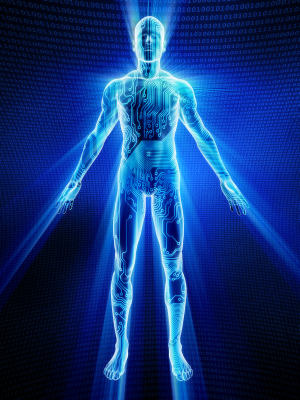
transhumanismThe issue of transhumanism, the rise of a new type of humanity characterized by man-machine interface and augmented intelligence, is being debated quite fervently in some circles right now. But it seems that groups other than Futurists and speculative fiction writers are joining the discussion. Recently, the National Intelligence Council, a US policy think-tank, released a 140 page report that outlined major trends and technological developments we should expect in the next 20 years.

The report, entitled “Global Trends 2030: Alternative Worlds”, predicted several trends which are likely to come true in the near future. Amongst them is the end of U.S. global dominance, the rising power of individuals against states, a growing middle class that will increasingly challenge governments, and ongoing shortages in water, food and energy. However, predictions were also made concerning a future where humans have been significantly modified by various technologies, what is often referred to as the dawn of the Transhuman Era.

how-nanotechnology-could-reengineer-usIntrinsic to this new era is the invention of implants, prosthetics, and powered exoskeletons which will become regular fixtures of human life. These will go beyond merely correcting for physical disabilities or injury, to the point where average humans are enhanced and become more productive. 2030 is key year here, because it is by this point that the authors predict that prosthetics will exceed organics, and people will begin getting them installed in order to augment themselves.

In addition, life extension therapies and medical advances which will be used predominantly by the elderly will become a means for otherwise healthy people to prolong their lives and maintain health and vitality for longer periods of time. Brain implants are expected to become a reality as well, ostensibly to allow people to have brain-controlled prosthetics, but also for the sake of enhanced memory and augmented thinking.

bionic_handAnd of course, bionics are an important factor in all this. Already, researchers have achieved breakthroughs with bionic limbs, but retinal attachments, artificial eyes, and even fully-functioning organs are expected before 2030. On top of that, improvements in drugs, such as neuropharmaceuticals – drugs that enhance memory, attention, speed of thought – and implants which assist in their delivery are expected to be making the rounds.

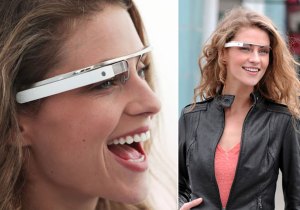
google_glassesFinally, there is the matter of virtual and augmented reality systems, which are already becoming a reality thanks to things like Project Glass and recent innovations in PDAs. As the report notes: “Augmented reality systems can provide enhanced experiences of real-world situations. Combined with advances in robotics, avatars could provide feedback in the form of sensors providing touch and smell as well as aural and visual information to the operator.”

However, the big issue, according to the report, is cost and security. Most of these technologies will be not affordable to all people, especially for the first few years of their existence. This could result in a two-tiered society where the well-to-do live longer, healthier and have a competitive advantage over “organics”, people of lesser means who are identifiable by their lack of enhancements. Also, developers will need to be on their guard against hackers who might attempt to subvert or infect these devices with tailor-made viruses.

Naturally, the importance of maintaining uniform scientific progress was stressed, and the need for a regulatory framework is certainly needed. What the CSER recently recommended is certainly worth keeping in mind here, which was to ensure that some kind of regulatory framework be put in place before all of this becomes a reality. What’s more, public education is certainly necessary, so that the current and next generation of human beings knows what to expect and how to go about making informed choices therein.

To see the full report and learn more about the NIC, follow the link below:

National Intelligence Council: Who We Are

Source: IO9.com

Of DIY Cybernetics and Biohacking

transhuman3It seems that biohackers and enthusiasts of body augmentation could be setting a new trend, and doing it all from the comfort of their basements. That’s the essence of an article filed by Neal Ungerleider this past September, in which he stated that biohackers have not only cloned the innovation strategies of Silicon Valley, but could also be reshaping how technology is being created.

Amongst their efforts are such things as brain interfaces that can control video games with human thoughts, Bluetooth sensors that are meant to go under the skin and send vital signs to mobile phones, tissue engineering that can create in vitro “steaks” and leather, and devices that convert brainwaves into actual speech. These efforts are collaborative in nature and connect numerous basements, labs and research facilities together to share research, resources, and breakthroughs.

Those who take an active part in this trend are often known as grinders or biohackers, people who have chosen not to wait for cybenetic enhancements and body augmentation to become commercially available and seek to create them on their own.

According to Ungerleider:

“West Coast biohackers and grinders were the pioneers of this tech-driven, California brand of utopianism… For biohackers everywhere, augmentation of humanity itself—whether through technology or more traditional methods—is the primary goal. Common conversation points include DIY cyborgs, the quantified self, and diet…

“But a growing community on the East Coast—in greater New York, Boston, and Pittsburgh—is synthesizing Silicon Valley’s entrepreneurial DNA for its unique innovation model. Experimentation and science here is not only an exercise in advancing humanity through tech but is often applied toward creating viable cybernetic products for the market.”

One such group is Biohackers NYC, a group that was formed in 2012 largely in response to all the innovation that was taking place on the opposite coast. In additi0n to the initial startup group, it was joined by numerous startups, incubators, and workspaces scattered across the outer boroughs. As group founder and psychiatrist Lydia Fazzio claimed in an interview back in September:

“Our intent was to cover the spectrum of biohacking from manipulating non-human genomes to also the body and the mind. It’s a holistic approach to the meaning of biohacking, whether technology or nutrition. However you get there, we all have the innate potential to be an optimal functioning human in society. Our question is: How do we get there?”

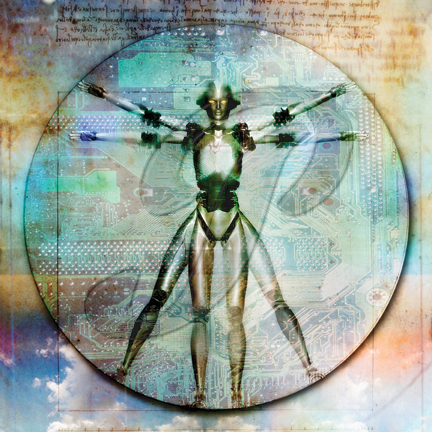
davinci_transhumanOne of the attractions of this new movement is that it allows the merger of skilled professionals and dedicated hobbyists a chance to collaborate on projects of mutual interest. It also takes advantage of new business and development models – i.e. crowdsourcing – which is made possible thanks to the digital revolution.

Already, message boards have sprung up that allow disparate “labs” to post information on their work and share with others who have similar interests and projects on the go. These include DIYbio, which deals with the larger field of DIY biotechnology labs; and biohack.me, where the possibilities of subdermal bone conduction headphones and echolocation implants are being contemplated.

TranshumanIn the end, this is really just a small part of a much larger movement, which takes on various names. On is transhumanism, a movement which believes that human limitations can and must be transcended with the help of technological innovation. Another is Singularitarianism, a movement popularized by such Futurists as Ray Kurzweil. These individuals believe that technology will (or has) reached the point where human beings can take control of their own mortality, abilities and evolution. While some are willing to wait, others are intent on making it happen sooner other than later.

Naturally, there is a great deal of skepticism towards this new trend. For one, there are countless people who believe it to be the stuff of “science fiction”, and not real science. But, as Ungerleider claims, this represents the culmination of trends that have been in the works for some time. What’s more, it represents the monetization and mass marketing of technologies which have been under development for many years. And in truth, the line between science fiction and science fact has always been a fine one. All that’s ever been needed for us to transcend it is for people to make it happen.

Sources: fastcompany.com, Wired.com, IO9.com

Future Timeline

This has been sitting in my box of ideas for quite some time, a website that produces videos dedicated to predicting future trends. Awhile back, I came across it while searching on the subject of the Technological Singularity, and was pretty intrigued by what I saw. Not only was this website dedicated to predicting major technological developments in the near future, the ones that would culminate in the Singularity, but was even considering humanity’s prospects as a species in the far, far future. After taking a look around I thought to myself: “truly, this is the stuff of speculative science-fiction.”

To get a breakdown of what the makers of this site predict, check out the videos posted below, as compiled by HayenMill at Youtube. A self-professed amateur historian and futurist, HayenMill took the liberty of combining the Future Timeline predictions, year by year, covering the three decades that will take us from the beginning of 2010 to 2040, by which time all the current trends of the world will reach a full, fevered pitch. These include the problems of overpopulation, climate change, the shift of economic power from the US to Asia, and the growth of information, medical, and bio technology, as well as the development of AI and commercial spaceflight.

Check them out, and for a more detailed breakdown of future events, go to futuretimeline.net. Trust me when I say that the group’s predictions range far and wide, but which are also highly detailed, at least when pertaining to this century! You can take me at my word when I say that I will be doing my best to incorporate as many of these ideas as possible into my own writing!


Worlds First Medimachine!

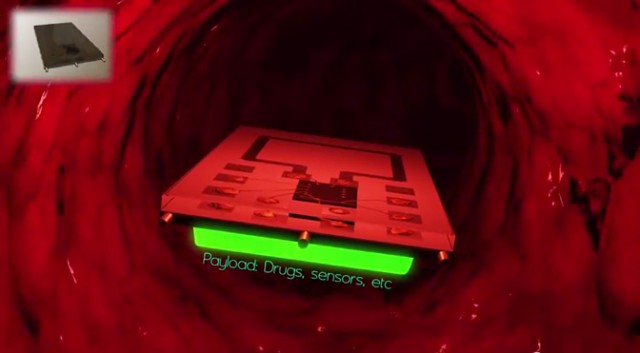
Medimachine: noun, a nanotechnological device used for medical applications. Granted, that’s not a working definition, but it does encompass what the technology is all about. And, as it happens, researchers at Standford created the world’s first device which is capable of traveling through the human bloodstream and which is controlled and powered wirelessly just this past year.

This development came in the midst of a similar significant development over at MIT. In January of this year, they announced that they had developed the world’s first implantable microchip that could deliver drugs directly into the bloodstream. This chip is also controlled wirelessly, and is the first step towards remote implants that could contain an entire pharmacy.

According to Ada Poon, the lead developer of the Standford team, the next step in the development of this device will be creating models that incorporate sensors and drug delivery systems for the ultimate in pin-point accurate medicine. If successful, Poon and her team could very well be responsible for creating the prototype device that will inspire entire generations of medical machines that are conducting exploratory exams, cleaning our arteries, removing tumors, destroying pathogens and viruses, and even repairing internal injuries.

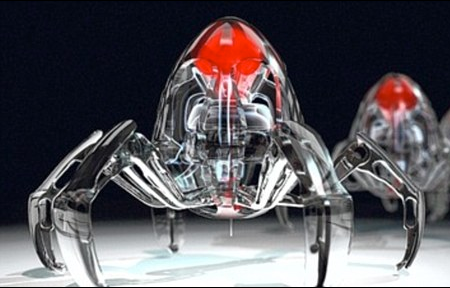
And just think, if this development triggers further research and development, it could very well lead to nanomachines which are capable of making even tinier nanomachines. These devices could in turn manipulate matter on the mitochondrial level, correcting faults in our DNA and turning harmful or unwanted cells into something more useful for our bodies.

Just another step on the road to transhumanism and post-mortality!

Source: Extremtech.com

Transhumanism… The Shape of Things to Come?

“Your mind is software. Program it. Your body is a shell. Change it. Death is a disease. Cure it. Extinction is approaching. Fight it.”

-Eclipse Phrase

A lot of terms are thrown around these days that allude to the possible shape of our future. Words like Technological Singularity, extropianism, postmortal, posthuman, and Transhuman. What do these words mean? What kind of future do they point to? Though they remain part of a school of thought that is still very much theoretical and speculative, this future appears to be becoming more likely every day.

Ultimately, the concept is pretty simple, in a complex, mind-bending sort of way. The theory has it that at some point in this or the next century, humanity will overcome death, scarcity, and all other limitations imposed on us by nature. The means vary, but it is believed that progress in any one or more of the following areas will make such a leap inevitable:

Artificial Intelligence:
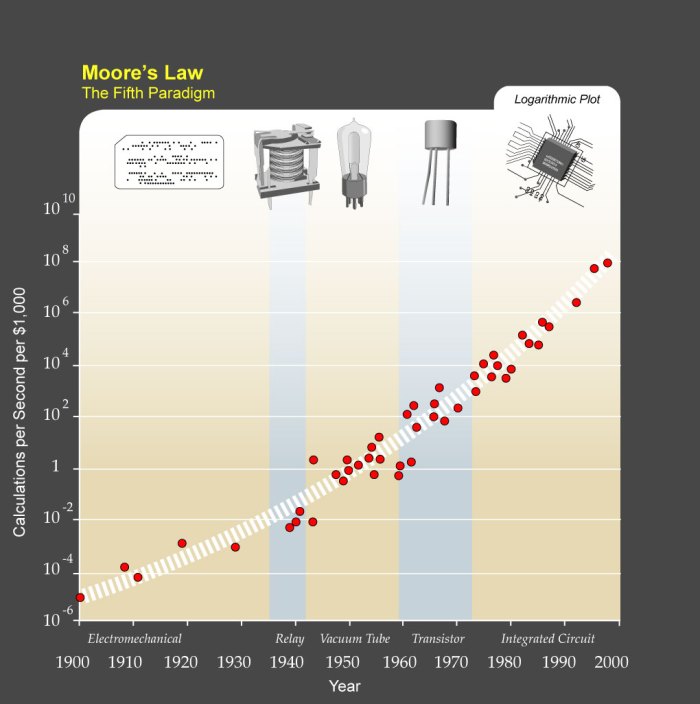
The gradual evolution of computers, from punch cards to integrated circuits to networking, shows an exponential trend upwards. With the concordant growth of memory capacity and processing speed, it is believed that it is only a matter of time before computers are capable of independent reasoning. Progress is already being made in this domain, with the Google X Labs Neural Net that has a connectome of a billion connections.

As such, it is seen as inevitable that a machine will one day exist that is capable of surpassing a human being. This sort of machinery could even be merged with a human’s own mind, enhancing their natural thought patterns, memory, and augmenting their intelligence to the point where their intelligence is immeasurable by modern standards.

Just think of the things we could think up once that’s possible. Well… you can’t exactly, but we can certainly postulate. For starters, such things as the Grand Unifying Theory, the nature of time and space, quantum mechanics, and other mind-bendingly complex fields could suddenly make sense to us. What’s more, this would make further technological leaps that much easier.

Biology:
Here we have an area of development which can fall into one of three categories. On the one hand, advancements in medical science could very well lead to the elimination of disease and the creation of mind-altering pharmaceuticals. On the other, there’s the eventual development of things like biotechnology, machinery that is grown rather than built, composed of DNA strands or other “programmable” material.

Lastly, there is the potential for cybernetics, a man-machine interface where organic is merged with the artificial, either in the form of implants, prosthetic limbs, and artificial organs. All of these, alone or in combination, would enhance a human beings strength, mental capacity, and prolong their life.

This is the meaning behind the word postmortal. If human beings could live to the point where life could be considered indefinite (at least by current standards), the amount we could accomplish in a single lifetime could very well be immeasurable.

Nanotechnology:
The concept of machines so small that anything will be accessible, even the smallest components of matter, has been around for over half a century. However, it was not until the development of microcircuits and miniaturization that the concept graduated from pure speculation and became a scientific possibility.

Here again, the concept is simple, assuming you can wrap your head around the staggering technical aspects and implications. For starters, we are talking about machines that are measurable only on the nanoscale, meaning one to one-hundred billionths of a meter (1 x 10⁻⁹ m). At this size, these machines would be capable of manipulating matter at the cellular or even atomic level. This is where the staggering implications come in, when you realize that this kinds of machinery could make just about anything possible.

For starters, all forms of disease would be conquerable, precious metals could be synthesized, seamless, self-regenerating structures could be made, and any and all consumer products could be created out of base matter. We’d be living in a world in which scarcity would be a thing of the past, our current system of values and exchange would become meaningless, buildings could build themselves, and out of raw matter (like dirt and pure scrap) no less, societies would become garbage free, pollution could be eliminated, and manufactured goods could be made of materials that are both extra-light and near-indestructible.

Summary:
All of this progress, either alone or in combination, will add to a future that we can’t even begin to fathom. This is where the concept of the Technological Singularity comes in. If human beings were truly postmortal (evolved beyond death), society was postscarce (meaning food, water, fuel and other necessities would never be in short supply), and machines would be capable of handling all our basic needs.

For Futurists and self-professed Singularitarians, this trend is as desirable as it is inevitable. Citing such things as Moore’s Law (which measures the rate of computing progress) or Kurzweil’s Law of Accelerating Returns – which postulates that the rate of progress increases exponentially with each development – these voices claim that it is humanity’s destiny to conquer death and its inherent limitations. If one looks at the full range of human history – from the Neolithic Revolution to the Digital – the trend seems clear and obvious.

For others, this prospect is both frightening and something to be avoided. When it comes right down to it, transhumanity means leaving behind all the things that make us human. And whereas some people think the Singularity will solve all human problems, others see it as merely an extension of a trend whereby our lives become increasingly complicated and dependent on machinery. And supposing that we do cross some kind of existential barrier, will we ever be able to turn back?

And of course, the more dystopian predictions warn against the cataclysmic possibilities of entrusting so much of our lives to automata, or worse, intelligent machines. Virtually every apocalyptic and dystopian scenario devised in the last sixty years has predicted that doom will result from the development of AI, cybernetics and other advanced technology. The most technophobic claim that the machinery will turn on humanity, while the more moderate warn against increased dependency, since we will be all the more vulnerable if and when the technology fails.

Naturally, there are many who fall somewhere in between and question both outlooks. In recent decades, scientists and speculative fiction writers have emerged who challenge the idea that technological progress will automatically lead to the rise of dystopia. Citing the undeniable trend towards greater and greater levels of material prosperity caused by the industrial revolution and the post-war era – something which is often ignored by people who choose to emphasize the down sides – these voices believe that the future will be neither utopian or dystopian. It will simply be…

Where do you fall?

The Coming Singularity… In Song!

Singularitarian. That’s a good name for someone who embraces the idea of the coming Technological Singularity, which I believe I mentioned somewhere… Yes, these days a lot of high-minded terms get thrown around to describe what may very well be possible somewhere in this century and the next. Extropian, Post-Human, Clinical Immortality, Artificial Intelligence, Cyber Ethics, Transhuman, Mind/Machine Interface, Law of Accelerated Returns, and so forth. It can be kind of confusing to stay up with it since all the lingo is kind of complex and esoteric. Lot of big and obscure words there…

Luckily, Mr. Charlie Kam has decided to explain. Setting the ideas to the tune of “I am the Very Model of a Modern Major General”, he tells how the idea works and what the eventual aim is. Basically, the idea is all about improving the condition of humanity through the ongoing application of technology. By preserving our cells, our memories, lengthening our lives, we will ensure that humanity will live on and achieve more than we previously thought possible.

Since we don’t yet know how to do this, we will achieve the first step by either merging our own minds with technology to enhance our thought processes and expand our awareness. Or, we could just create machinery that could do the job for us (aka. AI). Then, applying this superior intelligence, we will unlock the mysteries of the universe, create nanotech machines, medicines that can cure all diseases, and machinery that can store human memories, senses and impressions for all time.

Some big names got thrown in there too, not the least of which was Ray Kurzweil, noted Futurist. But don’t take my word for it, watch the video. If nothing else, its good for a laugh.

The Technological Singularity

This is a little off the beaten path right now, but lately, I’ve been spending a lot of time contemplating this big concept. In fact, it’s been informing the majority of my writing for the past year, and during my recent trip back to Ottawa, it was just about all my friend and I could talk about (dammit, we used to club!) And since I find myself explaining this concept to people quite often, and enjoying it, I thought I’d dedicate a post to it as well.

It’s called the Technological Singularity, and was coined in 1993 by sci-fi author Vernor Vinge. To put it concisely, Vinge predicted that at some point in the 21st century, human beings would be able to augment their intelligence using artificial means. This, he argued, would make the future completely unpredictable beyond that point, seeing as how the minds that contemplating the next leaps would be beyond anything we possess now.

The name itself is derived from the concept of the Quantum Singularity or Event Horizon, the region that resides at the center of a black hole beyond which, nothing is visible. In the case of a black hole, the reason you can’t see beyond this point is because the very laws of physics break down and become indistinguishable. The same is being postulated here, that beyond a certain point in our technological evolution, things will get so advanced and radical that we couldn’t possibly imagine what the future will look like.

how-nanotechnology-could-reengineer-us

Bad news for sci-fi writers huh? But strangely, it is this very concept which appears to fascinate them the most! Just because we not be able to accurately predict the future doesn’t stop people from trying, especially writers like Neal Stephenson, Greg Bear, and Charles Stross. Frankly, the concept was coined by a sci-fi writer so we’re gonna damn well continue to talk about it. And besides, when was the last time science fiction writers were bang on about anything? It’s called fiction for a reason.

Men like Ray Kurzweil, a futurist who is all about achieving immortality, have popularized this idea greatly. Thanks to people like him, this idea has ventured beyond the realm of pure sci-fi and become a legitimate area of academic study. Relying on ongoing research into the many, many paradigm shifts that have taken place over time, he and others have concluded that technological progress is not a linear phenomena, but an exponential one.

Consider the past few decades. Has it not been a constant complaint that the pace of life and work have been increasing greatly from year to year? Of course, and the driving force has been constant technological change. Whereas people in our parents generation grew up learning to use slide rules and hand-cranked ammonia copiers, by the time they hit the workforce, everything was being done with calculators and Xerox printers.

PPTMooresLawai

In terms of documents, they used to learn typewriters and the filing system. Then, with the microprocessor revolution, everything was done on computer and electronically. Phones and secretaries gave way to voicemail and faxes, and then changed again with the advent of the internet, pager, cell phone and PDA. Now, all things were digital, people could be reached anywhere, and messages were all handled by central computers.

And that’s just within the last half-century. Expanding the time-frame further, let’s take a much longer view. As a historian, I am often fascinated with the full history of humanity, going back roughly 200,000 years.  Back then, higher order primates such as ourselves had emerged in one small pocket of the world (North-Eastern Africa) and began to circulate outwards.

By 50,000 years ago, we had reached full maturity as far as being homo sapiens is concerned, relying on complex tools, social interaction, sewing and hunting and gathering technigues to occupy every corner of the Old World and make it suitable for our purposes. From the far reaches of the North to the Tropics in the South, humanity showed that it could live anywhere in the world thanks to its ingenuity and ability to adapt. By 15,000 years ago, we had expanded to occupy the New World as well, had hunted countless species to extinction, and began the process of switching over to agriculture.

By 5000 years ago, civilization as we know it was emerging independently in three corners of the world. By this, I mean permanent settlements that were based in part or in full on the cultivation of crops and domestication of animals. Then, 500 years ago, the world’s collided when the Spanish landed in the New World and opened up the “Age of Imperialism”. Because of the discovery of the New World, Europe shot ahead of its peer civilizations in Africa, Asia and the Middle East, went on to colonize every corner of the world, and began to experience some major political shifts at home and abroad. The “Age of Imperialism” gradually gave way to the “Age of Revolutions”.

100 years ago, the total population of the Earth reached 1 billion, industrialization had taken full effect in every developed nation and urban populations were now exceeding that of rural. 50 years ago, we had reached 3 billion human beings, were splitting the atom, sending rockets into space, and watching the world decolonize itself. And only 10 years ago, we had reached a whopping 6 billion human beings, were in the throws of yet another technological revolution (the digital) and were contemplating nanotechnology, biomedicine and even AI.

In short, since our inception, the trend has been moving ever upwards, faster and faster. With every change, the pace seems to increase exponentially. The amount of time between paradigm shifts – that is, between revolutionary changes that alter the way we look at the world – has been getting smaller and smaller. Given this pattern, it seems like only a matter of time before the line on the graph rises infinitely and we have to rethink the whole concept of progress.

Is your nooble baked yet? Mine sure is! It’s get like that any time I start contemplating the distant past and the not too distant future. These are exciting times, and even if you think that the coming Singularity might spell doom, you gotta admit, this is an exciting time to be alive. If nothing else, its always a source of intrigue to know that you are on the cutting edge of history, that some day, people will be talking about what was and you will be able to say “I was there”.

Whoo… deep stuff man. And like I said, fun to write about. Ever since I was a senior in high school, I dreamed of being able to write a book that could capture the Zeitgeist. As soon as I learned about the Technological Singularity, I felt I had found my subject matter. If I could write just one book that captures the essence of history at this point in our technological (and possibly biological) evolution, I think I’ll die a happy man. Because for me, it’s not enough to just have been there. I want to have been there and said something worthwhile about it.

Alright, thanks for listening! Stay tuned for more lighter subject matter and some updates on the latest from Story Time and Data Miners. Plus more on Star Wars, coming soon!

New Prometheus Clip

I came across this clip this morning and was absolutely wowed. Not only is this yet another awesome preview of the upcoming Prometheus movie, it manages to establish the movie’s deep background even further and does so in a way that’s both plausible and relevant to today. Exploring the upcoming technological singularity, the birth of nanotech, biomedical and AI, and previewing the birth of the Weyland Corp – which as we all know went on to become Weyland-Yutani, the biggest monopoly in the history of the human race.

But don’t take my word, check it out for yourself. I feel like writing now, which is how I feel whenever I see something really inspiring! And God damn if this wasn’t a far better use of Guy Pierce’s talents than that cheesy movie Lockout!